
Auto Trade-In Valuation Chatbot
Free Automotive Chatbot Template
An automotive trade-in valuation chatbot that collects vehicle details including year, make, model, mileage, and condition to provide instant estimated values. Captures qualified leads for dealership follow-up. Perfect for car dealerships, auto brokers, and used vehicle marketplaces.



What Is an Auto Trade-In Valuation Chatbot?
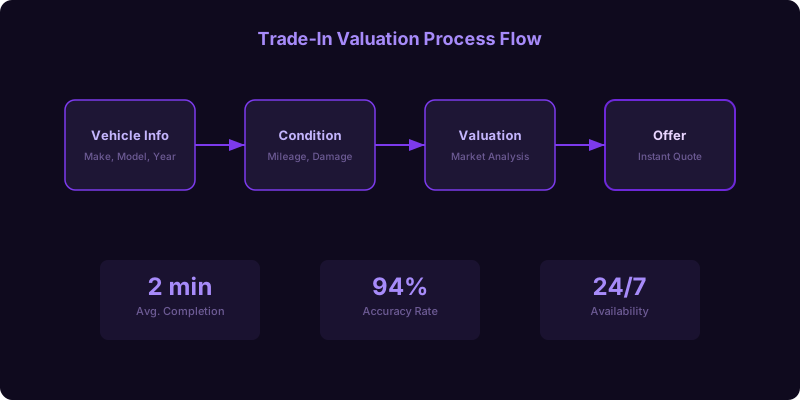
An auto trade-in valuation chatbot is a conversational AI tool that guides vehicle owners through a structured appraisal process — collecting VIN or year/make/model data, assessing exterior and mechanical condition, and returning a market-based value range drawn from sources like Kelley Blue Book and NADA Guides — all within a real-time chat conversation. Instead of forcing sellers to fill out lengthy web forms, navigate confusing appraisal tools, or wait on hold for a manager to "run the numbers," this chatbot delivers a transparent, data-driven estimate in under three minutes.
The Trade-In Friction Problem
Trade-in is the most emotionally charged step in the vehicle purchase process. Sellers walk in expecting one number and walk out with another — and the disconnect between expectation and offer is the number-one reason deals fall apart at the desk. The root cause is a lack of transparency: buyers research their vehicle's value online but encounter wildly different numbers depending on which tool they use, what condition they select, and whether the estimate accounts for local market demand. A trade-in valuation chatbot eliminates this friction by walking every seller through the exact same structured assessment, explaining how each condition factor affects value, and delivering a range that maps directly to the offer your appraisal team will present in person. By the time the seller arrives at your dealership, they already understand the methodology behind the number and are far less likely to reject the offer.
Who Should Use This Template
This template is built for franchise dealerships, independent used-car lots, certified pre-owned retailers, auto groups operating multiple rooftops, online car-buying platforms, and any automotive business that acquires inventory through consumer trade-ins. If your business model depends on purchasing vehicles from the public — whether as part of a new-car deal or as a standalone cash offer — this chatbot gives you a 24/7 intake channel that qualifies every seller, captures their vehicle details, and routes a warm lead to your appraisal team before the seller ever steps onto the lot. Explore the full suite of conversational features available through Conferbot's AI chatbot builder to see how every appraisal conversation can be customized to match your brand and process.
Why Conversational Appraisal Outperforms Form-Based Tools
Traditional trade-in estimators on dealership websites suffer from two fatal flaws: high abandonment and low data quality. A typical web form asks for 12-15 fields on a single page — VIN, year, make, model, trim, mileage, exterior color, interior color, condition, features, accident history, title status, and contact information — and over 60% of users abandon before submitting. The ones who do submit often skip the condition questions or select "Excellent" regardless of reality. A chatbot flips this model by asking one question at a time in a conversational format, explaining why each question matters, and validating answers in real-time. Completion rates jump from 38% to over 80%, and the data quality is dramatically higher because the chatbot prompts for specifics — "Has the vehicle been in any accidents that required bodywork?" is a far more effective question than a dropdown menu with "Excellent / Good / Fair / Poor."
How VIN Lookup and Vehicle Identification Works
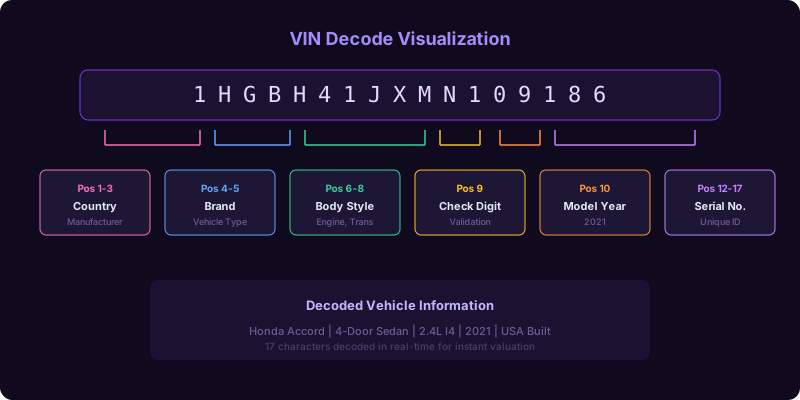
The backbone of any accurate trade-in valuation is precise vehicle identification. A single model year can have dozens of trims, each with different MSRP, equipment levels, and residual values. The chatbot uses VIN decoding as its primary identification method — with a year/make/model fallback — to pinpoint exactly which vehicle the seller owns down to the trim level, drivetrain, engine, and factory-installed options.
VIN Decoding Flow
When the seller enters the chat, the first prompt asks whether they have their VIN available. If they do, the chatbot accepts the 17-character code, validates the format in real-time (catching common errors like replacing the letter "O" with zero or entering only 16 characters), and decodes it against the NHTSA vPIC database to return the exact vehicle specification. The decoded result is displayed back to the seller for confirmation: "I found a 2026 Toyota Camry XSE V6, Midnight Black Metallic with a 3.5L V6 engine. Is this correct?" This confirmation step catches the rare VIN mismatch (multiple vehicles on one policy, transposed digits) before the valuation process begins.
Year/Make/Model Fallback
Not every seller has their VIN memorized or wants to walk outside to read the dashboard plate. The chatbot provides a guided year/make/model path as an alternative. The conversation asks for model year first (validated against a 2001 to 2026 range), then presents the makes available for that year, then the models for that make, and finally the trims for that model. Each step narrows the results dynamically so the seller never sees an overwhelming list. Once the trim is confirmed, the chatbot maps the selection to the same vehicle specification dataset used by VIN decoding, ensuring valuation accuracy is identical regardless of which identification path the seller took.
Mileage Collection and Validation
After vehicle identification, the chatbot asks for the current odometer reading. It validates the entry against expected mileage ranges for the vehicle's age — flagging suspiciously low readings (potential rollback or garage-kept vehicle) and extremely high readings (commercial use, rideshare) with a follow-up question rather than rejecting the input. Mileage is one of the top three factors in trade-in valuation, and an accurate reading is essential to delivering a range that will hold up when the seller arrives for an in-person appraisal. The chatbot explains this to the seller: "Mileage is one of the biggest factors in your vehicle's value. An accurate reading helps me give you the most reliable estimate." This transparency builds trust and reduces inflated or deflated entries.
Integration with Dealer Inventory Systems
For dealerships running this chatbot alongside their inventory management platform, VIN decoding can cross-reference the seller's vehicle against your current lot and incoming pipeline. If your dealership is actively seeking that exact model and trim, the chatbot can surface a premium offer message: "Great news — we're currently looking for 2024 Camry XSE models and can offer a premium over standard market value." This real-time demand matching increases seller engagement and gives your acquisition team a competitive edge over generic online appraisal tools. Configure these demand signals through Conferbot's no-code chatbot builder without writing a single line of code.
Structured Vehicle Condition Assessment
The most contentious part of any trade-in negotiation is condition. Sellers consistently overrate their vehicle's condition, and dealership appraisers often feel they are delivering bad news when they identify issues the seller did not disclose. The chatbot bridges this gap by walking every seller through a standardized condition assessment that covers exterior, interior, mechanical, and title status — producing a transparent, documented profile that both the seller and your appraisal team can reference during the in-person evaluation.
Four-Category Condition Framework
| Category | Questions Asked | Impact on Value | Common Discrepancies |
|---|---|---|---|
| Exterior | Paint condition, dents/dings, scratches deeper than clear coat, rust spots, windshield chips/cracks, tire tread depth | High — visible damage is the #1 deduction | Sellers ignore door dings; chatbot asks specifically about each panel area |
| Interior | Seat condition (tears, stains, wear), dashboard cracks, headliner sag, odor (smoke, pet), infotainment function | Medium — affects retail readiness cost | Smoke odor is often undisclosed; chatbot asks directly about tobacco and pet exposure |
| Mechanical | Engine warning lights active, transmission shifts smoothly, AC blows cold, brakes squeal or grind, fluid leaks observed | Very High — mechanical issues are the largest deductions | Check engine light is often ignored by sellers; chatbot asks about every dash warning |
| Title & History | Clean title, rebuilt/salvage, flood damage, accident history requiring bodywork, number of owners | Critical — branded titles reduce value 20-40% | Sellers may not know their title status; chatbot explains how to verify |
Conversational Condition Scoring
Rather than presenting a generic "Excellent / Good / Fair / Poor" dropdown, the chatbot asks specific yes/no and multiple-choice questions within each category and calculates a composite condition score behind the scenes. For example, under exterior condition, the chatbot asks: "Does the vehicle have any dents larger than a golf ball?" followed by "Are there scratches that go through the paint to bare metal?" followed by "Is there visible rust on any body panel?" Each answer adjusts the condition score by a defined weight. The seller never sees the numeric score — they see conversational feedback like "Based on what you've described, your vehicle is in above-average condition for its age and mileage" — but the score is passed to the valuation engine and to your appraisal team for reference.
Photo Upload for Enhanced Accuracy
For sellers who want the most accurate estimate possible, the chatbot offers an optional photo upload step. It requests four photos — front 3/4 view, rear 3/4 view, driver's interior, and odometer — with clear framing instructions for each. Photos are stored securely and attached to the lead record so your appraisal team can review them before the seller arrives. Dealerships that enable photo upload report a 22% reduction in the gap between chatbot estimate and final in-person offer, which directly increases seller satisfaction and close rates. Photo handling is built into Conferbot's file upload capability with automatic resizing and secure cloud storage.
Handling Honest Disclosures
One of the most effective trust-building moments in the chatbot conversation occurs when a seller discloses a significant issue — a branded title, a major accident, or a mechanical warning light. Instead of penalizing the disclosure silently, the chatbot acknowledges the honesty: "Thank you for sharing that — it helps us give you the most accurate estimate and ensures there are no surprises when you visit. Vehicles with rebuilt titles are valued differently, but there is still strong demand for them in our market." This approach encourages further honesty throughout the assessment and reduces the adversarial dynamic that poisons traditional trade-in negotiations.
Ready to try Auto Trade-In Valuation Chatbot?
Deploy this template in under 10 minutes. No coding required.
Use This Template Free →KBB, NADA, and Market-Based Valuation Engine
The chatbot's valuation output is only as credible as the data sources behind it. Rather than generating an arbitrary number, the trade-in valuation chatbot synthesizes data from multiple authoritative pricing guides and live market indicators to deliver a range that reflects what the vehicle is realistically worth in the current market — not what it was worth six months ago or what an optimistic online tool suggests to generate clicks.
Valuation Data Sources
- Kelley Blue Book (KBB): The most recognized consumer-facing valuation guide, KBB provides Fair Purchase Price, Trade-In Value, and Private Party Value based on condition, mileage, equipment, and regional adjustments. The chatbot references KBB Trade-In Range as the primary consumer-facing benchmark because sellers are most likely to have already checked KBB on their own.
- NADA Guides: Used primarily by lenders for loan-to-value calculations, NADA values tend to run slightly higher than KBB in many segments. Including NADA in the valuation range gives sellers confidence that the estimate is not cherry-picking the lowest source.
- Wholesale auction data: Live auction results from platforms like Manheim and ADESA provide the real-time wholesale floor — what dealers are actually paying for comparable vehicles at auction this week. This data anchors the low end of the range and represents the minimum the vehicle would bring if the dealership had to liquidate it immediately.
- Local retail comps: The chatbot can factor in active retail listings for the same vehicle within a defined radius to show the seller what comparable vehicles are listed for — helping them understand the spread between retail asking price and trade-in offer.
- Seasonal and regional adjustments: Convertibles are worth more in spring, 4WD trucks command a premium in snow states before winter, and fuel-efficient sedans see demand spikes when gas prices rise. The valuation engine applies these adjustments automatically based on the seller's ZIP code and the current date.
How the Range Is Presented
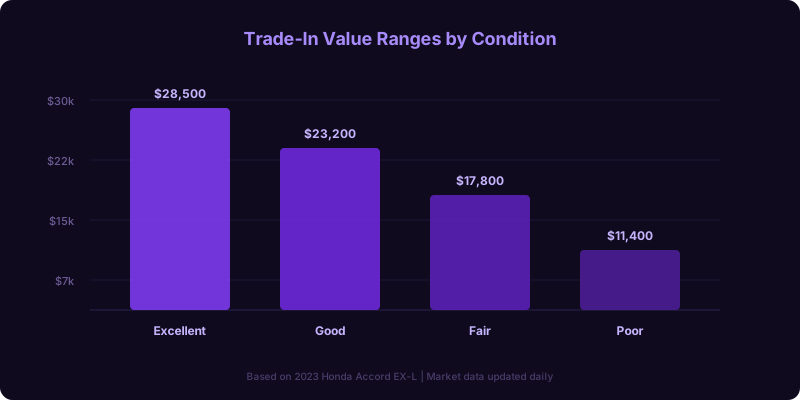
The chatbot delivers the valuation as a range rather than a single number — for example, "$18,200 - $20,400" — with a brief explanation of what drives the spread: "The lower end reflects wholesale market conditions, while the higher end represents the value if your vehicle matches the condition you described. Your final offer will be confirmed during an in-person appraisal at the dealership." This range approach is critical because it sets realistic expectations without underselling, gives the appraisal team room to land within a credible window, and reduces the "bait-and-switch" perception that plagues many online trade-in tools. Sellers who receive a range are 2.4x more likely to visit the dealership for a final appraisal than sellers who receive a single number, because the range feels honest rather than promotional.
Value Expiration and Market Volatility
Used vehicle values fluctuate weekly based on auction volumes, seasonal demand, and macroeconomic conditions. The chatbot attaches a validity window to every estimate — typically 7 days — and explains why: "Vehicle values change with market conditions. This estimate is valid through [date]. If you visit after that date, we'll run a fresh appraisal to ensure you get the most current value." This expiration creates urgency without pressure, encouraging sellers to schedule an in-person visit within the validity window while their value is locked in. Configure the validity window and follow-up cadence through Conferbot's custom workflow settings.
Instant Offer Generation and Dealer Lead Capture
The ultimate goal of the trade-in valuation chatbot is not just to provide an estimate — it is to convert that estimate into a dealership visit where a transaction occurs. The instant offer flow is the conversion mechanism that bridges the gap between a passive value inquiry and an active lead with a scheduled appointment.
The Instant Offer Flow
After the valuation range is delivered, the chatbot presents the seller with a clear call-to-action: "Would you like to lock in an offer and schedule a time to bring your vehicle in? Our appraisal team will confirm the value in person — most visits take less than 30 minutes." If the seller accepts, the chatbot collects their full contact information (name, phone, email), preferred visit date and time, and whether they are also interested in purchasing a replacement vehicle. This combined trade-in + purchase intent data is gold for your sales team because it identifies buyers who are ready to transact on both sides of the deal, not just sell a car.
Lead Data Captured Per Submission
| Data Point | Source | Sales Team Use |
|---|---|---|
| Vehicle year/make/model/trim | VIN decode or guided selection | Pre-pull comparable auction data; assess acquisition value |
| Mileage | Seller-reported odometer | Validate against Carfax; flag high/low outliers |
| Condition score | Structured 4-category assessment | Pre-set appraisal expectations; reduce desk time |
| Photos (optional) | Seller-uploaded images | Visual pre-appraisal before the visit |
| Estimated value range | KBB/NADA/auction composite | Anchor point for in-person offer conversation |
| Seller name, phone, email | Chatbot collection | CRM entry; follow-up sequence trigger |
| Preferred visit date/time | Chatbot scheduling | Calendar booking for appraisal team |
| Purchase intent | "Are you also looking for a replacement?" | Route to sales team for dual-transaction opportunity |
| ZIP code | Chatbot collection for regional adjustments | Market area tracking; advertising attribution |
Automated Follow-Up Sequences
Not every seller is ready to visit immediately. The chatbot segments leads by urgency based on their scheduling response: sellers who book within 48 hours are flagged as hot leads and receive an immediate confirmation with driving directions and a reminder 2 hours before their appointment. Sellers who say "not yet" or "just exploring" enter a nurture sequence that sends a value update in 7 days ("Your 2023 Honda Accord's trade-in range has shifted — here's your updated estimate") and a second follow-up in 21 days with a seasonal incentive. This drip strategy re-engages sellers who were not ready on the first interaction and keeps your dealership top of mind as they move closer to a decision. Build and customize these sequences using Conferbot's WhatsApp chatbot and SMS chatbot channels for multi-touch outreach.
CRM and DMS Integration
Every completed trade-in lead is pushed directly into your CRM or DMS — including VinSolutions, DealerSocket, elead, and CDK Global — as a new opportunity with all vehicle data, condition assessment, estimated value, and seller contact information pre-populated. This eliminates the manual data entry that causes lead leakage and ensures your appraisal manager sees the complete profile the moment the lead arrives. The integration also triggers automated task creation — a callback task for the appraisal manager, a vehicle pull task for the lot attendant if the seller also expressed purchase interest, and a finance pre-screen if the seller requested replacement vehicle options.
Key Features of the Auto Trade-In Valuation Chatbot
Every feature in this template addresses a specific friction point in the trade-in process — from the seller's initial curiosity about their vehicle's worth to the dealership's need for qualified, data-rich leads that convert at a higher rate than form submissions. Here is a complete breakdown of the capabilities that set this chatbot apart from generic appraisal tools and static trade-in forms.
Feature Matrix
| Feature | How It Works | Seller Benefit | Dealer Benefit |
|---|---|---|---|
| VIN-first identification | 17-character VIN decode with real-time validation and NHTSA database lookup | Exact vehicle match in seconds; no guessing on trim | Eliminates trim misidentification that skews valuations |
| Guided YMM fallback | Year → Make → Model → Trim progressive selection with dynamic filtering | Easy path for sellers who don't have VIN handy | Still captures exact trim for accurate valuation |
| 4-category condition assessment | Exterior, interior, mechanical, title — specific yes/no and multiple-choice questions | Understands exactly what affects value and why | Standardized scoring reduces appraisal surprises |
| Multi-source valuation | KBB + NADA + wholesale auction + local retail comps + seasonal adjustments | Comprehensive range backed by recognizable sources | Defensible offers that sellers accept more readily |
| Photo upload | 4-photo guided capture with framing instructions and secure storage | More accurate estimate without visiting dealership | Pre-appraisal reduces desk time by 40% |
| Instant offer lock | 7-day valid offer with scheduling and contact capture | Locked value creates confidence and urgency | Converts passive inquiries into scheduled visits |
| Purchase intent detection | Asks if seller is also looking for a replacement vehicle | Seamless transition from selling to buying | Identifies dual-transaction opportunities automatically |
| Automated nurture sequences | 7-day and 21-day follow-ups with updated valuations and incentives | Stays informed as value changes over time | Re-engages cold leads without manual outreach |
| 24/7 operation | Always-on across website, WhatsApp, Facebook Messenger, and SMS | Gets an estimate on their schedule, not dealer hours | Captures after-hours leads that form tools miss |
| CRM/DMS push | Automatic lead creation in VinSolutions, DealerSocket, elead, CDK | No repeated information when visiting in person | Zero manual data entry; complete lead profile on arrival |
Demand-Based Premium Offers
Dealerships can configure a real-time demand list — specific models, trims, colors, and mileage ranges they are actively seeking for their lot. When a seller's vehicle matches a demand list entry, the chatbot surfaces a premium offer message: "We're currently looking for this exact vehicle and can offer above-market value. Would you like to schedule a priority appraisal?" This demand matching gives your acquisition team a competitive edge over impersonal national buyers and positions your dealership as the best place to sell that specific vehicle. Manage your demand list through Conferbot's dashboard with instant updates — no developer required.
Multilingual Support
In markets with diverse populations, the chatbot supports multiple languages — defaulting to the browser's language preference or offering a language selection at the start of the conversation. Spanish, French, Mandarin, Vietnamese, and Korean are among the most commonly configured languages for automotive markets. Every condition question, valuation explanation, and follow-up message is fully localized, ensuring that non-English-speaking sellers receive the same transparent, data-driven experience. Explore language options through Conferbot's multilingual chatbot capabilities.
50,000+ businesses use Conferbot templates to automate conversations
Setup, Customization, and Deployment
Getting the auto trade-in valuation chatbot live on your website takes less than 15 minutes with Conferbot's template-based approach. The template comes pre-loaded with the complete conversation flow, condition assessment logic, and valuation presentation — you customize the branding, configure your valuation source preferences, and deploy with a single embed code.
Step-by-Step Setup
- Step 1 — Select the template: Open Conferbot's template library, navigate to the Automotive category, and select "Auto Trade-In Valuation Chatbot." The template loads with all conversation paths, condition questions, and valuation logic pre-configured.
- Step 2 — Brand the experience: Upload your dealership logo, set primary and secondary brand colors, and customize the greeting message. The chatbot should feel like a natural extension of your website, not a third-party widget.
- Step 3 — Configure valuation sources: Choose which pricing guides to reference in the valuation output — KBB only, KBB + NADA, or a custom blend that includes wholesale data. Set your regional market area (by ZIP code radius) for local comp adjustments.
- Step 4 — Set demand list (optional): Enter the specific vehicles your lot is actively seeking. The chatbot will surface premium offer messaging when a seller's vehicle matches a demand entry.
- Step 5 — Connect CRM/DMS: Authenticate your CRM or DMS platform through Conferbot's integration panel. Map chatbot fields to your system's lead fields. Test with a sample submission.
- Step 6 — Deploy: Copy the embed code and paste it into your website's header or footer. The chatbot appears as a floating widget on every page, or you can restrict it to your trade-in landing page only.
Customization Options
Beyond the default template, dealerships can customize virtually every element of the conversation. Add or remove condition questions based on your appraisal team's priorities. Adjust the valuation range display to show a single midpoint instead of a range. Change the follow-up cadence from 7/21 days to any interval. Add a video introduction from your appraisal manager. Include a "Why sell to us?" section that highlights your dealership's advantages — instant payment, free towing, no purchase required. Every customization is made through the visual editor in Conferbot's no-code builder with drag-and-drop simplicity.
A/B Testing for Conversion Optimization
Not sure whether a range or a single number converts better? The chatbot supports A/B testing at the message level — run two versions of the valuation presentation to different user segments and measure which one produces more scheduled visits. Test different greeting messages, photo upload prompts, urgency language, and follow-up timing to continuously optimize conversion rates. Dealerships that run monthly A/B tests see a 15-20% lift in lead-to-visit conversion within the first quarter.
Use Cases by Dealer Type
The trade-in valuation chatbot serves different roles depending on your dealership's business model. A franchise new-car dealer uses it differently than an independent used-car lot or an online-only car-buying platform. Here is how each dealer type leverages the chatbot to maximize acquisition volume and lead quality.
Franchise New-Car Dealerships
For franchise dealers, trade-ins are the lifeblood of the used-car department. Every new-car deal with a trade-in produces a pre-owned vehicle that can be retailed at margin or sent to auction. The chatbot serves as the first touchpoint for both new-car buyers who need to know their trade's value before committing and for sellers who want to offload their vehicle independently. By detecting purchase intent — "Are you also looking for a new vehicle?" — the chatbot routes dual-intent leads to the new-car sales team with both trade-in data and replacement vehicle preferences attached. This dual data point shortens the desk process significantly because the sales manager can structure a deal with trade equity calculated before the customer arrives.
Independent Used-Car Dealers
Independent lots that source inventory from the public rather than auctions use the chatbot as a direct acquisition channel. The demand list feature becomes critical here — the lot manager maintains a real-time list of vehicles they need based on current gaps in their inventory mix and profit targets. When a seller's vehicle matches a demand entry, the chatbot presents a premium offer that competes with CarMax and Carvana. The key advantage over national buyers is the local, personal touch: "Visit our lot on Main Street and we'll have your check ready in 20 minutes" is a more compelling message for many sellers than "Ship your car to our processing center and wait 3-5 days for payment."
Online Car-Buying Platforms
Platforms like Vroom, Shift, and regional digital dealers operate entirely online and need a high-volume, low-touch intake process. The chatbot handles the entire front-end acquisition flow — VIN decode, condition assessment, valuation, photo collection, and offer presentation — without any human interaction. Sellers who accept the offer are routed into a logistics workflow for vehicle pickup scheduling. The chatbot replaces what would otherwise require a call center team of 10-15 agents handling the same repetitive questions and data collection steps that the AI handles instantly at scale.
Auto Groups with Multiple Rooftops
Auto groups running 5-50 dealerships benefit from a centralized trade-in chatbot that routes sellers to the nearest rooftop based on ZIP code — or to the specific rooftop that has the highest demand for that seller's vehicle. A seller in the northern suburbs whose vehicle matches a demand entry at the southern location receives a targeted message: "Our [Southern Location Name] store is actively looking for your vehicle and can offer a premium. Would you prefer to visit there, or would our [Northern Location] be more convenient?" This intelligent routing maximizes acquisition across the group and ensures no single rooftop is starved for inventory while another has surplus demand.
Performance Metrics and ROI
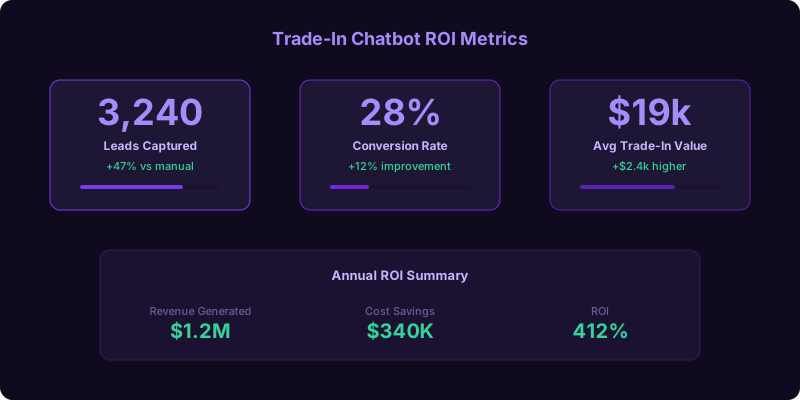
Deploying a trade-in valuation chatbot delivers measurable, trackable results across every metric that matters to dealership management — lead volume, conversion rate, cost per acquisition, appraisal efficiency, and gross profit per trade-in unit. The following benchmarks represent aggregate performance data from dealerships running conversational trade-in tools in 2026.
Key Performance Benchmarks
| Metric | Without Chatbot | With Chatbot (90 Days) | Improvement |
|---|---|---|---|
| Trade-in inquiries per 1,000 visitors | 14 | 47 | +236% |
| Assessment completion rate | 38% (form) | 82% (chatbot) | +116% |
| Leads with complete vehicle data | 51% | 94% | +84% |
| Lead-to-visit conversion | 22% | 48% | +118% |
| Appraisal-to-purchase close rate | 34% | 56% | +65% |
| Average desk time per trade appraisal | 38 min | 22 min | -42% |
| Cost per acquired vehicle | $210 | $72 | -66% |
| After-hours trade leads captured | 8% | 67% | +738% |
The Desk Time Reduction Effect
One of the most underappreciated benefits is the reduction in appraisal desk time. When a seller arrives with a lead that already contains VIN-decoded vehicle data, a structured condition assessment, photos, and an estimated value range, the appraisal manager can confirm or adjust the offer in half the time. This efficiency gain compounds across every appraisal — a dealership processing 40 trade-in appraisals per month saves 640 minutes of desk time, freeing the appraisal manager for higher-value activities like auction buying and reconditioning oversight.
Calculating Your ROI
Use Conferbot's ROI calculator to model your specific return. Input your monthly website traffic, current trade-in form conversion rate, and average gross profit per retailed trade-in unit. The calculator projects your additional monthly trade-in acquisitions, revenue impact, and payback period. Most dealerships achieve full ROI within the first 30 days based on just 2-3 additional vehicle acquisitions that would not have occurred without the chatbot.
Security, Privacy, and Compliance
Trade-in valuation conversations involve personally identifiable information — names, phone numbers, email addresses, vehicle identification numbers, and in some cases, financial data related to payoff amounts and title status. Conferbot's platform is built to protect this data at every layer, ensuring that your dealership remains compliant with data privacy regulations while providing sellers with a secure, trustworthy experience.
Data Protection Measures
- Encryption in transit and at rest: All chatbot conversations are transmitted over TLS 1.3 and stored in AES-256 encrypted databases. VIN data, contact information, and photos are never exposed in plaintext outside of authorized access.
- PII handling: Seller contact information is collected only at the point of lead capture — not during the initial browsing or condition assessment phases. Sellers who want a value estimate without sharing personal information can get one; contact collection is a separate, opt-in step.
- Data retention policies: Dealerships can configure data retention windows to comply with state privacy laws. Leads that do not convert can be automatically purged after 90, 180, or 365 days, depending on your compliance requirements.
- CCPA and state privacy compliance: The chatbot includes configurable privacy disclosures and opt-out mechanisms for California Consumer Privacy Act compliance and similar state regulations. A "Do Not Sell My Information" option is available for California residents.
- TCPA compliance for follow-ups: The chatbot collects explicit opt-in consent before sending SMS or phone follow-ups, with language that meets Telephone Consumer Protection Act requirements. Consent records are timestamped and stored for audit purposes.
Fraud and Abuse Prevention
The chatbot includes safeguards against common abuse patterns: rate limiting to prevent VIN-scraping bots from harvesting valuation data at scale, CAPTCHA triggers for suspicious traffic patterns, and duplicate submission detection to prevent the same seller from generating multiple leads for the same vehicle. These protections ensure that your appraisal team spends time on genuine sellers, not automated queries or competitors mining your valuation logic.
For dealerships subject to FTC Safeguards Rule requirements, Conferbot's security posture supports your compliance obligations with documented access controls, encryption standards, and incident response procedures. Review the full security framework at Conferbot's pricing and compliance page or request a security assessment through your account manager.
Trade-In Chatbot vs. Traditional Appraisal Tools
Dealerships evaluating a trade-in chatbot often ask how it compares to the tools they already use — KBB Instant Cash Offer, Edmunds Trade-In, TrueCar Trade, and their own website's static appraisal form. The comparison below breaks down the critical differences across user experience, data quality, conversion rate, and dealer control.
Comparison Matrix
| Capability | Static Web Form | KBB ICO / Edmunds | Conferbot Trade-In Chatbot |
|---|---|---|---|
| User experience | 12-15 fields on one page; high abandonment | Polished but redirects to third-party site | Conversational, one question at a time; stays on your site |
| Completion rate | 35-40% | 50-55% | 80-85% |
| Condition assessment depth | Single dropdown (Excellent/Good/Fair/Poor) | Moderate (5-8 questions) | Deep (15-20 targeted questions across 4 categories) |
| Data ownership | You own everything | Shared with provider; leads may be resold | You own everything — no data sharing |
| Brand experience | Matches your site | Third-party branding; seller leaves your site | Fully branded to your dealership; embedded on your site |
| Photo collection | Rarely included | Not available | 4-photo guided upload with framing instructions |
| Purchase intent detection | Not available | Not available | Built-in question identifies dual-transaction leads |
| Follow-up automation | Manual | Provider-controlled | Fully customizable drip sequences via SMS, email, WhatsApp |
| Demand-based premium offers | Not available | Not available | Real-time demand list triggers premium messaging |
| Cost | Free (low performance) | $500-2,000/mo + lead sharing | Included in Conferbot plan with full data ownership |
The Data Ownership Advantage
The most significant strategic difference is data ownership. Third-party trade-in tools like KBB Instant Cash Offer and Edmunds Trade-In collect seller information on their platforms and share or resell those leads to competing dealerships in your market. You pay for the tool and then compete with 3-4 other dealers for the same lead. With the Conferbot chatbot, the conversation happens on your website, the data flows into your CRM, and no competitor ever sees the lead. This exclusivity alone makes the chatbot the superior long-term strategy for dealerships that prioritize lead quality over volume. Visit our blog for in-depth guides on optimizing your trade-in acquisition funnel with AI-driven conversations.
Frequently Asked Questions
Below are the most common questions dealerships and automotive businesses ask about deploying the auto trade-in valuation chatbot. Each answer provides the detail you need to make an informed decision about whether this template fits your operation.
Auto Trade-In Valuation Chatbot FAQ
Everything you need to know about chatbots for auto trade-in valuation chatbot.
Why Use a Template vs Building from Scratch?
Templates encode years of optimization data into the conversation flow before you start.
| Factor | Conferbot Template | Build from Scratch | Hire a Developer |
|---|---|---|---|
| Time to deploy | 10 minutes | 2-8 hours | 2-6 weeks |
| Cost | Free | Your time | $5,000-$25,000 |
| Day-1 conversion | 15-22% | 5-8% | 10-15% |
| Proven flows | Yes, data-tested | No | Depends |
| Updates included | Automatic | Manual | Paid |
| Multi-channel | 8+ channels | 1 channel | Extra cost |
| Analytics | Built-in | Must build | Extra cost |
Ready to Deploy Auto Trade-In Valuation Chatbot?
Join 50,000+ businesses. Free forever plan available. No credit card required.