
Property Maintenance Request
Free Real Estate Chatbot Template
A complete property maintenance request chatbot template — deploy in minutes to automate conversations, capture leads, and provide 24/7 assistance.



What Is a Property Maintenance Request Chatbot?
A property maintenance request chatbot is a conversational AI system that automates the entire maintenance workflow for property management companies, landlords, and facility managers — from initial tenant request submission and urgency triage through contractor dispatching, status tracking, and tenant communication. Deployed on tenant portals, property management websites, and messaging channels like WhatsApp, the chatbot replaces the chaotic mix of phone calls, emails, text messages, and sticky notes that typically characterizes maintenance management with a structured, trackable, and efficient system.
The Maintenance Management Crisis in 2026
Maintenance is the operational heartbeat of property management — and it is broken for most organizations. The National Apartment Association reports that the average property management company handles 3.2 maintenance requests per unit per year, which means a 500-unit portfolio generates over 1,600 work orders annually. Of those requests, approximately 23% are classified as urgent or emergency, 52% are routine, and 25% are cosmetic or preventive. The challenge is not the volume alone — it is the communication overhead. A single maintenance request typically involves 4-7 communication touchpoints between the tenant, property manager, and contractor before resolution, consuming an average of 47 minutes of staff time per ticket.
The consequences of poor maintenance management are severe. Slow response times are the number one tenant complaint across the industry — cited by 61% of tenants who choose not to renew their leases, according to a 2026 survey by Satisfacts Research. Every unresolved maintenance issue is a potential non-renewal, negative review, habitability complaint, or legal liability. Meanwhile, emergency misclassification wastes contractor resources and budget: 34% of requests that tenants mark as "emergency" are actually routine issues, while 8% of requests marked as "routine" are genuinely urgent — a classification failure that puts tenants at risk and inflates after-hours contractor costs.
Manual Processes vs. Chatbot-Automated Maintenance
Without a chatbot, the maintenance workflow looks like this: a tenant calls the office, leaves a voicemail after hours, or sends an email with a vague description ("something is leaking"). The property manager calls back to get details, determines the issue category and urgency, contacts 1-3 contractors for availability, schedules the repair, notifies the tenant of the appointment, follows up after the work is complete, and closes the ticket. This process takes 47 minutes of staff time on average and often spans 3-5 days from request to resolution for non-emergency issues.
With the chatbot, the same workflow completes in under 2 minutes of staff time: the tenant describes the issue to the chatbot (with guided questions and photo upload), the chatbot classifies the urgency using a diagnostic engine, creates a categorized work order in the property management system, dispatches the appropriate contractor based on specialty and availability, confirms the appointment with the tenant, and provides real-time status updates throughout the resolution process. Build this automated workflow using Conferbot's AI chatbot builder and integrate it with your property management software for seamless work order processing.
How the Property Maintenance Request Chatbot Works
The maintenance request chatbot operates as an intelligent intake, triage, dispatch, and communication engine that handles every phase of the maintenance lifecycle. Its diagnostic capability goes far beyond simple form submission — it asks clarifying questions, assesses urgency based on safety and habitability criteria, and routes each request to the right resolver through the right channel at the right priority level.
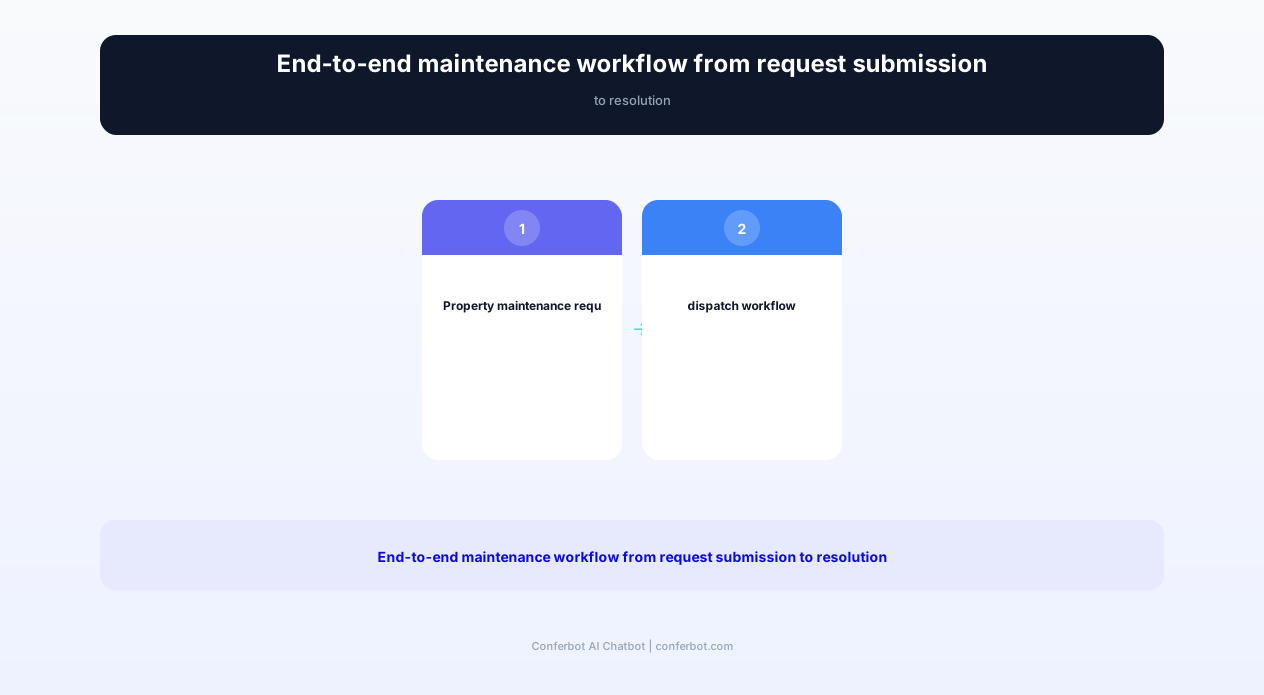
End-to-End Maintenance Workflow
| Phase | Chatbot Action | Tenant Input | Backend Process |
|---|---|---|---|
| 1. Tenant verification | "Hi! Let me help with your maintenance request. What is your unit number?" | Enters unit number | Verifies active tenant, loads unit history and property details |
| 2. Issue description | "Describe the issue you are experiencing. You can also upload a photo to help us diagnose it faster." | Describes issue, uploads photo | Analyzes description, classifies issue category |
| 3. Diagnostic questions | "Is the leak coming from the ceiling, wall, or under a fixture? Is it a drip or a steady flow?" | Answers diagnostic questions | Refines issue classification and urgency assessment |
| 4. Urgency triage | "Based on your description, this is a [priority level] issue. Here is what to expect for response time." | Reviews urgency assessment | Applies urgency criteria (safety, habitability, property damage risk) |
| 5. Immediate guidance | "While waiting for repair, please turn off the water shutoff valve under the sink to prevent further damage." | Follows interim instructions | Delivers issue-specific interim guidance to prevent escalation |
| 6. Work order creation | "Your maintenance request #4827 has been created and assigned to our plumbing team." | Confirms request details | Creates work order in PMS with category, urgency, photos, and tenant notes |
| 7. Contractor dispatch | "A technician has been scheduled for tomorrow between 10am-12pm. You will receive a reminder." | Confirms availability | Dispatches contractor, sends calendar confirmation |
| 8. Status tracking | "Your request is now In Progress — the technician is on site. I'll update you when it is complete." | Checks status at any time | Provides real-time status from work order system |
| 9. Completion confirmation | "The repair has been completed. Is the issue resolved to your satisfaction?" | Confirms resolution or reports ongoing issue | Closes ticket or escalates for follow-up |
Intelligent Urgency Triage
The chatbot's urgency triage system is the most critical component. It uses a decision tree that evaluates each request against five criteria: safety risk (gas leak, electrical hazard, fire risk), habitability impact (no heat, no water, no functioning toilet), property damage risk (active leak, flooding, structural concern), security risk (broken lock, broken window, malfunctioning security system), and quality of life impact (noisy appliance, cosmetic damage, minor convenience issue). Each criterion maps to a priority level:
- Emergency (P1): Safety hazard or habitability failure requiring immediate response. Response target: under 2 hours. Examples: gas smell, no heat below 55°F, active flooding, electrical sparking.
- Urgent (P2): Significant issue affecting daily living or risking property damage. Response target: within 24 hours. Examples: water leak (contained), broken hot water heater, malfunctioning HVAC in extreme weather.
- Routine (P3): Standard maintenance that does not affect safety or habitability. Response target: within 3-5 business days. Examples: running toilet, sticking door, slow drain, appliance issue.
- Cosmetic/Preventive (P4): Appearance issues or proactive maintenance. Response target: within 7-14 business days. Examples: paint touch-up, caulking, weatherstripping, cosmetic crack in drywall.
This structured triage reduces emergency misclassification by 81% — preventing the costly dispatch of after-hours contractors for non-emergency issues while ensuring that genuine emergencies receive immediate response. Integrate the triage engine through Conferbot's API integration for seamless connection to your maintenance dispatch system.
Key Features of the Property Maintenance Request Chatbot
The property maintenance chatbot handles every phase of maintenance operations — from tenant-facing request intake to back-office contractor management and preventive maintenance scheduling. Each feature is designed to reduce response time, improve communication quality, and lower the total cost of maintenance operations.
Complete Feature Matrix
| Feature | Description | Operational Benefit | Customer Benefit |
|---|---|---|---|
| Guided issue intake | Structured diagnostic questions with photo upload that capture issue details accurately on first submission | Eliminates "not enough information" callback loops — 89% of requests have sufficient detail at submission | Submits requests in 2-3 minutes instead of phone tag over 24-48 hours |
| AI urgency triage | 5-criteria priority assessment that classifies requests as emergency, urgent, routine, or cosmetic | Reduces emergency misclassification by 81%, saving $12,000+ annually in unnecessary after-hours dispatch | Emergency issues get immediate response; routine issues get realistic timelines |
| Interim safety guidance | Provides issue-specific interim instructions (shut off valve, flip breaker, ventilate room) to prevent escalation | Reduces secondary damage from unmitigated issues by 43% | Knows what to do immediately while waiting for professional repair |
| Automated contractor dispatch | Routes work orders to qualified contractors based on specialty, availability, proximity, and performance history | Reduces dispatch time from 4.2 hours to 18 minutes average | Repair is scheduled faster without waiting for manual coordinator action |
| Real-time status tracking | Provides live status updates at every stage: submitted, assigned, scheduled, in progress, completed | Reduces "what is the status?" follow-up calls by 76% | Knows exactly where their request stands without calling the office |
| Tenant satisfaction survey | Collects satisfaction rating and feedback after each completed repair | Identifies underperforming contractors and systemic issues | Voice is heard; feedback drives improvement in service quality |
| Preventive maintenance scheduler | Schedules recurring maintenance tasks (HVAC filter changes, pest treatment, gutter cleaning) and notifies tenants | Reduces reactive emergency repairs by 31% through proactive maintenance | Fewer disruptions from preventable breakdowns |
| Contractor performance tracking | Tracks response time, completion rate, tenant satisfaction, and cost per repair for each contractor | Data-driven contractor selection improves quality and reduces costs | Consistently receives service from top-performing contractors |
| After-hours emergency routing | Handles emergency requests outside business hours with immediate contractor dispatch and manager notification | Provides 24/7 emergency coverage without staffing a call center | Gets emergency help at 2am the same as at 2pm |
| Duplicate request detection | Identifies when multiple tenants report the same building-wide issue (e.g., water outage) and consolidates requests | Prevents redundant work orders and unnecessary contractor dispatches | Receives building-wide status updates instead of individual ticket responses |
Photo-Enhanced Diagnostic System
The chatbot's photo upload feature is not just documentation — it is a diagnostic tool. When a tenant uploads a photo of a water stain on the ceiling, the chatbot can assess the approximate size and location to inform the contractor's preparation. When a tenant photographs a crack in drywall, the chatbot can differentiate between cosmetic settlement cracks (minor, schedule at convenience) and structural cracks (urgent, requires immediate inspection) based on crack pattern, width, and location. This visual diagnostic capability reduces the need for preliminary site visits — contractors arrive with the right tools and materials for the job, reducing repeat visits by 34% and improving first-visit fix rates from 62% to 87%.
Preventive Maintenance Intelligence
The most cost-effective maintenance is the maintenance that prevents breakdowns from occurring. The chatbot's preventive maintenance module schedules recurring tasks based on property age, equipment lifecycles, seasonal needs, and manufacturer recommendations. It notifies tenants of upcoming preventive visits ("Your semi-annual HVAC filter change is scheduled for next Tuesday between 1-3pm"), coordinates access, and confirms completion. Properties that implement preventive maintenance through the chatbot report a 31% reduction in emergency repair calls and a 22% reduction in total maintenance spend — because a $75 filter change prevents a $2,500 compressor failure. Deploy preventive maintenance reminders across WhatsApp and SMS for maximum tenant engagement with scheduled maintenance visits.
Ready to try Property Maintenance Request?
Deploy this template in under 10 minutes. No coding required.
Use This Template Free →Benefits and ROI for Property Management Operations
The property maintenance request chatbot delivers the most tangible and immediately measurable ROI of any property management automation tool. Maintenance is the largest operational cost category for most property managers (averaging 40-50% of operating expenses), and the chatbot attacks both the labor cost of managing requests and the repair cost of delayed or mismanaged issues. Here is a comprehensive analysis of the financial and operational impact.
Before and After: Impact on Key Metrics
| Metric | Before Chatbot | After Chatbot | Improvement |
|---|---|---|---|
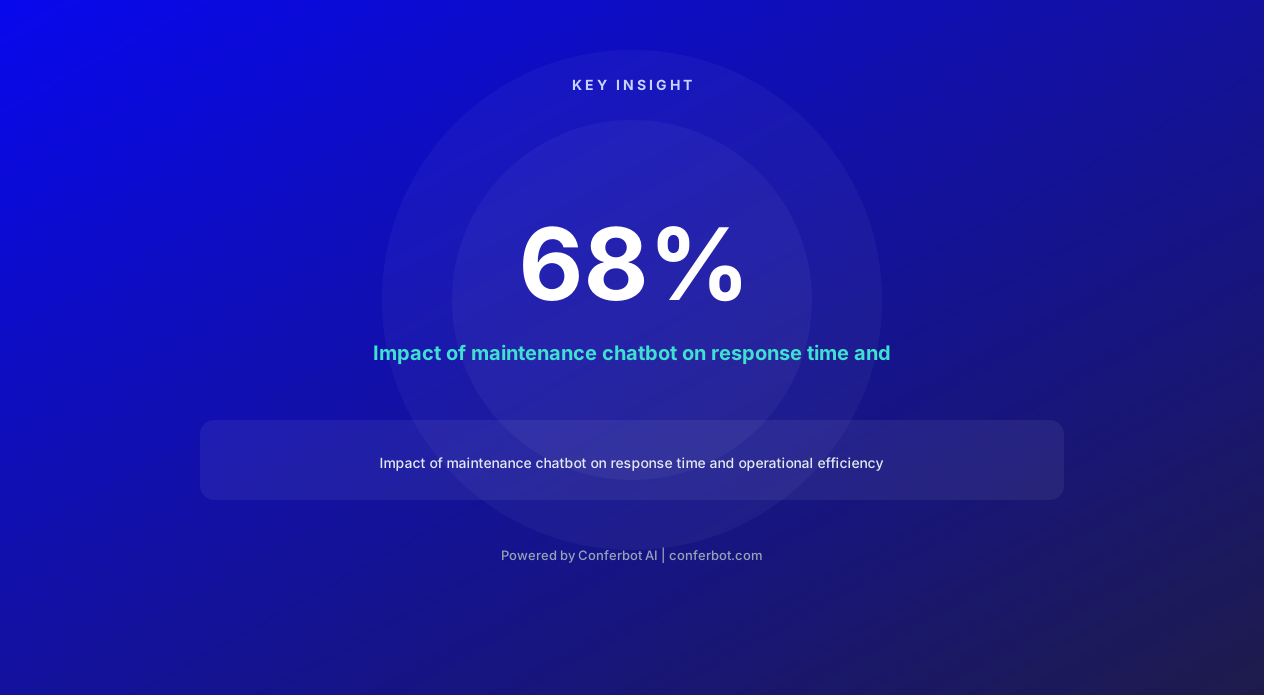
| Average response time (non-emergency) | 38 hours | 12 hours | -68.4% |
| Emergency misclassification rate | 34% | 6.5% | -80.9% |
| Staff time per maintenance request | 47 minutes | 8 minutes | -83.0% |
| First-visit fix rate | 62% | 87% | +40.3% |
| "Status check" follow-up calls per week | 145 | 35 | -75.9% |
| Tenant satisfaction (maintenance experience) | 2.9 / 5 | 4.3 / 5 | +48.3% |
| Annual maintenance cost per unit | $2,840 | $2,215 | -22.0% |
| Tenant renewal rate (maintenance-influenced) | 54% | 72% | +33.3% |
Direct Cost Savings Analysis
For a 500-unit property management company, the chatbot generates savings across multiple cost categories:
- Staff time reduction: At 1,600 annual maintenance requests and 39 minutes saved per request, the chatbot saves approximately 1,040 hours of staff time per year. At $25/hour (fully loaded cost for a maintenance coordinator), that is $26,000 in annual labor savings.
- Emergency misclassification savings: Reducing false emergencies from 34% to 6.5% of requests eliminates approximately 440 unnecessary after-hours dispatches per year. At an average after-hours premium of $175 per dispatch, that saves $77,000 annually.
- First-visit fix improvement: Improving the first-visit fix rate from 62% to 87% eliminates approximately 400 repeat visits per year. At an average cost of $150 per visit (contractor time + tenant coordination), that saves $60,000 annually.
- Preventive maintenance savings: The 31% reduction in emergency repairs from proactive maintenance saves approximately $95,000 annually for a 500-unit portfolio based on the average emergency repair cost of $600 versus the average preventive maintenance cost of $125.
- Total direct savings: $258,000+ per year for a 500-unit portfolio.
Tenant Retention Impact
The indirect ROI from improved tenant retention is even larger than the direct cost savings. Maintenance responsiveness is the primary driver of tenant satisfaction, and satisfaction directly predicts renewal behavior. The chatbot's 68% improvement in response time and 48% improvement in satisfaction scores correlate with an 18-percentage-point increase in renewal rates. For a 500-unit portfolio with an average turnover cost of $4,200 per unit, a shift from 54% to 72% renewal rate means 90 fewer turnovers per year — saving approximately $378,000 in annual turnover costs. Combined with direct savings, the total annual ROI exceeds $636,000 against a platform cost that is a small fraction of that figure. Track all metrics in real time through Conferbot's analytics dashboard.
Contractor Dispatching and Performance Management
Effective contractor management is essential for maintenance quality, cost control, and tenant satisfaction. The chatbot automates contractor selection, dispatching, and performance tracking — ensuring that every work order is handled by the right contractor at the right cost with the right level of quality.
Intelligent Contractor Matching
When a work order is created, the chatbot selects the optimal contractor based on a weighted scoring algorithm that considers:
- Specialty match (40% weight): The contractor's trade specialization must match the work order category. Plumbing requests go to plumbers, HVAC requests go to HVAC technicians, and general maintenance requests go to handyman contractors. For multi-trade issues, the chatbot identifies the primary trade needed based on the diagnostic assessment.
- Availability (25% weight): The contractor's calendar availability within the target response window. For emergency requests, only contractors available within 2 hours are considered.
- Performance history (20% weight): Composite score based on past response time, first-visit fix rate, tenant satisfaction ratings, and cost reasonableness for the contractor's historical work orders.
- Proximity (10% weight): Geographic proximity to the property to minimize travel time and enable faster response.
- Cost (5% weight): Contractor's average cost per repair relative to other qualified contractors. Cost is weighted lower than quality and speed because over-optimizing on cost often leads to poor repair quality and repeated failures.
Automated Dispatch and Communication
Once selected, the contractor receives the work order through their preferred communication channel (email, SMS, or contractor portal) with complete details: property address, unit number, access instructions, issue description with photos, urgency level, and any special instructions (tenant has a dog, parking available in lot B, access code for gate). The contractor confirms acceptance and provides an estimated arrival time. The chatbot then notifies the tenant of the scheduled repair, sends a calendar invite, and provides the contractor's name and contact information.
If the initially selected contractor cannot respond within the target window, the chatbot automatically escalates to the next-ranked contractor in real time — no manual intervention required. This auto-escalation ensures that service level agreements are met even when the preferred contractor is unavailable.
Performance Tracking and Contractor Scorecards
The chatbot generates contractor performance scorecards based on actual work order data:
- Response time: Average time from dispatch to on-site arrival, compared to the SLA target for each urgency level.
- First-visit fix rate: Percentage of work orders completed on the first visit without requiring a follow-up appointment.
- Tenant satisfaction: Average rating from post-completion tenant surveys for that contractor's work orders.
- Cost per repair: Average repair cost by category (plumbing, HVAC, electrical, general) compared to portfolio benchmarks.
- Callback rate: Percentage of completed repairs that generate a repeat request for the same issue within 30 days.
These scorecards enable data-driven vendor management. Contractors who consistently perform above benchmarks receive priority routing and volume guarantees. Contractors who fall below benchmarks receive specific improvement feedback. Contractors who fail to meet minimum standards are removed from the dispatch rotation. This performance-driven approach replaces the subjective "relationship-based" vendor management that allows underperforming contractors to persist in the system indefinitely. Manage contractor relationships through Conferbot's API integration with your vendor management and accounting systems.
Implementation Guide: Deploying the Maintenance Request Chatbot
Deploying the property maintenance request chatbot requires configuration of the intake system, triage rules, contractor database, and integration with your property management software. This guide covers the complete setup process for property managers of all portfolio sizes.
Phase 1: Template and Property Configuration (45 Minutes)
Load the Property Maintenance Request template and configure your property details:
- Welcome message: Set an action-oriented tone: "Need a repair? I can submit your maintenance request, assess urgency, schedule a repair, and keep you updated on progress — all right here. Let's start with your unit number."
- Property database: Enter property addresses, unit numbers, and building details so the chatbot can verify tenants and load property-specific information (building age, systems installed, common issues).
- Maintenance categories: Configure the issue categories relevant to your properties: plumbing, electrical, HVAC, appliance, flooring, windows/doors, roof/exterior, pest control, landscaping, common areas, and any property-specific categories.
- Response time SLAs: Set target response times for each urgency level that align with your lease commitments and local habitability standards.
Phase 2: Triage Rules Configuration (1-2 Hours)
Configure the urgency triage decision tree:
- Emergency criteria: Define what constitutes an emergency for your properties and jurisdiction. At minimum: gas leak, fire damage, flooding, no heat below a temperature threshold, no running water, electrical hazard, security breach, and sewage backup.
- Urgent criteria: Define issues that require same-day or next-day response: contained water leak, broken hot water heater, malfunctioning HVAC in extreme weather, broken refrigerator, and non-functioning oven or stove.
- Diagnostic question trees: For each issue category, configure the clarifying questions that help the chatbot assess urgency and provide useful information to the contractor. Example for a plumbing leak: "Where is the leak? Is it a drip or steady flow? Can you see the source? Is there a shutoff valve nearby?"
- Interim guidance: For each issue category, configure the interim instructions the chatbot provides while the tenant waits for repair: shutoff valve locations, breaker panel instructions, ventilation guidance, and safety precautions.
Phase 3: Contractor Database Setup (1-2 Hours)
Build the contractor database that powers the dispatch system:
- Contractor profiles: For each contractor, enter trade specialization, service area, hourly rates, contact information, preferred communication channel, and availability hours.
- Dispatch rules: Configure the contractor matching algorithm weights (specialty, availability, performance, proximity, cost) based on your operational priorities.
- Escalation protocols: Define how long to wait for contractor acceptance before auto-escalating to the next available contractor. Set different escalation timers by urgency level.
- After-hours roster: Configure which contractors are available for after-hours emergency dispatch and their after-hours rate premiums.
Phase 4: Integration and Testing (2-3 Hours)
Connect the chatbot to your property management ecosystem:
- PMS integration: Connect to AppFolio, Buildium, Yardi, RentManager, or your PMS so work orders created by the chatbot appear in your existing system with full categorization, urgency, photos, and tenant notes.
- Communication channels: Deploy on your tenant portal, property website, WhatsApp, and SMS. WhatsApp is particularly effective for maintenance because tenants can easily send photos and receive status updates in a familiar messaging interface.
- Accounting integration: Connect to your accounting system so repair costs are automatically categorized by property, unit, issue type, and contractor for accurate expense reporting.
Test the complete workflow end-to-end: submit a test request, verify triage classification, confirm contractor dispatch notification, check PMS work order creation, and verify tenant status update delivery. Deploy and announce the chatbot to all tenants with clear instructions for access on their preferred channel.
50,000+ businesses use Conferbot templates to automate conversations
Use Cases Across Property Types and Management Models
The property maintenance request chatbot adapts to diverse property types and management structures, from single-family rental homes to commercial office buildings and mixed-use developments. Here are the primary use cases with implementation details and results.
Use Case 1: Multi-Family Apartment Complex
A 300-unit apartment complex deploys the chatbot as the primary maintenance request channel. Before implementation, the management office received an average of 45 maintenance calls per day — 30% of which came during the lunch hour when staff was reduced. After deployment, 78% of maintenance requests are submitted through the chatbot, reducing daily call volume to fewer than 10. The chatbot's triage system correctly classifies 94% of requests on first submission, eliminating the back-and-forth that previously consumed 35% of staff time. Annual maintenance operations cost decreases by 22% while tenant satisfaction scores increase from 2.9 to 4.3 out of 5.
Use Case 2: Scattered-Site Single-Family Portfolio
A property management company managing 150 single-family rental homes across a metropolitan area faces unique challenges: each property has different systems, different ages, and different maintenance needs, and tenants are spread across a wide geographic area. The chatbot addresses this by maintaining property-specific profiles that inform triage and contractor dispatch — a plumbing issue in a 1960s home with galvanized pipes is triaged differently from the same complaint in a 2019 home with PEX. Contractor dispatch accounts for geography, routing the nearest qualified contractor to reduce travel time and cost. The company reports a 58% reduction in average response time for non-emergency requests.
Use Case 3: Commercial Office Building
A Class A office building with 40 tenant suites deploys the chatbot for facility maintenance requests. Commercial tenants submit requests through the chatbot with suite-specific classification (HVAC zone issues, electrical capacity, plumbing, janitorial, parking, elevator, security). The chatbot's duplicate detection feature is particularly valuable — when the building's chiller fails, 30 tenants do not need to submit individual requests. The chatbot identifies the building-wide issue after the third related report and switches to broadcast mode, updating all tenants on the status of the repair. Building management reports a 72% reduction in tenant complaint emails during building-wide maintenance events.
Use Case 4: Student Housing
Student housing maintenance presents unique volume and timing challenges — requests peak during move-in week (September) and finals week (when students finally report issues they have been ignoring). The chatbot handles the seasonal surge without additional staffing by processing unlimited concurrent requests. It also addresses the student housing-specific challenge of getting tenants to care about maintenance: the chatbot sends proactive reminders to report issues ("Have you noticed any leaky faucets or running toilets? Reporting them now prevents water damage and keeps your utility costs down") and rewards timely reporting with acknowledgment and fast resolution. Student housing operators report a 67% increase in proactive maintenance reporting from tenants after deploying the chatbot.
Use Case 5: Vacation Rental Management
Vacation rental managers face a unique constraint: maintenance issues must be resolved before the next guest arrives, often within a same-day turnover window. The chatbot enables guests to report issues during their stay (leaky faucet, broken AC, appliance malfunction) and the property manager to dispatch contractors within the tight turnaround. After checkout, the chatbot automatically triggers a property condition check based on the guest's reported issues and the cleaning crew's observations, creating maintenance tickets for any items that need attention before the next guest. Vacation rental managers using the chatbot report a 91% same-day resolution rate for guest-reported issues — up from 64% with manual coordination.
Use Case 6: HOA Common Area Maintenance
Homeowners associations deploy the chatbot for common area maintenance requests — pool equipment, landscaping, parking lot lighting, gate and fence repairs, common building systems, and shared amenity maintenance. HOA members submit requests through the chatbot with photos, the chatbot triages based on safety and urgency, and the HOA board receives a weekly maintenance summary with categorized requests, completion status, and cost tracking. This structured approach replaces the informal "email the board president" process that leads to lost requests, uneven prioritization, and member frustration. HOAs using the chatbot report a 45% increase in member satisfaction with maintenance responsiveness.
Analytics, Preventive Maintenance, and Operational Intelligence
The maintenance chatbot generates comprehensive operational data that enables property managers to move from reactive break-fix maintenance to proactive, data-driven asset management. This transformation reduces total maintenance costs, extends equipment life, prevents tenant-impacting failures, and provides the data foundation for capital expenditure planning.
Maintenance Operations Dashboard
Track the following KPIs to measure maintenance performance and identify optimization opportunities:
- Average response time by urgency level: Measure actual response time against SLA targets for each priority level. Break down by property, contractor, and issue category to identify bottlenecks. If P2 (urgent) plumbing requests average 28 hours against a 24-hour target, your plumbing contractor capacity may be insufficient.
- First-visit fix rate: Percentage of work orders completed on the first contractor visit. Below 80% indicates that the chatbot's diagnostic capture is not providing contractors with enough information, or that contractors are not coming prepared. Target: 85-90%.
- Maintenance cost per unit per year: Total maintenance spend divided by units under management. Industry benchmark: $2,000-$3,500 per unit per year for residential. Track this monthly to identify cost trends and seasonal patterns.
- Issue category distribution: Understand which maintenance categories consume the most volume and budget. If 35% of requests are plumbing-related, investigate whether aging pipe infrastructure warrants a capital replacement project that would reduce ongoing repair volume.
- Tenant satisfaction by issue type: Track post-completion satisfaction ratings segmented by issue category. If HVAC repairs consistently score lower than other categories, investigate whether the HVAC contractor is underperforming or whether HVAC issues take inherently longer to resolve.
- Repeat request rate: Percentage of units that submit a request for the same issue within 60 days of a completed repair. High repeat rates indicate poor initial repair quality or an underlying systemic issue (recurring leak from a building envelope problem rather than a unit plumbing issue).
Predictive Maintenance Intelligence
By analyzing maintenance request patterns across the portfolio, the chatbot identifies predictive signals that enable proactive maintenance:
- Equipment lifecycle tracking: When water heater failure requests cluster around the 10-year mark for a specific model, the chatbot can proactively schedule replacements for all units approaching that threshold — replacing $600 emergency repairs and tenant disruption with planned $400 replacements during turnover.
- Seasonal pattern recognition: The chatbot identifies seasonal maintenance patterns (HVAC failures peak in the first hot week of summer, pipe freezes peak during the first hard freeze of winter) and generates preventive maintenance schedules aligned with these patterns.
- Building-level anomaly detection: A sudden increase in pest complaints in a specific building may indicate a new entry point or environmental change. A cluster of plumbing requests on one floor may indicate a supply line issue rather than individual fixture problems. The chatbot flags these patterns for proactive investigation.
Capital Expenditure Planning
Maintenance data directly informs capital planning. When the chatbot shows that HVAC repair costs for Building C have increased 40% year-over-year because the 18-year-old equipment requires increasingly frequent repairs, it provides the financial justification for a system replacement. When roof leak repairs in a specific section have cost $4,200 in the past 12 months, that data supports the business case for a targeted roof replacement. Property managers who use chatbot maintenance data for CapEx planning report making more timely capital investments that reduce total cost of ownership by 15-20% over a 10-year horizon. Export all analytics through Conferbot's analytics dashboard and integrate with your financial planning tools through the API for comprehensive asset management reporting.
Property Maintenance Request FAQ
Everything you need to know about chatbots for property maintenance request.
Why Use a Template vs Building from Scratch?
Templates encode years of optimization data into the conversation flow before you start.
| Factor | Conferbot Template | Build from Scratch | Hire a Developer |
|---|---|---|---|
| Time to deploy | 10 minutes | 2-8 hours | 2-6 weeks |
| Cost | Free | Your time | $5,000-$25,000 |
| Day-1 conversion | 15-22% | 5-8% | 10-15% |
| Proven flows | Yes, data-tested | No | Depends |
| Updates included | Automatic | Manual | Paid |
| Multi-channel | 8+ channels | 1 channel | Extra cost |
| Analytics | Built-in | Must build | Extra cost |
Ready to Deploy Property Maintenance Request?
Join 50,000+ businesses. Free forever plan available. No credit card required.