
Self-Storage Facility Chatbot
Free Real Estate Chatbot Template
Help customers find the right storage unit size, check real-time availability and pricing, complete online move-in, and manage access codes and payments.



What Is a Self-Storage Facility Chatbot?
A self-storage facility chatbot is a conversational AI assistant deployed on storage facility websites, Google Business profiles, and messaging platforms that handles the entire prospective tenant journey — from initial inquiry through unit selection, pricing, and online move-in — without requiring a facility manager to be on-site or available by phone. Unlike a static pricing page or a "call us" button that leaves potential renters waiting, a self-storage chatbot engages visitors the moment they arrive, asks what they need to store, recommends the right unit size, shows real-time availability and pricing, and walks them through a complete online reservation or move-in process.
The Challenge Self-Storage Operators Face in 2026
The self-storage industry in the United States represents a $50+ billion market with over 60,000 facilities competing for tenants. The average facility has 500-600 units and operates with a lean staff — often just one or two managers covering a 12-hour day, with no coverage during evenings, weekends, or holidays. Yet the majority of storage searches happen outside business hours. Industry data shows that 62% of self-storage inquiries occur between 6pm and 9am or on weekends, precisely when most facility offices are closed. Every unanswered inquiry is a potential tenant lost to the competitor down the road who happened to answer the phone or had a better online experience.
The problem compounds because self-storage is an urgency-driven purchase. People searching for storage are often dealing with a life event — a move, a renovation, a downsizing, a divorce, a death in the family, or a business inventory overflow. They need answers now, not tomorrow morning. When a prospect visits your facility website at 8pm on a Tuesday and sees a phone number with "Office hours: 9am-5pm," they do not wait. They search for the next facility, and the one that responds first wins the rental. Studies show that the first storage facility to respond to an inquiry captures 78% of rentals from that prospect.
How a Self-Storage Chatbot Differs from a Generic Contact Form
A contact form collects a name, email, and a vague message like "I need a storage unit." It sits in an inbox until a facility manager checks it — typically 4-12 hours later. By that time, the prospect has already contacted three other facilities, visited one in person, and signed a rental agreement. A self-storage chatbot replaces this dead-end with an interactive experience that mirrors the conversation a prospect would have with your best facility manager: "What are you planning to store?" "How long do you need storage?" "Do you need climate control?" "Here's the perfect unit for you — it's available right now at $129/month. Want to reserve it?"
The chatbot captures not just contact information but complete tenant context — what they are storing, how long they plan to stay, whether they need climate control, whether they need vehicle access, and their budget sensitivity. This means that when a facility manager does follow up, they already know everything about the prospect and can close the rental in minutes rather than starting the qualification conversation from scratch.
Who Should Use This Template
This template is designed for single-facility self-storage operators, multi-facility storage companies managing portfolios of 5-500+ locations, Real Estate Investment Trusts (REITs) with self-storage holdings, mixed-use storage facilities offering climate-controlled, drive-up, and vehicle storage, and portable storage container companies managing delivery and pickup scheduling. Any storage operation where after-hours inquiry capture, unit size guidance, and online move-in processing represent the highest-impact improvements will benefit from deploying this chatbot. Explore how this template connects to Conferbot's AI chatbot builder to customize every conversation path for your specific facility layout, pricing tiers, and move-in requirements.
How the Self-Storage Chatbot Works: From Inquiry to Move-In
The self-storage chatbot operates as a complete digital leasing agent that guides prospective tenants through a structured conversation designed to match them with the right unit and convert them into a paying tenant — all within a single session. The conversation architecture follows the natural decision-making process of someone shopping for storage, asking the right questions in the right order to build toward a reservation or immediate move-in.
The Unit Size Recommendation Wizard
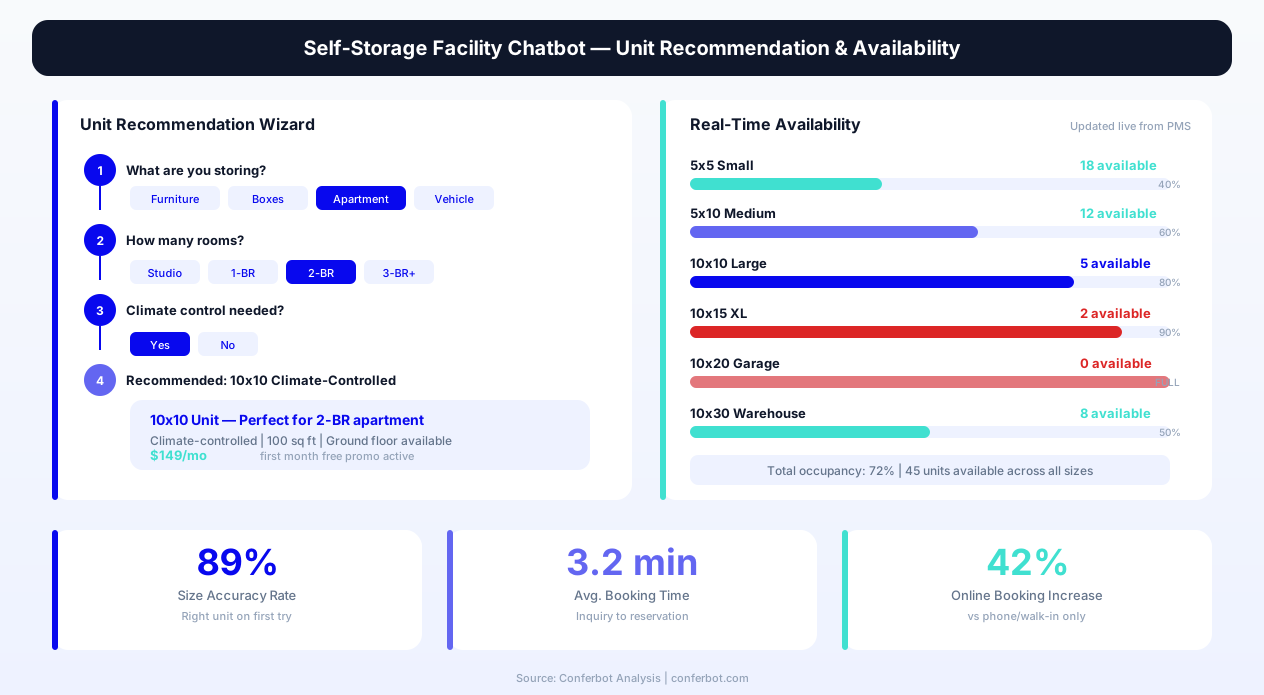
The most valuable feature of the self-storage chatbot is its unit size recommendation engine. Most storage shoppers do not know what size unit they need. They know what they want to store — "the contents of a two-bedroom apartment" or "about 20 boxes and some furniture" — but they cannot translate that into square footage. The chatbot bridges this knowledge gap with a guided wizard.
| Step | Chatbot Question | Data Captured | Why It Matters |
|---|---|---|---|
| 1. Purpose | "What brings you to self-storage today?" | Moving / Renovating / Downsizing / Business / Seasonal / Vehicle | Sets context for unit type and duration estimates |
| 2. Items | "What will you be storing?" | Item categories: furniture, boxes, appliances, business inventory, vehicle | Drives unit size calculation and climate control recommendation |
| 3. Room equivalent | "How much space are we talking about?" | Closet / 1 room / 1-bed apt / 2-bed apt / 3-bed house / Larger | Maps to specific unit size ranges with visual comparisons |
| 4. Duration | "How long do you expect to need storage?" | Less than 1 month / 1-3 months / 3-6 months / 6-12 months / 1+ year | Enables long-term discount offers and retention planning |
| 5. Climate needs | "Do any of your items need protection from heat, cold, or humidity?" | Yes / No / Not sure | Recommends climate-controlled units for sensitive items and upsells when appropriate |
| 6. Access frequency | "How often will you need to access your unit?" | Rarely / Monthly / Weekly / Daily | Recommends ground-floor or drive-up units for frequent access |
| 7. Budget | "What monthly budget are you working with?" | Price range or "show me options" | Filters available units to match budget and presents upgrade opportunities |
Real-Time Availability and Pricing Display
After the recommendation wizard determines the ideal unit size, the chatbot queries your facility's inventory system and presents available units with current pricing. The display includes the unit size, monthly rate, any active promotions (first month free, 50% off first month), climate control status, floor level, and access type (interior hallway vs. drive-up). When multiple units of the same size are available, the chatbot highlights the differences — a ground-floor drive-up unit at $149/month versus a second-floor interior unit at $119/month — so the prospect can make an informed choice.
Real-time availability is critical in self-storage because inventory changes daily. A 10x10 unit that was available this morning may be rented by afternoon. Showing stale availability destroys trust: a prospect who reserves a unit online only to be told "that unit is no longer available" when they arrive to move in will leave a negative review and rent from a competitor. The chatbot's integration with your management software ensures every unit shown is genuinely available at the displayed price.
The Online Move-In Flow
Once the prospect selects a unit, the chatbot walks them through the complete move-in process without requiring a phone call or office visit. The flow collects the tenant's full name, contact information, billing address, government ID type, emergency contact, and payment method. It presents the rental agreement terms, facility rules (access hours, prohibited items, insurance requirements), and collects electronic agreement acceptance. The prospect pays their first month's rent and any applicable fees (admin fee, security deposit) directly through the chatbot's payment integration.
Upon completion, the chatbot delivers the access code or gate PIN, unit number and location directions within the facility, move-in day instructions, and a confirmation email with all details. The tenant can move in immediately — no office visit required. This end-to-end digital move-in capability is particularly powerful for after-hours conversions: a prospect who finds your facility at 9pm can be a paying tenant with an access code by 9:15pm. Connect the entire flow to your existing facility management software through Conferbot's chatbot API integration capabilities.
Key Features: Unit Wizard, Pricing Engine, and Access Management
A self-storage chatbot must serve prospective tenants shopping for units, current tenants managing their accounts, and facility managers seeking operational efficiency. The feature set below covers all three audiences with capabilities purpose-built for the self-storage industry.
Feature Overview by Category
| Feature | Prospective Tenants | Current Tenants | Facility Operator Benefit |
|---|---|---|---|
| Unit size wizard | Guided recommendation based on items stored | N/A | Reduces "wrong size" move-outs by 60% |
| Real-time availability | See available units with live pricing | Check if larger/smaller unit is available for transfer | No stale inventory shown; zero overbooking |
| Online move-in | Complete reservation and payment in chat | N/A | 24/7 move-ins without staff intervention |
| Climate control advisor | Recommendation based on stored items | Upgrade path to climate-controlled unit | Increases climate-controlled unit revenue by 25% |
| Insurance add-on | Present storage insurance options at checkout | Add or upgrade insurance coverage | $8-15/month additional revenue per insured tenant |
| Access code management | Receive gate code after move-in | Reset or retrieve access code | Eliminates 40% of "locked out" phone calls |
| Payment reminders | N/A | Automated late payment alerts and payment link | Reduces delinquency rate by 35% |
| Facility hours and directions | Office hours, access hours, driving directions | Holiday hour changes, temporary closures | Eliminates repetitive "what are your hours?" calls |
| Unit transfer requests | N/A | Request to upsize or downsize unit | Retains tenants who would otherwise move out |
| Move-out processing | N/A | Submit move-out notice and schedule | Advance notice for remarketing vacant units |
The Climate Control Upsell Engine
Climate-controlled units command a 25-50% premium over standard drive-up units, making them the highest-margin inventory at any facility. The chatbot's climate control advisory feature identifies opportunities to recommend climate-controlled storage based on the items the prospect mentions. When someone says they are storing wooden furniture, electronics, musical instruments, artwork, wine, or documents, the chatbot explains why climate control protects their investment: "Wooden furniture can warp and crack in temperature extremes. A climate-controlled unit stays between 55-80 degrees year-round, protecting your furniture from heat, cold, and humidity damage. The upgrade is $35/month more than a standard unit — that is about $1.15 per day to protect items worth thousands."
This value-framed upsell converts at 40% higher rates than a static website listing that simply shows two price columns. The conversational format allows the chatbot to address objections ("Is it really necessary?" → "For short-term storage in mild weather, you may be fine without it. But if you are storing through a summer where temperatures inside a standard unit can reach 120+ degrees, climate control is strongly recommended for electronics and wood furniture") and make the recommendation feel consultative rather than sales-driven.
Storage Insurance Attachment
Storage insurance (also called tenant protection plans) is a significant revenue driver for storage facilities, typically generating $8-15 per tenant per month with near-100% margin since the facility acts as the insurance agent. The chatbot presents insurance options at the natural decision point — after the tenant has selected a unit and is completing the move-in process. "Would you like to add protection for your stored items? For $11/month, you get $5,000 in coverage against theft, fire, water damage, and natural disasters. Most homeowner's insurance policies do not cover items in storage." Facilities using chatbot-presented insurance see attachment rates of 55-65%, compared to 30-40% when insurance is presented as a checkbox on a paper form.
Gate Code and Access Hour Management
One of the most frequent phone calls to a self-storage facility is "What is my gate code?" or "I forgot my access code." The chatbot handles these requests instantly by verifying the tenant's identity (unit number + name or phone number) and providing the gate code through the secure chat interface. This single feature eliminates 30-40% of inbound phone calls at a typical facility. The chatbot also provides access hours, holiday schedule changes, and temporary closure notifications — reducing the "are you open today?" calls that spike around holidays. Deploy the chatbot on your website and WhatsApp so tenants can retrieve their access code from any device at any time.
Ready to try Self-Storage Facility Chatbot?
Deploy this template in under 10 minutes. No coding required.
Use This Template Free →The Unit Size Recommendation Engine: Matching Items to Space
Choosing the wrong unit size is the number one source of dissatisfaction in self-storage. A tenant who rents a unit that is too small arrives on move-in day with a truck full of belongings and discovers everything does not fit — leading to frustration, negative reviews, and either an immediate transfer request or a move-out. A tenant who rents a unit that is too large pays more than necessary every month and eventually realizes they are wasting money, leading to a downsize request or a move to a cheaper competitor. Both scenarios cost the facility money in turnover, vacancy, and damaged reputation.
How the Size Recommendation Algorithm Works
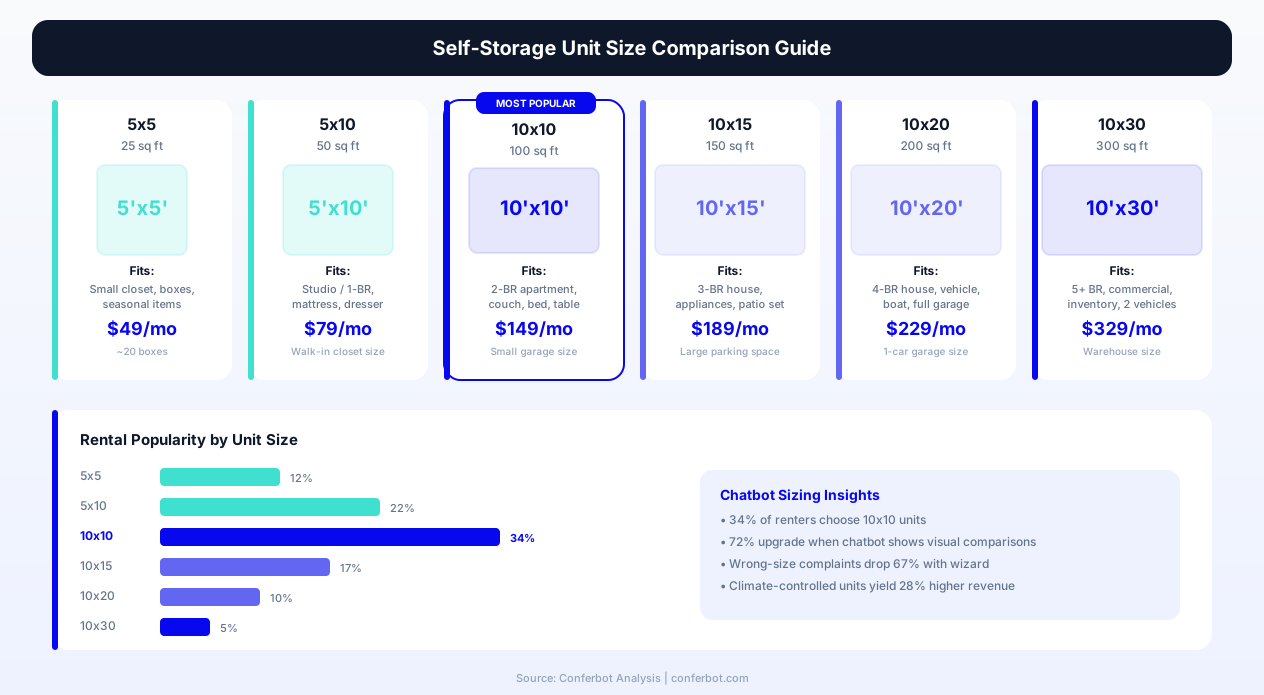
The chatbot's unit size recommendation engine uses a proven mapping between stored items and space requirements, refined with data from thousands of actual storage rentals. Rather than asking the prospect to estimate square footage (which almost no one can do accurately), the chatbot asks about what they are storing and translates that into a recommendation with visual context.
| What You're Storing | Recommended Unit | Size Equivalent | Monthly Price Range |
|---|---|---|---|
| Small boxes, seasonal decor, files | 5 x 5 (25 sq ft) | Walk-in closet | $40-$75 |
| 1 room of furniture, 10-15 boxes | 5 x 10 (50 sq ft) | Large walk-in closet | $65-$120 |
| 1-bedroom apartment contents | 10 x 10 (100 sq ft) | Half a 1-car garage | $95-$175 |
| 2-bedroom apartment or small house | 10 x 15 (150 sq ft) | Large bedroom | $130-$225 |
| 3-bedroom house contents | 10 x 20 (200 sq ft) | 1-car garage | $165-$280 |
| 4+ bedroom house or commercial inventory | 10 x 30 (300 sq ft) | 1.5-car garage | $200-$375 |
Visual Comparisons That Build Confidence
Numbers alone do not help most people visualize space. Telling someone "you need a 10x10 unit" is meaningless if they have never seen a 10x10 storage unit. The chatbot supplements its size recommendation with relatable comparisons: "A 10x10 unit is about the size of half a standard one-car garage. Picture a room that is 10 feet wide and 10 feet deep — you can fit a queen bed, a dresser, a small couch, 10-15 boxes, and still have room to walk in and access your items." These descriptions transform an abstract number into something the prospect can visualize and trust.
The "What If I'm Not Sure?" Path
Many prospects genuinely do not know how much stuff they have. The chatbot handles this uncertainty with a practical approach: "If you are not sure about the exact amount, I recommend going one size up from my suggestion. It is much easier to have a little extra room than to arrive on move-in day and discover everything does not fit. The difference between a 10x10 and a 10x15 is about $35/month — and you will have peace of mind knowing everything fits comfortably." This advice reduces the wrong-size problem while generating slightly higher revenue per rental.
Handling Business Storage Requests
Business storage inquiries require a different approach than residential. A business owner storing inventory, equipment, or documents has different needs: they may require more frequent access, specific shelving or layout configurations, climate control for sensitive merchandise, and potentially commercial insurance coverage. The chatbot recognizes business storage requests and adjusts its questions accordingly: "What type of business inventory are you storing?" "How often will you need to access the unit — daily, weekly, or monthly?" "Do any of your items require temperature or humidity control?" "Will you need to receive deliveries at the facility?" Business storage tenants tend to stay longer (18+ months average versus 8 months for residential) and rent larger units, making them particularly valuable leads to capture and qualify effectively.
Real-Time Pricing, Promotions, and Revenue Management
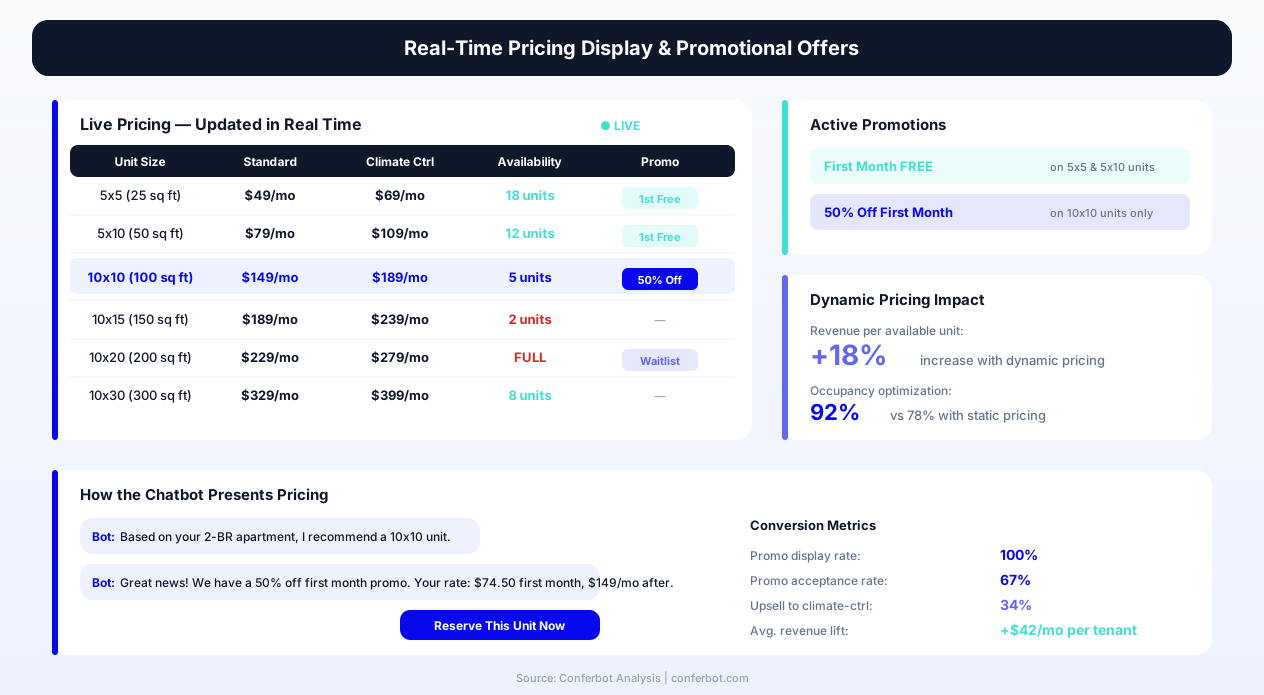
Self-storage pricing is not static. It fluctuates based on occupancy levels, seasonal demand, competitor pricing, and unit type. A sophisticated self-storage chatbot integrates with your facility management software to display current pricing in real time, present active promotions, and support dynamic pricing strategies that maximize revenue per available unit.
Promotional Offer Presentation
Self-storage facilities use aggressive promotions to drive move-ins — first month free, 50% off the first two months, $1 first month, and similar offers. The chatbot presents these promotions at the optimal moment in the conversation, after the prospect has selected a unit size and seen the standard pricing. "Great news — we currently have a promotion on 10x10 units: your first month is free. That means you pay $0 today and your first payment of $149 is not due until next month. This promotion is available on the 4 remaining 10x10 units, so I would recommend reserving today to lock it in."
The timing and framing of promotional presentation matters enormously. Presenting the promotion too early (before the prospect understands the value) reduces its impact. Presenting it after the prospect has expressed interest in a specific unit and seen the standard price creates a "deal" perception that accelerates the decision. The chatbot handles this sequencing automatically, ensuring every prospect experiences the promotion as a compelling reason to act now rather than continue shopping.
Revenue Management Support
Modern self-storage facilities use revenue management (also called dynamic pricing) to adjust rates based on occupancy. When a particular unit size reaches 90%+ occupancy, rates increase. When occupancy drops below 80%, rates decrease or promotions activate. The chatbot reflects these pricing changes in real time, ensuring that prospects always see current market rates. It also supports tiered pricing displays: "We have 10x10 units starting at $129/month for a second-floor interior unit, $149/month for a first-floor interior unit, and $169/month for a ground-floor drive-up unit. Which access type works best for you?"
Long-Term Prepay Discounts
Tenants who prepay for longer periods provide guaranteed revenue and reduce churn. The chatbot presents prepay discounts when the prospect indicates a longer storage duration: "Since you will need storage for about 6 months, I can offer a 10% discount if you prepay for 6 months upfront. That brings your total to $804 instead of $894 — a savings of $90. You can also pay 12 months upfront for a 15% discount." Prepay discount presentation through the chatbot typically achieves a 20-25% uptake rate, compared to 5-10% when the option is buried on a pricing page.
Competitor Price Context
Storage shoppers are price-sensitive and typically compare 3-5 facilities before deciding. While the chatbot cannot display competitor prices, it can provide context that frames your pricing positively: "Our 10x10 climate-controlled units are priced at $159/month, which includes 24-hour access, on-site security cameras, and a well-lit facility. Our tenants tell us the peace of mind is worth it — we have a 4.7-star rating from over 300 reviews." By emphasizing value beyond price (security, access hours, cleanliness, reputation), the chatbot helps prospects understand why your facility may be worth a small premium over a cheaper competitor.
Move-In Cost Transparency
Hidden fees are the number one complaint in self-storage reviews. The chatbot eliminates surprise fees by presenting complete move-in costs upfront: "Here is your complete move-in cost: first month's rent $149, admin fee $25, security deposit $0 (waived with autopay enrollment), tenant protection plan $11/month (optional). Your total to move in today is $174, or $185 with insurance protection." This transparency builds trust and reduces the "sticker shock" that causes last-minute abandonment during the checkout process. Learn how to connect this pricing engine to your management software through the Conferbot integration hub.
Online Move-In Automation: From Click to Access Code
The ultimate goal of a self-storage chatbot is to convert a website visitor into a paying tenant with a gate access code — all within a single conversation, with zero staff intervention required. This end-to-end online move-in capability is the single most impactful feature for revenue growth, because it captures rentals 24 hours a day, 7 days a week, including the 62% of inquiries that arrive when the facility office is closed.
The Complete Online Move-In Process
| Step | What the Chatbot Collects | Time Required | Traditional Process Equivalent |
|---|---|---|---|
| 1. Unit selection | Confirmed unit size, type, and specific unit number | 30 seconds | Facility tour: 15-20 minutes |
| 2. Tenant info | Full name, phone, email, mailing address | 45 seconds | Paper form: 5 minutes |
| 3. ID verification | Government ID type and number | 15 seconds | ID photocopy: 3 minutes |
| 4. Emergency contact | Name and phone of alternate contact | 15 seconds | Paper form: 2 minutes |
| 5. Lease agreement | Electronic acceptance of rental terms | 60 seconds (reading) | Paper lease signing: 10 minutes |
| 6. Insurance decision | Select coverage tier or decline | 20 seconds | Insurance explanation: 5 minutes |
| 7. Payment | Credit/debit card for first month + fees | 30 seconds | Payment processing: 3-5 minutes |
| 8. Autopay enrollment | Opt-in to automatic monthly billing | 10 seconds | Separate enrollment: 3 minutes |
| Total chatbot move-in time | 3-4 minutes | 45-60 minutes (traditional) | |
Access Code Delivery
The moment payment processes successfully, the chatbot delivers the tenant's gate access code, unit number, unit location within the facility (building, floor, hallway), access hours, and facility rules summary. The tenant also receives an email confirmation with all of this information plus the complete rental agreement for their records. If the facility uses a smart lock system, the chatbot can provision digital access credentials directly to the tenant's phone.
This instant access code delivery is what transforms the chatbot from a lead capture tool into a complete rental system. A prospect who arrives at your website at 11pm can be a paying tenant with physical access to their unit by 11:05pm. No phone call, no office visit, no waiting until morning. The facility earns revenue on a unit that would otherwise have sat vacant overnight, and the tenant gets the immediate solution they were searching for.
Autopay Enrollment at Move-In
The move-in process is the optimal moment to enroll tenants in automatic payments, because they already have their payment method entered and are in a transactional mindset. The chatbot presents autopay as the default option with a clear benefit: "Would you like to set up autopay so you never have to worry about a late fee? We will charge your card on file on the 1st of each month. You can cancel autopay any time." Facilities using chatbot-driven move-ins report autopay enrollment rates of 75-85%, compared to 40-50% through traditional in-office move-ins. Higher autopay enrollment directly reduces delinquency, late fee disputes, and collection costs.
After-Hours Move-In Experience
The after-hours move-in capability deserves special emphasis because it represents the largest untapped revenue opportunity for most facilities. Consider a facility with 500 units at 88% occupancy (60 vacant units). If the chatbot converts just 3 additional after-hours move-ins per month that would have been lost to competitors or delayed until business hours, at an average rate of $140/month, that is $420/month in incremental revenue from day one — plus the lifetime value of those tenants who stay an average of 14 months ($5,880 per tenant in total revenue). Three extra move-ins per month translates to $17,640 in annual tenant lifetime revenue. This single capability often pays for the entire chatbot platform within the first month of deployment.
50,000+ businesses use Conferbot templates to automate conversations
Current Tenant Self-Service: Payments, Codes, and Account Management
A self-storage chatbot serves two audiences: prospective tenants shopping for units and current tenants managing their storage accounts. The current-tenant self-service capabilities are equally important to facility operations because they reduce the volume of routine phone calls, emails, and office visits that consume manager time and limit the facility's ability to focus on revenue-generating activities.
Payment and Billing Management
Late payments are the most persistent operational challenge in self-storage. The industry average delinquency rate (tenants 30+ days past due) hovers around 8-12%. Every delinquent account requires staff time for phone calls, letters, lien processing, and potentially auction preparation. The chatbot reduces delinquency through proactive outreach and instant payment processing.
- Payment reminders: The chatbot sends automated reminders 5 days before, on the due date, and at 3, 7, and 14 days past due. Each reminder includes a direct payment link that allows the tenant to pay in 30 seconds without logging into a portal or calling the office.
- Instant payment processing: When a tenant receives a past-due reminder, they can pay immediately through the chat interface — no website login required, no phone hold time, no office visit. This friction reduction is critical because every barrier between the reminder and the payment reduces the likelihood of collection.
- Payment plan setup: For tenants facing financial hardship, the chatbot can present payment plan options (split the past-due balance across 2-3 payments) subject to the facility's policies. This self-service option retains tenants who would otherwise be lost to the lien process.
- Autopay management: Tenants can update their payment method, change their autopay date, or enroll in autopay through the chatbot without calling the office.
Access Code Retrieval and Reset
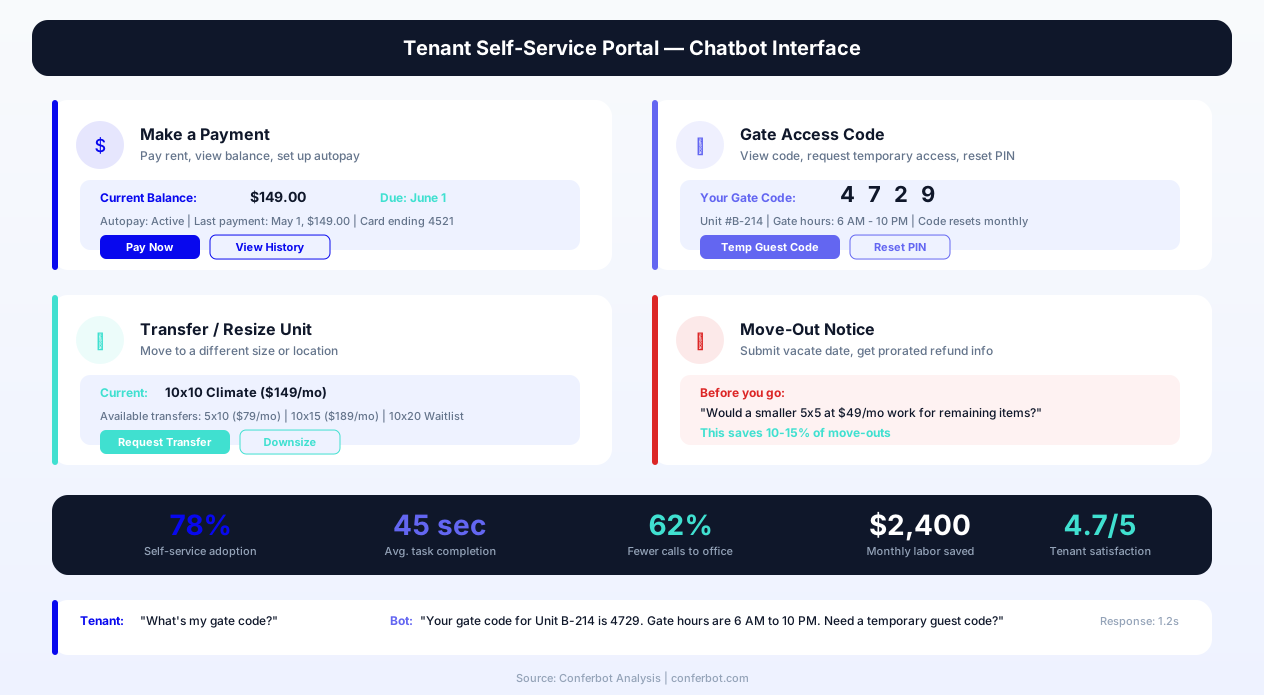
"What is my gate code?" represents 25-35% of all inbound phone calls at a typical self-storage facility. The chatbot handles this request in under 15 seconds: the tenant provides their name and unit number, the chatbot verifies their identity, and displays the gate code. If the tenant needs a code reset (they suspect someone else has their code, or the facility has changed codes), the chatbot processes the request and delivers the new code instantly. This single feature frees facility managers from the most repetitive and lowest-value call type they handle daily.
Unit Transfer Requests
Tenants frequently need to change unit sizes — upsizing because they underestimated their storage needs, or downsizing because they have removed items and want to reduce their monthly payment. Without easy transfer capability, these tenants often move out entirely and rent from a different facility. The chatbot captures transfer requests with context: current unit number, desired new size, reason for transfer, and preferred transfer date. If inventory allows, the chatbot can show available units in the requested size and facilitate the transfer immediately, retaining a tenant who might otherwise be lost.
Move-Out Processing
When a tenant decides to vacate their unit, the chatbot collects their move-out notice — preferred vacate date, reason for moving out, and whether they would like a prorated refund for unused days. This advance notice is operationally valuable because it allows the facility to begin remarketing the unit before it actually becomes vacant, reducing vacancy days between tenants. The chatbot also asks a critical retention question: "Before you go — would a smaller, less expensive unit work for the items you still have? We have 5x5 units starting at $49/month." This last-chance retention offer saves 10-15% of move-outs by offering a downsize option the tenant may not have considered.
Facility FAQ Automation
Beyond account management, the chatbot handles the dozens of repetitive questions that tenants and prospects ask daily: "What are your access hours?" "Are you open on Christmas?" "Can I store a car in a regular unit?" "Do you sell boxes and packing supplies?" "Is there a late fee and how much?" "Can someone else access my unit?" "Do you have pest control?" Each answered FAQ is a phone call that the facility manager does not need to take — freeing their time for tasks that actually grow the business.
ROI and Performance Data: What Storage Facilities Achieve
Self-storage operates on tight per-unit economics where small improvements in occupancy, average rate, and ancillary revenue compound into significant annual returns. The data below quantifies what storage facilities are achieving after deploying chatbot-driven inquiry handling and online move-in capabilities — comparing key operational and financial metrics before and after implementation.
Leasing and Conversion Metrics
| Metric | Without Chatbot | With Self-Storage Chatbot | Improvement |
|---|---|---|---|
| Website inquiry response time | 3.8 hours average | Under 3 seconds | -99.98% |
| After-hours inquiry capture rate | 8% (voicemail/form only) | 58% (conversational capture) | +625% |
| Website-to-move-in conversion rate | 6.2% | 15.4% | +148% |
| Average move-in processing time | 45 minutes (in-office) | 3.5 minutes (chatbot) | -92% |
| Wrong unit size rate (move-out within 14 days) | 12% | 4.5% | -63% |
| Climate-controlled unit upsell rate | 22% | 38% | +73% |
| Insurance attachment rate | 32% | 61% | +91% |
| Autopay enrollment at move-in | 44% | 82% | +86% |
Operational Efficiency Metrics
| Metric | Before Chatbot | After Chatbot | Improvement |
|---|---|---|---|
| Daily inbound phone calls | 35-50 | 15-22 | -55% |
| "What is my gate code?" calls per day | 10-15 | 1-3 | -80% |
| "What are your hours?" calls per day | 5-8 | 0-1 | -90% |
| Delinquency rate (30+ days past due) | 10.5% | 6.8% | -35% |
| Manager hours spent on phone per day | 4.5 hours | 1.8 hours | -60% |
| Average vacancy days between tenants | 18 days | 9 days | -50% |
Revenue Impact Model: 500-Unit Facility
Consider a 500-unit self-storage facility with an average unit rate of $135/month and a current occupancy of 88% (60 vacant units). Here is how the chatbot impacts revenue across multiple dimensions:
- After-hours move-ins (incremental): 4 additional move-ins per month x $135 avg rate x 14 months avg stay = $7,560/year per cohort. Over 12 months of cohort accumulation: ~$45,360 in tenant lifetime value generated.
- Faster vacancy fill rate: Reducing average vacancy from 18 days to 9 days on 250 annual turns saves 2,250 vacancy days. At $4.50/day lost revenue per vacant unit, that is $10,125/year in recovered revenue.
- Climate control upsells: 16% more tenants choosing climate-controlled units x $40/month premium x 250 annual move-ins = $19,200/year in upgrade revenue.
- Insurance attachment: 29% more tenants adding insurance x $11/month x 250 annual move-ins = $9,570/year in insurance revenue.
- Delinquency reduction: 3.7% reduction in 30+ day delinquency across 440 occupied units = 16 fewer delinquent accounts. At $500 average collection cost per account: $8,000/year saved.
Total annual impact: $92,255 in incremental revenue and cost savings — against a chatbot deployment cost of $99-$299 per month ($1,188-$3,588/year). The return on investment exceeds 25x in the first year, with the chatbot paying for itself within the first week of deployment.
Occupancy Rate Improvement
The combined effect of faster inquiry response, after-hours conversion, and reduced vacancy days between tenants drives measurable occupancy improvement. Facilities deploying chatbot-driven leasing typically see occupancy increase from the 85-88% range to 92-96% within 6-12 months. On a 500-unit facility at $135/month average rate, each 1% occupancy improvement represents 5 additional occupied units generating $8,100/year in recurring revenue. A 7% occupancy increase (from 88% to 95%) adds $56,700 in annual recurring revenue to the facility's top line.
Integration with Self-Storage Management Software
A self-storage chatbot delivers its full value when it connects directly to the facility management software that tracks inventory, pricing, tenant records, and access control. Without integration, the chatbot captures leads that require manual entry — negating the 24/7 automation benefit. Conferbot integrates with the leading self-storage management platforms to ensure every chatbot interaction creates real-time records in your existing system.
Supported Self-Storage Platforms
- SiteLink: The industry's most widely-used management platform. The chatbot queries SiteLink's real-time inventory API to display available units and current pricing, creates new tenant records when a move-in is completed, processes payments through SiteLink's payment gateway, and updates occupancy data automatically. The integration supports SiteLink's revenue management pricing engine, so chatbot-displayed prices always reflect current dynamic rates.
- storEDGE: Full integration with storEDGE's cloud-based platform for inventory lookup, online move-in processing, tenant creation, and payment processing. The chatbot accesses storEDGE's promotional engine to display active specials and apply promotion codes during the move-in flow.
- Yardi Breeze (Self Storage): Connect the chatbot to Yardi's self-storage module for real-time availability, pricing, tenant management, and maintenance request routing. Yardi's reporting capabilities combined with chatbot interaction data provide comprehensive business intelligence.
- OpenTech Alliance (INSOMNIAC): Integration with OpenTech's kiosk and call center platform, enabling the chatbot to serve as the digital front door while OpenTech handles the physical access layer. The systems share tenant data to ensure consistent access credentials across all touchpoints.
- Easy Storage Solutions: Cloud-native integration for smaller facilities using Easy Storage Solutions for basic management. The chatbot handles the customer-facing experience while ESS manages the back-office operations.
Access Control System Integration
The chatbot connects to gate and access control systems (PTI, Noke, Janus, OpenTech) to provision access credentials during the online move-in process. When a new tenant completes their chatbot move-in, the access control system automatically assigns a unique gate code or digital key, and the chatbot delivers it instantly. When a tenant moves out, the chatbot triggers credential deactivation. This closed-loop integration ensures that only active, paying tenants have facility access — a security requirement that manual processes often fail to enforce consistently.
Payment Processor Integration
The chatbot processes payments through your existing payment infrastructure — whether that is the payment gateway built into your management software (SiteLink Pay, storEDGE Payments) or a standalone processor like Stripe, Square, or Authorize.net. Payment tokenization ensures that credit card data is never stored in the chatbot itself; the chatbot collects card information and passes it to the processor through PCI-compliant channels. This security architecture is essential for protecting both tenants and the facility from payment data liability.
Custom Integration via API
For facilities using proprietary management systems, regional platforms, or custom-built software, Conferbot's chatbot API integration supports webhook delivery, REST API calls, and automation platforms like Zapier and Make. Any data collected by the chatbot — from prospect preferences to tenant account changes — can be routed to any system that accepts HTTP requests. This flexibility ensures that facilities with unique technology stacks can still deploy chatbot-driven leasing without replacing their existing systems.
Getting Started: Deploy Your Self-Storage Chatbot Today
Deploying a self-storage chatbot does not require development resources, facility management software expertise, or a lengthy implementation timeline. The Conferbot self-storage template comes pre-configured with the complete unit recommendation wizard, pricing display, online move-in flow, and tenant self-service sequences. You customize the specifics — your facility name, unit inventory, pricing, promotions, access hours, and branding — and deploy. Here is the complete setup process.
Step 1: Configure Your Facility Profile
Start by loading the Self-Storage Facility Chatbot template from the Conferbot template library. Customize the bot name, avatar, and colors to match your facility branding. Update the welcome message with your facility name and value proposition — "Welcome to SecureStore Self-Storage — find your perfect unit and move in today, 24/7." Add your facility address, phone number, access hours, and office hours so the chatbot can answer location and hours questions instantly.
Step 2: Build Your Unit Inventory
Enter your available unit sizes, types (standard, climate-controlled, drive-up, vehicle), and current pricing into the chatbot's inventory configuration. If you integrate with SiteLink, storEDGE, or another management platform, this data syncs automatically. If you are configuring manually, list each unit size with its monthly rate, number of available units, and any active promotions. The chatbot uses this inventory to power its real-time availability displays and prevent overbooking.
Step 3: Customize the Unit Recommendation Wizard
Adapt the recommendation wizard to match your specific inventory. If you do not offer 10x30 units, remove that option. If you specialize in climate-controlled storage, weight the recommendations toward those units. If you offer vehicle storage (RV, boat, car), add a vehicle storage path that asks about vehicle dimensions and whether covered or uncovered storage is preferred. The wizard should present every unit type you offer and guide prospects to the right match.
Step 4: Configure the Online Move-In Flow
Customize the move-in flow with your specific requirements: rental agreement terms, facility rules, insurance options and pricing, admin fee amounts, security deposit policy, and autopay enrollment terms. Upload your rental agreement for electronic presentation and acceptance. Configure payment processing through your existing gateway. Test the complete flow end-to-end to ensure a smooth tenant experience from unit selection through access code delivery.
Step 5: Set Up Tenant Self-Service
Configure the current-tenant features: payment reminder schedule (how many days before and after due date), gate code retrieval verification requirements (what identity proof is needed), unit transfer request routing, and move-out notice processing. Enter your facility FAQ content — access hours, holiday schedule, prohibited items, pest control information, payment policies, and any other questions your staff answers repeatedly.
Step 6: Deploy and Connect
Embed the chatbot on your facility website using the single-line embed code provided by Conferbot. Place it on your homepage, pricing page, unit size guide page, and any landing pages used for Google Ads or local search campaigns. Connect to your management software for real-time inventory sync, set up email notifications for new move-ins and move-out notices, and configure SMS alerts for high-priority events. Deploy on your website for maximum visibility and consider adding WhatsApp deployment for tenants who prefer messaging.
Step 7: Monitor and Optimize
After launch, monitor key metrics through Conferbot's analytics dashboard: chatbot engagement rate (what percentage of visitors interact), unit recommendation completion rate, move-in conversion rate, insurance attachment rate, and tenant self-service usage. Identify drop-off points where prospects abandon the conversation and optimize those steps. Most self-storage facilities see measurable occupancy improvement within the first 30 days and full ROI within the first 1-2 weeks of deployment. Use the insights from Conferbot's AI chatbot builder analytics to continuously refine the conversation and maximize conversion.
Self-Storage Facility Chatbot FAQ
Everything you need to know about chatbots for self-storage facility chatbot.
Why Use a Template vs Building from Scratch?
Templates encode years of optimization data into the conversation flow before you start.
| Factor | Conferbot Template | Build from Scratch | Hire a Developer |
|---|---|---|---|
| Time to deploy | 10 minutes | 2-8 hours | 2-6 weeks |
| Cost | Free | Your time | $5,000-$25,000 |
| Day-1 conversion | 15-22% | 5-8% | 10-15% |
| Proven flows | Yes, data-tested | No | Depends |
| Updates included | Automatic | Manual | Paid |
| Multi-channel | 8+ channels | 1 channel | Extra cost |
| Analytics | Built-in | Must build | Extra cost |
Ready to Deploy Self-Storage Facility Chatbot?
Join 50,000+ businesses. Free forever plan available. No credit card required.