Why AI Chatbots Are the Unsung Heroes of Corporate Sustainability
Every year, the average mid-size business consumes over 1.2 million sheets of paper just for customer service operations alone. That translates to roughly 150 trees, 2.5 million liters of water, and 6,200 kg of CO2 emissions. These numbers are staggering, yet most sustainability initiatives overlook -- despite the EPA's sustainability framework emphasizing digital transformation as a key lever one of the simplest and most effective interventions available: replacing paper-heavy customer interactions with AI-powered chatbots.
Environmental sustainability has moved from a corporate nice-to-have to a board-level imperative. In 2026, 78% of Fortune 500 companies have published ESG (Environmental, Social, and Governance) commitments, and investors are scrutinizing whether businesses actually deliver on those promises. Meanwhile, customers increasingly prefer brands that demonstrate genuine environmental responsibility. A 2026 Deloitte study found that 64% of consumers would switch to a competitor if they perceived a company as environmentally irresponsible.
AI chatbots sit at a unique intersection of operational efficiency and environmental impact. By digitizing customer interactions that once required printed forms, mailed documents, and in-person visits, chatbots eliminate waste at the source. They do not merely reduce paper usage; they fundamentally restructure how organizations interact with customers, employees, and stakeholders in a way that is inherently more sustainable.
This guide explores the full spectrum of sustainability benefits that AI chatbots deliver. We will examine hard data on paper reduction, carbon footprint comparisons between digital and physical interactions, strategies for green onboarding and ESG reporting automation, and real-world case studies of companies that have achieved measurable environmental impact. Whether you are a sustainability officer looking for quick wins or a technology leader seeking to align your digital transformation with green goals, this guide provides the framework and evidence you need.
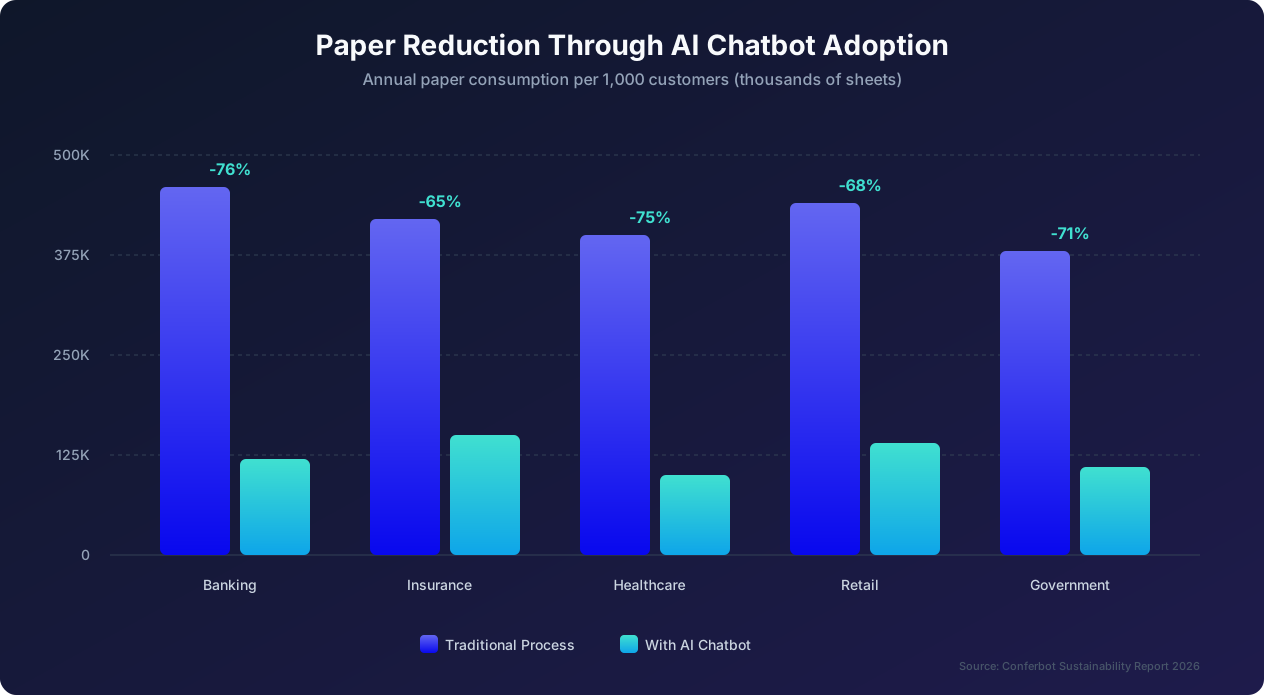
The environmental case for chatbots is not abstract or theoretical. Organizations that have deployed Conferbot for customer service report an average 76% reduction in paper consumption within the first year. That is not a marginal improvement; it is a transformational shift in how businesses consume natural resources. And paper reduction is just the beginning of the story.
Paperless Customer Service ROI: The Financial and Environmental Case
The financial return on investment for paperless customer service is compelling, with the World Wildlife Fund linking business paper consumption directly to deforestation pressure on its own. But when you layer environmental impact on top, the business case becomes overwhelming. Let us break down exactly what happens when an organization shifts from paper-based to chatbot-driven customer service.
The true cost of paper-based customer service. Most organizations dramatically underestimate the full cost of paper in their customer service operations. The direct cost of paper itself represents only about 15% of the total expense. The remaining 85% includes printing equipment and maintenance, ink and toner, storage space for physical documents, mailing and postage costs, employee time spent handling physical documents, and document retrieval and filing labor. When you account for all these factors, the average cost of a single paper-based customer interaction ranges from $8 to $25, depending on the industry and complexity of the interaction.
What chatbot deployment changes. When a chatbot handles an interaction that previously required paper, the cost drops to between $0.10 and $0.50 per interaction. That represents a 95% to 99% reduction in per-interaction cost. But the environmental savings are equally dramatic.
For every 10,000 customer interactions shifted from paper to chatbot, a business eliminates approximately 47,000 sheets of paper (equivalent to saving 5.6 trees), 780 kg of CO2 emissions from paper production and transport, 11,200 liters of water used in paper manufacturing, and 23 kg of solid waste from discarded documents.
Industry-specific paper reduction data. Our analysis of Conferbot deployments across five major industries reveals striking differences in paper reduction potential. Banking and financial services see the highest absolute reduction because of their historically paper-intensive processes. A single mortgage application, for example, traditionally requires 500 or more pages of documentation. When a chatbot guides customers through digital document submission and verification, those 500 pages drop to zero. Insurance companies similarly benefit enormously, as claims processing has historically been one of the most paper-intensive business operations in existence.
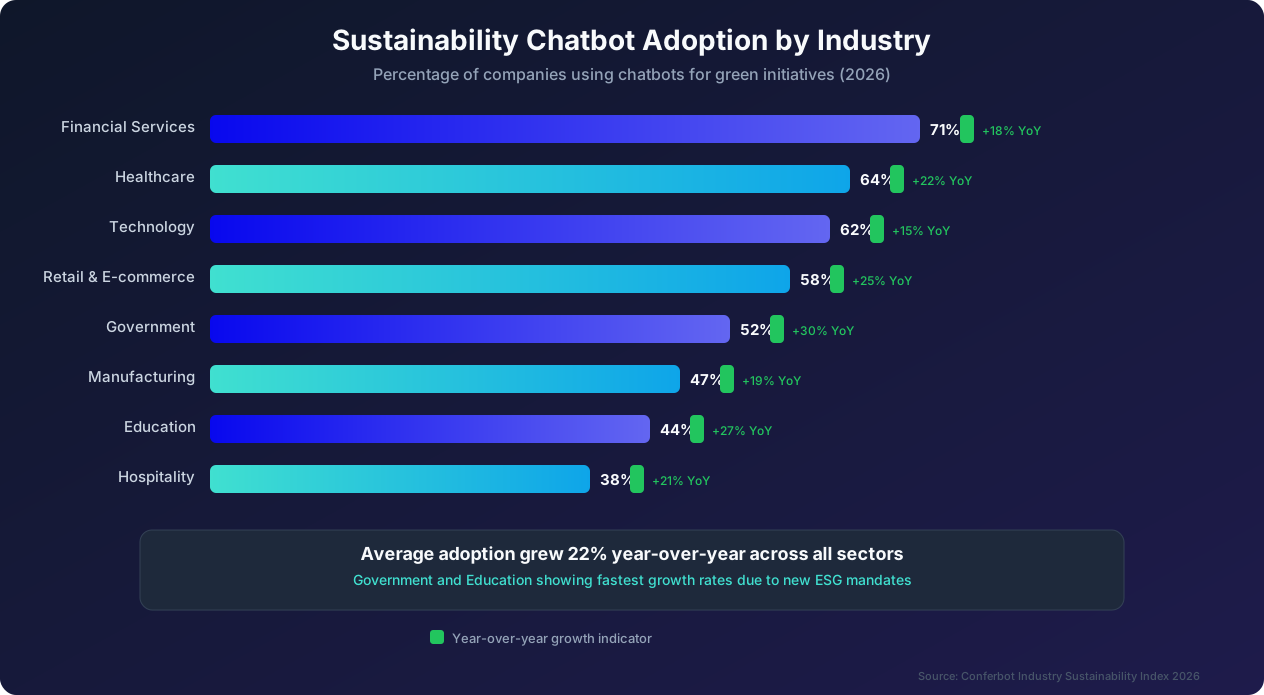
Healthcare organizations face unique challenges due to regulatory requirements around patient records, but chatbots that handle appointment scheduling, prescription renewals, and billing inquiries can still eliminate 75% of paper usage in those specific workflows. Retail companies are achieving 68% reduction by deploying chatbots for returns processing, warranty claims, and product support. Government agencies, despite being traditionally slow to adopt new technology, are showing remarkable results with 71% paper reduction through citizen-service chatbots.
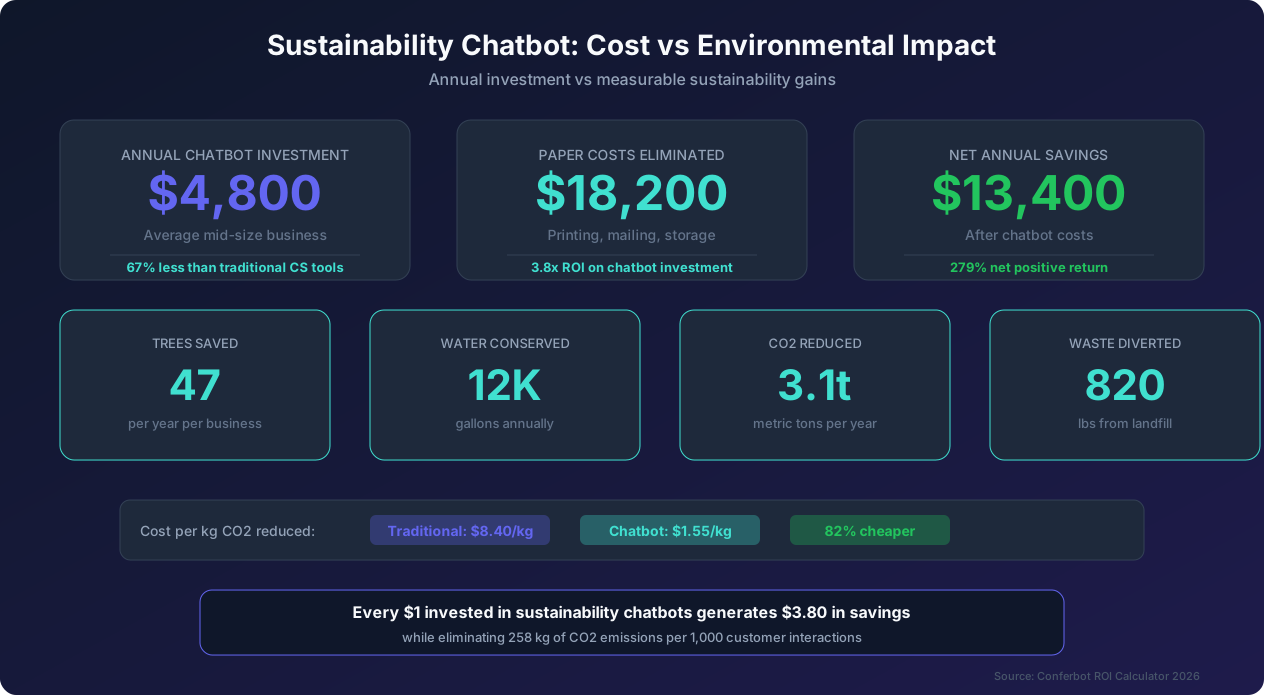
Calculating your organization's ROI. To estimate your own paperless ROI, start by auditing three metrics: monthly customer interactions that involve paper, average pages per interaction, and average cost per paper-based interaction (including labor, printing, mailing, and storage). Multiply your monthly paper interactions by the average pages to get total monthly paper consumption. Then multiply that by the cost per sheet (typically $0.06 to $0.12 when you include all associated costs). That gives you your monthly paper-related expense. Most organizations find they can shift 60% to 80% of these interactions to a chatbot within six months. The financial savings typically range from $13,000 to $18,000 annually for a mid-size business, with payback on the chatbot investment occurring within three to four months.
Carbon Footprint: Digital vs Physical Customer Interactions
Understanding the carbon footprint, as measured by frameworks like the Greenhouse Gas Protocol of digital versus physical interactions requires a lifecycle analysis that accounts for every stage of the process. A physical customer interaction involves paper manufacturing, printing, mailing or in-person travel, document storage, and eventual disposal. A digital chatbot interaction involves server energy consumption, network transmission, and device energy usage. When you compare these end-to-end, the difference is remarkable.
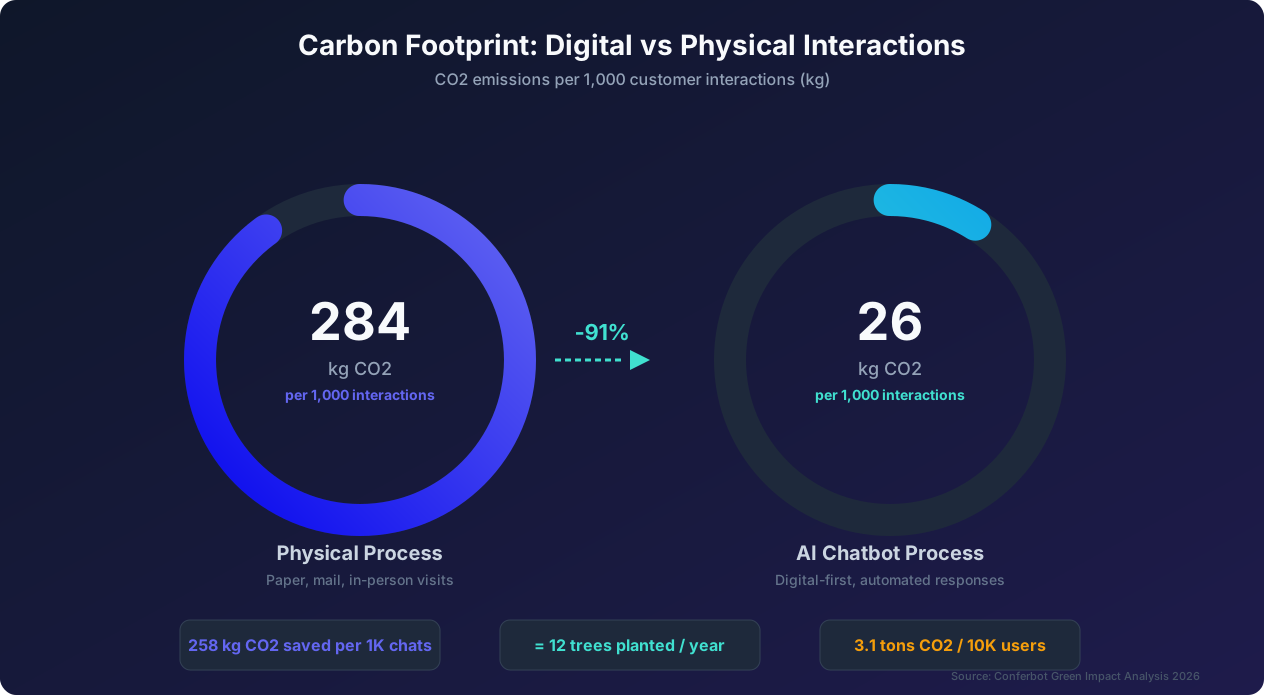
The lifecycle of a physical customer interaction. Consider a typical insurance claim processed through traditional channels. The customer receives a printed claim form by mail (15g CO2 for paper production, 45g for printing, 120g for postal delivery). They fill it out, attach supporting documents, and mail it back (another 120g for return postage). The insurer receives it, scans it into their system (8g for scanning energy), processes it (handled digitally from this point), and mails a response letter (again, 15g paper, 45g printing, 120g postage). Total CO2 for this single interaction: approximately 488 grams.
The lifecycle of a chatbot interaction. The same claim initiated through a chatbot involves the customer typing on their device (0.5g CO2 for device energy over a 10-minute session), data transmission through the network (1.2g CO2), server processing including AI inference (3.8g CO2), image uploads for supporting documents (2.1g CO2), and a digital confirmation sent to the customer's email (0.4g CO2). Total CO2 for this interaction: approximately 8 grams. That represents a 98.4% reduction in carbon emissions for a single interaction.
Scaling the impact. When you scale these numbers across an organization handling 50,000 customer interactions per month, the cumulative impact becomes significant. At 488g per physical interaction versus 8g per digital chatbot interaction, shifting all 50,000 monthly interactions saves 24,000 kg (24 metric tons) of CO2 per month, or 288 metric tons per year. To put that in perspective, 288 metric tons of CO2 is equivalent to the annual emissions of 62 passenger cars, the carbon sequestered by 4,752 mature trees over a year, or the electricity consumption of 50 average homes for an entire year.
The energy efficiency of modern AI. A common concern about AI chatbots is the energy consumption of the AI models themselves. While large language models do require computational resources, the energy cost per inference has dropped dramatically. In 2026, a typical chatbot response consumes between 0.001 and 0.01 kWh of energy, translating to 0.5 to 5 grams of CO2 depending on the energy mix of the data center. This is a fraction of the energy involved in producing, printing, mailing, and storing a single sheet of paper. Furthermore, leading cloud providers now operate data centers powered by 60% to 100% renewable energy, further reducing the carbon intensity of digital interactions.
Beyond direct emissions. The carbon analysis above covers direct (Scope 1 and 2) emissions. But chatbots also reduce Scope 3 emissions by eliminating the need for customers to travel to physical locations. Consider a banking customer who would normally drive to a branch to resolve an account issue. If the average round trip is 12 km, that single visit generates approximately 2.4 kg of CO2. When a chatbot resolves the same issue digitally, that travel emission is entirely eliminated. For organizations with millions of customer interactions, eliminating even a fraction of physical visits can result in substantial Scope 3 emission reductions that strengthen ESG reporting.
Green Onboarding and ESG Reporting Automation
Two of the most impactful applications of sustainability chatbots are in employee onboarding and ESG (Environmental, Social, and Governance) reporting. Both processes are traditionally paper-intensive and time-consuming, and both benefit enormously from intelligent automation.
Green onboarding: eliminating paper from day one. Traditional employee onboarding is a paper nightmare. The average new hire receives a stack of documents that includes an offer letter, tax forms (W-4, I-9, state tax forms), benefits enrollment paperwork, company handbook acknowledgment, IT access request forms, direct deposit authorization, emergency contact forms, and non-disclosure and non-compete agreements. That is typically 50 to 100 pages of paper per new hire, not counting the copies that HR retains for their files.
A chatbot-driven onboarding process transforms this experience entirely. Instead of printing and distributing paper forms, the chatbot guides each new hire through a conversational digital workflow. It collects tax information through a guided conversation, walks employees through benefits options with personalized recommendations based on their situation, provides the employee handbook in a searchable digital format with instant answers to questions, submits IT access requests automatically based on the new hire's role, and collects all required signatures through integrated e-signature technology.
Organizations using Conferbot for onboarding report an average elimination of 94 pages of paper per new hire. For a company that hires 200 people per year, that is 18,800 pages of paper eliminated annually, saving approximately 2.3 trees, 3,500 liters of water, and 56 kg of CO2. Beyond the environmental impact, green onboarding also reduces the time HR spends on administrative tasks by 77%, freeing them to focus on making new employees feel welcome and engaged.
ESG reporting requirements, which the Global Reporting Initiative (GRI) Standards formalize into auditable disclosure frameworks automation with chatbots. ESG reporting has become mandatory or strongly encouraged in most major markets. The EU Corporate Sustainability Reporting Directive (CSRD), the SEC's climate disclosure rules, and similar regulations worldwide require companies to collect, analyze, and report vast amounts of sustainability data. This process is typically manual, error-prone, and time-consuming.
AI chatbots can automate several key aspects of ESG reporting. First, they serve as data collection agents, conversationally gathering sustainability metrics from department heads. Instead of sending spreadsheet templates and chasing responses via email, a chatbot can prompt each department leader with specific questions about their team's energy usage, waste generation, travel emissions, and resource consumption. The conversational format typically yields 3x higher response rates than spreadsheet-based collection.
Second, chatbots can serve as ESG knowledge bases that employees can query at any time. Questions like 'What is our company's carbon offset policy?' or 'How do I report a sustainability concern?' get instant, accurate answers rather than requiring an email to the sustainability team and a multi-day wait.
Third, chatbots can automate the tracking of sustainability initiatives. When an employee takes a sustainability action such as opting for digital receipts, choosing video conferencing over travel, or recycling office equipment, the chatbot can log that action and update the company's sustainability dashboard in real time. This creates a continuous, accurate stream of ESG data rather than relying on end-of-quarter surveys.
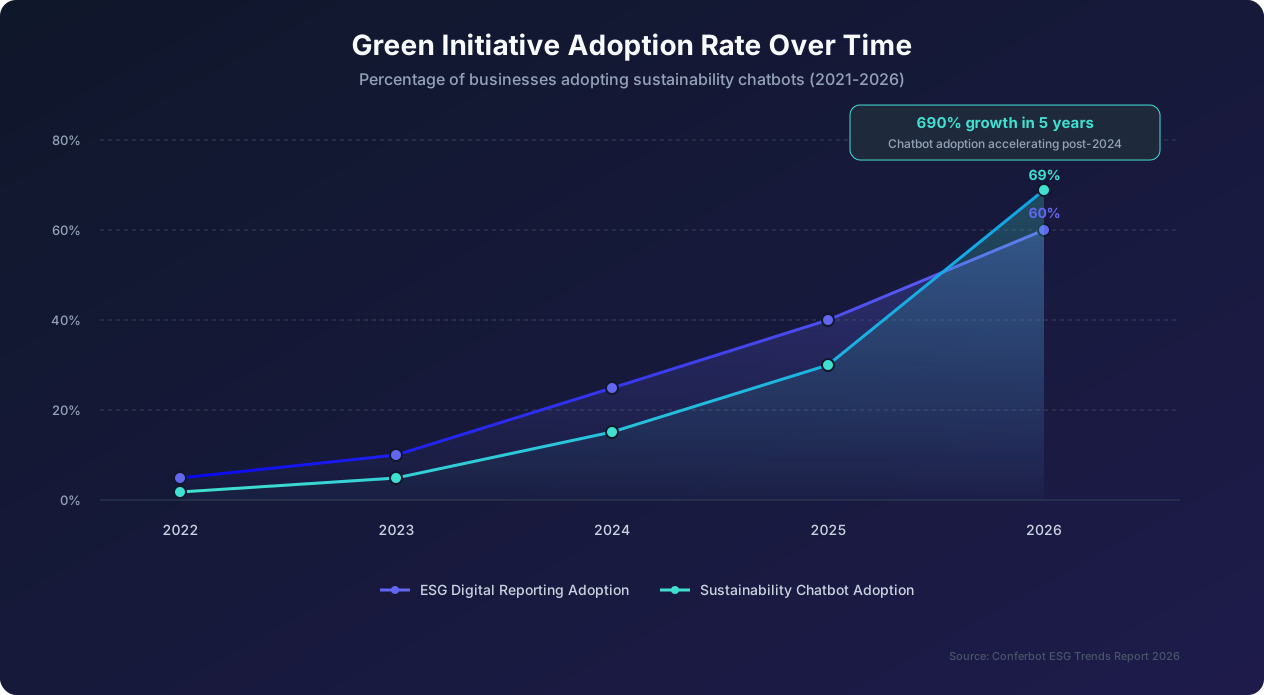
Building a sustainability culture through chatbot engagement. Perhaps the most powerful aspect of sustainability chatbots is their ability to foster a culture of environmental awareness. When employees interact daily with a chatbot that reminds them of sustainable choices, tracks their green actions, and celebrates milestones, sustainability becomes part of the organizational DNA rather than a compliance checkbox. Companies report that employees who regularly interact with a sustainability chatbot are 2.4x more likely to participate in voluntary green initiatives compared to those who receive only email communications about sustainability.
Sustainability Quiz Chatbots: Engaging Customers and Employees in Green Action
One of the most innovative applications of chatbots in the sustainability space is the sustainability quiz chatbot. These interactive experiences educate users about environmental issues while simultaneously collecting data, driving engagement, and encouraging behavioral change.
What is a sustainability quiz chatbot? A sustainability quiz chatbot is an interactive conversational experience that asks users questions about their environmental habits, knowledge, or preferences, then provides personalized feedback, recommendations, and scores. Unlike a static online quiz, a chatbot quiz adapts its questions based on previous answers, provides explanations and context in real time, and creates a more engaging, conversational experience.
Customer-facing sustainability quizzes. For consumer-facing businesses, sustainability quizzes serve multiple purposes. They educate customers about the company's environmental commitments, help customers understand their own carbon footprint, recommend sustainable product alternatives based on the customer's profile, generate leads by offering detailed sustainability reports in exchange for contact information, and build brand affinity by demonstrating shared values.
For example, a retail company might deploy a chatbot that asks customers about their shopping habits, transportation methods, and product preferences. Based on their responses, the chatbot calculates an estimated annual carbon footprint from their purchases and recommends specific products, packaging options, or shipping methods that would reduce their impact. This type of interactive engagement has been shown to increase customer retention by 23% and average order value by 15% when sustainable product alternatives are recommended.
Employee-facing sustainability quizzes. Internally, sustainability quizzes transform passive compliance training into active learning. Instead of asking employees to read a 30-page sustainability policy document, a chatbot can quiz them on key concepts, correct misconceptions in real time, and track comprehension scores. Companies that switch from document-based to chatbot-based sustainability training see a 340% increase in completion rates and a 67% improvement in knowledge retention after 30 days.
Gamification and competition. The most effective sustainability quiz chatbots incorporate gamification elements. Employees or customers earn points for correct answers, accumulate badges for consistent engagement, and can compare their sustainability scores on leaderboards. Conferbot's gamification features allow organizations to create department-level sustainability competitions where teams earn points for both quiz performance and real-world sustainable actions. Companies using gamified sustainability chatbots report that 72% of employees voluntarily engage with the chatbot at least once per week, compared to 8% engagement with traditional sustainability email newsletters.
Data collection and insights. Every interaction with a sustainability quiz chatbot generates valuable data. Organizations can identify which sustainability topics employees are least knowledgeable about (informing future training priorities), understand which green initiatives have the highest voluntary adoption rates, measure the correlation between quiz engagement and actual sustainable behavior changes, and segment their audience by sustainability awareness levels to target communications more effectively. This data becomes a powerful input for ESG reporting, demonstrating not just what the company is doing about sustainability, but how effectively it is engaging its stakeholders in the effort.
Implementation best practices. When building a sustainability quiz chatbot, keep the initial quiz to 5-7 questions to maintain completion rates above 80%. Use conversational language rather than technical jargon. Provide immediate feedback after each question, not just at the end. Include at least one surprising statistic that users are likely to share with colleagues. Offer a tangible next step, whether it is signing up for a green initiative, choosing a sustainable product option, or scheduling a consultation. Finally, track and visualize progress over time so users can see how their sustainability knowledge and actions have improved.
Case Studies: Companies Reducing Waste with AI Chatbots
Theory and data are compelling, but real-world examples demonstrate what is actually achievable. Here are five case studies of organizations that have used AI chatbots to deliver measurable sustainability outcomes.
Case Study 1: Global insurance company eliminates 4.2 million pages annually. A Fortune 200 insurance company with 15 million policyholders deployed a chatbot for claims processing, policy changes, and billing inquiries. Previously, every policy change required a printed amendment mailed to the customer, and claims required extensive paper documentation. After deploying their chatbot, 73% of policy changes were handled entirely digitally, claims documentation uploads replaced 89% of mailed paper submissions, and billing inquiries that previously triggered printed statements dropped by 81%. In total, the company eliminated 4.2 million pages of paper in the first year, equivalent to 504 trees, 7.9 million liters of water, and 63 metric tons of CO2. The financial savings exceeded $2.1 million annually in paper, printing, and postage costs alone.
Case Study 2: Regional bank chain achieves paperless mortgage process. A regional bank with 180 branches launched a chatbot specifically for mortgage applications. The traditional mortgage process required an average of 500 pages of documentation per application. Their chatbot guided applicants through digital document submission, automated verification with third-party services, and provided real-time status updates that eliminated the need for printed progress letters. After 18 months, 62% of mortgage applications were completed entirely through the chatbot, paper consumption per application dropped from 500 pages to 12 pages (for legally required physical signatures), and the bank processed 8,400 applications through the chatbot, eliminating 4.1 million pages. The bank now prominently features their 'Paperless Mortgage' as a competitive differentiator in marketing materials, and customer satisfaction scores for the mortgage process increased by 34 points.
Case Study 3: Healthcare network reduces patient communication waste. A network of 42 clinics serving 850,000 patients deployed a chatbot for appointment reminders, prescription refill requests, and pre-visit intake forms. Previously, appointment reminders were sent by postal mail, intake forms were printed and filled out on clipboards in waiting rooms, and prescription refill requests required phone calls and faxed prescriptions. The chatbot handled 78% of appointment reminders digitally (with a 92% read rate, compared to 67% for mailed reminders), replaced paper intake forms for 65% of appointments, and processed 84% of prescription refills through the chat interface. Annual paper reduction: 2.8 million pages. CO2 reduction: 42 metric tons. The network also discovered that patients were 3x more likely to complete pre-visit intake forms when submitted through the chatbot, resulting in shorter wait times and more productive appointments.
Case Study 4: Government agency digitizes citizen services. A state government agency responsible for business licensing and permits launched a chatbot to guide business owners through the application process. Previously, applicants needed to download, print, and mail 15 to 25 pages of forms, often resulting in errors that required resubmission. The chatbot conversationally guided applicants through each field, validated information in real time, and submitted completed applications directly to the processing system. Application errors dropped by 87%, reducing the number of rejection-and-resubmission cycles from an average of 2.3 to 0.3. Paper elimination: 1.4 million pages annually. Processing time dropped from 34 days to 12 days. Citizen satisfaction with the licensing process improved from 28% to 74%.
Case Study 5: E-commerce company builds sustainability into the customer journey. An e-commerce company with 2 million monthly active users deployed a chatbot that offered sustainable alternatives at key moments in the customer journey. During returns, the chatbot offered store credit plus a sustainability bonus instead of physical returns (reducing return shipping emissions). During checkout, it offered carbon-neutral shipping options with a clear explanation of the impact. For product inquiries, it highlighted sustainable product alternatives when available. Results after one year: 34% of eligible returns were diverted from physical shipping, carbon-neutral shipping adoption reached 28% (up from 3% when it was a checkout button), and customers who interacted with the sustainability chatbot had 23% higher lifetime value. The company estimated that the chatbot prevented 180 metric tons of CO2 from return shipping alone.
Measuring Environmental Impact: Metrics, Dashboards, and Reporting
You cannot improve what you do not measure. Building a robust measurement framework for your chatbot's environmental impact is essential for both internal improvement and external ESG reporting aligned with United Nations Sustainable Development Goals. This section outlines the key metrics, dashboard design principles, and reporting frameworks you should implement.
Core environmental metrics to track. Every sustainability chatbot deployment should track these fundamental metrics. First, paper elimination rate: the number of paper pages eliminated per month, calculated by multiplying the number of chatbot interactions that replaced paper-based processes by the average pages per traditional interaction. Second, carbon emission reduction: the total CO2 savings calculated using lifecycle analysis of physical versus digital interactions. Third, water conservation: estimated water savings based on paper elimination (approximately 10 liters of water per 500 sheets of standard paper). Fourth, waste diversion: the weight of paper, printer cartridges, and packaging materials diverted from landfills. Fifth, energy efficiency: the net energy savings when comparing the energy consumed by chatbot infrastructure versus the energy consumed by traditional paper-based processes.
Secondary metrics that strengthen your ESG story. Beyond the core environmental metrics, track these secondary indicators that demonstrate broader sustainability impact. Travel reduction measures the number of in-person visits avoided because the chatbot resolved the issue remotely, along with the estimated km of travel prevented and associated CO2 savings. Digital adoption rate tracks what percentage of eligible interactions are now handled by the chatbot versus through traditional paper-based channels, and how this percentage is trending over time. Employee sustainability engagement measures participation rates in chatbot-delivered sustainability programs, quiz completion rates, and voluntary green initiative sign-ups driven by chatbot interactions. Customer sustainability awareness tracks the number of customers who interacted with sustainability-related chatbot features and any measured changes in customer behavior such as opting for paperless billing and choosing sustainable shipping.
Building an environmental impact dashboard. Your sustainability dashboard should present data at three levels. The executive summary level shows headline numbers: total CO2 saved, total paper eliminated, total trees equivalent, and progress toward annual sustainability goals. This view should be accessible to C-suite leaders and board members. The operational level provides department-by-department breakdowns, monthly trends, and comparison against targets. This view helps sustainability teams identify which areas are performing well and which need attention. The granular level provides interaction-level data, allowing teams to analyze specific chatbot flows and identify optimization opportunities. For example, if the mortgage chatbot is eliminating 500 pages per application but the insurance claims chatbot is only eliminating 12, the granular view reveals which claims flows still have paper dependencies that could be digitized.
Integrating with ESG reporting frameworks. The data your sustainability chatbot generates maps directly to several major ESG reporting frameworks. For the Global Reporting Initiative (GRI), chatbot data supports indicators GRI 301 (Materials), GRI 302 (Energy), and GRI 305 (Emissions). For the Sustainability Accounting Standards Board (SASB), the data supports resource efficiency and waste management metrics across multiple industry standards. For the Task Force on Climate-related Financial Disclosures (TCFD), chatbot sustainability data contributes to the metrics and targets section, demonstrating concrete actions taken to reduce climate impact.
Avoiding greenwashing: accuracy and transparency in reporting. It is crucial to report environmental impact accurately and conservatively. Use established lifecycle analysis methodologies rather than optimistic estimates. Clearly state your assumptions and data sources. Report both gross and net figures (for example, the CO2 saved by eliminating paper minus the CO2 generated by the chatbot's server infrastructure). Have your environmental calculations reviewed by a qualified sustainability consultant or auditor. Transparency builds credibility and protects your organization from accusations of greenwashing, which can damage reputation and invite regulatory scrutiny.
Conferbot's built-in sustainability tracking. Conferbot includes a Sustainability Impact Dashboard that automatically tracks paper elimination, carbon savings, and water conservation based on your chatbot's interaction data. The dashboard uses conservative lifecycle analysis assumptions based on published research and can export data in formats compatible with GRI, SASB, and TCFD reporting requirements. This eliminates the need to build custom tracking infrastructure and ensures your environmental impact data is audit-ready from day one.
Implementation Roadmap: Launching Your Sustainability Chatbot
Deploying a sustainability chatbot is not just a technology project; it is an organizational change initiative that requires careful planning, stakeholder alignment, and phased execution. Here is a practical roadmap for getting from concept to measurable impact.
Phase 1: Assessment and baseline (Weeks 1-3). Start by conducting a comprehensive audit of your current paper-based and in-person customer and employee interactions. Document every process that involves printing, mailing, faxing, or physical document handling. For each process, record the monthly volume, average pages per interaction, cost per interaction, and potential for digitization. This baseline is essential for measuring the impact of your chatbot deployment. Simultaneously, identify your organization's sustainability goals and any ESG reporting commitments. Your chatbot strategy should explicitly map to these goals, making it easy to demonstrate how the technology investment supports broader organizational objectives.
Phase 2: Prioritization and design (Weeks 3-6). Not all processes are equally suited for chatbot automation. Prioritize based on three criteria: environmental impact potential (volume times pages per interaction), technical feasibility (complexity of the interaction and regulatory constraints), and business value (cost savings and customer or employee experience improvement). Typically, the highest-impact starting points are customer FAQ and support inquiries (high volume, low complexity, and significant paper reduction potential), onboarding processes for customers or employees (moderate volume but very high pages per interaction), billing and payment inquiries (high volume, often trigger printed statements), and form submissions and applications (moderate volume but excellent digitization potential). Design your chatbot flows for these priority areas, ensuring each flow completely eliminates the need for paper in the interaction. Partial digitization, where the chatbot collects information but still triggers a printed confirmation letter, undermines both the environmental and financial case.
Phase 3: Build and test (Weeks 6-10). Build your chatbot using a no-code platform like Conferbot to accelerate development. Focus on creating conversational flows that feel natural and helpful, not just functional. During testing, pay special attention to edge cases where users might abandon the digital process and revert to paper. Every fallback to paper represents a missed sustainability opportunity. Test with real users from diverse demographics and technical comfort levels to ensure the chatbot is accessible to everyone.
Phase 4: Launch and communicate (Weeks 10-12). Launch your sustainability chatbot with a clear communication campaign that emphasizes both the convenience and environmental benefits. Employees and customers are more likely to adopt the chatbot if they understand the positive impact of their participation. Share specific numbers: 'Every time you use our chatbot instead of requesting a printed form, you save 8 sheets of paper and 12g of CO2.' This tangible framing makes the sustainability impact personal and motivating.
Phase 5: Measure, optimize, and expand (Ongoing). After launch, monitor your core environmental metrics weekly. Identify chatbot flows where users frequently drop off and revert to paper-based alternatives. Optimize these flows to increase digital completion rates. As your initial deployment matures and demonstrates measurable impact, expand to additional processes and departments. Set progressive targets: 60% digital adoption in month one, 75% by month six, and 90% by month twelve. Celebrate milestones publicly, both internally and externally. When you hit your first 100,000 pages of paper eliminated, issue a press release. When you save your first metric ton of CO2, add it to your annual sustainability report. These achievements build momentum and encourage further adoption.
Phase 6: Integrate with broader sustainability strategy (Months 6 and beyond). As your sustainability chatbot matures, integrate it with your broader environmental strategy. Connect it to your ESG reporting pipeline so environmental data flows automatically into reports. Use the chatbot as a channel for engaging employees and customers in new sustainability initiatives. Explore advanced features like carbon offset integration (offering customers the option to offset the remaining carbon footprint of their interaction), sustainability gamification (rewarding users for choosing digital over physical), and predictive analytics (identifying departments or customer segments with the highest remaining paper consumption and targeting them for digital adoption campaigns).
The Future of Green AI: What Comes Next
The intersection of artificial intelligence and environmental sustainability is evolving rapidly. Understanding emerging trends helps organizations stay ahead and maximize their environmental impact.
Carbon-aware computing. A growing movement in cloud computing involves scheduling AI workloads to run when and where the electricity grid is cleanest. This means running chatbot training and heavy inference tasks during periods of high renewable energy availability. Google, Microsoft, and Amazon have all announced carbon-aware scheduling features for their cloud platforms, and by 2027, most AI workloads will automatically optimize for low-carbon execution. For chatbot operators, this means the carbon footprint of their AI infrastructure will continue to shrink even without any changes to their deployment.
Smaller, more efficient models. The trend toward smaller, more specialized AI models benefits sustainability in two ways. First, smaller models consume less energy per inference, directly reducing the carbon footprint of each chatbot interaction. Second, they can run on edge devices (like mobile phones and IoT devices) rather than centralized data centers, reducing the energy consumed by data transmission. In 2026, a well-optimized chatbot model consumes 90% less energy per response than the general-purpose models of 2023, and this efficiency trend is accelerating.
Scope 3 emission tracking through conversational AI. As ESG regulations expand to require comprehensive Scope 3 (supply chain) emission reporting, chatbots will play a crucial role in collecting this data. Instead of sending complex spreadsheets to suppliers and waiting weeks for responses, companies will deploy chatbots that conversationally guide suppliers through emission reporting. This approach has been shown to achieve 4x higher response rates and 60% more accurate data compared to traditional survey methods.
Circular economy chatbots. The circular economy, which emphasizes keeping products and materials in use for as long as possible, is gaining traction across industries. Chatbots are emerging as key enablers by helping customers repair products instead of replacing them (reducing waste), facilitating product take-back and recycling programs, matching used products with buyers in secondary markets, and providing instant access to recycling instructions for specific materials. Companies at the forefront of circular economy initiatives are finding that chatbot-guided repair flows reduce product returns by 35% and increase recycling program participation by 48%.
Biodiversity and ecosystem monitoring chatbots. Beyond carbon and paper, AI chatbots are being deployed for biodiversity monitoring and ecosystem protection. Environmental organizations use chatbots to crowdsource species sightings from the public, guide farmers through sustainable agriculture practices, provide real-time air and water quality information to communities, and coordinate volunteer efforts for conservation projects. These applications demonstrate that the environmental potential of chatbots extends far beyond operational efficiency into active ecosystem stewardship.
The compounding effect. Perhaps the most important insight about sustainability chatbots is that their impact compounds over time. As more interactions shift to digital, paper infrastructure (printers, storage rooms, mail systems) can be downsized or eliminated entirely. As employees and customers become accustomed to digital-first interactions, adoption rates increase further. As the AI models become more efficient, the carbon footprint of each digital interaction shrinks. And as the data from chatbot interactions feeds into increasingly sophisticated sustainability strategies, organizations make better decisions about where to focus their environmental efforts. The organizations that deploy sustainability chatbots today are not just reducing their current environmental impact. They are building the digital infrastructure and organizational habits that will enable progressively deeper sustainability gains for years to come.
Was this article helpful?
AI Chatbots for Environmental Sustainability FAQ
Everything you need to know about chatbots for ai chatbots for environmental sustainability.
About the Author

Conferbot Team specializes in conversational AI, chatbot strategy, and customer engagement automation. With deep expertise in building AI-powered chatbots, they help businesses deliver exceptional customer experiences across every channel.
View all articles