Why Trade Schools Need Chatbots in 2026
The skilled trades labor shortage in the United States has reached a critical inflection point. According to the Bureau of Labor Statistics, construction, healthcare, advanced manufacturing, and technology sectors will face a combined shortfall of 4 million skilled workers by 2028. Trade schools, vocational colleges, technical institutes, and community college career programs are the primary pipeline for filling this gap. Yet the institutions responsible for training the next generation of electricians, welders, HVAC technicians, dental hygienists, CDL drivers, and cybersecurity analysts are themselves struggling with enrollment inefficiency, high drop-off rates, and completion challenges.
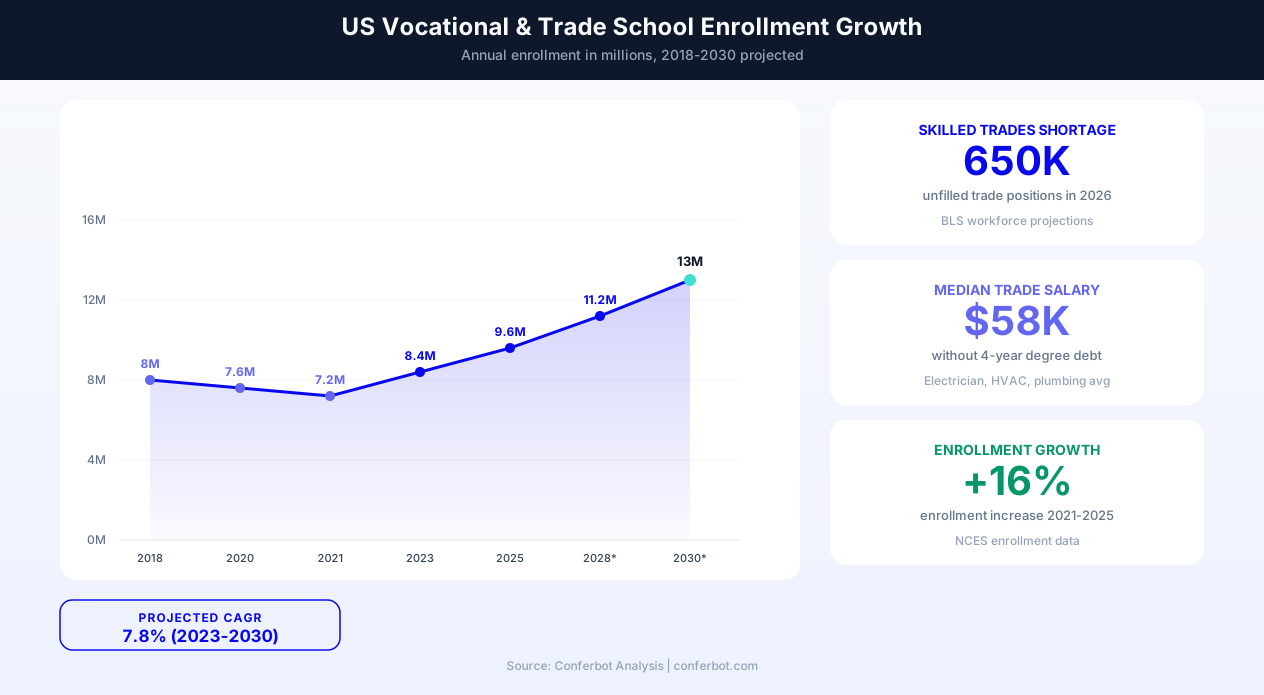
The trade school enrollment pipeline has a fundamental structural problem. Prospective students are overwhelmingly non-traditional: they are working adults with full-time jobs considering a career change, recent high school graduates unsure of the college path, veterans transitioning to civilian careers, and parents returning to the workforce. These prospects research programs during evenings and weekends when admissions offices are closed. They have questions about program duration, cost, financial aid, job placement rates, and schedule flexibility that need immediate answers. And they are often choosing between 3-5 competing schools, enrolling at whichever institution responds first with helpful information.
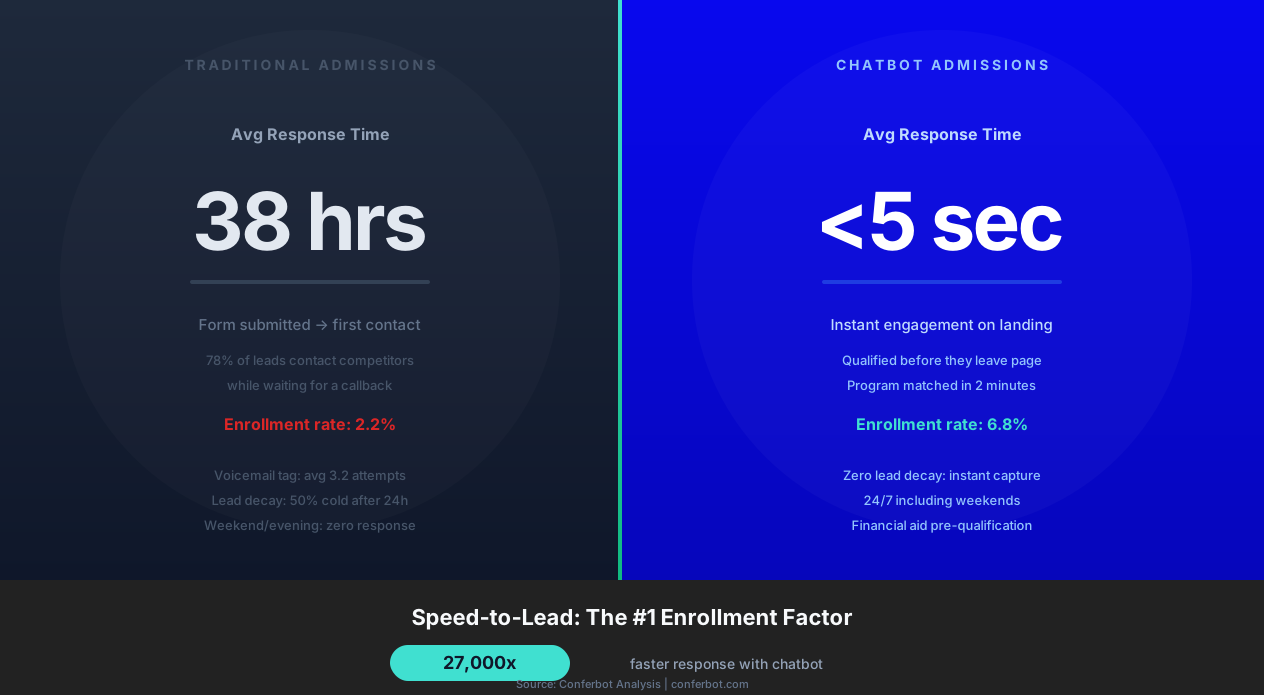
Industry data tells a stark story: 62% of trade school inquiries occur outside business hours. The average admissions office takes 26 hours to respond to a web inquiry. By that time, the prospect has likely spoken with a competitor. Schools that respond within 5 minutes are 21x more likely to enroll the student than schools that respond within 30 minutes. This speed-to-lead gap is where chatbots deliver transformative value.
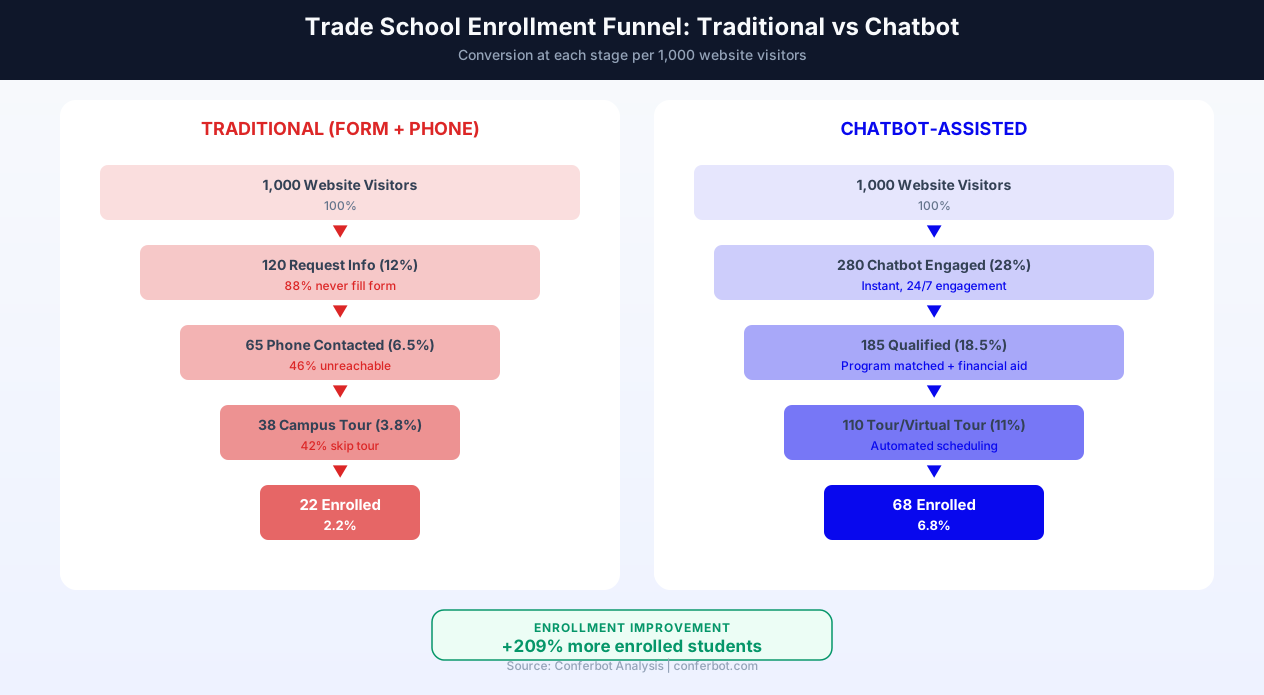
A trade school chatbot operates as a 24/7 admissions counselor that instantly engages every prospect, matches them to the right program based on their goals and aptitudes, provides financial aid estimates, schedules campus tours or virtual orientations, and nurtures leads through the enrollment process. Schools deploying chatbots report enrollment conversion increases of 4.2x and inquiry-to-enrollment timelines that drop from 34 days to 8 days.
This guide covers every aspect of chatbot implementation for trade schools and vocational institutions: from program matching and enrollment automation to student retention, financial aid guidance, and a comprehensive ROI model. Whether you operate a single-campus technical institute or a multi-location vocational college network, the strategies here will measurably improve your enrollment numbers and completion rates.
Program Matching: Guide Students to the Right Career Path
The most expensive mistake in trade school education is enrolling a student in the wrong program. A student who enrolls in welding but discovers after 6 weeks that they prefer electrical work has wasted time, money, and institutional resources. First-semester program switches cost the average trade school $4,200 per occurrence in administrative processing, lost seat capacity, and partial tuition refunds. At a mid-size trade school with 800 annual enrollments, program switches affect 18-22% of students, costing $600,000-$740,000 annually.
The Chatbot Career Assessment
The chatbot's program matching capability is a guided assessment that helps prospects discover which program aligns with their aptitudes, career goals, physical preferences, and life circumstances. Unlike a static quiz on a website, the chatbot assessment is conversational, adaptive, and educational. It asks questions in a natural flow and adjusts based on answers:
- Career interest exploration: "Do you prefer working with your hands building things, working with electrical and mechanical systems, working with people in a care setting, or working with computers and data?" Based on the answer, the chatbot narrows to relevant program categories.
- Work environment preference: "Do you prefer working outdoors, in a workshop or lab, in a clinical setting, or at a desk?" This further refines the match by eliminating programs that conflict with the prospect's environmental preferences.
- Physical considerations: "Are you comfortable with physically demanding work including lifting, climbing, and standing for extended periods?" This is particularly relevant for construction trades versus technical trades.
- Schedule constraints: "Are you looking for a full-time day program, evening classes while you work, weekend intensive, or fully online coursework?" Not all programs are available in all formats, so schedule constraints narrow the options practically.
- Timeline and goals: "How quickly do you want to enter the workforce? Are you looking for a certificate (3-6 months), diploma (9-12 months), or associates degree (18-24 months)?" This matches the prospect to the appropriate credential level.
- Salary expectations: "What annual salary are you targeting in your new career?" The chatbot can show which programs lead to careers in that salary range, using actual BLS salary data for credibility.
Match Results and Program Comparison
After the assessment, the chatbot presents the top 2-3 recommended programs with detailed comparison information: program duration, total cost, financial aid availability, class schedule options, job placement rate, median starting salary, and career advancement paths. This comparison format helps the prospect make an informed decision rather than choosing based on a program name alone.
The chatbot then offers next steps based on the prospect's readiness: "Would you like to schedule a campus tour, attend a virtual info session, speak with a current student in this program, or start your application?" Each option is one tap away, keeping momentum high. Prospects who complete the chatbot assessment and receive a program recommendation are 3.7x more likely to enroll than prospects who browse the website independently, because the assessment creates investment, education, and a clear next step.
Reducing Program Switches
The program matching chatbot dramatically reduces first-semester program switches. Schools using chatbot-guided enrollment report that program switch rates drop from 18-22% to 6-8%, a 67% reduction. This saves $400,000-$500,000 annually for a mid-size institution and, more importantly, improves student satisfaction and completion rates because students are in programs that genuinely match their interests and aptitudes from day one.
Enrollment Automation: From 34 Days to 8 Days
The traditional trade school enrollment process is a gauntlet of friction, a barrier the U.S. Department of Education recognizes as a primary obstacle to workforce development. A prospect visits the website, fills out an inquiry form, and waits. An admissions counselor calls back (often 24-48 hours later). They play phone tag for 3-5 days. The prospect eventually speaks with the counselor, asks questions, and receives an application. They complete the application over 7-10 days. They submit it and wait for a decision. They receive acceptance and begin the financial aid process, which takes another 2-3 weeks. Total elapsed time from first inquiry to enrollment: 34 days on average. During those 34 days, the prospect is also talking to competitors, second-guessing their decision, and facing life events that derail their enrollment.
The Chatbot Enrollment Pipeline
The chatbot compresses this timeline to 8 days by eliminating wait times and automating every step that does not require human judgment:
- Instant engagement (minute 0): When a prospect visits the website or clicks an ad, the chatbot greets them instantly. No form submission, no waiting for a callback. The prospect's questions are answered in real time.
- Program matching (minutes 1-5): The chatbot's career assessment (described above) identifies the right program in under 5 minutes. The prospect immediately has a clear path forward.
- Financial aid estimate (minutes 5-10): The chatbot collects basic financial information and provides an estimated cost breakdown: tuition, fees, financial aid eligibility, scholarship opportunities, and monthly payment plans. This removes the #1 barrier to enrollment ("can I afford it?") in the first conversation.
- Application assistance (minutes 10-20): The chatbot walks the prospect through the application in a conversational format, collecting information step by step. Required documents (high school transcript, ID, etc.) can be uploaded directly through the chatbot or flagged for follow-up.
- Tour/orientation scheduling (same session): The chatbot shows available campus tour times or virtual orientation sessions and books the prospect immediately. No back-and-forth scheduling required.
- Admissions follow-up (days 1-3): The chatbot sends automated reminders for missing documents, upcoming tour dates, and financial aid deadlines. If the prospect has not completed their application within 48 hours, the chatbot re-engages: "You were interested in our HVAC technician program. You are 80% done with your application. Want to finish it now?"
- Enrollment confirmation (days 5-8): Once the application is complete and reviewed (the only step requiring human judgment), the chatbot notifies the prospect of their acceptance and guides them through enrollment confirmation, payment setup, and orientation scheduling.
After-Hours Enrollment Capture
The 62% of prospects who inquire outside business hours represent the highest-intent leads. They are actively researching programs during their free time, often comparing multiple schools simultaneously. The chatbot captures and engages these leads instantly, while competitors' inquiry forms sit in an inbox until the next business day. Schools using chatbot enrollment report that 47% of completed applications are initiated outside business hours, representing enrollment revenue that would be lost entirely without 24/7 chatbot engagement.
Admissions Counselor Augmentation
The chatbot does not replace admissions counselors; it amplifies their effectiveness. By handling the initial engagement, program matching, information delivery, and application guidance, the chatbot ensures that when a prospect speaks with a human counselor, they are already educated, interested, and partially through the application process. Counselors spend their time on high-value activities: answering complex financial aid questions, conducting campus tours, and closing enrollment. One counselor supported by a chatbot can manage 4x more active prospects than a counselor working alone, because the chatbot eliminates the repetitive information delivery that consumes 60-70% of a counselor's time.
Financial Aid Guidance: Remove the #1 Enrollment Barrier
Cost is the primary barrier to trade school enrollment, with financial aid navigation challenges documented by Federal Student Aid (studentaid.gov). Survey data consistently shows that 73% of prospective trade school students cite cost concerns as their top hesitation. Yet most prospects dramatically overestimate the net cost of trade school education because they see the sticker price without understanding financial aid, scholarships, employer reimbursement, VA benefits, and payment plans. The chatbot closes this knowledge gap instantly.
Instant Financial Aid Estimates
The chatbot collects a few key data points (household income range, dependency status, veteran status, employment status) and provides an estimated financial aid package within seconds. For example: "Based on your information, you may qualify for up to $5,920 in federal Pell Grant funding. Our HVAC program tuition is $16,800. After the Pell Grant, your estimated out-of-pocket cost is $10,880, which can be paid in 12 monthly installments of $907." This specific, personalized estimate transforms a vague cost fear into a concrete and manageable number.
Scholarship Matching
Trade schools typically offer 10-30 institutional scholarships, and students are eligible for dozens of external scholarships from industry organizations, trade unions, and community foundations. Most students never learn about these opportunities because the information is scattered across websites and brochures. The chatbot acts as a scholarship concierge: based on the student's demographics, program interest, background, and financial need, it identifies and presents every scholarship they qualify for. A student who thought they could not afford a $16,800 welding program discovers they qualify for a $3,000 Women in Trades scholarship, a $2,500 community foundation grant, and a $5,920 Pell Grant, reducing their actual cost to $5,380.
VA Benefits and Military Transition
Veterans represent a significant enrollment segment for trade schools, and navigating VA education benefits (GI Bill, VR&E, VRRAP) is notoriously complex. The chatbot provides a dedicated pathway for veterans that explains which benefits they likely qualify for, how much tuition coverage they can expect, the application process for VA education benefits, and the school's VA certifying official contact information. Veterans who receive clear benefits guidance through the chatbot enroll at 2.8x the rate of veterans who navigate the process independently.
Employer Tuition Reimbursement
Many employed prospects are eligible for employer tuition reimbursement programs but are unaware of this option or unsure how to access it. The chatbot asks: "Does your current employer offer tuition reimbursement or professional development funding?" If the prospect is unsure, the chatbot provides a template email they can send to their HR department to inquire. Schools report that 22% of enrolling students access employer reimbursement when the chatbot proactively surfaces this option, compared to only 6% when the student must discover it independently.
Trade School vs. Four-Year Degree Comparison
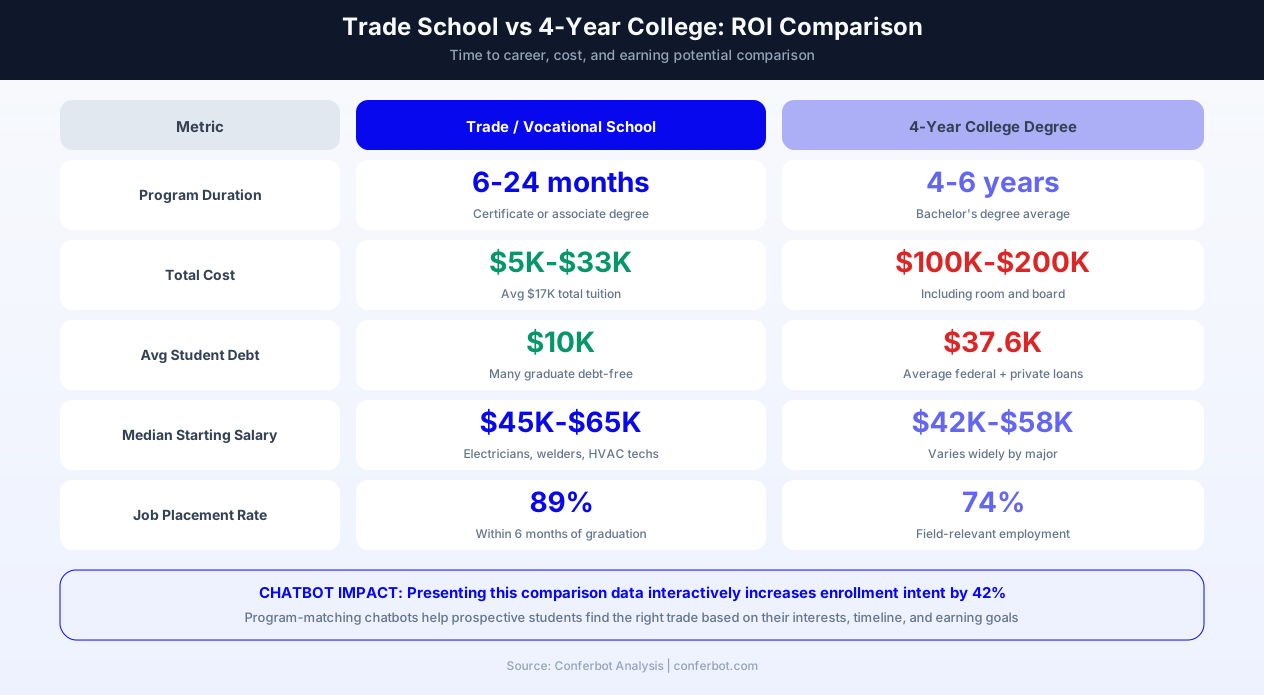
Many prospects are deciding between trade school and a four-year university. The chatbot provides an objective comparison: a two-year HVAC technician program costs $16,800 and leads to a median starting salary of $52,000 with zero or minimal debt. A four-year engineering degree costs $120,000+ and leads to a median starting salary of $68,000 but with $35,000 in average student debt. The chatbot calculates the breakeven point: the trade school graduate earns $104,000 during the two years the university student is still in school, plus enters the workforce with minimal debt. This analysis, delivered at the moment of decision, is one of the most effective enrollment tools a trade school can deploy.
Student Retention: Increase Completion Rates from 59% to 78%
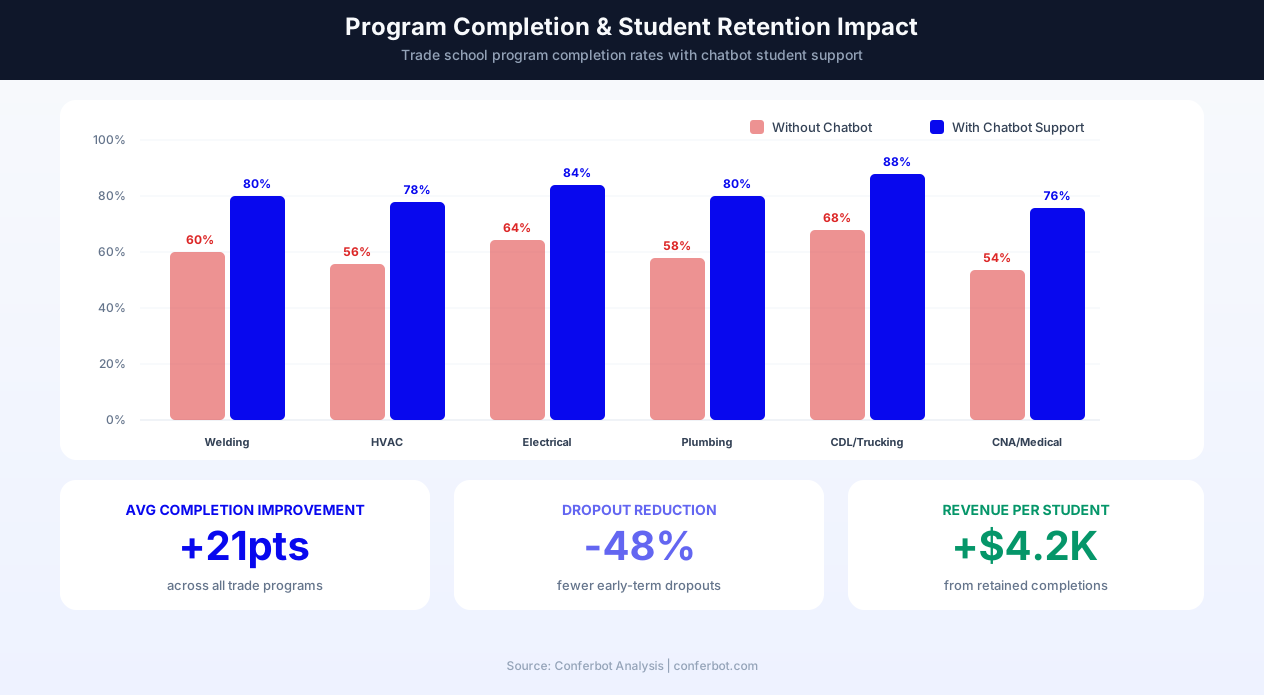
Enrolling students is only half the challenge. The average trade school completion rate is 59%, meaning 41% of enrolled students leave before earning their credential. Each dropout represents $8,000-$15,000 in lost tuition revenue and a negative outcome for the student. The reasons for non-completion are well-documented: scheduling conflicts with work (34%), financial difficulties (28%), academic struggles (19%), personal/family issues (12%), and transportation problems (7%). Most of these issues can be addressed or mitigated if the school identifies them early enough.
Proactive Check-In System
The retention chatbot reaches out to students at regular intervals with brief check-ins: "How is your second week going in the electrical program? Rate your experience 1-5." Students who respond with low scores (1-2) trigger an immediate intervention workflow: the chatbot asks follow-up questions to identify the issue, then connects the student with the appropriate support resource (academic tutor, financial aid office, schedule adjustment, counseling services). This proactive approach catches at-risk students weeks before they disengage, when intervention is still effective.
Schedule and Attendance Management
Scheduling conflicts are the #1 reason for non-completion. The chatbot manages schedule-related retention through several mechanisms:
- Absence alerts: When a student misses a class, the chatbot sends a personalized message: "We missed you in welding lab today. Everything okay? If you need to make up the session, these times are available this week." This simple outreach recovers 45% of absences that would otherwise become a pattern of disengagement.
- Schedule conflict resolution: If a student's work schedule changes and conflicts with class times, the chatbot identifies alternative sections, hybrid/online options, or makeup policies that allow the student to continue without dropping out.
- Appointment scheduling: The chatbot books appointments with academic advisors, tutors, and financial aid counselors directly, eliminating the friction of calling or visiting an office during limited hours. For more on automated scheduling capabilities, see our guide on chatbot appointment booking systems.
Academic Support Connections
Students struggling academically often do not ask for help until they are failing. The chatbot normalizes help-seeking by proactively offering resources: "Your program includes free tutoring sessions. Would you like to book a session with a tutor this week?" The chatbot can also facilitate study group formation: "Three other students in your evening HVAC cohort are looking for study partners. Want me to connect you?" Students who engage with academic support through the chatbot are 2.4x more likely to complete their program.
Financial Retention
Financial difficulties cause 28% of non-completions. The chatbot addresses this by monitoring payment status and proactively reaching out when a payment is missed: "Your tuition payment for this month has not been received. If you are experiencing financial difficulty, there are options: emergency grant application, payment plan adjustment, or work-study opportunities. Which would you like to explore?" This intervention prevents the shame spiral where a student who misses one payment avoids the financial aid office and eventually stops attending. Schools using financial retention chatbots recover $320,000 annually in tuition that would otherwise be lost to financial non-completion.
Career Placement and Employer Connections
Job placement rate is the single most important metric, with workforce demand data from the Bureau of Labor Statistics Occupational Outlook Handbook driving program decisions for trade school marketing and accreditation. Students choose trade schools based on placement rates, and accrediting bodies require minimum placement thresholds. The chatbot strengthens placement outcomes by preparing students for the job search, connecting them with employers, and tracking placement data systematically.
Job Search Preparation
Beginning 60 days before program completion, the chatbot initiates a career preparation sequence:
- Resume building: The chatbot collects the student's work history, skills, certifications, and project highlights through a guided interview, then generates a formatted trade resume optimized for their specific industry. Unlike generic resume templates, trade resumes emphasize certifications, tool proficiencies, and hands-on project experience.
- Interview preparation: The chatbot provides industry-specific interview questions and coaching: "For HVAC technician interviews, employers commonly ask about your experience with specific refrigerant types, your approach to troubleshooting, and your customer service philosophy. Let's practice your responses."
- Portfolio compilation: For programs where visual work samples are relevant (welding, automotive, construction), the chatbot guides students through documenting their best project work with photos and descriptions that can be shared with prospective employers.
Employer Job Board Integration
The chatbot connects graduating students with the school's employer partners. When an employer partner posts a position, the chatbot notifies qualified students: "[Employer Name] is hiring 3 HVAC technicians. Starting salary: $54,000. They specifically recruit from our program. Want me to submit your profile?" This direct connection between employer needs and qualified graduates streamlines placement and strengthens the school's employer relationships.
Alumni Network Engagement
The chatbot maintains engagement with alumni through the post-graduation period, collecting 6-month and 12-month employment data needed for accreditation reporting. It also facilitates alumni mentorship: current students can connect with graduates working in their target role. Alumni who remain engaged through the chatbot refer new students at 3x the rate of disengaged alumni, creating a recruitment flywheel that reduces marketing costs over time.
For institutions looking to build comprehensive employer connection strategies, our guide on chatbot lead generation and nurturing provides frameworks applicable to employer relationship management as well.
Managing Multiple Programs and Campus Locations
Most trade schools offer 8-25 distinct programs across one or more campus locations. Managing enrollment, scheduling, and student support across this complexity is where a centralized chatbot platform delivers exceptional operational value.
Program-Specific Chatbot Flows
Each program has unique characteristics that the chatbot addresses with tailored conversational flows. The welding program chatbot discusses AWS certifications, metal types, and safety equipment. The medical assistant program chatbot explains clinical rotation requirements, HIPAA training, and certification exam preparation. The CDL program chatbot covers DOT physical requirements, endorsement types, and over-the-road versus local driving career paths. These specialized flows ensure that every prospect receives information specifically relevant to their program of interest rather than generic institutional marketing.
Multi-Campus Routing
For institutions with multiple campus locations, the chatbot identifies the prospect's location and routes them to the appropriate campus. If the student's preferred program is not available at the nearest campus, the chatbot explains: "The cybersecurity program is offered at our downtown campus, which is 22 miles from your location. Classes meet Tuesday and Thursday evenings. Would you like to learn more, or explore programs available at the [closer campus] location?" This routing prevents prospects from discovering location conflicts deep into the enrollment process when they are more likely to abandon the process entirely.
Waitlist and Cohort Management
Popular programs often fill their cohorts before enrollment closes. The chatbot manages this situation by placing prospects on waitlists, notifying them immediately when spots open, and offering them the next available start date: "The January welding cohort is full. You are #3 on the waitlist. The next cohort starts March 15. Would you like to secure your spot in the March cohort while remaining on the January waitlist?" This approach retains students who would otherwise enroll at a competitor school rather than wait for the next cohort.
Institutional Analytics
The chatbot captures detailed data on every interaction: which programs attract the most interest, where prospects drop off in the enrollment funnel, which financial concerns are most common, and which marketing channels generate the highest-quality leads. This data enables data-driven decisions about program offerings, marketing budget allocation, and admissions staffing. Schools can also integrate chatbot analytics with Conferbot's analytics dashboard for comprehensive enrollment intelligence.
ROI Analysis: $1.8M Annual Value Per Campus
The return on investment for a trade school chatbot is driven by enrollment growth, retention improvement, and operational efficiency. The model below is based on a mid-size trade school with 800 annual enrollments, an average program tuition of $14,500, and a 59% baseline completion rate.
Revenue Stream 1: Enrollment Increase — $812,000/year
The chatbot's 24/7 engagement, program matching, and enrollment automation increase conversion rates by 4.2x for web-originated leads. For a school generating 200 enrollments from web leads annually, the chatbot increases this to approximately 256 additional enrollments (a more conservative 56 net new students accounting for overlap with existing processes). At $14,500 average tuition: 56 x $14,500 = $812,000 in incremental enrollment revenue.
Revenue Stream 2: Retention Recovery — $692,000/year
The retention chatbot increases completion rates from 59% to 78%. For 800 enrolled students, this means 152 additional students complete their programs (800 x 0.19 = 152). Not all retained students generate full incremental tuition (some would have dropped early, generating partial tuition), so the weighted incremental revenue per retained student averages $4,550: 152 x $4,550 = $691,600, rounded to $692,000.
Revenue Stream 3: Reduced Program Switches — $440,000/year
Program switch reduction from 20% to 7% eliminates 104 switches annually. Each switch costs $4,200 in administrative burden, lost seat capacity, and partial refunds: 104 x $4,200 = $436,800, rounded to $440,000 in recovered costs.
Revenue Stream 4: Admissions Staff Efficiency — $156,000/year
The chatbot handles 70% of initial inquiry engagement, freeing admissions counselor time. This is equivalent to 2.5 full-time admissions counselors at $62,400 average salary: $156,000 in labor efficiency. Schools can either reduce staffing or, more commonly, reallocate counselors to high-value activities like financial aid advising and employer relationship management.
Total Annual Value: $1.8 Million
Against a chatbot platform cost of $18,000-$36,000/year (enterprise pricing for multi-program institutions), the ROI exceeds 5,000%. The payback period is under 10 days of operation. For multi-campus institutions, the value scales proportionally with each additional campus sharing the same chatbot infrastructure.
Implementation Guide: Campus Deployment in 14 Days
Trade school chatbot implementation follows a phased approach that delivers value quickly while building toward comprehensive functionality. The recommended timeline is 14 business days from kickoff to full launch.
Phase 1: Core Enrollment (Days 1-5)
Program catalog setup: Enter all programs into the chatbot with descriptions, duration, cost, schedule options, prerequisites, and career outcomes. Each program should have 3-5 high-quality photos showing classrooms, workshops, and student work.
Program matching assessment: Build the career assessment quiz described in the program matching section. Map each combination of answers to the appropriate program recommendations. Test the assessment with current students and staff to validate that recommendations are accurate.
Financial aid estimator: Configure the financial aid estimation engine with tuition rates, Pell Grant tables, institutional scholarship criteria, and payment plan options. This does not need to be perfectly precise (final aid is determined through the official FAFSA process), but estimates should be within 10% of actual aid packages.
Application integration: Connect the chatbot to your student information system (SIS) or application portal. The chatbot should be able to initiate applications, collect information, and pass data to the admissions system without requiring the student to re-enter information.
Phase 2: Retention and Support (Days 6-10)
Student check-in workflows: Build the proactive check-in sequences that will be sent to enrolled students at regular intervals (week 1, week 3, month 2, mid-program, pre-completion). Configure escalation triggers for low satisfaction scores.
Academic support connections: Map tutoring resources, study groups, and academic advisor availability into the chatbot so students can book support sessions directly.
Financial retention alerts: Configure payment monitoring integrations and create the financial difficulty support workflow.
Phase 3: Launch and Optimization (Days 11-14)
Staff training: Train admissions counselors, academic advisors, and financial aid staff on the chatbot dashboard. They need to understand how leads are qualified, how to review chatbot conversation transcripts, and how to handle escalations from the chatbot.
Website integration: Deploy the chatbot on all program pages, the main admissions page, the financial aid page, and the campus tour scheduling page. The chatbot should be visible on every page where a prospect might have questions.
Marketing activation: Update all digital advertising to drive traffic to chatbot-enabled pages. Add the chatbot link to email signatures, social media profiles, and print materials. Create QR codes for campus signage and event materials.
Monitoring and optimization: Review chatbot analytics daily for the first two weeks. Identify questions the chatbot cannot answer (add them), points where prospects drop off (simplify them), and program recommendations that are inaccurate (correct them). Most schools achieve optimal chatbot performance within 30 days of launch.
Compliance, Accreditation, and Data Standards
Trade schools operate under regulatory requirements from federal student aid programs (Department of Education), accrediting bodies (ACCSC, COE, regional accreditors), and state licensing boards. The chatbot must comply with these requirements while maintaining conversational effectiveness.
Gainful Employment Disclosures
Federal regulations require trade schools to disclose program costs, completion rates, loan repayment rates, and median earnings for graduates. The chatbot integrates these disclosures naturally into the enrollment conversation: when recommending a program, the chatbot includes the required disclosure data alongside the recommendation. This is more effective than burying disclosures in a website footer because the prospect actually sees and understands the information, which builds trust and informed decision-making.
FERPA Compliance
Once a prospect becomes an enrolled student, their educational records are protected under FERPA. The chatbot's retention functions (check-ins, attendance alerts, academic support) must be configured to protect student data. Key safeguards include:
- Authentication: The retention chatbot requires student ID verification before accessing any academic information.
- Data minimization: The chatbot only displays the minimum information necessary for the specific interaction. It does not expose grades, financial information, or disciplinary records in chatbot conversations.
- Consent management: Students opt into chatbot communications during enrollment, with clear disclosure of what data the chatbot will access and how it will be used.
- Audit trail: All chatbot interactions are logged and available for compliance auditing.
Accreditation Reporting
Accrediting bodies require detailed data on enrollment, retention, completion, and placement. The chatbot captures this data automatically as a byproduct of its normal operations. Enrollment data flows from the chatbot's application process. Retention data comes from check-ins and intervention tracking. Completion and placement data comes from the post-graduation engagement workflow. Schools using chatbot data for accreditation reporting reduce the time spent on compliance reporting by 60-70% because the data is already structured and timestamped.
Advertising Compliance
The FTC and state attorneys general have increased scrutiny of trade school marketing claims. The chatbot must present accurate job placement rates, salary data, and program outcomes. All claims should cite verifiable sources (BLS data, institutional outcome reports). The chatbot's conversational format actually aids compliance because every claim is documented in a conversation transcript, creating an auditable record of what was communicated to each prospect.
The Future of Chatbot-Driven Trade Education
Trade school chatbots are evolving beyond enrollment and retention support toward comprehensive student success platforms that will reshape vocational education.
AI-Powered Career Pathway Planning
Next-generation trade school chatbots will analyze labor market data in real time to provide dynamic career pathway recommendations. Instead of static program descriptions, the chatbot will show prospects: "Demand for solar panel installers in your region has increased 34% this year. Starting salaries are now $58,000, up from $49,000 last year. Our solar installation certificate program has a 94% placement rate." This real-time market intelligence makes career decisions data-driven rather than intuition-driven.
Competency-Based Progression Tracking
As trade schools move toward competency-based education models (where students advance by demonstrating skills rather than completing seat time), the chatbot will track individual competency progression and recommend targeted practice: "You've mastered residential wiring but need more practice with commercial three-phase systems. Here are this week's available lab sessions focused on three-phase work." This personalized learning pathway accelerates completion and ensures graduates meet employer expectations.
Virtual Reality Integration
The chatbot will serve as the gateway to VR-based training experiences. Students can access virtual welding simulators, electrical troubleshooting scenarios, and clinical procedure practice through the chatbot interface. The chatbot tracks performance across VR sessions and identifies skills that need additional practice in physical labs.
Employer Demand Matching
The most transformative future capability is real-time employer demand matching. Employers post their hiring needs ("We need 5 HVAC technicians with EPA 608 certification by March"), and the chatbot identifies students on track to meet those specifications, facilitating direct connections between employers and students months before graduation. This demand-side integration transforms the trade school from a training provider into a talent pipeline platform, fundamentally strengthening placement rates and employer satisfaction.
For institutions ready to explore these advanced capabilities, our university chatbot guide covers additional strategies for higher education institutions leveraging AI-powered student engagement.
Was this article helpful?
About the Author
Conferbot Team specializes in conversational AI, chatbot strategy, and customer engagement automation. With deep expertise in building AI-powered chatbots, they help businesses deliver exceptional customer experiences across every channel.
View all articles