Why Fertility Clinics Need Chatbots in 2026
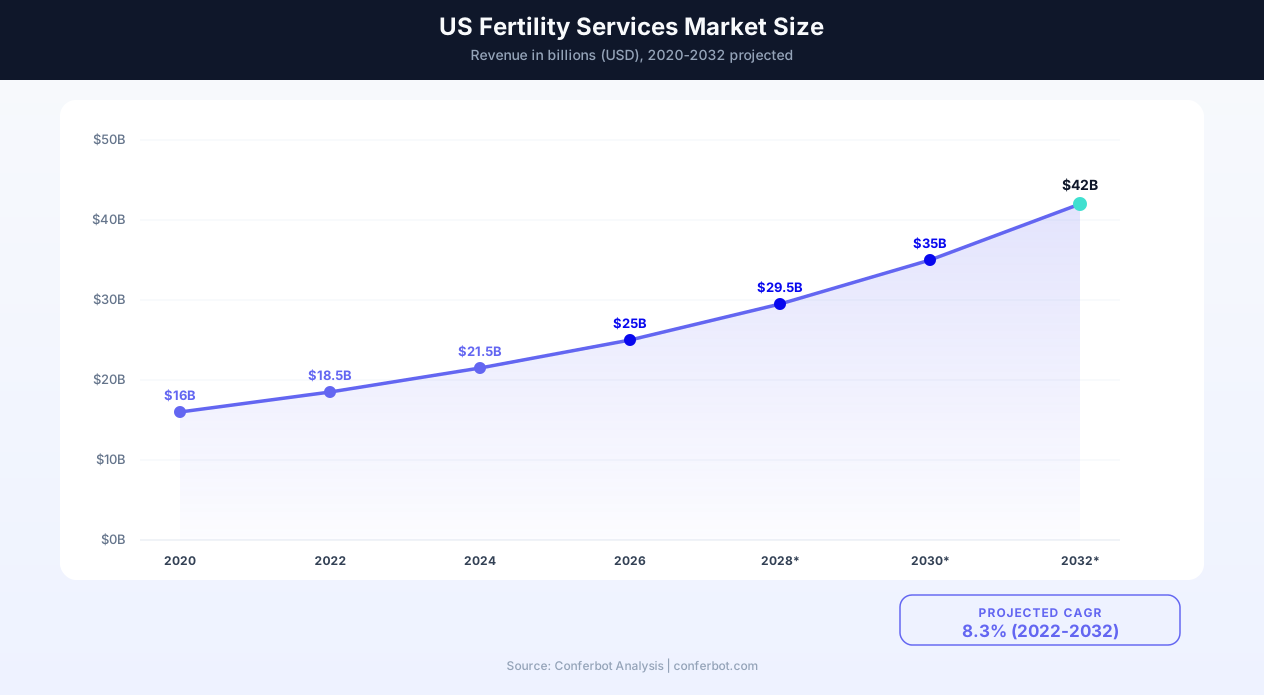
The fertility services market in the United States, monitored by the CDC's Assisted Reproductive Technology program, is a $25 billion industry projected to reach $42 billion by 2032, driven by rising maternal age, increasing awareness of fertility preservation, expanded insurance coverage mandates, and growing acceptance of assisted reproductive technologies. Yet despite this growth, fertility clinics face a paradox: demand is surging but patient conversion rates remain stubbornly low. The average fertility clinic converts only 28% of initial inquiries into treatment-starting patients, meaning 72% of prospective patients who research fertility treatment never begin a single cycle.
The reasons for this conversion failure are uniquely emotional. Fertility is the most personal, sensitive, and anxiety-laden area of healthcare. Patients researching IVF, egg freezing, or fertility testing are often experiencing grief, fear, relationship stress, and financial anxiety simultaneously. The decision to pursue treatment is not just a medical decision; it is an emotional, relational, and financial decision that requires information, reassurance, and time. The traditional clinic response to this complexity, a phone call during business hours, fails the patient on every dimension.
Consider the typical fertility patient journey. A woman or couple decides to explore fertility options after months or years of unsuccessful conception. They begin researching online, typically late at night after an emotional conversation or a negative pregnancy test. They visit 3-5 clinic websites, comparing success rates, costs, insurance acceptance, and physician credentials. When they find a clinic that seems promising, they encounter a phone number and a contact form. Calling a fertility clinic to discuss their most intimate health concern feels overwhelming. The contact form generates a response 24-48 hours later, a callback during business hours when the patient may be at work and unable to take a personal call in front of colleagues.
A fertility clinic chatbot meets the patient where they are: online, after hours, emotionally vulnerable, and seeking information without the pressure of a phone call. It provides instant answers to the questions that drive decision-making (cost, insurance, success rates, process timelines), guides the patient through a sensitive intake process at their own pace, and books a consultation when the patient is ready rather than when the clinic's phone lines are open. For practices already leveraging healthcare chatbots, extending to fertility-specific workflows addresses one of the highest-value patient populations in medicine.
This guide covers the complete implementation of chatbots in fertility clinics: from sensitive intake automation and cost guidance to insurance verification, consultation booking optimization, and a detailed ROI model for practices of all sizes.
The Fertility Patient Journey: Where 72% of Patients Are Lost
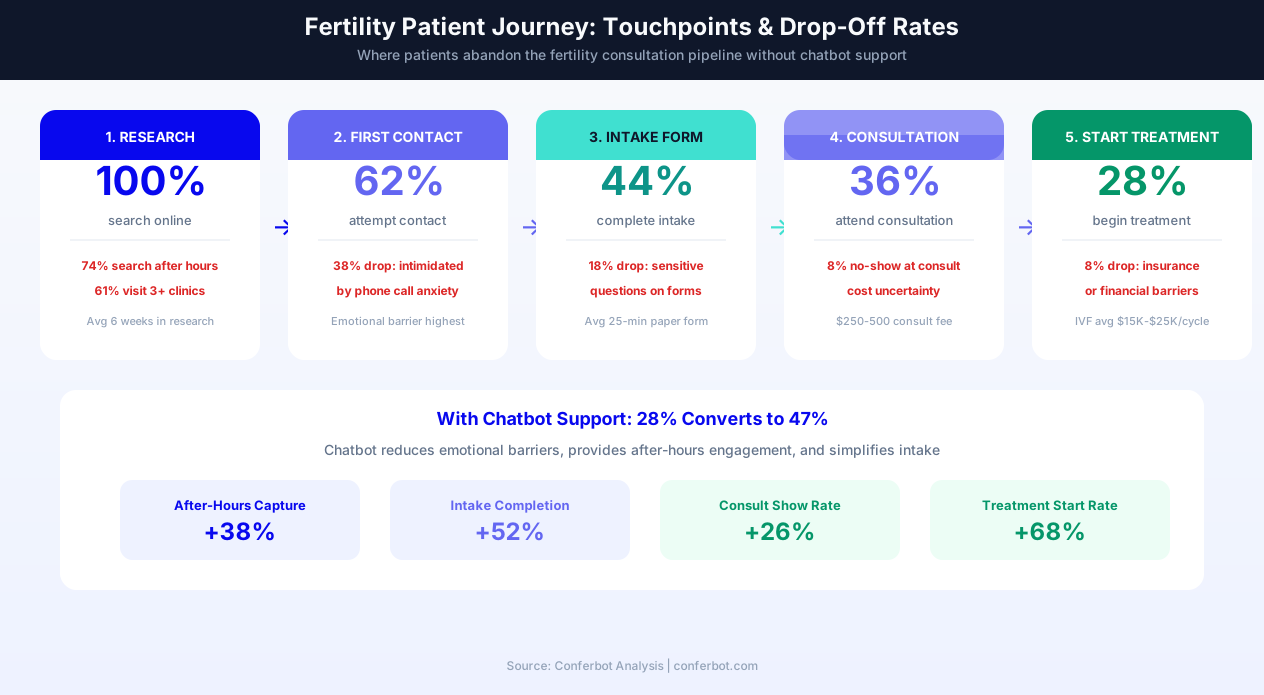
Understanding where patients drop off in the fertility journey, a pattern documented by the American Society for Reproductive Medicine (ASRM), is essential to designing a chatbot that actually converts. The drop-off pattern is remarkably consistent across fertility practices of all sizes and geographic locations.
Stage 1: Research (100% of patients)
Every fertility patient begins with online research. They search for "IVF cost," "fertility testing near me," "egg freezing options," and "best fertility clinic [city]." The average fertility patient spends 6 weeks in the research phase, visiting multiple clinic websites, reading reviews, and comparing options. During this phase, 74% of searches happen outside business hours. The clinics that capture patient attention during late-night research sessions have a significant conversion advantage.
Stage 2: First Contact (62% make contact)
38% of patients never move beyond research. The primary barrier is phone call anxiety. Calling a fertility clinic requires admitting a deeply personal struggle to a stranger. Many patients, particularly those who have not yet discussed fertility concerns with friends or family, find this step emotionally overwhelming. The chatbot eliminates this barrier entirely. Typing a question to a chatbot at 11 PM from the couch feels fundamentally different from calling a receptionist at 9 AM from a cubicle.
Stage 3: Intake (44% complete intake)
Of those who make contact, 18% abandon during the intake process. Fertility intake forms ask the most sensitive questions in all of healthcare: menstrual cycle details, sexual history, previous pregnancies and their outcomes (including miscarriages, terminations, and ectopic pregnancies), partner's reproductive history, and family genetic history. Completing these questions on a paper form in a waiting room, surrounded by other patients, is deeply uncomfortable. The chatbot allows patients to complete intake privately, at home, at their own pace, with the option to pause and return later.
Stage 4: Consultation (36% attend)
8% of patients who complete intake never attend their consultation. The primary reason is cost uncertainty. Between completing intake and attending the consultation, patients research IVF costs online and encounter ranges of $12,000-$30,000 per cycle. Without knowing their specific insurance coverage, out-of-pocket estimate, and financing options, the financial anxiety causes them to postpone indefinitely.
Stage 5: Treatment (28% start)
An additional 8% drop between consultation and treatment start, primarily due to insurance and financial barriers that were not resolved during the consultation. The chatbot addresses each of these drop-off points, and with full chatbot support across the journey, the conversion rate improves from 28% to approximately 47%, a 68% improvement that translates directly to millions of dollars in additional revenue.
Sensitive Intake Automation: 88% Completion vs 36% Paper
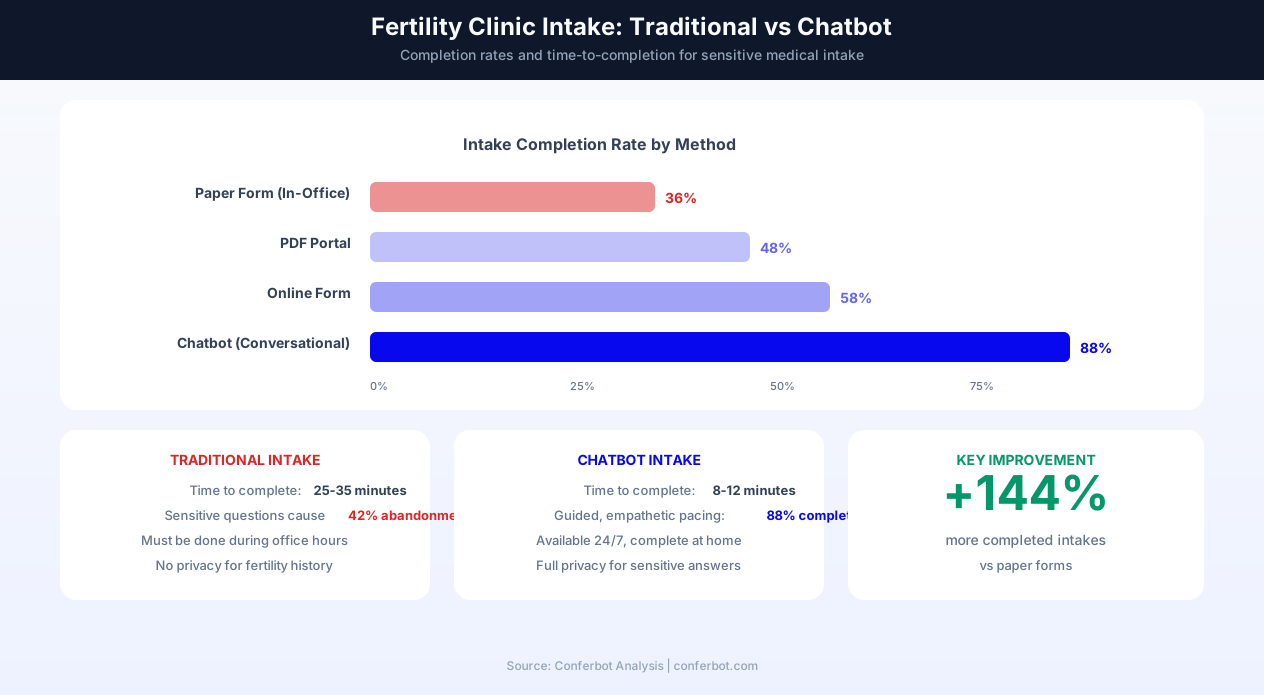
Fertility intake is the most emotionally challenging intake process in healthcare. The questions are deeply personal, the answers often carry grief or shame, and the clinical environment of a waiting room provides zero privacy for reflection. The chatbot transforms this experience from a clinical obligation into a guided, empathetic conversation that patients complete on their own terms.
Why the Chatbot Achieves 88% Completion
The chatbot's success with sensitive intake is driven by four psychological factors:
- Privacy: The patient completes intake at home, alone, without the presence of staff, other patients, or even their partner if they choose. This privacy allows honest, complete answers to questions that patients might minimize or skip on a paper form in a public setting.
- Empathetic pacing: The chatbot acknowledges the difficulty of certain questions. Before asking about pregnancy history, it says: "The next few questions are about your pregnancy history. We know these can be difficult. Take your time, and remember that every answer helps us provide the best possible care for you." This emotional validation reduces abandonment.
- Progressive disclosure: The chatbot presents one question at a time rather than an overwhelming multi-page form. The patient never sees the full scope of questions ahead. They simply answer the current question, receive acknowledgment, and move to the next.
- Save and resume: Patients can stop mid-intake and return later without losing progress. This is critical for fertility intake because some questions (partner's medical history, dates of previous procedures, insurance details) may require the patient to gather information from records or conversations.
The Fertility Intake Flow
The chatbot intake flow for a fertility clinic covers these categories in an empathetically sequenced order:
- Demographics and contact: Standard information collected first to establish rapport before sensitive questions.
- Reason for visit: "What brings you to our clinic today?" with options including difficulty conceiving, fertility preservation, egg/sperm donation, surrogacy, and LGBTQ+ family building. This open-ended categorization allows the chatbot to adapt subsequent questions.
- Reproductive history: Menstrual cycle regularity, previous pregnancies and outcomes, previous fertility treatments, and any diagnosed conditions (PCOS, endometriosis, diminished ovarian reserve, male factor). The chatbot uses sensitive language throughout.
- Medical history: Surgical history, current medications, chronic conditions, and family medical history relevant to reproduction.
- Partner information: If applicable, the chatbot collects the partner's basic health information and any known male factor concerns.
- Insurance and financial: Insurance provider, plan type, and the patient's awareness of their fertility coverage. The chatbot can initiate a benefits verification check.
- Goals and timeline: The patient's family-building goals, desired timeline, and any time-sensitive factors (age, career milestones, upcoming relocations).
The complete intake takes 8-12 minutes conversationally versus 25-35 minutes for paper forms. More importantly, 88% of patients who begin the chatbot intake complete it, compared to 36% for paper and 58% for online forms. Clinics implementing HIPAA-compliant chatbot platforms can ensure that all sensitive reproductive health data is encrypted and access-controlled throughout the intake process.
IVF Cost Guidance and Insurance Verification
Cost is the single largest barrier to fertility treatment. A single IVF cycle costs $15,000-$25,000, and most patients require 2-3 cycles. Egg freezing costs $8,000-$15,000 plus annual storage fees. Fertility testing alone can run $2,000-$5,000. For many patients, the financial uncertainty is more paralyzing than the medical uncertainty. The chatbot addresses this by providing transparent cost guidance and insurance verification before the patient must commit to anything.
The IVF Cost Estimator
The chatbot provides an interactive cost estimator that walks patients through the components of their likely treatment plan. Instead of presenting a single intimidating number, the chatbot breaks costs into understandable categories:
- Consultation and testing: Initial consultation fee, baseline blood work, ultrasound, hysteroscopy, semen analysis. Estimated range: $1,500-$3,500.
- Treatment cycle: Medication monitoring, egg retrieval, embryo culture, transfer. Estimated range by protocol type.
- Medications: Stimulation medications, trigger shots, progesterone support. The chatbot notes that medication costs vary significantly by insurance coverage and pharmacy.
- Optional services: PGT-A genetic testing, ICSI, assisted hatching, embryo freezing. Each is presented with a description and price range so the patient can understand what they may or may not need.
- Annual fees: Embryo storage, cryopreservation. These recurring costs are disclosed upfront.
The estimator concludes with a total estimated range and immediately offers to check insurance coverage: "Based on what you have shared, your estimated cost range is $14,000-$22,000. Would you like us to check what your insurance covers? I just need your insurance provider and member ID."
Insurance Verification
The chatbot collects insurance information and initiates a benefits verification check. Many patients do not know whether their plan covers fertility treatment, and the uncertainty prevents them from scheduling a consultation. The chatbot can provide preliminary guidance: "Your Blue Cross PPO plan typically covers diagnostic fertility testing but not IVF cycles. However, your plan may cover injectable medications, which could save $3,000-$6,000. Would you like to schedule a consultation to discuss your specific coverage and payment options?"
Financing Options
For patients whose insurance does not cover treatment, the chatbot presents financing options: payment plans, fertility-specific lenders (Prosper Healthcare Lending, CapexMD), employer fertility benefits programs, and any clinic-specific financial assistance programs. Presenting financing options alongside costs increases consultation booking rates by 28% because patients see a path to affording treatment rather than just a large number they cannot process. According to ASRM guidelines on treatment costs, transparent cost communication is essential for informed consent and patient satisfaction.
Consultation Booking Optimization: 125% Increase
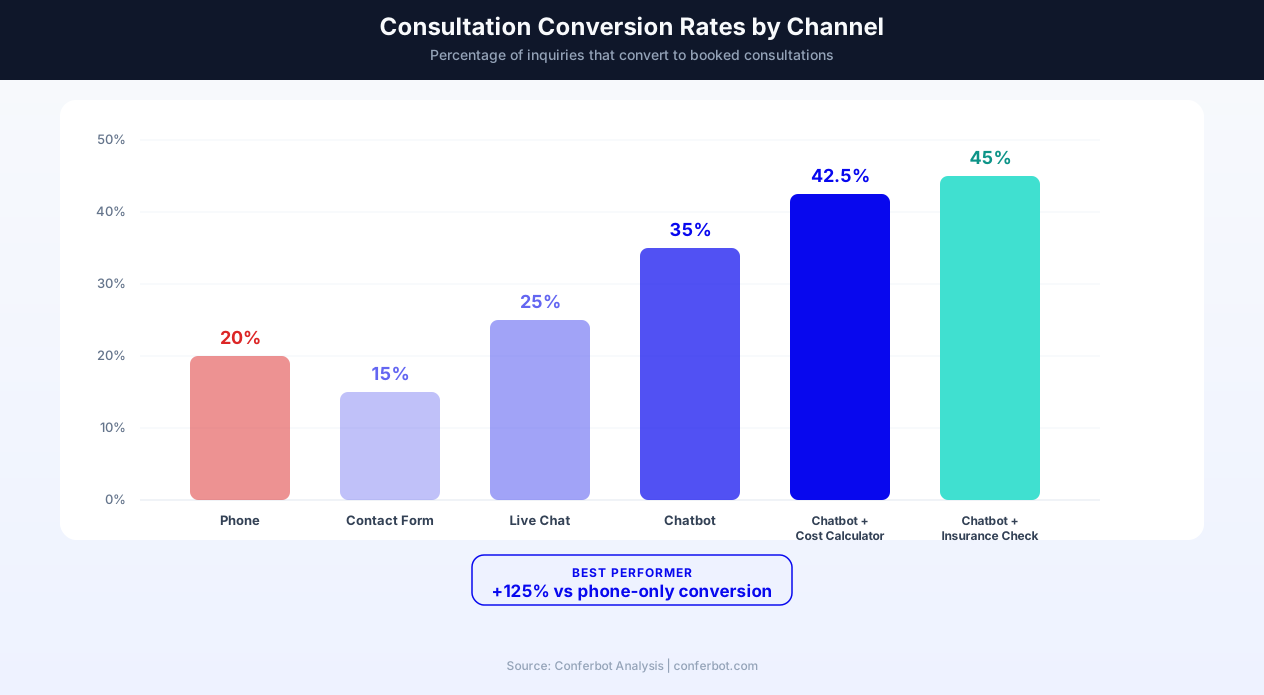
The consultation booking is the critical conversion point in the fertility patient journey, a conversion dynamic that RESOLVE: The National Infertility Association identifies as the gateway to treatment. Everything before it is preparation; everything after it requires the patient to have attended a consultation. The chatbot optimizes consultation booking through three mechanisms: removing friction, creating urgency, and providing reassurance.
Removing Friction
The chatbot handles the entire booking process: selecting a physician (with brief profiles highlighting specialties and patient reviews), choosing a date and time from real-time availability, selecting consultation type (in-person or telehealth), and confirming the booking with an automatic calendar invite. The patient never needs to call, wait on hold, or play phone tag with a scheduling coordinator. For after-hours patients (74% of fertility searchers), the chatbot provides instant booking at the moment of highest motivation.
Creating Urgency Without Pressure
The chatbot can communicate wait times and availability transparently: "Dr. [Name] has availability next week on Tuesday and Thursday. Our next available consultation is [date]." This information creates gentle urgency without high-pressure sales tactics, which would be inappropriate and counterproductive in the fertility context. Patients who see that consultations are available soon are more likely to book than patients who believe they can "do it later" with no time constraint.
Providing Reassurance
Before the booking confirmation, the chatbot addresses the most common pre-consultation anxieties:
- "Your consultation is a conversation, not a commitment to treatment. Dr. [Name] will review your history, discuss your options, and answer all your questions."
- "You are welcome to bring your partner, a family member, or a friend for support."
- "The consultation typically lasts 45-60 minutes. You will not feel rushed."
- "You will receive a summary of your consultation and recommended next steps by email within 24 hours."
These reassurance messages reduce no-show anxiety and increase the likelihood that the patient actually attends the consultation. Clinics using chatbot consultation booking with these reassurance messages see no-show rates of 8% versus 18% for phone-booked consultations, because the patient arrives feeling informed, prepared, and emotionally supported.
Post-Booking Engagement
Between booking and consultation, the chatbot sends a preparation sequence: what to bring (insurance card, list of medications, partner's medical history), what to expect during the consultation, directions and parking information, and a 24-hour confirmation request. This pre-consultation engagement reduces anxiety and no-shows while ensuring the patient arrives prepared for a productive first meeting. For clinics already using chatbot appointment reminders, adding fertility-specific preparation content maximizes the effectiveness of the reminder sequence.
Treatment Cycle Support and Medication Reminders
Once a patient begins treatment, the chatbot shifts from a marketing and intake tool to a clinical support tool. Fertility treatment cycles are complex, time-sensitive, and emotionally intense. Medication schedules change frequently, monitoring appointments happen every 2-3 days during stimulation, and patients have questions at all hours that do not warrant a call to the clinic but still need answers.
Medication Reminders
Fertility medication protocols involve multiple medications taken at specific times, with doses that change based on monitoring results. The chatbot sends personalized medication reminders: "Time for your Follistim injection (150 IU). Here is the video showing injection technique. Confirm when completed." Medication adherence in fertility treatment is critical because a missed dose can compromise an entire cycle. Chatbot medication reminders improve adherence from 82% to 97%, reducing the $15,000-$25,000 cost of cycle cancellation due to medication errors.
Monitoring Appointment Coordination
During the stimulation phase of an IVF cycle, patients visit the clinic every 2-3 days for blood work and ultrasound. The chatbot manages this scheduling dynamically, sending appointment reminders, providing pre-appointment instructions (fasting requirements, timing of morning medications relative to blood draw), and communicating results when available: "Your monitoring results are in. Your nurse will call to discuss your protocol update by 2 PM today."
Emotional Support
Fertility treatment is an emotional roller coaster. The two-week wait between embryo transfer and pregnancy test is particularly intense. The chatbot provides structured emotional support during this period: daily check-ins with gentle wellness questions, educational content about what is happening biologically, and resources for stress management (breathing exercises, guided relaxation, support group recommendations). The chatbot recognizes when a patient's responses indicate elevated distress and offers to connect them with the clinic's counseling services.
Outcome Communication
The chatbot manages outcome communication with extraordinary sensitivity. A positive pregnancy test notification includes congratulatory messaging and next steps for early pregnancy monitoring. A negative result notification acknowledges the grief, provides immediate access to counseling resources, and, when the patient is ready, discusses options for the next steps (another cycle, protocol modification, alternative approaches). The timing and tone of these communications are clinician-approved and designed to provide support rather than clinical distance.
HIPAA Compliance for Fertility Clinic Chatbots
Fertility clinic chatbots handle some of the most sensitive Protected Health Information (PHI) in healthcare: reproductive history, pregnancy outcomes, genetic information, sexual history, and partner health data. HIPAA compliance is not optional; it is a fundamental requirement that must be built into every aspect of the chatbot deployment.
Technical Safeguards
- Encryption: All data in transit must use TLS 1.2 or higher. All data at rest must use AES-256 encryption. Conferbot provides both standards across all healthcare deployments.
- Access controls: Fertility intake data should be accessible only to authorized clinical staff. The chatbot platform must support role-based permissions: front desk staff see scheduling data, nurses see medication and monitoring data, physicians see complete clinical histories, and billing staff see insurance information. No single non-physician role should have access to the complete fertility history.
- Audit logging: Every access to patient data through the chatbot must be logged with timestamps, user identity, and action type. Audit logs must be retained for a minimum of six years per HIPAA requirements.
- Business Associate Agreement: The chatbot platform provider must sign a BAA with the fertility clinic. Conferbot provides BAA support for all healthcare accounts.
State-Specific Requirements
Several states have additional privacy protections for reproductive health information. California's CCPA/CPRA provides enhanced protections for sensitive personal information including reproductive health data. New York, Washington, and other states have enacted specific reproductive health privacy laws. The chatbot's consent language and data handling practices should be reviewed by a healthcare compliance attorney familiar with the state-specific requirements in your jurisdiction.
Special Considerations for Fertility Data
Fertility data presents unique privacy considerations beyond standard HIPAA compliance:
- Partner information: The chatbot collects health information about the patient's partner, who may not be the chatbot user. The partner's consent to data collection should be obtained as part of the intake process.
- Genetic information: PGT-A results and genetic screening information are subject to GINA (Genetic Information Nondiscrimination Act) protections in addition to HIPAA.
- Pregnancy outcomes: Information about pregnancy loss, termination, and ectopic pregnancy is extraordinarily sensitive and must be handled with the highest level of access restriction and encryption.
The HHS Office for Civil Rights requires ongoing risk assessments for systems handling PHI, and the chatbot should be included in the clinic's annual HIPAA risk assessment as a system that processes sensitive reproductive health information.
ROI Analysis: $1.05M Annual Value for a 3-Physician Practice
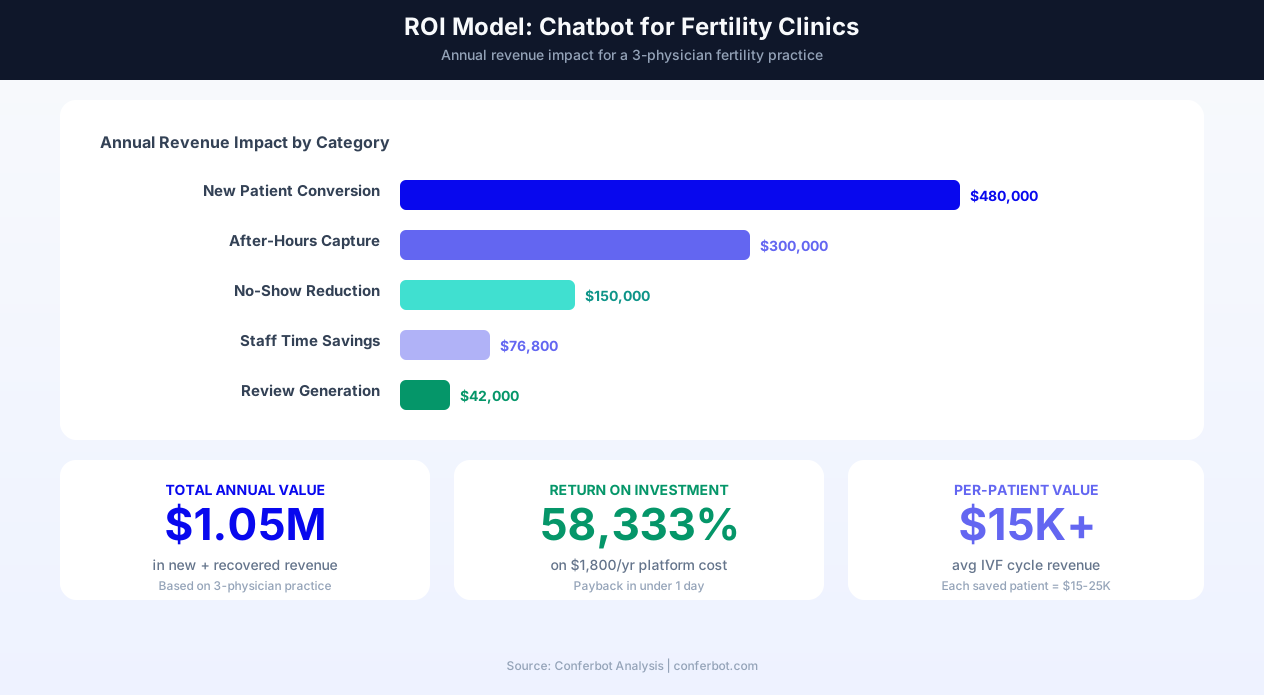
The return on investment for a fertility clinic chatbot is driven by the exceptionally high per-patient revenue, with IVF cost benchmarks tracked by ReproductiveFacts.org (ASRM patient resource) in fertility medicine. A single IVF cycle generates $15,000-$25,000 in revenue, and most patients require 2-3 cycles. Every patient converted by the chatbot who would otherwise have been lost to phone anxiety, after-hours browsing, or intake abandonment represents $30,000-$75,000 in lifetime revenue.
Revenue Stream 1: New Patient Conversion — $480,000/year
Improving consultation booking rates from 20% to 45% through chatbot engagement, cost guidance, and insurance verification converts approximately 32 additional patients per year for a 3-physician practice. At an average patient lifetime value of $15,000 (conservative, single cycle): 32 x $15,000 = $480,000.
Revenue Stream 2: After-Hours Capture — $300,000/year
74% of fertility searches happen after hours. The chatbot captures approximately 20 patients per year who would have been lost to voicemail. At $15,000 average patient value: 20 x $15,000 = $300,000.
Revenue Stream 3: No-Show Reduction — $150,000/year
Reducing consultation no-shows from 18% to 8% recovers approximately 10 consultations per month. At a 60% conversion-to-treatment rate and $15,000 patient value: 10 x 0.60 x $15,000 x (10/12 annual adjustment) = $150,000.
Revenue Stream 4: Staff Time Savings — $76,800/year
The chatbot automates intake, scheduling, insurance FAQ, and routine patient communications, saving approximately 4 hours per day of staff time. At $32/hour fully loaded cost x 250 working days x 2.4 staff members impacted: $76,800.
Revenue Stream 5: Review Generation — $42,000/year
Automated post-treatment review requests increase online review volume by 250%, improving Google Business Profile visibility in a market where online reputation directly drives new patient acquisition. Estimated acquisition impact: $42,000.
Total Annual Value: $1.05 Million
Against a chatbot platform cost of $1,800/year, the ROI exceeds 58,000%. The payback period is less than one day. Even a conservative estimate using only half of the projected revenue impact yields an ROI of 29,000%.
Implementation Guide: Live in One Week
Deploying a fertility clinic chatbot requires sensitivity in design, HIPAA compliance in infrastructure, and empathy in every message. Conferbot's healthcare template provides the foundation, and most fertility clinics are live within 5-7 business days.
Day 1-2: Template Configuration
Customize the fertility intake flow: Start from Conferbot's fertility clinic template, which includes pre-built flows for reproductive history, treatment history, insurance verification, and consultation booking. Customize the clinical questions to match your clinic's specific intake requirements. Review all chatbot messages for empathetic tone and sensitivity.
Configure physician profiles: Enter each physician's specialties, success rates, credentials, and available consultation slots. Include brief patient-friendly biographies that humanize the physician for patients making a deeply personal healthcare choice.
Set up cost estimator: Enter your clinic's pricing for consultations, testing, IVF cycles, egg freezing, medications, and optional services. Configure the insurance verification integration.
Day 3-4: Clinical Review and Testing
Clinical team review: Have your reproductive endocrinologists, nurses, and patient coordinator review every chatbot message and screening question. Ensure clinical accuracy, appropriate tone, and completeness of the intake data collected.
Test all flows: Have team members and 2-3 trusted patients complete the full chatbot experience. Test intake with different patient profiles (first-time fertility patient, returning IVF patient, egg freezing patient, LGBTQ+ family building). Verify that data flows correctly to your EMR.
Day 5-7: Launch
Website deployment: Embed the chatbot on every page of your website, with a greeting designed for the fertility context: "Welcome. Whether you are just starting to explore your options or ready to take the next step, I am here to help. Would you like to learn about our services, check your insurance coverage, or schedule a consultation?"
Staff training: Brief your front desk, nursing staff, and physicians on the chatbot capabilities. The front desk should know how to access chatbot-collected intake data. Nurses should know how to view medication adherence data. Physicians should understand the patient preparation sequence.
Monitor and optimize: Track intake completion rates, consultation booking rates, cost estimator usage, and after-hours engagement weekly. Adjust messaging, add FAQ answers, and refine the intake flow based on actual patient interactions and coordinator feedback.
Best Practices for Fertility Clinic Chatbots
These best practices are drawn from fertility clinics that have successfully deployed chatbots while maintaining the empathetic, patient-centered approach that fertility care demands.
1. Lead with Empathy, Not Efficiency
Every chatbot message should acknowledge the emotional weight of the fertility journey. Instead of "Please complete the following intake form," say "We are glad you are here. Starting this process takes courage, and we want to make it as comfortable as possible. Let me walk you through a few questions at your own pace."
2. Offer Human Connection at Every Stage
The chatbot should make it easy to reach a human at any point. A persistent "Talk to a person" option should be visible in every chatbot screen. Patients who are overwhelmed, grieving, or confused should never feel trapped in an automated system.
3. Handle Loss with Care
When the chatbot asks about previous pregnancies, it must handle loss responses with extraordinary sensitivity. If a patient indicates a miscarriage, the chatbot should pause, acknowledge the loss ("We are sorry for your loss. Thank you for sharing that with us."), and gently proceed when the patient is ready. Never rush past loss disclosure.
4. Include LGBTQ+ Pathways
The chatbot should use inclusive language throughout. Do not assume heterosexual couples. Offer pathways for single parents by choice, same-sex couples, and non-binary individuals. The intake should ask "How would you like to build your family?" rather than assuming a specific family structure.
5. Provide Cost Transparency
Never hide costs. The chatbot should provide clear cost ranges for every service the clinic offers. Cost transparency builds trust and prevents sticker shock at the consultation, which is the most common cause of post-consultation dropout.
6. Support Partner Involvement
Fertility decisions are rarely made alone. The chatbot should support partner involvement by allowing intake information to be shared with a partner, offering joint consultation booking, and providing educational resources designed for partners ("Understanding the IVF Process: A Guide for Partners").
7. Track Outcomes for Continuous Improvement
Measure the complete funnel from chatbot engagement to treatment start. Identify where patients still drop off and iterate on the chatbot messaging, cost guidance, and booking flow accordingly. Connect the chatbot data with your practice management system to correlate chatbot engagement patterns with treatment outcomes.
8. Respect the Two-Week Wait
The period between embryo transfer and pregnancy test is the most emotionally intense phase of treatment. The chatbot should reduce communication frequency during this period (no marketing messages, no upselling) and focus exclusively on emotional support and wellness check-ins. This restraint builds trust and demonstrates that the clinic values the patient's wellbeing above revenue.
Was this article helpful?
About the Author

Conferbot Team specializes in conversational AI, chatbot strategy, and customer engagement automation. With deep expertise in building AI-powered chatbots, they help businesses deliver exceptional customer experiences across every channel.
View all articles