The Healthcare Chatbot Landscape in 2026
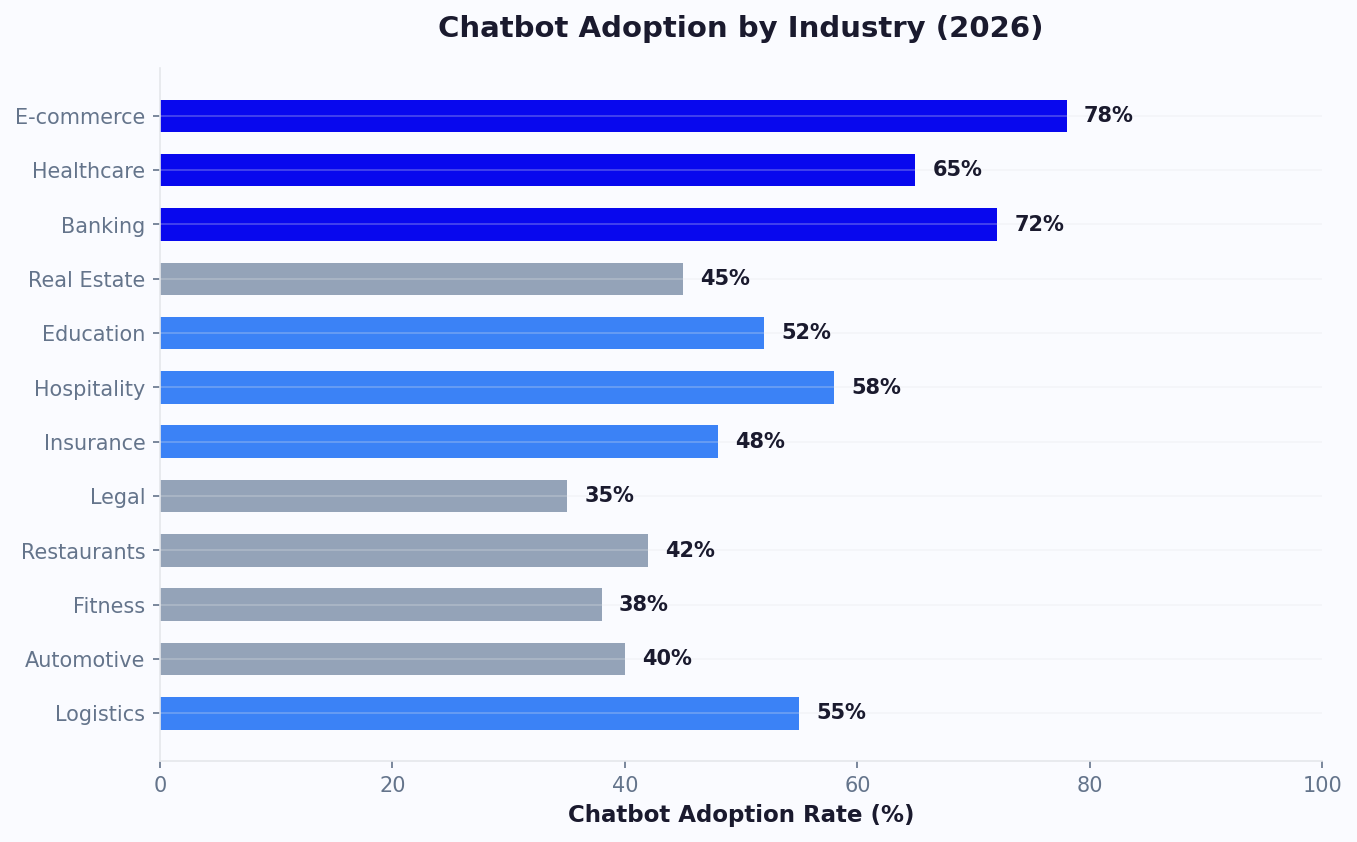
Healthcare systems worldwide are grappling with a convergence of pressures that make AI chatbots not just useful, but essential. Staff shortages, rising patient volumes, administrative burden, and the post-pandemic expectation for digital-first healthcare access have created a perfect storm. According to a 2025 Accenture report, healthcare organizations that adopted AI-powered patient engagement tools reduced administrative costs by 30% and improved patient satisfaction scores by 25%.
The global healthcare chatbot market, valued at $787 million in 2024, is projected to reach $2.4 billion by 2027 (Grand View Research). This explosive growth reflects a fundamental shift: patients now expect the same instant, digital-first experience from their healthcare providers that they get from e-commerce stores and banks.
Modern healthcare chatbots go far beyond simple FAQ bots. They handle appointment scheduling, symptom triage, medication reminders, pre-visit intake forms, post-discharge follow-up, and billing inquiries — all while maintaining strict compliance with healthcare data regulations like HIPAA and GDPR.
The clinical case for chatbots is equally compelling. A 2025 Mayo Clinic study found that AI triage chatbots correctly categorized patient urgency levels with 87% accuracy, comparable to nurse telephone triage. When patients can assess symptoms and book appropriate appointments through a chatbot, emergency department visits for non-urgent conditions drop by 15-25%, freeing resources for patients who truly need them.
For healthcare providers — from solo practitioners to multi-location health systems — the question is no longer whether to implement a chatbot, but how to do it effectively while maintaining the trust and compliance standards that healthcare demands. This guide provides a comprehensive roadmap for healthcare organizations at every stage of their chatbot journey.
We will cover the most impactful use cases, compliance requirements, implementation strategies, and measurable outcomes you can expect. Whether you run a small dental practice or a regional hospital network, the principles and strategies here will help you deploy a chatbot that genuinely improves patient care while reducing operational costs. Getting started is straightforward with a no-code chatbot builder designed for healthcare workflows.
Appointment Booking and Scheduling Automation
Appointment scheduling is the single highest-volume administrative task in healthcare, and it is remarkably well-suited for chatbot automation. The average medical practice receives 50-100+ scheduling-related calls per day, each taking 3-8 minutes of staff time. A chatbot handles the same task in under 60 seconds, 24/7, without hold times or phone tag.
How Appointment Chatbots Work
A well-designed scheduling chatbot walks patients through a conversational flow that mirrors what a receptionist would do:
- Identify the patient: New or returning? Collect or verify name, date of birth, and insurance information.
- Determine the visit type: Annual physical, follow-up, specific concern, or specialist referral?
- Match to the right provider: Based on visit type, insurance, and patient preference, suggest available providers.
- Present available slots: Show real-time availability pulled from your practice management system (PMS) or EHR.
- Confirm and remind: Book the appointment, send confirmation via email or SMS, and schedule automated reminders at 48 hours and 2 hours before the appointment.
Reducing No-Shows
No-shows cost the US healthcare system an estimated $150 billion annually. Chatbots combat this through automated reminder sequences with easy rescheduling options. Instead of a static SMS reminder, the chatbot sends an interactive message: "Your appointment with Dr. Smith is tomorrow at 2:00 PM. Reply CONFIRM to keep it, RESCHEDULE to pick a new time, or CANCEL if you need to." Practices using conversational reminders report 25-40% reductions in no-show rates.
After-Hours Booking
With Conferbot's calendar booking feature, scheduling integrates seamlessly with practice management systems. Over 40% of appointment requests happen outside business hours (evenings, weekends, holidays). Without a chatbot, these patients either call the next business day — if they remember — or seek care elsewhere. A website chatbot that handles after-hours booking captures these patients at their moment of highest intent, reducing leakage to competitors and urgent care centers.
Integration with popular practice management systems like Epic, Cerner, Athenahealth, and DrChrono allows the chatbot to access real-time availability and create appointments directly in your scheduling system through API integrations. For practices using simpler tools, calendar integrations with Google Calendar or Calendly provide a lightweight alternative to full EHR integration.
Healthcare Chatbot Use Cases: Impact Comparison
Healthcare organizations evaluating chatbot implementations need to understand the relative impact and complexity of different use cases. This comparison helps prioritize which capabilities to deploy first for maximum ROI while managing compliance requirements.
| Use Case | Patient Impact | Staff Time Saved | HIPAA Complexity | Typical ROI Timeline |
|---|---|---|---|---|
| Appointment Scheduling | High (24/7 access) | 3-8 min per call | Medium (PHI involved) | 1-2 months |
| Symptom Triage | Very High (safety) | 10-15 min per call | High (clinical data) | 3-4 months |
| Billing Inquiries | Moderate | 8-12 min per call | Medium (financial PHI) | 1-2 months |
| Pre-Visit Intake Forms | High (convenience) | 5-10 min per patient | High (medical history) | 1-2 months |
| Medication Reminders | Very High (adherence) | Indirect (fewer complications) | Medium | 3-6 months |
| General Health FAQ | Moderate | 2-5 min per call | Low (no PHI) | 2-4 weeks |
Most healthcare organizations should start with General Health FAQ and Appointment Scheduling — they deliver fast ROI with manageable compliance requirements. Symptom Triage and Pre-Visit Intake offer the greatest clinical value but require more rigorous validation and compliance work. Build your initial flows quickly with a no-code builder, then expand to more complex use cases as your team gains experience.
Symptom Checking and Patient Triage
Symptom-checking chatbots represent one of the most clinically impactful applications of AI in healthcare. By guiding patients through a structured assessment before they ever contact the clinic, these bots help ensure patients receive the right level of care at the right time — reducing unnecessary ER visits, accelerating care for urgent conditions, and giving clinicians valuable pre-visit data.
How Symptom Chatbots Work
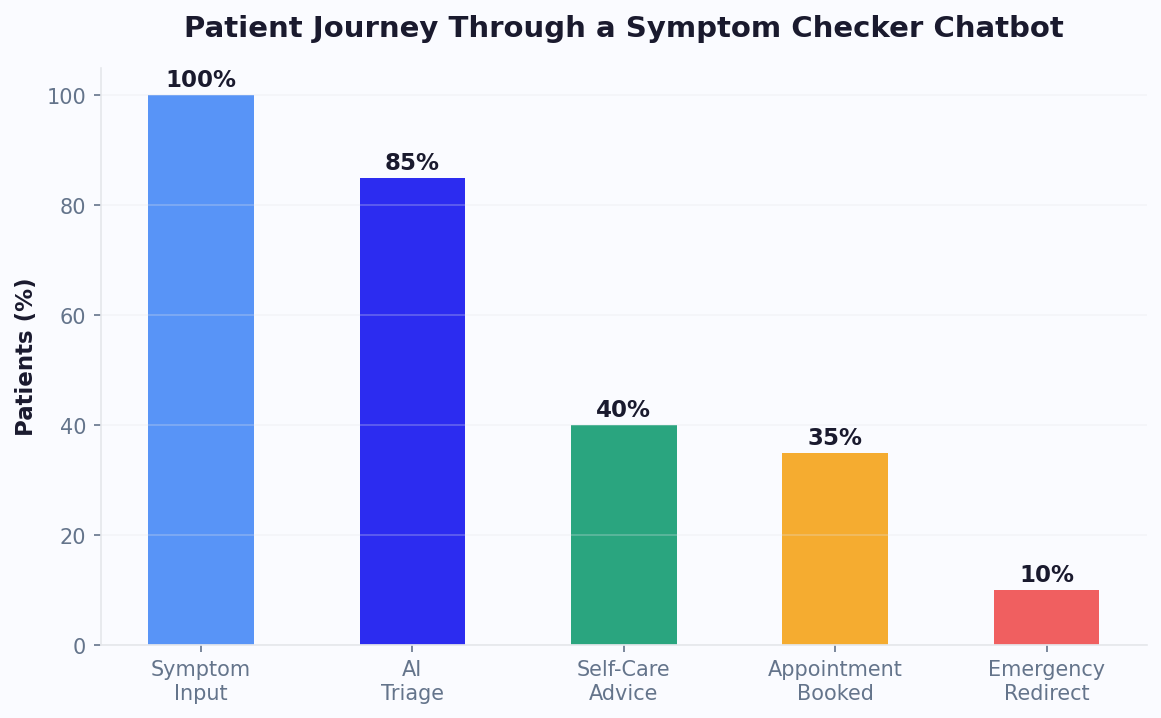
A symptom-checking chatbot uses a combination of clinical decision trees and natural language processing (NLP) to understand patient-reported symptoms and assess urgency. The conversation typically follows this pattern:
- Primary complaint: "What symptoms are you experiencing?" The NLP engine interprets free-text input and maps it to clinical categories.
- Characterization: Duration, severity, location, aggravating and relieving factors. These questions mirror the clinical history a physician would take.
- Red flag screening: Critical safety questions that identify potential emergencies (chest pain, difficulty breathing, severe bleeding, signs of stroke).
- Risk stratification: Based on responses, categorize the situation as emergency, urgent, semi-urgent, or routine.
- Guidance: Recommend the appropriate action — call 911, go to the ER, schedule a same-day appointment, book a telehealth visit, or manage with self-care advice.
Clinical Safety Considerations
Symptom checkers must be designed with patient safety as the absolute top priority. This means:
- Conservative triage: When in doubt, escalate. The chatbot should err on the side of recommending a higher level of care rather than dismissing potentially serious symptoms.
- Clear disclaimers: Every interaction should clearly state that the chatbot is not a substitute for professional medical advice and that patients should call emergency services for life-threatening situations.
- Clinical validation: Symptom assessment algorithms should be developed or reviewed by licensed clinicians and validated against established triage protocols.
- Audit trails: Maintain complete conversation logs for clinical review and quality assurance.
Integration with Telehealth
The most effective symptom chatbots seamlessly connect to telehealth platforms. After completing the symptom assessment, the chatbot can offer to connect the patient with a provider via video call, pre-populating the visit notes with the information already gathered. This saves 3-5 minutes of clinical time per visit and provides the physician with structured, consistent intake data. Powered by AI agent technology and advanced AI models, modern symptom chatbots can handle nuanced patient descriptions and follow-up questions with remarkable accuracy, though human clinical oversight remains essential for all diagnostic recommendations.
Patient Engagement and Communication
Patient engagement — the degree to which patients actively participate in their own healthcare — is one of the strongest predictors of health outcomes. Engaged patients are more likely to follow treatment plans, attend follow-up appointments, and manage chronic conditions effectively. Yet most healthcare organizations struggle with engagement because traditional methods (phone calls, paper mailings, patient portals) have dismally low response rates.
Why Chatbots Excel at Patient Engagement
Chatbots meet patients where they are — on their phones, at times that work for them, in a conversational format that feels natural rather than clinical. Key engagement metrics tell the story:
- Patient portal login rates: 15-25% of patients regularly use portals
- Email open rates for healthcare communications: 20-30%
- Chatbot engagement rates: 60-80% of patients who receive a chatbot message interact with it
This dramatically higher engagement rate makes chatbots the most effective channel for patient communication in 2026.
Chronic Disease Management
For the 133 million Americans living with chronic conditions, ongoing engagement between visits is critical. Chatbots can deliver:
- Medication reminders: Personalized reminders at the right time, with the ability to log whether the medication was taken. Medication adherence rates improve by 15-25% with automated reminders.
- Symptom tracking: Daily or weekly check-ins that ask patients to rate their symptoms, log vital signs (blood pressure, blood sugar, pain levels), and flag concerning trends to their care team.
- Educational content: Drip sequences of condition-specific educational content delivered in digestible, conversational formats rather than dense medical documents.
- Lifestyle coaching: Gentle nudges about diet, exercise, and stress management, personalized to the patient's condition and treatment plan.
Pre-Visit and Post-Visit Communication
The patient experience extends far beyond the appointment itself. Chatbots improve both ends:
Pre-visit: Send intake forms, insurance verification requests, preparation instructions (fasting, medication adjustments), and directions to the office — all through conversational chat rather than easily-ignored emails. Practices using chatbot-based pre-visit workflows report 30-50% higher form completion rates compared to email-based processes.
Post-visit: Follow up with care plan summaries, post-procedure instructions, medication information, and satisfaction surveys. Automated post-visit check-ins at 24 hours, 1 week, and 1 month catch complications early and demonstrate attentive care. Deploy these engagement flows through your website chatbot and WhatsApp, and integrate with your patient communication systems for a seamless experience across all touchpoints.
HIPAA Compliance and Data Security for Healthcare Chatbots
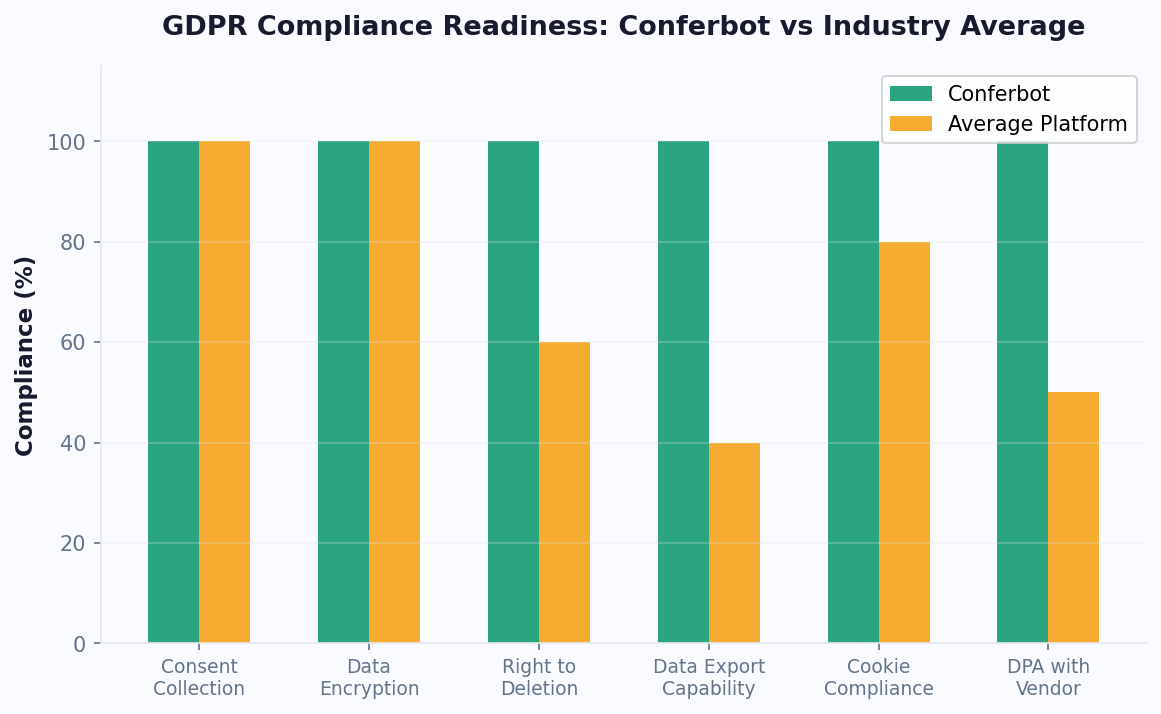
No discussion of healthcare chatbots is complete without addressing compliance. HIPAA (the Health Insurance Portability and Accountability Act) sets strict requirements for how Protected Health Information (PHI) is collected, stored, transmitted, and accessed. A chatbot that handles patient data must comply with these requirements, and the penalties for non-compliance are severe — up to $1.5 million per violation category per year.
What Counts as PHI in Chatbot Conversations
Any information that can identify a patient and relates to their health condition, treatment, or payment for healthcare services is PHI. In chatbot conversations, this includes:
- Patient names, dates of birth, addresses, phone numbers, email addresses
- Medical record numbers and insurance IDs
- Symptoms, diagnoses, medications, and treatment details
- Appointment dates and provider names (when combined with identifying information)
- Payment and billing information
HIPAA Requirements for Chatbots
To be HIPAA-compliant, your healthcare chatbot platform must meet these requirements:
- Business Associate Agreement (BAA): Your chatbot vendor must sign a BAA, legally binding them to HIPAA's privacy and security requirements. Never deploy a chatbot platform that will not sign a BAA.
- Encryption: All PHI must be encrypted both in transit (TLS 1.2+) and at rest (AES-256). This applies to conversation logs, stored patient data, and any integrations with EHR systems.
- Access controls: Only authorized personnel should access chatbot conversation logs containing PHI. Implement role-based access with audit logging.
- Data retention policies: Define how long chatbot conversations containing PHI are stored and ensure secure deletion when retention periods expire.
- Breach notification: Your chatbot vendor must have procedures to detect and notify you of any data breach within the timeframes required by HIPAA.
Practical Compliance Strategies
Beyond the technical requirements, several practical strategies reduce compliance risk:
- Minimize PHI collection: Only collect the patient information that is absolutely necessary for the chatbot's function. If the bot is answering general health questions, it does not need to collect identifying information.
- De-identify when possible: Use session IDs rather than patient names for general inquiries. Only collect identifying information when it is needed for scheduling or account-specific tasks.
- Separate general and PHI flows: Design your chatbot so that general health information queries do not require authentication, while PHI-dependent functions (appointment booking, records access) require patient verification.
- Regular security audits: Conduct annual security assessments of your chatbot infrastructure, including penetration testing and vulnerability scanning.
When evaluating chatbot platforms, ask specifically about their HIPAA compliance capabilities, request documentation of their security controls, and verify that they will sign a BAA. Conferbot provides HIPAA-compliant deployment options with encrypted data handling for healthcare organizations that need to process PHI through their website chatbot.
Industry Standards and Compliance Resources
Healthcare organizations should align their chatbot compliance programs with established frameworks. The HHS HIPAA portal provides official guidance on electronic PHI handling that applies directly to chatbot implementations. Gartner's healthcare IT research recommends that providers treat chatbot vendors as business associates from day one, establishing BAAs before any patient data enters the system. According to Statista's digital health analysis, 72% of healthcare data breaches in 2024 involved third-party vendors — making BAA enforcement and regular vendor security audits non-negotiable. For practices implementing their first chatbot, start with a GDPR and privacy compliance guide that covers the foundational principles applicable across jurisdictions. Organizations already using chatbots for insurance or HR workflows can extend their existing compliance frameworks to cover patient-facing deployments with minimal additional overhead. Additionally, the G2 HIPAA-compliant messaging category provides peer-reviewed ratings of platforms that meet healthcare security standards, helping compliance officers shortlist vetted vendors without starting evaluations from scratch. For smaller practices without dedicated compliance staff, partnering with a platform that provides pre-configured HIPAA templates and automated audit logging significantly reduces the burden of maintaining ongoing compliance documentation and annual security review obligations.
Billing Inquiries and Administrative Automation
Healthcare billing is notoriously complex, and billing-related calls are among the longest and most frustrating for both patients and staff. The average healthcare billing call takes 8-12 minutes, and billing inquiries account for 20-30% of all patient calls at most practices. AI chatbots can resolve a significant portion of these inquiries instantly, reducing call volume and improving the patient financial experience.
Common Billing Queries Chatbots Handle
A well-designed billing chatbot can address the most frequent patient questions without human intervention:
- Balance inquiries: "How much do I owe?" — The chatbot verifies patient identity and retrieves the current balance from your billing system.
- Insurance coverage questions: "Is this procedure covered by my insurance?" — The chatbot provides general coverage information and directs patients to their insurance provider for specific benefit questions.
- Payment processing: Allow patients to make payments directly through the chatbot, with secure payment processing and instant confirmation.
- Payment plan setup: For larger balances, the chatbot can present available payment plan options, calculate monthly amounts, and enroll patients in automated payment schedules.
- EOB (Explanation of Benefits) clarification: Help patients understand their EOB documents by explaining common terms and charges in plain language.
- Pre-authorization status: Check the status of pre-authorization requests and notify patients when approvals come through.
Reducing Claim Denials
Claim denials cost healthcare organizations billions annually, and a significant percentage of denials result from preventable errors — incorrect patient information, missing pre-authorizations, or coding mistakes. A chatbot can reduce denials by:
- Verifying insurance information and eligibility before appointments
- Reminding patients to bring updated insurance cards
- Collecting required pre-visit documentation that supports accurate coding
- Alerting staff when pre-authorization is needed for scheduled procedures
Intake Form Automation
Paper intake forms are inefficient, error-prone, and create data entry bottlenecks. A conversational intake chatbot collects patient demographics, medical history, current medications, allergies, and insurance information through a friendly chat interface — on the patient's phone, before they even arrive at the office. Compared to paper forms, chatbot-based intake reduces check-in time by 5-10 minutes per patient, improves data accuracy, and eliminates the need for manual data entry. This data flows directly into your EHR, ensuring the clinical team has complete, accurate information before the patient walks through the door. Combined with NLP capabilities, the chatbot can understand and properly categorize patient-reported information even when it is described in non-medical terms.
Integrating Chatbots with Telehealth and Digital Health Platforms
The telehealth revolution that accelerated during the pandemic has become permanent, with 38% of medical visits now conducted virtually (McKinsey, 2025). AI chatbots serve as the ideal front door for telehealth, handling pre-visit workflows, triaging patients to the right care modality, and providing post-visit follow-up — creating a seamless digital care experience.
The Chatbot as Telehealth Concierge
Before a telehealth visit, the chatbot handles everything that would traditionally require staff time:
- Eligibility determination: Is the patient's condition appropriate for a virtual visit, or do they need an in-person examination? The chatbot asks screening questions and routes accordingly.
- Technical readiness: Verify that the patient has a compatible device, working camera and microphone, and stable internet connection. Provide troubleshooting help for common issues.
- Pre-visit intake: Collect symptoms, medical history updates, and the reason for the visit. This information populates the provider's chart before the call begins.
- Insurance verification: Confirm telehealth coverage and inform patients of any copays or out-of-pocket costs before the visit.
During-Visit Support
While the chatbot does not replace the clinician during the visit, it can provide supplementary support:
- Real-time assistance: If the patient mentions a medication name the provider needs to verify, the chatbot can look it up in the background.
- Technical troubleshooting: If connectivity issues arise, the chatbot can help the patient switch to an audio-only call or reconnect.
- Documentation support: Capture structured notes from the conversation to reduce provider documentation burden.
Post-Visit Automation
After a telehealth visit, the chatbot takes over for follow-up care coordination:
- Send visit summaries and care plan instructions
- Schedule follow-up appointments (virtual or in-person) using calendar booking
- Transmit prescriptions to the patient's preferred pharmacy
- Provide educational resources related to the diagnosis
- Conduct satisfaction surveys and capture feedback
Remote Patient Monitoring Integration
For patients with chronic conditions, chatbots integrate with remote monitoring devices (blood pressure cuffs, glucose monitors, pulse oximeters) to collect and interpret data between visits. When readings fall outside normal ranges, the chatbot can alert the care team, schedule an urgent telehealth visit, or guide the patient through immediate self-care steps. This continuous monitoring loop, powered by advanced AI, transforms episodic care into continuous care — catching deterioration early and reducing hospitalizations. Healthcare organizations implementing chatbot-driven remote monitoring report 20-35% reductions in hospital readmissions for chronic disease patients, translating to better outcomes and significant cost savings for both providers and patients.
Healthcare Chatbot Implementation: A Step-by-Step Guide
Implementing a chatbot in a healthcare setting requires more care and planning than most industries due to compliance requirements, clinical safety considerations, and the sensitive nature of patient interactions. This implementation guide provides a structured approach for healthcare organizations of any size.
Phase 1: Planning and Compliance (Weeks 1-2)
- Define scope and use cases. Start with non-clinical use cases (scheduling, billing, general information) before adding clinical functionality. Prioritize by volume: which administrative tasks consume the most staff time?
- Compliance review. Engage your compliance officer or legal team. Determine which chatbot functions will handle PHI and which can operate without it. Establish data handling requirements and retention policies.
- Vendor evaluation. Evaluate chatbot platforms on clinical safety features, HIPAA compliance capabilities, EHR integration options, and willingness to sign a BAA. Request security documentation and compliance certifications.
- Stakeholder alignment. Brief clinical and administrative leadership on the chatbot's capabilities and limitations. Address concerns about patient safety and job displacement proactively.
Phase 2: Design and Build (Weeks 3-4)
- Design conversation flows. Work with clinical staff to design symptom assessment flows. Work with front-office staff to design scheduling and billing flows. All flows should include clear escalation paths to human staff.
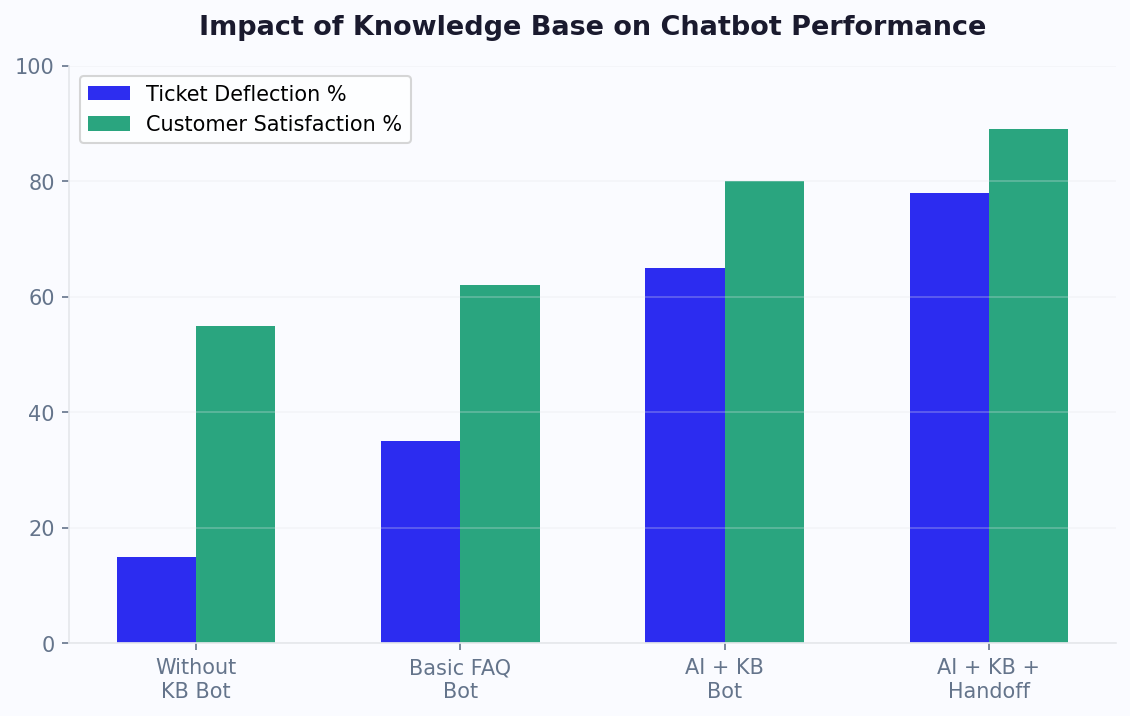
- Develop content. Write chatbot responses in patient-friendly language (6th-8th grade reading level). Avoid medical jargon. Include appropriate disclaimers for clinical information. Centralize content in a knowledge base for consistent, accurate responses.
- Integrate systems. Connect the chatbot to your EHR, practice management system, billing system, and telehealth platform through API integrations. Use your website as the primary deployment channel.
- Configure compliance controls. Set up data encryption, access controls, audit logging, and PHI handling policies within the chatbot platform.
Phase 3: Testing and Validation (Weeks 5-6)
- Internal testing. Have staff test all flows, including edge cases and adversarial inputs. Verify that escalation paths — including the ticket system — work correctly and PHI is handled appropriately.
- Clinical validation. For symptom assessment flows, have clinicians review the decision trees and test with realistic patient scenarios. Verify that triage recommendations align with clinical guidelines.
- Compliance audit. Conduct a pre-launch compliance review to verify all HIPAA requirements are met, the BAA is executed, and security controls are functioning.
Phase 4: Launch and Monitor (Weeks 7-8)
- Pilot launch. Deploy to a single location or department first. Monitor conversations closely for clinical safety issues, compliance gaps, or patient experience problems.
- Staff training. Train front-office and clinical staff on the chatbot's capabilities, how to handle escalations from the bot, and how to provide feedback on chatbot performance.
- Patient communication. Inform patients about the new chatbot through waiting room signage, website announcements, and email newsletters. Set expectations about what the bot can and cannot do.
- Iterate and expand. Based on pilot results, refine flows, expand to additional locations or departments, and gradually increase the chatbot's scope of responsibility. Use chatbot analytics to identify gaps and improvement opportunities.
Was this article helpful?
AI Chatbots for Healthcare FAQ
Everything you need to know about chatbots for ai chatbots for healthcare.
About the Author
Conferbot Team specializes in conversational AI, chatbot strategy, and customer engagement automation. With deep expertise in building AI-powered chatbots, they help businesses deliver exceptional customer experiences across every channel.
View all articles