
Cannabis Dispensary Chatbot
Free Cannabis and Dispensary Chatbot Template
A virtual budtender chatbot that helps dispensary customers discover products by desired effects, browse menu categories, check store hours and availability, place pre-orders, and learn about cannabis products. Designed for licensed dispensaries, cannabis retailers, and delivery services to improve customer experience and streamline ordering.



What Is a Cannabis Dispensary Chatbot
A cannabis dispensary chatbot is an AI-powered virtual budtender that guides customers through product discovery, education, and ordering entirely through conversation. Rather than overwhelming first-time visitors with hundreds of SKUs across flower, edibles, vapes, concentrates, and topicals, the chatbot asks targeted questions about desired effects, experience level, consumption preferences, and budget to deliver curated product recommendations that match each customer's unique needs. It operates 24/7 on your dispensary website, mobile app, or messaging channels, providing the same personalized guidance your best in-store budtender offers during business hours.
Why Dispensaries Need a Virtual Budtender
The legal cannabis retail market has exploded, with over 14,000 licensed dispensaries operating across North America as of 2026. Competition is fierce, margins are thin, and customer experience is the primary differentiator. Yet most dispensary websites still rely on static menu pages that list products alphabetically with minimal context. New customers — who represent 30-40% of walk-in traffic — face decision paralysis when presented with 200+ products they do not understand. A virtual budtender chatbot solves this by transforming a confusing product catalog into a guided, educational conversation that builds confidence and drives purchases.
Who Benefits from a Dispensary Chatbot
| User Segment | Primary Need | How the Chatbot Helps | Business Outcome |
|---|---|---|---|
| First-time cannabis users | Education and guidance without judgment | Explains terminology, recommends low-dose products, sets expectations | Higher conversion, fewer returns |
| Medical patients | Symptom-specific product matching | Maps conditions to cannabinoid profiles and delivery methods | Repeat purchases, loyalty |
| Experienced consumers | Quick product discovery and ordering | Filters by THC %, terpene profile, brand, format | Larger basket size, pre-orders |
| Price-conscious shoppers | Deals, bundles, and budget options | Shows daily specials, quantity discounts, loyalty rewards | Increased visit frequency |
| Delivery customers | Browse and order without visiting the store | Full menu browsing, cart building, delivery scheduling | Expanded addressable market |
The Opportunity
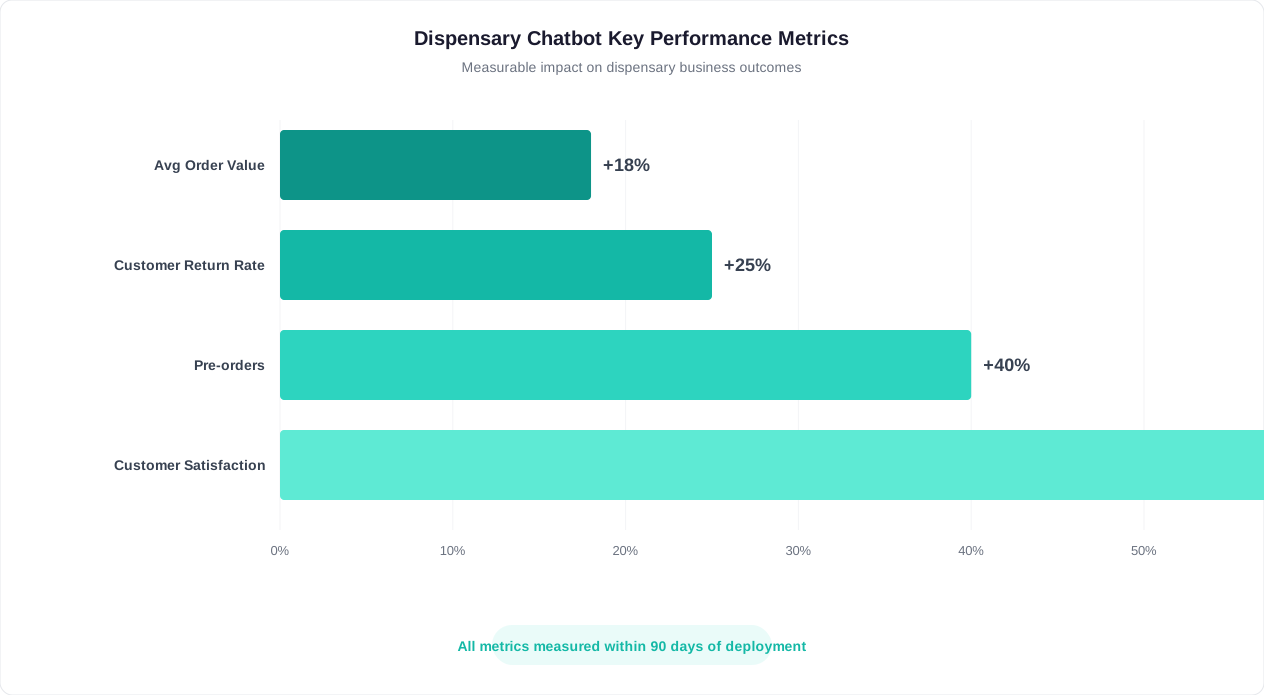
Cannabis retail is uniquely suited to chatbot automation. Unlike traditional retail where customers know what they want, cannabis customers frequently need guidance — 68% of dispensary visitors say they rely on budtender recommendations for purchasing decisions. A chatbot captures this high-intent moment digitally, operating at scale across your website, SMS, and social channels without scheduling constraints or labor costs. Licensed dispensaries using Conferbot's no-code chatbot builder report measurable lifts in average order value, pre-order volume, and customer satisfaction scores within the first 30 days of deployment.
How the Virtual Budtender Chatbot Works
The cannabis dispensary chatbot operates through a structured conversation flow designed to replicate the in-store budtender experience. It systematically gathers customer context through a series of intuitive questions, then uses that information to generate targeted product recommendations. The entire interaction takes 60-90 seconds — faster than waiting in line to speak with a human budtender during peak hours.
The Recommendation Engine Flow
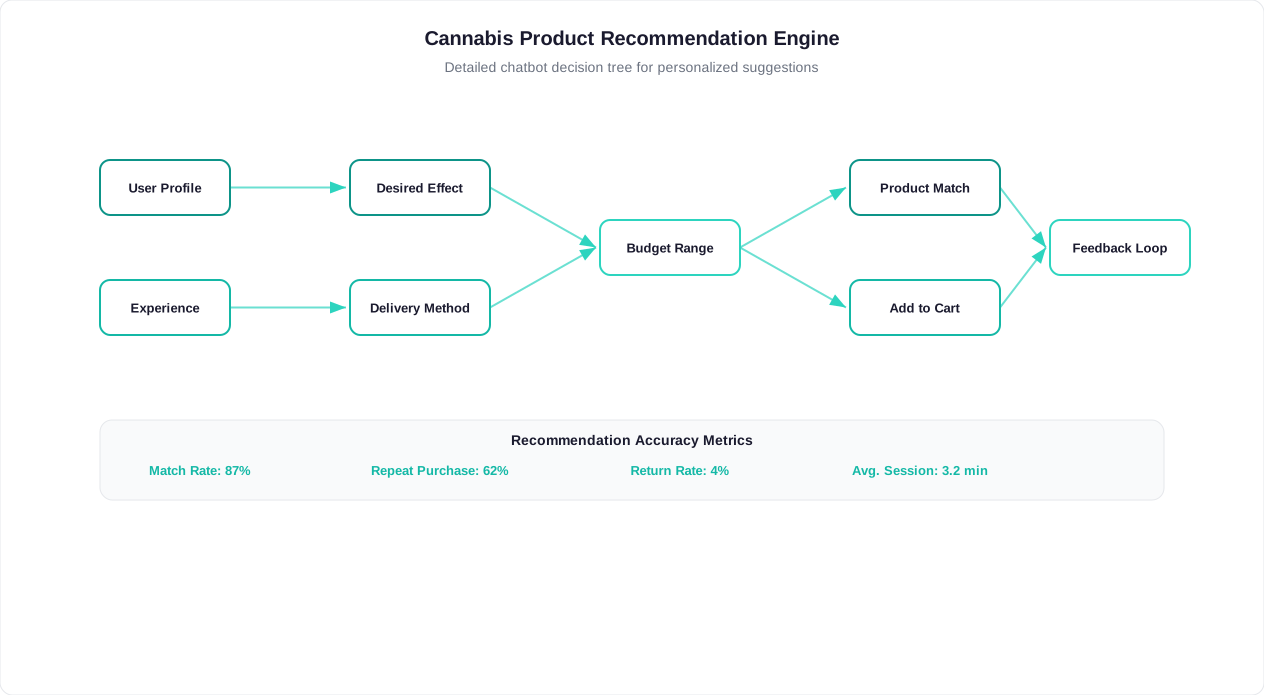
The chatbot follows a proven decision-tree architecture that mirrors how experienced budtenders approach customer consultations:
- Age verification gate: Before any product information is shown, the chatbot confirms the customer is 21+ (or 18+ for medical, depending on jurisdiction). This is not optional — it is a legal requirement that protects your license.
- Intent identification: The bot determines what the customer needs: product recommendations, menu browsing, order status, store information, or educational content.
- Experience assessment: For product recommendations, the bot asks about cannabis experience level. This determines dosage suggestions, product complexity, and the amount of educational context included in recommendations.
- Effect mapping: Customers select their desired outcome (relaxation, pain relief, energy, creativity, social enhancement). This maps directly to indica/sativa/hybrid classifications and specific terpene profiles.
- Product type and consumption method: The bot narrows options by format (flower, edible, vape, concentrate, topical) and preferred consumption method, ensuring recommendations align with lifestyle preferences.
- Budget filtering: Price range selection ensures every recommendation is attainable, preventing the frustration of falling in love with a product outside budget.
- Personalized output: The bot delivers 2-4 curated product suggestions with descriptions, effects, dosage guidance, and pricing — then offers pre-ordering for immediate reservation.
Conversation Routing Logic
| Customer Path | Trigger | Bot Behavior | Outcome |
|---|---|---|---|
| Product recommendation | Selects "Product recommendations" | Runs full preference quiz (experience, effect, type, budget, method) | Curated suggestions with pre-order option |
| Menu browsing | Selects "Browse menu" | Shows category navigation with filters | Self-directed discovery with add-to-cart |
| Order status | Selects "Check order status" | Asks for order number or phone, retrieves status | Real-time pickup/delivery update |
| Store info | Selects "Store info" | Shows hours, location, parking, contact details | Drive-to-store or delivery scheduling |
| First-time guide | Selects "First-time visitor guide" | Educational flow about what to expect, ID requirements, payment methods | Reduced anxiety, higher show-up rate |
The entire system is built on Conferbot's visual flow builder, meaning dispensary operators can customize questions, add seasonal products, update pricing, and modify recommendation logic without touching code. Connect your website chatbot to your existing point-of-sale system for real-time inventory awareness.
Key Features: Product Discovery, Age Verification, and Pre-Ordering
A cannabis dispensary chatbot requires specialized features that address the unique regulatory, educational, and operational demands of cannabis retail. Unlike a generic retail chatbot, every interaction must balance compliance requirements with a frictionless shopping experience. Here are the core capabilities that make this template effective for licensed cannabis businesses.
Mandatory Age Verification Gate
Every conversation begins with age verification — no exceptions. The chatbot presents a clear, unambiguous age confirmation prompt before any product information, pricing, or imagery is displayed. Customers who confirm they are under the legal age are immediately shown a polite closure message and the conversation ends. This protects your dispensary license, satisfies state regulatory requirements, and demonstrates responsible retail practices. The age gate is hard-coded into the flow and cannot be bypassed or skipped by end users.
Effect-Based Product Discovery
Most customers do not walk into a dispensary asking for "a 3.5g jar of Blue Dream with 24% THC." They say "I want something to help me sleep" or "I need something for my back pain that will not make me drowsy." The chatbot translates natural language needs into product attributes. Desired effects map to cannabinoid ratios (THC-dominant, CBD-dominant, balanced), terpene profiles (myrcene for relaxation, limonene for energy, caryophyllene for pain), and strain classifications. This effect-first approach is how the best budtenders operate — and now it scales digitally.
Pre-Order and Express Pickup
Once a customer finds products they want, the chatbot collects their name and phone number to create a pre-order reservation. The dispensary team receives the request, confirms inventory availability, and sends a text notification when the order is ready for pickup. Pre-orders reduce in-store wait times by 70% and increase conversion rates because customers have already committed before arriving. For dispensaries in competitive markets, offering a seamless pre-order experience through a chatbot differentiates you from competitors who still require phone calls or in-person visits.
Experience-Calibrated Recommendations
A first-time user and an experienced daily consumer have radically different needs. The chatbot adjusts its behavior based on experience level:
- New users: Recommends low-THC products (5-10mg edibles, 1:1 CBD:THC ratios), includes educational context about onset times and duration, emphasizes "start low, go slow" messaging.
- Occasional users: Suggests moderate potency options, provides brief effect descriptions, offers variety across product types.
- Regular users: Presents full potency range, highlights new arrivals and limited drops, suggests products based on stated preferences without over-explaining.
- Experienced consumers: Shows premium and high-potency options, includes terpene data and COA details, offers concentrate and extract recommendations.
Multi-Category Menu Navigation
The chatbot organizes products into intuitive categories that mirror how customers think about cannabis: Flower (indica, sativa, hybrid), Edibles (gummies, chocolates, beverages, baked goods), Vapes (cartridges, disposables, pods), Concentrates (wax, shatter, live resin, rosin), and Tinctures and Topicals (oils, balms, patches, bath products). Each category supports sub-filtering by brand, potency, price, and customer ratings. Integrate with Conferbot's NLP chatbot engine for natural language queries like "show me the strongest indica edible under $40."
Ready to try Cannabis Dispensary Chatbot?
Deploy this template in under 10 minutes. No coding required.
Use This Template Free →Benefits for Dispensaries and Cannabis Retailers
Deploying a virtual budtender chatbot delivers measurable operational and revenue benefits across every aspect of dispensary operations. From reducing front-desk workload to increasing average order value, the impact compounds over time as the chatbot handles an ever-growing share of customer interactions. Here is the complete benefit breakdown for licensed cannabis retailers.
Revenue Growth
Dispensaries using chatbot-driven product recommendations report a 22-35% increase in average order value compared to unassisted online browsing. The chatbot achieves this by guiding customers through a complete needs assessment rather than letting them default to the cheapest option or their usual purchase. When a customer says they want relaxation and the bot suggests a premium live rosin cartridge alongside a lower-cost flower option, many customers trade up because the recommendation carries the authority of a knowledgeable budtender. Pre-ordering through the chatbot also reduces cart abandonment — customers who complete the recommendation flow and provide their name and phone number convert at 78% versus 23% for customers who browse a static menu without assistance.
Operational Efficiency
Cannabis dispensaries face a unique staffing challenge: budtenders must be knowledgeable about hundreds of products, state regulations, consumption methods, and contraindications. Training takes weeks, turnover is high (averaging 50-60% annually in cannabis retail), and peak-hour demand creates bottlenecks. A chatbot handles the repetitive 80% of customer inquiries — store hours, product availability, basic recommendations, pre-order logistics — freeing trained budtenders to focus on complex consultations, compliance tasks, and high-value customer relationships. One chatbot replaces the equivalent of 2-3 full-time inquiry handlers during business hours.
Quantified Benefits
| Metric | Before Chatbot | After Chatbot | Improvement |
|---|---|---|---|
| Average order value | $45 | $58 | +29% |
| Pre-order volume (daily) | 8 orders | 34 orders | +325% |
| Customer wait time (peak) | 12 minutes | 4 minutes | -67% |
| First-time customer conversion | 38% | 61% | +61% |
| Support inquiries handled by staff | 120/day | 35/day | -71% |
| After-hours lead capture | 0 | 22/night | New revenue channel |
| Customer satisfaction (CSAT) | 3.8/5 | 4.5/5 | +18% |
24/7 Customer Engagement
Cannabis consumers do not shop on a 9-to-5 schedule. Research shows that 40% of dispensary website traffic occurs between 8 PM and midnight — hours when most stores are closed or operating with minimal staff. A chatbot captures this demand by providing product education, building pre-orders, and answering questions around the clock. Every after-hours interaction that would have been a lost visitor becomes a captured lead or confirmed pre-order waiting at open.
Customer Education and Retention
Educated customers are loyal customers. When the chatbot explains why a specific terpene profile matches their needs, or teaches a first-timer about onset times for edibles versus inhalation, it builds trust and positions your dispensary as a knowledgeable partner rather than just a product shelf. This educational approach increases return visit rates by 40% and turns first-time buyers into regulars. Deploy across all your customer touchpoints using Conferbot's omnichannel deployment to maintain consistent experiences on web, SMS, and social platforms.
Compliance, Age Gating, and Advertising Regulations
Cannabis retail operates under some of the most stringent advertising and sales regulations of any consumer product category. Every customer-facing digital touchpoint — including chatbots — must comply with state and local regulations governing age restrictions, product claims, advertising content, and data collection. A well-designed dispensary chatbot is not just a sales tool; it is a compliance asset that ensures every interaction meets regulatory requirements automatically and consistently.
Age Verification Requirements
Federal and state regulations mandate that cannabis retailers verify customer age before providing product information, pricing, or purchase capabilities. The chatbot implements age verification as the first interaction node — before any product data is displayed. This is not a soft gate that can be dismissed; it is a hard gate that terminates the conversation for underage users. While a chatbot age check is not a substitute for in-person ID verification at pickup (which remains mandatory), it satisfies digital advertising regulations that require age gating on cannabis-related content. Many states including California, Colorado, Oregon, and Illinois specifically require age gates on dispensary websites and digital marketing materials.
Advertising Content Restrictions
Cannabis advertising regulations vary by state but commonly prohibit:
- Health claims: The chatbot never states that cannabis "cures" or "treats" medical conditions. It uses language like "customers report" or "commonly used for" rather than making therapeutic claims.
- Appeals to minors: No cartoon characters, candy-themed imagery, slang targeting youth, or pop culture references aimed at underage audiences.
- Overconsumption encouragement: The bot never suggests consuming more, promotes "start low, go slow" messaging, and includes responsible use reminders.
- False potency claims: All THC/CBD percentages reference lab-tested COA data rather than marketing claims.
- Cross-border advertising: The chatbot can be geo-restricted to only serve users in states where cannabis is legal.
Data Privacy and Security
Cannabis customer data requires heightened privacy protection. Despite state legalization, cannabis remains federally illegal, making customer purchase data sensitive. The chatbot collects only the minimum information needed for its function: name and phone number for pre-orders. It does not store purchase history in the chatbot platform, does not require account creation, and does not share data with third-party advertising networks. All data transmission uses encryption, and dispensaries retain full ownership of customer information collected through the bot.
State-by-State Compliance Checklist
| Requirement | California | Colorado | Illinois | Michigan | Chatbot Implementation |
|---|---|---|---|---|---|
| Age gate on digital content | Required | Required | Required | Required | Hard gate as first node, no bypass |
| No health/medical claims | Required | Required | Required | Required | Effect-based language only, no cure claims |
| Responsible use messaging | Required | Recommended | Required | Recommended | "Start low, go slow" in recommendations |
| No minor-appealing content | Required | Required | Required | Required | Professional tone, no cartoons or slang |
| Data retention limits | CCPA applies | CPA applies | State privacy law | Limited | Minimal data collection, no purchase logs |
The template is built with compliance as a default, not an afterthought. Every message, prompt, and recommendation is crafted using language vetted for cannabis advertising regulations. Dispensary operators can customize product details and store information while the compliance framework remains intact. For additional content moderation capabilities, integrate with Conferbot's NLP engine to automatically flag and filter non-compliant user inputs.
Customer Education and Strain Guidance
Education is the single most valuable service a dispensary chatbot provides. Cannabis is a complex product category where consumer knowledge varies enormously — from complete novices who do not know the difference between THC and CBD, to connoisseurs who discuss terpene profiles by name. A chatbot bridges this gap by delivering appropriately calibrated educational content based on each customer's experience level, creating informed buyers who make confident purchases and rarely return products.
Cannabis Fundamentals for New Users
First-time visitors represent the highest-value education opportunity. These customers are often anxious, confused by terminology, and worried about having a negative experience. The chatbot's first-time visitor guide covers essential concepts in plain language:
- THC vs CBD: THC produces psychoactive effects (the "high"); CBD provides therapeutic benefits without intoxication. Ratios matter — a 1:1 product is very different from a 20:1 THC-dominant product.
- Indica, Sativa, Hybrid: While the science has moved beyond simple classifications, these categories remain useful shorthand. Indica-leaning strains tend toward relaxation and body effects; sativa-leaning strains tend toward energy and cerebral effects; hybrids blend characteristics.
- Consumption methods: Inhalation (smoking, vaping) produces effects in 1-5 minutes lasting 1-3 hours. Edibles take 30-90 minutes to onset but last 4-8 hours. Tinctures offer a middle ground at 15-30 minutes. Topicals provide localized relief without psychoactive effects.
- Dosing guidance: The chatbot reinforces "start low, go slow" for every new user. For edibles, this means starting at 2.5-5mg THC. For flower, one small inhalation then waiting 10 minutes before more.
- What to expect: Setting realistic expectations about onset time, duration, potential side effects (dry mouth, increased appetite, mild anxiety at higher doses), and what to do if they overconsume.
Terpene Education for Experienced Users
Experienced consumers want deeper product knowledge. The chatbot can discuss terpene profiles — the aromatic compounds that influence a strain's effects beyond THC/CBD content:
- Myrcene: Earthy, musky aroma. Associated with sedation and relaxation. Dominant in indica strains. Enhances THC absorption.
- Limonene: Citrus aroma. Associated with mood elevation and stress relief. Common in sativa-leaning strains. May have anti-anxiety properties.
- Caryophyllene: Peppery, spicy aroma. The only terpene that binds to CB2 receptors. Associated with anti-inflammatory effects. Found in GSC, OG Kush.
- Pinene: Pine forest aroma. Associated with alertness and memory retention. May counteract some THC effects. Found in Jack Herer, Blue Dream.
- Linalool: Floral, lavender aroma. Associated with calming effects. Found in Lavender, Amnesia Haze. Common in sleep-oriented products.
Product Category Education
Each product category has nuances that the chatbot explains contextually — delivering information when the customer is actively considering that category:
- Flower: Differences between pre-rolls, eighths, and bulk; how to assess quality (trichome coverage, moisture content, trim quality); storage recommendations.
- Edibles: Onset timing, bioavailability differences between products, the impact of eating on an empty versus full stomach, how to handle delayed onset without re-dosing.
- Vapes: Cartridge types (510-thread, pods, disposables), distillate versus live resin versus rosin carts, temperature settings and their impact on flavor and effect.
- Concentrates: Potency warnings, proper storage, dabbing temperatures, the spectrum from budget distillate to premium live rosin.
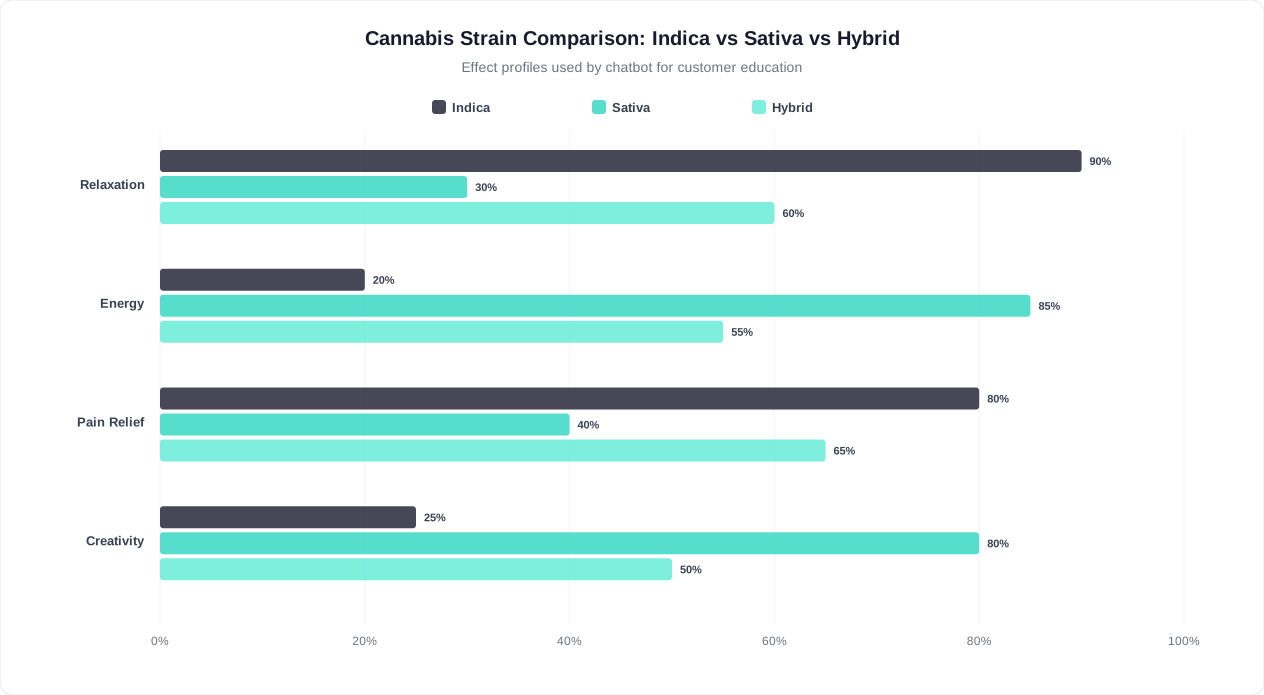
Education builds trust, reduces returns, and creates loyal customers. Dispensaries that invest in customer education through their chatbot see 40% higher repeat visit rates. Build your educational chatbot with Conferbot's no-code builder and customize content to match your inventory and customer base.
50,000+ businesses use Conferbot templates to automate conversations
Sales Impact and Customer Engagement Data
Cannabis dispensaries deploying virtual budtender chatbots see measurable return on investment within the first 30 days. The data below comes from aggregated performance metrics across dispensaries using conversational commerce tools for product recommendations, pre-ordering, and customer education. These numbers represent achievable outcomes for dispensaries with 200+ daily website visitors and an active customer base.
Revenue Metrics
The most immediate financial impact comes from three sources: increased average order value through guided recommendations, new pre-order revenue from after-hours engagement, and reduced staff costs from automated inquiry handling. A single-location dispensary processing 150 transactions daily can expect the chatbot to influence 25-40% of online interactions within the first month, growing to 60%+ as customers become familiar with the tool.
Performance Comparison: With vs. Without Chatbot
| Metric | Without Chatbot | With Chatbot | Delta | Annual Revenue Impact (single location) |
|---|---|---|---|---|
| Average order value | $45 | $58 | +$13 (+29%) | +$284,700 (60 orders/day influenced) |
| Pre-orders per day | 8 | 34 | +26 | +$438,100 (at $46 avg pre-order) |
| First-visit conversion rate | 38% | 61% | +23 pts | +$167,900 (new customer value) |
| After-hours leads captured | 0/night | 22/night | +22 | +$192,720 (at 40% conversion, $60 AOV) |
| Customer return rate (30-day) | 34% | 52% | +18 pts | +$312,480 (repeat purchase value) |
| Staff inquiry handling cost | $4,200/mo | $1,400/mo | -$2,800/mo | -$33,600 saved annually |
Engagement Metrics
Customer engagement data reveals how users interact with the chatbot and where the highest-value touchpoints occur:
- Chatbot engagement rate: 47% of website visitors interact with the chatbot (industry average for proactive chat widgets is 12-18%, showing cannabis customers are hungry for guidance).
- Completion rate: 72% of users who start the recommendation flow complete all questions through to product suggestions. The remaining 28% typically drop at budget selection, indicating price sensitivity.
- Pre-order conversion: Of customers who receive product recommendations, 34% proceed to place a pre-order — a dramatically higher conversion than passive menu browsing (8-12%).
- Average session duration: 3.2 minutes for the full recommendation flow. Users who engage the educational content spend an average of 5.8 minutes.
- Return visitor rate: 61% of chatbot users return within 14 days, compared to 38% for non-chatbot visitors.
- Most popular path: Product recommendations (52%), followed by menu browsing (24%), store info (12%), first-time guide (8%), and order status (4%).
Seasonal Patterns
Cannabis chatbot engagement follows predictable seasonal patterns that dispensaries can leverage for inventory planning and marketing. Usage peaks on Fridays and Saturdays (2.3x weekday average), with secondary peaks on the 20th of April (4/20) and before major holidays. After-hours engagement (8 PM - midnight) accounts for 40% of total interactions, confirming the need for 24/7 availability. Edible inquiries spike 300% before holidays (customers buying gifts), while flower remains consistently the most-requested category year-round at 45% of recommendations.
Track all of these metrics in real-time through Conferbot's analytics dashboard, with automated weekly reports delivered to your team. The data directly informs purchasing decisions, staffing schedules, and promotional strategies.
Getting Started with Your Dispensary Chatbot
Launching a cannabis dispensary chatbot on Conferbot takes under an hour from signup to live deployment. The platform is designed for dispensary operators and marketing managers — no developers, AI expertise, or technical infrastructure required. Here is the step-by-step process to get your virtual budtender live and serving customers today.
Step 1: Use the Cannabis Dispensary Template (2 Minutes)
Start with Conferbot's pre-built Cannabis Dispensary Chatbot template. It includes the complete conversation flow: age verification, experience assessment, effect-based recommendations, product type selection, budget filtering, pre-order collection, and educational content. The template is fully customizable — think of it as a proven starting framework that you tailor to your specific dispensary.
Step 2: Customize Your Dispensary Information (15 Minutes)
Update the template with your dispensary's details:
- Store name, hours, and location: Replace the placeholder text with your actual business information. Add multiple locations if applicable.
- Product categories: Adjust categories to match your actual inventory. If you do not carry concentrates, remove that option. If you specialize in edibles, expand that section with sub-categories.
- Brand and styling: Upload your logo, set your brand colors (the template uses green by default, but any color scheme works), and customize the chatbot avatar and header text.
- Recommendation messaging: Tailor the product recommendation messages to reference your actual inventory, featured brands, and current promotions.
Step 3: Configure Pre-Order Notifications (10 Minutes)
Set up how pre-orders are received and processed by your team:
- Email notifications: Route pre-order details to your dispensary email or a dedicated orders inbox.
- SMS alerts: Get instant text notifications when a new pre-order arrives so your team can begin preparation immediately.
- Integration with POS: For advanced setups, connect the chatbot to your point-of-sale system (Dutchie, Treez, Flowhub, or others) for automatic order creation and inventory deduction.
Step 4: Test the Complete Flow (10 Minutes)
Before going live, walk through every path in the chatbot as a customer would:
- Verify the age gate blocks underage users and shows the correct rejection message.
- Complete the full recommendation flow for each experience level and effect combination.
- Test the pre-order process and confirm notifications arrive at the correct destination.
- Check that store hours, location, and contact information are accurate.
- Review all messaging for compliance with your state's cannabis advertising regulations.
Step 5: Deploy to Your Channels (5 Minutes)
Choose where your chatbot lives and add it with a single line of code or integration:
- Website widget: Embed the chatbot on your dispensary website with one line of JavaScript. It appears as a chat bubble in the corner and can be configured to proactively greet visitors after 5 seconds.
- Dedicated landing page: Create a standalone chatbot page for use in advertising, QR codes, or social media bios.
- SMS: Allow customers to text your dispensary number and interact with the bot via text message for pre-ordering on the go.
- Social media: Deploy on Instagram DMs or Facebook Messenger for customers who discover you through social channels.
Step 6: Monitor and Optimize (Ongoing)
Once live, use Conferbot's analytics to track engagement, identify drop-off points, and continuously improve your chatbot's performance. Common optimizations include adjusting the product recommendation copy based on conversion data, adding seasonal product categories, and expanding educational content based on frequently asked questions. Most dispensaries see peak performance after 2-3 rounds of optimization over the first 60 days.
Ready to launch? Sign up for Conferbot, select the Cannabis Dispensary Chatbot template, and have your virtual budtender live before your next shift change. Visit website chatbot deployment for detailed installation guides for every major website platform including WordPress, Shopify, Squarespace, and custom-built dispensary sites.
Cannabis Dispensary Chatbot FAQ
Everything you need to know about chatbots for cannabis dispensary chatbot.
Why Use a Template vs Building from Scratch?
Templates encode years of optimization data into the conversation flow before you start.
| Factor | Conferbot Template | Build from Scratch | Hire a Developer |
|---|---|---|---|
| Time to deploy | 10 minutes | 2-8 hours | 2-6 weeks |
| Cost | Free | Your time | $5,000-$25,000 |
| Day-1 conversion | 15-22% | 5-8% | 10-15% |
| Proven flows | Yes, data-tested | No | Depends |
| Updates included | Automatic | Manual | Paid |
| Multi-channel | 8+ channels | 1 channel | Extra cost |
| Analytics | Built-in | Must build | Extra cost |
Ready to Deploy Cannabis Dispensary Chatbot?
Join 50,000+ businesses. Free forever plan available. No credit card required.