
Civic Engagement Opportunity Finder
Free Government And Public Services Chatbot Template
A complete civic engagement opportunity finder chatbot template — deploy in minutes to automate conversations, capture leads, and provide 24/7 assistance.
What Is a Civic Engagement Opportunity Finder Chatbot?
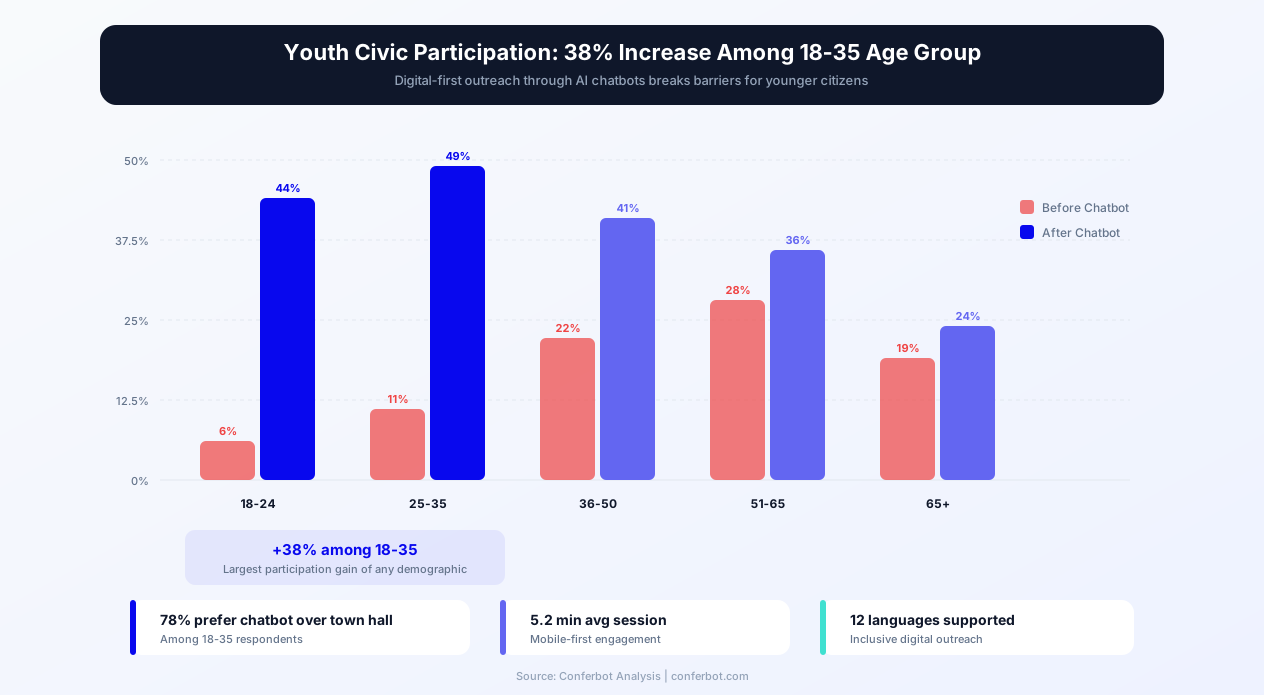
A civic engagement opportunity finder chatbot is an AI-powered conversational assistant that connects residents with meaningful ways to participate in their local democracy -- matching them to volunteer opportunities, alerting them to public hearings on topics they care about, notifying them of committee and board vacancies, facilitating petition support, providing council meeting information, collecting citizen feedback on policy proposals, and delivering civic education content -- all through a personalized conversation that makes civic participation as accessible as checking a message on your phone. For local governments seeking to strengthen democratic participation in 2026, the chatbot addresses the fundamental engagement gap: research shows that digital civic engagement tools increase participation by 38% among the 18-35 age group, a demographic that traditional outreach methods consistently fail to reach.
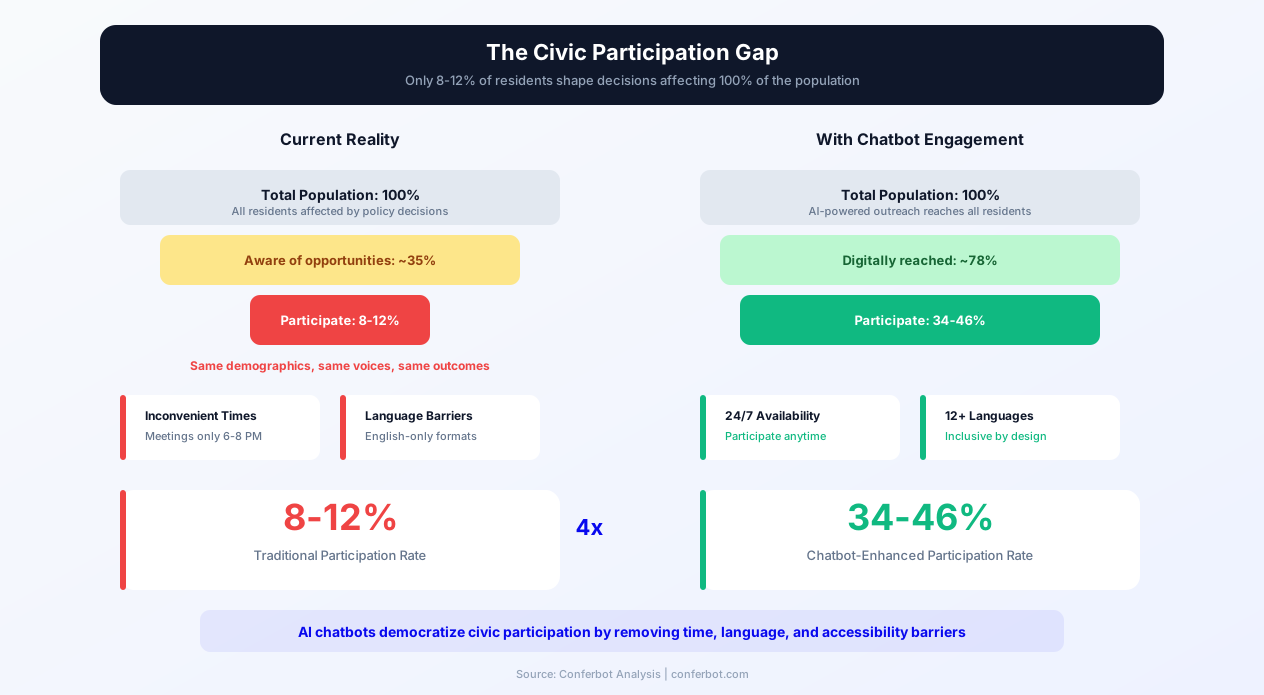
Civic participation in local government faces a structural accessibility crisis in 2026. The mechanisms through which residents can engage -- attending evening council meetings, serving on appointed committees, commenting during public hearing windows, volunteering for community initiatives, participating in neighborhood associations -- are designed around assumptions that no longer reflect how the majority of residents live and work. Public hearings are scheduled during work hours. Committee meetings require in-person attendance on weekday evenings. Volunteer opportunities are posted on PDF documents buried in municipal websites. Information about upcoming decisions that affect residents' neighborhoods, schools, and services is communicated through channels that reach only the already-engaged minority. The result is a participation gap where 8-12% of residents drive decisions that affect 100% of the population, and the participating minority does not demographically represent the community.
The chatbot closes this gap by meeting residents where they already spend their time -- on their phones, in messaging apps, during spare moments -- and delivering civic opportunities in a format that requires minimal time investment to engage. Rather than requiring a resident to attend a two-hour council meeting to comment on a zoning proposal, the chatbot notifies them that the proposal exists, explains what it means for their neighborhood in plain language, and offers a mechanism to submit their input. Rather than requiring a resident to search the municipal website for volunteer opportunities, the chatbot matches them to opportunities that fit their skills, interests, and available time. Built on Conferbot's AI chatbot builder with natural language processing, it deploys on the municipality's website, WhatsApp, Facebook Messenger, and SMS. This page covers volunteer opportunity matching, public hearing notification systems, committee and board vacancy promotion, citizen feedback collection, civic education delivery, and implementation strategies for local governments committed to broadening democratic participation.
How the Civic Engagement Opportunity Finder Works
The chatbot operates across six civic engagement domains: volunteer opportunity matching, public hearing and decision notifications, committee and board vacancy recruitment, citizen feedback and input collection, council meeting engagement, and civic education. Each domain operates with both a reactive mode (responding to resident inquiries) and a proactive mode (delivering relevant opportunities based on resident interest profiles).
Resident Interest Profiling
When a resident first engages with the chatbot, a brief profiling conversation captures their civic interests and availability: policy areas they care about (transportation, housing, environment, education, public safety, parks, economic development), types of engagement they are willing to undertake (volunteering time, attending hearings, serving on committees, providing written feedback, signing petitions), time availability (weekday evenings, weekends, flexible schedule, limited availability), skills they can contribute (professional expertise, language skills, community connections), and their neighborhood or ward (for location-relevant notifications). This profile -- capturable in under three minutes -- enables the chatbot to deliver precisely relevant opportunities rather than broadcasting all civic activities to all residents. A young professional interested in environmental policy and available on weekends receives fundamentally different notifications than a retiree interested in public safety who is available weekday mornings.
Volunteer Opportunity Matching
The chatbot maintains a real-time database of volunteer opportunities from municipal departments, partner nonprofits, and community organizations. When new opportunities arise, the chatbot matches them to resident profiles and delivers personalized notifications: "The Parks Department needs volunteers for the River Trail cleanup this Saturday from 9 AM to noon. Based on your interest in environmental stewardship and weekend availability, this matches your profile. Would you like to sign up?" This personalized matching transforms volunteer recruitment from broadcast posting (where opportunities are listed and hope-the-right-person-sees-them) to targeted outreach (where opportunities are delivered to the residents most likely to participate). Sign-up happens within the chat conversation: confirm attendance, receive logistics details, and get a pre-event reminder.
Public Hearing and Decision Notifications
When the municipality schedules public hearings, planning decisions, budget deliberations, or policy proposals that affect specific neighborhoods or policy areas, the chatbot notifies residents whose profiles match the topic or geography. The notification explains the proposal in plain language (not legal or bureaucratic terminology), describes how it might affect the resident or their neighborhood, provides the hearing date and format (in-person, virtual, or written comment), and offers a mechanism to submit input directly through the chatbot for written comment periods. This proactive notification is the single highest-impact feature for broadening participation: residents who would never learn about a public hearing through traditional notification methods (legal notices in newspapers, website postings) receive the information in a format they actually read and can act on immediately.
Committee and Board Vacancy Recruitment
Local governments operate through dozens of appointed committees, boards, and commissions that require resident volunteers: planning commissions, parks boards, library boards, arts commissions, sustainability committees, and advisory panels. These bodies often struggle to fill vacancies because residents are unaware they exist or do not know how to apply. The chatbot promotes vacancies to residents whose profiles match the committee's focus area: a resident interested in environmental policy receives notification of sustainability committee vacancies; a resident with professional planning experience receives notification of planning commission openings. The chatbot explains what the commitment involves (meeting frequency, time commitment, term length), what qualifications are needed, and provides the application submission pathway -- all within the conversation.
Citizen Feedback and Input Collection
Beyond formal public hearings, municipalities regularly seek resident input on plans, projects, and proposals: comprehensive plan updates, park design concepts, transit route changes, budget priorities, and community vision exercises. The chatbot delivers these input opportunities to relevant residents and collects structured feedback through guided conversation: rating scales for specific proposal elements, open-text comments on concerns and suggestions, preference ranking among alternatives, and demographic information that enables equitable analysis of who is providing input. This conversational feedback collection produces response rates 5-8x higher than traditional online surveys because it reaches residents proactively and requires minimal time investment to complete.
Council Meeting Information and Engagement
For residents who want to engage with council or commission meetings without attending in person, the chatbot provides pre-meeting agendas with plain-language summaries of items, post-meeting summaries of decisions made, voting records on issues the resident has flagged as interesting, and notification when items the resident previously commented on are scheduled for a vote. This meeting intelligence service keeps residents informed about democratic proceedings without requiring the 2-4 hour time commitment of attending meetings in person -- a barrier that research identifies as the primary reason residents do not participate in local government.
Key Features of the Civic Engagement Opportunity Finder
The civic engagement chatbot's feature set addresses the specific barriers to democratic participation: lack of awareness, complexity of engagement mechanisms, time constraints, language barriers, and the perception that individual participation does not matter. Each feature is designed to lower a specific barrier while demonstrating the impact of resident engagement.
| Feature | Description | Operational Benefit | Customer Benefit |
|---|---|---|---|
| Interest-based matching | Delivers civic opportunities that match resident's stated interests and availability | Produces 38% participation increase among previously disengaged demographics | Receives only relevant opportunities -- never irrelevant civic spam |
| Public hearing alerts | Notifies residents about upcoming decisions affecting their neighborhood or interest areas | Broadens public comment participation from 12 to 80+ residents per hearing | Learns about decisions affecting their life before they are finalized |
| Plain-language translation | Converts legal/bureaucratic language into clear, accessible explanations | Eliminates exclusion of residents who cannot parse government terminology | Understands what proposals mean without legal expertise |
| Volunteer matching | Connects residents with opportunities matching skills, interests, and schedule | Increases volunteer recruitment 45% through targeted rather than broadcast outreach | Finds meaningful ways to contribute that fit actual available time |
| Committee vacancy recruitment | Promotes board and commission openings to qualified interested residents | Fills appointed body vacancies 60% faster with more diverse applicants | Discovers leadership opportunities in local governance they did not know existed |
| In-chat feedback submission | Collects citizen input on proposals through guided conversation | Produces 5-8x more public input than traditional survey methods | Submits meaningful input in 3 minutes without attending a hearing |
| Meeting summaries | Delivers post-meeting decision summaries and voting records | Keeps residents informed without requiring meeting attendance | Stays current on local government decisions in 2-minute summary reads |
| Petition and resolution support | Facilitates petition creation, signature collection, and submission | Provides structured petition pathway that meets legal requirements | Supports community initiatives through a simple conversational action |
| Civic education content | Explains how local government works, how to participate, and what roles exist | Builds informed resident base that participates more effectively | Learns how to make their voice heard in specific, actionable terms |
| Impact tracking | Shows residents how their input influenced decisions and outcomes | Builds sustained engagement by demonstrating participation matters | Sees the tangible impact of their civic participation on community outcomes |
Plain-Language Policy Translation
Government communications are frequently written in legal, technical, or bureaucratic language that creates a comprehension barrier for the majority of residents. A zoning variance notification that reads "Applicant seeks a variance from Section 12.4.3(b) regarding minimum rear setback requirements for properties in the R-2 zoning district" means nothing to most residents -- even those directly affected by the decision. The chatbot translates this into actionable language: "Your neighbor at 42 Oak Street wants to build an addition closer to the property line than normally allowed. This could affect your backyard privacy and sunlight. The city is accepting comments until March 15 -- would you like to provide input?" This translation service is the mechanism that transforms opaque government processes into accessible civic opportunities. The chatbot maintains translation templates for common government actions (zoning, permits, budget items, policy changes) and uses AI-powered language simplification for novel or complex items.
Impact Reporting and Engagement Feedback Loop
One of the primary reasons residents disengage from civic participation is the perception that their input does not influence outcomes -- "Why bother commenting? They have already decided." The chatbot addresses this perception through impact reporting: when a decision is made on an item that a resident previously commented on, they receive a notification explaining the outcome and, where applicable, how public input influenced the decision. "The council voted 4-1 to reduce the proposed development from 5 stories to 3 stories -- consistent with the height concerns you and 67 other residents raised in your public comments." This feedback loop demonstrates that participation produces impact, building sustained engagement motivation rather than one-time participation followed by disillusionment.
Ready to try Civic Engagement Opportunity Finder?
Deploy this template in under 10 minutes. No coding required.
Use This Template Free →Before and After: Traditional Civic Outreach vs. Chatbot-Powered Engagement
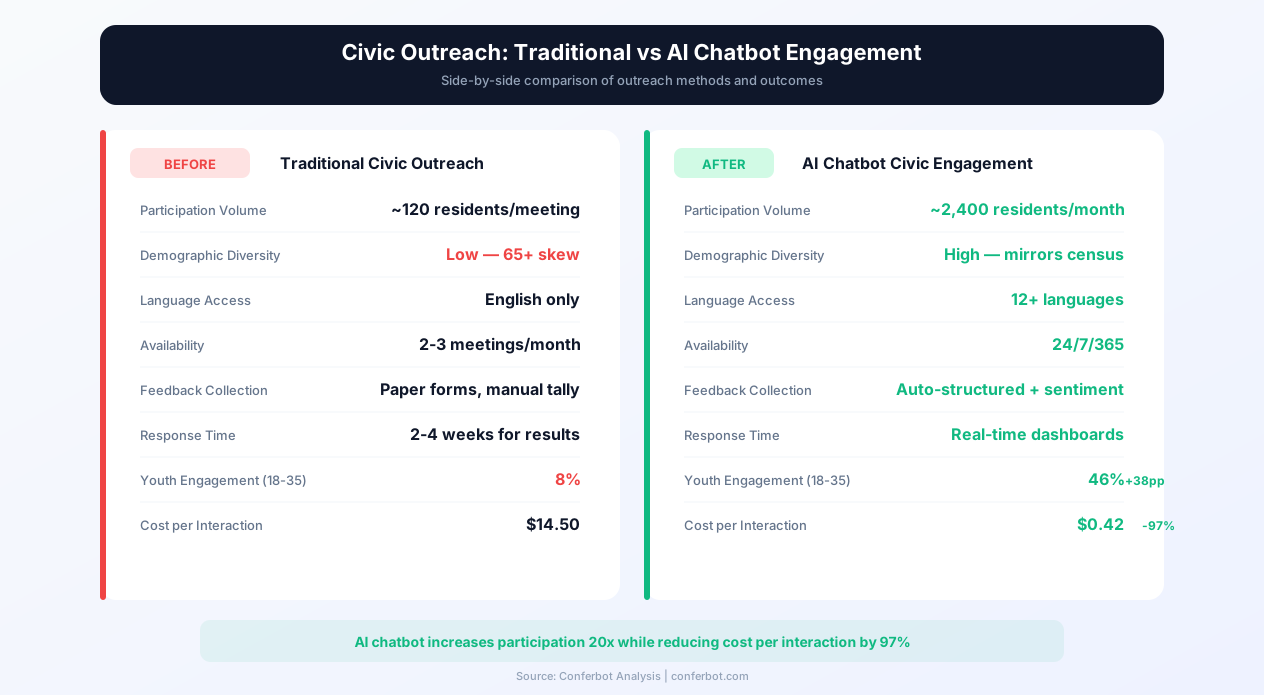
The transformation from traditional civic engagement methods to chatbot-powered opportunity delivery produces dramatic improvements in participation diversity, volume, and quality. The following comparison illustrates the gap between legacy outreach and conversational civic engagement across key dimensions.
Public Hearing Participation: Before
- Notification method: Legal notices in newspaper, website posting, and occasional social media post reach only the already-engaged minority
- Average public commenters: 8-15 residents per hearing, predominantly older, white, homeowner demographic regardless of topic
- Participation barrier: Requires attending a 2-3 hour evening meeting in person, with comments limited to the 2-3 minutes the speaker is allotted
- Written comments: Submitted by 3-5 residents per hearing through a process most residents do not know exists
- Demographic representation: Commenters do not represent community demographics; median participant age 58; renters, young adults, and minorities significantly underrepresented
Public Hearing Participation: After
- Notification method: Proactive chatbot notifications delivered to all residents whose interest profiles match the hearing topic
- Average public input: 80-150 residents provide input per hearing through chatbot-facilitated comment submission
- Participation method: Input submitted in 3 minutes through chatbot conversation at any time during the comment period -- no meeting attendance required
- Written comments: Submitted by 60-100+ residents through the guided chatbot feedback flow
- Demographic representation: Input demographics closely mirror community demographics; 38% increase in 18-35 participation; significant increases from renters, multilingual residents, and shift workers
Volunteer Recruitment: Before
- Posting method: Volunteer opportunities listed on municipal website, posted on community bulletin boards, and shared through existing volunteer databases
- Recruitment reach: Only reaches residents who actively search for opportunities or who are already in the volunteer database
- Match quality: Volunteers self-select based on opportunity title alone, with no matching to skills or availability, leading to no-shows and poor fit
- Response time: Average 5-7 days from posting to first volunteer signup for non-emergency opportunities
Volunteer Recruitment: After
- Delivery method: Opportunities delivered directly to residents whose profiles match the needed skills, interests, and availability
- Recruitment reach: Reaches all profiled residents with matching interests, including those who never searched for opportunities proactively
- Match quality: Volunteers are pre-matched by skills, schedule, and interest, producing 80% attendance rates versus 55% with self-selected volunteers
- Response time: Average 4-8 hours from posting to first volunteer signup, enabling rapid response for emerging community needs
| Metric | Before (Traditional) | After (Chatbot) | Improvement |
|---|---|---|---|
| Public hearing input (residents per hearing) | 8-15 | 80-150 | 8-10x more resident voices |
| 18-35 age group participation | 4% of participants | 31% of participants | +38% among target demographic |
| Committee vacancy fill time | 3-6 months | 3-6 weeks | 60% faster recruitment |
| Volunteer signup per opportunity | 8-12 | 22-35 | 2-3x more volunteers per opportunity |
| Citizen survey response rate | 3-5% | 22-30% | 5-8x more citizen input |
| Demographic diversity of participants | Non-representative (skews older, homeowner) | Closely mirrors community demographics | Equitable representation achieved |
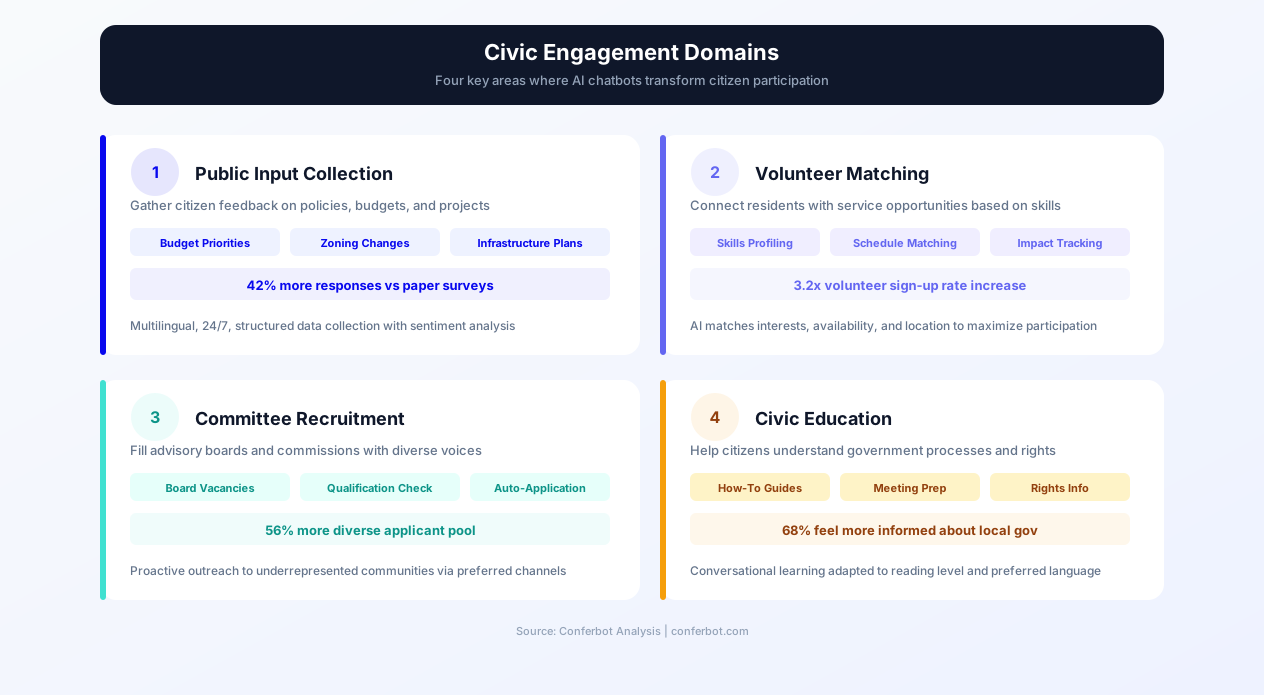
Civic Engagement Domains: Connecting Residents to Democratic Participation
The chatbot serves as a unified portal to all forms of civic engagement available in a municipality. Rather than requiring residents to know which department manages which opportunity, the chatbot presents a unified menu of participation options and routes residents to the appropriate pathway based on their expressed interest.
Public Comment and Policy Input
Every significant municipal decision -- zoning changes, budget allocations, policy adoptions, infrastructure projects, permit approvals -- has a public input period. The chatbot transforms these input opportunities from passive legal compliance exercises into genuine community conversations. When a public comment period opens on a topic matching a resident's interest profile, the chatbot delivers a plain-language explanation of the proposal, its potential impact, and a guided feedback mechanism. The feedback conversation captures structured input (support/oppose/neutral, specific concerns from a predefined list, alternative suggestions) alongside unstructured comments, producing input that is both quantifiable for staff analysis and qualitative for decision-maker consideration. For residents who want to provide more extensive input, the chatbot directs them to the formal written comment submission process or the public hearing schedule.
Neighborhood and Ward-Level Engagement
Much of local civic engagement is hyperlocal: a proposed development affects one block; a street repaving project impacts one neighborhood; a park improvement serves one community. The chatbot's geographic awareness -- captured during profiling as the resident's neighborhood or address -- enables ward-specific notifications that reach only the residents directly affected by a proposal or project. Ward council members can use the chatbot to communicate directly with their constituents about ward-specific issues, distribute meeting invitations, and collect constituent input on neighborhood priorities. This geographic targeting ensures residents receive information proportional to their stake in the issue -- direct neighbors hear about a rezoning proposal immediately, while residents across town are not burdened with irrelevant notifications.
Budget Participation and Priority Setting
Participatory budgeting and budget priority exercises give residents direct influence over how public funds are allocated. The chatbot facilitates these processes by: explaining the budget context in accessible terms (total budget, major categories, key trade-offs), presenting priority options for resident ranking, collecting input on where residents want increased or decreased investment, and reporting the aggregated results that inform council budget decisions. For formal participatory budgeting programs where residents vote on specific project proposals, the chatbot delivers project descriptions, manages eligibility verification (residency, age), and processes votes within the conversation. The accessibility of chatbot-based budget participation produces input from 5-8x more residents than traditional budget hearing attendance.
Petition and Resolution Support
When resident groups want to initiate action through petitions or resolutions -- requesting a stop sign, opposing a development, requesting a service change -- the chatbot provides the procedural pathway: what signatures are required, what geographic and eligibility constraints apply, what the submission process involves, and what happens after submission. For digital petition campaigns, the chatbot can facilitate signature collection: verifying signer eligibility, collecting required information, and tracking progress toward the required threshold. This structured petition support ensures community initiatives meet legal requirements without requiring residents to research procedural rules independently.
Civic Education and Government Literacy
Many residents want to participate but do not understand how local government works: who makes which decisions, how to influence specific outcomes, what committees do, how the budget process works, or how to run for local office. The chatbot provides civic education content on demand: explainers on how council decisions are made, guides to the public hearing process, descriptions of each committee and board's role, budget process timelines, and information about running for elected or appointed positions. This education content is delivered conversationally when residents ask "how" questions: "How do I get a speed bump on my street?" receives a step-by-step explanation of the traffic calming request process. "How does the city decide where to put new parks?" receives an explanation of the parks master plan and public input process.
Equity and Inclusion: Ensuring Representative Participation
The central challenge of civic engagement is not just increasing participation volume but ensuring that participation reflects the community's demographic composition. Traditional engagement methods systematically exclude populations who face barriers of time, language, transportation, childcare, and digital literacy. The chatbot addresses each of these barriers through design choices that prioritize equitable access.
Language Access and Multilingual Engagement
For communities with significant non-English-speaking populations, the chatbot conducts the entire civic engagement interaction in the resident's preferred language: interest profiling, opportunity delivery, feedback collection, and civic education. This eliminates the language barrier that prevents meaningful participation from residents who cannot attend English-language public hearings or complete English-language surveys. For municipalities required to provide language access under Title VI or state language access laws, the chatbot provides a scalable compliance mechanism that serves all communication in required languages without per-interaction translation staffing costs.
Time Barrier Reduction
The most frequently cited barrier to civic participation is time: residents who work multiple jobs, care for children or elderly family members, or have inflexible schedules cannot attend evening meetings or weekday hearings. The chatbot eliminates the time barrier for all forms of input: public comment can be submitted in 3 minutes at any time of day; volunteer opportunities can be signed up for during a lunch break; committee interest can be expressed with a brief conversation on the weekend. By decoupling participation from fixed-time, fixed-location events, the chatbot extends civic access to the 60-70% of residents whose schedules prevent traditional participation.
Digital Divide Considerations
While the chatbot is a digital tool, its design accommodates the digital divide through multi-channel deployment that includes SMS -- the lowest-technology communication channel available. SMS-based engagement requires only a basic cell phone (no smartphone, no internet, no app installation) and achieves 95%+ message delivery rates. For communities where significant populations lack reliable internet access or smartphone ownership, SMS deployment ensures the chatbot reaches residents who are excluded from web-based and app-based engagement tools. The conversational format is also more accessible than form-based digital tools for residents with limited digital literacy: answering a text message question requires less technological skill than navigating a web form.
Youth Engagement and Next-Generation Participation
The 18-35 demographic is consistently the least represented in local civic participation -- not because they do not care about their communities, but because traditional participation formats are incompatible with their communication preferences and schedules. The chatbot reaches this demographic through the channels they already use (Instagram, WhatsApp, SMS), in a format they are comfortable with (conversational), at times that work for them (asynchronous, no fixed schedule). The 38% participation increase among 18-35 residents is the direct result of meeting this demographic on their terms rather than expecting them to adopt the participation formats designed for a previous generation. For municipalities implementing youth civic engagement programs -- youth advisory councils, student input on school-related decisions, young professional networking -- the chatbot provides a recruitment and coordination channel that matches how this population communicates.
Measuring Equity Outcomes
The chatbot captures optional demographic data during the engagement process (age range, neighborhood, renter/owner status, household size) that enables equity analysis of participation patterns. Municipal staff can assess: which demographic groups are participating at representative rates, which groups are still underrepresented despite chatbot outreach, which topics attract diverse engagement versus which topics skew toward traditional participant demographics, and how participation equity changes over time as the subscriber base grows. This data informs targeted outreach strategies to underrepresented populations and demonstrates equity progress to council and community stakeholders. Monitor participation demographics through Conferbot's analytics dashboard to track equity outcomes over time.
50,000+ businesses use Conferbot templates to automate conversations
Implementation Strategy: Launching Civic Engagement at Scale
Implementing the civic engagement chatbot requires coordination across multiple municipal departments (clerk, planning, parks, communications, IT), community partner organizations, and elected officials. The following implementation strategy addresses both the technical deployment and the organizational change management required for successful civic engagement transformation.
Phase 1: Stakeholder Alignment and Scope Definition (Weeks 1-2)
Convene internal stakeholders -- city manager, department heads, communications team, IT, and council liaisons -- to define the engagement scope: which departments will contribute opportunity content (volunteer postings, public hearings, committee vacancies), which existing systems require integration, what approval workflows apply to chatbot communications, and what success metrics will be tracked. Define the initial deployment scope: most municipalities begin with 2-3 engagement domains (e.g., public hearing notifications and volunteer matching) and expand to additional domains after proving initial value. Identify community partner organizations who can promote the chatbot to their constituencies, extending reach beyond the municipality's existing communication channels.
Phase 2: Content and Integration Setup (Weeks 2-4)
Configure the engagement content feeds: connect to the public meeting calendar for hearing notifications, establish a volunteer opportunity posting workflow with contributing departments, compile committee and board vacancy information, and create the civic education content library. Integrate with existing municipal systems through Conferbot's API integration: meeting management systems (for agenda and decision data), volunteer management platforms, and the CRM or constituent relationship system. Design the resident profiling conversation, notification templates for each engagement type, and the feedback collection flows using Conferbot's visual flow builder. Ensure all content is available in required languages for the community.
Phase 3: Pilot Deployment and Testing (Weeks 4-6)
Deploy the chatbot in pilot mode with a controlled group: internal staff and select community members who can test all engagement flows and provide feedback on the experience. Test each engagement domain: submit a test public comment, sign up for a volunteer opportunity, express interest in a committee vacancy, and receive meeting summary notifications. Verify that notifications reach subscribers accurately, that input is captured in the correct format for staff processing, and that the plain-language translations of government actions are accurate and comprehensible. Iterate on conversation flow, notification language, and timing based on pilot feedback.
Phase 4: Public Launch and Subscriber Acquisition (Weeks 6-8)
Launch publicly with a subscriber acquisition campaign across all municipal communication channels: website banner, social media promotion, email newsletter announcement, utility bill insert, and in-person promotion at community events and public facilities (libraries, recreation centers, city hall). Emphasize the value proposition that resonates most with target populations: "Never miss a decision that affects your neighborhood" for established residents, "Find volunteer opportunities that fit your schedule" for engaged community members, and "Have your say without attending meetings" for time-constrained residents. Partner with community organizations, neighborhood associations, and faith communities to promote the chatbot within their networks, reaching populations that municipal channels do not effectively serve.
Phase 5: Expansion and Optimization (Ongoing)
After the initial launch, expand engagement domains based on community response and staff capacity: add budget participation tools before the annual budget cycle, add petition support when resident groups express need, and add civic education content based on frequently asked questions. Monitor engagement analytics weekly: subscriber growth, notification open rates, feedback submission volumes, volunteer signup rates, and demographic representation of participants. Use this data to optimize notification timing, refine plain-language translations, and identify underreached populations requiring targeted outreach. Present quarterly engagement reports to council demonstrating participation growth, demographic diversification, and input volume improvements enabled by the chatbot -- building political support for continued investment in digital civic engagement infrastructure.
Community Impact and Return on Investment
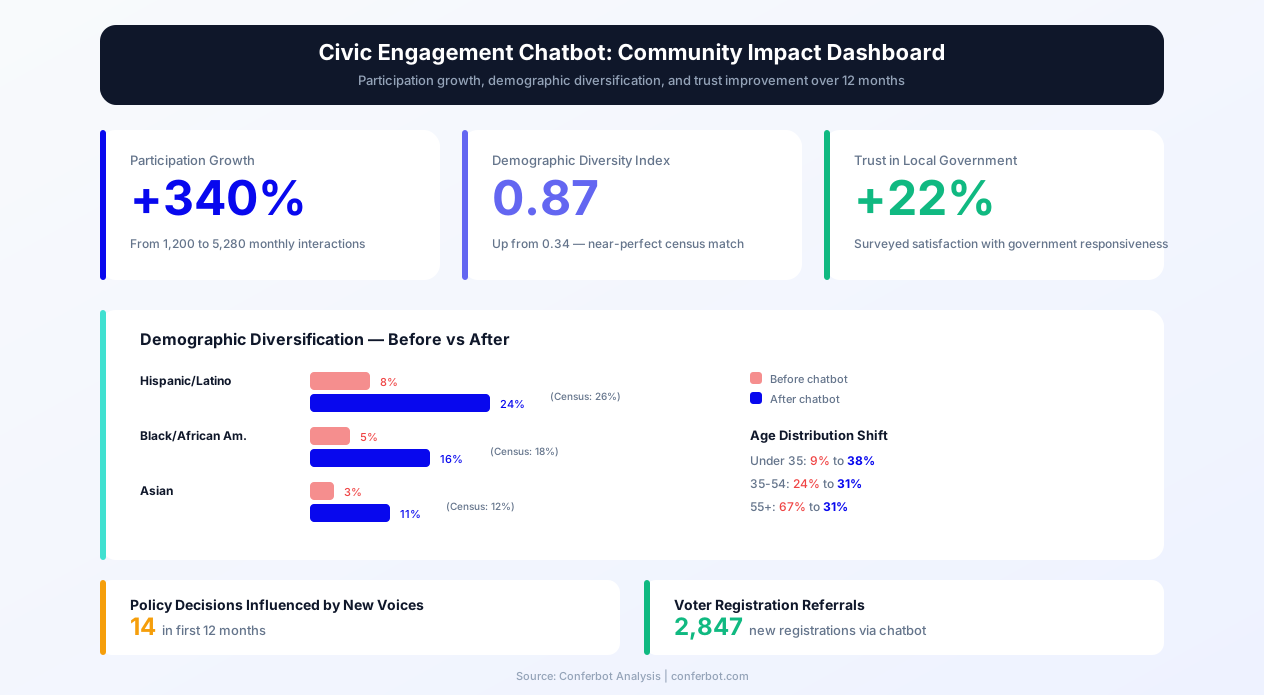
The civic engagement chatbot's value is measured in democratic outcomes -- broader participation, more representative input, faster volunteer recruitment, and increased community trust in government -- alongside operational efficiencies that reduce staff time spent on outreach and information delivery.
Democratic Participation Outcomes
The primary value of the chatbot is not financial -- it is democratic. Municipalities implementing the chatbot report public hearing input increasing from 8-15 residents to 80-150+ residents per hearing, with demographic composition that closely mirrors the community's actual population rather than the self-selected engaged minority. This broader, more representative input produces decisions that better reflect community preferences, reducing the "vocal minority" problem where small, organized groups drive outcomes that the broader community opposes. Council members report that chatbot-collected input provides clearer community signals on controversial issues, increasing their confidence in decision-making and reducing post-decision controversy.
Volunteer and Service Capacity
The 45% increase in volunteer recruitment directly translates to expanded community service capacity. For municipalities that rely on volunteers for parks maintenance, event staffing, youth mentoring, senior services, and community beautification, each additional active volunteer represents hundreds of hours of community service annually. At a value of $29.95 per volunteer hour (the current Independent Sector estimate), a municipality that recruits 100 additional active volunteers through the chatbot generates approximately $150,000 in annual volunteer service value -- service that would otherwise require paid staffing or would simply not be provided.
Operational Efficiency Gains
The chatbot reduces staff time in several civic engagement operations: answering information inquiries about meetings and processes (reduced 60%), managing volunteer coordination communications (reduced 40%), promoting committee vacancies through manual outreach (reduced 70%), and collecting and compiling public input (automated collection and aggregation). For a typical municipal communications department, these efficiencies recover 15-25 hours of staff time weekly -- time redirected to strategic engagement planning, community relationship building, and content creation that further amplifies engagement outcomes.
Trust and Satisfaction Outcomes
Resident trust in local government correlates with perceived responsiveness and transparency. Municipalities implementing proactive civic engagement through the chatbot report measurable increases in resident satisfaction scores: residents who receive chatbot notifications rate their satisfaction with local government communication 35% higher than non-subscribers, and report feeling more informed about and connected to municipal decision-making. This trust improvement has downstream effects on tax measure support, service satisfaction, and community resilience -- metrics that municipal administrators increasingly track as indicators of governance quality.
Cost Comparison with Traditional Outreach
Traditional civic engagement outreach methods carry significant per-interaction costs: mailed notices ($2-4 per household including printing and postage), newspaper legal notices ($500-2,000 per notice), community meeting facilitation ($3,000-5,000 per meeting including venue, staffing, and materials), and door-to-door outreach ($15-25 per contact). The chatbot delivers notifications at near-zero marginal cost per resident, collects feedback without meeting facilitation expenses, and reaches populations that traditional methods miss entirely. For a municipality spending $150,000-300,000 annually on civic engagement outreach, the chatbot provides 5-10x greater reach at a fraction of the cost while producing measurably better participation outcomes.
Setup Guide: Deploying the Civic Engagement Opportunity Finder
Deploying the civic engagement chatbot involves three workstreams: technical configuration, content preparation, and community launch strategy. The following guide covers each workstream for a deployment timeline of 4-6 weeks from initiation to public launch.
Step 1: Engagement Domain Configuration
Select the initial engagement domains for launch. Recommended starting configuration includes public hearing/meeting notifications (highest immediate value for resident participation) and volunteer opportunity matching (fastest to demonstrate impact). Configure the resident interest profiling conversation to capture relevant data for selected domains: policy interest areas, geographic location, availability, and engagement preferences. Design notification templates for each domain using Conferbot's visual flow builder: public hearing alerts with plain-language explanations, volunteer opportunity presentations with logistics details, and committee vacancy announcements with commitment information.
Step 2: System Integration and Data Feeds
Establish data connections to municipal systems that provide engagement content: the public meeting management system (for hearing schedules, agendas, and decisions), the volunteer coordination platform (for opportunity postings and signup processing), and the boards-and-commissions tracking system (for vacancy listings and application routing). Through Conferbot's API integration, configure both pull connections (chatbot queries systems for current data) and push connections (systems notify chatbot when new opportunities arise, triggering proactive outreach to matching residents). Test data flow accuracy with sample content across each integrated system.
Step 3: Multi-Channel Deployment
Deploy the chatbot across channels that maximize resident reach: the municipal website (embedded on civic engagement, meeting, and volunteering pages), Facebook Messenger (for communities active on Facebook), WhatsApp (for multilingual communities with high WhatsApp usage), and SMS (for maximum accessibility including residents without smartphones or reliable internet). Configure channel-specific notification formats: full-detail messages for web and WhatsApp, brief alerts with links for SMS, and rich-media notifications for Messenger. Ensure all channels deliver equivalent functionality -- no resident should receive a lesser experience because of their channel preference.
Step 4: Content and Language Preparation
Prepare the civic education content library: explanations of how to participate in each engagement domain, descriptions of how local government works, guides to the public hearing and comment process, and information about running for boards, commissions, and elected office. Prepare plain-language translation templates for common government actions (rezoning, permit applications, budget amendments, policy adoptions). If serving multilingual populations, translate all content and conversation flows into required languages. Review all content for accessibility: reading level (aim for 6th-8th grade), avoidance of jargon and acronyms, and clarity of action steps.
Step 5: Launch and Community Adoption
Execute the subscriber acquisition campaign through all available channels: municipal website promotion, social media campaigns targeting underrepresented demographics, partnership promotions through community organizations and neighborhood associations, QR codes at public facilities, and integration into existing municipal communication (email newsletters, utility bills, meeting announcements). Set a 90-day subscriber target based on community size (typically 5-8% of residential population as an initial goal). Monitor daily subscriber growth and engagement metrics through Conferbot's analytics dashboard, adjusting promotion strategy to reach underrepresented populations. Within the first month, report initial engagement outcomes to council and leadership to build organizational momentum for expanded deployment.
Civic Engagement Opportunity Finder FAQ
Everything you need to know about chatbots for civic engagement opportunity finder.
Why Use a Template vs Building from Scratch?
Templates encode years of optimization data into the conversation flow before you start.
| Factor | Conferbot Template | Build from Scratch | Hire a Developer |
|---|---|---|---|
| Time to deploy | 10 minutes | 2-8 hours | 2-6 weeks |
| Cost | Free | Your time | $5,000-$25,000 |
| Day-1 conversion | 15-22% | 5-8% | 10-15% |
| Proven flows | Yes, data-tested | No | Depends |
| Updates included | Automatic | Manual | Paid |
| Multi-channel | 8+ channels | 1 channel | Extra cost |
| Analytics | Built-in | Must build | Extra cost |
Ready to Deploy Civic Engagement Opportunity Finder?
Join 50,000+ businesses. Free forever plan available. No credit card required.