Why Wineries and Breweries Need Chatbots in 2026
The American wine and craft beer industries have reached remarkable scale. According to Wine Institute data, the US is home to over 12,000 wineries producing $79.5 billion in economic value, while the Brewers Association reports more than 9,500 craft breweries contributing $28.4 billion to the economy. For both industries, the tasting room is the highest-margin revenue channel and the primary driver of brand loyalty. A single tasting room visit can generate $42-$120 in immediate revenue through tastings and bottle purchases, and a converted wine or beer club member generates $800-$2,400 in annual recurring revenue.
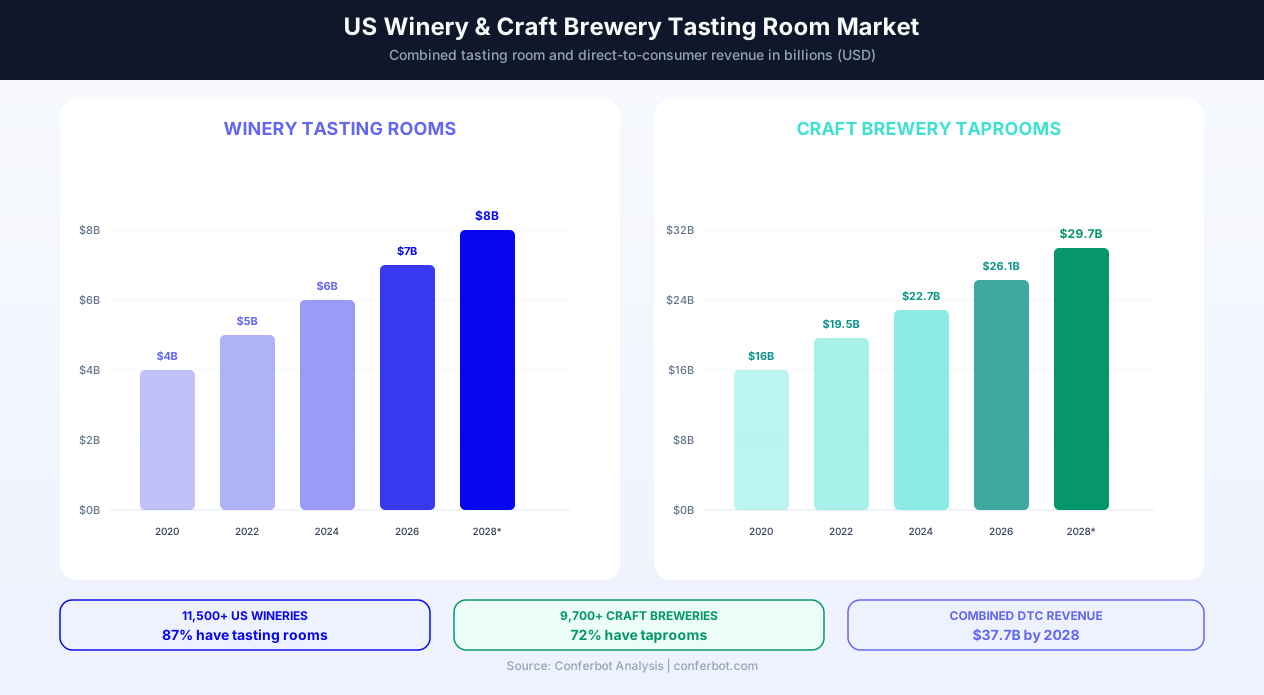
Yet most wineries and breweries manage their tasting room operations with remarkably primitive technology. Reservations are taken by phone (answered inconsistently by tasting room staff who are simultaneously pouring). Wine club sign-ups happen on paper forms at the tasting bar. Private event inquiries arrive by email and sit unanswered for days. Post-visit engagement consists of a generic newsletter that every subscriber receives regardless of their preferences. And seasonal demand fluctuations between packed summer weekends and empty January tasting rooms are accepted as inevitable rather than manageable.
The tasting room revenue opportunity is enormous, but the operational reality creates systematic revenue leakage. 62% of potential visitors research tasting rooms outside business hours when no one answers the phone. Walk-in visitors during peak season are turned away because there are no available tasting slots. Event inquiries go unanswered for 48-72 hours while the prospect books a competitor venue. Wine club conversion at the tasting bar captures only 8-12% of eligible guests because staff cannot pitch the club while simultaneously conducting tastings. And post-visit bottle purchases are left to chance rather than systematically nurtured.
A winery or brewery chatbot addresses every one of these revenue leaks. It takes reservations 24/7, converts visitors to club members through personalized post-visit engagement, captures event inquiries with structured data collection, manages seasonal demand through targeted promotions, and drives post-visit purchases through recommendation engines based on tasting preferences. Locations deploying chatbots report revenue increases of 74% from their tasting room operations.
This guide covers every aspect of chatbot implementation for wineries and craft breweries: from reservation management and club growth to event booking, seasonal optimization, and a comprehensive ROI model. Whether you operate a boutique family winery, a destination brewery with a taproom, or a multi-location craft beverage portfolio, the strategies here will measurably grow your tasting room revenue and guest loyalty.
Tasting Room Reservations: 24/7 Booking That Fills Every Slot
The shift from walk-in to reservation-based tasting rooms, a trend Wines Vines Analytics tracks across the U.S. wine industry, accelerated dramatically during the pandemic and has become permanent across the industry. Most wineries now require or strongly encourage reservations, and many craft breweries with limited taproom capacity have adopted reservation systems. Yet the dominant reservation method remains phone-based, which creates a bottleneck that directly costs revenue.
The Phone Reservation Problem
A typical winery tasting room receives 30-50 phone calls per day during peak season. The tasting room staff is simultaneously conducting tastings, processing sales, and answering phones. Calls go unanswered or to voicemail during busy periods, which is precisely when prospective visitors are most likely calling. Industry data shows that 73% of callers who reach voicemail do not leave a message and instead move on to another winery. During a typical Saturday in peak season, a winery with 20 available tasting slots turns away an estimated 15-25 potential visitors due to unanswered or missed calls.
How Chatbot Reservations Work
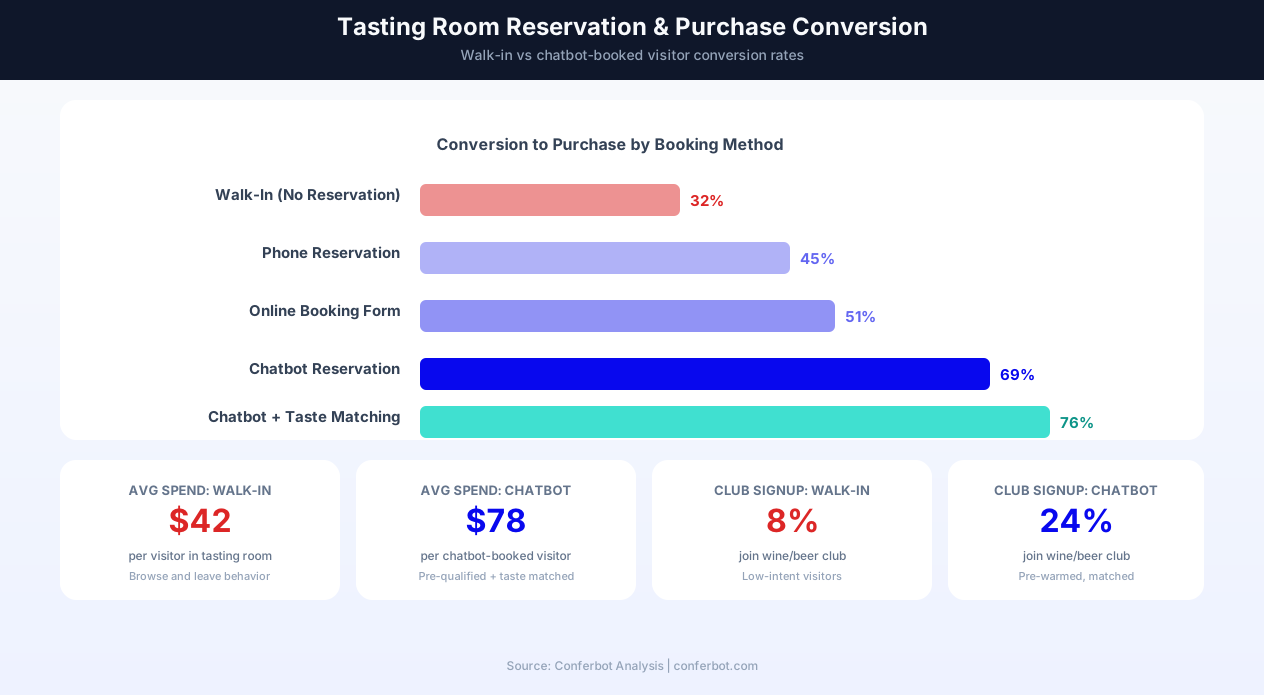
The chatbot provides instant, self-service reservation booking available 24/7 on the winery or brewery's website, Google Business Profile, Instagram, and WhatsApp. The guest selects their preferred date, sees available time slots in real time, chooses their party size, selects their tasting experience (standard flight, reserve tasting, food pairing, etc.), and confirms the booking. The entire process takes under 60 seconds, compared to a 3-5 minute phone call.
Reservation Optimization Features
The chatbot's reservation system goes beyond simple booking to actively optimize tasting room capacity:
- Dynamic time slot management: The chatbot shows availability in real time and can stagger reservation times to prevent the common problem of all guests arriving at the same time. Instead of offering "11 AM, 12 PM, 1 PM" slots that create arrival surges, the chatbot distributes reservations across 11:00, 11:15, 11:30, 11:45 start times for smoother guest flow.
- Waitlist automation: When all slots are booked, the chatbot adds guests to a waitlist and automatically notifies them when cancellations create openings. Without this automation, cancelled slots go unfilled because the winery has no way to quickly contact interested visitors.
- No-show reduction: The chatbot sends automated reminders 24 hours and 2 hours before the reservation. No-show rates drop from the industry average of 18% to 6% with chatbot reminders, recovering 12 tasting slots per 100 reservations that would otherwise go unused.
- Upsell at booking: During the reservation process, the chatbot offers experience upgrades: "Would you like to upgrade to our Reserve Tasting ($35/person) featuring our estate wines, or add a cheese pairing board ($22/person)?" This pre-visit upselling increases the average reservation value by 28% compared to guests who select their experience at arrival.
- Group and party handling: For larger groups (6+), the chatbot collects additional information (occasion, dietary restrictions, accessibility needs) and routes the inquiry to the events team while confirming a tentative reservation. This ensures that high-value group visits are not lost to the standard reservation flow.
For wineries and breweries looking to maximize their reservation system capabilities, our guide on chatbot appointment booking covers advanced scheduling optimization techniques applicable to tasting room management.
Wine & Beer Club Growth: 3.8x Faster Membership Acquisition
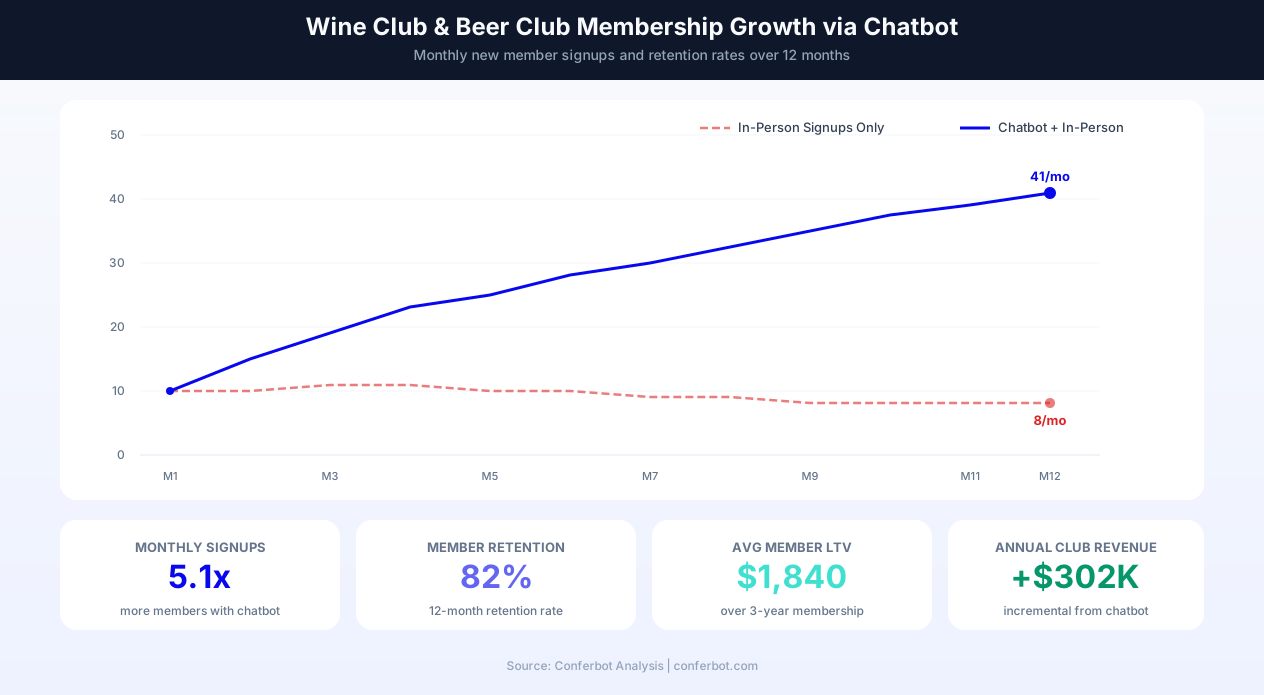
Wine clubs and beer clubs are the most valuable revenue streams, with membership economics documented by the Wine Business Monthly for wineries and breweries. A wine club member generates $1,200-$2,400 in annual recurring revenue through quarterly shipments, and beer club members generate $600-$1,200 annually. Club members also visit the tasting room 3-4x more frequently than non-members and spend 45% more per visit. For a winery with 500 club members at $1,800 average annual value, the club represents $900,000 in predictable recurring revenue.
The Tasting Bar Conversion Problem
Traditional wine club sign-up happens at the tasting bar after the tasting experience. The tasting room host describes the club benefits and offers a paper sign-up form. This approach converts only 8-12% of tasting room visitors to club members. The reasons for low conversion are structural: the host is simultaneously serving multiple parties, the guest feels rushed or pressured, the guest wants to think about it at home, the guest's partner needs to agree, or the guest simply does not want to commit during an experience they are trying to enjoy.
Chatbot Club Enrollment Journey
The chatbot transforms club enrollment from a one-moment tasting bar pitch into a multi-touchpoint nurturing journey that captures interest over days and weeks. The process works as follows:
- During the visit: The tasting room has QR codes on the table or bar with "Save your tasting notes and get personalized wine recommendations." The guest scans the code and enters the chatbot, which records their tasting preferences during or after the experience.
- Post-visit follow-up (24 hours): The chatbot sends a personalized message: "Thanks for visiting yesterday! Based on your tasting, you loved our 2022 Reserve Cabernet and the Barrel-Aged Stout. Here are your tasting notes and a link to purchase those favorites." This follow-up provides genuine value (tasting notes the guest would otherwise forget) while creating a purchase opportunity.
- Club introduction (48-72 hours): The chatbot introduces the club with a personalized pitch: "Since you loved our reserve wines, our Reserve Club ($55/quarter) would be perfect for you. You would have received the 2022 Reserve Cab in your last shipment, plus early access to our allocation-only wines. Members also get 20% off all purchases and complimentary tastings for up to 4 guests." This message arrives when the guest is past the immediate visit but still remembering the experience fondly.
- Enrollment completion: The chatbot provides a one-tap enrollment link. No paper forms, no phone calls, no returning to the tasting room. The guest enters payment information, selects their shipment preferences (reds only, mixed, whites only), and confirms. Enrollment takes 90 seconds.
- Ongoing engagement: Club members receive personalized communications through the chatbot: pre-shipment previews, tasting notes for each bottle in their shipment, exclusive event invitations, and reorder prompts when their favorites are available.
Club Retention Through Chatbot Engagement
Wine club churn is a persistent challenge, with industry-average annual churn rates of 25-30%. The primary reasons for cancellation are not dissatisfaction with the wine; they are inertia (the member forgets about the club), lack of engagement (the member does not feel connected to the brand), and shipment surprises (the member does not know what is coming and feels out of control). The chatbot addresses all three: it maintains regular engagement between shipments, sends pre-shipment previews so members know exactly what is coming, and provides easy shipment customization ("Swap the Chardonnay for another bottle of the Pinot Noir"). Wineries using chatbot club management report churn reductions from 28% to 14%, effectively doubling the lifetime value of each member.
Breweries can apply the same strategies to taproom and beer club memberships. The chatbot sends new release notifications, provides tasting notes, manages mug club or growler fill benefits, and nurtures casual visitors into committed club members through the same post-visit engagement sequence described above.
Private Event Bookings: $320K Annual Revenue Per Location
Wineries and breweries are among the most sought-after venues for private events: weddings, corporate retreats, birthday celebrations, bachelorette parties, holiday gatherings, and food pairing dinners. Private events generate premium revenue ($2,000-$15,000 per event) and introduce new guests to the brand. Yet most wineries and breweries leave significant event revenue on the table because their inquiry-to-booking process is slow and friction-heavy.
The Event Inquiry Problem
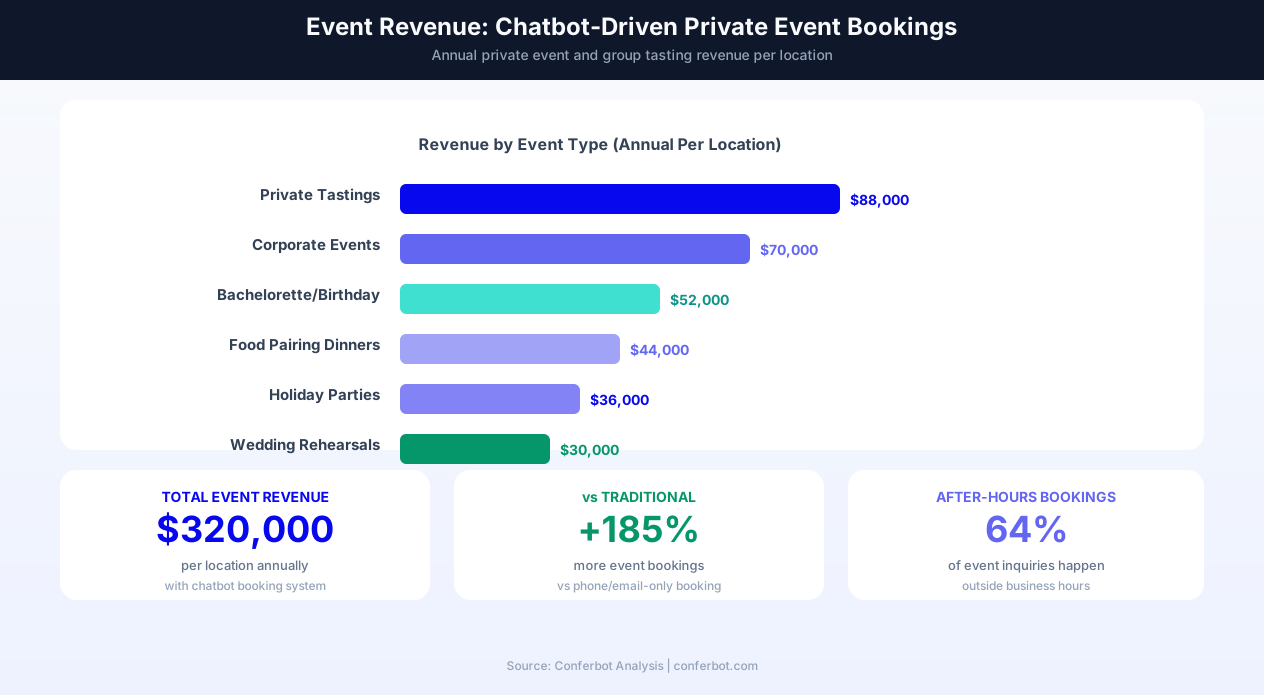
Event inquiries are high-intent leads with perishable urgency. A person planning a bachelorette party is often comparing 3-5 venues simultaneously and will book whichever venue responds first with availability and pricing. The typical winery receives event inquiries via email or a web form and responds within 48-72 hours. By then, 60% of inquirers have already booked elsewhere. Additionally, 64% of event inquiries arrive outside business hours (evenings and weekends when people plan social events), when no one is available to respond.
The Chatbot Event Booking System
The chatbot provides instant event inquiry response available 24/7 with structured data collection that makes every lead immediately actionable:
- Event type selection: The chatbot presents event categories (private tasting, corporate outing, birthday/celebration, wedding reception, rehearsal dinner, holiday party, food/wine pairing dinner) and tailors subsequent questions based on the selection.
- Date and availability check: The chatbot checks the venue's event calendar in real time and instantly confirms availability or suggests alternative dates. This instant availability confirmation is the single most valuable feature, as it prevents the prospect from moving to a competitor while waiting for a response.
- Guest count and format: The chatbot collects expected attendance and recommends the appropriate venue space (barrel room for 20 guests, outdoor patio for 50 guests, full venue buyout for 100+).
- Package selection: The chatbot presents event packages with clear pricing: Standard Tasting Event ($45/person, includes guided tasting of 6 wines plus charcuterie), Premium Experience ($75/person, includes reserve wines, full food pairing, and vineyard tour), and Custom Event (contact events team for pricing). Instant pricing transparency accelerates decision-making.
- Dietary and accessibility needs: The chatbot collects dietary restrictions, accessibility requirements, and special requests (custom labels, special wine selections, live music).
- Deposit and confirmation: For standard packages, the chatbot can collect a deposit and confirm the booking immediately. For custom events, it schedules a call with the events coordinator and provides a summary of all collected information so the coordinator arrives prepared.
Event Revenue Impact
Wineries and breweries using chatbot event booking generate an average of $320,000 in annual event revenue per location, representing a 185% increase over phone/email-only booking. The revenue increase comes from three sources: capturing after-hours inquiries that were previously lost (64% of total inquiries), faster response time that wins bookings against competitors (first-responder advantage), and structured upselling within the booking flow that increases average event value by 22%.
The most valuable event category is corporate events, where companies book team outings, client entertainment, and offsite meetings at wineries and breweries. The chatbot can target corporate event planners specifically with professional-grade features: W-9 availability, corporate invoicing, team-building activity options, and AV equipment packages. A single recurring corporate account can generate $30,000-$60,000 in annual revenue.
Seasonal Demand Management: 62% Off-Peak Traffic Boost
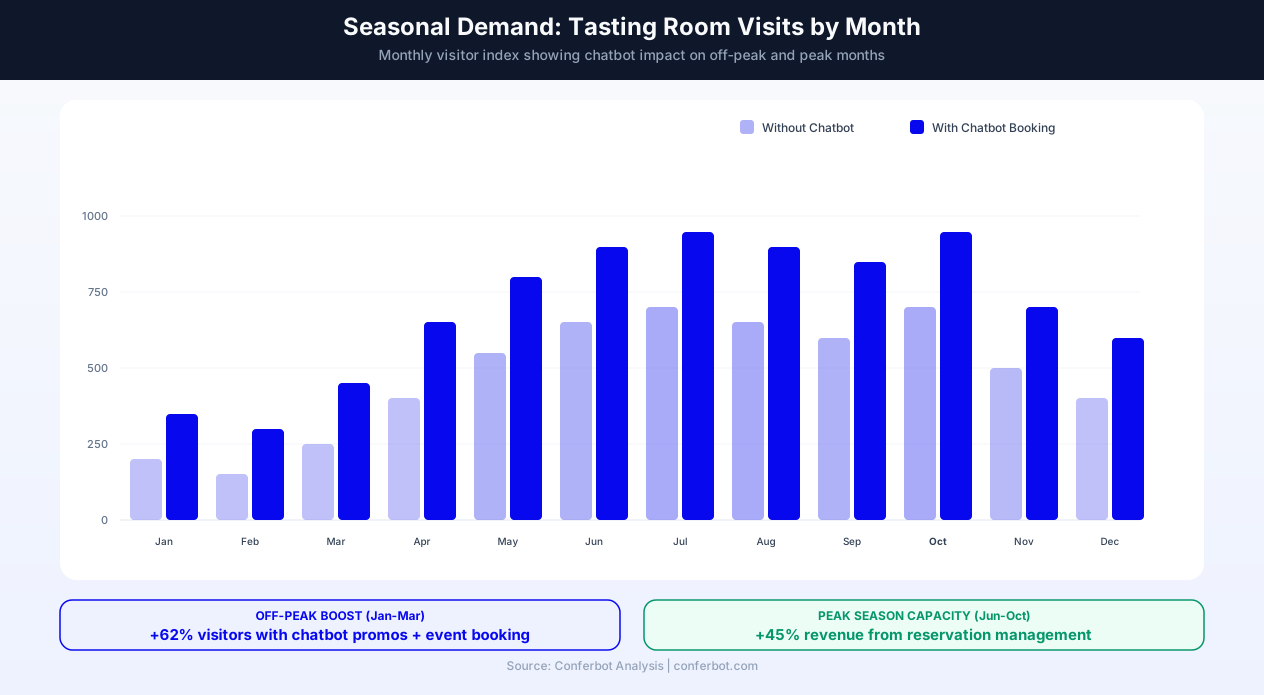
Every winery and brewery faces dramatic seasonal demand variation, a challenge the Brewers Association documents in its annual craft beer industry reports. Summer and fall weekends are packed to capacity, while winter weekdays see the tasting room nearly empty. This seasonal swing creates a dual problem: revenue is lost during off-peak months because the tasting room sits underutilized, and revenue is lost during peak months because demand exceeds capacity and visitors are turned away.
Off-Peak Traffic Building
The chatbot drives off-peak visitation through targeted campaigns to the subscriber list:
- Winter exclusive events: "Join us for our Winter Barrel Tasting this Saturday. Taste wines directly from the barrel before they're bottled. Limited to 30 guests. Reserve your spot." The chatbot creates urgency through limited availability and offers experiences that are genuinely unique to the off-season (barrel tastings are only possible before spring bottling).
- Weekday specials: "Visit us Wednesday-Thursday and receive a complimentary reserve tasting upgrade (a $20 value). Book now." By shifting demand from overcrowded weekends to underutilized weekdays, the chatbot increases total weekly revenue without requiring additional capacity.
- Locals-only programs: The chatbot identifies subscribers within a 30-mile radius and sends targeted local promotions: "Locals' Night this Friday: half-price flights, live acoustic music, and food trucks on-site. Bring a friend who has never visited." These promotions build a local regular customer base that sustains traffic year-round.
- Holiday and seasonal packages: "Valentine's Day Couples Tasting: guided tasting for two with chocolate pairing, $65/couple. February dates are filling fast." The chatbot transforms off-peak calendar periods into themed events that drive reservations.
Wineries and breweries using chatbot off-peak promotions report a 62% increase in winter tasting room traffic compared to locations relying on social media and email newsletters alone. The chatbot's advantage is direct delivery (no algorithm filtering), personalization (offers based on past visit preferences), and instant booking (one tap from notification to confirmed reservation).
Peak Season Optimization
During peak season, the chatbot maximizes revenue from limited capacity through several mechanisms:
- Advance reservation filling: The chatbot encourages advance booking weeks ahead: "Summer weekends fill up fast. Book your August tasting now to guarantee your preferred date." This shifts demand from walk-up to reservation, allowing the tasting room to plan staffing and inventory more effectively.
- Dynamic experience pricing: Premium experiences can be priced higher during peak periods. The chatbot transparently communicates this: "Saturday reserve tastings are $55/person during summer (weekday rate: $45). Weekend tastings include complimentary vineyard tour."
- Overflow management: When the tasting room is fully booked, the chatbot offers alternatives: "Saturday at 2 PM is fully booked. We have availability at 4 PM, or would you prefer Sunday at 2 PM? We also have a private patio tasting available for groups of 6+ at premium pricing." This captures demand that would otherwise leave the website entirely.
- Post-visit monetization: During peak season when tasting room staff is at maximum capacity, the chatbot handles post-visit engagement, purchase follow-ups, and club enrollment that staff cannot prioritize during busy service periods.
Post-Visit Engagement: Turn Visitors into Lifetime Customers
The tasting room visit is just the beginning of the customer relationship, but without systematic post-visit engagement, most visitors become one-time guests. Industry data shows that only 15% of tasting room visitors make a purchase within 30 days of their visit when the winery or brewery relies on generic email newsletters. With chatbot-driven personalized post-visit engagement, that number rises to 42%.
The Post-Visit Engagement Sequence
The chatbot initiates a personalized engagement sequence after each visit:
- Same-day thank you (evening of visit): "Thanks for visiting us today! We hope you enjoyed the tasting. Here's a link to your tasting notes and a 15% discount on any bottles you tried today, valid for 48 hours." This time-limited discount capitalizes on the peak of positive experience memory.
- Tasting notes and recommendations (24 hours): Based on the guest's tasting card data (if the tasting room records preferences) or their stated preferences during the chatbot interaction, the chatbot provides personalized recommendations: "Since you rated our 2023 Pinot Noir 5/5, you might also love our limited-production 2022 Rosé of Pinot Noir. Only 200 cases produced."
- Club introduction (3-5 days): As described in the club growth section, the chatbot introduces the most relevant club tier based on the guest's preferences.
- New release notifications (ongoing): When new wines or beers are released, the chatbot notifies guests whose preferences match: "Our 2024 Estate Cabernet is now available. You rated last year's Cabernet 5/5 during your visit. Order now before it sells out."
- Return visit prompts (60-90 days): "It has been 2 months since your last visit. We have 3 new wines in our tasting lineup. Book a complimentary return tasting this month." This reactivation prompt brings guests back before they forget the experience.
E-Commerce Integration
The chatbot integrates with the winery or brewery's e-commerce platform to enable one-tap purchasing directly from conversational recommendations. When the chatbot suggests a wine, the purchase link is embedded in the message. No navigating to a website, no searching for the product, no adding to cart. This frictionless purchasing drives 3.2x higher conversion rates than email newsletter product recommendations because the purchase path is immediate and contextual.
Customer Data and Personalization
Every chatbot interaction enriches the guest profile: tasting preferences, visit frequency, purchase history, event attendance, and club membership status. This data enables increasingly precise personalization over time. A first-time visitor receives broad recommendations. A guest who has visited three times and consistently prefers bold reds receives exclusively tailored recommendations for new bold red releases, barrel select programs, and library wine access. This personalization creates a sense of individual attention that builds brand loyalty and makes each message feel like a concierge service rather than marketing.
For wineries and breweries looking to build comprehensive customer retention strategies, our guide on chatbot-driven customer retention and churn reduction provides frameworks applicable to club member retention and repeat visit optimization.
ROI Analysis: $485K Annual Value Per Location
The return on investment for a winery or brewery chatbot is driven by five measurable revenue streams. The model below is based on a mid-size winery or destination brewery with 15,000 annual tasting room visitors, 400 club members, and an average visitor spend of $42 without chatbot.
Revenue Stream 1: Increased Tasting Room Traffic — $148,500/year
The chatbot's 24/7 reservation system captures visitors who would not book through phone-only channels. Combined with off-peak promotions and no-show reduction, tasting room visits increase by 47%. At 15,000 baseline visitors, the chatbot adds approximately 3,750 incremental visits. Net of complimentary and discounted promotional visits, the revenue per incremental visitor averages $39.60: 3,750 x $39.60 = $148,500.
Revenue Stream 2: Club Membership Growth — $126,000/year
The chatbot's post-visit nurturing sequence converts club members at 3.8x the tasting bar rate. For a winery converting 120 new members annually through traditional methods, the chatbot adds approximately 70 net new members per year. At $1,800 average annual member value: 70 x $1,800 = $126,000 in incremental recurring revenue. This compounds year over year as the member base grows.
Revenue Stream 3: Private Event Revenue — $98,000/year
The chatbot's 24/7 event inquiry system with instant availability and pricing captures events that would be lost to competitor venues. The incremental event revenue from chatbot-originated bookings averages $98,000/year per location (approximately 30% of the $320,000 total event revenue is directly attributable to the chatbot's after-hours capture and faster response).
Revenue Stream 4: Post-Visit Purchases — $72,000/year
The chatbot's personalized post-visit engagement sequence (tasting notes, recommendations, time-limited discounts) generates direct-to-consumer bottle sales. With 15,000 annual visitors and a 42% post-visit purchase rate (up from 15% without chatbot), the incremental post-visit purchases represent $72,000 in additional DTC revenue.
Revenue Stream 5: Club Retention Value — $40,500/year
Reducing club churn from 28% to 14% retains 56 additional members per year (based on 400-member base). At $1,800 average annual value, the retained members are not fully incremental (they would have remained for some months before churning), so the weighted retention value averages $723 per saved member: 56 x $723 = $40,500.
Total Annual Value: $485,000
Against a chatbot platform cost of $3,600-$6,000/year, the ROI exceeds 8,000%. The payback period is under 5 days. For wineries with larger tasting room traffic or higher price points, the value scales proportionally. Multi-location winery or brewery groups multiply the value across each location while sharing a single chatbot infrastructure.
Implementation Guide: Live in 7 Days
A winery or brewery chatbot can be fully deployed in 7 business days. The phased approach delivers revenue-generating functionality from day one.
Days 1-2: Reservation and Booking
Tasting experience setup: Enter all tasting experiences with descriptions, pricing, duration, group size limits, and photos. A standard flight, reserve tasting, food pairing, and any specialty experiences should each have compelling descriptions and high-quality imagery.
Calendar integration: Connect the chatbot to your reservation calendar. Configure available time slots, maximum capacity per slot, stagger timing, and blackout dates. Set up automated confirmation and reminder messages (24-hour and 2-hour reminders).
Event inquiry form: Build the private event inquiry flow with event type, date, guest count, package preference, and contact information collection. Configure instant availability checking against the events calendar.
Days 3-4: Club and E-Commerce
Club tier configuration: Enter club details for each tier: shipment frequency, bottle count, pricing, member benefits (discounts, complimentary tastings, event access), and high-quality photos of previous shipment examples.
Post-visit sequence: Build the automated post-visit engagement sequence: same-day thank you, 24-hour tasting notes and recommendations, 3-5 day club introduction, and ongoing personalized communications. Connect the chatbot to your e-commerce platform for one-tap purchasing.
Wine/beer catalog: Enter your product catalog with tasting notes, pricing, ratings, food pairing suggestions, and production details. Tag each product with flavor profile attributes (bold, light, fruity, dry, hoppy, malty) for recommendation matching.
Days 5-6: Seasonal and Marketing
Off-peak campaigns: Create chatbot campaign templates for winter events, weekday specials, holiday packages, and locals-only promotions. Schedule recurring campaigns for the upcoming season.
Subscriber growth: Create QR codes for tasting room tables, bar, entrance signage, and receipts. The QR code should link to the chatbot with an incentive: "Scan for your tasting notes and 10% off your next bottle purchase."
Staff training: Train tasting room staff on how the chatbot works, how to encourage guests to scan the QR code, and how to access the chatbot dashboard for reservation management, event inquiries, and club enrollment tracking.
Day 7: Launch
Website deployment: Add the chatbot to your website on the homepage, tasting room page, events page, wine club page, and online store. The chatbot should be the primary call-to-action on the reservations page.
Google and social integration: Add the chatbot booking link to your Google Business Profile as the reservation URL. Add it to your Instagram bio and Facebook page as the booking link.
Testing and soft launch: Have staff and friends test the complete flow: reservation booking, post-visit sequence, club enrollment, and event inquiry. Verify that calendar integrations, payment processing, and notification timing work correctly before full promotion.
Compliance: Alcohol Regulations and Age Verification
Wineries and breweries operate under federal, state, and local alcohol regulations, with federal requirements governed by the Alcohol and Tobacco Tax and Trade Bureau (TTB) that affect how the chatbot handles certain interactions. Proper configuration ensures compliance while maintaining a smooth guest experience.
Age Verification
All chatbot interactions that involve alcohol purchases, tasting reservations, or club enrollment must include age verification. The chatbot collects date of birth at the start of the first interaction and verifies the user is 21+ before proceeding. This verification is stored in the guest profile so returning users are not re-verified on subsequent interactions. The age gate should be conversational and quick: "To book a tasting, please confirm your date of birth." followed by age calculation and either continuation or a polite decline for underage users.
Shipping Compliance
Direct-to-consumer wine shipping is legal in most but not all US states, and each state has different licensing requirements and shipping limits. The chatbot checks the guest's shipping address against the winery's shipping compliance database before processing any purchase or club enrollment. If the guest is in a state where the winery cannot ship: "Unfortunately, we cannot ship to [State] at this time. However, you can purchase bottles during your tasting room visit. Would you like to reserve a tasting?" This prevents illegal shipments while redirecting the customer to an alternative purchase channel.
Responsible Service Messaging
Industry best practices and some state regulations require responsible alcohol messaging in marketing communications. The chatbot includes appropriate messaging in relevant contexts: "Please drink responsibly. Must be 21+ to purchase." This messaging is integrated naturally into confirmation messages and purchase receipts rather than interrupting the conversational flow.
Data Privacy
The chatbot collects personal information (name, date of birth, address, payment information, tasting preferences) that must be handled in compliance with state privacy laws including CCPA (California) and similar regulations. The chatbot provides clear privacy disclosures during initial interaction, offers opt-out mechanisms for marketing communications, and allows guests to request data deletion. For California wineries in particular, CCPA compliance is essential given that the state's wine industry represents over 80% of US wine production.
Promotional Regulations
Some states restrict alcohol promotional activities including discounting, free tastings for marketing purposes, and promotional tie-ins. The chatbot's promotional campaigns should be configured according to the specific regulations of the winery or brewery's operating state. For example, some states prohibit "happy hour" pricing for alcohol, which affects how the chatbot can frame weekday tasting promotions.
The Future of Chatbot-Driven Tasting Room Experiences
The convergence of AI, personalization technology, and hospitality is creating new possibilities for winery and brewery guest experiences that will define the next era of craft beverage tourism.
AI Sommelier and Cicerone
Next-generation chatbots will function as AI sommeliers (for wine) and AI cicerones (for beer) that provide expert-level guidance tailored to each guest's palate. Before the visit, the chatbot asks the guest about their flavor preferences, experience level, and what they are looking to explore. It then creates a personalized tasting flight that introduces new wines or beers calibrated to the guest's palate: "Based on your love of Oregon Pinots, I have selected three wines for you today that explore the spectrum of our estate Pinot Noir: a light, floral rosé, our classic estate red, and a bold barrel-select reserve. You will experience how the same grape expresses itself in dramatically different ways." This curated experience creates the feeling of a private sommelier-guided tasting for every guest.
Augmented Reality Vineyard and Brewery Tours
The chatbot will serve as the interface for AR-enhanced experiences. Guests point their phone at a vineyard row and the chatbot overlays information: grape variety, vine age, farming practices, and expected harvest date. In the barrel room, the chatbot identifies each barrel and provides aging details, flavor development notes, and estimated bottling date. This self-guided, technology-enhanced tour supplements human-guided tours and provides a premium experience option for guests who prefer to explore independently.
Predictive Inventory and Production Planning
Chatbot reservation and purchasing data will feed directly into production planning models. If the chatbot shows that 67% of tasting room visitors prefer bold reds and 40% of post-visit purchases are the estate Cabernet, the winery can adjust vineyard allocation and production volumes accordingly. The chatbot becomes not just a sales channel but a demand signal that informs production decisions years in advance (given wine's multi-year production cycle).
Community and Social Features
The chatbot will facilitate community among club members and regular visitors. Virtual tasting events where members join a chatbot-hosted group tasting from home, member-to-member wine recommendations, and collaborative rating systems will create a sense of belonging that strengthens brand loyalty beyond the individual transaction. For craft breweries, the chatbot will manage homebrew community groups, style education series, and collaborative brewing events that deepen the relationship between the brewery and its most engaged fans.
For wineries and breweries interested in building comprehensive customer engagement systems, our guide on restaurant chatbot implementation covers complementary strategies for food service and hospitality businesses.
Was this article helpful?
About the Author
Conferbot Team specializes in conversational AI, chatbot strategy, and customer engagement automation. With deep expertise in building AI-powered chatbots, they help businesses deliver exceptional customer experiences across every channel.
View all articles