1 Free Templates Available

Best Senior Care Chatbot Templates

Get free, ready-to-use senior care chatbot templates that help boost conversions and automate customer interactions. Start building in 2 minutes with no coding required.

100% Free
No Coding Required
Instant Deploy
🤖
67%
Higher Conversions
2min
Setup Time
24/7
Automated
1+
Templates

Explore Templates & Resources

Browse templates, learn about the category, or find answers to common questions

Categories29

Senior Care Templates

Choose from our collection of proven senior care chatbot templates

1templates
Senior Care Facility Chatbot - Senior Care template preview

Senior Care Facility Chatbot

A compassionate senior care chatbot that helps families explore assisted living options, assess care needs, check availability, understand costs, and schedule tours. Designed for assisted living facilities, memory care centers, home care agencies, and senior living communities to capture and nurture high-value leads.

Senior Care
9uses
6likes

Engaging Families During the Senior Care Decision Process

Choosing senior care for a loved one is one of the most emotionally complex decisions a family will ever face. Adult children often find themselves navigating unfamiliar terminology, overwhelming options, and deeply personal considerations -- all while managing guilt, grief, and the desire to honor their parent's dignity. A senior care chatbot meets families exactly where they are in this journey, providing compassionate guidance at 2 AM when worry keeps them awake, answering the questions they are too overwhelmed to ask during business hours, and gently walking them through a process that can otherwise feel paralyzing.

The senior living industry faces a unique challenge: the decision-maker (typically an adult child aged 45-65) is rarely the end user of the service. This creates a dual communication need -- families need reassurance and information, while prospective residents need to feel respected and included. Senior care communities that deploy conversational AI see 52% higher inquiry-to-tour conversion rates because the chatbot can address each family member's concerns individually, at their own pace, without the pressure of a sales call.

The Senior Care Decision Journey

StageFamily MindsetKey QuestionsChatbot RoleConversion Impact
1. AwarenessDenial or early concern"Is it time? What are the signs?"Educational content, gentle assessment+3x engagement
2. ResearchOverwhelmed by options"What type of care does Mom need?"Care level assessment, option comparison+45% lead capture
3. EvaluationComparing communities"What makes you different? Can I tour?"Tour scheduling, virtual walkthroughs+52% tour bookings
4. DecisionAnxious about commitment"What does it cost? Is there availability?"Pricing transparency, availability check+38% move-in rate
5. TransitionGuilt and adjustment"How will Mom adjust? Can I visit anytime?"Transition support, family updates+60% family satisfaction
Senior care family decision journey showing chatbot engagement touchpoints from awareness through transition

Compassionate Conversation Design

Senior care chatbots must be designed with extraordinary empathy. Unlike e-commerce or SaaS chatbots, these conversations happen during moments of vulnerability. The language must acknowledge the emotional weight of the decision without being patronizing:

  • Opening with care: Instead of "How can I help you?" the chatbot opens with "I understand you may be exploring care options for someone you love. I am here to help you find the right fit -- no pressure, just information whenever you are ready." This immediately establishes trust and removes sales pressure.
  • Pacing the conversation: Families should never feel rushed. The chatbot offers natural pause points: "Would you like to continue exploring options, or would you prefer I send this information to your email so you can review it with your family?" Build these branching paths using the no-code chatbot builder.
  • Multi-stakeholder support: The chatbot recognizes that multiple family members may be involved. It offers to create a shareable summary document or invite siblings to a separate conversation thread, ensuring everyone stays informed and aligned.
  • After-hours availability: 67% of senior care research happens between 8 PM and midnight -- when family members finally have quiet time to think. Deploy your chatbot on your website and WhatsApp to be present during these critical moments of reflection.

Key Insight

Senior care communities using conversational AI report 52% higher inquiry-to-tour conversion and 67% of meaningful engagement occurring after business hours -- the quiet evening hours when families finally have space to research and reflect.

The senior care decision averages 6-12 months from first inquiry to move-in. A chatbot that nurtures families throughout this journey -- sending gentle check-ins, sharing relevant articles, and remembering previous conversations -- builds the trust that ultimately drives the decision. Connect your chatbot to your CRM through the API integration to maintain continuity across every touchpoint.

Automated Care Needs Assessment and Level-of-Care Matching

One of the most daunting aspects of the senior care search is understanding what level of care a loved one actually needs. Families often conflate independent living with assisted living, misunderstand memory care requirements, or underestimate the progression of conditions. An automated care needs assessment chatbot guides families through a structured, clinically-informed questionnaire that identifies the appropriate care level -- transforming confusion into clarity within a 5-10 minute conversation.

For senior care communities, accurate care-level matching is equally critical from an operational perspective. Admitting a resident whose needs exceed the community's capabilities creates safety risks, staff burnout, and potential liability. Conversely, over-placing a resident into a higher care level than necessary reduces their independence and quality of life while increasing costs for the family. A well-designed assessment chatbot achieves 89% accuracy in care-level recommendations when validated against professional geriatric assessments.

Care Level Classification Framework

Care LevelADL SupportMedical NeedsCognitive StatusTypical Monthly Cost
Independent LivingNone to minimalSelf-managed medicationsFully intact$2,000 - $4,500
Assisted Living1-3 ADLs dailyMedication managementMild impairment OK$4,500 - $7,500
Memory Care3-6 ADLs dailySpecialized dementia supportModerate to severe$6,000 - $10,000
Skilled NursingFull ADL support24/7 nursing, medical proceduresAny level$8,000 - $14,000
Home CareVariable (1-24 hrs/day)VariableMild to moderate$3,000 - $15,000+

Assessment Conversation Flow

The chatbot conducts the assessment through six conversational domains, each designed to feel like a caring discussion rather than a clinical intake form:

  • Activities of Daily Living (ADLs): "Can you tell me a bit about your loved one's daily routine? For example, are they able to bathe and dress independently, or do they need some help?" The chatbot assesses bathing, dressing, toileting, transferring, continence, and feeding through natural, non-clinical language.
  • Instrumental Activities (IADLs): "How about things like cooking, managing medications, or handling finances? Sometimes these are the first areas where people start needing support." This covers medication management, meal preparation, housekeeping, transportation, and financial management.
  • Cognitive Assessment: "Has your loved one experienced any changes in memory or confusion? For example, getting lost in familiar places or repeating questions?" The chatbot screens for signs of cognitive decline without administering a formal clinical test, noting indicators that suggest memory care evaluation.
  • Medical Complexity: "Does your loved one have any medical conditions that require regular monitoring or specialized care?" The bot captures chronic conditions, medication count, recent hospitalizations, and ongoing therapy needs.
  • Social and Emotional Needs: "How is your loved one doing socially? Are they isolated, or do they maintain connections with friends and activities?" Loneliness and depression are significant factors in care level determination and community fit.
  • Safety Concerns: "Have there been any falls, wandering incidents, or situations where you have worried about their safety at home?" Safety incidents are often the catalyst for the senior care search and help determine urgency.

Assessment Accuracy

Automated care assessments achieve 89% concordance with professional geriatric evaluations when using structured ADL/IADL scoring. Communities using chatbot pre-assessments report 34% fewer inappropriate admissions and faster move-in timelines.

Scoring and Recommendations

The assessment produces a weighted score across all domains that maps to recommended care levels. Rather than presenting a single recommendation, the chatbot provides a range: "Based on what you have shared, your mother would likely thrive in an assisted living community with light memory support. Some families in similar situations also explore dedicated memory care -- I can explain the differences if that would be helpful." This approach respects family autonomy while providing professional guidance.

Build your care assessment flow using the visual chatbot builder with conditional branching that adapts questions based on previous answers. Connect the assessment to your admissions team through API integrations so they receive a complete pre-qualification summary before the first call.

For communities offering multiple care levels on a single campus, the chatbot can also identify opportunities for "aging in place" -- matching residents to independent living now while explaining the seamless transition to assisted living or memory care if needs change. This forward-looking approach addresses a primary family concern: "What happens when their needs increase?"

Tour Scheduling and Virtual Walk-Through Automation

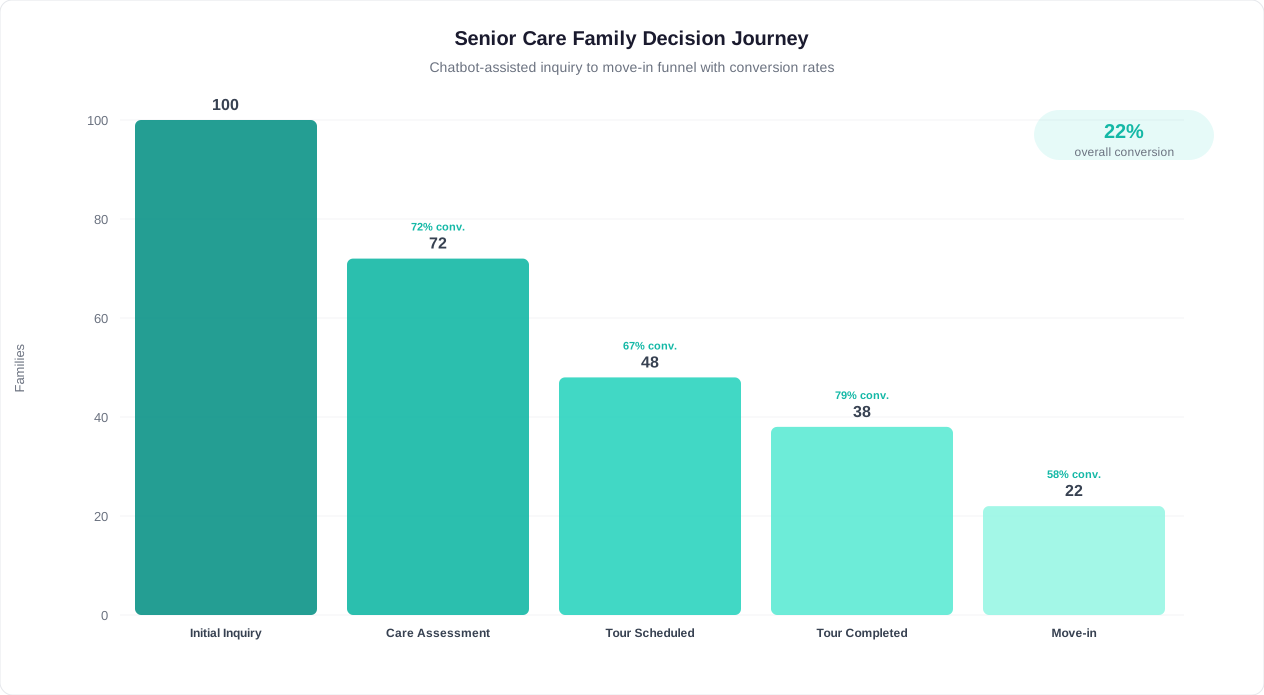
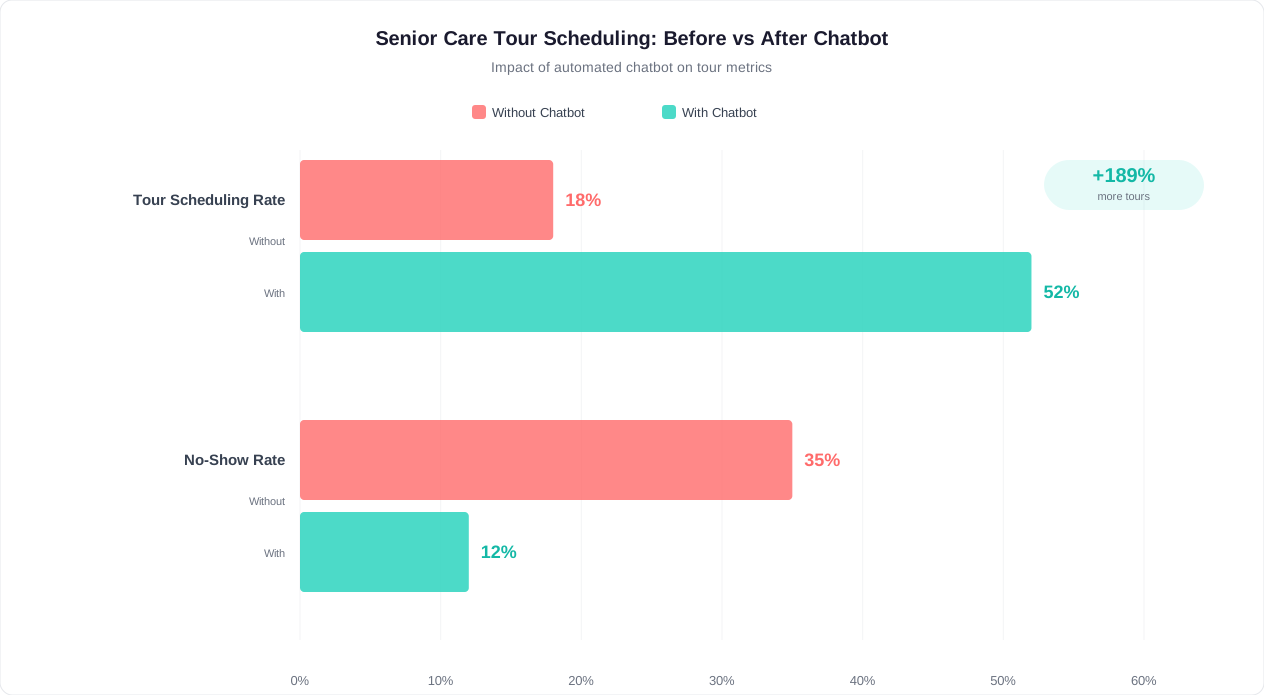
The community tour is the single most influential touchpoint in the senior care decision process. Research shows that 78% of families who complete an in-person tour ultimately choose one of the communities they visited. Yet the path from "I am interested" to "I am walking through your doors" is filled with friction: coordinating schedules among multiple family members, managing anxiety about the visit, and simply finding the emotional readiness to take this step. A senior living chatbot reduces this friction dramatically, converting 52% more inquiries into scheduled tours through persistent, compassionate follow-up and flexible scheduling options.

The tour scheduling challenge in senior care differs fundamentally from other industries. You are not booking a restaurant table or a doctor's appointment -- you are helping a family take a step that acknowledges their loved one's declining independence. The chatbot must navigate this emotional landscape while handling practical logistics: multiple attendee coordination, accessibility requirements, time-of-day preferences based on the prospective resident's energy levels, and pre-tour preparation materials that set appropriate expectations.

Tour Types and Conversion Rates

Tour TypeBest ForAvg. DurationBooking-to-Show RateTour-to-Move-in Rate
In-person guided tourLocal families ready to decide60-90 minutes72%28%
Virtual live tourLong-distance family members30-45 minutes85%18%
Self-guided virtual walkthroughEarly-stage researchers10-20 minutes95%8%
Lunch or event visitProspective residents themselves2-3 hours68%35%
Respite stay trialHesitant families, post-hospital3-14 days55%62%

Intelligent Tour Scheduling Flow

The chatbot manages the complete tour lifecycle through a series of thoughtful interactions:

  • Readiness assessment: Before jumping to scheduling, the chatbot gauges readiness: "Would you like to visit us, or would you first like me to share some photos and information about our community so you can decide if we might be a good fit?" This respects families who are not yet emotionally ready for an in-person visit.
  • Multi-attendee coordination: "Will other family members be joining? I can send them a separate invitation with the details, or help find a time that works for everyone." The bot integrates with calendar systems to identify mutual availability.
  • Accessibility planning: "Will the person you are considering care for be joining the tour? If so, I will make sure we plan a route that is comfortable for them -- including rest stops and seating throughout." This ensures the tour experience is dignified for prospective residents.
  • Pre-tour preparation: The chatbot sends a personalized pre-tour packet 48 hours before the visit, including directions, parking information, what to expect, suggested questions to ask, and a brief overview of the care levels available.
  • Day-of confirmation: A gentle morning-of message: "We are looking forward to welcoming your family at 2 PM today. Sarah will be your guide -- she has been with our community for 8 years and loves helping families find their fit. Remember, there is no commitment today -- just an opportunity to see if this feels like home."
Tour scheduling funnel showing conversion rates from initial inquiry through move-in with chatbot automation

Virtual Tour Integration

For families managing care decisions from a distance -- increasingly common as adult children live hundreds or thousands of miles from aging parents -- virtual tours are essential. The chatbot offers on-demand virtual walkthroughs where families can explore at their own pace, pausing to ask questions that the bot answers contextually: "You are looking at our memory care garden. Residents spend an average of 45 minutes here daily, and our staff-to-resident ratio in this area is 1:4."

Conversion Insight

Communities offering chatbot-scheduled tours with personalized pre-visit preparation see 72% show rates (vs. 55% industry average) and 28% tour-to-move-in conversion. Virtual tour options increase total engagement by 3x, as long-distance family members can participate without travel.

Connect your tour scheduling chatbot to your community's calendar system through the integration hub for real-time availability. For communities using the live chat feature, tour guides can join the conversation pre-tour to establish a personal connection, making the in-person visit feel like meeting a friend rather than a stranger.

Cost Transparency: Pricing, Insurance, and Financial Planning

Cost is the elephant in every senior care conversation. Families dread the question, communities hesitate to answer it directly, and the result is a trust gap that delays decisions and creates anxiety. The average family spends 4-6 weeks simply trying to understand what senior care will cost -- calling multiple communities, deciphering opaque pricing structures, and struggling to connect the dots between care levels, insurance coverage, and out-of-pocket expenses. A senior care pricing chatbot collapses this timeline to minutes, providing transparent cost information that builds trust and accelerates qualified inquiries.

The senior care cost landscape is genuinely complex. Unlike a hotel room with a fixed nightly rate, senior care pricing depends on care level, room type, ancillary services, geographic market, and available financial resources. Communities that hide behind "call for pricing" lose 60% of website visitors who never make that call. In contrast, communities offering transparent pricing through a chatbot see 45% more qualified leads because families self-select based on realistic expectations.

Senior Care Cost Breakdown by Category

Cost ComponentAssisted LivingMemory CareSkilled NursingHome Care (40 hrs/wk)
Base room/board$3,500 - $5,500$5,000 - $8,000$7,500 - $12,000N/A
Care services$500 - $2,000IncludedIncluded$4,800 - $7,200
Medication management$300 - $600IncludedIncluded$200 - $500
Activities/amenitiesIncludedIncludedLimited$0 - $500
Community fee (one-time)$2,000 - $5,000$3,000 - $7,500$0 - $2,000N/A
Total monthly estimate$4,500 - $7,500$6,000 - $10,000$8,000 - $14,000$5,000 - $8,200

Financial Resource Identification

Many families are unaware of the financial resources available to offset senior care costs. The chatbot serves as an educational guide, walking families through potential funding sources:

  • Long-term care insurance: The chatbot helps families determine if their policy covers the community and what documentation is needed to file a claim. Only 11% of seniors have long-term care insurance, but those who do often underutilize their benefits.
  • Veterans benefits: The Aid and Attendance benefit provides up to $2,431/month for qualifying veterans and surviving spouses. The chatbot pre-screens eligibility with a few simple questions about service history and care needs.
  • Medicaid waiver programs: State-specific waiver programs can cover assisted living costs for qualifying seniors. The chatbot identifies potential eligibility and connects families with Medicaid planning resources.
  • Home equity options: Reverse mortgages, home sales, and bridge loans can fund care. The chatbot provides educational information and connects families with financial advisors who specialize in senior care funding.
  • Life insurance conversion: Many policies can be converted to long-term care benefit plans. The chatbot explains the option and estimates potential benefit amounts based on policy value.

Financial Planning Impact

Communities providing transparent pricing through chatbots see 45% more qualified inquiries and 30% shorter sales cycles. Families who receive financial resource guidance during the chatbot interaction are 2.3x more likely to schedule a tour because they can visualize affordability.

Personalized Cost Estimation

The chatbot generates personalized cost estimates based on the care assessment results. After understanding the resident's needs, it presents a realistic range: "Based on what you have shared about your mother's needs -- help with bathing, dressing, and medication management -- our assisted living with level 2 care would be approximately $5,200-$5,800 per month. This includes her private studio apartment, three meals daily, activities, and weekly housekeeping." This specificity builds trust and eliminates the sticker shock that occurs when families learn pricing only during an in-person tour.

Integrate your pricing chatbot with your community's rate sheets through the API integration to ensure real-time accuracy. For communities offering multiple floor plans and care levels, use the conditional logic builder to create dynamic pricing conversations that adapt to each family's specific situation.

Memory Care and Specialized Needs Communication

Memory care represents perhaps the most emotionally charged segment of senior care. When a family is seeking memory care, they are often grappling with a devastating diagnosis -- Alzheimer's disease, vascular dementia, Lewy body dementia, or other forms of cognitive decline that are progressively erasing the person they love. The memory care chatbot must be designed with extraordinary sensitivity, providing clear information about specialized care approaches while acknowledging the grief that families carry. Every conversation is happening during one of the hardest chapters of that family's life.

Memory care communities face unique communication challenges. Family members may not fully understand their loved one's diagnosis or its progression. They may feel guilty for considering placement, fearful about the quality of care, or confused about when memory care becomes necessary versus when assisted living is still appropriate. A thoughtfully designed chatbot can address these concerns with patience and compassion that never wears thin -- providing the same gentle, thorough answers at midnight as at noon.

Memory Care Assessment Indicators

Behavioral IndicatorEarly StageMiddle StageLate StageCare Response
Wandering/elopementOccasional disorientationRegular exit-seekingConstant redirection neededSecured environment, GPS
SundowningMild evening anxietyAgitation, confusionSevere behavioral changesStructured evening routines
RecognitionForgets acquaintancesConfuses family membersMay not recognize spousePerson-centered approach
Self-care abilityNeeds remindersNeeds hands-on helpFull assistance requiredDignified personal care
CommunicationWord-finding difficultyFragmented sentencesMinimal verbal expressionNon-verbal communication training
Safety awarenessLeaves stove onCannot judge dangerNo safety awareness24/7 supervised environment

Communicating Memory Care Philosophy

Families choosing memory care need to understand that it is not simply "assisted living with a locked door." The chatbot educates families on evidence-based memory care approaches that define quality communities:

  • Person-centered care: The chatbot explains how the community creates individualized care plans based on life history, preferences, and remaining abilities. "We learn your mother's story -- her career as a teacher, her love of gardening, her favorite music -- and weave those elements into her daily experience."
  • Montessori-based approaches: "Our programming is based on Montessori principles, which means we focus on what your father can still do, not what he has lost. Residents participate in purposeful activities matched to their abilities."
  • Environmental design: The chatbot describes how the physical environment supports residents: visual cues, circular walking paths that prevent dead ends, memory boxes outside rooms, and sensory gardens designed for engagement.
  • Family involvement: "We believe families remain essential to their loved one's wellbeing. Our chatbot keeps you updated with daily highlights, photos, and care notes so you feel connected even between visits." This ongoing communication is delivered through the same WhatsApp or web channel the family already uses.

Family Connection

Memory care communities using chatbots for ongoing family communication report 73% higher family satisfaction scores and 45% fewer anxious check-in calls to staff. When families feel informed, they feel at peace -- and that peace extends to the resident through calmer, more positive visits.

Specialized Needs Beyond Memory Care

The chatbot also addresses other specialized care needs that families may be navigating:

  • Parkinson's disease: Assessing needs for physical therapy, fall prevention, and specialized movement programs.
  • Stroke recovery: Matching families with communities offering rehabilitation services alongside residential care.
  • Behavioral health: Addressing the sensitive topic of behavioral challenges, including aggression, that may require specialized memory care programs.
  • Couples with differing needs: One of the most heart-wrenching scenarios -- when one spouse needs memory care and the other does not. The chatbot explores options for keeping couples together or nearby.

Design empathetic memory care conversation flows using the no-code builder with NLP-powered intent recognition that detects emotional distress and adapts the conversation tone accordingly. When families express crisis-level concern, the chatbot can seamlessly escalate to live chat with a trained counselor.

Home Care Agency Chatbots: Matching Caregivers to Clients

Home care represents the preferred choice for the majority of seniors -- 90% of older adults express a desire to age in their own homes for as long as possible. Home care agencies face a unique operational challenge: they must simultaneously recruit and retain qualified caregivers while matching those caregivers to clients based on personality, skills, schedule, geography, and care needs. A home care chatbot operates on both sides of this equation, serving as a client intake specialist and a caregiver recruitment tool, often within the same platform.

The home care industry is experiencing explosive demand -- the senior population is growing faster than the caregiver workforce. Agencies that respond to inquiries within 5 minutes are 8x more likely to secure the client than those who respond within an hour. A chatbot provides that instant response, capturing client details, assessing care needs, and providing preliminary caregiver availability -- all before a human coordinator even sees the inquiry. For agencies managing 50-500+ clients, this automation is the difference between growth and operational collapse.

Client-Caregiver Matching Criteria

Matching FactorClient Input (via Chatbot)Caregiver ProfileMatch Weight
Care skills requiredADL needs, medical tasks, mobilityCertifications, experience, trainingCritical
Schedule compatibilityHours needed, days, flexibilityAvailability, preferred hoursCritical
Geographic proximityClient address, neighborhoodHome location, commute willingnessHigh
Language/cultural fitLanguages spoken, cultural preferencesLanguages, cultural backgroundHigh
Personality alignmentQuiet vs. social, hobbies, interestsPersonality traits, interestsMedium
Pet compatibilityPets in home, type, sizeComfort with animals, allergiesMedium
Driving/transportationErrands, appointments, outingsValid license, vehicle, comfort levelMedium
Gender preferencePersonal care comfortCaregiver genderClient-dependent

Dual-Purpose Chatbot: Client Intake and Caregiver Recruitment

The most effective home care chatbots serve two audiences through intelligent routing:

Client-facing flow:

  • The chatbot opens with: "Are you looking for care for yourself or a loved one, or are you interested in joining our caregiving team?" This single question routes to the appropriate conversation.
  • For clients, the bot conducts a care needs assessment, determines hours and schedule requirements, captures insurance information, and provides a preliminary cost estimate.
  • The bot asks about preferences that matter for long-term compatibility: "Does your father enjoy conversation and company, or does he prefer a caregiver who provides help quietly and gives him space?" These personality factors significantly impact caregiver retention.
  • Within minutes, the chatbot can confirm preliminary availability: "Based on your needs, we have 3 caregivers in your area with availability on weekday mornings. Would you like to review their profiles, or would you prefer our care coordinator call you to discuss the match?"

Caregiver-facing flow:

  • The recruitment chatbot pre-screens applicants: certification verification, experience assessment, schedule availability, and geographic coverage area.
  • It handles the repetitive FAQ burden that overwhelms HR teams: pay rates, benefits, training requirements, and the application process.
  • Qualified candidates are fast-tracked to interviews, while those needing additional certification are directed to training resources. Deploy this on your careers page to capture candidates 24/7.

Operational Impact

Home care agencies using intake chatbots report 8x faster response times, 40% reduction in care coordinator workload, and 25% improvement in client-caregiver match satisfaction. Agencies responding within 5 minutes via chatbot capture clients that competitors lose to voicemail.

Ongoing Care Communication

Beyond initial intake, the chatbot serves as an ongoing communication hub between families, caregivers, and the agency. Families receive daily care summaries, can request schedule changes, provide feedback on caregivers, and escalate concerns -- all through the same conversational interface. Connect these workflows through API integrations with your home care management software to maintain a single source of truth across all communication channels.

HIPAA Compliance and Family Data Privacy

Senior care chatbots handle some of the most sensitive information imaginable: medical diagnoses, cognitive assessments, financial details, family dynamics, and the deeply personal circumstances that lead a family to seek care. The regulatory landscape surrounding this data is complex and unforgiving -- HIPAA violations carry penalties of $100 to $50,000 per violation (up to $1.5 million annually per violation category), and the reputational damage from a data breach in senior care can be catastrophic. A HIPAA-compliant chatbot for senior care must be architected from the ground up with privacy, security, and regulatory compliance as foundational requirements.

The challenge is balancing compliance with usability. Families seeking senior care are already overwhelmed -- adding friction through excessive consent screens, complicated authentication, or sterile clinical interfaces will drive them away. The best senior care chatbots implement robust compliance invisibly, protecting data through architecture rather than through barriers that impede the user experience. Conferbot's platform achieves this through encrypted data handling, role-based access controls, and audit-ready conversation logging that operates seamlessly behind a warm, conversational interface.

Compliance Requirements by Data Type

Data CategoryExamplesRegulatory FrameworkChatbot Safeguards
Protected Health Info (PHI)Diagnoses, medications, care plansHIPAA Privacy RuleEncryption at rest/transit, BAA required
Financial informationIncome, assets, insurance detailsState financial privacy lawsPCI-level data handling, access controls
Personal identifiersSSN, DOB, address, phoneHIPAA, state privacy lawsData minimization, tokenization
Family relationship dataPower of attorney, family conflictsHIPAA authorization rulesRole verification, authorization tracking
Cognitive/behavioral notesWandering history, aggression, confusionHIPAA, state mental health lawsEnhanced access restrictions, audit logging
Conversation transcriptsFull chat history with PHIHIPAA Security RuleEncrypted storage, retention policies

Architecture for Compliance

A HIPAA-compliant senior care chatbot requires specific architectural decisions:

  • Business Associate Agreement (BAA): Any chatbot platform handling PHI must execute a BAA with the covered entity (the senior care community or agency). Conferbot provides BAAs as standard for healthcare and senior care deployments, ensuring that both parties understand their responsibilities for data protection.
  • End-to-end encryption: All conversation data is encrypted in transit (TLS 1.3) and at rest (AES-256). This means that even if infrastructure is compromised, conversation content remains unreadable without encryption keys.
  • Data minimization: The chatbot collects only the information necessary for its function. It does not ask for Social Security numbers during initial inquiry, does not store credit card details beyond the transaction, and purges sensitive data according to defined retention policies.
  • Access controls: Not every staff member should see every conversation. The chatbot platform implements role-based access: admissions counselors see tour inquiries, nursing staff see care assessments, and financial counselors see pricing conversations.
  • Audit trails: Every data access event is logged: who viewed what information, when, and why. These audit trails are essential for HIPAA compliance and provide evidence in the event of an investigation.

Compliance Critical

HIPAA violations in senior care carry penalties up to $1.5 million annually per category. Beyond fines, a data breach costs an average of $429 per compromised record in healthcare -- and damages family trust irreparably. Choose a chatbot platform with a signed BAA, SOC 2 certification, and healthcare-specific security architecture.

Family Authorization and Access Management

Senior care creates unique authorization challenges. Multiple family members may need different levels of access to a resident's information. The chatbot handles this through verified family roles:

  • Primary decision-maker: Full access to all care information, financial details, and the ability to authorize changes. Typically the individual holding power of attorney.
  • Family members: Access to general updates, activity reports, and visit scheduling. Cannot access financial or detailed medical information without explicit authorization.
  • Prospective inquirers: Can receive general community information and pricing ranges but cannot access any resident-specific data until their relationship and authorization are verified.

The no-code builder supports conditional access controls that adapt the conversation based on the authenticated user's role. Combined with secure API integrations to your EHR or care management system, this creates a seamless yet compliant communication channel that families trust with their most sensitive information.

Getting Started with Senior Care Chatbots

Implementing a chatbot for your senior care community or home care agency does not require technical expertise, months of development, or a six-figure budget. With Conferbot's no-code chatbot builder, you can launch a compassionate, effective senior care chatbot in days -- not months. The key is starting with the highest-impact use case for your organization and expanding from there, building family trust with each interaction.

Senior care organizations that approach chatbot implementation thoughtfully see the fastest ROI. Rather than trying to automate every communication channel simultaneously, successful deployments focus on the single biggest bottleneck in their admissions or care delivery process and solve that first. For most communities, that bottleneck is after-hours inquiry response -- the 67% of families researching during evenings and weekends who currently encounter voicemail or a static contact form.

Implementation Roadmap

PhaseTimelineFocus AreaKey DeliverablesExpected Impact
1. Quick WinDays 1-3After-hours inquiry responseFAQ bot, basic lead captureCapture 40% more inquiries
2. AssessmentDays 4-10Care needs evaluationAutomated care assessment, level matchingPre-qualify 80% of inquiries
3. SchedulingDays 11-17Tour booking automationCalendar integration, reminders, prep packets+52% inquiry-to-tour conversion
4. FinancialDays 18-24Pricing and financial guidanceCost estimator, financial resource finder+45% qualified lead volume
5. NurtureDays 25-30Long-term family engagementFollow-up sequences, multi-channel deployment2x move-in conversion over 90 days

Step-by-Step Setup Guide

Follow these steps to launch your first senior care chatbot:

  • Step 1 -- Choose your template: Start with one of Conferbot's senior care chatbot templates. These pre-built flows include empathetic conversation design, care assessment logic, and tour scheduling -- ready to customize with your community's specific information.
  • Step 2 -- Customize your content: Replace template placeholders with your community's details: care levels offered, pricing ranges, amenities, staff credentials, and location information. The visual builder makes this as simple as editing a document.
  • Step 3 -- Configure integrations: Connect your chatbot to your existing systems. Calendar integration enables real-time tour scheduling. CRM integration ensures leads flow directly to your admissions team. Email integration sends personalized follow-ups automatically. Use the API integration hub to connect these systems without code.
  • Step 4 -- Deploy across channels: Install the chatbot on your website where families are already researching. Add it to WhatsApp for families who prefer messaging. Enable live chat handoff so your admissions team can join conversations when families are ready for human connection.
  • Step 5 -- Train your team: Ensure your admissions counselors understand how the chatbot pre-qualifies leads and what information will be available when they follow up. The chatbot is not replacing your team -- it is giving them warmer, more qualified conversations.
  • Step 6 -- Monitor and refine: Review conversation analytics weekly during the first month. Identify where families drop off, which questions the chatbot cannot answer, and what information families value most. Use these insights to continuously improve the experience.
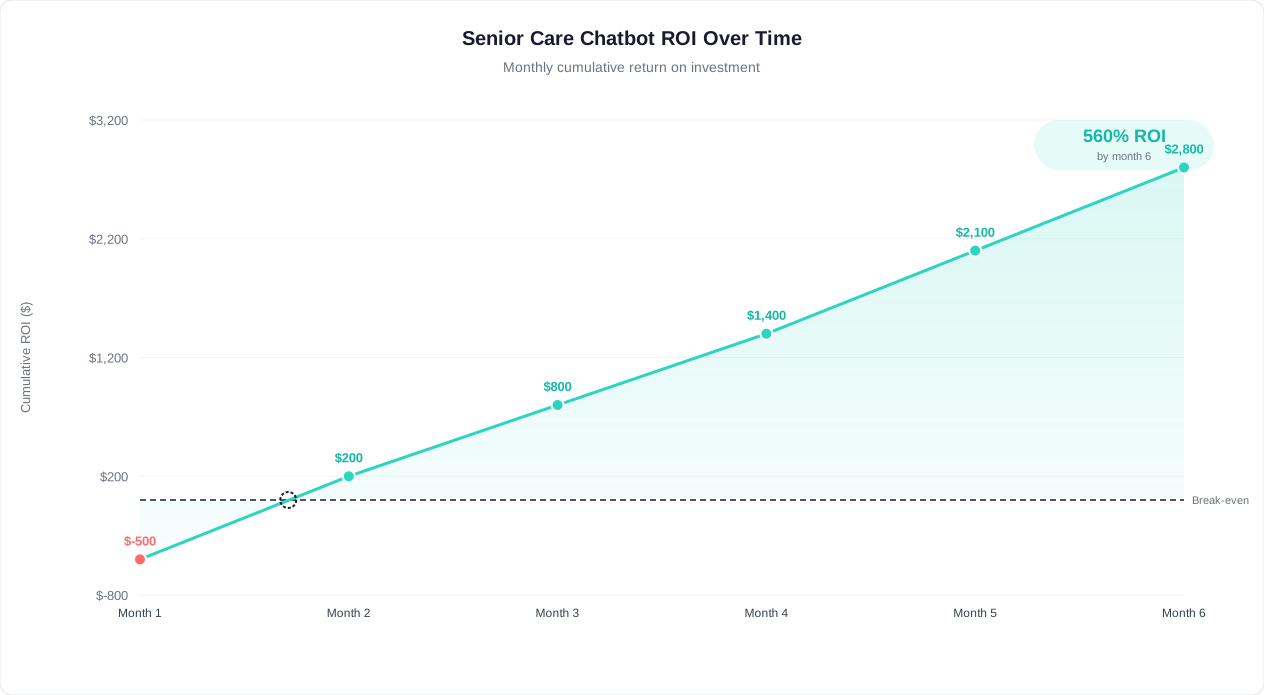
Senior care chatbot ROI timeline showing investment recovery within 30 days and ongoing revenue growth

Measuring Success

Track these metrics to demonstrate chatbot ROI to your leadership team:

  • After-hours engagement: How many families are interacting with the chatbot outside business hours? This represents inquiries you would have missed entirely.
  • Inquiry-to-tour conversion: What percentage of chatbot conversations result in a scheduled tour? Benchmark against your current form/phone conversion rate.
  • Tour show rate: Are families who book through the chatbot more likely to actually attend? Pre-tour preparation and reminders should improve show rates significantly.
  • Time-to-response: How quickly are families receiving their first meaningful interaction? The chatbot should reduce this from hours/days to seconds.
  • Staff time recaptured: How many hours per week is the chatbot saving your admissions and care coordination teams?
  • Family satisfaction: Survey families about their experience with the chatbot. High satisfaction scores validate the approach and identify improvement opportunities.

ROI Reality

Senior care communities deploying chatbots see an average ROI of 800% within 90 days when factoring in captured after-hours inquiries, reduced staff workload, and improved tour conversion. A single additional move-in per month (worth $60,000-$120,000 in annual revenue) more than justifies the investment.

Ready to give families the compassionate, always-available guidance they deserve? Start with a free senior care chatbot template from Conferbot and have your first conversations happening within hours. Your families are searching tonight -- be there when they need you.

FAQ

Senior Care Templates FAQ

Everything you need to know about chatbots for senior care templates.

🔍
Popular:

A senior care chatbot guides families through a structured care needs assessment, evaluating activities of daily living (ADLs), cognitive status, medical complexity, and personal preferences. Based on the responses, it recommends appropriate care levels -- independent living, assisted living, memory care, or skilled nursing -- and matches families with communities that fit their specific needs, budget, and location preferences. The chatbot is available 24/7, which is critical since 67% of senior care research happens after business hours.

Yes. Conferbot's no-code chatbot builder supports HIPAA-compliant deployments with encrypted data handling, Business Associate Agreements (BAAs), role-based access controls, and audit-ready conversation logging. You can build and customize your senior care chatbot through the visual builder without writing any code, while the platform handles compliance architecture behind the scenes -- including encryption at rest and in transit, data minimization, and retention policies.

The best chatbot for assisted living websites combines empathetic conversation design with practical functionality: care needs assessment, tour scheduling, pricing transparency, and live chat handoff for complex inquiries. It should be available 24/7 to capture after-hours inquiries, integrate with your CRM and calendar systems, and maintain HIPAA compliance for any health information shared. Conferbot's senior care templates provide all these capabilities out of the box with customizable flows for your specific community.

The chatbot evaluates six domains through conversational questions: Activities of Daily Living (bathing, dressing, toileting, mobility, eating), Instrumental Activities (medication management, cooking, finances, transportation), cognitive function indicators, medical complexity (chronic conditions, recent hospitalizations), social and emotional needs, and safety concerns (falls, wandering). Each domain receives a weighted score that maps to recommended care levels, achieving 89% concordance with professional geriatric assessments.

Absolutely. The chatbot handles the complete tour lifecycle: assessing readiness, coordinating schedules among multiple family members, booking the tour based on real-time calendar availability, sending personalized pre-tour preparation packets 48 hours before, and delivering day-of confirmation messages. It also offers alternative formats like virtual tours for long-distance family members. Communities using chatbot-scheduled tours report 72% show rates compared to the 55% industry average.

Conferbot offers senior care chatbot templates that can be deployed at a fraction of the cost of custom development. The ROI is typically achieved within 30 days -- a single additional move-in per month (worth $60,000-$120,000 in annual revenue) more than justifies the investment. The chatbot reduces admissions staff workload by 40-60%, captures after-hours inquiries that would otherwise be lost, and improves tour conversion rates by 52%, creating compounding returns over time.

A memory care chatbot requires heightened emotional sensitivity and specialized knowledge. It must gently assess cognitive decline indicators, explain the difference between memory care and assisted living, communicate philosophy of care (person-centered, Montessori-based approaches), address family guilt and grief, and provide ongoing updates about the resident's daily experience. It also handles sensitive topics like wandering, sundowning, and behavioral changes with compassion and clinical accuracy while connecting families to support resources.

Home care chatbots serve dual purposes -- client intake and caregiver recruitment. On the client side, the chatbot assesses care needs, schedule requirements, language preferences, personality compatibility, and geographic location. On the caregiver side, it screens certifications, availability, skills, and preferences. The matching algorithm weighs these factors to suggest compatible pairings, presenting caregiver profiles to families within minutes of initial inquiry. This reduces time-to-first-service from days to hours.

Yes. Senior care chatbots can present personalized cost estimates based on care level, room type, and service needs. They also educate families about financial resources many are unaware of: Veterans Aid and Attendance benefits (up to $2,431/month), long-term care insurance claims, Medicaid waiver programs, life insurance conversion options, and home equity strategies. Communities providing transparent pricing through chatbots report 45% more qualified inquiries and 30% shorter sales cycles.

Effective senior care chatbots use compassionate language design: opening without sales pressure, offering pause points, acknowledging the emotional weight of decisions, and never rushing families. They use NLP to detect distress signals -- language indicating crisis, urgency, or overwhelming emotion -- and can escalate to live chat with trained counselors when needed. The conversation pacing adapts to each family, allowing them to disengage and return without losing context, respecting that the senior care decision often unfolds over weeks or months.

How to Use Senior Care Chatbot Templates

अपना चैटबॉट सेट करने के लिए इन सरल चरणों का पालन करें senior care और इसे मिनटों में लाइव करें

🏠

1. Choose Your Template

Select from assisted living, memory care, home care, or skilled nursing templates based on your facility type.

✏️

2. Add Your Care Details

Customize care levels, amenities, pricing, insurance acceptance, and availability for each program you offer.

🔗

3. Connect Your Systems

Integrate with your CRM, tour scheduling calendar, and family communication tools for seamless follow-up.

💜

4. Set Up Compassionate Flows

Configure empathetic conversation paths for care assessment, tour scheduling, financial guidance, and family communication.

📊

5. Deploy & Nurture Leads

Launch across your website and messaging channels. Track tour bookings, inquiry quality, and move-in conversions.

हमारे टेम्पलेट्स क्यों चुनें Senior Care ?

शुरुआत से निर्माण बनाम पेशेवर टेम्पलेट्स का उपयोग करने के लाभों की तुलना करें

Conferbot टेम्पलेट्स के साथ

  • 10 मिनट में तैनाती
  • सिद्ध रूपांतरण टेम्पलेट्स
  • उद्योग सर्वोत्तम प्रथाएं शामिल
  • उपयोग के लिए तैयार इंटीग्रेशन
  • निरंतर अपडेट और सुधार
  • 24/7 विशेषज्ञ सहायता
  • शुरुआत के लिए मुफ्त

शुरुआत से निर्माण

  • सप्ताह या महीनों का विकास
  • परीक्षण और त्रुटि दृष्टिकोण
  • कोई सिद्ध टेम्पलेट्स नहीं
  • जटिल इंटीग्रेशन सेटअप
  • निरंतर रखरखाव भार
  • सीमित सहायता संसाधन
  • उच्च विकास लागत

अपने को बदलने के लिए तैयार Senior Care?

हजारों व्यवसायों में शामिल हों जो हमारे टेम्पलेट्स का उपयोग कर रहे हैं senior care वार्तालाप स्वचालित करने और परिणाम बेहतर बनाने के लिए