Ab Testing Feedback Analyzer
A complete ab testing feedback analyzer chatbot template - deploy in minutes to automate conversations, capture leads, and provide 24/7 assistance.
15uses
10likes

Get free, ready-to-use b2b services chatbot templates that help boost conversions and automate customer interactions. Start building in 2 minutes with no coding required.
Browse templates, learn about the category, or find answers to common questions
Choose from our collection of proven b2b services chatbot templates
A complete ab testing feedback analyzer chatbot template - deploy in minutes to automate conversations, capture leads, and provide 24/7 assistance.

A complete advanced lead qualification bot chatbot template - deploy in minutes to automate conversations, capture leads, and provide 24/7 assistance.
A smart agency client intake chatbot that qualifies incoming project inquiries by collecting project type, budget range, timeline, and goals. Prospective clients can explore your service offerings - web design, branding, marketing, SEO, and app development - view portfolio examples, and submit their brief, all through a guided conversation. Ideal for creative agencies, digital studios, and marketing firms looking to filter qualified leads and reduce back-and-forth emails.

A complete agriculture business chatbot template - deploy in minutes to automate conversations, capture leads, and provide 24/7 assistance.

A professional AI receptionist chatbot that greets visitors, schedules meetings, answers FAQs, provides directions, handles messages, and connects to live agents - 24/7, without a front desk hire.
Intelligent B2B sales qualification and lead capture
A complete b2b lead qualification chatbot template - deploy in minutes to automate conversations, capture leads, and provide 24/7 assistance.

A complete b2b lead qualification bot chatbot template - deploy in minutes to automate conversations, capture leads, and provide 24/7 assistance.
A complete business license application chatbot template - deploy in minutes to automate conversations, capture leads, and provide 24/7 assistance.

Smart intake for coaching practices - matches clients with ideal coaches
A complete competitor comparison chatbot template - deploy in minutes to automate conversations, capture leads, and provide 24/7 assistance.
A complete competitor comparison tool chatbot template - deploy in minutes to automate conversations, capture leads, and provide 24/7 assistance.
A professional consulting inquiry chatbot that qualifies prospective clients by identifying their practice area, business challenge, company size, and urgency level. Visitors can explore consulting specialties - strategy, operations, digital transformation, finance, and HR - describe their challenge, and book a consultation call directly. Perfect for management consulting firms, advisory practices, and professional services companies looking to streamline client acquisition and pre-qualify leads.

A complete contract review assistant chatbot template - deploy in minutes to automate conversations, capture leads, and provide 24/7 assistance.
A complete court date reminder chatbot template - deploy in minutes to automate conversations, capture leads, and provide 24/7 assistance.

A complete data privacy policy chatbot template - deploy in minutes to automate conversations, capture leads, and provide 24/7 assistance.
A complete doctor appointment scheduler chatbot template - deploy in minutes to automate conversations, capture leads, and provide 24/7 assistance.
A complete e commerce product recommendation bot chatbot template - deploy in minutes to automate conversations, capture leads, and provide 24/7 assistance.
A complete employee satisfaction survey chatbot template - deploy in minutes to automate conversations, capture leads, and provide 24/7 assistance.

A complete employment law advisor chatbot template - deploy in minutes to automate conversations, capture leads, and provide 24/7 assistance.
A complete event registration chatbot template - deploy in minutes to automate conversations, capture leads, and provide 24/7 assistance.

A complete exit interview conductor chatbot template - deploy in minutes to automate conversations, capture leads, and provide 24/7 assistance.

A complete gdpr compliance checker chatbot template - deploy in minutes to automate conversations, capture leads, and provide 24/7 assistance.

A complete giveaway contest chatbot template - deploy in minutes to automate conversations, capture leads, and provide 24/7 assistance.

Smart review funnel - routes happy customers to Google, captures feedback from unhappy ones

Smart IG DM responder for creators and brands - pricing, collabs, and support
A complete intellectual property guide chatbot template - deploy in minutes to automate conversations, capture leads, and provide 24/7 assistance.

Confidential client intake for law firms with case routing

A complete legal document drafter chatbot template - deploy in minutes to automate conversations, capture leads, and provide 24/7 assistance.
A complete legal faq assistant chatbot template - deploy in minutes to automate conversations, capture leads, and provide 24/7 assistance.

A complete legal service recommender chatbot template - deploy in minutes to automate conversations, capture leads, and provide 24/7 assistance.

A complete lucky draw chatbot template - deploy in minutes to automate conversations, capture leads, and provide 24/7 assistance.
A complete nps survey chatbot template - deploy in minutes to automate conversations, capture leads, and provide 24/7 assistance.

A streamlined partner onboarding chatbot that guides new channel partners through tier selection, company registration, regional setup, and certification enrollment. Partners can explore Silver, Gold, and Platinum tiers, submit their company information, and get enrolled in the partner program - all through a guided conversational flow. Ideal for SaaS companies, technology vendors, and enterprises with channel partner ecosystems looking to accelerate partner activation and reduce onboarding friction.

Injury case evaluation with smart triage and urgency detection
A complete personalized product configurator chatbot template - deploy in minutes to automate conversations, capture leads, and provide 24/7 assistance.
A complete post purchase survey chatbot template - deploy in minutes to automate conversations, capture leads, and provide 24/7 assistance.

A complete product feedback chatbot template - deploy in minutes to automate conversations, capture leads, and provide 24/7 assistance.
A complete product market fit survey chatbot template - deploy in minutes to automate conversations, capture leads, and provide 24/7 assistance.

A complete real estate agency chatbot template - deploy in minutes to automate conversations, capture leads, and provide 24/7 assistance.
An intelligent SaaS demo booking chatbot that qualifies prospects, captures company details, and schedules product demonstrations automatically. Visitors can share their company size, use case, and current solution before selecting their preferred demo format - live walkthrough, recorded overview, or self-serve sandbox. Perfect for B2B SaaS companies looking to streamline their sales pipeline, reduce time-to-demo, and increase qualified meeting rates.

A complete sales appointment scheduler bot chatbot template - deploy in minutes to automate conversations, capture leads, and provide 24/7 assistance.
A complete sales lead qualification assistant chatbot template - deploy in minutes to automate conversations, capture leads, and provide 24/7 assistance.

A complete sales pipeline management chatbot template - deploy in minutes to automate conversations, capture leads, and provide 24/7 assistance.
A complete sales pipeline management assistant chatbot template - deploy in minutes to automate conversations, capture leads, and provide 24/7 assistance.

A complete sentiment analysis chatbot template - deploy in minutes to automate conversations, capture leads, and provide 24/7 assistance.
A complete upsell and cross sell recommender chatbot template - deploy in minutes to automate conversations, capture leads, and provide 24/7 assistance.
-analysis-cover.svg)
A complete voice of customer (voc) analysis chatbot template - deploy in minutes to automate conversations, capture leads, and provide 24/7 assistance.
A complete website user experience survey chatbot template - deploy in minutes to automate conversations, capture leads, and provide 24/7 assistance.
B2B companies face a persistent challenge: only 5-15% of marketing-qualified leads ever convert to closed deals. The gap between a website visitor downloading a whitepaper and a sales-ready opportunity is vast, and traditional methods -- static forms, manual SDR outreach, delayed follow-ups -- leave most potential buyers feeling neglected or overwhelmed. A B2B chatbot bridges this gap by engaging every visitor in intelligent, real-time conversation that qualifies leads instantly and routes high-intent prospects directly to your sales team.
The chatbot conducts natural BANT (Budget, Authority, Need, Timeline) qualification without the prospect feeling interrogated. It asks about their business challenges, team size, current solutions, and decision-making process through helpful dialogue that provides value at each step. A prospect asking about your enterprise API pricing reveals budget and authority signals; one asking about integration timelines reveals urgency. The chatbot captures these signals and scores leads in real time.
Unlike static lead forms that capture minimal data, a conversational approach captures more qualifying information per interaction. Visitors willingly share details about their tech stack, team size, pain points, and evaluation criteria when the conversation feels helpful rather than extractive. This rich data feeds directly into your CRM, giving sales reps complete context before their first outreach.
The chatbot scores and routes leads based on firmographic data, behavioral signals, and qualification responses. Enterprise prospects with immediate needs are routed to senior account executives via real-time notification. Mid-market leads enter an accelerated nurture sequence. Early-stage researchers receive relevant content and periodic check-ins. This intelligent routing ensures that your sales team's time is allocated to the highest-value opportunities.
💡 Key Insight
B2B chatbots capture more qualifying information per interaction than static lead forms, with visitors willingly sharing tech stack, team size, and pain point details in a conversational format that feels helpful rather than extractive.
| Lead Capture Method | Conversion Rate | Data Points Captured | Lead Quality Score | Time to Sales Follow-Up |
|---|---|---|---|---|
| Static contact form | 2-4% | 3-5 fields | Low | 4-24 hours |
| Gated content download | 8-15% | 5-8 fields | Medium | 2-12 hours |
| Chatbot conversation | 15-35% | 12-20+ data points | High | Instant / real-time |
The speed and depth of lead qualification varies dramatically by method. Chatbot-driven qualification outperforms every traditional approach:
| Qualification Method | Avg. Qualification Time | BANT Fields Captured | Lead-to-SQL Rate | Cost per Qualified Lead |
|---|---|---|---|---|
| Manual SDR cold call | 48-72 hours | 2-3 of 4 | 8-12% | $150-$250 |
| Email nurture sequence | 14-30 days | 1-2 of 4 | 3-6% | $80-$120 |
| Web form with scoring | 4-24 hours | 1-2 of 4 | 5-10% | $60-$100 |
| Live chat with SDR | 5-15 minutes | 3-4 of 4 | 18-25% | $120-$180 |
| AI chatbot qualification | 2-4 minutes | 4 of 4 | 22-35% | $15-$35 |
B2B research happens at all hours. Decision-makers evaluate solutions during evenings, weekends, and across time zones. The chatbot ensures that every visitor receives immediate, intelligent engagement regardless of when they arrive on your website.
For B2B SaaS and services companies, the product demo is the critical conversion event. Yet the path from "I'm interested" to "demo scheduled" is riddled with friction: form submissions that go unanswered for hours, email back-and-forth to find a mutual time, and calendar confusion across time zones. A B2B chatbot eliminates this friction entirely, enabling qualified prospects to book demos instantly, 24/7, directly on your sales team's calendars.
Not every demo request deserves your senior AE's time. The chatbot qualifies prospects before offering calendar access, ensuring that demo slots are reserved for genuine buying opportunities. It asks about company size, use case, current solutions, and timeline, then routes appropriately: enterprise prospects book with senior reps, SMB prospects receive self-serve demo links or group demo invitations, and unqualified visitors receive helpful content instead.
This pre-qualification step increases demo-to-opportunity conversion rates because sales reps spend time only with prospects who match your ideal customer profile. The chatbot also collects pre-demo information -- specific features of interest, integration requirements, success criteria -- so reps can prepare personalized demonstrations that address the prospect's specific needs.
The chatbot integrates with your team's calendars (Google Calendar and HubSpot) to present real-time availability. Other tools connect through Zapier or a webhook. It automatically detects the prospect's time zone and presents slots in their local time, eliminating the confusion that causes no-shows. Round-robin distribution ensures even workload across your sales team, while priority prospects can be routed to specific reps based on territory, industry, or deal size.
📊 Performance Metric
Pre-qualification by chatbot increases demo-to-opportunity conversion rates because sales reps spend time only with ICP-matched prospects who arrive with complete context on their needs and timeline.
| Demo Booking Metric | Form-Based | Chatbot-Assisted | Improvement |
|---|---|---|---|
| Request-to-booked rate | 50-60% | 85-95% | +60% |
| Demo show rate | 55-65% | 78-88% | +30% |
| Demo-to-opportunity rate | 25-35% | 45-55% | +50% |
| Time to book | 24-72 hours | Under 3 minutes | -99% |
How prospects book demos directly impacts whether they actually attend. Chatbot-booked demos consistently achieve the highest show rates:
| Booking Channel | Show Rate | Avg. Time to Book | Reschedule Rate | Demo-to-Opp Rate |
|---|---|---|---|---|
| Inbound form request | 55-62% | 24-72 hours | 25% | 28-35% |
| SDR outbound call | 48-58% | 2-5 days | 30% | 22-30% |
| Calendly link (unqualified) | 60-68% | 5-15 minutes | 20% | 20-28% |
| Chatbot-qualified booking | 78-88% | 2-3 minutes | 12% | 45-55% |
| Chatbot + automated reminders | 85-93% | 2-3 minutes | 8% | 48-58% |
For companies running group demos or product webinars, the chatbot handles registration, sends reminders, and follows up with attendees after the event. It segments registrants by qualification level and routes hot prospects to individual follow-up meetings. This automated registration and follow-up process typically increases webinar attendance rates compared to email-only registration.
Enterprise deals involve multiple stakeholders. The chatbot facilitates scheduling across buying committees, finding times that work for multiple attendees and ensuring that all relevant decision-makers are included in the demo. This proactive multi-stakeholder coordination accelerates deal cycles by ensuring alignment earlier in the sales process.
Account-based marketing (ABM) targets high-value accounts with personalized campaigns, but traditional ABM often falls short at the critical moment of engagement. A prospect from your target account visits your website, and what do they see? The same generic experience as every other visitor. A B2B chatbot transforms your ABM strategy by delivering personalized, account-specific conversations that acknowledge the prospect's company, reference relevant case studies, and tailor the entire experience to their industry and needs.
The chatbot identifies visitors from target accounts using IP-based company identification and integrations with your ABM platform (Demandbase, 6sense, Terminus). When a visitor from a target account arrives, the chatbot delivers a customized greeting: "Welcome from [Company]. I see you're exploring our enterprise integration capabilities -- would you like to see how companies in [their industry] use our platform?" This personalization creates an immediate sense of relevance that generic chatbots cannot achieve.
Personalized experiences drive higher engagement rates compared to generic website interactions. Target account visitors who receive personalized chatbot experiences are significantly more likely to identify themselves, share their role and needs, and progress toward a sales conversation.
The chatbot adapts its content recommendations based on where the account sits in your ABM funnel. Awareness-stage accounts receive thought leadership and industry reports. Consideration-stage accounts see case studies from similar companies and competitive comparisons. Decision-stage accounts get pricing information, ROI calculators, and implementation timelines. This stage-appropriate content delivery nurtures accounts through your pipeline without overwhelming them with irrelevant information.
The chatbot is one node in your broader ABM orchestration. It coordinates with email campaigns, LinkedIn outreach, and advertising to deliver consistent messaging across channels. When a target account engages with a chatbot conversation about a specific topic, your ABM platform can trigger relevant follow-up ads, email sequences, and direct mail, creating a cohesive experience that surrounds the account with relevant messaging.
The chatbot provides account-level engagement metrics that feed your ABM reporting: conversations per account, engagement depth, topics discussed, and pipeline influence. These metrics help you measure ABM program effectiveness and optimize your target account list based on actual engagement patterns rather than theoretical fit scores alone.
B2B sales teams lose 20-30% of their productive time to manual data entry, lead follow-up coordination, and pipeline administration. A B2B chatbot eliminates this friction by automating the repetitive workflows that sit between your website and your CRM, ensuring that every interaction is captured, every lead is followed up, and every opportunity progresses without manual intervention.
Every chatbot conversation automatically syncs to your CRM (Salesforce and HubSpot or custom systems). Other tools connect through Zapier or a webhook. New contacts are created with complete qualification data, existing contacts are updated with latest interactions, and activities are logged against opportunities. Your sales team never needs to manually enter chatbot-sourced leads -- they appear in their pipeline ready for action, with full context attached.
The chatbot also updates deal stages based on prospect behavior. A qualified lead who books a demo moves to "Demo Scheduled." A prospect who asks about pricing and contracts advances to "Evaluation." These automated stage progressions keep your pipeline data accurate without requiring reps to update records manually, improving forecast accuracy by 20-30%.
The chatbot triggers personalized follow-up sequences based on conversation outcomes. A prospect who asked about enterprise pricing but did not book a demo receives a targeted nurture sequence with relevant case studies and ROI data. A demo attendee who went silent gets re-engagement messaging through WhatsApp or email. These automated sequences ensure consistent follow-up without burdening your sales team.
💰 ROI Impact
Automated CRM synchronization improves forecast accuracy while saving sales reps 5-8 hours per week previously spent on manual data entry and lead follow-up coordination.
| Pipeline Metric | Manual Process | Chatbot-Automated | Impact |
|---|---|---|---|
| CRM data entry time | 5-8 hrs/week per rep | 0 (automated) | -100% |
| Lead follow-up rate | 60-70% | 100% | +45% |
| Forecast accuracy | 55-65% | 80-90% | +30% |
| Stalled deal recovery | 10-15% | 30-40% | +150% |
The return on investment from chatbot-driven pipeline automation scales with company size and sales team headcount:
| Company Size | Sales Team Size | Hours Saved per Week | Annual Pipeline Increase | First-Year ROI |
|---|---|---|---|---|
| Startup (1-50 employees) | 2-5 reps | 12-25 hours | +35-50% | 250-400% |
| SMB (51-200 employees) | 5-15 reps | 30-75 hours | +40-60% | 350-550% |
| Mid-market (201-1,000) | 15-50 reps | 75-250 hours | +45-65% | 400-650% |
| Enterprise (1,000+) | 50-200+ reps | 250-1,000+ hours | +50-70% | 500-900% |
The chatbot provides pipeline analytics that complement your CRM reporting: conversation-to-opportunity ratios, average qualification time, most-asked questions by deal stage, and content consumption patterns that predict close probability. These insights help sales leaders allocate resources, refine messaging, and accurately forecast revenue from chatbot-sourced pipeline.
Conferbot connects with your entire B2B tech stack: CRM, marketing automation, enrichment tools, proposal software, and contract management. This deep integration means the chatbot is not a standalone tool but an intelligent automation layer that connects your buyer's journey from first website visit through signed contract.
Enterprise organizations have unique requirements for chatbot deployment: strict security standards, complex approval workflows, multi-team governance, and the need to serve thousands of concurrent users across global operations. A B2B enterprise chatbot from Conferbot is designed to meet these requirements while delivering the conversational intelligence that drives measurable business outcomes.
Enterprise chatbot deployments must satisfy rigorous security requirements. Conferbot provides data encryption at rest and in transit, SSO integration (SAML, OAuth), role-based access controls, and data residency options. Conferbot is not HIPAA certified and does not sign Business Associate Agreements, so do not collect protected health information in the chat: use the bot for scheduling, directions and general questions, and route anything clinical to your HIPAA-compliant systems.
Data governance is built into the platform architecture. Conversation data is retained according to your organization's policies, PII is handled according to configured rules, and audit logs provide complete visibility into chatbot interactions and administrative changes. These enterprise-grade controls enable deployment in even the most security-conscious organizations.
Large organizations need chatbots across multiple teams, products, and brands. Conferbot supports centralized management with distributed ownership: a center of excellence defines standards and templates, while individual teams customize their chatbots for specific use cases. Product marketing, customer success, partnerships, and sales each get tailored conversational experiences that share a common infrastructure.
Enterprise chatbots must handle traffic spikes from product launches, events, and campaigns without degradation. Conferbot's infrastructure auto-scales to handle thousands of concurrent conversations, maintaining sub-second response times even during peak periods. Global CDN distribution ensures fast load times for international visitors, while redundant architecture provides 99.9% uptime SLA for business-critical deployments.
Enterprise environments have complex, custom tech stacks. Conferbot provides comprehensive APIs and webhook support for custom integrations: proprietary CRM systems, internal knowledge bases, custom pricing engines, and legacy applications. Professional services support is available for complex integration requirements, ensuring the chatbot fits seamlessly into your existing workflows rather than creating another silo.
Enterprise customers deploying Conferbot across multiple teams typically see 200-400% ROI within the first year, driven by increased pipeline, reduced operational costs, and improved buyer experience across the entire customer lifecycle.
For SaaS companies, the gap between a visitor's peak interest and an actual demo booking is where most pipeline leaks. Over 50% of interested prospects abandon the demo request process when it involves form fills, email confirmations, and manual scheduling. A SaaS demo booking chatbot captures that intent at its peak and converts it into a confirmed calendar event in under two minutes, dramatically increasing your demo-to-opportunity conversion rate.
The chatbot detects high-intent behavior -- visiting pricing pages, comparing plans, returning for a second session -- and proactively offers a demo at the right moment. Rather than waiting for the visitor to find and fill out a demo request form, the chatbot initiates the conversation: "I see you're comparing our Enterprise and Growth plans. Would you like a 15-minute walkthrough of the features that matter most to your team?" This proactive engagement captures prospects who would otherwise leave without converting.
Different products warrant different demo formats. The chatbot routes prospects to the appropriate experience: interactive product tours for self-serve plans, one-on-one demos with account executives for enterprise prospects, and group webinars for early-stage researchers. This intelligent routing ensures that every prospect gets the right level of attention while optimizing your sales team's calendar utilization.
The chatbot collects critical context before the demo: current tech stack, specific pain points, team size, integration requirements, and success criteria. This information is delivered to the sales rep before the call, enabling them to prepare a customized demonstration rather than a generic product walkthrough. Reps who receive pre-demo intelligence close at higher rates because they address the prospect's actual needs from the first minute.
After the demo, the chatbot continues the conversation. It sends follow-up materials tailored to the topics discussed, collects feedback on the demo experience, and offers next steps -- trial activation, proposal request, or a follow-up call with a technical specialist. This automated post-demo nurture keeps momentum alive during the critical evaluation period and ensures no prospect falls through the cracks between demo and decision.
Agencies -- whether marketing, design, development, or consulting -- spend 5-10 hours per new client on intake: collecting business details, understanding project scope, gathering brand assets, and aligning on deliverables. This manual process delays project kickoff, frustrates clients who want to move fast, and consumes billable hours that should be spent on actual client work. An agency client intake chatbot automates this entire process, collecting structured information from new clients before the first human meeting even takes place.
The chatbot walks new clients through a conversational intake flow that covers everything your team needs to begin work: business overview, target audience, competitive landscape, project objectives, timeline expectations, budget parameters, and brand guidelines. Unlike a static questionnaire that clients abandon halfway through, the conversational format maintains engagement by adapting questions based on previous answers. A client who mentions they need a website redesign receives follow-up questions about their current site, traffic volumes, and conversion goals. A client seeking social media management gets questions about platforms, posting frequency, and content preferences.
This structured intake captures more usable information than traditional intake forms because the conversational format encourages detailed responses and the chatbot can probe for specifics when initial answers are vague.
New clients need to provide logos, brand guidelines, access credentials, existing content, and reference materials. The chatbot manages this collection process systematically, requesting specific assets, confirming receipt, and flagging missing items. Files are organized automatically into your project management system, eliminating the scattered email attachments and shared drive confusion that typically delays project kickoff.
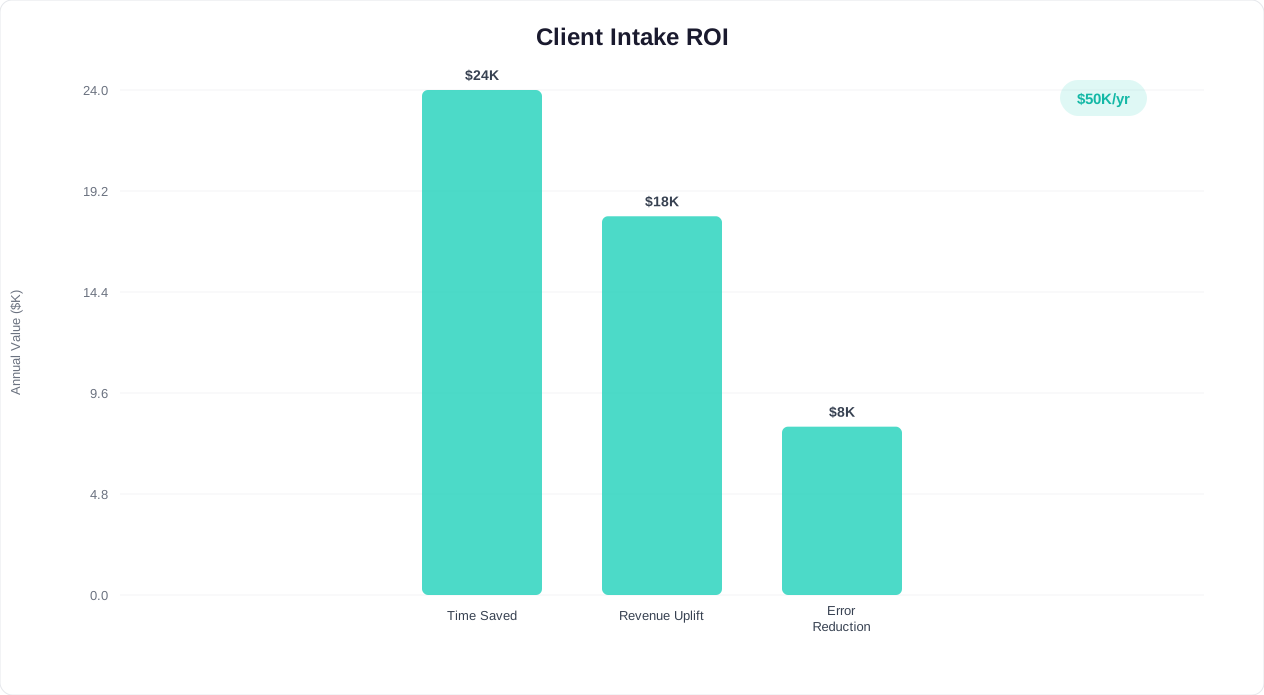
📊 Performance Metric
Agency intake chatbots capture more usable information than traditional forms, reducing time from intake to signed agreement and freeing 5-10 billable hours per new client.
| Intake Metric | Manual Process | Chatbot Intake | Improvement |
|---|---|---|---|
| Time per client intake | 5-10 hours | 30-60 minutes | -88% |
| Information completeness | 40-60% | 85-95% | +70% |
| Intake-to-kickoff time | 5-10 days | 1-3 days | -70% |
| Client satisfaction (first impression) | 3.5/5 | 4.6/5 | +31% |
The impact of chatbot intake automation varies by agency type, with larger and more complex engagements seeing the greatest efficiency gains:
| Agency Type | Manual Intake Hours | Chatbot Intake Hours | Cost Saved per Client | Kickoff Acceleration |
|---|---|---|---|---|
| Digital marketing agency | 6-8 hours | 45 minutes | $750-$1,200 | 5 days faster |
| Web development agency | 8-12 hours | 60 minutes | $1,200-$1,800 | 7 days faster |
| Branding and design agency | 5-7 hours | 35 minutes | $600-$1,050 | 4 days faster |
| Management consulting firm | 10-15 hours | 90 minutes | $1,500-$2,250 | 8 days faster |
| PR and communications agency | 4-6 hours | 30 minutes | $500-$900 | 3 days faster |
For agencies competing on service quality, a polished intake experience signals professionalism and organization. Clients who experience a smooth, guided onboarding process report higher satisfaction scores and are more likely to provide referrals. The chatbot available on your website creates a premium first impression that sets the tone for the entire client relationship and differentiates your agency from competitors still relying on email chains and phone tag.
Consulting firms operate on a fundamental constraint: senior partner time is the scarcest and most valuable resource. Every hour a partner spends on an unqualified inquiry -- a prospect who cannot afford the engagement, needs a different type of expertise, or is not ready to move forward -- is an hour not spent on billable client work or qualified business development. A consulting inquiry chatbot acts as an intelligent first filter, engaging every inbound inquiry, assessing fit against your firm's criteria, and routing only qualified opportunities to the appropriate partner or practice lead.
Consulting firms typically span multiple practice areas -- strategy, operations, technology, finance, HR, and industry verticals. Prospects often do not know which practice area best fits their need. The chatbot conducts a structured needs assessment that identifies the core challenge, then matches the prospect to the right practice and advisor. A CEO concerned about market share erosion routes to strategy. A COO struggling with supply chain disruption routes to operations. This intelligent matching ensures that the first human conversation is with the right expert, eliminating internal rerouting and improving the prospect's experience.
The chatbot captures detailed context about the prospect's situation: industry, company size, specific challenge, what they have already tried, timeline for engagement, and budget expectations. This information enables the consulting team to prepare a relevant initial discussion rather than spending the first meeting on basic discovery. Firms using intake chatbots report shorter sales cycles because the qualification and context-gathering phase is compressed.
Many consulting inquiries fail to convert because of misaligned expectations around scope, timeline, or investment level. The chatbot addresses this proactively by providing general ranges for engagement types: "Strategy assessments typically involve 4-6 weeks of analysis and a half-day workshop with your leadership team." This early expectation setting filters out prospects who are not prepared for the investment and ensures that conversations with partners focus on solution design rather than scope negotiation.
⚡ Efficiency Gain
Consulting firms using intake chatbots report shorter sales cycles because the qualification and context-gathering phase is compressed, allowing senior partners to spend their time on solution design rather than basic discovery.
Consulting firms derive significant revenue from referrals and repeat engagements. The chatbot recognizes returning clients and referral sources, providing personalized greetings and streamlined intake for known contacts. Referrals are tagged and tracked, enabling the firm to measure referral program effectiveness and acknowledge referring parties appropriately.
Channel partner programs are a critical growth engine for B2B companies, but partner onboarding is notoriously slow and resource-intensive. The average partner takes 3-6 months to become fully productive, and many never reach productivity at all -- industry data shows that 50-70% of recruited partners generate zero revenue in their first year. The bottleneck is not partner quality; it is onboarding friction. A partner onboarding chatbot eliminates this friction by guiding new partners through every step of activation, from agreement signing to first deal registration, with always-available, interactive support.
Partner onboarding involves multiple administrative steps: agreement review and signature, portal account creation, team member registration, certification enrollment, and marketing resource access. The chatbot walks new partners through each step in sequence, ensuring nothing is missed and providing help at every point of confusion. Partners who complete onboarding with chatbot guidance finish the process faster than those navigating portal-based self-service alone.
The chatbot also adapts the onboarding flow based on partner type. Technology partners who need API integration guidance receive technical onboarding tracks. Reseller partners who need sales enablement receive pitch decks, competitive battlecards, and demo environment access. Referral partners who need minimal training receive a simplified flow focused on deal registration and commission tracking.
Most partner programs require certification before partners can sell or implement your product. The chatbot supports the certification process by recommending training modules based on the partner's role and experience level, answering questions about course content, scheduling certification exams, and providing study resources. When partners get stuck on specific technical concepts, the chatbot provides explanations and links to relevant documentation.
⚡ Efficiency Gain
Partners complete chatbot-guided onboarding faster than portal-only self-service, with first-year revenue generation rates climbing from 30-50% to 65-80% of enrolled partners.
| Partner Onboarding Metric | Portal Self-Service | Chatbot-Guided | Improvement |
|---|---|---|---|
| Time to onboarding completion | 4-8 weeks | 1-3 weeks | -55% |
| Certification completion rate | 40-55% | 75-90% | +65% |
| First deal registration | 90-180 days | 30-60 days | -65% |
| Year-1 revenue-generating partners | 30-50% | 65-80% | +75% |
The partner onboarding experience directly impacts long-term partner productivity. Here is how chatbot-guided programs compare to traditional approaches across the full activation lifecycle:
| Onboarding Phase | Traditional (Portal + Email) | Chatbot-Guided | Time Saved |
|---|---|---|---|
| Agreement and enrollment | 5-10 days | 1-2 days | -75% |
| Portal setup and training access | 3-7 days | Same day | -85% |
| Certification completion | 4-8 weeks | 1-3 weeks | -62% |
| First deal registration | 90-180 days | 30-60 days | -65% |
| Full productivity | 4-6 months | 6-10 weeks | -60% |
Partner churn is expensive -- the cost of recruiting and onboarding a replacement partner far exceeds the cost of retaining an existing one. The chatbot monitors partner engagement signals and proactively reaches out to inactive partners with re-engagement prompts: new product updates, upcoming incentive programs, competitive intelligence updates, and success stories from other partners. This proactive engagement keeps partners active and productive throughout the program lifecycle.
For B2B services and technology companies, responding to RFPs (Requests for Proposal) and proposal requests is a significant revenue opportunity -- and a significant operational burden. The average RFP response takes 20-40 hours of cross-functional effort, involving sales, presales, legal, finance, and subject matter experts. When your team receives more RFP requests than it can handle thoroughly, responses suffer in quality, deadlines get missed, and winnable deals slip away. An RFP and proposal request chatbot streamlines the intake, qualification, and initial response phases, ensuring your team focuses its effort on the opportunities most likely to close.
Not every RFP deserves a full response. The chatbot evaluates incoming RFP requests against your qualification criteria: deal size, industry fit, competitive landscape, timeline feasibility, and technical requirements. It collects the RFP document, identifies key requirements, and presents a qualification summary to your bid team. Opportunities that do not meet minimum criteria receive a polite decline with recommendations for alternative solutions, freeing your team to focus on winnable bids.
The chatbot also handles inbound proposal requests from prospects who are not using a formal RFP process. It collects project requirements, budget expectations, timeline, decision criteria, and competitive context through structured conversation, producing a brief that your sales team can use to prepare a targeted proposal. This structured intake reduces proposal preparation time because the sales team starts with complete context rather than fragmented email threads.
Most RFP responses draw from a library of standard answers -- company overview, security practices, implementation methodology, SLA commitments, and reference customers. The chatbot helps your team assemble initial response drafts by matching RFP questions to your content library, providing pre-approved answers that subject matter experts can customize rather than write from scratch. This assembly assistance cuts first-draft preparation time.
After proposal submission, the chatbot manages the follow-up process: checking in with the prospect on evaluation timeline, answering clarification questions, scheduling presentation meetings, and collecting feedback. This consistent follow-up ensures your proposal stays top-of-mind during evaluation and demonstrates the responsiveness that enterprise buyers expect from their service providers.
In B2B services, client retention is everything. Acquiring a new client costs more than retaining an existing one, and most B2B companies lose clients not because of poor service quality but because they fail to detect dissatisfaction before it becomes a cancellation. A client feedback chatbot creates a continuous feedback loop that captures client sentiment at every touchpoint -- after deliverables, during quarterly reviews, and at renewal milestones -- giving your account team the intelligence they need to address issues proactively and strengthen relationships.
The chatbot triggers feedback conversations at key moments in the client lifecycle: project kickoff completion, first deliverable review, mid-project checkpoint, project completion, and contract renewal approach. Each feedback request is contextual -- it references the specific deliverable or milestone rather than asking generic satisfaction questions. This contextual approach achieves higher response rates than traditional email surveys because clients see the feedback request as relevant to their specific experience rather than a generic survey blast.
Feedback questions adapt based on the client's previous responses and the project type. A client who reported issues with communication frequency in a previous checkpoint receives follow-up questions about whether communication has improved. A client working on a technology implementation project receives questions about technical accuracy and documentation quality. This adaptive questioning produces richer, more actionable insights than static survey forms.
The chatbot analyzes response patterns and language to identify clients at risk of churn. A drop in satisfaction scores, increasingly brief responses, delayed feedback submissions, or negative sentiment in open-ended comments all trigger alerts to your account management team. These early warning signals enable proactive intervention -- a call from the account manager, a service recovery plan, or an executive check-in -- before dissatisfaction escalates to a formal complaint or cancellation notice.
Collecting feedback without acting on it is worse than not collecting it at all. The chatbot supports a closed-loop process: feedback is routed to the responsible team member, action items are tracked, and the client receives a follow-up confirming that their feedback has been heard and addressed. This closed-loop approach demonstrates that you value client input, building trust and loyalty that translates directly to higher retention rates and expanded engagement opportunities.
As B2B companies grow their client base, account management becomes a scalability challenge. Each account manager handles 15-30 accounts, and the depth of attention each client receives decreases as the portfolio grows. Routine tasks -- status updates, meeting scheduling, report distribution, contract tracking -- consume 40-50% of account manager time, leaving insufficient bandwidth for strategic relationship development and expansion selling. An account management chatbot automates the routine while surfacing the strategic, enabling your account team to manage larger portfolios without sacrificing service quality.
Clients frequently reach out to check project status, request reports, or ask about upcoming deliverables. The chatbot handles these routine inquiries by pulling real-time data from your project management and reporting systems. A client asking "What's the status of the Q3 campaign?" receives an immediate, accurate update without requiring the account manager to interrupt their workflow, look up the information, and compose a response. This automation saves 8-12 hours per account manager per week on routine communication.
The chatbot also proactively pushes updates to clients at configured intervals: weekly progress summaries, monthly performance reports, and milestone completion notifications. This proactive communication keeps clients informed without requiring them to ask, demonstrating the attentiveness that drives satisfaction and retention.
Account managers spend significant time scheduling and preparing for client meetings. The chatbot streamlines both: it handles scheduling coordination across time zones, sends agendas with relevant performance data, and collects client priorities before the meeting so the account manager can prepare a focused discussion. Post-meeting, the chatbot distributes summary notes and action items, ensuring follow-through on commitments.
When account managers change roles or leave the company, client relationship history often goes with them. The chatbot maintains a comprehensive interaction history for every account -- every question asked, every issue raised, every preference expressed -- ensuring seamless transitions and preserving the institutional knowledge that clients expect their service provider to maintain. This continuity is particularly valuable for long-term B2B relationships where historical context is essential to effective account management.
B2B procurement teams evaluate dozens to hundreds of potential vendors annually, and the qualification process is time-consuming: collecting company information, verifying certifications, assessing financial stability, checking references, and ensuring compliance with organizational requirements. The average vendor qualification process takes 2-4 weeks of manual effort, creating bottlenecks that delay procurement decisions and frustrate both internal stakeholders and prospective suppliers. A vendor qualification chatbot automates the intake and preliminary assessment phases, compressing qualification timelines and ensuring consistent evaluation standards across all supplier candidates.
The chatbot conducts structured vendor intake interviews that collect all required qualification data: company overview, financial information, insurance documentation, certifications, compliance attestations, references, capacity details, and pricing structures. Unlike email-based questionnaires that vendors take weeks to complete, the conversational format guides vendors through the process in a single session, with the ability to pause and resume as needed. Vendors who complete chatbot-guided intake submit 85-95% complete applications compared to 50-60% completion rates for email-based forms.
The chatbot validates submissions in real time -- checking that required documents are attached, certifications are current, insurance coverage meets minimum thresholds, and financial data is within acceptable ranges. Incomplete or non-conforming submissions receive immediate guidance on what is missing, eliminating the back-and-forth that typically delays vendor qualification by weeks.
Based on collected data, the chatbot generates a preliminary qualification score that evaluates the vendor against your organization's criteria: financial stability, operational capacity, geographic coverage, compliance posture, and relevant experience. High-scoring vendors are fast-tracked to the next evaluation stage. Borderline vendors receive targeted follow-up questions. Low-scoring vendors receive a professional notification explaining why they did not meet qualification thresholds, with guidance on how to reapply in the future.
By automating the intake and preliminary assessment phases, the chatbot enables procurement teams to focus their expertise on high-value activities: negotiation, relationship management, and strategic sourcing decisions. Organizations deploying vendor qualification chatbots report 50-70% reductions in qualification cycle time and significant improvements in the consistency and completeness of vendor evaluation data. The chatbot integrates with your procurement platform and vendor management system, ensuring that qualification data flows seamlessly into your existing workflows without duplicate data entry.
Everything you need to know about chatbots for b2b services templates.
Our proven templates help businesses like yours achieve better results with automation
Automatically qualify prospects while you sleep
Increase conversions with smart, always-on chatbots
Engage visitors within seconds of landing on your site
Lower acquisition costs through automation
Join the businesses already using Conferbot templates to automate conversations and boost conversions. Start free in 2 minutes.
Follow these simple steps to get your b2b services chatbot up and running in minutes
Select from high-converting lead generation templates designed for your industry and use case.
Modify questions to match your ideal customer profile and lead scoring criteria.
Configure automatic lead distribution to your sales team based on qualification scores.
Connect to HubSpot, Salesforce, or your preferred CRM for seamless lead management.
Launch your chatbot and track conversion rates, lead quality, and ROI through our analytics dashboard.
Compare the benefits of using professional templates vs. building from scratch
Join thousands of businesses using our b2b services templates to automate conversations and boost results
🚀 Build your first bot free - no credit card requiredBrowse every free b2b services chatbot template below. Each one is fully customizable and deploys in minutes with no code.
Last updated September 22, 2026 · Maintained by the Conferbot team
New to chatbots? These in-depth guides explain how b2b services chatbots work and how to choose the right builder.