
Group Travel Coordinator
Free Travel And Hospitality Chatbot Template
A complete group travel coordinator chatbot template — deploy in minutes to automate conversations, capture leads, and provide 24/7 assistance.



What Is a Group Travel Coordinator Chatbot?
A group travel coordinator chatbot is an AI-powered conversational assistant that manages the complex logistics of planning and executing group trips -- from bachelor parties and family reunions to corporate retreats and friend group vacations. It handles itinerary planning, budget collection and splitting, democratic vote-based decisions, large-group accommodation sourcing, activity scheduling, transportation coordination, and real-time group communication, all through a single conversational interface accessible via website, WhatsApp, or Messenger group chats.
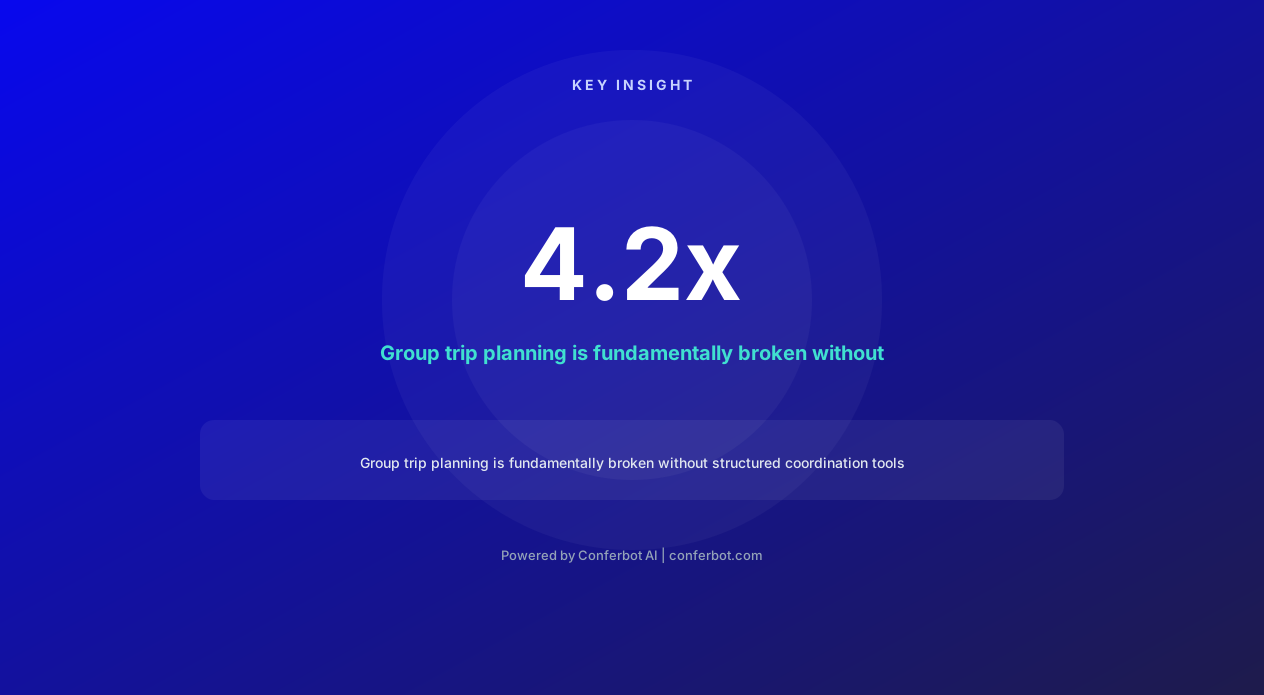
Group travel planning is universally acknowledged as one of the most frustrating coordination challenges in modern life. Research shows that group trips have a 4.2x higher planning abandonment rate than individual trips, with 62% of planned group trips either never happening or being significantly reduced in scope due to coordination failures. The average group trip requires 47 messages between participants before a single decision is made, creating a coordination nightmare that exhausts even the most enthusiastic trip organizer.
The fundamental challenge is that group travel requires consensus among multiple people with different budgets, schedules, preferences, and decision-making speeds. One person wants budget accommodation; another insists on luxury. Half the group prefers beach activities; the other half wants cultural experiences. Three people cannot travel on the proposed dates; two others have dietary restrictions that limit restaurant choices. Without structure, these competing preferences create an endless loop of suggestions, objections, and compromises that stalls into inaction.
The group travel coordinator chatbot imposes structure on this chaos. It collects preferences from each participant, identifies areas of overlap, presents options that satisfy the most people, facilitates democratic decisions through polling and voting, manages the budget transparently, and keeps everyone informed without requiring a volunteer "trip organizer" to do all the work. For travel platforms, tour operators, and event planning companies, this chatbot captures the $183 billion group travel market that is massively underserved by current booking tools designed for individual travelers. In 2026, with group experiences driving post-pandemic travel recovery, the opportunity is larger than ever. Conferbot's no-code builder enables deployment of a comprehensive group coordination tool without custom development.
How a Group Travel Coordinator Chatbot Works
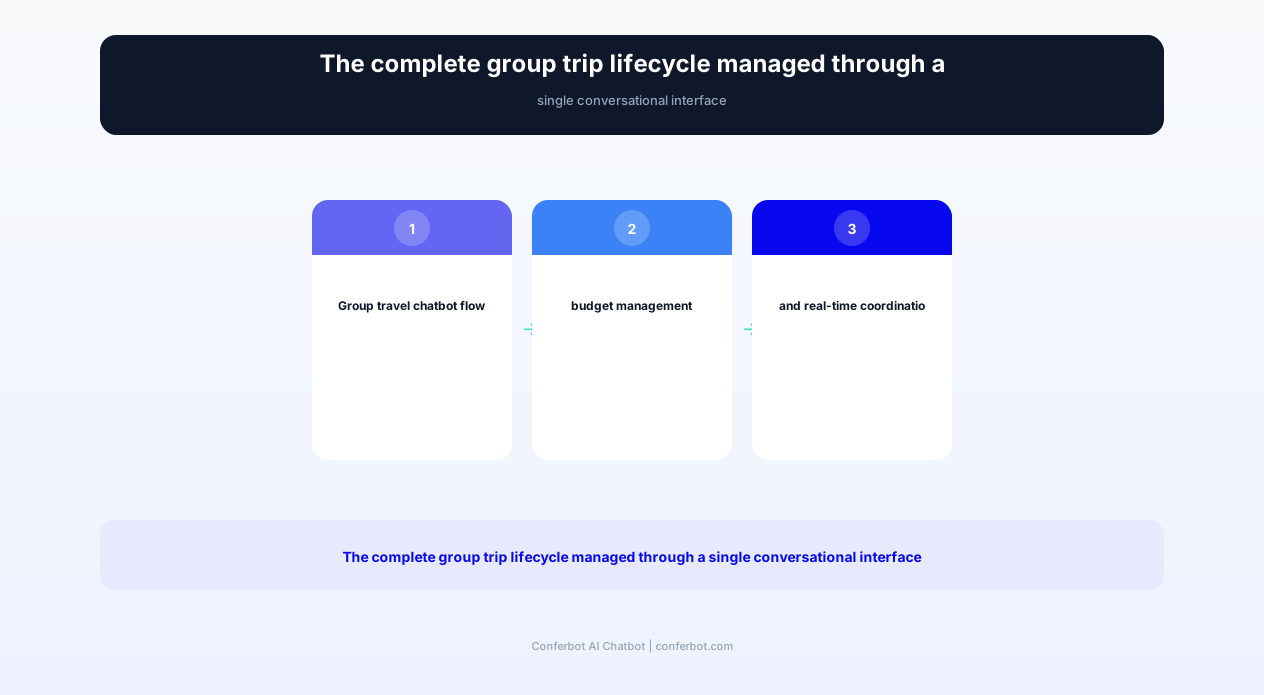
The chatbot manages the complete group trip lifecycle from initial idea through post-trip settlement. Here is how each phase of group coordination operates.
Trip Initiation and Group Formation
One person creates the trip and invites the group. The chatbot can operate within a WhatsApp group chat (the most natural format for friend groups), a dedicated web link shared with participants, or a Messenger group. Each participant receives an invitation to join and set their preferences. The chatbot tracks RSVPs, follows up with non-responders, and maintains a clear participant list with confirmation status. "12 people invited. 8 confirmed. 2 tentative. 2 not responded. Want me to send a reminder to the non-responders?"
Preference Collection
The chatbot privately collects preferences from each participant: available dates, budget range, accommodation standards, activity interests, dietary restrictions, and any non-negotiable requirements. This private collection prevents the group dynamic where people adjust their honest preferences based on what others say first. The chatbot analyzes all responses and identifies: the dates that work for the most people, the budget range that accommodates everyone (or the realistic majority), and the activities that have the broadest appeal.
Option Generation and Presentation
Based on collected preferences, the chatbot generates 3-5 trip options that represent different compromises. "Option A: Beach resort in Cancun, March 15-20, $1,200 per person all-inclusive. Works for 10 of 12 participants. Option B: Cabin rental in Colorado, March 22-25, $800 per person. Works for all 12 participants but is a shorter trip. Option C: Villa in Portugal, March 15-22, $1,500 per person. Works for 8 participants and offers the best cultural experience scores." Each option includes a clear breakdown of what is included, who it works for, and how it maps to the group's stated preferences.
Democratic Decision Making
The chatbot facilitates group decisions through structured voting. Participants rank their preferred options, and the chatbot tallies votes using ranked-choice methodology to find the option with the broadest support (not just the plurality winner). For divisive decisions, it identifies compromise positions: "The vote is tied between beach and mountains. Several options combine both: Costa Rica has mountain rainforests and Pacific beaches. Want me to explore this compromise?" The democratic process ensures no single loud voice dominates the planning and that quieter participants' preferences are weighted equally.
Booking and Budget Management
Once decisions are made, the chatbot coordinates bookings and manages the group budget. It calculates each person's share (accounting for different room types, optional activities, and early/late arrival variations), sends payment requests, tracks who has paid, and follows up on outstanding balances. The budget transparency eliminates the awkward "you owe me" conversations that often sour group trips. "Total trip cost: $14,400. Per person: $1,200. 8 of 12 have paid. Sending reminders to Alex, Jordan, Sam, and Riley."
Real-Time Trip Management
During the trip, the chatbot serves as the group's coordination hub. It manages the daily itinerary (sending morning summaries of the day's plan), handles restaurant reservations for the full group, coordinates transportation logistics (who fits in which car, airport pickup schedules), and facilitates real-time decisions: "Rain forecasted for this afternoon. The group voted for the museum as the backup plan. Shall I book tickets for 12?" This real-time coordination keeps the group organized without requiring anyone to take on the exhausting role of "trip director."
Key Features and Feature Matrix
A group travel coordinator chatbot requires features that handle both the logistics of travel planning and the social dynamics of group decision-making. Here is the complete feature matrix.
| Feature | Description | Operational Benefit | Customer Benefit |
|---|---|---|---|
| Preference aggregation | Privately collects dates, budgets, interests, and constraints from each participant and finds overlap | Structures chaotic group discussions into actionable data | Everyone's preferences are heard equally without social pressure |
| Vote-based decisions | Facilitates ranked-choice voting on destinations, activities, restaurants, and accommodations | Resolves group deadlocks that kill trip planning momentum | Fair, democratic decisions where no one dominates or feels unheard |
| Budget splitting engine | Calculates per-person costs with variable splits, tracks payments, and sends reminders | Eliminates payment-related disputes and post-trip friction | Clear, transparent cost tracking with no awkward money conversations |
| Group accommodation finder | Sources accommodations for large groups: villas, vacation rentals, hotel blocks, and group rates | Accesses group inventory that standard individual booking cannot | Finds properties that actually fit the whole group comfortably |
| Activity scheduler | Plans daily itinerary balancing group activities with free time and individual preferences | Maximizes activity booking revenue from organized group plans | Gets a structured but flexible trip plan without planning effort |
| RSVP and attendance tracking | Manages confirmations, maybes, and dropouts with automatic group size updates | Provides reliable headcounts for booking and capacity planning | Knows exactly who is coming without chasing people individually |
| Transportation coordinator | Manages airport pickups, car assignments, driving schedules, and shared ride arrangements | Reduces transportation-related logistics calls and confusion | Gets from airport to accommodation without confusion or waiting |
| Group messaging hub | Centralizes trip communications, announcements, and updates in one organized thread | Keeps all trip information findable versus lost in message history | Finds trip details quickly without scrolling through hundreds of messages |
Intelligent Date Finding
Finding dates that work for 8-15 people is often the single biggest obstacle to group trips happening. The chatbot uses a constraint-satisfaction approach: it collects each person's available date ranges, identifies the windows where the maximum number of participants can attend, and presents options ranked by group coverage. "The weekend of March 15-17 works for 11 of 12 people (only Alex cannot make it). March 22-24 works for all 12. The full week of March 15-22 works for 9 of 12." This clarity transforms the date discussion from weeks of back-and-forth messages into a single, informed decision.
Flexible Budget Handling
Groups rarely have uniform budgets, and the chatbot handles this gracefully. Some members may want the premium room; others are happy with the standard. Some want to join every optional activity; others prefer free time. The chatbot tracks individual choices and calculates per-person costs that reflect what each person actually uses. Shared costs (accommodation, transportation) are split equally; optional costs (upgrades, activities, extras) are attributed to individuals. This transparency prevents the common frustration where budget-conscious travelers subsidize luxury preferences they did not choose.
Compromise Generation Engine
When the group is split between options, the chatbot generates creative compromises rather than forcing a binary choice. Half the group wants beaches, half wants cultural experiences -- the chatbot suggests destinations that offer both (Barcelona, Lisbon, Bali). The budget range is wide -- it suggests accommodation with mixed room types (some premium, some standard) in the same property. These AI-generated compromises break deadlocks that human coordinators struggle to resolve because the chatbot considers all participants' constraints simultaneously rather than advocating for any single position.
Ready to try Group Travel Coordinator?
Deploy this template in under 10 minutes. No coding required.
Use This Template Free →Before and After: Measurable Impact
Group travel coordinator chatbots transform the planning experience and dramatically improve trip completion rates. Here is the data from travel platforms and trip planning services that have deployed group coordination chatbots.
| Metric | Before Chatbot | After Chatbot | Impact |
|---|---|---|---|
| Group trip completion rate | 38% of planned trips happen | 72% of planned trips happen | 89% improvement |
| Time from idea to booking | 34 days average | 8 days average | 76% faster |
| Messages before first decision | 47 messages | 12 messages (structured) | 74% reduction in coordination overhead |
| Organizer time investment | 15-20 hours per trip | 2-3 hours per trip | 85% reduction |
| Post-trip payment disputes | 28% of trips have disputes | 4% of trips have disputes | 86% reduction |
| Average group size (actual travelers) | 6.2 people | 9.4 people | 52% larger groups |
| Participant satisfaction | 3.5/5 | 4.6/5 | +1.1 points |
| Repeat group trip rate | 22% | 58% | +36 percentage points |
Trip Completion: The Most Valuable Metric
The improvement from 38% to 72% trip completion is the foundational metric. Without the chatbot, most group trips die in the planning phase -- endless message threads that lose momentum, key decisions that never get made, and coordination fatigue that causes the organizer to give up. The chatbot prevents this death spiral by imposing structure, maintaining momentum through automated follow-ups, and reducing the decision-making burden on any single person. For travel platforms, every trip that goes from "idea" to "booked" represents significant booking revenue that would otherwise be entirely lost.
Group Size Growth
The average group size increase from 6.2 to 9.4 people reflects the chatbot's ability to coordinate larger groups that would be unmanageable through unstructured messaging. Without coordination tools, groups naturally shrink as the complexity of accommodating everyone becomes overwhelming -- people drop out or are excluded because including them makes planning too difficult. The chatbot handles complexity gracefully at any group size, so more people can participate in trips that would otherwise be limited to core friend groups. Larger groups mean proportionally more revenue per trip.
Organizer Burden Elimination
The reduction in organizer time from 15-20 hours to 2-3 hours addresses the primary reason group trips have low completion rates: someone has to do the work, and that someone burns out. The chatbot takes on the thankless tasks of chasing responses, calculating budgets, finding options, tracking payments, and sending reminders. The organizer becomes a facilitator rather than a project manager, making the role sustainable and even enjoyable. This burden reduction means organizers are willing to plan trips more frequently, driving the repeat rate improvement.
Post-Trip Satisfaction and Repeat Rates
The jump from 22% to 58% repeat group trip rates indicates that the chatbot does not just get groups to complete one trip -- it makes the experience positive enough that groups want to do it again. The combination of democratic decisions (everyone feels heard), transparent budgets (no money friction), structured coordination (smooth logistics), and reduced organizer burden (no one is exhausted afterward) creates a group travel experience that people actively want to repeat rather than dread planning.
Budget Management and Financial Coordination
Money is the most sensitive and conflict-prone aspect of group travel. The chatbot's budget management features handle financial coordination with the transparency and precision required to keep group dynamics healthy.
Pre-Trip Budget Setting
The chatbot collects budget ranges from each participant privately, calculates the realistic group budget (typically the lower end of the range to avoid excluding budget-conscious members), and communicates the budget framework to the group. "Based on everyone's input, the comfortable budget range for this trip is $1,000-1,400 per person for 5 nights. This allows for quality accommodation and 2-3 group activities with some buffer for meals and personal spending." This structured budget communication prevents the common scenario where one person's ambitious suggestion sets expectations that half the group cannot afford but feels uncomfortable declining.
Transparent Cost Breakdown
Every expense is tracked with full visibility. The chatbot maintains a running cost ledger that every participant can view: accommodation cost (per person, per night), group activities (with per-person share), shared transportation (split by riders), group meals (split equally or itemized), and optional extras (attributed to individuals). This real-time transparency means there are never surprises about what the trip costs. "Current trip total per person: $1,180. Breakdown: Accommodation $560, Activities $320, Transportation $140, Group dinners $160."
Flexible Split Calculations
Not all expenses should be split equally. The chatbot handles multiple split methods: equal splits for shared costs, proportional splits based on room choice (couples in a larger room pay proportionally more), per-person splits for optional activities, and itemized splits for meals where preferences vary widely. It also handles the math of partial attendance -- if someone arrives two days late, they should not pay for the first two nights of accommodation. These nuanced calculations eliminate the spreadsheet work that typically falls on the unlucky trip organizer.
Payment Collection and Tracking
The chatbot sends payment requests to each participant with their individual total, provides payment links (integrated with popular platforms like Venmo, PayPal, and bank transfers), tracks who has paid, and sends gentle reminders to those with outstanding balances. It tracks partial payments and provides clear statements: "You have paid $800 of your $1,180 total. Outstanding balance: $380. Due by March 1 for the activity bookings." This systematic collection eliminates the awkwardness of one person chasing others for money.
Post-Trip Settlement
After the trip, the chatbot reconciles all expenses against advance payments. If shared costs came in under budget, refunds are calculated and distributed. If someone covered group expenses out of pocket (paying for dinner on their card), the chatbot calculates reimbursements and facilitates the settlement. "Final settlement: You are owed $45 from the group fund (dinner overpayment). You owe Marco $28 for the taxi you shared. Net: you receive $17." This clear, automated settlement prevents the post-trip payment awkwardness that can damage friendships.
Emergency and Contingency Fund
The chatbot can manage a group contingency fund for unexpected expenses: weather-related plan changes, medical emergencies, lost items, or spontaneous group decisions ("Let's all do the sunset cruise!"). It collects a small buffer from each participant upfront and tracks spend against this fund, refunding any unused amount after the trip. This contingency planning prevents the decision paralysis that occurs when an unexpected expense requires real-time group agreement on splitting.
Setup and Deployment Guide
Deploying a group travel coordinator chatbot requires configuration for group dynamics, booking integrations, and financial management. Here is the implementation guide.
Step 1: Select the Group Travel Template
Start with Conferbot's group travel coordinator template, which includes flows for trip creation, preference collection, voting, budget management, itinerary planning, and real-time coordination. The template handles groups from 4-30 people and supports multiple trip types (weekend getaway, week-long vacation, bachelor/bachelorette party, corporate retreat). Customize with the no-code editor to match your platform's branding and specific group travel focus.
Step 2: Configure Group Communication
Set up the chatbot's group communication capabilities. The most effective deployment is within WhatsApp groups where friend groups already communicate. Configure the chatbot to respond to group commands ("@TripBot show budget", "@TripBot start vote"), send private messages for preference collection, and post group announcements for decisions and updates. Also configure web-based access for participants who prefer a dedicated trip dashboard over group chat interactions.
Step 3: Integrate Booking and Accommodation Sources
Connect accommodation and activity booking sources through the API framework. For group accommodations, integrate with vacation rental platforms (Vrbo, Airbnb), hotel group booking systems, and villa rental services. For activities, connect with local experience platforms and tour operators. These integrations enable the chatbot to present real-time availability and pricing for group-appropriate options rather than just individual hotel rooms.
Step 4: Set Up Financial Management
Configure the budget management system: connect payment processing for group fund collection, set up the cost splitting logic (equal, proportional, per-person, and custom split options), and configure payment reminder schedules. Integrate with popular payment platforms (Venmo, PayPal, Stripe) for seamless collection and settlement. Test the financial flows end-to-end with a sample trip to ensure calculations are accurate and payment links work correctly.
Step 5: Configure Voting and Decision Mechanics
Set up the voting system parameters: minimum participation threshold for a valid vote (typically 60-75% of confirmed participants), voting window duration (24-48 hours per decision), tie-breaking rules, and ranked-choice versus simple majority methodology. Configure which decisions require votes (destination, dates, major activities) versus which the organizer can make unilaterally (restaurant for one dinner, transportation details).
Step 6: Deploy and Promote
Launch the chatbot and make it discoverable for trip organizers. Deploy on your website where users create trips, configure the WhatsApp integration for in-group operation, and set up invite mechanisms (shareable links, QR codes, direct invitations). Market to existing travel platform users who have previously searched for group accommodations -- these are your highest-intent prospects for group coordination tools.
Step 7: Monitor and Optimize
Track group trip metrics through Conferbot's analytics: trip creation-to-completion rate, average time to first decision, voting participation rates, budget payment completion rates, and participant satisfaction. Identify where groups stall (which decisions take longest, where participants drop off) and optimize the chatbot's follow-up timing and option presentation to maintain momentum. Optimize the voting cadence and reminder frequency based on what drives the highest completion rates without annoying participants.
50,000+ businesses use Conferbot templates to automate conversations
ROI for Travel Platforms and Tour Operators
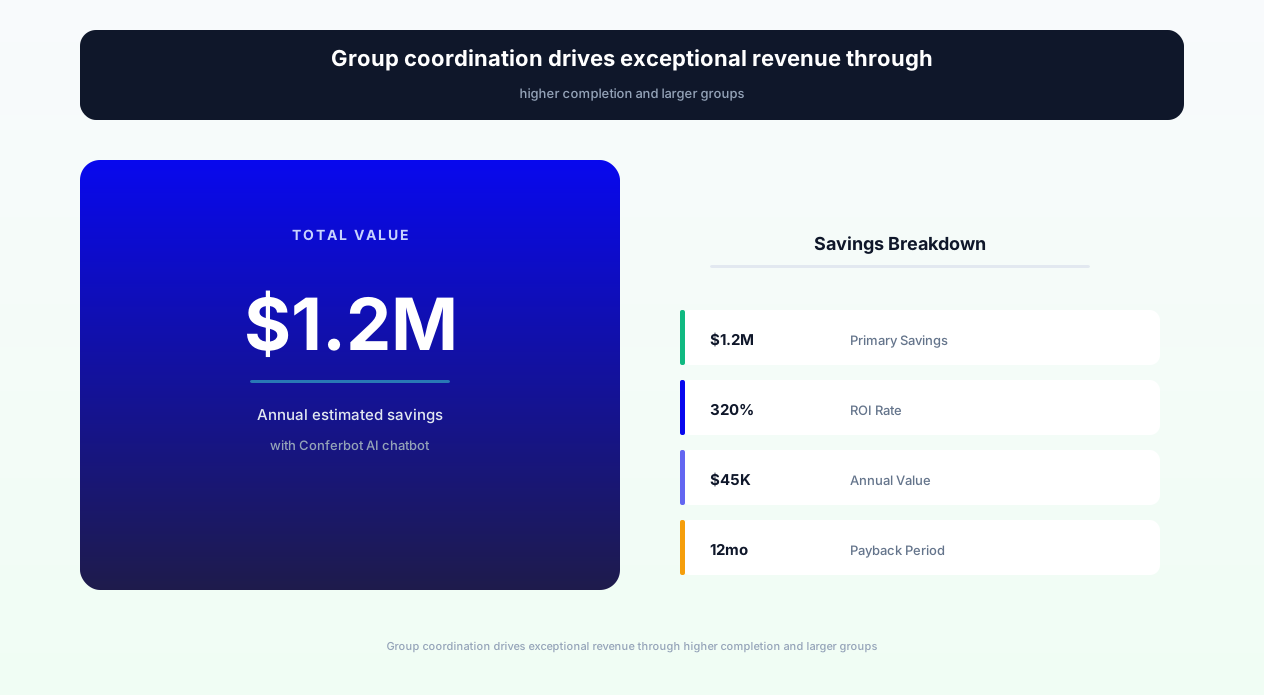
A group travel coordinator chatbot captures a high-value market segment and drives significant revenue through larger booking sizes, higher completion rates, and strong repeat business. Here is the financial impact for 2026.
Booking Revenue From Completed Trips
The chatbot's primary revenue impact is converting group trip ideas into completed bookings. With a trip completion rate improvement from 38% to 72%, and average group sizes of 9.4 people spending $1,200 per person, each trip that moves from "planned" to "booked" represents approximately $11,280 in gross booking value. For a platform facilitating 500 group trips monthly, the completion rate improvement (34 additional percentage points) generates approximately 170 additional completed trips per month, representing $1.9 million in additional monthly booking revenue.
Commission and Revenue Model
Group travel platforms typically earn revenue through accommodation commissions (10-15% of lodging cost), activity commissions (15-25% of experience bookings), financial management fees (1-3% of group fund processing), and premium features (trip coordination upgrades at $5-15 per participant). The blended revenue per group trip typically ranges from $800-1,500 in commissions and fees. At 170 additional completed trips monthly, this represents $136,000-255,000 in additional monthly revenue.
Customer Acquisition Efficiency
Group trips have a natural viral component: every participant in a successful group trip is a potential organizer of their next trip. The chatbot amplifies this by making the organization role manageable and even enjoyable. Platforms report that 35% of group trip participants go on to organize their own trip within 12 months, creating organic growth with zero acquisition cost. This viral coefficient means the customer acquisition cost for group travel chatbots drops dramatically over time as satisfied participants bring new groups to the platform.
Repeat Trip Revenue
The 58% repeat trip rate means that groups who use the chatbot once are likely to use it again. Annual friend group trips, family reunions, corporate retreats, and holiday group vacations create predictable, recurring revenue. A single friend group that takes an annual trip together using the chatbot represents $5,000-10,000 in lifetime revenue over 5-7 years of trips. Building a base of repeat group travelers creates the recurring revenue that makes the platform's growth predictable and sustainable.
Market Differentiation
Group travel coordination is a significant unmet need that most travel platforms do not address. Individual booking tools (flights, hotels) are commoditized, with thin margins and intense competition. Group coordination is a premium, differentiated service that commands loyalty because switching costs are high (participants do not want to learn a new tool for each trip). Platforms that own the group coordination experience become the default choice for their users' group travel needs, capturing all associated bookings rather than competing on price for individual transactions. This strategic positioning justifies the chatbot investment even beyond its direct ROI.
Group Trip Types and Use Case Scenarios
The group travel coordinator chatbot serves a wide variety of trip types, each with distinct coordination needs and dynamics. Here is how the chatbot adapts to different group travel scenarios.
Bachelor and Bachelorette Parties
Celebratory group trips have unique dynamics: a designated planner (typically the best man or maid of honor) coordinates on behalf of the honored guest, activities tend toward nightlife and experiences rather than sightseeing, and budget sensitivity varies widely among attendees. The chatbot handles the "surprise" element (the honored guest is not part of planning conversations), manages activity-heavy itineraries with multiple daily events, handles the common challenge of group members dropping out after initial enthusiasm, and coordinates details like matching T-shirts, restaurant reservations for large parties, and party supplies. Bachelor/bachelorette trips represent 22% of chatbot-facilitated group trips and have the highest average per-person spend at $1,800-2,500.
Family Reunions and Multi-Generation Travel
Family group trips involve the widest age range and most diverse needs: grandparents need accessible accommodation, parents need child-friendly activities, teenagers need WiFi and some independence, and young children need safety considerations. The chatbot handles multi-generational scheduling (nap times, early dinners, activities appropriate for all ages), accommodation configurations (families need multiple rooms close together or large vacation homes), and the complex budget dynamics of family events where one generation often subsidizes another. It also manages the sensitive politics of family decision-making where no one wants to be the dictatorial planner.
Corporate Retreats and Team Building
Corporate group travel has stricter requirements: budget approvals, company policies on accommodation standards, team-building activity scheduling, meeting space needs, and dietary accommodations for diverse teams. The chatbot handles corporate-specific workflows: budget approval documentation, per-diem tracking, activity proposals that balance fun with professional appropriateness, and logistics for teams that may be flying from multiple origin cities. Corporate retreats using the chatbot report 40% less planning time from the organizer (typically an executive assistant or team lead) and 28% higher post-retreat satisfaction scores from participants.
Friend Group Vacations
Friend group trips are the most common chatbot use case and face the classic coordination challenges: diverse budgets, conflicting schedules, different activity preferences, and the "too many cooks" problem where everyone has opinions but no one takes ownership. The chatbot's democratic voting features are most valuable here, ensuring that decisions are fair and no single personality dominates. Friend groups report that the chatbot eliminates the most common trip-killing pattern: one person plans everything, burns out, and the trip dies. By distributing the decision-making and automating the logistics, the chatbot keeps the fun in planning rather than making it a burden.
Sports and Hobby Groups
Groups traveling for shared activities -- golf trips, ski vacations, cycling tours, wine tasting weekends, music festival groups -- have activity-first planning requirements. The chatbot prioritizes the core activity (booking tee times, securing lift passes, arranging bike rentals) and builds the rest of the trip around it. It handles specialized logistics like equipment transportation, activity-level matching (not everyone in a ski group is the same level), and the mix of shared-activity time and independent exploration. Sports group trips tend to be highly repeatable (annual golf trip, yearly ski week), creating strong lifetime value from these organized groups.
Group Travel Coordinator FAQ
Everything you need to know about chatbots for group travel coordinator.
Why Use a Template vs Building from Scratch?
Templates encode years of optimization data into the conversation flow before you start.
| Factor | Conferbot Template | Build from Scratch | Hire a Developer |
|---|---|---|---|
| Time to deploy | 10 minutes | 2-8 hours | 2-6 weeks |
| Cost | Free | Your time | $5,000-$25,000 |
| Day-1 conversion | 15-22% | 5-8% | 10-15% |
| Proven flows | Yes, data-tested | No | Depends |
| Updates included | Automatic | Manual | Paid |
| Multi-channel | 8+ channels | 1 channel | Extra cost |
| Analytics | Built-in | Must build | Extra cost |
Ready to Deploy Group Travel Coordinator?
Join 50,000+ businesses. Free forever plan available. No credit card required.