
Why Every Food Truck Needs a Chatbot in 2026
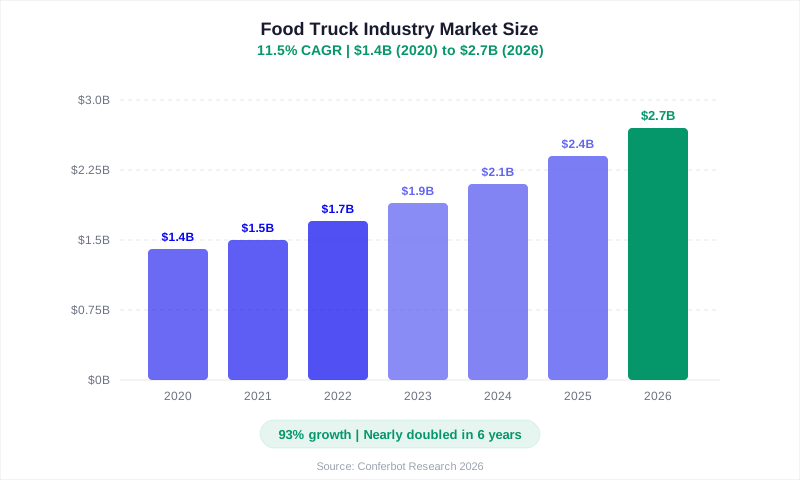
The food truck industry has exploded into a $1.4 billion market in the United States alone, with over 35,000 food trucks operating nationwide according to IBISWorld industry data. What started as a niche street food movement has become a mainstream dining option embraced by consumers, corporate campuses, festivals, and wedding planners alike. Yet despite this remarkable growth, the vast majority of food trucks still operate with the same inefficient customer communication methods they used a decade ago: a chalkboard menu, an Instagram post about today's location, and a prayer that enough people show up to make the day profitable.
The fundamental challenges of the food truck business model have not changed. Customers do not know where you are parked today. They do not know if you have sold out of their favorite item. They cannot pre-order to skip the lunch rush line. They have no way to book you for their company event without calling during your busiest hours. They forget about you between visits because there is no systematic way to stay top of mind. Each of these challenges represents lost revenue, and collectively they cap the earning potential of even the most talented food truck operators.
A food truck chatbot solves every one of these problems simultaneously. Deployed on your website, Facebook page, Instagram, or WhatsApp, the chatbot becomes your always-available digital assistant. It shares your real-time location, displays the full menu with prices and photos, takes pre-orders for pickup, manages a loyalty rewards program, handles catering inquiries, collects customer feedback, and broadcasts daily location updates to your subscriber list. It works while you are prepping food at 5 AM, while you are slammed during the lunch rush, and while you are driving to tomorrow's spot at midnight.
This guide covers everything food truck owners need to know about implementing a chatbot: the specific features that drive revenue, the mobile-first design principles that matter for on-the-go customers, social media integration strategies, pre-ordering systems that reduce wait times and food waste, loyalty programs that build a following, and catering lead capture that opens a high-margin revenue stream. Whether you operate a single truck or a fleet, a chatbot is the most cost-effective technology investment you can make to increase revenue, reduce operational stress, and build a loyal customer base that follows you wherever you park.
The Unique Challenges Food Trucks Face and How Chatbots Solve Them
Food trucks operate under constraints that traditional restaurants do not face. Understanding these unique challenges is essential to designing a chatbot that genuinely helps rather than adding unnecessary complexity to an already demanding operation.
The Location Discovery Problem
A brick-and-mortar restaurant has a permanent address that appears in Google Maps, Yelp, and every other directory. Customers know where to find it. A food truck changes location daily, sometimes multiple times per day. The customer who loved your tacos last Tuesday at the downtown plaza has no reliable way to find you this Thursday. Social media posts help, but they are easily missed in crowded feeds, and not every customer follows your accounts. The chatbot solves this by providing an instant, always-available location lookup. When a customer messages your chatbot asking where are you today, the chatbot responds with your current location, hours, a map link, and estimated wait time. Customers can also subscribe to daily location notifications so they receive an automatic message every morning with your schedule for the day.
The Pre-Order Void
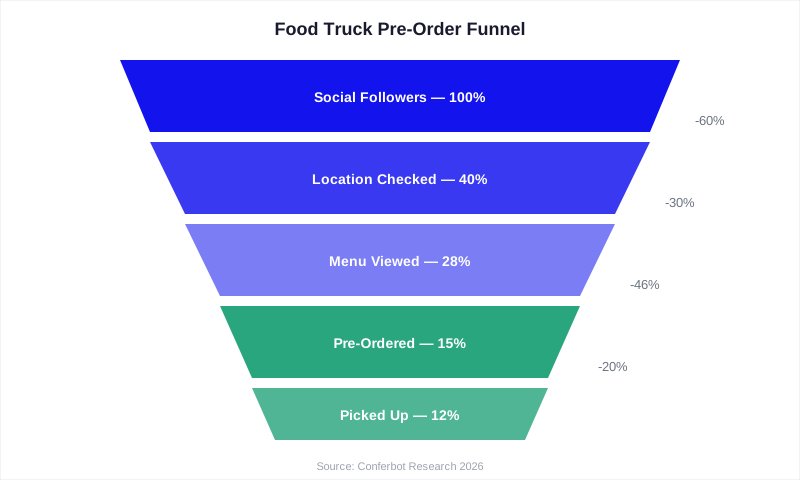
The typical food truck lunch rush creates a 15 to 25 minute wait during peak hours. Many potential customers see the long line, decide they do not have time, and walk away. That is direct revenue lost. Meanwhile, the customers who do wait are frustrated, and rushed ordering leads to mistakes. Pre-ordering through a chatbot eliminates both problems. Customers order and pay in advance through a conversational interface, then walk up at their designated time to pick up their food. No line, no wait, no frustration. For the food truck operator, pre-orders provide demand forecasting, allowing you to prep more accurately, reduce food waste, and staff appropriately.
The Feast-or-Famine Revenue Cycle
Food trucks experience extreme revenue variability. A rainy Tuesday generates $200 while a sunny Friday at a popular festival generates $3,000. This unpredictability makes financial planning nearly impossible. A chatbot-driven pre-order system and subscriber base helps smooth this volatility by providing advance demand signals. If pre-orders for tomorrow are light, you can push a promotion through the chatbot: 20 percent off all bowls tomorrow if you pre-order by 8 PM tonight. If pre-orders are heavy, you know to prep extra and potentially bring additional staff. The chatbot transforms reactive operations into proactive demand management.
The Catering Inquiry Black Hole
Corporate catering, event catering, and food truck party bookings represent the highest-margin revenue stream for most food trucks, often generating $2,000 to $5,000 per event. Yet catering inquiries typically arrive as voicemails or DMs during peak operating hours when the operator cannot respond. By the time the truck owner calls back at 9 PM, the event planner has already booked a competitor. A chatbot captures catering inquiries instantly, collecting event date, location, estimated guest count, budget range, and menu preferences. It confirms receipt, sets expectations for a follow-up within 24 hours, and sends the truck owner an immediate notification with all the details. No more lost catering leads.
The Customer Retention Gap
Without a reservation system, loyalty card, or regular visit cadence, food trucks struggle to retain customers beyond chance encounters. A customer might love your food but simply forget you exist until they happen to see your truck again weeks later. Research from the National Restaurant Association shows that 67 percent of consumers who try a food truck do not return within 90 days, primarily because they cannot reliably find the truck again. The chatbot builds a persistent relationship by maintaining a subscriber list, sending location updates, rewarding repeat purchases through a digital loyalty program, and reaching out with personalized messages on special occasions. This transforms one-time customers into regulars who actively seek you out, which is the difference between a struggling food truck and a thriving one.
Essential Chatbot Features for Food Trucks: What to Build First
Not all chatbot features are equally important for food trucks. The following features should be implemented in priority order, starting with the capabilities that drive the most immediate revenue impact.
Feature 1: Real-Time Location Sharing
This is the single most important chatbot feature for a food truck. When a customer messages your chatbot, the very first thing they want to know is where you are right now. The chatbot should respond with your current location address, a Google Maps link for navigation, your hours at this location, and an estimated current wait time. Updating the location should be dead simple for the operator: a single message to an admin channel or a button in the chatbot dashboard that updates the location for all customer inquiries. Some food truck operators update their location every morning and let the chatbot handle the hundreds of where are you inquiries that follow, saving the time previously spent responding to individual DMs and comments.
Feature 2: Menu Display with Photos and Prices
The chatbot should display your complete menu in a visually appealing, easy-to-browse format. Each item should include the name, description, price, and photo. Organize the menu by category (mains, sides, drinks, specials) and highlight daily specials or limited-time items at the top. The menu should be easy to update so you can swap out items based on ingredient availability or add seasonal specials. For food trucks with rotating menus, the chatbot can display today's menu differently from the full menu, helping customers quickly see what is available right now rather than scrolling through items that might not be offered today.
Feature 3: Pre-Order and Pickup System
The pre-order feature allows customers to select menu items, customize their order (no onions, extra sauce, substitute rice for fries), choose a pickup time from available slots, and confirm the order. The chatbot sends a confirmation with the order summary, pickup time, and order number. When the order is ready, the chatbot sends a notification. For payment, you can integrate with Stripe, Square, or PayPal, or offer a pay-at-pickup option for customers who prefer cash. Pre-orders should be limited based on your capacity to fulfill them. If you can handle 30 pre-orders during the lunch rush, the chatbot should close pre-ordering when the 30th order is placed to prevent over-commitment.
Feature 4: Daily Location Notifications
Allow customers to subscribe to daily location notifications. Each morning, the chatbot sends a broadcast message to all subscribers with today's location, hours, and any menu specials. This feature alone can increase daily revenue by 15 to 25 percent because it activates your existing customer base rather than relying on foot traffic at whatever spot you happen to park. The subscription should be opt-in with an easy unsubscribe option to maintain trust and comply with messaging regulations. Building this notification system is straightforward with platforms that support WhatsApp chatbot integration, which is ideal for food truck customers who prefer mobile-first communication.
Feature 5: Loyalty Rewards Program
A digital loyalty program managed through the chatbot replaces the punch cards that customers lose. The chatbot tracks purchases and automatically applies rewards: every 10th meal is free, or earn $5 off after spending $50. The chatbot reminds customers when they are close to a reward: You are just 2 purchases away from a free meal. This gamification drives repeat visits and increases average order frequency. Studies from Yotpo loyalty research show that loyalty program members spend 12 to 18 percent more per transaction than non-members, making the program revenue-positive even after accounting for the free reward items.
Feature 6: Catering and Event Inquiry Form
The chatbot provides a structured intake for catering and event inquiries, collecting event type (corporate lunch, private party, wedding, festival), date and time, location, estimated guest count, budget range, menu preferences or dietary restrictions, and contact information. Upon submission, the chatbot confirms receipt and provides an expected response timeline. The operator receives an immediate notification with all details, allowing them to prepare a quote quickly and professionally rather than scribbling details from a noisy phone call.
Building a Pre-Order System That Reduces Wait Times and Increases Revenue
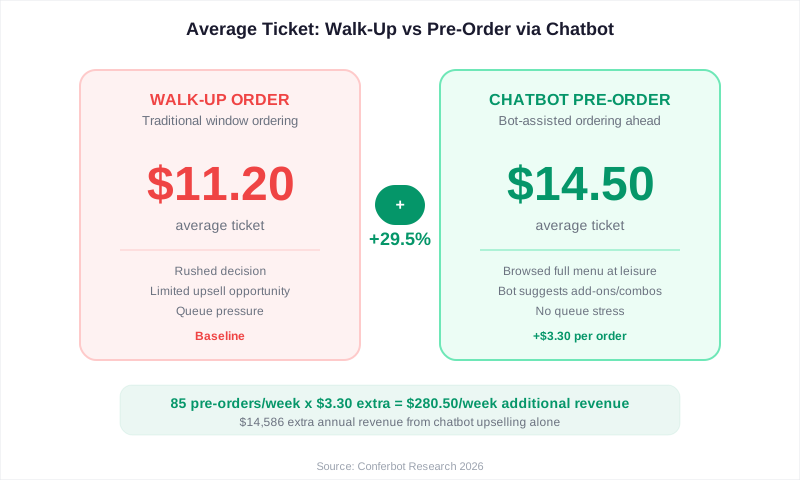
Pre-ordering is the single highest-impact revenue feature a food truck chatbot can offer, a trend validated by National Restaurant Association research on mobile ordering adoption. It simultaneously increases revenue by capturing orders from time-constrained customers who would otherwise walk away, reduces wait times for all customers including walk-ups, decreases food waste through better demand forecasting, and improves order accuracy by eliminating noisy, rushed verbal ordering. Here is how to design an effective pre-order system for your food truck chatbot.
Order Flow Design
The pre-order conversation should be quick and intuitive, completable in under 2 minutes. The chatbot presents the menu categories, the customer taps or types their selections, the chatbot confirms each item with customization options, and then presents the order summary with total price. The customer selects a pickup time from available 10-minute windows and confirms the order. The entire interaction should require no more than 8 to 10 messages from the customer. Avoid over-complicated customization trees. If your burrito has 15 possible topping combinations, offer a few popular preset options (Classic, Loaded, Veggie) alongside a Custom option for customers who want to specify every ingredient. This speeds up the ordering process for the 80 percent of customers who are happy with a standard configuration.
Time Slot Management
Capacity management is critical. Without it, you risk accepting more pre-orders than you can fulfill, creating delays that frustrate both pre-order and walk-up customers. Determine your maximum pre-order capacity per time slot based on your kitchen throughput. If you can prepare 6 orders per 10-minute window beyond walk-up demand, set the pre-order limit at 6 per slot. When a slot fills up, the chatbot automatically offers the next available time. During high-demand periods, you can temporarily reduce time slot availability to ensure quality is maintained. The chatbot should also allow a cutoff time before each slot. If you need 15 minutes of lead time to prepare pre-orders, a customer should not be able to order for a slot that starts in 5 minutes.
Payment Integration
Offering pre-payment through the chatbot provides two benefits: it reduces no-show rates (customers who pre-order but never pick up), and it speeds up the pickup process since no payment transaction is needed at the window. Integrate with Square, Stripe, or PayPal for seamless in-chat payment. However, always offer a pay-at-pickup option since some customers are uncomfortable with online payment, and eliminating that barrier ensures you do not lose orders over payment friction. A hybrid approach works best: pre-payment is the default with a small incentive (5 percent discount for pre-paid orders), but pay-at-pickup is always available.
Order Confirmation and Ready Notification
After the order is placed, the chatbot sends a confirmation message with the order number, items ordered, pickup time, location, and any special instructions. Fifteen minutes before the pickup time, the chatbot sends a reminder. When the order is ready for pickup, the chatbot sends a notification. This three-touch communication sequence (confirmation, reminder, ready notification) reduces no-show rates from the industry average of 15 to 20 percent for phone orders to 3 to 5 percent for chatbot orders. The reminder is especially important for food trucks because customers may need navigation guidance to your location and need time to walk or drive there.
Managing No-Shows and Cancellations
Despite best efforts, some customers will not show up for their pre-orders. Implement a clear cancellation policy communicated at the time of ordering: free cancellation up to 30 minutes before pickup, no refund for no-shows. For pre-paid orders, offer a credit toward a future order rather than a refund to retain the revenue while maintaining goodwill. Track no-show rates by customer. If a specific customer has no-showed three times, the chatbot can require pre-payment for future orders. These policies, communicated transparently, protect your revenue without alienating customers.
Real-Time Location Sharing: The Feature Your Customers Want Most
In a survey of food truck customers, 72 percent cited not knowing where the truck is today as the primary reason they eat at a food truck less often than they would like. Location uncertainty is the biggest barrier to repeat business for mobile food vendors. A chatbot with real-time location sharing eliminates this barrier entirely.
How Location Sharing Works
The simplest implementation is a manually updated location variable in the chatbot. Each morning, the truck operator sends a message to the chatbot admin panel or dashboard with today's location details: address, cross street, landmark, hours, and any special notes. The chatbot stores this as the current location and serves it to every customer who asks. More advanced implementations use GPS integration with the truck's location tracker or the operator's phone, automatically updating the chatbot's location data in real time. This is ideal for trucks that make multiple stops per day or operate in areas where exact parking spots vary.
Location Update Broadcasts
Beyond responding to individual location inquiries, the chatbot should proactively broadcast location updates to subscribers. The typical broadcast schedule for food trucks includes a morning update at 8 or 9 AM with the day's location schedule, a lunch reminder at 11 AM confirming the location and any specials, and an alert 30 minutes before closing. These broadcasts keep your food truck top of mind and reduce the friction between thinking about getting food and actually ordering. The difference between a customer seeing your Instagram post in a sea of content and receiving a direct message that says We are at Main Street today with fresh poke bowls ready for pre-order is enormous in terms of conversion.
Google Maps Integration
Always include a Google Maps link in location responses and broadcasts. The link should open directly to navigation so the customer can tap once and get driving or walking directions. Format the link as: maps.google.com with the query parameter set to your exact address. This eliminates the friction of copying an address and pasting it into a maps app. Every extra step between the customer learning your location and arriving at your truck is a step where they might decide it is too much effort and eat somewhere closer. Making navigation one-tap removes that friction completely.
Multi-Truck Fleet Location Management
For operators running multiple trucks, the chatbot should display all truck locations simultaneously or allow the customer to filter by proximity to their current location. The chatbot asks: Which area are you in today? and then shows the nearest truck location with estimated distance and travel time. Fleet operators can manage all truck locations from a single admin dashboard, with each truck operator updating their own location through a dedicated admin channel. This centralized management with distributed updates scales cleanly as the fleet grows from 2 trucks to 20.
Deploying the location-sharing chatbot on your website is the starting point, but for maximum reach, extend it to every platform where your customers already spend time, including WhatsApp, Facebook Messenger, and Instagram DMs.
Digital Loyalty Programs: Turning One-Time Customers into Regulars
Customer retention is the most underinvested growth lever in the food truck industry, reflecting the retention economics documented by Harvard Business Review. Acquiring a new customer costs five to seven times more than retaining an existing one, yet most food trucks spend all their energy on acquisition (social media posts, festival appearances, location scouting) and virtually nothing on retention. A chatbot-managed digital loyalty program flips this equation by making retention automatic, measurable, and highly effective.
Why Paper Punch Cards Fail
The traditional food truck loyalty tool, the paper punch card, has a catastrophic failure rate. Research shows that 80 percent of punch cards are lost before the reward is earned. Customers forget to bring them, they go through the wash, they fall out of wallets. Even when kept, punch cards provide zero data: you do not know who your loyal customers are, how frequently they visit, what they order, or when they are likely to return. A digital loyalty program through the chatbot eliminates every one of these failure modes while providing rich customer data that drives business decisions.
Designing Your Loyalty Program Structure
The most effective loyalty structures for food trucks are simple and transparent. Two models work particularly well. The visit-based model rewards after a set number of purchases: buy 9 meals, get the 10th free. The spend-based model rewards after a cumulative spending threshold: earn $5 credit for every $75 spent. The visit-based model is simpler to communicate and drives frequency, while the spend-based model encourages higher average order values. Choose the model that aligns with your primary business goal. If you need more frequent visits, use visit-based. If you need higher average orders, use spend-based. Some trucks implement a hybrid: a visit-based reward for the base program plus bonus points for orders above a certain dollar threshold.
Chatbot Loyalty Tracking
The chatbot tracks each customer's purchases and loyalty progress automatically. After each order through the chatbot, the loyalty balance updates and the customer receives a message: Great choice! You have earned 1 loyalty point. Your balance is 7 out of 10 for a free meal. When a customer is close to a reward, the chatbot sends a proactive message: You are just 2 visits away from a free meal. Come see us at River Park tomorrow! This nudge is remarkably effective because it creates a sense of progress and invested effort that motivates the next purchase. Behavioral economics research on the endowed progress effect shows that people who feel close to a goal are significantly more likely to complete it.
Birthday and Anniversary Rewards
During the loyalty program signup, collect the customer's birthday month. On their birthday (or during their birthday week), the chatbot sends a personalized message with a special offer: Happy birthday! Your next meal is on us. Come see us this week and mention your birthday reward at the window. Birthday rewards generate enormous goodwill and social media sharing. A customer who receives a free birthday meal is highly likely to post about it, bringing their friends along and generating organic word-of-mouth marketing that costs you the price of a single meal.
Referral Program Integration
Extend the loyalty program with a referral component: Give your friend this code, and you both get a free side with your next order. The chatbot generates unique referral codes for each customer, tracks redemptions, and credits both the referrer and the new customer. Referral programs are the most cost-effective customer acquisition channel for food trucks because they leverage your existing customer base as brand ambassadors. The cost per acquired customer through referrals (the free side, worth perhaps $3) is a fraction of the cost through paid advertising or event fees. Tracking referral performance alongside other metrics through chatbot analytics helps you understand exactly which acquisition channels deliver the best return.
Capturing Catering and Event Leads: Your Highest-Margin Revenue Stream
Catering and event bookings represent the most profitable revenue stream for food trucks, aligning with catering market trends tracked by IBISWorld's catering industry analysis, with margins typically 30 to 50 percent higher than daily street service. A single corporate catering event can generate the same revenue as three or four regular service days. Yet many food trucks lose catering leads simply because they cannot respond to inquiries quickly enough. The chatbot solves this by providing instant, professional catering intake around the clock.
The Catering Inquiry Flow
Design the catering inquiry as a structured conversation that collects all information needed to prepare an accurate quote. The chatbot asks about the event type (corporate lunch, private party, wedding, festival, office happy hour), the date and time with a calendar selector if possible, the location and any access restrictions (loading dock required, distance from parking, power availability), the estimated guest count with a range option for uncertain estimates, the budget range or per-person budget target, menu preferences and dietary requirements (vegetarian options, gluten-free, nut allergies), and contact information including the best time to call back. After collecting this information, the chatbot presents a summary for confirmation and provides an expected response timeline. A well-structured catering inquiry chatbot collects more complete information than a phone call because the structured format ensures no critical detail is missed.
Instant Quote Estimation
For food trucks with standardized catering packages, the chatbot can provide instant ballpark estimates. Based on the guest count and menu selection, the chatbot calculates a price range: Based on 50 guests and our Taco Bar package, the estimated cost is $750 to $950 depending on final menu selections. A detailed quote will be sent within 24 hours. This instant estimate serves two purposes: it qualifies the lead by establishing budget alignment early, and it provides immediate value that keeps the prospect engaged while waiting for the detailed follow-up. Prospects who receive an instant estimate are 3 times more likely to convert than those who are told someone will get back to you because the uncertainty of not knowing the price range causes many to continue shopping competitors.
Catering Package Presentation
Use the chatbot to present your catering packages in an organized, visual format. Many food trucks offer tiered catering options: a basic package with a limited menu for budget-conscious events, a standard package with the full menu and serving equipment, and a premium package with the full menu plus specialty items, custom branding, and extended service hours. The chatbot walks the prospect through each package, highlighting what is included and the per-person price point. This structured presentation is more effective than a PDF menu emailed as an attachment because it is interactive, the prospect can ask questions about each package, and the chatbot can make recommendations based on the event details already collected.
Catering Lead Follow-Up Automation
After the chatbot captures a catering inquiry, automated follow-up sequences nurture the lead toward booking. The sequence includes an immediate confirmation email with the inquiry summary and expected timeline, a detailed quote within 24 hours based on the collected requirements, a follow-up message 48 hours after the quote asking if there are questions, a testimonial and photo showcase from previous similar events, and a final follow-up one week after the quote with a limited-time booking incentive. This automated sequence ensures no catering lead is neglected, even during busy service periods when manual follow-up falls through the cracks. Food trucks that implement automated catering follow-up report a 40 to 60 percent increase in catering booking conversion rates compared to manual follow-up processes.
Mobile-First Design: Optimizing for Customers on the Go
Food truck customers interact with your chatbot almost exclusively on mobile devices. According to Google research on mobile user behavior, 53 percent of mobile site visitors leave a page that takes longer than 3 seconds to load, making speed optimization critical for food truck chatbots. They are walking to your truck, standing in line, or checking your location from their office during lunch hour. This means every aspect of your chatbot must be optimized for the mobile experience: fast loading, thumb-friendly interactions, minimal typing, and instant responses.
Quick Reply Buttons Over Free Text
Minimize the amount of typing required. Instead of asking What would you like to order? and requiring the customer to type out their selections, present quick-reply buttons with menu items. Tap-based interactions are 3 to 5 times faster than typing on a mobile keyboard and produce zero input errors. The entire pre-order process should be completable with taps alone, with free-text input reserved only for special requests or customization notes. Quick-reply buttons also guide the customer through the ordering flow, preventing confusion about available options or correct item names.
Concise Messages
Mobile screens are small. Long chatbot messages require scrolling and feel overwhelming. Keep each message concise: one idea per message, clear and direct language, and generous use of line breaks and formatting. Instead of a single 200-word message describing all your daily specials, send a short introduction followed by individual messages for each special with name, description, and price. This card-like presentation is easier to scan and process on a small screen.
Image Optimization
Food is visual, and menu photos significantly increase order conversion. However, large images slow down loading on mobile connections and consume data. Optimize all menu images for mobile: compress to under 100KB per image, use WebP format where supported, and implement lazy loading so images only download when the customer scrolls to them. A chatbot that loads slowly on a spotty cellular connection in a parking lot loses customers. Speed is non-negotiable for food truck chatbots because your customers are literally standing outside, hungry, and impatient.
One-Tap Location Navigation
The location response should include a tappable link that opens the customer's default navigation app (Google Maps, Apple Maps, or Waze) with directions to your current location. This one-tap navigation is the difference between a customer deciding to visit and a customer deciding it is too much effort to figure out where you are. On mobile, every tap and every second of friction costs conversions. The location link should open directly to navigation mode, not just show the pin on a map, so the customer is immediately guided to your truck.
Offline and Low-Connectivity Handling
Food trucks often operate in areas with poor cellular connectivity: festivals, parks, industrial areas, and downtown canyons. Your chatbot should handle connectivity issues gracefully. If the chatbot cannot connect, it should display cached information (last known menu and location) rather than a blank error screen. Pre-order confirmations should be sent via SMS as a backup in addition to in-chat notifications, since SMS is more reliable on poor connections than data-dependent chat platforms. Designing for the worst-case connectivity scenario ensures your chatbot works reliably in real-world food truck environments, not just in the comfortable WiFi of your kitchen. Using a no-code chatbot builder that handles mobile optimization automatically saves you from having to solve these technical challenges from scratch.
Measuring the ROI of Your Food Truck Chatbot
A food truck chatbot is a business investment, and like any investment, it needs to demonstrate measurable return. The good news is that food truck chatbot ROI is straightforward to measure because the revenue impact is direct and visible. Here are the metrics that matter and the benchmarks you should target.
Pre-Order Revenue
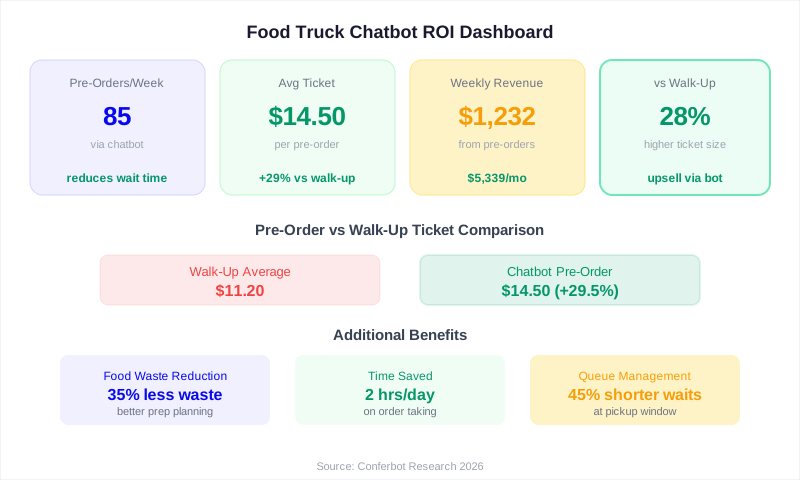
Track the total revenue generated through chatbot pre-orders as a percentage of daily total revenue. Food trucks with established pre-order systems typically see 25 to 40 percent of daily revenue coming through pre-orders within 3 months of launch. If your average daily revenue is $1,200, a chatbot-driven pre-order system adding $300 to $480 per day represents $6,600 to $10,560 per month in incremental revenue (some of this is shifted from walk-up rather than purely incremental, but the net impact is positive because pre-orders capture customers who would not have waited in line).
Catering Lead Value
Track the number of catering inquiries received through the chatbot, the conversion rate from inquiry to booking, and the average booking value. A food truck receiving 8 to 12 catering inquiries per month through the chatbot, converting at 30 percent, with an average booking value of $2,500, generates $6,000 to $9,000 in monthly catering revenue. Compare this to the catering revenue before the chatbot to isolate the incremental impact.
Customer Retention and Loyalty Program Impact
Measure the percentage of orders from loyalty program members versus non-members, the average order frequency of loyalty members versus non-members, and the average order value difference. Loyalty program members typically order 2.5 to 3 times more frequently than non-members and spend 12 to 18 percent more per order. If your loyalty program has 500 active members ordering an average of 3 times per month at $14 per order, that is $21,000 per month in trackable loyalty-driven revenue.
Operational Efficiency Gains
Quantify the time saved on location inquiries (previously handled via DMs and phone), order accuracy improvement (fewer remakes due to misunderstood verbal orders), food waste reduction through better demand forecasting from pre-orders, and reduced phone time for catering inquiries. Most food truck operators report saving 1 to 2 hours per day on customer communication after deploying a chatbot. At an imputed value of $25 to $50 per hour for the operator's time, that is $550 to $2,200 per month in time savings alone.
Subscriber Growth and Broadcast Effectiveness
Track the growth of your notification subscriber list and the revenue impact of broadcast messages. Measure how many customers visit after receiving a location broadcast versus a typical day without a broadcast. Food trucks with 1,000 or more active subscribers report that broadcast days generate 20 to 35 percent higher revenue than non-broadcast days, directly attributable to the chatbot driving awareness and foot traffic.
Total ROI Calculation
Sum all revenue impacts (pre-orders, catering, loyalty, broadcast-driven visits, time savings) and subtract the chatbot platform cost (typically $30 to $100 per month for food truck plans). Most food trucks achieve a 20x to 50x return on chatbot investment within the first 3 months. A chatbot costing $50 per month that generates $2,000 in incremental monthly revenue delivers a 40x ROI. This makes a chatbot one of the highest-ROI investments a food truck can make, second only to the truck itself and the food you serve. For a detailed calculation specific to your food truck, use the Conferbot ROI calculator to estimate your potential returns based on your current revenue and customer volume.
Getting Started: Setting Up Your Food Truck Chatbot Step by Step
Setting up a food truck chatbot does not require technical skills, a large budget, or weeks of development time. With modern no-code platforms, you can have a fully functional chatbot live within a single afternoon. Here is your step-by-step implementation plan.
Step 1: Choose Your Platforms
Decide where your chatbot will live based on where your customers are. For most food trucks, the priority order is: your website (if you have one), Instagram DM, Facebook Messenger, and WhatsApp. If you do not have a website, start with Instagram and Facebook Messenger since those are where food truck customers most commonly discover and engage with trucks. If your customer base skews toward WhatsApp usage, prioritize that channel. You can always add channels later, so start with the one or two that will reach the most customers immediately.
Step 2: Set Up Your Menu
Enter your complete menu into the chatbot platform with item names, descriptions, prices, and photos. Take appetizing photos in good natural light. Organize items into logical categories. Mark items that are available daily versus items that rotate. If you have items with common customizations, set up the customization options (protein choice, spice level, toppings, etc.) during this step. The menu is the foundation of your chatbot, so invest time in making it accurate, complete, and visually appealing.
Step 3: Configure Location Sharing
Set up the location sharing feature with your default schedule if you have regular spots. For example, if you are at the downtown plaza every Tuesday and the tech park every Wednesday, pre-configure those recurring locations. Set up the process for updating your location daily, whether that is a message to the admin panel, a dashboard button, or a scheduled update. Test the Google Maps link to ensure it opens correctly on both iOS and Android devices. This is the feature your customers will use most, so make sure it works flawlessly before launch.
Step 4: Build the Pre-Order Flow
Configure the pre-order conversation flow using the platform's visual flow builder. Set up the menu selection with quick-reply buttons, customization options for items that need them, time slot selection with capacity limits, order summary and confirmation, and payment integration or pay-at-pickup option. Test the complete flow multiple times, placing orders as a customer would, to verify that the experience is smooth and the order details are captured correctly. Have a friend test it too, someone unfamiliar with the system will identify confusing steps that you might overlook.
Step 5: Launch the Loyalty Program
Configure your loyalty program structure (visit-based or spend-based), set the reward thresholds, and write the messages that customers will see when earning points and approaching rewards. The loyalty program can be launched simultaneously with the chatbot or added a few weeks later after the initial ordering features are stable and being used regularly. Starting with a launch promotion, such as sign up for our loyalty program and get your first side free, accelerates enrollment.
Step 6: Set Up Catering Inquiry Flow
Build the catering inquiry conversation that collects event details. Configure the email notification that sends you the inquiry details immediately. Set up the confirmation message the customer receives. Test with a sample inquiry to ensure all data flows correctly from the chatbot to your email and, if applicable, to a spreadsheet or CRM where you track catering leads.
Step 7: Promote Your Chatbot
Announce the chatbot on all your marketing channels. Post on Instagram and Facebook: Now you can pre-order, check our location, and earn rewards by messaging us. Include a link or QR code. Print a small QR code sticker on your truck window that links to the chatbot. Mention the chatbot when taking walk-up orders: Next time, skip the line by pre-ordering through our chatbot. The first 30 days are critical for adoption, so promote aggressively until a critical mass of your regular customers are using it. Explore Conferbot templates to find pre-built food service chatbot flows that you can customize for your menu and brand.
Food Truck Chatbot Success Stories and Industry Benchmarks
Food truck operators across the country are using chatbots to transform their businesses from weather-dependent, location-dependent operations into data-driven, customer-connected brands. These success stories and industry benchmarks demonstrate what is achievable with a well-implemented chatbot.
The Taco Truck That Doubled Catering Revenue
A Mexican food truck in Austin, Texas, deployed a chatbot on their website and Instagram in January 2026. Before the chatbot, catering inquiries came through voicemail and DMs that the owner often could not respond to until late evening. The chatbot captured 14 catering inquiries in the first month, compared to the 3 to 4 that previously made it through the manual process. By March, the truck was booking 5 catering events per month at an average of $2,800 per event, up from 1 to 2 events per month previously. The chatbot's structured inquiry form also improved the quality of leads: every inquiry included complete event details, enabling faster and more accurate quoting.
The BBQ Truck That Cut Wait Times by 40 Percent
A barbecue food truck in Nashville implemented a pre-order chatbot to address the 25-minute peak-hour waits that were driving away lunch customers. Within 6 weeks, 35 percent of lunch orders came through pre-orders. Average wait time for walk-up customers dropped from 25 minutes to 15 minutes because the pre-made orders were prepared in advance during slower prep periods. Daily revenue increased by 22 percent because customers who previously saw the line and left were now pre-ordering. The truck owner also reported significant reduction in order errors since chatbot orders were written, not verbal, eliminating the miscommunications that plagued busy service windows.
The Poke Bowl Truck That Built 2,000 Loyal Subscribers
A poke bowl food truck operating in San Diego launched a chatbot with daily location notifications and a loyalty program. Starting from zero, the truck grew its notification subscriber list to 2,000 customers within 5 months through QR codes on the truck, social media promotion, and a sign-up incentive of a free drink with the first chatbot order. On days with location broadcasts, the truck served an average of 145 customers compared to 98 on non-broadcast days, a 48 percent increase directly attributable to the chatbot notification. The loyalty program achieved a 67 percent enrollment rate among chatbot users, and loyalty members visited 2.8 times more frequently than non-members.
Industry Benchmarks for Food Truck Chatbots
Based on aggregated data from food truck chatbot deployments, here are the benchmarks you should target. For pre-order adoption, 25 to 40 percent of daily revenue through pre-orders within 90 days is achievable. For location notification subscribers, aim for 500 subscribers within 3 months and 1,000 within 6 months with active promotion. For catering lead capture, 8 to 15 monthly inquiries for trucks that actively promote the catering chatbot feature. For loyalty program enrollment, 50 to 70 percent of chatbot users opt into the loyalty program. For daily revenue increase, 15 to 30 percent incremental revenue from combined chatbot features (pre-orders plus catering plus loyalty plus broadcasts). These benchmarks assume consistent promotion of the chatbot and regular content updates. Food trucks that deploy a chatbot but do not promote it or keep the menu updated see significantly lower adoption and impact. The chatbot is a tool that amplifies your marketing efforts, not a replacement for them.
Was this article helpful?
About the Author

The Conferbot team specializes in conversational AI, chatbot strategy, and customer engagement automation. With deep expertise in building AI-powered chatbots, they help businesses deliver exceptional customer experiences across every channel.
View all articles
Social Media Integration: Connecting Instagram, Facebook, and WhatsApp
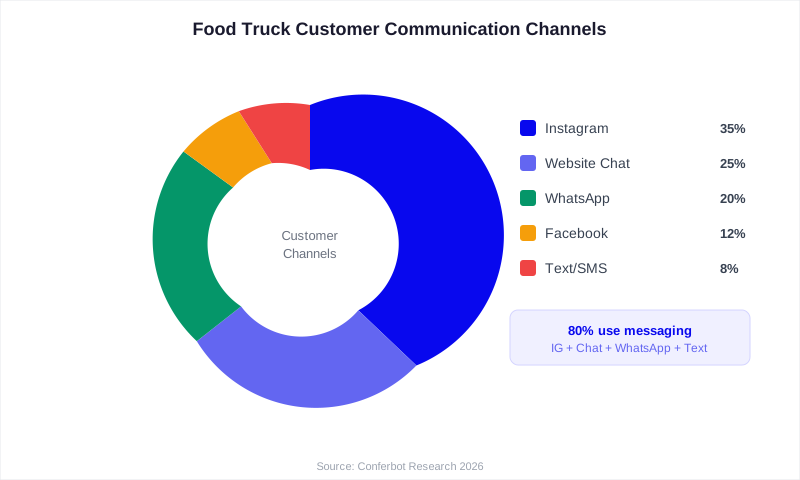
Food trucks live and die by social media. Instagram and Facebook are the primary discovery channels, and WhatsApp is increasingly the communication channel of choice for food-related businesses. Your chatbot must integrate seamlessly with these platforms to meet customers where they already are rather than forcing them to visit a separate website or download an app.
Instagram DM Automation
Instagram is the most important social media platform for food trucks. The visual nature of the platform showcases food beautifully, and Instagram Stories are the primary way food trucks communicate daily locations and specials. With Instagram Messenger API integration, your chatbot can respond to DMs automatically. When a follower messages your Instagram account with where are you or menu, the chatbot responds instantly with your location, menu, and pre-order link. This is transformative because Instagram engagement drives significant inquiry volume. A food truck with 5,000 Instagram followers might receive 20 to 50 DMs per day asking location and menu questions. Responding manually to each DM during prep and service hours is impractical. The chatbot handles them all instantly, converting social media engagement into actual orders.
Facebook Messenger Integration
Facebook Messenger remains a critical channel for food trucks, especially for catering inquiries and event bookings. Your chatbot should operate on Facebook Messenger with the same capabilities as your website chatbot: location sharing, menu display, pre-ordering, and catering inquiry intake. Facebook's platform also supports persistent menus and quick reply buttons that create a smooth, app-like experience within the Messenger interface. For food trucks that maintain an active Facebook page with a following, enabling the Messenger chatbot is a straightforward process that immediately captures leads and orders from a channel that was previously unmonetized beyond likes and comments.
WhatsApp for Direct Customer Communication
According to WhatsApp Business data, over 200 million businesses use the platform globally. WhatsApp is the preferred communication channel for many demographics, particularly in areas with large Hispanic, Asian, or international communities where WhatsApp usage exceeds SMS. A WhatsApp chatbot for your food truck enables direct, personal communication that feels like texting a friend rather than interacting with a business. WhatsApp also supports rich media: send menu photos, location pins, order confirmations with images, and promotional graphics directly in the chat. The 98 percent open rate on WhatsApp messages, compared to 20 percent for email and 45 percent for SMS, makes it the most effective channel for location broadcasts and promotional offers.
Cross-Platform Consistency
Regardless of which platform a customer uses to interact with your chatbot, the experience should be consistent. The menu, pricing, loyalty balance, and location information should be identical across Instagram, Facebook, WhatsApp, and your website. This requires a centralized chatbot platform that synchronizes data across channels. A customer who earned loyalty points through a website pre-order should see those points reflected when they message your Instagram chatbot. This omnichannel consistency is a hallmark of professional food truck operations and is achievable through platforms that support multi-channel deployment from a single dashboard.
Social Media Content Automation
Some advanced chatbot platforms can trigger social media posts based on chatbot events. When you update your location in the chatbot dashboard, it simultaneously posts the location update to your Instagram Story, Facebook page, and WhatsApp broadcast list. This single-source-of-truth approach ensures consistency and saves the 15 to 20 minutes per day that many food truck operators spend manually posting the same location update across multiple platforms. That time savings adds up to over 90 hours per year, which is time you could spend developing new menu items, scouting locations, or simply taking a well-deserved break.