
Estimate your monthly chatbot conversation volume based on your website traffic and engagement patterns to find the right plan.
Traffic Details
Volume Estimate
The Starter Plan is perfect for your traffic volume!
No credit card required. Free 14-day trial.
How This Calculator Works
Three-step methodology combining your traffic data with industry benchmarks to project conversation volume.
Traffic-to-Conversation Conversion
Enter your monthly website visitors. The estimator applies your industry's average chat engagement rate, accounting for page placement, proactive triggers, and mobile vs. desktop traffic to produce a baseline monthly conversation count that reflects real-world behavior.
Seasonal & Growth Modeling
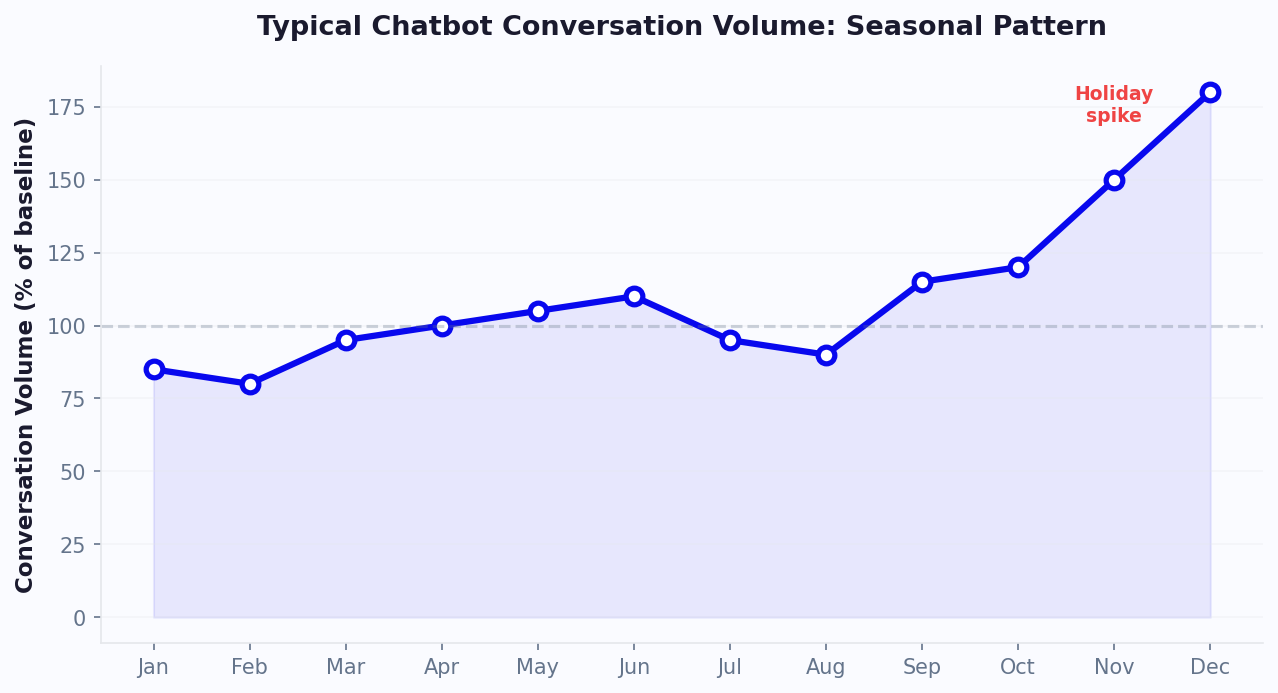
Traffic is never flat. The calculator layers in seasonal multipliers — holiday shopping spikes, end-of-quarter rushes — and compounds your month-over-month growth rate to project volume 3, 6, and 12 months into the future so you are never caught off guard.
Capacity & Plan Mapping
Once volume is projected, the tool maps it to agent capacity and chatbot plan tiers. You see how many concurrent chats your team needs at peak, whether your current plan covers the forecast, and when you will need to upgrade — all in a single view.
Why Forecasting Conversation Volume Matters
Every support operation lives or dies by its ability to match capacity to demand. Underestimate your conversation volume and customers wait in queues, satisfaction scores plummet, and revenue-generating chats bounce before an agent responds. Overestimate and you are paying for idle agent seats, oversized software plans, and infrastructure you do not need. Accurate volume forecasting is the single most impactful planning exercise a support leader can undertake.
The challenge is that chat volume is influenced by dozens of variables. Your website traffic is the starting point, but only a fraction of visitors engage with a chatbot. That engagement rate depends on placement — a bot on every page converts differently than one buried on a contact page. It depends on triggers — proactive messages that fire after 30 seconds on a pricing page can triple engagement compared to a passive icon in the corner. And it depends on your audience — returning visitors engage more than new visitors, mobile users engage less than desktop users, and B2B traffic patterns look nothing like B2C.
Seasonality adds another layer of complexity. E-commerce businesses see conversation volume surge 200-400% during Black Friday and the holiday shopping season. SaaS companies experience spikes at the end of each quarter when prospects are evaluating tools before budget deadlines. Without modeling these patterns, your "average" month forecast leaves you dangerously under-resourced during peaks.
Growth projection is equally critical. Most businesses that deploy a chatbot see conversation volume increase 20-40% in the first six months as customers discover the channel and begin to prefer it over phone and email. If you add the chatbot to new pages, enable new use cases like appointment booking or lead qualification, or run marketing campaigns that drive traffic, that growth compounds even faster. The analytics dashboard gives you real-time data to validate forecasts, but you need a forward-looking model from day one.
From a budgeting perspective, conversation volume directly maps to cost. Every chatbot platform — Conferbot included — structures pricing around monthly conversations or messages. If you underestimate volume, you hit overages or face mid-contract upgrades. If you overestimate, you pay for capacity you never use. The estimator above helps you land in the sweet spot: the plan tier that covers your projected volume with a reasonable buffer for growth.
For teams that blend AI chatbots with human agents, volume forecasting determines your staffing model. If the chatbot resolves 75% of conversations autonomously, your human agents only need capacity for the remaining 25%. But that 25% changes in absolute terms as total volume grows. The AI chatbot builder lets you continuously expand the bot's knowledge base to keep the automation rate high, but your staffing plan needs to account for the escalation volume at each stage of growth.
Companies that use data-driven capacity planning experience 35% shorter average queue times and 28% higher customer satisfaction compared to those that rely on gut-feel staffing decisions.
Source: McKinsey Digital Operations Report
Chat Engagement Rates by Industry
Average percentage of unique website visitors who engage with a chatbot, by industry vertical.
How to Optimize Volume Planning
Accurate forecasting is just the start. These strategies help you plan capacity and maximize chatbot ROI.
Analyze Traffic Patterns First
Use chatbot analytics alongside Google Analytics to map hourly, daily, and weekly traffic curves. Chat volume follows traffic but with a lag and a different peak-to-trough ratio you need to measure independently.
Plan for Seasonal Spikes
Your busiest month may see 2-4x the volume of your quietest. Build a seasonal calendar based on last year's data. For e-commerce businesses, plan bot training and staffing increases at least 6 weeks before Q4 peaks.
Set Up Auto-Scaling Rules
Configure your chatbot platform to handle surges automatically. With Conferbot's AI builder, the bot handles unlimited concurrent conversations natively, routing overflow from human agents to AI.
Monitor Queue Times
Queue time is the canary in the coal mine. When average wait times creep above 30 seconds, your volume has outpaced capacity. Set alerts at 20 seconds so you have a buffer to react — either shifting more to AI or pulling in additional agents during peaks.
Conversation Volume FAQ
Everything you need to know about chatbots for conversation volume.
Understanding Conversation Volume: What the Numbers Mean
Conversation volume forecasting is the foundation of every capacity planning decision in customer support. Get it wrong and you either overspend on idle agent seats or leave customers waiting in queues that tank satisfaction scores. The starting point is your traffic-to-conversation ratio, which measures the percentage of website visitors who engage with your chatbot. Industry averages range from 2% to 8% depending on placement, triggers, audience, and vertical. E-commerce sites typically see 4-6% engagement, SaaS companies 3-5%, and service businesses 4-7%. Proactive chat triggers can increase these baseline rates by 2-3x.
Seasonal patterns add critical complexity. E-commerce businesses routinely see conversation volume surge 200-400% during Black Friday and the holiday season. SaaS companies experience quarterly spikes as prospects evaluate tools before budget deadlines. Healthcare providers see surges during open enrollment periods. Without modeling these patterns, your average-month forecast leaves you dangerously under-resourced during peaks and over-provisioned during troughs. The key is building a seasonal calendar based on historical data and applying multipliers to your baseline forecast.
Growth projection is equally critical. Most businesses that deploy a chatbot see conversation volume increase 20-40% in the first six months as customers discover and prefer the channel over phone and email. Adding the chatbot to new pages, enabling new use cases like lead qualification or appointment booking, or running marketing campaigns that drive traffic each compound this growth. Use chatbot analytics to validate forecasts in real time and adjust your model monthly.
How to Use This Calculator
Enter your monthly website visitors from Google Analytics. Select your industry to apply the appropriate engagement rate benchmark. Adjust the engagement rate if you plan to use proactive triggers, which typically increase rates by 2-3x. Set your month-over-month growth rate, typically 5-10% for growing businesses. The estimator produces baseline monthly conversations, 3-month, 6-month, and 12-month projections, peak-month estimates with seasonal multipliers, and capacity recommendations including how many concurrent chats your team needs to handle at peak. Use the output to select the right chatbot plan tier and determine how many human agents you need for escalated conversations.
Industry Benchmarks
| Industry | Passive Engagement | With Proactive Triggers |
|---|---|---|
| E-commerce | 4.5% | 10-14% |
| SaaS / Technology | 3.2% | 7-10% |
| Healthcare | 2.1% | 5-7% |
| Financial Services | 2.8% | 6-9% |
Volume Estimation Formula Explained
The base formula is: Monthly Conversations = Monthly Visitors x Engagement Rate x (1 + Growth Rate)^months. For seasonal adjustment: Peak Month Volume = Base Volume x Seasonal Multiplier. For example, an e-commerce site with 200,000 monthly visitors and a 4.5% engagement rate generates 9,000 conversations per month as a baseline. With 8% month-over-month growth, that becomes 9,720 in month one, 10,498 in month two, and so on. During Black Friday (3x seasonal multiplier), peak volume hits 31,494 conversations. If your chatbot handles 75% autonomously, you need agent capacity for 7,874 human conversations during that peak month. Dividing by 20 working days and 8-hour shifts, you need approximately 49 concurrent agent chats per hour at peak, which translates to roughly 16-25 agents depending on handle time.
 Tips to Improve Your Results
- Map hourly traffic curves using chatbot analytics alongside Google Analytics. Chat volume follows traffic but with a different peak-to-trough ratio that you need to measure independently.
- Build a seasonal calendar based on last year's data. Plan bot training and staffing increases at least 6 weeks before anticipated volume spikes.
- Configure auto-scaling rules so your chatbot handles surges automatically. With Conferbot, the bot handles unlimited concurrent conversations natively, routing overflow from human agents to AI.
- Monitor queue times as an early warning signal. When average wait exceeds 20 seconds, volume has outpaced capacity. Set alerts to react before customer experience degrades.
- Use the volume forecast to select the right chatbot plan tier. Overestimating wastes budget; underestimating triggers overages. Aim for a plan that covers projected volume with a 20% buffer.
Ready to see these numbers in action? Start your free Conferbot account and deploy a chatbot in under 10 minutes. Track all these metrics automatically with our built-in analytics dashboard.
Related Calculators
Calculate the total cost of supporting customers across chat, email, phone, and social media channels.
Calculate →Compare the cost of round-the-clock human staffing against AI chatbot automation for after-hours support.
Calculate →See how faster response times affect conversion rates, customer satisfaction, and revenue.
Calculate →Continue Exploring
Explore features, connect third-party tools, and browse ready-made templates.
Um Chatbot,
Todos os Canais
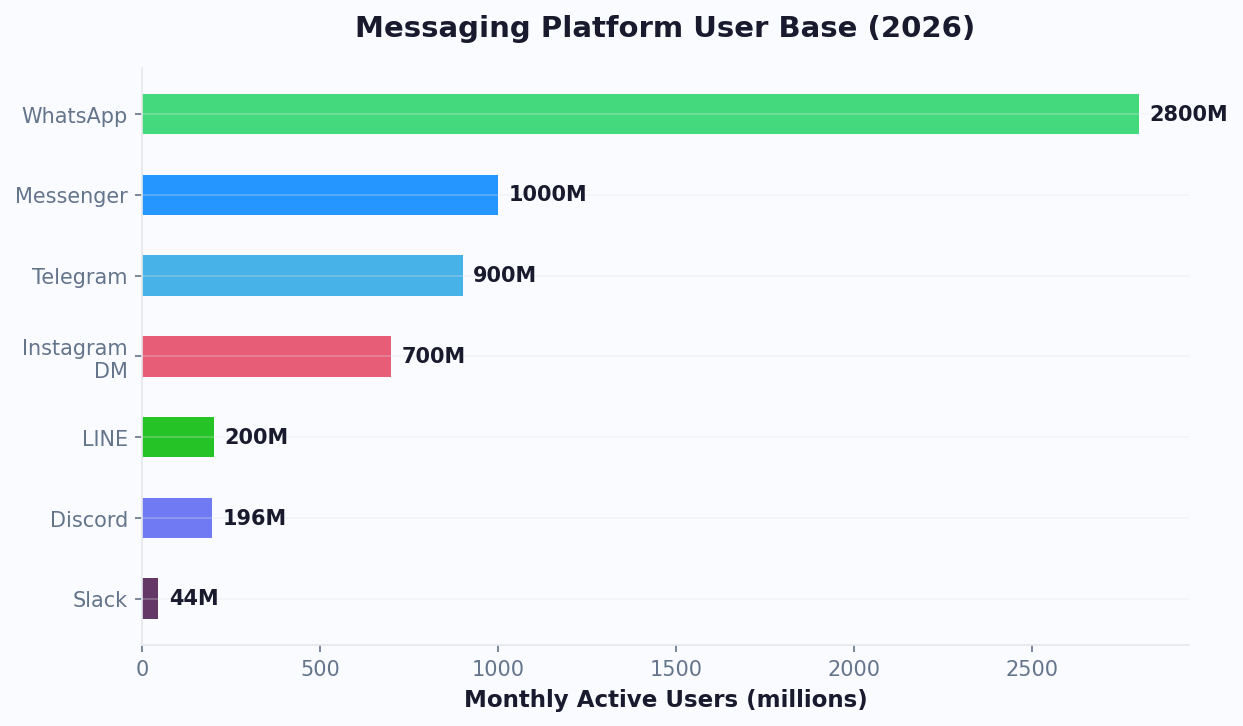
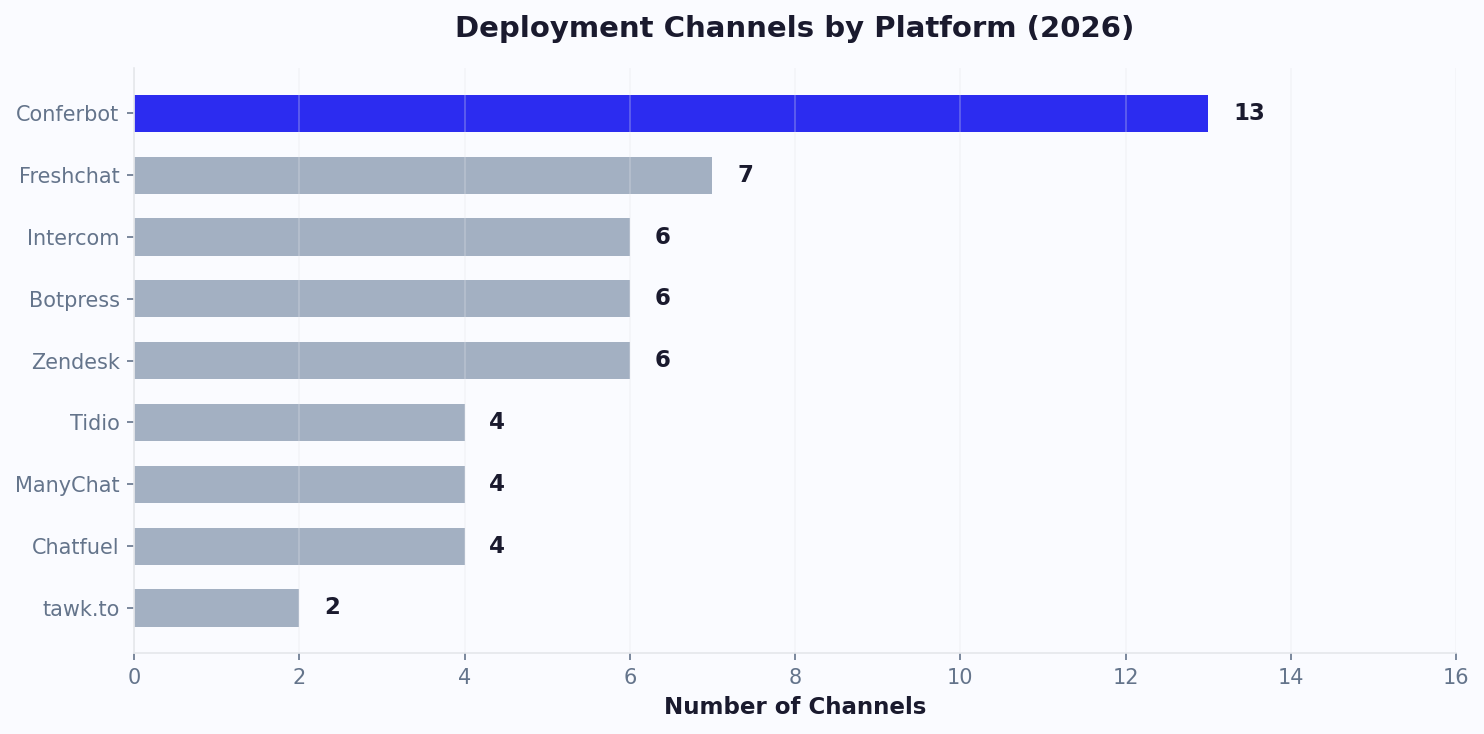
Seu chatbot funciona no WhatsApp, Messenger, Slack e mais 6 plataformas. Crie uma vez, implante em todos os lugares.
View All Channels