The Lead Economics of Plumbing and Electrical Businesses: Why Every Missed Call Costs $500+
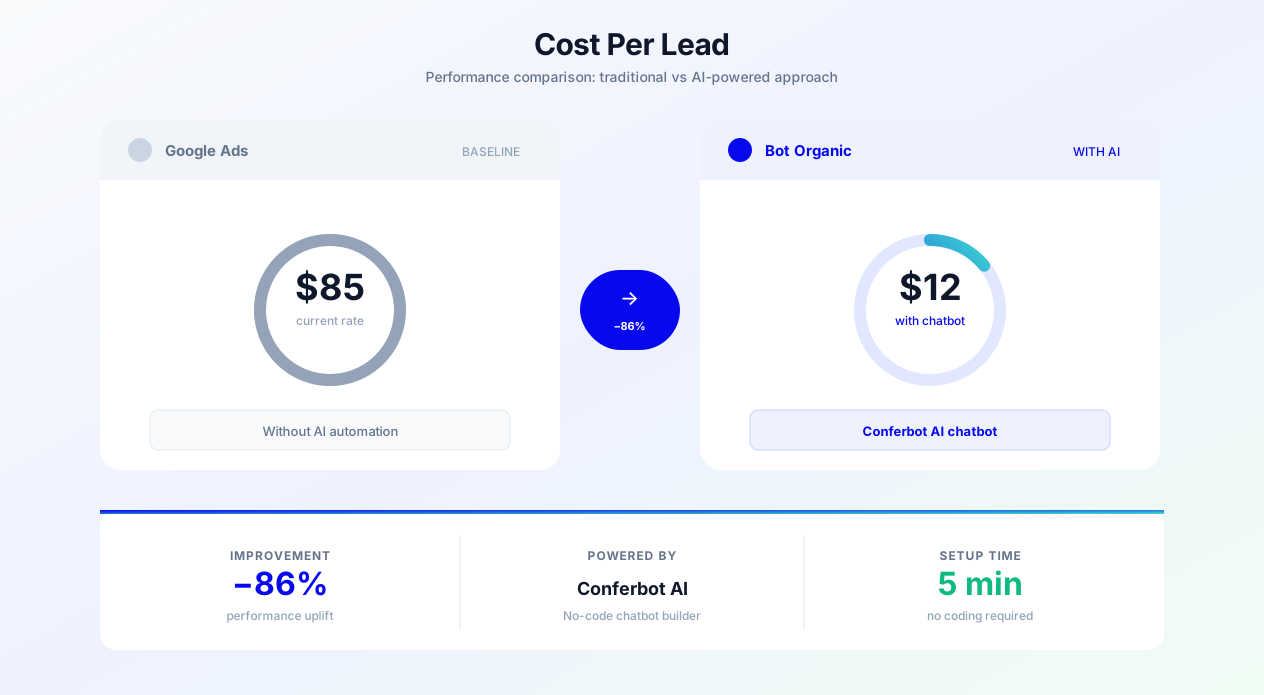
In the plumbing and electrical trades, leads are expensive and fleeting. The average cost per lead from Google Ads ranges from $45 to $125 for plumbers and $50 to $140 for electricians, according to WordStream's industry benchmark data. With average job values ranging from $250 for a simple repair to $5,000+ for a panel upgrade or sewer line replacement, every lead that goes unanswered represents $500 or more in lost revenue—not counting the lifetime value of a customer who becomes a repeat client for ongoing maintenance and future projects.
The challenge is acute: 72% of homeowners calling a plumber or electrician need service within 24 hours, and 38% have an emergency requiring same-day response. These customers are not filling out contact forms and waiting patiently for a callback—they are calling the next company on Google until someone answers. According to ServiceTitan's industry data, the first plumber or electrician to answer the phone books the job 78% of the time. Speed is not just a competitive advantage; it is the entire game.
Yet most plumbing and electrical businesses are operated by 1 to 5 technicians who spend their days in the field—under houses, in attics, behind walls—unable to answer phones. The typical trade business misses 40 to 60% of incoming calls during working hours and nearly 100% of after-hours calls. With answering services costing $300 to $800 per month and often providing poor lead qualification, many contractors simply accept lost leads as a cost of doing business.
AI chatbots change this equation fundamentally. A chatbot on your website, Google Business Profile, and messaging platforms captures every lead instantly—at 3 AM during a pipe burst or at noon on Saturday when an electrical panel is sparking. It qualifies the lead (emergency vs. scheduled, residential vs. commercial, service type, location), provides preliminary price estimates, books confirmed appointments into your schedule, and dispatches emergency alerts to on-call technicians. The result: 40 to 55% more booked jobs, 60% reduction in missed leads, and $50,000 to $200,000+ in additional annual revenue for a typical 3 to 5 technician operation.
This guide covers the complete playbook for implementing an AI chatbot in a plumbing or electrical business: lead economics and ROI modeling, emergency vs. scheduled job routing, service area validation, price estimate generation, booking and dispatch automation, after-hours lead capture strategies, field service management integration, customer follow-up automation, and a step-by-step implementation plan. Whether you are a solo plumber or a multi-truck electrical contractor, this guide provides the specific strategies and numbers for your business model.
Home Services Lead Economics: Understanding the True Cost of Missed Opportunities
Before investing in a chatbot, trade business owners need to understand the complete economics of their lead flow. Most underestimate how much revenue they leave on the table by missing calls and responding slowly.
The True Cost Per Lead
Lead costs for plumbers and electricians come from multiple sources, each with different economics:
| Lead Source | Avg Cost Per Lead | Avg Conversion Rate | Effective Cost Per Booking |
|---|---|---|---|
| Google Local Services Ads | $25 to $75 | 30 to 45% | $56 to $250 |
| Google Search Ads (PPC) | $45 to $125 | 15 to 25% | $180 to $833 |
| Yelp Advertising | $35 to $90 | 10 to 20% | $175 to $900 |
| HomeAdvisor/Angi | $15 to $85 | 8 to 15% | $100 to $1,063 |
| Organic Google (SEO) | $5 to $15 (content cost amortized) | 20 to 35% | $14 to $75 |
| Referrals | $0 to $50 (referral bonus) | 50 to 70% | $0 to $100 |
| Website (organic traffic) | $8 to $20 | 12 to 22% | $36 to $167 |
The critical insight: when you miss a lead that cost $75 to acquire, you do not just lose that $75 in ad spend. You lose the entire job revenue ($250 to $5,000+), plus the lifetime customer value ($2,000 to $15,000 over 5 years for a residential client who calls you for all plumbing or electrical needs). A single missed emergency plumbing lead can represent $10,000+ in lifetime revenue walking to your competitor.
The After-Hours Revenue Gap
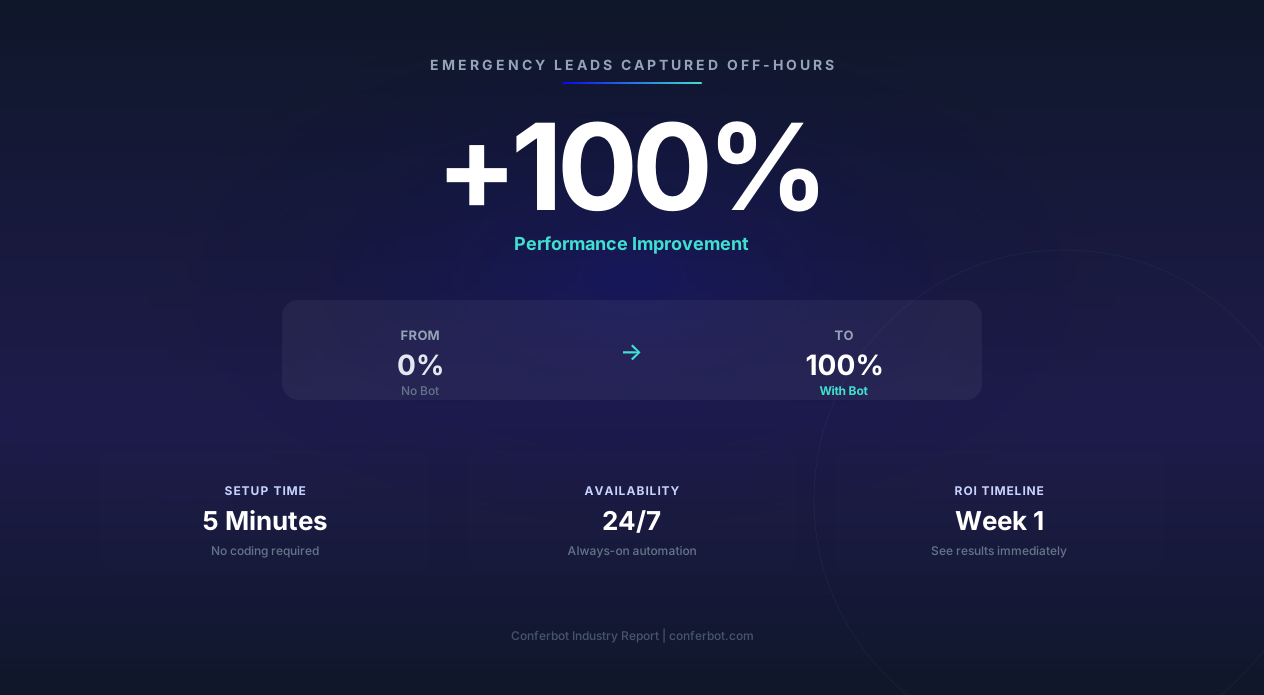
Emergency plumbing and electrical calls command premium pricing—typically 1.5x to 2.5x standard rates. A burst pipe at midnight, a sparking outlet at 2 AM, or a water heater failure on a Sunday morning represents not just a standard job but a premium-priced opportunity. According to ServiceTitan's home services data, emergency calls account for 28% of all plumbing inquiries and 19% of electrical inquiries, but represent 42% and 31% of total revenue respectively due to premium pricing.
Without a chatbot, most of these after-hours emergency leads are lost. Customers calling at 2 AM hit voicemail and immediately call the next plumber on Google. By morning, the emergency is either resolved by a competitor or the customer has found a workaround. The chatbot captures these high-value emergency leads instantly, triages urgency, dispatches alerts to on-call technicians, and provides customers with immediate acknowledgment that help is on the way.
Lead Response Time and Conversion
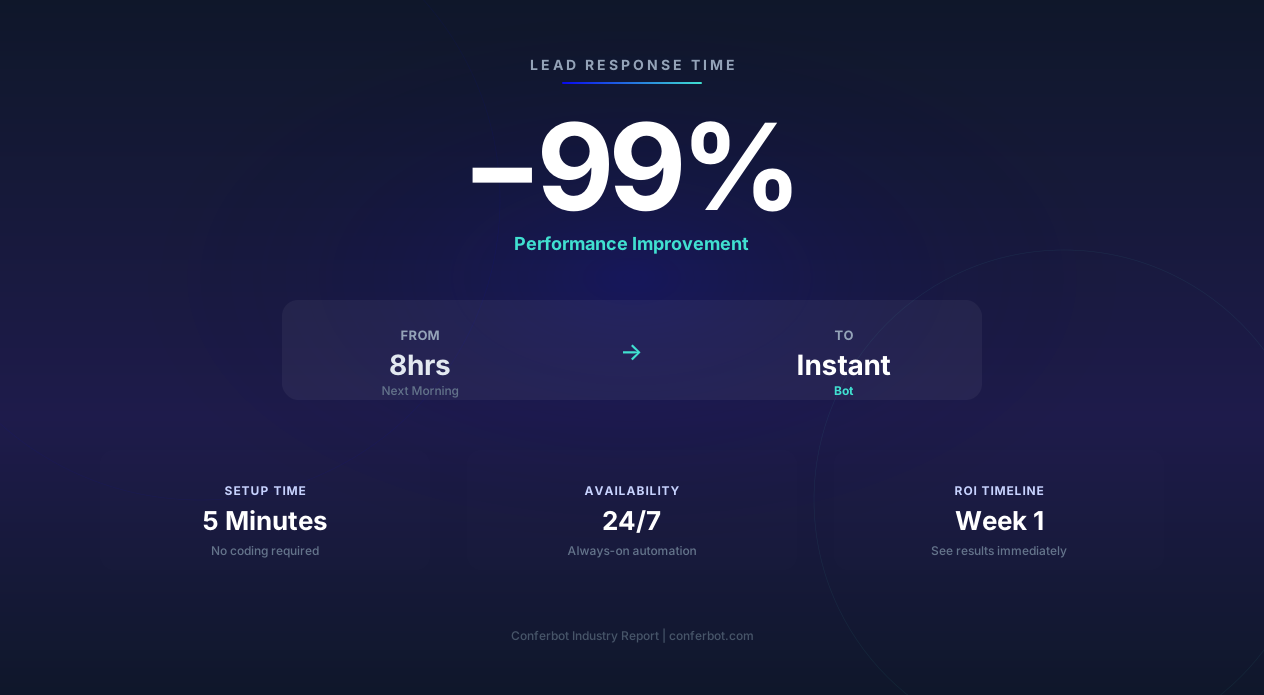
The relationship between response time and conversion rate is exponential, not linear. Data from home services platforms shows:
| Response Time | Lead-to-Booking Conversion Rate | Revenue Impact (per 100 leads) |
|---|---|---|
| Under 1 minute (chatbot) | 38 to 45% | $28,500 to $33,750 |
| 1 to 5 minutes | 30 to 35% | $22,500 to $26,250 |
| 5 to 30 minutes | 18 to 22% | $13,500 to $16,500 |
| 30 minutes to 1 hour | 10 to 14% | $7,500 to $10,500 |
| 1 to 4 hours | 5 to 8% | $3,750 to $6,000 |
| Next day callback | 2 to 4% | $1,500 to $3,000 |
(Based on average job value of $750 for plumbing/electrical services)
The difference between an instant chatbot response and a next-day callback is 10x to 20x in revenue generated per 100 leads. For a plumbing business spending $3,000/month on Google Ads generating 50 leads, improving response time from 2 hours average to instant (via chatbot) can add $7,500 to $12,000 in monthly revenue from the same advertising spend.
Emergency vs. Scheduled Job Routing: Intelligent Triage for Maximum Revenue
Not all plumbing and electrical leads have the same urgency, value, or handling requirements. According to Angi's emergency service pricing data, emergency plumbing calls carry an average premium of $150 to $250 over standard rates, making proper triage directly tied to revenue optimization. An AI chatbot performs instant triage—classifying leads by urgency and routing them to the appropriate workflow.
Emergency Classification
The chatbot identifies emergencies through keyword detection and guided questions. Emergency indicators for plumbing include: active water leak, no water in the home, sewage backup, burst pipe, gas leak smell, and no hot water in winter. For electrical: sparking outlets or panels, burning smell from wiring, complete power loss, exposed wiring, and electrical shock incidents.
When the chatbot identifies an emergency, it triggers an immediate workflow:
1. Acknowledge urgency: "I understand this is urgent—a burst pipe can cause significant damage every minute. Let me get you help right away."
2. Collect critical information: Location (address/zip code), specific emergency description, property type, and whether they have shut off the water/power supply.
3. Provide immediate guidance: "While I connect you with our on-call technician, please locate your main water shut-off valve (usually near the water meter or where the main line enters your home) and turn it clockwise to stop the flow. This will prevent further damage while we get to you."
4. Alert on-call technician: The chatbot sends an immediate SMS/push notification to the on-call technician with the customer's details, location, and emergency description. The technician can respond directly through the system.
5. Confirm response time: Once the technician acknowledges, the chatbot updates the customer: "Our emergency technician Mike is 22 minutes from your location and is heading your way now. He will text you when he is 5 minutes out."
Scheduled Job Classification
Non-emergency inquiries (new fixture installation, panel upgrade, water heater replacement, electrical inspection, drain cleaning, outlet addition) follow a standard booking workflow. The chatbot qualifies the job, provides a price estimate, and books an appointment during normal business hours. The distinction matters because scheduled work is handled during regular hours at standard rates, while emergencies may involve overtime/premium pricing and immediate dispatch.
The Gray Zone: Urgent but Not Emergency
Some situations fall between emergency and routine: a slow leak that is not causing immediate damage but will worsen, a tripped breaker that keeps tripping, a toilet running constantly. The chatbot handles these as priority scheduling—offering the next available appointment (often same-day or next-morning) without triggering emergency dispatch and premium pricing. This categorization protects the customer from unnecessary emergency fees while ensuring timely service.
Revenue Optimization Through Routing
Intelligent routing maximizes revenue by ensuring high-value emergency calls receive immediate attention (capturing the premium pricing opportunity) while routine inquiries are efficiently scheduled during normal hours (maximizing daily job capacity through optimal scheduling). This dual approach typically increases total revenue by 20 to 30% compared to treating all calls identically—either rushing to every job (leaving scheduled work unfinished) or scheduling everything for normal hours (losing emergency premium revenue).
Service Area and Availability Checking: Qualifying Leads Before They Waste Your Time
Plumbing and electrical businesses serve defined territories, and out-of-area leads consume valuable response time without conversion potential. The chatbot validates location instantly and checks real-time technician availability before investing conversation time in detailed qualification.
Geographic Qualification
The chatbot asks for the customer's zip code or address early in the conversation and validates against your service area map. For valid areas, the conversation continues with job qualification. For borderline areas, the chatbot may apply a travel surcharge or offer reduced availability. For completely out-of-area requests, the chatbot provides a helpful referral: "We service the Phoenix metro area, but for your location in Tucson I would recommend ABC Plumbing—they are excellent. Can I help with anything else?"
Geographic filtering is particularly important for trade businesses because drive time directly impacts profitability. A 45-minute drive to a $150 repair is unprofitable; the same drive for a $3,000 panel upgrade is worthwhile. The chatbot can apply different distance thresholds based on estimated job value—accepting longer drives for larger jobs.
Real-Time Availability
The chatbot connects to your scheduling system and displays actual available appointment slots. For non-emergency requests: "Great news—we have availability this Thursday between 8 AM and 12 PM, or Friday between 1 PM and 5 PM. Which works better for you?" For emergencies, it checks on-call technician status and estimated arrival time.
This real-time availability eliminates the frustrating callback loop where customers leave a message, wait hours for a return call, negotiate scheduling, and potentially need another callback if the first offered time does not work. The chatbot resolves the entire scheduling conversation in one seamless interaction.
Capacity Management
Smart chatbots also manage capacity constraints. If tomorrow's schedule is full, the chatbot does not just offer next week—it considers priorities. A $5,000 panel upgrade might warrant rescheduling a routine maintenance appointment, while a $100 drain cleaning might not. The chatbot can present premium availability (faster service for a surcharge) versus standard scheduling, letting customers choose their priority level.
For multi-technician operations, the chatbot matches job requirements to technician capabilities. A master electrician's time is allocated to complex panel work and new construction; an apprentice handles outlet additions and fixture swaps. This capability matching ensures optimal resource utilization and prevents over-qualified technicians from being booked on simple tasks.
Price Estimate Generation: Transparent Pricing That Builds Trust and Books Jobs
Homeowners searching for plumbers and electricians overwhelmingly want to know pricing before committing. According to BrightLocal's local consumer research, 68% of consumers compare prices from at least 3 providers before booking a home service. An AI chatbot that provides clear, transparent estimates gains a massive conversion advantage over competitors who say "we need to see the job first" for every inquiry.
Building Your Estimate Logic
The chatbot provides estimates as ranges or fixed prices based on the job type and information gathered:
| Service Category (Plumbing) | Chatbot Estimate Approach | Typical Range |
|---|---|---|
| Drain cleaning | Fixed price (simple, predictable) | $99 to $250 |
| Faucet/fixture replacement | Fixed price + parts | $150 to $350 + fixture cost |
| Water heater replacement | Range based on tank size and type | $1,200 to $3,500 |
| Leak repair | Range (complexity varies) | $175 to $600 |
| Sewer line repair/replace | Requires on-site inspection | "Starting at $2,500 - free inspection to confirm" |
| Toilet repair/replace | Fixed price options | $125 repair / $350 to $650 replacement |
| Service Category (Electrical) | Chatbot Estimate Approach | Typical Range |
|---|---|---|
| Outlet/switch replacement | Fixed price per unit | $85 to $175 per outlet |
| Ceiling fan installation | Fixed price (with/without existing wiring) | $150 to $400 |
| Panel upgrade (100A to 200A) | Range based on home size | $2,500 to $4,500 |
| EV charger installation | Range based on panel capacity | $800 to $2,200 |
| Whole-home rewiring | Requires on-site assessment | "Starting at $8,000 - free assessment to confirm" |
| Recessed lighting (per light) | Fixed price per unit | $200 to $350 per light |
The Conversational Estimate Flow
The chatbot gathers job details through a natural conversation: "What type of plumbing service do you need?" [Leaking pipe / Drain clog / Water heater / Fixture install / Other]. Then based on the selection, it asks clarifying questions that narrow the estimate: "Where is the leak located?" [Under sink / In wall / In ceiling / Outdoor / Not sure]. "Is water actively flowing, or is it a slow drip?" [Active flow / Slow drip / Only when faucet is on].
Based on answers, the chatbot provides a clear estimate: "Based on what you have described—a slow leak under the kitchen sink—this typically costs $175 to $300 for repair, depending on whether we need to replace the pipe section or just fittings. Our diagnostic fee is $75, which gets applied to the repair cost if you proceed. Want to schedule a time for our technician to take a look?"
Pricing Psychology and Conversion
How estimates are presented impacts conversion dramatically. Best practices include:
Anchoring with value: "Panel upgrades range from $2,500 to $4,500 depending on your home's requirements. This investment typically increases home value by $3,000 to $5,000 and is required for EV charger installation, solar systems, and modern appliance additions."
Diagnostic fee framing: "Our $75 diagnostic fee covers a complete assessment of your issue and is applied as a credit toward any work you approve—so if you proceed with the repair, the diagnostic is essentially free."
Comparison to alternatives: "A water heater replacement at $1,800 to $2,500 for a tankless unit typically saves $100 to $150 monthly in energy costs, paying for itself within 18 months while providing unlimited hot water."
The chatbot does not hard-sell; it provides transparent information that helps customers make informed decisions. This transparency builds trust—which is the foundation of conversion in the trades where customers are often wary of being overcharged for work they do not understand.
Booking Confirmation and Dispatch: From Lead to Scheduled Job in 3 Minutes
Once a lead is qualified and a price estimate accepted, the chatbot converts interest into a confirmed booking without any human involvement. This instant booking capability is what separates businesses that capture leads from businesses that capture revenue.
The Booking Flow
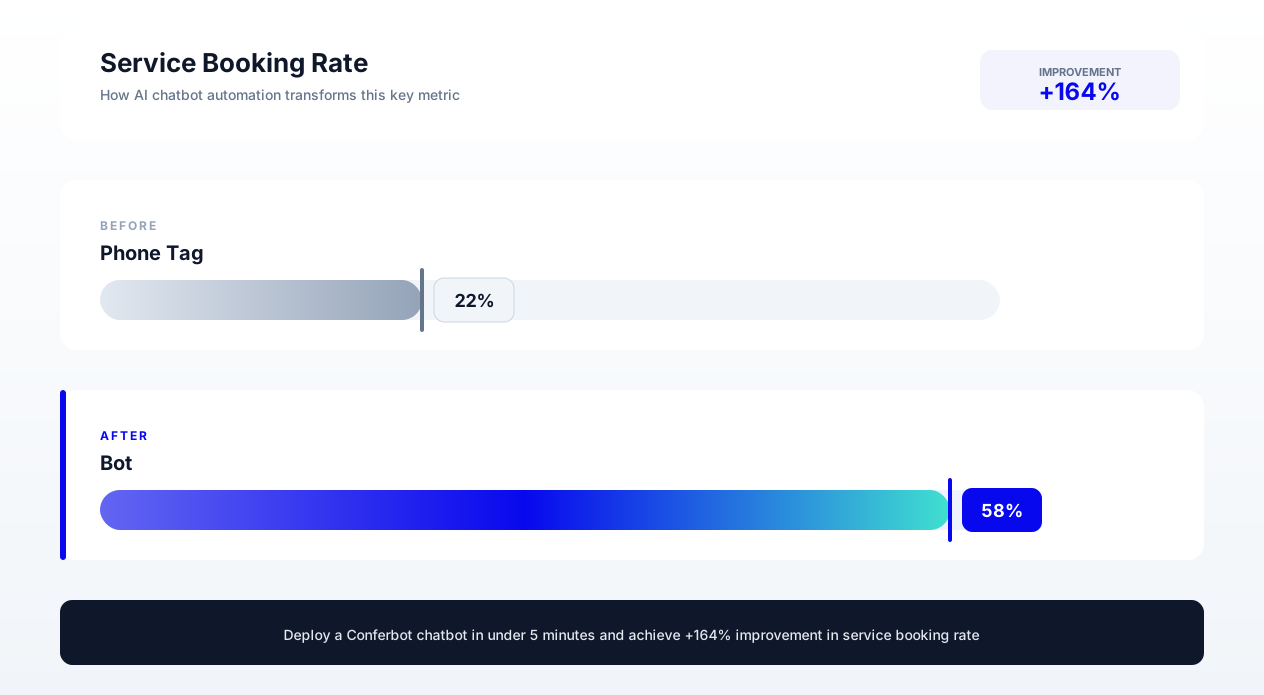
After presenting the estimate and receiving the customer's agreement to proceed, the chatbot moves directly to scheduling: "Excellent! Let me get a technician scheduled for you. I have availability tomorrow (Wednesday) between 8 AM and 12 PM, or Thursday between 1 PM and 5 PM. Which works better?" The customer selects their slot, confirms their address, and provides any access instructions (gate code, key location, pet in yard).
The chatbot then sends a booking confirmation with all details: "You are confirmed for Wednesday, June 8th between 8 AM and 12 PM. Technician Mike will arrive within your window and text you when he is 15 minutes away. Your estimated cost for the kitchen sink leak repair is $175 to $300. The $75 diagnostic fee applies as credit toward the repair. Any questions before then?"
Dispatch Integration
For field service businesses, the chatbot integrates with dispatch systems to automatically assign the job to the appropriate technician based on location, skills, availability, and workload. Platforms like ServiceTitan, Housecall Pro, Jobber, and FieldEdge receive the booking data directly from the chatbot, creating a work order with all customer details, job description, estimates, and scheduling information. The technician sees the new job in their mobile app immediately.
For emergency dispatch, the integration is even more critical. The chatbot sends real-time alerts to the on-call technician's phone with one-tap acceptance: "Emergency - Burst pipe at 1234 Oak Lane, Denver CO. Customer has shut off main. ETA requested." The technician accepts, provides an ETA, and the chatbot relays this to the customer—all within 60 to 90 seconds of the initial inquiry.
Deposit Collection
For larger jobs (typically $500+), the chatbot can collect a deposit to confirm the booking and reduce no-shows. "For panel upgrade appointments, we collect a $200 scheduling deposit that is applied to your final invoice. This secures your priority time slot. Would you like to proceed with a card payment?" The chatbot presents a secure payment link within the conversation. Deposit collection reduces no-shows from 15 to 20% (industry average) to under 5%—representing significant revenue protection for high-value job slots.
Pre-Arrival Communication
The chatbot also automates pre-arrival communication: appointment reminders at 48 hours and 2 hours before, technician identity confirmation (name, photo, vehicle description for customer safety), real-time ETA updates on the day of service, and any preparation instructions ("Please clear the area around your electrical panel for easy access"). This proactive communication reduces missed appointments and ensures technicians arrive to prepared job sites—improving both efficiency and customer satisfaction.
After-Hours Lead Capture: The Revenue You Are Currently Sleeping Through
For plumbing and electrical businesses, after-hours leads represent the largest revenue opportunity most contractors miss entirely. The chatbot transforms dead hours into productive lead capture and emergency dispatch.
The After-Hours Revenue Opportunity
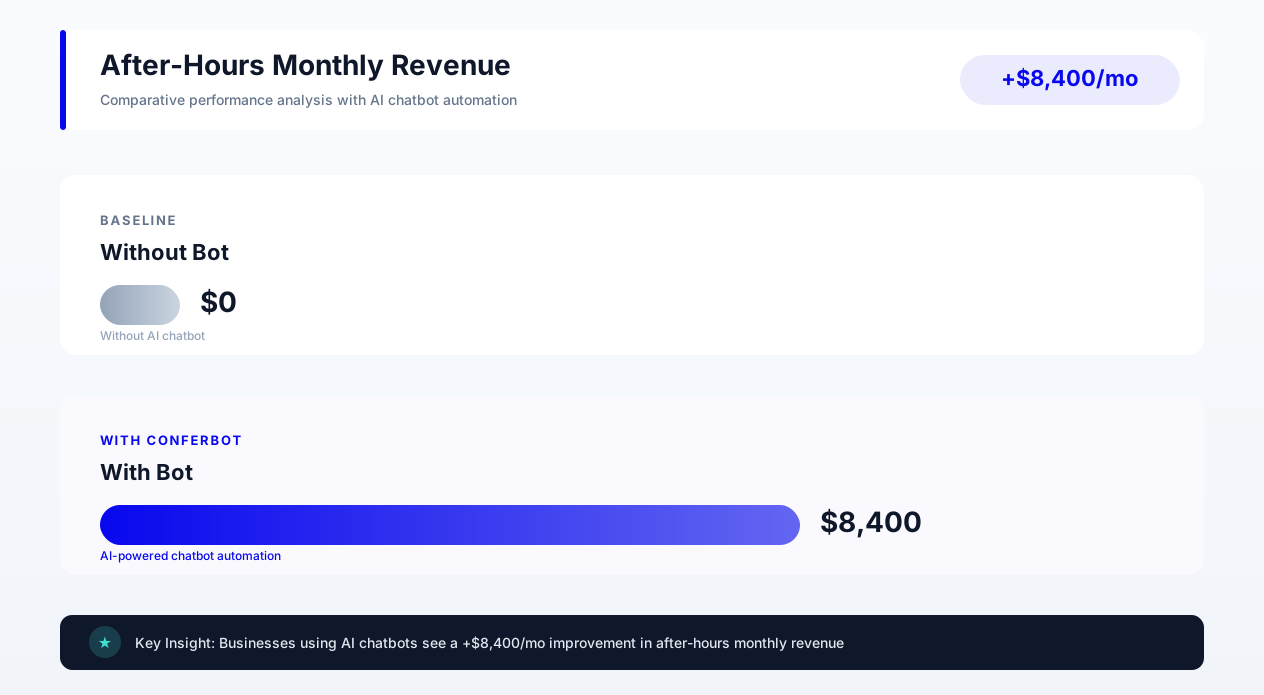
Analysis of home services inquiry timing shows that 45% of plumbing leads and 38% of electrical leads arrive outside standard business hours (before 8 AM, after 6 PM, and weekends). For emergencies specifically, 62% occur between 6 PM and 8 AM. These after-hours leads carry higher job values due to emergency premiums and higher conversion rates due to urgency—yet most plumbing and electrical businesses capture fewer than 10% of after-hours inquiries.
The math is straightforward: if your business receives 200 leads per month and 45% (90 leads) arrive after hours, and you currently capture 10% of those (9 leads) versus a chatbot capturing 90% (81 leads), the additional 72 leads at a 35% conversion rate and $600 average job value equals $15,120 in additional monthly revenue—$181,440 annually—from leads you are currently losing while you sleep.
After-Hours Chatbot Strategies
Emergency triage and dispatch: True emergencies (burst pipes, gas leaks, electrical fires) receive immediate technician dispatch through the on-call system. The chatbot manages the customer communication while the technician responds to the emergency.
Urgent scheduling: Non-emergency but urgent issues (slow leak, intermittent electrical problem, no hot water) are booked for the first available slot the next morning. The chatbot confirms the booking and sets expectations: "I have you scheduled as our first appointment tomorrow at 8 AM. Our technician will call you at 7:45 AM to confirm. In the meantime, here is how to minimize damage from your slow leak: [specific guidance]."
Non-urgent lead capture: Routine inquiries (new fixture quotes, upgrade consultations, inspection requests) are captured with full contact information and job details. The chatbot sets expectations for a next-business-day follow-up: "I have all the details for your EV charger installation quote. Our team will call you tomorrow between 9 and 10 AM with a detailed estimate and to schedule your free site assessment."
The key is that no lead goes uncaptured. Whether the chatbot dispatches an emergency technician, books a next-morning appointment, or captures information for a callback, every after-hours inquiry receives an immediate response and a clear path forward. This is what separates businesses that grow from businesses that stagnate—the consistent capture of revenue opportunities that competitors miss.
For a deeper look at after-hours support strategies, see our comprehensive guide on after-hours customer support chatbot implementation.
Integration with Field Service Management Software
The chatbot's value multiplies when connected to the field service management (FSM) software that runs your daily operations. Here is how integration works with the platforms most used by plumbers and electricians.
Platform Integration Capabilities
| FSM Platform | Integration Depth | Key Chatbot Capabilities |
|---|---|---|
| ServiceTitan | Full API | Create jobs, check dispatch board, pull pricing from pricebook, trigger follow-ups |
| Housecall Pro | Full API | Schedule jobs, send estimates, process payments, manage recurring services |
| Jobber | API + Zapier | Create quotes, schedule visits, assign to teams, track job status |
| FieldEdge | API | Dispatch integration, customer lookup, job history access |
| Service Fusion | API + webhooks | Work order creation, scheduling, parts lookup |
| Workiz | API | Lead capture, booking, payments, communication |
What Integration Enables
Customer history access: When a returning customer contacts the chatbot, it pulls their complete service history from the FSM. "Welcome back, Mrs. Johnson! I see we last serviced your home in March with a water heater flush. How can we help today?" This personal recognition builds loyalty and provides context for the current inquiry.
Pricebook integration: Instead of maintaining separate pricing in the chatbot, integration pulls live pricing from your FSM pricebook. When you update prices in ServiceTitan, the chatbot's estimates update automatically. No duplicate maintenance, no pricing discrepancies.
Parts and inventory awareness: For common repairs requiring specific parts, the chatbot can check inventory availability. "For your water heater model, we have the replacement thermostat in stock—our technician can complete the repair in a single visit without waiting for parts."
Membership and service plan management: Many plumbing and electrical businesses offer maintenance plans or membership programs. The chatbot identifies plan members, applies their discounts, prioritizes their scheduling, and sells memberships to non-member customers. "I see you are not yet a member of our Priority Service Plan. For $19/month, you would get 15% off all repairs, same-day priority scheduling, and free annual inspections. Would you like to sign up?"
Automated follow-up triggers: After a job is completed and marked in the FSM, the chatbot triggers follow-up sequences: satisfaction survey at 24 hours, review request at 72 hours, maintenance reminder at the appropriate interval, and re-engagement if the customer has not booked in 12+ months. These automated touchpoints drive repeat business without manual effort from your team. For more on implementing effective automated follow-up sequences, see our AI chatbot lead generation playbook which covers nurture campaigns for home services businesses.
Customer Reviews and Follow-Up: Building a 5-Star Reputation Automatically
Online reviews drive 90% of new customer acquisition for local trade businesses. Podium's review statistics research confirms that 93% of consumers say online reviews impact their purchasing decisions, with home services being the #1 category where reviews determine provider selection. A plumber with 200+ Google reviews averaging 4.8 stars will dominate local search results, Google Maps, and Google Local Services Ads. AI chatbots automate the review generation process, systematically converting every satisfied customer into a public advocate.
The Post-Job Review Funnel
Within 2 to 4 hours of job completion (when the experience is fresh), the chatbot reaches out: "Hi! Your technician Mike just completed work at your home today. How would you rate your experience from 1 to 5?"
Responses of 4 or 5 receive an immediate review request: "Thank you! We are glad Mike took great care of you. Would you mind sharing a quick review on Google? It really helps other homeowners find reliable plumbers. Here is the link: [direct Google review URL]." This approach generates reviews at 8 to 12x the rate of hoping customers leave reviews organically.
Responses of 1 to 3 trigger an internal escalation: "I am sorry your experience was not up to our standards. Can you share what went wrong? I will have our service manager reach out personally to make this right." This intercepts negative sentiment before it becomes a public review, giving you the opportunity to resolve the issue. Service recovery at this stage converts 40 to 60% of dissatisfied customers into satisfied ones—and recovered customers often leave even more enthusiastic reviews because they were impressed by the responsiveness.
Review Velocity and Local SEO Impact
Google's local algorithm heavily weights review velocity (how quickly new reviews accumulate) and review recency (how fresh your latest reviews are). A chatbot generating 8 to 15 new reviews per month keeps your review velocity high and your profile fresh—both critical ranking factors for the Local Pack (map results) and Google Local Services Ads. Businesses with consistent review generation outrank competitors with higher total review counts but stale profiles.
Follow-Up for Repeat Business
Beyond reviews, the chatbot maintains customer relationships through scheduled follow-ups: annual plumbing inspection reminders, seasonal electrical safety checks, water heater flush reminders (every 12 months), and proactive outreach when severe weather approaches ("Freeze warning tonight—here is how to protect your pipes. Need help with heat tape installation?"). These touchpoints generate 2 to 3 additional service calls per year from the average residential customer, representing $500 to $1,500 in additional annual revenue per client with zero marketing spend.
ROI Model for Trade Businesses: What a Chatbot Is Worth to Plumbers and Electricians
Let us build a realistic ROI model for a 3-technician plumbing or electrical business to quantify the chatbot investment.
Business Baseline
Monthly leads (all sources): 180. Current lead-to-booking conversion: 22%. Average job value: $650. Monthly booked jobs: 40. Monthly revenue: $26,000.
Chatbot Impact Model
| Improvement Area | Before Chatbot | After Chatbot | Impact |
|---|---|---|---|
| After-hours lead capture rate | 10% | 90% | +65 additional leads captured/month |
| Response time (avg) | 2.5 hours | Instant (under 10 seconds) | Conversion rate increase |
| Lead-to-booking conversion | 22% | 38% | From 40 to 93 bookings/month |
| Emergency premium capture | 30% of emergencies booked | 85% of emergencies booked | +12 premium jobs/month |
| Average job value (upselling plans) | $650 | $715 (+10% from memberships) | +$65 per booking |
| No-show reduction | 18% | 5% | +6 recovered appointments/month |
Revenue Calculation
Additional bookings: 53 additional jobs x $715 average = $37,895/month
Emergency premium capture: 12 additional emergency jobs x $975 (1.5x rate) = $11,700/month
Recovered no-shows: 6 jobs x $715 = $4,290/month
Membership revenue: 15 new members/month x $19/month (cumulative) = $2,850/month by month 12
Total additional monthly revenue (month 12): $56,735
Total additional annual revenue: $489,000+
Investment
Conferbot platform: $149/month. FSM integration setup: $750 one-time. Total first-year cost: $2,538.
First-year ROI: ($489,000 - $2,538) / $2,538 = 19,162% ROI
Even at one-fifth of these projections (very conservative), the annual revenue impact is $97,800 against a $2,538 investment—a 3,753% return. The chatbot does not just pay for itself; it fundamentally changes the revenue trajectory of the business.
Comparison to Alternatives
Answering service: $400 to $800/month for basic call answering with limited qualification capability and no booking authority. Cannot provide estimates or dispatch technicians. Cost: $4,800 to $9,600/year for inferior results.
Additional receptionist: $35,000 to $45,000/year plus benefits for one person covering business hours only. No after-hours coverage, no scalability during high-volume periods. Cost: $45,000+ per year.
AI chatbot: $2,538/year for 24/7 coverage, instant response, full qualification, estimate delivery, booking, dispatch, and follow-up. Handles unlimited simultaneous conversations without quality degradation.
The chatbot is not just the most effective option—it is the most cost-effective by a factor of 15 to 20x compared to human alternatives. For a complete analysis of chatbot ROI across multiple industries, see our lead generation playbook.
Implementation Guide: Getting Your Plumbing or Electrical Chatbot Live
Here is a practical implementation plan for launching an AI chatbot for your plumbing or electrical business, designed for busy trade professionals who need results fast without complex technical work.
Week 1: Setup and Configuration
Day 1-2: Define your services and pricing. List every service you offer with pricing (fixed price or range). Define your service area by zip codes. Identify which services are emergency-eligible and which are scheduled-only. Document your on-call rotation schedule.
Day 3-4: Configure the chatbot. Using Conferbot's visual builder, set up your conversation flows: emergency triage, service qualification, estimate delivery, booking, and follow-up sequences. Import your pricing data and service area boundaries. Connect your scheduling calendar or FSM platform.
Day 5: Test thoroughly. Run through every scenario: emergency plumbing call, routine electrical inquiry, out-of-area request, after-hours contact, booking with deposit, cancellation request. Verify estimates are accurate, scheduling works correctly, and emergency alerts reach your on-call technician.
Week 2: Launch and Optimize
Day 6-7: Deploy. Add the chatbot to your website (one line of code), connect to your Google Business Profile messaging, and optionally activate Facebook Messenger and WhatsApp channels. Configure the widget appearance to match your brand.
Day 8-14: Monitor and refine. Review every chatbot conversation during the first week. Identify any confusion points, missing service categories, incorrect estimates, or drop-off points. Refine conversation flows based on real customer interactions. Adjust estimate ranges if customers consistently express sticker shock or if you are underquoting.
Ongoing Optimization
After the first two weeks, review chatbot analytics weekly: lead capture rate, conversion rate, most common services requested, peak inquiry times, and drop-off points. Use this data to continuously improve. Most trade businesses see 20 to 40% improvement in chatbot performance during the first 60 days of optimization as they fine-tune pricing presentation, urgency classification, and booking flows based on real customer data.
For businesses that need to handle the transition from chatbot to human support smoothly during complex situations, our locksmith chatbot guide covers emergency handoff patterns that work equally well for plumbing and electrical emergencies. Your chatbot should also evolve with your business. As you add new services, change pricing, expand your service area, or modify your scheduling, update the chatbot configuration accordingly. The best trade business chatbots are living systems that adapt to the business—not static scripts that grow stale over time.
For businesses that want to learn more about emergency after-hours handling, our guide on roofing contractor chatbots covers similar urgent lead capture strategies tailored to another trades vertical.
Was this article helpful?
AI Chatbot for Plumbers and Electricians FAQ
Everything you need to know about chatbots for ai chatbot for plumbers and electricians.
About the Author

Conferbot Team specializes in conversational AI, chatbot strategy, and customer engagement automation. With deep expertise in building AI-powered chatbots, they help businesses deliver exceptional customer experiences across every channel.
View all articles