Why Auto Repair Shops Need AI Chatbots: The Communication Crisis in Automotive Service
The average independent auto repair shop receives 45 to 80 phone calls per day. Service advisors—already juggling walk-in customers, technician questions, parts ordering, and vehicle inspections—spend 3 to 4 hours daily on the phone answering the same repetitive questions: "Do you work on my car make?" "How much is an oil change?" "When can I bring my car in?" "Is my car ready yet?" This phone burden is the single largest productivity drain in automotive service operations, and it directly limits the shop's capacity to generate revenue.
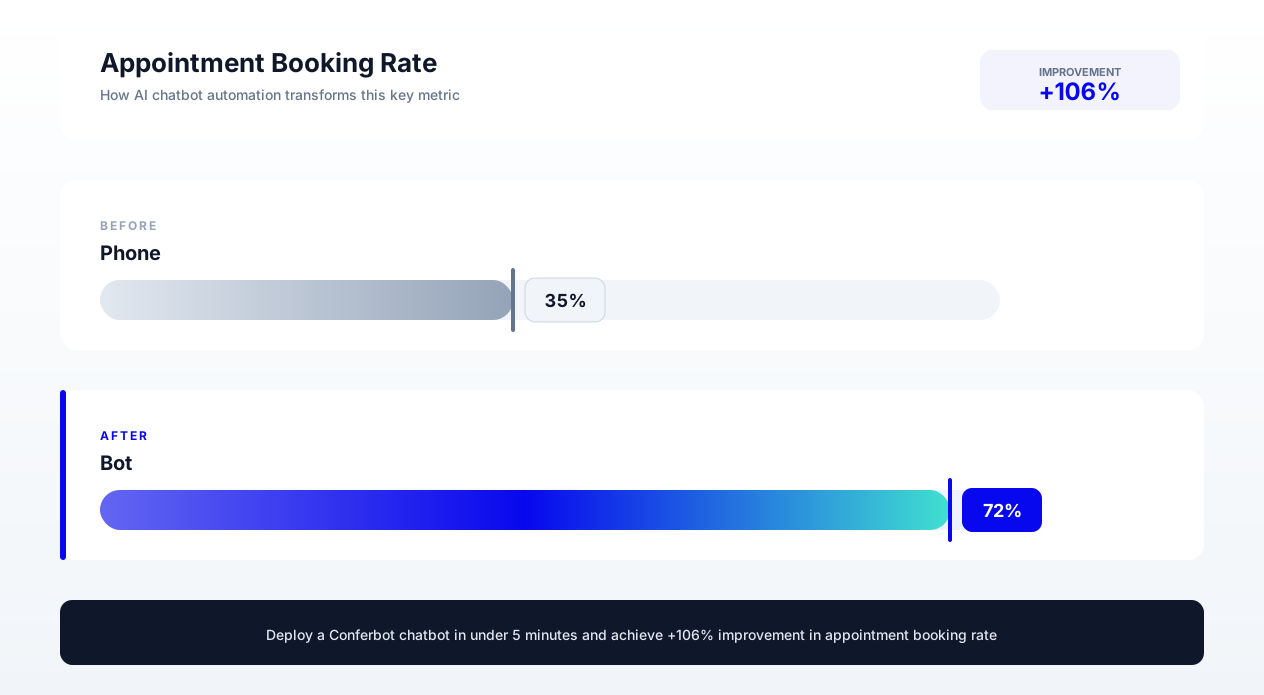
According to the Automotive Service Association, the average repair order in the US is $385, and shops that respond to inquiries within 5 minutes book 3.2x more appointments than those responding within an hour. Yet most shops cannot consistently answer phones during peak hours—when bays are full, service advisors are writing repair orders, and the phone rings every 4 minutes. Research from Cox Automotive shows that 63% of service customers say they would switch shops for better communication, making responsiveness not just a convenience issue but a retention and revenue issue.
AI chatbots solve the communication crisis comprehensively. Deployed on the shop's website, Google Business Profile, Facebook page, and SMS, the chatbot instantly handles the inquiries that consume service advisor time: appointment scheduling, service estimates, vehicle make/model compatibility, hours and directions, repair status updates, and maintenance recommendations. The chatbot works at midnight on a Sunday just as effectively as 9 AM Monday—capturing the 40% of auto service inquiries that arrive outside business hours.
The financial impact is substantial. A 4-bay shop processing 35 repair orders per week at $385 average generates $700,700 annually. Adding 12 more weekly bookings through improved lead capture and reduced missed calls adds $240,240 in annual revenue—a 34% growth rate from a single technology implementation. Combined with reduced phone time (freeing service advisors to sell additional recommended services), the total revenue impact often exceeds 40%.
This guide covers everything auto repair shop owners need to implement an AI chatbot: appointment scheduling automation, service estimate generation, vehicle history integration, parts availability communication, repair status updates, maintenance reminder systems, review collection strategies, ROI modeling for single and multi-location operations, and a complete implementation roadmap. Whether you run a one-bay specialty shop or a 20-location franchise, this guide provides the specific strategies for your operation.
Auto Repair Industry Challenges That AI Chatbots Solve
The automotive repair industry faces unique operational challenges that make AI chatbot adoption particularly impactful. Understanding these challenges reveals why shops implementing chatbots see outsized returns.
The Trust Gap
Auto repair suffers from a persistent consumer trust problem. A 2025 AAA survey found that two-thirds of Americans do not trust auto repair shops, primarily due to concerns about unnecessary repairs and unclear pricing. This trust gap means customers research extensively before choosing a shop—reading reviews, comparing prices, and evaluating communication quality. A chatbot that provides transparent pricing, clear explanations of services, and immediate responsiveness builds trust before the customer ever visits the shop.
Service Advisor Bottleneck
The service advisor role is the operational bottleneck in most shops. A single service advisor manages customer interactions (phone, walk-in, text), writes repair orders, communicates technician findings, presents repair recommendations, processes payments, and coordinates scheduling. When the advisor is on the phone with one customer, four others are waiting—in person at the counter, on hold, or calling back later. The chatbot eliminates 60 to 70% of phone and messaging interactions, freeing the advisor to focus on high-value face-to-face sales conversations and repair approval calls.
The Scheduling Inefficiency
Most shops schedule appointments through a manual process: customer calls, advisor checks the schedule, negotiates a time, confirms the appointment, and often follows up with a reminder call. This process takes 4 to 8 minutes per appointment. A chatbot reduces this to 60 to 90 seconds with zero advisor involvement. More importantly, the chatbot books appointments 24/7—capturing the evening and weekend requests that represent a significant portion of scheduling demand.
Repair Status Communication Overload
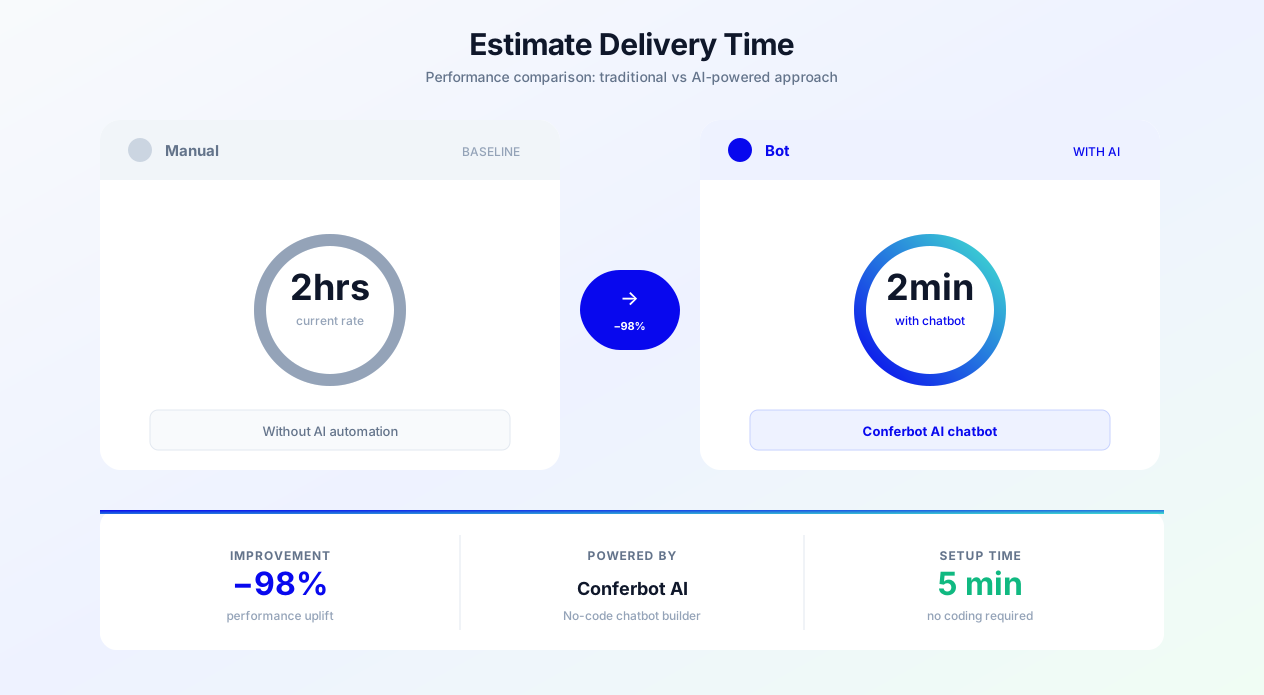
"Is my car ready?" calls consume 15 to 25% of total incoming phone volume at most shops. Each status call takes 2 to 3 minutes (answer, look up the vehicle, check with the technician, report back). For a shop handling 20 vehicles daily, that could be 30+ status calls per day—over an hour of service advisor time dedicated to relaying simple information. A chatbot provides instant status updates on demand, 24/7, without any human involvement.
Customer Retention and Lifetime Value
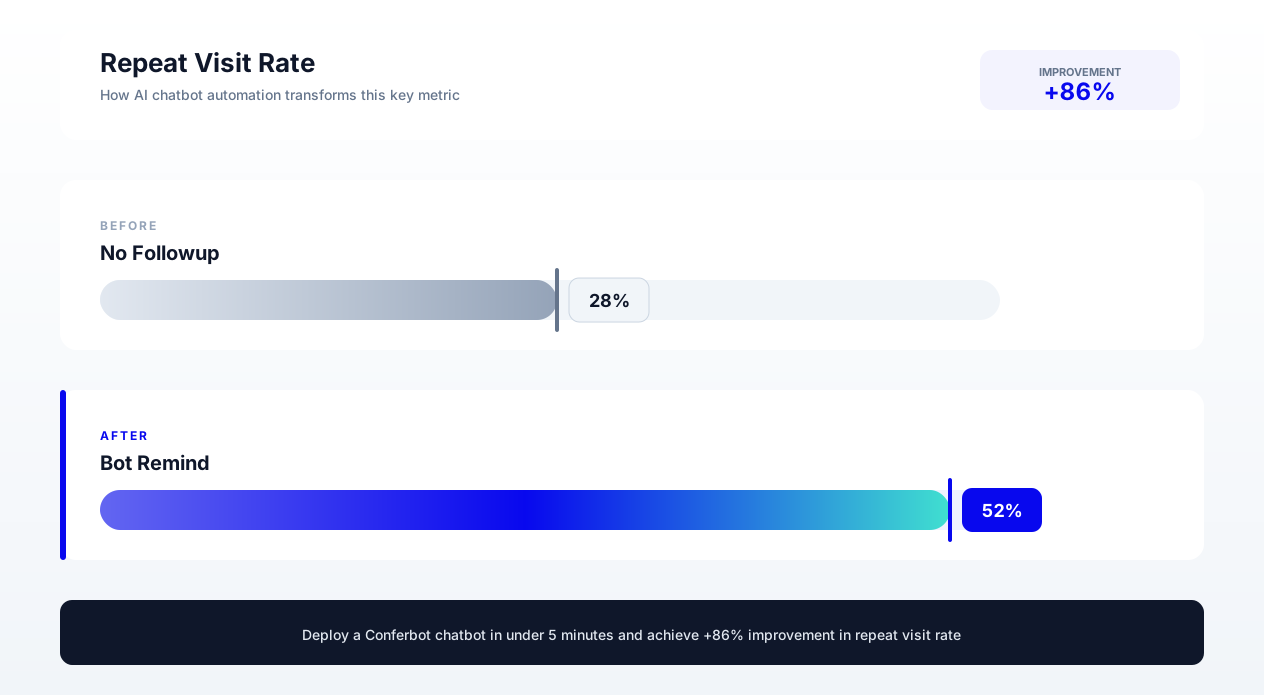
The average car is maintained for 11.5 years. A customer who finds a trusted shop will spend $800 to $1,200 annually on maintenance and repairs—totaling $9,200 to $13,800 in lifetime value. Yet most shops have no systematic approach to customer retention beyond hoping the customer remembers them when the next issue arises. Chatbots enable automated maintenance reminders, service interval notifications, and proactive outreach that keeps your shop top-of-mind throughout the vehicle's life.
Competition from Dealership Service Departments
According to J.D. Power's 2025 Customer Service Index study, independent shops that match dealership-level communication quality score 45 points higher in customer satisfaction—directly correlating with repeat business rates. Dealership service departments have invested heavily in digital customer communication—online scheduling, automated text updates, and mobile apps. Independent shops competing for the same customers cannot afford to offer a dramatically inferior communication experience. AI chatbots give independent shops dealership-level communication capabilities at a fraction of the cost, leveling the competitive playing field.
Appointment Scheduling via Chatbot: From Phone Tag to Instant Booking
Appointment scheduling is the highest-impact chatbot capability for auto repair shops. Every booked appointment represents revenue; every missed scheduling opportunity represents revenue lost to a competitor. Here is how to implement scheduling that converts.
The Scheduling Conversation Flow
An effective auto repair scheduling chatbot guides customers through a structured booking process:
Step 1: Identify the vehicle. "What is the year, make, and model of your vehicle?" [Year dropdown / Make dropdown / Model dropdown]. This information determines available services, pricing, and bay/technician requirements.
Step 2: Identify the service needed. "What service do you need?" [Oil change / Brake service / Tire service / Check engine light / AC repair / Transmission service / General inspection / Other]. For "Other," the chatbot asks for a description of the issue in the customer's own words.
Step 3: Present scheduling options. Based on the service type (which determines time needed in the bay), the chatbot shows available slots: "For your brake inspection and service, we need approximately 2 hours. Here are our available times this week: Monday 8 AM, Tuesday 10 AM, Wednesday 8 AM, Thursday 2 PM. Which works best?"
Step 4: Collect customer details. Name, phone number, email, and any additional notes ("car is making a grinding noise when turning left").
Step 5: Confirm and send details. "You are confirmed for Tuesday at 10 AM for brake service on your 2022 Honda Accord. We are located at 1234 Main Street. Please arrive 5 minutes early. We will text you a reminder tomorrow. Is there anything else I can help with?"
Intelligent Bay and Lift Management
Smart scheduling considers shop capacity constraints. The chatbot knows that Bay 1 handles alignments (requires the alignment rack), Bay 2 and 3 are general repair, and Bay 4 is oil change express. It schedules alignment appointments only when Bay 1 is free, prevents overbooking any single bay, and accounts for estimated job duration to prevent overlap conflicts.
For shops using shop management software (Mitchell1, ShopBoss, Tekmetric, Shop-Ware, AutoFluent), the chatbot integrates directly with the scheduling module—reading real-time availability and writing confirmed appointments without any manual data entry.
Drop-Off vs. Wait Scheduling
The chatbot asks whether the customer plans to wait or drop off the vehicle, adjusting the appointment approach accordingly. Wait customers need specific appointment times and accurate duration estimates. Drop-off customers have more flexibility—the chatbot can offer a broader time window: "You can drop off your car anytime Monday morning. We will have it ready by end of day and text you when it is complete."
For drop-off appointments, the chatbot can also coordinate loaner vehicles or shuttle service: "We offer a free shuttle within 5 miles of the shop. Would you like us to arrange a ride to work after you drop off your car?" This convenience offering significantly increases appointment conversion—especially for larger jobs that require all-day vehicle possession.
Conversion-Optimized Scheduling
Several chatbot strategies increase scheduling conversion rates:
Urgency reinforcement: For safety-related services, the chatbot emphasizes timely attention: "Brake grinding can indicate worn pads which could damage rotors if not addressed soon. I have an opening tomorrow at 8 AM—would you like me to book that?"
Price anchoring during booking: Providing a price estimate during scheduling reduces sticker shock at pickup: "A standard brake pad replacement for your Accord typically runs $180 to $280 per axle. We will inspect and give you an exact quote before starting any work."
First-time customer incentives: The chatbot can offer new customer promotions: "I see this is your first visit! New customers receive a free multi-point inspection with any service. Want me to add that to your appointment?"
For detailed appointment scheduling strategies applicable across industries, see our comprehensive appointment booking chatbot guide.
Service Estimate Generation: Transparent Pricing That Builds Trust
Price transparency is the fastest path to building trust with auto repair customers. While complex diagnostics require in-person inspection, many common services have predictable pricing that a chatbot can communicate instantly—eliminating the price uncertainty that causes customers to delay or shop elsewhere.
Estimable vs. Diagnostic Services
The key distinction is between services with predictable scope (estimable) and those requiring diagnosis (inspect-first):
| Estimable Services (Chatbot provides price) | Diagnostic Services (Chatbot books inspection) |
|---|---|
| Oil change (by vehicle type) | Check engine light diagnosis |
| Brake pad replacement (per axle) | Electrical system issues |
| Tire rotation/balance | Transmission problems |
| Battery replacement | Suspension noise |
| Air filter replacement | Intermittent starting issues |
| Spark plug replacement | AC not cooling |
| Coolant flush | Fluid leaks (unidentified) |
| Transmission fluid service | Vibration/shaking |
| Wiper blade replacement | Engine performance issues |
| Alignment | Overheating |
Vehicle-Specific Pricing
The chatbot adjusts estimates based on vehicle make and model because parts and labor vary significantly. An oil change on a Honda Civic ($45 to $65) costs half what it does on a BMW X5 ($89 to $135) due to oil capacity, filter cost, and labor access differences. The chatbot's pricing engine factors in these vehicle-specific variables after the customer identifies their car.
Example conversation: "You mentioned you need an oil change for your 2020 Toyota Camry. Using full synthetic oil (which Toyota recommends for your model), that service is $62 including filter, oil, and a 21-point inspection. Would you like to schedule this?"
Bundling and Mileage-Based Recommendations
When customers provide their mileage, the chatbot can recommend bundled services based on the manufacturer's maintenance schedule: "At 60,000 miles, your Camry is due for a major service that includes transmission fluid exchange ($149), brake fluid flush ($89), and coolant flush ($109). Bundled together, we offer this as our 60K package for $299 (save $48). Want to add this to your appointment?"
This mileage-based recommendation system does what service advisors often forget or do not have time for: proactively identifying revenue opportunities based on manufacturer maintenance intervals. It serves both the customer (ensuring proper maintenance) and the shop (increasing average repair order value). According to Reynolds and Reynolds research, proactive maintenance recommendations increase average repair order value by 22 to 35%.
Transparent Diagnostic Fee Communication
For diagnostic services, the chatbot communicates the process clearly: "Check engine light diagnosis requires our technician to connect your vehicle to our diagnostic equipment and perform a thorough inspection. Our diagnostic fee is $89, which is applied as a credit toward any approved repairs. After diagnosis, we will contact you with our findings and a detailed estimate before starting any work. You always approve the final cost. Want to schedule the diagnosis?"
This transparency—especially the emphasis on customer approval before work begins—directly addresses the trust gap that plagues the auto repair industry and significantly increases appointment conversion rates.
Vehicle History Integration: Personalized Service Based on Complete Records
When your chatbot accesses a returning customer's vehicle history, it transforms from a generic booking tool into a personalized service advisor that remembers every previous visit, recommends upcoming maintenance, and provides contextual service suggestions.
Customer Recognition and History Access
When a returning customer engages the chatbot, it identifies them through phone number, email, or vehicle information and pulls their complete service history: "Welcome back, Michael! I see your 2021 Ford F-150 was last in for a brake service 4 months ago. Looks like you are coming up on your 45,000-mile service interval. What can we help with today?"
This recognition provides several advantages: it makes the customer feel valued (they do not need to re-explain their vehicle or history), it enables proactive recommendations (based on mileage, time since last service, and known issues from previous visits), and it streamlines the scheduling process (the chatbot already knows their vehicle, preferred contact method, and typical scheduling preferences).
Integration with Shop Management Systems
| Platform | Integration Capabilities |
|---|---|
| Mitchell1 Manager SE | Customer lookup, service history, canned jobs, parts pricing |
| ShopBoss | Vehicle records, repair orders, scheduling, customer communication |
| Tekmetric | Full customer/vehicle records, estimates, job status, payments |
| Shop-Ware | Digital vehicle inspections, repair orders, customer portal |
| AutoFluent | Service history, scheduling, parts lookup, customer database |
| NAPA TRACS | Customer records, service history, labor guides |
Proactive Maintenance Alerts
Based on vehicle history data, the chatbot proactively reaches out when service intervals approach: "Hi Michael, based on your driving patterns your F-150 is approaching its 50,000 mile service interval. This includes a transmission fluid service, spark plug replacement, and coolant flush. Would you like me to check availability for next week?" These proactive alerts generate 2 to 4 additional visits per year from the average customer—representing $600 to $1,200 in additional annual revenue per client with zero advertising spend.
Declined Service Follow-Up
One powerful capability is following up on previously declined services. When a customer declined a recommendation during their last visit ("rear brakes are at 30%—recommended to replace within 3 months"), the chatbot can follow up at the appropriate time: "Hi Michael, during your last visit in March our technician noted your rear brakes were getting low. It is been about 3 months and we would recommend scheduling a brake service soon to prevent rotor damage. Want me to book an appointment?" This follow-up converts 25 to 35% of previously declined services—revenue that would otherwise be lost entirely.
Parts Availability Checking: Setting Accurate Expectations
Nothing frustrates auto repair customers more than dropping off their car for a "same-day" repair only to learn the parts are not in stock and the car will be held for 2 to 3 additional days. AI chatbots connected to parts inventory and supplier systems can set accurate expectations before the appointment.
Inventory-Aware Scheduling
When a customer books a service that requires specific parts (brake pads for a 2022 BMW X3, water pump for a 2019 Subaru Outback), the chatbot can check on-hand inventory or supplier availability: "I have availability for your brake service on Thursday. Let me check parts availability for your X3... Great news, we have OEM brake pads for your vehicle in stock. You are all set for Thursday at 9 AM."
If parts are not immediately available: "I have a Thursday appointment available, but the brake pads for your X3 need to be ordered from our BMW parts supplier. They typically arrive within 1 business day. I would recommend scheduling for Friday to ensure everything is ready when you arrive. Would Friday at 9 AM work?"
Supplier Integration
For shops using parts ordering platforms (WorldPac, PartsAuthority, NAPA ProLink, Advance Professional), the chatbot can query real-time parts availability across local suppliers. This integration prevents the scenario where an appointment is booked but parts will not arrive in time—causing customer disappointment and wasted bay time while technicians wait for delivery.
Customer Communication About Delays
When a vehicle is already in the shop and parts delays occur, the chatbot can handle the communication proactively: "Update on your 2021 Accord at our shop—our technician found the issue (water pump failure) but the replacement pump from Honda is arriving tomorrow morning instead of today. Your car will be ready by noon tomorrow. I apologize for the extra day. Would you like us to arrange a shuttle or rental car?"
This proactive, transparent communication prevents the angry "where is my car?" phone calls and demonstrates the kind of customer care that generates positive reviews and long-term loyalty.
Repair Status Updates: Eliminating the #1 Customer Frustration
The question "Is my car ready?" generates more phone calls to auto repair shops than any other inquiry. According to industry surveys, status calls represent 20 to 30% of all incoming calls. Each takes 2 to 4 minutes as the advisor checks with the technician, estimates completion time, and relays information. AI chatbots eliminate this entire category of phone calls.
Real-Time Status Tracking
The chatbot provides customers with real-time visibility into their vehicle's repair progress. Status stages might include: Checked In, Inspection in Progress, Diagnosis Complete (waiting for approval), Parts Ordered, Repair in Progress, Quality Check, Ready for Pickup. Customers can check status at any time by messaging the chatbot or through a direct link sent via text.
Proactive Status Notifications
Rather than waiting for customers to ask, the chatbot sends proactive updates at key milestones:
Vehicle checked in: "Your 2022 Accord has been checked in and is in the queue. We will begin the inspection within the hour and contact you with findings."
Diagnosis complete: "Our technician has completed the inspection of your Accord. We found: [1] Front brake pads worn to 2mm (replacement needed) - $189. [2] Rear brakes at 5mm (good for another 6 months). [3] Oil is due for change - $62. Total recommended: $251. Would you like us to proceed with the brake and oil service? Reply YES to approve or call us with questions."
Repair in progress: "Work has begun on your Accord. Estimated completion: 2:30 PM today."
Ready for pickup: "Great news! Your Accord is ready for pickup. Total: $251 (brakes + oil change). We are open until 6 PM today. You can pay at the counter or through our online payment link: [link]."
The Approval Workflow
One of the most valuable chatbot capabilities is handling repair approval conversationally. When the technician's inspection reveals needed work, the chatbot presents findings with pricing and collects approval without requiring a phone call. This reduces the time vehicles sit waiting for customer callbacks and accelerates bay turnover—one of the most critical efficiency metrics in shop management.
Studies show that text/chat-based repair approvals have 40% higher approval rates than phone-based approvals. Customers can review recommendations at their pace, discuss with spouses, and approve without the pressure of a live phone conversation. The visual format (itemized list with prices) also provides transparency that builds trust and reduces the feeling of being "sold to" that phone presentations can create.
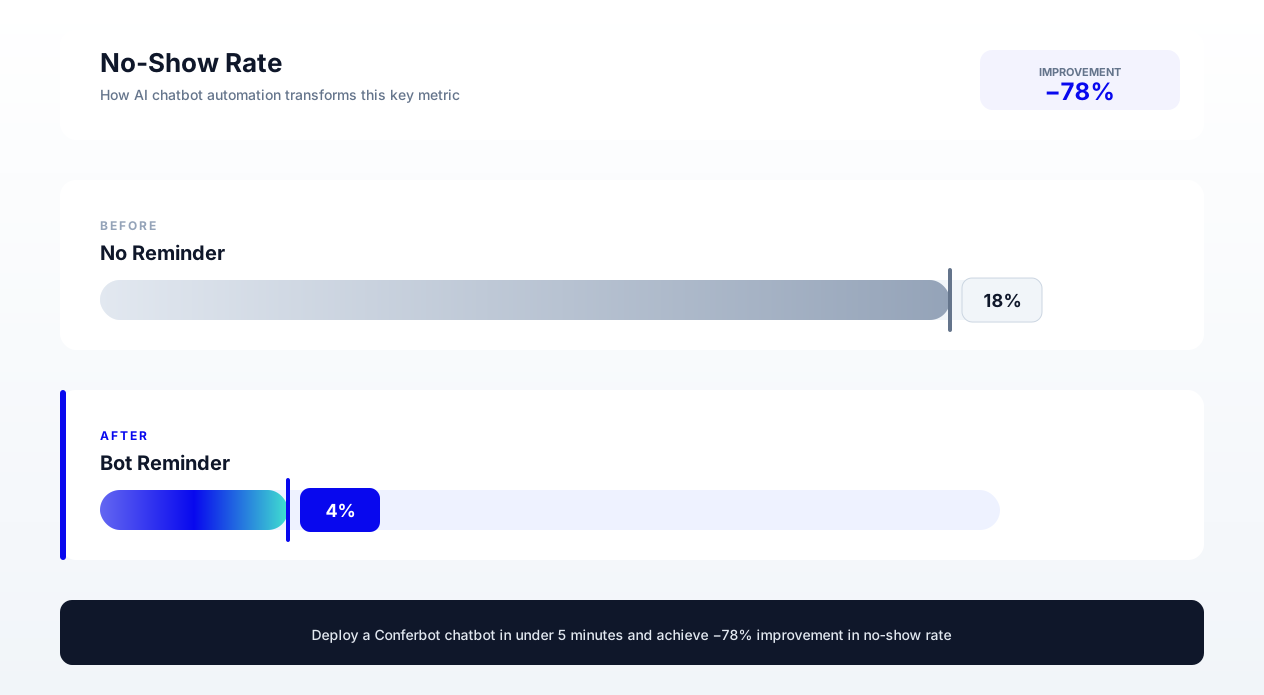
For shops looking to reduce overall support contacts through automation, our guide on automating appointment reminders to reduce no-shows covers complementary strategies that work alongside status update automation.
Maintenance Reminder Automation: Turning One-Time Customers into Lifetime Clients
The average vehicle requires 4 to 6 service visits per year for routine maintenance. Data from Auto Care Association research shows that the average American car owner spends $962 annually on maintenance and repairs—but 35% of that spending goes to whichever shop reminds them first about overdue services. Yet most auto repair shops rely on customers remembering to schedule their own maintenance—resulting in 60 to 70% of maintenance being performed late or skipped entirely. AI chatbots with automated reminder systems ensure your customers maintain their vehicles on schedule—at your shop.
Interval-Based Reminder Triggers
The chatbot tracks each customer's maintenance schedule and sends timely reminders:
Oil change (every 5,000-7,500 miles or 6 months): "Hi Sarah! It has been about 5 months since your last oil change on your 2023 RAV4. Based on your driving patterns, you are likely approaching the 5,000-mile mark. Ready to schedule your next oil change? We have openings this week: [available times]."
Tire rotation (every 5,000-7,500 miles): "Time for a tire rotation on your RAV4! Regular rotation extends tire life by 20-30%. We can do it during your oil change for just $29 added to the service. Want me to book both?"
Brake inspection (every 12 months): "It has been 11 months since your last brake inspection. Our free brake check ensures your brakes are safe for another year. Shall I add this to your next visit?"
Seasonal reminders: "Winter is approaching! For your RAV4, we recommend: tire pressure check (complimentary), battery test (complimentary with any service), and coolant antifreeze protection verification ($29). Want to schedule a winter prep visit?"
Revenue Impact of Automated Reminders
Shops implementing automated maintenance reminders see an average of 2.3 additional visits per customer per year compared to shops without reminder systems. At an average repair order value of $385, that represents $885 in additional annual revenue per active customer. For a shop with 800 active customers, automated reminders generate approximately $708,000 in additional annual revenue—making it one of the highest-ROI marketing activities available to auto repair businesses.
Recall and TSB Notifications
The chatbot can also monitor manufacturer recall databases and Technical Service Bulletins (TSBs) for vehicles in your customer database. When a recall is issued for a customer's vehicle, the chatbot proactively notifies them: "Important: A recall has been issued for your 2022 Honda Accord's fuel pump. This is a free repair covered by Honda. Would you like us to schedule this for you?" While recall work is free to the customer, it brings them into your shop where additional recommended services can be identified—and positions your shop as a proactive, caring service provider.
Review Collection and Reputation Management for Auto Repair Shops
Trust is the #1 factor in auto repair shop selection, and online reviews are how modern consumers evaluate trust. According to BrightLocal's 2025 consumer survey, 87% of consumers read online reviews before choosing a local business, and auto repair is among the top 3 industries where reviews most influence purchase decisions. AI chatbots systematically build your review presence.
Post-Service Review Automation
Within 2 to 4 hours of vehicle pickup, the chatbot sends a satisfaction check: "Hi Michael! You picked up your F-150 today after brake service. How did we do? Rate 1-5." Responses of 4 or 5 receive an immediate Google review request with a direct link. Responses of 1 to 3 trigger a private conversation to understand and resolve the issue before it becomes a public review.
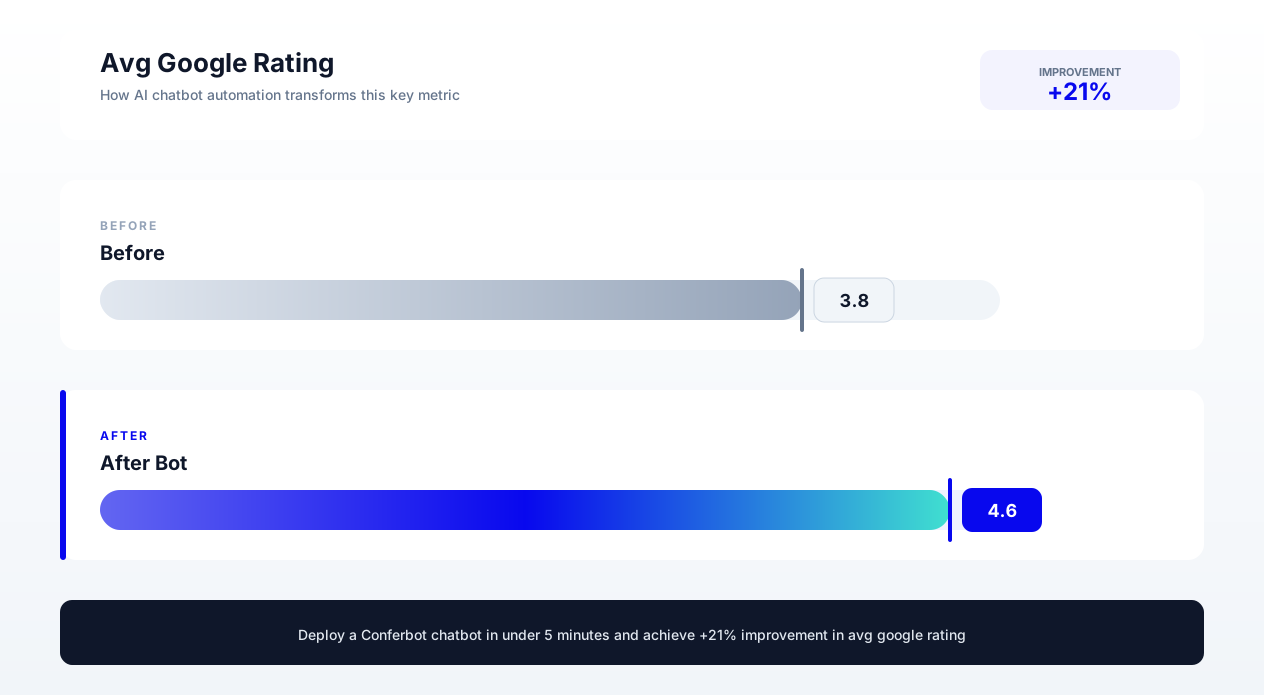
This systematic approach generates 10 to 20 new reviews per month for an average-volume shop—compared to 1 to 3 organic reviews monthly without a system. Over 12 months, that is 120 to 240 reviews, transforming your Google profile from average to dominant in local search results.
Review Response Automation
The chatbot can draft responses to both positive and negative reviews for owner approval: positive reviews receive personalized thank-you responses within hours ("Thank you, Michael! Glad we could get your F-150's brakes sorted quickly. See you at your next oil change!"), while negative reviews receive empathetic, resolution-focused responses that demonstrate your commitment to customer satisfaction publicly.
Leveraging Reviews in Sales Conversations
The chatbot incorporates review data into booking conversations: "Our shop has 4.8 stars from 347 Google reviews. Here is what recent customers say about our brake work: 'Fast, fair pricing, and honest about what actually needs replacing.' Ready to book?" This social proof integration increases booking conversion by 15 to 22% for first-time customers who have not yet built personal trust with your shop.
For a deeper dive into feedback collection strategies, see our guide on chatbot-powered customer feedback and NPS measurement.
ROI Model: Single-Shop and Multi-Location Auto Repair Operations
Let us build ROI models for both a single independent shop and a multi-location operation to demonstrate the chatbot's financial impact at different scales.
Single Shop ROI (4-Bay Independent)
| Metric | Before Chatbot | After Chatbot | Impact |
|---|---|---|---|
| Weekly appointments booked | 35 | 47 (+34%) | +12 appointments/week |
| Average repair order value | $385 | $435 (+13% from upselling) | +$50/order |
| Phone time (service advisor hours/day) | 3.5 hours | 1.2 hours | 2.3 hours freed for selling |
| Declined service recovery rate | 5% | 28% | +8 recovered jobs/month |
| Customer retention (annual visits) | 2.1 | 3.4 | +1.3 visits/customer/year |
| Review generation | 2/month | 15/month | +156 reviews/year |
Revenue impact: 12 additional weekly jobs x $435 x 52 weeks = $271,440/year. Declined service recovery: 8 jobs/month x $320 avg x 12 months = $30,720/year. Retention improvement revenue: 800 customers x 1.3 additional visits x $385 = $400,400/year (phased over 12 months). Total annual revenue impact: $502,000+ (conservative first year: $350,000+)
Investment: Conferbot platform: $149/month. Shop management integration: $1,000 one-time. Total first-year: $2,788.
First-year ROI: $350,000 / $2,788 = 12,554%
Multi-Location ROI (8-Location Franchise)
For multi-location operations, the chatbot provides additional value through standardized customer experience across all locations, centralized reporting and analytics, cross-location scheduling (directing customers to the location with earliest availability), and unified review management.
| Impact Area | Per-Location Monthly Impact | 8-Location Monthly Impact |
|---|---|---|
| Additional bookings revenue | $22,620 | $180,960 |
| Upselling/service package revenue | $8,700 | $69,600 |
| Declined service recovery | $2,560 | $20,480 |
| Service advisor time savings (labor) | $3,200 | $25,600 |
Total 8-location annual impact: $3,559,680
Multi-location platform investment: $42,000/year (enterprise plan + integrations)
Multi-location ROI: 8,375%
For a complete analysis of chatbot cost reduction across other industries, see our AI chatbot lead generation playbook. The multi-location ROI is slightly lower per dollar invested (due to enterprise pricing) but the absolute impact is transformational—over $3.5 million in additional annual revenue across the organization. For franchise operators, this represents the difference between a moderately profitable franchise and a highly profitable one.
Implementation Guide: Launching Your Auto Repair Shop Chatbot
Here is a practical implementation plan for auto repair shops, designed to get your chatbot live and generating revenue within two weeks.
Phase 1: Data Preparation (Days 1-3)
Service menu and pricing: Document every service you offer with pricing by vehicle category (domestic, Asian import, European import, truck/SUV). Include labor rates, common parts costs, and bundled service packages. This becomes the chatbot's estimate engine.
Scheduling parameters: Define your shop's capacity: number of bays, operating hours, technician specializations, average job durations by service type, and buffer time between appointments. This ensures the chatbot never overbooks.
FAQ database: Compile answers to your 20 most common customer questions: accepted payment methods, warranty policy, loaner vehicle availability, shuttle service details, diagnostic process explanation, and how long common services take.
Phase 2: Configuration and Integration (Days 4-7)
Chatbot conversation design: Configure the scheduling flow, estimate delivery, status tracking, and maintenance reminder sequences using Conferbot's visual builder. Set up vehicle identification, service selection, and booking confirmation conversations.
Shop management integration: Connect the chatbot to your shop management software for real-time scheduling, customer history access, and repair status tracking. Most integrations require 2 to 3 days of configuration and testing.
Review system setup: Connect your Google Business Profile for automated review requests. Configure the post-service satisfaction flow and review routing logic.
Phase 3: Testing and Launch (Days 8-14)
Staff training: Train service advisors on how the chatbot works, when it escalates to them, and how to handle chatbot-qualified leads. Emphasize that the chatbot handles routine inquiries so advisors can focus on selling recommendations and building relationships.
Soft launch: Deploy to your website with a limited greeting that positions the chatbot as an additional contact option alongside phone. Monitor conversations for the first week, identifying any gaps in service coverage or pricing accuracy.
Full deployment: After confirming accuracy and customer satisfaction, expand to Google Business Profile messaging, Facebook, and SMS. Activate proactive features: maintenance reminders, declined service follow-ups, and review requests.
Ongoing Optimization
Review chatbot analytics weekly: appointment booking conversion rate (target: 35%+), estimate accuracy (feedback from service advisors), customer satisfaction with chatbot interactions, and revenue attribution (bookings that originated from chatbot conversations). Use insights to refine pricing, add new service categories, and improve conversation flows. Typical shops see 25 to 40% improvement in chatbot performance during the first 90 days of optimization.
For shops interested in how chatbot technology applies to related automotive businesses, our car dealership chatbot guide covers sales-focused applications that complement the service-focused strategies in this guide.
Was this article helpful?
AI Chatbot for Auto Repair Shops FAQ
Everything you need to know about chatbots for ai chatbot for auto repair shops.
About the Author

Conferbot Team specializes in conversational AI, chatbot strategy, and customer engagement automation. With deep expertise in building AI-powered chatbots, they help businesses deliver exceptional customer experiences across every channel.
View all articles