
Grocery List Compiler
Free Food And Beverage Chatbot Template
A complete grocery list compiler chatbot template - deploy in minutes to automate conversations, capture leads, and provide 24/7 assistance.



What Is a Grocery List Compiler Chatbot?
A grocery list compiler chatbot is an AI-powered conversational assistant that helps users build intelligent, organized shopping lists through natural conversation. It converts recipes into shopping lists, optimizes purchases against budgets, maps items to store aisles for efficient shopping, suggests money-saving substitutions, consolidates lists from weekly meal plans, and tracks pantry inventory to avoid duplicate purchases. Users simply tell the chatbot what they want to cook, what they need to buy, or what their budget is -- and it generates a complete, optimized shopping list delivered through your website, WhatsApp, or Messenger.
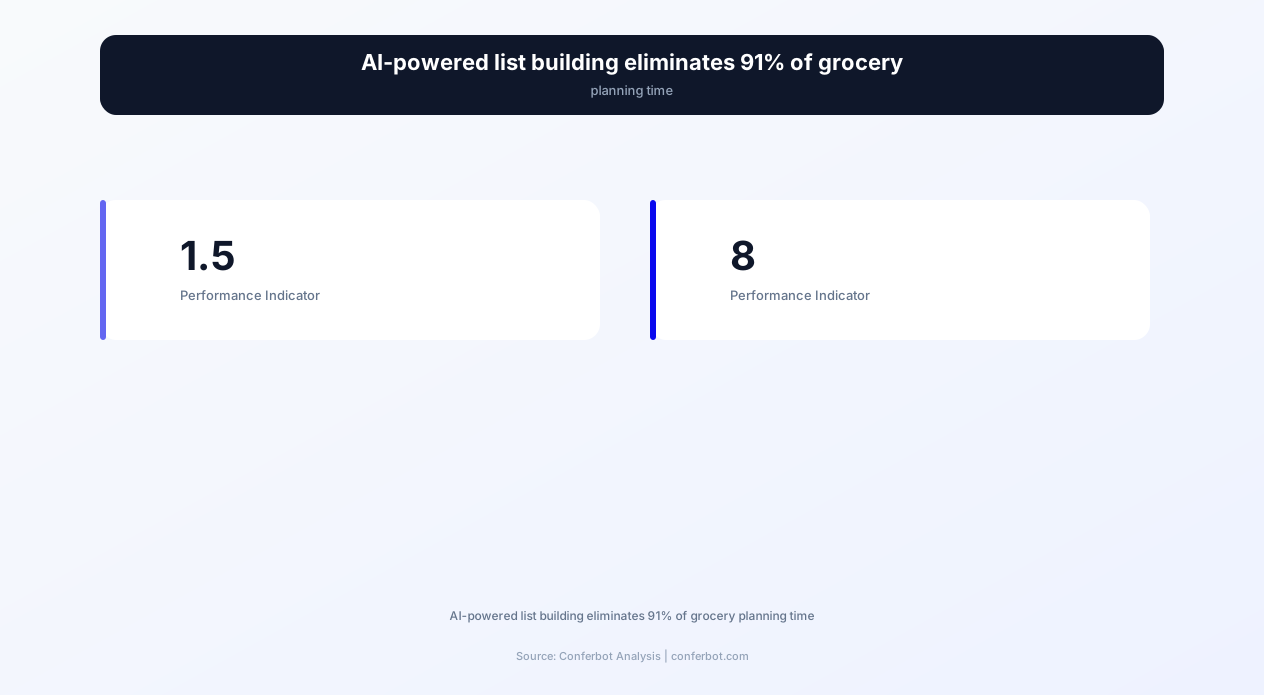
Grocery shopping is a weekly necessity for virtually every household, yet the planning process remains remarkably inefficient. Research from the Food Marketing Institute shows that the average American household spends 1.5 hours per week on grocery planning -- checking pantry inventory, deciding meals, writing lists, comparing prices, and organizing shopping trips. Despite this effort, 83% of shoppers buy items not on their list, 40% forget items they intended to buy, and the average household wastes $1,500 annually on food that goes unused. These numbers point to a planning problem, not a shopping problem.
A grocery list compiler chatbot solves the planning problem by automating the entire list-building process. Instead of manually scanning recipes and writing ingredient lists, users tell the chatbot "I want to make chicken parmesan, Caesar salad, and chocolate brownies this week" and receive a consolidated, aisle-organized shopping list in seconds. The chatbot cross-references what the user already has (tracked pantry inventory), combines duplicate ingredients across recipes, adjusts quantities for household size, and flags budget-friendly alternatives.
For grocery retailers, meal kit services, recipe platforms, and CPG brands, the chatbot is a powerful commerce tool. Grocery retailers report 22% higher basket sizes when customers use AI-assisted shopping lists, because the lists are more complete and include ingredients customers would otherwise forget. Recipe platforms see 3.4x higher engagement when recipes include a "send to shopping list" chatbot feature. In 2026, with grocery e-commerce growing at 20% annually and consumers increasingly planning meals through digital channels, a grocery list chatbot is a strategic investment that drives both engagement and commerce. Conferbot's no-code builder lets you deploy one quickly and customize it for your specific audience.
How the Grocery List Compiler Chatbot Works
The chatbot transforms grocery planning from a tedious manual process into a quick, intelligent conversation. Here is how each feature of the list compilation engine operates.
Recipe-to-List Conversion
Users send the chatbot recipe names, links, or photos, and it extracts the ingredient list with correct quantities. The conversion engine understands recipe scaling -- if the recipe serves 4 but the user needs to feed 6, quantities are adjusted automatically. It also normalizes ingredient formats: "2 cloves of garlic, minced" becomes "Garlic: 2 cloves" on the shopping list, removing preparation instructions that are irrelevant while shopping. When multiple recipes share ingredients (three recipes that all need onions), the chatbot consolidates them into a single list entry with the total quantity needed.
Pantry Inventory Cross-Reference
The chatbot maintains a running inventory of what the user already has at home. Users update their pantry through conversation ("I just bought olive oil, flour, and chicken thighs") or by scanning receipts after shopping. When generating a new shopping list, the chatbot automatically removes items the user already has and flags items that are running low ("You have some rice left, but based on this recipe you might need more -- want to add it?"). This pantry-aware list building eliminates duplicate purchases and ensures users only buy what they actually need.
Budget Optimization Engine
When users specify a budget ("I need groceries for the week under $100"), the chatbot optimizes the list to fit. It prioritizes essential ingredients, suggests budget-friendly protein alternatives (chicken thighs instead of breasts, canned beans instead of dried), recommends store-brand equivalents for premium items, and identifies where bulk buying saves money over the week. The chatbot provides a running cost estimate as items are added, so users can make informed trade-offs: "Adding the salmon fillet would bring your total to $108. Would you like me to suggest a more affordable fish option?"
Store Aisle Mapping
Shopping lists organized randomly waste time as shoppers zigzag through the store. The chatbot organizes lists by store section -- produce, dairy, proteins, bakery, pantry, frozen, household -- so users can shop efficiently in a single pass. For users who shop at specific stores, the mapping can be customized to match that store's layout. This aisle-organized format reduces average shopping trip time by 18-25 minutes according to user self-reports, which is among the most immediately appreciated features.
Smart Substitution Suggestions
When an item is unavailable or over budget, the chatbot suggests alternatives. Substitutions are matched for function in the recipe (coconut cream can replace heavy cream in many dishes), dietary compliance (if the user is dairy-free, all dairy substitutions use plant-based alternatives), and price point. The chatbot explains why each substitution works: "You can use Greek yogurt instead of sour cream in this recipe -- it is tangier and higher in protein, and $2 cheaper." This substitution intelligence turns a potential shopping frustration into a learning experience.
Collaborative List Building
Households with multiple members need collaborative lists. The chatbot supports shared lists where each family member can add items, mark items as purchased, and see what others have added. On WhatsApp, a family group chat can interact with the chatbot to build a shared list: one person adds dinner ingredients, another adds breakfast items, and a third adds household supplies. The chatbot keeps everything organized and avoids duplicates, making collaborative grocery planning effortless.
Key Features and Capabilities
A grocery list compiler chatbot combines recipe intelligence, budget awareness, and shopping logistics into a comprehensive planning tool. Here is the complete feature matrix.
| Feature | Description | Operational Benefit | Customer Benefit |
|---|---|---|---|
| Recipe-to-list conversion | Extracts ingredients from recipe names, URLs, or photos with quantity scaling | Drives recipe platform engagement and affiliate conversions | Builds complete shopping lists in seconds from any recipe |
| Pantry tracking | Maintains running inventory of items at home via conversation or receipt scanning | Reduces duplicate purchase complaints and food waste metrics | Only buys what is actually needed, never duplicates |
| Budget optimizer | Fits shopping lists within stated budgets with substitution and bulk-buy suggestions | Increases conversion for budget-conscious customer segments | Stays within budget without sacrificing meal quality |
| Aisle mapping | Organizes lists by store section or specific store layout for efficient shopping | Reduces in-store support queries and improves shopping experience | Shops in a single efficient pass, saves 20+ minutes per trip |
| Smart substitutions | Suggests alternatives for unavailable, expensive, or restricted items with recipe-context matching | Reduces abandoned carts from out-of-stock items | Always has a backup plan that works in the recipe |
| Weekly meal plan lists | Generates consolidated lists from 5-7 day meal plans with cross-recipe ingredient merging | Drives weekly engagement cycle instead of one-off interactions | Plans an entire week of groceries in one conversation |
| Collaborative lists | Shared lists for households with multi-member addition and real-time sync | Expands user base from individuals to entire households | Family members contribute to one organized list |
| Purchase history learning | Learns regular purchase patterns and suggests recurring items automatically | Increases basket size through intelligent suggestions | Never forgets weekly staples like milk and bread |
Intelligent Quantity Calculation
The chatbot understands real-world grocery quantities. When a recipe calls for "200g of cheddar cheese" but cheese is sold in 250g or 500g blocks, the chatbot lists the nearest purchasable quantity and notes the surplus: "Cheddar cheese: 1 block (250g) -- you will have 50g left over for snacking or another recipe." It handles unit conversions seamlessly (cups to grams, ounces to milliliters), seasonal packaging differences (bagged versus loose produce), and the difference between fresh and shelf-stable versions of the same ingredient.
Dietary Filter Integration
For users with dietary restrictions, the chatbot ensures every item on the list is compliant. If a user is gluten-free, the chatbot automatically suggests gluten-free alternatives for items like soy sauce, breadcrumbs, and pasta -- and flags items where gluten-free status must be verified on the label. The dietary integration connects directly with the recipe recommendation and specialty diet features in Conferbot's food and beverage template suite, creating a seamless experience from meal planning through shopping.
Seasonal and Sale Integration
The chatbot can prioritize seasonal produce (cheaper, fresher, more sustainable) and integrate with retailer sales data to suggest items currently on promotion. "Chicken breast is on sale at Kroger this week -- great time to make the chicken stir-fry you mentioned" combines helpfulness with commerce-driving intelligence. Grocery retailers who integrate their promotional calendar with the chatbot report 30-40% higher promotion redemption rates compared to traditional flyer-based advertising.
Ready to try Grocery List Compiler?
Deploy this template in under 10 minutes. No coding required.
Use This Template Free →Industry Use Cases and Applications
The grocery list compiler chatbot serves multiple industries and use cases beyond individual household shopping. Here are the primary applications and their specific value propositions.
Grocery Retailers and Supermarkets
For grocery retailers, the chatbot is a customer engagement and commerce tool. It drives online grocery orders by generating lists that can be fulfilled through the retailer's e-commerce platform -- users build their list in conversation and check out with a single tap. Retailers report that chatbot-generated lists have 22% higher average order values than manually-entered orders because the lists are more complete and well-planned. The chatbot also reduces basket abandonment: when a user has a complete, organized list, they are 3x less likely to abandon the online order compared to users building carts from scratch.
Recipe and Food Media Platforms
Recipe publishers embed the chatbot as a "Get Shopping List" feature on recipe pages. Instead of users manually copying ingredient lists (or, more commonly, not bothering and just trying to remember), the chatbot generates a formatted, optimized shopping list from any recipe with a single click. This feature increases recipe engagement by 45% (users interact with recipes they intend to actually cook), drives affiliate revenue through ingredient purchase links, and creates a bridge from content consumption to commerce that recipe platforms have historically struggled to monetize.
Meal Kit and Meal Delivery Services
Meal kit companies use the chatbot to supplement their subscription boxes. When a subscriber wants to cook additional meals beyond their kit, the chatbot generates shopping lists for supplementary ingredients. It also handles the common "I want to cook this meal kit recipe but buy the ingredients myself" scenario, providing the full ingredient list with quantities and retail purchasing guidance. This flexibility reduces the subscription rigidity that drives meal kit churn, improving retention by 15-20%.
Health and Nutrition Coaching
Nutritionists and dietitians use the chatbot to provide clients with actionable shopping lists that support their meal plans. Instead of handing clients a PDF meal plan and hoping they figure out the shopping, the coach shares meal plans through the chatbot, which generates weekly shopping lists, provides budget options, and reminds clients what to buy. Nutrition coaching platforms report 38% higher client compliance when shopping lists are integrated into the coaching workflow versus standalone meal plan documents.
Food Bank and Assistance Programs
Food assistance organizations use the chatbot to help recipients plan meals from available food bank inventory. The chatbot suggests recipes that can be made with the items available at the food bank that week and generates lists of supplementary items the recipient might need to purchase. This application addresses the challenge food bank recipients face in planning nutritious meals from unfamiliar ingredient combinations, reducing food waste at food banks by 20-25% and improving the nutritional value of meals prepared from distributed items.
CPG Brand Marketing
Consumer packaged goods brands use the chatbot as a marketing tool that drives product trial. A brand launches a "Meal Ideas" chatbot that suggests recipes featuring their products and generates shopping lists that include specific brand products. This branded list-building experience converts product awareness into purchase intent more effectively than traditional advertising because it gives consumers a specific, actionable reason to buy the product. CPG brands report 12-18% higher product trial rates from chatbot-driven shopping lists compared to coupon-based promotions.
Before and After: Measurable Impact
Grocery list compiler chatbots deliver measurable improvements in shopping efficiency, spending optimization, and food waste reduction. Here is the data from platforms that have deployed smart list-building chatbots.
| Metric | Before Chatbot | After Chatbot | Impact |
|---|---|---|---|
| Weekly planning time | 1.5 hours | 8 minutes | 91% reduction |
| Forgotten items per trip | 3.2 items | 0.4 items | 88% reduction |
| Impulse purchases | $28 per trip | $11 per trip | 61% reduction |
| Food waste per household | $125/month | $72/month | 42% reduction |
| Shopping trip duration | 52 minutes | 34 minutes | 35% faster |
| Online grocery basket size | $68 | $83 | 22% increase |
| Recipe-to-cook conversion | 14% of saved recipes get cooked | 52% of chatbot-listed recipes get cooked | 3.7x increase |
| Weekly meal plan adherence | 42% | 78% | +36 percentage points |
Time Savings
The reduction from 1.5 hours to 8 minutes of weekly planning time is the most immediately valued impact. Users report that the chatbot eliminates the back-and-forth between recipes, pantry checks, and list writing that consumes the bulk of planning time. The consolidated, aisle-mapped list also cuts in-store shopping time by 35% because users navigate the store in a single efficient pass instead of doubling back for forgotten items. Combined, users save over 3 hours weekly on grocery-related planning and shopping.
Financial Impact
The financial savings come from two directions: reduced impulse purchases and reduced food waste. Shoppers without organized lists make 61% more impulse purchases because they wander aisles trying to remember what they need and pick up items that look appealing. A well-organized list keeps shopping focused and intentional. Food waste drops by 42% because the chatbot generates precise quantities needed for planned meals, tracks pantry inventory to avoid duplicates, and uses leftover management to ensure purchased items get used. The combined savings of $70+ per month for an average household is a compelling value proposition that drives chatbot adoption.
Cooking Behavior Transformation
Perhaps the most interesting metric is the recipe-to-cook conversion rate improvement from 14% to 52%. The gap between "saving a recipe" and "actually cooking it" is one of the most persistent challenges in the food content industry. The grocery list chatbot bridges this gap by converting recipe interest into shopping action, which converts into cooking action. When all the ingredients are in the kitchen because they were on a chatbot-generated list, the friction to actually cook the recipe drops to near zero.
Retailer Revenue Impact
For grocery retailers, the 22% increase in online basket size represents significant revenue uplift. A retailer with 50,000 monthly online orders and a $68 average basket generates $3.4 million monthly. A 22% increase in basket size adds $748,000 in monthly revenue. This increase comes from more complete lists (fewer forgotten items that do not get ordered), recipe-driven purchases (ingredients the customer would not have bought without a specific recipe plan), and smart suggestions (regular items the chatbot reminds them to add).
Budget Optimization and Price Intelligence
With grocery prices having risen 25-30% since 2020, budget management is the top concern for grocery shoppers in 2026. The chatbot's budget optimization features address this need directly, helping users eat well while spending less.
Budget-Constrained List Building
Users set a weekly or per-trip budget, and the chatbot builds lists that maximize nutritional value and meal variety within the constraint. The optimization considers ingredient versatility (items that serve multiple recipes), cost-per-serving rather than cost-per-item (a $6 bag of rice provides far more servings than a $4 box of cereal), seasonal pricing (in-season produce is both cheaper and better quality), and protein cost efficiency (ranking proteins by cost per gram of protein). This optimization typically saves users 18-25% compared to their previous spending on equivalent meals.
Price Comparison and Store Selection
The chatbot compares prices across stores available to the user and can split lists by store if the savings justify visiting multiple locations. "Your list would cost $87 at Walmart, $94 at Kroger, or $82 if you buy produce at Aldi and everything else at Walmart." For online grocery platforms, this price transparency builds trust and keeps customers engaged even when they could save money elsewhere -- because the chatbot provides the value of optimization rather than just the lowest prices.
Bulk Buying Intelligence
The chatbot identifies bulk-buying opportunities within the weekly plan and beyond. If three recipes call for chicken, it may be cheaper to buy a family pack. If a pantry staple is on sale, the chatbot calculates whether buying in bulk is cost-effective given storage and shelf life. "Olive oil is 40% cheaper in the 1-liter bottle versus the 500ml. You use about 300ml per week, so the larger size saves you $8 per month and will last about 3 weeks." This kind of analysis is tedious for shoppers but trivial for the chatbot.
Coupon and Deal Integration
The chatbot integrates with retailer loyalty programs and coupon databases to apply available discounts to list items. When building a list, it flags items with active coupons, suggests clip-to-card offers, and calculates the total savings from applied deals. "I found 6 coupons for items on your list, saving you $14.50. I have added them to your loyalty card." This coupon integration drives significant value for both consumers (savings) and retailers (increased coupon redemption and loyalty program engagement).
Waste-Reduction Savings
The chatbot calculates and communicates the savings from reduced food waste. "This week's meal plan uses the entire bunch of cilantro across three recipes -- zero waste. Last month, your pantry tracking shows you saved $53 by not buying items you already had." These visible savings metrics reinforce the chatbot's value and motivate continued use. Users who see quantified savings from the chatbot remain active at 2.4x the rate of users who do not receive savings tracking.
Seasonal Shopping Strategies
The chatbot adjusts recommendations based on seasonal produce availability and pricing. In summer, it emphasizes fresh vegetables and fruits at peak flavor and lowest prices. In winter, it shifts toward root vegetables, citrus, and frozen options that provide better value. This seasonal intelligence means users eat better and spend less while the chatbot demonstrates ongoing value throughout the year rather than providing generic, season-agnostic recommendations that feel disconnected from reality.
50,000+ businesses use Conferbot templates to automate conversations
Setup and Deployment Guide
Deploying a grocery list compiler chatbot with Conferbot is designed to get you live quickly while building toward a sophisticated, fully-integrated shopping intelligence platform. Here is the implementation roadmap.
Step 1: Select the Grocery Template
Start with Conferbot's grocery list compiler template, which includes conversation flows for recipe-to-list conversion, manual item addition, pantry tracking, budget optimization, and collaborative lists. Customize the branding, tone, and specific features using the no-code editor. The template is designed to work for grocery retailers, recipe platforms, and standalone meal planning services -- select the configuration that matches your business model.
Step 2: Connect Recipe and Product Data
Integrate your recipe database (if applicable) through the API framework so the chatbot can convert recipes into shopping lists. For grocery retailers, connect your product catalog with pricing, aisle locations, and availability data. For platforms without a recipe database, Conferbot can connect to third-party recipe APIs. The product data integration enables features like price comparison, aisle mapping, and brand-specific recommendations.
Step 3: Configure Budget and Substitution Rules
Set up the budget optimization parameters for your market: default price ranges for common items, substitution rules (which brands are interchangeable, which items can replace each other in recipes), bulk-buying thresholds, and seasonal adjustment factors. If you are a retailer, connect your promotional calendar so the chatbot incorporates current deals into list optimization. Test the budget optimizer with sample meal plans to ensure recommendations are practical and savings estimates are accurate.
Step 4: Set Up Aisle Mapping
If you are a grocery retailer, configure the aisle mapping for your store layouts so shopping lists are organized for efficient in-store navigation. For generic platforms, the default store-section organization (produce, dairy, proteins, pantry, frozen, household) provides a universally useful list structure. As users specify their preferred stores, the chatbot can learn and apply store-specific mappings.
Step 5: Deploy Across Channels
The grocery list chatbot is most valuable on mobile channels where users access it while planning and shopping. Deploy on WhatsApp (the primary channel for in-store list checking and collaborative family lists), your website (for recipe-to-list conversion and weekly meal planning), and Messenger (for social recipe sharing with built-in list generation). Test the list formatting on each channel -- the list display should be clean and easy to read on mobile screens.
Step 6: Enable Commerce Integration
For grocery retailers with e-commerce, connect the chatbot to your online ordering system so users can add the entire shopping list to their cart with one tap. This "list to cart" conversion is the primary commerce driver for retailer-deployed chatbots. For non-retailer platforms, configure affiliate links for recommended products and ingredients so the chatbot generates revenue from purchase referrals.
Step 7: Launch and Optimize
Launch with your core audience and track performance through Conferbot's analytics. Key metrics include list creation frequency, average items per list, recipe-to-list conversions, budget savings reported, and (for retailers) list-to-cart conversion rates. Optimize the chatbot based on common user requests that are not yet well-handled, popular recipe conversions that need better ingredient mapping, and budget optimization accuracy. The chatbot typically reaches optimal performance within 3-4 weeks as the analytics reveal the specific use patterns of your audience.
ROI and Revenue Impact
A grocery list compiler chatbot generates ROI through multiple channels depending on the deploying business model. Here is the financial impact analysis for each primary use case in 2026.
For Grocery Retailers
The chatbot drives measurable e-commerce revenue growth. With a 22% increase in average basket size and a 3x reduction in cart abandonment for chatbot-generated lists, a grocery retailer processing 50,000 monthly online orders can expect $750,000-900,000 in additional monthly revenue. The chatbot also drives store loyalty: users who rely on the chatbot for weekly planning are 2.8x more likely to remain exclusive to that retailer for grocery purchases. The promotional integration drives 30-40% higher coupon redemption, increasing the effectiveness of the retailer's existing marketing spend.
For Recipe and Food Media Platforms
The grocery list feature transforms recipe content from passive reading material into an actionable commerce experience. Affiliate revenue from ingredient links increases by 4-6x when embedded in shopping lists compared to in-article placement. The "recipe to shopping list" feature increases recipe page engagement by 45% and creates a new monetization surface for sponsored product placements within generated lists. A food media platform with 1 million monthly recipe views can expect $15,000-30,000 in additional monthly affiliate and sponsorship revenue from the grocery list chatbot integration.
For Meal Planning Services
The shopping list is the natural extension of meal planning, and the chatbot converts free meal plan users into premium subscribers. Platforms offering AI-generated meal plans with integrated shopping lists report 12-18% free-to-premium conversion, driven by the tangible, weekly value of time and money savings. At $9.99/month subscription pricing and 100,000 active users, this conversion rate generates $120,000-180,000 in monthly subscription revenue.
For CPG Brands
Branded grocery list chatbots drive product trial and repeat purchase at rates that far exceed traditional marketing. A brand's chatbot that generates meal ideas and shopping lists featuring their products achieves 12-18% product trial rates versus 3-5% from coupon-only campaigns. The cost per trial acquisition through chatbot-driven lists is 40-60% lower than traditional sampling and couponing programs. For a CPG brand spending $2 million annually on consumer trial programs, the chatbot can deliver equivalent trial volume at $800,000-1.2 million.
Consumer Value Proposition
The consumer-facing ROI is equally compelling: 3+ hours saved weekly on planning and shopping, $70+/month saved through reduced waste and optimized purchasing, and the intangible but significant benefit of less stressful, more organized grocery management. This combination of time savings, financial savings, and reduced cognitive load creates the daily value that drives long-term retention rates of 65-75% at the 6-month mark -- far exceeding typical consumer app retention. The grocery list chatbot becomes an indispensable part of the household's weekly routine, creating the sticky engagement that platforms and retailers need to build durable customer relationships.
Grocery List Compiler FAQ
Everything you need to know about chatbots for grocery list compiler.
Why Use a Template vs Building from Scratch?
Templates encode years of optimization data into the conversation flow before you start.
| Factor | Conferbot Template | Build from Scratch | Hire a Developer |
|---|---|---|---|
| Time to deploy | 10 minutes | 2-8 hours | 2-6 weeks |
| Cost | Free | Your time | $5,000-$25,000 |
| Day-1 conversion | 15-22% | 5-8% | 10-15% |
| Proven flows | Yes, data-tested | No | Depends |
| Updates included | Automatic | Manual | Paid |
| Multi-channel | 8+ channels | 1 channel | Extra cost |
| Analytics | Built-in | Must build | Extra cost |
Ready to Deploy Grocery List Compiler?
Join 50,000+ businesses. Free forever plan available. No credit card required.