
Property Management Chatbot
Free Real Estate Chatbot Template
A comprehensive property management chatbot that helps prospective tenants check availability, schedule tours, submit applications, and assists current residents with maintenance requests and lease inquiries. Perfect for apartment complexes, property management companies, and residential communities to automate leasing and tenant communications.


What Is a Property Management Chatbot?
A property management chatbot is a conversational AI tool deployed on apartment community websites, property management portals, and rental listing pages that handles the two highest-volume communication channels in multifamily housing: prospective tenant inquiries and current resident service requests. Unlike a static FAQ page or a contact form that waits in an inbox, a property management chatbot engages visitors instantly, qualifies leasing prospects by collecting preferences and budget, routes maintenance requests to the right team, and captures complete contact information — all without requiring a leasing agent to be present.
The Challenge Property Managers Face
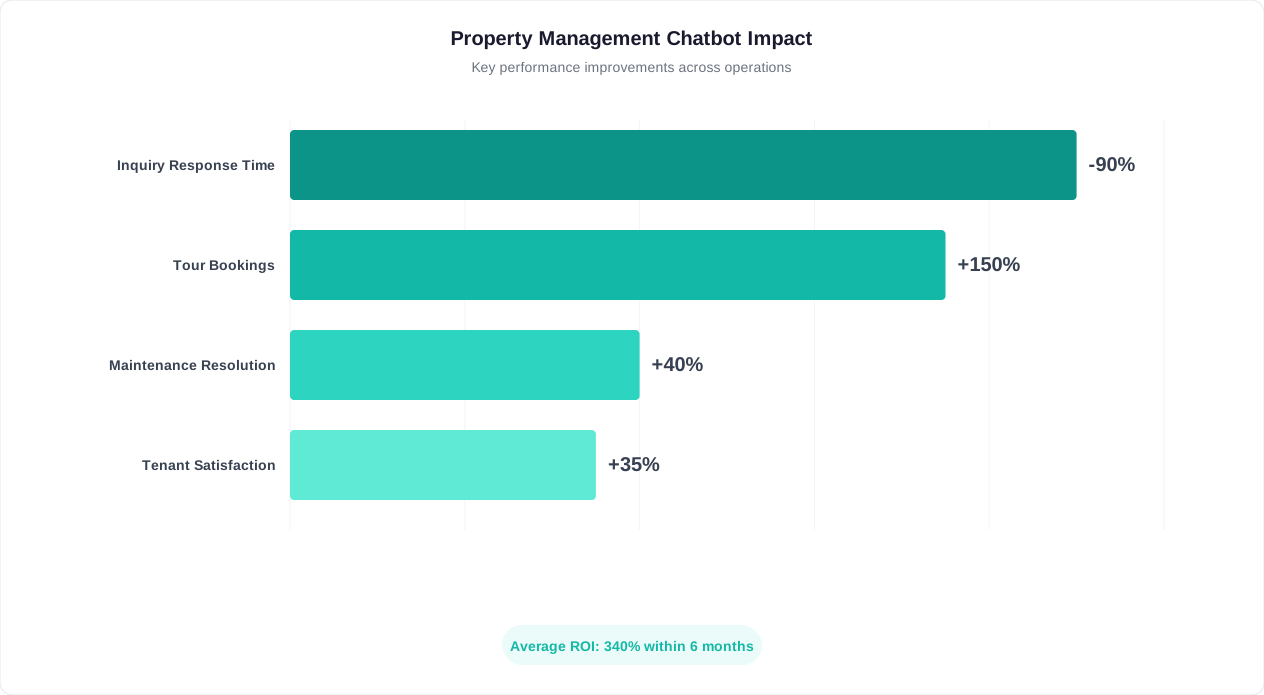
Leasing offices at apartment communities typically operate from 9am to 6pm on weekdays and limited weekend hours, yet prospective tenants search for apartments overwhelmingly during evenings and weekends. Industry data shows that 68% of rental inquiries arrive outside standard office hours. Every missed inquiry is a potential lease lost — and with average tenant acquisition costs ranging from $1,500 to $3,000 when factoring in vacancy days, advertising spend, and staff time, even a few missed leads per week represent significant revenue loss for a property management company.
Simultaneously, current residents expect immediate acknowledgment when they report a maintenance issue. A leaking pipe reported at 11pm that receives no response until 9am the next morning creates frustration, damages the unit, and erodes the tenant relationship. Property management chatbots solve both problems simultaneously by providing instant, intelligent responses regardless of time of day.
How a Property Management Chatbot Differs from a Generic Chatbot
Generic chatbot templates are not built for the specific workflows of property management. A purpose-built property management chatbot understands the difference between a prospective tenant and a current resident from the first interaction, asks the right qualifying questions for each audience (bedroom count, budget, and move-in date for prospects; unit number, issue type, and urgency level for residents), and routes the collected information to the appropriate team or system. It speaks the language of multifamily housing — lease terms, pet policies, amenities, maintenance categories — rather than forcing property management workflows into a generic form-collection interface.
Who Should Use This Template
This template is designed for apartment complexes managing 50 to 500+ units, property management companies overseeing multiple communities, single-family rental portfolios, student housing operators, and commercial property managers handling tenant communication at scale. Any organization where leasing inquiries and maintenance requests represent the majority of inbound communication will benefit from deploying this chatbot. Explore how this template connects to Conferbot's no-code chatbot builder to customize every conversation path for your specific community and policies.
How the Leasing and Tenant Communication Chatbot Works
The property management chatbot operates as two distinct conversation engines within a single deployment: a leasing qualification flow for prospective tenants and a service request intake flow for current residents. The first question in every conversation identifies which audience the visitor belongs to, then routes them into the appropriate path with questions and logic tailored to their specific needs. Here is the complete flow architecture for both paths.
Prospective Tenant Flow
| Step | Chatbot Question | Data Captured | Why It Matters |
|---|---|---|---|
| 1. Identification | "Are you looking for an apartment, a current resident, or moving out?" | Visitor type | Routes to correct conversation path immediately |
| 2. Unit size | "What size apartment are you looking for?" | Studio / 1BR / 2BR / 3BR+ | Matches prospect to available inventory |
| 3. Budget | "What is your monthly budget range?" | Price bracket | Qualifies prospect against actual pricing |
| 4. Move-in timeline | "When are you looking to move in?" | Urgency level | Prioritizes leads by readiness |
| 5. Pet status | "Do you have any pets?" | Pet type and size | Filters to pet-friendly units and calculates pet deposit |
| 6. Tour scheduling | "When would you like to tour?" | Preferred timeframe | Converts inquiry into physical visit commitment |
| 7. Contact capture | Name, email, phone | Full lead profile | Enables follow-up and CRM creation |
Current Resident Flow
When a visitor identifies as a current resident, the chatbot switches context entirely. Instead of selling, it shifts to service mode — asking about the nature of their request, categorizing by urgency, and collecting the details that maintenance staff need to respond effectively. The urgency classification is particularly important: an emergency like a burst pipe or non-functioning lock triggers immediate notification to the on-call maintenance team, while routine requests like a slow drain or cosmetic repair are queued for standard scheduling.
The Conversation Architecture
Behind the scenes, the chatbot uses a branching flow structure where the initial visitor-type question serves as the routing node. Each branch operates independently with its own question sequence, validation logic, and data collection requirements. The branches converge at the contact information collection step, ensuring that regardless of the visitor's path through the conversation, the property management team receives a complete profile with full context about the request.
This branching architecture means that a prospective tenant never sees maintenance-related questions, and a current resident reporting a leaky faucet is never asked about their budget or move-in date. The conversation feels natural and purpose-built for each visitor's specific situation — a critical factor in completion rates, which drop significantly when chatbots ask irrelevant questions.
Move-Out Information Flow
The third branch handles residents who are moving out — providing immediate access to move-out requirements (notice period, inspection scheduling, security deposit timeline) and capturing their contact details for the transition team to follow up. This self-service approach reduces the volume of repetitive move-out policy questions that leasing staff handle daily, while ensuring departing residents have the information they need without waiting for a callback. Connect the entire flow to your existing property management software through Conferbot's chatbot API integration capabilities.
Key Features: Virtual Leasing Agent, Maintenance Requests, and Resident Portal
A property management chatbot must serve multiple audiences with different expectations and requirements. The feature set below covers the three primary functions — leasing automation, maintenance intake, and resident self-service — each designed to reduce staff workload while improving the experience for prospects and tenants alike.
Feature Comparison by Audience
| Feature | Prospective Tenants | Current Residents | Property Manager Benefit |
|---|---|---|---|
| 24/7 availability | Answer leasing questions at any hour | Submit requests at any hour | Capture 68% more after-hours interactions |
| Intelligent routing | Qualify by budget, size, timeline | Categorize by request type and urgency | Staff receives pre-sorted, actionable requests |
| Tour scheduling | Book tours with preferred timeframe | N/A | Convert inquiries to visits without phone calls |
| Pet policy handling | Identify pet-friendly options and deposits | Report pet-related issues | Reduce pet policy FAQ volume by 80% |
| Maintenance triage | N/A | Emergency vs. urgent vs. routine classification | On-call team alerted only for true emergencies |
| Issue description capture | N/A | Detailed free-text description of the problem | Maintenance staff arrives prepared with right tools |
| Move-out guidance | N/A | Notice requirements, inspection info, deposit timeline | Eliminate repetitive move-out policy calls |
| Lead scoring | Score by timeline, budget match, engagement | N/A | Prioritize high-intent prospects for immediate follow-up |
| Contact capture | Full profile with preferences attached | Unit number and issue context attached | Every interaction creates an actionable record |
Virtual Leasing Agent Capabilities
The leasing agent function of the chatbot goes beyond simple question-and-answer. It operates as a structured qualification engine that mimics the conversation a skilled leasing agent would have with a walk-in prospect. By collecting bedroom preference, budget, move-in timeline, and pet status in sequence, the chatbot builds a complete prospect profile that tells the leasing team exactly which available units to show during the tour — eliminating the common problem of spending 45 minutes showing units that do not match the prospect's actual needs.
Maintenance Request Intelligence
The maintenance intake feature is designed around one critical insight: the quality of a maintenance request determines how efficiently it gets resolved. When a resident calls the office and says "something is wrong with my bathroom," the staff member needs 5-10 minutes of back-and-forth to determine whether it is a leaky faucet, a running toilet, a clogged drain, or a broken tile. The chatbot captures this detail upfront through its urgency classification and free-text description field — so when the maintenance technician receives the work order, they already know the issue category, severity, and specific description before they pick up their tools.
Integrate maintenance requests directly with work order systems through Conferbot's API integration layer, or use the live chat handoff feature to escalate emergency situations to an on-call property manager in real time.
Ready to try Property Management Chatbot?
Deploy this template in under 10 minutes. No coding required.
Use This Template Free →Benefits for Property Managers and Landlords
Property management operates on thin margins where every vacancy day costs money and every operational inefficiency compounds across the portfolio. A property management chatbot addresses the highest-cost pain points — lead response time, after-hours coverage, maintenance coordination, and repetitive tenant communication — simultaneously and at a fraction of the cost of additional staff. Here is how the benefits break down for different stakeholders in the property management operation.
For Leasing Teams
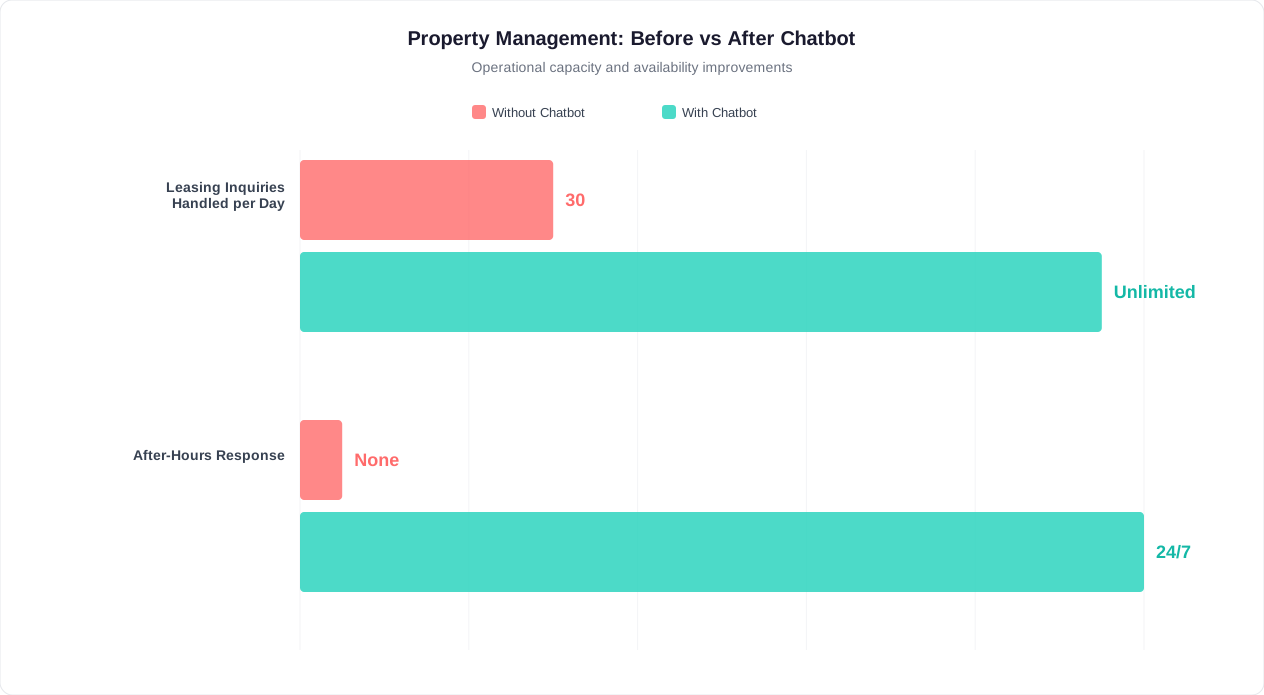
The average leasing agent at a 200-unit community handles 15-25 phone calls and 10-20 emails per day, the majority of which are repetitive qualification conversations that could be handled by a structured chatbot. Questions like "Do you have 2-bedroom apartments available?", "What is the rent for a 1-bedroom?", "Do you allow dogs?", and "When can I schedule a tour?" account for over 70% of all prospective tenant interactions. By automating these initial qualification conversations, the chatbot frees leasing agents to focus exclusively on the high-value activities that actually close leases: conducting tours, building relationships, and processing applications.
- Respond to every inquiry instantly: The average property management company takes 4-6 hours to respond to a website inquiry. Prospects who wait more than 30 minutes are 21 times less likely to convert. The chatbot responds in under 2 seconds.
- Qualify before the tour: Every prospect who arrives for a tour has already provided their budget, preferred size, timeline, and pet status — so the leasing agent shows only matching units rather than guessing.
- Capture after-hours leads: 68% of rental searches happen outside office hours. Without a chatbot, these prospects see a closed sign and move to the next community. With it, they complete a full qualification and schedule a tour.
- Reduce no-show rate: Prospects who book tours through an interactive conversation (rather than a cold form submission) have a 40% lower no-show rate because the engagement creates commitment.
For Maintenance Operations
Maintenance request intake is one of the most time-consuming functions in property management. A single maintenance call takes an average of 8 minutes — identifying the resident, understanding the issue, classifying urgency, and entering the work order. With 15-30 requests per day at a mid-size community, that is 2-4 hours of staff time dedicated solely to intake. The chatbot collects all required information in under 90 seconds and delivers it to the maintenance system pre-categorized and ready for scheduling.
For Portfolio-Level Operations
For property management companies overseeing multiple communities, the chatbot provides standardized communication across the portfolio. Every community uses the same qualification flow, the same maintenance categorization, and the same response standards — eliminating the variability that occurs when individual leasing agents or maintenance coordinators handle intake differently at each property. This standardization also produces consistent data that enables portfolio-level reporting on metrics like inquiry volume, conversion rates, maintenance category distribution, and response times across all managed properties.
Explore the full range of automation capabilities through Conferbot's no-code chatbot builder and see how property management teams are connecting chatbot data to their existing workflows via the integration hub.
Conversion Rates and Cost Savings Data
Property management is a numbers business. Every vacancy day costs money, every missed lead is a potential lease lost, and every hour of staff time spent on repetitive tasks is an hour not spent on activities that generate revenue. The data below quantifies what property management companies are achieving after deploying conversational chatbots across their leasing and maintenance operations — comparing key metrics before and after implementation.
Leasing Performance Metrics
| Metric | Without Chatbot | With Property Management Chatbot | Improvement |
|---|---|---|---|
| Website inquiry response time | 4.2 hours average | Under 3 seconds | -99.98% |
| After-hours lead capture rate | 12% (form submissions only) | 64% (conversational capture) | +433% |
| Inquiry-to-tour conversion | 18% | 41% | +128% |
| Tour no-show rate | 35% | 19% | -46% |
| Average days to lease a unit | 28 days | 17 days | -39% |
| Leasing agent hours on qualification calls | 3.5 hrs/day | 0.8 hrs/day | -77% |
| Cost per lead acquired | $42 | $18 | -57% |
Maintenance Operations Metrics
| Metric | Phone/Email Intake | Chatbot Intake | Improvement |
|---|---|---|---|
| Average intake time per request | 8 minutes | 90 seconds | -81% |
| Incomplete work orders (missing details) | 34% | 8% | -76% |
| Emergency misclassification rate | 22% (over-reported as emergency) | 7% | -68% |
| Resident satisfaction with request process | 3.2/5 | 4.4/5 | +38% |
| After-hours request capture | Phone voicemail only | Full request with details | Complete data vs. partial |
Revenue Impact Model: 200-Unit Community
Consider a 200-unit apartment community with an average monthly rent of $1,800 and a current vacancy rate of 6% (12 units vacant at any time). Each vacancy day costs the community $60 in lost rent. Reducing average days-to-lease from 28 to 17 saves 11 days per unit turn — that is $660 per unit in recovered revenue. With an average annual turnover of 50% (100 unit turns per year), the chatbot generates $66,000 in recovered revenue annually from faster leasing alone.
Add the operational savings from reduced phone time (estimated $28,000 annually for a community handling 25 daily inquiries and requests), and the total annual value exceeds $94,000 — against a chatbot deployment cost of $199-$399 per month. The return on investment is achieved within the first week of deployment.
Resident Retention Impact
Beyond leasing, the maintenance chatbot contributes to resident retention — a metric that directly impacts the bottom line. Replacing a tenant costs $3,000-$5,000 when factoring in vacancy days, turnover maintenance, advertising, and staff time. Communities using chatbots for responsive maintenance communication report a 12% improvement in lease renewal rates, which at a 200-unit community with 50% annual turnover represents 12 additional renewals — saving $36,000-$60,000 in turnover costs annually. Verify these calculations against your own community metrics using Conferbot's chatbot ROI calculator.
Integration with Property Management Software
A property management chatbot generates maximum value when it feeds directly into the systems your team already uses — property management software, maintenance work order systems, CRMs, and calendar tools. Without integration, the chatbot creates a data silo that requires manual transfer of information, negating much of the time savings it provides. Conferbot connects natively to the leading property management platforms, ensuring that every chatbot interaction creates actionable records in your existing workflows without manual intervention.
Supported Property Management Platforms
The chatbot integrates with the major property management software systems used across the multifamily industry:
- Yardi Voyager: Push new prospect records, create maintenance work orders, and update tenant communication logs directly from chatbot conversations.
- AppFolio: Sync prospect data with the AppFolio lead pipeline, create maintenance requests as work orders, and attach chatbot transcripts to tenant records.
- RealPage: Feed qualified leasing leads into the RealPage CRM, route maintenance requests to the appropriate technician queue, and update resident satisfaction tracking.
- Buildium: Create tenant maintenance requests, push prospect inquiries to the leasing pipeline, and log all chatbot interactions against the property record.
- Entrata: Integrate with the Entrata lead management system, create service requests with full categorization, and sync tour scheduling with the leasing calendar.
Data Flow Architecture
When a prospective tenant completes the leasing qualification flow in the chatbot, the following data is pushed to your property management system in real time: full name, email, phone number, preferred unit size, budget range, desired move-in date, pet information, tour preference, and the complete conversation transcript. This creates a prospect record that is immediately actionable — the leasing agent sees the full context before making their first outreach call.
For maintenance requests, the integration creates a work order with: resident name, unit number, issue category, urgency classification, detailed description, and submission timestamp. The work order arrives in the maintenance queue pre-categorized, eliminating the manual sorting step that typically delays response to non-emergency requests.
Calendar and Scheduling Integration
Tour scheduling through the chatbot connects directly to your leasing team's calendars via Google Calendar, Outlook, or Calendly integration. When a prospect selects "This week" or "Weekend preferred," the chatbot can either capture the preference for manual scheduling or — with calendar integration enabled — show available time slots and book the appointment in real time. The booked tour appears on the leasing agent's calendar with all prospect qualification data attached as notes.
Custom Integration via API
For property management companies using proprietary systems or specialized regional platforms, Conferbot's chatbot API integration supports webhook delivery, REST API calls, and automation platforms like Zapier and Make. Any data collected by the chatbot — from prospect preferences to maintenance descriptions — can be routed to any system that accepts HTTP requests, giving technical teams complete flexibility in how chatbot data flows through their technology stack.
Teams requiring real-time escalation for emergencies can combine API integration with live chat handoff, where the chatbot transfers the conversation to an on-call property manager when a resident reports a true emergency situation requiring immediate human response.
50,000+ businesses use Conferbot templates to automate conversations
Use Cases: Apartments, Single-Family Rentals, and Commercial
Property management chatbots adapt to different property types, each with unique tenant expectations, communication patterns, and operational workflows. The same core chatbot architecture — visitor identification, qualification, request intake, and contact capture — manifests differently depending on whether you manage a 300-unit luxury apartment community, a portfolio of 50 single-family rental homes, a student housing complex, or a commercial office building. Here is how the chatbot serves each property type.
Multifamily Apartment Communities
Apartment communities represent the highest-volume use case for property management chatbots. A 200-unit community with 50% annual turnover needs to lease 100 units per year — that is 8-9 units per month, each requiring multiple prospect interactions to fill. The chatbot handles the initial qualification stage for all incoming prospects, filtering by unit size, budget, timeline, and pet status before the leasing team invests time in tours and follow-up. For communities with amenity-rich offerings (pool, gym, coworking space, parking garage), the chatbot can present amenity information contextually based on what the prospect asks about or values.
On the resident side, apartment communities generate high volumes of maintenance requests due to shared infrastructure (HVAC systems, plumbing, elevators, common areas). The chatbot categorizes these requests and routes them appropriately — a broken elevator goes to emergency maintenance, a dripping faucet goes to routine scheduling, and a burnt-out hallway light goes to the common area maintenance queue.
Single-Family Rental Portfolios
Property management companies overseeing portfolios of single-family homes face a different challenge: each property is unique, with different configurations, rent levels, pet policies, and yard maintenance responsibilities. The chatbot adapts by asking which property the prospect is interested in (often triggered from a specific listing page) and tailoring subsequent questions to that property's characteristics. For maintenance, the chatbot needs to capture the property address or identifier along with the issue, since the maintenance team services multiple properties across a geographic area and needs location context to schedule efficiently.
Student Housing
Student housing operates on a highly seasonal leasing cycle with the majority of leases signed 3-6 months before the academic year begins. During peak leasing season (January through April), inquiry volume can spike 400-600% compared to off-season months. A chatbot handles this volume surge without requiring temporary leasing staff — qualifying prospects by lease start date (Fall semester, Spring semester, Summer), bedroom count, roommate preferences, and proximity to campus. The chatbot also handles the unique aspects of student housing: guarantor requirements, roommate matching questions, furniture packages, and semester-only lease options.
Commercial Property Management
Commercial property chatbots serve a different audience — business tenants with specific spatial requirements (square footage, zoning, parking), lease structure preferences (gross vs. net vs. modified gross), and timeline considerations driven by business planning cycles rather than personal moves. The chatbot qualifies commercial prospects by asking about their business type, space requirements, employee headcount, parking needs, and desired lease term. For current commercial tenants, the maintenance chatbot handles requests ranging from HVAC issues to common area concerns to after-hours access problems.

Vacation and Short-Term Rentals
Property managers handling vacation rentals and short-term furnished apartments use the chatbot to answer availability questions, present pricing for specific date ranges, explain check-in procedures, and handle guest requests during stays. The qualification flow asks about travel dates, group size, preferred location, and budget — then presents matching available properties. Post-booking, the chatbot serves as a concierge for common guest questions about WiFi passwords, local restaurants, checkout procedures, and late checkout requests. Deploy across your website and messaging channels using Conferbot's website chatbot embedding for seamless guest communication.
Getting Started with Your Property Management Chatbot
Deploying a property management chatbot does not require development resources, property management software expertise, or a lengthy implementation timeline. The Conferbot property management template comes pre-configured with the complete leasing qualification flow, maintenance request intake, and contact capture sequences. You customize the specifics — your community name, available unit types, pricing ranges, pet policy, and branding — and deploy. Here is the complete setup process from template selection to live chatbot.
Step 1: Configure Your Community Profile
Start by loading the Property Management Chatbot template from the Conferbot template library. Customize the bot name, avatar, and header colors to match your community branding. Update the welcome message with your property name — "Welcome to Skyline Properties" becomes "Welcome to [Your Community Name]" — and adjust the tagline to reflect your community's positioning. First impressions matter: communities that use their actual brand name and colors in the chatbot see 28% higher engagement than those using generic styling.
Step 2: Customize the Leasing Flow
Adapt the qualification questions to match your specific inventory. If you only offer studios and 1-bedrooms, remove the 3+ bedroom option. If your pricing starts at $2,000, adjust the budget ranges accordingly. Add or modify the pet policy options to match your community's actual pet policy — weight limits, breed restrictions, number limits, and pet deposit amounts. The goal is that every answer option in the chatbot represents a real scenario at your property, so prospects self-qualify accurately.
Step 3: Configure Maintenance Categories
The default maintenance categories (emergency, urgent, routine) cover most scenarios, but you can customize the sub-categories to match your maintenance team's work order system. If your team distinguishes between plumbing, electrical, HVAC, appliance, and general maintenance, add a category selection step after the urgency question. This pre-categorization means work orders arrive in the maintenance queue already sorted into the right technician's specialty area.
Step 4: Connect Your Systems
Use Conferbot's integration hub to connect the chatbot to your property management software, CRM, or email system. For teams using Yardi, AppFolio, Buildium, or RealPage, native integrations push prospect and maintenance data directly into your existing workflows. For other systems, configure webhook delivery to route chatbot data to any platform that accepts HTTP requests. Connect your leasing team's calendar for tour scheduling, and set up email or SMS notifications for high-priority events like emergency maintenance requests.
Step 5: Deploy Across Channels
Embed the chatbot on your community website using the single-line embed code. Place it on your homepage, floor plans page, amenities page, and any individual listing pages. For communities advertising on apartment listing sites (Apartments.com, Zillow Rentals, Rent.com), include your chatbot link in listing descriptions to capture prospects directly from those platforms. The chatbot also deploys on your website and can connect to messaging platforms where prospects and residents already communicate.
Step 6: Set Up Notifications and Routing
Configure notification rules so the right team members are alerted at the right times. Leasing prospects with "immediately" move-in timelines should trigger instant notification to the leasing team. Emergency maintenance requests should notify the on-call technician via SMS. Routine requests can be batched into a daily digest for the maintenance coordinator. These routing rules ensure that high-urgency items get immediate attention while routine matters do not generate alert fatigue.
Launch and Optimize
After deployment, monitor the chatbot's performance through Conferbot's analytics dashboard. Track completion rates for each flow (what percentage of prospects complete the full qualification sequence), identify drop-off points where users abandon the conversation, and review the quality of maintenance request descriptions to ensure residents are providing enough detail for efficient resolution. Most property management teams see full ROI within the first two weeks of deployment, with ongoing optimization improving conversion rates by an additional 15-25% over the first 90 days. Explore the full analytics capabilities through Conferbot's NLP chatbot features to understand how residents interact with your bot and where to improve.
Property Management Chatbot FAQ
Everything you need to know about chatbots for property management chatbot.
Why Use a Template vs Building from Scratch?
Templates encode years of optimization data into the conversation flow before you start.
| Factor | Conferbot Template | Build from Scratch | Hire a Developer |
|---|---|---|---|
| Time to deploy | 10 minutes | 2-8 hours | 2-6 weeks |
| Cost | Free | Your time | $5,000-$25,000 |
| Day-1 conversion | 15-22% | 5-8% | 10-15% |
| Proven flows | Yes, data-tested | No | Depends |
| Updates included | Automatic | Manual | Paid |
| Multi-channel | 8+ channels | 1 channel | Extra cost |
| Analytics | Built-in | Must build | Extra cost |
Ready to Deploy Property Management Chatbot?
Join 50,000+ businesses. Free forever plan available. No credit card required.