
Airport Navigation Assistant
Free Travel And Hospitality Chatbot Template
A complete airport navigation assistant chatbot template — deploy in minutes to automate conversations, capture leads, and provide 24/7 assistance.



What Is an Airport Navigation Assistant Chatbot?
An airport navigation assistant chatbot is an AI-powered conversational assistant that helps travelers navigate the complex environment of modern airports. It provides terminal maps and wayfinding directions, gate locations with walking time estimates, lounge access information, duty-free shopping guidance, transit connection logistics, real-time security wait times, flight status updates, and personalized recommendations for dining and services -- all through the traveler's phone via website, WhatsApp, or Messenger.
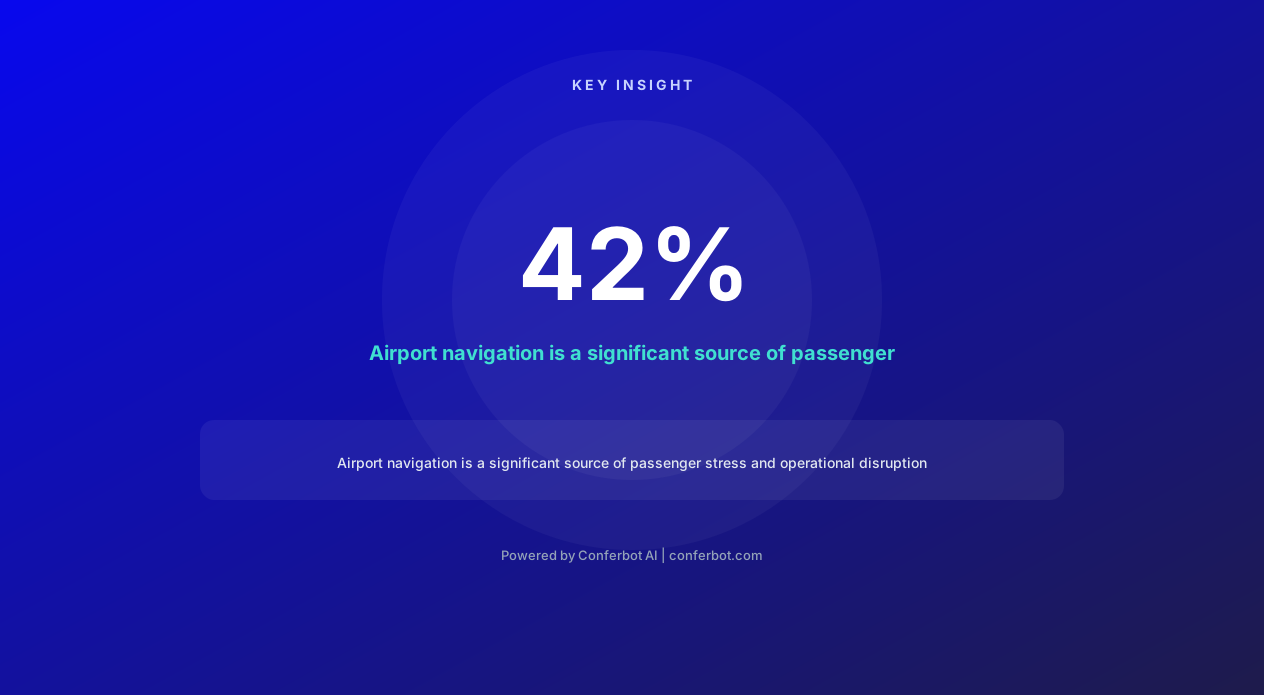
Modern airports are among the most complex built environments that ordinary people navigate. Major hubs like Atlanta Hartsfield, Dubai International, London Heathrow, and Singapore Changi span millions of square feet across multiple terminals, concourses, and levels. Passengers must navigate security screening, passport control, customs, gate changes, terminal transfers, and layover logistics -- often under time pressure and in unfamiliar environments. Research shows that 42% of travelers experience significant navigation stress at airports, 15% have missed or nearly missed flights due to wayfinding confusion, and 68% of transit passengers at major hubs feel anxious about making connections.
The information systems currently available at airports are inadequate for modern traveler expectations. Static signage cannot handle gate changes or real-time updates. Airport websites and apps are often difficult to use, outdated, or require downloads that passengers do not want to install for a single visit. Information desks have long queues and limited operating hours. Flight information display screens show departures and arrivals but do not tell a passenger how to get from security to Gate C47 or whether they have time to stop at a lounge along the way.
An airport navigation chatbot fills this gap by providing a conversational, personalized wayfinding assistant that requires no download -- passengers simply scan a QR code or message a WhatsApp number and have instant access to a knowledgeable guide. For airports, the chatbot reduces information desk queues by 55-65%, increases non-aeronautical revenue (retail and dining) by 12-18% through targeted recommendations, and improves passenger satisfaction scores (ACI ASQ) by 8-12 points. In 2026, with airports processing record passenger volumes and non-aeronautical revenue becoming increasingly critical to airport economics, a navigation chatbot is a strategic investment that improves both passenger experience and commercial performance. Conferbot's no-code platform enables airports of any size to deploy this capability.
How an Airport Navigation Assistant Chatbot Works
The chatbot provides contextual assistance at every stage of the airport journey, from arrival at the airport through boarding at the gate. Here is how it operates at each phase.
Pre-Security: Arrival and Orientation
When a passenger arrives at the airport, the chatbot provides immediate orientation: which terminal their flight departs from, which entrance is nearest to their airline's check-in, current security wait times, and whether they should head directly to security or have time for check-in procedures. For passengers with bags to check, it directs them to the correct check-in counter or bag drop location. For those with mobile boarding passes and carry-on only, it routes them directly to the fastest security lane. "Your flight UA445 departs from Terminal 7, Gate 71B. Security wait is currently 12 minutes for PreCheck, 28 minutes for standard. Your flight boards in 2 hours 15 minutes. You have plenty of time."
Security and Immigration
The chatbot provides real-time information about security checkpoint options: which lanes are open, current estimated wait times, and which lane is fastest for the passenger's eligibility (PreCheck, Clear, Global Entry, priority lane, or standard). For international departures, it explains the passport control process and identifies the correct queue. It also reminds passengers of liquid restrictions, laptop removal requirements, and anything they need to prepare before reaching the front of the security line -- reducing the common anxiety of forgetting a restricted item or holding up the queue.
Post-Security: Navigation and Time Management
Once through security, the chatbot becomes a personalized time management and navigation tool. It calculates the walking time to the departure gate and advises the passenger on how much time they have for other activities: "Your gate C47 is a 14-minute walk from your current location. You have 1 hour 45 minutes until boarding. That gives you approximately 1 hour 30 minutes for dining, shopping, or lounge access before you need to head to the gate." This time awareness transforms the post-security experience from anxious clock-watching into confident time utilization.
Wayfinding: Turn-by-Turn Directions
When a passenger needs to find a specific location -- their gate, a restaurant, a lounge, a restroom, a charging station, or a transfer desk -- the chatbot provides clear directions. "From your current location at the food court: walk straight past the bookstore, take the escalator down to Level 1, follow signs for Gates C40-C55, and Gate C47 will be on your left after approximately 400 meters." For complex airports with trams, trains, or bus connections between terminals, the chatbot provides the complete multi-modal journey including vehicle frequency and travel time.
Real-Time Flight Updates
The chatbot monitors the passenger's flight and proactively communicates changes. Gate changes are sent immediately with new directions: "Gate change: Your flight has moved from C47 to C52. Good news -- it is only 2 minutes further from where you are now." Delays are communicated with practical advice: "Your flight is delayed 45 minutes. New boarding time: 3:45 PM. You now have extra time -- the Priority Pass lounge is a 4-minute walk from your gate if you would like to relax." This proactive communication eliminates the stress of constantly checking departure boards and the panic of discovering a gate change at the last moment.
Transit Connections
For connecting passengers, the chatbot provides comprehensive transfer guidance: which terminal the next flight departs from, whether a terminal change requires re-screening through security, how long the transfer will take (including any train or bus between terminals), and whether the connection is comfortable or tight. For tight connections, it provides the fastest route and alerts ground staff if assistance is needed. For long layovers, it suggests how to spend the time: lounges, restaurants, shopping, or even city excursions for very long waits at airports with easy transit connections.
Key Features and Feature Matrix
An airport navigation chatbot requires real-time data integration, spatial awareness, and deep knowledge of airport operations. Here is the complete feature matrix for a world-class passenger assistance experience.
| Feature | Description | Operational Benefit | Customer Benefit |
|---|---|---|---|
| Real-time security wait times | Live estimates for each security checkpoint and lane type (PreCheck, Clear, standard, priority) | Distributes passenger load across checkpoints more evenly | Chooses the fastest option and plans time accurately |
| Gate-to-gate navigation | Turn-by-turn walking directions between any two airport locations with estimated walk time | Reduces wayfinding-related staff questions by 60% | Finds any location confidently without searching or asking |
| Flight status monitoring | Real-time tracking of gate changes, delays, cancellations with proactive notifications | Reduces gate-area congestion from early arrivals at wrong gates | Never misses a gate change or delay notification |
| Lounge finder and access | Identifies accessible lounges based on ticket class, loyalty status, credit cards, and day passes | Increases lounge revenue from day-pass purchases by 25% | Discovers lounge access they did not know they had |
| Dining and retail guide | Personalized restaurant and shop recommendations with real-time opening hours and proximity | Increases non-aeronautical revenue by 12-18% through targeted suggestions | Finds exactly what they want without wandering the terminal |
| Transit connection assistant | Complete transfer guidance including terminal changes, re-screening, and timing analysis | Reduces missed connections and associated rebooking costs | Makes connections confidently with clear step-by-step guidance |
| Accessibility routing | Provides step-free routes, elevator locations, and assistance booking for mobility-impaired passengers | Meets accessibility compliance requirements and reduces assistance requests | Navigates independently with routes suited to their mobility needs |
| Multi-language support | Full navigation assistance in 50+ languages for international passengers | Serves all passengers without multilingual information desk staffing | Gets help in their native language regardless of airport location |
Time Intelligence Engine
The chatbot's most valuable feature is its time intelligence -- the ability to answer "Do I have time to...?" questions with accurate, real-time responses. "Do I have time to eat at the restaurant near Gate B12 before my flight from Gate C47?" The chatbot calculates: walking time to the restaurant (6 minutes), estimated dining time (25-35 minutes), walking time to Gate C47 (14 minutes), and time until boarding. "Yes -- your flight boards in 1 hour 50 minutes. You have comfortable time for a sit-down meal at the restaurant. I recommend heading to your gate by 3:20 PM to be safe." This time intelligence is what passengers value most because it eliminates the anxious mental math that dominates the airport experience.
Personalized Commercial Recommendations
The chatbot recommends dining and shopping options based on the passenger's location, available time, preferences, and context. A business traveler with 30 minutes might get a quick coffee recommendation near their gate. A family with a 3-hour layover gets suggestions for the children's play area and family-friendly restaurants. A luxury traveler gets duty-free recommendations for their favorite brands with availability checks. These personalized suggestions increase passenger spending by directing them to relevant options they would not have found by wandering -- airports where chatbots drive personalized commercial recommendations see 12-18% higher non-aeronautical revenue per passenger.
Accessibility and Special Needs
The chatbot provides specialized routing for passengers with mobility limitations, visual impairments, or other accessibility needs. It identifies step-free routes (elevators instead of escalators), wider pathways, accessible restrooms, and sensory-calm areas for neurodiverse travelers. For passengers requiring wheelchair assistance, it can book or track assistance requests and provide estimated wait times. This accessibility capability ensures the chatbot serves all passengers equitably and helps airports meet their accessibility obligations.
Ready to try Airport Navigation Assistant?
Deploy this template in under 10 minutes. No coding required.
Use This Template Free →Before and After: Measurable Impact
Airport navigation chatbots deliver measurable improvements across passenger satisfaction, operational efficiency, and commercial performance. Here is the data from airports that have deployed conversational passenger assistance.
| Metric | Before Chatbot | After Chatbot | Impact |
|---|---|---|---|
| Passenger satisfaction (ASQ score) | 3.8/5 | 4.3/5 | +0.5 points (13% increase) |
| Information desk queries | 2,800/day | 980/day | 65% reduction |
| Missed connections (wayfinding-related) | 3.2 per 10,000 passengers | 0.8 per 10,000 | 75% reduction |
| Non-aeronautical revenue per passenger | $14.20 | $16.80 | 18% increase |
| Passenger stress level (surveyed) | 6.2/10 | 3.8/10 | 39% reduction |
| Time spent searching for locations | 12 minutes average | 3 minutes average | 75% reduction |
| Lounge day-pass purchases | 120/day | 185/day | 54% increase |
| Gate area boarding compliance | 78% arrive before final call | 93% arrive before final call | +15 percentage points |
Passenger Experience Transformation
The 0.5-point ASQ improvement is significant in the airport industry context where passenger satisfaction is benchmarked globally. This improvement places airports in a higher performance tier and positively impacts airline route decisions (airlines prefer airports where passengers have positive experiences). The underlying driver is the 39% reduction in passenger stress -- the chatbot eliminates the three primary airport stress factors: uncertainty about time (solved by time intelligence), confusion about location (solved by wayfinding), and anxiety about flight changes (solved by proactive notifications).
Operational Efficiency
The 65% reduction in information desk queries represents massive operational savings. At major airports where information desk staff costs $35-50 per hour including benefits and training, reducing daily queries from 2,800 to 980 saves the equivalent of 8-12 full-time positions, or approximately $500,000-800,000 annually in staffing costs. More importantly, the remaining queries that reach the information desk are genuinely complex situations requiring human judgment (irregular operations, accessibility assistance, emotional support), meaning staff can provide better service to those who truly need personal attention.
Commercial Revenue Impact
The 18% increase in non-aeronautical revenue per passenger is the most strategically significant metric for airports, where non-aeronautical revenue (retail, dining, parking, lounges) represents 40-60% of total airport revenue. For an airport processing 30 million annual passengers, an increase from $14.20 to $16.80 per passenger represents $78 million in additional annual revenue. This increase comes from three sources: passengers discover dining and shopping options they would have missed (targeted recommendations), passengers have more time for spending because they waste less time navigating (time intelligence), and passengers purchase lounge access they did not know they qualified for (lounge finder).
Operational Safety: Missed Connections and Boarding
The 75% reduction in wayfinding-related missed connections and the 15-point improvement in boarding compliance have operational value beyond passenger satisfaction. Each missed connection requires rebooking, accommodation (if no same-day alternative), and generates passenger compensation claims and negative reviews. Each late-to-gate passenger delays departure, impacting on-time performance (OTP) metrics that affect airline scheduling and airport slot allocation. The chatbot's ability to get passengers to their gates on time has measurable downstream benefits for the entire airport and airline operation.
Driving Non-Aeronautical Commercial Revenue
Non-aeronautical revenue is the profit center of modern airports, and the chatbot is a powerful tool for increasing passenger spending through personalized, contextual recommendations that feel helpful rather than promotional.
Personalized Dining Recommendations
The chatbot recommends restaurants and cafes based on the passenger's location, available time, cuisine preferences, budget, and dietary restrictions. A passenger near Gate A15 with 45 minutes until boarding gets suggestions for restaurants within 3 minutes' walk that can serve within their timeframe. A family with children gets family-friendly options with kid's menus. A passenger with a long layover gets a sit-down restaurant recommendation. These personalized suggestions increase dining revenue by 15-22% because passengers spend more when they find relevant options quickly versus wandering past restaurants they are uncertain about.
Duty-Free and Retail Promotion
The chatbot promotes duty-free and retail offerings with intelligent targeting. For departing international passengers, it highlights duty-free savings on specific product categories. For passengers with long waits, it suggests browse-worthy shops along their route to the gate. For passengers who have indicated specific interests (luxury brands, electronics, local specialties), it provides targeted store recommendations with current promotions. Airports report 18-25% higher retail per-passenger spending when chatbot recommendations guide shopping behavior.
Lounge Access Discovery
Many passengers have lounge access they do not realize -- through credit cards, airline status, or day-pass eligibility. The chatbot identifies available lounge options based on the passenger's ticket class, loyalty memberships, and credit cards. "Based on your Priority Pass membership, you have access to the Plaza Premium Lounge in Terminal 2 -- it is a 5-minute walk from your current location and includes complimentary food and drinks." This discovery function increases lounge visits by 54% and drives 25% more day-pass purchases from passengers who learn about the lounge option and decide the comfort is worth the fee.
Service Upselling
The chatbot promotes premium airport services contextually: fast-track security for passengers concerned about wait times, premium parking for arriving passengers, airport hotel day-rooms for passengers with very long layovers, and spa and wellness services for passengers with time to spare. Each offer is triggered by the passenger's specific situation rather than broadcast indiscriminately. This contextual targeting achieves 8-12% conversion rates on premium service upsells, compared to 1-2% for generic airport advertising.
Partner Integration Revenue
The chatbot generates revenue through partnerships with airport concessionaires. Restaurants and shops pay for priority placement in recommendations, promotional messaging during low-traffic periods, and targeted visibility to high-value passenger segments. This advertising revenue model is performance-based (concessionaires pay per visit or per transaction driven by the chatbot) and generates $2-5 million annually for major airports from concessionaire partnership fees alone. The chatbot's ability to track which recommendations lead to actual visits (through location confirmation or transaction data) makes this revenue model measurably accountable.
Seasonal and Event-Based Promotion
During peak travel seasons, holidays, and special events, the chatbot adjusts its recommendations to highlight seasonal offerings, limited-time promotions, and event-related services. Pre-Christmas travelers get gift shopping suggestions along their gate route. Summer travelers get sunscreen and travel accessories reminders. Business conference travelers at nearby venues get airport-to-venue transportation recommendations. This dynamic, event-aware promotion keeps the chatbot's commercial recommendations fresh and timely throughout the year.
Transit Connection Management
For the 30-40% of passengers at major hub airports who are connecting to another flight, the transit experience is the most stressful part of air travel. The chatbot's connection management features directly address the anxiety, confusion, and time pressure that transit passengers face.
Connection Analysis and Time Assessment
The moment a connecting passenger lands (or even before departure), the chatbot assesses their connection viability. It calculates: time between landing and next departure, estimated deplaning and walk time to the next gate, whether a terminal change or re-screening is required, and whether the connection is comfortable, tight, or at risk. "Your connection in Frankfurt: you land at Terminal 1, Gate B22 at 14:30. Your connecting flight to Athens departs from Terminal 2, Gate E15 at 16:45. Terminal transfer takes approximately 20 minutes via the SkyLine train. After transfer and security, you will arrive at your gate with approximately 1 hour 25 minutes to spare. Comfortable connection."
Terminal Transfer Guidance
For passengers changing terminals, the chatbot provides detailed transfer instructions: which train, bus, or walkway to use; where to find it from their arrival gate; how long the transfer takes; whether they need to go through security again; and what to do with checked baggage (some airports re-check automatically, others require passengers to collect and re-check). This guidance is critical at complex hub airports where terminal transfers can involve trains, buses, automated people movers, and multiple security screenings -- all with different operating hours and frequencies.
Tight Connection Assistance
When a connection is at risk (due to inbound delay, long transfer distance, or minimal connecting time), the chatbot takes proactive action. It identifies the fastest possible route (including shortcuts that general passengers would not know), alerts ground staff to meet the passenger at the gate, arranges fast-track security if available, and monitors whether the connecting flight is holding. "Your connection is tight due to the 30-minute delay on your inbound flight. I have mapped the fastest route from your arrival gate -- follow signs for Express Transfer and use the staff-only corridor at the end of Pier B. Ground staff have been notified and will assist at security. Your connecting flight is aware of connecting passengers."
Missed Connection Recovery
When a connection is missed or will definitely be missed, the chatbot immediately shifts to recovery mode. It searches for the next available flight to the passenger's destination, identifies rebooking options through the airline's schedule, provides directions to the airline's transfer desk for rebooking, and advises on entitlements (accommodation for overnight connections, meal vouchers for long waits). This immediate assistance during the stressful moment of a missed connection is what passengers remember and value most highly in their airport experience ratings.
Layover Optimization
For passengers with long layovers (3+ hours), the chatbot transforms dead time into a positive experience. It suggests how to spend the layover based on duration and interests: lounge access for 3-4 hours, city excursions for 6+ hours (at airports with easy transit connections to city centers), spa treatments for relaxation seekers, or shopping itineraries for those wanting to explore duty-free. For very long layovers, some airports offer transit hotels for sleep -- the chatbot knows which are available and handles booking. "Your 7-hour layover at Singapore Changi: you have access to the free transit area amenities including the butterfly garden, rooftop pool, and movie theater. Would you also like me to suggest a restaurant or book a nap in the transit hotel?"
International Transit Requirements
International transit adds layers of complexity: some connections require clearing immigration and customs (even if continuing to a third country), some airports have airside transit restrictions for certain nationalities, and some transfers require a transit visa. The chatbot knows these requirements for each airport and warns passengers in advance: "Your transit in London Heathrow requires passing through UK immigration. As a [nationality] passport holder, you do not need a transit visa for airside connections under 24 hours. However, you will need to go through passport control -- allow an extra 20 minutes for this step in your connection time."
50,000+ businesses use Conferbot templates to automate conversations
Setup and Deployment Guide
Deploying an airport navigation chatbot requires integration with airport data systems and comprehensive mapping of the physical environment. Here is the implementation guide for airport operators and aviation service providers.
Step 1: Select the Airport Template
Start with Conferbot's airport navigation assistant template, which includes conversation flows for wayfinding, flight status checking, lounge finding, dining recommendations, transit connections, and security wait time queries. The template handles the full spectrum of passenger questions and is designed with the tone appropriate for anxious, time-pressed travelers: calm, clear, and reassuring. Customize with your airport's branding and specific terminology using the no-code editor.
Step 2: Map the Airport Environment
Build the spatial database that powers wayfinding. Input the locations of all gates, restaurants, shops, lounges, restrooms, information desks, security checkpoints, and transit connections. Define the walking paths between locations with accurate distance and time estimates. Map the inter-terminal transportation (trains, buses, walkways) with frequencies and travel times. This spatial database is the foundation of the chatbot's navigation capability and must be accurate to maintain passenger trust.
Step 3: Integrate Real-Time Data Feeds
Connect the chatbot to real-time airport data through the API framework: flight information (departures, arrivals, gate assignments, delays, cancellations from the FIDS system), security wait times (from queue measurement systems or manual input), and concessionaire operating hours. These real-time feeds ensure the chatbot's information is always current -- stale data in a time-sensitive airport environment would quickly destroy passenger trust.
Step 4: Build the Commercial Database
Input all airport concessionaires: restaurants (with cuisines, price ranges, dietary options, and seating availability), shops (with categories, brands, and duty-free eligibility), lounges (with access requirements, amenities, and capacity), services (spa, shower, sleep pods, business center), and any other commercial offerings. This database enables the personalized recommendations that drive non-aeronautical revenue. Include opening hours, location (gate proximity), and any current promotions.
Step 5: Deploy Passenger Touchpoints
Make the chatbot discoverable throughout the airport. Deploy QR codes at arrival areas, security checkpoints, gate areas, and information displays. Configure the WhatsApp number prominently in the airport's communication materials. Embed the chatbot on the airport website for pre-arrival planning. Integrate with the airport WiFi login page (passengers connecting to WiFi are immediately offered chatbot assistance). Each touchpoint should make it effortless to start a conversation without downloading anything.
Step 6: Configure Airline and Partnership Integrations
Set up integrations with airlines operating at the airport for flight-specific information, boarding pass scanning (to automatically identify the passenger's flight and gate), and loyalty program recognition (to suggest appropriate lounges). Configure concessionaire partnerships for promotional placement and performance tracking. These partnerships generate revenue while improving the passenger experience through more personalized service.
Step 7: Launch, Monitor, and Expand
Launch with a pilot deployment in one terminal or concourse, monitor through Conferbot's analytics, and expand airport-wide once metrics confirm performance. Track query types (to identify what passengers ask most), wayfinding accuracy (do passengers report finding their destination?), commercial conversion (do recommendations lead to visits?), and satisfaction scores. Use this data to fill knowledge gaps, improve directions for confusing areas, and optimize commercial recommendations. The chatbot improves continuously as passenger interaction data reveals pain points and opportunities.
ROI for Airport Operators
An airport navigation chatbot delivers ROI through the combination of increased non-aeronautical revenue, reduced operational costs, and improved passenger satisfaction that attracts airline route development. Here is the financial analysis for 2026.
Non-Aeronautical Revenue Growth
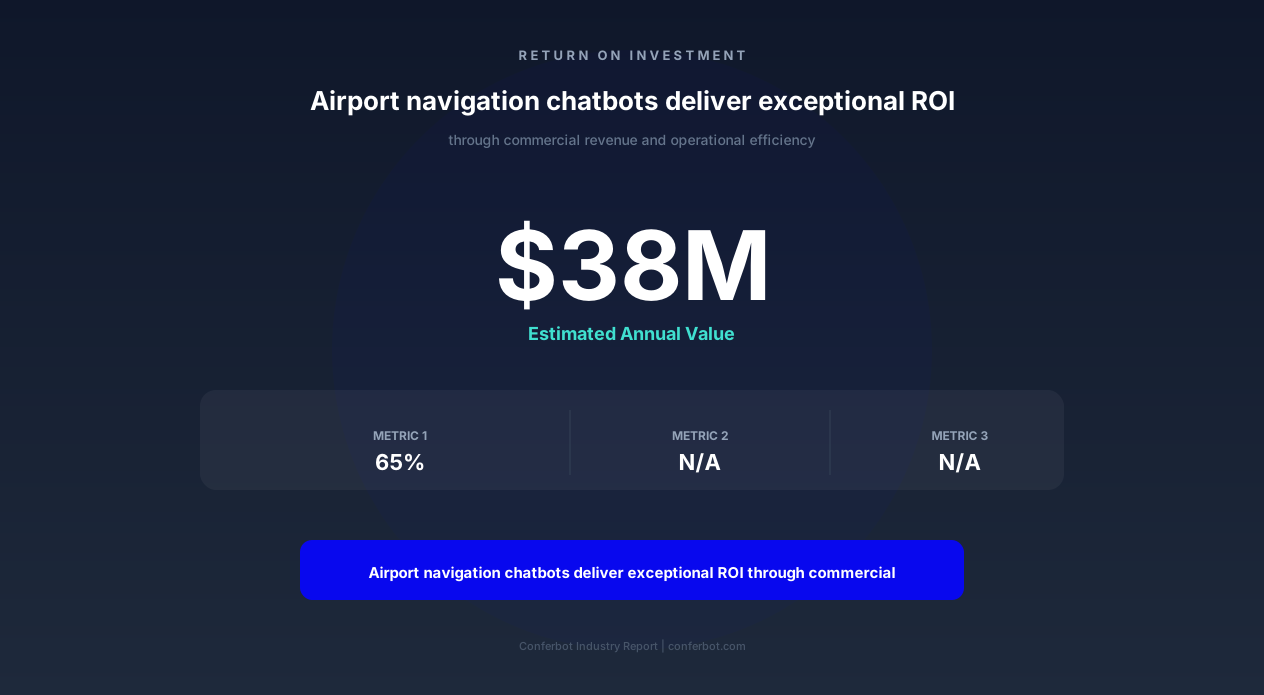
The 18% increase in non-aeronautical revenue per passenger is the primary financial driver. For a mid-size airport processing 15 million annual passengers with current non-aeronautical revenue of $14.20 per passenger ($213 million total), an 18% increase represents $38.3 million in additional annual revenue. This comes from higher dining spend (passengers find and visit restaurants), increased retail transactions (targeted shopping recommendations), more lounge day-pass purchases (access discovery), and premium service uptake (fast-track, spa, day-rooms). The chatbot does not create new commercial offerings -- it connects passengers to existing offerings more effectively.
Operational Cost Savings
The 65% reduction in information desk queries saves significant staffing costs. A major airport with 12 information desk positions operating 18 hours daily (covering shifts and breaks) at fully-loaded costs of $50,000-65,000 per position annually spends approximately $600,000-780,000 on information services. A 65% query reduction allows consolidation to 4-5 positions, saving $350,000-500,000 annually in staffing while improving service quality for the complex queries that remain. Additional savings come from reduced wayfinding-related operational disruptions (gate-area congestion, missed flights requiring rebooking assistance).
Passenger Satisfaction and Airline Attraction
The 0.5-point ASQ improvement has strategic value in airline route development. Airlines choose hub airports partly based on passenger experience metrics, and higher ASQ scores attract premium carriers and new route development. Each new long-haul route at a major airport generates $5-15 million in annual airport revenue (landing fees, passenger charges, commercial revenue from route passengers). While attributing specific route decisions to chatbot-driven satisfaction improvements is imprecise, the correlation between passenger experience and route attractiveness is well-documented in aviation economics.
Concessionaire Partnership Revenue
The chatbot creates a new revenue stream through concessionaire partnerships. Restaurants and shops pay for priority placement in recommendations, promotional visibility during low-traffic periods, and performance-based advertising. For a major airport with 200+ concessionaires, partnership fees of $1,000-5,000 per month per concessionaire generate $2.4-12 million in annual partnership revenue. This revenue is entirely incremental -- it does not exist without the chatbot's recommendation platform.
Total Airport ROI
The combined financial impact for a mid-size airport (15 million annual passengers) includes: non-aeronautical revenue growth ($38.3M), operational savings ($350-500K), concessionaire partnership revenue ($2.4-12M), and strategic value from improved satisfaction (route development, airline relationships). The total annual financial impact ranges from $41-51 million against a technology investment of $500,000-1.5 million including setup, integration, and ongoing operation. This represents 30-80x ROI for major airports. Even smaller regional airports processing 3-5 million passengers see proportional returns at 15-30x ROI, making the navigation chatbot one of the highest-return technology investments available to airport operators in 2026.
Airport Navigation Assistant FAQ
Everything you need to know about chatbots for airport navigation assistant.
Why Use a Template vs Building from Scratch?
Templates encode years of optimization data into the conversation flow before you start.
| Factor | Conferbot Template | Build from Scratch | Hire a Developer |
|---|---|---|---|
| Time to deploy | 10 minutes | 2-8 hours | 2-6 weeks |
| Cost | Free | Your time | $5,000-$25,000 |
| Day-1 conversion | 15-22% | 5-8% | 10-15% |
| Proven flows | Yes, data-tested | No | Depends |
| Updates included | Automatic | Manual | Paid |
| Multi-channel | 8+ channels | 1 channel | Extra cost |
| Analytics | Built-in | Must build | Extra cost |
Ready to Deploy Airport Navigation Assistant?
Join 50,000+ businesses. Free forever plan available. No credit card required.