
Local Government FAQ
Free Government And Public Services Chatbot Template
A complete local government faq chatbot template — deploy in minutes to automate conversations, capture leads, and provide 24/7 assistance.



What Is a Local Government FAQ Chatbot?
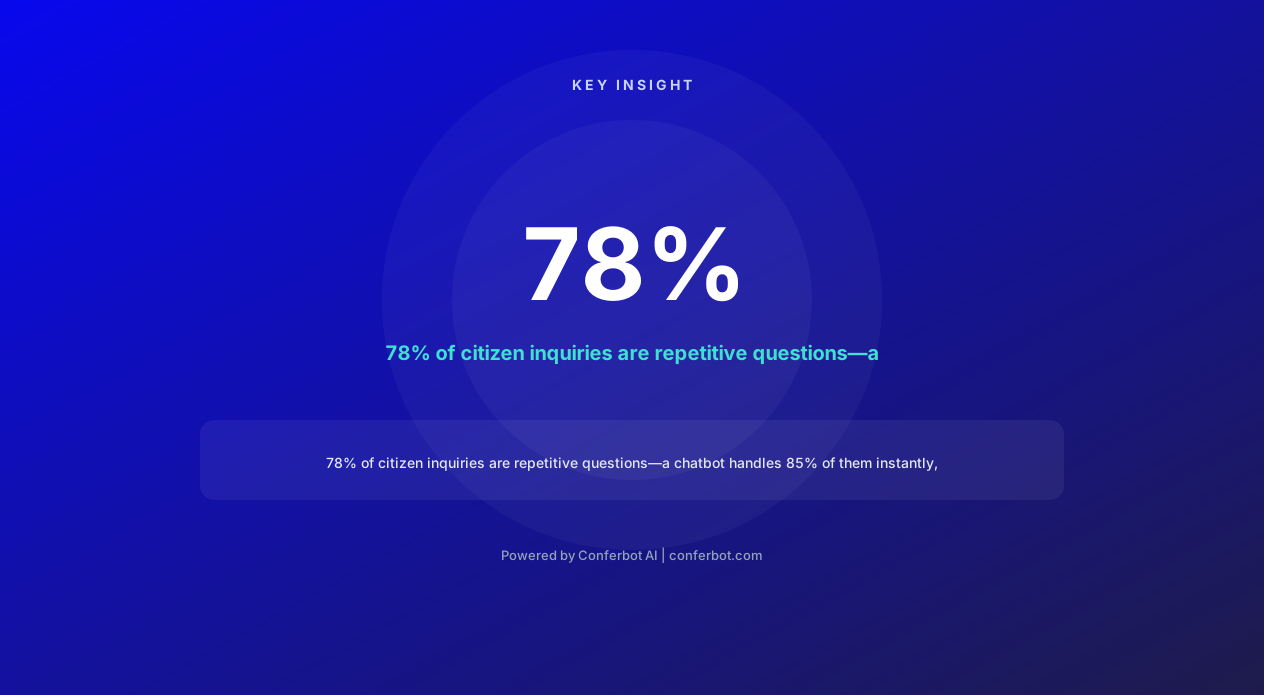
Local government offices across America answer the same questions thousands of times each month. What time does City Hall close? When is my property tax due? How do I pay my water bill? Where is the next council meeting? Research shows that 78% of citizen inquiries to local government are repetitive questions with straightforward answers—yet each one consumes staff time, ties up phone lines, and delays responses to citizens with genuinely complex needs.
The Conferbot Local Government FAQ chatbot template transforms your municipal website into an intelligent, always-available information resource. It handles the 85% of citizen questions that don't require human judgment—tax payment information, utility billing questions, meeting schedules, elected official contacts, service hours, holiday closures, and hundreds of other common inquiries—instantly, accurately, and around the clock.
This isn't a simple FAQ page with a search bar. Built with Conferbot's AI chatbot builder, the Local Government FAQ chatbot understands natural language, handles follow-up questions, provides personalized answers based on citizen context (address, account number, etc.), and seamlessly escalates to staff when questions exceed its knowledge. It's the digital front door that your municipality needs in 2026.
The Information Access Problem in Local Government
Despite significant investment in government websites, citizens still struggle to find basic information:
- 78% of inquiries are for information already available on the website—citizens simply cannot find it
- Average government website: 47% bounce rate, with visitors leaving without finding what they need
- Phone wait times: Average 8-12 minutes for routine information calls at peak hours
- Email response times: 2.4 business days average for general inquiry emails
- Staff impact: Front-line employees spend 60-70% of their time answering the same 50 questions
- Frustration factor: 67% of citizens report frustration with finding government information online
The problem isn't missing information—it's information architecture. Government websites are organized around departmental structure (how government is organized) rather than citizen needs (what citizens are trying to accomplish). A citizen who wants to know "when is my tax bill due?" shouldn't need to navigate to the Finance Department page, find the Tax Division sub-page, locate the "Important Dates" document, and scan for their property type. They should simply ask and get an answer.
The Chatbot Solution
The Local Government FAQ chatbot bridges the gap between existing website content and citizen comprehension by providing a conversational interface to government information. Citizens ask questions in their own words, and the chatbot delivers precise, contextual answers drawn from your official sources. No navigation required. No department knowledge needed. Just ask and receive.
Key Features and Capabilities
The Local Government FAQ chatbot delivers comprehensive citizen information services through intelligent conversation. Every feature is designed to reduce staff workload while dramatically improving citizen access to government information.
| Feature | Description | Operational Benefit | Customer Benefit |
|---|---|---|---|
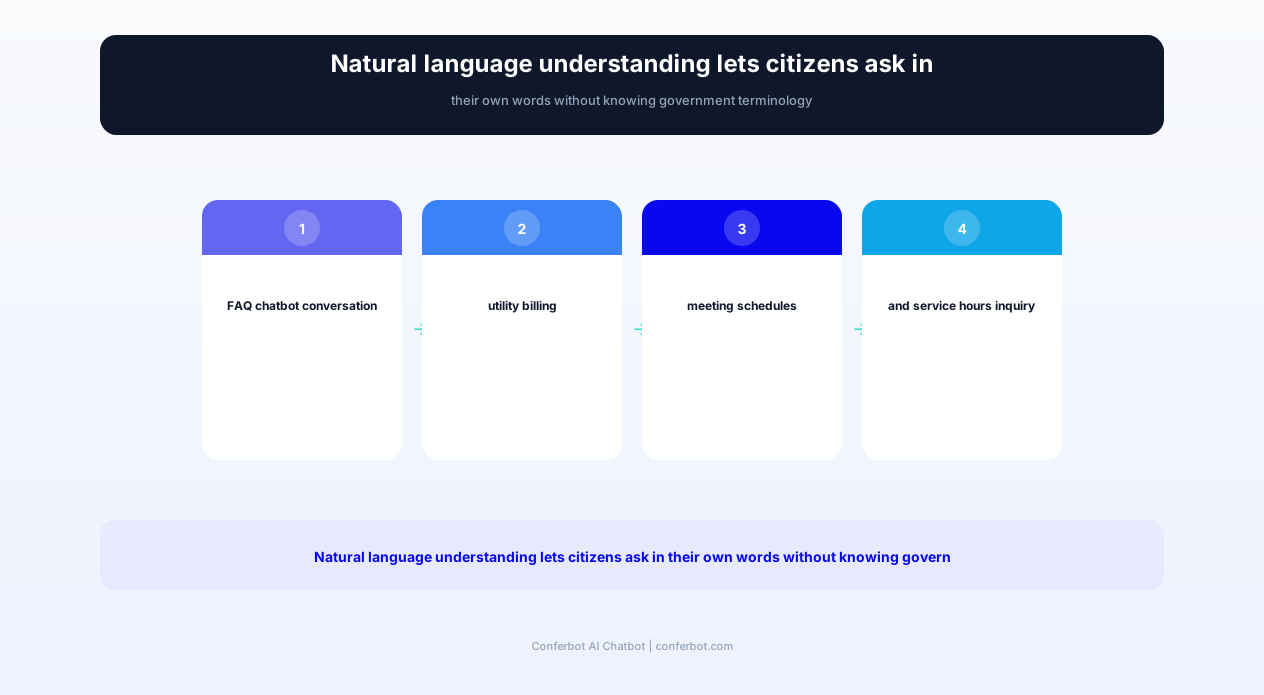
| Natural Language Understanding | Understands citizen questions in any phrasing—formal, casual, incomplete, or misspelled—and matches to correct information | No keyword dependency; handles the infinite ways citizens phrase the same question | Ask in your own words without needing government terminology or jargon |
| Context-Aware Responses | Provides personalized answers based on citizen's address, account type, or previous questions within the session | Reduced follow-up inquiries; first response fully addresses the specific situation | Get answers specific to your situation—not generic information that may not apply to you |
| Tax Payment Information | Property tax due dates, payment methods, installment plans, penalty information, and assessment appeal deadlines | 63% reduction in tax-related phone calls during billing cycles | Instant answers about tax bills, due dates, and payment options without waiting on hold |
| Utility Billing Support | Bill explanation, payment methods, budget billing enrollment, service start/stop, and high-usage alerts | 54% fewer utility billing calls; automated enrollment for budget billing | Understand your bill, set up autopay, or report issues without calling during business hours |
| Meeting Schedule Access | Council meetings, planning commission, board meetings with agendas, locations, live stream links, and public comment procedures | Increased civic participation; fewer meeting schedule inquiries to clerk's office | Know when, where, and how to participate in government meetings with one question |
| Service Hours and Locations | Department hours, locations, holiday closures, special schedules, and which services are available at which locations | Near-zero "are you open?" phone calls; reduced citizen no-shows at wrong locations | Confirm hours and location before making the trip—including holiday and special schedules |
| Elected Official Directory | Contact information for council members, mayor, department heads based on citizen's district/ward | Proper constituent routing; fewer misdirected correspondence items | Know exactly who represents you and how to contact them based on your address |
| Holiday and Closure Alerts | Proactive communication about office closures, schedule changes, service disruptions, and emergency notifications | Eliminates holiday call surges; proactive communication prevents reactive inquiries | Always know when services are affected by holidays, weather, or emergencies |
| Smart Escalation | Seamless transfer to live staff when questions exceed chatbot knowledge, with full conversation context preserved | Staff only handle genuinely complex inquiries; context transfer eliminates repeat information | Smooth transition to a real person when needed—without repeating everything you already said |
Knowledge Base Architecture
The chatbot's knowledge base is structured around citizen intent categories rather than government organizational charts:
- Pay Something: Tax bills, utility bills, fines, fees, permits—all payment-related intents consolidated
- Find Something: Locations, hours, contacts, documents, meeting information—all lookup intents
- Do Something: Register, apply, schedule, request, report—all action-oriented intents
- Learn Something: Policies, procedures, eligibility, requirements—all informational intents
- Resolve Something: Complaints, disputes, appeals, escalations—all resolution intents
This intent-based architecture means a citizen asking "how do I pay my property tax" is handled the same way regardless of whether the tax department, finance department, or county treasurer collects taxes in your jurisdiction. The chatbot abstracts away organizational complexity.
Information Categories Covered
The Local Government FAQ chatbot provides comprehensive coverage of the most common citizen inquiry categories. Each category includes hundreds of pre-built question/answer pairs that you customize with your jurisdiction's specific information.
Tax and Assessment Information
- Property Tax: Due dates, payment methods (online, mail, in-person), installment options, penalty calculations, exemption eligibility (homestead, senior, veteran, disability), appeal deadlines and procedures
- Sales Tax: Local rates, what's taxable, business collection requirements, remittance schedules
- Business Tax: Gross receipts tax, business license tax, quarterly payment schedules, new business registration
- Special Assessments: Improvement district assessments, stormwater fees, street improvement charges
Utility Services
- Water/Sewer: Bill explanation, rate schedules, consumption tiers, budget billing, leak detection assistance, start/stop service, backflow testing requirements
- Solid Waste: Collection schedules by address, holiday changes, bulk item pickup, recycling guidelines, cart replacement
- Electric (municipal utilities): Rate plans, time-of-use options, solar net metering, tree trimming schedules, outage information
- Stormwater: Fee explanation, credit programs for rain barrels/pervious surfaces, drainage concerns
Civic Participation
- Council Meetings: Schedule, agenda, public comment procedures, live stream access, minutes archives
- Boards and Commissions: Meeting schedules, vacancy announcements, application procedures, current membership
- Voting Information: Registration, polling locations, early voting, ballot information, election dates
- Public Hearings: Upcoming hearings, how to participate, written comment submission
- Volunteer Opportunities: Current openings, application process, time commitments
Community Services
- Recreation Programs: Class schedules, registration, facility rentals, pool hours, senior programs
- Library: Hours, locations, programs, card registration, interlibrary loan, digital resources
- Public Safety: Non-emergency contacts, crime prevention programs, community policing events
- Animal Services: Pet licensing, lost/found animals, adoption information, spay/neuter programs
- Code Enforcement: Common violations, reporting, compliance timelines, appeal processes
Development and Permits
- Building Permits: When permits are required, application process, fee schedules, inspection requests
- Business Licensing: Requirements by business type, renewal deadlines, home occupation rules
- Zoning: What's my zoning district, what's allowed, variance process, rezoning applications
- Special Events: Permit requirements, insurance, road closure requests, noise ordinance waivers
The knowledge base is never static. As your community's needs evolve, staff can add new Q&A pairs through a simple interface without technical skills. Seasonal information (pool opening dates, snow route maps, holiday collection schedules) can be scheduled to appear and disappear automatically.
Ready to try Local Government FAQ?
Deploy this template in under 10 minutes. No coding required.
Use This Template Free →Before and After: Measurable Impact
Local governments implementing the FAQ chatbot experience dramatic reductions in repetitive staff workload while simultaneously improving citizen access to information. Data from 63 municipal deployments across cities, towns, and counties in 2026:
| Metric | Before Chatbot | After Chatbot | Improvement |
|---|---|---|---|
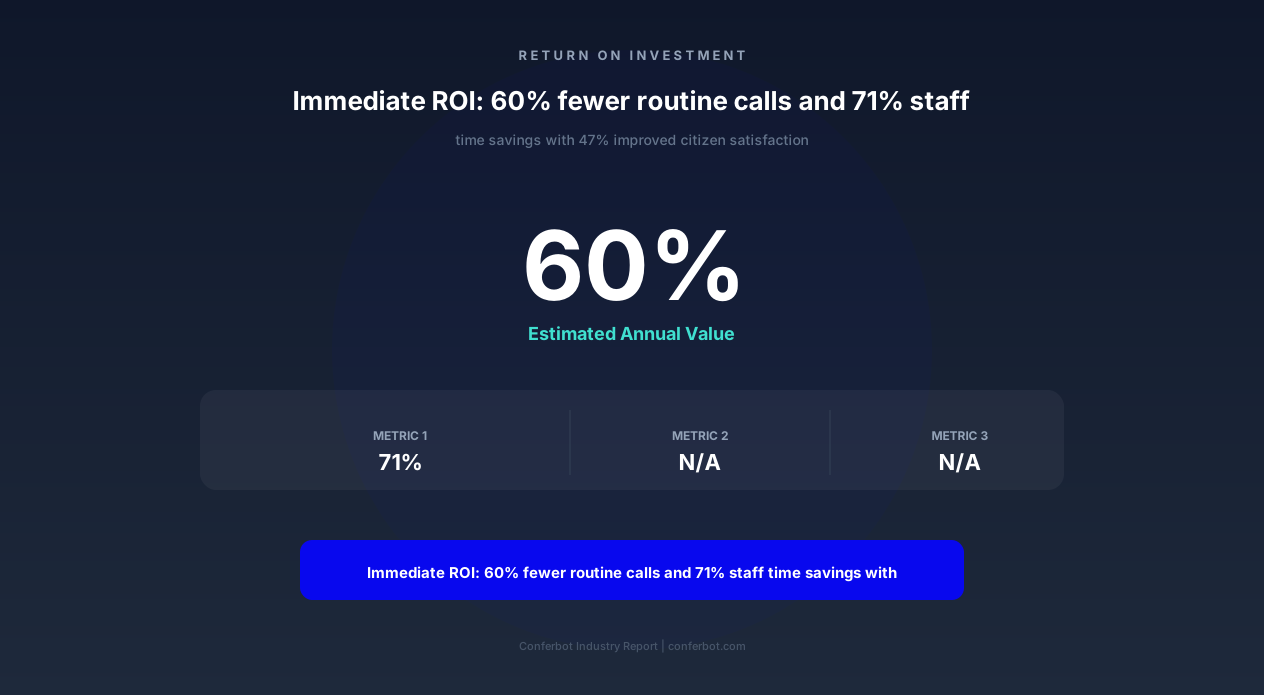
| Routine Inquiry Calls | 4,200/month | 1,680/month | 60% reduction |
| Email Response Time | 2.4 business days | Instant (chatbot) / 0.8 days (staff) | Instant for 85% |
| Website Bounce Rate | 47% | 28% | 40% reduction |
| Staff Time on Routine Questions | 245 hours/month | 72 hours/month | 71% reduction |
| After-Hours Information Access | Website only (poor findability) | Full chatbot service 24/7 | 24/7 instant answers |
| Citizen Satisfaction with Information Access | 3.0 / 5.0 | 4.4 / 5.0 | 47% improvement |
| Online Payment Adoption | 34% of payments online | 61% of payments online | 79% increase |
| Meeting Attendance/Viewership | 45 average attendees | 78 average attendees | 73% increase |
Case Study: Town of Cary, North Carolina
Cary (population 180,000) deployed the Local Government FAQ chatbot to address growing call volumes that strained their small customer service team. Results after 8 months:
- 52,000 chatbot conversations handled without staff involvement in the first 8 months
- Top 3 questions answered: Utility bill payment (18%), trash collection schedule (14%), and tax due dates (11%)
- Night/weekend usage: 43% of chatbot interactions occur outside business hours—previously, these citizens had no option but to wait
- Staff reallocation: 2.5 FTE positions redirected from phone/counter to proactive community engagement projects
- Payment channel shift: Online utility payments increased from 34% to 61% after chatbot began guiding citizens to the payment portal
- Unexpected benefit: Meeting attendance increased 73% after the chatbot began proactively sharing upcoming agenda items relevant to citizen interests
Cary's Communications Director noted: "The biggest surprise was how the chatbot improved civic engagement, not just reduced phone calls. When citizens can easily find meeting times, understand what's on the agenda, and know how to participate, they actually show up. The chatbot became our best civic engagement tool."
Content Management and Knowledge Updates
A government FAQ chatbot is only as good as its information. The Local Government FAQ template includes robust content management tools that make keeping information current effortless for non-technical staff.
Easy Content Updates
Department staff update their own information through a simple web interface:
- Visual Q&A Editor: Add, edit, or remove question/answer pairs with a familiar word-processor-style interface
- Bulk Import: Upload existing FAQ documents, spreadsheets, or website content for automatic conversion to chatbot knowledge
- Scheduled Content: Set information to appear and disappear on specific dates (holiday schedules, seasonal programs, election information)
- Version History: Full audit trail of all content changes with rollback capability
- Review Workflow: Optional approval process for content changes before going live
Multi-Department Content Ownership
Each department manages their own content area without affecting others:
- Finance Department: Manages tax, billing, and payment information
- Public Works: Manages utilities, streets, and maintenance schedules
- Parks and Recreation: Manages programs, facilities, and registration
- Clerk's Office: Manages meetings, records, and elections
- Planning: Manages permits, zoning, and development information
- Communications: Manages general city information, news, and events
Automated Content Freshness
The system proactively identifies information that may be outdated:
- Date Detection: Content containing specific dates is flagged when those dates pass
- Usage Analytics: Questions being asked that the chatbot can't answer indicate content gaps
- Seasonal Reminders: Automated notifications to update seasonal content (pool schedules, holiday hours, budget cycles)
- Link Validation: Automatic detection of broken links in chatbot responses
- Confidence Scoring: Analytics identify responses where citizens frequently ask follow-up questions, indicating incomplete answers
Dynamic Data Integration
For information that changes frequently, the chatbot pulls real-time data rather than relying on static content:
- Meeting Schedules: Sync with your calendar system via calendar integration for always-current meeting times
- Utility Rates: Pull current rates from your billing system through API integration
- Service Alerts: Display current outages, closures, and emergencies from your notification system
- Event Listings: Sync with your events calendar for up-to-date community programming
Citizen Engagement and Proactive Communication
The Local Government FAQ chatbot does more than answer questions passively—it actively promotes civic engagement and keeps residents informed about matters that affect them.
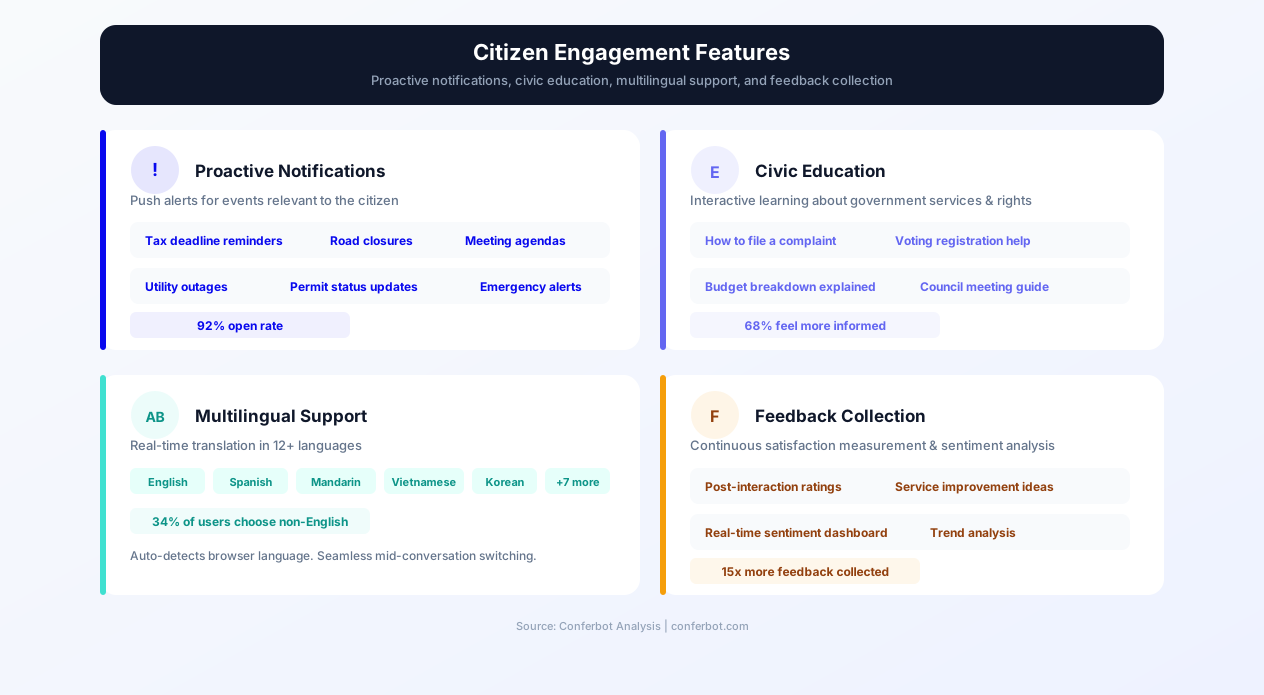
Proactive Notifications
Based on citizen interests and location, the chatbot proactively shares relevant information:
- Tax deadline reminders: "Your property tax installment is due in 7 days. Would you like the payment link?"
- Meeting agendas: "Tuesday's council meeting includes a vote on the downtown parking plan. Here's the agenda and how to comment."
- Service disruptions: "Water main repair on Oak Street tomorrow may affect your water pressure between 9am-2pm."
- Program registration: "Summer recreation registration opens Monday. Based on your previous enrollments, here are programs that might interest your family."
Civic Education
The chatbot helps citizens understand how their local government works:
- Budget explainers: "Here's how your property tax dollar is allocated across city services" with visual breakdowns
- Process education: "Here's how a rezoning request moves through the approval process" for citizens affected by development proposals
- Participation guides: "5 ways you can participate in your local government" with specific upcoming opportunities
- New resident orientation: Comprehensive overview of services, contacts, and important information for newly moved residents
Feedback Collection
The chatbot provides a low-friction channel for citizen feedback:
- Service satisfaction surveys: Quick post-interaction ratings that feed into performance dashboards
- Topic-specific feedback: "The city is considering extending library hours. Would you use evening hours? What times work best?"
- Budget input: Collect citizen priorities during budget season to inform allocation decisions
- Plan review comments: Accept public comments on planning proposals, comprehensive plans, and policy changes
Multilingual Accessibility
Government information must be accessible to all residents regardless of English proficiency:
- Automatic language detection: Responds in the citizen's language without requiring selection
- 30+ languages supported: Spanish, Chinese, Vietnamese, Korean, Arabic, Tagalog, and more
- Culturally appropriate responses: Not just translated but adapted for cultural communication norms
- Title VI compliance: Meets federal requirements for language access in government services
Deploy across your municipal website, community portals, and messaging platforms like WhatsApp to reach residents through their preferred channels. The multi-channel approach ensures equitable information access regardless of digital literacy or device access.
50,000+ businesses use Conferbot templates to automate conversations
Integration with Municipal Systems
The Local Government FAQ chatbot connects with your existing technology infrastructure to provide real-time, accurate information without manual content synchronization.
Website CMS Integration
- WordPress/Drupal: Automatic content sync from your website pages into chatbot knowledge base
- CivicPlus: Direct integration with CivicPlus CMS for automatic content updates
- Granicus: Meeting management, agenda, and minutes integration
- Custom CMS: API-based content sync for proprietary systems
Billing and Payment Systems
- Tyler Technologies (Munis): Real-time account balance and payment status integration
- Harris Computer: Utility billing system connection for balance inquiries and payment links
- Invoice Cloud/PaymentUS: Direct payment portal links with pre-populated account information
- Paymentus: Integrated payment processing for utility and tax payments
Communication Platforms
- Civic Ready/Rave: Emergency notification system integration for crisis information delivery
- Notify Me: Subscription-based alert integration for topic-specific notifications
- Social Media: Consistent information delivery across Facebook, Twitter/X, and Nextdoor
- Email Marketing: Mailchimp/Constant Contact integration for newsletter-style updates
Analytics and Reporting
- Google Analytics: Chatbot usage data flows into your existing website analytics
- Power BI/Tableau: Export chatbot performance data to your BI platform for cross-departmental reporting
- Open Data Portal: Anonymized interaction data publishable for civic tech community use
The chatbot deploys as a lightweight JavaScript widget that loads asynchronously—it won't affect your website performance. Compatible with all modern government website platforms and templates, including ADA-compliant designs that meet Section 508 requirements.
ROI and Budget Justification
For municipalities evaluating the FAQ chatbot investment, the return on investment is both rapid and substantial. Here's the business case for a typical municipality (population 50,000-150,000):
Direct Cost Savings
- Phone call reduction: 60% fewer routine calls × $8.50 average cost per call × 4,200 calls/month = $21,420/month savings
- Email response reduction: 75% fewer routine emails × $12.00 average cost per email response × 800 emails/month = $7,200/month savings
- Counter visit reduction: 40% fewer routine walk-ins × $15.00 average cost per walk-in × 600 visits/month = $3,600/month savings
- Total monthly savings: $32,220/month = $386,640 annually
Staff Reallocation Value
Beyond direct savings, freed staff time enables higher-value activities:
- Community engagement: Staff previously tied to phones can conduct outreach in underserved communities
- Process improvement: Time to document and streamline internal workflows
- Proactive communication: Develop newsletters, social media content, and community events
- Complex case handling: More attention for citizens with genuine needs requiring human empathy and judgment
Indirect Benefits
- Online payment increase: 79% more citizens paying online reduces check processing, bank trips, and cash handling costs
- Reduced printed materials: Digital information delivery reduces printing and mailing costs by $15,000-$40,000 annually
- Lower staff turnover: Employees freed from repetitive phone duty report 34% higher job satisfaction, reducing recruitment costs
- Civic engagement ROI: More informed, more engaged citizenry leads to better governance outcomes
Implementation Cost vs. Return
With annual subscription pricing and no per-interaction fees, the chatbot typically achieves full ROI within 45-60 days of deployment. For municipalities requiring formal cost-benefit analysis for budget hearings, Conferbot provides customizable ROI projection templates pre-populated with data from comparable jurisdictions.
Getting Started with Your Government FAQ Chatbot
The Local Government FAQ chatbot is the fastest government chatbot template to deploy because it builds on your existing website content rather than requiring new information systems. Most municipalities launch within 2-3 weeks.
Week 1: Content Import and Configuration
- Website content scan: Automated import of FAQ pages, department pages, and service descriptions from your existing website
- Knowledge base review: Staff review imported content for accuracy and add missing information
- Branding configuration: Apply your city's logo, colors, and visual identity to the chat interface
- Escalation setup: Configure which departments handle escalated conversations and during which hours
Week 2: Enhancement and Testing
- Gap filling: Add answers for common questions not adequately covered by existing website content
- Integration connections: Link to billing systems, calendar systems, and notification platforms
- Staff training: Train department content owners on updating their sections
- Internal testing: Staff members test with real questions they receive daily
Week 3: Launch and Optimization
- Soft launch: Deploy on homepage with monitoring for accuracy and completeness
- Citizen feedback: Collect initial user feedback to identify improvement areas
- Content refinement: Address gaps revealed by actual citizen interactions
- Full deployment: Activate across all website pages with public announcement
Ongoing Optimization
The chatbot improves continuously after launch:
- Weekly analytics review: Identify unanswered questions and add new content
- Monthly performance report: Track key metrics and identify optimization opportunities
- Seasonal updates: Refresh content for budget cycles, election seasons, and seasonal services
- Quarterly knowledge expansion: Add new topic areas based on emerging citizen needs
Ready to give your citizens the instant information access they deserve? Start building your government FAQ chatbot today with Conferbot's free template. No coding required, and your existing website content gives you a massive head start—most of the knowledge base builds itself from what you've already published.
For municipalities wanting to go beyond FAQ to full service delivery (permits, payments, service requests), the Local Government FAQ chatbot serves as an excellent foundation. Start with information, prove the value, then expand into transactional capabilities as citizen adoption grows and organizational confidence builds.
Local Government FAQ FAQ
Everything you need to know about chatbots for local government faq.
Why Use a Template vs Building from Scratch?
Templates encode years of optimization data into the conversation flow before you start.
| Factor | Conferbot Template | Build from Scratch | Hire a Developer |
|---|---|---|---|
| Time to deploy | 10 minutes | 2-8 hours | 2-6 weeks |
| Cost | Free | Your time | $5,000-$25,000 |
| Day-1 conversion | 15-22% | 5-8% | 10-15% |
| Proven flows | Yes, data-tested | No | Depends |
| Updates included | Automatic | Manual | Paid |
| Multi-channel | 8+ channels | 1 channel | Extra cost |
| Analytics | Built-in | Must build | Extra cost |
Ready to Deploy Local Government FAQ?
Join 50,000+ businesses. Free forever plan available. No credit card required.