
Roofing Contractor Chatbot
Free Home Services Chatbot Template
Roofing quote generator with material selection and insurance claim support


What Is a Roofing Contractor Chatbot?
A roofing contractor chatbot is an AI-powered conversational assistant designed specifically for roofing businesses to capture leads, triage storm damage inquiries, schedule inspections, guide homeowners through insurance claims, and deliver instant preliminary quotes -- all without requiring a single phone call from your sales team. In 2026, where roofing keywords command $50-$150 per click on Google Ads and a single missed lead can represent $8,000-$25,000 in lost revenue, deploying a chatbot on your website and messaging channels is not a luxury; it is a competitive necessity.
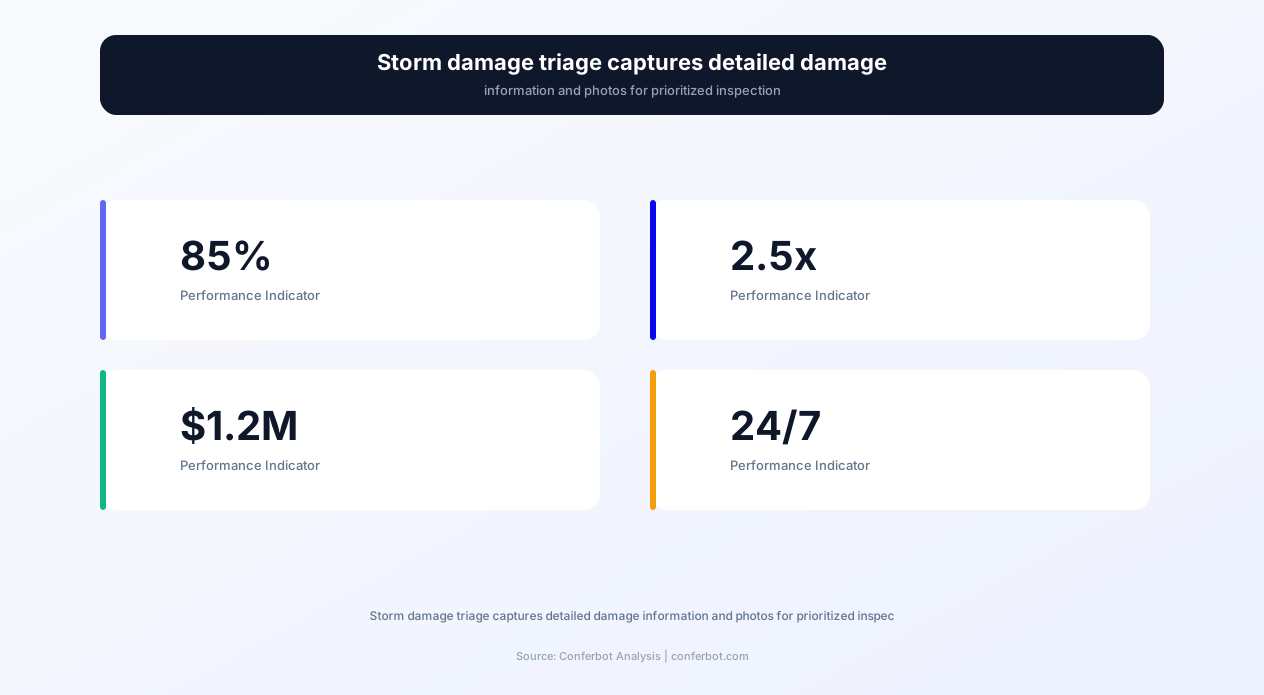
The roofing industry operates on a feast-or-famine cycle driven by weather events. When a hailstorm or tornado hits a metro area, roofing companies receive 10-50x their normal inquiry volume within 48 hours. Without automation, office staff is overwhelmed, phones go unanswered, and the majority of storm-driven leads -- the highest-value leads in the entire roofing business -- are lost to competitors who respond faster. A roofing chatbot handles unlimited simultaneous conversations, ensuring that every homeowner who visits your website after a storm event receives immediate engagement, damage assessment guidance, and an inspection booking within minutes.
Beyond storm surges, the chatbot manages the full lifecycle of roofing customer interactions year-round. Routine re-roofing inquiries collect property details, current roofing material, square footage estimates, and budget range for accurate quoting. Commercial roofing leads provide building type, roof system specifications, and maintenance history. Emergency leak calls are triaged for severity and routed to your emergency response team. Insurance-related inquiries receive step-by-step claim guidance that positions your company as the knowledgeable, helpful expert -- exactly the reputation that drives referrals and five-star reviews.
Built on Conferbot's no-code chatbot builder, the roofing chatbot deploys on your website, WhatsApp, Facebook Messenger, and Google Business Profile. No coding is required. Your office manager configures service areas, roofing types, pricing ranges, and scheduling availability through a visual drag-and-drop interface. The chatbot is live within hours, capturing leads that your competitors' contact forms are losing.
This comprehensive guide covers every aspect of the roofing contractor chatbot: how storm damage assessment works, the complete conversation flow for lead qualification, insurance claim guidance capabilities, integration with your CRM and scheduling tools, ROI data from roofing companies using chatbot automation, and step-by-step deployment instructions to get your chatbot live before the next storm season.
How the Roofing Lead Capture and Inspection Chatbot Works
The roofing contractor chatbot follows a structured conversation architecture modeled after the questions your best salesperson asks on every call: What happened to your roof? When did the damage occur? What type of roof do you have? Do you have insurance? When can we come look at it? The flow is engineered to qualify leads, assess urgency, and book inspections in under three minutes while adapting to the customer's specific situation -- whether they are dealing with active storm damage, planning a re-roof, or reporting a slow leak they have been ignoring for months.
Stage 1: Inquiry Type Classification
Every conversation begins by identifying what the homeowner needs. The chatbot presents clear options: storm or hail damage, roof leak or repair, full roof replacement, new construction roofing, gutter service, or general questions. This initial classification determines the entire subsequent conversation path. A storm damage inquiry triggers urgency-based questions and insurance guidance. A replacement inquiry focuses on materials, budget, and timeline. A leak report assesses severity and schedules the appropriate response. This branching ensures every homeowner receives a relevant, efficient experience rather than a generic one-size-fits-all form.
Stage 2: Damage and Property Assessment
For storm damage and repair inquiries, the chatbot conducts a detailed assessment. It asks when the damage occurred (critical for insurance claim timelines), what the homeowner has observed (missing shingles, water stains on ceiling, granules in gutters, visible holes), and whether any interior damage is present. The chatbot encourages photo uploads -- homeowners can photograph their roof from the ground, ceiling water stains, or debris in the yard. These photos are forwarded directly to your estimator, often providing enough information for a preliminary assessment before the inspection truck rolls.
Stage 3: Property Details and Roof Specifications
The chatbot collects property-specific information that affects quoting and scheduling: approximate square footage or number of stories, current roofing material (asphalt shingle, metal, tile, flat/TPO, cedar shake), approximate roof age, and whether there have been previous repairs or insurance claims. For replacement inquiries, it asks about material preferences and budget range. This information allows your estimator to prepare a preliminary quote range before the on-site inspection, demonstrating professionalism and reducing the sales cycle.
Stage 4: Insurance Information
Roofing is one of the few home services where insurance plays a central role. The chatbot asks whether the homeowner has filed an insurance claim, plans to file one, or wants guidance on the process. For active claims, it collects the insurance company name and claim number. For homeowners who have not yet filed, the chatbot provides step-by-step guidance: document the damage with photos, contact your insurance company's claims department, request an adjuster inspection, and do not sign anything until you have a contractor's estimate. This guidance builds trust and positions your company as the expert partner in the claims process.
Stage 5: Inspection Scheduling and Lead Capture
With the inquiry fully qualified, the chatbot books the inspection. It presents available time slots from your scheduling system through calendar integration, collects the service address, and captures the homeowner's name, phone number, and email. The complete lead package -- inquiry type, damage description, photos, property details, insurance status, and scheduled inspection time -- is delivered to your CRM and sales team through API integration, arriving as a fully qualified, inspection-ready lead rather than a name and phone number.
Stage 6: Confirmation and Pre-Inspection Preparation
The homeowner receives an immediate confirmation with their inspection date, what to expect during the inspection (duration, areas the inspector will examine, whether they need to be home), and preparation tips (clear access to the roof, locate any previous inspection reports or warranty documents). The chatbot also sends a reminder 24 hours before the inspection to reduce no-shows -- a significant cost in the roofing industry where a missed inspection means a wasted truck roll and an open schedule slot.
Key Features: Storm Damage Assessment, Quote Requests, and Insurance Guidance
The roofing contractor chatbot includes capabilities purpose-built for the unique operational demands of roofing businesses, where weather events create massive demand spikes, insurance coordination is a core part of the sales process, and the difference between capturing a lead in two minutes versus twenty minutes often determines who wins the job. These features address challenges that generic lead capture tools simply cannot solve for roofers.
Intelligent Storm Damage Triage
When severe weather hits, the chatbot activates storm-specific conversation flows. It assesses the type of weather event (hail, wind, tornado, heavy rain, fallen tree), the visible damage symptoms, and whether any active leaking is occurring. Active leaks trigger emergency response protocols: immediate notification to your crew, temporary mitigation guidance for the homeowner (where to place buckets, how to apply a tarp safely from ground level), and priority scheduling. Non-emergency storm damage is documented thoroughly and queued for inspection based on severity ranking. This triage system ensures your limited post-storm inspection capacity is deployed to the most urgent and highest-value opportunities first.
| Feature | Description | Operational Benefit | Customer Benefit |
|---|---|---|---|
| Storm damage triage | Multi-factor severity assessment using weather event type, visible damage, and active leak detection | Prioritizes high-value emergency leads during storm surges | Immediate acknowledgment and damage guidance within seconds |
| Photo-based damage documentation | In-chat photo upload with automatic forwarding to estimator dashboard | Pre-inspection assessment reduces wasted site visits by 20-30% | Show damage visually instead of struggling to describe it |
| Insurance claim guidance | Step-by-step claim filing instructions with documentation checklists | Positions your company as the trusted claims expert, increasing close rate 25-40% | Reduces homeowner stress and confusion around insurance process |
| Material selection assistant | Interactive comparison of roofing materials with price ranges, warranties, and visual examples | Pre-educates customers, reducing in-home consultation time by 30+ minutes | Make informed material decisions before the sales visit |
| Instant quote estimation | Preliminary price range based on roof size, material, and complexity factors | Filters price-sensitive leads and sets realistic expectations before inspection | Budget clarity before committing to an on-site appointment |
| Emergency leak response | Severity-based triage with temporary mitigation instructions and priority dispatch | Captures high-urgency, high-value emergency work at any hour | Immediate guidance on preventing further interior damage |
| Financing pre-qualification | Presents financing options and collects pre-qualification interest during booking | Increases average job value by making premium materials accessible | Understand monthly payment options before the sales appointment |
| Warranty information delivery | Explains manufacturer and workmanship warranty terms for each material option | Differentiates your company from competitors on warranty strength | Clear understanding of long-term protection before purchasing |
Material Selection and Education
Homeowners replacing a roof face a bewildering array of material choices: architectural shingles, designer shingles, standing seam metal, stone-coated steel, clay tile, synthetic slate, flat roof membranes. The chatbot acts as an interactive material consultant, presenting options with price ranges, expected lifespans, warranty terms, aesthetic examples, and climate suitability. A homeowner in Texas hears about impact-resistant shingles and Class 4 hail ratings. A homeowner in Florida learns about wind uplift ratings and hurricane-rated options. This pre-education means your sales representative arrives at the inspection with a customer who already understands the options and has a material preference, reducing the consultation portion of the sales visit from 45 minutes to 15 minutes.
Financing Options Presentation
Roof replacement is one of the largest home improvement expenses, often $8,000-$30,000+. Many homeowners delay necessary roof replacement because they cannot afford the full cost upfront. The chatbot proactively presents financing options during the quoting conversation: monthly payment estimates based on loan terms, information about same-as-cash promotional periods, and a simple pre-qualification interest form. Roofing companies that present financing options at the initial inquiry stage report 20-35% higher close rates and 15-25% higher average job values, as homeowners who understand their payment options are more willing to choose premium materials.
Warranty and Guarantee Information
Warranty strength is a key differentiator in roofing sales. The chatbot presents your warranty offerings clearly: manufacturer material warranty (typically 25-50 years), workmanship warranty (your company's guarantee on installation quality), and any extended warranty programs. When homeowners understand that your company offers a 10-year workmanship warranty while competitors offer only 2-5 years, price sensitivity decreases and trust increases. The chatbot delivers this competitive advantage in every conversation, consistently, without your salesperson needing to remember to mention it.
Ready to try Roofing Contractor Chatbot?
Deploy this template in under 10 minutes. No coding required.
Use This Template Free →Benefits for Roofing Contractors and Companies
Roofing businesses face a unique set of operational challenges: extreme demand volatility driven by weather events, extraordinarily high customer acquisition costs ($50-$150 per click), long sales cycles involving insurance companies, and fierce local competition where response speed often determines who wins the job. The roofing contractor chatbot directly addresses each of these challenges with measurable business impact that shows up in your revenue within the first 30 days.
Maximize Every Dollar of Your Advertising Spend
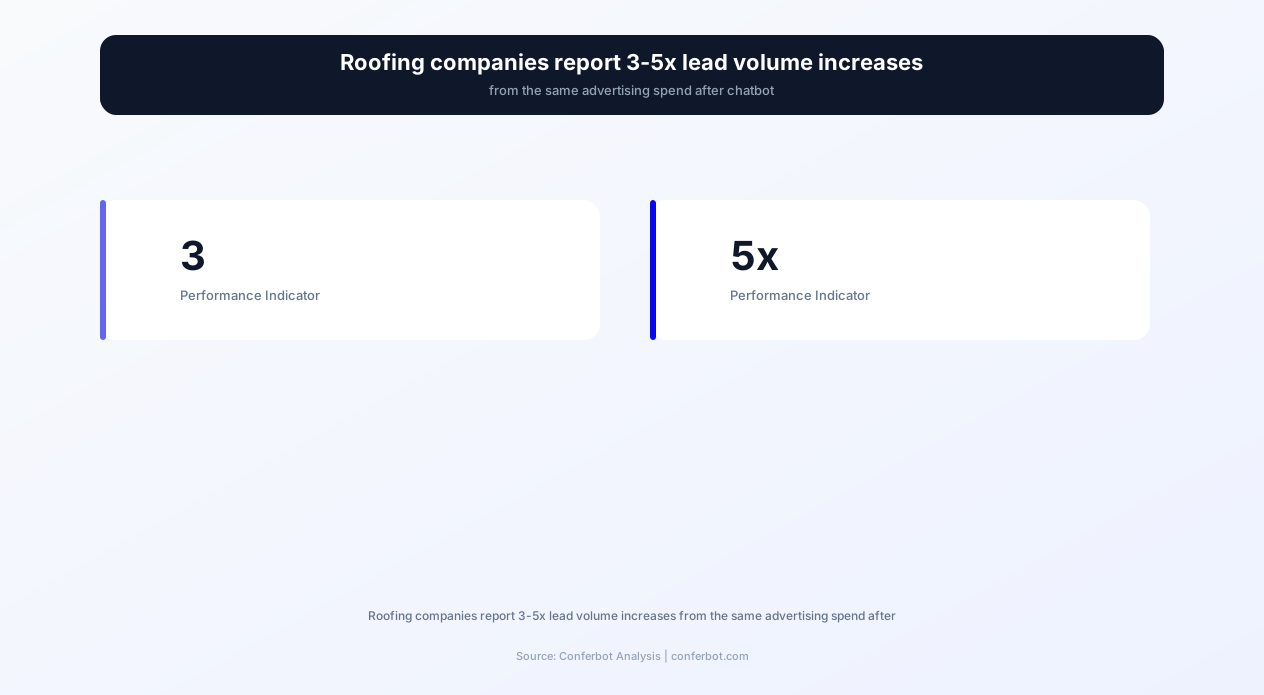
Roofing keywords are among the most expensive in all of digital advertising. "Roofing contractor near me" costs $50-$80 per click. "Emergency roof repair" runs $80-$120. "Storm damage roof replacement" can exceed $150 per click. When a homeowner clicks your ad and lands on your website, you have already paid for that visit. If they leave because your contact form feels impersonal or because no one answers the phone, that $50-$150 is gone forever. The chatbot engages every visitor within seconds, holding their attention and guiding them through qualification and booking. Roofing companies report that chatbot deployment increases their website conversion rate from 2-4% to 12-18%, meaning the same advertising spend produces 3-5x more leads. On a $10,000 monthly ad budget, that is the difference between 100 leads and 400 leads -- a $30,000-$60,000 monthly revenue impact.
Storm Surge Capacity Without Temporary Staff
After a major hail event, a mid-size roofing company might receive 200-500 inquiries in 48 hours. Without automation, this requires temporary office staff, overtime for existing dispatchers, and still results in 50-70% of inquiries going unanswered. The chatbot absorbs the entire surge: it handles 500 simultaneous conversations with the same quality as one, captures every lead with complete damage documentation, and delivers a prioritized queue to your sales team sorted by urgency and estimated job value. Your team focuses on closing deals and scheduling inspections rather than answering phones and collecting basic information. Companies that deployed chatbots before storm season report capturing 3-5x more leads during storm events compared to their pre-chatbot storm responses.
Insurance Claim Expertise as a Sales Advantage
Over 60% of residential roof replacements involve insurance claims. Homeowners who have never navigated the claims process feel overwhelmed and are more likely to choose the roofing company that guides them through it. The chatbot provides immediate, authoritative claim guidance: how to document damage, when to file, what the adjuster will look for, and why having an independent contractor estimate is important before the adjuster visit. This positions your company as the knowledgeable partner, increasing the likelihood that the homeowner chooses you over a competitor who simply says "we'll handle it" without explaining the process. Roofing companies using claim guidance chatbots report 25-40% higher close rates on insurance-related leads.
Reduced No-Show and Cancellation Rates
Roofing inspections are expensive to schedule: a truck roll, an estimator's time, equipment, and the opportunity cost of that time slot. Industry average no-show rates for roofing inspections run 18-28%. The chatbot reduces this through automated reminders (24 hours and 2 hours before the appointment), easy rescheduling links, and thorough pre-qualification that ensures homeowners are genuinely interested rather than casually browsing. Companies using chatbot-booked inspections report no-show rates of 6-10%, saving 2-4 wasted truck rolls per week and freeing those slots for revenue-generating appointments.
Year-Round Lead Generation Beyond Storm Season
Many roofing companies experience severe revenue drops between storm events. The chatbot maintains consistent lead generation year-round by engaging visitors interested in proactive roof maintenance, gutter services, attic ventilation, and planned replacement. It captures the homeowner who notices a few missing shingles in April, the property manager scheduling annual inspections, and the homeowner planning a re-roof for next summer. These non-emergency leads have lower urgency but higher close rates (homeowners who are planning rather than panicking) and provide the revenue stability that smooths out weather-dependent demand cycles.
Lead Capture ROI and Revenue Data for Roofers
The roofing industry's economics make chatbot ROI exceptionally clear. With average job values ranging from $8,000 for repairs to $15,000-$30,000 for full replacements, each captured lead has substantial revenue potential. When you combine this with the industry's highest-in-class cost per click and the fact that roofing companies report a 29.5% increase in lead conversion rates after deploying AI chatbots, the financial case is overwhelming.
Before vs. After: Roofing Company Performance Metrics
| Metric | Without Chatbot | With Roofing Chatbot | Impact |
|---|---|---|---|
| Website visitor to lead conversion | 2-4% | 12-18% | 3-5x improvement |
| Storm surge lead capture rate | 30-45% | 92-98% | +50-65 percentage points |
| After-hours lead capture | 5-15% | 90-97% | 6-10x improvement |
| Cost per qualified lead | $120-$350 | $30-$75 | 65-80% reduction |
| Inspection no-show rate | 18-28% | 6-10% | 55-65% reduction |
| Average response time to inquiry | 4-24 hours | Under 30 seconds | 95%+ faster |
| Insurance claim lead close rate | 25-35% | 45-60% | +20-25 percentage points |
| Monthly leads (same ad spend) | 80-120 | 250-450 | 3-4x volume increase |
Revenue Impact Calculation
Consider a roofing company spending $12,000/month on Google Ads with a $75 average CPC, generating 160 clicks. Without a chatbot, 3% convert to leads (5 leads), and 40% close (2 jobs at $15,000 average = $30,000 revenue). With a chatbot converting 15% of visitors (24 leads), closing 40% (10 jobs), the same ad spend generates $150,000 in revenue. That is a 5x increase in return on ad spend from the same $12,000 investment. Even accounting for the chatbot cost, the ROI exceeds 1,000% in the first month.
Storm Event Revenue Capture
A single major hailstorm in a metro area can generate $5-$20 million in roofing work. Companies that capture the largest share of post-storm inquiries dominate that market for the following 6-12 months. During a storm event, a chatbot-equipped roofing company captures 200-400 leads in 48 hours while competitors with phone-only intake capture 30-60. At a 35% close rate and $14,000 average storm damage job value, the difference is $980,000-$1,960,000 in captured revenue versus $147,000-$294,000 -- from a single weather event. The chatbot pays for years of subscription cost in one storm.
Customer Acquisition Cost Analysis
The true customer acquisition cost in roofing includes ad spend, sales labor (estimator time for inspections), truck rolls for no-shows, and office staff for lead processing. Without a chatbot, the all-in cost to acquire a roofing customer ranges from $800-$2,500. With a chatbot reducing cost per lead, eliminating no-shows, pre-qualifying customers, and reducing estimator preparation time, the all-in acquisition cost drops to $250-$600. For a company closing 15 jobs per month, that is $8,250-$28,500 in monthly savings on customer acquisition alone.
CRM, Scheduling, and Roofing Software Integrations
A roofing chatbot delivers maximum value when it connects seamlessly with the tools your team already uses for estimating, scheduling, dispatching, and customer management. Conferbot's API integration framework enables deep connections with roofing-specific software, general CRMs, and communication platforms, ensuring that chatbot-captured leads flow directly into your existing workflows without manual data entry or copy-paste operations.
Roofing-Specific Software Integration
The chatbot integrates with industry-standard roofing platforms including AccuLynx, JobNimbus, Roofr, RoofSnap, and CompanyCam. Leads captured by the chatbot are automatically created as new contacts and jobs in your roofing CRM with all collected information: property address, roof type, damage description, photos, insurance information, and scheduled inspection time. When an estimator opens the job in AccuLynx or JobNimbus, every detail from the chatbot conversation is already populated, eliminating the 10-15 minutes typically spent on manual data entry per lead.
Calendar and Scheduling Integration
Through calendar integration, the chatbot displays real-time inspection availability and books appointments directly into your scheduling system. It respects drive time between appointments, assigns inspections to specific estimators based on geographic zones or expertise, and blocks out buffer time for emergency response capacity. When a homeowner books an inspection through the chatbot, the appointment immediately appears on the assigned estimator's calendar with all lead details, property location, and a link to the chatbot conversation transcript and uploaded photos.
Communication Platform Integration
Lead notifications are delivered through the channels your team monitors: email, SMS, Slack, Microsoft Teams, or push notifications to your mobile app. Emergency leads trigger immediate alerts with audible notifications, while routine leads are batched into digest summaries. The chatbot also sends automated communications to homeowners: booking confirmations, pre-inspection preparation emails, inspection reminders, and follow-up messages if the homeowner does not respond to the initial quote.
Payment and Financing Integration
For deposit collection and financing pre-qualification, the chatbot connects with payment processors (Stripe, Square, PayPal) and roofing financing platforms (GreenSky, Mosaic, Service Finance). Homeowners can secure their inspection slot with a deposit, apply for financing pre-qualification, or review monthly payment estimates -- all within the chatbot conversation. This integration reduces the financing conversation from a 30-minute discussion during the sales visit to a 2-minute pre-qualification during the initial inquiry, accelerating the sales cycle significantly.
Marketing and Analytics Integration
Every chatbot interaction feeds into your analytics stack. Google Analytics tracks chatbot engagement as conversion events. Facebook Pixel fires on lead capture for retargeting. Your CRM records the lead source, conversation content, and eventual outcome. This data closes the loop on your marketing ROI: you know exactly which ad campaigns, keywords, and landing pages are generating the highest-value chatbot leads, allowing you to optimize your $50-$150 per click ad spend with precision.
50,000+ businesses use Conferbot templates to automate conversations
Use Cases: From Emergency Leaks to Commercial Roofing
The roofing contractor chatbot adapts to the full range of scenarios a roofing business encounters, from panicked homeowners with water pouring through their ceiling to property management companies scheduling annual roof inspections across a portfolio of buildings. Each use case leverages the chatbot's core capabilities while tailoring the conversation flow to the specific context and urgency level.
Post-Storm Mass Lead Capture
After a major hailstorm, a roofing company's website traffic spikes 10-50x. The chatbot activates storm-specific messaging: "Was your home affected by yesterday's storm? Let's assess your roof damage and get an inspection scheduled." It processes hundreds of simultaneous inquiries, collecting damage descriptions, photos, addresses, and insurance information. Leads are automatically prioritized by severity (active leaks first, cosmetic damage last) and geographic proximity (clustered inspections reduce drive time). Your sales team receives a prioritized, organized queue rather than a chaotic flood of voicemails and form submissions.
Emergency Leak Triage and Response
A homeowner discovers water dripping from their ceiling at 2 AM. The chatbot immediately assesses severity: Is water actively flowing or slowly dripping? How large is the affected area? Is the water near any electrical fixtures? Based on severity, it either dispatches your emergency crew or provides temporary mitigation instructions (place a bucket, move valuables, do not touch wet electrical outlets) and books a first-available morning appointment. The homeowner gets immediate help and guidance; your company captures a high-value emergency job that would otherwise go to the first competitor who answers their phone.
Insurance Claim Support
A homeowner knows their roof has storm damage but has never filed an insurance claim. The chatbot walks them through the process step by step: photograph all visible damage from multiple angles, check your gutters for granule accumulation, look for ceiling stains inside, contact your insurance company's 24-hour claims line (the chatbot can even provide the phone number for major insurers), request an adjuster inspection, and schedule your independent contractor inspection before the adjuster arrives. This guidance transforms a confused, overwhelmed homeowner into a confident, prepared client who trusts your company's expertise.
Residential Re-Roofing Consultation
A homeowner with a 20-year-old roof wants to understand their options. The chatbot conducts a thorough consultation: current roof material, any existing issues, aesthetic preferences, budget range, interest in energy-efficient or impact-resistant upgrades, and financing needs. It presents material comparisons with estimated costs and schedules an in-home consultation with your sales representative. The sales representative arrives at a home where the customer has already narrowed their material preference, understands the price range, and knows about financing options -- reducing the sales visit from two hours to 45 minutes.
Commercial Roofing Assessment
Property managers and building owners have different needs than residential homeowners. The chatbot adapts its flow for commercial inquiries: building type, square footage, current roof system (TPO, EPDM, modified bitumen, metal, built-up), known issues, maintenance history, and whether the inquiry is for repair, maintenance, or full replacement. Commercial leads are routed to your commercial division with appropriate urgency flagging and estimator assignment.
Gutter and Ancillary Services
Many roofing companies offer gutter installation, repair, and cleaning as complementary services. The chatbot handles these inquiries with dedicated conversation flows: gutter type, linear footage, downspout locations, guard/screen interest, and scheduling. These lower-value but high-volume services provide consistent revenue between major roofing projects and often lead to roof replacement referrals when the gutter installer identifies roof issues during service.
How to Set Up Your Roofing Chatbot in Under 60 Minutes
Deploying the Conferbot roofing contractor chatbot requires no programming skills. Your office manager, marketing coordinator, or owner can have a fully functional, lead-capturing chatbot live on your website and messaging channels in under an hour. Here is the step-by-step process from template selection to first captured lead.
Step 1: Select and Customize the Template (15 minutes)
Start with the Roofing Contractor chatbot template from Conferbot's AI chatbot builder. The template includes pre-built conversation flows for storm damage, repairs, replacements, emergency leaks, and general inquiries. Customize the service types to match your offerings (add gutter services, remove commercial if you are residential-only), update the roofing materials you install, set your service area ZIP codes, and adjust the emergency dispatch rules for your business. Brand the chatbot with your company colors, logo, and welcome message.
Step 2: Configure Scheduling and Availability (10 minutes)
Connect your calendar system through the calendar integration or manually set your available inspection slots. Define inspection duration (typically 45-60 minutes), buffer time between appointments, geographic zones for estimator assignment, and blackout dates. Set up emergency response rules: who receives after-hours emergency notifications, what response time commitment the chatbot communicates, and whether emergency dispatch is automatic or requires dispatcher confirmation.
Step 3: Set Up Integrations (15 minutes)
Connect the chatbot to your CRM (AccuLynx, JobNimbus, HubSpot, or Salesforce) through API integration. Configure lead notification channels: email addresses for lead alerts, SMS numbers for emergency notifications, Slack or Teams channels for team visibility. Set up the webhook to your roofing software so leads are automatically created as new jobs. Test the integration by submitting a test lead and verifying it appears in your CRM with all fields populated correctly.
Step 4: Deploy Across Channels (10 minutes)
Install the chatbot widget on your website by adding the Conferbot snippet to your page header. Deploy on WhatsApp Business for homeowners who prefer messaging. Connect to Facebook Messenger for leads who find you through your Facebook page. Add to your Google Business Profile for direct engagement from Google Maps and local search results. Each channel deployment takes 2-3 minutes and the chatbot maintains consistent conversation quality across all platforms.
Step 5: Test and Launch (10 minutes)
Run through each conversation path as if you were a homeowner: submit a storm damage inquiry, report an emergency leak, request a re-roofing quote, and ask about gutter services. Verify that leads arrive in your CRM, notifications reach the right team members, calendar bookings appear correctly, and the emergency dispatch workflow triggers appropriately. Make any final adjustments to wording, scheduling rules, or notification settings. Set the chatbot to live and begin capturing leads immediately.
Step 6: Optimize Based on Performance (Ongoing)
After the first two weeks, review the chatbot analytics dashboard. Identify where homeowners drop off in the conversation (a question that is confusing or seems intrusive), which inquiry types generate the most leads, and what times of day produce the highest engagement. Adjust the conversation flow, add or remove questions, and refine your emergency triage criteria based on real performance data. Most roofing companies achieve their optimal chatbot configuration within 30 days of deployment.
Why Conferbot Is the Best Chatbot Platform for Roofing Companies
Roofing companies need a chatbot platform that understands the operational realities of the roofing business: weather-driven demand spikes, insurance coordination, high-value lead qualification, and the critical importance of response speed in a market where customers call three companies and go with whoever responds first. Conferbot delivers on every requirement with a platform purpose-built for service industry lead generation.
No-Code Builder Designed for Service Businesses
Conferbot's no-code builder enables roofing office staff to create, modify, and optimize chatbot flows without waiting for a developer. When you add a new service, expand your service area, or change your scheduling rules, the update is live in minutes. During storm events, you can activate storm-specific messaging and prioritization rules in real time -- a capability that requires developer involvement on most competing platforms.
Unlimited Conversations During Volume Spikes
Most chatbot platforms charge per conversation or throttle volume during traffic spikes. Conferbot provides unlimited conversations at a flat monthly rate, ensuring that storm-driven traffic surges do not result in throttled performance or surprise bills. When 500 homeowners visit your website after a hailstorm, the chatbot engages every single one with the same quality and speed -- no queuing, no degradation, no additional charges.
Multi-Channel Deployment
Homeowners reach out through different channels based on how they found you. Website visitors from Google Ads use the web chatbot. Homeowners who find you on Facebook use Messenger. Neighbors who received your door-hanger want to text your WhatsApp number. Conferbot deploys your chatbot across all channels with a single configuration, ensuring consistent lead capture regardless of the customer's preferred communication method. Cross-channel conversations are unified in a single dashboard, so your team sees the complete interaction history for every lead.
Advanced Analytics for ROI Tracking
Conferbot's analytics dashboard tracks every metric that matters for roofing ROI: conversations initiated, leads captured, inspections booked, conversion rates by channel, response times, and conversation completion rates. Integration with Google Analytics and your CRM closes the loop from ad click to closed job, giving you precise visibility into which marketing channels and keywords are generating your highest-value roofing leads. This data enables intelligent optimization of your $50-$150 per click ad spend.
Enterprise Security and Compliance
Roofing chatbots collect sensitive information: home addresses, insurance policy details, photos of property damage, and financial information for financing applications. Conferbot provides enterprise-grade security with encrypted data storage, GDPR and CCPA compliance tools, and role-based access control for your team. Homeowner data is protected with the same security standards required by insurance companies and financing partners.
Dedicated Support for Service Industry Businesses
Conferbot's support team includes specialists with experience deploying chatbots for home service companies. They understand roofing-specific challenges like storm surge management, insurance claim flows, and seasonal demand patterns. During your onboarding, a dedicated specialist helps configure your chatbot for your specific market, service area, and operational workflow -- ensuring you are capturing leads effectively from day one, not spending weeks on trial and error.
Roofing Contractor Chatbot FAQ
Everything you need to know about chatbots for roofing contractor chatbot.
Why Use a Template vs Building from Scratch?
Templates encode years of optimization data into the conversation flow before you start.
| Factor | Conferbot Template | Build from Scratch | Hire a Developer |
|---|---|---|---|
| Time to deploy | 10 minutes | 2-8 hours | 2-6 weeks |
| Cost | Free | Your time | $5,000-$25,000 |
| Day-1 conversion | 15-22% | 5-8% | 10-15% |
| Proven flows | Yes, data-tested | No | Depends |
| Updates included | Automatic | Manual | Paid |
| Multi-channel | 8+ channels | 1 channel | Extra cost |
| Analytics | Built-in | Must build | Extra cost |
Ready to Deploy Roofing Contractor Chatbot?
Join 50,000+ businesses. Free forever plan available. No credit card required.