The $528 Billion Medication Adherence Crisis and How Chatbots Solve It
Medication non-adherence is one of the most expensive and preventable problems in healthcare. According to the American Pharmacists Association (APhA), approximately 50% of medications for chronic diseases are not taken as prescribed, resulting in 125,000 preventable deaths and $528 billion in avoidable healthcare costs annually in the United States alone. The CDC identifies medication non-adherence as a critical public health concern, with refill abandonment rates exceeding 30% for new prescriptions and adherence dropping to below 50% within the first year for chronic conditions like hypertension and diabetes.
Pharmacies sit at the frontline of this crisis. They dispense 4.7 billion prescriptions annually in the US, yet their ability to influence adherence is constrained by staffing shortages, high prescription volumes, and limited patient interaction time. The average pharmacist has less than 2 minutes per patient interaction, barely enough to verify the prescription, let alone counsel on adherence, answer questions about side effects, or discuss drug interactions.
AI chatbots transform this equation. By automating routine interactions, refill reminders, drug information queries, insurance questions, and appointment scheduling, chatbots free pharmacist time for clinical services while simultaneously creating a 24/7 patient engagement channel that addresses the root causes of non-adherence: forgetfulness, confusion about medications, cost barriers, and lack of access to information.
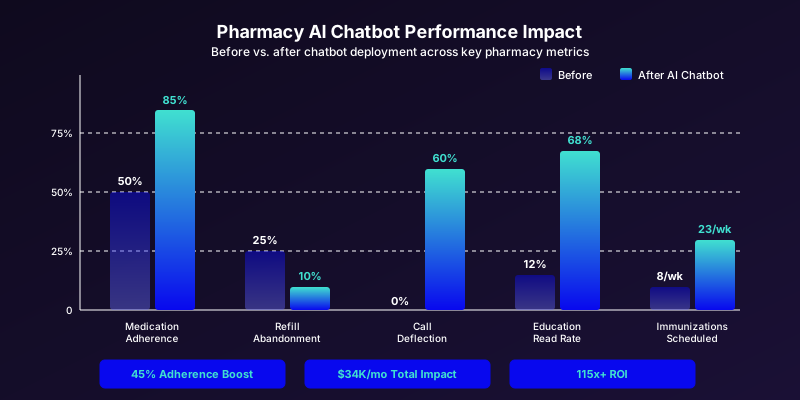
Research published by the APhA shows that pharmacies implementing automated patient engagement systems, including chatbot-based refill reminders and medication education, achieve 45% improvement in medication adherence rates for chronic disease medications. This improvement translates directly to better patient outcomes, reduced hospital readmissions, and higher pharmacy revenue from increased refill volume.
The pharmacy industry is already embracing this technology. Major chains like CVS, Walgreens, and Rite Aid have deployed conversational AI across their digital platforms. But the opportunity is equally significant for the 21,000+ independent pharmacies that serve communities across America. Platforms like Conferbot enable independents to deploy chatbots with the same capabilities as enterprise solutions at a fraction of the cost.
This guide covers the complete chatbot implementation blueprint for pharmacies of all types, from refill automation and drug interaction queries to insurance verification, prescription transfers, immunization scheduling, and HIPAA-compliant patient engagement. For related healthcare chatbot strategies, see our healthcare chatbot guide.
Prescription Refill Reminders: Turning Abandoned Refills Into Revenue
Prescription refill management is both the highest-volume and highest-revenue-impact use case for pharmacy chatbots. The average pharmacy processes 200-400 prescriptions per day, and refills account for 75-80% of total prescription volume. Yet 20-30% of refills are never picked up, representing billions in lost pharmacy revenue annually and, more importantly, patients going without needed medications.
Multi-Stage Refill Reminder Sequence
The chatbot executes a timed reminder sequence calibrated to each patient's refill schedule:
- 7 days before refill due: "Hi [Name], your prescription for [medication] is due for a refill on [date]. Would you like me to submit the refill request now? Reply YES to refill or LATER to be reminded again."
- 3 days before refill due: "Reminder: Your [medication] refill is due in 3 days. Running out of medication can affect your health. Reply REFILL to request now."
- Day of refill: "Your [medication] refill is ready for pickup at [pharmacy location]. Our hours today are [hours]. Drive-through is also available."
- 1 day after pickup window: "We noticed your [medication] has not been picked up yet. It is waiting for you at the pharmacy. Can we help with any concerns about this medication?"
Smart Refill Synchronization
Patients on multiple chronic medications often have staggered refill dates, requiring multiple pharmacy visits per month. The chatbot identifies sync opportunities:
"I noticed you are currently picking up medications on 3 different dates each month. We can synchronize your refills so everything is ready on the same day. This means fewer trips and less chance of missing doses. Would you like me to set up medication synchronization with your pharmacist?"
Medication synchronization programs (med sync) increase adherence by 25-35% for multi-medication patients and increase pharmacy revenue by consolidating refills and reducing abandonment.
Refill Status and Tracking
Patients frequently call pharmacies to check refill status, a high-volume, low-value call that ties up phone lines and staff. The chatbot handles this instantly:
"Your refill for Metformin 500mg is currently being processed. Estimated ready time: 2:30 PM today. I will send you a notification when it is ready for pickup."
Status inquiries represent 30-40% of all inbound pharmacy calls. Deflecting these to the chatbot frees significant staff time for clinical activities.
Refill Revenue Impact
| Metric | Without Chatbot | With Chatbot |
|---|---|---|
| Refill abandonment rate | 20-30% | 8-12% |
| Patient refill response rate | 40-55% (phone/IVR) | 75-85% (chat) |
| Adherence rate (chronic meds) | 50-60% | 72-85% |
| Revenue per patient per year | Baseline | +15-25% from recovered refills |
For a pharmacy filling 300 prescriptions per day with an average prescription value of $25, reducing abandonment from 25% to 10% recovers approximately 45 prescriptions per day = $1,125/day = $33,750/month in additional revenue. Deploy refill automation through your website chatbot and WhatsApp for maximum patient reach.

Drug Interaction Queries: Instant, Accurate Medication Safety Information
Drug interaction concerns are among the most critical and time-sensitive questions patients bring to pharmacies. The FDA estimates that drug interactions cause over 125,000 deaths annually in the United States and account for approximately 30% of adverse drug events. Patients increasingly search for drug interaction information online, often finding unreliable sources that cause unnecessary alarm or, worse, false reassurance. A pharmacy chatbot provides a trusted, pharmacy-backed channel for instant drug interaction education.
How the Drug Interaction Chatbot Works
The chatbot draws from a curated, pharmacist-approved knowledge base to answer common drug interaction questions:
- Medication-medication interactions: "Can I take ibuprofen with my blood pressure medication?" The chatbot responds: "Ibuprofen and similar NSAIDs can reduce the effectiveness of some blood pressure medications and may increase the risk of kidney problems when combined. It is best to discuss this with your pharmacist before combining them. Would you like to speak with a pharmacist now?"
- Medication-food interactions: "Can I eat grapefruit while taking atorvastatin?" The chatbot provides: "Grapefruit can increase the level of atorvastatin in your blood, potentially increasing the risk of side effects like muscle pain. It is recommended to avoid grapefruit and grapefruit juice while taking this medication. Your pharmacist can provide personalized guidance."
- Medication-supplement interactions: "Is it safe to take St. John's Wort with my antidepressant?" The chatbot flags: "St. John's Wort can interact dangerously with many antidepressants, potentially causing a serious condition called serotonin syndrome. Do not start St. John's Wort without consulting your pharmacist or doctor. Would you like to connect with a pharmacist to discuss this?"
- Medication-alcohol interactions: "Can I drink alcohol with metronidazole?" Clear, direct response: "You should avoid alcohol completely while taking metronidazole and for at least 72 hours after your last dose. Combining them can cause severe nausea, vomiting, and other serious reactions."
Safety-First Design Principles
Drug interaction queries require the most careful chatbot design of any pharmacy use case:
- Never diagnose or prescribe: The chatbot provides general drug information, not medical advice. Every response includes a recommendation to consult the pharmacist for personalized guidance.
- Err on the side of caution: When in doubt about an interaction, the chatbot flags it as potentially concerning and routes to a pharmacist rather than providing reassurance.
- Escalation triggers: Any mention of severe symptoms, overdose, allergic reactions, or emergency situations triggers immediate routing to a pharmacist or directs the patient to call 911 or Poison Control (1-800-222-1222).
- Source transparency: The chatbot cites its information sources: "This information is based on FDA-approved drug labeling and your pharmacy's clinical database."
Over-the-Counter Guidance
Patients frequently ask pharmacies for help choosing OTC medications, especially when they are already on prescription drugs:
"I have a cold and I am taking lisinopril for blood pressure. What cold medicine is safe for me?"
The chatbot provides general guidance: "Many cold medicines contain decongestants like pseudoephedrine or phenylephrine, which can raise blood pressure. For patients on blood pressure medications, pharmacists often recommend alternatives like plain guaifenesin for congestion or acetaminophen for pain and fever. Your pharmacist can recommend the safest option for your specific medications. Would you like to speak with them?"
This type of guided OTC recommendation increases pharmacy revenue from front-end sales while ensuring patient safety. Upload your pharmacy's drug information resources and approved counseling content to the AI knowledge base to power these interactions. For more on building compliant healthcare chatbots, see our HIPAA compliance guide.
Insurance Verification and Prior Authorization: Reducing Patient Frustration
Insurance-related issues are the single largest source of patient frustration at pharmacies. The cycle is painfully familiar: a patient arrives to pick up a prescription, discovers it is not covered or requires prior authorization, and faces an unexpected out-of-pocket cost or a delay of days to weeks while the pharmacy and prescriber navigate the authorization process. According to pharmacy industry data, 30% of new prescriptions encounter some form of insurance issue, and insurance-related calls account for 25-35% of total inbound pharmacy phone traffic.
A chatbot addresses these issues proactively, before the patient arrives at the counter, reducing surprises and improving the overall pharmacy experience.
Proactive Insurance Verification
When a new prescription is received, the chatbot checks coverage and notifies the patient before they make the trip to the pharmacy:
- Covered medication: "Good news! Your prescription for [medication] is covered by your insurance. Your copay is $15. It will be ready for pickup at [time]. Would you like us to process it?"
- Not covered / high cost: "Your insurance does not cover [brand medication], but a generic alternative [generic name] is available and covered with a $10 copay. Would you like your pharmacist to discuss the generic option with your doctor?"
- Prior authorization required: "Your insurance requires prior authorization for [medication]. We have sent the request to your doctor's office. This process typically takes 2-5 business days. I will notify you as soon as it is approved. In the meantime, would you like to know if there are any alternative medications that do not require prior authorization?"
- Quantity limits: "Your insurance covers 30 tablets of [medication] per month, but your prescription is written for 60 tablets. We will need to work with your doctor to adjust the prescription or request an override. I will keep you updated on the progress."
Cost Comparison and Savings Programs
When patients face high out-of-pocket costs, the chatbot explores alternatives:
- Manufacturer coupons and copay cards: "The manufacturer offers a copay savings card that could reduce your cost from $85 to $25. Would you like me to check if you qualify?"
- Patient assistance programs: For uninsured or underinsured patients, the chatbot provides information about pharmaceutical company assistance programs and connects them with enrollment resources.
- Generic alternatives: The chatbot identifies therapeutically equivalent generics and presents the cost savings: "A generic version of this medication is available at $8 compared to $120 for the brand. Your pharmacist can discuss switching with your doctor."
- Pharmacy discount programs: "Our pharmacy savings program covers this medication for $12.99 without using your insurance. Would you like to use this instead?"
Insurance Call Deflection
| Insurance Inquiry Type | % of Total Calls | Chatbot Automation Rate |
|---|---|---|
| Copay amount inquiries | 12% | 95% |
| Coverage verification | 8% | 85% |
| Prior authorization status | 10% | 90% |
| Generic alternatives | 5% | 80% |
| Total insurance-related | 35% | 88% average |
Automating insurance interactions reduces patient wait times, decreases phone hold times for remaining callers, and frees pharmacy staff to focus on dispensing and clinical consultations. For a deeper dive into healthcare chatbot compliance, visit our HIPAA-compliant AI chatbot guide.

Prescription Transfers and Immunization Scheduling: Growing the Patient Base
Prescription transfers and immunization services represent two of the most effective growth levers for pharmacies, and both are ideally suited to chatbot automation.
Prescription Transfer Automation
Transferring prescriptions from a competitor pharmacy to yours has traditionally been a high-friction process that discourages patients from switching. They must call, provide detailed information about their current pharmacy and medications, and wait for the transfer to be processed. A chatbot removes this friction entirely:
- Interest capture: "Would you like to transfer your prescriptions to [Pharmacy Name]? We can handle everything for you and usually have your medications ready within 24 hours."
- Information collection: The chatbot collects the transferring pharmacy's name and phone number, patient's name and date of birth, and the medications to transfer. "What medications would you like to transfer? You can list them by name, or if you have your prescription bottles handy, just share the Rx numbers."
- Transfer initiation: The chatbot compiles the information and routes it to the pharmacist for processing. "I have submitted your transfer request. Our pharmacist will call [Previous Pharmacy] to initiate the transfer. I will notify you when your medications are ready, usually within 24 hours."
- Welcome and onboarding: After the transfer, the chatbot introduces the patient to the pharmacy's services: loyalty program, delivery options, medication synchronization, and immunization services.
Pharmacies using chatbot-powered transfer workflows report 3-5x more transfer requests than phone-only processes, because the barrier to action is dramatically lower. A patient browsing your website at 9 PM can initiate a transfer in 2 minutes rather than waiting until business hours to call.
Immunization Scheduling
Immunization services have become a major revenue stream for pharmacies, particularly since the expansion of pharmacist-administered vaccines during and after the COVID-19 pandemic. The CDC now recommends pharmacists as a primary vaccine access point for flu shots, COVID-19 boosters, shingles, pneumonia, RSV, and other adult immunizations.
The chatbot streamlines the entire immunization journey:
- Eligibility screening: "I would like to help you schedule a flu shot. First, a few quick questions: Are you allergic to eggs or any vaccine components? Have you had a severe reaction to a flu shot in the past? Are you currently feeling ill with a fever?"
- Insurance and cost: "Most insurance plans cover flu shots at no cost. If you share your insurance information, I can verify your coverage. No insurance? Our cash price for the standard flu shot is $39.99."
- Appointment booking: "We have walk-in availability, or you can schedule a specific time. Our next available flu shot appointment is today at 3:15 PM. Would you like to book it?" Integrated with calendar booking for smooth scheduling.
- Pre-visit forms: The chatbot collects consent forms and screening questionnaires digitally before the visit, reducing in-store wait time from 15 minutes to under 5 minutes.
- Post-vaccination follow-up: "Thank you for getting your flu shot today. Some people experience mild soreness at the injection site. If you develop a fever above 101.3 or have any concerns, contact the pharmacy or your doctor. Your next recommended vaccine is [shingles/pneumonia] based on your age. Would you like information about that?"
Seasonal Campaign Automation
The chatbot manages seasonal immunization campaigns automatically:
| Campaign | Timing | Chatbot Action |
|---|---|---|
| Flu season | September-March | Proactive outreach to all patients due for flu shot |
| COVID boosters | Per CDC schedule | Notify patients due based on last dose date |
| Shingles (50+) | Year-round | Target patients turning 50 with educational outreach |
| Back-to-school | July-September | Remind parents about required childhood immunizations |
Immunization services generate $25-75 per administration in reimbursement plus front-end sales from patients who visit the pharmacy. A chatbot scheduling 20-30 additional immunizations per week generates $500-2,250 in weekly incremental revenue while improving community health outcomes. For broader appointment scheduling strategies, see our appointment booking chatbot guide.
HIPAA Compliance for Pharmacy Chatbots: Protecting Patient Health Information
Pharmacies are HIPAA-covered entities, and every chatbot interaction that involves patient health information (PHI) must comply with HIPAA Privacy, Security, and Breach Notification Rules. Unlike general business chatbots, pharmacy chatbots handle some of the most sensitive categories of PHI: medication lists, diagnoses (implied by prescriptions), insurance information, and personal identifiers. Non-compliance carries penalties of $100 to $50,000 per violation, with annual maximums of $1.5 million per violation category.
PHI Categories in Pharmacy Chatbot Interactions
Every type of pharmacy chatbot interaction touches PHI:
| Interaction Type | PHI Elements | Risk Level |
|---|---|---|
| Refill reminders | Name, medication, dosage, pharmacy | High |
| Drug interaction queries | Current medications (implies conditions) | High |
| Insurance verification | Insurance ID, coverage details, copays | Medium |
| Prescription transfer | Full medication list, previous pharmacy | High |
| Flu shot scheduling | Name, DOB, allergy info, insurance | Medium |
| General drug info (no patient ID) | None (no PHI if anonymous) | Low |
HIPAA Technical Safeguards for Pharmacy Chatbots
- Business Associate Agreement (BAA): Your chatbot vendor must sign a BAA that establishes their responsibilities for protecting PHI. This is non-negotiable. Never deploy a chatbot that handles patient data without a signed BAA.
- Encryption: All data must be encrypted in transit (TLS 1.2 or higher) and at rest (AES-256). This applies to chat messages, stored conversation logs, and any cached patient data.
- Access controls: Role-based access to chatbot conversation logs and patient data. Pharmacists have full access; technicians have limited access; the chatbot platform provider has access only as specified in the BAA.
- Authentication: Before accessing any patient-specific information (prescription status, refill history, insurance details), the chatbot must verify patient identity. Acceptable methods include date of birth plus name, prescription number, or the last 4 digits of a phone number.
- Audit logging: Every chatbot interaction involving PHI must be logged with a timestamp, patient identifier, data accessed, and actions taken. Logs must be retained for a minimum of 6 years per HIPAA requirements.
- Minimum necessary standard: The chatbot should request and display only the minimum PHI necessary for each interaction. A refill reminder does not need to display the full medication list, only the specific medication due for refill.
HIPAA-Compliant Channel Selection
Not all communication channels offer equal HIPAA compliance capability:
- Website chatbot (embedded): Fully compliant when hosted on HIPAA-grade infrastructure with encryption and proper access controls. Best for detailed interactions.
- WhatsApp Business API: End-to-end encrypted by default. Can be HIPAA-compliant with BAA and proper configuration. Effective for refill reminders and appointment confirmations.
- SMS: Not inherently HIPAA-compliant due to carrier storage and lack of encryption. Use only for generic messages without PHI (for example, "Your prescription is ready" without naming the medication).
- Email: Requires encryption and patient consent for PHI transmission. Chatbot can trigger encrypted email communications through a compliant email provider.
For a comprehensive HIPAA implementation guide for chatbots, see our detailed HIPAA-compliant AI chatbot guide, which covers BAA checklists, risk assessments, and vendor evaluation criteria.
Patient Education: Turning the Pharmacy Into a Health Information Hub
Pharmacists are consistently ranked among the most trusted and accessible healthcare professionals, yet time constraints limit their ability to provide the patient education that drives better health outcomes. The APhA reports that pharmacists spend an average of less than 2 minutes per patient encounter, barely enough for dispensing and basic counseling. A chatbot extends the pharmacist's educational reach to every patient, at any hour, on any topic.
New Medication Onboarding
When a patient starts a new medication, the chatbot delivers a structured educational sequence:
- Day 1 (pickup): "You started [medication] today. Here is what to expect: take it [with food/on an empty stomach] at [time of day]. Common side effects in the first 1-2 weeks include [list]. These usually diminish as your body adjusts. If you experience [serious symptoms], contact your doctor or pharmacist immediately."
- Day 3: "How are you feeling on [medication] so far? Any questions or concerns? Reply HELP to speak with your pharmacist."
- Day 7: "You have been on [medication] for one week. Are you finding it easy to take as prescribed? Some tips for remembering your dose: [time-specific tips]. If you are experiencing side effects, let me know and I can help."
- Day 30: "You have completed your first month on [medication]. Your refill is due on [date]. How are you feeling? Any side effects to report? Your pharmacist recommends continuing as prescribed and monitoring [relevant health metric]."
Chronic Disease Education Programs
For patients with chronic conditions, the chatbot delivers ongoing educational content aligned with their medications:
- Diabetes management: Blood sugar monitoring tips, carbohydrate counting basics, recognizing hypoglycemia symptoms, foot care reminders, A1C testing schedules.
- Hypertension: Blood pressure monitoring guidance, sodium intake recommendations, exercise suggestions, stress management, and the importance of consistent medication timing.
- Asthma/COPD: Inhaler technique education (proper MDI and DPI use), peak flow monitoring, action plan reminders, trigger avoidance strategies, and when to seek emergency care.
- Mental health: Medication patience (SSRIs take 4-6 weeks for full effect), side effect management, the importance of not stopping abruptly, and crisis resources.
Seasonal Health Education
The chatbot delivers timely health education tied to seasonal concerns:
- Flu season: Vaccination reminders, hand hygiene tips, when to see a doctor versus self-treat.
- Allergy season: OTC allergy medication guidance (based on symptom type), proper nasal spray technique, pollen avoidance strategies.
- Winter: Vitamin D supplementation guidance, cold weather medication storage (insulin, liquid medications), dry skin care for eczema patients.
- Summer: Sun protection for patients on photosensitive medications, heat precautions for diuretic users, proper medication storage in heat.
Health Literacy and Accessibility
According to the CDC, 36% of US adults have limited health literacy, meaning they struggle to understand medical instructions, prescription labels, and health information. A chatbot addresses this by:
- Using plain language (8th grade reading level) for all health information
- Providing information in multiple languages through multilingual chatbot capabilities
- Using visual aids (images of proper inhaler technique, injection site rotation diagrams)
- Offering audio content for patients who prefer listening to reading
- Breaking complex information into small, digestible messages delivered over multiple interactions rather than one overwhelming session
Upload your pharmacy's patient education materials, drug information sheets, and counseling protocols to the AI knowledge base. The chatbot delivers this content conversationally, making it more engaging and accessible than printed handouts that most patients never read.

Chatbot Strategies by Pharmacy Type: Independent, Retail Chain, and Specialty
The pharmacy landscape encompasses vastly different business models, each with distinct chatbot priorities and workflows. A neighborhood independent pharmacy competes differently than a CVS location or a specialty pharmacy handling oncology medications. Here is how to tailor the chatbot to each model.
Independent Pharmacies (21,000+ Locations)
Independent pharmacies compete on personal service, clinical relationships, and community trust. The chatbot extends these strengths to digital channels:
- Primary value: Compete with chains on convenience while maintaining the personal touch. The chatbot enables 24/7 service availability that independents traditionally cannot offer due to limited hours and staff.
- Key differentiators to automate: Personalized refill management (the independent knows their patients by name), compounding inquiries and consultations, delivery scheduling, community health program promotion, and medication therapy management (MTM) appointment booking.
- Competitive positioning: "Unlike the big chains, we know you by name. Our AI assistant helps us serve you even better by making sure your refills are always on time, your questions get answered instantly, and your pharmacist is available when you need personal attention."
- Revenue impact: An independent pharmacy filling 150-200 prescriptions/day that reduces abandonment by 15% and adds 10 immunizations per week sees approximately $8,000-12,000/month in incremental revenue.
Retail Chain Pharmacies
Large retail pharmacy chains (CVS, Walgreens, Rite Aid, Walmart Pharmacy) operate at massive scale with standardized processes. Chatbots complement their existing digital infrastructure:
- Primary value: Scale customer service without proportional staffing increases. Handle the surge in inquiries that overwhelm phone lines, especially during flu season and open enrollment periods.
- Key flows: Prescription status checks (highest volume), store locator with wait time estimates, immunization scheduling across locations, loyalty program enrollment and point checking, insurance plan change support during open enrollment.
- Integration priority: Deep integration with the chain's pharmacy management system, loyalty database, and scheduling platform via the integrations hub.
- Scale metrics: A 500-location chain automating 30% of phone calls across all locations saves approximately 1,500 staff hours per day across the enterprise.
Specialty Pharmacies
Specialty pharmacies handling high-cost, complex medications (oncology, rheumatology, rare diseases, biologics) have unique chatbot requirements centered on patient adherence, side effect monitoring, and prior authorization management:
- Primary value: Patient adherence and clinical monitoring. Specialty medications have the highest non-adherence rates (30-50%) and the highest per-prescription revenue ($500-10,000+). Even small adherence improvements generate massive revenue impact.
- Key flows: Injection/infusion scheduling, temperature-sensitive medication delivery coordination, side effect monitoring and reporting, REMS (Risk Evaluation and Mitigation Strategy) program compliance, prior authorization tracking (which can take weeks for specialty drugs), and financial assistance program enrollment.
- Clinical monitoring: The chatbot conducts regular check-ins: "How are you feeling since your last dose of [biologic medication]? Any new or worsening symptoms? Rate your fatigue on a scale of 1-10." Responses are compiled for pharmacist and prescriber review.
- Revenue impact: A specialty pharmacy with 500 patients improving adherence by 10% on medications averaging $3,000/month generates approximately $1.8M in additional annual revenue.
Hospital and Health System Pharmacies
Hospital outpatient pharmacies and health system pharmacy networks focus on care transitions and discharge medication management:
- Discharge medication education: Post-discharge patients receive chatbot-delivered education about new medications started during hospitalization.
- Transition of care follow-up: The chatbot checks in 48-72 hours post-discharge to ensure prescriptions were filled and the patient understands their medication regimen, reducing 30-day readmission risk.
- Meds-to-beds coordination: For hospitals with meds-to-beds programs, the chatbot facilitates delivery scheduling and copay notification before discharge.
Regardless of pharmacy type, Conferbot's AI chatbot builder supports the customization needed for each model, from simple refill bots for independents to complex clinical monitoring workflows for specialty pharmacies.
ROI Analysis and 30-Day Implementation Guide for Pharmacies
The pharmacy chatbot ROI model is straightforward because the revenue drivers, prescription volume, adherence rates, and immunization services, are easily quantifiable. Here is the complete analysis for a representative independent pharmacy: 250 prescriptions per day, $28 average prescription revenue, 6 pharmacist and technician staff, and 8 immunizations per week.
Revenue Growth
- Reduced refill abandonment: Lowering abandonment from 25% to 10% on 200 daily refills = 30 recovered refills/day x $28 = $840/day = $25,200/month
- Increased immunizations: Chatbot scheduling adds 15 immunizations/week at $40 average reimbursement = $2,400/month
- Prescription transfers: Chatbot captures 20 transfer requests/month x 3 avg prescriptions per patient x $28 = $1,680/month in new recurring revenue
- Front-end sales from increased traffic: Each additional pharmacy visit generates an estimated $5-8 in OTC/front-end purchases = $1,500-2,400/month
Cost Savings
- Phone call deflection: Chatbot handles 60% of the pharmacy's 80 daily calls. At 3 minutes per call plus hold time, this saves approximately 4 hours/day of staff time = approximately $3,000/month in labor productivity
- Reduced overtime during peak seasons: Flu season and open enrollment periods typically require overtime or temporary staffing. Chatbot automation reduces this need, saving $2,000-4,000 per peak season
Total Monthly Impact
| Category | Monthly Impact |
|---|---|
| Recovered refill revenue | $25,200 |
| Immunization revenue | $2,400 |
| Transfer revenue | $1,680 |
| Front-end sales uplift | $1,500-2,400 |
| Staff productivity savings | $3,000 |
| Total monthly impact | $33,780-34,680 |
Against a chatbot platform cost of $149-299/month, the ROI exceeds 115x. Pharmacies typically see positive ROI within the first week of deployment from refill recovery alone.
30-Day Implementation Roadmap
- Week 1: Foundation. Sign up for Conferbot, sign the BAA for HIPAA compliance, install the website embed code, and create the knowledge base with drug information, pharmacy services, hours, insurance accepted, and FAQ content.
- Week 2: Core flows. Build refill reminder sequences, prescription status checking, drug information FAQ, and immunization scheduling with calendar booking. Connect to your pharmacy management system through the integrations hub.
- Week 3: Growth flows. Build prescription transfer intake, insurance verification notifications, patient education sequences for top 20 dispensed medications, and seasonal campaign templates.
- Week 4: Launch. HIPAA compliance review, staff training, pilot with existing patients, then full deployment across website, WhatsApp, and in-store QR codes. Enable analytics from day one.
See pricing plans designed for healthcare providers, or use our ROI calculator framework to build a business case with your pharmacy's specific numbers.

The Future of AI in Pharmacy: Clinical Services and Autonomous Patient Care
The pharmacy profession is in the midst of a historic transformation from primarily dispensing medications to providing comprehensive clinical services. The pharmacist's role is expanding to include chronic disease management, diagnostic testing, prescriptive authority for select conditions, and clinical care coordination. AI chatbots are not just supporting this transformation; they are enabling it by automating the dispensing and administrative tasks that currently consume 70-80% of pharmacist time.
AI-Powered Medication Therapy Management (MTM)
MTM services, where pharmacists review a patient's complete medication regimen to identify problems and optimize therapy, are reimbursable by Medicare and many commercial plans. Currently, MTM is underutilized because of time constraints. AI will change this by having the chatbot conduct the initial medication review: collecting the complete medication list (including OTCs and supplements), identifying potential drug interactions, flagging adherence gaps, and preparing a structured report for the pharmacist's clinical review. This reduces pharmacist MTM time from 45 minutes to 15 minutes per patient while increasing the number of patients who receive this service.
Pharmacogenomic Screening Integration
As pharmacogenomic testing becomes more accessible, chatbots will help patients understand their genetic results and how they affect medication choices. The chatbot will explain concepts like: "Your genetic test shows you are a poor metabolizer of CYP2D6. This means your body processes certain medications more slowly than average, which can affect the right dose for medications like codeine and some antidepressants. Your pharmacist has shared these results with your doctor to help select the best medications for you."
Autonomous Chronic Disease Monitoring
AI chatbots will evolve into continuous monitoring systems for chronic disease patients, collecting daily or weekly health data (blood pressure readings, blood sugar levels, symptom assessments), analyzing trends, and alerting pharmacists and prescribers when intervention is needed. A diabetic patient's chatbot might say: "Your fasting blood sugar readings have been trending upward over the past two weeks, averaging 165 versus your target of 130. I have notified your pharmacist, who recommends scheduling a medication review. Shall I book a 15-minute consultation?"
Prescription Drug Monitoring Program (PDMP) Integration
As states increasingly require real-time PDMP checks, chatbots will assist pharmacists by pre-screening controlled substance prescriptions against PDMP data, flagging potential concerns before the pharmacist reviews them. This saves time and ensures compliance with state reporting requirements.
Telepharmacy and Remote Services
Telepharmacy services, already legal in 40+ states, allow pharmacists to verify prescriptions and counsel patients remotely. AI chatbots serve as the first point of contact for telepharmacy interactions, collecting patient information, verifying identity, and preparing the case for the remote pharmacist's review. This extends pharmacy services to rural and underserved areas where physical pharmacy access is limited.
The pharmacies that deploy chatbot technology today are building the digital patient engagement infrastructure that these future clinical capabilities will require. Every chatbot conversation generates data about patient preferences, health literacy levels, communication patterns, and service utilization that will inform increasingly sophisticated AI clinical tools in the years ahead. Start building your pharmacy's AI foundation with Conferbot's AI chatbot builder and explore the full range of chatbot capabilities available for healthcare providers.
Was this article helpful?
AI Chatbot for Pharmacies FAQ
Everything you need to know about chatbots for ai chatbot for pharmacies.
About the Author

Conferbot Team specializes in conversational AI, chatbot strategy, and customer engagement automation. With deep expertise in building AI-powered chatbots, they help businesses deliver exceptional customer experiences across every channel.
View all articles