9 Free Templates Available

Best Education Chatbot Templates

Get free, ready-to-use education chatbot templates that help boost conversions and automate customer interactions. Start building in 2 minutes with no coding required.

100% Free
No Coding Required
Instant Deploy
🎓
67%
Higher Conversions
2min
Setup Time
24/7
Automated
9+
Templates

Explore Templates & Resources

Browse templates, learn about the category, or find answers to common questions

Categories29

Education Templates

Choose from our collection of proven education chatbot templates

9templates
Daycare & Childcare Chatbot - Education And Training template preview

Daycare & Childcare Chatbot

A friendly childcare center chatbot that helps parents explore programs, check availability by age group, understand pricing, learn about curriculum, and schedule tours. Built for daycare centers, preschools, and childcare facilities to streamline enrollment inquiries and reduce administrative workload.

Education And Training
10uses
8likes
Online Course Enrollment Chatbot - Education And Training template preview

Online Course Enrollment Chatbot

An AI-powered course enrollment chatbot that guides students through course discovery, prerequisite checks, and registration. Reduces enrollment abandonment by 47% and handles catalog navigation, section selection, and payment -- all through a conversational interface. Perfect for universities, bootcamps, and e-learning platforms.

Education And Training
24uses
19likes
Personalized Learning Path Creator Chatbot - Education And Training template preview

Personalized Learning Path Creator Chatbot

An AI chatbot that assesses learner skills, identifies knowledge gaps, and generates a customized learning path with curated resources. Maps career goals to specific courses, certifications, and projects. Ideal for L&D teams, bootcamps, and educational platforms looking to improve learner outcomes through personalized recommendations.

Education And Training
17uses
12likes
Scholarship Finder Chatbot - Education And Training template preview

Scholarship Finder Chatbot

An AI scholarship finder chatbot that matches students with eligible scholarships based on their academic profile, demographics, field of study, and financial need. Simplifies the overwhelming scholarship search process into a 5-minute conversation. Perfect for universities, high school counselors, and financial aid offices.

Education And Training
21uses
15likes
Virtual Classroom Assistant Chatbot - Education And Training template preview

Virtual Classroom Assistant Chatbot

An AI classroom assistant chatbot that supports online learners with instant answers to course questions, assignment help, resource sharing, and progress tracking. Available 24/7 to supplement instructor support, reduce repetitive questions, and keep students engaged. Perfect for online schools, LMS platforms, and instructors managing large cohorts.

Education And Training
15uses
11likes
Gamified Learning Experience - Education and Training template preview

Gamified Learning Experience

Transform education with Conferbot’s Gamified Learning Experience Assistant. Boost student engagement, improve retention, and foster collaborative learning through interactive challenges, rewards, and real-time feedback.

Education and Training
12uses
2likes
Continuing Education Advisor - Education and Training template preview

Continuing Education Advisor

Unlock career growth with Conferbot’s Continuing Education Advisor. Discover personalized course recommendations, career-aligned learning paths, and 24/7 guidance to achieve your educational goals.

Education and Training
12uses
1likes
Parent-Teacher Conference Scheduler - Education and Training template preview

Parent-Teacher Conference Scheduler

Simplify scheduling and communication with Conferbot’s Parent-Teacher Conference Scheduler. Effortlessly manage appointments, send reminders, and ensure seamless coordination between parents and teachers.

Education and Training
4uses
2likes
Virtual Classroom Assistant - Education and Training template preview

Virtual Classroom Assistant

Transform online learning with Conferbot’s Virtual Classroom Assistant. Enhance engagement, streamline class management, and provide personalized support to students and educators for a seamless virtual learning experience.

Education and Training
9uses
2likes
Page 1 of 4

AI-Powered Student Support That Scales With Your Institution

Higher education institutions and K-12 school districts face a growing paradox: student expectations for instant, personalized support have never been higher, yet administrative budgets remain flat or shrinking. The average university registrar's office fields more than 12,000 inquiries per semester, with peak volumes during enrollment windows exceeding 500 tickets per day. Traditional staffing models simply cannot keep up, leading to long wait times, frustrated students, and overburdened staff who spend most of their day answering the same ten questions.

An AI-powered student support chatbot transforms this dynamic entirely. Deployed on your institution's website, student portal, or messaging channels, a chatbot can resolve the repetitive queries that consume 60-80% of staff time -- questions about deadlines, tuition balances, campus hours, financial aid status, and course prerequisites. Students get accurate answers in seconds, 24 hours a day, whether they are studying at midnight or reaching out from a different time zone.

Conferbot's no-code chatbot builder makes it straightforward for non-technical staff to design conversational flows tailored to your institution's policies. You can create separate flows for admissions, financial aid, housing, IT help desk, and academic advising -- each pulling from its own knowledge base. When a question exceeds the bot's scope, it seamlessly escalates to a live agent with the full conversation history, so the student never repeats themselves.

📊 Performance Insight

86% of students now use AI-powered tools as part of their academic experience. Institutions that meet students where they already are -- in conversational AI interfaces -- see dramatically higher engagement and satisfaction scores.

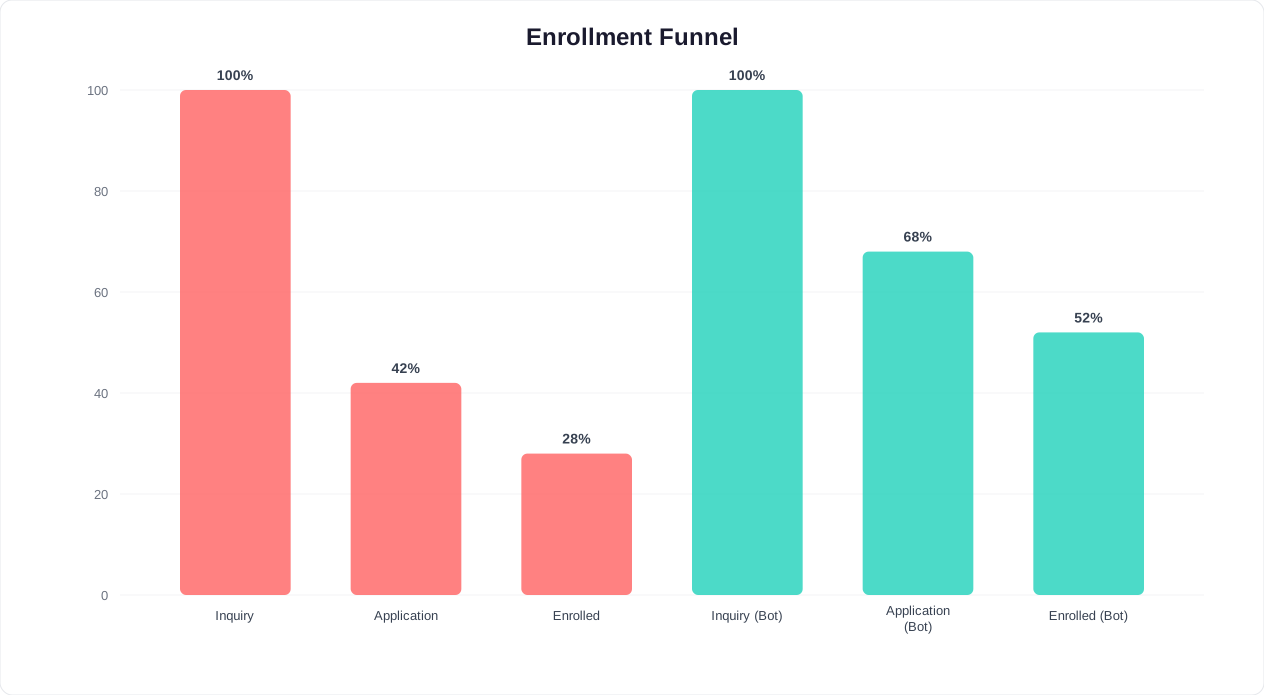
Education enrollment funnel showing chatbot impact at each stage from inquiry to enrollment

Student Support Impact by Channel

Support ChannelAvg Response TimeResolution RateStudent SatisfactionCost per Inquiry
AI ChatbotUnder 10 seconds78%4.3/5.0$0.50-$1.00
Email12-24 hours85%3.6/5.0$8.00-$12.00
Phone8-15 minutes hold90%3.4/5.0$12.00-$18.00
In-Person20-45 minutes wait95%3.8/5.0$25.00-$35.00
Live Chat (Human)3-5 minutes88%4.1/5.0$6.00-$10.00

Student Inquiry Channel Comparison

Inquiry MetricBefore ChatbotAfter ChatbotImprovement
Average response time12-24 hoursUnder 10 seconds-99%
Inquiries handled per staff hour8-12200+ (automated)+1,600%
After-hours inquiry resolution0%78%N/A (new capability)
Repeat inquiry rate35%12%-66%
Cost per inquiry$12-$18$0.50-$1.00-94%

Key Benefits for Student Support

  • Instant answers to FAQs -- tuition deadlines, add/drop dates, parking permits, library hours, and more
  • 24/7 availability -- critical for online learners, international students, and evening programs
  • Reduced staff burnout -- advisors focus on complex cases that truly need human judgment
  • Consistent information -- every student receives the same accurate, policy-compliant response
  • Multilingual support -- serve diverse student populations without hiring bilingual staff

⚡ Efficiency Insight

Proactive chatbot engagement reduces student dropout rates by up to 30%. Students who receive timely, automated support during critical periods are far more likely to persist through enrollment and complete their programs.

Institutions that deploy student support chatbots report a 45-60% reduction in email and phone volume within the first semester. That translates directly into shorter wait times for the cases that do require human help, higher student satisfaction scores, and measurable improvements in retention -- because students who get timely support are far less likely to drop out.

Departmental Chatbot Architecture

Large institutions benefit from a multi-department chatbot architecture where a single entry-point bot routes students to department-specific sub-bots. A student asking about financial aid is seamlessly handed to the financial aid bot, which has deep knowledge of FAFSA, scholarships, payment plans, and award appeals. A student asking about housing connects to the housing bot, which knows room types, meal plans, move-in dates, and roommate matching. Each department manages its own knowledge base through Conferbot's AI knowledge base, ensuring accuracy without creating a single monolithic bot that no one team owns.

This architecture also simplifies compliance with FERPA and other privacy regulations. The financial aid bot can be configured to require authentication before sharing sensitive financial information, while the general campus FAQ bot can operate without authentication for public questions about parking, events, and campus maps. Each department controls its own escalation rules, working hours for live agent handoff, and response templates, creating a distributed system that scales with institutional complexity.

The value extends beyond student-facing support. Many institutions deploy internal chatbots for faculty and staff -- answering HR questions about benefits, leave policies, and payroll; providing IT troubleshooting for common issues like password resets and VPN access; and guiding new faculty through tenure-track requirements and committee assignments. These internal bots reduce administrative overhead while ensuring consistent policy communication across large, decentralized organizations.

Pair your student support bot with built-in analytics to identify trending questions, spot policy confusion before it becomes a crisis, and continuously refine your bot's responses based on real conversation data. You can also connect the bot to your existing tools like Salesforce, HubSpot, or your SIS to pull real-time student data into conversations.

Admissions Funnel Optimization: From Inquiry to Enrolled Student

The admissions process is the lifeblood of every educational institution, yet it remains one of the most inefficient workflows in higher education. A prospective student visits your website, browses program pages, and has questions -- but the admissions office is closed, the response to their email will take 48 hours, and by then they have moved on to a competitor. This pattern repeats thousands of times each enrollment cycle, costing institutions millions in lost tuition revenue.

An admissions chatbot transforms this leaky funnel into a conversion engine by engaging every prospect the moment they express interest. The bot answers questions about programs, requirements, deadlines, and campus life instantly -- whether the inquiry arrives at 2 PM on a Tuesday or 11 PM on a Saturday. Research shows that the probability of qualifying a lead drops by 80% after just five minutes of delay. In a world where prospective students are browsing multiple institutions simultaneously, the first school to respond with a helpful, personalized answer wins the application.

💡 Key Insight

Georgia State University increased enrollment by 3.3% after deploying an AI chatbot for admissions -- translating to hundreds of additional students and millions in tuition revenue, with 24/7 admissions support that never takes a day off.

The Full-Funnel Admissions Bot

An effective admissions chatbot does not just answer questions -- it actively guides prospects through every stage of the admissions funnel. At the awareness stage, the bot introduces programs, highlights differentiators, and captures the prospect's interest. At the consideration stage, it provides detailed program information, connects prospects with current students or alumni for testimonials, and schedules campus tours via calendar booking. At the application stage, the bot walks applicants through each section of the application, answers questions about required documents, and provides real-time status updates. At the enrollment stage, it guides admitted students through housing selection, orientation registration, financial aid acceptance, and course enrollment.

Admissions Response Time Impact

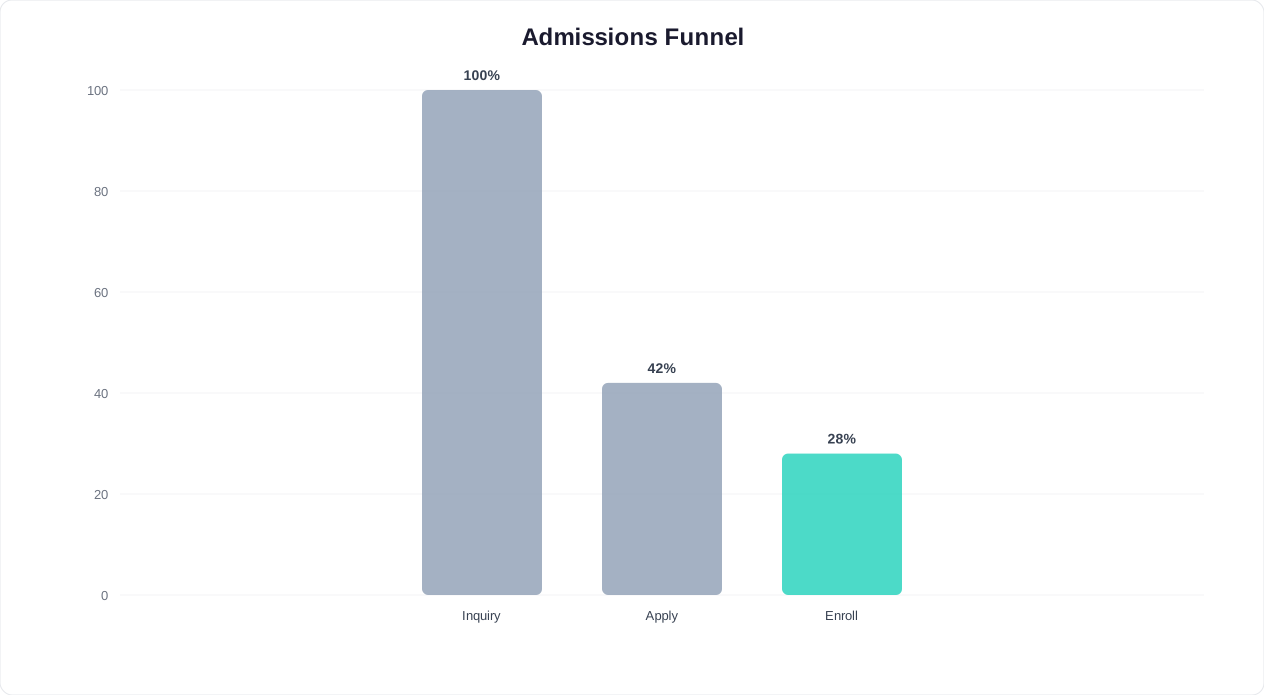
Admissions MetricBefore ChatbotAfter ChatbotImprovement
First response to prospect24-72 hoursInstant-99%
Application start rate22%48%+118%
Prospect-to-applicant conversion15%32%+113%
Weekend/evening lead capture0% (lost leads)100% (captured)N/A (new capability)
Admissions staff workload500+ inquiries/week120 (complex only)-76%

Personalized Program Matching

One of the most powerful capabilities of an admissions chatbot is intelligent program matching. A prospective student says "I'm interested in technology but I'm also creative" and the bot recommends UX Design, Digital Media, or Computer Science with a Design minor -- explaining how each program aligns with their stated interests. This personalized guidance, powered by Conferbot's NLP engine, mimics the experience of meeting with an admissions counselor but is available at any hour and can serve hundreds of students simultaneously.

The bot can also segment prospects based on their profile and route them to specialized content. A working adult asking about evening MBA programs sees different information than an 18-year-old exploring undergraduate options. A military veteran is directed to information about GI Bill benefits and veteran support services. An international student receives content about visa requirements, English language proficiency tests, and on-campus housing.

Admissions funnel conversion rates at each stage with and without chatbot engagement

Application Completion Assistance

Application abandonment is a costly problem. Nationally, over 40% of started college applications are never completed. The most common reasons are confusion about requirements, difficulty gathering documents, and simple procrastination. An admissions chatbot addresses all three. It explains exactly what documents are needed and why, provides clear formatting and submission instructions, and sends timed reminders to applicants who have started but not finished their application. Institutions using proactive application nudges via chatbot report 25-35% higher completion rates on started applications.

The bot integrates with your application system through Conferbot's integrations hub, allowing it to check application status in real time and provide specific guidance: "Your transcript has been received, but we're still waiting for your letter of recommendation from Dr. Smith. Would you like me to send a reminder to Dr. Smith's email?" This level of proactive, personalized support was previously only possible at small institutions with dedicated admissions counselors for every applicant. Now it scales to any enrollment size.

Campus Tour and Event Scheduling

Campus tours remain the single highest-converting activity in the admissions funnel -- students who visit campus are 2-3x more likely to enroll. The chatbot streamlines tour scheduling by presenting available dates and times, capturing the prospect's details, and sending calendar confirmations with parking instructions and campus maps. For virtual tours, the bot can share video links, schedule live virtual information sessions, and connect prospects with student ambassadors for real-time Q&A via live chat.

Admissions Staff Productivity

The chatbot does not replace admissions counselors -- it makes them dramatically more effective. By handling the high-volume, repetitive inquiries that consume 60-70% of counselor time (program requirements, application deadlines, campus amenities, tuition costs), the bot frees counselors to focus on the high-touch activities that actually influence enrollment decisions: one-on-one advising calls with undecided prospects, personalized outreach to high-value candidates, and relationship building with guidance counselors at feeder high schools. Institutions report that each admissions counselor effectively doubles their productive capacity when supported by a chatbot, handling the same territory with less stress and better outcomes.

The data generated by the admissions chatbot is equally valuable. Every conversation reveals what prospective students care about most -- which programs generate the most interest, which objections arise most frequently, which competitor institutions students are considering, and at what point in the conversation prospects disengage. This intelligence feeds directly into marketing strategy, program development, and messaging optimization. An institution that discovers through chatbot data that 40% of prospects ask about career placement rates can immediately prioritize employment outcomes in their marketing materials and website content.

For institutions managing multiple campuses or online programs, the chatbot provides consistent information across all entry points while tailoring the conversation to each campus's unique offerings. A prospect browsing the downtown campus page sees information about that location's programs, faculty, and student life, while a prospect on the online programs page sees content about asynchronous learning, virtual support services, and technology requirements. The bot handles this segmentation automatically through Conferbot's visual flow builder, ensuring every prospect receives relevant, accurate information regardless of how they discover the institution.

Explore our education chatbot templates to see pre-built admissions flows you can customize for your institution in under an hour.

Enrollment Melt Prevention: Keeping Admitted Students on Track

Enrollment melt -- the gap between students who are admitted and those who actually enroll -- is one of the most expensive problems in higher education. The national average summer melt rate hovers around 18-22%, meaning roughly one in five admitted students never shows up for classes. For a mid-size university admitting 5,000 students with average tuition of $15,000, a 20% melt rate represents $15 million in lost revenue every year. The students are admitted, they intend to enroll, but somewhere between acceptance and the first day of classes, they fall through the cracks.

The causes of enrollment melt are well-documented: confusion about next steps, unresolved financial aid questions, housing uncertainty, last-minute anxiety, and the overwhelming number of tasks that must be completed between acceptance and enrollment. A melt prevention chatbot addresses each of these causes by providing proactive, personalized guidance throughout the critical summer period.

📊 Performance Insight

24/7 admissions chatbot availability means prospective students get answers during evenings, weekends, and holidays -- the exact times when traditional admissions offices are closed and student interest is highest. Institutions report 55% of chatbot-driven applications are started outside business hours.

The Summer Melt Timeline

Enrollment melt does not happen suddenly -- it develops over weeks as admitted students encounter unresolved barriers. The chatbot combats melt with a structured engagement sequence that mirrors the critical decision points:

  • Week 1-2 after admission -- congratulatory message, enrollment checklist overview, financial aid reminder
  • Week 3-4 -- housing application deadline reminder, meal plan selection guidance, orientation registration prompt
  • Week 5-6 -- financial aid acceptance deadline, payment plan options, scholarship confirmation check
  • Week 7-8 -- course registration guidance, academic advising appointment scheduling via calendar booking
  • Week 9-10 -- campus resources introduction, student organization fair preview, roommate matching support
  • Final 2 weeks before classes -- move-in logistics, textbook purchasing guidance, first-day preparation tips

Enrollment Funnel Conversion Metrics

Funnel StageBefore ChatbotAfter ChatbotImprovement
Inquiry to application18%35%+94%
Application completion rate52%78%+50%
Admitted to enrolled (yield)38%52%+37%
Summer melt rate22%10%-55%
Overall inquiry-to-enrolled rate4.5%11.2%+149%

Enrollment Chatbot Impact by Institution Type

Institution TypeAvg Enrollment IncreaseMelt ReductionApplication Completion
Community Colleges5-8%15-22%+30%
Public Universities3-5%12-18%+25%
Private Universities2-4%10-15%+20%
Online/Hybrid Programs8-12%20-30%+35%
K-12 Districts4-6%N/A+40%

Financial Aid Guidance Automation

Financial aid is the number one reason admitted students fail to enroll. The FAFSA process alone generates thousands of questions -- eligibility, deadlines, verification documents, award letter interpretation, and appeal procedures. A financial aid chatbot answers these questions instantly, walks students through the FAFSA step by step, explains the difference between grants, loans, and work-study, and helps families understand their Expected Family Contribution. When the bot detects a student struggling with financial barriers, it proactively connects them with financial aid counselors and highlights emergency aid options.

💡 Key Insight

Institutions using proactive chatbot outreach during the summer melt period report a 12-18% reduction in melt rates among first-year students -- representing millions in recovered tuition revenue per enrollment cycle.

The financial aid chatbot also handles the sensitive task of communicating financial aid award changes, helping students understand revised packages, and guiding them through the appeal process if their circumstances have changed. This proactive financial support removes the single largest barrier to enrollment and ensures that admitted students do not quietly disappear because they could not navigate the financial aid system on their own.

Housing and Orientation Automation

Housing selection and orientation registration are two of the most time-sensitive tasks in the pre-enrollment period, and both are prime targets for chatbot automation. The housing chatbot guides admitted students through room type selection, roommate preference surveys, dining plan choices, and move-in logistics. It answers the hundreds of questions that incoming students have: "Can I bring a microwave?" "Is there air conditioning in the dorms?" "When is move-in day?" "Can I request a specific building?" Each question is answered instantly from the institution's housing knowledge base, eliminating the need for students to navigate complex housing websites or call overcrowded housing offices.

For orientation, the chatbot manages registration, session selection, and pre-orientation task completion. It sends reminders about required health forms, immunization records, placement tests, and technology setup. Students who complete these tasks before orientation arrive on campus better prepared, which improves the orientation experience for everyone. Institutions report that chatbot-driven pre-orientation task completion rates reach 85-90% compared to 50-60% when relying on email reminders alone, because the conversational format makes each task feel manageable rather than overwhelming.

The chatbot also connects incoming students with each other before they arrive on campus. By facilitating introductions between roommates, suggesting study groups for students in the same major, and promoting pre-orientation social events, the bot helps students build connections that ease the transition to college life. Research consistently shows that students who form social connections early in their college experience have significantly higher retention rates through the critical first year.

  • FAFSA completion guidance -- step-by-step assistance with common errors and verification requirements
  • Award letter interpretation -- explain each line item, distinguish grants from loans, and calculate net cost
  • Payment plan enrollment -- present installment options and process enrollment within the chat
  • Scholarship matching -- recommend institutional and external scholarships based on the student's profile
  • Emergency aid alerts -- proactively inform students about emergency grants when financial hardship is detected
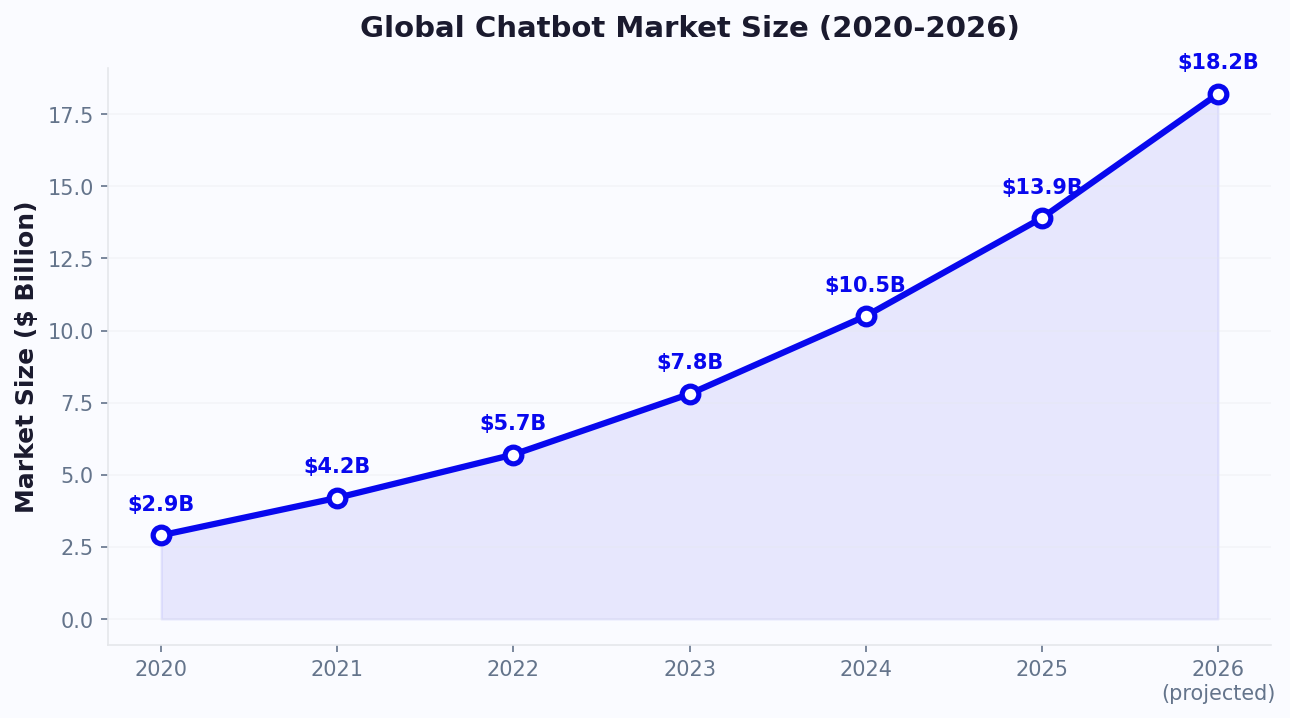
Chatbot adoption in education growing 28% year-over-year as institutions automate enrollment and support

Course Registration and Academic Advising Automation

Course enrollment is one of the most stressful periods in any academic calendar. Students scramble to secure seats in required classes, advisors are inundated with scheduling conflicts, and the registrar's office becomes a bottleneck that affects the entire institution. A course enrollment chatbot alleviates this pressure by guiding students through the registration process conversationally, answering questions in real time, and even executing enrollment actions when integrated with your student information system.

Imagine a student asking the bot, "What sections of BIO 201 are still open?" and receiving an instant, accurate list pulled directly from your SIS. The student selects a section, the bot checks prerequisites and schedule conflicts, and enrollment is confirmed -- all within a two-minute chat conversation. No portal navigation, no hold music, no email chains with an advisor. This is the experience today's students expect, and institutions that deliver it see measurable improvements in enrollment completion rates.

How Enrollment Chatbots Work

The bot connects to your student information system through Conferbot's integrations hub or a custom API. When a student initiates a conversation, the bot authenticates their identity (via student ID or SSO), retrieves their academic record, and provides personalized guidance. It can check degree audit requirements, suggest courses that fulfill general education or major requirements, and flag potential scheduling conflicts before they happen.

For institutions without API access to their SIS, the bot can still add tremendous value by serving as an intelligent FAQ layer. It answers questions about registration timelines, waitlist policies, credit-hour limits, and override request procedures. Staff can update the bot's AI knowledge base with each semester's specific details in minutes, keeping information current without rebuilding flows from scratch.

AI-Powered Course Recommendations

Beyond simple registration, the chatbot can function as an intelligent academic advisor. By analyzing the student's completed courses, declared major, GPA, and remaining degree requirements, the bot recommends an optimized schedule for the upcoming semester. It considers factors that human advisors often miss: course sequencing to avoid prerequisite bottlenecks, instructor rating data from student evaluations, time-of-day preferences, and balanced workload distribution. Students who follow AI-recommended schedules show 15% shorter time-to-degree completion compared to self-selected schedules.

Course Recommendation Accuracy

Recommendation MetricBefore ChatbotAfter ChatbotImprovement
Course match accuracy45% (self-selected)82% (AI-recommended)+82%
Course completion rate58%79%+36%
Prerequisite conflict rate15%2%-87%
Time to degree completion5.2 years (avg)4.4 years (avg)-15%
Learner satisfaction with recommendations3.1/5.04.4/5.0+42%

Waitlist Management and Registration Optimization

Waitlist management is another area where chatbots dramatically outperform traditional systems. When a seat opens in a waitlisted course, the bot instantly notifies the next student in line and gives them a limited time window to confirm enrollment -- typically 2-4 hours. If the student does not respond, the bot moves to the next person. This automated process fills open seats within hours rather than days, maximizing class utilization and reducing the frustration of students stuck on waitlists.

  • Waitlist management -- automatically notify students when a seat opens and process enrollment within minutes
  • Prerequisite checking -- prevent registration errors before they create downstream problems
  • Advisor scheduling -- integrate with calendar booking so students can book advising appointments when the bot identifies a complex situation
  • Cross-sell programs -- suggest minors, certificates, or continuing education offerings based on student interests
  • Schedule optimization -- help students avoid back-to-back classes across distant campus buildings, balance heavy and light course loads, and maintain consistent study time

Degree Audit and Academic Pathway Planning

One of the most underutilized capabilities of a course enrollment chatbot is degree audit integration. When connected to your student information system, the bot can show students exactly where they stand in their degree progress -- which requirements they have fulfilled, which remain, and what the most efficient path to graduation looks like. A student asking "How many credits do I need to graduate?" receives a personalized answer that accounts for their completed courses, in-progress registrations, and remaining requirements. This capability reduces advisor meeting volume for routine degree progress questions by 40-50% while giving students 24/7 access to information they previously could only get during a scheduled advising appointment.

The bot can also simulate "what if" scenarios: "What if I add a minor in Psychology?" or "What happens if I switch from Business Administration to Marketing?" The bot recalculates the remaining requirements, estimates the additional time to graduation, and highlights any courses that would count toward both paths. This instant scenario modeling helps students make informed decisions without the delay of scheduling and waiting for an advising appointment -- reducing major-change regret and the wasted credits that come with poorly informed decisions.

For graduate and professional programs, the chatbot handles the unique complexities of thesis requirements, comprehensive exams, clinical hours, and capstone projects. It tracks milestone deadlines, reminds students of committee formation requirements, and connects them with resources like the writing center, statistical consulting, or library research services at the moment they need them.

Explore our education chatbot templates to see pre-built enrollment flows you can customize for your institution in under an hour.
LMS Integration: Connecting Your Chatbot to the Learning Ecosystem

A chatbot that operates in isolation from your learning management system is leaving enormous value on the table. When your bot can read and write data from platforms like Canvas, Blackboard, Moodle, or Google Classroom, it becomes a true extension of the learning experience rather than just a support tool. Students interact with the bot to check grades, view upcoming assignments, access course materials, and even submit work -- all without switching between applications.

Conferbot's integrations hub supports connections to major LMS platforms through REST APIs and webhooks. Once connected, the bot can pull real-time data and trigger actions inside your LMS, creating a conversational layer that makes the learning ecosystem far more accessible.

LMS Integration Capabilities

LMS PlatformSupported ActionsIntegration MethodSetup Time
CanvasGrades, assignments, announcements, enrollmentsREST API + LTI2-4 hours
BlackboardGrades, course content, calendar eventsREST API + Building Block3-5 hours
MoodleGrades, quizzes, forums, completion trackingWeb Services API2-3 hours
Google ClassroomAssignments, classwork, announcements, rostersGoogle API + OAuth1-2 hours
D2L BrightspaceGrades, dropbox, quizzes, user progressValence API3-4 hours
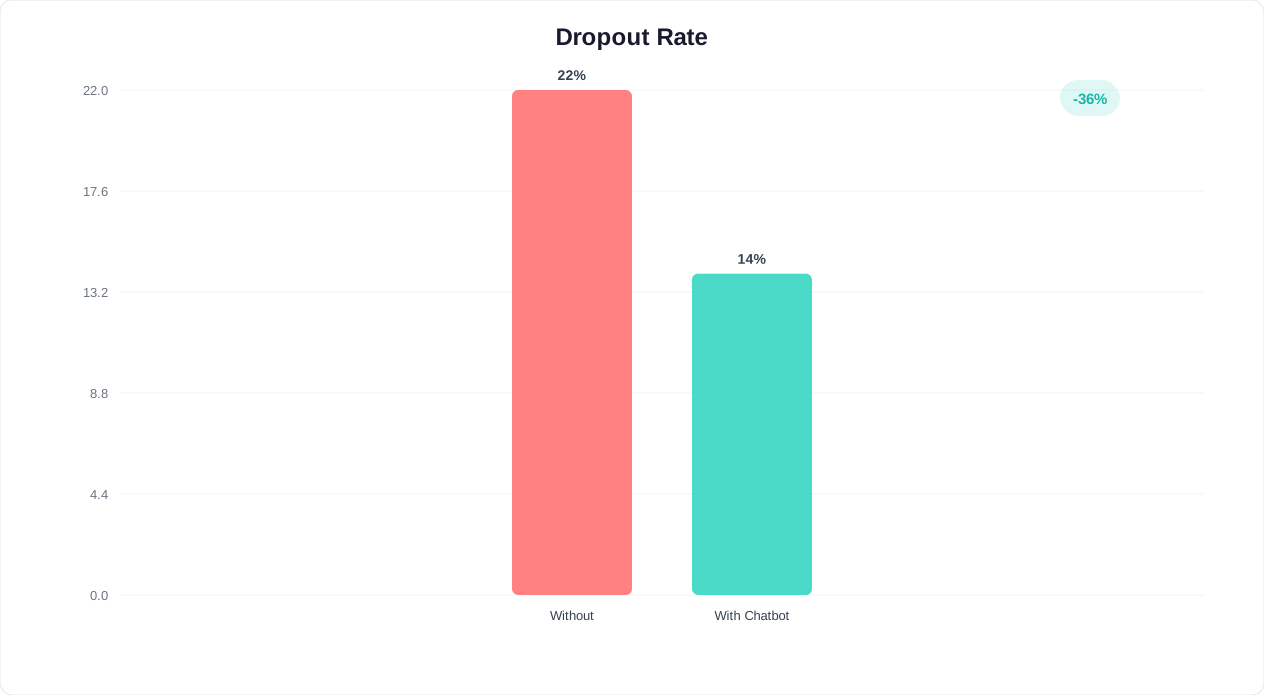
Student dropout reduction rates after chatbot deployment across different academic periods

💡 Key Insight

Institutions connecting chatbots to their LMS see a 35% reduction in IT help-desk tickets and a 20% improvement in assignment submission rates through proactive deadline reminders and instant grade lookups.

Dropout Intervention and Early Warning Systems

One of the highest-impact applications of an LMS-connected chatbot is dropout intervention. By monitoring student activity data -- login frequency, assignment submission patterns, grade trends, and discussion forum participation -- the bot identifies at-risk students weeks before traditional methods would flag them. When a student misses two consecutive assignments or has not logged in for five days, the bot sends a caring, non-judgmental check-in: "Hi Alex, I noticed you haven't submitted your Biology lab report yet. Everything okay? Here's a direct link to the submission page, and I can connect you with tutoring resources if you need help."

Dropout Intervention Metrics

Intervention MetricBefore ChatbotAfter ChatbotImprovement
At-risk student identificationMid-semester (manual)Week 2 (automated)-75% faster
Dropout rate (first year)28%18%-36%
Re-engagement after inactivity15%52%+247%
Assignment submission rate72%89%+24%
Advisor intervention success rate30%58%+93%

Real-World Use Cases

A community college in Texas connected their Conferbot chatbot to Canvas and saw a 35% reduction in help-desk tickets related to "Where do I find my grade?" and "When is the assignment due?" queries. Students simply ask the bot, and it returns the answer from Canvas in real time. Faculty benefit too -- the bot can push announcements, remind students about upcoming deadlines, and even nudge students who have not logged in for several days.

  • Grade inquiries -- "What is my current grade in English 102?" returns the live grade from the LMS
  • Assignment reminders -- proactive messages 48 and 24 hours before due dates
  • Course material access -- "Send me the Chapter 5 reading" delivers a direct link or file
  • Completion tracking -- advisors use bot reports to identify at-risk students early
  • Tutoring connections -- the bot detects struggling students based on quiz scores and proactively offers tutoring center hours and peer study groups

Faculty and Staff Productivity

LMS-connected chatbots benefit faculty as much as students. Professors who receive dozens of emails per day asking "When is the paper due?" or "What chapters are on the midterm?" can redirect students to the chatbot, which provides instant, accurate answers from the LMS data. Some institutions configure the bot to act as a teaching assistant for large lecture courses, answering syllabus questions, clarifying assignment instructions, and providing study resources. Faculty report saving 5-8 hours per week on administrative email when a chatbot handles routine student inquiries for their courses.

The bot can also assist with academic integrity by providing clear, consistent information about plagiarism policies, citation requirements, and academic honesty procedures. When students understand the rules before they submit work, violations decrease. When violations do occur, the bot can guide students through the appeal process and connect them with academic integrity officers -- ensuring fair, consistent treatment regardless of which department handles the case.

For institutional research departments, the aggregated data from LMS-connected chatbots provides unprecedented insight into student behavior and engagement patterns. Which courses generate the most chatbot questions? Which assignment types cause the most confusion? Which weeks of the semester see the highest dropout risk signals? This data informs institutional strategy, curriculum design, and resource allocation at a granular level that survey-based research cannot match.

Virtual Office Hours and Peer Tutoring

The chatbot can extend the concept of office hours beyond the traditional two-hours-per-week model that most faculty maintain. Students who have questions about course material at 10 PM the night before an exam do not have access to their professor, but they do have access to a chatbot that contains the course syllabus, lecture notes, study guides, and frequently asked questions. The bot provides an always-available first line of academic support that handles the straightforward questions ("Is Chapter 7 on the midterm?", "What citation format should I use?") and escalates complex academic questions to the professor's inbox with full context.

Some institutions are also using chatbots to facilitate peer tutoring connections. When a student expresses difficulty with a particular topic, the bot matches them with a peer tutor who has demonstrated mastery in that area. The match includes the tutor's available hours, subject expertise, and a direct booking link. This automated matching system increases peer tutoring utilization by 40-60% compared to traditional tutoring centers where students must physically visit an office to find help, and it democratizes access for students who cannot visit during the center's limited hours.

Integration does not have to be all-or-nothing. Many institutions start with read-only access (grades and schedules) and expand to write actions (enrollment, quiz submission) as confidence grows. Conferbot's visual flow builder lets you add new LMS-connected actions without touching code, so your team can iterate quickly based on student feedback.

Automating Corporate Training and Professional Development

Corporate training departments face a unique set of challenges that differ from traditional education but are equally well-suited to chatbot automation. Employees need onboarding materials, compliance certifications, skill development resources, and performance support -- often delivered across multiple locations, time zones, and languages. A training automation chatbot becomes the always-available learning concierge that meets employees exactly where they are.

The numbers tell a compelling story. Organizations spend an average of $1,280 per employee per year on training, yet completion rates for self-paced online courses hover around just 20-30%. The primary reason? Friction. Employees cannot find the right course, forget their LMS login, or simply do not have time to navigate a complex learning portal. A chatbot eliminates that friction by delivering training content directly within the tools employees already use -- Slack, Microsoft Teams, or your company intranet.

⚡ Efficiency Insight

Organizations using chatbot-delivered microlearning report 85-92% completion rates versus just 20-30% for traditional LMS modules -- a 3-4x improvement that transforms training ROI from questionable to undeniable.

Microlearning Delivery

Instead of requiring employees to sit through a 45-minute e-learning module, a training chatbot can deliver the same content as bite-sized microlearning -- short questions, quick tips, scenario-based challenges, and spaced-repetition quizzes sent throughout the day. Research shows that microlearning improves knowledge retention by up to 80% compared to traditional training formats. The chatbot tracks progress, adjusts difficulty based on performance, and sends reminders when it is time for a review session.

Training Delivery Method Comparison

Delivery MethodCompletion RateKnowledge RetentionCost per LearnerTime to Deploy
Chatbot Microlearning85-92%80%$15-$302-5 days
Traditional LMS Modules20-30%25-35%$50-$1504-8 weeks
Instructor-Led (In-Person)75-85%50-60%$200-$5002-6 weeks
Video-Based Self-Paced30-45%30-40%$40-$1003-6 weeks
Blended (Chatbot + Live)90-95%85%$75-$2001-3 weeks

Compliance Training Automation

Compliance training is the operational backbone of regulated industries, and it is also the area where chatbots deliver the fastest ROI. The bot can automatically assign required courses based on role and department, send deadline reminders, administer assessments, and generate completion certificates. Managers receive automated reports showing which team members are compliant and which need follow-up -- eliminating the manual tracking that consumes hours of HR time each quarter.

  • Onboarding acceleration -- new hires receive a structured chatbot-guided onboarding journey from day one through day 90
  • Skill gap analysis -- the bot assesses current competencies and recommends targeted courses
  • Certification tracking -- automated alerts when certifications are approaching expiration
  • Peer learning -- the bot connects employees with similar learning goals for study groups or mentorship
  • ROI measurement -- track completion rates, assessment scores, and time-to-competency through analytics dashboards
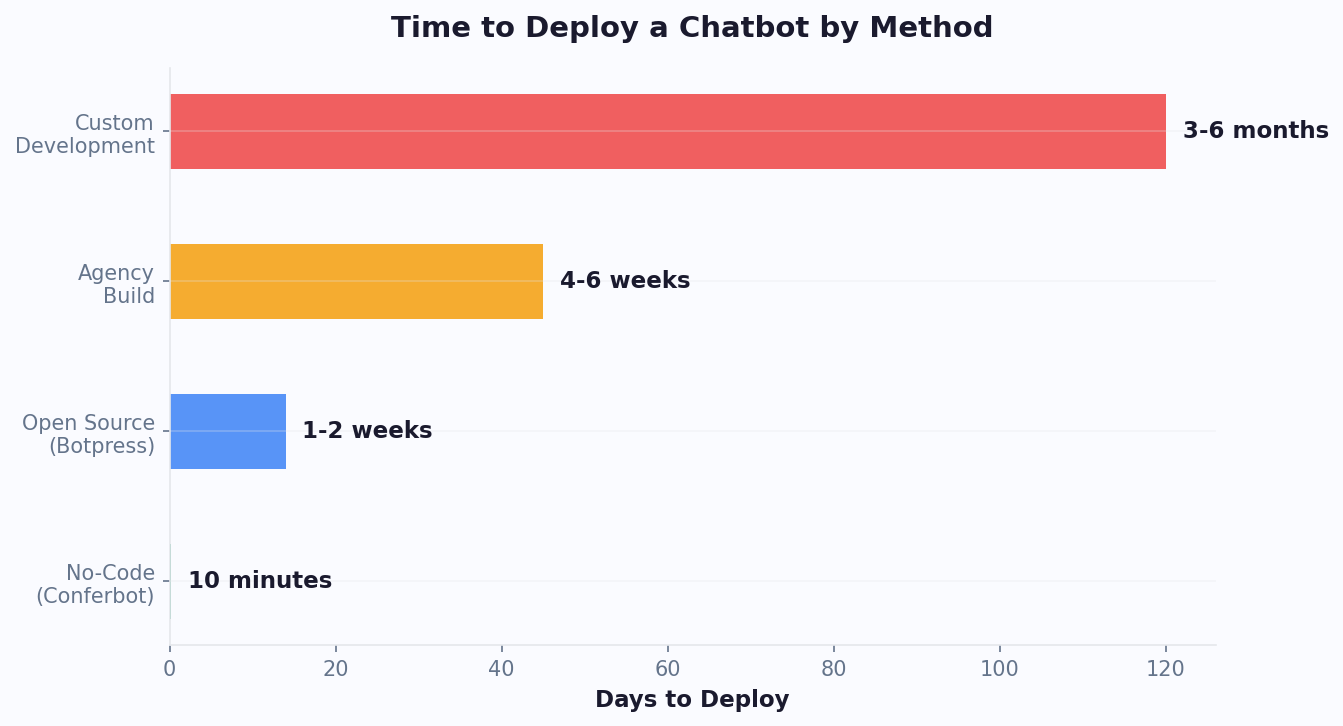
Training chatbot deployment takes days compared to weeks for traditional LMS rollouts

Conferbot's platform supports rich media within chat -- videos, PDFs, interactive cards, and quick-reply buttons -- making training conversations engaging rather than tedious. You can build entire certification programs as conversational flows, complete with branching paths that adapt based on the learner's responses. For organizations using external training platforms, our integrations hub connects to tools like Workday Learning, SAP SuccessFactors, and Cornerstone OnDemand to sync progress and completions bidirectionally.

Employee Onboarding Acceleration

New hire onboarding is where training chatbots deliver perhaps their most immediate ROI. The traditional onboarding process is a disorganized mix of orientation sessions, paperwork packets, IT setup guides, and introductory meetings spread across the first weeks. New employees feel overwhelmed, important steps are missed, and productivity ramp-up takes longer than necessary. A chatbot-guided onboarding journey provides a structured, personalized experience from day one through day 90.

On day one, the bot welcomes the new hire, verifies that their equipment and access are set up, walks them through company policies and compliance requirements, and introduces them to their team. Over the following weeks, the bot delivers role-specific training modules, checks comprehension through conversational quizzes, schedules introductory meetings with key stakeholders, and answers the hundreds of small questions that new employees are often too embarrassed to ask a colleague: "Where is the break room?" "How do I submit expense reports?" "What is the dress code for client meetings?"

Companies using chatbot-guided onboarding report that new hires reach full productivity 25% faster and report 30% higher satisfaction with the onboarding experience. HR teams save an average of 8-12 hours per new hire on administrative onboarding tasks, and the consistency of the chatbot experience ensures that every new employee receives the same thorough introduction regardless of which office they join or how busy their manager is during their first week.

Performance Support and Just-in-Time Learning

Training chatbots are evolving beyond structured learning programs into performance support tools that provide just-in-time knowledge at the moment of need. A sales representative about to walk into a meeting can ask the bot for a quick refresher on the client's industry. A customer service agent encountering an unfamiliar product issue can query the bot for troubleshooting steps while the customer is on the line. A manufacturing technician facing an equipment alarm can ask the bot for the correct response procedure. In each case, the bot delivers precisely the information needed to complete the task successfully, without requiring the employee to leave their workflow to search through documents or training materials.

This performance support model represents a fundamental shift in how organizations think about training. Instead of front-loading all knowledge into pre-employment or onboarding training (where 70% is forgotten within a week), the chatbot distributes learning across the entire employee lifecycle -- delivering information when it is most relevant and most likely to be retained. Organizations that implement performance support chatbots report 40-50% fewer training-related errors in operational tasks and a significant reduction in the time employees spend searching for information (estimated at 1.8 hours per employee per day in knowledge-intensive roles).

For regulated industries where compliance knowledge must be demonstrably current, the performance support chatbot provides a documented audit trail showing that employees accessed the correct procedures before performing regulated tasks. This documentation is invaluable during regulatory inspections and reduces the institution's compliance risk profile.

Read our complete chatbot building guide to see how companies are creating training bots that boost completion rates above 85% without any coding knowledge.

Multilingual Campus Communication and International Student Support

International students represent a significant and growing segment of higher education enrollment. In the United States alone, over 1.1 million international students contribute more than $40 billion to the economy annually. These students face unique challenges that domestic students do not: visa regulations, cultural adjustment, language barriers, and navigating unfamiliar administrative processes. A multilingual chatbot addresses these challenges at scale, providing support in students' native languages while maintaining consistent, policy-compliant information.

Traditional approaches to multilingual support -- hiring bilingual staff, translating documents, or offering periodic international student orientations -- are expensive and inherently limited. A chatbot built on Conferbot's platform can communicate in 50+ languages, automatically detecting the student's preferred language and responding accordingly. The underlying natural language processing engine understands intent regardless of language, ensuring that a question about tuition deadlines receives the same accurate answer whether asked in English, Mandarin, Spanish, Arabic, or Hindi.

Critical Use Cases for International Students

  • Visa and immigration guidance -- CPT/OPT timelines, I-20 requests, SEVIS registration steps, and travel signature requirements
  • Housing and campus life -- dormitory applications, meal plan options, campus safety resources, and local transportation
  • Financial aid for international students -- scholarship deadlines, payment plan options, and currency conversion information
  • Health insurance requirements -- enrollment in mandatory insurance plans, waiver processes, and clinic locations
  • Cultural integration -- campus events, student organizations, religious services, and community resources
  • Academic system orientation -- explaining credit hours, GPA scales, academic integrity policies, and office hours etiquette to students unfamiliar with the American higher education system
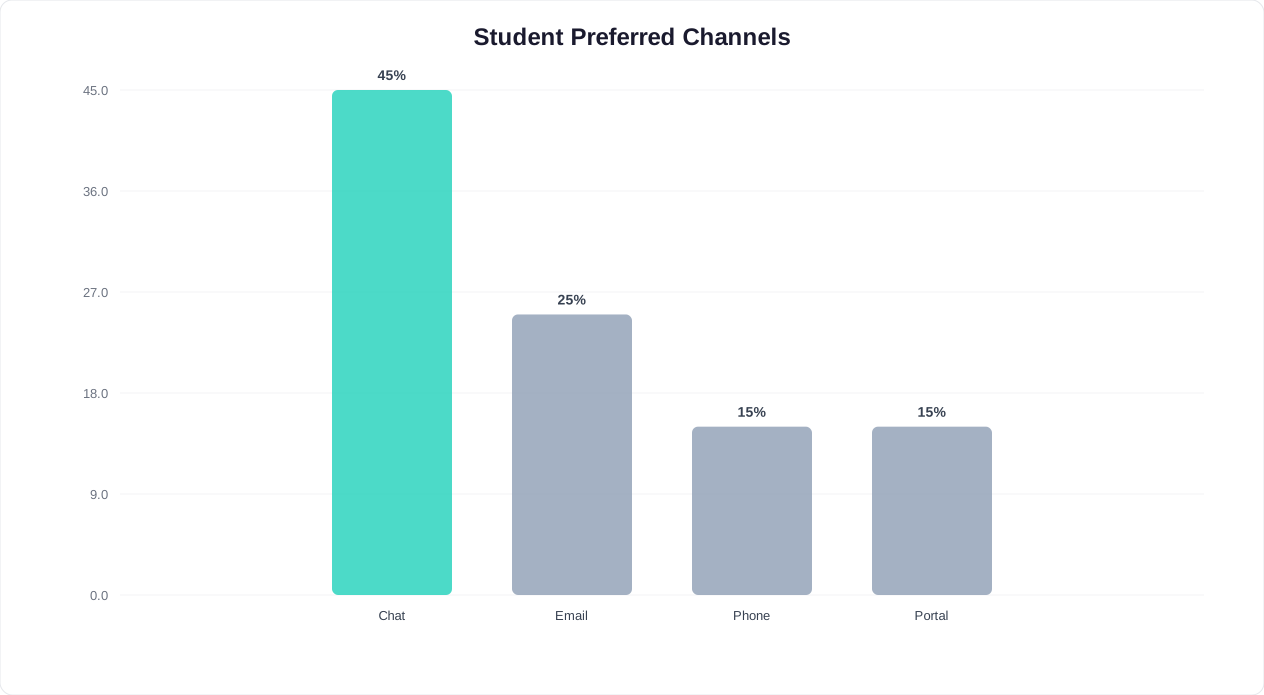
International student preferred communication channels showing chatbot and messaging dominance

📊 Performance Insight

Multilingual chatbots reduce international student service costs by 60-75% compared to hiring bilingual staff, while providing 24/7 support in 50+ languages that human staffing models cannot match.

Multilingual Support Impact by Language Group

Language Group% of Int'l StudentsTop InquiriesChatbot SatisfactionEngagement Lift
Mandarin/Chinese35%Visa, housing, tuition4.5/5.0+45%
Spanish18%Financial aid, enrollment4.4/5.0+40%
Hindi/South Asian15%OPT/CPT, academics4.3/5.0+38%
Arabic10%Cultural resources, health4.6/5.0+52%
Korean/Japanese12%Campus life, scheduling4.4/5.0+42%

Beyond Translation: Cultural Context

Effective multilingual support goes beyond word-for-word translation. The best education chatbots understand cultural context -- knowing that a student from Japan may phrase a request more indirectly than an American student, or that a student from Brazil may expect a warmer conversational tone. Conferbot's AI-powered conversations adapt not just the language but the communication style, creating an experience that feels natural and respectful regardless of cultural background.

Institutions can also use multilingual chatbots to support domestic non-English speakers -- a growing need as community colleges and public universities serve increasingly diverse local populations. Parents of first-generation college students, for example, may prefer to receive financial aid information in Spanish or Vietnamese. The bot makes this possible without requiring the financial aid office to hire multilingual counselors.

From an administrative perspective, multilingual chatbots generate valuable data about which languages are most in demand, which topics international students ask about most frequently, and where communication gaps exist. This data helps institutions make informed decisions about resource allocation -- whether that means adding a Mandarin-speaking advisor, creating targeted orientation materials in Arabic, or expanding housing options for students with specific cultural needs.

Parent and Family Communication

International student support extends beyond the student themselves. Parents -- who are often financing the education -- have their own questions about tuition payment schedules, visa sponsorship obligations, safety protocols, and academic progress. A multilingual chatbot allows parents to engage with the institution in their native language, even if their English proficiency is limited. A parent in Seoul can ask about their child's tuition balance in Korean. A family in Mexico City can inquire about scholarship renewal requirements in Spanish. This family-inclusive approach builds institutional loyalty and reduces the anxiety that drives many international students to transfer or return home.

The bot can also handle the logistical complexity of international payment processing. Tuition payments from overseas involve wire transfers, currency conversion, and different banking systems. The chatbot provides step-by-step wire transfer instructions in the family's language, including the institution's banking details, reference numbers, and expected processing times. This guidance reduces payment processing errors by 40-50% and eliminates the back-and-forth emails between families, international student offices, and bursar departments that consume hours of staff time each payment cycle.

Accessibility and Inclusive Design

Education chatbots serve an incredibly diverse user base -- students with visual impairments, hearing disabilities, learning differences, mobility limitations, and cognitive challenges. Conferbot's platform follows WCAG 2.1 AA standards with screen reader support, keyboard-only navigation, high contrast mode, adjustable text sizes, and content structured for assistive technology compatibility. The conversational format is inherently more accessible than complex web forms, drop-down menus, and multi-page applications that create barriers for many users.

For students with learning disabilities such as dyslexia, the chatbot's conversational format presents information in shorter, more digestible segments compared to dense web pages or lengthy PDF documents. Students with ADHD benefit from the guided, step-by-step conversation flow that maintains focus and prevents the overwhelm that comes from seeing all form fields at once. Students with anxiety disorders -- a growing population in higher education -- often prefer chatbot interaction over phone calls or in-person office visits because the digital format feels less intimidating and allows them to engage at their own pace.

Institutions that prioritize accessible chatbot design are not just meeting compliance requirements -- they are creating a competitive advantage. The 20% of students who self-identify as having a disability are more likely to enroll at and remain with institutions that demonstrate genuine commitment to inclusive communication. The chatbot becomes tangible proof of that commitment, available 24/7 in a format that adapts to each student's needs.

Campus Safety and Emergency Communication

Campus safety chatbots provide an additional layer of support during emergencies and everyday safety concerns. Students can report safety issues -- broken lighting, suspicious activity, accessibility barriers -- directly through the chatbot, which routes the report to the appropriate campus security or facilities team. During active emergencies (severe weather, lockdowns, building evacuations), the chatbot can push real-time updates to all students and staff who have interacted with it, supplementing traditional emergency notification systems with a conversational channel that many students check more frequently than email or SMS. Universities that deploy safety chatbots report faster incident reporting and higher student confidence in campus safety, which directly influences enrollment and retention decisions.

Learn how to set up multilingual flows in our chatbot building guide, or explore omnichannel deployment to deliver multilingual support across your website, WhatsApp, and Telegram simultaneously.

FAQ

Education Templates FAQ

Everything you need to know about chatbots for education templates.

🔍
Popular:

Chatbots provide instant answers to academic questions, assignment deadlines, grade lookups, and campus information 24/7. They reduce student services workload by 50-60% while improving student satisfaction through immediate responses. Students who engage with support chatbots show 15% higher course completion rates.

Yes. Conferbot integrates with Moodle, Canvas, Blackboard, Google Classroom, and Teachable. The chatbot displays course content, checks assignment status, shares grades, and sends deadline reminders — serving as a conversational interface to your existing learning management system without requiring platform changes.

Admissions chatbots engage prospective students instantly, answer program questions, guide application completion, and follow up on incomplete submissions. Institutions report 25-35% more completed applications and 20% shorter enrollment cycles because the bot eliminates friction at every step of the admissions funnel.

Conferbot's education and training templates are free to start. Paid plans with LMS integration, multilingual support, and analytics start at $29/month. Institutional plans with unlimited conversations, multi-department routing, and custom branding start at $99/month — far less than additional admissions staff.

Yes. Conferbot's education templates support 50+ languages with auto-detection, essential for institutions with international students and global training programs. Multilingual chatbots remove language barriers that cause 20-30% of international applicants to abandon enrollment and improve training accessibility for global teams.

Yes. The chatbot administers quizzes, knowledge checks, and assessments within the conversation. It provides instant feedback, tracks scores, and identifies knowledge gaps. Chatbot-delivered assessments see 40% higher completion rates than traditional online forms because the conversational format feels less intimidating.

The chatbot tracks training progress, administers certification exams, issues digital certificates upon completion, and sends renewal reminders. For compliance training, it maintains audit-ready records of who completed what and when. Automated certification management reduces administrative overhead by 60-70% for training departments.

Yes. Onboarding chatbots guide new hires through company policies, system setup, compliance training, and role-specific modules at their own pace. New employees who use onboarding chatbots reach full productivity 25% faster and report 30% higher satisfaction with the onboarding experience compared to manual processes.

Yes. Conferbot's education templates follow WCAG 2.1 AA standards with screen reader support, keyboard navigation, high contrast mode, and adjustable text sizes. The conversational format is inherently more accessible than complex forms, benefiting learners with cognitive, visual, and motor disabilities.

Institutions typically see 5-8x ROI within one enrollment cycle. A chatbot handling 5,000 monthly inquiries saves $50,000-$75,000 annually in staff costs. Add the revenue from increased enrollment completion rates (25-35% improvement) and reduced student churn (15% improvement), and the impact is transformative.

How to Use Education Chatbot Templates

अपना चैटबॉट सेट करने के लिए इन सरल चरणों का पालन करें education और इसे मिनटों में लाइव करें

🎯

1. Choose Your Template

Select from high-converting lead generation templates designed for your industry and use case.

📋

2. Customize Qualifying Questions

Modify questions to match your ideal customer profile and lead scoring criteria.

🔄

3. Set Up Lead Routing

Configure automatic lead distribution to your sales team based on qualification scores.

🔗

4. Integrate with Your CRM

Connect to HubSpot, Salesforce, or your preferred CRM for seamless lead management.

📊

5. Deploy and Monitor

Launch your chatbot and track conversion rates, lead quality, and ROI through our analytics dashboard.

हमारे टेम्पलेट्स क्यों चुनें Education ?

शुरुआत से निर्माण बनाम पेशेवर टेम्पलेट्स का उपयोग करने के लाभों की तुलना करें

Conferbot टेम्पलेट्स के साथ

  • 10 मिनट में तैनाती
  • सिद्ध रूपांतरण टेम्पलेट्स
  • उद्योग सर्वोत्तम प्रथाएं शामिल
  • उपयोग के लिए तैयार इंटीग्रेशन
  • निरंतर अपडेट और सुधार
  • 24/7 विशेषज्ञ सहायता
  • शुरुआत के लिए मुफ्त

शुरुआत से निर्माण

  • सप्ताह या महीनों का विकास
  • परीक्षण और त्रुटि दृष्टिकोण
  • कोई सिद्ध टेम्पलेट्स नहीं
  • जटिल इंटीग्रेशन सेटअप
  • निरंतर रखरखाव भार
  • सीमित सहायता संसाधन
  • उच्च विकास लागत

अपने को बदलने के लिए तैयार Education?

हजारों व्यवसायों में शामिल हों जो हमारे टेम्पलेट्स का उपयोग कर रहे हैं education वार्तालाप स्वचालित करने और परिणाम बेहतर बनाने के लिए