
Medication Reminder
Free Healthcare and Wellness Chatbot Template
Stay on top of your health with Conferbot’s Medication Reminder Assistant. Offering personalized reminders, real-time alerts, and comprehensive medication tracking, it helps patients adhere to their prescriptions and manage their well-being.


What Is a Medication Reminder Chatbot?
A medication reminder chatbot is a conversational AI tool that communicates with patients through their preferred messaging channel to deliver timely prescription reminders, track adherence, alert caregivers when doses are missed, and coordinate refill requests before prescriptions run out. Rather than relying on patients to remember complex multi-drug schedules independently — or on overburdened clinical staff to follow up manually — the chatbot maintains a persistent, personalized dialogue that supports each patient's adherence every day of treatment.
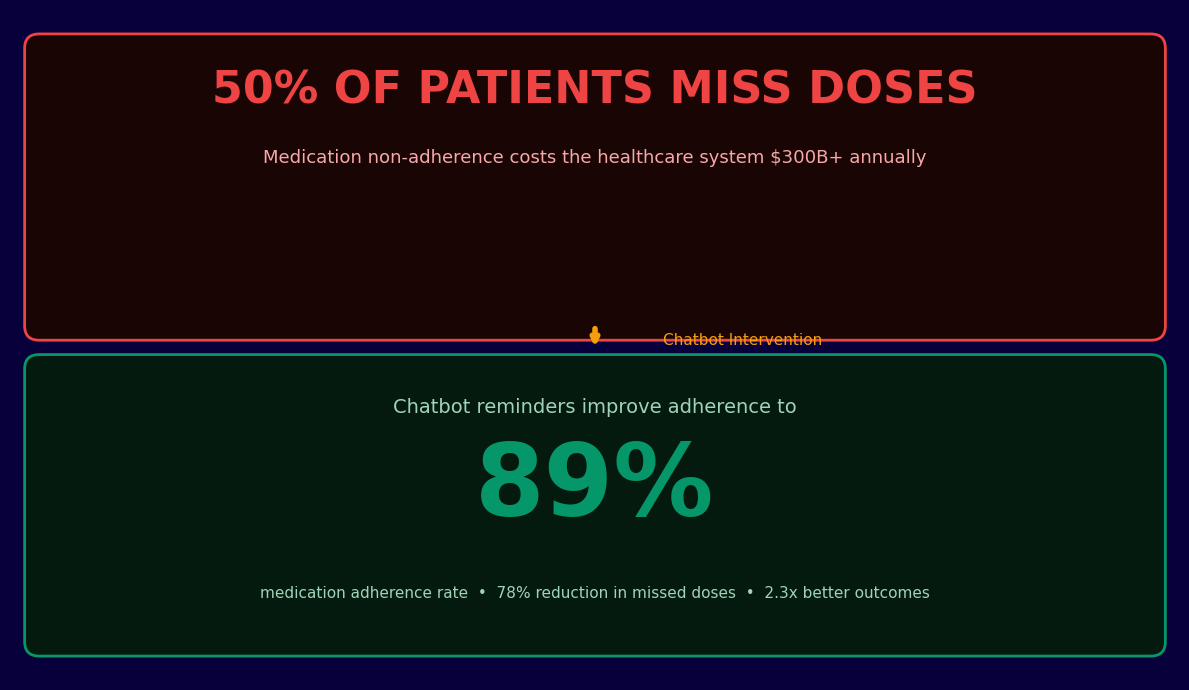
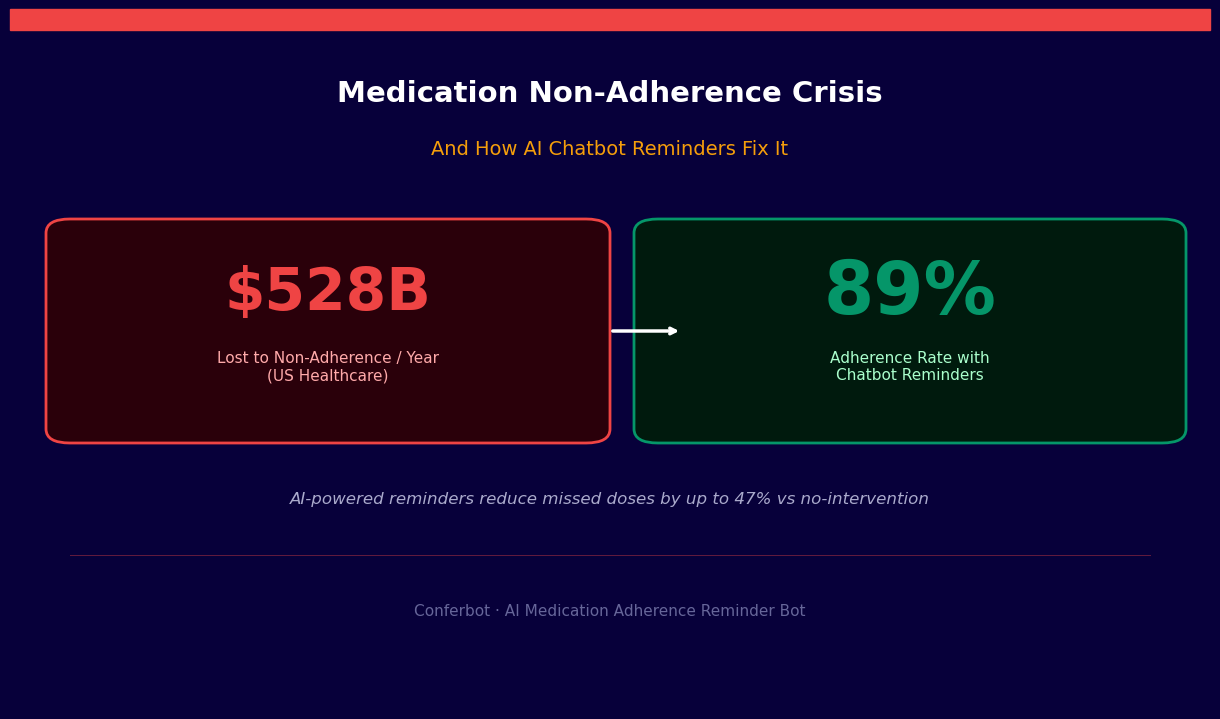
The scale of non-adherence is significant. Research estimates that approximately 50% of patients with chronic conditions do not take their medications as prescribed, contributing to roughly 125,000 preventable deaths and $100-300 billion in avoidable healthcare costs annually in the United States. For conditions where consistent drug levels are critical — hypertension, diabetes, epilepsy, HIV, and organ transplant immunosuppression — even occasional missed doses can produce serious clinical consequences.
Non-adherence is not primarily a motivation problem. The leading drivers are structural: complex multi-drug regimens that overwhelm working memory, refill gaps from running out over a weekend, asymptomatic conditions where patients feel no immediate consequence when they skip doses, and side effect avoidance where patients self-discontinue without informing their provider. A two-way chatbot conversation that confirms each dose and asks about side effects creates an early warning system that one-way push notifications cannot match. Deploy on your healthcare website or via WhatsApp to reach patients on the channels they already use daily.
How It Works: Schedule Setup, Multi-Channel Reminders, and Refill Alerts
The medication reminder chatbot operates through three interconnected processes: an initial schedule configuration that captures the patient's complete regimen, a real-time multi-channel reminder system, and a refill alert mechanism that initiates refill workflows before supply runs out.
Phase 1: Schedule Setup
The chatbot guides the patient through a structured onboarding conversation that captures each medication's name, dosage, dosing frequency, timing instructions, special requirements, prescribing provider, and current supply quantity. The conversation is designed for varying health literacy levels — technical drug names are supplemented with common names, and complex instructions are translated into plain language. Potential scheduling conflicts between medications are flagged for clinical review before the reminder schedule activates.
Phase 2: Multi-Channel Reminder Delivery
Each reminder is a two-way exchange, not a one-way push notification, delivered via Conferbot's omnichannel platform.
| Reminder Step | Chatbot Action | Patient Options | System Action |
|---|---|---|---|
| Scheduled reminder | Names the specific medication and dose | "Taken" / "Not yet" / "Skipped" | Logs response; follow-up if no reply in 30 min |
| Confirmation received | Acknowledges adherence; brief side effect check-in | "No issues" / "Mild" / "Serious concern" | Logs data; escalates if side effects reported |
| No response after 30 minutes | Sends gentle follow-up | "Taken now" / "Missed this dose" | Logs missed dose; triggers caregiver notification |
| Missed dose confirmed | Provides evidence-based late-dose guidance | Acknowledgment | Flags for clinical team if pattern emerges |
Phase 3: Refill Alert System
The chatbot tracks supply by counting confirmed doses against the dispensed quantity. When supply drops to a configurable threshold — typically 7-10 days remaining — it alerts the patient, offers to contact the pharmacy directly or send a refill request to the prescribing provider, and sends confirmation once the refill is processed. When integrated with pharmacy systems, unfilled prescriptions trigger an automatic patient contact after 48 hours. All interaction data is captured in Conferbot's chatbot analytics dashboard for clinical team review.
Key Features of the Medication Reminder Chatbot
A medication reminder chatbot serves patients who need support maintaining their regimen, caregivers who monitor dependents, clinical staff who need adherence visibility, and pharmacy teams who need refill coordination. The features below represent a complete production deployment on Conferbot's platform.
| Feature | Functionality | Patient Benefit | Clinical Benefit |
|---|---|---|---|
| Personalized Reminder Scheduling | Individual reminder times per medication in the regimen | Right medication, right time, every day | Accurate per-medication adherence data |
| Multi-Channel Delivery | WhatsApp, SMS, website chat, or voice | Reminders on the channel they actually use | Higher response rates across demographics |
| Two-Way Adherence Confirmation | Requests dose confirmation; logs patient response | Simple one-tap confirmation | Verified adherence vs. assumed adherence |
| Side Effect Monitoring | Brief side effect check-in at each reminder | Easy way to report concerns | Early detection of adverse reactions |
| Automated Refill Alerts | Counts doses against supply; initiates refill at threshold | Never runs out of medication | Fewer refill-gap adherence breaks |
| Missed Dose Protocols | Evidence-based guidance by medication class | Knows what to do if a dose is missed | Reduces unsafe self-management decisions |
| Caregiver Notifications | Alerts designated caregiver on missed doses or low supply | Family support without privacy intrusion | Safety net for high-risk patient populations |
| Clinical Escalation | Routes side effect reports and miss patterns to clinical staff | Concerns reach care team without a call | Actionable adherence intelligence in real time |
Not all missed doses carry equal clinical significance. For time-critical medications, a missed dose triggers immediate escalation; for less time-sensitive ones, the chatbot provides late-dose guidance and logs the event for pattern review. During schedule setup, the chatbot screens the full medication list against a drug interaction database and flags potential interactions for clinical review before the reminder schedule activates. Connect to Conferbot's NLP chatbot capabilities for intelligent medication name recognition across brand names, generics, and common patient misspellings.
Ready to try Medication Reminder?
Deploy this template in under 10 minutes. No coding required.
Use This Template Free →Integration With Pharmacy Systems and Electronic Health Records
A medication reminder chatbot that operates without connection to pharmacy and EHR systems requires manual schedule maintenance that quickly becomes outdated as prescriptions change. Integration with pharmacy management systems and EHR platforms creates a closed-loop medication management system where the chatbot's reminder schedule automatically reflects current, active prescriptions.
Pharmacy Management System Integration
The chatbot connects to pharmacy systems including Epic Willow Ambulatory, Surescripts, QS/1, PioneerRx, and Liberty Software via NCPDP and HL7 FHIR protocols. This enables four capabilities:
- Active prescription sync: When a prescriber sends a new prescription to the pharmacy, the chatbot initiates a schedule setup conversation with the patient before they even pick up the new medication — ensuring reminders are configured and dosing instructions are understood from day one.
- Dispensing event triggers: When a prescription is filled and ready, the chatbot notifies the patient. Prescriptions not picked up within 48 hours generate an automatic follow-up, reducing the common scenario where patients forget a filled prescription and miss doses while waiting to collect it.
- Refill request automation: When supply tracking reaches the refill threshold, a request is submitted directly to the pharmacy — bypassing the step where many non-adherent patients fail to contact the pharmacy independently.
- Prescription discontinuation: When a prescriber stops a medication, the integration removes it from the active reminder schedule, preventing confusing reminders for drugs the patient has been told to stop.
EHR Integration for Clinical Visibility
Adherence data integrates with Epic, Cerner, Athenahealth, Allscripts, and eClinicalWorks via FHIR R4 APIs, writing adherence observations directly to the patient chart. A provider reviewing a chart before a follow-up sees a structured adherence record — which medications have been consistently taken, which have been missed, and whether side effects were reported — without asking the patient to self-report. For remote patient monitoring programs, linking medication adherence data to RPM device readings through the omnichannel platform gives care teams the complete clinical picture needed for informed treatment decisions. Explore related healthcare tools in the healthcare and wellness templates library.
Medication Adherence Data: The Clinical and Cost Case in 2026
The case for medication reminder automation is grounded in well-established research on non-adherence rates and the measurable impact of reminder interventions. The data below synthesizes findings from clinical studies and pharmacy benefit manager analyses relevant to chatbot-based adherence programs.
Impact of Reminder Interventions
| Intervention Type | Avg. Adherence Improvement | Patient Engagement Rate | Cost per Patient/Month |
|---|---|---|---|
| No intervention (baseline) | Reference | N/A | $0 |
| Generic SMS reminder (one-way) | +8-12% | 15-25% response rate | $2-5 |
| Automated phone call reminder | +10-15% | 30-45% answer rate | $5-12 |
| Nurse-led phone follow-up | +20-30% | 60-75% engagement rate | $25-60 |
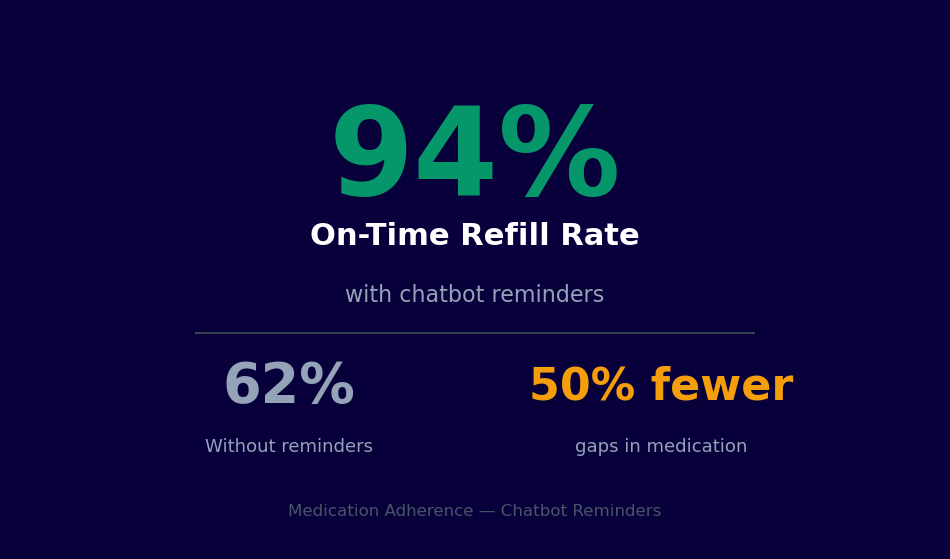
| Conversational chatbot reminder | +35-57% | 65-80% response rate | $3-8 |
The economic argument for chatbot investment is compelling at the health system level. The average cost of a preventable non-adherence-related hospitalization is estimated at $8,000-$15,000. A chatbot adherence program costing $5 per patient per month that prevents one hospitalization per 50 patients per year generates a 15-25x return on direct program cost. For payers in value-based care arrangements, this return materializes as reduced acute care utilization — the cost category that matters most in risk-bearing contracts.
Condition-Specific Outcomes
Chatbot-based reminder programs produce particularly strong results in chronic condition management. Hypertension patients show mean blood pressure reductions of 4-8 mmHg systolic compared to usual care controls — a clinically meaningful difference that reduces cardiovascular event risk by approximately 10-15% over five years. Diabetes patients show HbA1c improvements of 0.5-1.0 percentage points, representing a 10-20% reduction in long-term complication risk. Track adherence rates, response rates by channel, and missed dose patterns across your full patient population through Conferbot's chatbot analytics dashboard.
Use Cases: Chronic Disease Management, Elderly Care, and Post-Discharge
Medication reminder chatbots address adherence challenges universal to patients managing ongoing prescriptions, but the clinical context shapes configuration, escalation pathways, and optimal channels.
Chronic Disease Management Programs
Chronic disease patients — managing hypertension, type 2 diabetes, COPD, heart failure, or CKD — require adherence support for years or decades. The chatbot must sustain long-term engagement: reminder schedules that adapt as prescriptions change, periodic motivational check-ins that connect adherence to clinical outcomes, and proactive engagement when patterns signal potential self-discontinuation.
For patients managing multiple chronic conditions simultaneously — common in patients over 60 — the chatbot coordinates four to eight medications with different dosing frequencies and timing requirements. Without automation, this complexity produces adherence failures. With the chatbot managing scheduling, patients interact with a simple daily routine while all complexity is tracked by the clinical team. Population health management programs benefit from longitudinal adherence data that identifies the 20% of patients with consistently poor adherence, enabling care coordinators to prioritize outreach to the highest-risk individuals.
Elderly Care and Assisted Living
Older adults face compounded adherence challenges: cognitive changes affecting memory, physical limitations, polypharmacy, and social isolation. For elderly patients, the chatbot is configured for simplicity: plain language instructions, frequent confirmation of understanding, and caregiver notification as a standard feature. For assisted living facilities, the chatbot bridges nursing staff and patients' families — notifying family contacts when a patient misses doses without requiring constant phone check-ins. Voice channel deployment via smart speakers serves patients with visual impairments or limited smartphone literacy by delivering reminders verbally and accepting spoken confirmation.
Post-Discharge Medication Management
The 30 days following hospital discharge represent the highest-risk period for non-adherence and preventable readmission. The chatbot initiates contact within 24 hours of discharge, confirms all prescribed medications have been filled, configures reminder schedules for new drugs, and maintains daily engagement for the first 30 days. Post-discharge programs using conversational follow-up report 20-35% reductions in 30-day readmission rates for conditions where medication adherence is a primary readmission driver. Deploy via WhatsApp for patients who respond better to messaging than phone calls. Review pricing plans for your care setting.
50,000+ businesses use Conferbot templates to automate conversations
Setup Guide: Deploying Your Medication Reminder Chatbot
Deploying a medication reminder chatbot is a three-to-five day process for organizations using standard EHR and pharmacy integrations. With Conferbot's Medication Reminder template, practice managers or clinical informatics teams can complete a full deployment without custom software development.
Day 1: Clinical Configuration and Medication Database Setup
Select the Medication Reminder template from Conferbot's library and configure clinical parameters for your practice. Define missed-dose protocols by medication class: which medications trigger immediate escalation when missed, which generate a caregiver notification, and which receive standard late-dose guidance. Import your medication reference database for drug name recognition and interaction screening. Define side effect reporting categories relevant to your patient population and configure the escalation pathway for each severity level — immediate nursing alert, provider message, or next-appointment flag.
Day 2: EHR and Pharmacy System Integration
Connect to your EHR via FHIR R4 API using the pre-built connectors for Epic, Cerner, Athenahealth, or your platform. Configure which data elements write back to the patient chart: adherence observations, missed dose events, side effect reports, and refill requests. Connect to your pharmacy management system or pharmacy benefit manager for dispensing event triggers and refill automation. Test bidirectional data flow with synthetic patient records before proceeding to live enrollment.
Day 3: Channel Setup and Caregiver Notification Configuration
Configure delivery channels — deploy on your healthcare website or patient portal for web interactions, and activate WhatsApp or SMS for mobile-first patients. Set caregiver notification parameters: which missed-dose scenarios trigger alerts, timing thresholds, and what information is included. Configure the caregiver consent and enrollment flow — caregivers must opt in and be authorized by the patient before receiving any notification.
Days 4-5: Patient Enrollment Workflow, Testing, and Go-Live
Build the patient enrollment conversation for staff-assisted or self-service use. Conduct pilot enrollment with five to ten patients to verify end-to-end workflow. Run test scenarios covering new patients, existing patients with known prior adherence issues, and caregiver notification triggers. Go live with your initial cohort and establish baseline metrics in Conferbot's analytics dashboard — adherence rates, response rates by channel, missed dose frequency, and refill alert lead time adequacy. Schedule a 30-day clinical review to adjust missed-dose thresholds based on observed patterns.
Caregiver Notifications: Supporting the Care Network Around Every Patient
Medication adherence does not happen in isolation. For elderly individuals, patients with cognitive impairment, pediatric patients, and those managing serious chronic illness, a caregiver plays an active role in medication management. A chatbot that communicates only with the patient misses this critical support network. Conferbot's caregiver notification system extends adherence support to the people surrounding the patient, creating a coordinated care network without imposing administrative burden on clinical staff.
Privacy-First Caregiver Enrollment
Caregiver notifications require explicit patient consent. The chatbot enforces a strict consent-first architecture: no caregiver receives notifications without patient authorization. During enrollment, the patient designates a caregiver contact and specifies exactly which events trigger notifications — specific medications, missed-dose thresholds, refill alerts, or side effect reports. Patients can modify or revoke caregiver access at any time through the chatbot interface. All configurations are logged for compliance documentation.
Notification Content and Escalation Levels
| Scenario | Notification Timing | Content | Recommended Action |
|---|---|---|---|
| Single missed dose (standard) | 2 hours after scheduled time with no confirmation | Patient may have missed their dose | "You may want to check in with them." |
| Single missed dose (high-alert medication) | 30 minutes after scheduled time | Patient has not confirmed a critical medication | "Please check in immediately or contact care team." |
| Three consecutive missed doses | After third consecutive miss | Pattern of missed doses; care team notified | "Please discuss adherence with patient and provider." |
| Refill threshold reached | 7-day supply remaining | Medication supply is running low | "Confirm a refill request has been submitted." |
| Side effect reported | Immediately upon patient report | Patient reported a medication concern | "Care team notified. Consider following up." |
Family Care Coordination for Elderly Patients
For elderly patients whose care is coordinated by adult children or other family caregivers, the chatbot becomes a communication layer between the patient and their care network. A family caregiver in a different city can receive daily adherence summaries — simple confirmation that their parent took all scheduled medications — without requiring daily phone calls that may feel intrusive to the patient. For dementia and early Alzheimer's patients, the chatbot's interaction logs provide an objective adherence record that supplements unreliable patient self-report. Deploy across all relevant channels through Conferbot's omnichannel platform and start building your patient adherence program with Conferbot's AI chatbot builder.
Medication Reminder FAQ
Everything you need to know about chatbots for medication reminder.
Why Use a Template vs Building from Scratch?
Templates encode years of optimization data into the conversation flow before you start.
| Factor | Conferbot Template | Build from Scratch | Hire a Developer |
|---|---|---|---|
| Time to deploy | 10 minutes | 2-8 hours | 2-6 weeks |
| Cost | Free | Your time | $5,000-$25,000 |
| Day-1 conversion | 15-22% | 5-8% | 10-15% |
| Proven flows | Yes, data-tested | No | Depends |
| Updates included | Automatic | Manual | Paid |
| Multi-channel | 8+ channels | 1 channel | Extra cost |
| Analytics | Built-in | Must build | Extra cost |
Related Healthcare and Wellness Templates
Explore more chatbot templates in this category




Ready to Deploy Medication Reminder?
Join 50,000+ businesses. Free forever plan available. No credit card required.