Why Medical Spas Need a Chatbot in 2026
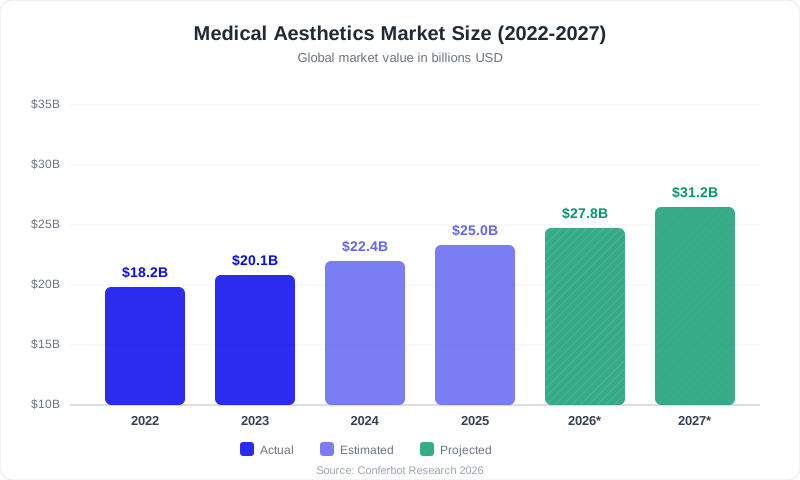
The medical aesthetics industry is experiencing explosive growth. The global market reached $18.2 billion in 2022 and is projected to exceed $30 billion by 2027, driven by the normalization of non-surgical cosmetic treatments, the rise of preventive aesthetics among younger demographics, and expanding access through non-physician injectors. In the United States alone, more than 7.4 million Botox procedures and 3.4 million dermal filler procedures are performed annually, according to the American Society of Plastic Surgeons. Medical spas are at the center of this boom, capturing a growing share of the aesthetics market that was once dominated by plastic surgery practices and dermatology clinics.
But this growth comes with intense competition. The number of medspas in the United States has grown from roughly 5,400 in 2018 to more than 9,200 in 2025 — a 70% increase in seven years. In major metropolitan areas, patients may have 20 or more medspas within a 15-mile radius, all offering similar treatments at comparable price points. In this competitive landscape, the medspa that delivers the smoothest, most informative, and most convenient patient experience wins the booking. And increasingly, that experience starts with a chatbot.
The medspa patient journey is fundamentally different from other healthcare or beauty service interactions. Patients are making decisions that affect their physical appearance — decisions that carry emotional weight, financial significance, and medical considerations. They research extensively before committing: reading reviews, viewing before-and-after photos, comparing pricing, and seeking reassurance that the treatment is safe and appropriate for their specific concerns. This research phase typically spans 2 to 4 weeks and happens predominantly during evenings and weekends when clinics are closed. Without an always-available digital assistant, the high-intent moments when patients are actively researching and ready to commit result in voicemails, contact form submissions that sit unanswered until Monday morning, and abandoned website visits.
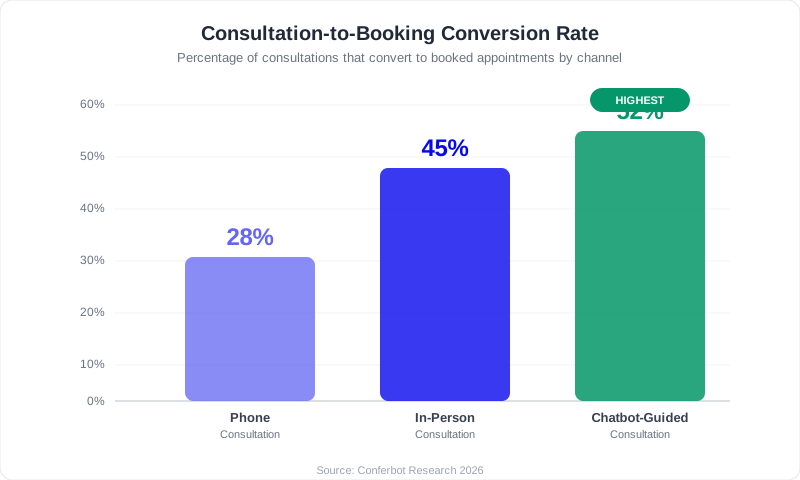
A medical spa chatbot transforms this dynamic. It engages patients the moment they arrive on your website or message your clinic on Instagram, answers their treatment questions with clinical accuracy, provides transparent pricing, addresses safety concerns, collects medical history for pre-screening, and converts their research session into a confirmed appointment — all without a single phone call. Medspas that deploy chatbots report consultation-to-booking conversion rates of 52% compared to 28% for phone-based consultations, because the chatbot is available when patients are ready, provides the information they need without judgment or pressure, and eliminates the friction of phone tag and voicemail.
This guide covers everything medical spa owners and operators need to know about implementing a chatbot: automating Botox and filler consultations, recommending treatments by skin concern, providing transparent pricing, delivering before-and-after care instructions, selling membership programs, managing photo consent workflows, and measuring the return on investment. Whether you run a single-provider boutique medspa or a multi-location aesthetics brand, a chatbot scales your patient communication capacity while maintaining the personalized, consultative experience that medical aesthetics patients expect.
The Medical Spa Industry Landscape: Opportunities and Communication Challenges
Understanding the unique dynamics of the medspa industry is essential for designing a chatbot that genuinely solves operational problems. Medical spas operate at the intersection of healthcare regulation -- an industry that Grand View Research values at over $15 billion -- and consumer service expectations, creating communication challenges that are distinct from either traditional healthcare or traditional beauty services.
The Consultation Bottleneck
Unlike a hair salon where a client books a haircut and shows up, medspa patients almost always need a consultation before treatment. First-time Botox patients want to understand what the treatment involves. Filler patients want to know which product is right for their concern. Laser patients need to understand the number of sessions and the recovery process. This pre-treatment consultation is essential for patient safety and satisfaction, but it creates a bottleneck in the booking process. Every inquiry requires a knowledgeable staff member to answer questions, often over multiple phone calls or emails, before the patient is ready to book. A chatbot handles this entire pre-consultation education phase automatically, so that when the patient arrives for their appointment, they are informed, prepared, and ready to proceed.
The After-Hours Research Problem
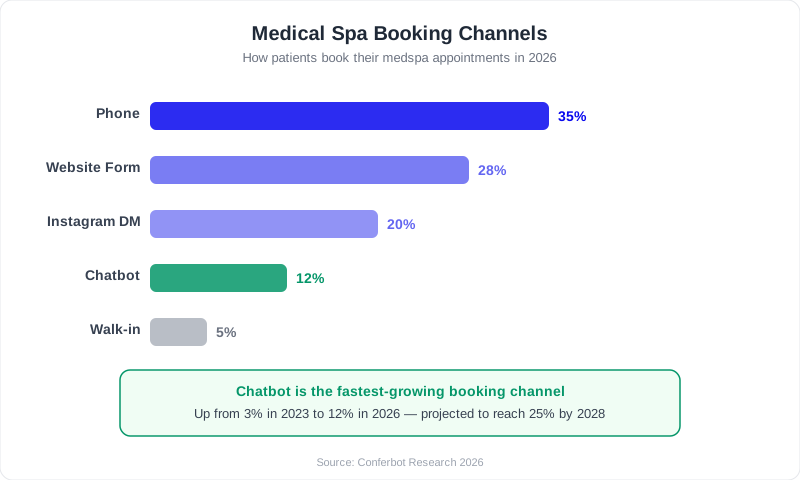
Medspa patient behavior follows a distinctive pattern: they become interested in a treatment during the day (seeing a friend's results, scrolling Instagram, noticing a new line in the mirror), but they research and make decisions during the evening. Data from medspa website analytics consistently shows that 60 to 70 percent of treatment research happens between 7 PM and midnight. During these hours, clinics are closed, phones go to voicemail, and live chat agents are offline. The chatbot is the only solution that provides the same quality of consultation at 10 PM on a Saturday that a patient would receive at 2 PM on a Tuesday. Every after-hours interaction that converts to a booking represents revenue that would have been lost without the chatbot.
The Pricing Transparency Dilemma
Pricing is the most sensitive topic in medspa marketing. Many clinics refuse to publish prices, fearing that patients will choose solely on price without understanding the value differences between providers. However, research from multiple medspa marketing studies shows that 72% of prospects will leave a website that does not display pricing and find a competitor who does. The chatbot resolves this dilemma by providing pricing within a consultative context. By the time the patient sees the price, they have already learned about the treatment, understood the provider's qualifications, and received a personalized recommendation. This contextual pricing delivery combines transparency with value communication, satisfying the patient's need for information without reducing the decision to price alone.
The Trust and Safety Barrier
Medical aesthetic treatments involve injecting substances into the face, directing energy-based devices at the skin, and altering physical appearance. The stakes are higher than a bad haircut. Patients need to trust that the provider is qualified, the products are authentic, the facility is safe, and the treatment is appropriate for their anatomy and goals. Building this trust has traditionally required an in-person consultation, but the chatbot accelerates trust-building by demonstrating clinical knowledge, answering safety questions thoroughly, sharing provider credentials, and setting realistic expectations. Patients who have interacted with a knowledgeable chatbot arrive at their consultation with higher baseline trust than patients who booked based on a phone call or website form alone.
The Treatment Complexity
A typical medspa menu includes 20 to 40 distinct treatments across injectables, laser and energy-based devices, skincare treatments, body contouring, and wellness services. Many patients cannot distinguish between treatments that sound similar. What is the difference between Morpheus8 and Ultherapy? When should someone choose microneedling over a chemical peel? Is CoolSculpting or Emsculpt better for their goals? This treatment complexity overwhelms patients browsing a static website menu and often leads to no action at all. The chatbot simplifies this complexity through guided, concern-based navigation that leads patients to the right treatment without requiring them to understand the entire menu.
Automating Treatment Consultations: From Skin Concern to Personalized Recommendation
Treatment consultation automation, guided by standards from the American Med Spa Association (AmSpa), is the highest-value function of a medspa chatbot. This is where the chatbot directly generates revenue by converting curious visitors into booked patients through an intelligent, guided conversation that replicates the expertise of an experienced patient coordinator.
The Concern-Based Approach
Traditional medspa websites present treatments organized by category: injectables, lasers, skincare, body. This organization makes sense to clinicians but not to patients. A patient does not wake up thinking 'I need a 1064nm Nd:YAG laser treatment.' They think 'I hate these brown spots on my face.' The chatbot starts where the patient starts — with their concern — and works backward to the treatment. The guided assessment asks the patient about their primary concern, the specific area, their skin type and tone, previous treatment experience, and their goal. Based on these answers, the chatbot recommends 2 to 3 treatments that match their profile, with clear explanations of what each involves, the expected results, the number of sessions needed, and the price.
Injectable Consultations
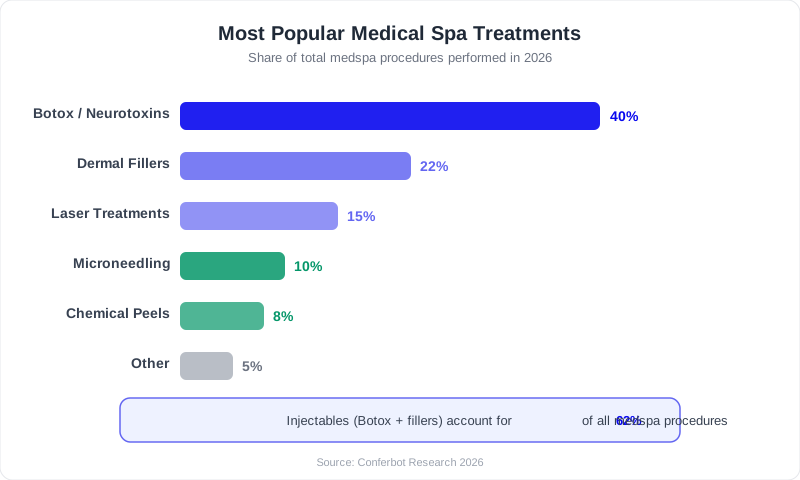
Injectables represent the majority of medspa revenue and patient inquiries. The chatbot handles the most common injectable questions with clinical accuracy. For neurotoxins (Botox, Dysport, Xeomin), it explains how each product works, the typical units needed per treatment area (forehead 10 to 30 units, crow's feet 12 to 24 units, frown lines 20 to 40 units, bunny lines 5 to 10 units, lip flip 4 to 6 units), the onset time, the duration of results, and the per-unit pricing. For dermal fillers, it distinguishes between hyaluronic acid fillers (Juvederm, Restylane, RHA) and biostimulatory fillers (Sculptra, Radiesse), explains which products work best for specific areas (lips, cheeks, under-eyes, jawline, nasolabial folds), the typical number of syringes needed, how long each product lasts, and the per-syringe or per-treatment pricing.
The chatbot also handles comparison questions that patients frequently ask: 'What is the difference between Botox and Dysport?' 'Should I get Juvederm or Restylane for my lips?' 'Is Sculptra better than filler for volume loss?' These comparison responses are written by the clinical team to ensure accuracy and to reflect the practice's product preferences and protocols. Patients who receive detailed injectable education through the chatbot before their consultation are 40% more likely to proceed with treatment the same day rather than leaving to think about it, because the education phase has already addressed their questions and concerns.
Laser and Device Treatment Consultations
Laser and energy-based device treatments are the fastest-growing segment of the medspa market, but they are also the hardest to sell through traditional channels. Patients are intimidated by device names (Morpheus8, Fraxel, BBL, Halo, CoolSculpting), uncertain about pain levels and recovery, and confused about which device addresses their concern. The chatbot demystifies these treatments through a guided conversation. For skin resurfacing, it explains the spectrum from gentle treatments (microneedling, light chemical peels) to aggressive treatments (CO2 laser, deep chemical peels), helping the patient understand where their concern falls on that spectrum and which level of treatment is appropriate. For body contouring, it distinguishes between fat reduction (CoolSculpting, Kybella) and muscle toning (Emsculpt) and helps the patient identify which is right for their goal.
Setting Realistic Expectations
Unrealistic expectations are the number one source of patient dissatisfaction in medical aesthetics. Social media filters, heavily edited before-and-after photos, and celebrity culture create impossible standards that no treatment can achieve. The chatbot plays a critical role in setting realistic expectations before the patient books. It communicates that Botox takes 3 to 7 days to show full results and lasts 3 to 4 months. Fillers have initial swelling that subsides over 1 to 2 weeks, and optimal results may require 2 or more syringes. Laser treatments require a series of 3 to 6 sessions for best results, and each session has recovery time. Collagen-stimulating treatments like Sculptra and Radiesse show gradual improvement over 2 to 3 months. This expectation-setting reduces post-treatment dissatisfaction, negative reviews, and the support burden of patients who call wondering why they do not look like the Instagram photos immediately after their first session.
Treatment Combination Recommendations
The best aesthetic outcomes typically come from combining treatments. A patient concerned about aging might benefit from Botox for dynamic wrinkles, filler for volume restoration, and a skin resurfacing treatment for texture and tone. The chatbot introduces combination approaches during the consultation: 'For comprehensive facial rejuvenation, many of our patients achieve the most natural results with a multi-treatment approach. Our providers can create a customized treatment plan during your consultation that may combine injectables with skin treatments for optimal results.' This plants the seed for higher-value treatment plans while framing combination treatment as genuinely better for the patient, not just more expensive. For more on how chatbots drive treatment plan upselling, see our guide on AI chatbot upselling and cross-selling strategies.
Before and After Care Instructions: Reducing Complications and Building Trust
In medical aesthetics, pre-treatment preparation and post-treatment aftercare are not optional -- as the American Academy of Dermatology emphasizes -- extras — they directly affect treatment outcomes, patient safety, and complication rates. A patient who takes aspirin before filler may bruise extensively. A patient who exercises after Botox may experience product migration. A patient who suns after laser treatment risks permanent hyperpigmentation. The chatbot ensures that every patient receives, reads, and acknowledges the correct care instructions for their specific treatment at the right time in their patient journey.
Pre-Treatment Preparation Protocols
The chatbot sends treatment-specific preparation instructions at two intervals: 7 days before and 24 hours before the appointment. The 7-day instructions address medication changes and behavioral modifications that need advance planning. The 24-hour reminder reinforces the most critical preparation steps and sets expectations for the appointment day.
For neurotoxin treatments (Botox, Dysport, Xeomin), the 7-day instructions include discontinuing blood-thinning supplements (fish oil, vitamin E, ginkgo biloba) with physician approval, avoiding aspirin and ibuprofen, and beginning Arnica supplements if desired to reduce bruising risk. The 24-hour reminder includes avoiding alcohol, arriving with a clean face, and eating a light meal before the appointment.
For dermal filler treatments, the preparation is similar but more extensive: all blood-thinning medications and supplements should be stopped 7 days prior, dental work should be completed before the appointment or postponed for 2 weeks after (due to infection risk with hyaluronic acid fillers near the mouth), and the patient should plan to arrive 15 minutes early for numbing cream application.
For laser and energy-based treatments, the preparation protocol varies significantly by device and treatment intensity. The chatbot delivers the appropriate protocol: avoid sun exposure for 2 to 4 weeks before treatment, discontinue retinoids and photosensitizing medications 5 to 7 days before, shave the treatment area if applicable, and arrive with completely clean skin — no makeup, lotion, sunscreen, or skincare products on the treatment area.
Post-Treatment Aftercare Delivery
Immediately after the appointment, the chatbot sends the patient a complete aftercare guide for their specific treatment. This guide is formatted in clear, numbered steps that the patient can reference at any time. For Botox: do not lie down for 4 hours, do not rub or massage the treated area for 24 hours, avoid strenuous exercise for 24 hours, avoid facials and facial massage for 2 weeks, expect results to develop over 3 to 7 days. For fillers: apply ice wrapped in a cloth for 15 minutes on, 15 minutes off during the first 24 hours, sleep with your head elevated the first night, avoid strenuous exercise for 24 to 48 hours, avoid extreme heat (sauna, hot yoga) for 2 weeks, contact the clinic immediately if you experience severe pain, vision changes, or skin blanching. For laser treatments: apply the provided recovery balm as directed, avoid direct sun exposure for 4 to 6 weeks, use SPF 50 or higher every day (reapply every 2 hours when outdoors), do not pick at any crusting or peeling skin, expect redness similar to a sunburn for 3 to 7 days depending on treatment intensity, and avoid active skincare ingredients (retinol, AHAs, BHAs, vitamin C) until cleared by your provider.
Automated Follow-Up Check-Ins
The chatbot's post-treatment follow-up sequence is one of its most valuable features for both patient satisfaction and rebooking. At Day 1 post-treatment, the chatbot checks in: 'How are you feeling after your treatment? Any concerns about swelling, bruising, or discomfort?' If the patient reports normal post-treatment symptoms, the chatbot provides reassurance. If the patient describes anything unusual, the chatbot escalates to the clinical team immediately. At Day 7, the chatbot asks about early results and provides guidance on what to expect as healing continues. At Day 14, the chatbot assesses satisfaction and creates a natural rebooking moment: 'Two weeks post-treatment is a great time to see your results. Are you happy with what you see? This is also the perfect time to schedule your next maintenance session — would you like to see available appointments?' This automated sequence reduces post-treatment phone calls by 60 percent while actually increasing patient satisfaction scores because patients feel monitored and cared for. For a deeper dive into how chatbots automate appointment follow-ups, read our guide on appointment scheduling chatbots.
Membership Programs and Revenue Optimization: Building Predictable Income
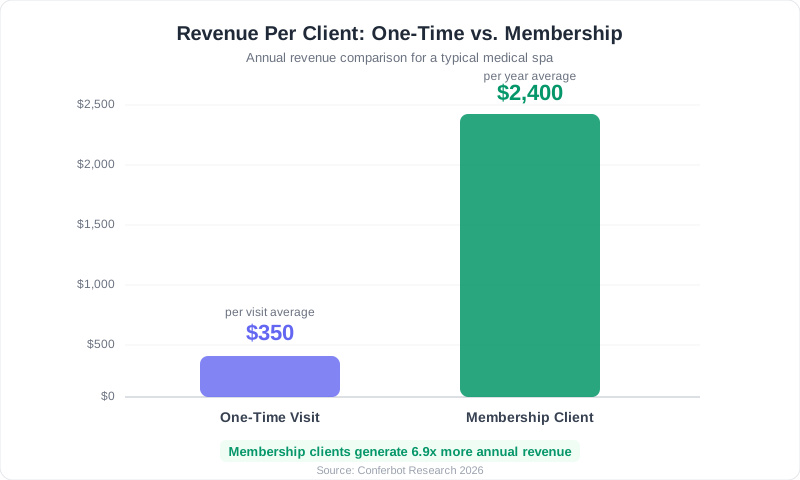
Membership programs represent the biggest financial opportunity most medspas underutilize. The difference in patient lifetime value between a walk-in patient and a membership patient is staggering. A typical walk-in Botox patient visits 2 to 3 times per year, spending $350 to $500 per visit, for an annual revenue of $700 to $1,500. A membership patient at a well-structured medspa generates $2,400 or more annually through monthly dues, included treatment credits, discounted add-on treatments, and retail product purchases.
Why Chatbots Sell Memberships Better Than Front Desk Staff
The membership sales challenge is not that patients do not want memberships — it is that the membership conversation rarely happens effectively. Front desk coordinators are busy checking patients in, answering phones, and managing the schedule. They mention the membership program in passing: 'We also have a membership program if you are interested.' The patient says 'Maybe next time,' and the conversation never happens again. Even when the coordinator has time for a proper membership pitch, it feels like a sales pitch, and patients resist.
The chatbot transforms this dynamic. It presents the membership program within a natural conversation flow, typically after the patient has expressed interest in a treatment that they plan to repeat. The timing is perfect: 'Since you are planning to get Botox regularly, you might want to learn about our membership program. Members save 25 to 35 percent on every treatment. Would you like to see how much you could save based on your treatment goals?' This approach is informative rather than salesy, and the patient controls the pace of the conversation.
Personalized Value Demonstration
The chatbot's most powerful membership conversion tool is the personalized savings calculator. Instead of presenting a generic brochure, the chatbot asks the patient about their planned treatment routine: 'How often do you plan to get Botox? Are you interested in any other treatments like fillers, facials, or laser treatments? Do you purchase skincare products from your medspa?' Based on these answers, the chatbot calculates the patient's projected annual spending at regular prices and compares it to the cost under each membership tier.
For example: 'Based on your plan to get Botox every 4 months (approximately 50 units each time) and a HydraFacial every 2 months, your projected annual spending at regular prices would be $3,150. With our Radiance membership at $199 per month ($2,388 per year), your included treatment credits cover all of this, plus you receive 15% off any additional treatments and 15% off retail products. That is an annual savings of $762 or more.' This personalized calculation is dramatically more persuasive than a generic membership brochure. Patients who receive a personalized savings calculation are 3x more likely to enroll than those shown a flat price list.
Package Upselling in the Treatment Flow
Beyond memberships, the chatbot drives revenue by presenting relevant package offers and add-on treatments during the consultation flow. When a patient selects Botox for their forehead, the chatbot mentions: 'Many patients who treat their forehead also address their crow's feet and frown lines in the same session for a more complete result. Our Full Upper Face package (forehead + crow's feet + frown lines) is $450, which saves approximately $100 compared to treating each area separately.' When a patient books a HydraFacial, the chatbot suggests: 'For even more dramatic results, consider adding a dermaplaning treatment before your HydraFacial. The combination allows the hydrating serums to penetrate more deeply. Our Glow Package includes both treatments at 15% savings.' These upsell recommendations generate a 35% increase in average transaction value because they are contextual, genuinely beneficial, and presented without pressure.
Financing as a Conversion Tool
High-ticket treatments ($2,000 and above) often stall at the pricing stage. The patient wants the treatment but hesitates at the upfront cost. The chatbot proactively addresses this by presenting monthly payment options: 'We partner with CareCredit, Cherry, and Afterpay for flexible financing. Your Morpheus8 series of $3,600 could be as low as $150 per month with approved financing. Would you like to check your eligibility?' Presenting the monthly payment alongside the total cost reframes the decision and increases booking rates for high-value treatments by up to 25 percent. For more strategies on how chatbots increase transaction values, see our guide on AI chatbot upselling and cross-selling.
Chatbot Consultation Conversion: The Data Behind the Results
The business case for a medspa chatbot is grounded in measurable conversion improvements. Understanding these numbers helps medspa owners set realistic expectations and measure the chatbot's impact against clear benchmarks.
Why Chatbot Conversion Rates Are Higher
The data consistently shows that chatbot-guided consultations convert at 52 percent compared to 28 percent for phone consultations and 45 percent for walk-in consultations. This difference is driven by several factors. First, timing: the chatbot engages the patient at the exact moment they are interested and motivated, rather than requiring them to call during business hours when their motivation may have cooled. Second, completeness: the chatbot walks the patient through a comprehensive consultation that addresses all common concerns and questions, whereas phone conversations are often rushed and incomplete. Third, comfort: many patients find it easier to ask sensitive questions about cosmetic treatments through a chat interface than over the phone or face to face. They can ask about pricing without feeling judged, inquire about specific insecurities without embarrassment, and take time to consider their options without feeling pressured to decide on the spot.
The After-Hours Revenue Opportunity
Medspas that deploy chatbots consistently find that 40 to 55 percent of chatbot consultations occur outside business hours — evenings, weekends, and holidays. Without a chatbot, every one of these interactions would have been a lost opportunity. A medspa averaging 15 website consultations per day through the chatbot would capture 6 to 8 after-hours consultations daily. At a 52% conversion rate and a $450 average treatment value, that represents $1,400 to $1,870 in daily revenue from after-hours bookings alone, or approximately $500,000 in annual revenue that would otherwise evaporate into voicemail boxes and unanswered contact forms.
Reducing No-Shows with Pre-Appointment Engagement
No-shows are a persistent medspa problem, with industry average rates of 15 to 20 percent. Each no-show represents not just lost revenue but wasted provider time that cannot be recovered. The chatbot reduces no-shows through a multi-touch pre-appointment communication strategy: confirmation at booking, preparation instructions 7 days before, a reminder with day-of instructions 24 hours before, and a final reminder 2 hours before the appointment. This sequence reduces no-show rates to approximately 12 percent, a 35 percent improvement. For a medspa with 15 daily appointments at $450 average, reducing no-shows from 18% to 12% recovers approximately 0.9 appointments per day, adding roughly $400 in daily recovered revenue.
Lifetime Value Amplification Through Rebooking
The chatbot's post-treatment follow-up sequence does more than check on patient well-being — it creates systematic rebooking opportunities. The 14-day post-treatment check-in includes a rebooking prompt that converts at 35 to 40 percent, compared to the 15 to 20 percent rebooking rate achieved by front desk staff at checkout. This higher rebooking rate compounds dramatically over time. A patient who rebooks consistently generates 3 to 4 visits per year instead of 1 to 2, effectively doubling their lifetime value without any additional acquisition cost. Over a 3-year patient relationship, the difference between consistent rebooking and sporadic visits can represent $3,000 to $5,000 in additional revenue per patient.
Photo Consent and Compliance Workflows: Digital Solutions for Regulatory Demands
Before-and-after photography is one of the most powerful marketing tools in medical aesthetics, but it comes with compliance obligations that many medspas handle poorly. Paper consent forms get lost, patients are rushed through signing at check-in without reading the document, and tracking which patients have consented for which uses (clinical records versus social media versus advertising) is a manual process that breaks down at scale. The chatbot digitizes and automates the entire photo consent, a requirement governed by HIPAA privacy regulations for all medical practices workflow, improving both compliance rates and marketing asset collection.
Digital Consent Collection
The chatbot sends a digital photo consent form to the patient 24 to 48 hours before their appointment. The form is presented as a natural part of the pre-appointment preparation sequence, not as a separate compliance task. It clearly explains what photos will be taken, the specific uses for which consent is being requested (clinical documentation, before-and-after portfolio on the practice's website, social media posts, paid advertising), and the patient's right to revoke consent at any time. The patient can consent to all uses, select specific uses they are comfortable with, consent to clinical records only, or decline photography. The consent is captured with a digital signature and a timestamp, creating an auditable record.
This digital process achieves an 85 percent consent completion rate compared to 45 percent with paper forms at check-in. The dramatic improvement comes from giving patients time to read the consent carefully, consider their preferences, and make an informed decision at their own pace rather than being handed a clipboard in a busy waiting room. For medspas that depend on before-and-after content for marketing, this improvement in consent rates directly translates to a larger portfolio of usable content.
Consent Registry and Revocation Management
The chatbot maintains a digital consent registry that your team can reference whenever they want to use a patient's photos. Before posting a before-and-after on Instagram, the marketing team checks the registry to confirm the patient consented to social media use. If a patient contacts the clinic to revoke their marketing consent, the chatbot records the revocation, timestamps it, and alerts the marketing team to remove any published content featuring that patient. This automated tracking eliminates the compliance risk of using a patient's photos without proper consent — a liability that can result in HIPAA violations, state privacy law penalties, and reputational damage.
Post-Treatment Photo Reminders
Collecting after photos is just as important as collecting before photos, and it is where most medspas fall short. Patients forget to return for their follow-up photo, or the clinic does not have a systematic process for scheduling photo sessions. The chatbot solves this by sending automated photo reminders at clinically appropriate intervals: 2 weeks after injectables (when swelling has resolved and results are visible), 4 weeks after laser treatments (when healing is complete), and at each session milestone for multi-session treatments. For patients comfortable with self-photography, the chatbot provides guidelines for consistent lighting, angle, and expression. This systematic approach ensures the practice continuously builds its before-and-after portfolio — the single most persuasive marketing asset for a medspa. For comprehensive guidance on how chatbots handle healthcare communication compliance, see our healthcare chatbot guide.
Implementation Guide and ROI: Getting Started with Your Medspa Chatbot
Deploying a chatbot for your medical spa does not require technical expertise, development resources, or a large budget. Modern no-code chatbot platforms, which CMS quality guidelines increasingly encourage for patient communication, enable a single medspa owner or marketing manager to build, customize, and deploy a fully functional chatbot in a single day. Here is the step-by-step implementation path and the ROI framework for measuring success.
Step 1: Define Your Treatment Menu and Pricing
Before configuring the chatbot, document your complete treatment menu with pricing, treatment durations, the number of sessions typically recommended, and any contraindications. Organize treatments by category (injectables, laser and devices, skincare treatments, body contouring) and by the patient concerns they address. This documentation becomes the foundation of the chatbot's treatment recommendation engine. If your pricing varies by provider level (MD versus NP versus RN), document the pricing for each.
Step 2: Build the Consultation Flow
Using the chatbot platform's visual flow builder, create the primary consultation conversation. Start with intent detection (new patient consultation, existing patient rebooking, pricing inquiry, aftercare question), then branch into the concern-based treatment recommendation flow. Configure the skin concern assessment questions, the treatment recommendation logic, and the pricing display for each treatment. Test the flow by completing it from multiple patient perspectives: a first-time Botox patient, a filler patient comparing products, and a patient with a vague concern who needs guidance.
Step 3: Configure Aftercare Protocols
Enter treatment-specific before-and-after care instructions for every treatment you offer. Configure the automated delivery timing (7 days before, 24 hours before, immediately after, Day 1, Day 7, Day 14). Set up the complication triage flow that escalates concerning symptoms to your clinical team. Build the rebooking prompts into the Day 14 follow-up.
Step 4: Set Up Membership Program
If you offer a membership program, configure the tier comparison with all benefits, pricing, and included credits. Enable the personalized savings calculator by entering your standard treatment pricing so the chatbot can compute individualized membership value. Set up the enrollment inquiry notification to alert your membership coordinator when a patient expresses interest.
Step 5: Deploy Across Channels
Deploy the chatbot on your website as a widget, connect it to your Instagram business account for DM automation, and enable WhatsApp for direct patient messaging. Configure booking notifications for your front desk and clinical escalation alerts for your providers. Instagram is particularly important for medspas — it is where patients discover treatments, view results, and message clinics. Having the chatbot respond instantly to Instagram DMs converts social media browsing into booked appointments.
Step 6: Monitor and Optimize
Review analytics weekly during the first month: track consultation completion rates, booking conversion rates, membership inquiry volume, aftercare engagement rates, and after-hours activity. Identify where patients drop off in the consultation flow and refine those steps. Add answers for questions patients ask that the chatbot cannot yet handle. After the first month, shift to monthly reviews with a focus on revenue impact metrics.
ROI Framework
Here is a conservative ROI calculation for a mid-size medspa (15 consultations per day, $450 average treatment value):
Increased booking conversion: Moving from 28% phone conversion to 52% chatbot conversion on 15 daily consultations adds 3.6 additional bookings per day. At $450 average value, that is $1,620 per day, or approximately $486,000 annually.
Higher transaction value: 35% increase in average transaction value from package upselling adds $157 per booking. Across all bookings, this generates an additional $100,000 to $150,000 annually.
Reduced no-shows: Cutting no-shows from 18% to 12% recovers 0.9 appointments per day, adding approximately $148,000 annually.
After-hours lead capture: Capturing 4 to 6 qualified leads per day during after-hours adds $500,000 or more in annual revenue potential.
Membership enrollment: Tripling the membership enrollment rate from 5% to 15% of patients generates significant recurring monthly revenue.
Combined, the chatbot delivers an estimated $300,000 to $500,000 in incremental annual revenue for a mid-size medspa. At a chatbot platform cost of $100 to $200 per month, the ROI is 20 to 50x the investment within the first year. This positions the chatbot as one of the highest-ROI technology investments a medspa can make — comparable to adding a new treatment device but at a fraction of the capital cost and with zero clinical training required.
Was this article helpful?
About the Author

Conferbot Team specializes in conversational AI, chatbot strategy, and customer engagement automation. With deep expertise in building AI-powered chatbots, they help businesses deliver exceptional customer experiences across every channel.
View all articles