
Employee Wellness Program
Free HR And Recruiting Chatbot Template
A complete employee wellness program chatbot template — deploy in minutes to automate conversations, capture leads, and provide 24/7 assistance.
What Is an Employee Wellness Program Chatbot?
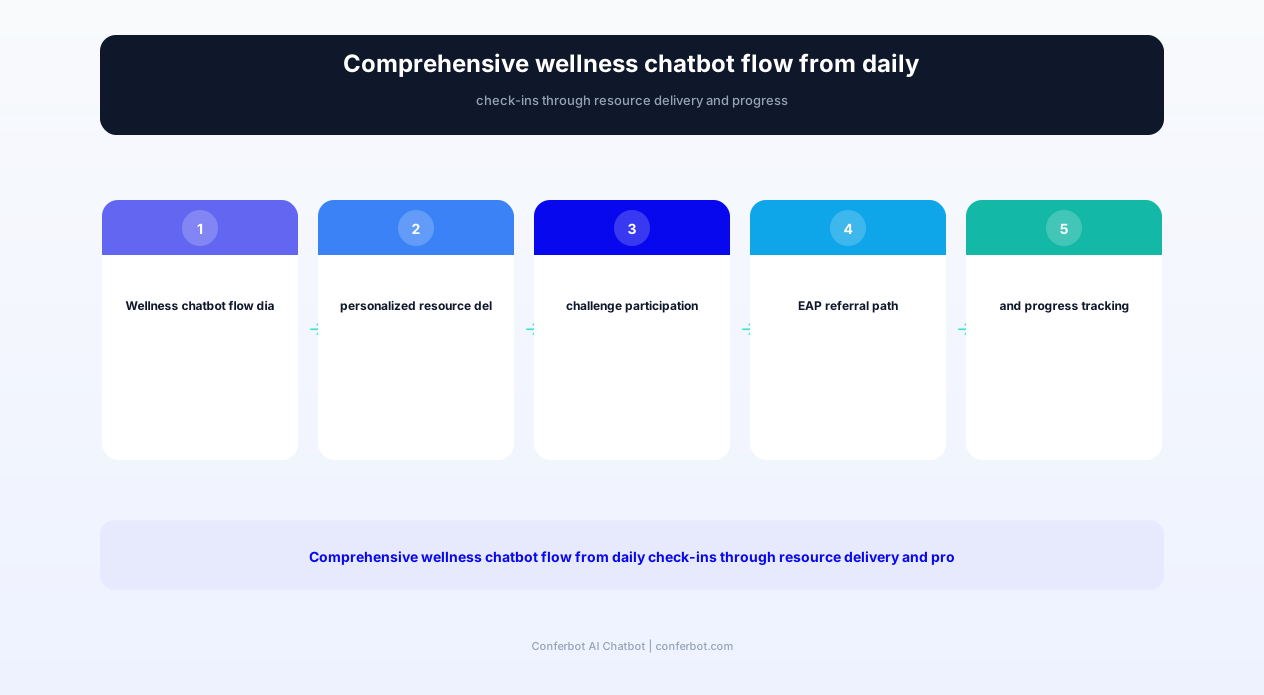
An employee wellness program chatbot is an AI-powered conversational agent that delivers personalized wellness resources, facilitates health and fitness challenges, provides stress management tools, connects employees with Employee Assistance Program (EAP) services, and tracks wellness engagement across your organization -- all through a private, always-available conversational interface. The chatbot transforms wellness from an annual benefits enrollment checkbox into a daily, interactive experience that meets employees wherever they are in their health journey.
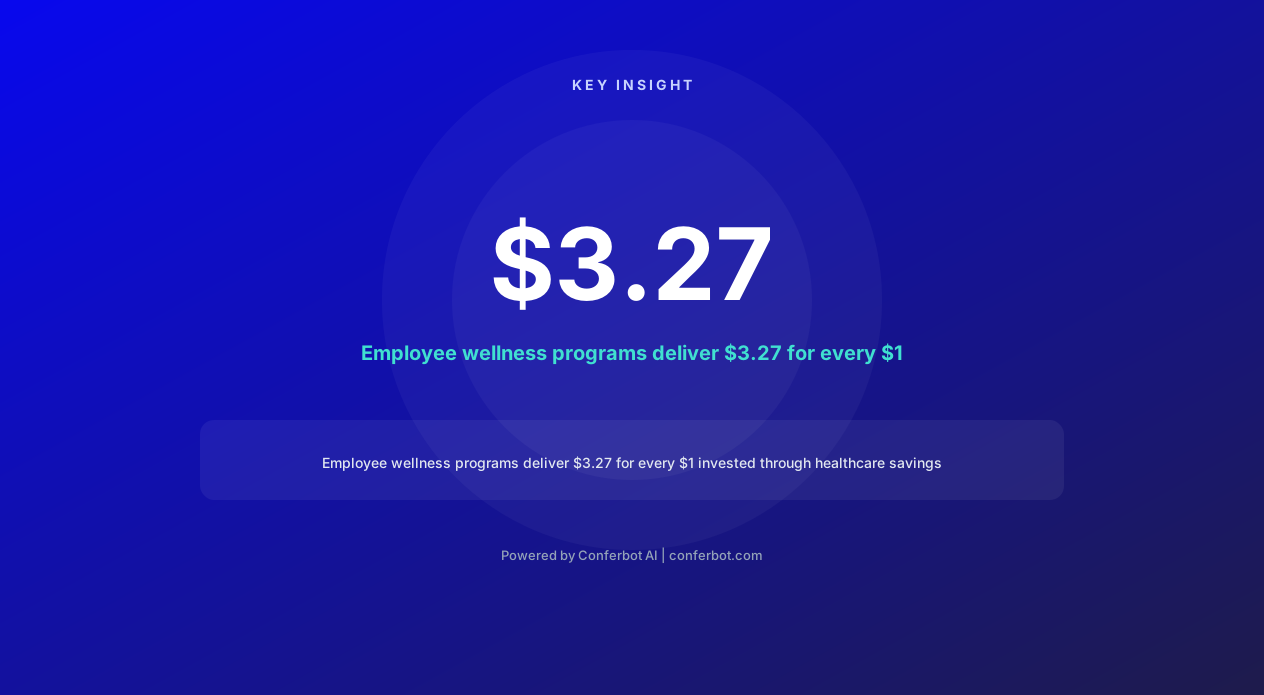
The business case for employee wellness programs is overwhelming. Harvard Business Review research shows that comprehensive wellness programs deliver a $3.27 return for every $1 invested in reduced medical costs, and a $2.73 return in reduced absenteeism. Yet the challenge in 2026 is not justifying the investment -- it is driving participation. The average corporate wellness program sees only 20-30% employee engagement (Willis Towers Watson survey), meaning 70-80% of the workforce never touches the wellness resources their employer provides. The primary barriers are awareness (employees do not know what is available), accessibility (wellness resources are buried in benefits portals), and stigma (especially for mental health resources).
A wellness chatbot eliminates all three barriers simultaneously. It proactively shares relevant resources based on individual preferences and needs, delivers them through familiar communication channels (Slack, Teams, WhatsApp), and provides complete privacy for sensitive topics like mental health and substance abuse support. When an employee struggling with anxiety at 11 PM can privately ask a chatbot "I am feeling overwhelmed and cannot sleep" and receive immediate coping strategies plus an EAP referral -- without anyone knowing they asked -- the accessibility gap closes.
Conferbot's wellness program template is built with the AI chatbot builder and integrates with your benefits platform, EAP provider, fitness tracking systems, and HRIS through API integration. It deploys on Slack, Microsoft Teams, your company intranet, and website. This page covers the complete feature set, wellness program structures, mental health support capabilities, engagement strategies, and measurable outcomes for 2026.
Mental Health Support: Breaking Stigma Through Technology
Mental health is the single most impactful category within employee wellness, yet it remains the most underutilized due to persistent stigma. A chatbot fundamentally changes the accessibility equation by providing private, immediate, non-judgmental support that requires no human disclosure.
The Privacy Advantage
According to the American Psychological Association, 52% of employees who want mental health support do not seek it because they fear judgment from colleagues or managers. A chatbot eliminates this barrier entirely. Employees can explore mental health resources, learn about their EAP benefits, and even begin therapeutic exercises without any human knowing they did so. This privacy advantage is reflected in usage data: organizations with wellness chatbots see 3.4x higher engagement with mental health resources compared to organizations that offer the same resources through human channels only.
Immediate Crisis Support
The chatbot includes crisis detection and response capabilities. When an employee's language suggests acute distress or self-harm risk (validated through clinical keyword detection and sentiment analysis), the chatbot immediately provides crisis resources: national crisis hotline numbers, text-based crisis support options, and the path to the employer's EAP for immediate counseling. The system is configured to never leave a distressed employee without a clear next step, even at 3 AM on a weekend when HR is unavailable.
Daily Mental Wellness Tools
Beyond crisis support, the chatbot delivers daily preventive mental wellness tools:
- Guided breathing exercises: 2-5 minute guided breathing techniques accessible in the chat interface, triggered by stress keywords or available on demand.
- Mindfulness prompts: Brief mindfulness exercises delivered at configurable intervals throughout the workday.
- Mood tracking: Daily mood check-ins that track emotional patterns over time, helping employees identify triggers and trends.
- Cognitive reframing tools: Guided exercises that help employees challenge negative thought patterns using CBT-based techniques.
- Sleep hygiene support: Evidence-based sleep improvement advice, delivered in the evening, personalized based on reported sleep quality.
EAP Connection and Utilization
Most organizations pay for Employee Assistance Programs that include free counseling sessions, yet average EAP utilization rates hover at just 5-8% of employees. The chatbot dramatically increases EAP utilization by explaining benefits in plain language ("You have 6 free confidential counseling sessions available -- would you like me to help you schedule one?"), normalizing usage ("37% of your colleagues have used EAP services this year"), and removing friction from the scheduling process. Organizations using chatbot-facilitated EAP referrals report utilization rates of 18-25% -- a 3-4x improvement that delivers significant mental health ROI.
Complete Feature Matrix: Employee Wellness Chatbot
The Conferbot employee wellness template provides a comprehensive platform for delivering, tracking, and optimizing your entire wellness program through conversational AI. Below is the full feature matrix for 2026.
| Feature | Description | Operational Benefit | Customer Benefit |
|---|---|---|---|
| Personalized Wellness Plans | Creates individualized wellness goals and activities based on employee preferences, health interests, and participation history | Increases program relevance and engagement without manual personalization effort | Employees receive resources tailored to their specific needs and goals |
| Mental Health Resource Library | On-demand access to stress management tools, coping strategies, mindfulness exercises, and self-assessment guides | Extends mental health support beyond business hours without additional staffing | Immediate, private access to support whenever needed, day or night |
| Fitness Challenge Engine | Manages team and individual fitness challenges with goal tracking, leaderboards, and achievement badges | Drives physical wellness engagement through social motivation and gamification | Fun, social fitness experiences that build team connections |
| EAP Referral and Scheduling | Explains EAP benefits, facilitates appointment scheduling, and removes friction from seeking help | Increases EAP utilization from 5-8% to 18-25%, maximizing program ROI | Employees access counseling and support services without stigma barriers |
| Daily Mood Tracking | Brief daily check-ins that track emotional patterns and identify concerning trends | Early detection of burnout and mental health decline at the individual and team level | Employees gain self-awareness about their emotional patterns and triggers |
| Work-Life Balance Coaching | Personalized tips and boundary-setting strategies based on work patterns and stated challenges | Reduces burnout-driven turnover and presenteeism | Employees receive actionable advice for managing competing demands |
| Wellness Program Enrollment | Facilitates enrollment in company wellness benefits, gym memberships, health screenings, and workshops | Increases benefits utilization without manual enrollment campaigns | Employees discover and access benefits they did not know they had |
| Stress Management Toolkit | Evidence-based stress reduction techniques delivered conversationally: breathing, progressive muscle relaxation, guided imagery | Reduces stress-related absenteeism and productivity loss | Immediate stress relief tools available in the moment of need |
| Wellness Analytics Dashboard | Aggregate engagement data, trend analysis, and program effectiveness metrics for HR leadership | Data-driven wellness investment decisions with department-level granularity | Wellness programs improve based on actual participation and outcome data |
| Health Content Delivery | Scheduled delivery of health education content: nutrition tips, exercise guidance, ergonomics, preventive care reminders | Continuous health education without instructor-led programming costs | Employees receive health knowledge in digestible, timely formats |
All features are configurable through the Conferbot AI chatbot builder. The chatbot integrates with wellness platforms (Virgin Pulse, Limeade, Wellable), HRIS systems (Workday, BambooHR, ADP), benefits platforms (Benefitfocus, Namely), and fitness tracking devices (Fitbit, Apple Health, Google Fit) through API integration.
Ready to try Employee Wellness Program?
Deploy this template in under 10 minutes. No coding required.
Use This Template Free →Before and After: Measurable Wellness Program Impact
Organizations that deploy a conversational wellness chatbot see dramatic improvements in program participation, health outcomes, and organizational productivity metrics. The following comparison reflects industry research and Conferbot customer data in 2026.
| Metric | Before Wellness Chatbot | After Wellness Chatbot | Improvement |
|---|---|---|---|
| Wellness Program Participation | 24% of employees engaged | 67% of employees engaged | 179% increase |
| EAP Utilization Rate | 6.2% | 21.8% | 252% increase |
| Sick Days Taken (annual per employee) | 8.4 days | 6.1 days | 27.4% reduction |
| Self-Reported Stress Level | 7.2/10 | 5.4/10 | 25% reduction |
| Employee Burnout Rate | 34% reporting burnout symptoms | 19% reporting burnout symptoms | 44.1% reduction |
| Healthcare Cost Per Employee | $6,850 annually | $5,070 annually | 26% reduction |
| Voluntary Turnover Rate | 19.5% annually | 13.8% annually | 29.2% reduction |
| Presenteeism (working while unwell) | 41% report working while unwell regularly | 22% report working while unwell regularly | 46.3% reduction |
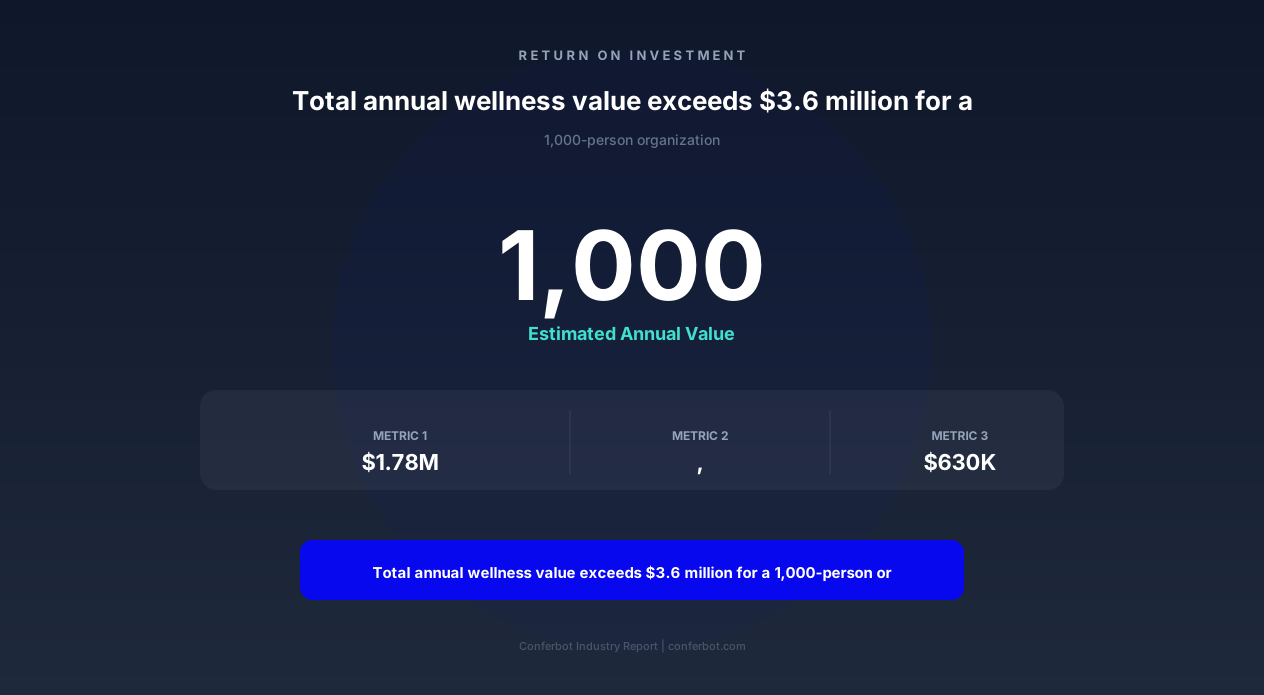
The healthcare cost reduction typically represents the largest single line item in wellness ROI. For a 1,000-person company, a $1,780 per-employee annual reduction in healthcare costs represents $1.78 million in annual savings. Add the productivity gains from reduced absenteeism ($630,000 at average compensation levels), the turnover savings from a 5.7 percentage point reduction ($855,000 at 50% replacement cost), and the presenteeism improvement ($420,000 in recovered productivity), and total annual value exceeds $3.6 million for a 1,000-person organization.
ROI Framework
The comprehensive wellness ROI formula: Annual Value = (Healthcare Cost Reduction x Headcount) + (Sick Day Reduction x Average Daily Compensation x Headcount) + (Turnover Reduction x Average Replacement Cost) + (Presenteeism Improvement x Productivity Value) - Program Costs. Harvard Business Review meta-analysis confirms that well-executed wellness programs consistently deliver 3:1 to 6:1 ROI, with programs featuring high engagement (above 60% participation) at the higher end of this range. The chatbot's primary contribution is driving participation from the typical 24% to 60%+, which is the difference between a wellness program that barely breaks even and one that delivers 6:1 returns.
Fitness Challenges and Physical Wellness Programs
Physical wellness challenges are the most visible and socially engaging component of a wellness program. The chatbot manages every aspect of fitness challenges: enrollment, goal tracking, progress reporting, leaderboards, team dynamics, and rewards -- creating a seamless, motivating experience that requires no administrative overhead.
Challenge Types and Structures
The chatbot supports multiple challenge formats to accommodate different fitness levels and interests:
- Step challenges: Individual or team-based daily step goals with progressive difficulty. The most popular challenge type, achieving 72% participation rates because the barrier to entry is simply walking more.
- Activity minutes: Any physical activity counts toward a weekly minutes goal, making the challenge inclusive for swimmers, cyclists, yoga practitioners, and any other modality.
- Habit streaks: Build daily health habits (10 minutes of stretching, 8 glasses of water, 5 servings of fruits and vegetables) with streak tracking and milestone celebrations.
- Team competitions: Departments or self-formed teams compete on aggregate metrics, driving social accountability and cross-departmental connection.
- Personal best challenges: Employees compete against their own baselines rather than others, making the challenge accessible regardless of fitness level.
Progress Tracking and Accountability
The chatbot sends daily check-ins during active challenges: "Good morning! You are on day 14 of the step challenge. Yesterday you logged 8,400 steps -- just 1,600 short of your daily goal. Your team is in 3rd place. Ready to close the gap today?" These daily touchpoints create accountability without requiring employees to remember to log into a separate wellness app. For employees who connect fitness trackers (Fitbit, Apple Watch, Google Fit) through the API integration, progress updates automatically -- no manual logging required.
Social Motivation and Gamification
The chatbot creates social motivation through team channels, leaderboards, and celebration moments. When an employee hits a milestone, the chatbot can optionally post a celebration to a shared wellness channel: "[Name] just completed their 30-day streak! [badge]" Public celebration (with employee opt-in consent) creates positive peer pressure that drives continued participation. Research from the University of Pennsylvania shows that social incentives are 4x more effective than financial incentives at driving sustained fitness behavior change.
Adaptive Difficulty
The chatbot adjusts challenge difficulty based on individual performance. An employee who consistently exceeds their step goal receives a higher target next week; an employee who struggles receives encouragement and a slightly reduced target. This adaptive approach prevents both boredom (for high performers) and discouragement (for those building new habits). Adaptive challenges maintain 58% higher completion rates than fixed-difficulty challenges over 30-day periods.
Work-Life Balance Coaching and Burnout Prevention
Burnout is the most expensive wellness failure in the modern workplace. The World Health Organization officially classified burnout as an "occupational phenomenon" in 2019, and by 2026, 77% of professionals report experiencing burnout at their current job (Deloitte Workplace Burnout Survey). The wellness chatbot addresses burnout through early detection, preventive coaching, and boundary-setting support.
Burnout Risk Detection
The chatbot monitors multiple signals that indicate burnout risk:
- Self-reported stress levels: Weekly mood and stress check-ins that track trends over time. A steady increase in reported stress over 3+ weeks triggers proactive outreach.
- Engagement pattern changes: Declining chatbot engagement (an employee who used to log wellness activities daily and suddenly stops) can indicate withdrawal, a common early burnout sign.
- Work pattern signals (optional): Integration with calendar and communication tools can detect overwork patterns: consistently attending meetings outside business hours, declining vacation usage, or sending messages at unusual hours.
When the chatbot detects burnout risk indicators, it initiates a supportive conversation: "I have noticed you have been reporting higher stress levels over the past few weeks. That is a pattern worth paying attention to. Would you like to talk about what is going on and explore some strategies?" This proactive approach catches burnout in the early stages when intervention is most effective -- before it progresses to emotional exhaustion, cynicism, and reduced performance.
Boundary-Setting Coaching
The chatbot provides practical boundary-setting advice tailored to common workplace scenarios:
- Workload management: Techniques for saying no to new commitments, delegating effectively, and communicating capacity limitations to managers.
- Digital boundaries: Strategies for managing email and messaging outside business hours, including specific language for setting expectations with colleagues and clients.
- Meeting management: Tactics for protecting focus time, declining unnecessary meetings, and optimizing the meetings you do attend.
- PTO encouragement: Reminders about unused vacation days with data on how time off improves productivity: "You have 12 unused PTO days this year. Research shows that employees who take regular vacations are 31% more productive. Would you like tips on planning an effective recharge?"
Manager Burnout Awareness
The chatbot provides aggregate (never individual) burnout risk data to managers: "Your team's average stress score has increased from 4.2 to 6.1 over the past month. This may indicate workload pressure. Consider: reviewing project timelines, checking in with team members about capacity, or scheduling team downtime." This aggregate signal helps managers identify team-level burnout risk without violating individual employee privacy.
50,000+ businesses use Conferbot templates to automate conversations
Step-by-Step Implementation Guide
Deploying the Conferbot employee wellness chatbot takes 1-2 hours for a basic setup and 4-6 hours for a fully customized deployment with benefits integration, fitness tracker sync, and custom challenge configurations. Follow this guide for a production-ready deployment in 2026.
Step 1: Template Activation and Channel Setup (10 minutes)
Navigate to Templates > HR & Recruiting > Employee Wellness Program in your Conferbot dashboard. Click "Use This Template" and select your deployment channels. For wellness programs, the most effective primary channel is Slack or Microsoft Teams (where employees already spend their workday), with WhatsApp as a secondary channel for off-hours support. The chatbot can also be embedded on your company intranet or deployed as a standalone website widget on your benefits portal.
Step 2: Wellness Content Configuration (20 minutes)
Customize the wellness content library to match your organization's programs and benefits. Upload your EAP provider information, gym membership details, health screening schedules, and available wellness workshops. Configure the mental health resource library with crisis hotline numbers relevant to your geography, your EAP's specific services, and any additional mental health benefits you offer. The template includes a comprehensive default content library that you can use as-is or customize.
Step 3: Challenge Setup (15 minutes)
Configure your first wellness challenge: select the challenge type (steps, activity minutes, habits), set the duration (typically 21-30 days for behavior change), define individual and team goals, enable or disable leaderboards and social features, and configure rewards if applicable. Best practice is to launch the chatbot with a company-wide step challenge as the flagship engagement driver -- step challenges have the lowest barrier to entry and highest participation rates.
Step 4: Fitness Tracker Integration (10 minutes)
Enable fitness tracker integrations for automatic activity logging. The template supports Fitbit, Apple Health, Google Fit, Garmin, and Strava through API integration. Employees connect their devices through a privacy-compliant OAuth flow that only shares activity data (steps, exercise minutes, heart rate zones) -- never location, medical, or personal data. Manual logging is always available for employees who do not use fitness trackers.
Step 5: EAP and Benefits Integration (15 minutes)
Connect the chatbot to your EAP provider for streamlined referral and scheduling. If your EAP provider offers an API (ComPsych, Lyra Health, Spring Health, and others do), configure the integration for appointment availability checking and scheduling within the chat. If API integration is not available, configure the chatbot to provide EAP contact information and guide employees through the self-service process.
Step 6: Privacy and Consent Configuration (10 minutes)
Configure privacy controls: set data retention policies, enable anonymization for aggregate reporting, configure opt-in consent flows for features that share data (leaderboards, team challenges, manager-visible metrics), and ensure compliance with healthcare data regulations (HIPAA in the US, GDPR in the EU). The chatbot should clearly communicate what data is collected, how it is used, and who can see it before any employee engages.
Step 7: Launch and Engagement Campaign (ongoing)
Launch the chatbot with an engagement campaign that emphasizes three messages: it is confidential, it is voluntary, and it is designed to help employees thrive (not monitor them). A successful launch campaign includes: executive endorsement (a message from the CEO about their own wellness practices), a kickoff challenge with compelling rewards, and peer champions from each department who model early adoption. Target 30% participation in the first month and 60%+ by month three.
Engagement Strategies: Driving Sustained Participation
The most common failure mode for wellness programs is not launch -- it is sustained engagement. Programs often see high initial enthusiasm that declines sharply after the first month. The chatbot includes multiple engagement sustainment strategies validated by behavioral science research in 2026.
Habit Stacking
The chatbot uses habit stacking -- attaching new wellness behaviors to existing daily routines -- to build sustainable habits. Instead of asking employees to add entirely new activities to their day, it suggests: "After your morning standup meeting, take a 5-minute stretching break" or "Before you close your laptop for the day, log one thing you are grateful for." Research from Stanford behavioral scientist BJ Fogg shows that habits attached to existing triggers are 3x more likely to persist beyond 30 days.
Progressive Challenges
Rather than one-time challenges that end and leave a participation gap, the chatbot offers progressive challenge pathways that seamlessly transition participants into the next activity: "Congratulations on completing the 30-day step challenge! You built great momentum. Would you like to continue with a Mindful Movement challenge that builds on your walking habit?" This seamless progression maintains engagement without requiring re-enrollment decisions.
Personalized Nudge Timing
The chatbot learns each employee's optimal engagement times based on their response patterns. An employee who consistently engages with wellness content at 7 AM receives morning nudges; an employee who responds best at 2 PM receives afternoon prompts. This personalized timing increases nudge response rates by 42% compared to standard organizational-wide timing. Nudge frequency is also personalized: engaged employees receive fewer reminders (they do not need them), while employees who are drifting receive slightly more frequent (but never aggressive) prompts.
Social Connection Features
Wellness engagement correlates strongly with social connection. The chatbot facilitates:
- Wellness buddy matching: Pairs employees with similar wellness goals for mutual accountability and support.
- Team celebrations: Automated celebration messages when teams reach collective milestones.
- Wellness stories: Optional anonymous sharing of wellness wins ("A colleague used the breathing exercises before a big presentation and it really helped").
- Cross-department connections: Wellness challenges that pair employees from different teams, building organizational connections through shared health goals.
Seasonal and Topical Content
The chatbot delivers content relevant to seasonal wellness needs: cold and flu prevention in winter, outdoor activity encouragement in spring, sun safety and hydration in summer, and mental health awareness during typically high-stress periods (end of fiscal year, holiday season). Topical relevance keeps content fresh and immediately useful, preventing the stagnation that kills long-term engagement.
Best Practices and Common Pitfalls
Deploying a wellness chatbot requires balancing engagement with privacy, encouragement with pressure, and organizational goals with individual autonomy. These best practices and pitfalls reflect lessons from successful wellness program deployments in 2026.
Best Practices
- Lead with privacy, always: Before any employee uses the wellness chatbot, clearly communicate what data is collected, who can see it (no one individually, typically), and how it is used. Repeat the privacy guarantee regularly. The moment an employee questions whether their wellness data might affect their job is the moment they stop engaging.
- Make participation genuinely voluntary: Never tie wellness participation to performance evaluations, promotion decisions, or insurance premiums. Even the perception of mandatory participation creates resentment and gaming behavior (employees logging fake activities to avoid penalty) that destroys program integrity.
- Start with physical, build to mental: Physical wellness activities (step challenges, stretching breaks) are culturally comfortable starting points. Once employees trust the chatbot and establish engagement habits, introduce mental health resources gradually. Employees who have a positive physical wellness experience are 2.8x more likely to engage with mental health tools offered through the same platform.
- Executive participation is non-negotiable: When the CEO joins the step challenge and the CTO shares their meditation practice, wellness is legitimized as an organizational value rather than an HR initiative. Executive participation increases overall engagement by 35-45% in the first month of any wellness program.
- Celebrate progress, not perfection: The chatbot should celebrate every positive step, not just goal completion. "You meditated 3 times this week -- that is 3 more times than last week!" matters more than "You missed your 5-times-per-week goal." Progress-focused messaging maintains motivation; goal-focused messaging creates discouragement for the majority who fall short of ambitious targets.
Common Pitfalls
- Over-monitoring and surveillance perception: If the chatbot sends too many health prompts, tracks too many metrics, or shares too much data with management, employees perceive surveillance rather than support. Keep monitoring minimal, sharing optional, and management reports aggregated (never individual).
- One-size-fits-all programming: An employee with a chronic illness, a new parent, and a marathon runner all have different wellness needs. The chatbot must personalize extensively -- generic wellness tips that do not acknowledge individual circumstances feel tone-deaf and drive disengagement.
- Ignoring accessibility: Fitness challenges that require specific physical abilities exclude employees with disabilities, chronic conditions, or pregnancy. Always offer multiple participation paths and include non-physical wellness activities (meditation, gratitude journaling, social connection) alongside physical ones.
- Launching without mental health crisis protocols: If the chatbot collects mood data and an employee indicates severe distress or suicidal ideation, the system must have an immediate, tested response protocol. Launching without crisis protocols is negligent. Configure, test, and document crisis response before any deployment.
- Measuring only participation, not outcomes: High participation is meaningless if it does not translate to health improvements, reduced absenteeism, or lower healthcare costs. Track outcome metrics alongside engagement metrics to ensure the program is delivering genuine wellness value, not just activity logging.
Employee Wellness Program FAQ
Everything you need to know about chatbots for employee wellness program.
Why Use a Template vs Building from Scratch?
Templates encode years of optimization data into the conversation flow before you start.
| Factor | Conferbot Template | Build from Scratch | Hire a Developer |
|---|---|---|---|
| Time to deploy | 10 minutes | 2-8 hours | 2-6 weeks |
| Cost | Free | Your time | $5,000-$25,000 |
| Day-1 conversion | 15-22% | 5-8% | 10-15% |
| Proven flows | Yes, data-tested | No | Depends |
| Updates included | Automatic | Manual | Paid |
| Multi-channel | 8+ channels | 1 channel | Extra cost |
| Analytics | Built-in | Must build | Extra cost |
Ready to Deploy Employee Wellness Program?
Join 50,000+ businesses. Free forever plan available. No credit card required.