The Cannabis Industry's Customer Experience Problem — and Why Chatbots Solve It
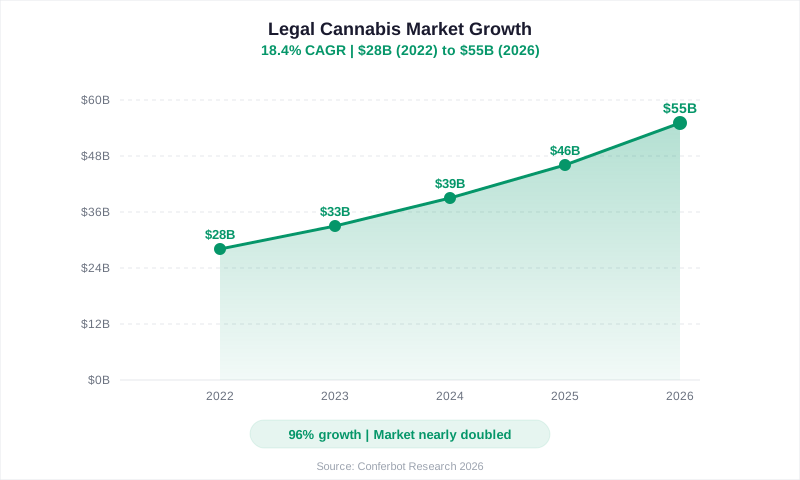
The legal cannabis industry has grown at a staggering pace. According to New Frontier Data, legal cannabis sales in the United States exceeded $33 billion in 2025, with projections reaching $57 billion by 2030. As of early 2026, 40 states and the District of Columbia have legalized cannabis for medical or recreational use, and the consumer base now exceeds 55 million Americans who have purchased cannabis products in the past year.
Yet despite this explosive growth, the customer experience at most dispensaries remains frustratingly outdated. Walk into a busy dispensary on a Friday evening and you will find 15 customers waiting, 3 budtenders stretched thin, and a product menu with 200+ SKUs that overwhelms first-time buyers and seasoned consumers alike. The average dispensary wait time during peak hours is 12-18 minutes — an eternity in a retail environment where customers increasingly expect instant service.
Online, the experience is often worse. Most dispensary websites present a static product list with minimal filtering. A customer looking for a low-THC edible for sleep has to scroll through hundreds of products, read individual descriptions, and hope they make the right choice. There is no personalized guidance, no one to ask questions, and no easy path from browsing to purchasing.
This is where a dispensary chatbot transforms the equation. Deployed on your website, mobile app, or messaging channels, a chatbot acts as a digital budtender — guiding customers through product selection based on their desired effects, experience level, consumption method preference, and budget. It handles online ordering, answers compliance-sensitive questions accurately, runs loyalty programs, and provides the kind of personalized service that builds repeat customers in a market where customer acquisition costs are rising.
Dispensaries using chatbots report 35-50% increases in average order value through intelligent product recommendations, 60% reductions in repetitive customer service inquiries, and 25% improvements in online order completion rates. In an industry with thin margins and intense competition, those numbers are the difference between thriving and merely surviving.
How a Dispensary Chatbot Works: From Recommendation to Checkout
A dispensary chatbot is an AI-powered conversational assistant trained on your product catalog, compliance requirements, and customer preferences, supporting responsible service as encouraged by NORML's state cannabis law database, compliance requirements, and customer service workflows. It provides personalized product guidance to every visitor — whether they are a first-time cannabis user or a daily consumer with specific strain preferences. Here is the full customer journey through a dispensary chatbot.
Stage 1: Welcome and Age Gate
Every dispensary chatbot interaction begins with age verification. This is not optional — it is a regulatory requirement in every legal cannabis market. The chatbot confirms the visitor is of legal age (21 for recreational, 18+ for medical with valid card) before proceeding:
- "Welcome to Green Valley Dispensary! Before we begin, I need to confirm you are 21 or older. Please confirm your date of birth."
- For medical dispensaries: "Do you have a valid medical cannabis card? What state was it issued in?"
If the visitor does not meet age requirements, the chatbot ends the conversation politely and does not provide product information. This automated age gate ensures compliance with state regulations while allowing qualified visitors to proceed without friction.
Stage 2: Needs Assessment
The chatbot identifies what the customer is looking for through a short, conversational assessment:
- Desired effect: Relaxation, pain relief, sleep, energy, creativity, anxiety reduction, appetite stimulation
- Experience level: First-time, occasional, regular, daily consumer
- Consumption method: Flower, edibles, vapes, concentrates, tinctures, topicals
- THC/CBD preference: High THC, balanced THC/CBD, high CBD, THC-free
- Budget: Economy, mid-range, premium
The chatbot uses a natural language processing engine to understand conversational inputs. A customer who says "I want something to help me sleep that won't make me feel too high" is matched to low-to-moderate THC indica-dominant products, CBD-rich options, or sleep-specific edibles. The bot does not need the customer to fill out a rigid form — it understands natural language and extracts the relevant preferences.
Stage 3: Personalized Product Recommendations
Based on the needs assessment, the chatbot presents 3-5 curated product recommendations from your inventory. Each recommendation includes the product name, brand, THC/CBD percentages, price, and a brief description of the expected effects. The recommendations are pulled from your live inventory, so the chatbot never recommends out-of-stock items.
For experienced consumers, the chatbot offers more granular options: specific terpene profiles, strain lineage information, and comparisons between similar products. For first-time users, it simplifies the language, emphasizes lower-potency options, and includes dosage guidance — all within compliance boundaries.
Stage 4: Add to Cart and Online Ordering
Once the customer selects a product, the chatbot adds it to their cart and offers relevant upsells: "Many customers who buy this indica flower also add our sleep gummies for $25. Would you like to add them?" This contextual cross-selling increases average order value by 15-25% without feeling pushy because the suggestions are genuinely relevant to the customer's stated needs.
The chatbot then guides the customer through checkout: confirming the order, collecting pickup or delivery preferences, verifying the delivery address is within your service area, and processing payment or confirming pay-at-pickup options.
Stage 5: Post-Purchase Engagement
After the purchase, the chatbot sends an order confirmation, pickup time estimate, and any preparation instructions. For delivery orders, it provides real-time tracking updates. Post-consumption, it can follow up: "How did you like the Blue Dream flower? Rate your experience and I'll fine-tune your future recommendations." This feedback loop improves recommendation accuracy over time and builds customer loyalty.
Building an Intelligent Product Recommendation Engine for Cannabis
Product recommendation is the core value proposition of a dispensary chatbot. Unlike other retail categories where customers know exactly what they want, cannabis consumers — especially newer ones — often need guidance. A well-built recommendation engine turns your chatbot into the best budtender on your team: one who knows every product in your inventory, never has a bad day, and is available 24/7.
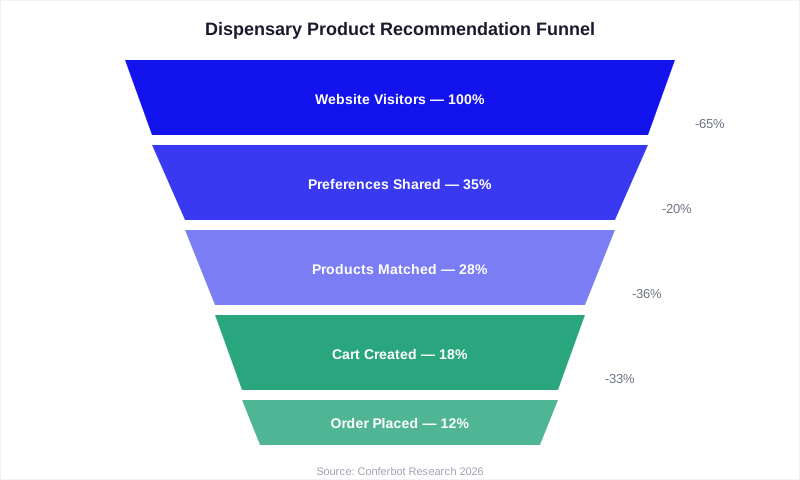
Categorization Framework
Structure your product data for effective chatbot recommendations using these dimensions:
| Dimension | Values | Why It Matters |
|---|---|---|
| Product type | Flower, pre-rolls, edibles, vapes, concentrates, tinctures, topicals, capsules | Primary consumption method preference |
| Strain type | Indica, sativa, hybrid, CBD-dominant | General effect profile |
| THC percentage | Low (0-10%), moderate (10-20%), high (20-30%), very high (30%+) | Potency matching to experience level |
| CBD percentage | None, low, moderate, high, CBD-only | Therapeutic benefit and anxiety mitigation |
| Desired effect | Relaxation, sleep, pain relief, energy, creativity, focus, appetite, social | Maps to customer need |
| Onset time | Immediate (inhaled), 30-90 min (edibles/tinctures), gradual (topicals) | Customer expectation management |
| Duration | 1-3 hours (inhaled), 4-8 hours (edibles), sustained (topicals) | Use case matching |
| Price tier | Economy, mid-range, premium | Budget alignment |
Recommendation Logic for Different Customer Types
First-time consumer: The chatbot prioritizes safety and comfort. It recommends low-THC products (under 10%), suggests starting with edibles at 2.5-5mg doses or a balanced THC/CBD vape, and includes dosage guidance: "Start low and go slow — try one gummy and wait 90 minutes before taking another."
Occasional consumer looking for something specific: The chatbot matches the stated need (sleep, pain relief, social) to 3-5 products, explains the differences between options, and lets the customer compare. "For sleep, I'd recommend either the Midnight Indica gummies (10mg THC per gummy, most customers report falling asleep within 45 minutes) or the Lavender Kush flower if you prefer to smoke. Which sounds better?"
Experienced consumer exploring new products: The chatbot provides detailed strain information, terpene profiles, grower details, and customer ratings. It can compare products side-by-side: "The Gelato #41 has a higher limonene content than the Wedding Cake, which gives it a more uplifting initial effect before the relaxation sets in. Both test at 28% THC."
Train your chatbot's knowledge base with detailed product data for each SKU, and update it whenever your inventory changes. The more detailed your product data, the more accurate and valuable the recommendations become.
ROI Breakdown: What a Dispensary Chatbot Is Worth
Let us quantify the financial impact for a dispensary, using market data validated by MJBizDaily's Cannabis Factbook doing $150,000 in monthly revenue with 3,000 monthly transactions and an average order value of $50.
Current State (Without Chatbot)
| Metric | Value |
|---|---|
| Monthly transactions | 3,000 |
| Average order value | $50 |
| Monthly revenue | $150,000 |
| Online order percentage | 25% (750 orders) |
| Online cart abandonment rate | 65% |
| Customer service inquiries/month | 1,200 |
| Budtender hours on inquiries/month | 100 hours |
| Repeat customer rate | 40% |
With Chatbot
| Metric | Value | Change |
|---|---|---|
| Average order value | $62 | +24% (cross-sell/upsell) |
| Online order percentage | 38% | +52% (guided ordering) |
| Online cart abandonment | 42% | -35% (chatbot intervention) |
| Customer service inquiries handled by bot | 780 (65%) | Staff handles only 420 |
| Budtender hours on inquiries/month | 35 hours | -65% |
| Repeat customer rate | 52% | +30% (personalized experience) |
| New monthly revenue | $186,000 | +$36,000 |
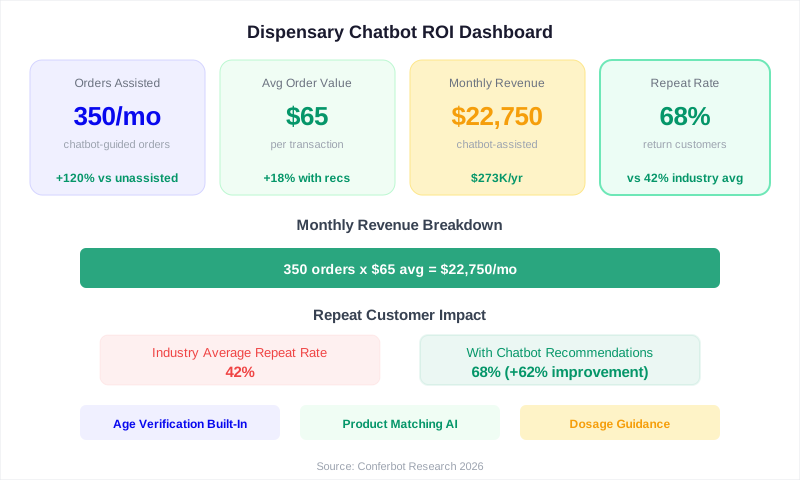
The Math
Additional monthly revenue: $36,000
Monthly labor savings: $3,250 (65 hours at $50/hour loaded cost)
Total monthly benefit: $39,250
Monthly chatbot cost: $100-200
Monthly ROI: 196-392x return
The revenue increase comes from three sources. First, higher average order values through intelligent cross-selling and upselling recommendations. Second, more online orders as the chatbot guides customers who would otherwise abandon the menu. Third, higher repeat purchase rates from customers who received personalized service and accurate product matches.
Even the most conservative estimate — assuming only a 10% increase in average order value and 15% more online orders — yields over $15,000 in additional monthly revenue, making the chatbot investment trivially justified. Use the Conferbot pricing page to see which plan fits your dispensary's transaction volume.
Compliance and Regulatory Considerations for Cannabis Chatbots
Cannabis remains one of the most heavily regulated industries in the United States. A dispensary chatbot must be built with compliance as a foundational requirement, not an afterthought. Here are the key regulatory areas that affect chatbot deployment and how to address each one.
Age Verification
Every legal cannabis market requires age verification before product information can be shared. Your chatbot must implement an age gate at the start of every conversation — before presenting product details, pricing, or ordering options. The verification method depends on your jurisdiction and risk tolerance:
- Self-attestation: The customer confirms they are 21+ (or 18+ for medical). Simplest implementation, acceptable in most markets for informational purposes.
- Date of birth collection: The chatbot asks for date of birth and calculates age. More rigorous than simple yes/no attestation.
- ID verification integration: For online ordering and delivery, some states require government ID verification. The chatbot can collect a photo of the ID and route it through a verification service before enabling the order.
Medical vs. Recreational Compliance
If your dispensary serves both medical and recreational customers, your chatbot must differentiate between the two and apply the correct rules:
- Medical customers may have higher possession limits, lower tax rates, and access to higher-potency products
- Medical card validation should be collected and verified
- Product recommendations for medical customers should align with the qualifying condition listed on their card
- Some states restrict recreational chatbot interactions to certain hours while allowing 24/7 medical access
Advertising and Health Claims
This is where most dispensaries get into compliance trouble — and where a chatbot provides a significant advantage. Cannabis regulations in every state prohibit making unsubstantiated health claims. Your chatbot must not state that cannabis "cures," "treats," or "heals" any medical condition. Instead, train it to use compliant language:
- Instead of: "This strain treats insomnia" use: "Many customers report that this strain helps them relax before bedtime"
- Instead of: "CBD cures anxiety" use: "CBD products are popular among customers looking for relaxation without psychoactive effects"
- Instead of: "This edible treats chronic pain" use: "This product is frequently chosen by customers who experience discomfort"
A chatbot consistently uses the approved language you train it on. Unlike a budtender who might casually make a health claim during a busy shift, the chatbot never deviates from compliant messaging. This protects your dispensary license and reduces the risk of regulatory action.
Data Retention and Customer Privacy
Cannabis customer data is especially sensitive given the federal legal status of cannabis. Your chatbot platform must:
- Encrypt all conversation data and customer information in transit and at rest
- Implement clear data retention policies (many states specify how long customer records must be kept)
- Never share customer data with third parties without explicit consent
- Allow customers to request deletion of their data
- Comply with state-specific privacy laws (CCPA in California, etc.)
The Leafly consumer survey found that 78% of cannabis consumers consider data privacy important when choosing where to shop. A chatbot that explicitly addresses privacy builds customer trust.
Delivery Compliance
If your chatbot handles delivery orders, it must enforce delivery zone restrictions (many states limit delivery radius), delivery hour windows, and delivery verification requirements (ID check at the door). Configure the chatbot to validate the delivery address against your approved delivery zone before accepting the order — preventing compliance violations and wasted delivery driver time.
Loyalty Programs, Retention, and Repeat Purchase Automation
Customer retention is where dispensary chatbots deliver compounding returns, a dynamic consistent with HubSpot's customer retention research. Acquiring a new dispensary customer costs 5-7x more than retaining an existing one, yet most dispensaries invest the majority of their marketing budget on acquisition while neglecting retention. A chatbot flips this ratio by automating personalized retention programs that keep customers coming back.
Chatbot-Managed Loyalty Programs
Integrate your loyalty program directly into the chatbot experience. Instead of a separate loyalty app or punch card that customers forget about, the chatbot tracks and communicates loyalty status within the natural conversation flow:
- "You have 450 points! That's $22.50 toward your next purchase. Would you like to apply them today?"
- "You're 50 points away from Gold status, which unlocks 15% off all concentrates. One more visit gets you there!"
- "Happy birthday! You have a $10 birthday reward waiting. Valid all week."
Dispensaries that integrate loyalty programs into their chatbot see 40% higher loyalty program participation rates compared to standalone loyalty apps, because the chatbot proactively reminds customers about their points and rewards during every interaction.
Personalized Reorder Reminders
The chatbot tracks purchase history and sends timely reorder reminders based on each customer's consumption patterns. If a customer buys a 30-pack of gummies every 3 weeks, the chatbot sends a message on day 18: "Running low on your sleep gummies? Reorder now for same-day pickup. Your usual order is ready — just confirm." One-tap reordering removes all friction from the repeat purchase process.
New Product Alerts Based on Preferences
When new products arrive that match a customer's demonstrated preferences (same strain type, similar terpene profile, same brand), the chatbot sends a personalized notification: "A new batch of Gelato #41 just arrived from your favorite grower — testing at 30% THC. Would you like to reserve some before it sells out?"
These targeted alerts have a 35-45% engagement rate compared to 8-12% for generic mass marketing emails. The personalization makes the message relevant, and the chatbot's conversational format makes acting on it effortless.
Flash Sale and Limited Drop Management
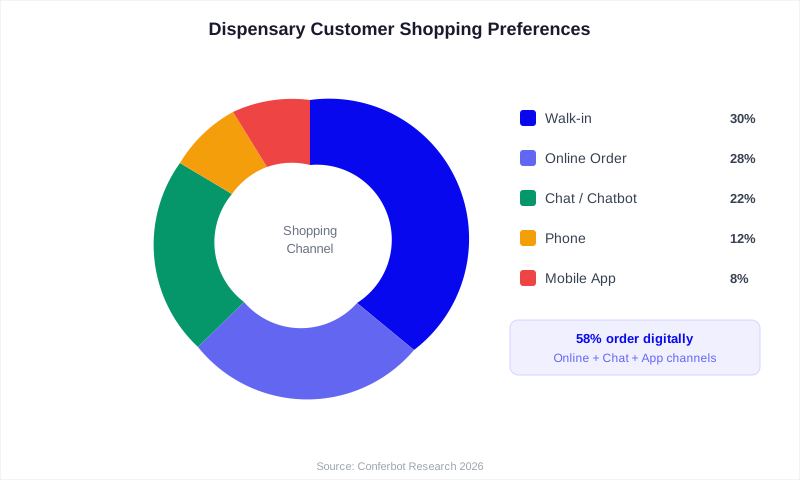
Cannabis retail thrives on scarcity — limited drops from popular brands and flash sales drive urgency and foot traffic. The chatbot is the perfect channel for time-sensitive promotions because messages are seen instantly (98% open rate on messaging channels) versus hours later (20% email open rate). "Flash sale: 20% off all concentrates for the next 4 hours. Reply ORDER to see today's concentrate menu." This drives immediate traffic without the cost of paid advertising.
Winback Campaigns for Lapsed Customers
When a regular customer has not visited in 30+ days, the chatbot initiates a winback sequence: "Hey! We haven't seen you in a while. Here's a special 15% off coupon just for you — valid this week. Anything new I can help you find?" These automated winback campaigns recover 10-15% of lapsed customers at near-zero marginal cost, significantly reducing the customer churn that erodes dispensary revenue.
Multi-Channel Deployment: Website, SMS, and In-Store Kiosks
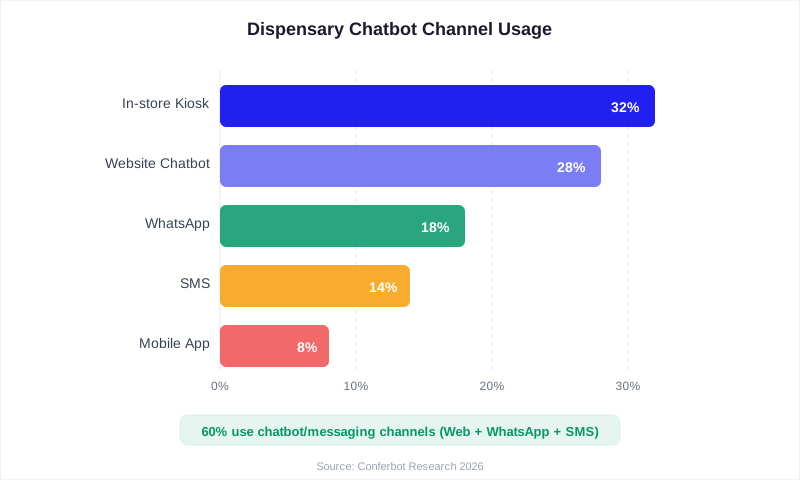
Cannabis consumers interact with dispensaries across multiple channels, and your chatbot strategy should reflect this. Each channel serves a different purpose in the customer journey, and the chatbot adapts its behavior accordingly.
Website Chatbot
Your website chatbot is the primary discovery and ordering channel. Visitors are browsing your menu, comparing products, and deciding whether to order online or visit in person. The chatbot's role here is product guidance, menu navigation, online ordering, and answering pre-visit questions (parking, wait times, first-time visitor instructions). Deploy the chatbot on every page of your website using a persistent web chat widget that opens with a context-aware greeting.
SMS Chatbot
SMS is the highest-engagement retention channel for dispensaries. Customers who opt in to SMS receive personalized reorder reminders, loyalty updates, flash sale alerts, and new product notifications. The chatbot handles two-way SMS conversations — customers can reply to order, ask questions, or check their loyalty balance, and the bot responds instantly.
SMS regulations are strict: you must collect explicit opt-in consent, include opt-out instructions in every message, and comply with TCPA guidelines. Your chatbot platform should handle consent management automatically.
In-Store Kiosk Chatbot
Deploy the same chatbot on a tablet kiosk inside your dispensary for customers who want to browse the menu independently while waiting. The kiosk chatbot provides the same personalized recommendation experience as the website, helping customers make selections before they reach the counter. This reduces average service time by 25-35% and improves order accuracy because customers arrive at the register knowing exactly what they want.
The kiosk also serves as an upselling tool: after the customer makes their primary selection, it suggests complementary products. "Since you chose the Gorilla Glue flower, would you like to add a grinder for $12 or pre-rolled cones for $5?" In-store digital upselling adds 8-12% to average transaction values.
Unified Customer Profile
The key to multi-channel success is a unified customer profile. Whether a customer interacts via website, SMS, or kiosk, the chatbot recognizes them and maintains their preference history, purchase history, loyalty status, and recommendation profile. This means a customer who browsed edibles on the website yesterday and asks the kiosk chatbot today for recommendations gets personalized suggestions based on their prior browsing, not a generic menu. The analytics dashboard gives you a consolidated view of customer interactions across all channels, revealing which channels drive the most revenue and where customers drop off in the purchase journey.
How to Build a Dispensary Chatbot: Step-by-Step Implementation
Here is the complete implementation roadmap for launching a dispensary chatbot, from product catalog preparation to multi-channel deployment.
Step 1: Prepare Your Product Catalog (1-2 Hours)
Export your product inventory from your POS system (Dutchie, Treez, Flowhub, Jane, or your current platform) and structure it with the recommendation dimensions covered earlier: product type, strain type, THC/CBD percentages, desired effects, price tier, and any terpene profile data. Upload this structured data to your chatbot's knowledge base.
Also prepare compliance-approved product descriptions, dosage guidance for beginners, and answers to the 20 most common customer questions. Avoid any health claims in the training content — the chatbot will reflect whatever language you provide.
Step 2: Configure the Core Flows (1 Hour)
Build these essential conversation flows using the no-code flow builder:
- Age verification flow: Mandatory first interaction, compliant with your state's requirements
- Product recommendation flow: Needs assessment followed by curated product suggestions
- Online ordering flow: Add to cart, checkout, pickup/delivery selection
- FAQ flow: Store hours, location, parking, first-visit instructions, return policy
- Loyalty flow: Point balance check, reward redemption, status updates
Step 3: Set Up Compliance Safeguards (30 Minutes)
- Configure the age gate to block all product discussions until age is verified
- Review all chatbot responses for health claim compliance
- Set delivery zone geofencing to prevent orders outside your licensed delivery area
- Configure operating hour restrictions if your state limits online ordering hours
- Add a disclaimer footer to all product recommendations: "These products are for use only by adults 21+. Effects may vary."
Step 4: Integrate Your Tech Stack (30 Minutes)
- POS system: Connect to your point-of-sale for real-time inventory and pricing
- Online ordering platform: Integrate with Dutchie, Jane, iHeartJane, or your existing menu
- Loyalty platform: Connect to your loyalty program for point tracking and reward management
- CRM: Push customer data to your CRM for targeted marketing campaigns
- Delivery management: If applicable, connect to your delivery dispatch system
Step 5: Deploy and Train Your Team (1 Hour)
- Install the website chatbot widget
- Set up SMS opt-in collection (add to receipts, in-store signage, and website pop-ups)
- If using kiosks, configure tablets with the chatbot interface
- Train your budtenders on how the chatbot works, what it can handle, and when they need to step in
- Set up live chat handoff for complex questions the bot cannot answer
Step 6: Test Thoroughly (1 Hour)
Run 20+ test conversations covering every scenario: first-time customer, experienced consumer, medical patient, delivery order, pickup order, loyalty point redemption, out-of-stock handling, underage visitor, and compliance edge cases. Have your compliance officer or legal counsel review the chatbot's responses to ensure every interaction meets regulatory requirements.
Compliance-Safe Customer Education Through Chatbots
Education is one of the most powerful differentiators a dispensary can offer, a finding supported by Leafly's consumer education data, and a chatbot delivers it at scale without the compliance risks of inconsistent human communication. Cannabis consumers have an enormous appetite for product knowledge — a Brightfield Group survey found that 72% of cannabis consumers want more information about the products they use, particularly regarding effects, dosing, and ingredient profiles.
Educational Topics Your Chatbot Should Cover
Consumption methods: Explain the differences between smoking, vaping, edibles, tinctures, topicals, and concentrates. Cover onset times, duration of effects, dosage considerations, and which methods are best suited for different goals. This is especially valuable for new customers who feel overwhelmed by the variety of options.
Cannabinoid education: Explain THC, CBD, CBN, CBG, and other cannabinoids in accessible language. What they are, how they affect the body, and why ratios matter. "THC is the primary psychoactive compound — it's what produces the 'high.' CBD is non-psychoactive and is associated with relaxation and calm. Products with a 1:1 THC to CBD ratio offer a milder, more balanced experience."
Terpene profiles: For the growing number of consumers who shop by terpene profile, the chatbot can explain major terpenes (myrcene, limonene, caryophyllene, linalool, pinene) and their associated aromas and reported effects. This education positions your dispensary as knowledgeable and trustworthy.
Dosage guidance for beginners: One of the most important educational functions. The chatbot provides responsible dosage guidance: "For edibles, we recommend starting with 2.5-5mg of THC and waiting at least 90 minutes before consuming more. Effects from edibles take longer to onset but last longer than inhaled products."
Storage and freshness: How to store flower, edibles, and concentrates properly to maintain potency and freshness. When products expire and how to identify degraded products.
Compliance-Safe Language Patterns
Train your chatbot to use these language patterns consistently, staying well within compliance boundaries while still being informative and helpful:
| Non-Compliant | Compliant Alternative |
|---|---|
| "This cures insomnia" | "Customers frequently choose this product for nighttime use" |
| "CBD treats anxiety" | "Many customers find CBD products helpful for relaxation" |
| "This relieves chronic pain" | "This product is popular among customers seeking comfort" |
| "Guaranteed to help you sleep" | "This indica-dominant strain is our most popular bedtime selection" |
| "Medical-grade pain relief" | "A high-CBD option preferred by our medical program members" |
By centralizing educational content in the chatbot's knowledge base and using compliant language patterns, you ensure every customer receives accurate, consistent, and legally safe information regardless of which budtender is working, which channel they use, or what time of day they interact. This is a significant compliance advantage that manual-only operations cannot match.
Measuring Success: Dispensary Chatbot Analytics and Optimization
Deploying a chatbot is only the beginning. The ongoing value comes from analyzing performance data and continuously optimizing the experience. Here are the key metrics every dispensary should track and the optimization strategies that drive improvement.
Core Performance Metrics
| Metric | Target | Why It Matters |
|---|---|---|
| Chatbot engagement rate | 15-25% of website visitors | Measures whether visitors notice and interact with the bot |
| Recommendation acceptance rate | 30-45% | How often customers add a recommended product to cart |
| Online order completion rate | 55-70% | Percentage of chatbot-started orders that reach checkout |
| Average order value (chatbot) | 20-30% above baseline | Revenue impact of chatbot-guided purchasing |
| Customer satisfaction score | 4.2+/5.0 | Quality of the chatbot experience |
| Inquiry deflection rate | 60-75% | Percentage of customer service inquiries handled without human |
| Repeat purchase rate (chatbot users) | 45-55% | Retention effectiveness of personalized experience |
Optimization Strategies That Work
Reduce recommendation steps: If your needs assessment asks 6 questions and only 40% of users complete it, reduce to 4 questions. You can always gather additional preferences after showing initial recommendations. Front-load value, back-load refinement.
Improve product descriptions: If recommendation acceptance rates are low, the issue is usually the product presentation, not the recommendation logic. Add customer review snippets, effect descriptions, and comparison context to make each recommendation compelling.
Optimize upsell timing: Present complementary product suggestions after the primary purchase decision, not before. A customer who has already committed to a flower purchase is receptive to an accessory or edible suggestion. A customer still browsing finds upsells annoying.
A/B test greetings: Test different chatbot opening messages. "Looking for something specific or want a personalized recommendation?" versus "Tell me what effect you're looking for and I'll find the perfect product." Small wording changes can move engagement rates by 10-20%.
Monitor zero-result queries: Track questions the chatbot cannot answer and products customers ask for that you do not carry. These gaps reveal inventory opportunities and knowledge base content that needs to be added. If 50 customers per month ask about a specific brand you do not carry, that is market intelligence worth acting on.
Review your chatbot analytics weekly using the Conferbot analytics dashboard. Monthly, conduct a deeper analysis comparing chatbot-assisted orders against non-chatbot orders to quantify the revenue impact and identify new optimization opportunities.
Getting Started: Launch Your Dispensary Chatbot This Week
The cannabis retail landscape is becoming more competitive every quarter. New dispensaries are opening, online ordering is growing, and customers have more choices than ever. A chatbot gives your dispensary a concrete competitive advantage: better product guidance, faster service, higher order values, and stronger customer retention — all automated and running 24/7.
Your 5-Day Launch Plan
Day 1: Export your product catalog and structure it with recommendation dimensions (type, strain, THC/CBD, effects, price tier). Sign up for Conferbot and upload your catalog to the knowledge base.
Day 2: Build your core flows — age verification, product recommendation, online ordering, and FAQ. Test each flow with 10 scenarios.
Day 3: Connect your POS system, loyalty platform, and any delivery management tools. Configure compliance safeguards (age gate, language patterns, delivery zone restrictions).
Day 4: Deploy the chatbot on your website. Set up SMS opt-in collection. Train your team on how the chatbot works alongside their in-store roles.
Day 5: Go live. Monitor conversations in real time. Fix any knowledge base gaps or flow issues that surface on the first day.
Expected Results After 30 Days
- 15-25% of website visitors engage with the chatbot
- 20-30% increase in average order value through personalized recommendations
- 25-35% more online orders from guided purchasing experience
- 60-65% of routine inquiries handled entirely by the chatbot
- 10-15% higher repeat purchase rate from loyalty integration and personalized follow-ups
The dispensaries that will win the next phase of cannabis retail are not necessarily those with the most locations or the lowest prices. They are the ones that deliver the best customer experience — personalized, fast, informed, and available whenever the customer needs it. A chatbot is the most cost-effective way to deliver that experience at scale. Visit the Conferbot templates page to explore retail chatbot configurations and get started today.
Was this article helpful?
About the Author

The Conferbot team specializes in conversational AI, chatbot strategy, and customer engagement automation. With deep expertise in building AI-powered chatbots, they help businesses deliver exceptional customer experiences across every channel.
View all articles