
Construction Contractor Chatbot
Free Construction Chatbot Template
A professional construction and general contracting chatbot that helps homeowners and businesses scope projects, get preliminary estimates, view portfolios, and schedule consultations. Built for general contractors, home renovation companies, and construction firms to capture leads from missed calls and after-hours inquiries.



What Is a Construction Contractor Chatbot?
A construction contractor chatbot is a conversational AI assistant built specifically for general contractors, home renovation companies, and construction firms to qualify project inquiries, capture lead information, and schedule consultations -- all without requiring a human to answer the phone. In 2026, the construction industry faces a persistent problem: contractors are on job sites all day, crews are working, project managers are in meetings, and the phone rings. When nobody picks up, the homeowner or business owner who was ready to start a $150,000 kitchen renovation calls the next contractor on their list. That lead is gone in under 60 seconds.
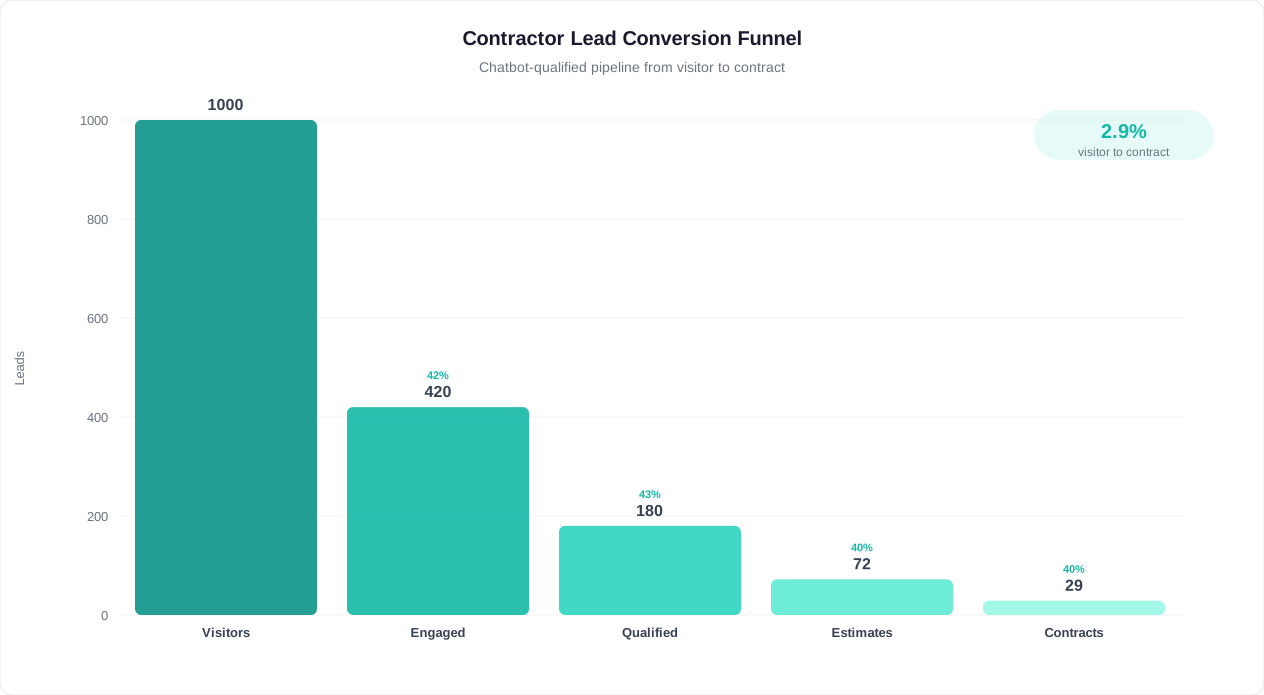
The construction contractor chatbot solves this by handling the initial customer conversation automatically. A homeowner lands on your website after finding you through Google, a referral, or a yard sign. Instead of calling and reaching voicemail, they start a conversation with the chatbot. The bot walks them through a structured intake: project type (new construction, renovation, addition, kitchen and bath, roofing, commercial), property type, budget range, timeline, whether they have architectural plans, and how they plan to finance the project. By the end of the conversation, you have a fully qualified lead with project description, address, name, email, phone number, and preferred callback time -- delivered to your inbox or CRM before you even leave the job site.
This is not a generic chatbot adapted for construction. The conversation flow is designed around the specific qualifying questions that experienced estimators ask on every initial call: What type of project? What kind of property? What is the budget range? When do you want to start? Do you have plans or do you need design-build? How are you financing? These questions determine whether a lead is worth pursuing, how to prioritize it, and which estimator or project manager should handle the consultation. The chatbot collects this intelligence systematically, with zero variability in the intake quality, regardless of whether the inquiry comes in at 2 PM on a Tuesday or 11 PM on a Saturday.
Built on Conferbot's no-code builder, the construction contractor chatbot deploys on your website, Google Business Profile, and messaging channels within hours. No coding or IT staff required. Your office manager, marketing coordinator, or you personally can configure the bot, adjust the questions, and start capturing leads the same day. For contractors who have been losing leads to voicemail and contact forms that go unanswered for days, this changes the economics of lead generation immediately.
How the Contractor Lead Capture Chatbot Works
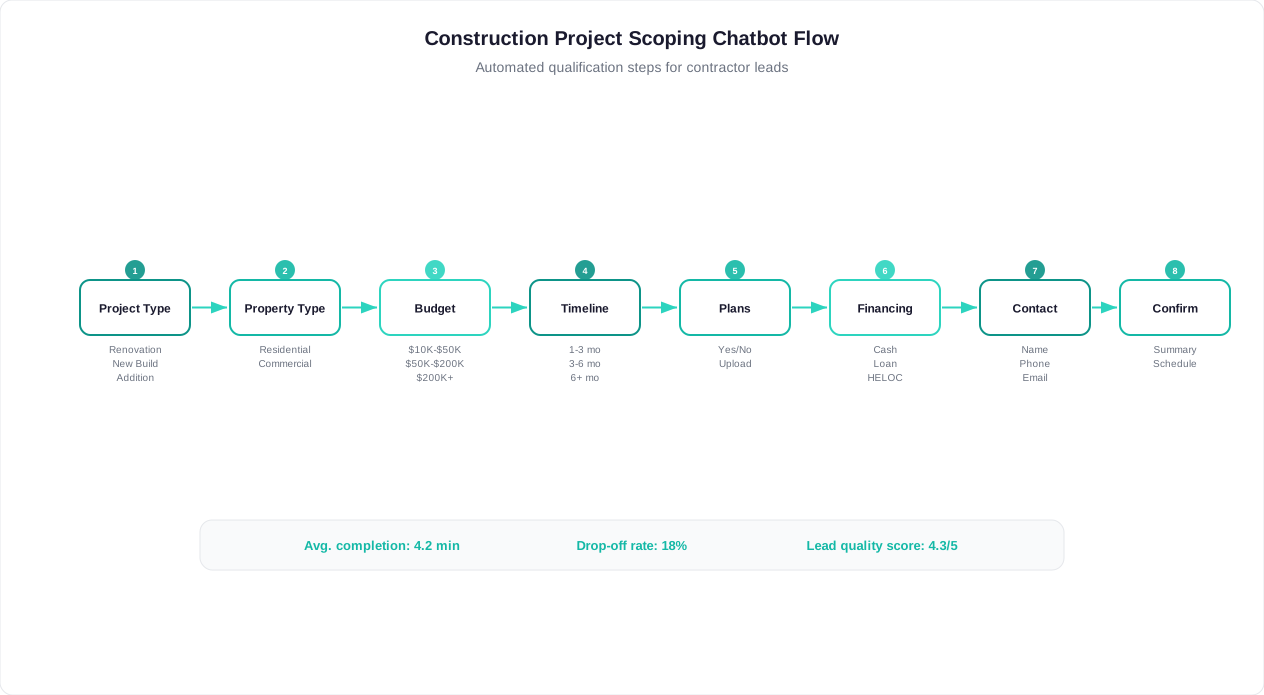
The construction contractor chatbot follows a structured intake flow modeled on how the best estimators qualify leads on the phone. Every question serves a purpose: filtering serious inquiries from tire-kickers, gathering enough information to prepare a meaningful consultation, and creating urgency for timely follow-up. Here is how the conversation progresses step by step.
Stage 1: Project Type Identification
The conversation opens with a professional greeting that establishes your company identity and immediately asks the most important qualifying question: what type of project are you planning? The options cover the full range of construction services -- new construction, renovation and remodel, room or floor additions, kitchen and bath, roofing and exterior, and commercial build-out. This single question routes the rest of the conversation and determines which estimator receives the lead. A commercial build-out inquiry goes to your commercial division; a kitchen remodel goes to your residential team. The chatbot handles this routing automatically using Conferbot's NLP capabilities, even when customers describe their project in conversational language rather than selecting a predefined option.
Stage 2: Property and Scope Qualification
After project type, the chatbot collects property type (single family, multi-family, commercial, industrial) and budget range. Budget range is the most important qualifier for construction companies because it determines whether the project fits your capabilities and minimums. A general contractor with a $50,000 minimum project size does not want to spend an hour on a consultation for a $5,000 fence repair. The budget range question filters these inquiries politely -- the chatbot thanks the customer and can suggest alternative resources for projects below your threshold, while prioritizing leads in your target range.
Stage 3: Timeline and Readiness Assessment
Timeline questions reveal lead urgency. A customer who is "ready to start ASAP" is a hot lead that needs same-day follow-up. A customer "still in the planning phase" is valuable but can be nurtured over weeks. The chatbot also asks about architectural plans: whether the customer has plans ready, has sketches, needs design help, or is still at the concept stage. This tells your team whether the first meeting is a design-build consultation or a plan review and estimate session -- two very different conversations that require different preparation.
Stage 4: Financing and Project Details
Financing readiness is a qualifier that many contractors skip on initial calls but regret later. A customer paying cash is ready to move. A customer who needs a construction loan may need 60-90 days before breaking ground, which affects your scheduling and pipeline forecasting. The chatbot asks about financing (cash, home equity, construction loan, or needs guidance) and then collects a free-text project description where the customer explains their vision in their own words. This description is gold for estimators -- it reveals scope, complexity, and customer expectations before the first phone call.
Stage 5: Contact Information and Scheduling
With the project fully scoped, the chatbot collects the customer's name, email, phone number, project address, and preferred callback time. Every field is captured reliably -- no illegible handwriting, no missed digits, no forgetting to ask for the project address. The completed lead is delivered to your CRM integration or email inbox as a structured record that your estimator can review in 30 seconds and prepare a meaningful response before making the callback.
Key Features: Project Scoping, Estimate Requests, and Portfolio Showcase
The construction contractor chatbot includes features designed around the specific workflows of general contracting businesses. These are not generic lead capture tools repurposed for construction -- they address the real operational challenges that contractors face when converting website visitors into signed contracts.
Structured Project Scoping
The chatbot collects six distinct data points about every project before asking for contact information: project type, property type, budget range, timeline, plan readiness, and financing method. This structured approach means your estimator receives leads that are pre-qualified to the same standard as a 15-minute phone consultation. Compare this to a typical website contact form that collects a name, email, and a one-line message like "I want to remodel my kitchen." The chatbot extracts 5-10x more actionable information per lead, which reduces the time between first contact and a qualified estimate from days to hours.
Budget Range Qualification
Construction is one of the few industries where a single customer inquiry can range from $5,000 to $5,000,000. The budget range question is not about getting an exact number -- customers rarely know their precise budget at the inquiry stage. It is about filtering: ensuring that your high-value estimating time is spent on projects that match your company's capabilities and minimums. The chatbot presents budget ranges (under $25K, $25K-$100K, $100K-$500K, $500K+, and "not sure yet") that let customers self-select without feeling pressured. Leads are tagged by budget range in your CRM, enabling priority-based follow-up workflows.
Plan Readiness Assessment
Whether a customer has architect plans ready, has sketches, needs design-build services, or is still conceptualizing fundamentally changes the sales conversation. A customer with plans ready needs an estimate and a start date. A customer who needs design help needs a collaborative design-build consultation. The chatbot captures this distinction upfront, allowing your team to prepare the right materials, portfolio examples, and conversation approach before the callback. This preparation is what separates contractors who close at 40% from those who close at 15% -- the customer feels that you understood their needs before you even spoke.
After-Hours Lead Capture
Construction company websites receive a disproportionate share of traffic in the evening and on weekends, when homeowners have time to research and plan. These are high-intent visitors: they are actively looking at contractors, comparing options, and deciding who to contact. Without a chatbot, their only options are a contact form (low engagement, low conversion) or a phone number (which goes to voicemail after hours). The chatbot engages these visitors in a real conversation, captures their complete project details, and confirms that a project manager will call them at their preferred time. This single capability -- converting after-hours traffic into qualified leads -- typically pays for the chatbot within the first week of deployment.
Multi-Channel Deployment
The same lead capture flow deploys across your website, WhatsApp, Facebook Messenger, and Instagram direct messages. Construction companies increasingly generate leads through social media -- project photos on Instagram, before-and-after posts on Facebook, and WhatsApp conversations with referrals. The chatbot provides a consistent intake experience across all channels, with every lead flowing into the same CRM pipeline regardless of where the conversation started. Conferbot's omnichannel integration unifies the data so your team works from a single lead queue.
Customizable Service Categories
Every construction company has a different service mix. A general contractor that specializes in custom homes needs different project type options than a company focused on commercial tenant improvements. The chatbot's choice options are fully configurable through Conferbot's visual builder -- add, remove, or rename project types, budget ranges, and timeline options to match your specific business. No code changes required. Your office manager can update the chatbot in minutes when you add a new service line or adjust your minimum project size.
Ready to try Construction Contractor Chatbot?
Deploy this template in under 10 minutes. No coding required.
Use This Template Free →Benefits for Contractors and Construction Companies
The financial and operational impact of deploying a construction contractor chatbot is measurable across the metrics that matter most to general contractors: leads captured, consultation-to-contract conversion rate, estimating labor efficiency, and revenue per marketing dollar spent. Here is how each benefit plays out in practice.
Capture Leads You Are Currently Losing
The average general contractor misses 40-60% of inbound phone calls during business hours because crews, estimators, and project managers are on job sites. After hours and on weekends, the miss rate is 100% for companies without an answering service. Each missed call from a qualified prospect represents $5,000-$50,000 or more in potential revenue depending on your typical project size. The chatbot captures these leads with complete project details, 24 hours a day, 7 days a week. A mid-size contractor generating 30-50 website visits per day typically captures 8-15 additional qualified leads per month through the chatbot that would have been lost to voicemail or form abandonment.
Reduce Estimating Waste
Estimators at construction companies spend 30-40% of their time on leads that never convert: projects that are too small, customers who are not ready, budgets that do not match scope, or inquiries from outside the service area. The chatbot's structured intake qualifies leads before an estimator invests any time, filtering out projects that do not meet your criteria and prioritizing leads that are ready to move. The result is fewer wasted site visits, fewer estimates that go nowhere, and more estimating time focused on closable opportunities. Construction companies report a 25-35% improvement in estimate-to-contract conversion rate after deploying structured pre-qualification through the chatbot.
Faster Response Time Wins More Contracts
In construction, the contractor who responds first wins the job 35-50% of the time. Homeowners and businesses contact 2-4 contractors for any given project. The first contractor to call back with an intelligent, prepared response creates the anchor impression. The chatbot ensures your response is fastest by delivering qualified leads to your team in real time with all the context needed to make an informed callback immediately. Instead of leaving a voicemail that says "Thanks for calling, we will get back to you," your estimator calls back with "I see you are planning a kitchen renovation in the $50K-$100K range with plans ready -- I would love to review them with you. Does Thursday morning work for a site visit?"
Professional First Impression at Scale
Your website is often the first interaction a potential customer has with your company. A chatbot that asks intelligent, industry-specific questions signals professionalism and competence. It tells the customer that your company is organized, responsive, and takes their project seriously. Compare this to a generic "Leave us a message" contact form or a phone that rings to voicemail with a generic greeting. The chatbot interaction builds confidence before any human conversation takes place, increasing the likelihood that the customer follows through to the consultation rather than moving to the next contractor on their list.
Data-Driven Pipeline Management
Every lead captured through the chatbot is structured, tagged, and stored in your CRM. Over time, this creates a dataset that reveals patterns: which project types generate the most inquiries, which budget ranges convert at the highest rate, how timeline urgency correlates with close rate, and whether customers with architect plans close faster than those needing design-build. This intelligence, available through Conferbot's analytics dashboard, enables smarter marketing spending, better capacity planning, and more accurate revenue forecasting than gut-feel estimates based on remembered phone conversations.
Lead Capture and Revenue Impact Data
Construction companies operate on thin margins with high revenue per project. The economic impact of capturing even a few additional qualified leads per month is significant. Here is the data from contractors who have deployed chatbot-based lead capture, compared against traditional phone and form-based intake workflows.
| Metric | Phone / Contact Form Only | With Construction Chatbot | Impact |
|---|---|---|---|
| Website visitor to lead conversion rate | 2-4% | 8-14% | 3-4x improvement |
| After-hours lead capture rate | 5-10% | 75-90% | 8-15x improvement |
| Average lead response time | 4-24 hours | Under 5 minutes | 90%+ faster |
| Lead qualification completeness | 30-50% of fields captured | 95-100% of fields captured | 2-3x more data per lead |
| Estimate-to-contract conversion rate | 15-25% | 30-45% | +15-20 percentage points |
| Monthly qualified leads (mid-size contractor) | 15-25 | 25-40 | +10-15 additional leads |
| Cost per qualified lead | $150-$400 | $60-$150 | 50-65% reduction |
| Missed call recovery rate | 20-30% call back | 85-95% captured by bot | 3-4x recovery |
Revenue Impact Modeling
Consider a general contractor with an average project value of $75,000 and a current estimate-to-contract conversion rate of 20%. If the chatbot adds 10 qualified leads per month and improves conversion to 35%, the math works as follows:
| Scenario | Monthly Leads | Conversion Rate | Projects Won | Monthly Revenue |
|---|---|---|---|---|
| Without chatbot | 20 | 20% | 4 | $300,000 |
| With chatbot | 30 | 35% | 10.5 | $787,500 |
| Difference | +10 | +15 pts | +6.5 | +$487,500 |
These numbers are not hypothetical. The revenue impact comes from two compounding factors: more leads entering the pipeline (the chatbot captures inquiries that would have been lost) and higher conversion on those leads (because the estimator is better prepared and responding faster). Even at conservative assumptions -- 5 additional leads per month with a 5 percentage point conversion improvement -- a contractor with $75,000 average project value adds over $100,000 in monthly pipeline from the chatbot alone.
Cost Per Lead Economics
Construction companies spend $150-$400 per qualified lead through traditional channels: Google Ads, HomeAdvisor, Angi, referral fees, and print advertising. These channels drive traffic to your website, but the website's conversion mechanism (phone number and contact form) loses 60-80% of visitors before they become leads. The chatbot increases the conversion rate on existing traffic, reducing the effective cost per lead from your existing marketing spend. If you spend $5,000 per month on advertising that generates 500 website visits and 15 leads ($333 per lead), adding a chatbot that doubles conversion to 30 leads cuts your cost per lead to $167 -- without spending an additional dollar on advertising. The chatbot pays for itself from the first additional lead captured each month.
Solving the Missed Call Problem for Contractors
The missed call problem in construction is not a minor inconvenience -- it is the single largest source of preventable revenue loss for most contracting businesses. Understanding the scope of the problem and how the chatbot addresses it requires looking at the operational realities of running a construction company.
Why Contractors Miss Calls
General contractors, by definition, are general. The owner or lead estimator is simultaneously managing active job sites, meeting with architects, reviewing plans, handling permit offices, managing subcontractors, dealing with material suppliers, attending inspections, and -- somewhere in between -- trying to answer the phone to grow the business. This is not a staffing failure. It is a structural reality of the industry. Even contractors who hire dedicated office staff find that those staff members are handling accounts payable, coordinating deliveries, managing subcontractor schedules, and handling existing customer communications. The phone is one of twenty things competing for attention, and when it rings during a busy period, it goes to voicemail.
The Voicemail Dead Zone
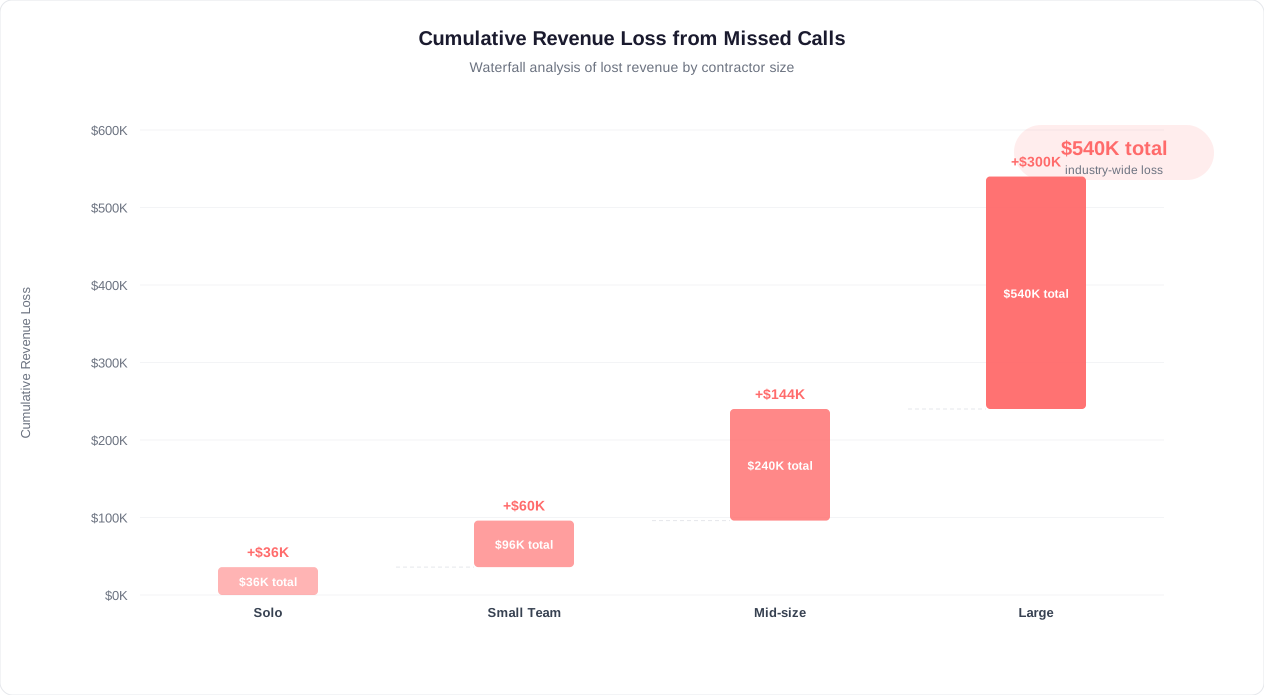
When a potential customer calls a contractor and reaches voicemail, the conversion probability drops dramatically. Industry data shows that only 20-30% of customers who reach voicemail will leave a message, and only 50-60% of those who leave messages will answer the callback when it comes hours or days later. This means that for every 10 qualified prospects who call and reach voicemail, only 1-2 will ultimately connect with an estimator. The other 8-9 have moved on to a competitor who answered the phone or had a chatbot that engaged them immediately. For a contractor with an average project value of $75,000, losing 8 out of 10 qualified inbound calls represents $600,000 in unrealized pipeline per 10 missed calls.
How the Chatbot Fills the Gap
The chatbot does not replace phone calls -- it captures the leads that phone calls miss. The chatbot is available on your website 24/7, requiring zero human attention to operate. When a homeowner finds your website at 8 PM after dinner, sees your portfolio, and wants to discuss a project, the chatbot is there to have that conversation. When a business owner searches for "commercial contractor near me" during their lunch break and lands on your site while your office is swamped with calls, the chatbot handles the intake. The chatbot does not compete with your phone -- it catches everything the phone drops.
After-Hours Is Prime Time
Website analytics for construction companies consistently show that 40-55% of total traffic arrives outside traditional business hours: evenings from 6 PM to 10 PM when homeowners are home from work and researching projects, weekends when homeowners walk through their houses identifying what they want to change, and early mornings before the workday starts. This traffic is high-intent -- these are people actively seeking a contractor, not casually browsing. Without a chatbot, this entire segment of your highest-intent traffic has no conversion mechanism other than a contact form (5-10% submission rate) or a phone number they know will go to voicemail. The chatbot converts 15-25% of these after-hours visitors into qualified leads, turning your website's dead hours into your most productive lead generation period.
The Competitive Speed Advantage
Homeowners requesting construction estimates typically contact 2-4 contractors simultaneously. Research across service industries consistently shows that the first responder wins the job 35-50% of the time. The chatbot ensures you are always the first responder: the lead is captured and delivered to your team within seconds of the customer completing the conversation. While your competitors are returning calls from yesterday's voicemails, your estimator is already reviewing a complete project brief and scheduling a site visit. This speed advantage compounds over time -- as your pipeline fills with leads your competitors never even knew existed, your revenue grows while your marketing spend stays flat.
50,000+ businesses use Conferbot templates to automate conversations
Integration with Construction CRM and Project Management Tools
A construction chatbot that captures leads but does not feed them into your existing workflow creates an extra step rather than eliminating one. Integration with your CRM, project management software, and estimating tools is what transforms the chatbot from a standalone widget into an extension of your sales pipeline. Here is how Conferbot connects with the tools construction companies actually use.
CRM and Lead Management Integration
Every lead captured by the chatbot is automatically pushed to your CRM through Conferbot's API integration framework. For construction companies using HubSpot, the chatbot creates a new contact with all captured fields mapped to HubSpot properties: project type, budget range, timeline, plan readiness, financing method, project description, and preferred callback time. Leads are assigned to the appropriate estimator based on project type and budget range rules you configure. For Salesforce users, the integration creates leads or opportunities with custom field mapping. For companies using construction-specific CRMs like Buildertrend, CoConstruct, or JobNimbus, the chatbot delivers leads via webhook or email notification with structured data that maps to your intake workflow.
Project Management Tool Connection
Once a lead converts to a project, the data captured by the chatbot flows into your project management system. For Buildertrend and CoConstruct, the project record is pre-populated with the customer's contact information, project description, address, and scope details collected during the chatbot conversation. This eliminates the duplicate data entry that happens when a salesperson takes notes during a phone call and then has to manually enter everything into the PM system. The customer's own words describing their project are preserved exactly as they typed them -- no interpretation or abbreviation by a salesperson taking notes during a busy call.
Estimating Workflow Integration
The chatbot's structured data accelerates the estimating process. When your estimator opens a new lead from the chatbot, they see the project type, budget range, property type, timeline, plan readiness, and project description in a standardized format. For companies using estimating software like STACK, PlanSwift, or Clear Estimates, the project metadata from the chatbot can be attached to the estimate file, ensuring continuity from initial inquiry through final proposal. Estimators report spending 30-40% less time on initial lead review when the data comes from the chatbot versus a voicemail transcription or handwritten notes from a phone call.
Email and Notification Automation
Immediate follow-up after a lead is captured is critical. Conferbot's integration supports automated email sequences triggered when a new lead completes the chatbot conversation. The customer receives an immediate confirmation email thanking them for their inquiry, confirming that a project manager will call at their preferred time, and including a link to your portfolio of relevant projects (filtered by the project type they selected). Simultaneously, your estimator receives an email or push notification with the complete lead details and a one-click link to the customer's contact record in your CRM. For teams using Slack, the lead notification can post to a dedicated channel where the sales team can claim and respond to leads in real time through the integrations hub.
Google Analytics and Ad Tracking
The chatbot fires conversion events to Google Analytics and Google Ads when a visitor completes the lead capture flow. This means your Google Ads campaigns can optimize for actual qualified leads from the chatbot, not just website visits or contact form submissions. For contractors spending $2,000-$10,000 per month on Google Ads, this conversion data significantly improves campaign performance by training Google's algorithm on which clicks generate real construction leads rather than generic traffic. Facebook and Instagram ad tracking is supported through the same mechanism for contractors running social media advertising campaigns.
Getting Started with Your Construction Chatbot
Deploying the construction contractor chatbot takes 1-3 hours for a basic setup and 1-2 days for a fully integrated deployment with CRM connections and custom branding. The process is designed for non-technical users -- if you can fill out a form and copy-paste a code snippet, you can deploy the chatbot. Here is the step-by-step process.
Step 1: Clone the Template
Open the Conferbot template library and select the Construction Contractor Chatbot. Click "Use This Template" to clone it to your workspace. The template arrives with the complete conversation flow pre-built: project type, property type, budget range, timeline, plan readiness, financing, project description, address, contact information, and confirmation message. Review the flow in the visual builder before making changes to understand the structure.
Step 2: Customize Your Brand and Services
Replace the template branding with your company details. Update the logo text, tagline, header colors, and bot message colors to match your company's visual identity. Then review and customize the choice options: if you do not do roofing, remove it from the project type options. If your minimum project size is $50,000, adjust the budget range options accordingly. If you specialize in specific property types, reorder the options to put your primary market first. Change the confirmation message to include your actual phone number, your company name, and your specific follow-up process.
Step 3: Connect Your CRM or Email
In the Conferbot integrations hub, connect the chatbot to your lead management workflow. The simplest option is email notification: every completed lead is sent to your designated email address as a formatted summary with all captured fields. For CRM integration, connect HubSpot, Salesforce, or your preferred CRM and map the chatbot's data fields to your CRM properties. For Buildertrend or CoConstruct users, configure the webhook integration to push leads directly into your project pipeline. Test the integration by completing the chatbot flow yourself and verifying the lead arrives correctly in your CRM.
Step 4: Deploy on Your Website
Copy the embed code from the Conferbot dashboard and paste it into your website. Place the chatbot widget on your homepage, services page, portfolio page, and contact page -- these are the highest-traffic pages where potential customers are most likely to convert. If your website is built on WordPress, Squarespace, Wix, or another common platform, Conferbot provides platform-specific installation guides. The widget loads asynchronously, so it does not slow down your page load speed. Test the chatbot on desktop and mobile to verify it displays correctly on both.
Step 5: Set Up Response Workflows
Define how your team responds to chatbot leads. At minimum, establish a response time commitment (within 2 hours during business hours, first thing next morning for after-hours leads) and assign responsibility for follow-up. For larger teams, set up round-robin assignment or project-type-based routing so leads go directly to the right estimator. Configure the automated customer confirmation email to set expectations about when they will hear from you. The gap between lead capture and first human contact is where deals are won or lost -- make this process airtight.
Step 6: Monitor and Optimize
In the first two weeks, check the analytics dashboard daily. Track how many conversations start, how many complete the full flow, and where drop-offs occur. Common early issues include budget range options that do not match your market (if most visitors select "Not sure yet," your ranges may be too specific), project type options that are missing a common request, or a confirmation message that does not clearly explain next steps. Make iterative adjustments based on the data. Most contractors find that after 2-3 rounds of optimization in the first month, the chatbot conversation flow stabilizes with a completion rate above 60% -- meaning more than 6 out of 10 visitors who start a conversation provide their full project details and contact information.
Construction Contractor Chatbot FAQ
Everything you need to know about chatbots for construction contractor chatbot.
Why Use a Template vs Building from Scratch?
Templates encode years of optimization data into the conversation flow before you start.
| Factor | Conferbot Template | Build from Scratch | Hire a Developer |
|---|---|---|---|
| Time to deploy | 10 minutes | 2-8 hours | 2-6 weeks |
| Cost | Free | Your time | $5,000-$25,000 |
| Day-1 conversion | 15-22% | 5-8% | 10-15% |
| Proven flows | Yes, data-tested | No | Depends |
| Updates included | Automatic | Manual | Paid |
| Multi-channel | 8+ channels | 1 channel | Extra cost |
| Analytics | Built-in | Must build | Extra cost |
Ready to Deploy Construction Contractor Chatbot?
Join 50,000+ businesses. Free forever plan available. No credit card required.