
Painting Contractor Lead Chatbot
Free Construction Chatbot Template
A professional painting contractor chatbot that captures leads by qualifying prospects through service type, property details, surface condition, and timeline preferences. Collects contact information and schedules estimates for interior, exterior, commercial, and cabinet refinishing projects.



What Is a Painting Contractor Lead Chatbot?
A painting contractor lead chatbot is a conversational AI assistant built for residential and commercial painting companies to qualify project inquiries, capture detailed scope information, assess surface preparation needs, guide color consultation discussions, and schedule in-person estimates -- all through an automated conversation that runs 24 hours a day without requiring a painter or office manager to answer the phone. In 2026, the residential painting industry is fiercely competitive. Homeowners searching for painters typically contact 3-5 companies, and the contractor who responds first with intelligent, specific questions wins the estimate appointment 40-50% of the time. But most painting companies are small operations -- the owner is on a job site with a brush in hand, the crew is working, and the phone sits in a paint-splattered pocket going to voicemail. Every unanswered call is a $3,000-$15,000 project that walks to a competitor.
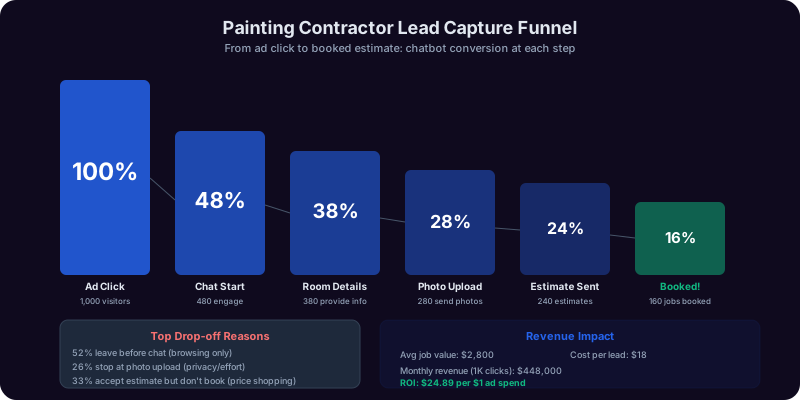
The painting contractor lead chatbot solves this by conducting the initial project intake conversation automatically. A homeowner lands on your website after searching "painters near me" on Google, seeing your wrapped van in the neighborhood, or getting a recommendation from a friend. Instead of calling and reaching voicemail, they start a conversation with the chatbot. The bot walks them through a structured intake: Is this an interior or exterior project? (or both) How many rooms or what exterior areas? What is the current condition of the surfaces? (good condition, minor repairs needed, significant prep work required) Do you need color consultation or do you already know your colors? What is your timeline? Do you have any special requirements (lead paint concerns, HOA color restrictions, specific paint brand preferences)? Within 3-5 minutes, the homeowner has communicated their complete project vision, and you have a fully qualified lead with scope, condition assessment, timeline, and contact information delivered to your inbox or CRM before you climb down from the ladder.
This is not a generic lead capture form dressed up as a conversation. The intake flow is designed around the specific questions that experienced painting estimators ask during initial consultations. Every question serves a purpose: interior versus exterior determines crew composition and equipment needs, room count determines project duration and pricing, surface condition determines prep labor (which can be 50-70% of total project cost on older homes), and timeline determines scheduling priority. The chatbot collects this intelligence consistently, with zero variability in intake quality, whether the inquiry arrives at noon on a Tuesday or midnight on a Saturday. Built on Conferbot's no-code builder, the painting contractor chatbot deploys on your website, WhatsApp, and social media channels within hours. No coding or IT staff required.
For painting contractors who have been losing leads to missed calls and slow response times, the chatbot changes the economics of lead generation immediately. The Painting and Decorating Contractors of America (PDCA) estimates that the average painting company converts only 25-35% of estimates into signed contracts. The chatbot improves this by ensuring estimators arrive at every appointment with complete project knowledge, enabling them to prepare more accurate proposals and demonstrate preparedness that builds customer confidence.
How the Painting Contractor Lead Chatbot Works
The painting contractor lead chatbot follows a structured qualification flow that mirrors how experienced painting estimators assess projects during initial phone consultations. Each stage collects data points that determine project scope, complexity, and pricing -- ensuring the estimator who follows up has everything needed to prepare a meaningful proposal.
Stage 1: Project Type Classification
The conversation opens with a professional greeting and immediately asks the fundamental routing question: Is this an interior painting project, exterior painting project, or both? This question determines the entire downstream conversation path. Interior projects trigger room-by-room questions, ceiling inclusion, trim and baseboard details, and cabinet refinishing options. Exterior projects trigger questions about siding type, number of stories, trim and shutters, deck or fence painting, and accessibility. Combined projects flow through both paths. The chatbot handles this routing seamlessly using Conferbot's NLP engine, even when homeowners describe their project conversationally: "I want to redo the living room and paint the outside of the house" is correctly interpreted as both interior and exterior.
Stage 2: Scope Quantification (Interior)
For interior projects, the chatbot collects room-by-room details. It asks how many rooms need painting and then walks through each room type: bedrooms, living areas, kitchen, bathrooms, hallways, and stairwells. For each room, it captures: walls only or walls and ceiling? Include trim, baseboards, and door frames? Any accent walls or special finishes (two-tone, textured, metallic)? This level of detail allows the estimator to prepare a line-by-line proposal rather than a single lump-sum number, which homeowners consistently prefer because it shows what they are paying for. The chatbot also asks about cabinet refinishing (kitchen and bathroom cabinets are high-value add-ons that homeowners often do not think to request until prompted), closet interiors, and garage painting.
Stage 3: Scope Quantification (Exterior)
For exterior projects, the chatbot collects: siding type (wood, vinyl, stucco, brick, fiber cement, aluminum), number of stories, approximate square footage of the home (or the chatbot estimates based on bedroom count), condition of exterior surfaces, and which elements need painting -- body, trim, soffits and fascia, shutters, doors, gutters and downspouts, deck, fence, and outbuildings. Siding type determines preparation requirements and paint product recommendations. Number of stories determines equipment needs (ladders versus scaffolding versus lift rental) which significantly affects pricing. The chatbot captures all of this before the estimator visits the property, enabling them to arrive prepared with the right measurement tools and product knowledge.
Stage 4: Surface Condition Assessment
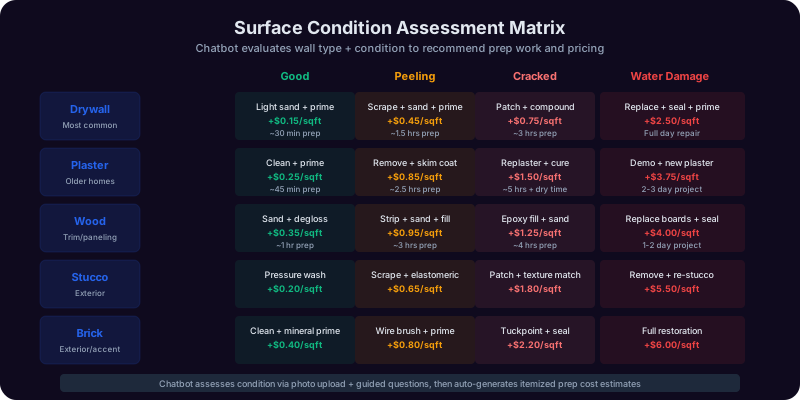
Surface condition is the single largest variable in painting project pricing. The chatbot asks about current surface conditions using plain-language descriptions that homeowners can assess without expertise: "How would you describe the condition of the surfaces to be painted?" Options include: Good condition (paint is intact, minor touchups needed), Fair condition (some peeling, cracking, or fading visible), Poor condition (significant peeling, bare wood exposed, water damage visible), and I am not sure (the estimator will assess during the site visit). For exterior projects, the chatbot also asks about known issues: wood rot, mildew or mold, chalking paint, lead paint concerns (for homes built before 1978), and previous paint type (oil vs. latex) which affects preparation requirements. This condition data is critical for accurate estimating -- a "good condition" interior repaint might cost $3,000 while the same rooms in "poor condition" requiring extensive scraping, patching, and priming might cost $6,000-$8,000.
Stage 5: Color and Finish Consultation
The chatbot asks about the homeowner's color readiness: "Do you already have your colors selected, or would you like color consultation as part of the project?" Homeowners who have colors selected are asked to note the brand and color names/numbers if known. Homeowners who want consultation are informed that your estimator will bring color samples and can provide professional guidance during the site visit. The chatbot also asks about finish preferences (flat, eggshell, satin, semi-gloss, high-gloss) and whether the homeowner has a paint brand preference (Benjamin Moore, Sherwin-Williams, Behr, PPG, Farrow and Ball, or "whatever you recommend"). Brand preference affects material cost and can indicate the homeowner's budget expectations -- a homeowner requesting Farrow and Ball has different quality expectations than one asking for the most economical option.
Stage 6: Timeline, Contact, and Estimate Scheduling
The chatbot collects timeline urgency (ASAP, within the next month, within 2-3 months, flexible/seasonal), preferred contact method, name, email, phone number, and property address. It then offers to schedule the on-site estimate: "Our estimator can visit your property to provide a detailed, written proposal. Available times this week include [pulled from your calendar]. Which works best for you?" The complete project profile is delivered to your CRM or email with all scope details, condition assessment, color status, and the scheduled estimate appointment -- enabling your estimator to arrive prepared, professional, and ready to close.
Key Features: Room Scoping, Surface Assessment, and Color Consultation
The painting contractor lead chatbot includes features designed specifically for the painting industry's estimation and sales workflows. These are not generic lead capture tools -- they address the specific challenges painting companies face when converting website visitors into signed contracts.
Room-by-Room Interior Scoping
The chatbot's interior scoping engine collects detailed information for each room: type, walls and/or ceiling, trim and baseboards, doors and frames, and special finishes. This granular data enables line-item estimating that homeowners prefer over lump-sum pricing. When your estimator presents a proposal that breaks down cost by room -- "Master Bedroom: $650 (walls, ceiling, trim), Living Room: $850 (walls, ceiling, two-tone accent wall)" -- the homeowner can adjust scope to fit their budget by deferring specific rooms to a later phase. This flexibility increases close rates because the homeowner never has to make an all-or-nothing decision on a large project.
Surface Condition Assessment Intelligence
The chatbot's condition assessment is designed to set realistic expectations before the estimator arrives. When a homeowner indicates "poor condition" with peeling paint and exposed wood, the chatbot responds: "Thank you for sharing that. Significant surface preparation will be needed before painting, which affects the project timeline and cost. Our estimator will assess the full scope of prep work needed during the site visit and provide a detailed proposal. Surface prep is actually the most important part of a quality paint job -- it ensures the new finish lasts for years." This educational response prevents sticker shock at the estimate appointment and positions your company as quality-focused, not just price-focused.
Color Consultation Qualification
Identifying whether the homeowner needs color help before the site visit allows your estimator to prepare appropriately. For homeowners who want consultation, the estimator brings fan decks, large color samples, and possibly a digital color visualization tool. For homeowners who have colors selected, the estimator can focus on scope and preparation rather than spending 30-45 minutes on color discussion. This preparation efficiency means your estimator can conduct more appointments per day with higher close rates, because each appointment is tailored to the homeowner's actual needs rather than a generic one-size-fits-all presentation.
Lead Paint Identification (Pre-1978 Homes)
For homes built before 1978, the chatbot flags potential lead paint concerns and informs the homeowner about EPA RRP (Renovation, Repair, and Painting) requirements. "Since your home was built before 1978, lead-based paint may be present. Our team is EPA Lead-Safe Certified and follows all required lead-safe work practices. Your estimator will discuss this during the site visit." This proactive communication demonstrates compliance awareness and professionalism, and it prevents the common scenario where a contractor arrives at an older home, discovers lead paint, and has to completely revise the estimate and timeline -- damaging customer confidence. The chatbot collects home age or build year as a standard question for exterior and whole-house interior projects.
Exterior Accessibility Assessment
Multi-story exterior painting requires different equipment depending on the situation: two-story homes with accessible ground may only need extension ladders, while three-story homes or homes on steep slopes may require scaffolding or lift equipment. The chatbot asks about building height, ground conditions around the home (flat, sloped, landscaped beds close to the house), and any access restrictions (fence, narrow side yards, overhead wires). This information helps the estimator prepare an accurate quote that includes the correct equipment costs rather than discovering accessibility challenges during the site visit that require a revised proposal.
Multi-Channel Lead Capture
The same lead capture flow deploys across your website, WhatsApp, Facebook Messenger, and Instagram. Painting companies generate leads through neighborhood visibility (yard signs, wrapped vans, and word of mouth), and many of these referrals reach you through social media rather than your website. The chatbot provides a consistent intake experience across all channels, with every lead flowing into the same pipeline through Conferbot's omnichannel integration.
Ready to try Painting Contractor Lead Chatbot?
Deploy this template in under 10 minutes. No coding required.
Use This Template Free →Benefits for Painting Contractors and Companies
The financial and operational impact of deploying a painting contractor lead chatbot is measurable across the metrics that matter most to painting businesses: leads captured, estimate-to-contract close rate, estimating efficiency, and revenue per marketing dollar spent.
Capture the Leads Your Phone Misses
Painting contractors miss 40-60% of inbound calls during business hours because the crew is on a job site, music is playing, compressors are running, and the phone is in a pocket under a paint suit. After hours and on weekends, the miss rate approaches 100%. Each missed call from a qualified prospect represents $3,000-$15,000 in potential revenue. The chatbot captures these leads around the clock with complete project details. A typical painting company website with 20-40 daily visitors generates 5-10 additional qualified leads per month through the chatbot that would have been lost to voicemail or form abandonment -- leads that represent $15,000-$100,000+ in potential revenue at average residential project values.
Win More Estimates Through Preparation
When your estimator arrives at a property already knowing the scope (8 rooms interior, ceilings included, fair surface condition, customer wants eggshell finish in Benjamin Moore colors), they project competence and preparation that most competitors cannot match. The homeowner's first impression is: "This company is organized and takes my project seriously." Compare this to the competitor whose estimator walks in cold and spends 15 minutes asking basic questions that the homeowner already answered on the phone to someone who did not take good notes. Painting companies report 15-25% improvement in estimate-to-contract close rates when estimators arrive prepared with chatbot-collected project data.
Reduce Estimation Waste
Not every inquiry deserves an in-person estimate. A homeowner who wants one accent wall painted is a different lead priority than a homeowner who wants 12 rooms and the exterior done. The chatbot's scope data lets you prioritize: large-scope, ready-to-start projects get same-day estimate scheduling, while smaller projects can be handled with phone estimates or next-available-slot scheduling. This prioritization ensures your estimator's time is spent on the highest-value opportunities. Painting companies report saving 5-10 hours per month in wasted estimate visits for projects that were too small or not serious by using chatbot pre-qualification data to filter and prioritize leads.
Professional Online Presence That Matches Your Work Quality
Many painting companies do exceptional work but have minimal digital presence -- a basic website with a phone number and a portfolio gallery. The chatbot adds an interactive, professional element that signals a modern, responsive business. Homeowners evaluating multiple painters notice the difference between a website that engages them in a helpful conversation and one that simply says "Call for a free estimate." The chatbot creates a first impression that matches the quality of your paint work, bridging the gap between in-person excellence and online mediocrity that costs many skilled painters business they deserve.
Data-Driven Business Intelligence
Over time, the chatbot generates data that reveals patterns about your market: which project types are most requested (interior vs. exterior, residential vs. commercial), which surface conditions are most common in your service area (this affects crew preparation and supply stocking), what percentage of customers want color consultation (informing your staffing and training decisions), and how timeline urgency varies by season. Conferbot's analytics dashboard makes this data accessible without spreadsheet analysis, helping you make smarter decisions about marketing, staffing, equipment investment, and service offerings.
Lead Capture and Revenue Impact Data
Painting companies operate with relatively low overhead and high labor cost per project. The economic impact of capturing additional qualified leads and improving close rates is direct and significant. Here is the data from painting contractors who have deployed chatbot-based lead capture.
| Metric | Phone / Contact Form | With Painting Chatbot | Impact |
|---|---|---|---|
| Website visitor to lead conversion | 2-5% | 8-16% | 3-4x improvement |
| After-hours lead capture rate | 5-10% | 70-85% | 7-14x improvement |
| Average lead response time | 4-24 hours | Under 5 minutes | 90%+ faster |
| Lead qualification completeness | 30-40% of details captured | 90-100% of details captured | 2.5-3x more data per lead |
| Estimate-to-contract close rate | 25-35% | 40-55% | +15-20 percentage points |
| Monthly qualified leads (typical company) | 15-30 | 25-50 | +10-20 additional leads |
| Cost per qualified lead | $100-$300 | $40-$120 | 50-60% reduction |
| Estimator prep time per appointment | 5-10 minutes | 1-2 minutes | 70-80% reduction |
Revenue Impact Modeling
Consider a residential painting company with an average project value of $5,500 and a current close rate of 30%. If the chatbot adds 12 qualified leads per month and improves the close rate to 45%:
| Scenario | Monthly Leads | Close Rate | Projects Won | Monthly Revenue |
|---|---|---|---|---|
| Without chatbot | 20 | 30% | 6 | $33,000 |
| With chatbot | 32 | 45% | 14.4 | $79,200 |
| Difference | +12 | +15 pts | +8.4 | +$46,200 |
The revenue improvement comes from two compounding factors: more leads entering the pipeline and higher conversion on those leads because the estimator is better prepared and responding faster. Even at conservative estimates -- 5 additional leads with a 5-point close rate improvement -- a painting company with $5,500 average project value adds approximately $10,000 in monthly revenue from the chatbot alone. At a cost of under $100 per month for the chatbot platform, the return on investment exceeds 100x within the first quarter.
Using the Chatbot to Set Surface Preparation Expectations
Surface preparation is the most misunderstood and contentious aspect of residential painting. Homeowners consistently underestimate the prep work required, leading to sticker shock when the estimate arrives and disputes when the scope increases during the project. The chatbot addresses this by educating homeowners about surface preparation before the estimate appointment, setting realistic expectations that protect both the homeowner and the contractor.
The Preparation Education Problem
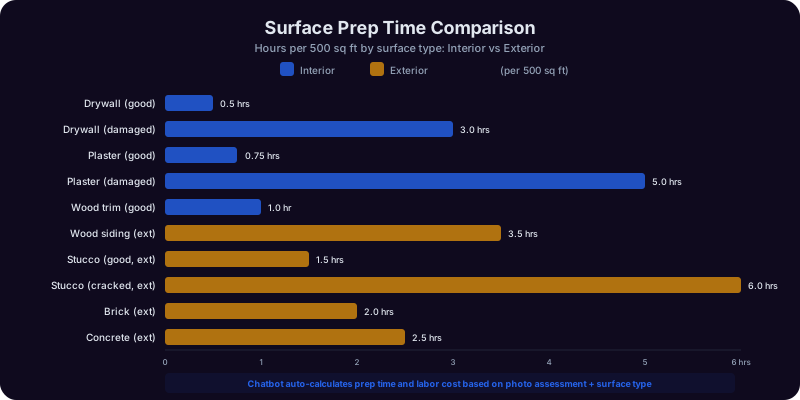
Most homeowners think of painting as: apply paint, done. They do not understand that on an older home, 50-70% of the project cost may be surface preparation -- scraping loose paint, sanding, patching holes and cracks, priming bare surfaces, caulking gaps, repairing wood rot, and treating mildew. When a contractor quotes $8,000 for an exterior repaint and the homeowner expected $3,000 because "it is just paint," the disconnect often kills the sale. The contractor is not overcharging -- the homeowner simply did not understand the scope of preparation required for a quality, long-lasting result.
How the Chatbot Bridges the Gap
When the homeowner indicates "fair" or "poor" surface condition, the chatbot provides educational context: "Surfaces in fair or poor condition require additional preparation before painting -- this is actually the most important part of a quality paint job because proper prep ensures the new paint adheres correctly and lasts for years. Preparation may include scraping loose paint, sanding rough areas, filling cracks and holes, priming bare surfaces, and treating any mildew. Your estimator will assess the exact preparation needed and include it as a separate line item in your proposal so you can see exactly what is included." This message accomplishes three things: it validates that prep is necessary (not a way to pad the bill), it explains why prep matters (longevity of the paint job), and it sets the expectation that prep will be a visible line item in the proposal. Homeowners who receive this education arrive at the estimate appointment with a fundamentally different mindset than those who do not.
Lead Paint Communication
For homes built before 1978, the chatbot explains lead paint considerations clearly: "Homes built before 1978 may contain lead-based paint. Federal EPA regulations require contractors to follow lead-safe work practices when disturbing paint on these homes. This includes containment, specialized cleaning, and proper waste disposal. Our team holds EPA Lead-Safe Certification and follows all required practices. Your estimator will discuss any lead paint considerations specific to your project during the site visit." This proactive communication prevents the common scenario where lead paint requirements are discovered during the estimate and the homeowner perceives the cost increase as an upsell rather than a regulatory requirement. Contractors who communicate about lead paint before the site visit report significantly fewer disputes about RRP-related costs.
Warranty Connection to Preparation Quality
The chatbot can mention your warranty program in the context of preparation: "We offer a [X]-year warranty on our work because we invest the time in proper surface preparation. Cutting corners on prep might lower the price initially, but it leads to peeling, cracking, and premature failure. Our preparation process ensures the paint job looks great and lasts." This frames preparation cost as an investment in longevity rather than an unnecessary expense, and it differentiates your company from competitors who undercut on price by skipping preparation steps -- a distinction that quality-conscious homeowners deeply appreciate.
50,000+ businesses use Conferbot templates to automate conversations
Integration with CRM, Estimating Software, and Scheduling Tools
A lead chatbot that captures project details but does not feed them into your existing workflow adds a step rather than removing one. Integration with your CRM, estimating tools, and scheduling calendar transforms the chatbot into a core component of your sales pipeline.
CRM and Lead Management Integration
Every lead captured by the chatbot is automatically pushed to your CRM through Conferbot's API integration. For painting companies using HubSpot, Salesforce, Jobber, or Housecall Pro, the chatbot creates a new contact and job record with all captured fields: project type, room count, surface condition, color status, timeline, property address, and contact information. Leads are tagged by project scope and urgency for prioritized follow-up. For companies using simpler tools -- email and spreadsheets -- the chatbot delivers formatted lead summaries to your inbox that can be copied directly into your tracking system.
Estimating Software Integration
For painting companies using estimating software like PaintScout, Estimate Rocket, or ProPainter, the chatbot's scope data provides a starting point for the formal estimate. Room count, ceiling inclusion, trim details, surface condition, and paint preferences map to estimating templates, reducing the time between site visit and proposal delivery. Estimators who can produce a detailed proposal within 24 hours of the site visit (rather than 3-5 days) close at significantly higher rates because the homeowner has not yet received competing proposals.
Calendar and Scheduling Integration
The chatbot syncs with your scheduling calendar to offer estimate appointment slots in real time. When a lead completes the chatbot conversation, they can immediately book an estimate appointment: "Our estimator has availability this Thursday at 10 AM and Friday at 2 PM. Would either of these work?" The appointment is added to your calendar with the complete lead profile attached, so your estimator opens the calendar event and immediately sees the project scope. For companies using Google Calendar, Calendly, or scheduling features within their CRM, the integrations hub provides direct calendar sync with buffer time settings between appointments and travel time consideration.
Review and Referral Automation
After project completion, the chatbot re-engages the homeowner to request a review: "Thank you for choosing [Company Name] for your painting project. We hope you love the results! Would you be willing to share your experience with a quick review?" The message includes direct links to your Google Business Profile, Yelp, and Angi listing. Satisfied customers who had a smooth experience from chatbot inquiry through project completion are significantly more likely to leave reviews when the request comes promptly after the project while their satisfaction is highest.
Getting Started with Your Painting Contractor Lead Chatbot
Deploying the painting contractor lead chatbot takes 1-3 hours for basic setup and 1-2 days for a fully integrated deployment with CRM connections, calendar sync, and custom branding. The process requires no technical skills -- if you can use a smartphone, you can configure this chatbot.
Step 1: Clone the Template
Open the Conferbot template library and select the Painting Contractor Lead Chatbot. Click "Use This Template" to clone it to your workspace. The template includes the complete conversation flow: project type, room/area scoping, surface condition assessment, color consultation qualification, timeline, and lead capture. Review the flow in the visual builder to understand the structure before making changes.
Step 2: Customize Your Services and Qualifiers
Adjust the chatbot to match your specific business. If you do not handle commercial painting, remove that option. If you specialize in cabinet refinishing, add it as a prominent service category. Set your minimum project size if applicable -- the chatbot can politely redirect inquiries that fall below your threshold. Update the lead paint question to reflect whether your company holds EPA RRP certification. Customize the color consultation question to match your actual offering: if you have a color consultant on staff, promote that capability; if you recommend hiring an independent color consultant, the chatbot can suggest that option.
Step 3: Connect Your CRM and Calendar
In the Conferbot integrations hub, connect the chatbot to your CRM and scheduling calendar. Map the chatbot's data fields to your CRM properties. Set up estimate appointment scheduling with your available time slots, buffer times, and service area boundaries. Test the integration by completing the chatbot flow yourself and verifying the lead appears in your CRM and the estimate appointment appears on your calendar with all project details attached.
Step 4: Deploy on Your Website and Social Channels
Embed the chatbot on your website's home page, services page, gallery page, and contact page. Deploy across WhatsApp, Messenger, and Instagram for social media lead capture. Update your Google Ads and social media ads to mention "instant quote" or "chat with us" -- these calls to action significantly improve ad click-through rates compared to "call for a free estimate." The chatbot loads asynchronously on your website, so it does not slow page load speed.
Step 5: Monitor and Optimize
Check the analytics dashboard daily for the first two weeks. Track conversation starts, completion rates, project types requested, surface condition distribution, and lead-to-estimate-appointment conversion. Common early adjustments include: simplifying room scoping questions if completion rates are low, adding a project type option that customers are describing in free text but is not in your menu, and adjusting the surface condition descriptions if customers are consistently selecting "not sure." After 2-3 optimization rounds in the first month, most painting companies see the chatbot stabilize with 55-70% conversation completion rates and a measurable increase in qualified estimate appointments.
Seasonal Marketing Strategy with the Painting Chatbot
The painting industry is seasonal in most markets, with demand peaking in spring and summer for exterior work and staying relatively steady year-round for interior projects. The chatbot adapts to these seasonal patterns, helping you maximize revenue during peak months and generate demand during slower periods.
Spring and Summer: Exterior Season
When spring arrives and homeowners start noticing winter-damaged exteriors, the chatbot can lead with exterior services: "Spring is the perfect time for exterior painting! Are you looking to refresh your home's exterior, or do you have an interior project in mind?" This seasonal framing captures the surge of exterior inquiries while still serving interior customers. During peak exterior season, the chatbot can display expected scheduling lead times: "Our next available exterior estimate appointment is in approximately 2 weeks -- the earlier you schedule, the sooner we can get you on the calendar." This urgency messaging is honest (peak season does create backlogs) and motivates homeowners to commit rather than procrastinate.
Fall and Winter: Interior Focus
During fall and winter when exterior painting slows in most climates, the chatbot shifts focus to interior services: "The cooler months are the ideal time for interior painting -- open windows for ventilation without the heat, and your home looks fresh for the holidays. Planning an interior update?" This seasonal messaging drives year-round revenue by educating homeowners that interior painting is actually better suited to cooler months. Holiday-themed messaging -- "Get your home ready for holiday entertaining with a fresh interior" -- creates urgency around a specific event that motivates action.
Off-Season Promotions
During the slowest months (typically January-February in northern climates), the chatbot can present promotional offers: "Book an interior project this month and receive 10% off labor -- our crews have immediate availability." These promotions fill the revenue gap that all seasonal painting companies experience, keeping crews employed and cash flowing during slow periods. The chatbot automates promotional delivery without requiring the owner to remember to advertise or manually adjust pricing -- set the promotion dates and discount in the chatbot configuration, and it handles the rest.
Seasonal strategy execution is one of the areas where the chatbot's consistency provides the most value. A human answering the phone might forget to mention the winter interior promotion or the spring scheduling urgency message. The chatbot delivers the right seasonal message to every visitor, every time, maximizing the effectiveness of your seasonal marketing strategy across all channels.
Painting Contractor Lead Chatbot FAQ
Everything you need to know about chatbots for painting contractor lead chatbot.
Why Use a Template vs Building from Scratch?
Templates encode years of optimization data into the conversation flow before you start.
| Factor | Conferbot Template | Build from Scratch | Hire a Developer |
|---|---|---|---|
| Time to deploy | 10 minutes | 2-8 hours | 2-6 weeks |
| Cost | Free | Your time | $5,000-$25,000 |
| Day-1 conversion | 15-22% | 5-8% | 10-15% |
| Proven flows | Yes, data-tested | No | Depends |
| Updates included | Automatic | Manual | Paid |
| Multi-channel | 8+ channels | 1 channel | Extra cost |
| Analytics | Built-in | Must build | Extra cost |
Ready to Deploy Painting Contractor Lead Chatbot?
Join 50,000+ businesses. Free forever plan available. No credit card required.