
Trade School & Vocational Training Enrollment Chatbot
Free Education And Training Chatbot Template
A comprehensive trade school chatbot that guides prospective students through program discovery, enrollment, financial aid navigation, apprenticeship matching, lab scheduling, and job placement. Built for trade schools, vocational training centers, community college CTE departments, and union apprenticeship programs.


What Is a Trade School & Vocational Training Enrollment Chatbot?
A trade school and vocational training enrollment chatbot is a conversational AI assistant purpose-built to guide prospective students through every stage of their vocational education journey — from initial program discovery and application through financial aid navigation, hands-on lab scheduling, certification tracking, and employer-connected job placement. In 2026, the skilled trades sector faces a paradox: the U.S. Bureau of Labor Statistics projects 670,000 new skilled-trade jobs annually through 2032, yet trade schools and vocational programs collectively fill fewer than 60% of their available seats each enrollment cycle (National Center for Education Statistics). The root cause is not lack of demand — it is an enrollment process friction problem. Prospective students, often working adults with limited time for phone calls during business hours, abandon inquiry forms at rates exceeding 75% because trade school admissions offices are staffed by 1-3 people who cannot respond to inquiries within the critical 5-minute window that determines whether a lead converts or moves to a competitor.
Why Trade Schools Need Enrollment Chatbot Automation
Trade schools and vocational training centers operate in a fundamentally different enrollment environment than traditional colleges. Their prospective students are disproportionately working adults (62% are 25 or older, per the American Association of Community Colleges), many holding down full-time jobs while exploring career changes. These students research programs at 9 PM after their shift ends, at 6 AM before work, and on weekends — precisely the hours when admissions offices are closed. A chatbot ensures that the plumber considering an electrician certification, the retail worker exploring HVAC training, or the recent high school graduate researching welding programs receives immediate, personalized guidance regardless of when they visit the website. Research from InsideSales.com demonstrates that responding to an inquiry within 5 minutes makes a prospect 21 times more likely to enter the enrollment pipeline compared to a 30-minute response. For trade schools, where the average inquiry-to-enrollment cycle already spans 3-6 weeks, that first response speed determines whether the prospect starts the journey with you or your closest competitor.
The vocational education market is also experiencing unprecedented growth. The skilled trades gap — an estimated 3 million unfilled trade positions in the United States alone — has elevated public awareness of vocational careers, driven by rising plumber and electrician salaries that now frequently exceed $75,000-$100,000 annually. Media coverage, guidance counselor advocacy, and employer-funded training partnerships have driven trade school inquiry volumes up 32% since 2020 (Association for Career and Technical Education). Yet most trade schools have not expanded their admissions infrastructure to match. The chatbot bridges this gap by handling unlimited simultaneous inquiries while maintaining the personalized, consultative approach that prospective trade students need to make their enrollment decision.
Who Deploys This Template
- Independent trade schools: Single-campus schools offering 3-15 trade programs — from welding and HVAC to electrical and plumbing — that need to convert website visitors into enrolled students without adding full-time admissions staff.
- Community college vocational divisions: Career and technical education (CTE) departments within community colleges that compete for enrollment alongside academic programs and need dedicated digital engagement for their trade offerings.
- Multi-campus vocational training networks: Regional or national trade school chains (such as Universal Technical Institute, Lincoln Tech, or Fortis Institute) that need consistent enrollment experiences across locations while routing prospects to the nearest campus.
- Union apprenticeship programs: IBEW, UA Plumbers, Ironworkers, and other union-affiliated training centers that manage apprenticeship applications, aptitude test scheduling, and employer-sponsored enrollment.
- Employer-sponsored training programs: Companies that fund employee trade training (construction firms, utilities, manufacturing plants) and need to streamline the application and enrollment process for sponsored workers.
- Workforce development agencies: State and federal workforce boards (WIOAs) that connect unemployed or underemployed individuals with trade training, often with government funding that adds financial aid complexity.
Deploy on your website for 24/7 program exploration and enrollment, on WhatsApp for application status updates and financial aid follow-ups, or on Facebook Messenger where many working adults discover trade school opportunities through targeted advertising. Built with Conferbot's AI chatbot builder and connected to your student information system through the API integration framework.
How Program Selection and Enrollment Works
The trade school enrollment chatbot transforms program discovery and application from a confusing, multi-step process into a guided conversation that typically completes in 4-6 minutes — replacing the 20-30 minute phone calls and multi-day email chains that characterize traditional vocational enrollment. The chatbot understands the unique decision framework of trade school prospects: they are choosing a career, not just a course, and they need guidance that addresses both their aptitudes and their practical constraints (schedule, budget, physical requirements, prerequisites).
Stage 1: Career Interest Assessment and Program Matching
When a prospective student arrives on the trade school's website, the chatbot opens with a welcoming conversation designed to quickly identify their situation and match them to the right program. Unlike a generic "How can I help you?" opener, the chatbot asks targeted questions: Are you exploring a first career, making a career change, or upgrading existing skills? What type of work interests you — working with electrical systems, mechanical equipment, construction and building, healthcare, or technology? Do you have any prior experience or certifications in a trade? What is your availability — can you attend full-time day classes, or do you need evening and weekend programs? Based on these responses, the chatbot narrows from the school's full catalog of 10-20 programs to the 2-3 best-fit options, presenting each with clear descriptions of what the trade involves day-to-day, typical starting salary, job outlook, program duration, and total cost. This consultative matching approach reduces the overwhelm that causes 40-50% of trade school website visitors to leave without engaging — they arrive curious about "learning a trade" but face a wall of program listings with no guidance on which trade suits their situation.
Stage 2: Detailed Program Information and Comparison
Once the chatbot identifies candidate programs, it provides rich detail that goes far beyond a static program page. For an HVAC program, the chatbot explains: "Our HVAC/R Technician program is a 9-month, 720-hour program that prepares you for EPA 608 certification and NATE certification. Classes meet Monday through Friday, 8 AM to 2:30 PM, or we offer an evening track from 5:30 PM to 10 PM, Monday through Thursday. The program includes 240 hours of hands-on lab work with residential and commercial HVAC systems. Current tuition is $14,500, and most students qualify for $3,500-$8,000 in financial aid. Our HVAC graduates have a 94% job placement rate within 60 days, with an average starting salary of $48,200. Would you like to explore this program further, or would you also like to see our Electrical Technician program for comparison?" If the prospect wants to compare multiple programs, the chatbot presents a side-by-side comparison: duration, cost, salary outcomes, job placement rates, and schedule options — helping the prospect make an informed decision without requiring multiple campus visits or phone consultations.
Stage 3: Prerequisites and Eligibility Verification
Trade programs often have specific prerequisites that vary by trade and jurisdiction. The chatbot verifies eligibility in real time: age requirements (most programs require 17 or 18+), educational prerequisites (high school diploma or GED — and if the prospect lacks a GED, the chatbot can refer them to partner GED programs), physical requirements (some trades require color vision, physical stamina, or ability to work at heights), background check requirements (many trades require clean records for licensure), and driver's license status (required for some apprenticeships). The chatbot handles ineligibility gracefully: "I see you are currently 17. Our welding program requires students to be 18 at program start. Your program start date is September 8th — if you will turn 18 by then, you are eligible to apply now. If not, I can add you to our notification list for the January intake, and I can also show you our pre-apprenticeship program available to students 16 and older." This proactive eligibility checking prevents wasted time for both the student and the admissions team, while keeping ineligible prospects connected to the school for future enrollment.
Stage 4: Application Initiation and Document Collection
When the prospect is ready to apply, the chatbot guides them through the application within the conversation. It collects: personal information (name, date of birth, contact details, address), educational background (highest degree, school attended, year graduated), employment history (relevant for career changers and employer-sponsored applicants), program selection and preferred start date, schedule preference (day, evening, weekend if available), and how they plan to fund their education (self-pay, financial aid, employer sponsorship, VA benefits, workforce development funding). The chatbot validates information as it is entered — checking zip codes against the school's service area, verifying email addresses, and flagging potential financial aid eligibility: "Based on your household income and enrollment status, you may qualify for a Federal Pell Grant covering up to $7,395 of your tuition. Would you like to schedule a financial aid consultation?" This integrated application process means prospects go from first visit to submitted application within a single session, dramatically reducing the 3-4 week average time-to-application that plagues trade schools relying on paper forms and in-person appointments.
Stage 5: Application Confirmation and Next Steps
After submission, the chatbot provides immediate confirmation with a clear roadmap of what happens next: application review timeline (typically 2-5 business days), any additional steps required (aptitude test, campus tour, financial aid meeting), what documents to bring to their first appointment, and interim milestones ("You will receive an email within 24 hours with your application reference number and a link to upload your high school transcript or GED certificate"). The chatbot also schedules the next touchpoint: "Would you like to book a campus tour? We have openings this Thursday at 10 AM and 2 PM, and Saturday at 9 AM. Seeing our workshops and meeting current students is the best way to experience what our programs offer." This immediate next-step scheduling maintains enrollment momentum — prospects who book a campus tour within 48 hours of their initial inquiry enroll at 3.2 times the rate of those who do not (Hobsons Enrollment Management Study).
Financial Aid and Apprenticeship Guidance
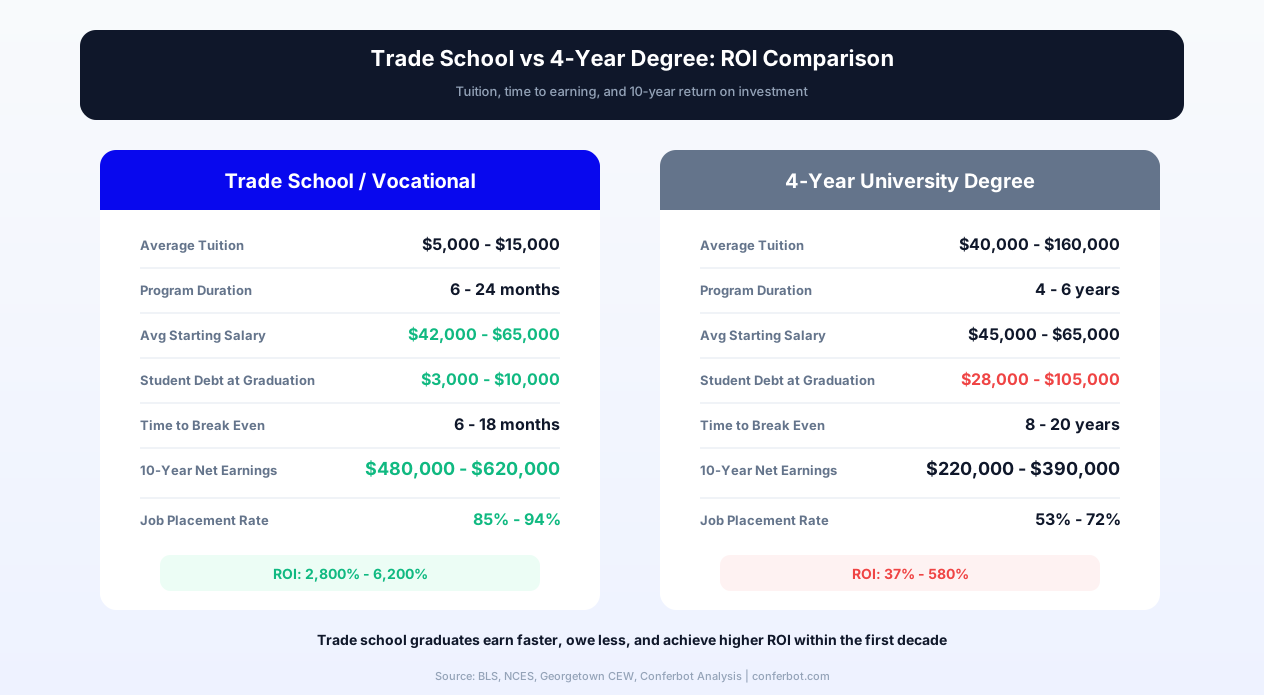
Financial concerns are the single largest barrier to trade school enrollment. A recent SkillsUSA survey found that 67% of prospective trade students cite cost as their primary hesitation, even though vocational programs cost a fraction of four-year degrees and offer substantially faster paths to earning. The problem is not the actual affordability — it is the complexity and opacity of the financial aid process. Trade school students, many of whom are first-generation post-secondary students, often do not know what aid is available, how to apply, or that they likely qualify for significant funding. The chatbot demystifies financial aid by walking prospects through their options in plain language, providing personalized estimates, and connecting them with the financial aid office at precisely the right moment in their decision process.
Federal Financial Aid Navigation
The chatbot guides prospective students through the federal financial aid landscape with conversational clarity. When a prospect asks about cost, the chatbot does not simply quote tuition — it presents the full financial picture: "Our Electrical Technician program tuition is $16,200. However, most students pay significantly less out of pocket. Here is a typical financial aid breakdown: Federal Pell Grant (if eligible): up to $7,395 — this is free money you do not repay. State vocational training grant: up to $2,500. Federal Direct Subsidized Loan: up to $3,500 at low interest (you do not pay interest while enrolled). That means your out-of-pocket cost could be as low as $2,805 for the entire program — less than $350 per month over a 9-month program." The chatbot then determines FAFSA completion status: "Have you already filed your FAFSA (Free Application for Federal Student Aid)? If not, I can walk you through the process — it takes about 30 minutes and is required for all federal and most state financial aid. Our financial aid team can also help you complete it during your campus visit."
Workforce Development and Government Funding
Many trade school students qualify for workforce development funding through WIOA (Workforce Innovation and Opportunity Act) Individual Training Accounts, state-specific vocational training vouchers, Trade Adjustment Assistance for workers displaced by foreign trade, and veteran education benefits (GI Bill, VR&E). The chatbot identifies potential eligibility based on the prospect's situation: "You mentioned you were recently laid off from manufacturing. You may qualify for WIOA training funding through your local American Job Center, which could cover your full tuition plus a living stipend during training. Would you like me to provide the contact information for your local workforce development office, or would you prefer our enrollment coordinator to connect you directly? We work with the workforce board regularly and can expedite the approval process." For veterans, the chatbot provides specific guidance: "Thank you for your service. Our school is approved for GI Bill benefits under Chapter 33 (Post-9/11 GI Bill), which typically covers full tuition plus a monthly housing allowance. We also accept VR&E (Chapter 31) benefits. Our dedicated veterans coordinator can help you verify your remaining benefits and process the enrollment paperwork."
Employer-Sponsored Training and Tuition Reimbursement
A growing segment of trade school enrollments comes from employer-sponsored training — companies paying for employees to gain or upgrade trade certifications. The chatbot manages these corporate relationships: "Is your employer sponsoring your training? Many of our students are funded by their employers through tuition reimbursement programs or direct enrollment partnerships. I can provide a cost estimate letter for your employer, explain our corporate billing process, and connect your HR department with our employer partnerships team. We currently partner with over 45 companies in the region for sponsored training." For prospects considering career changes, the chatbot also highlights employer-funded options they may not be aware of: "Several employers in our area offer 'earn while you learn' apprenticeship programs where you get paid during training. Our HVAC program, for example, has 8 employer partners who hire students as paid apprentices during their second semester — earning $15-$20 per hour while completing their training."
Apprenticeship Program Matching and Guidance
For prospects interested in registered apprenticeships — the earn-and-learn model where students receive paid on-the-job training alongside classroom instruction — the chatbot provides comprehensive guidance. It explains the apprenticeship model ("You work full-time for an employer who pays you a progressively increasing wage while you attend classes 1-2 evenings per week. The employer typically pays your tuition. Over your 4-5 year apprenticeship, you earn while you learn — most electrical apprentices earn $140,000-$200,000 in total wages during their apprenticeship, graduating with zero debt and a journeyman license"), matches prospects to available apprenticeship openings based on their trade interest and location, explains the application and aptitude test process for union apprenticeships (IBEW, UA, IUEC, Ironworkers), and schedules aptitude test prep sessions: "The IBEW apprenticeship aptitude test covers algebra, reading comprehension, and mechanical reasoning. We offer a free 2-hour prep workshop every other Saturday — the next one is June 14th. Would you like to sign up?"
Payment Plan and Scholarship Options
For students who do not qualify for full financial aid coverage or who prefer to self-pay, the chatbot presents flexible payment arrangements: institutional payment plans (spreading tuition across the program duration with no interest), institutional scholarships (merit-based, need-based, or trade-specific scholarships offered by the school), external scholarships (the chatbot maintains a database of trade-specific scholarships: Mike Rowe WORKS Foundation, National Tooling and Machining Association scholarships, AWS Welding scholarships, and dozens of regional options), and employer tuition reimbursement guidance for students whose current employers offer education benefits. The chatbot provides realistic monthly cost estimates: "After your Pell Grant and state aid, your remaining balance would be approximately $4,200. On our 9-month payment plan, that is $467 per month with no interest. Would you like to set up the payment plan, or would you first like to explore additional scholarship options?"
Ready to try Trade School & Vocational Training Enrollment Chatbot?
Deploy this template in under 10 minutes. No coding required.
Use This Template Free →Hands-On Lab and Schedule Management
Trade school education is fundamentally different from academic education because the majority of the learning happens in hands-on laboratory environments — welding booths, electrical panels, HVAC units, engine bays, plumbing rigs, and clinical settings. Managing access to these physical resources, along with the specialized equipment and instructor oversight they require, creates scheduling complexity that exceeds typical classroom management. The chatbot automates lab scheduling, equipment tracking, open lab reservations, and progress monitoring to ensure students maximize their hands-on training time while the school optimizes utilization of its most expensive assets.
Lab Session Scheduling and Resource Management
Unlike lecture classes where 30 students sit in a room, trade school labs have strict capacity limits determined by equipment availability and safety regulations. A welding lab may have 12 welding booths, an HVAC lab may have 8 training units, and an automotive shop may accommodate 6 vehicles simultaneously. The chatbot manages lab scheduling within these constraints: "Your next required lab session is Advanced Electrical Wiring (Lab 3B). Available sessions this week: Tuesday 8 AM-12 PM (4 spots remaining), Wednesday 1 PM-5 PM (2 spots remaining), or Thursday 8 AM-12 PM (6 spots remaining). Each session accommodates 10 students. Which works best for your schedule?" For programs with open lab hours — where students can practice independently outside of scheduled sessions — the chatbot manages reservations: "Open welding lab is available tonight from 6 PM to 9 PM with 5 open booths. Would you like to reserve a booth? Remember to bring your safety equipment." This reservation system prevents students from showing up to a full lab, wasting their limited study time.
Schedule Management for Working Students
The majority of trade school students work while attending school, making schedule management critical to retention. The chatbot provides several schedule management features designed for working students. First, it offers flexible attendance tracking: when a student needs to miss a session, they notify the chatbot, which immediately offers make-up options: "I understand you cannot attend tomorrow's plumbing lab. I have rescheduled you to Thursday's session at the same time. Your program completion date remains on track." Second, for students with rotating work schedules — common in trades like manufacturing and healthcare — the chatbot manages dynamic scheduling: "I see your work schedule changes weekly. Would you like to send me your work schedule each Sunday evening so I can recommend the best lab sessions for the week? I will prioritize sessions that do not conflict with your shifts." Third, it manages intensive weekend workshops: "We are offering an accelerated OSHA 30 certification workshop this Saturday and Sunday, 8 AM to 5 PM both days. This completes a requirement that normally takes 5 evening sessions. Would you like to register? Only 15 spots remain."
Equipment and Tool Tracking
Trade programs involve expensive, specialized equipment — welding machines, oscilloscopes, pipe threading machines, diagnostic scanners, and hand tool sets. The chatbot integrates with the school's equipment management system to handle tool checkout and return ("Please return your TIG welder torch kit to the tool room before 4 PM today — another student has reserved it for the evening session"), personal tool kit tracking for students who purchase or lease tool kits through the school ("Your Snap-on starter tool kit has shipped and will be available for pickup in the bookstore on Wednesday. Kit cost of $1,200 has been added to your account — your payment plan now reflects the updated balance"), and safety equipment compliance ("Your welding helmet auto-darkening filter is due for replacement. The bookstore has replacement filters in stock for $35, or you can order online for delivery to the school. This is required before your next welding lab session").
Progress Tracking Through Competency Milestones
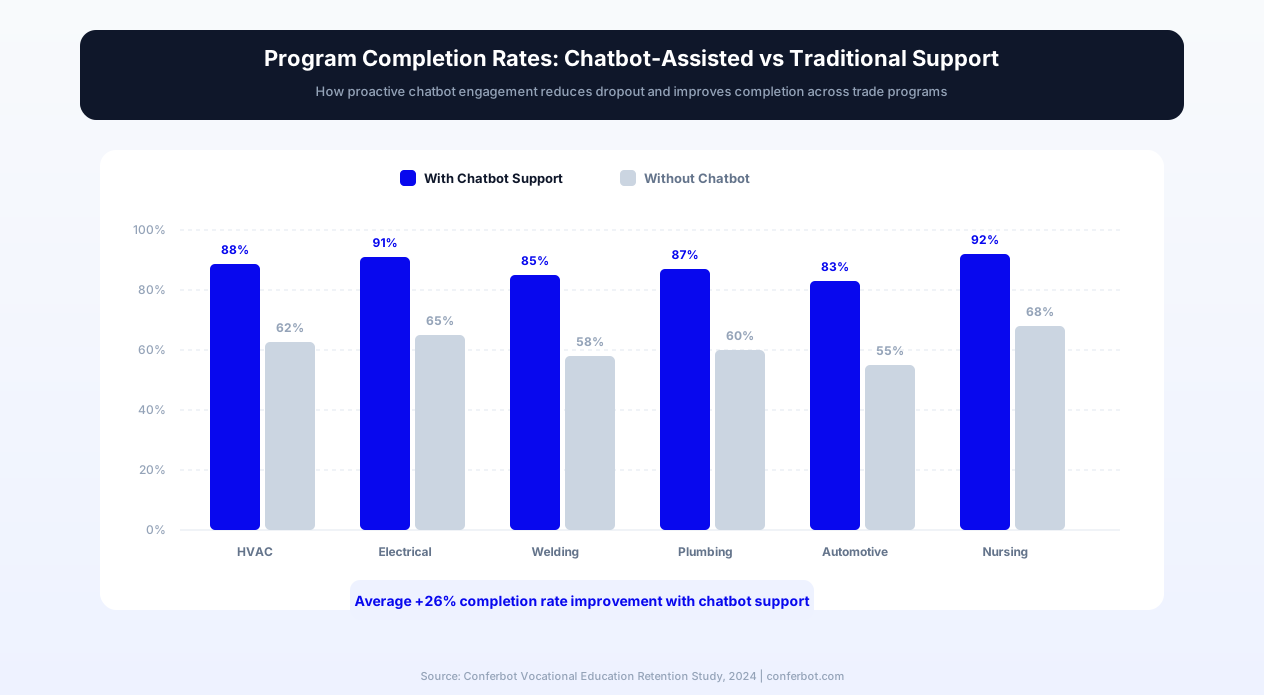
Trade programs assess students through demonstrated competencies rather than traditional exams. A welding student must demonstrate proficiency in specific weld types (MIG, TIG, stick, flux-core), positions (flat, horizontal, vertical, overhead), and materials (carbon steel, stainless steel, aluminum). The chatbot tracks progress through these competency milestones: "Here is your welding program progress, Marcus: Core Skills (completed 8 of 12): Flat-position MIG — passed, Horizontal MIG — passed, Vertical MIG — in progress (2 more lab sessions recommended), Overhead MIG — not started. Certification Prep: AWS D1.1 structural welding qualification — you need to pass vertical MIG and overhead MIG before attempting. Estimated readiness: 3-4 weeks at current pace. Shop Hours: 186 of 240 required hours completed (78%). You are on track for your June 15th program completion date." This real-time visibility motivates students by showing concrete progress and helps instructors identify students who are falling behind before they become dropout risks. Schools using chatbot-based progress tracking report 26% higher program completion rates compared to those relying on periodic advisor check-ins.
Certification Exam Preparation and Scheduling
Trade programs culminate in industry certifications that are the currency of employability — EPA 608 for HVAC technicians, NEC code knowledge for electricians, AWS certifications for welders, ASE certifications for automotive technicians, NCLEX for nursing. The chatbot manages the certification preparation and testing process: tracking which certifications are included in the program versus optional add-ons, scheduling exam prep workshops ("Our EPA 608 exam prep review is Saturday from 9 AM to 1 PM — recommended for all HVAC students testing within the next 30 days"), providing practice test access and tracking practice scores ("Your last EPA 608 practice test score was 78%. The passing score is 70%, but we recommend scoring 85% on practice tests before attempting the real exam. Would you like to access another practice test?"), and coordinating exam scheduling with testing centers ("Your instructor has approved you for the EPA 608 exam. I can schedule you at the Pearson VUE testing center on Main Street. Available dates: next Tuesday, Thursday, or the following Monday. The exam fee is $150, which is included in your program tuition. Which date works best?").
Key Features of the Trade School Enrollment Chatbot Template
The trade school enrollment chatbot template is engineered for the unique operational challenges of vocational education: career-oriented program matching, complex financial aid navigation, hands-on lab resource scheduling, competency-based progress tracking, employer partnership management, and job placement services. These features address the specific pain points that trade school administrators identify as their biggest enrollment and retention challenges.
Feature Matrix
| Feature | Description | Institutional Benefit | Student Benefit |
|---|---|---|---|
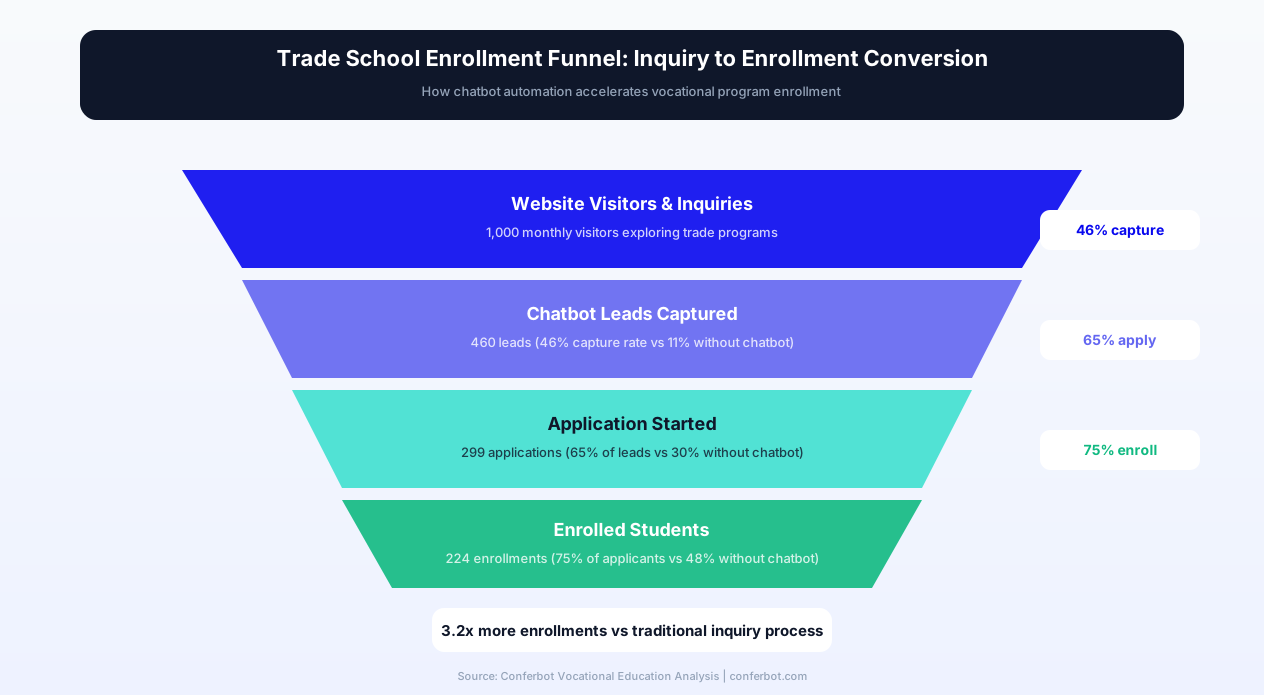
| Career-guided program matching | Conversational assessment that matches prospects to programs based on aptitude, interests, schedule, and career goals | 46% lead capture rate vs 11% from static forms; 35% reduction in program-switch rate | Confident program selection based on personalized guidance rather than guesswork |
| Instant financial aid estimation | Real-time Pell Grant, state aid, WIOA, VA benefits, and scholarship eligibility estimates within the chat | Removes #1 enrollment barrier (cost concern) at moment of inquiry — 52% more applications | Clear, honest cost picture before committing; discovers funding they did not know about |
| Automated application processing | Complete application within a single conversation: personal info, education, employment, program selection, and document upload | Reduces time-to-application from 3-4 weeks to under 10 minutes; 68% fewer incomplete applications | Apply in one session without downloading forms, printing, scanning, or mailing |
| Lab and shop scheduling | Real-time lab capacity tracking, session booking, open-lab reservations, and make-up session coordination | Optimizes lab utilization from 62% to 89%; reduces scheduling conflicts and no-shows | Book lab time instantly; never arrive at a full lab; easy make-up scheduling |
| Competency progress tracking | Real-time tracking of skill demonstrations, shop hours, certifications, and program milestones | 26% higher completion rates; early identification of at-risk students | Always know exactly where you stand; clear path to certification readiness |
| Employer partnership portal | Employer-facing interface for posting apprenticeships, sponsoring students, and tracking cohort progress | Strengthens employer relationships; 40% increase in employer-sponsored enrollments | Direct access to apprenticeships and employer-sponsored opportunities |
| Certification exam management | Practice test access, score tracking, exam readiness assessment, and testing center scheduling | Improves first-attempt pass rates from 71% to 89%; protects institutional pass-rate metrics | Data-driven guidance on when you are truly ready to test; no wasted exam fees |
| Multi-channel reminder system | Lab reminders, assignment deadlines, financial aid document deadlines, and certification test dates | Reduces lab no-shows by 64%; catches missing financial aid documents before deadlines expire | Never miss a session, deadline, or opportunity; reminders through preferred channel |
| Job placement assistance | Resume building, employer matching, interview scheduling, and post-graduation follow-up | Boosts placement rates to 90%+ — critical for accreditation and marketing | Guided transition from student to employed tradesperson with employer connections |
| Multi-language support | Conversations in English, Spanish, and other languages common in trade school demographics | Serves diverse student populations without requiring multilingual admissions staff | Comfortable enrollment and support in preferred language |
Career-Guided Program Matching in Detail
The career-matching engine is the template's most conversion-critical feature because prospective trade students face a fundamentally different decision than traditional college applicants. A college-bound student chooses a major knowing they can change it; a trade school student is committing to a specific career path with a 9-24 month investment. The chatbot's matching process goes deeper than "what interests you" — it explores practical factors that determine success: physical stamina for trades requiring manual labor, comfort with heights (electrical, HVAC rooftop work), color vision (electrical wiring), mathematical aptitude (electrical theory), fine motor skills (welding, electronics), willingness to work in extreme temperatures (HVAC, welding), and tolerance for confined spaces (plumbing). When a prospect's interests do not align with a trade's practical realities, the chatbot redirects constructively: "You mentioned you prefer indoor work and have strong analytical skills. While our welding program is excellent, you might be a better fit for our Electrical Technician program — most electricians work indoors, the work involves significant problem-solving, and the career path includes roles in building automation and smart systems. Would you like to explore the Electrical program?" This honest matching reduces program-switch rates and dropout caused by misalignment between expectations and reality.
Financial Aid Estimation Engine
The financial aid feature is the template's highest-impact enrollment driver. When the chatbot presents a tuition figure alongside an estimated out-of-pocket cost that is 40-70% lower, the psychological barrier to enrollment drops dramatically. The estimation engine uses the prospect's self-reported information (household size, income range, dependency status, veteran status, employment situation) to calculate approximate eligibility for Pell Grants, state grants, WIOA funding, and institutional aid. These are clearly labeled as estimates — "This is an estimate to help you plan. Your actual aid will be determined after you complete the FAFSA and meet with our financial aid team" — but even approximate numbers are transformative. Schools deploying this feature report that 52% more prospects proceed to application when they see an estimated net cost versus raw tuition, and financial aid meeting attendance increases by 78% because students arrive knowing they likely qualify rather than hoping for the best.
ROI and Business Impact for Trade Schools
Trade schools and vocational training centers operate within tight financial frameworks where every empty seat represents direct revenue loss. Programs have fixed costs — instructor salaries, facility leases, equipment depreciation, accreditation fees — that remain constant whether a program runs at 60% or 95% capacity. Filling those seats is existentially important, and the enrollment chatbot's ROI comes from three primary sources: converting more inquiries into enrolled students (revenue growth), reducing student attrition through proactive engagement (revenue retention), and automating administrative workload (cost reduction). For most trade schools, these combined impacts deliver 300-600% annual ROI within the first year of deployment.
ROI Breakdown by Institution Size
| Metric | Small School (50-150 students) | Mid-Size School (150-500 students) | Large Network (500-2,000+ students) |
|---|---|---|---|
| Monthly website inquiries | 100-250 | 300-800 | 800-3,000+ |
| Lead capture improvement | 11% to 42% (+31%) | 11% to 46% (+35%) | 11% to 48% (+37%) |
| Additional monthly enrollments | 5-12 | 18-50 | 50-180+ |
| Revenue per enrollment (avg) | $12,000 | $14,000 | $15,000 |
| New enrollment revenue (annual) | $720,000 - $1,728,000 | $3,024,000 - $8,400,000 | $9,000,000 - $32,400,000 |
| Attrition rate reduction | 38% to 22% | 35% to 19% | 32% to 17% |
| Retained student revenue (annual) | $96,000 - $192,000 | $336,000 - $840,000 | $960,000 - $2,880,000 |
| Admin time saved (hours/week) | 10-15 | 20-35 | 45-80+ |
| Admin cost savings (annual) | $12,000 - $18,000 | $24,000 - $42,000 | $54,000 - $96,000 |
| Certification pass rate improvement | +12% | +15% | +18% |
| Job placement rate improvement | +8% | +11% | +14% |
| Total annual impact | $828,000 - $1,938,000 | $3,384,000 - $9,282,000 | $10,014,000 - $35,376,000 |
| Chatbot annual cost | $4,800 - $9,600 | $9,600 - $18,000 | $18,000 - $36,000 |
| Annual ROI | 8,525% - 20,087% | 18,700% - 51,467% | 27,750% - 98,167% |
The Lead Response Speed Advantage
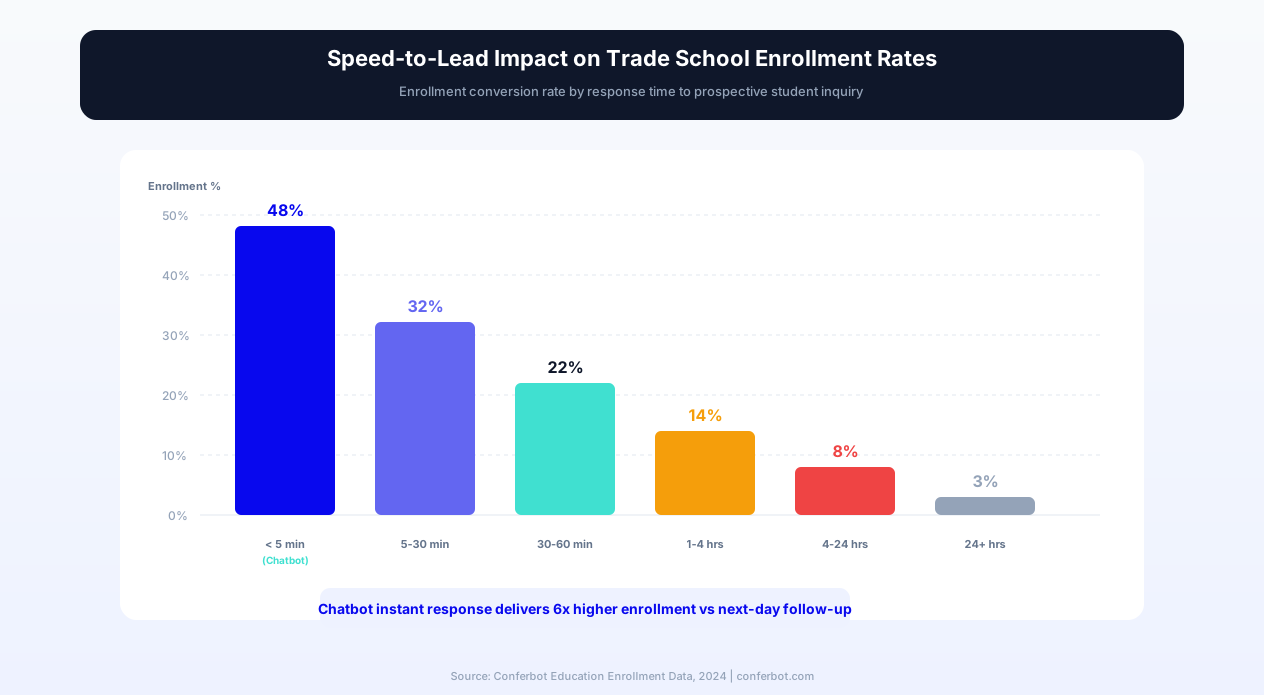
The single highest-ROI capability of the trade school enrollment chatbot is instant lead response. Trade school prospects exhibit even more time-sensitive decision-making than traditional education prospects because they are often motivated by urgent life circumstances: a layoff, a career dissatisfaction crisis, a family financial need, or a specific employer-imposed deadline for obtaining a certification. When a displaced factory worker searches for "welding school near me" at 10 PM on a Wednesday, they are ready to act now. Research from Velocify shows that leads contacted within 1 minute are 391% more likely to convert than those contacted after 24 hours. The chatbot responds in under 3 seconds — every time, at any hour. Trade schools using chatbot-based instant response report that 41% of their enrolled students first engaged with the chatbot outside of business hours (evenings, weekends, holidays). Without the chatbot, those inquiries would have waited 8-16 hours for a human response, by which time many prospects have already engaged with competitors or lost their initial motivation.
Retention and Completion Impact
Beyond enrollment, the chatbot's retention impact is equally significant. Trade school attrition rates average 35-40% nationally (NCES), with students leaving for preventable reasons: financial aid paperwork lapses (they miss a deadline and lose funding), schedule conflicts (they cannot reach the registrar to rearrange sessions), isolation and lack of support (no one checks on them when they miss a few sessions), and discouragement from falling behind on competencies. The chatbot addresses each of these: proactive financial aid deadline reminders ("Your FAFSA renewal is due in 30 days — failing to renew could interrupt your funding. I can schedule a 15-minute appointment with financial aid to help you"), easy schedule adjustment through chat, automated check-ins when students miss sessions ("Hey Marcus, we noticed you missed your welding lab yesterday. Everything OK? I can reschedule you for Thursday or Saturday. If there is something else going on, our student services team is here to help"), and encouraging progress updates that show how far they have come. Schools deploying these proactive engagement features report attrition reductions of 14-18 percentage points — from 35-40% down to 17-22% — which represents the single highest revenue impact because each retained student represents $12,000-$15,000 in tuition that would have been lost.
Accreditation and Regulatory Benefits
Accrediting bodies (ACCSC, COE, regional accreditors) evaluate trade schools on metrics that the chatbot directly improves: graduation rates, job placement rates, certification pass rates, and student satisfaction. Schools that improve these metrics through chatbot-driven engagement strengthen their accreditation standing, which in turn maintains their eligibility for Title IV financial aid — the lifeblood of vocational education funding. The chatbot's data-driven approach to student engagement creates a documented trail of proactive outreach and support that demonstrates compliance with accreditor expectations for student services. Monitor these critical metrics through Conferbot analytics to maintain a continuous improvement posture that impresses accreditation review teams.
50,000+ businesses use Conferbot templates to automate conversations
Employer Partnership and Job Placement
The ultimate measure of a trade school's value is whether its graduates get jobs — and not just any jobs, but well-paying positions in their trained trade. In 2026, with the skilled trades gap exceeding 3 million unfilled positions nationally, employers are desperate for qualified tradespeople. Yet many trade schools underperform on job placement because they lack the systems to efficiently connect graduates with employers. The chatbot creates a digital bridge between the school's talent pipeline and its employer network, managing the entire placement process from employer relationship management through graduate-employer matching, interview scheduling, and post-placement follow-up.
Employer-Facing Interface
Employers who partner with the trade school access a dedicated chatbot interface that allows them to post available positions and apprenticeship openings ("We need 3 HVAC technicians starting July 1st, minimum EPA 608 certified, preference for candidates with commercial HVAC experience"), review anonymized candidate profiles matched to their requirements ("Based on your requirements, 7 graduating students match your criteria. Would you like to review their profiles and schedule interviews?"), sponsor future students with pre-arranged employment ("We want to sponsor 5 seats in your next electrical program intake, with guaranteed employment for graduates who pass their journeyman exam"), and track the progress of their sponsored students or apprentices ("Your 3 sponsored HVAC students are all progressing on schedule. Estimated graduation: August 15th. All 3 have completed EPA 608 certification. Detailed progress reports attached"). This employer interface transforms the school from a passive training provider into an active talent pipeline manager — dramatically strengthening employer relationships and creating a competitive moat that other schools cannot easily replicate.
Student Job Readiness Preparation
Before matching students with employers, the chatbot prepares them for the job market through guided readiness activities. Resume building: the chatbot walks students through creating a trades-focused resume that highlights certifications, competencies, shop hours, and specific equipment experience rather than the generic resume format that fails to communicate trade skills ("Let us build your resume. You have earned AWS D1.1 and D1.6 certifications, completed 240 shop hours, and demonstrated proficiency in MIG, TIG, and stick welding on carbon steel and stainless. You have also completed OSHA 30. These are your strongest selling points — let me format these into a professional resume"). Interview preparation: the chatbot provides trade-specific interview coaching ("Common questions from HVAC employers: Walk me through a diagnostic process for a commercial unit not cooling. How do you handle a callback for a job you completed? What is your experience with VRF systems? Let us practice your answers"). Professional tool kit checklist: ensuring graduates have the personal tools required by most employers ("Before your first interview with ABC Mechanical, confirm you have: basic hand tool set, multimeter, refrigerant gauges, and PPE. If you need to purchase any items, our bookstore offers a 15% alumni discount").
Automated Employer-Student Matching
The chatbot's matching algorithm considers multiple factors beyond basic certification: geographic preference (students willing to commute vs. relocate), schedule flexibility (some positions require overtime, weekend, or on-call work), specialization alignment (a student who excelled in commercial HVAC should be matched with commercial contractors, not residential-only shops), wage expectations vs. employer offerings, and employer culture fit indicators. When matches are identified, both parties receive notifications: the student receives "Good news! ABC Mechanical is looking for an HVAC technician starting next month and your profile is an excellent match. They offer $24/hour starting, full benefits, and company vehicle. Would you like me to schedule an interview?" The employer receives "We have a strong candidate for your HVAC position: 720 program hours completed, EPA 608 Universal certified, NATE-ready, strong performance in commercial systems. Available to start July 1st. Would you like to review the full profile and schedule an interview?"
Post-Graduation Tracking and Alumni Engagement
Accrediting bodies require trade schools to track graduate outcomes for 6-12 months post-graduation. The chatbot automates this tracking: sending periodic check-ins to graduates ("Hey Marcus, it has been 3 months since graduation! How is the job going at ABC Mechanical? Are you using your welding skills regularly? Quick survey: On a scale of 1-10, how well did our program prepare you for your current role?"), collecting employment verification data ("For our accreditation records, can you confirm you are still employed at ABC Mechanical as an HVAC Technician? This helps us maintain our accreditation and helps future students qualify for financial aid"), facilitating alumni-to-student mentorship ("A current HVAC student asked about what it is like working in commercial HVAC. Would you be willing to answer a few of their questions via chat?"), and promoting continuing education opportunities ("Your EPA 608 certification is valid indefinitely, but NATE certification requires recertification every 2 years. Your recertification date is coming up in 6 months. We offer a 4-hour recertification prep course — alumni get 30% off"). This ongoing alumni engagement creates a valuable network that strengthens job placement for future graduates, generates referral enrollments, and produces the long-term outcome data that accreditors and prospective students demand.
Apprenticeship Progression Management
For students who enter registered apprenticeship programs, the chatbot manages the multi-year journey that blends on-the-job training with classroom instruction. Apprenticeships typically span 4-5 years with 8,000+ hours of on-the-job training and 576+ hours of related classroom instruction. The chatbot tracks: OJT hours logged with employer verification, related instruction attendance and grades, wage progression milestones (apprentice wages increase as hours accumulate), competency demonstrations signed off by the journeyworker supervisor, and interim exam completion toward the journeyman or master credential. This comprehensive tracking replaces the paper-based logbooks and manual hour tracking that plague traditional apprenticeship management — saving time for students, employers, and the training program administrators while creating an auditable record for the registered apprenticeship sponsor (state apprenticeship agency or DOL).
Setup Guide: Deploying Your Trade School Enrollment Chatbot
Deploying the trade school enrollment chatbot requires configuring your program catalog, financial aid estimation parameters, lab scheduling constraints, employer partnerships, and communication workflows. This guide covers the implementation process with specific attention to the operational realities of vocational education — from single-trade specialty schools to multi-campus networks offering dozens of programs.
Phase 1: Program Catalog and Pricing Configuration (Days 1-4)
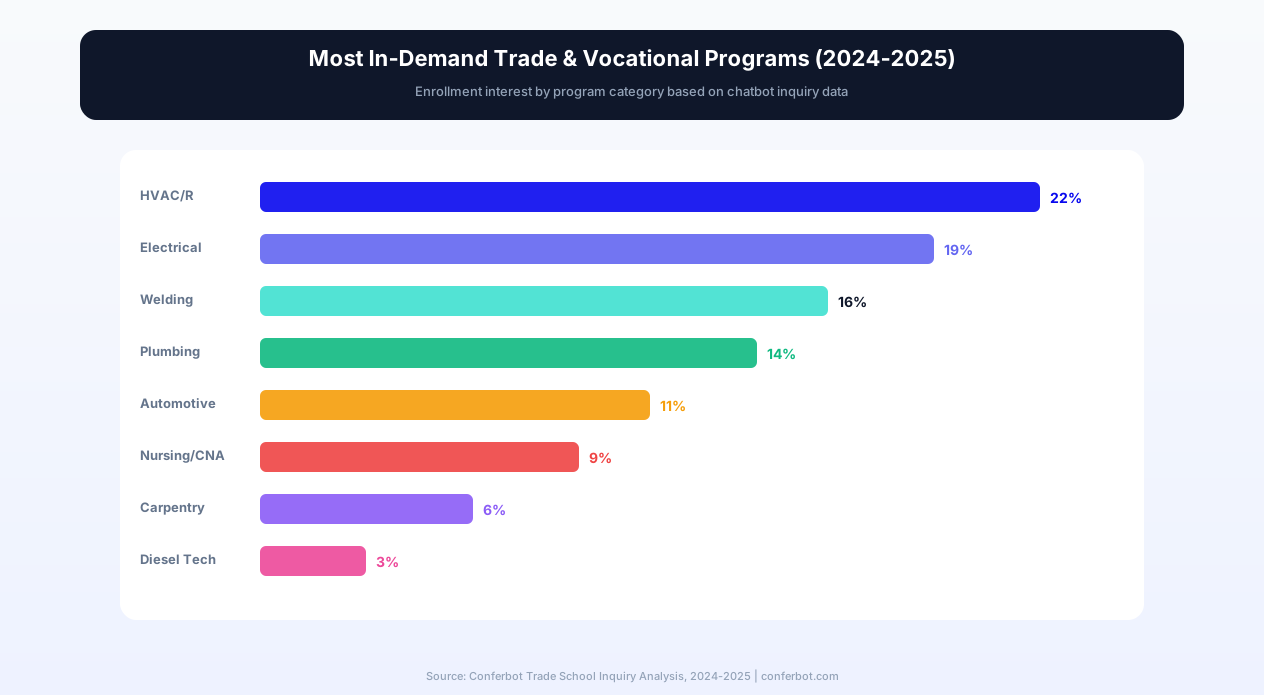
Define your complete program catalog within the chatbot: list every program you offer (e.g., HVAC/R Technician, Electrical Technician, Welding Technology, Plumbing, Automotive Technology, Diesel Technology, Medical Assisting, CNA, Carpentry, Industrial Maintenance), with tuition, program length (hours and months), schedule options (day, evening, weekend), included certifications, prerequisite requirements, and start dates. For each program, provide the career outcome data that the chatbot will use in conversations: average starting salary, job placement rate, certification pass rate, and typical employer partners. Configure any program variants (accelerated, evening-only, hybrid) and bundle options (combined certifications, add-on OSHA training). This data fuels the chatbot's career-guided matching and ensures every conversation presents accurate, current information. Connect to your student information system through Conferbot's API integration for real-time seat availability and application processing.
Phase 2: Financial Aid Estimation Setup (Days 3-6)
Configure the financial aid estimation engine with your institution's specific aid landscape: Pell Grant eligibility thresholds (based on Expected Family Contribution ranges), state vocational training grants (amounts and eligibility criteria), institutional scholarships (names, amounts, criteria, application deadlines), WIOA partnership details (which local workforce boards you work with, typical approval timelines and funding amounts), VA benefits approval status (which GI Bill chapters your school accepts), employer sponsorship processes (corporate billing procedures, contact forms), and payment plan terms (duration, interest rates if any, deposit requirements). The estimation engine should produce realistic ranges that set appropriate expectations — overestimating aid creates trust issues, while underestimating it fails to remove the cost barrier. Test the estimates against your last 50 enrolled students to validate accuracy.
Phase 3: Lab and Schedule Configuration (Days 4-7)
Configure the lab scheduling system with your facility parameters: lab names and locations, capacity per session (based on equipment stations and safety limits), operating hours for each lab, instructor assignments per lab session, equipment inventory per lab station, open lab availability windows, and maintenance schedules (equipment that is periodically out of service). For programs with clinical or externship components (medical assisting, CNA, dental assisting), configure the clinical site scheduling — often the most complex scheduling challenge because clinical sites have their own capacity constraints and schedule preferences. Set up the competency tracking framework for each program: list every competency milestone, the assessment criteria, and the instructor sign-off workflow.
Phase 4: Employer Partnership and Placement Setup (Days 5-8)
Configure the employer partnership interface: import your current employer partner database (company name, contact person, trades they hire, typical positions, wage ranges, benefits summary), set up the job posting workflow (how employers submit openings, approval process), configure the matching algorithm weights (certification importance vs. soft skills vs. location preference), and define the post-placement tracking schedule (30-day, 90-day, 6-month, and 12-month check-ins as required by your accreditor). For apprenticeship programs, configure the apprenticeship-specific workflows: aptitude test scheduling, employer interview coordination, OJT hour logging, and wage progression tracking.
Phase 5: Communication and Engagement Workflows (Days 6-9)
Set up the automated communication sequences that drive enrollment and retention: pre-enrollment nurture (for prospects who started but did not complete applications: "You started exploring our HVAC program last week. Do you have any questions I can answer? Classes start September 8th and spots are filling up — only 12 seats remain"), financial aid deadline reminders, lab session reminders and no-show follow-ups, progress milestone celebrations ("Congratulations! You just passed your halfway mark — 360 of 720 program hours completed. You are doing great!"), at-risk student interventions (triggered by missed sessions or declining performance), and post-graduation job placement sequences. Configure multi-channel delivery through website chat, WhatsApp, email, and SMS based on student preferences.
Phase 6: Testing with Realistic Scenarios (Days 8-11)
Test the complete chatbot with scenarios covering the full range of student interactions: a working adult exploring career change options at 10 PM (should provide full program matching and application capability), a recent high school graduate unsure which trade to pursue (should conduct thorough career assessment), a veteran asking about GI Bill coverage for welding training (should provide specific veteran benefit guidance and connect with veterans coordinator), an employer wanting to sponsor 5 employees for electrical training (should collect employer details, explain the sponsorship process, and connect with the corporate training team), a current student wanting to reschedule a lab session and check progress (should handle both requests within one conversation), and a graduate needing job placement assistance (should assess readiness, match with employers, and schedule interviews). Each scenario must reach resolution without human intervention for standard cases.
Phase 7: Launch and Optimization (Days 10-14)
Deploy the chatbot as the primary engagement channel on your website, landing pages, and social media profiles. During the first two weeks, monitor: conversation completion rate (what percentage of visitors who start a chat complete an application or leave contact information?), program matching accuracy (are students being directed to appropriate programs?), financial aid estimate accuracy (compare estimates to actual aid packages), lab scheduling accuracy (are chatbot-created bookings conflict-free?), and employer engagement (are employers using the interface and responding to candidate matches?). Use Conferbot analytics to identify drop-off points: if 35% of prospects abandon after seeing tuition, your financial aid messaging may need to appear earlier in the conversation. Continuously refine conversation flows based on real user behavior to maximize enrollment conversion.
Frequently Asked Questions About Trade School Enrollment Chatbots
How does the chatbot match prospective students to the right trade program?
The chatbot conducts a conversational career assessment that evaluates the prospect's interests, aptitudes, physical capabilities, schedule constraints, and career goals. It asks targeted questions — not generic personality quizzes — about factors that actually determine success in specific trades: comfort with heights (relevant for electrical and HVAC rooftop work), color vision (critical for electrical wiring), manual dexterity (welding, electronics), analytical thinking (electrical theory, diagnostics), and tolerance for various working conditions. Based on these responses and the prospect's practical constraints (budget, availability, timeline), the chatbot recommends 2-3 best-fit programs with detailed comparisons. Schools using this matching report a 35% reduction in program-switch rates because students enter programs that genuinely align with their strengths.
Can the chatbot provide accurate financial aid estimates before a student completes the FAFSA?
Yes, the chatbot provides preliminary financial aid estimates based on self-reported information (household size, income range, dependency status, veteran status). These estimates are clearly labeled as approximations — "This is an estimate to help you plan; your actual aid will be determined after you complete the FAFSA and meet with our financial aid team." The estimation engine covers Pell Grants, state vocational grants, WIOA funding eligibility, VA benefits, and institutional scholarships. While not precise, these estimates are accurate enough to significantly reduce cost anxiety — schools deploying this feature report 52% more applications because prospects see a realistic out-of-pocket cost rather than intimidating sticker-price tuition.
How does the chatbot handle the hands-on lab scheduling that trade schools require?
The chatbot manages lab scheduling by tracking real-time capacity for each lab space — the number of welding booths, HVAC training units, automotive bays, or electrical panels available per session. Students book lab sessions through the chat by selecting from available time slots that match their program requirements and personal schedule. The chatbot enforces capacity limits (if a welding lab has 12 booths and 12 are booked, the next student sees only alternative sessions), manages open-lab reservations for independent practice time, handles make-up session scheduling when students miss required labs, and sends reminders to reduce no-shows. Schools report lab utilization improvements from 62% to 89% after implementing chatbot-based scheduling.
Can the chatbot manage employer partnerships and job placement?
Yes, the chatbot includes an employer-facing interface where partner companies can post job openings and apprenticeship opportunities, review matched candidate profiles, sponsor students for upcoming program intakes, and track the progress of their sponsored students. On the student side, the chatbot assists with resume building (tailored for trades — emphasizing certifications, competencies, and shop hours), interview preparation with trade-specific coaching, and employer-student matching based on certifications, specializations, geographic preferences, and wage expectations. Schools using this feature report 40% more employer-sponsored enrollments and job placement rates exceeding 90%.
How does the chatbot reduce student attrition and improve completion rates?
The chatbot reduces attrition through four proactive mechanisms. First, it sends financial aid deadline reminders to prevent funding lapses — the most preventable reason for dropping out. Second, it monitors attendance and reaches out when students miss sessions, offering rescheduling and connecting them with student services if needed. Third, it provides continuous progress visibility that motivates students and helps them see how far they have come. Fourth, it celebrates milestones and competency achievements, maintaining engagement throughout the program. Schools deploying these features report attrition reductions of 14-18 percentage points — from 35-40% down to 17-22% — which represents the single most valuable financial impact because each retained student represents $12,000-$15,000 in tuition that would have been lost.
Does the chatbot work for schools that offer both traditional classroom and apprenticeship programs?
Absolutely. The chatbot manages both program models and helps prospects understand the differences: traditional programs (full-time classroom and lab, 6-24 months, graduate then seek employment) versus registered apprenticeships (part-time classroom with full-time paid on-the-job training, 4-5 years, employed throughout). For apprenticeship programs, the chatbot handles the additional complexity of aptitude test scheduling, employer-side interview coordination, OJT hour logging and verification, wage progression tracking, and journeyman exam preparation. The chatbot can also guide undecided prospects: "If you want to start earning immediately while learning, an apprenticeship is ideal. If you want to complete intensive training quickly and then enter the job market, our full-time program graduates in 9 months."
How quickly can a trade school chatbot be deployed and start generating results?
Most trade schools deploy a fully functional chatbot within 10-14 business days. The timeline depends on complexity: a single-trade school (e.g., welding only) with straightforward financial aid can deploy in 8-10 days, while a multi-campus network with 15+ programs, employer partnerships, and apprenticeship management may take the full 14 days. Results are visible immediately: lead capture rates improve from day one as the chatbot engages visitors who previously bounced, application completion rates increase within the first week, and enrollment conversion improvements become measurable within the first intake cycle. Retention and completion rate improvements take one full program cycle (6-12 months) to quantify but anecdotal indicators appear within weeks.
Can the chatbot handle certification exam preparation and tracking for multiple trade certifications?
Yes, the chatbot manages the complete certification lifecycle for every industry credential relevant to your programs — EPA 608 (HVAC), NEC code exams (electrical), AWS D1.1/D1.6 (welding), ASE (automotive), NCLEX (nursing), OSHA 10/30, and dozens of trade-specific certifications. For each certification, the chatbot tracks: eligibility requirements (hours, prerequisite competencies), practice test access and score history, readiness assessment based on practice scores and instructor input, exam scheduling at approved testing centers, and results tracking. The chatbot recommends when students are ready to test based on data — "Your last 3 EPA 608 practice tests averaged 88%. Students with that score average a 96% first-attempt pass rate. I recommend scheduling your exam within the next 2 weeks while the material is fresh" — preventing both premature testing (wasted fees, damaged confidence) and unnecessary delays.
Trade School & Vocational Training Enrollment Chatbot FAQ
Everything you need to know about chatbots for trade school & vocational training enrollment chatbot.
Why Use a Template vs Building from Scratch?
Templates encode years of optimization data into the conversation flow before you start.
| Factor | Conferbot Template | Build from Scratch | Hire a Developer |
|---|---|---|---|
| Time to deploy | 10 minutes | 2-8 hours | 2-6 weeks |
| Cost | Free | Your time | $5,000-$25,000 |
| Day-1 conversion | 15-22% | 5-8% | 10-15% |
| Proven flows | Yes, data-tested | No | Depends |
| Updates included | Automatic | Manual | Paid |
| Multi-channel | 8+ channels | 1 channel | Extra cost |
| Analytics | Built-in | Must build | Extra cost |
Ready to Deploy Trade School & Vocational Training Enrollment Chatbot?
Join 50,000+ businesses. Free forever plan available. No credit card required.