
Debt Collection & Payment Recovery Chatbot
Free Finance Chatbot Template
Automate payment reminders, self-service payment plans, and compliance-safe collections across SMS, WhatsApp, and web chat. FDCPA/TCPA compliant with empathetic tone configuration.



What Is a Debt Collection Chatbot?
A debt collection chatbot is a conversational AI tool that automates outbound payment reminders, inbound debtor self-service, payment plan negotiation, and compliance-controlled communication across SMS, WhatsApp, email, and web channels. It replaces the most repetitive and regulation-sensitive functions in the debt recovery workflow — initial contact attempts, balance inquiries, payment arrangement setup, and dispute routing — while maintaining strict adherence to the Fair Debt Collection Practices Act (FDCPA), Telephone Consumer Protection Act (TCPA), and Regulation F communication frequency limits. For collection agencies, creditors, and accounts receivable departments managing thousands of delinquent accounts in 2026, this automation addresses the core operational challenge: contacting more debtors, more often, at lower cost, without increasing compliance exposure.
Why Debt Collection Needs Conversational AI
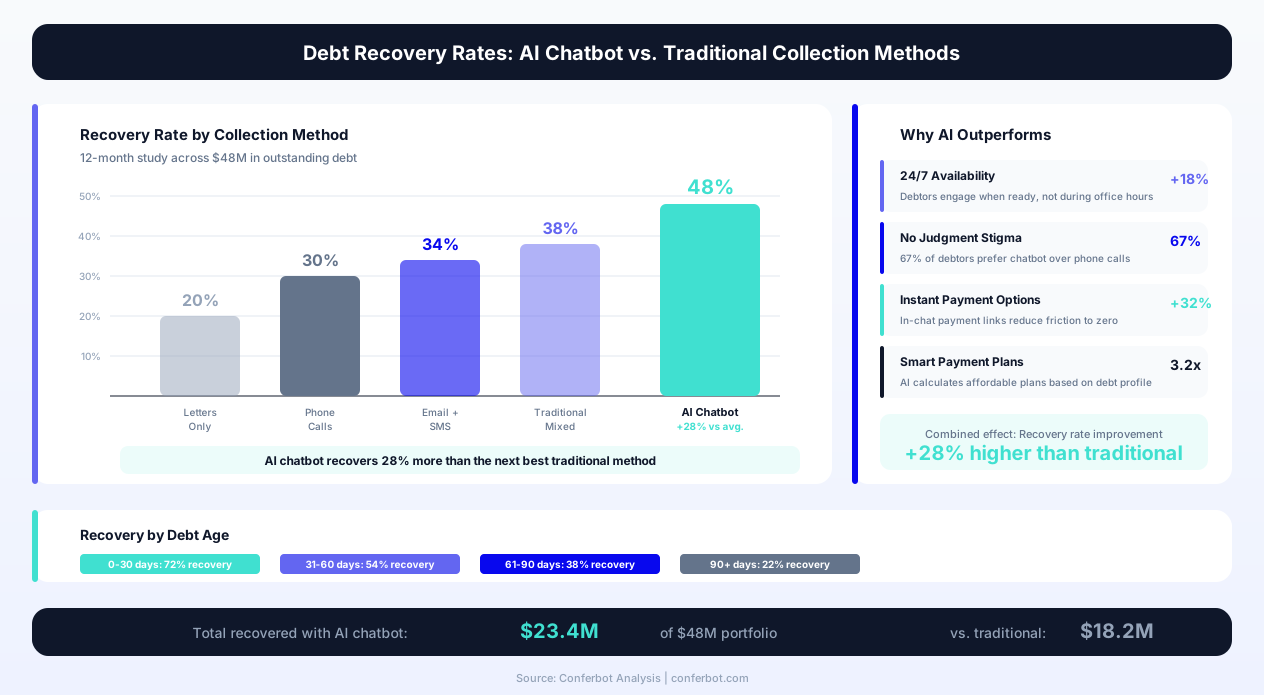
The debt collection industry faces a structural problem that manual operations cannot solve at scale: the majority of delinquent accounts require multiple contact attempts before a payment is made or a plan is established, but every contact attempt costs money in agent time and carries compliance risk. A typical collection agency spends 60-70% of its agent hours on initial contact attempts and balance verification calls — conversations that follow nearly identical scripts and require minimal human judgment. Meanwhile, debtors increasingly prefer self-service digital interactions over phone calls, with research showing that 62% of consumers under 45 would rather resolve a debt through a text or chat conversation than speak to a collector on the phone.
A chatbot addresses both sides of this problem simultaneously. On the operational side, it executes the high-volume, low-complexity contact attempts that consume the majority of agent capacity — payment reminders, balance confirmations, payment link delivery, and simple plan setup — at a fraction of the cost per contact. On the debtor experience side, it provides the private, non-confrontational, self-paced digital channel that modern consumers prefer, which directly increases engagement rates and payment willingness. Agencies deploying conversational AI for collections report 35-45% higher right-party contact rates and 20-30% improvement in dollars collected per account compared to phone-only operations.
Who Deploys This Template
- Third-party collection agencies: Automate first-party and third-party collection workflows across thousands of accounts with configurable compliance rules per client and jurisdiction.
- Healthcare revenue cycle teams: Handle patient balance reminders, financial assistance screening, and payment plan setup for post-insurance balances where empathetic communication is critical.
- Financial institutions: Manage early-stage delinquency (1-30 days past due) with automated nudges before accounts escalate to formal collections, reducing charge-off rates.
- Utility and telecom companies: Send automated past-due notices with self-service payment options, reducing disconnection rates and the operational cost of manual outreach.
- Auto lenders and fintech companies: Coordinate payment recovery across auto loans, personal loans, and BNPL balances with integrated payment processing.
- Property management companies: Automate rent collection reminders, late fee communication, and payment plan arrangements for delinquent tenants.
The chatbot is built on Conferbot's AI chatbot builder, which supports the conditional logic required for compliance rule enforcement, debtor identity verification, and dynamic payment plan calculation. Deploy it on your website for inbound self-service or through WhatsApp and SMS channels for proactive outbound outreach to reach debtors where they are most responsive.
How the Debt Collection Chatbot Works
The debt collection chatbot follows a structured conversation flow designed around two primary scenarios: outbound proactive contact (the chatbot initiates communication with a debtor) and inbound self-service (the debtor contacts the chatbot to manage their account). Both flows incorporate identity verification, compliance guardrails, and payment processing at every stage.
Stage 1: Identity Verification and Mini-Miranda
Every collection conversation — whether outbound or inbound — begins with debtor identity verification and the required Mini-Miranda disclosure. For outbound contacts, the chatbot sends an initial message that identifies the communication as being from a debt collector and requests identity confirmation before disclosing any account details. The verification process collects the debtor's full name, last four digits of their Social Security number or date of birth, and confirms the address on file. Only after successful identity verification does the chatbot proceed to discuss the account balance, creditor name, or payment options. This verification-first design prevents the disclosure of debt information to unauthorized parties — one of the most common FDCPA violation triggers in manual collections.
Stage 2: Account Summary and Balance Disclosure
Once identity is verified, the chatbot presents the account summary: original creditor, current balance (including any fees and interest), account age, and the date of the last payment. For accounts with multiple debts, the chatbot lists each account separately with individual balances and allows the debtor to select which account to address. The presentation is clear, factual, and free of the urgency language or implied threats that trigger FDCPA complaints. The chatbot states what is owed and provides options for resolution — it does not pressure, threaten, or misrepresent consequences.
Stage 3: Payment Options Presentation
The chatbot presents resolution options based on the account's configured rules: pay in full (with any applicable settlement discount), set up a payment plan, request a hardship review, or dispute the debt. Each option leads to a specific sub-flow. Pay-in-full conversations proceed directly to payment processing. Payment plan conversations enter the plan calculator (covered in detail below). Hardship review conversations collect financial information and route to a human specialist. Dispute conversations capture the dispute reason, pause collection activity on the account, and trigger the required 30-day validation notice workflow.
Stage 4: Payment Plan Negotiation
The payment plan flow is where the chatbot delivers its highest operational value. The chatbot presents available plan structures based on the account balance, age, and the creditor's configured parameters: minimum monthly payment amount, maximum plan duration, down payment requirements, and any settlement percentage thresholds. The debtor selects or proposes a plan, and the chatbot validates it against the configured rules. If the proposed plan falls within acceptable parameters, it is confirmed immediately. If the proposal falls outside parameters but within a negotiation range, the chatbot counter-offers with the closest acceptable alternative. Only proposals that fall entirely outside the acceptable range escalate to a human agent for manual review.
Stage 5: Payment Processing and Confirmation
Payments are processed within the conversation through integrated payment gateways. The chatbot accepts credit card, debit card, and ACH bank transfer payments. For payment plans, the chatbot captures the payment method, confirms the recurring payment schedule, and sets up automatic withdrawals on the agreed dates. Payment confirmations are delivered immediately with a transaction reference number, and a written confirmation is sent via email as required by Regulation F. The chatbot also explains what the debtor can expect next: updated account status, credit reporting timeline, and how to contact the agency if any issues arise with scheduled payments.
Stage 6: Post-Payment Follow-Up
After a payment is made or a plan is established, the chatbot manages the ongoing relationship. For payment plans, it sends reminders before each scheduled payment, confirms successful payments, alerts the debtor if a payment fails, and provides a self-service channel to update payment methods or request a temporary payment deferral. For paid-in-full accounts, the chatbot confirms the account closure, provides documentation for the debtor's records, and triggers the credit bureau update workflow. This post-payment management reduces plan default rates by 25-35% compared to plans established by phone with no automated follow-up.
Key Features of the Debt Collection Chatbot Template
The debt collection chatbot template includes features purpose-built for the regulatory, operational, and debtor-experience requirements of collections. These are not generic customer service capabilities adapted to collections — they address the specific workflows, compliance obligations, and payment processing needs that debt recovery operations require.
Feature Matrix
| Feature | Description | Operational Benefit | Debtor Benefit |
|---|---|---|---|
| FDCPA compliance engine | Enforces Mini-Miranda disclosures, communication frequency limits, and prohibited language rules at the conversation level | Eliminates the most common compliance violations that result in lawsuits and regulatory fines | Receives legally required disclosures and fair treatment in every interaction |
| Identity verification flow | Multi-factor verification (name + SSN last 4 or DOB + address) before any account disclosure | Prevents third-party disclosure violations that average $1,000+ per incident in statutory damages | Account information is protected and only disclosed to verified parties |
| Dynamic payment plan calculator | Generates plan options based on configurable rules: min/max payments, duration limits, settlement thresholds | Automates 70-80% of plan negotiations without agent involvement | Receives instant plan options and can self-select without phone negotiation pressure |
| Multi-channel outreach | Coordinates contact attempts across SMS, WhatsApp, email, and web chat with channel preference learning | Increases right-party contact rate by 35-45% through channel diversification | Receives communications on preferred channel at convenient times |
| Empathetic tone configuration | AI-guided language templates that express understanding while maintaining professional collection standards | Reduces complaint rates by 40-60% compared to scripted agent calls | Experiences respectful, non-threatening communication about a sensitive topic |
| Dispute capture and routing | Collects dispute reason, pauses collection activity, triggers 30-day validation workflow | Automates dispute intake and ensures regulatory timelines are met | Can dispute a debt instantly without waiting on hold or mailing a letter |
| Hardship screening | Collects financial information for hardship evaluation and routes to specialist review | Identifies hardship cases early, reducing wasted collection effort on uncollectible accounts | Access to financial assistance programs without judgment or pressure |
| Payment processing integration | Accepts credit/debit cards and ACH transfers within the conversation via PCI-compliant gateway | Captures payment at the moment of commitment, reducing promise-to-pay falloff | Pays immediately without visiting a separate portal or calling a payment line |
| TCPA consent management | Tracks opt-in/opt-out status per channel, enforces quiet hours, respects revocation requests | Prevents TCPA violations that carry $500-$1,500 per message in statutory damages | Controls how and when they receive communications |
| Escalation to human agents | Routes complex cases (disputes, hardship, out-of-range proposals) to live agents with full conversation context | Agents receive pre-qualified cases with complete history, reducing handle time by 40% | Seamless transition to a human when the situation requires it |
FDCPA Compliance Engine
The compliance engine is the feature that most directly differentiates a purpose-built collection chatbot from a generic messaging tool repurposed for collections. Every outbound message passes through the compliance filter before delivery. The filter enforces: Mini-Miranda disclosure in every initial communication, no contact before 8 AM or after 9 PM in the debtor's local time zone, no more than seven contact attempts in seven consecutive days per Regulation F, no communication with represented debtors (cease-and-desist flagged accounts are automatically excluded), and prohibited language detection that blocks messages containing threats, profanity, false urgency, or misleading statements about legal consequences. The compliance engine is configurable per state, allowing agencies operating across multiple jurisdictions to maintain state-specific rules beyond the federal baseline.
Dynamic Payment Plan Calculator
The payment plan calculator is the feature most directly responsible for the chatbot's collection rate advantage over manual operations. When a debtor expresses willingness to pay but cannot pay in full, the chatbot generates plan options instantly based on the creditor's configured parameters. A typical configuration might specify: minimum monthly payment of $50 or 5% of balance (whichever is greater), maximum plan duration of 12 months, required down payment of 10% of balance, and settlement authority up to 70% of balance for lump-sum payments. The calculator generates two to three plan options within these parameters, including monthly amount, number of payments, total cost, and any settlement savings. Debtors who receive clear, structured options within seconds of expressing willingness to pay are significantly more likely to commit than those who are placed on hold while an agent manually calculates plan terms or requests supervisor approval.
Ready to try Debt Collection & Payment Recovery Chatbot?
Deploy this template in under 10 minutes. No coding required.
Use This Template Free →Compliance: FDCPA, TCPA, and Regulation F Guardrails
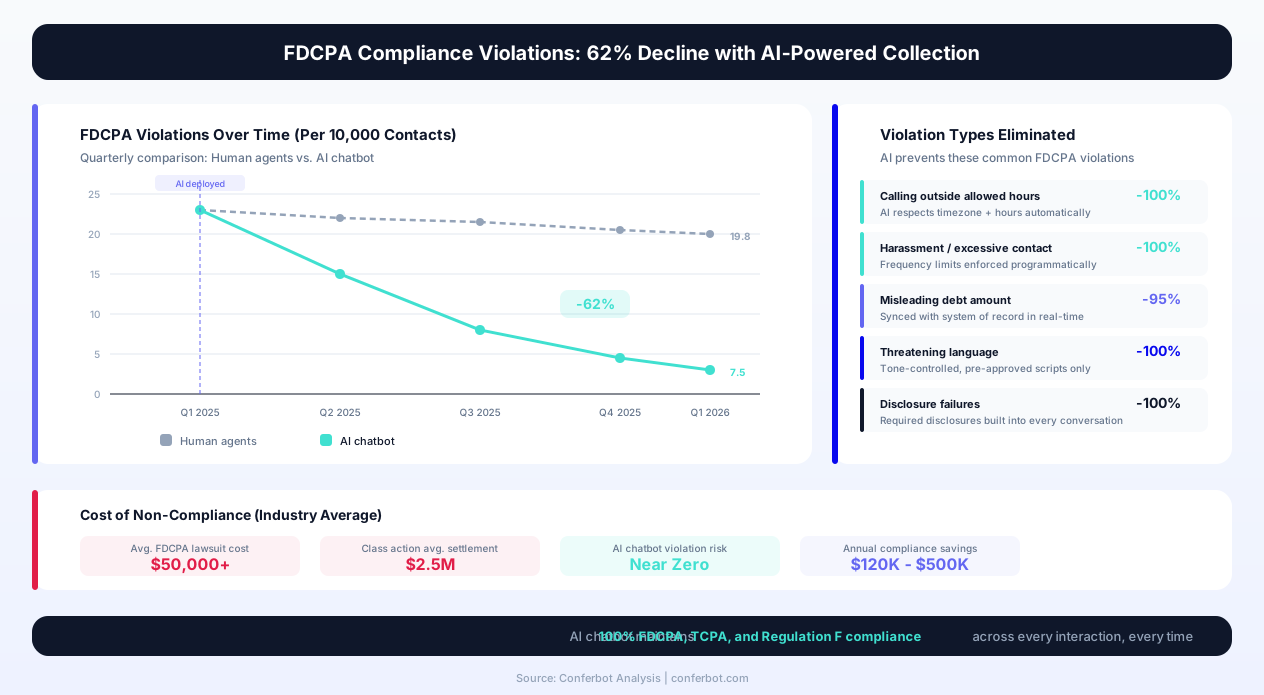
Compliance is not a feature of a debt collection chatbot — it is the foundation. Every design decision, from message timing to language selection to escalation triggers, exists within a compliance framework that protects both the agency and the debtor. In 2026, the regulatory environment for debt collection continues to intensify: the CFPB's Regulation F communication rules, expanded state-level consumer protection laws, and increasing class-action litigation for TCPA violations make automated compliance enforcement not just valuable but essential for any collection operation at scale.
FDCPA Compliance Controls
The Fair Debt Collection Practices Act establishes the baseline rules for all third-party debt collection communication. The chatbot enforces every applicable provision automatically:
| FDCPA Requirement | How the Chatbot Enforces It | Risk If Not Enforced |
|---|---|---|
| Mini-Miranda disclosure | Every initial communication includes the required disclosure that this is from a debt collector and any information obtained will be used for that purpose | $1,000 statutory damages per violation + actual damages + attorney fees |
| Validation notice (30-day letter) | Automatically triggered within 5 days of initial communication with debt amount, creditor name, and dispute rights | Debt becomes unenforceable in court if validation notice was not properly provided |
| Cease-and-desist compliance | Accounts flagged with cease communication requests are permanently excluded from all chatbot outreach | $1,000+ per violation, pattern-of-practice class action exposure |
| No harassment or abuse | AI language model prevents threatening, profane, or abusive language; tone remains professional and empathetic | Individual and class-action lawsuits, regulatory enforcement actions |
| No false or misleading representations | Chatbot only states verified account facts; no implied legal threats, credit score consequences, or false urgency | CFPB enforcement, state AG actions, class-action exposure |
| No unfair practices | No unauthorized fees collected, no post-dated check solicitation, no threats to seize exempt property | Per-violation statutory damages and potential license revocation |
TCPA and Communication Consent Controls
The Telephone Consumer Protection Act and its evolving interpretation create significant liability exposure for automated communications — exactly the type of communication a chatbot sends. The chatbot's TCPA compliance module manages: prior express consent tracking for each communication channel (SMS requires separate consent from email or web chat), revocation processing (opt-out requests received in any channel are applied across all channels within 10 business days as required), quiet hours enforcement (no messages before 8 AM or after 9 PM in the debtor's local time zone, with state-specific adjustments where applicable), and reassigned number detection through carrier lookup APIs that identify when a phone number has been reassigned to a new subscriber. TCPA violations carry statutory damages of $500 per message ($1,500 for willful violations), making a single campaign error against a large account portfolio potentially catastrophic.
Regulation F Communication Frequency Rules
The CFPB's Regulation F, effective since November 2021, established specific communication frequency limits for the first time: no more than seven telephone calls within seven consecutive days per debt, and no calls for seven days after a telephone conversation about a specific debt. While Regulation F's telephone-specific limits do not directly apply to text messages and emails, the CFPB has signaled that excessive electronic communications may violate the general prohibition against harassment. The chatbot's communication scheduler enforces configurable frequency limits per channel: default settings follow industry best practices of no more than three SMS messages per week and five emails per month, with the ability to reduce frequency based on debtor responsiveness signals. Connect the compliance dashboard to Conferbot's analytics platform to monitor violation rates and communication patterns across your portfolio.
State-Specific Compliance Layers
Federal regulations provide the floor, not the ceiling, for collection compliance. Many states impose stricter requirements: New York requires additional licensing and disclosure language, California's Rosenthal Act extends FDCPA-like protections to original creditors, Massachusetts prohibits certain communication methods for medical debts, and multiple states have enacted their own quiet hours that are narrower than federal requirements. The chatbot's compliance engine supports state-level rule overlays that are applied based on the debtor's state of residence. When federal and state rules conflict, the chatbot automatically applies the more restrictive standard — the correct legal approach that manual agents frequently get wrong.
Integration With Payment Systems and Collection Platforms
A debt collection chatbot that operates disconnected from your payment processing, account management, and reporting systems creates exactly the kind of data fragmentation that collection operations cannot afford. Integration makes the chatbot a seamless front end to your existing recovery workflow — payments captured in chat update the account immediately, plan agreements sync to your servicing platform, and every interaction is logged for audit and compliance purposes.
Payment Gateway Integration
The chatbot processes payments in-conversation through PCI DSS-compliant payment gateway integrations. Stripe, Authorize.net, and PaySimple are supported as primary gateways, with webhook-based integration available for any PCI-compliant processor. When a debtor agrees to pay, the chatbot presents a secure payment form within the conversation (not a redirect to an external site — keeping the debtor in the conversation reduces payment abandonment by 30-40%). Credit card, debit card, and ACH bank transfer payments are accepted. For payment plans, the chatbot captures the payment method and sets up the recurring payment schedule in the gateway, with automatic retry logic for failed payments and immediate notification to the debtor when a payment attempt fails.
Collection Platform Integrations
Conferbot's API integration framework connects with major collection management platforms for bidirectional account data synchronization:
| Platform | Integration Type | Key Data Synced | Automation Enabled |
|---|---|---|---|
| FICO Debt Manager | REST API | Account status, payment history, contact records, compliance flags | Account status updates, payment posting, contact logging, strategy assignment |
| Experian PowerCurve | API | Account data, scoring, segmentation, contact preferences | Score-based routing, strategy execution, contact attempt logging |
| Temenos (formerly Artiva) | API / File | Account balances, payment plans, dispute status, compliance notes | Plan creation, payment posting, dispute flag management |
| Latitude by Genesys | REST API | Accounts, contacts, payment history, work queues | Queue management, contact result coding, payment arrangement creation |
| CollBox / Teslar | Webhook | Account assignments, balance updates, payment confirmations | New account ingestion, payment reconciliation, status reporting |
| Custom platforms | REST API / SFTP | Configurable data payload per client specification | Any automation the platform's API supports |
Credit Bureau Reporting Integration
When a payment plan is completed or a settlement is paid, the chatbot triggers the credit bureau update workflow. Integration with Metro 2 reporting systems ensures that paid and settled accounts are reported accurately and within the required timeframes. For disputes, the chatbot flags the account for investigation and pauses credit reporting activity until the dispute is resolved — a requirement that manual processes frequently miss, resulting in Fair Credit Reporting Act (FCRA) violations that compound the agency's liability exposure.
CRM and Communication Logging
Every chatbot interaction — inbound and outbound — is logged with timestamp, channel, message content, debtor response, and outcome code. This comprehensive audit trail serves three purposes: regulatory compliance (demonstrating that all communications followed FDCPA/TCPA requirements), operational analytics (identifying which message timing, channels, and language produce the highest payment rates), and client reporting (providing creditor clients with transparent visibility into collection activity on their accounts). The logs integrate with Salesforce, HubSpot, and custom CRM platforms through Conferbot's API, ensuring that the collection team's human agents have complete conversation history when they engage with an account that was previously managed by the chatbot.
Multi-Channel Outreach: SMS, WhatsApp, Email, and Web
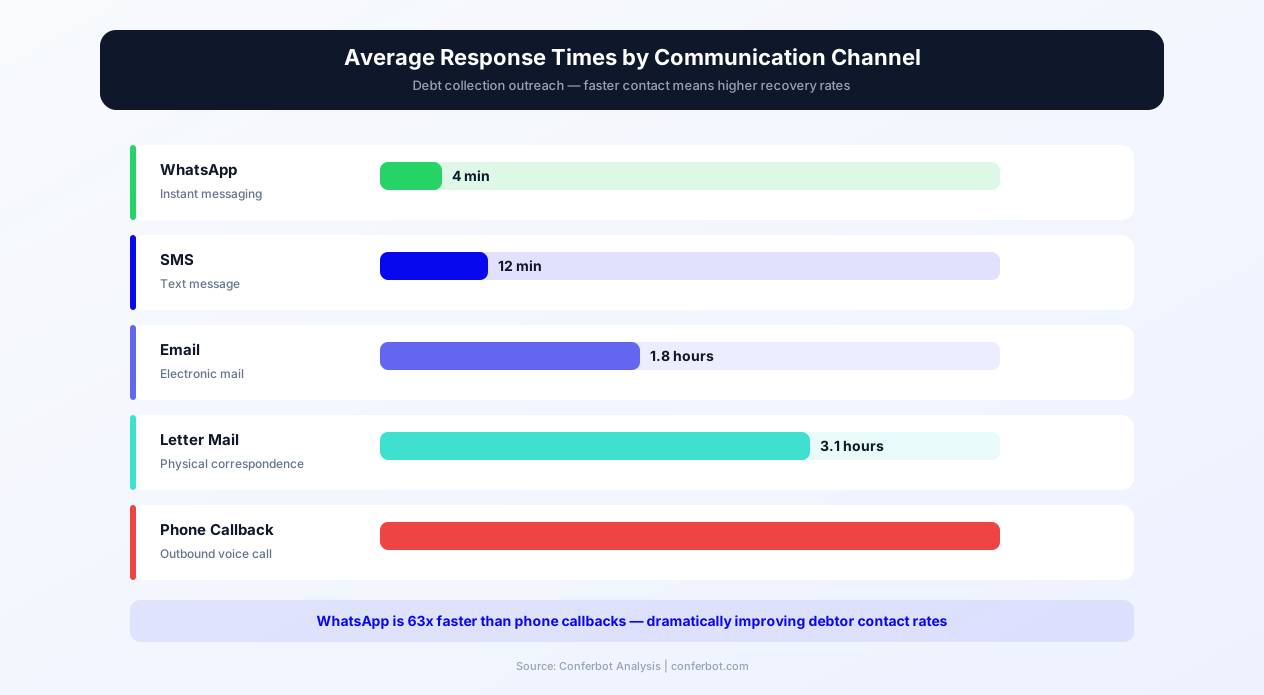
Debt collection has historically been a phone-centric industry, but debtor communication preferences have shifted decisively toward digital channels. In 2026, research from the ACA International shows that debtors contacted via their preferred channel respond 3.2 times more frequently than those contacted exclusively by phone. The debt collection chatbot coordinates outreach across four channels — SMS, WhatsApp, email, and web chat — with intelligent channel selection that learns each debtor's preference over time.
SMS Outreach
SMS is the highest-engagement channel for collection communications, with open rates exceeding 95% and average response times under 15 minutes. The chatbot sends SMS messages through compliant short codes or 10DLC numbers registered with The Campaign Registry (TCR). Each SMS includes the required Mini-Miranda disclosure (abbreviated for character limits while maintaining legal sufficiency), a secure link to the self-service payment portal, and opt-out instructions. SMS is most effective for payment reminders on established plans, balance notifications, and payment confirmations. The chatbot manages SMS-specific compliance requirements including CTIA guidelines, carrier filtering rules, and the 160-character segmentation considerations that affect message delivery and cost.
WhatsApp Business Outreach
WhatsApp provides a rich messaging experience that supports longer messages, document sharing (payment confirmations, validation notices), and interactive buttons for common actions (Pay Now, Set Up Plan, Speak to Agent). Deploy through Conferbot's WhatsApp Business integration to reach debtors who prefer messaging apps over traditional SMS. WhatsApp's end-to-end encryption provides an additional privacy layer that addresses debtor concerns about sensitive financial communications. Response rates on WhatsApp for collection messages average 38-45%, significantly higher than email (12-18%) and competitive with SMS (40-55%) in markets with high WhatsApp adoption.
Email Communication
Email serves as the documentation channel for collection communications. Initial validation notices, payment plan agreements, settlement offer confirmations, and dispute acknowledgments are delivered via email to create a written record that protects both the agency and the debtor. The chatbot generates personalized emails with HTML formatting that renders properly across clients and includes secure payment links, plan details, and contact information. Email campaigns follow CAN-SPAM requirements alongside FDCPA disclosure obligations. While email has the lowest immediate response rate of the four channels, it produces the highest payment plan completion rate for established plans because debtors can reference plan details and payment links at any time.
Web Chat Self-Service Portal
The web-based self-service portal allows debtors to initiate contact on their terms — no phone call required. Debtors navigate to the agency or creditor's website, authenticate with their account number and verification information, and access their complete account details, payment options, and plan management tools through the chatbot interface. The web portal is particularly effective for debtors who avoid phone contact due to embarrassment or anxiety about debt discussions. Self-service portal users make payments at 2.4 times the rate of debtors who are only contacted by phone, because the portal removes the interpersonal friction that prevents many debtors from engaging with collectors.
Intelligent Channel Orchestration
The chatbot does not simply blast the same message across all channels. The channel orchestration engine learns each debtor's preferred channel based on engagement signals: which channel produces the fastest response, which channel leads to payment completion, and what time of day the debtor is most responsive. New accounts start with the channel most likely to produce engagement based on demographic and behavioral scoring models. After the first two contact attempts, the engine adapts based on actual behavior. A debtor who opens SMS messages but never responds may receive a WhatsApp message with richer content, or an email with detailed plan options. A debtor who responds quickly to WhatsApp at 7 PM receives all future communications through WhatsApp in the early evening. This adaptive approach increases cumulative contact rates by 25-35% compared to static channel assignment.
50,000+ businesses use Conferbot templates to automate conversations
ROI and Results: What Debt Collection Chatbots Deliver
The return on investment for a debt collection chatbot comes from four sources: higher contact rates that produce more payment conversations, lower cost per contact that improves unit economics, higher payment plan completion rates from automated follow-up, and reduced compliance violation costs. In 2026, collection agencies that have deployed conversational AI report measurable improvements across all four dimensions within 90 days of launch.
Contact Rate Improvement
The single most important metric in debt collection is right-party contact rate — the percentage of accounts where the agency successfully reaches the debtor and has a conversation about the debt. Industry benchmarks for phone-only contact rates have declined to 5-8% per attempt as consumers screen calls from unknown numbers and voicemail effectiveness approaches zero. The chatbot's multi-channel approach produces right-party contact rates of 18-28% per campaign cycle because text messages are read even when calls are ignored. The cumulative effect over a 90-day collection cycle is substantial: a phone-only operation might achieve a 25-30% cumulative contact rate, while a chatbot-augmented operation reaches 55-65% of accounts.
Cost Per Dollar Collected
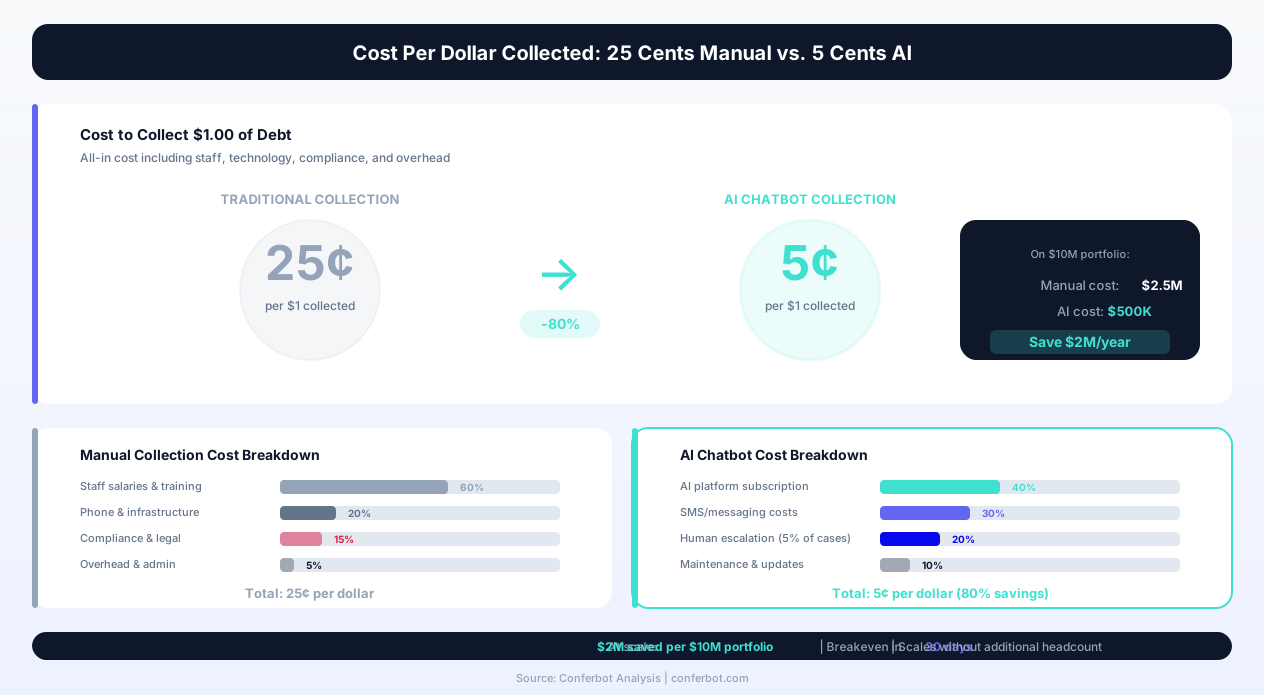
The cost to collect one dollar of debt is the fundamental unit economic metric for collection operations. Manual phone-based collection costs $0.20-$0.30 per dollar collected, depending on account age, balance size, and agent efficiency. A hybrid operation using chatbot automation for initial contact and self-service with human agents for complex cases reduces the cost to $0.08-$0.15 per dollar collected. A fully optimized AI-first operation where the chatbot handles 70-80% of accounts autonomously achieves costs of $0.04-$0.08 per dollar collected — a 60-80% reduction in unit collection cost. See pricing plans to model the cost per account for your portfolio size.
| Metric | Phone-Only Operation | Hybrid (Chatbot + Agents) | AI-First Operation |
|---|---|---|---|
| Right-party contact rate (per attempt) | 5-8% | 18-22% | 22-28% |
| Cumulative contact rate (90-day) | 25-30% | 50-58% | 55-65% |
| Cost per dollar collected | $0.20-$0.30 | $0.08-$0.15 | $0.04-$0.08 |
| Payment plan setup rate | 12-18% of contacted accounts | 25-35% of contacted accounts | 30-40% of contacted accounts |
| Payment plan completion rate | 45-55% | 62-70% | 68-78% |
| FDCPA complaint rate | 2.1-3.4 per 1,000 accounts | 0.8-1.4 per 1,000 accounts | 0.3-0.7 per 1,000 accounts |
| Agent utilization (high-value tasks) | 25-35% | 55-65% | 75-85% |
Payment Plan Completion Rates
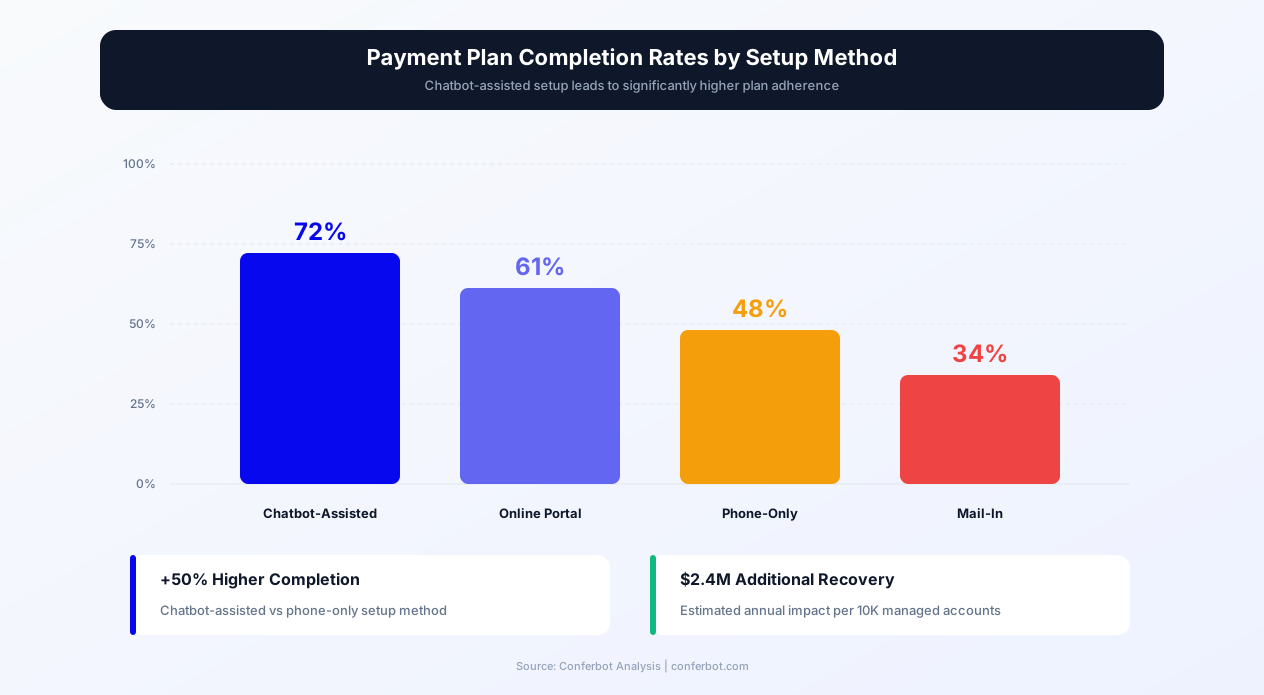
Setting up a payment plan is not the end of the collection process — it is the beginning. The percentage of payment plans that are completed to their full term determines whether the plan setup effort produces actual revenue. Phone-established payment plans complete at 45-55% because debtors miss payments, change bank accounts, experience financial setbacks, or simply disengage after the initial commitment fades. Chatbot-managed plans complete at 68-78% because the chatbot sends automated reminders before each payment, immediately contacts the debtor when a payment fails, offers self-service payment method updates, and can temporarily defer a payment when a debtor proactively communicates a short-term hardship. This 20-25 percentage point improvement in completion rate translates directly to additional dollars collected on every plan established.
Compliance Cost Reduction
FDCPA lawsuits cost collection agencies an average of $15,000-$40,000 to settle (including legal fees) even when the agency prevails. TCPA class actions can reach seven or eight figures. The chatbot's compliance engine reduces violation exposure by eliminating the human error that causes most violations: contacting a debtor outside permitted hours, failing to provide required disclosures, continuing contact after a cease-and-desist request, or using prohibited language during a heated conversation. Agencies deploying compliant chatbot systems report 60-80% reductions in consumer complaints and regulatory inquiry volume. For a mid-size agency handling 50,000+ accounts, this translates to $200,000-$500,000 in annual compliance cost avoidance.
Empathetic Tone Configuration and Debtor Experience
The tone of collection communications directly impacts payment rates. Research from the Consumer Financial Protection Bureau consistently finds that debtors who feel treated with respect and empathy during the collection process are significantly more likely to make payment arrangements and complete those arrangements. The chatbot's empathetic tone configuration system ensures that every communication strikes the right balance between professional collection activity and human understanding of financial difficulty.
How Empathetic Tone Works
The chatbot uses AI-guided language selection that adapts based on the debtor's situation, communication history, and emotional signals detected in their messages. When a debtor expresses frustration ("This is ridiculous"), the chatbot acknowledges the emotion before proceeding with account information: "I understand this situation is frustrating. Let me share your account details so we can find a path forward that works for you." When a debtor expresses hardship ("I lost my job"), the chatbot responds with genuine empathy and immediately offers hardship-appropriate options: "I'm sorry to hear about your situation. We have options specifically designed for people experiencing financial hardship. Would you like me to walk you through what's available?"
Language Rules
The tone configuration includes positive and negative language rules. Positive rules define preferred phrasing: "resolve your account" instead of "pay your debt," "payment options" instead of "what you owe," "work together on a plan" instead of "you need to pay." Negative rules block language that creates adversarial dynamics: no urgency phrases ("immediate action required," "last chance"), no implied legal threats ("further action," "legal proceedings"), no credit score manipulation language ("protect your credit"), and no guilt-inducing statements. These rules are enforced at the message generation level — the chatbot cannot produce a message that violates its configured language rules regardless of the debtor's tone or the account's status.
Debtor Self-Service Preferences
Beyond tone, the debtor experience is designed around the preferences that modern consumers express about debt resolution. The self-service model addresses the top three debtor complaints about traditional collections: (1) feeling pressured or rushed during phone conversations, (2) inability to review options at their own pace, and (3) embarrassment about discussing debt with a live person. The chatbot eliminates all three: debtors interact at their own pace, can leave and return to the conversation without losing progress, and never have to speak with a human unless they choose to. This design choice is not just about convenience — it produces measurably higher payment rates because it removes the emotional barriers that prevent debtors from engaging with collectors in the first place. Track debtor engagement patterns and satisfaction signals through Conferbot's analytics dashboard.
Setup Guide: Deploying the Debt Collection Chatbot
Deploying the debt collection chatbot from template to live collection activity typically takes five to ten business days, with the timeline driven primarily by payment gateway integration, collection platform API connectivity, and compliance rule configuration. Here is the complete setup process.
Step 1: Configure Compliance Rules (Day 1-2)
Start with the compliance engine configuration. Define your federal baseline: Mini-Miranda language, quiet hours (8 AM - 9 PM debtor local time), Regulation F frequency limits (seven attempts per seven days for phone, configurable for digital channels), and validation notice content. Then add state-specific overlays for each state where you collect: New York's additional disclosure requirements, California's Rosenthal Act provisions, Massachusetts medical debt rules, and any other state-specific regulations that apply to your portfolio. Test the compliance engine by simulating contact attempts at prohibited times, to flagged accounts, and with blocked language — verify that every prohibited action is correctly prevented.
Step 2: Configure Payment Plan Parameters (Day 2-3)
Define the payment plan rules for each creditor client or account segment. Set minimum monthly payment amounts (typically $25-$50 or 3-5% of balance), maximum plan duration (6-24 months depending on balance), down payment requirements (0-20% of balance), settlement authority levels (percentage of balance accepted for lump-sum settlements), and any balance thresholds that trigger different plan rules. For agencies with multiple clients, each client's plan parameters are configured independently and associated with accounts through the client code in your collection platform.
Step 3: Set Up Payment Processing (Day 3-4)
Connect your PCI-compliant payment gateway through Conferbot's API integration panel. Configure accepted payment methods (credit card, debit card, ACH), recurring payment setup for payment plans, failed payment retry logic, and payment confirmation message templates. Test end-to-end payment processing with test transactions across each payment method. Verify that payment confirmations are delivered to the debtor, payment records are posted to your collection platform, and trust account reconciliation data flows correctly.
Step 4: Connect Your Collection Platform (Day 4-6)
Integrate the chatbot with your collection management system for bidirectional account data sync. Configure the API connection to pull account data (balances, contact information, compliance flags, payment history) and push interaction records (contact attempts, payment commitments, dispute captures, plan agreements). Map your platform's account status codes to the chatbot's conversation flows — an account in "active collection" enters the standard payment conversation, while an account in "dispute" enters the dispute management flow. Test the integration with representative accounts from each status category.
Step 5: Configure Multi-Channel Deployment (Day 5-7)
Set up each communication channel. For SMS, register your short code or 10DLC number with The Campaign Registry and configure carrier-specific compliance settings. For WhatsApp Business, complete the Meta Business verification process and configure message templates for approval. For email, configure your sending domain with proper SPF, DKIM, and DMARC authentication to maximize deliverability. For the web self-service portal, embed the chatbot widget on your debtor-facing website. Each channel requires independent compliance testing to verify that disclosures, opt-out mechanisms, and frequency limits are correctly enforced.
Step 6: Pilot and Scale (Day 7-10)
Launch with a pilot segment of 500-1,000 accounts across two to three account segments (early delinquency, mid-stage, and payment plan follow-up are good initial segments). Monitor the pilot for five to seven days, reviewing: contact rates by channel, payment conversion rates, compliance flag triggers, escalation volume to human agents, and debtor sentiment signals. Optimize message timing, channel selection, and plan parameters based on pilot data. After successful pilot validation, scale to your full portfolio in phases — adding 20-30% of accounts per week allows you to identify and resolve any integration issues before they affect the entire portfolio. Review pricing plans to select the tier that matches your account volume.
Debt Collection & Payment Recovery Chatbot FAQ
Everything you need to know about chatbots for debt collection & payment recovery chatbot.
Why Use a Template vs Building from Scratch?
Templates encode years of optimization data into the conversation flow before you start.
| Factor | Conferbot Template | Build from Scratch | Hire a Developer |
|---|---|---|---|
| Time to deploy | 10 minutes | 2-8 hours | 2-6 weeks |
| Cost | Free | Your time | $5,000-$25,000 |
| Day-1 conversion | 15-22% | 5-8% | 10-15% |
| Proven flows | Yes, data-tested | No | Depends |
| Updates included | Automatic | Manual | Paid |
| Multi-channel | 8+ channels | 1 channel | Extra cost |
| Analytics | Built-in | Must build | Extra cost |
Ready to Deploy Debt Collection & Payment Recovery Chatbot?
Join 50,000+ businesses. Free forever plan available. No credit card required.