
Clinical Trial Patient Recruitment Chatbot
Free Healthcare Chatbot Template
AI-powered patient recruitment for clinical trials with pre-screening, eligibility matching, consent pre-education, and multi-site enrollment

What Is a Clinical Trial Patient Recruitment Chatbot?
A clinical trial patient recruitment chatbot is an AI-powered conversational assistant purpose-built for pharmaceutical companies, contract research organizations (CROs), academic medical centers, and clinical research sites to automate the high-friction, high-cost process of finding, screening, qualifying, and enrolling patients into clinical studies. In 2026, clinical trial recruitment remains the single largest bottleneck in drug development — 80% of trials fail to meet enrollment timelines, 30% of sites never enroll a single patient, and the average Phase III trial takes 19 months longer than planned due to recruitment delays. Every day a trial runs behind schedule costs the sponsor $600,000 to $8 million in delayed revenue, lost patent exclusivity, and operational overhead. The clinical trial recruitment chatbot addresses this crisis by operating 24/7 across websites, patient communities, social media landing pages, and messaging platforms to engage potential participants, conduct intelligent pre-screening conversations, match patients to appropriate studies, explain trial requirements in plain language, collect preliminary consent, and schedule site visits — all without requiring coordinator time for the 70-85% of inquiries that result in screen failures.
The Recruitment Crisis in Clinical Research
The scale of the recruitment problem is staggering. The clinical trials industry spends $65 billion annually on patient recruitment — making it the largest single cost category in drug development after the compound itself. Despite this expenditure, 85% of clinical trials experience enrollment delays, with the average trial requiring 6-12 months longer than planned to reach target enrollment. The consequences cascade through the entire drug development pipeline: delayed treatments reaching patients who need them, lost patent exclusivity worth billions in revenue, wasted site infrastructure costs during low-enrollment periods, and increased per-patient costs as fixed overhead is spread across fewer enrollees. Traditional recruitment methods — physician referrals, advertising, patient database mining, and community outreach — each have fundamental limitations that technology can address.
Physician referrals, historically the primary recruitment channel, suffer from competing priorities: referring physicians are managing their own patient panels and rarely remember specific trial eligibility criteria during busy clinical encounters. Advertising campaigns (digital, print, broadcast) generate volume but not quality — the typical clinical trial advertisement generates hundreds of inquiries that convert to enrollment at rates below 3%, consuming coordinator time on screen failures. Patient databases provide targetable populations but face consent restrictions, data staleness, and the challenge of reaching patients at their moment of health-seeking intent rather than through cold outreach. The chatbot addresses these limitations simultaneously: it operates at the moment of patient intent (when they are actively searching for treatment options), conducts intelligent screening that eliminates unqualified leads before coordinator involvement, and scales across unlimited simultaneous conversations without hiring additional staff.
How the Chatbot Transforms the Recruitment Funnel
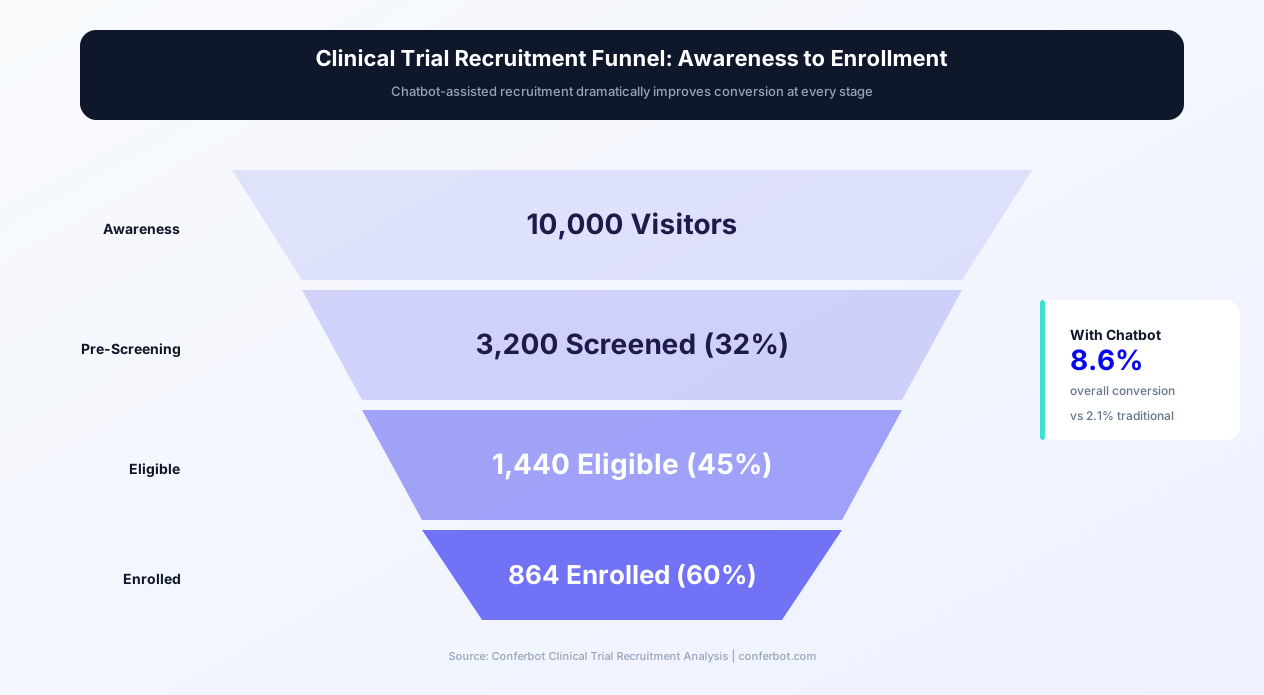
Traditional clinical trial recruitment follows a funnel with catastrophic conversion rates at each stage: awareness (advertising reach) converts to inquiry at 0.5-2%, inquiry converts to phone screen at 15-25%, phone screen converts to site visit at 30-40%, and site visit converts to enrollment at 50-60%. The overall conversion from initial awareness to enrolled patient is typically 0.1-2.1%. The chatbot dramatically improves conversion at every stage. By providing immediate, conversational engagement rather than requiring patients to call during business hours, inquiry-to-screen conversion increases from 20% to 65%. By conducting thorough pre-screening that eliminates obviously ineligible patients before they invest time in site visits, screen-to-eligible conversion improves from 35% to 72%. The overall funnel improvement from awareness to enrollment increases 3-4x, reducing the number of impressions, clicks, and coordinator hours required per enrolled patient.
Who Benefits from This Template
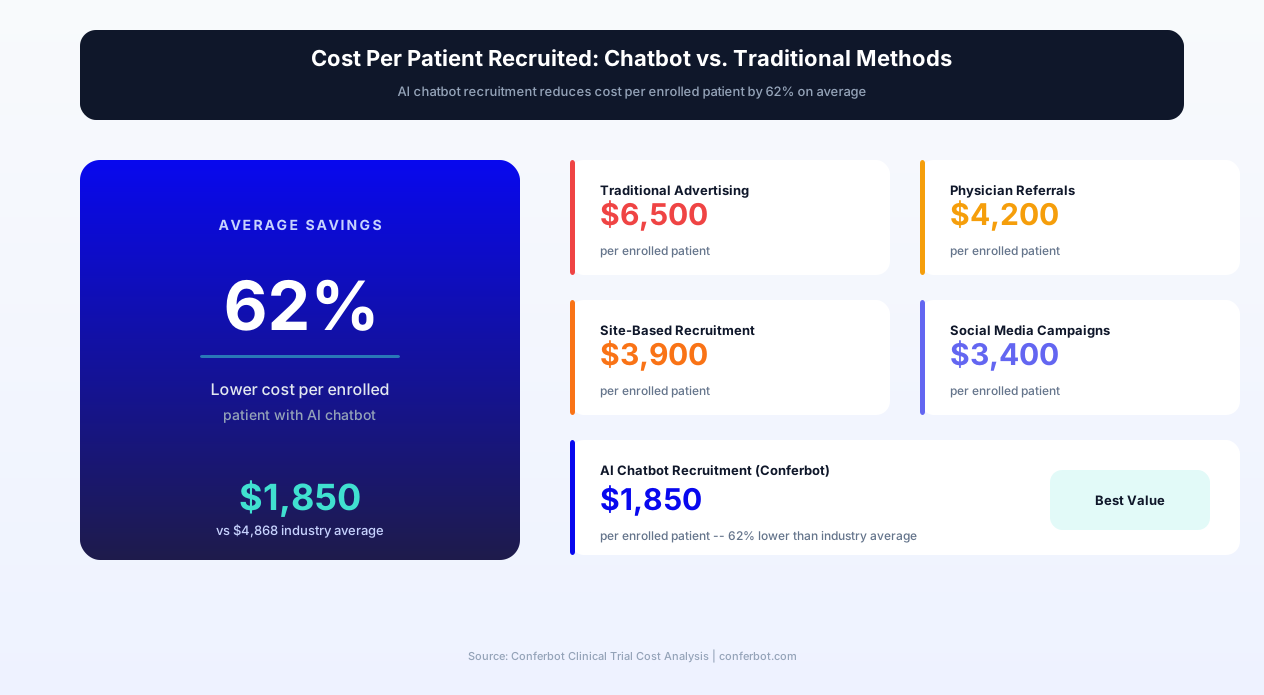
- Pharmaceutical sponsors: Companies running Phase I-IV trials that need to accelerate enrollment timelines and reduce the $6,500+ average cost per enrolled patient across their trial portfolio.
- Contract research organizations (CROs): CROs managing recruitment across multiple sponsors, therapeutic areas, and geographies who need scalable, consistent screening processes that differentiate their service offering.
- Academic medical centers: Research institutions with IRB-approved studies seeking to expand recruitment beyond their existing patient population through digital channels.
- Site networks: Multi-site clinical research networks that need centralized pre-screening with location-aware routing to distribute qualified leads across participating sites.
- Patient advocacy organizations: Disease-specific organizations connecting their communities with relevant clinical trials as a core mission service.
- Decentralized trial platforms: Companies running virtual or hybrid trials where patient engagement is entirely digital and chatbot-mediated recruitment aligns naturally with the trial design.
Built on Conferbot's AI chatbot builder, this template integrates with clinical trial management systems (CTMS) through the API integration to access real-time study availability, eligibility criteria, and site capacity. Deploy on your website where patients research treatment options, on WhatsApp for community outreach, or on Facebook Messenger where clinical trial advertising campaigns drive traffic.
How AI Pre-Screening Works for Clinical Trials
The chatbot's pre-screening engine is the core innovation that transforms clinical trial recruitment from a labor-intensive, coordinator-dependent process into an automated, scalable system. Traditional pre-screening requires trained clinical research coordinators (CRCs) to conduct 15-30 minute phone calls with each potential participant — asking about medical history, current medications, diagnosis details, and demographic factors to determine preliminary eligibility. With coordinator salaries averaging $55,000-75,000 and each coordinator able to screen only 15-25 patients per day, the labor cost of screening alone represents $180-400 per screened patient. The chatbot conducts equivalent screening conversations 24/7, handling unlimited simultaneous sessions, at a fraction of the per-patient cost.
Conversational Eligibility Assessment
Unlike static web forms that present all eligibility questions simultaneously (overwhelming patients and producing 50-67% abandonment rates), the chatbot conducts screening as a natural conversation. Questions are presented one at a time, with each response determining the next question — creating an adaptive screening flow that mirrors how a coordinator would conduct an in-person assessment. The chatbot begins with soft-disqualification questions first (age range, geographic location, general health condition) to quickly identify obviously ineligible patients without wasting their time on detailed medical history questions. This approach respects patients' time and reduces the frustration of completing lengthy questionnaires only to learn they don't qualify.
For example, a chatbot screening for a Type 2 diabetes study might begin: "Thank you for your interest in our diabetes research study. To see if you might be a good fit, I'll ask you a few questions — it should take about 3-5 minutes. First, have you been diagnosed with Type 2 diabetes by a doctor?" If the patient answers no, the bot gracefully explains they don't qualify for this particular study but offers to check other available studies that might match. If yes, the conversation continues with progressively specific questions: "Approximately when were you diagnosed? Are you currently taking insulin? What was your most recent HbA1c level, if you know it?" Each question is asked in plain language, with helpful context when needed: "HbA1c is a blood test that measures your average blood sugar over the past 2-3 months. If you don't know your exact number, that's completely fine — we can check during a site visit."
Adaptive Branching Logic
The screening conversation adapts in real-time based on patient responses. If a patient mentions a medication that is excluded by the protocol (a "prohibited concomitant medication"), the chatbot can either immediately screen out (for absolute exclusions) or note the finding for coordinator review (for relative exclusions that may have exceptions). The branching logic handles:
- Inclusion criteria verification: Confirming the patient meets all required criteria (diagnosis, age range, biomarker levels, treatment history) through conversational questions.
- Exclusion criteria screening: Identifying disqualifying factors (comorbidities, medications, pregnancy, recent surgeries, other trial participation) early in the conversation to avoid wasting patient and site time.
- Tiered qualification: Some criteria are absolute (must-have/must-not-have) while others are relative (preferably meets, but coordinator should evaluate). The chatbot distinguishes between automatic screen failures and "coordinator review recommended" outcomes.
- Missing information handling: When patients don't know specific values (lab results, exact medication dosages, diagnosis dates), the chatbot marks these as "to be verified at site visit" rather than disqualifying, ensuring that informational gaps don't unnecessarily eliminate potentially eligible patients.
- Multi-study matching: If a patient doesn't qualify for their initially inquired study, the chatbot automatically checks eligibility against other active studies in the same therapeutic area, maximizing the value of each patient interaction.
Pre-Screening Completion Rates
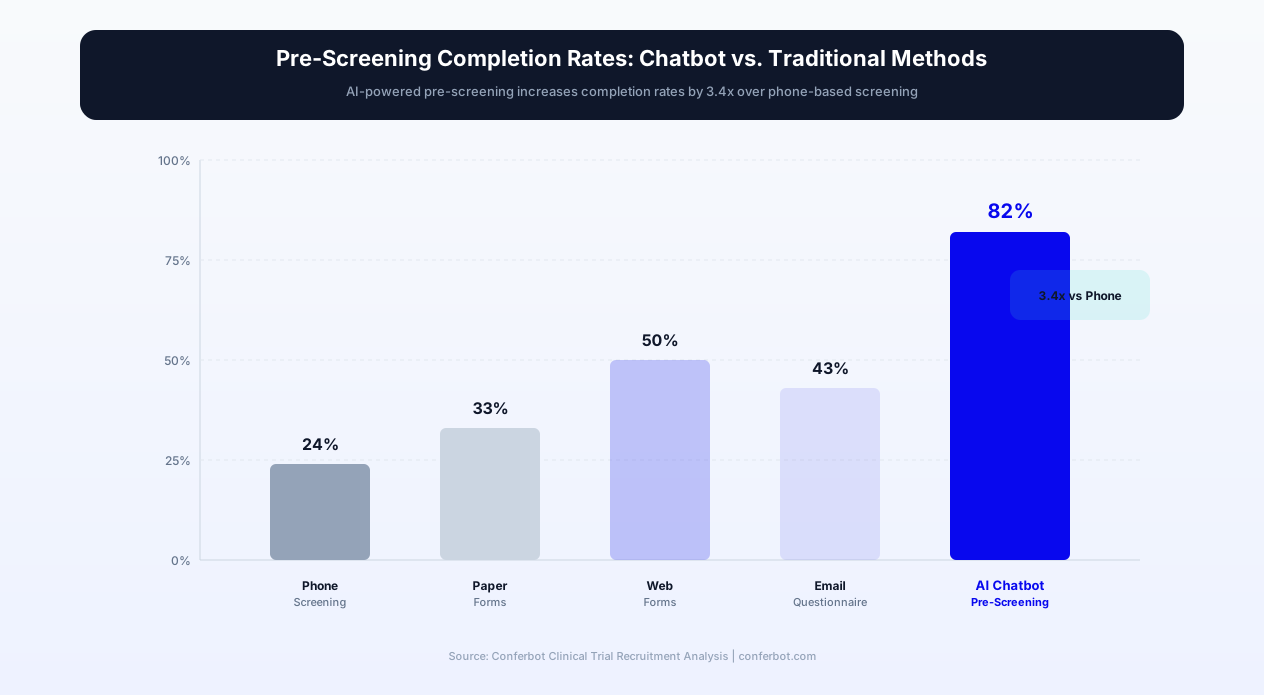
The chatbot's conversational approach dramatically improves pre-screening completion rates compared to traditional methods. Phone-based screening achieves only 24% completion — patients don't answer unknown numbers, screening calls reach voicemail, and callbacks fail to connect. Paper questionnaires at physician offices achieve 33% completion. Online web forms perform better at 50% but still lose half of interested patients to form fatigue. The chatbot achieves 82% pre-screening completion by presenting questions conversationally, allowing patients to complete screening at their own pace (including pausing and resuming), being available 24/7 (40% of screenings are completed outside business hours), and providing immediate feedback that maintains engagement throughout the process.
Natural Language Understanding for Medical Responses
Patients describe their medical situations in natural language, not clinical terminology. The chatbot's NLU engine understands variations: "blood pressure pills" maps to antihypertensives, "sugar medicine" to diabetes medications, "the cancer came back" to recurrent disease, "I had my gallbladder out" to cholecystectomy. This understanding prevents the false screen failures that occur when patients use layperson terms that don't exactly match protocol language. The system also handles units conversions (patients may report weight in pounds while protocols specify kilograms), date approximations ("about two years ago" for diagnosis date requirements), and ranges ("my blood pressure is usually around 140/90" for specific threshold criteria). Medical term recognition is continuously improved through the analytics platform which identifies screening questions where patients most frequently express confusion or provide ambiguous responses.
Eligibility Matching, Study Matching, and Informed Consent Support
Beyond pre-screening individual studies, the chatbot serves as an intelligent matching engine that connects patients with the most appropriate clinical trials from across a sponsor's or site's entire study portfolio. This multi-study matching capability transforms a single patient inquiry into an opportunity to fill enrollment across multiple trials — maximizing both patient access to research and site enrollment efficiency.
Intelligent Study Matching
When a patient visits a clinical trial recruitment page, they may be responding to an advertisement for a specific study — but their medical profile might make them better candidates for a different active study at the same site. The chatbot's matching engine evaluates each patient's screening responses against all active studies simultaneously, producing a ranked list of potential matches. For a patient with metastatic breast cancer who inquires about Study A (testing a CDK4/6 inhibitor), the chatbot might identify that they also qualify for Study B (testing a novel immunotherapy combination) and Study C (a quality-of-life study with broader eligibility). Presenting all relevant options increases per-patient enrollment probability from a single study match (65-70% of pre-qualified patients enrolling) to a portfolio match (82-88% of pre-qualified patients enrolling in at least one study).
The matching algorithm considers multiple factors beyond basic eligibility criteria:
- Geographic proximity: Matching patients to the nearest participating site to reduce travel burden — a leading cause of enrollment refusal and post-enrollment dropout.
- Treatment history alignment: Prioritizing studies whose treatment arms align with the patient's treatment stage (first-line, second-line, treatment-resistant) for higher qualification probability.
- Visit burden assessment: Matching patients with mobility or scheduling constraints to studies with fewer site visits, decentralized assessment options, or telemedicine components.
- Enrollment urgency: Weighting studies that are behind enrollment targets higher in recommendations, helping sponsors allocate recruitment resources where they're most needed.
- Competitive enrollment: If the patient is considering a competing sponsor's trial, the chatbot highlights differentiating factors (compensation, visit schedule, treatment access post-trial) that might influence the patient's decision.
Informed Consent Pre-Education
Informed consent is one of the most critical and time-consuming steps in clinical trial enrollment. A typical informed consent document (ICD) is 15-25 pages of dense medical and legal language that patients must read, understand, and sign before enrollment. Research consistently shows that patients retain only 40-60% of consent information when presented in a single site visit, leading to comprehension gaps that raise ethical concerns and contribute to early dropout when patients encounter study procedures they didn't fully understand. The chatbot addresses this by providing pre-education before the consent visit — explaining study procedures, risks, benefits, time commitments, and compensation in conversational, plain-language terms that patients can review at their own pace.
The chatbot's consent pre-education covers key elements that regulatory guidance requires patients to understand:
- Study purpose: Why the research is being conducted, what the experimental treatment is, and how it differs from standard care.
- Procedures involved: What visits, tests, blood draws, scans, and questionnaires are required, presented as a visual timeline rather than dense paragraphs.
- Risks and discomforts: Potential side effects and procedural discomforts, explained in severity-graded terms patients can understand ("mild nausea that typically resolves in 1-2 days" rather than "gastrointestinal adverse events of Grade 1-2 severity").
- Benefits: Potential direct benefits and the contribution to scientific knowledge, clearly distinguishing between possible therapeutic benefit and no-benefit scenarios.
- Alternatives: What treatment options exist outside the trial, so patients understand they are choosing research participation rather than being channeled into it.
- Voluntary participation: Explicit explanation that participation is voluntary, can be withdrawn at any time without penalty, and will not affect their regular medical care.
- Compensation and costs: What the patient will receive (stipend, travel reimbursement, free treatment) and what costs remain their responsibility.
By educating patients before the consent visit, the chatbot reduces the time coordinators spend explaining consent by 40-60%, improves patient comprehension scores on post-consent assessments, and — most importantly — produces higher-quality consent where patients genuinely understand what they're agreeing to. This pre-education capability integrates with the calendar booking feature to schedule the formal consent visit at the research site after the patient has reviewed the pre-education materials.
eConsent Integration
For trials implementing electronic consent (eConsent) — increasingly common in 2026 and required for many decentralized trials — the chatbot serves as the eConsent delivery platform. The patient reviews consent materials section by section within the chatbot interface, with comprehension checks at each stage (questions the patient must answer correctly to proceed, ensuring genuine understanding rather than rapid click-through). Video explanations from the principal investigator can be embedded within the chatbot conversation, combining the personal connection of a physician explanation with the scalability of digital delivery. Electronic signatures are captured with regulatory-compliant timestamps, audit trails, and identity verification. This eConsent workflow is particularly valuable for multi-site trials where ensuring consistent consent quality across dozens or hundreds of sites is a perpetual challenge — the chatbot delivers identical, IRB-approved consent education regardless of which site the patient is enrolling at.
Ready to try Clinical Trial Patient Recruitment Chatbot?
Deploy this template in under 10 minutes. No coding required.
Use This Template Free →Multi-Site Recruitment and Decentralized Trial Support
Clinical trials rarely operate at a single location. Phase II and III trials typically involve 30-200+ research sites across multiple countries, each with different enrollment rates, patient populations, and operational capacities. Multi-site recruitment coordination is one of the most operationally complex challenges in clinical research — the chatbot transforms it from a manual, site-by-site effort into a centralized, intelligent system that balances recruitment across the entire trial network.
Centralized Pre-Screening with Site-Level Routing
The chatbot conducts centralized pre-screening using a single, protocol-consistent questionnaire regardless of which site the patient will ultimately enroll at. This eliminates the variability that occurs when 50+ sites each interpret eligibility criteria slightly differently during phone screenings — a common source of screen failures at the site visit stage. After pre-screening confirms preliminary eligibility, the chatbot routes the patient to the optimal site based on:
- Geographic proximity: Calculating travel distance from the patient's location to all active sites and presenting the nearest options. Research shows that every additional 30 minutes of travel reduces enrollment probability by 12%.
- Site capacity: Real-time integration with the CTMS identifies sites with available enrollment slots, avoiding routing patients to sites that are at capacity or temporarily paused.
- Site enrollment rate: Prioritizing under-enrolling sites to balance recruitment across the network, reducing the common scenario where 20% of sites generate 80% of enrollment while most sites struggle to meet targets.
- Language and cultural considerations: Matching patients with sites that have staff fluent in their language and experience with their cultural community, improving the patient experience and reducing consent comprehension barriers.
- Site specialization: For trials with multiple arms or complex procedures, routing patients to sites with demonstrated expertise in relevant procedures (for example, routing patients requiring specific imaging protocols to sites with the appropriate equipment and trained personnel).
Decentralized and Hybrid Trial Models
The COVID-19 pandemic accelerated adoption of decentralized clinical trials (DCTs) — studies where some or all activities occur outside traditional research sites, using telemedicine visits, home health visits, direct-to-patient drug shipping, and electronic patient-reported outcomes (ePRO). In 2026, an estimated 35% of new trials incorporate decentralized elements. The chatbot is uniquely suited for DCT recruitment because:
- Digital-first engagement: DCT patients interact primarily through digital channels — the chatbot meets them in their natural environment rather than requiring phone calls or site visits for initial contact.
- Remote screening capability: The chatbot can conduct complete pre-screening without any in-person interaction, determining eligibility through conversational assessment of self-reported medical history, medication review, and symptom evaluation.
- Home visit scheduling: For hybrid trials requiring some in-person assessments, the chatbot schedules home health visits by coordinating patient availability with mobile nursing service calendars.
- Device provisioning: The chatbot collects shipping addresses and device preferences for trials that provide patients with monitoring devices (blood pressure cuffs, continuous glucose monitors, activity trackers), electronic diaries, or study medication kits.
- Ongoing engagement: Beyond recruitment, the chatbot serves as the patient's primary point of contact throughout the trial, answering questions about study procedures, medication administration, appointment scheduling, and adverse event reporting.
Global Trial Recruitment
Multi-national trials face additional recruitment complexity: language differences, regulatory variations, cultural attitudes toward clinical research, and time zone challenges that make centralized coordination even more difficult. The chatbot's multilingual capabilities enable consistent screening in 20+ languages, with protocol-compliant translations of eligibility questions reviewed by local regulatory teams. Cultural adaptation goes beyond translation — the chatbot adjusts its communication style, privacy assurances, and consent explanations based on the patient's region, reflecting local attitudes toward clinical research (for example, providing more extensive explanations of privacy protections in regions where clinical trial awareness and trust are lower). The analytics dashboard provides real-time visibility into recruitment performance across all countries and sites, enabling sponsors to quickly identify underperforming regions and reallocate recruitment resources.
Key Features of the Clinical Trial Recruitment Chatbot Template
The clinical trial recruitment chatbot template includes specialized features designed for the unique regulatory, ethical, and operational requirements of clinical research. Every feature balances recruitment efficiency with the ethical imperative to protect patient welfare, ensure informed participation, and maintain regulatory compliance across FDA, EMA, and ICH-GCP frameworks.
Feature Matrix
| Feature | Description | Sponsor/CRO Benefit | Patient Benefit |
|---|---|---|---|
| AI pre-screening engine | Conversational eligibility assessment with adaptive branching logic and natural language understanding | Reduces coordinator screening time by 75%; handles unlimited simultaneous screenings 24/7 | Complete screening in 3-5 minutes at any time; immediate feedback on eligibility |
| Multi-study matching | Automatic cross-referencing of patient profile against all active studies in the portfolio | Increases per-patient enrollment probability by 20-30% across study portfolio | Access to all relevant trials, not just the one initially discovered |
| Informed consent pre-education | Plain-language explanation of study purpose, procedures, risks, benefits, and rights before site visit | Reduces consent visit duration 40-60%; improves comprehension scores | Understand the trial before committing; reduce anxiety about the unknown |
| Multi-site routing | Intelligent assignment of qualified patients to optimal research sites based on geography, capacity, and enrollment targets | Balances enrollment across sites; reduces under-enrolling site count by 45% | Matched with most convenient site; reduced travel burden |
| Protocol-compliant screening | Screening logic built directly from inclusion/exclusion criteria with IRB-approved question wording | Consistent screening across all channels; eliminates site-to-site interpretation variability | Fair, consistent evaluation regardless of which site or channel they use |
| Automated lead scoring | Qualification scoring based on criteria match strength, engagement level, and enrollment probability | Coordinators prioritize highest-probability leads; focus time on patients most likely to enroll | Faster response from research team for highly qualified patients |
| Multilingual support | Screening and engagement in 20+ languages with culturally adapted communication | Access diverse patient populations; meet FDA diversity requirements | Participate in their primary language; culturally respectful engagement |
| Automated follow-up sequences | Scheduled reminders for site visits, document preparation, fasting requirements, and consent visits | Reduces no-show rates by 52%; maintains engagement through enrollment pipeline | Clear preparation instructions; never miss an appointment |
| Adverse event triage | Post-enrollment symptom reporting with severity assessment and appropriate escalation routing | Early AE detection; reduced unreported events; regulatory documentation support | 24/7 access to report symptoms; immediate guidance on severity |
| Retention engagement | Ongoing check-ins, visit reminders, motivational messaging, and study progress updates | Reduces dropout rates by 38%; maintains data completeness throughout study | Feel supported and informed; understand their contribution to research |
CTMS and EDC Integration
The chatbot connects to clinical trial management systems (CTMS) and electronic data capture (EDC) platforms to enable real-time data flow between recruitment activities and trial operations. When a patient completes pre-screening, their data automatically populates the CTMS screening log — eliminating the double-entry that coordinators currently perform (typing screening information from phone notes into the system). Supported integrations include major CTMS platforms (Medidata Rave, Oracle Siebel CTMS, Veeva Vault CTMS, Bio-Optronics Clinical Conductor) and EDC systems (Medidata Rave, Oracle InForm, Medrio, Castor EDC). For systems without direct API access, the chatbot exports screening data in CDISC-compliant formats for manual import.
Referral Source Tracking
Understanding which recruitment channels produce enrolled patients (not just inquiries) is essential for optimizing recruitment spend. The chatbot tracks each patient's referral source (specific ad campaign, physician referral, patient community, organic search, social media post), maps it through the entire funnel from inquiry to enrollment, and produces source attribution analytics that show cost per enrolled patient by channel. This visibility enables sponsors to shift budget from high-cost, low-conversion channels to high-performing sources in real-time. The analytics integrate with the Conferbot analytics dashboard for campaign-level performance visibility that marketing and recruitment teams can access without technical support.
ROI and Business Impact: The Economics of Chatbot-Powered Recruitment
Clinical trial recruitment is simultaneously one of the most expensive and most inefficient processes in the pharmaceutical industry. The chatbot's ROI extends far beyond simple cost reduction — it accelerates timelines that affect billions in potential revenue, improves data quality through better-matched patients, reduces screen failure rates that waste site resources, and enables the diversity requirements that FDA increasingly mandates for trial approval. Understanding the full economic impact requires examining both direct cost savings and the strategic value of faster, higher-quality enrollment.
Performance Comparison: Traditional Recruitment vs. Chatbot-Enhanced Recruitment
| Metric | Traditional Recruitment | Chatbot-Enhanced Recruitment | Improvement |
|---|---|---|---|
| Cost per enrolled patient | $4,868 (industry average) | $1,850 | -62% cost reduction |
| Pre-screening completion rate | 24% (phone) / 50% (web form) | 82% (conversational chatbot) | +64-242% improvement |
| Time from inquiry to site visit | 14-28 days | 3-7 days | -75% cycle time |
| Screen failure rate at site visit | 45-65% | 18-25% | -60% screen failures |
| Coordinator hours per enrolled patient | 18.5 hours | 6.2 hours | -66% coordinator time |
| After-hours inquiry capture | 0% (voicemail, lost leads) | 100% (24/7 bot response) | Complete after-hours coverage |
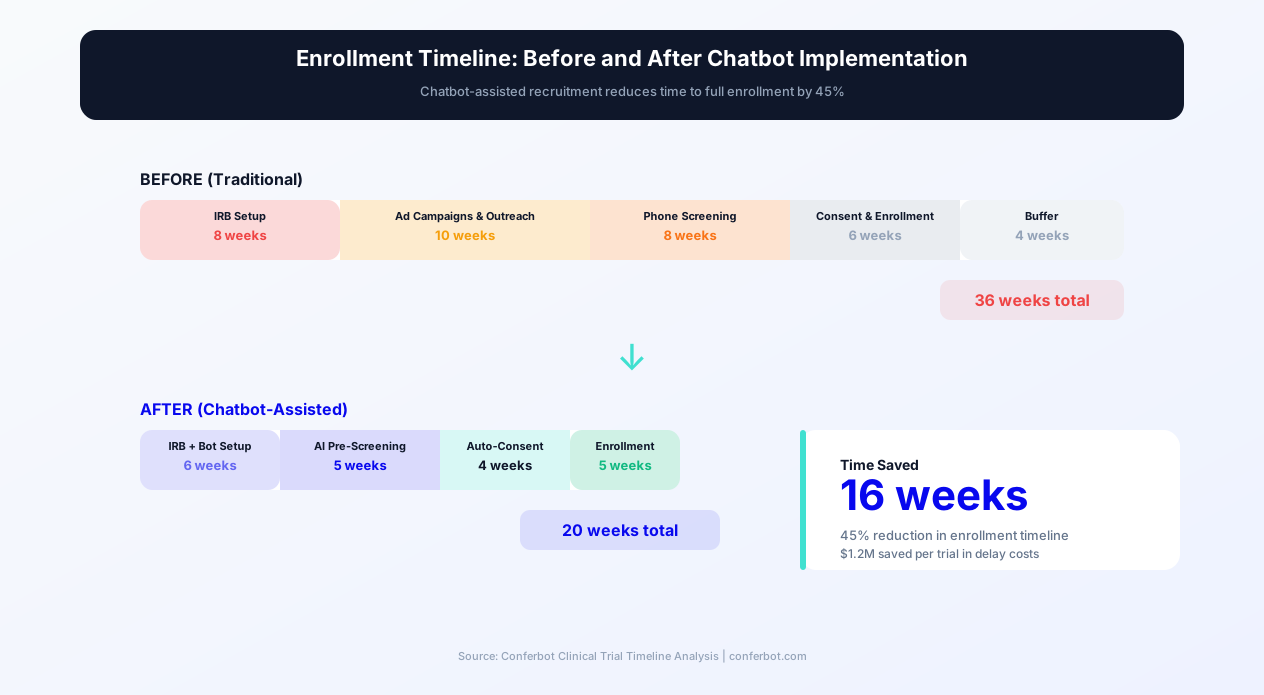
| Enrollment timeline (Phase III) | 36 weeks average | 20 weeks average | -45% timeline reduction |
| Patient diversity metrics | Variable, often below targets | Targeted recruitment by demographics | Improved FDA diversity compliance |
| Site enrollment balance | Top 20% of sites produce 80% of patients | More even distribution across network | -45% under-enrolling sites |
| Patient retention through study completion | 58% average | 84% with chatbot engagement | +45% retention improvement |
The Timeline Acceleration Value
For a pharmaceutical sponsor, the most impactful metric is enrollment timeline reduction. A single day of delay in a clinical trial costs the sponsor $600,000 to $8 million, depending on the drug's projected annual revenue and competitive landscape. A blockbuster drug projected at $2 billion in annual revenue loses $5.5 million for every day its launch is delayed. The chatbot's 45% reduction in enrollment timeline — from 36 weeks to 20 weeks on average for Phase III trials — represents 16 weeks (112 days) of acceleration. At even the conservative end of delay cost estimates ($600,000/day), this acceleration is worth $67.2 million per trial. For high-value compounds, the timeline acceleration value exceeds $600 million — dwarfing the chatbot deployment cost by a factor of 1,000x or more.
Screen Failure Cost Avoidance
Every screen failure at a research site costs $3,500-8,000 in wasted resources: coordinator time for the screening visit (2-4 hours), physician time for medical evaluation (30-60 minutes), laboratory tests and imaging performed before disqualification is identified (often $500-2,000 in test costs), and administrative overhead for documentation. A trial enrolling 500 patients with a 55% screen failure rate processes 1,111 total screenings — meaning 611 screen failures costing $2.1-4.9 million in wasted site resources. The chatbot's pre-screening reduces screen failure rates to 18-25% by identifying disqualifying factors before the site visit. For the same 500-patient enrollment target, the chatbot-screened funnel requires only 625 site screenings (125 screen failures) — eliminating 486 screen failures and saving $1.7-3.9 million per trial in site resource waste.
Coordinator Capacity Multiplication
Clinical research coordinators are the scarcest resource at most research sites. The average CRC manages 3-5 active studies, handles 40-80 phone screenings per week, coordinates 10-20 site visits, and manages the regulatory documentation for all enrolled patients. Coordinator burnout and turnover rates exceeding 30% annually are chronic industry problems. The chatbot's automation of pre-screening, appointment scheduling, consent pre-education, and routine patient communications returns 12-15 hours per week to each coordinator — equivalent to adding a 0.3-0.4 FTE without hiring. This capacity recovery enables coordinators to manage more studies (increasing site revenue per coordinator) and focus on patient-facing activities that improve enrollment experience and retention.
Diversity Recruitment Economics
FDA's 2026 guidance on clinical trial diversity requires sponsors to submit diversity action plans and justify the demographic composition of their trial populations. Failure to demonstrate adequate diversity efforts can result in clinical holds, additional study requirements, or narrowed labeling that limits market potential. Traditional diversity recruitment relies on expensive, targeted outreach programs that often launch late in enrollment when undiversified patterns become apparent. The chatbot enables proactive diversity recruitment from day one by deploying targeted screening experiences through community-specific channels, adapting communication style and language to diverse populations, and tracking enrollment demographics in real-time to identify underrepresentation early enough for course correction.
50,000+ businesses use Conferbot templates to automate conversations
Regulatory Compliance: FDA, IRB, ICH-GCP, and Data Protection
Clinical trial recruitment chatbots operate within one of the most heavily regulated environments in healthcare. Every patient interaction — from the initial screening question to the consent process — must comply with federal regulations (21 CFR Parts 50, 56, and 312), ICH-GCP (Good Clinical Practice) guidelines, institutional IRB requirements, and applicable data protection laws (HIPAA in the US, GDPR in the EU, PIPEDA in Canada). The template implements comprehensive compliance measures that protect patients, sponsors, sites, and the integrity of the clinical data generated from chatbot-recruited participants.
FDA Regulatory Framework
The FDA regulates clinical trial recruitment advertising and practices under 21 CFR Part 312. Key requirements that the chatbot addresses:
- Advertising review (21 CFR 312.7): All patient-facing messaging in the chatbot — screening questions, study descriptions, compensation information, benefit/risk statements — constitutes recruitment material subject to IRB review. The template's content management system enables IRB-approved messaging to be loaded directly from approved documents, preventing unapproved modifications to patient-facing content. Each content version is tracked with IRB approval dates and document numbers.
- Voluntary participation (21 CFR 50.25): The chatbot explicitly communicates that trial participation is voluntary, that patients may decline or withdraw at any time without penalty, and that their medical care will not be affected by their decision. This messaging is embedded at multiple points in the conversation flow — not just in consent documents — to ensure patients feel no coercive pressure throughout the recruitment process.
- Informed consent requirements (21 CFR 50.25): The chatbot's consent pre-education component delivers all eight required elements of informed consent (purpose, procedures, risks, benefits, alternatives, confidentiality, compensation, contacts) in a format that the IRB reviews and approves. The chatbot does not replace the formal consent process but enhances it by ensuring patients arrive at the consent visit with foundational understanding.
- No coercion or undue influence (21 CFR 50.20): Compensation information is presented factually without emphasis that could constitute undue inducement. The chatbot avoids language that overstates potential benefits, minimizes risks, or creates urgency ("limited spots available!") that could be interpreted as coercive recruitment tactics.
IRB Oversight and Approval Process
Every element of the chatbot that patients interact with requires Institutional Review Board (IRB) approval before deployment. The template facilitates this process by:
- Complete content export: All chatbot conversation flows, screening questions, study descriptions, and automated messages can be exported as a single document for IRB submission, formatted identically to how patients will experience the content.
- Version control: Each approved version of chatbot content is locked and tracked. When protocol amendments require screening question changes, the new version goes through IRB review before deployment, with a clear audit trail showing which version was active during which enrollment period.
- Content separation: IRB-approved clinical content is strictly separated from platform operational elements (UI, navigation, technical functions), ensuring that platform updates don't inadvertently modify IRB-approved messaging.
- Amendment workflows: When eligibility criteria change through protocol amendments, the chatbot's screening logic is updated through a controlled process: new criteria are drafted, submitted for IRB review, approved, and deployed with documentation of the transition — including how patients who were mid-screening at the time of the change are handled.
ICH-GCP (E6(R2)) Compliance
The International Council for Harmonisation's Good Clinical Practice guidelines establish the global standard for clinical trial conduct. Relevant chatbot requirements include:
- Source documentation: All chatbot interactions constitute source data and are preserved with complete audit trails — every message, response, timestamp, and routing decision is logged immutably. This documentation supports source data verification (SDV) during monitoring visits and regulatory inspections.
- Data integrity (ALCOA+ principles): Chatbot data is Attributable (linked to identified or identifiable patients), Legible (clearly readable), Contemporaneous (recorded at the time of interaction), Original (primary record, not transcribed from another source), and Accurate (direct patient responses without modification). The system also ensures data is Complete, Consistent, Enduring, and Available — meeting the expanded ALCOA+ framework that regulators increasingly apply to electronic records.
- Electronic records compliance (21 CFR Part 11): The chatbot system meets FDA requirements for electronic records and signatures, including audit trails, user authentication, system validation documentation, and controls to prevent unauthorized modification of records.
Data Protection and Privacy
Patient data collected during recruitment requires protection under multiple overlapping frameworks:
- HIPAA (US): Protected Health Information collected during screening (medical history, diagnoses, medications) is encrypted in transit (TLS 1.3) and at rest (AES-256), with access controls limiting data visibility to authorized research personnel. Business Associate Agreements cover all data processing relationships.
- GDPR (EU): For trials recruiting European patients, the chatbot implements explicit consent for data processing, data minimization (collecting only information necessary for screening), right to erasure (patients can request deletion of their screening data), data portability, and documentation of the legal basis for processing under Article 6 and the conditions for processing health data under Article 9.
- Cross-border data transfer: For multi-national trials, patient data transfer between jurisdictions complies with applicable transfer mechanisms (Standard Contractual Clauses for EU-US transfers, Adequacy decisions, Binding Corporate Rules).
The API integration implements secure data exchange between the chatbot and clinical systems using encrypted channels, minimum-privilege access tokens, and comprehensive audit logging that satisfies regulatory inspection requirements.
Setup Guide: Deploying Your Clinical Trial Recruitment Chatbot
Deploying a clinical trial recruitment chatbot requires careful coordination between clinical operations, regulatory affairs, IT, and recruitment teams. This section provides the step-by-step implementation roadmap from initial configuration through live deployment, ensuring regulatory compliance at every stage.
Phase 1: Protocol Configuration (Week 1-2)
Begin by translating your study's inclusion/exclusion criteria into the chatbot's screening logic. Using the AI chatbot builder, map each eligibility criterion to a conversational screening question:
- Import eligibility criteria: Enter each inclusion and exclusion criterion from the protocol. The template provides structured fields for criterion type (inclusion/exclusion), priority level (absolute/relative), and clinical category (demographics, medical history, labs, medications, procedures).
- Create screening questions: For each criterion, draft the patient-facing question in plain language. The template includes pre-built question libraries for common criteria (age, BMI, diagnosis confirmation, medication use, pregnancy status) that can be customized for your specific protocol.
- Configure branching logic: Set the screening flow so that hard disqualifiers (absolute exclusion criteria) are checked first, avoiding unnecessary questions for ineligible patients. Define scoring weights for relative criteria to produce a qualification confidence score.
- Set up study descriptions: Write patient-friendly descriptions of the study purpose, procedures, time commitment, compensation, and what to expect — these populate the chatbot's informational responses when patients ask about the study before beginning screening.
- Configure multi-study matching: If you have multiple active studies, enter eligibility criteria for each so the chatbot can cross-match patients who don't qualify for their initial study of interest.
Phase 2: Regulatory Review (Week 2-3)
Before any patient interaction, all chatbot content must receive IRB approval:
- Export recruitment materials: Generate a complete export of all chatbot conversation flows, screening questions, study descriptions, consent pre-education content, and automated follow-up messages. The export is formatted as a single document suitable for IRB submission.
- Submit for IRB review: Submit the chatbot content package as recruitment material under your study's IRB protocol. Include a cover letter explaining the chatbot's function, data handling procedures, and compliance measures.
- Incorporate IRB feedback: IRBs may request wording changes, additional disclaimers, or modifications to the screening flow. Make requested changes and resubmit if necessary. Most IRBs approve chatbot recruitment materials within 2-4 weeks, especially when the submission is well-documented.
- Document approval: Record IRB approval dates, document numbers, and approved content versions in the chatbot's compliance management system.
Phase 3: System Integration (Week 3-4)
Connect the chatbot with your clinical trial infrastructure:
- CTMS integration: Connect to your clinical trial management system to enable automatic population of screening logs, site enrollment counts, and study status. Configure which data fields flow between systems and set up error handling for integration failures.
- Calendar integration: Connect site calendars through the calendar booking feature so patients can schedule site visits directly from the chatbot. Configure available time slots, visit types (screening, consent, baseline), and site-specific availability.
- Communication channels: Deploy the chatbot on all recruitment channels — trial website via the website widget, Facebook and Instagram landing pages through Messenger integration, WhatsApp for community outreach via WhatsApp deployment, and email response automation for patients responding to recruitment advertisements.
- Analytics configuration: Set up the analytics dashboard with recruitment KPIs: screening volume, qualification rate, site visit scheduling rate, enrollment conversion, referral source tracking, and diversity metrics.
Phase 4: Testing and Validation (Week 4-5)
Before going live with patient interactions:
- Clinical testing: Have coordinators and clinical staff run through screening scenarios — confirmed eligible patients, clearly ineligible patients, borderline cases, and patients with incomplete information. Verify that the chatbot's qualification decisions match coordinator assessments.
- Edge case testing: Test unusual scenarios: patients who pause screening and return days later, patients who attempt to manipulate responses to qualify, patients who ask questions mid-screening, patients who express distress or adverse events through the chatbot.
- Regulatory testing: Verify that all IRB-approved content appears exactly as approved, that no unapproved messaging is possible through any conversation path, and that audit trails capture all required data points.
- Integration testing: Confirm that screening data flows correctly to the CTMS, calendar bookings create proper appointments, and site notifications are delivered when qualified patients are identified.
Phase 5: Launch and Optimization (Week 5+)
Deploy with monitoring and continuous optimization:
- Soft launch: Begin with a single recruitment channel (typically the trial website) and monitor screening quality, qualification accuracy, and patient feedback before expanding to additional channels.
- Screening quality validation: Compare chatbot pre-screening results against actual site screening outcomes for the first 50-100 patients. Calculate the chatbot's positive predictive value (patients the bot qualifies who actually pass site screening) and negative predictive value (patients the bot disqualifies who would have been eligible). Adjust screening sensitivity based on these results.
- Channel expansion: Once screening quality is validated, expand to additional channels (social media, patient communities, physician office displays, patient advocacy partnerships) with channel-specific messaging that all routes to the same IRB-approved screening flow.
- Ongoing optimization: Use analytics to identify screening questions with high abandonment (indicating confusing wording), referral sources with best enrollment conversion (indicating where to concentrate advertising spend), and sites with low conversion after chatbot referral (indicating potential site-level issues).
Frequently Asked Questions
Comprehensive answers to common questions about deploying a clinical trial recruitment chatbot in regulated research environments.
Clinical Trial Patient Recruitment Chatbot FAQ
Everything you need to know about chatbots for clinical trial patient recruitment chatbot.
Why Use a Template vs Building from Scratch?
Templates encode years of optimization data into the conversation flow before you start.
| Factor | Conferbot Template | Build from Scratch | Hire a Developer |
|---|---|---|---|
| Time to deploy | 10 minutes | 2-8 hours | 2-6 weeks |
| Cost | Free | Your time | $5,000-$25,000 |
| Day-1 conversion | 15-22% | 5-8% | 10-15% |
| Proven flows | Yes, data-tested | No | Depends |
| Updates included | Automatic | Manual | Paid |
| Multi-channel | 8+ channels | 1 channel | Extra cost |
| Analytics | Built-in | Must build | Extra cost |
Ready to Deploy Clinical Trial Patient Recruitment Chatbot?
Join 50,000+ businesses. Free forever plan available. No credit card required.