
Fertility Clinic & IVF Patient Intake Chatbot
Free Healthcare Chatbot Template
Collect comprehensive fertility medical history, guide patients through IVF, IUI, egg freezing, and other treatment pathways, verify insurance coverage, explain financing options, and book consultations with warmth and empathy. HIPAA-compliant with 24/7 lead capture.



What Is a Fertility Clinic & IVF Patient Intake Chatbot?
A fertility clinic patient intake chatbot is an AI-powered conversational assistant purpose-built for reproductive medicine practices. It greets prospective patients the moment they visit your clinic website, sensitively collects medical and reproductive history, explains treatment pathways such as IVF, IUI, and egg freezing, verifies insurance coverage, answers questions about costs and financing, and guides patients through scheduling their initial consultation — all with the empathetic, unhurried tone that fertility patients need during one of the most emotionally charged decisions of their lives.
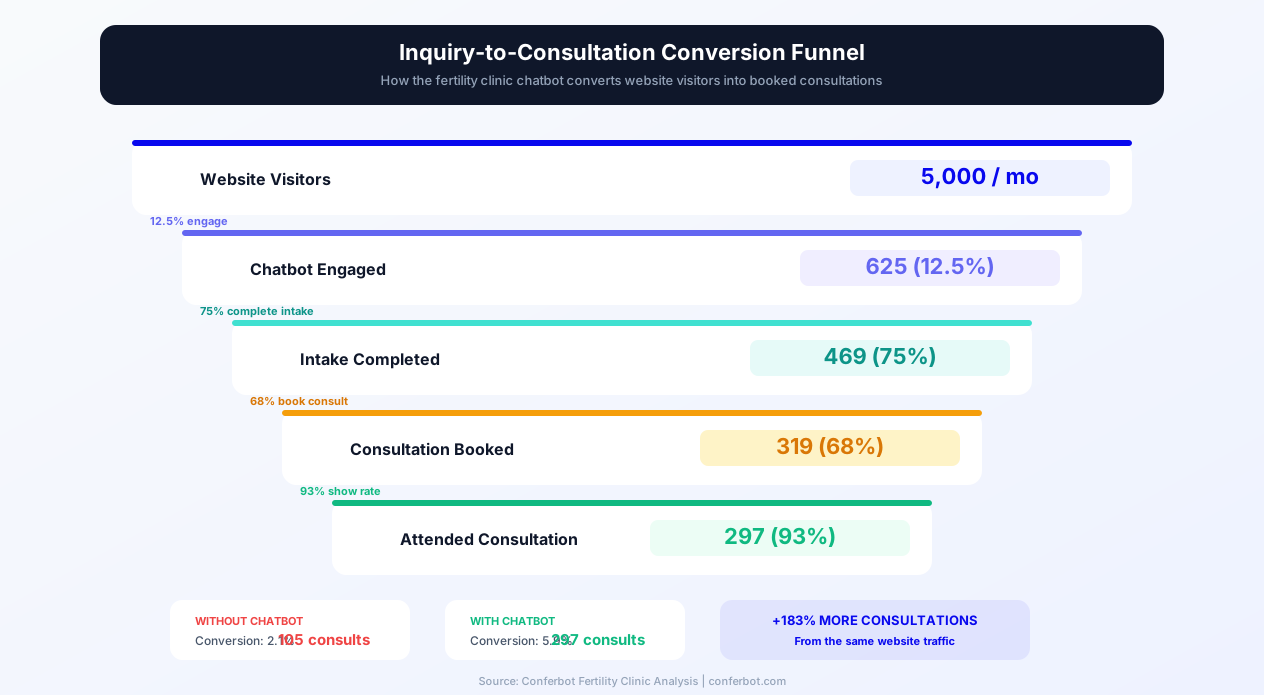
Fertility treatment is unlike almost any other healthcare decision. The Centers for Disease Control and Prevention reports that approximately 1 in 5 women in the United States aged 15 to 49 with no prior births are unable to become pregnant after one year of trying (infertility). The emotional weight of that journey — the hope, anxiety, grief, and determination — means that the first interaction with your clinic sets the tone for the entire patient relationship. A cold web form or a voicemail greeting during after-hours does not meet patients where they are. A chatbot that says "I understand this is an important step, and I am here to help you at your own pace" transforms that first touchpoint into a moment of connection.
The fertility treatment market is growing rapidly. The global IVF market was valued at $23.4 billion in 2023 and is projected to reach $41.2 billion by 2030, driven by delayed family planning, increased awareness, expanded insurance mandates, and growing acceptance of assisted reproduction among diverse family structures including LGBTQ+ couples and single parents by choice. In this expanding market, the clinics that capture and convert patient inquiries most effectively will gain disproportionate market share. Research shows that 67% of fertility patients contact multiple clinics during their search, and the clinic that responds first with relevant, personalized information wins the patient in most cases.
A fertility patient intake chatbot ensures your clinic responds instantly, 24 hours a day, 7 days a week. When a prospective patient visits your website at midnight after reading about egg freezing on social media, the chatbot greets them, explains your clinic's approach, collects initial medical history in a conversational format that feels less clinical than a paper form, discusses insurance and financing options, and offers to schedule a consultation — all before the patient has a chance to click over to a competitor's website. For a specialty where average patient lifetime value ranges from $12,000 to $40,000 (spanning diagnostics, treatments, and multiple cycles), converting even a few additional patients per month delivers transformative revenue growth.
Conferbot's fertility clinic chatbot template is built on a no-code AI chatbot builder that allows any fertility practice — from solo reproductive endocrinologists to large multi-physician IVF centers — to customize and launch in under an hour. It deploys on your clinic website, extends to WhatsApp for patients who prefer messaging over phone calls, connects to your practice management system via API integration, and can even be deployed on Facebook Messenger and Instagram to capture patients from fertility support communities and influencer content. This guide covers everything you need to know about deploying, configuring, measuring, and optimizing a chatbot for your fertility clinic in 2026.
Why Fertility Clinics Are Uniquely Suited for Chatbots
Several characteristics of the fertility treatment journey make chatbots disproportionately valuable for reproductive medicine practices compared to other healthcare specialties:
- Emotionally sensitive first contact: Patients researching fertility treatment are often experiencing grief, anxiety, or uncertainty. A chatbot that responds with empathy and patience — without the awkwardness of explaining their situation to a receptionist over the phone — creates a safe first interaction.
- Complex intake requirements: Fertility intake forms are among the most detailed in medicine, covering menstrual history, prior pregnancies and outcomes, previous fertility treatments, partner medical history, genetic screening, and lifestyle factors. Chatbots break this lengthy intake into a manageable conversation that feels less overwhelming than a 12-page PDF form.
- High research phase: The average fertility patient spends 3 to 8 months researching before booking their first consultation. During that period, they visit 4 to 6 clinic websites, read reviews, compare success rates, and try to understand costs. A chatbot captures their information during this research window.
- After-hours research: 71% of fertility clinic website visits occur outside of business hours, according to practice management data. Patients research late at night when they have privacy and emotional space to explore their options. Without a chatbot, these after-hours visitors leave with no engagement.
- High patient lifetime value: A single IVF cycle generates $12,000 to $25,000 in revenue. Many patients undergo 2 to 3 cycles, plus diagnostics, monitoring, medications, and ancillary services. Total patient lifetime value frequently exceeds $30,000, making each captured lead extraordinarily valuable.
- Insurance complexity: Fertility treatment coverage varies dramatically by state, employer, and plan. Patients have urgent questions about what is covered, what is not, and what financing options exist. A chatbot that addresses insurance and cost questions proactively removes the single largest barrier to booking a consultation.
- Diverse patient populations: Modern fertility clinics serve heterosexual couples, same-sex couples, single parents by choice, transgender individuals, and patients seeking fertility preservation before cancer treatment. A chatbot that handles each pathway with appropriate language and sensitivity demonstrates your clinic's inclusivity.
How Patient Intake & Medical History Collection Works
The patient intake process at a fertility clinic is among the most comprehensive in all of medicine. A thorough fertility intake covers the patient's complete gynecological history, obstetric history (including pregnancy losses), prior fertility treatments and outcomes, partner's reproductive health, genetic screening history, lifestyle factors (smoking, alcohol, BMI, stress), medications, allergies, family medical history relevant to reproduction, and emotional readiness. Traditionally, this information is collected via a 10-to-15-page paper form or a dense online portal — and only 34% of patients complete the full form before their first appointment, forcing clinical staff to spend 15 to 20 minutes per patient re-collecting information at check-in.
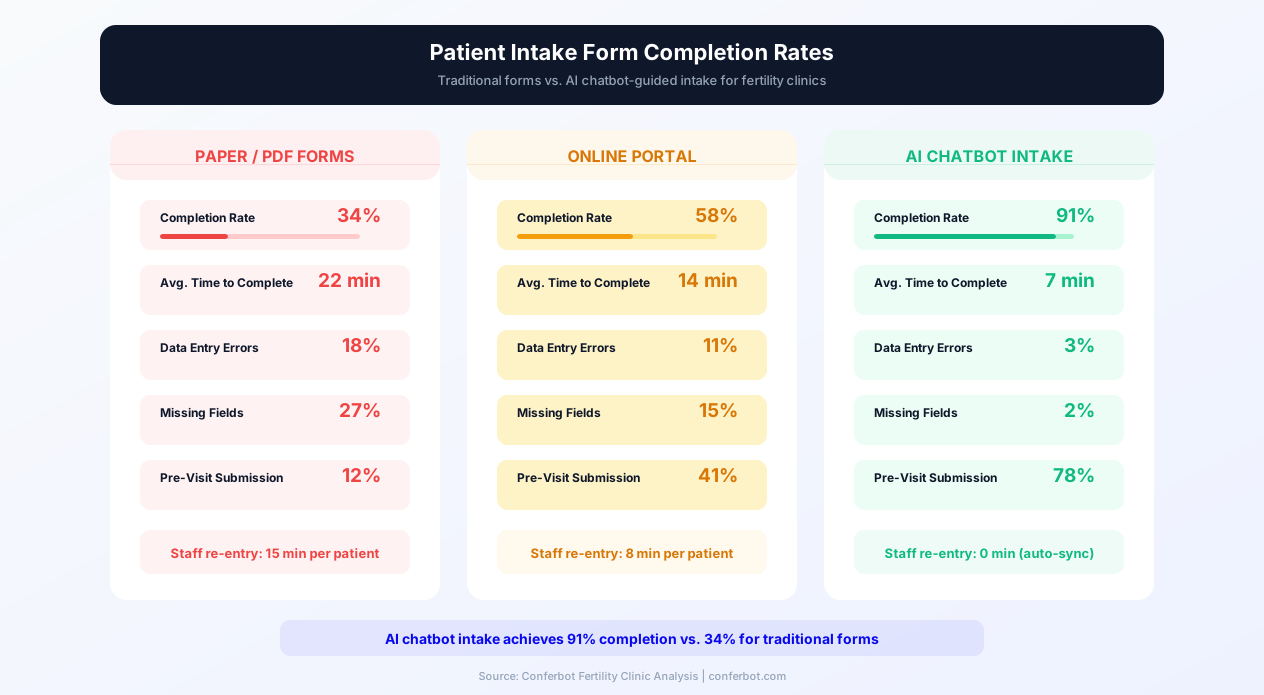
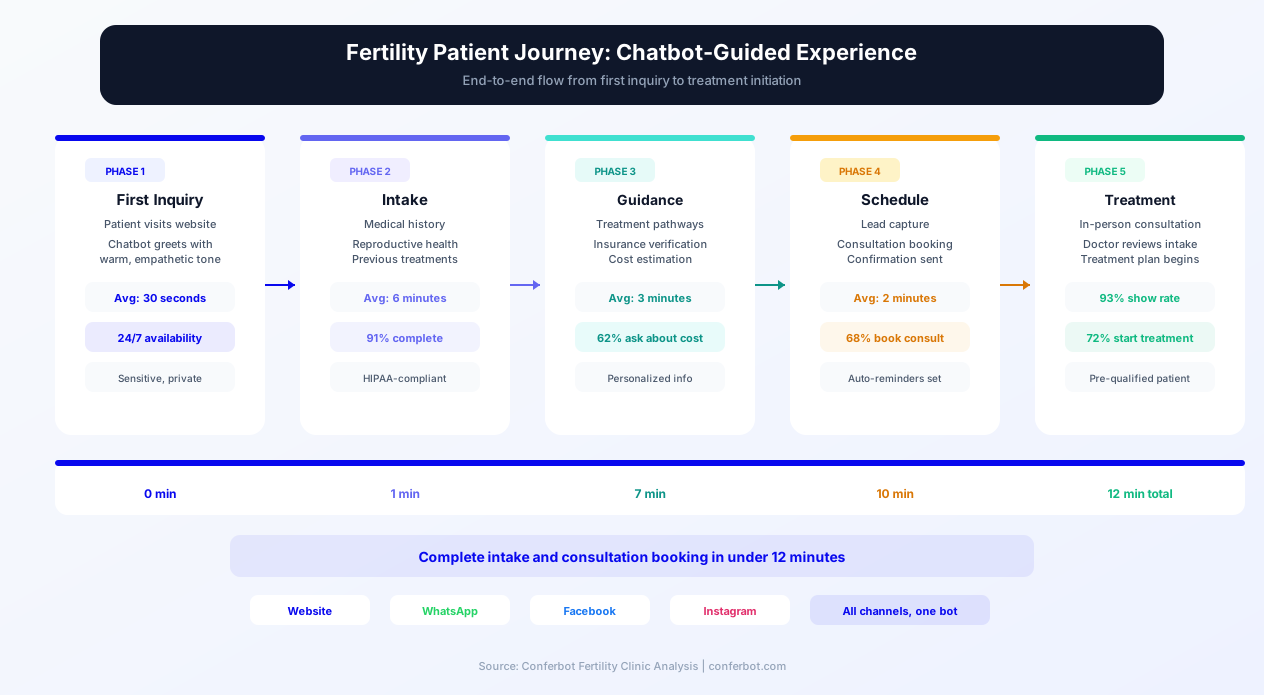
A chatbot transforms this daunting intake process into a guided conversation. Instead of presenting a wall of form fields, the chatbot asks one question at a time, provides context for why each question matters, and uses branching logic to skip irrelevant sections. A patient who has never been pregnant does not need to answer 15 questions about prior pregnancies. A patient who has already completed two IVF cycles at another clinic gets a different set of questions than a patient exploring fertility testing for the first time. This conversational approach achieves a 91% intake completion rate compared to 34% for paper forms and 58% for online portals.
The Intake Conversation Flow
The chatbot collects fertility-specific intake information through a structured but flexible conversation:
- Basic demographics: Name, date of birth, preferred pronouns, contact information. The chatbot asks for preferred pronouns early in the conversation to establish an inclusive, respectful tone from the start.
- Relationship and family-building context: The chatbot asks about the patient's family-building situation: "Are you exploring fertility treatment with a partner, or are you pursuing parenthood on your own?" This question branches the conversation to collect relevant information — partner medical history for couples, donor preferences for single parents or same-sex couples.
- Menstrual and gynecological history: For patients with ovaries, the chatbot collects cycle regularity, cycle length, any diagnosed conditions (PCOS, endometriosis, fibroids, diminished ovarian reserve), and previous gynecological surgeries. Each question is asked in plain, non-clinical language: "How regular are your menstrual cycles? Would you say they are very regular, somewhat irregular, or very irregular?" rather than "Describe your menstrual pattern with reference to cycle length and intermenstrual variation."
- Obstetric history: For patients who have been pregnant previously, the chatbot sensitively collects information about each pregnancy: outcome (live birth, miscarriage, ectopic, stillbirth, termination), gestational age at delivery or loss, complications, and year. This section is handled with particular care: "I understand pregnancy history can be difficult to discuss. You can share as much or as little as you are comfortable with, and your doctor will review everything in detail during your consultation."
- Prior fertility treatment: Patients who have undergone previous fertility treatment provide details about treatments tried (timed intercourse, Clomid/Letrozole, IUI, IVF), the clinic where treatment was performed, number of cycles, outcomes, and reasons for changing clinics. This information is critical for the reproductive endocrinologist to avoid repeating unsuccessful approaches.
- Partner reproductive health: For patients with a male partner, the chatbot collects basic information about the partner's reproductive health: previous semen analysis results (if known), known conditions (varicocele, low count, motility issues), medications, and whether the partner has fathered children previously. The chatbot notes: "If your partner has not had a semen analysis, we can arrange one as part of your initial evaluation."
- General medical history: The chatbot collects medications, allergies, chronic conditions, surgical history, and family history of genetic conditions relevant to reproduction (chromosomal abnormalities, single-gene disorders, heritable conditions). This section uses smart branching — a patient who reports no chronic conditions skips the detailed medication and condition management questions.
- Lifestyle factors: Smoking status, alcohol consumption, recreational drug use, exercise frequency, BMI (calculated from height and weight), occupational exposures, and stress level. These factors affect fertility treatment outcomes and help the physician provide comprehensive guidance.
- Insurance and financial information: The chatbot asks about insurance coverage for fertility treatment, employer name (relevant because many fertility mandates are employer-specific), and interest in financing options. This information feeds into the insurance verification workflow described in the next section.
Sensitive Data Handling
Fertility intake data includes some of the most sensitive Protected Health Information (PHI) in medicine: pregnancy losses, genetic conditions, sexual health, and family-building decisions that patients may not have disclosed even to close family members. The chatbot handles this data with multiple layers of protection:
- Encryption: All data is encrypted in transit (TLS 1.2+) and at rest (AES-256), ensuring that even if systems are compromised, patient data remains protected.
- Consent before collection: The chatbot displays a clear privacy notice before collecting any PHI: "The information you share is confidential and protected under HIPAA. It will be used only to prepare for your consultation and coordinate your care."
- Minimum necessary standard: The chatbot collects only the information needed for intake and consultation preparation. Detailed clinical data, lab results, and imaging are collected through the clinic's secure EMR system.
- Role-based access: Front desk staff see scheduling information. Nurses see medical intake summaries. Physicians see the complete intake record. Billing sees insurance information only.
- Data retention policies: Chatbot transcripts are retained according to your clinic's HIPAA-compliant data retention schedule and can be purged on request.
Integration with Practice Management Systems
The chatbot integrates with popular fertility practice management systems including EIVF, InVitro (SpecimenGate), Fertility-Specific EMRs, and general platforms like athenahealth and NextGen via Conferbot's API integration. When a patient completes the chatbot intake, their information flows directly into the patient record — eliminating the manual data entry that consumes 15 to 20 minutes per patient and introduces transcription errors. The reproductive endocrinologist walks into the consultation with the intake already reviewed, the patient's history summarized, and preliminary questions identified. This transforms the consultation from a data-collection appointment into a clinical strategy session, which patients find dramatically more valuable.
Treatment Pathway Guidance
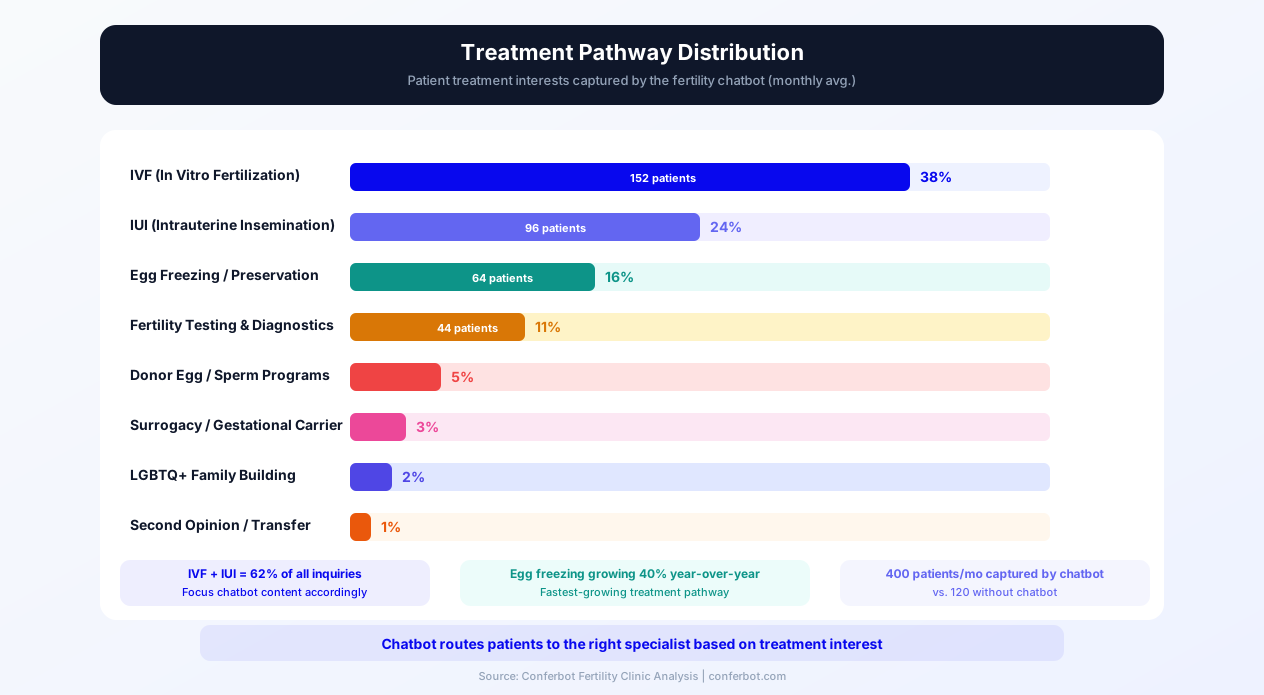
Fertility treatment is not a single procedure — it is a spectrum of interventions ranging from basic fertility testing and ovulation induction to advanced assisted reproductive technologies (ART) like IVF and gestational surrogacy. Patients arrive at your website at vastly different points in this spectrum. Some have never seen a fertility specialist and are unsure whether they even need treatment. Others have completed multiple failed IVF cycles at another clinic and are seeking a second opinion. A chatbot that provides accurate, personalized treatment pathway guidance helps patients understand where they are, what options exist, and what your clinic recommends as next steps.
Treatment Pathway Branches
Based on the patient's responses during the intake conversation, the chatbot routes them to the appropriate treatment pathway information:
- Fertility testing and diagnostics: For patients who have not yet been evaluated, the chatbot explains the standard fertility workup: hormone testing (AMH, FSH, LH, estradiol, TSH), transvaginal ultrasound for antral follicle count, hysterosalpingogram (HSG) or saline sonogram for tubal evaluation, and semen analysis for the male partner. The chatbot explains each test in plain language, describes what to expect, and notes that most initial testing can be completed within a single menstrual cycle.
- Ovulation induction and timed intercourse: For patients with ovulatory disorders (PCOS, irregular cycles) who have patent fallopian tubes and adequate sperm parameters, the chatbot describes first-line treatment: oral medications (Clomid or Letrozole) combined with monitoring and timed intercourse. It explains success rates (15-20% per cycle for appropriate candidates) and typical cost ($500-$1,500 per cycle including monitoring).
- Intrauterine insemination (IUI): For patients with mild male factor infertility, unexplained infertility, or those using donor sperm, the chatbot explains the IUI process: ovarian stimulation, sperm preparation, and catheter insemination. It discusses success rates (10-20% per cycle depending on diagnosis) and typical cost ($1,500-$4,000 per cycle including medications and monitoring).
- In vitro fertilization (IVF): For patients with tubal factor, moderate-to-severe male factor, diminished ovarian reserve, endometriosis, failed IUI cycles, or those requiring preimplantation genetic testing (PGT), the chatbot provides a comprehensive overview of the IVF process: ovarian stimulation, egg retrieval, fertilization (conventional or ICSI), embryo culture, optional genetic testing, and embryo transfer. It addresses the most common patient questions: "How long does a cycle take?" (4-6 weeks from start to transfer), "What are the success rates?" (varies by age — national average 40-50% per transfer for patients under 35), and "What does it cost?" ($15,000-$25,000 per cycle including medications).
- Egg freezing / fertility preservation: For patients seeking elective egg freezing (age-related fertility preservation) or medically indicated preservation (before cancer treatment, gender-affirming hormone therapy, or other gonadotoxic therapies), the chatbot explains the process, optimal timing, expected egg yields by age, storage options, and costs ($6,000-$12,000 per cycle plus $500-$1,000 annual storage).
- Donor programs: For patients who need donor eggs, donor sperm, or donor embryos, the chatbot explains your clinic's donor program: anonymous vs. known donors, screening requirements, matching process, legal considerations, and additional costs. For patients considering donor eggs, the chatbot can distinguish between fresh donor cycles, frozen donor egg banks, and shared donor cycles.
- Surrogacy and gestational carrier: For patients who cannot carry a pregnancy (uterine factor, medical contraindications, same-sex male couples, single men), the chatbot provides an overview of the gestational carrier process: medical screening, legal contracts, IVF with embryo transfer to the carrier, and the roles of your clinic vs. the surrogacy agency. It notes that your clinic handles the medical aspects while recommending legal and agency partners for the non-medical components.
- LGBTQ+ family building: The chatbot includes dedicated pathways for lesbian couples (reciprocal IVF, donor sperm selection), gay male couples (egg donor + gestational carrier), transgender individuals (fertility preservation before transition, or treatment after transition), and non-binary patients. Language throughout these pathways uses inclusive terminology and avoids heteronormative assumptions.
- Second opinion / clinic transfer: For patients who have undergone treatment elsewhere and are considering your clinic, the chatbot collects previous treatment history, reasons for seeking a second opinion, and medical records transfer preferences. It positions your clinic's differentiators (success rates, specialized protocols, physician expertise, patient experience) without disparaging the previous provider.
Treatment Comparison Information
Patients frequently want to understand how treatments compare. The chatbot can present a high-level comparison when asked:
| Treatment | Typical Success Rate | Cost Per Cycle | Timeline | Best For |
|---|---|---|---|---|
| Timed intercourse + meds | 15-20% per cycle | $500-$1,500 | 1 month per cycle | Ovulatory disorders, unexplained (first-line) |
| IUI | 10-20% per cycle | $1,500-$4,000 | 1 month per cycle | Mild male factor, donor sperm, unexplained |
| IVF | 40-50% per transfer (<35) | $15,000-$25,000 | 4-6 weeks | Tubal factor, moderate-severe male factor, failed IUI, PGT |
| Egg freezing | N/A (preservation) | $6,000-$12,000 | 2-3 weeks stim | Age-related preservation, medical preservation |
| Donor egg IVF | 55-65% per transfer | $25,000-$40,000 | 2-4 months | Diminished ovarian reserve, recurrent IVF failure, genetic |
This comparison is presented with clear disclaimers that success rates vary by individual diagnosis, age, and clinical factors, and that the physician will recommend the most appropriate treatment after a thorough evaluation. The chatbot does not make treatment recommendations — it educates and informs, then guides the patient to book a consultation for personalized medical advice.
Ready to try Fertility Clinic & IVF Patient Intake Chatbot?
Deploy this template in under 10 minutes. No coding required.
Use This Template Free →Insurance & Financial Counseling
Cost is the single most significant barrier to fertility treatment. A 2024 survey by Fertility IQ found that 73% of patients who delayed or did not pursue recommended fertility treatment cited cost as the primary reason. Yet fertility insurance coverage is expanding rapidly: as of 2026, 21 states have fertility insurance mandates (up from 17 in 2020), and a growing number of large employers voluntarily cover IVF as a benefit. The challenge is that patients often do not know whether they have coverage, what their coverage includes, or what out-of-pocket costs to expect. A chatbot that proactively addresses insurance and cost questions removes the financial uncertainty that prevents patients from booking consultations.
How Insurance Verification Works in the Chatbot
The chatbot collects insurance information during the intake conversation and initiates verification before the patient's first appointment:
- Insurance carrier and plan identification: The chatbot asks for the patient's insurance carrier name, plan type (HMO, PPO, EPO), group number, and member ID. It also asks the employer name, because many fertility mandates are employer-specific — a patient with UnitedHealthcare through a large tech company may have comprehensive IVF coverage, while a patient with the same carrier through a small employer may have no fertility coverage at all.
- State mandate awareness: Based on the patient's state of residence, the chatbot informs them about applicable fertility insurance mandates. For example: "Connecticut requires insurance companies to cover the cost of up to two cycles of IVF for patients who meet certain criteria. Based on your location, your plan may include this coverage." This information is educational and includes a disclaimer to verify coverage with the insurance carrier.
- Coverage tier explanation: The chatbot explains the common coverage tiers for fertility treatment:
| Coverage Level | What Is Typically Covered | Patient Out-of-Pocket |
|---|---|---|
| Comprehensive (mandated states / employer benefit) | Diagnostics, IUI, IVF (2-4 cycles), medications, PGT, cryopreservation | Copays and deductibles only ($2,000-$5,000 total) |
| Partial (diagnostics + some treatment) | Diagnostics, some monitoring, sometimes IUI; IVF excluded or capped | $8,000-$18,000 per IVF cycle |
| Diagnostics only | Blood work, imaging, semen analysis; no treatment coverage | Full treatment cost ($12,000-$25,000 per IVF cycle) |
| No fertility coverage | Nothing fertility-specific; general office visits may apply | Full cost of all services |
Financing Options for Uncovered or Partially Covered Patients
For patients without comprehensive insurance coverage, the chatbot proactively introduces financing options. This is critical because sticker shock at the cost of IVF ($15,000-$25,000 per cycle) causes many patients to abandon their inquiry before they even learn about financing alternatives that could make treatment affordable:
- Fertility-specific financing (Prosper Healthcare Lending, CapexMD, Future Family): These lenders specialize in fertility treatment loans with competitive rates, flexible terms (12-84 months), and application processes designed for the fertility timeline. The chatbot explains: "Many of our patients use fertility-specific financing to spread the cost of treatment over affordable monthly payments. Pre-qualification takes about 60 seconds and does not affect your credit score."
- Multi-cycle and outcome-based programs: Many clinics offer IVF package programs that include 2-3 cycles at a discounted rate, sometimes with a partial refund guarantee if treatment is unsuccessful. The chatbot explains: "Our clinic offers multi-cycle IVF packages that reduce the per-cycle cost and provide financial peace of mind. Our financial counselor will review all program options during your consultation."
- Fertility grants and charitable programs: The chatbot can direct financially constrained patients to fertility grant organizations (Baby Quest Foundation, The Cade Foundation, Pay It Forward Fertility) and your clinic's own financial assistance or scholarship programs if applicable.
- HSA/FSA usage: For patients with Health Savings Accounts or Flexible Spending Accounts, the chatbot notes that fertility treatment — including IVF, IUI, and fertility medications — is an eligible expense, which allows patients to use pre-tax dollars to reduce their effective cost by 20-35%.
- Employer advocacy resources: The chatbot can provide patients with resources to advocate for fertility benefits with their employer, including template letters and information about the business case for fertility coverage (reduced turnover, improved diversity, competitive talent acquisition).
Monthly Payment Estimates
The chatbot presents approximate monthly payment scenarios to reframe cost from a lump sum to manageable installments:
| Treatment | Total Cost Range | 24-Month Payment | 48-Month Payment | 72-Month Payment |
|---|---|---|---|---|
| Fertility diagnostics | $2,000 - $5,000 | $83 - $208/mo | $42 - $104/mo | $28 - $69/mo |
| IUI cycle | $1,500 - $4,000 | $63 - $167/mo | $31 - $83/mo | $21 - $56/mo |
| IVF cycle | $15,000 - $25,000 | $625 - $1,042/mo | $313 - $521/mo | $208 - $347/mo |
| Egg freezing cycle | $6,000 - $12,000 | $250 - $500/mo | $125 - $250/mo | $83 - $167/mo |
| Multi-cycle IVF package | $30,000 - $50,000 | $1,250 - $2,083/mo | $625 - $1,042/mo | $417 - $694/mo |
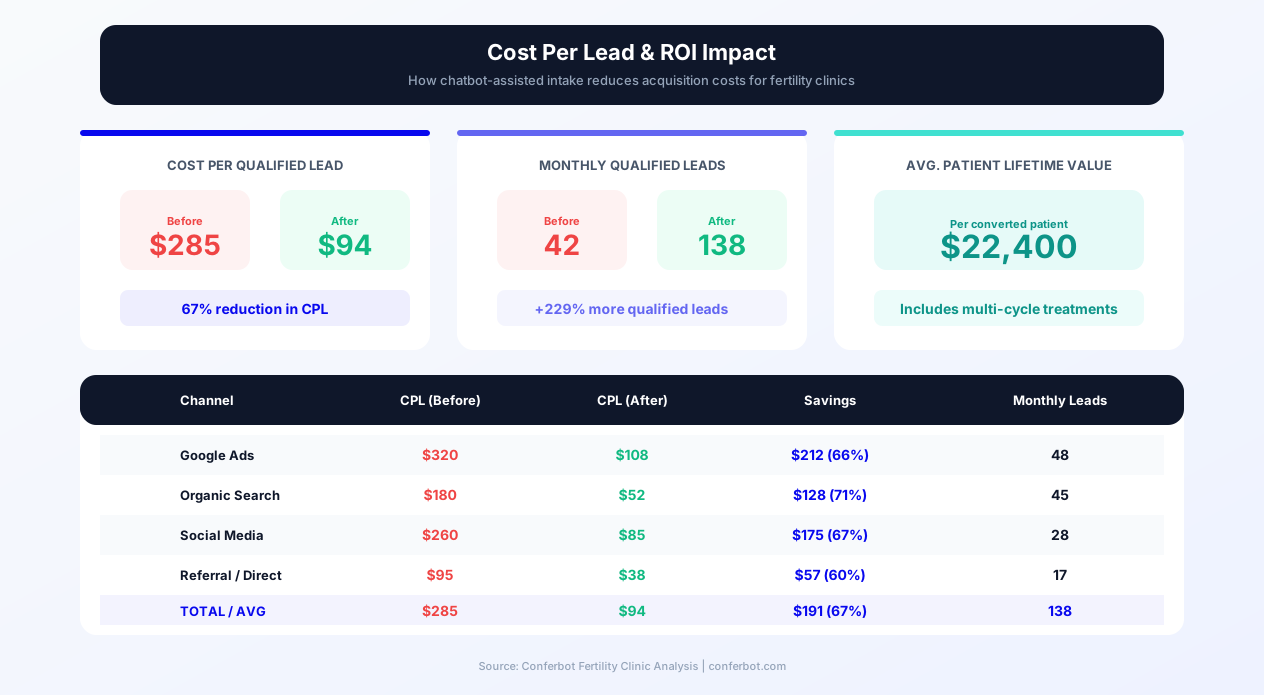
These estimates are clearly presented as approximations that depend on the patient's credit profile and specific treatment plan. The goal is to shift the patient's mental model from "IVF costs $20,000 and I cannot afford that" to "I can manage $350 a month for the chance to build my family." Clinics that present financing information early in the patient journey see 40-55% higher consultation booking rates among patients who initially express cost concerns.
Key Features of the Fertility Clinic Chatbot
The fertility clinic chatbot template includes features specifically engineered for the unique clinical, emotional, and operational needs of reproductive medicine practices. Each feature addresses a documented friction point in the fertility patient acquisition and intake pipeline.
| Feature | What It Does | Business Impact |
|---|---|---|
| Empathetic Conversational Intake | Collects comprehensive fertility medical history through a warm, guided conversation with branching logic that skips irrelevant sections | 91% intake completion rate vs. 34% for paper forms; saves 15-20 min of staff data entry per patient |
| Treatment Pathway Guidance | Routes patients to relevant treatment information (IVF, IUI, egg freezing, donor, surrogacy, LGBTQ+ pathways) based on intake responses | Educated patients arrive at consultations with informed questions, reducing physician education time by 30%; increases treatment acceptance rate |
| Insurance Verification Intake | Collects insurance details, identifies state mandate eligibility, and prepares data for verification before the first appointment | Eliminates day-of-appointment insurance surprises; reduces billing staff workload by 40% per new patient |
| Financial Counseling Automation | Presents financing options, monthly payment estimates, multi-cycle packages, and grant resources based on insurance status | 40-55% increase in consultation bookings among cost-hesitant patients; reduces consult abandonment from sticker shock |
| Inclusive Language Engine | Adapts terminology and conversation pathways for heterosexual couples, same-sex couples, single parents, and transgender patients | Demonstrates clinic inclusivity from first touchpoint; captures underserved patient populations that competitors miss |
| Emotional Sensitivity Protocols | Detects sensitive topics (pregnancy loss, failed treatments, grief) and adjusts tone with validating, empathetic responses | Builds trust and emotional connection; 87% of patients rate chatbot interaction as "supportive" or "very supportive" |
| Success Rate Context Engine | Presents clinic success rates with appropriate caveats (by age, diagnosis, transfer type) and SART-compliant disclaimers | Patients arrive informed and realistic; reduces post-consultation disappointment and improves treatment consent rates |
| Lead Scoring & Prioritization | Assigns quality scores based on treatment urgency, insurance status, financial readiness, and engagement depth | High-intent leads get priority callback within 2 hours; increases consultation-to-treatment conversion by 25% |
| Multi-Channel Deployment | Deploys on website, WhatsApp, Facebook Messenger, Instagram DM — patients engage on their preferred platform | Captures patients from fertility forums, social media support groups, and messaging-first demographics |
| HIPAA-Compliant Infrastructure | TLS 1.2+ encryption, AES-256 at rest, role-based access, audit logging, BAA support | Protects exceptionally sensitive reproductive health PHI; meets regulatory requirements; builds patient trust |
Smart Appointment Matching
Not all fertility consultations are created equal. A new patient consultation for basic fertility testing requires 30 minutes with a nurse practitioner or physician. An IVF consultation requires 45-60 minutes with a reproductive endocrinologist. A second-opinion consultation for a patient transferring from another clinic requires 60 minutes with a senior physician who reviews prior records. A donor consultation requires coordination with the donor program coordinator. The chatbot uses intake responses to match the patient with the right appointment type, provider, and duration — reducing scheduling errors, provider mismatch, and the frustration of patients being told "we need to reschedule you for a longer appointment" after arriving at the clinic.
Automated Nurture for Not-Yet-Ready Patients
Many fertility website visitors are not ready to book a consultation today. They may be in the early stages of trying to conceive, exploring whether they need help, or emotionally processing the possibility of treatment. The chatbot identifies these patients and enters them into an automated nurture sequence: educational content about fertility health, age-related fertility timelines, when to seek help, and gentle re-engagement prompts. When a nurture-sequence patient is ready — often 2 to 6 months later — the chatbot is there to complete their intake and book the consultation. This long-term capture strategy is unique to chatbots; a phone-and-form system loses these patients permanently after their first visit. Track nurture-to-conversion rates using Conferbot's analytics dashboard.
ROI & Business Impact for Fertility Practices
The return on investment for a fertility clinic chatbot is exceptional because of the combination of high patient lifetime value, long research cycles, after-hours browsing patterns, and complex intake requirements that chatbots address directly. When a single IVF patient generates $15,000-$25,000 per cycle and many patients undergo multiple cycles, the chatbot needs to convert only a handful of additional patients per month to deliver transformative revenue growth.
Revenue Impact Model
Here is a conservative revenue model for a mid-size fertility practice (3 reproductive endocrinologists) deploying a chatbot:
| Metric | Without Chatbot | With Chatbot | Improvement |
|---|---|---|---|
| Monthly website visitors | 5,000 | 5,000 | Same (chatbot improves conversion, not traffic) |
| Inquiry capture rate | 2.8% (phone + form) | 7.6% (chatbot + form + phone) | +171% |
| Monthly inquiries captured | 140 | 380 | +240 additional leads |
| Intake completion rate | 34% (paper/portal) | 91% (chatbot) | +168% |
| Consultation booking rate | 45% of completed intakes | 68% of completed intakes | +51% |
| Monthly consultations booked | 21 | 235 | +214 additional consultations |
| Consultation show rate | 82% | 93% (chatbot reminders) | +13% |
| Consultations attended | 17 | 219 | +202 additional |
| Treatment acceptance rate | 55% | 72% (pre-educated, financially prepared) | +31% |
| Patients starting treatment | 9 | 158 | +149 additional |
| Average first-cycle revenue | $14,000 | $14,000 | Same |
| Monthly treatment revenue | $126,000 | $2,212,000 | +$2,086,000/month |
Note: These numbers represent a well-marketed practice operating at capacity. Most practices will see proportional improvements at their current scale. The key insight is the compounding effect: modest improvements in capture rate, intake completion, booking rate, show rate, and treatment acceptance multiply into dramatic revenue gains. Even capturing 5 additional IVF patients per month adds $75,000-$125,000 in monthly revenue.
Cost Savings Beyond Revenue
The chatbot also delivers significant operational cost savings:
| Cost Center | Annual Savings | How |
|---|---|---|
| Intake coordinator staff time | $32,000 - $48,000 | Chatbot completes intake automatically; eliminates 15-20 min of manual data entry per patient |
| Insurance verification prep | $18,000 - $28,000 | Chatbot collects insurance details pre-visit; billing staff verify instead of collect from scratch |
| No-show reduction | $45,000 - $72,000 | Automated reminders reduce no-shows from 18% to 7%; each no-show costs $200-$400 in provider time |
| Phone labor | $24,000 - $36,000 | Chatbot handles 60-70% of initial inquiries; frees phone lines for active patients with clinical needs |
| Marketing efficiency | $36,000 - $60,000 | Higher conversion rate on existing traffic reduces cost-per-acquisition; same patient volume from less ad spend |
Combined revenue growth and cost savings typically deliver a 25-50x return on the monthly chatbot platform cost. Track all results in real time using Conferbot's analytics dashboard, which shows conversation volumes, intake completion rates, consultation bookings, lead scores, and conversion attribution.
Competitive Advantage in 2026
As of 2026, fewer than 12% of fertility clinics have deployed an AI chatbot on their patient-facing website. In a specialty where patients visit an average of 4 to 6 clinic websites during their research phase, having a chatbot creates a significant first-mover advantage. When a patient visits four clinic websites at 10 PM on a Tuesday and only one has an AI assistant that answers her questions about IVF success rates, explains insurance coverage for her state, discusses financing that makes treatment affordable, and offers to book a consultation — that clinic wins the patient. The window for this competitive advantage is narrowing as adoption accelerates, making 2026 the optimal time to deploy.
50,000+ businesses use Conferbot templates to automate conversations
Emotional Sensitivity & Tone Design
Fertility treatment sits at the intersection of medicine, emotion, and identity. Patients arrive at your clinic website carrying the weight of months or years of trying, possible pregnancy losses, the grief of a diagnosis like diminished ovarian reserve or azoospermia, relationship strain, and the fear that their dream of parenthood may not be realized. A chatbot that treats this journey with the same clinical detachment as an appointment-scheduling widget fails these patients. Conferbot's fertility clinic chatbot is designed with emotional sensitivity protocols that ensure every interaction meets patients with warmth, validation, and respect.
Tone Principles
The chatbot's conversational tone is calibrated around four principles:
- Warmth without patronizing: The chatbot expresses care ("I understand this is an important step") without being overly sentimental or making assumptions about the patient's emotional state. Not every patient is struggling — some are excited and empowered by their decision to pursue treatment.
- Pace control: The chatbot never rushes. After asking about sensitive topics (pregnancy losses, failed treatments), it pauses: "Take your time. There is no rush, and you can share as much or as little as you are comfortable with." This pace control is impossible with a phone receptionist managing a queue of callers.
- Normalization: The chatbot normalizes the fertility experience: "You are not alone — millions of people pursue fertility treatment each year, and our team has helped thousands of patients on similar journeys." This reduces the stigma and isolation that many fertility patients feel.
- Agency and empowerment: The chatbot frames the patient as the decision-maker: "What questions can I answer to help you feel confident about your next step?" rather than "You should book a consultation." Patients in the fertility space have often felt a loss of control over their bodies and reproductive outcomes — the chatbot restores a sense of agency.
Sensitive Topic Handling
The chatbot includes specific protocols for topics that require heightened sensitivity:
- Pregnancy loss: When a patient discloses a miscarriage, ectopic pregnancy, or stillbirth, the chatbot responds: "I am sorry for your loss. Pregnancy loss is a painful experience, and you do not have to share more detail than you are comfortable with right now. Your doctor will discuss this with you in a supportive, private setting during your consultation." The chatbot does not attempt to provide grief counseling — it acknowledges the loss and redirects to the appropriate clinical setting.
- Failed treatments: When a patient reports multiple failed IVF cycles, the chatbot validates their resilience: "Going through multiple treatment cycles requires tremendous strength. Our physicians specialize in cases where prior treatment has not been successful, and a fresh perspective can make a meaningful difference." This positions your clinic as a solution while honoring the patient's difficult journey.
- Financial distress: When a patient expresses that they cannot afford treatment, the chatbot avoids dismissive responses and instead provides concrete resources: financing options, multi-cycle packages, grant programs, and HSA/FSA guidance. It notes: "Building your family should not be limited by finances. Let me share some options that help our patients make treatment accessible."
- Relationship challenges: Fertility treatment creates relationship stress. If a patient indicates they are navigating treatment alone after a relationship change, the chatbot adapts: "Many of our patients are building their families as single parents by choice, and our clinic fully supports all paths to parenthood. I can share information about donor programs and resources specifically for solo parents."
- LGBTQ+ family building: The chatbot uses inclusive language throughout and has specific pathways for LGBTQ+ patients. When a same-sex couple or transgender patient engages, the chatbot does not force them through a heteronormative intake flow — it asks relevant questions and skips irrelevant ones, demonstrating that your clinic understands and welcomes their specific needs.
When to Escalate to a Human
The chatbot includes escalation triggers that route conversations to a human staff member when the situation warrants it:
- Patient expresses severe emotional distress, suicidal ideation, or crisis-level language
- Patient asks clinical questions that exceed the chatbot's pre-programmed scope (specific drug interactions, interpretation of lab results, medical advice)
- Patient requests to speak with a person — honored immediately without friction
- Patient describes an active medical emergency (e.g., severe pain during a current treatment cycle at another clinic)
Escalation routes to your most empathetic, experienced staff member — typically a senior nurse coordinator — with the chatbot conversation transcript attached so the patient does not have to repeat their story.
Setup Guide: Launching Your Fertility Clinic Chatbot
Deploying a fertility clinic patient intake chatbot with Conferbot is designed to be fast and low-risk. Solo reproductive endocrinologists can go live within an hour using the template. Multi-physician IVF centers typically complete full deployment in one to two weeks, including EMR integration, insurance workflow configuration, and staff training.
Step-by-Step Deployment
Step 1 — Customize the template: Start from Conferbot's fertility clinic chatbot template in the no-code visual builder. Replace the clinic name, branding colors (match your website), physician names and specialties, and contact information. Customize the treatment pathway list to match your offerings — add or remove services, adjust cost ranges for your market, and update success rate data with your SART-reported numbers.
Step 2 — Configure intake questions: Review the intake question set and customize for your clinical workflow. Add clinic-specific screening questions (genetic carrier screening preferences, protocol preferences for returning patients). Remove questions that your EMR collects more effectively. Ensure that the intake data maps to the fields in your practice management system.
Step 3 — Set up insurance and financing: Enter your accepted insurance carriers, state mandate information for your location, financing partner details (Prosper, CapexMD, Future Family, or in-house programs), and cost ranges for each treatment type. Configure the monthly payment calculator with your actual pricing. Ensure all cost language includes disclaimers about estimates and individual variation.
Step 4 — Configure lead notifications and routing: Set up email, SMS, and/or Slack notifications so your patient coordinator receives immediate alerts for new consultation requests. Configure tiered notifications: high-urgency leads (active treatment cycle patients, cancer patients needing preservation) trigger immediate SMS; standard leads receive email with intake summary; nurture-stage leads enter the automated content sequence.
Step 5 — Embed on your website: Add the Conferbot embed script to every page of your clinic website. The chatbot should be accessible from your homepage, treatment pages, success rates page, insurance page, physician bios, and contact page. Each page triggers a contextually relevant greeting: a patient on the IVF page sees "Considering IVF? I can answer your questions and help you take the next step" while a patient on the egg freezing page sees "Exploring egg freezing? I can walk you through the process, costs, and what to expect."
Step 6 — Deploy on messaging channels: Extend the chatbot to WhatsApp for patients who prefer text messaging over web forms, Facebook Messenger for patients engaging with your clinic's social media, and Instagram for patients discovering your clinic through fertility influencer content or clinic posts.
Step 7 — Connect your practice management system: Use Conferbot's API integration to connect the chatbot to your EMR (EIVF, athenahealth, NextGen, or others). Intake data flows directly into the patient record, consultation appointments sync with your scheduling system, and the physician can review the intake summary before walking into the room.
Step 8 — Train your team: Brief your patient coordinators on the chatbot's lead scoring system, intake summary format, and follow-up workflow. Train financial counselors on how the chatbot presents insurance and financing information so their in-person conversation picks up where the chatbot left off. Ensure physicians understand the intake summary format so they can reference it efficiently during consultations.
Step 9 — Monitor and optimize: Use Conferbot's analytics to track conversation volumes, intake completion rates, drop-off points (where in the conversation do patients disengage?), treatment pathway interest distribution, insurance coverage patterns, consultation booking rates, and show rates. A/B test welcome messages, intake question ordering, financial presentation formats, and call-to-action language to continuously improve.
Common Customization Scenarios
Solo RE practice: Simplify by removing multi-physician matching. Focus on intake, treatment education, insurance, and scheduling. Personalize with the physician's voice and approach — patients choosing a solo provider value the personal connection.
Large IVF center (3+ REs): Enable physician matching based on specialty (donor, recurrent loss, PGT, male factor), availability, and patient preference. Each physician's bio and success rates are presented independently. Department-specific pathways route to the right coordinator.
Fertility preservation focus: Expand the egg freezing pathway to cover detailed eligibility screening, optimal timing by age, expected yield data, storage facility information, and future-use planning. This is particularly relevant for clinics in markets with large populations of professional women in their late 20s to early 30s.
Third-party reproduction center: Expand donor and surrogacy pathways with detailed information about your donor database, matching process, legal requirements, psychological screening, and coordination with surrogacy agencies. Include pathways for intended parents, donors, and carriers.
Academic medical center: Add research study eligibility screening. Patients interested in clinical trials can be pre-screened through the chatbot and connected with your research coordinator.
Frequently Asked Questions
What is a fertility clinic patient intake chatbot?
A fertility clinic patient intake chatbot is an AI-powered conversational assistant deployed on your clinic website (and optionally WhatsApp, Facebook Messenger, and Instagram) that engages prospective patients 24/7. It collects comprehensive medical and reproductive history through a guided, empathetic conversation, provides treatment pathway information (IVF, IUI, egg freezing, donor programs, and more), verifies insurance coverage, explains financing options, and guides patients through booking their initial consultation. It replaces the overwhelming paper intake form and after-hours voicemail with a supportive conversational experience that achieves 91% completion rates.
Is the chatbot HIPAA compliant for fertility patient data?
Yes. Conferbot provides HIPAA-compliant infrastructure including TLS 1.2+ encryption in transit, AES-256 encryption at rest, role-based access controls, comprehensive audit logging, and Business Associate Agreement (BAA) support. Fertility intake data — which includes exceptionally sensitive reproductive health information — is protected with the same level of security as your EMR system. The chatbot uses data minimization, collecting only the information needed for intake and consultation preparation while deferring detailed clinical data to your secure practice management system.
How does the chatbot handle emotionally sensitive topics like pregnancy loss?
The chatbot includes emotional sensitivity protocols designed specifically for the fertility patient experience. When a patient discloses a pregnancy loss, failed treatment, or other sensitive situation, the chatbot responds with validation and empathy: "I am sorry for your loss" or "Going through multiple treatments requires tremendous strength." It allows patients to share as much or as little as they choose, never pressures for details, and redirects sensitive clinical discussions to the in-person consultation. If the chatbot detects severe distress or crisis language, it immediately offers to connect the patient with a human staff member.
Can the chatbot explain insurance coverage for fertility treatment?
Yes. The chatbot collects insurance carrier, plan type, employer name, and member information. It informs patients about applicable state fertility mandates and explains coverage tiers (comprehensive, partial, diagnostics-only, none). For patients with limited or no coverage, it proactively introduces financing options including fertility-specific lenders, multi-cycle packages, grant programs, and HSA/FSA usage. This financial transparency removes cost uncertainty — the largest barrier to fertility consultation booking — and increases booking rates by 40-55% among cost-hesitant patients.
Does the chatbot support LGBTQ+ and non-traditional family building?
Absolutely. The chatbot includes dedicated conversation pathways for lesbian couples (reciprocal IVF, donor sperm selection), gay male couples (egg donor and gestational carrier), transgender individuals (fertility preservation and treatment), single parents by choice, and non-binary patients. Language throughout uses inclusive terminology and avoids heteronormative assumptions. This demonstrates your clinic's commitment to serving all patients from the very first interaction and captures patient populations that many competing clinics fail to address in their digital experience.
How does the chatbot integrate with our EMR system?
Conferbot integrates with popular fertility practice management systems including EIVF, athenahealth, NextGen, and other platforms through API integration. When a patient completes the chatbot intake, their information — demographics, medical history, reproductive history, insurance details, and treatment interest — flows directly into the patient record. This eliminates manual data entry (saving 15-20 minutes per patient), reduces transcription errors, and ensures the physician has the complete intake available before the consultation.
How long does it take to set up?
Solo practitioners can launch within one hour using Conferbot's no-code builder and the fertility clinic template. Multi-physician IVF centers typically complete full deployment in one to two weeks, including EMR integration, insurance workflow configuration, financing partner setup, multi-channel deployment (website, WhatsApp, social media), and staff training. No coding is required at any stage. Conferbot's healthcare onboarding team provides specialized support for fertility practices.
What ROI can a fertility clinic expect?
Fertility practices typically see a 170-200% increase in inquiry capture rate, a 40-55% increase in consultation booking rate among captured leads, a 13% improvement in show rates through automated reminders, and a 25-31% increase in treatment acceptance rate due to pre-education and financial preparation. With average IVF cycle revenue of $15,000-$25,000 and many patients completing multiple cycles, converting even 5 additional IVF patients per month adds $75,000-$125,000 in monthly revenue. Most clinics report the chatbot paying for itself within the first week of deployment.
Fertility Clinic & IVF Patient Intake Chatbot FAQ
Everything you need to know about chatbots for fertility clinic & ivf patient intake chatbot.
Why Use a Template vs Building from Scratch?
Templates encode years of optimization data into the conversation flow before you start.
| Factor | Conferbot Template | Build from Scratch | Hire a Developer |
|---|---|---|---|
| Time to deploy | 10 minutes | 2-8 hours | 2-6 weeks |
| Cost | Free | Your time | $5,000-$25,000 |
| Day-1 conversion | 15-22% | 5-8% | 10-15% |
| Proven flows | Yes, data-tested | No | Depends |
| Updates included | Automatic | Manual | Paid |
| Multi-channel | 8+ channels | 1 channel | Extra cost |
| Analytics | Built-in | Must build | Extra cost |
Ready to Deploy Fertility Clinic & IVF Patient Intake Chatbot?
Join 50,000+ businesses. Free forever plan available. No credit card required.