
Solar Energy Consultation Chatbot
Free Solar and Energy Chatbot Template
A professional solar energy consultation chatbot that helps homeowners assess solar viability, estimate savings, understand financing options, and schedule site assessments. Perfect for solar installation companies, renewable energy providers, and green energy consultants looking to qualify leads and book consultations automatically.


What Is a Solar Energy Consultation Chatbot?
A solar energy consultation chatbot is a conversational AI tool that automates the lead qualification and consultation process for solar installation companies, renewable energy providers, and green energy consultants. It guides homeowners and property owners through a structured assessment of their solar viability -- collecting information about property type, electricity usage, roof condition, shading, financing preferences, and installation timeline -- then delivers a preliminary recommendation and connects qualified leads with a solar advisor for a site assessment. In 2026, with residential solar adoption accelerating and customer acquisition costs rising, this automation addresses the most resource-intensive function in the solar sales process: qualifying and educating prospective customers before the first human conversation.
The solar industry faces a unique sales challenge: the product is highly technical, the purchase decision involves substantial investment, and every property is different. A homeowner researching solar panels has dozens of questions -- about system size, roof suitability, local incentives, net metering policies, battery storage options, and financing structures -- before they are ready to speak with a sales representative. Without a chatbot, companies either invest expensive sales rep time educating every inbound inquiry (including those who will never qualify), or lose potential customers who cannot get immediate answers during their research phase. A solar consultation chatbot resolves both problems by providing instant, personalized guidance 24/7 while simultaneously qualifying leads based on property characteristics and purchase intent.
The chatbot is not a static FAQ page or a simple contact form. It conducts an interactive consultation that adapts based on the homeowner's responses. A customer with a 15-year-old roof receives different guidance than one with a new roof. A renter learns about community solar options rather than rooftop installation. A customer spending $300+ monthly on electricity sees different savings projections than one spending $100. This dynamic, personalized experience mirrors the consultation that a trained solar advisor provides -- but available instantly on your website, WhatsApp, and social media channels at any hour.
Built on Conferbot's no-code chatbot builder, the solar energy consultation chatbot requires no development resources to deploy or maintain. Marketing managers and sales coordinators configure the qualification criteria, savings estimates, and financing information through a visual interface. The chatbot deploys across channels within hours and adapts as incentive programs, pricing, and service areas change. This guide covers how the consultation automation works, the features specific to solar lead qualification, the return on investment data from solar companies that have deployed chatbot-driven sales funnels, and how to integrate with your solar CRM and design tools.
How the Solar Consultation Chatbot Works
The solar consultation chatbot follows a structured conversation flow designed around the specific qualification criteria that solar companies use to assess lead quality and property viability. Each stage collects information that determines both the customer's likelihood of purchasing and the technical feasibility of installation on their property. Here is how each stage operates.
Stage 1: Ownership and Property Verification
The conversation opens with homeownership verification -- the single most important qualification criterion for rooftop solar. Homeowners proceed through the standard qualification flow. Renters are not dismissed; instead, they receive information about community solar programs and solar subscription services available in their area. This inclusive approach captures leads that competitors discard while routing them to appropriate product offerings. Property type (single-family, townhouse, commercial, multi-family) further refines the conversation pathway, as commercial properties involve different system sizing, permitting, and financing than residential installations.
Stage 2: Energy Usage Assessment
Monthly electricity bill serves as the primary indicator of system size requirements and potential savings. The chatbot collects the customer's average monthly bill and uses this to provide a preliminary savings estimate. Higher electricity bills generally indicate larger system requirements but also greater savings potential -- a customer spending $300+ monthly on electricity represents a significantly different value proposition than one spending $80. This information also helps the sales team prioritize follow-up: higher-bill customers typically have shorter payback periods and stronger motivation to purchase.
Stage 3: Roof and Site Evaluation
Roof age and condition determine whether installation is immediately viable or requires a roof replacement first. A roof with less than 5 years of remaining life typically needs replacement before solar panel installation -- a finding that changes the project economics significantly. The chatbot collects roof age, material type (when known), and shading conditions. Shading analysis is particularly important: panels in full sun produce significantly more energy than partially shaded panels, affecting both system performance and financial projections. Conferbot's NLP capabilities can interpret natural language descriptions of shading conditions beyond the structured options.
Stage 4: Motivation and Financing Qualification
Understanding why the customer is interested in solar and how they plan to finance the installation reveals both purchase intent and the appropriate sales approach. A customer motivated by environmental concerns responds to different messaging than one focused purely on cost savings. Financing preference (cash, loan, lease, PPA) determines which products to present and what the customer's out-of-pocket cost looks like. Cash buyers have the best long-term economics but require the largest upfront investment. Lease and PPA customers may see immediate savings with zero upfront cost but lower lifetime savings. The chatbot tailors its messaging to match the customer's stated priorities.
Stage 5: Timeline and Contact Capture
Installation timeline reveals urgency and helps the sales team prioritize follow-up. Customers who want to install as soon as possible receive priority outreach. Those who are just researching enter a nurture sequence. The chatbot captures name, email, phone, and ZIP code -- with ZIP code being particularly important for determining local utility rates, net metering policies, state incentives, and available installers. All collected data feeds directly into your CRM through Conferbot's API integrations, creating a qualified lead record with complete context before the first sales call.
Stage 6: Preliminary Recommendation
Based on the collected information, the chatbot delivers an immediate preliminary recommendation: estimated system size, approximate savings range, available incentives (including the federal Investment Tax Credit), and next steps. This instant value delivery -- rather than a generic "we'll call you back" -- significantly increases lead engagement and reduces the time between inquiry and scheduled site assessment. The customer leaves the conversation feeling educated and confident rather than waiting in uncertainty.
Key Features: Lead Qualification, Savings Estimation, and Financing Education
The solar energy consultation chatbot includes features built specifically for the operational realities of solar sales and installation businesses. These are not generic lead capture capabilities adapted for solar -- they are purpose-built functions that address the specific challenges of qualifying solar prospects, educating on complex financial structures, and converting research-phase visitors into site assessment appointments.
Intelligent Lead Scoring
Every response the customer provides contributes to a composite lead score that determines follow-up priority and sales routing. Homeownership status, monthly electricity bill, roof age, shading conditions, financing preference, and timeline each carry weighted scores. A homeowner with a $300+ monthly bill, a new roof, full sun exposure, and interest in a cash purchase or solar loan who wants to install within 3 months scores as a high-priority lead and receives immediate outreach. A renter who is just researching scores lower and enters a nurture campaign. This automated scoring eliminates the manual lead qualification step that consumes sales team time and introduces inconsistency.
Dynamic Savings Estimation
Based on the customer's monthly electricity bill and ZIP code, the chatbot provides a preliminary savings estimate using regional solar irradiance data and average utility rates. While not as precise as a full engineering design, this estimate gives the customer immediate value and a tangible reason to proceed to a site assessment. The estimates are configurable: you set the assumptions for system efficiency, degradation rate, utility rate escalation, and local incentive values. The chatbot presents savings as a range rather than a precise number, setting appropriate expectations while demonstrating the financial case for solar.
Financing Education Module
Solar financing is the most confusing aspect of the purchase decision for most homeowners. The chatbot explains each financing option in clear, jargon-free language tailored to the customer's situation. Cash purchase customers learn about the Investment Tax Credit and accelerated payback. Loan customers understand monthly payments versus current electricity costs. Lease and PPA customers learn about zero-down options with immediate savings. For customers who select "I need more information," the chatbot provides a comparison of all options with pros and cons before proceeding. This education function -- previously requiring a 20-30 minute sales call -- happens automatically within the chatbot conversation.
Incentive and Tax Credit Information
Federal, state, and local incentives significantly affect solar economics but vary by location. The chatbot uses the customer's ZIP code to present relevant incentive information: the federal Investment Tax Credit (currently 30% through 2032), state-level rebates, Solar Renewable Energy Credits (SRECs), net metering policies, and utility-specific programs. This localized information demonstrates expertise and builds trust while helping the customer understand the true cost of their installation after all incentives are applied.
Site Assessment Scheduling
For qualified leads, the chatbot can schedule a site assessment directly within the conversation using Conferbot's calendar integration. Rather than collecting contact information and waiting for a callback, motivated customers can book an assessment appointment immediately while their interest is high. This immediate booking capability reduces the time between inquiry and site visit -- a critical factor, as conversion rates drop significantly with each day of delay between initial interest and the first in-person interaction.
Omnichannel Deployment
Solar customers research across multiple channels. The chatbot deploys on your website (capturing visitors from paid ads and organic search), WhatsApp (for markets where WhatsApp is the primary communication channel), Facebook and Instagram (capturing social media ad traffic), and Google Business Profile. Customer data is unified through omnichannel integration so that a prospect who starts a conversation on your website and continues on WhatsApp is recognized as the same lead with their previous responses intact.
Ready to try Solar Energy Consultation Chatbot?
Deploy this template in under 10 minutes. No coding required.
Use This Template Free →Benefits for Solar Installation Companies
The operational and financial impact of automating solar lead qualification through a chatbot is measurable and significant. Solar companies operate in a market where customer acquisition cost is the dominant expense line item -- often $3,000-$5,000 per closed deal. Any automation that reduces cost per qualified lead, increases qualification accuracy, or shortens the sales cycle directly impacts profitability. Here is how solar companies benefit across their core business metrics.
Reduced Cost Per Qualified Lead
Solar sales representatives spend 30-50% of their time on initial lead qualification -- calling inbound inquiries, asking screening questions, and determining viability. A significant portion of these calls result in disqualification: the prospect is a renter, has heavy roof shading, has a monthly bill too low to justify the investment, or is just price-shopping with no intent to purchase. The chatbot handles this entire qualification step autonomously, presenting the sales team with pre-qualified leads that include complete property information, motivation, timeline, and financing preference. Sales reps spend their time on consultations and proposals rather than screening calls.
24/7 Lead Capture Without Staffing
Solar research happens outside business hours. Homeowners compare options in the evening after work, on weekends, and during lunch breaks. Without a chatbot, these visitors encounter a contact form (with notoriously low completion rates in solar) or a phone number they will forget to call during business hours. A chatbot engages these visitors immediately, conducts the full qualification conversation, and delivers a personalized recommendation -- all before a business day begins. Solar companies report that 40-60% of their chatbot-qualified leads come from after-hours interactions that would otherwise have been lost to competitors with better digital presence.
Shortened Sales Cycle
The solar sales cycle averages 45-90 days from initial inquiry to contract signing. A significant portion of this timeline is consumed by education and trust-building in early stages. The chatbot compresses the education phase by providing immediate answers about savings, financing, and incentives -- information that traditionally requires multiple calls or emails. Customers who arrive at the site assessment already understanding their financing options, savings potential, and the installation process require fewer follow-up interactions before signing. Companies using chatbot-driven lead qualification report 20-35% shorter sales cycles compared to form-based lead capture.
Higher Quality Site Assessments
When a sales representative arrives at a site assessment with complete pre-qualification data -- property type, roof age, shading conditions, electricity usage, financing preference, and timeline -- the conversation is more productive. There are no surprises that disqualify the property on-site (like discovering the roof needs replacement or the property has severe shading). The proposal can be prepared in advance with preliminary sizing and pricing. The assessment becomes a confirmation and relationship-building step rather than a discovery step, which significantly increases the proposal acceptance rate.
Consistent Customer Experience
Solar is a trust-dependent purchase. The customer is committing to a 25-year product from a company they need to trust for installation quality, warranty support, and ongoing service. The chatbot delivers a consistent, professional first impression regardless of when the customer reaches out. No hold times, no unreturned voicemails, no inconsistent information depending on which sales rep answers the phone. This reliability in the first interaction establishes the professionalism that customers look for when selecting a solar installer for a five-figure investment.
Data-Driven Marketing Optimization
Every chatbot interaction generates structured data about your inbound leads: which channels produce the highest-quality prospects, which property types and bill ranges dominate your pipeline, where leads drop off in the qualification flow, and which financing options generate the most interest. This data feeds directly into marketing optimization decisions through the analytics dashboard -- allowing you to adjust ad targeting, landing page messaging, and sales team allocation based on actual qualification outcomes rather than guesswork.
ROI and Conversion Rate Data for Solar Chatbots
Solar companies considering chatbot-driven lead qualification need concrete data on the return on investment. The economics are straightforward: customer acquisition cost in residential solar averages $3,000-$5,000 per closed deal. Any improvement in lead qualification efficiency, conversion rate, or sales cycle length translates directly to bottom-line savings. Here is the performance data from solar companies that have deployed consultation chatbots on their digital channels.
| Metric | Without Chatbot (Form/Phone) | With Solar Chatbot | Impact |
|---|---|---|---|
| Website visitor to lead conversion | 2-4% | 8-15% | 3-5x improvement |
| Lead to site assessment booking | 25-35% | 45-60% | +20-25 percentage points |
| Site assessment to proposal | 70-80% | 85-92% | +12-15 percentage points |
| Average sales cycle length | 60-90 days | 40-60 days | 25-35% reduction |
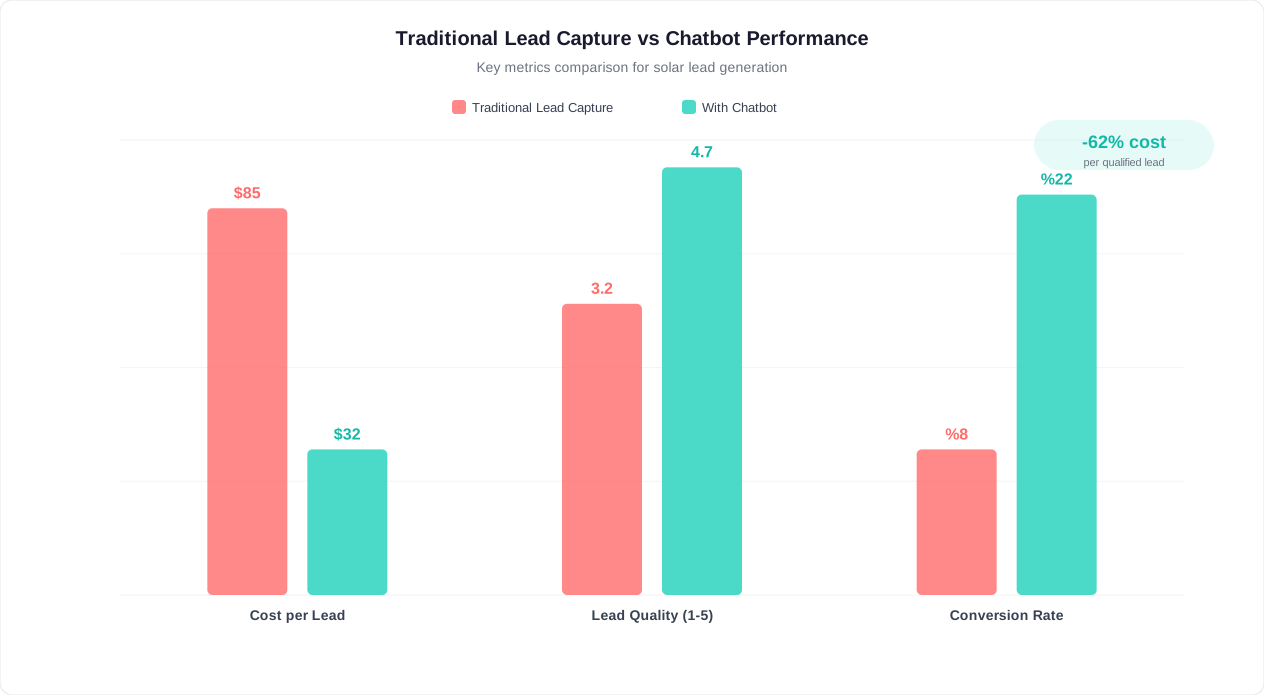
| Cost per qualified lead | $150-$300 | $50-$120 | 50-65% reduction |
| Off-hours lead capture rate | 10-20% | 85-95% | 4-8x improvement |
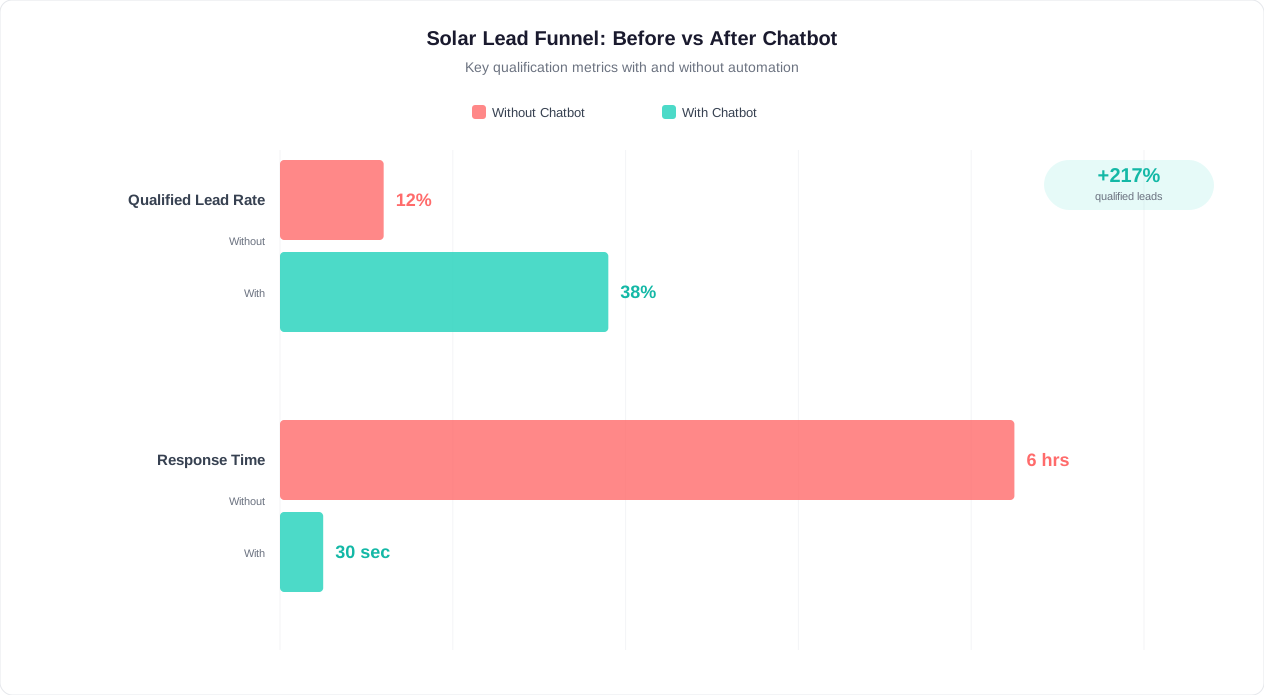
| Lead response time | 4-24 hours | Instant (under 5 seconds) | Eliminates delay entirely |
| Sales rep time on qualification | 30-50% of total | 5-10% of total | 80% reduction |
Revenue Impact Modeling
Consider a solar company receiving 500 website visitors per month from paid and organic channels. Without a chatbot, at a 3% form conversion rate, that produces 15 leads. With a chatbot at 12% engagement-to-lead conversion, the same traffic produces 60 qualified leads -- a 4x increase from identical traffic spend. If site assessment booking rate improves from 30% to 55%, that is 33 site assessments per month versus 4.5 previously. At industry-average close rates of 25-35% from site assessment to contract, the chatbot-equipped company closes 8-12 deals per month from the same traffic that previously produced 1-2 deals. The revenue multiplication is dramatic.
Speed-to-Lead Impact
Research consistently shows that the probability of qualifying a lead drops by 80% when response time increases from 5 minutes to 30 minutes. Solar leads contacted within 5 minutes of their inquiry are 21x more likely to enter the sales pipeline than leads contacted after 30 minutes. The chatbot provides instant response -- under 5 seconds from the moment the visitor engages. This speed-to-lead advantage alone accounts for a significant portion of the conversion rate improvement, as competitors who rely on callback processes lose prospects during the delay.
Cost Per Acquisition Reduction
With customer acquisition costs in solar averaging $3,000-$5,000 per closed deal, a 30% improvement in funnel efficiency translates to $900-$1,500 savings per deal. For a company closing 10 deals per month, this represents $9,000-$15,000 in monthly savings on acquisition costs alone -- well above the cost of the chatbot platform. The ROI is typically achieved within the first month of deployment. Additional savings come from reduced sales team staffing requirements for initial qualification and the elimination of after-hours answering services previously used to capture evening and weekend inquiries.
Comparison: Chatbot vs. Traditional Lead Capture
| Capability | Contact Form | Phone/Call Center | Solar Chatbot |
|---|---|---|---|
| Available hours | 24/7 (submit only) | Business hours | 24/7 (interactive) |
| Response time | Hours to days | Minutes (if staffed) | Instant |
| Qualification depth | None (name/email only) | Full (but expensive) | Full (automated) |
| Cost per interaction | $0 (but low conversion) | $15-$40 per call | $0.50-$2.00 per lead |
| Consistency | N/A | Variable by agent | 100% consistent |
| Scalability | Unlimited (passive) | Limited by staff | Unlimited (active) |
| Data capture | Minimal | Depends on agent | Complete and structured |
Integration with Solar CRM and Design Tools
A solar consultation chatbot operating in isolation from your CRM and solar design software creates a manual handoff problem. Leads captured by the chatbot must be manually entered into the CRM, qualification data must be transcribed for the design team, and follow-up sequences must be triggered manually. Integration eliminates these manual steps and makes the chatbot a seamless extension of your sales workflow -- from first website visit through contract signing.
Solar CRM Integrations
Conferbot's API integration framework connects with the major solar-specific CRM platforms. When a prospect completes the chatbot qualification flow, a lead record is automatically created in your CRM with all collected data populated: property type, electricity usage, roof condition, shading assessment, financing preference, timeline, and lead score. For companies using solar-specific platforms like Aurora Solar, Enerflo, or Solar Nexus, the integration maps chatbot fields to the platform's lead intake format. For companies using general CRMs like HubSpot, Salesforce, or Pipedrive, custom field mapping ensures the solar-specific qualification data is captured in the correct fields for downstream automation.
Solar Design Tool Integration
Pre-qualification data from the chatbot feeds directly into solar design workflows. When a site assessment is scheduled, the design team already has the property address (for satellite imagery), electricity usage (for system sizing), roof age (for structural considerations), and shading conditions (for panel placement optimization). Tools like Aurora Solar, Helioscope, and OpenSolar can use this pre-populated data to generate preliminary designs before the site visit -- allowing the sales team to arrive at the assessment with a draft proposal ready for refinement rather than starting from scratch. This preparation significantly compresses the time between site visit and proposal delivery.
Marketing Automation Connection
Not every chatbot visitor converts to a site assessment immediately. Prospects who complete the qualification flow but select "just researching" for timeline or who do not provide contact information enter different nurture paths. Integration with marketing automation platforms (HubSpot, ActiveCampaign, Mailchimp) allows the chatbot to trigger email drip campaigns tailored to the prospect's qualification data. A homeowner with a high electricity bill who is researching timelines receives a nurture sequence focused on cost savings and financing education. A prospect concerned about environmental impact receives content about carbon reduction and community solar benefits. This segmented nurture maintains engagement until the prospect is ready to move forward.
Proposal and Contract Automation
For high-scoring leads who book site assessments, the chatbot data can pre-populate proposal documents through integration with proposal generation tools. System size estimates based on electricity usage, financing terms based on stated preference, and incentive calculations based on ZIP code all feed into templates that the sales team refines rather than builds from scratch. DocuSign and PandaDoc integrations can even deliver preliminary proposals for review before the site assessment, priming the customer for the purchase decision and shortening the time between assessment and contract.
Webhook and API Flexibility
For solar companies with custom internal tools or proprietary platforms, Conferbot provides webhook endpoints and a REST API through the integrations hub. Every chatbot event -- conversation started, qualification completed, lead scored, assessment scheduled -- can trigger a webhook that your systems consume. This flexibility accommodates custom lead routing logic (geographic assignment, product-line routing, round-robin assignment), proprietary scoring algorithms, and integration with internal databases that track installation capacity and crew availability.
50,000+ businesses use Conferbot templates to automate conversations
Use Cases: Residential, Commercial, and Community Solar
Solar energy consultation chatbots serve different market segments with distinct qualification criteria, sales processes, and customer journeys. A single chatbot can accommodate multiple market segments through branching conversation flows, or companies can deploy specialized chatbots for each segment. Here is how the chatbot adapts to the three primary solar market categories.
Residential Solar: Homeowner Qualification and Education
The residential market is the highest-volume application for solar chatbots. Homeowners represent the largest pool of potential customers but also require the most education before purchase. The chatbot handles the questions that dominate residential solar sales: "How much will I save?", "What does it cost?", "How do tax credits work?", "What if I sell my house?", "Does my roof work for solar?", and "What happens on cloudy days?" Each of these questions traditionally requires sales rep time to answer -- the chatbot handles them instantly and consistently, freeing the sales team for proposal presentations and contract negotiations where human expertise has the highest impact.
For residential deployment, the chatbot typically lives on the company's website homepage, services page, and landing pages for paid ad campaigns. Integration with Google Ads conversion tracking allows marketing teams to attribute closed deals back to the specific ad campaigns that drove the initial chatbot interaction -- data that is difficult to capture with form-based lead capture where the qualification step happens offline.
Commercial Solar: Facility Assessment and Decision-Maker Routing
Commercial solar sales involve different qualification criteria than residential. Property ownership is often more complex (landlord vs. tenant, building management companies, HOA-governed properties). Energy usage is substantially higher and varies by business type. Decision-making involves multiple stakeholders. The commercial chatbot pathway collects business type, facility size, energy usage, ownership structure, and decision-maker information before routing to the commercial sales team. Lead scoring for commercial accounts weights factors differently: a manufacturing facility with $10,000+ monthly electricity costs and the decision-maker engaging directly is a higher-priority lead than a small retail tenant inquiring on behalf of their landlord.
Commercial chatbot deployment extends beyond the company website. Integration with LinkedIn messaging (through omnichannel capabilities) allows outbound commercial prospecting campaigns to use the chatbot for initial qualification when prospects respond to outreach. Trade show follow-up campaigns can direct commercial contacts to a chatbot qualification flow via QR code or SMS link, automating the post-event follow-up process.
Community Solar: Subscriber Enrollment and Education
Community solar programs serve customers who cannot install rooftop panels -- renters, apartment dwellers, homeowners with unsuitable roofs, and those who prefer a subscription model over ownership. The chatbot for community solar operates differently: rather than qualifying roof suitability, it determines subscription eligibility (geographic service area, utility account requirements) and educates on the subscription model (credit on electricity bill, no installation required, no long-term commitment in many programs). The enrollment process is simpler than rooftop installation sales -- the chatbot can complete the full enrollment within the conversation for customers who are ready to subscribe.
Community solar chatbots are particularly effective on social media channels and WhatsApp, where the target audience (younger, more tech-comfortable, often renters) is most active. Facebook and Instagram ad campaigns directing traffic to a Messenger chatbot or WhatsApp enrollment flow achieve higher conversion rates than traditional landing pages for this demographic.
Battery Storage and EV Charging Add-Ons
Solar companies increasingly sell battery storage systems and EV charging stations alongside panel installation. The chatbot identifies cross-sell opportunities within the qualification flow: customers who express interest in energy independence are strong candidates for battery storage. Customers who mention electric vehicles (or plan to purchase one) are candidates for EV charger installation bundled with their solar system. These add-on products increase average deal value by 30-60% and the chatbot identifies them automatically during the consultation conversation rather than relying on the sales rep to remember to ask about them during the site assessment.
Getting Started with Your Solar Energy Chatbot
Deploying the solar energy consultation chatbot from template to live operation takes 1-3 days for a typical solar installation company. The majority of setup time is spent configuring your local incentive data, financing options, and CRM integration. Here is the step-by-step process to go from template to qualified leads in your pipeline.
Step 1: Clone the Template
Access the Conferbot solar and energy template library and select the Solar Energy Consultation Chatbot. Clone it to your workspace. The template arrives pre-configured with the full qualification flow: homeownership verification, property type, electricity usage, roof assessment, shading evaluation, motivation, financing preference, timeline, and contact capture. Review the pre-built conversation flow to understand the structure before making customizations.
Step 2: Customize Your Qualification Criteria
Adjust the chatbot's qualification questions and options to match your service area and product offerings. If you do not serve commercial properties, remove that option from the property type question. If you offer specific financing products (a proprietary solar loan through a partner lender, for example), update the financing options to reflect your actual offerings. Configure the electricity bill ranges based on your market's typical utility rates -- what constitutes a "high" bill varies significantly by region. Set up your service area by ZIP code so the chatbot can identify prospects outside your installation territory.
Step 3: Configure Savings Estimates and Incentives
Enter the savings estimation parameters for your region: average solar irradiance, local utility rates, rate escalation assumptions, system efficiency factors, and degradation rates. Configure the incentive information the chatbot presents: federal ITC percentage, state rebate amounts, SREC values, net metering policy details, and any utility-specific programs. These values should match what your sales team presents during consultations to maintain consistency between the chatbot experience and the in-person interaction.
Step 4: Connect Your CRM
Use the integrations hub to connect your CRM platform. Map the chatbot's qualification fields to your CRM's lead fields: property type, electricity usage, roof condition, shading, financing preference, timeline, lead score, and contact information. Configure lead assignment rules (geographic routing, round-robin, or priority-based assignment to your highest-performing reps for high-score leads). Test the integration with a sample lead to verify all data populates correctly and assignment rules fire as expected.
Step 5: Deploy Across Channels
Embed the chatbot on your website using the provided widget code. Place it on your homepage, services page, financing page, and any landing pages used for paid ad campaigns. For maximum visibility, configure the chatbot to proactively greet visitors after 10-15 seconds on the page with a question like "Thinking about going solar? I can give you a quick savings estimate." Activate your WhatsApp Business channel for markets where WhatsApp engagement is strong. Connect to Facebook Messenger for social media ad campaigns. Each channel uses the same qualification flow but adapts the presentation to the channel's conventions.
Step 6: Monitor, Optimize, and Scale
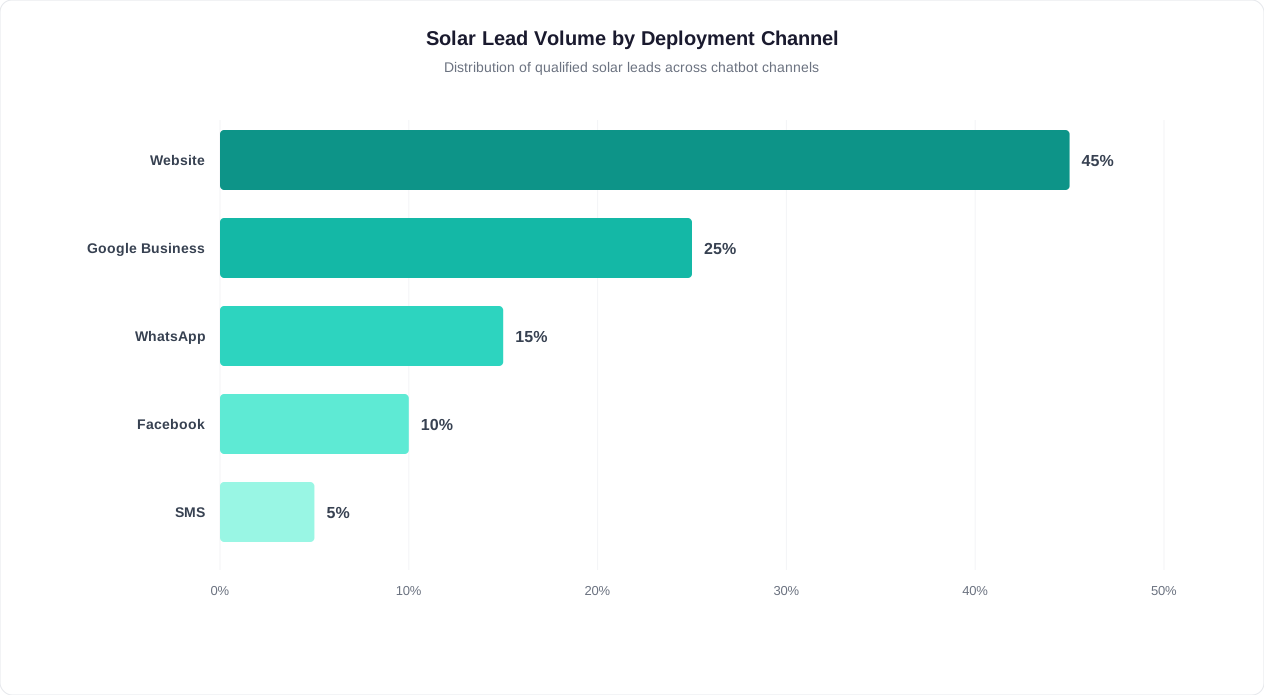
For the first two weeks, monitor the analytics dashboard daily. Track completion rate (what percentage of conversations that start reach the contact capture step), drop-off points (which questions cause prospects to abandon the flow), lead score distribution (are you getting high-quality leads or mostly low-score researchers), and channel performance (which deployment channel produces the highest lead quality). Common first-week adjustments include simplifying questions that cause drop-off, adjusting savings estimates that seem too aggressive or conservative based on customer feedback, and refining the proactive greeting timing and message. After the initial optimization period, shift to weekly monitoring and monthly flow adjustments based on performance trends and sales team feedback on lead quality.
Solar Energy Consultation Chatbot FAQ
Everything you need to know about chatbots for solar energy consultation chatbot.
Why Use a Template vs Building from Scratch?
Templates encode years of optimization data into the conversation flow before you start.
| Factor | Conferbot Template | Build from Scratch | Hire a Developer |
|---|---|---|---|
| Time to deploy | 10 minutes | 2-8 hours | 2-6 weeks |
| Cost | Free | Your time | $5,000-$25,000 |
| Day-1 conversion | 15-22% | 5-8% | 10-15% |
| Proven flows | Yes, data-tested | No | Depends |
| Updates included | Automatic | Manual | Paid |
| Multi-channel | 8+ channels | 1 channel | Extra cost |
| Analytics | Built-in | Must build | Extra cost |
Ready to Deploy Solar Energy Consultation Chatbot?
Join 50,000+ businesses. Free forever plan available. No credit card required.