
Food Allergy Checker Chatbot
Free Food And Beverage Chatbot Template
An AI food allergy chatbot that helps users identify allergens in menu items, packaged foods, and recipes. Scans ingredient lists, flags potential allergens, and suggests safe alternatives. Perfect for restaurants, food delivery apps, grocery stores, and health-conscious brands looking to serve customers with dietary restrictions safely.


What Is a Food Allergy Checker Chatbot?
A food allergy checker chatbot is an AI-powered conversational tool that allows restaurant guests, food service customers, and delivery platform users to instantly verify the allergen content and ingredient composition of any menu item through a natural conversation. Rather than waiting for a server to check with the kitchen, consulting a printed allergen matrix that may be outdated, or risking an anaphylactic reaction because an ingredient was overlooked, guests receive accurate, real-time allergen information through a chat interface that is available before they arrive, while they are ordering, and in any language they prefer.
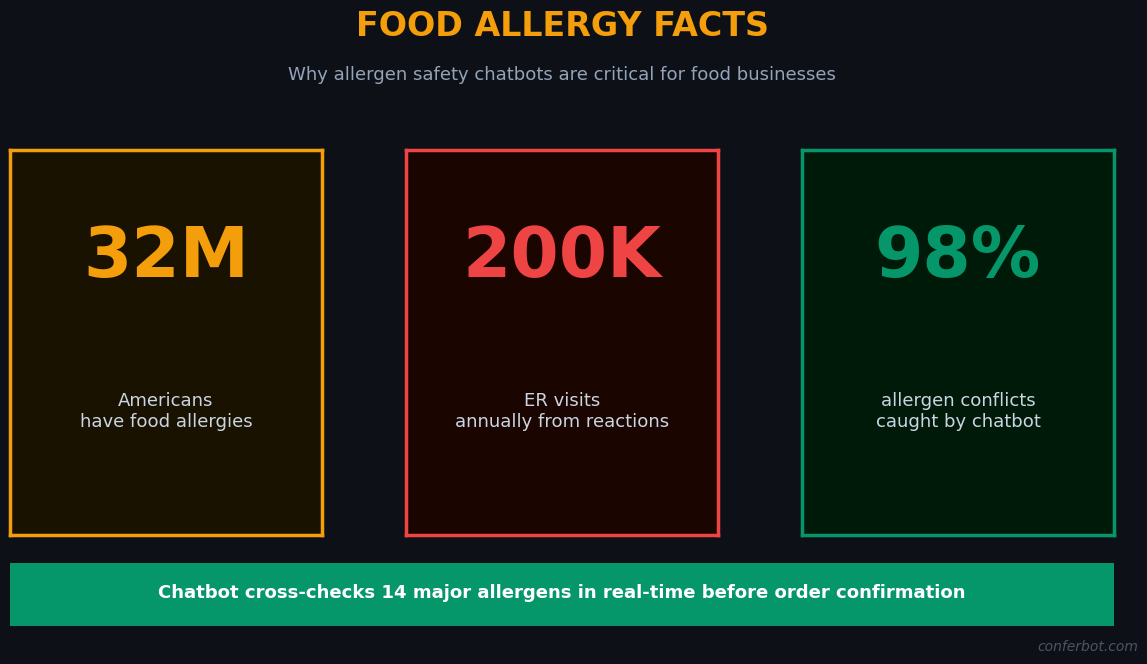
Food allergy incidents in restaurants represent one of the most serious liability exposures in the food service industry. In 2026, approximately 32 million Americans have diagnosed food allergies, and food allergy reactions in restaurants account for 50% of all fatal food allergy reactions in the United States. Beyond the human cost, a single serious allergic reaction at a restaurant generates significant legal liability, insurance claims, and reputational damage that can be devastating for independent operators and damaging even for large chains. The legal obligation to provide accurate allergen information is codified in food labeling regulations in the European Union, the United Kingdom, Canada, Australia, and increasingly at the state level in the United States.
The food allergy checker chatbot addresses these risks and serves the guest experience simultaneously. It provides instant, accurate allergen information based on the restaurant's current recipes and ingredient suppliers. It suggests safe menu alternatives when a guest's allergens conflict with their first-choice dish. It flags cross-contamination risks for guests with severe allergies. And it creates a documented interaction record that demonstrates the restaurant's due diligence in providing allergen information. Built on Conferbot's AI chatbot builder with NLP processing, it deploys on your restaurant website, digital menu, and ordering platform without engineering resources.
This page covers how the allergen checking flow works, the major allergen groups and dietary restrictions the chatbot handles, menu update and ingredient database management, cross-contamination communication, integration with online ordering systems, and a setup guide for restaurant operators and food service managers.
How the Food Allergy Checker Works: Allergen Detection and Safe Menu Navigation
The food allergy checker chatbot guides guests through allergen identification and safe menu selection through a structured conversation flow that prioritizes accuracy and safety while maintaining a guest experience that feels helpful rather than clinical.
Stage 1: Allergen and Dietary Restriction Capture
The chatbot opens by asking the guest about their allergens and dietary restrictions. Guests can select from a structured list of the fourteen major allergens regulated in the European Union -- celery, cereals containing gluten, crustaceans, eggs, fish, lupin, milk, molluscs, mustard, tree nuts, peanuts, sesame, soya, and sulphur dioxide -- or describe their restrictions in natural language. The NLP layer handles colloquial descriptions: "I can't eat anything with milk in it" correctly identifies a dairy allergy, "I keep halal" identifies relevant restrictions on pork and alcohol, and "my daughter has a tree nut allergy" captures the relevant restriction regardless of phrasing. Guests can specify multiple allergens simultaneously, and severity context -- "I'm severely allergic, not just intolerant" -- triggers stricter cross-contamination warnings in subsequent responses.
| Restriction Type | Example | Chatbot Behavior | Cross-Contamination Warning |
|---|---|---|---|
| Severe allergy | Peanut anaphylaxis | Complete exclusion with kitchen alert triggered | Prominent warning with specific risk pathway |
| Moderate allergy | Shellfish allergy | Complete exclusion from ingredients | Standard warning if shared equipment used |
| Intolerance | Lactose intolerance | Exclusion from primary ingredients, small amounts noted | Informational note only |
| Dietary preference | Vegan diet | Exclusion of all animal products including hidden ingredients | Not applicable |
| Religious requirement | Halal diet | Exclusion of prohibited ingredients including alcohol in sauces | Shared cooking equipment flagged |
Stage 2: Menu Item Allergen Check
The guest selects or describes the menu item they want to check. The chatbot queries the restaurant's ingredient database for that item and returns a clear allergen status: safe for the guest's stated restrictions, contains a flagged allergen, or potentially affected by cross-contamination. For items that contain a flagged allergen, the chatbot identifies which specific allergen is present and in which ingredient -- "the Caesar dressing contains anchovies, which is a fish allergen" -- giving the guest the information they need to make an informed decision. For items with cross-contamination risk, the chatbot explains the specific risk pathway: "this item does not contain peanuts as an ingredient but is prepared in a kitchen that handles peanuts and we cannot guarantee no cross-contact."
Stage 3: Safe Alternative Suggestions
When a guest's first-choice item contains a flagged allergen, the chatbot immediately suggests safe alternatives from the menu that match the guest's taste preferences and dietary restrictions simultaneously. A guest who wants a pasta dish but has a gluten allergy receives suggestions for gluten-free pasta options or protein-and-vegetable dishes that satisfy a similar appetite profile. A guest who wants the chicken sandwich but has a sesame allergy receives an alternative that satisfies their desire for a hot sandwich without sesame-containing ingredients. These contextual suggestions improve the guest's ordering experience and increase the likelihood that they find something they want to order rather than leaving dissatisfied.
Stage 4: Kitchen Communication and Documentation
For guests with severe allergies or complex requirements, the chatbot generates a kitchen alert that is transmitted to the kitchen management system or sent to the manager on duty. This alert documents the guest's allergen profile, their chosen menu item, and any special preparation requirements. The kitchen alert creates a documented communication chain that demonstrates the restaurant's allergen information process for regulatory compliance and liability purposes. The interaction is also logged in the restaurant's allergen inquiry record, providing an auditable history of allergen disclosures. Monitor allergen inquiry patterns and identify frequently requested modifications through Conferbot's analytics dashboard.
Key Features of the Food Allergy Checker Chatbot
The food allergy checker's feature set covers the full range of dietary restriction and allergen inquiry scenarios that restaurant guests present, from simple single-allergen checks to complex multi-restriction dietary requirements.
| Feature | What It Does | Restaurant Benefit | Guest Benefit |
|---|---|---|---|
| 14 major allergen detection | Checks all EU-regulated major allergens plus common dietary restrictions | Regulatory compliance across EU, UK, and international markets | Complete allergen information without asking a server |
| Natural language allergen input | Understands colloquial descriptions of allergies and dietary restrictions | Reduces miscommunication risk from language barriers | Describe restrictions naturally without memorizing allergen names |
| Ingredient-level transparency | Identifies which specific ingredient in a dish contains the allergen | Enables informed modification requests | Knows exactly which ingredient to ask to be removed |
| Cross-contamination warnings | Flags cross-contact risks for kitchen and equipment sharing | Protects against liability for undisclosed cross-contamination | Critical safety information for guests with severe allergies |
| Safe alternative recommendations | Suggests allergen-free dishes that match the guest's taste preferences | Retains guests who might otherwise leave without ordering | Finds a satisfying option despite restrictions |
| Kitchen alert generation | Sends allergen alerts to kitchen management system for severe cases | Documented communication chain for compliance | Kitchen is informed before the order is prepared |
| Multi-language support | Communicates allergen information in the guest's preferred language | Serves international guests and diverse local communities | Receives safety-critical information in their native language |
| Menu database sync | Updates allergen data when recipes or suppliers change | Accurate information even with seasonal menu changes | Allergen information reflects current recipes, not last year's menu |
Dietary Restriction Coverage Beyond Allergens
Beyond the fourteen major allergens, the chatbot handles the full spectrum of dietary restrictions that guests bring to restaurants in 2026: vegetarian and vegan diets, halal and kosher dietary laws, low-FODMAP diets for irritable bowel syndrome, gluten-free requirements for celiac disease (which require stricter cross-contamination protocols than a simple gluten preference), lactose intolerance, and specific ingredient avoidances for medical conditions. Each restriction type has a configured response protocol: vegan guests receive confirmation of the absence of all animal products including hidden ingredients like gelatin and rennet, while halal guests receive confirmation of permitted slaughter methods and the absence of prohibited ingredients including alcohol in sauces and marinades.
Ready to try Food Allergy Checker Chatbot?
Deploy this template in under 10 minutes. No coding required.
Use This Template Free →Integration with Online Ordering and Reservation Systems
The food allergy checker achieves its highest value when integrated with the restaurant's online ordering and reservation systems, so that allergen checking and order placement occur in a single seamless flow rather than as separate interactions.
Online Ordering Integration
For restaurants with online ordering -- whether through their own platform or through aggregators like DoorDash, UberEats, or custom ordering systems -- the allergen checker integrates into the ordering flow so that guests can check allergens for any item before adding it to their cart. The allergen check appears as a native part of the item detail page or as a chatbot widget accessible from the ordering interface. When an item contains a flagged allergen, the chatbot presents safe alternatives that the guest can add to their cart directly from the allergen check response, reducing the friction of finding and navigating to the alternative item in the menu.
Reservation-Time Allergen Capture
For restaurants taking advance reservations, the allergen checker can be integrated into the reservation flow to capture guest allergen profiles at booking time. When a reservation is made through the restaurant's website, the chatbot asks whether any members of the party have food allergies or dietary restrictions and captures the specific requirements. This information is attached to the reservation record and surfaced to the front-of-house team before the guests arrive, allowing the kitchen to prepare for specific dietary requirements and ensuring the server is briefed before the table is seated. Proactive allergen capture at reservation time reduces the risk of mid-service allergen emergencies and demonstrates a level of guest care that significantly improves the dining experience for guests with dietary restrictions.
Table Management System Integration
For restaurants using table management systems such as OpenTable, Resy, or SevenRooms, the allergen profiles captured during reservation or on arrival can be synced to the guest's profile in the table management system. Return guests who have dined before and captured their allergen profile do not need to re-enter their requirements -- the front-of-house team is already briefed and the kitchen is already prepared. This guest profile integration is one of the features that most significantly differentiates restaurants that use allergen checker chatbots from those that rely on verbal communication alone. Connect reservation and allergen data to your table management system through Conferbot's API integration.
Delivery Platform Menu Sync
For restaurants on delivery platforms, the allergen database can be synced to the platform's nutritional and allergen information fields through the platform's API, ensuring that the allergen information on the delivery app matches the allergen database maintained in Conferbot. Discrepancies between the restaurant's internal allergen database and the information displayed on delivery platforms are a significant liability risk, because delivery customers cannot ask a server for clarification and rely entirely on the platform-displayed information for safety decisions.
Allergen Compliance, Liability Reduction, and Regulatory Requirements
Food allergen regulations impose specific disclosure obligations on food service operators that extend beyond labeling requirements to the information provided verbally and digitally at point of service. Understanding these requirements is essential for restaurants deploying allergen checker chatbots.
EU Food Information Regulations
Regulation (EU) No 1169/2011 on the provision of food information to consumers requires restaurants in the European Union to provide written allergen information for all fourteen major allergens in every menu item upon request, either in writing on the menu or through a written reference to where the information can be obtained. The allergen checker chatbot satisfies this requirement by providing written allergen information on demand through the chat interface, with the allergen database serving as the documented written allergen record. EU-based restaurants must ensure their allergen database is accurate and maintained, as providing incorrect allergen information constitutes a violation of the regulation regardless of intent.
UK Natasha's Law
Natasha's Law, which came into force in the United Kingdom in October 2021, requires full ingredient labeling on all food prepared and packed on the premises for direct sale. For restaurants preparing and selling pre-packaged food -- meal kits, grab-and-go items, deli products -- the allergen checker chatbot provides a digital equivalent of the required ingredient and allergen information that is accessible to customers before purchase. For table service, the requirements are similar to the EU regulation: written allergen information must be available on request.
Documented Interaction Records for Liability Protection
Beyond regulatory compliance, the allergen checker chatbot's interaction logging creates a documented record that protects the restaurant in the event of an allergen-related incident. If a guest claims they were not informed of an allergen, the chatbot log shows whether they used the allergen checker, what allergens they disclosed, what information they were provided, and whether they received a cross-contamination warning. This documented record is valuable evidence in insurance claims and litigation and demonstrates that the restaurant operated a reasonable allergen information system. Restaurants relying solely on verbal server communication have no equivalent documentation. Access interaction logs and allergen inquiry records through Conferbot's analytics dashboard.
50,000+ businesses use Conferbot templates to automate conversations
Setup Guide: Deploying Your Food Allergy Checker Chatbot
Restaurant operators and food service managers can configure and deploy a fully functional food allergy checker chatbot using Conferbot's no-code platform in four to eight hours for an initial menu build. Ongoing maintenance after the initial setup takes approximately one to two hours per week for typical restaurant operations with regular menu changes. Here is the complete setup process.
Step 1: Compile the Ingredient Database (2-4 Hours)
Gather the standardized recipes for every menu item, including all sauces, marinades, garnishes, and accompaniments. For each ingredient in each recipe, identify which of the fourteen major allergens it contains and any cross-contamination risks from the ingredient's production or storage. If you do not have documented standardized recipes, use Conferbot's guided ingredient entry interface, which prompts for each ingredient category and flags common hidden allergen sources. Document cross-contamination risks for each cooking station and shared equipment item in your kitchen. This ingredient database is the foundation of the allergen checker and must be accurate before the chatbot is deployed to guests.
Step 2: Configure the Chatbot Conversation Flow (1-2 Hours)
Start from the Food Allergy Checker template in Conferbot and configure the allergen input options, matching the fourteen major allergens plus any additional dietary restrictions relevant to your guest demographic. Configure the safe alternative suggestion logic, mapping each allergen flag to the set of safe menu alternatives you want to recommend. Set up the cross-contamination warning language for each risk pathway in your kitchen. Configure the kitchen alert trigger conditions -- which allergen severity levels and which specific allergens require a kitchen alert -- and set up the alert delivery to your kitchen management system or manager on duty notification.
Step 3: Connect to Ordering and Reservation Systems (1-2 Hours)
Configure the integration with your online ordering platform and reservation system through Conferbot's API integration settings. Test the allergen check flow within the ordering interface -- confirm that allergen flags correctly prevent or warn about flagged items and that safe alternatives are presented accurately. Test the reservation-time allergen capture and confirm that captured profiles are synced to the reservation management system. Configure the allergen database sync schedule to update from your recipe management system when recipe changes are made.
Step 4: Deploy and Train Staff (30-60 Minutes)
Deploy the allergen checker on your restaurant website, digital menu, and online ordering platform using Conferbot's embed code. Brief front-of-house and kitchen staff on the chatbot's capabilities and limitations: staff should understand that the chatbot provides accurate information for items in the database but that daily specials and items not yet added to the database require manual server consultation. Establish a workflow for daily specials entry: whoever creates the specials each day is responsible for entering the ingredients in the chatbot's menu management interface before service begins. Monitor allergen inquiry patterns through the analytics dashboard to identify frequently requested modifications and update your menu or allergen database accordingly. Review the pricing page for multi-location deployment options.
Food Allergy Checker Chatbot FAQ
Everything you need to know about chatbots for food allergy checker chatbot.
Why Use a Template vs Building from Scratch?
Templates encode years of optimization data into the conversation flow before you start.
| Factor | Conferbot Template | Build from Scratch | Hire a Developer |
|---|---|---|---|
| Time to deploy | 10 minutes | 2-8 hours | 2-6 weeks |
| Cost | Free | Your time | $5,000-$25,000 |
| Day-1 conversion | 15-22% | 5-8% | 10-15% |
| Proven flows | Yes, data-tested | No | Depends |
| Updates included | Automatic | Manual | Paid |
| Multi-channel | 8+ channels | 1 channel | Extra cost |
| Analytics | Built-in | Must build | Extra cost |
Ready to Deploy Food Allergy Checker Chatbot?
Join 50,000+ businesses. Free forever plan available. No credit card required.