
Flight Booking Assistant Chatbot
Free Travel And Hospitality Chatbot Template
An AI flight booking chatbot that helps travelers search flights, compare fares, and complete bookings through natural conversation. Reduces the 87% booking abandonment rate by simplifying the search-to-purchase flow. Ideal for travel agencies, OTAs, and airlines looking to boost conversion rates and provide 24/7 booking support.


What Is a Flight Booking Chatbot?
A flight booking chatbot is an AI-powered conversational assistant that helps travelers search for flights, compare options, complete bookings, and manage their itineraries -- all through a natural chat interface on your website, WhatsApp, Messenger, or mobile app. It replaces the tedious process of navigating complex booking engines with a conversation that feels like texting a knowledgeable travel agent.
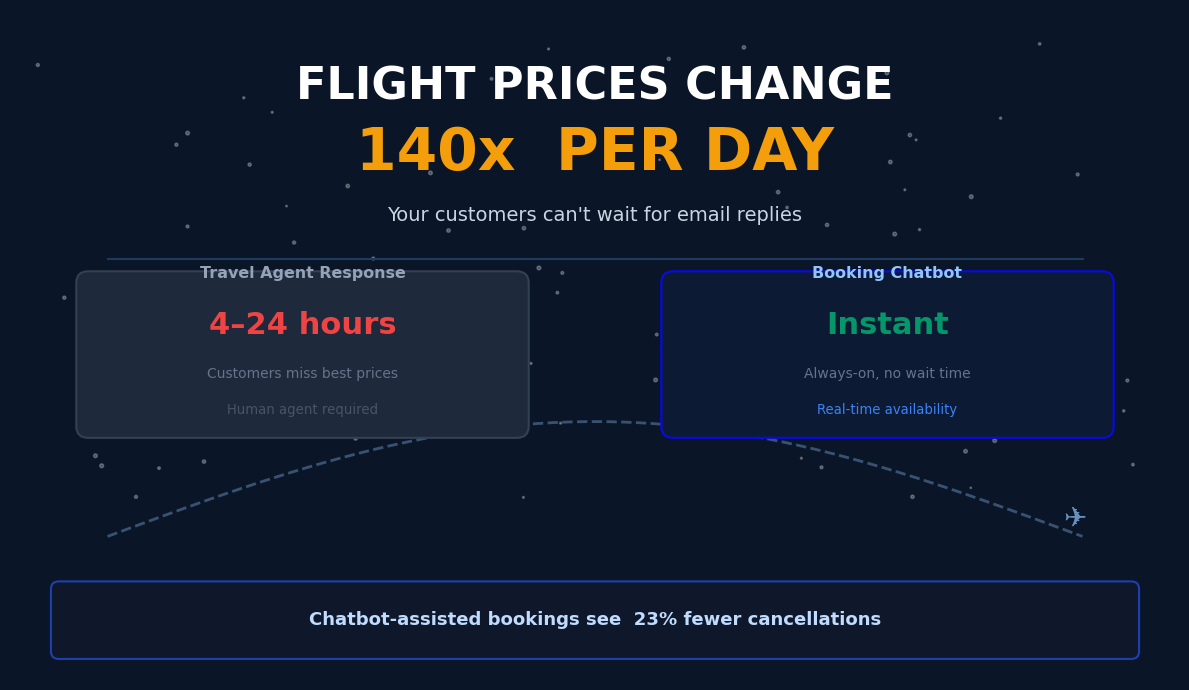
The travel industry is ripe for conversational AI. Flight booking involves multiple decision points -- dates, routes, airlines, fare classes, seat preferences, baggage, connections, and loyalty programs -- that overwhelm traditional search interfaces. A traveler looking for "the cheapest flight to Barcelona next month with a carry-on" should not have to fill out six form fields, filter through 200 results, and decode fare class restrictions. A travel chatbot assistant understands that query, searches available options, and presents the best matches in seconds.
For travel agencies, airlines, and OTAs (online travel agencies), the business case is compelling. The average flight booking abandonment rate on traditional websites is 87-90%, the highest of any e-commerce category. The primary reasons are complexity, price comparison friction, and unanswered questions about baggage, connections, and cancellation policies. A chatbot addresses all three by simplifying the interface, presenting clear comparisons, and answering questions in real time.
In 2026, messaging-based travel booking is growing rapidly. Travelers increasingly prefer to manage their trips through WhatsApp and messaging apps rather than websites, especially for modifications, cancellations, and support during travel disruptions. A flight booking chatbot meets travelers on the channels they already use, delivering a modern booking experience that drives conversions and loyalty.
With Conferbot's no-code platform, travel businesses can deploy a flight booking chatbot that integrates with GDS systems and flight APIs, handles multi-city and complex itineraries, manages disruptions, and drives ancillary revenue through upselling -- all without custom development. This guide covers the complete feature set, deployment strategies, and ROI data for travel chatbot assistants.
How a Flight Booking Chatbot Works
The booking flow of a flight chatbot guides travelers from an initial search through comparison, selection, and payment in a single conversational thread. Here is how each stage works.
Search: Natural Language Flight Discovery
The traveler starts with a request in their own words: "I need a flight from New York to London on March 15, returning March 22," or more loosely, "Cheapest way to get to Tokyo sometime in April." Conferbot's NLP engine extracts the key parameters -- origin, destination, dates (or flexible date ranges), number of passengers, cabin class preference, and any constraints like direct flights only or specific airlines. If any essential information is missing, the bot asks follow-up questions conversationally rather than presenting a rigid form.
Compare: Structured Flight Options
The chatbot queries flight inventory through GDS (Global Distribution System) connections or airline APIs and returns a curated set of options. Instead of overwhelming the traveler with every available flight, the bot presents the top 3-5 results organized by the traveler's stated priority -- cheapest fare, shortest travel time, fewest connections, or best airline rating. Each option shows departure and arrival times, duration, number of stops, airline, aircraft type, and total price including taxes.
Refine: Conversational Filtering
The traveler can narrow results through natural conversation: "Show me only direct flights," "Anything departing after 10am?" or "What about business class?" The chatbot updates the results dynamically, maintaining the comparison context so the traveler can see how changes affect price and schedule. This conversational refinement is dramatically faster than clicking through filter menus on a traditional booking site.
Select: Detailed Flight Review
When the traveler is interested in a specific option, the chatbot provides a detailed breakdown: full itinerary with connection details, fare rules (change and cancellation policies), baggage allowance, seat map availability, and loyalty program earning potential. The bot answers any questions about the fare -- "Can I change the date later?" or "Is a meal included?" -- using fare rule data from the airline.
Book: Secure Payment and Confirmation
The chatbot collects passenger details (names as per passport, date of birth, nationality, frequent flyer numbers) and processes payment through a secure link or integrated payment gateway. Once payment is confirmed, the bot sends the booking confirmation with a PNR (Passenger Name Record), e-ticket numbers, and a full itinerary summary. The confirmation includes a calendar event the traveler can add with a single tap.
Manage: Post-Booking Support
After booking, the chatbot becomes the traveler's ongoing assistant. It sends check-in reminders 24 hours before departure, provides real-time flight status updates, handles seat selection or upgrade requests, and assists with modifications or cancellations. This post-booking relationship keeps travelers engaged and opens opportunities for ancillary revenue through upselling hotels, car rentals, and travel insurance.
Key Features of a Flight Booking Chatbot
A flight booking chatbot requires specialized capabilities that address the complexity and real-time nature of air travel. Here are the features that distinguish an effective travel chatbot assistant from a basic search interface.
| Feature | What It Does | Traveler Benefit |
|---|---|---|
| Multi-city flight search | Handles complex itineraries with multiple stops and open-jaw routes | Plans entire trips in one conversation |
| Real-time price alerts | Monitors fares after search and notifies when prices drop | Saves money without constant checking |
| Seat selection | Shows seat maps and lets travelers choose preferred seats in the chat | Secures preferred seating without visiting airline site |
| Baggage calculator | Explains allowances and calculates fees by fare class and airline | Avoids surprise charges at the airport |
| Fare calendar | Displays lowest fares across a date range for flexible travelers | Finds the cheapest dates to fly |
| Loyalty program integration | Shows miles earned, applies loyalty discounts, and redeems points | Maximizes rewards program value |
| Travel document checker | Verifies visa and passport requirements for the destination | Prevents denied boarding at check-in |
Intelligent Flight Search
The search engine behind the chatbot handles everything from simple one-way flights to complex multi-city itineraries with mixed cabin classes. For flexible travelers, it searches across a range of dates and presents a fare calendar showing the cheapest options. For business travelers with rigid schedules, it prioritizes convenience, direct routes, and preferred airlines. The AI learns from each traveler's booking history and preferences to personalize future searches.
Real-Time Price Monitoring
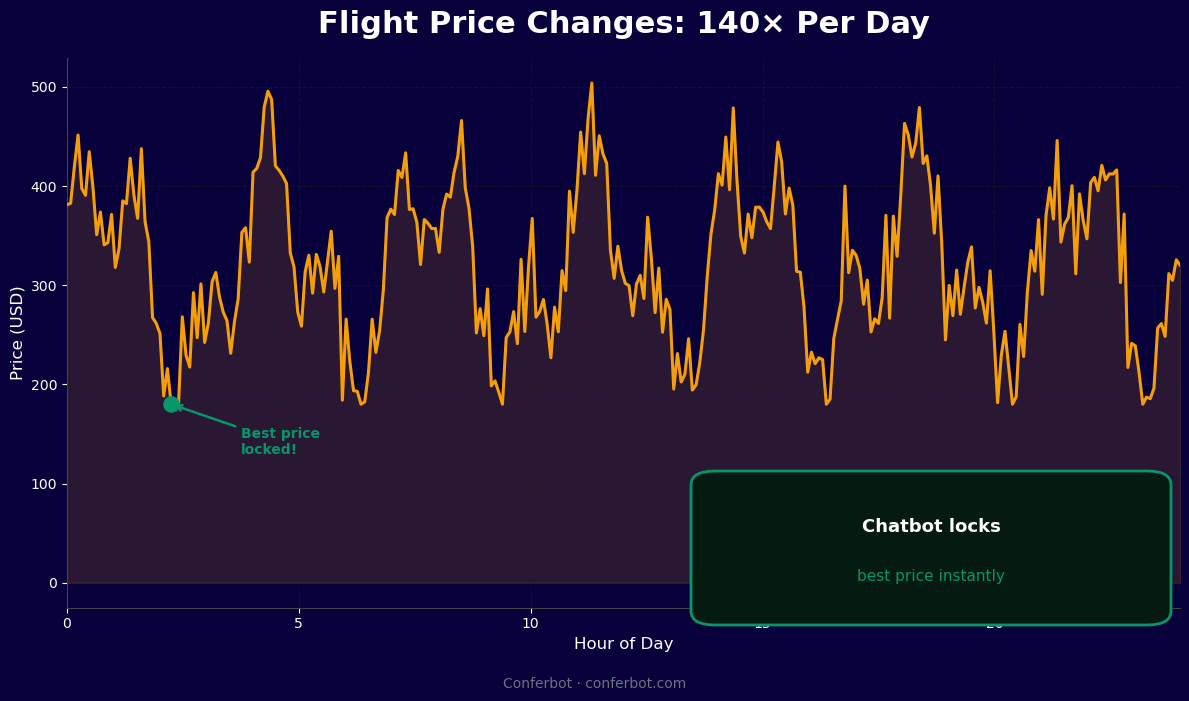
Flight prices fluctuate constantly. When a traveler is interested but not ready to book, the chatbot monitors the fare and sends a WhatsApp or push notification when the price drops or when the fare class is close to selling out. This feature recovers bookings from travelers who would otherwise leave and never return. Airlines and OTAs using price alerts through chatbots report 15-22% recovery of hesitant bookers.
Baggage and Fare Rules Clarity
Baggage allowances and fare change policies are among the most common questions travel support teams handle. The chatbot provides clear, per-fare-class information for every search result, proactively explaining what is included and what costs extra. This transparency reduces post-booking support queries by 35-45% and prevents the frustration of unexpected charges that damage customer satisfaction and generate chargebacks.
Travel Document Verification
For international flights, the chatbot checks visa and passport requirements for the traveler's nationality and destination. It alerts travelers if their passport expires within six months of travel (a common entry requirement), if a transit visa is needed for connections, or if any COVID or health documentation is still required. This proactive check prevents costly denied-boarding situations and demonstrates a level of care that builds brand loyalty.
These features collectively create a booking experience that is faster, more informative, and more personalized than any traditional flight search website -- which is why chatbot-assisted bookings show significantly higher completion rates.
Ready to try Flight Booking Assistant Chatbot?
Deploy this template in under 10 minutes. No coding required.
Use This Template Free →Multi-Channel Deployment: WhatsApp for Travel
For travel businesses, WhatsApp is the most impactful deployment channel for a flight booking chatbot. Here is why -- and how to deploy effectively across all channels your travelers use.
Why WhatsApp Dominates Travel Messaging
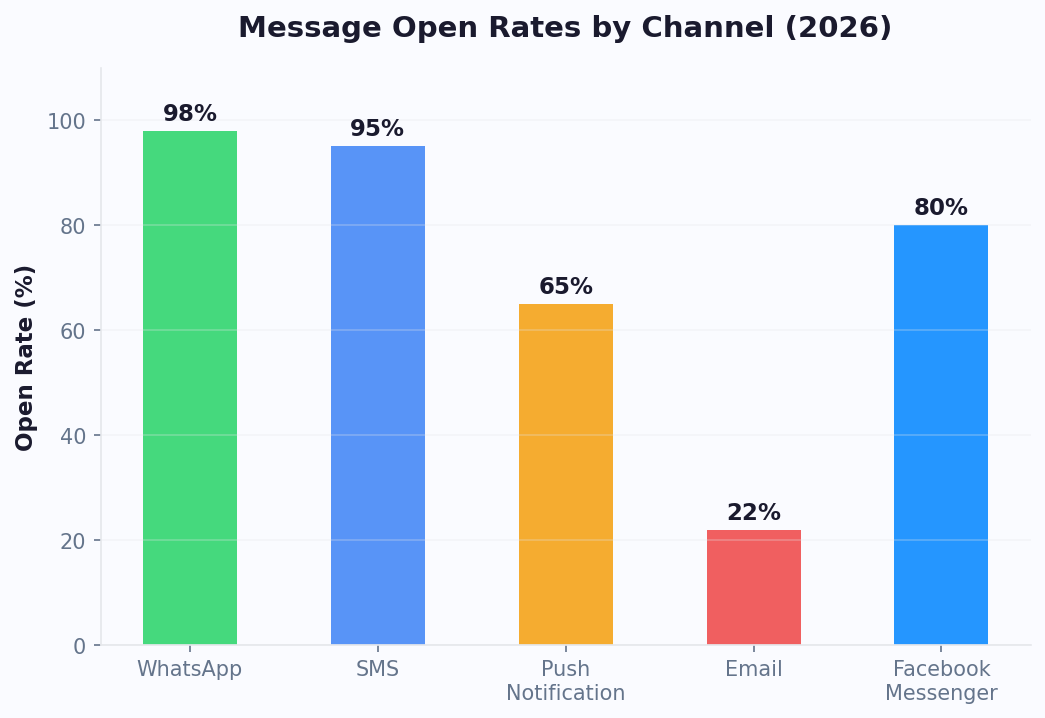
WhatsApp is the default messaging app in the majority of global markets, with over 2 billion active users. For travel, it has unique advantages: travelers are already using it to communicate while abroad (it works on WiFi, avoiding roaming charges), it supports rich media like boarding passes and itinerary cards, and its notification delivery is nearly instantaneous with 98% open rates. A flight booking chatbot on WhatsApp lets travelers search, book, modify, and manage flights from the same app they use to message family and friends.
The use cases extend far beyond initial booking. WhatsApp is the ideal channel for flight status alerts ("Your flight BA287 is delayed by 45 minutes -- new departure time is 3:15pm"), check-in reminders with a one-tap link to online check-in, boarding pass delivery, and disruption management ("Your connecting flight has been cancelled -- I have found you an alternative. Tap to confirm the rebooking").
Website and Mobile App
Your website chatbot serves travelers during the initial research and booking phase. It appears on flight search results pages, destination guides, and fare deal pages, offering to help travelers who may be struggling with the booking engine or have questions about a specific route. The website chatbot is particularly effective at recovering visitors who are about to abandon the booking flow -- triggering a helpful message at the right moment can recover 10-15% of abandoning visitors.
Messenger and Instagram
Facebook Messenger and Instagram are valuable for travel businesses that market through social media. When a travel agency posts a flight deal on Instagram, followers can book directly through a DM chatbot without leaving the app. Messenger bots handle booking inquiries that come through Facebook ads, turning ad clicks into completed bookings within the same conversation. The carousel card format on these platforms works well for displaying multiple flight options.
Unified Cross-Channel Experience
Conferbot ensures conversation continuity across all channels. A traveler might start searching for flights on the website, receive a price alert on WhatsApp, and complete the booking from their phone -- all with full context preserved. The chatbot remembers their search criteria, preferred options, and passenger details across channel switches, eliminating the friction of starting over. This omnichannel continuity is managed from a single Conferbot dashboard, so your operations team has one view of all traveler interactions regardless of channel.
Proactive Travel Notifications
Beyond reactive support, multi-channel deployment enables proactive communication that adds genuine value: fare drop alerts for saved searches, check-in window opening notifications, gate change alerts, weather advisories for destinations, and post-trip feedback requests. These proactive messages keep your brand top-of-mind and build the kind of trust that turns one-time bookers into loyal repeat customers.
Disruption Management: Rebooking and Cancellations
Travel disruptions -- flight delays, cancellations, missed connections, and schedule changes -- are the moments that define a travel brand's relationship with its customers. These high-stress situations generate the highest support volume and the most emotional customer interactions. A flight booking chatbot that handles disruptions effectively transforms a negative experience into a loyalty-building opportunity.
Real-Time Disruption Detection
The chatbot monitors flight status feeds and detects disruptions as soon as they are announced by the airline or airport. When a traveler's flight is delayed, cancelled, or has a gate change, the chatbot proactively notifies them via WhatsApp or their preferred channel -- often before the airline's own notification system. This speed matters: travelers who learn about a cancellation early have more rebooking options available.
Automated Rebooking
When a flight is cancelled or a connection is missed, the chatbot immediately searches for alternative flights and presents the best rebooking options. The traveler selects their preferred alternative, and the chatbot processes the change -- no hold times, no queues, no navigating an unfamiliar airline website under stress. For airline-initiated cancellations, the rebooking is processed at no additional cost per the airline's policy, and the chatbot confirms the new itinerary instantly.
Cascading Itinerary Impact
Flight disruptions rarely affect just one segment. A delayed outbound flight can impact hotel check-in times, car rental pickups, tour bookings, and connecting flights. A sophisticated travel chatbot assistant evaluates the cascading impact across the entire itinerary and proactively addresses each affected component: adjusting hotel reservations, notifying car rental agencies, and rebooking downstream flights. This holistic disruption management is something even premium airline apps rarely provide.
Compensation and Rights Information
Depending on the route and the nature of the disruption, travelers may be entitled to compensation, hotel accommodation, meals, or transportation under regulations like EU261 or US DOT rules. The chatbot informs travelers of their rights, provides the relevant claim forms or filing links, and helps them document the disruption with timestamps and confirmation numbers. This proactive rights advisory builds enormous goodwill and differentiates your service from competitors who leave travelers to figure out their entitlements alone.
Support Escalation for Complex Cases
While the chatbot handles the majority of disruption scenarios automatically, some situations require human intervention -- disputes with airlines, complex multi-carrier rebookings, or travelers stranded without accommodation. In these cases, the chatbot escalates to a human agent with full context: the traveler's itinerary, the disruption details, options already explored, and the traveler's preferences. This warm handoff means the agent can help immediately without asking the traveler to repeat their situation.
Travel businesses that handle disruptions well through chatbots see measurable improvements in customer retention. Travelers remember how they were treated during their worst travel moments, and a chatbot that responds instantly, offers alternatives proactively, and informs them of their rights creates a loyalty bond that no marketing campaign can match.
Upsell and Cross-Sell: Hotels, Car Rentals, and Insurance
A flight booking is rarely the complete travel purchase. Travelers also need hotels, ground transportation, travel insurance, airport transfers, activity bookings, and more. A flight booking chatbot is uniquely positioned to capture this ancillary revenue because it already has the traveler's destination, dates, and travel context -- and the conversation is still active at the moment of highest booking intent.
Contextual Hotel Recommendations
After a flight is booked, the chatbot offers hotel suggestions at the destination. Unlike generic hotel ads, these recommendations are contextual: the bot knows the arrival and departure dates, the destination city, and can infer travel purpose from cues in the conversation (business trip, family vacation, romantic getaway). It presents 3-5 hotel options sorted by the traveler's likely priorities -- location and reviews for leisure travelers, proximity to a business district for corporate travelers. Hotels booked through post-flight chatbot suggestions convert at 18-25% -- significantly higher than email cross-sell campaigns.
Car Rental and Airport Transfers
The chatbot offers car rentals at the destination with pre-filled dates matching the flight itinerary. For travelers who do not need a car, it suggests airport transfer services -- private cars, shared shuttles, or train connections -- with pricing and booking confirmation within the chat. These ancillary bookings add $40-120 in revenue per flight booking at margins significantly higher than the flight itself.
Travel Insurance
Travel insurance is a high-margin product that most travelers skip when presented as a checkbox during online checkout. A chatbot sells it more effectively by explaining the specific coverage relevant to the trip: "Your flight to Paris includes one connection in Frankfurt. Travel insurance would cover you for missed connections, lost baggage, and trip cancellation. Coverage for your itinerary is $32." This conversational presentation, which explains value rather than just listing a price, achieves 2-3x higher attachment rates compared to traditional checkout upsells.
Activity and Experience Booking
As the departure date approaches, the chatbot can suggest activities and experiences at the destination: tours, restaurant reservations, event tickets, and local experiences. These suggestions are timed to the pre-trip planning window when travelers are most receptive to inspiration. The bot can even check weather forecasts and adjust recommendations -- suggesting indoor activities for rainy days and outdoor excursions for clear weather.
Revenue Impact Summary
Travel businesses that implement conversational upselling through chatbots see significant increases in revenue per booking. The key is timing and context: the chatbot presents relevant offers at the right moment in the traveler's journey, with information pre-filled from the flight booking. This feels helpful rather than pushy, which is why chatbot-driven ancillary sales achieve higher conversion rates and lower opt-out rates than email or banner-based cross-selling.
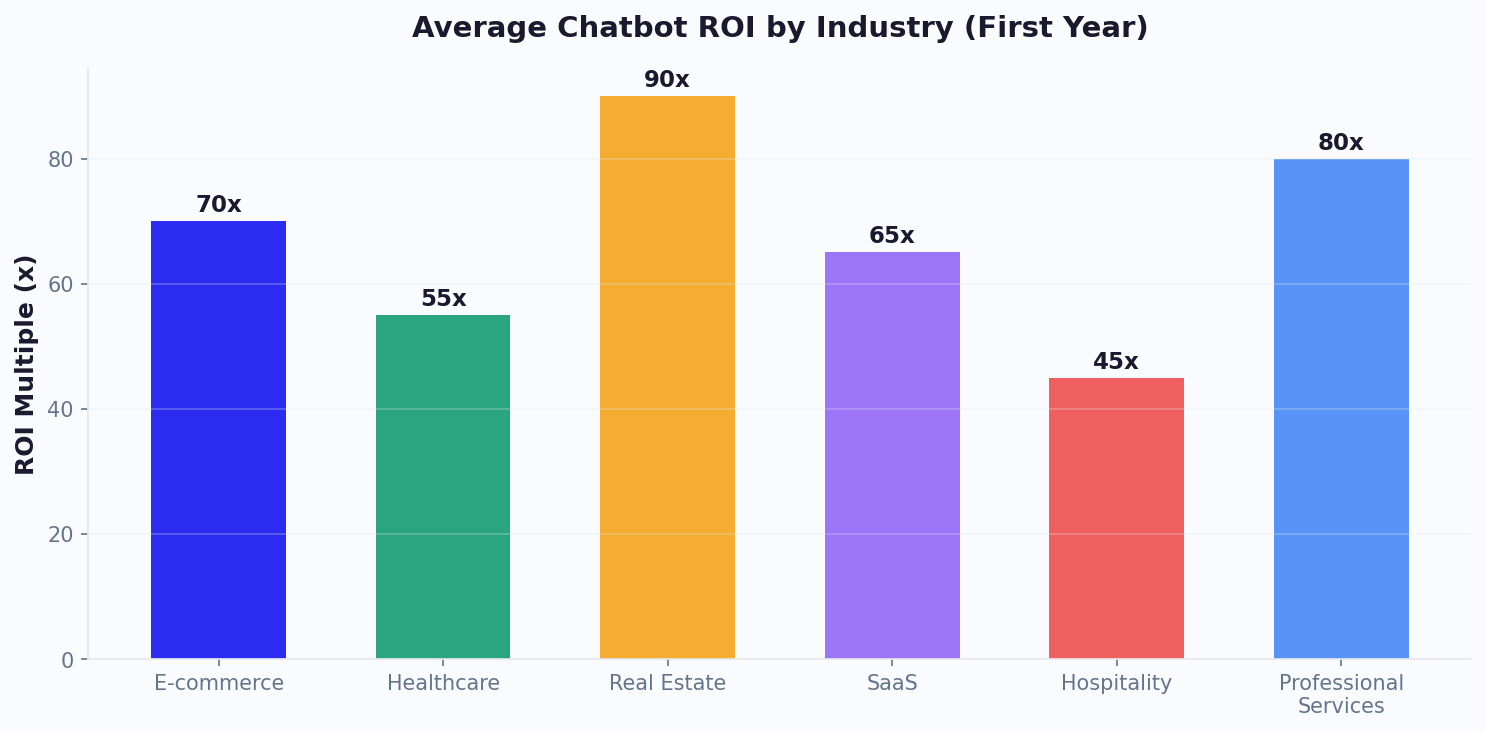
For airlines and OTAs, ancillary revenue from chatbot-driven upselling can represent 15-25% of total booking revenue, making it one of the highest-return features of a travel chatbot assistant.
50,000+ businesses use Conferbot templates to automate conversations
ROI for Travel Agencies
A flight booking chatbot delivers measurable financial impact for travel agencies, airlines, and OTAs across multiple revenue and cost metrics. Here is the data from travel businesses that have deployed conversational booking assistants.
| Metric | Before Chatbot | After Chatbot | Impact |
|---|---|---|---|
| Booking abandonment rate | 87-90% | 70-78% | 12-18% reduction |
| Ancillary revenue per booking | $15-30 | $45-85 | 2-3x increase |
| Support tickets per booking | 1.8-2.5 | 0.6-1.0 | 55-65% reduction |
| Average booking time | 12-18 minutes | 5-8 minutes | 50-60% faster |
| Repeat booking rate | 22-28% | 38-48% | +15-20 percentage points |
| After-hours bookings | 5-10% of total | 20-30% of total | 3-4x increase |
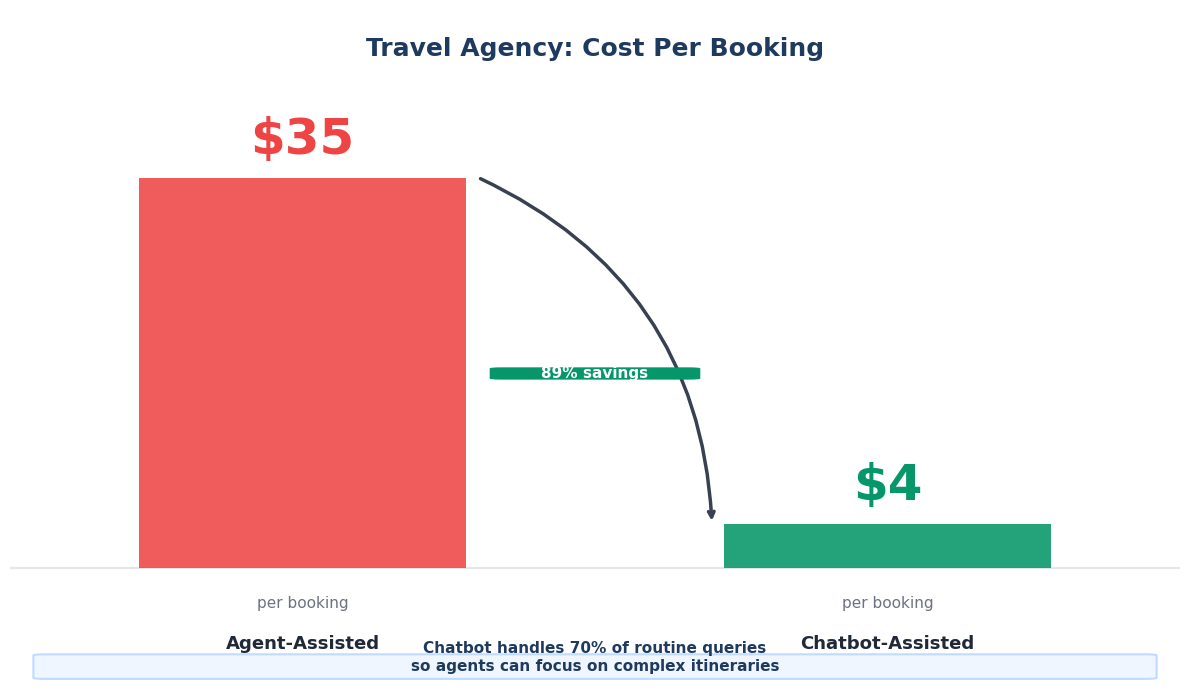
| Cost per booking | $8-15 (agent-assisted) | $1-3 (chatbot) | 75-85% reduction |
Abandonment Rate Reduction
Flight booking has the highest abandonment rate of any online purchase category. The chatbot directly addresses the top abandonment reasons: it simplifies a complex multi-step process into a conversation, answers fare rule and baggage questions that cause hesitation, and provides clear price comparisons that eliminate the urge to search elsewhere. A 12-18% reduction in abandonment translates to a significant increase in completed bookings from the same traffic volume.
Ancillary Revenue Growth
As detailed in the upselling section, the chatbot's ability to offer contextual hotel, car rental, insurance, and activity recommendations during and after the booking conversation drives 2-3x higher ancillary revenue per booking. For travel agencies operating on thin flight margins, this ancillary uplift often represents the majority of their profit per transaction.
Support Cost Savings
Travel support is expensive. Each agent-handled interaction costs $8-15 when factoring in labor, training, and technology. The chatbot handles the majority of routine queries -- flight status, baggage policies, change and cancellation procedures, booking modifications -- at a fraction of the cost. With Conferbot's analytics, you can track the exact number of interactions handled by the bot versus escalated to agents, quantifying the cost savings precisely.
24/7 Revenue Capture
Travel is a global, round-the-clock business. Travelers search for flights at all hours, and a chatbot captures bookings that would otherwise be lost during off-hours. Agencies report that 20-30% of chatbot-assisted bookings occur outside business hours -- revenue that was previously unattainable without expensive 24/7 staffing. These after-hours bookings are pure incremental revenue.
Customer Lifetime Value
The chatbot's disruption management, proactive notifications, and convenient rebooking capabilities build loyalty that drives repeat business. Travelers who have a positive chatbot experience during a disruption are 3x more likely to book with the same agency again. Higher repeat rates mean lower customer acquisition costs and higher lifetime value per traveler, compounding the ROI over time.
The total ROI for a mid-size travel agency deploying a flight booking chatbot typically reaches 8-12x the platform cost within the first six months, driven by the combination of higher conversion rates, ancillary revenue, support savings, and increased customer retention.
Setup Guide
Deploying a flight booking chatbot with Conferbot follows a structured process that gets you live quickly while ensuring the integrations and conversation flows are production-ready. Here is the step-by-step guide.
Step 1: Start with the Travel Template
Select Conferbot's flight booking assistant template, which includes pre-built conversation flows for flight search, comparison, booking, post-booking management, and disruption handling. The template is designed for travel industry requirements and includes fare display formatting, passenger data collection, and payment processing workflows. Customize the branding, tone, and specific messaging to match your agency or airline's identity using the no-code editor.
Step 2: Connect Flight Inventory
Integrate your flight data source through Conferbot's API framework. This could be a GDS connection (Amadeus, Sabre, Travelport), direct airline APIs, or a flight aggregator API. Configure the search parameters: supported routes, cabin classes, fare types, and airlines. Test the integration to ensure search results are accurate, prices are current, and availability reflects real-time inventory.
Step 3: Configure Ancillary Products
Set up the upselling flows for hotels, car rentals, travel insurance, and airport transfers. Connect your ancillary product APIs or affiliate feeds and configure the recommendation logic -- when each product is offered in the conversation, how options are displayed, and how bookings are processed. This is where a significant portion of the revenue impact comes from, so spend time refining the presentation and timing of each offer.
Step 4: Set Up Payment Processing
Integrate your payment gateway to handle flight and ancillary bookings securely. Conferbot supports major payment processors and generates secure payment links that can be shared within the chat conversation. Configure multi-currency support if you serve international travelers, and set up the refund workflow for cancellations.
Step 5: Deploy Across Channels
Embed the chatbot on your website -- on the homepage, flight search pages, and deal pages. Connect your WhatsApp Business number for messaging-based booking and post-booking support. Enable Messenger and Instagram for social media booking from your travel content and ads. Test the booking flow on each channel to verify the experience is smooth and all features work correctly.
Step 6: Configure Notifications and Disruption Alerts
Set up the proactive notification system: check-in reminders, flight status alerts, gate change notifications, and disruption rebooking flows. Connect to a flight status data feed for real-time monitoring. Define the rebooking rules -- which alternative flights to offer, how to handle fare differences, and when to escalate to a human agent. Test disruption scenarios thoroughly, as this is when your chatbot will deliver the most value to travelers.
Step 7: Launch and Optimize
Go live with the chatbot and monitor performance through Conferbot's analytics dashboard. Track booking completion rates, abandonment points, most searched routes, ancillary attachment rates, and support escalation frequency. Use this data to refine conversation flows, adjust upselling timing, and expand to new routes or products. Most travel businesses see significant booking volume through the chatbot within the first two weeks of launch.
Flight Booking Assistant Chatbot FAQ
Everything you need to know about chatbots for flight booking assistant chatbot.
Why Use a Template vs Building from Scratch?
Templates encode years of optimization data into the conversation flow before you start.
| Factor | Conferbot Template | Build from Scratch | Hire a Developer |
|---|---|---|---|
| Time to deploy | 10 minutes | 2-8 hours | 2-6 weeks |
| Cost | Free | Your time | $5,000-$25,000 |
| Day-1 conversion | 15-22% | 5-8% | 10-15% |
| Proven flows | Yes, data-tested | No | Depends |
| Updates included | Automatic | Manual | Paid |
| Multi-channel | 8+ channels | 1 channel | Extra cost |
| Analytics | Built-in | Must build | Extra cost |
Ready to Deploy Flight Booking Assistant Chatbot?
Join 50,000+ businesses. Free forever plan available. No credit card required.