Cross-selling has always been central to banking profitability -- the more products a customer holds, the higher their lifetime value and the lower their probability of switching institutions. Yet traditional cross-selling methods -- branch-based pitches, direct mail campaigns, and cold calls -- are increasingly ineffective. Customers ignore generic offers, and aggressive sales tactics erode trust. A cross-sell chatbot takes a fundamentally different approach: it identifies opportunities through conversational context and makes relevant suggestions at precisely the right moment.
💡 Key Insight
Customers who hold 4+ products with a financial institution have a 90%+ retention rate, compared to just 50% for single-product customers. Conversational cross-selling is the most effective way to deepen these relationships without aggressive sales tactics.
Contextual Cross-Sell Opportunities
The chatbot monitors conversational signals and account data to identify natural cross-sell moments. When a customer asks about saving for a home, the bot introduces mortgage pre-qualification. When a customer's checking account balance consistently exceeds a threshold, the bot suggests a high-yield savings account. When a customer inquires about travel, the bot recommends a travel rewards credit card. These suggestions feel helpful rather than salesy because they are directly relevant to what the customer is already thinking about.
Cross-Sell Conversion by Trigger Type
| Cross-Sell Trigger | Product Suggested | Conversion Rate (Traditional) | Conversion Rate (Chatbot) | Revenue per Conversion |
|---|
| High checking balance | High-yield savings | 3-5% | 12-18% | $150-$300/year |
| Home purchase inquiry | Mortgage pre-qualification | 5-8% | 15-25% | $3,000-$8,000 |
| Travel-related transactions | Travel rewards card | 2-4% | 10-15% | $200-$500/year |
| Life event (new baby, marriage) | Life insurance, college savings | 4-6% | 12-20% | $500-$2,000/year |
| Business expenses on personal card | Business checking + card | 3-5% | 14-22% | $400-$1,200/year |
Investment Advisory Chatbots
Investment advisory represents a significant growth opportunity for financial institutions, but the traditional model -- requiring an appointment with a licensed advisor for even basic portfolio questions -- creates a barrier that excludes many customers. A financial advisory chatbot provides the first layer of investment guidance conversationally: explaining the difference between stocks and bonds, assessing risk tolerance through a brief quiz, presenting portfolio allocation options, and connecting interested customers with a human advisor for personalized recommendations.
The chatbot does not replace licensed financial advisors -- it extends their reach. By handling the educational and qualification stages of the advisory relationship, the bot ensures that when a customer does meet with an advisor, both parties arrive prepared. The advisor has the customer's risk profile, investment timeline, and stated goals. The customer has a baseline understanding of their options. This efficiency allows each advisor to serve more clients while providing a better experience to each one.
⚡ Efficiency Insight
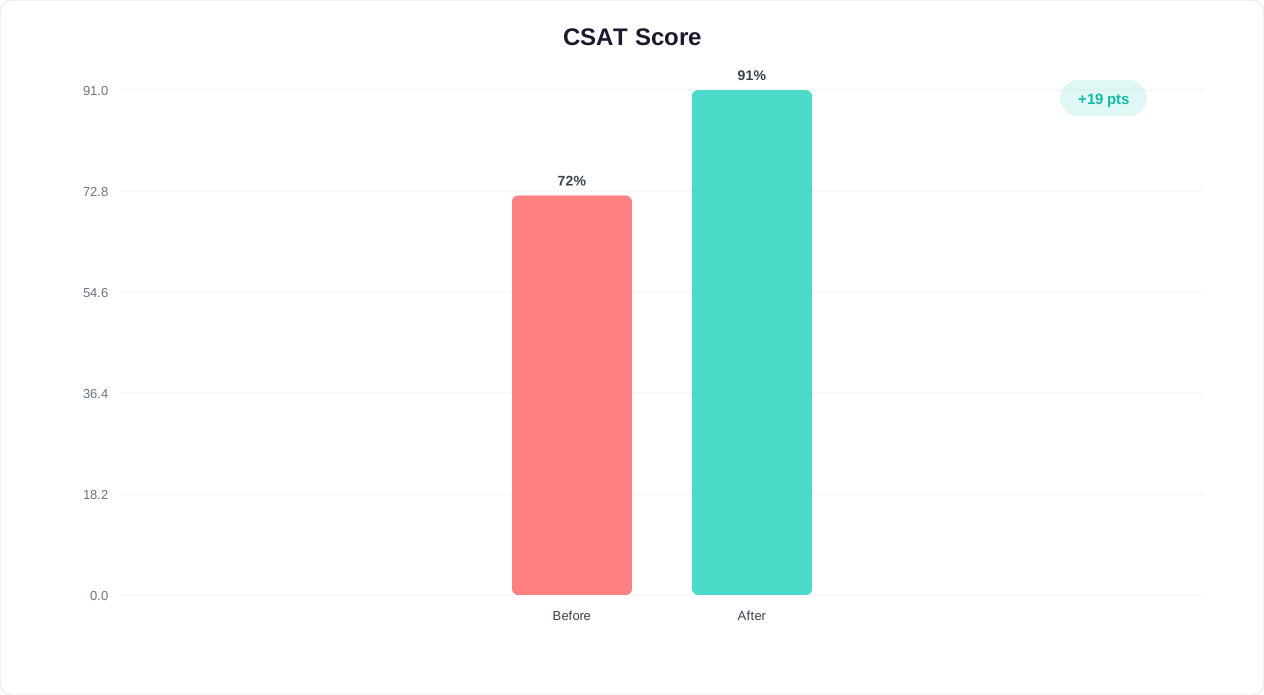
Financial institutions using chatbot-driven cross-selling report 3-4x higher conversion rates than direct mail or branch-based campaigns, with customer satisfaction scores 15% higher because the suggestions feel relevant rather than intrusive.
The branch-versus-digital divide is narrowing as chatbots bring the personalized service of a branch interaction into digital channels. Customers in rural areas without nearby branches get the same quality of financial guidance as urban customers. Night-shift workers who cannot visit during banking hours get the same access to product information. The chatbot democratizes financial services while generating measurable revenue for the institution.
Proactive Financial Wellness
The most sophisticated banking chatbots go beyond reactive service and cross-selling to provide proactive financial wellness guidance. By analyzing spending patterns, savings trajectories, and account behavior, the bot identifies opportunities to help customers improve their financial health. A customer whose checking account regularly dips below $100 before payday receives a budgeting tip and an offer to set up automatic savings transfers. A customer with significant credit card debt receives information about balance transfer options or debt consolidation loans. A customer approaching retirement age receives guidance about required minimum distributions and Social Security optimization.
This proactive approach serves both the customer and the institution. Customers who feel their bank genuinely cares about their financial well-being are 3x more likely to recommend the institution and significantly less likely to switch to a competitor. For the institution, proactive financial wellness engagement reduces delinquency rates, identifies new product opportunities, and builds the kind of trust-based relationship that transcends transactional banking.
The chatbot can also serve as a financial literacy education tool, delivering bite-sized lessons about budgeting, investing, credit building, and retirement planning through conversational microlearning. A first-time homebuyer receives a series of chatbot lessons about down payments, mortgage types, and closing costs -- positioning the institution as a trusted advisor long before the actual loan application begins. Community banks and credit unions that emphasize financial education as part of their chatbot strategy report 30-40% higher customer acquisition from educational content compared to traditional advertising.
New Customer Acquisition and Onboarding
The chatbot's role in banking extends beyond servicing existing customers to acquiring new ones. When a prospect visits the bank's website to compare checking account options, the chatbot engages them conversationally: "I can help you find the right account. What's most important to you -- low fees, high interest, or premium rewards?" Based on the prospect's answers, the bot recommends a specific account, compares it to alternatives, and offers to begin the account opening process immediately. This guided approach converts website visitors into account applicants at 2-3x the rate of static web pages because the conversation addresses individual concerns and overcomes objections in real time.
Once a new customer opens an account, the chatbot guides them through onboarding: setting up direct deposit, linking external accounts, enrolling in mobile banking, activating their debit card, and choosing notification preferences. Each step is delivered as a conversational prompt at the appropriate time -- not a 15-item checklist dumped on the customer on day one. New customers who complete chatbot-guided onboarding activate their accounts 40% faster and are 25% more likely to add a second product within the first 90 days, because they understand and are comfortable with the bank's full range of services.
For customers switching from a competitor, the bot can assist with the often-tedious process of moving direct deposits, automatic payments, and linked accounts. By providing step-by-step guidance for each recurring payment that needs to be updated, the chatbot removes the biggest barrier to switching banks -- the perceived hassle -- and ensures the customer completes the transition rather than maintaining accounts at both institutions indefinitely.
Digital-First Account Opening
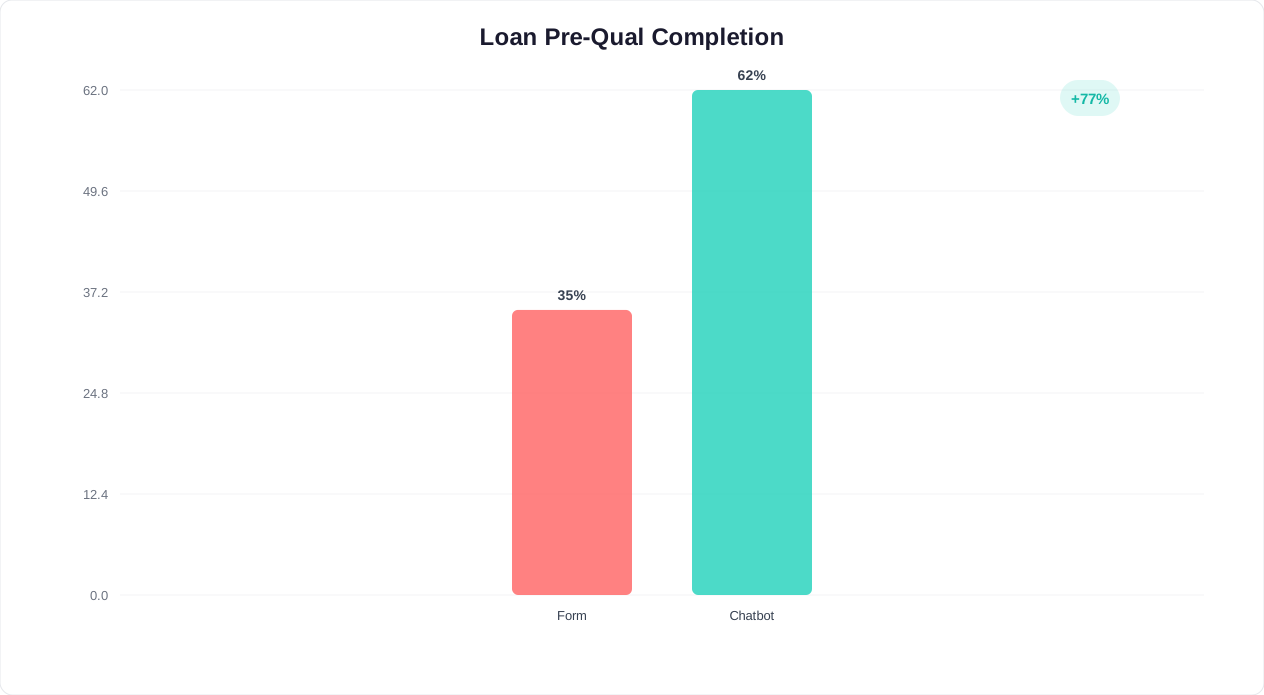
The account opening process itself has historically been one of the biggest sources of friction in banking customer acquisition. Traditional online account opening forms have abandonment rates of 60-70% because they require too many fields, too many documents, and too many steps in a single sitting. A conversational account opening chatbot breaks this process into manageable segments delivered over a natural conversation. The bot collects personal information, verifies identity, checks for existing accounts, presents product options, and processes the application -- all through a guided dialogue that feels like a helpful conversation rather than a bureaucratic form.
The chatbot can also handle the joint account and beneficiary setup that many banks still require customers to complete in-branch. The bot guides customers through adding authorized signers, designating beneficiaries, setting up power of attorney documentation, and configuring account access levels for business accounts with multiple users. Each step is explained in plain language, with the bot answering questions along the way. This digital-first approach to account setup reduces branch visits by 40-50% while ensuring all documentation is complete and compliant before the account is activated.
For customers who prefer a hybrid approach -- starting online and completing in-branch -- the chatbot prepares the branch visit by pre-populating forms, scheduling an appointment through calendar booking, and sending the branch staff a summary of what the customer has already completed. The customer arrives at the branch with their application 80% done, turning what would have been a 45-minute visit into a 10-minute signature session. This "digital prep, branch finish" model satisfies customers who want human interaction for important financial decisions while dramatically reducing the branch staff time required per account opening.
The account opening chatbot also handles product bundling during the onboarding process. When a customer opens a checking account, the bot naturally introduces complementary products: a savings account for building an emergency fund, a credit card for everyday purchases, and online bill pay for convenient payment management. Each suggestion is contextual and relevant, not a generic product pitch. Customers who receive these personalized bundle recommendations during onboarding adopt 1.8 additional products on average compared to 0.4 products for customers who open accounts without chatbot guidance. This higher product adoption directly translates to increased customer lifetime value and reduced attrition risk.
Explore how Conferbot's analytics dashboard tracks cross-sell conversion rates, product adoption metrics, and revenue attribution by conversation source.