What Is Conversational Commerce (And How It Differs From Conversational Marketing)
Conversational commerce is the practice of selling products and services directly within messaging conversations — where discovery, recommendation, selection, and payment all happen inside the chat interface without redirecting customers to separate product pages, shopping carts, or checkout flows.
The term was coined by Chris Messina in 2015, but it has only become technically viable at scale since 2024, when AI language models became sophisticated enough to understand nuanced shopping intent, payment APIs became embeddable in chat interfaces, and messaging platforms opened commerce capabilities to businesses.
In 2026, conversational commerce represents a $290 billion market, growing at 24% annually according to Grand View Research. By 2028, analysts project it will account for 15-20% of all e-commerce transactions globally — up from approximately 6% today. Statista's global e-commerce outlook confirms that messaging-based transactions are the fastest-growing commerce segment across all regions.
Conversational Commerce vs. Conversational Marketing
These terms are often confused, but they serve fundamentally different purposes:
| Dimension | Conversational Marketing | Conversational Commerce |
|---|---|---|
| Primary goal | Generate leads, qualify prospects | Sell products, complete transactions |
| Where in funnel | Top and middle (awareness, consideration) | Middle and bottom (consideration, purchase) |
| Transaction happens | No — hands off to sales team or checkout page | Yes — full transaction completes in chat |
| Key metric | Leads generated, meetings booked | Revenue, AOV, conversion rate |
| Typical use case | "Book a demo," "Get a quote," "Download whitepaper" | "Buy this product," "Add to cart," "Complete payment" |
| Product complexity | High-consideration B2B products | Consumer goods, subscriptions, services |
| Chatbot role | Qualifier and router | Sales associate and cashier |
Think of conversational marketing as the digital equivalent of a store greeter who qualifies visitors and points them to the right department. Conversational commerce is the sales associate who helps you find the right product, answers your questions, suggests complementary items, and rings you up — all without you ever leaving the conversation. For a deep dive on the marketing side, see our conversational marketing chatbot guide.
Why Conversational Commerce Is Growing Exponentially
Three structural shifts are driving adoption:
1. Messaging is where customers already are. The average person spends 28 minutes per day in messaging apps (WhatsApp, iMessage, Instagram DMs, Messenger) versus 12 minutes browsing e-commerce sites. Conversational commerce meets customers in their existing behavior rather than demanding they change it.
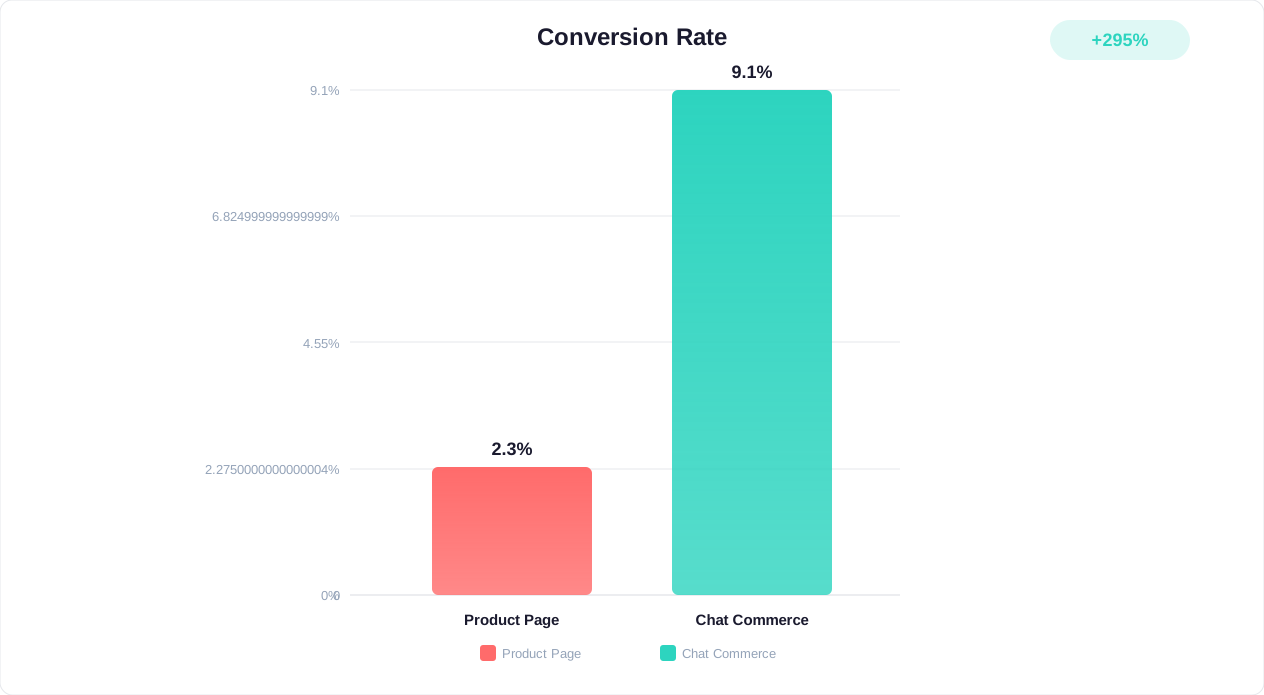
2. Traditional e-commerce has a conversion crisis. The average e-commerce conversion rate is 2.5-3.5%. That means 96-97% of visitors leave without buying. Conversational commerce achieves 8-15% conversion rates because the chat format eliminates friction, provides instant personalization, and answers objections in real-time.
3. AI has made it scalable. Before 2024, conversational commerce required human sales associates in every chat — expensive and unscalable. Modern AI chatbots can handle 90%+ of product conversations autonomously, making conversational commerce viable for businesses of any size.
In-Chat Product Discovery: Replacing the Browse-and-Filter Experience
Traditional product discovery relies on customers navigating category pages, a friction-heavy pattern that Baymard Institute's e-commerce research shows causes 68% of shopping carts to be abandoned, applying filters, scrolling through grids, and clicking into individual product pages. This works — but it assumes customers know what they want and can articulate it in filter terms (size, color, price range, brand). In reality, most shoppers have vague intent: "something for a summer wedding," "a laptop that can handle video editing," or "a gift for my dad who likes cooking."
Conversational product discovery flips this model. Instead of forcing customers to translate their needs into filter criteria, it lets them describe what they want in natural language — and the AI chatbot translates that intent into product recommendations.
How In-Chat Discovery Works
The conversation follows a natural sales associate pattern:
- Intent capture: "What are you looking for today?" or proactive: "I noticed you're browsing summer dresses — shopping for a specific occasion?"
- Need refinement: "What's the occasion? Any color preferences? What's your budget range?"
- Recommendation: Display 3-5 curated products with images, prices, and one-line descriptions
- Objection handling: Answer questions about fit, material, shipping, returns
- Selection and purchase: Add to cart or complete payment within the conversation
Discovery Performance: Conversational vs. Traditional
| Metric | Traditional Browse | Conversational Discovery | Improvement |
|---|---|---|---|
| Products viewed before purchase | 8-15 products | 3-5 products | -60% (less friction) |
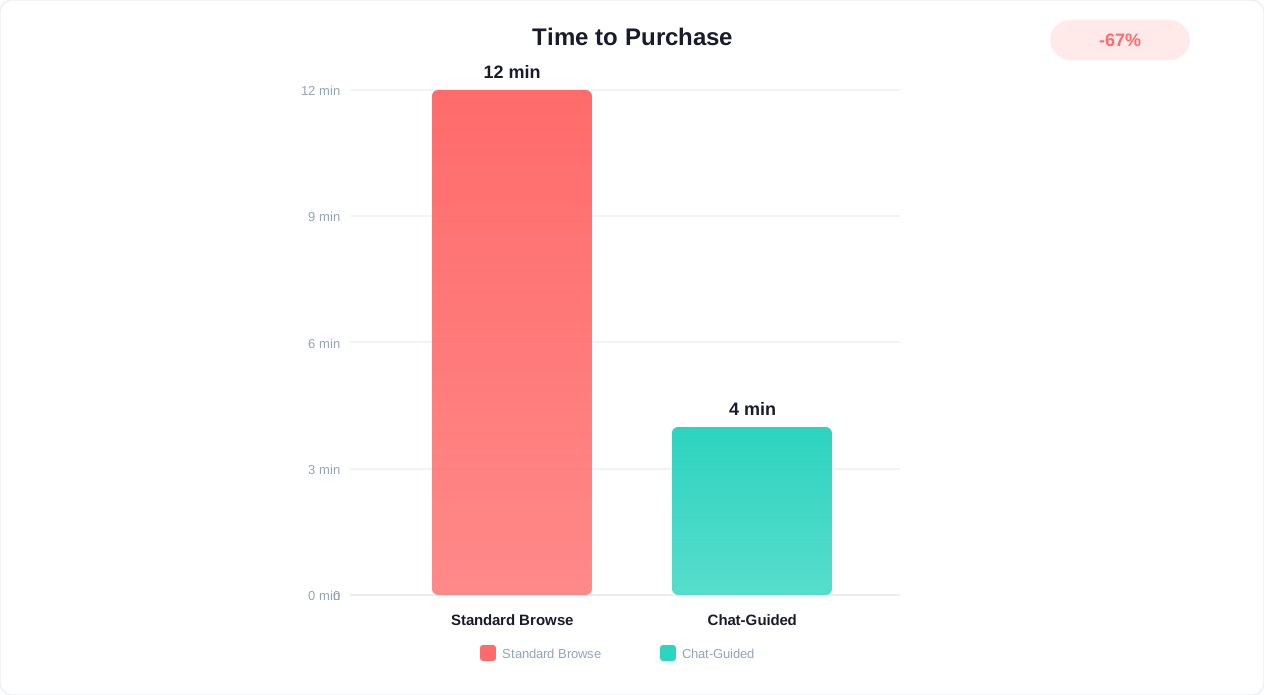
| Time to first purchase decision | 12-25 minutes | 4-8 minutes | -65% |
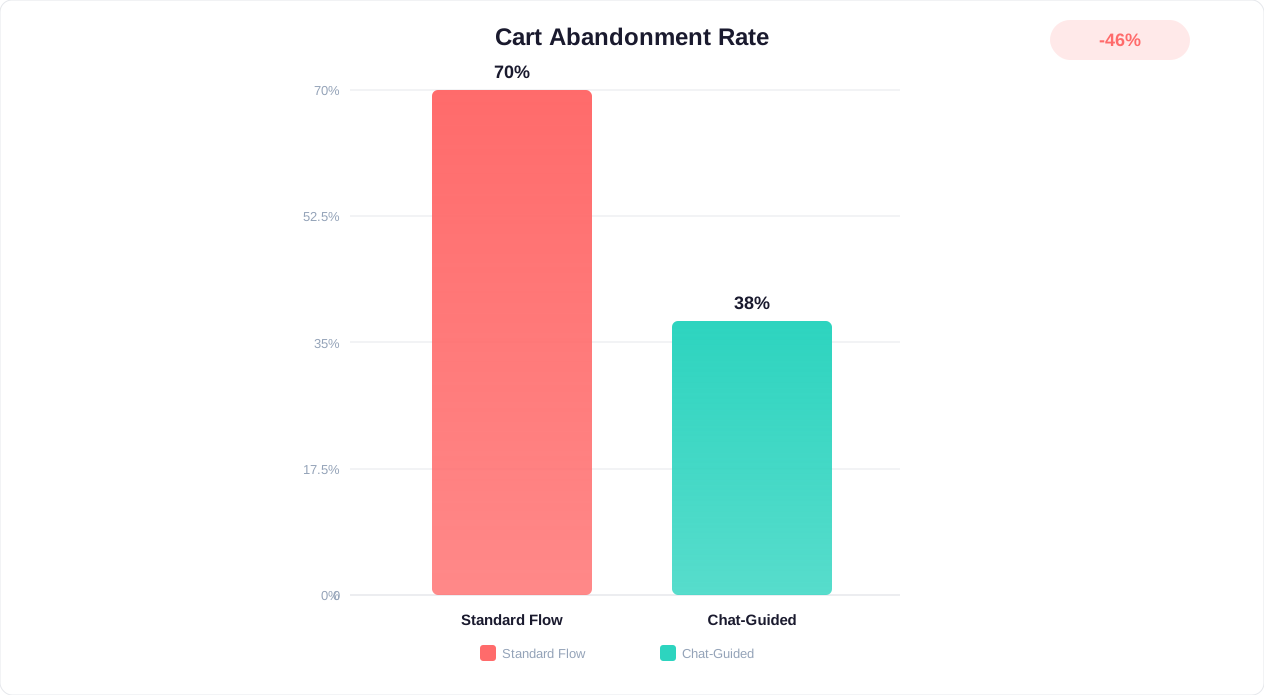
| Cart abandonment rate | 70-75% | 35-45% | -45% |
| Conversion rate (session to purchase) | 2.5-3.5% | 8-15% | +250-400% |
| Product return rate | 20-30% | 12-18% | -35% |
| Customer satisfaction with experience | 72% | 88% | +22% |
The return rate reduction is particularly significant — it means the conversational approach actually helps customers find the right product, not just any product. When an AI chatbot asks "What's the occasion?" and recommends a dress specifically suited for a summer wedding, the customer is far more likely to be satisfied than one who guesses from a filtered grid of 200 options.
Natural Language Intent Examples
Here are real-world examples of how conversational discovery handles vague intent that traditional filters cannot:
| Customer Says | Traditional Filter Equivalent | Chatbot Response |
|---|---|---|
| "Something for a job interview at a tech company" | Category: Suits? Business casual? Dresses? | Asks about gender, company culture (startup vs. enterprise), budget → Recommends smart casual blazer + chinos combo |
| "A birthday gift for my 14-year-old niece who's into art" | No filter combination captures this | Recommends: professional sketch pad, Procreate-compatible stylus, watercolor set, art subscription box |
| "Headphones for working from home but I also run" | Category: Over-ear? Wireless? Noise-canceling? Sport? | Understands dual-use need → Recommends hybrid options with ANC for work and secure fit for running |
| "Skincare but I break out easily and hate heavy products" | Skin type: Sensitive? Product type: All of them? | Asks about current routine, specific sensitivities → Recommends lightweight, non-comedogenic routine |
Each of these scenarios would require the customer to browse multiple categories, read dozens of descriptions, and cross-reference reviews on a traditional site. In a conversation, the AI resolves the intent in 2-3 exchanges and presents a curated shortlist. This is why conversational discovery drives 3-5x higher conversion rates — it removes the cognitive load from the customer entirely.
Building effective product discovery requires training your chatbot on your full product catalog. Platforms like Conferbot allow you to upload your entire product database and the AI automatically learns product attributes, compatibility rules, and recommendation patterns.
AI-Powered Recommendations: From "You Might Also Like" to Conversational Upselling
Product recommendations are not new — Amazon's "Customers who bought this also bought" has existed for decades. But conversational recommendations are fundamentally different from traditional widget-based suggestions because they are contextual, interactive, and personalized to the specific conversation. According to McKinsey's personalization research, companies that excel at personalization generate 40% more revenue from those activities than average players — and conversational AI is the most effective personalization delivery mechanism available today.
How Conversational Recommendations Differ
| Dimension | Traditional Recommendations | Conversational Recommendations |
|---|---|---|
| Data source | Purchase history, browsing behavior | Real-time conversation context + history |
| Timing | Static (always shown on page) | Dynamic (triggered by specific conversation moments) |
| Personalization depth | Collaborative filtering ("similar buyers") | Individual conversation context (stated needs, budget, constraints) |
| Explanation | None ("Recommended for you") | Full reasoning ("This pairs well because...") |
| Objection handling | None | Immediate ("It's pricey but here's why it's worth it...") |
| Cross-sell acceptance rate | 3-8% | 18-28% |
Conversational Upselling Strategies
1. The Complementary Suggestion
After a customer selects a product, the chatbot suggests items that genuinely enhance the purchase:
- Customer buys a camera → "This camera performs best with a fast SD card. The SanDisk Extreme Pro loads 3x faster for burst photography. Want me to add one for $45?"
- Customer buys a dress → "Great choice! Would you like to see shoes that match? I have 3 options in your size that pair perfectly with that style."
2. The Upgrade Path
When the conversation reveals needs that the selected product does not fully meet:
- Customer discussing a basic laptop → "Based on your video editing needs, the base model might struggle with 4K footage. The Pro version has double the RAM for $200 more — it'll save you hours in render times. Worth considering?"
3. The Bundle Offer
Combining related items at a slight discount:
- "Most customers who buy this skincare set add the SPF moisturizer. I can bundle all three for 15% off — that saves you $12. Want me to put the bundle together?"
AOV Impact Data
Conversational recommendations consistently increase Average Order Value (AOV) because they are contextual, explained, and timed to the moment of highest purchase intent:
| Industry | Average AOV Without Chat Recommendations | Average AOV With Conversational Recs | AOV Increase | Cross-Sell Acceptance Rate |
|---|---|---|---|---|
| Fashion / Apparel | $68 | $94 | +38% | 24% |
| Electronics | $245 | $312 | +27% | 19% |
| Beauty / Skincare | $52 | $78 | +50% | 32% |
| Home / Furniture | $180 | $248 | +38% | 22% |
| Food / Grocery | $42 | $58 | +38% | 28% |
| Sports / Fitness | $85 | $118 | +39% | 26% |
Source: Aggregated data from conversational commerce platforms, 2025-2026.
The 30-50% AOV increase is remarkable because it does not come from pushy sales tactics — it comes from genuinely helpful recommendations that match the customer's stated needs. When a chatbot explains why a complementary product enhances the primary purchase, customers perceive it as helpful advice rather than a sales pitch.
This is the same principle that drives high-performing e-commerce chatbot strategies: the chatbot acts as a knowledgeable sales associate who understands the customer's context, not a generic recommendation engine firing suggestions at everyone.
Implementation: Training Your Recommendation Engine
To enable conversational recommendations, your chatbot needs:
- Product catalog knowledge: Full product attributes, compatibility rules, and common pairings
- Conversation context: What the customer has said about their needs, budget, preferences
- Purchase patterns: What other customers typically buy together (collaborative filtering)
- Margin awareness: Prioritize recommendations that benefit both the customer and the business
- Timing rules: When to suggest (after selection, before checkout) and when not to (during complaint resolution)
In-Chat Checkout and Payment Processing: Completing the Loop
The critical differentiator of conversational commerce over conversational marketing is transaction completion. The entire value proposition collapses if, after a personalized conversation, the customer is redirected to a traditional checkout page — that is just a chatbot-shaped funnel, not conversational commerce.
True in-chat checkout means the customer selects products, confirms details, enters payment information (or uses saved payment methods), and receives order confirmation — all within the same conversation interface. Research from Shopify's Future of Commerce report shows that businesses offering in-conversation checkout see 2.4x higher completion rates than those redirecting to traditional pages.
Why In-Chat Checkout Converts Higher
Traditional checkout flows have a 70-75% abandonment rate according to Baymard Institute's research on 49 different studies. The primary reasons for abandonment map directly to problems that conversational checkout eliminates:
| Abandonment Reason | % of Shoppers | How Conversational Checkout Solves It |
|---|---|---|
| Extra costs too high (shipping, tax) | 48% | Total cost shown upfront in conversation before checkout |
| Site wanted me to create an account | 26% | No account needed — chatbot collects only essential info |
| Too long/complicated checkout | 22% | 3-4 conversational exchanges vs. multi-page forms |
| Could not calculate total cost upfront | 21% | Real-time pricing with tax and shipping calculated instantly |
| Did not trust site with card info | 18% | Payment via trusted platform (Apple Pay, Google Pay, PayPal) |
| Website errors/crashes | 17% | Conversational interface has no page loads to crash |
| Delivery was too slow | 16% | Delivery options presented and confirmed within conversation |
Conversational checkout achieves 35-45% abandonment rates — cutting traditional abandonment nearly in half — because it addresses the top 6 abandonment reasons structurally.
Payment Processing Options in Conversations
Several payment methods can be embedded within chat interfaces:
- Payment links: Chatbot generates a secure, one-click payment link within the conversation (Stripe, Square, Razorpay)
- Native platform payments: WhatsApp Pay, Instagram Checkout, Facebook Pay — built into the messaging platform
- Digital wallets: Apple Pay, Google Pay, Samsung Pay — triggered from within the chat via web views
- Saved payment methods: For returning customers, charge on file with confirmation
- Buy Now Pay Later: Klarna, Afterpay, Affirm integrations within the chat flow
- Crypto payments: For supported merchants, direct wallet-to-wallet within conversation
The Conversational Checkout Flow
Here is what a complete in-chat checkout looks like:
- Cart summary: "Here's what you're getting: [Product 1] $49, [Product 2] $29. Subtotal: $78"
- Shipping: "Where should I send this? [Address input or saved address selection]"
- Delivery options: "Standard (3-5 days, free) or Express (next day, $9.99)?"
- Order total: "Your total is $87.99 including shipping and tax. Ready to pay?"
- Payment: "Tap below to pay securely with Apple Pay, or enter a card." [Payment button]
- Confirmation: "Done! Order #12847 confirmed. You'll get tracking info within 2 hours. Anything else I can help with?"
Six exchanges. Under 60 seconds. No page redirects, no account creation, no multi-step forms. This is why in-chat checkout converts at 2-3x the rate of traditional checkout flows.
For businesses already using chatbots for support or marketing, adding commerce capabilities transforms the chatbot from a cost center into a revenue generator. The same e-commerce chatbot that answers product questions can now close the sale in the same conversation.
WhatsApp and Instagram Commerce: The Largest Conversational Commerce Channels
While website chatbots are the most common implementation, the highest-volume conversational commerce channels in 2026 are WhatsApp and Instagram. Together, they account for over 60% of all conversational commerce transactions globally, driven by massive user bases and native commerce features.
WhatsApp Commerce
WhatsApp has 2.7 billion monthly active users, and WhatsApp Business is used by 200 million businesses worldwide. Meta's commerce platform updates have made WhatsApp a full-fledged shopping channel with native catalogs, carts, and payment processing. In markets like India, Brazil, Indonesia, and Southeast Asia, WhatsApp is effectively the e-commerce platform — customers discover, browse, negotiate, and purchase entirely within WhatsApp conversations.
Key WhatsApp commerce capabilities:
- Product catalogs: Display up to 500 products with images, descriptions, and prices directly within WhatsApp
- Shopping carts: Customers add items and view cart without leaving WhatsApp
- WhatsApp Pay: Native payment processing in India, Brazil, and expanding markets
- Order notifications: Shipping updates, delivery confirmation, and post-purchase support in the same thread
- Broadcast lists: Re-engage past buyers with new arrivals, sales, and personalized recommendations
WhatsApp commerce performance data:
| Metric | WhatsApp Commerce | Traditional E-Commerce | Difference |
|---|---|---|---|
| Message open rate | 98% | 20% (email equivalent) | +390% |
| Response rate | 45-60% | 2-5% (email CTR) | +900-1,100% |
| Conversion rate (engaged) | 12-18% | 2.5-3.5% | +340-415% |
| Cart abandonment | 28-35% | 70-75% | -55% |
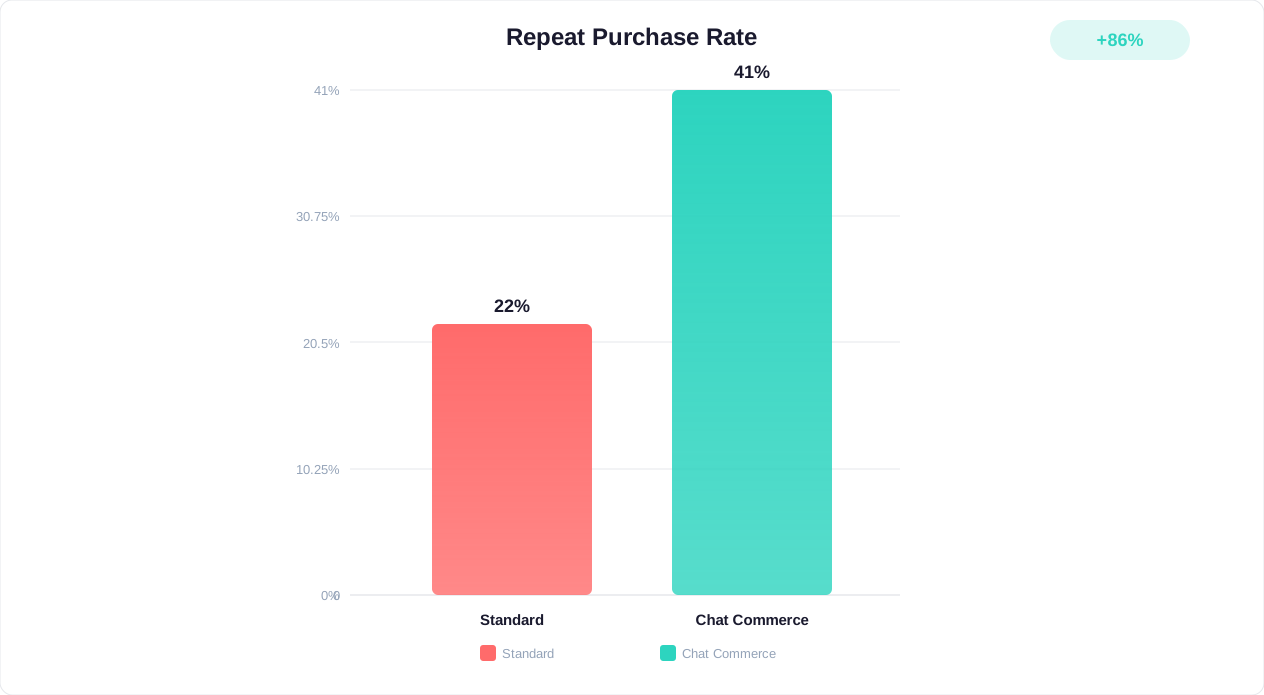
| Repeat purchase rate | 42% | 28% | +50% |
| Customer lifetime value | 2.4x higher | Baseline | +140% |
Instagram Commerce
Instagram's 2.4 billion users and visual-first format make it ideal for product discovery and impulse purchasing. Instagram DM commerce — where customers engage with AI chatbots through direct messages — is growing at 45% year-over-year.
Key Instagram commerce capabilities:
- Story/Reel → DM flows: Customer taps "Shop now" on a Story or Reel and enters a DM conversation with an AI chatbot
- Comment-to-DM automation: Customer comments "interested" on a post and receives a DM with product details and purchase option
- Instagram Checkout: Native in-app purchase without leaving Instagram
- Product tagging: Tagged products in posts/reels link directly to DM shopping conversations
- Live shopping: During Instagram Lives, viewers can tap to start a purchase conversation via DM
Instagram commerce performance (DM-driven):
| Metric | Instagram DM Commerce | Instagram Shop (Browse) | DM Advantage |
|---|---|---|---|
| Conversion from engagement | 15-22% | 3-5% | +340% |
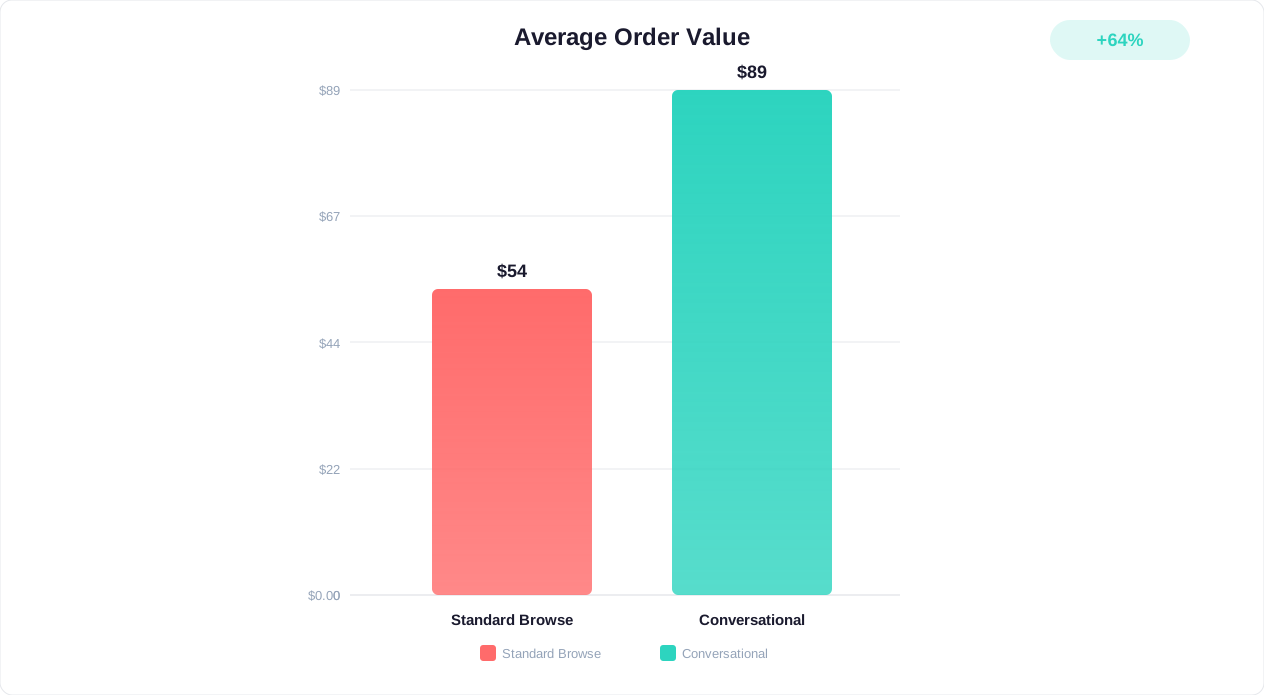
| Average order value | $72 | $54 | +33% |
| Time from discovery to purchase | 4-8 minutes | 15-30 minutes | -70% |
| Return customer rate | 38% | 22% | +73% |
Platform Selection Guide
Choosing between WhatsApp and Instagram (or both) depends on your audience and product type:
| Factor | WhatsApp Commerce | Instagram Commerce |
|---|---|---|
| Best for audience | Existing customers, relationship buyers | New discovery, impulse buyers |
| Best for products | Replenishment, services, high-consideration | Visual products, fashion, beauty, food |
| Geography strength | India, Brazil, SE Asia, Europe | US, UK, Australia, global Gen Z |
| Average transaction size | $50-200 | $30-100 |
| Discovery method | Direct outreach, CTA from website | Content-driven (posts, reels, stories) |
| Relationship building | Strong (ongoing thread) | Moderate (content + DM) |
Most businesses benefit from deploying on both platforms with a unified AI chatbot that maintains consistent product knowledge and commerce capabilities across channels. Conferbot enables deployment across WhatsApp and Instagram from a single configuration, ensuring customers get the same personalized shopping experience regardless of channel.
Case Studies: Conversational Commerce in Fashion, Electronics, and Food
The following case studies demonstrate how different industries implement conversational commerce, reflecting adoption trends documented by Statista's messaging commerce research and the specific revenue impact achieved.
Case Study 1: Fashion Brand — 43% Revenue Increase via WhatsApp Commerce
Company: Mid-size direct-to-consumer fashion brand, $12M annual revenue, 180,000 Instagram followers
Challenge: Website conversion rate stuck at 2.8%. High return rate (28%) due to sizing uncertainty. Customers browsing Instagram content but not converting on website.
Implementation:
- Deployed AI chatbot on WhatsApp and Instagram DMs trained on full product catalog (2,400 SKUs)
- Built conversational sizing advisor (asks about height, weight, preferred fit, past brand experiences)
- Created outfit recommendation engine ("What's the occasion? Style preference? Budget?")
- Enabled in-chat checkout via WhatsApp Pay and Stripe payment links
- Automated post-purchase styling suggestions based on what they bought
Results (6 months):
| Metric | Before | After | Impact |
|---|---|---|---|
| Monthly revenue from conversational channels | $0 | $430,000 | +43% of total revenue |
| Overall conversion rate | 2.8% | 4.2% (blended) / 16% (chat) | +50% blended |
| Average order value | $72 | $108 (chat orders) | +50% |
| Product return rate | 28% | 14% (chat orders) | -50% |
| Customer lifetime value (12-month) | $185 | $340 (chat customers) | +84% |
| Repeat purchase rate | 24% | 52% (chat customers) | +117% |
Key insight: The sizing advisor reduced returns by 50% — customers who received personalized size recommendations were dramatically more satisfied with fit. Each 1% reduction in returns saved $35,000 annually in reverse logistics costs alone.
Case Study 2: Electronics Retailer — 34% AOV Increase With Conversational Recommendations
Company: Consumer electronics e-commerce store, 50,000 monthly visitors, average ticket $220
Challenge: Customers overwhelmed by product specifications and comparison paralysis. High research time (average 45 minutes per session) but low conversion (1.8%). Accessory attach rate below 10%.
Implementation:
- Deployed AI chatbot that asks about use case (gaming, work, content creation, general) rather than specifications
- Built comparison engine that explains differences in plain language ("This one renders video 40% faster" vs. listing GHz and cores)
- Created accessory recommendation flow triggered after primary product selection
- Enabled bundle pricing within conversations ("Add the case, charger, and screen protector for 20% off all three")
Results (4 months):
| Metric | Before | After (Chat Channel) | Impact |
|---|---|---|---|
| Average order value | $220 | $295 | +34% |
| Accessory attach rate | 9% | 38% | +322% |
| Conversion rate (engaged users) | 1.8% | 11.2% | +522% |
| Time to purchase decision | 45 minutes | 12 minutes | -73% |
| Monthly revenue from chat | $0 | $180,000 | New revenue stream |
Key insight: Translating technical specifications into use-case language was the single biggest conversion driver. Customers do not care that a laptop has "16GB DDR5 RAM" — they care that it "handles 4K video editing without lag." The chatbot made this translation instantly for every product.
Case Study 3: Food Delivery / Meal Kit — 67% Reorder Rate via Conversational Commerce
Company: Meal kit subscription service, 35,000 active subscribers, $85 average weekly order
Challenge: Weekly menu selection via website was cumbersome (45 options, dietary filters, customization). Subscribers were churning at 8% monthly because the selection process felt like work.
Implementation:
- WhatsApp chatbot sends weekly menu message: "This week's picks based on your preferences: [3 personalized meal options]. Want these, or shall I suggest alternatives?"
- Customers respond with "yes," "swap the salmon for chicken," or "show me vegetarian options"
- In-chat modification: add extra portions, swap sides, add add-ons (wine pairing, dessert)
- One-tap reorder of previous favorites: "Want last week's Thai curry and pasta again?"
- Dietary preference learning: chatbot remembers likes/dislikes and adjusts future suggestions
Results (5 months):
| Metric | Before (Website) | After (WhatsApp Chat) | Impact |
|---|---|---|---|
| Weekly reorder rate | 52% | 67% | +29% |
| Monthly churn rate | 8% | 4.2% | -48% |
| Average order value | $85 | $102 | +20% |
| Time to complete weekly order | 8 minutes (website) | 45 seconds (chat) | -91% |
| Add-on purchase rate | 12% | 34% | +183% |
| 12-month customer lifetime value | $2,200 | $3,680 | +67% |
Key insight: Reducing the weekly ordering process from 8 minutes of browsing to 45 seconds of conversation nearly halved churn. The friction of selection — not dissatisfaction with the product — was the primary churn driver. Conversational ordering eliminated that friction entirely.
These case studies illustrate a consistent pattern: conversational commerce does not just add a new channel — it fundamentally improves the buying experience in ways that increase AOV, reduce returns, lower churn, and drive repeat purchases. For more ROI data across industries, see our chatbot ROI case studies.
Strategies to Maximize AOV Through Conversational Commerce
Average Order Value is the revenue metric most directly impacted by conversational commerce, a finding consistent with Shopify's conversational commerce research because the chat format creates natural opportunities for upselling, cross-selling, and bundling that feel helpful rather than pushy. Here are seven proven strategies to maximize AOV through conversational selling.
Strategy 1: The Needs-Based Upsell
Rather than recommending the most expensive option, ask questions that reveal whether the customer actually needs more. "How often do you use this?" "Is this for professional or personal use?" When the answers reveal high-frequency or professional use, recommending the premium option feels like genuine advice, not a sales tactic.
Average AOV lift: 18-25%
Strategy 2: The Complementary Bundle
After product selection, suggest 2-3 items that genuinely enhance the primary purchase, bundled at a discount. "Most customers pair this camera with a fast memory card and protective case. I can bundle all three for 15% off — saves you $32. Want me to add them?"
Average AOV lift: 25-40%
Strategy 3: The Threshold Incentive
When the order is close to a free shipping or discount threshold: "You're $12 away from free shipping. Would you like to add [relevant $15-20 item] and save the $7.99 shipping fee?"
Average AOV lift: 8-15%
Strategy 4: The Subscription Suggestion
For consumable products: "This moisturizer usually lasts about 6 weeks. Want to set up auto-delivery every 6 weeks and save 10% each time?" This does not increase immediate AOV but dramatically increases lifetime value.
Average LTV lift: 45-70%
Strategy 5: The Social Proof Nudge
"68% of customers who buy this laptop also add the extended warranty — it covers accidental damage for 2 years. Want me to include it?" Peer behavior data within the conversation creates trust-based purchase motivation.
Average AOV lift: 12-18%
Strategy 6: The Gift Enhancement
When the chatbot detects gift purchases (different shipping address, gift wrap question, "for my sister"): "Want to make it special? I can add gift wrapping ($5) and a personalized card with your message." Gift buyers consistently spend more when offered enhancements.
Average AOV lift: 15-22% (gift orders)
Strategy 7: The Personalized Restock
For returning customers: "Last time you bought the Medium Roast beans 6 weeks ago. Ready for a refill? I can also add the new Limited Edition blend — it pairs beautifully with your usual. Both for 10% off?"
Average AOV lift: 20-30% (returning customers)
AOV Strategy Comparison
| Strategy | AOV Lift | Acceptance Rate | Customer Perception | Best For |
|---|---|---|---|---|
| Needs-based upsell | 18-25% | 22-30% | Helpful advisor | High-consideration products |
| Complementary bundle | 25-40% | 28-35% | Thoughtful suggestion | Products with accessories |
| Threshold incentive | 8-15% | 40-55% | Money-saving tip | Orders near shipping threshold |
| Subscription suggestion | LTV +45-70% | 15-22% | Convenience offer | Consumable products |
| Social proof nudge | 12-18% | 18-25% | Peer recommendation | Warranties, add-ons |
| Gift enhancement | 15-22% | 35-45% | Thoughtful option | Gift purchases |
| Personalized restock | 20-30% | 45-60% | Remembers my preferences | Returning customers |
The key to all seven strategies is timing and context. Conversational commerce enables these because the chatbot knows exactly where the customer is in their journey, what they have discussed, and what their stated needs are. A traditional checkout page can only show generic "You may also like" widgets. A conversational AI applies the right strategy at the right moment based on the specific conversation context.
Combined, implementing 3-4 of these strategies yields a 30-50% AOV increase across your conversational commerce channels. The abandoned cart recovery chatbot can also employ these strategies when re-engaging customers who did not complete their purchase — offering a bundle deal or threshold incentive as a recovery mechanism.
Implementation Guide: Launching Conversational Commerce in 30 Days
Implementing conversational commerce requires connecting product data, conversation design, payment processing, and channel deployment. Here is a 30-day implementation plan that takes you from zero to revenue-generating conversational commerce.
Week 1: Foundation and Product Data
| Day | Task | Deliverable |
|---|---|---|
| 1-2 | Audit product catalog and identify top 50 products for conversational selling | Priority product list with attributes |
| 3-4 | Structure product data: attributes, compatibility rules, common pairings, price points | Product knowledge base ready for AI |
| 5 | Upload product catalog to chatbot platform knowledge base | AI trained on product data |
| 6-7 | Design core conversation flows: discovery, recommendation, sizing/selection | 3-5 conversation templates |
Week 2: Conversation Design and Commerce Flows
| Day | Task | Deliverable |
|---|---|---|
| 8-9 | Build product discovery flow (intent capture → needs refinement → recommendation) | Working discovery chatbot |
| 10-11 | Create upsell/cross-sell rules and bundle configurations | Recommendation engine configured |
| 12 | Design checkout conversation flow (cart → shipping → payment → confirmation) | End-to-end checkout flow |
| 13-14 | Configure payment processing (Stripe, PayPal, platform-native payments) | Payment integration tested |
Week 3: Channel Deployment and Testing
| Day | Task | Deliverable |
|---|---|---|
| 15-16 | Deploy on website with product page triggers and proactive engagement | Website chatbot live |
| 17-18 | Connect WhatsApp Business API and configure product catalog | WhatsApp commerce live |
| 19-20 | Set up Instagram DM automation (comment triggers, story swipe-ups) | Instagram commerce live |
| 21 | End-to-end testing: complete 10 test purchases across all channels | All channels verified working |
Week 4: Launch, Monitor, and Optimize
| Day | Task | Deliverable |
|---|---|---|
| 22-23 | Soft launch: enable for 20% of traffic, monitor performance | Initial data on conversion rates |
| 24-25 | Review first conversations: identify drop-off points and confused responses | Optimization list |
| 26-27 | Fix identified issues, expand to 50% of traffic | Improved flows, wider reach |
| 28-30 | Full launch: 100% of traffic, set up ongoing analytics dashboard | Fully operational conversational commerce |
Platform Requirements Checklist
Not all chatbot platforms support true conversational commerce. Here is what your platform must provide:
| Requirement | Why It Matters | Must Have / Nice to Have |
|---|---|---|
| Product catalog integration | Chatbot needs real-time product data (pricing, availability, attributes) | Must have |
| In-chat media (images, carousels) | Products must be visually browsable within the conversation | Must have |
| Payment processing integration | Transaction must complete within chat (Stripe, PayPal, native) | Must have |
| Multi-channel deployment | Same bot across website, WhatsApp, Instagram, Messenger | Must have |
| AI product recommendations | Intelligent suggestions based on conversation context | Must have |
| Order management integration | Order creation, inventory check, fulfillment trigger | Must have |
| Customer history/CRM | Personalization based on past purchases and preferences | Nice to have |
| A/B testing | Test different recommendation strategies and flows | Nice to have |
| Analytics and attribution | Track revenue, AOV, and conversion by conversation flow | Must have |
Conferbot meets all "must have" requirements out of the box: product catalog upload via the AI knowledge base, rich media in conversations, Stripe and PayPal payment integration, deployment across WhatsApp, Instagram, Messenger, and website, plus comprehensive analytics for revenue attribution. This allows most businesses to launch conversational commerce within 30 days without custom development.
Measuring Conversational Commerce: Revenue Metrics and KPIs
Conversational commerce requires a different measurement framework than traditional e-commerce because the funnel is fundamentally different. Here are the KPIs that matter, how to calculate them, and what benchmarks to target.
Primary Revenue Metrics
| Metric | Formula | Good | Great | World-Class |
|---|---|---|---|---|
| Conversational conversion rate | Purchases / Conversations started | 8-12% | 12-18% | 18%+ |
| Revenue per conversation | Total chat revenue / Total conversations | $8-15 | $15-30 | $30+ |
| Average order value (chat) | Total chat revenue / Chat orders | Industry avg +20% | +30-40% | +40%+ |
| Chat-attributed revenue % | Chat revenue / Total revenue x 100 | 5-10% | 10-20% | 20%+ |
| Cross-sell acceptance rate | Cross-sell items added / Cross-sell offers shown | 15-20% | 20-30% | 30%+ |
| Cart abandonment (chat) | Carts created - Carts purchased / Carts created | 40-50% | 30-40% | Under 30% |
Engagement and Quality Metrics
| Metric | Formula | Good | Great | World-Class |
|---|---|---|---|---|
| Engagement rate | Conversations started / Visitors exposed to chatbot | 10-15% | 15-25% | 25%+ |
| Discovery-to-cart rate | Products added to cart / Discovery conversations | 25-35% | 35-50% | 50%+ |
| Messages per purchase | Total messages in purchase conversations / Purchases | 8-15 messages | 5-8 messages | Under 5 |
| Time to purchase | Time from first message to payment | 8-15 min | 4-8 min | Under 4 min |
| Return rate (chat orders) | Chat order returns / Chat orders x 100 | 15-20% | 10-15% | Under 10% |
ROI Calculation for Conversational Commerce
The ROI formula for conversational commerce is straightforward but often calculated incorrectly. Here is the right way:
Monthly ROI = [(Chat-attributed revenue x Margin%) - (Platform cost + Content creation + Management time)] / Total investment x 100
Example calculation:
| Variable | Month 1 | Month 3 | Month 6 |
|---|---|---|---|
| Conversations/month | 2,000 | 5,000 | 10,000 |
| Conversion rate | 8% | 12% | 15% |
| Orders from chat | 160 | 600 | 1,500 |
| AOV (chat) | $85 | $95 | $105 |
| Chat revenue | $13,600 | $57,000 | $157,500 |
| Gross margin (40%) | $5,440 | $22,800 | $63,000 |
| Platform + labor cost | $2,000 | $2,500 | $3,000 |
| Net profit from chat | $3,440 | $20,300 | $60,000 |
| ROI | 172% | 712% | 1,900% |
The ROI compounds because conversion rate improves with AI learning, AOV increases as recommendation engine improves, and conversation volume grows as more channels and triggers are added — all while costs remain relatively fixed.
Track these metrics using your chatbot platform's analytics capabilities. Conferbot provides revenue attribution, conversation-level performance data, and cross-sell acceptance tracking out of the box, enabling you to calculate exact ROI without manual spreadsheet work.
The Future of Conversational Commerce: 2026 and Beyond
Conversational commerce is evolving rapidly. Here are the trends and capabilities emerging in 2026 that will define the next wave of innovation.
1. Voice-First Conversational Commerce
As voice AI improves, conversational commerce is expanding beyond text. Customers will browse, select, and purchase through voice conversations — either via smart speakers, phone calls, or voice-enabled apps. Early adopters in grocery and quick-service restaurants already see 20-30% of reorders coming through voice channels.
2. Multimodal AI Shopping Assistants
Next-generation chatbots combine text, voice, image, and video understanding. Customers will be able to:
- Send a photo of a room and say "Find me a lamp that fits this space"
- Upload a photo of an outfit and ask "What shoes go with this?"
- Video call with an AI shopping assistant that can see what you are holding
3. Predictive Commerce
AI will move from reactive ("What are you looking for?") to predictive ("Based on your purchase patterns, you'll need new running shoes in about 2 weeks. These 3 options match your preferences. Want me to hold your size?"). This shifts conversational commerce from a sales channel to a proactive personal shopping service.
4. Augmented Reality in Chat
AR try-on experiences embedded within chat conversations — try on glasses, see furniture in your room, or preview makeup — all without leaving the messaging app. Meta, Apple, and Google are all investing heavily in chat-embedded AR commerce experiences.
5. Autonomous Purchase Agents
The end state of conversational commerce: AI agents that have standing purchase authority for routine items. "Keep my coffee stocked" → the agent monitors usage, finds the best price, and orders automatically. Customers set budgets and preferences; the AI handles the rest.
Market Projections
| Year | Global Conversational Commerce Market | % of Total E-Commerce | Key Growth Driver |
|---|---|---|---|
| 2024 | $185 billion | 4.2% | WhatsApp Business adoption |
| 2025 | $230 billion | 5.8% | AI chatbot capability improvements |
| 2026 | $290 billion | 7.5% | In-chat payment infrastructure |
| 2027 (projected) | $370 billion | 10% | Voice commerce + multimodal AI |
| 2028 (projected) | $480 billion | 14% | Autonomous purchase agents |
The businesses that establish conversational commerce capabilities today will have a significant competitive advantage as the market grows. The AI model improves with every conversation, customer relationships deepen over time, and the switching cost for customers who have trained a personal shopping assistant with their preferences is extremely high.
Starting now — even with basic capabilities — builds the foundation for the $480 billion conversational commerce market of 2028. Every conversation today trains your AI to be a better salesperson tomorrow.
Launch Conversational Commerce With Conferbot
Conferbot provides the complete infrastructure to launch conversational commerce across every major channel. Here is how to go from zero to revenue-generating conversational selling.
What Conferbot Enables
| Capability | How It Works | Business Impact |
|---|---|---|
| Product catalog AI | Upload your catalog — AI learns attributes, pairings, and recommendations automatically | Instant product knowledge without manual rules |
| Conversational product discovery | Natural language understanding translates vague intent into precise product matches | 3-5x higher conversion than browse-and-filter |
| In-chat checkout | Stripe and PayPal payment links generated within conversations | 35-45% lower cart abandonment |
| Multi-channel deployment | One bot across website, WhatsApp, Instagram, Messenger | Unified experience wherever customers are |
| AI recommendations | Context-aware upselling and cross-selling based on conversation | 30-50% higher AOV |
| Revenue analytics | Track revenue attribution, AOV, conversion by flow and channel | Clear ROI visibility from day one |
Getting Started in 3 Steps
- Upload your product catalog to the AI knowledge base — paste your website URL or upload a product feed. The AI indexes product names, descriptions, prices, images, and attributes within minutes.
- Configure commerce flows in the chatbot builder — set up discovery conversations, recommendation triggers, and checkout flows using the visual flow editor. No coding required.
- Deploy across channels — activate on your website (one line of code), connect your WhatsApp Business number, and link your Instagram account. Same commerce experience, every channel.
Who Should Start With Conversational Commerce
- E-commerce brands with product catalogs where customers need guidance (fashion, electronics, beauty)
- Subscription businesses where reducing friction in reordering directly reduces churn
- Businesses with strong social media presence (Instagram, WhatsApp) where followers engage but do not convert on website
- High-AOV retailers where personalized recommendations justify the platform investment
- Brands with high return rates where better product matching in conversation reduces post-purchase regret
Conversational commerce is not a replacement for your existing e-commerce store — it is a high-converting channel that complements it. Start with your top 50 products, deploy on one channel (WhatsApp or website), and expand as you see results. Most Conferbot customers generate positive ROI within the first 30 days of conversational commerce deployment.
For businesses already using Conferbot for customer support, adding commerce capabilities is a configuration change — your existing lead generation chatbot can start selling products with the same knowledge base, same channels, and same AI that already handles customer conversations. The transition from support chatbot to commerce engine is seamless.
Was this article helpful?
Conversational Commerce FAQ
Everything you need to know about chatbots for conversational commerce.
About the Author

Conferbot Team specializes in conversational AI, chatbot strategy, and customer engagement automation. With deep expertise in building AI-powered chatbots, they help businesses deliver exceptional customer experiences across every channel.
View all articles