Why Pet Owners Expect Instant Answers
The pet services industry in the United States is projected to reach $32 billion in 2026, according to the American Pet Products Association (APPA) annual spending survey. That number spans veterinary care, grooming, boarding, daycare, training, and related services. Behind the spending is a fundamental behavioral shift: pet owners now treat their animals as family members and expect the same speed of service they get from their own healthcare providers, hair salons, and hotel bookings.
The data paints a clear picture of what modern pet owners demand:
- 78% of pet owners search for pet services on their phones, often outside of business hours -- evenings after work, weekends, and early mornings before a commute.
- 64% of consumers expect businesses to respond within 10 minutes to an online inquiry, according to HubSpot research. Pet service providers who rely on phone-only or email-only communication lose clients to competitors who respond instantly.
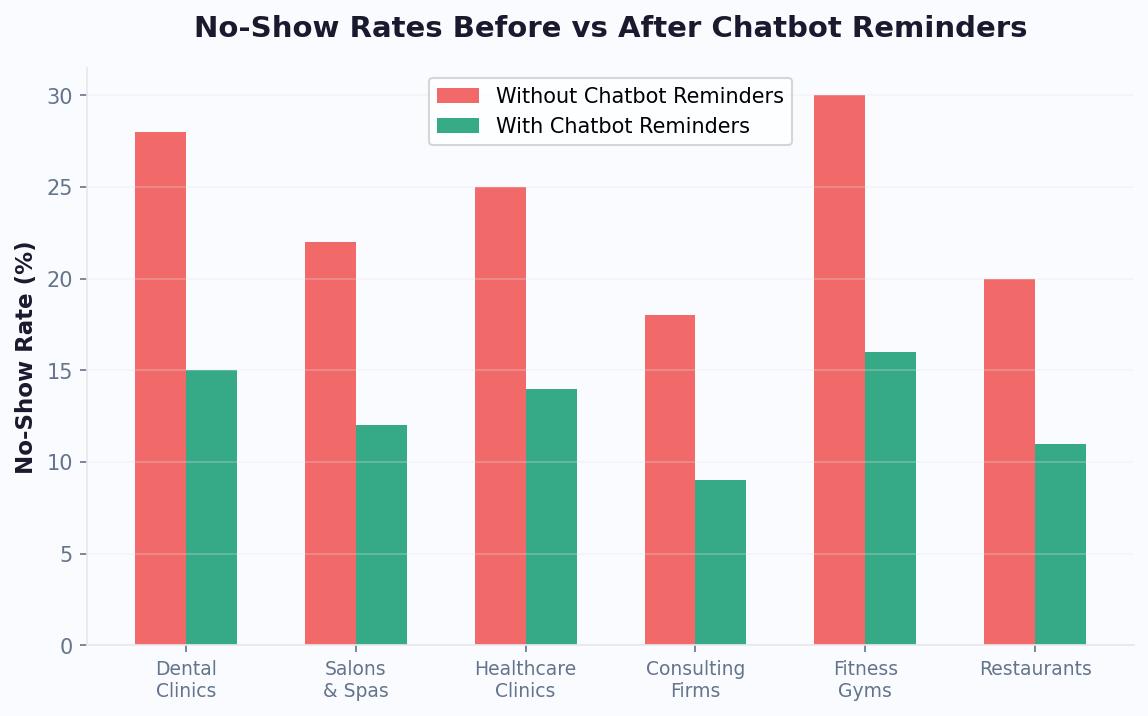
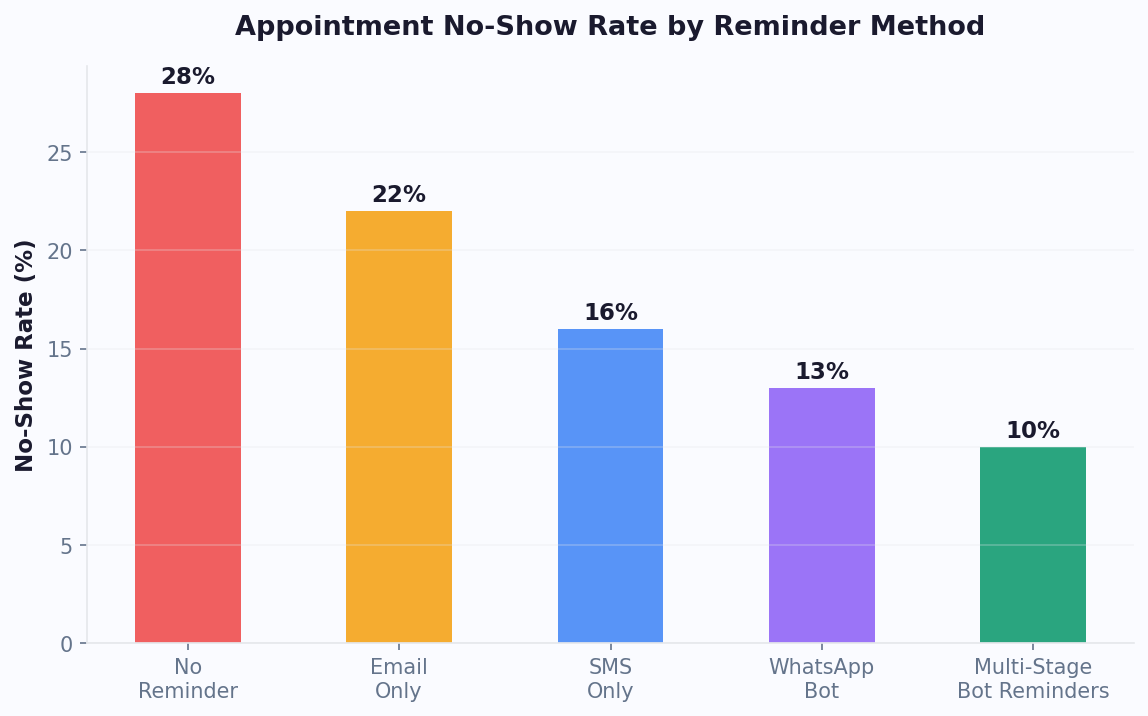
- Vet clinics lose 15-20% of potential revenue to no-shows and missed appointment requests that are never returned. A single missed surgery or dental cleaning slot can represent $200-500 in lost revenue.
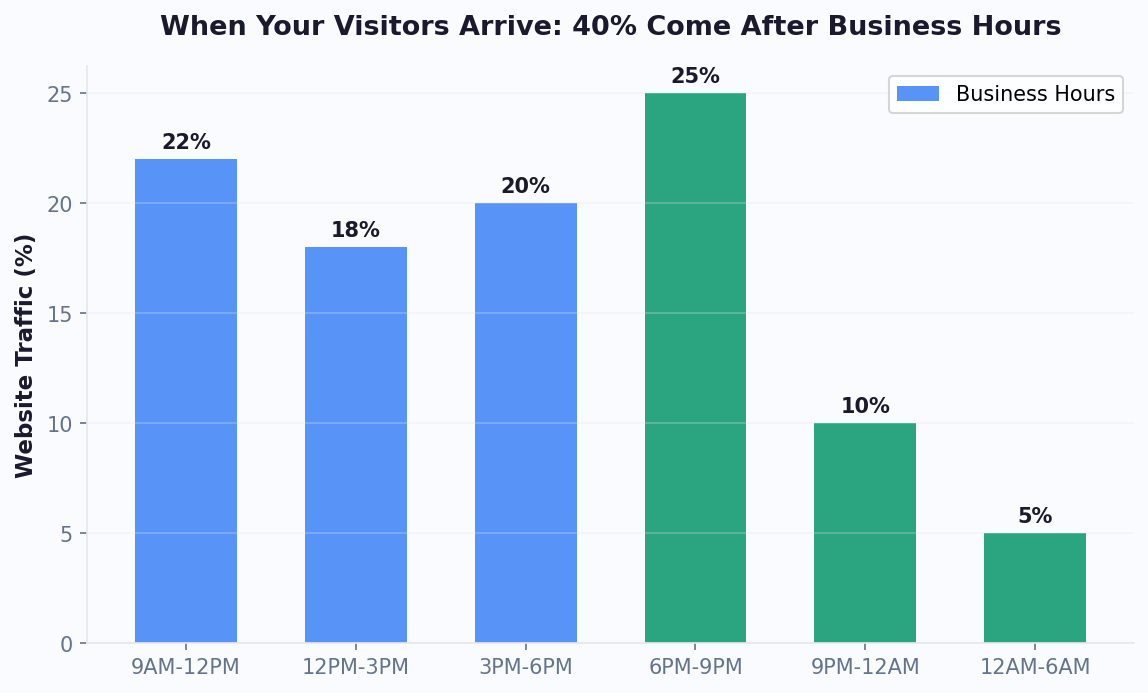
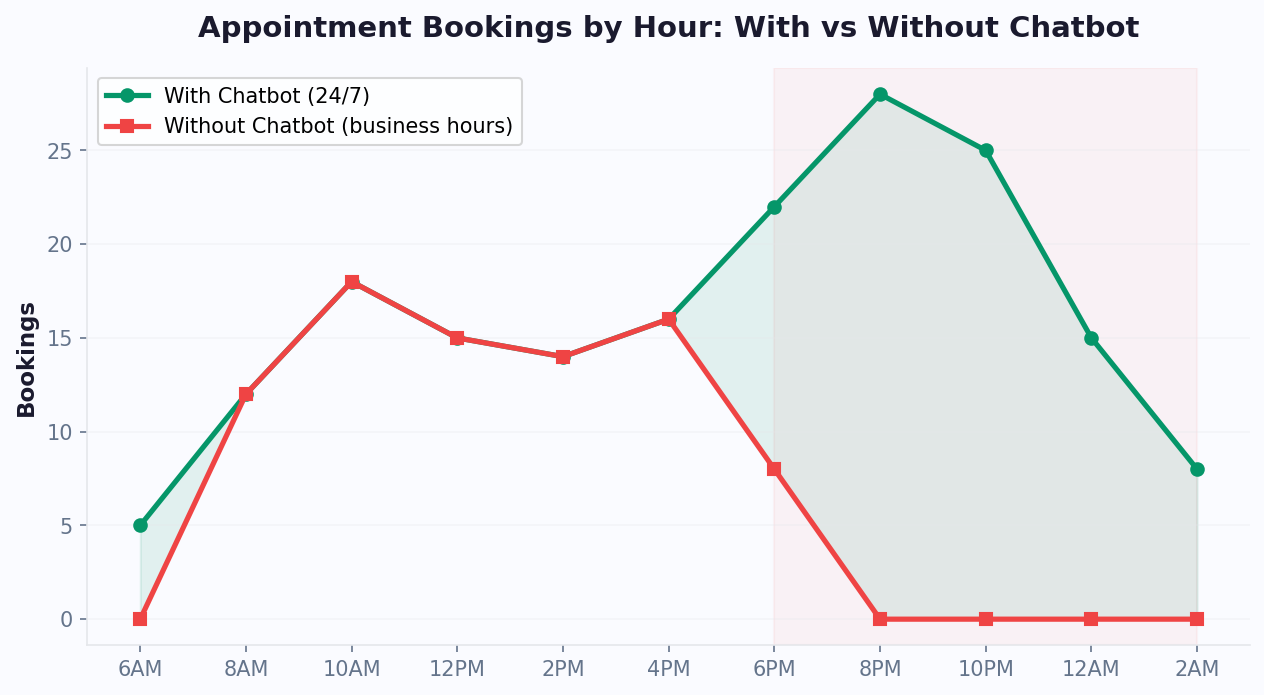
- Grooming salons report that 35% of new client inquiries arrive after 6 PM, when staff have left for the day. Without a way to capture those leads, they evaporate overnight.
This is where AI chatbots transform the economics of pet service businesses. A chatbot provides 24/7 instant responses to the questions pet owners ask most: "What are your hours?" "Do you have availability this Saturday?" "How much is a bath and nail trim for a 60-pound Lab?" "Is my dog due for a rabies vaccine?" Instead of a voicemail or a "we'll get back to you" contact form, the pet owner gets an answer in seconds and can book on the spot.
The result is more appointments booked, fewer no-shows, happier clients, and front desk staff freed from repetitive phone calls to focus on the animals in front of them. Whether you run a single veterinary practice, a chain of grooming salons, or a boarding facility with multiple locations, a chatbot is now the most cost-effective way to meet pet owner expectations without adding headcount.
In the sections that follow, we break down exactly how chatbots work for each type of pet service business -- veterinary clinics, groomers, and boarding facilities -- with specific workflows, integration strategies, and a ready-to-use template you can deploy today.
Vet Clinics: Appointment Booking and Vaccination Reminders
Veterinary clinics operate under constant pressure: packed schedules, anxious pet owners, clinical documentation, and a front desk that fields 60-100 phone calls per day at a busy practice. The majority of those calls are for the same handful of tasks -- booking wellness exams, asking about vaccine schedules, checking appointment times, and requesting prescription refills. An AI chatbot handles all of these without a single ring of the phone.
Automated Appointment Scheduling for Vet Clinics
The chatbot guides pet owners through a structured booking flow that mirrors what your receptionist does on the phone, but available around the clock:
- Patient identification: The chatbot asks for the pet owner's name and pet name. For existing clients, it pulls up the patient record. For new clients, it collects owner contact information, pet species, breed, age, and weight.
- Service selection: The owner selects from a menu of appointment types -- wellness exam, vaccination visit, sick pet appointment, dental cleaning, spay/neuter consultation, or senior pet screening. Each type maps to a specific appointment duration in your schedule.
- Veterinarian preference: If your clinic has multiple doctors, the owner can request a specific vet or accept the next available.
- Date and time: The chatbot presents available slots from your calendar booking system, filtered by the owner's preferences. Morning, afternoon, and drop-off options are clearly displayed.
- Confirmation and reminders: The appointment is booked instantly, a confirmation is sent via the owner's preferred channel (WhatsApp, SMS, or email), and automated reminders are queued for 48 hours and 2 hours before the visit.
Vaccination and Preventive Care Reminders
Vaccination compliance is a persistent challenge for veterinary practices. The American Veterinary Medical Association (AVMA) notes that many pets fall behind on core vaccines simply because owners forget or do not realize a booster is due. A chatbot changes this with proactive, automated outreach:
- 30-day advance notice: "Hi Sarah, Bella's DHPP booster is due next month. Would you like to schedule her vaccination appointment now? We have openings on Tuesday and Thursday mornings."
- Due-date reminder: "Bella's rabies vaccination is now due. Keeping vaccinations current protects Bella and is required by [state] law. Tap below to book a quick visit."
- Overdue follow-up: "It's been 6 weeks since Bella's vaccination was due. We want to make sure she stays protected. Book her appointment today -- it only takes 15 minutes."
Clinics using chatbot-based vaccination reminders report 30-40% improvements in compliance rates compared to postcard or phone-only recall systems. The interactive nature of chatbot reminders -- where the owner can book directly from the message -- eliminates the friction that causes compliance to drop.
Prescription Refill Requests
Chronic medication refills (heartworm prevention, thyroid medication, allergy treatments, joint supplements) are another high-volume, low-complexity task ideal for chatbot automation. The owner messages: "I need a refill of Max's Apoquel." The chatbot verifies the patient, checks that the prescription is still active and within its refill window, and either confirms the refill for pickup or routes the request to the vet for approval if the prescription has expired or requires a recheck exam.
This workflow alone can save a veterinary practice 2-3 hours of staff time per day at a busy clinic, while giving pet owners a faster, more convenient refill experience than calling and waiting on hold.
Related: How to Automate Appointment Reminders With a Chatbot and Cut No-Shows by 50%
Groomers: Service Menu, Pricing, and Scheduling
Pet grooming is a $14.5 billion segment of the pet services market, according to IBISWorld industry analysis, and it runs on appointments. Unlike a retail store where customers walk in and browse, a grooming salon depends on a steady flow of booked appointments to fill the day. Every empty slot is lost revenue, and every phone call that goes to voicemail is a potential client who books with the groomer down the street instead.
The unique challenge for groomers is that pricing and scheduling are highly variable. A bath for a 10-pound Shih Tzu is a different service, price, and time block than a full groom for a 90-pound Goldendoodle with a matted coat. Pet owners need to know what they will pay and how long the appointment will take before they book. A chatbot handles this complexity naturally through a guided conversation.
Interactive Service Menu and Pricing
The chatbot presents the grooming menu as an interactive flow rather than a static price list:
- Breed and size: "What breed is your dog?" followed by "How much does your dog weigh?" The chatbot uses this to determine the correct pricing tier and appointment duration.
- Service selection: The owner chooses from a structured menu:
- Bath and brush-out -- $35-55 (by size)
- Full groom (bath, haircut, nails, ears) -- $55-95 (by size and coat type)
- Nail trim only -- $15-20
- De-shedding treatment -- $45-75 (by size)
- Teeth brushing add-on -- $10
- Flea and tick treatment add-on -- $15-25
- Coat condition assessment: "Is your dog's coat currently matted or tangled?" If yes, the chatbot explains the de-matting surcharge and estimated additional time, setting expectations before the owner arrives.
- Total quote: The chatbot calculates the total based on selections and presents a clear price: "A full groom for a 60-pound Goldendoodle with de-shedding treatment will be $85. The appointment will take approximately 2.5 hours. Ready to book?"
Automated Scheduling With Buffer Times
Grooming appointments require careful scheduling because durations vary significantly by breed, coat condition, and selected services. The chatbot integrates with your calendar booking system and applies rules you define:
- Appointment durations: Small dog bath = 45 minutes, large dog full groom = 2.5 hours, nail trim = 15 minutes. The chatbot allocates the correct block automatically based on the pet's size and selected services.
- Buffer times: A 15-minute buffer between appointments allows groomers to clean stations and prepare for the next dog. The chatbot accounts for this when displaying available slots.
- Groomer assignment: If certain groomers specialize in specific breeds or large dogs, the chatbot routes appointments accordingly.
- Capacity limits: The chatbot respects your salon's maximum capacity -- if you can only accommodate 3 large dogs simultaneously due to tub and dryer availability, it will not overbook.
Managing Recurring Appointments
Most grooming clients return every 4-8 weeks. The chatbot captures this pattern and proactively manages recurring bookings:
"Bella's last groom was 5 weeks ago. Based on her breed and coat type, we recommend grooming every 6 weeks. Would you like to book her next appointment for the week of June 15? I have Tuesday at 10 AM or Thursday at 2 PM available."
This proactive outreach via WhatsApp or Facebook Messenger keeps your schedule full and your clients on a regular cadence. Grooming salons using chatbot-based recurring reminders report 25% higher client retention rates and more predictable weekly revenue.
Handling Cancellations and Waitlists
When a client cancels, the chatbot immediately offers the open slot to clients on the waitlist: "A grooming slot just opened up for this Thursday at 11 AM. Would you like to book Cooper's appointment?" This automated backfill process recovers revenue that would otherwise be lost to last-minute cancellations, which grooming salons report at a rate of 10-15% of all bookings.
Related: After-Hours Customer Support: How to Set Up a Chatbot That Works While You Sleep
Boarding Facilities: Availability Checks and Drop-Off Instructions
Pet boarding is a high-trust, high-anxiety service. Industry leaders like PetSmart PetsHotel have set consumer expectations for transparency and digital convenience, and independent boarding facilities must match that standard to compete. Pet owners are leaving their animals in someone else's care, often for days or weeks at a time. They have questions -- lots of questions -- about availability, pricing, what to bring, vaccination requirements, feeding schedules, and what happens if their pet gets sick while boarded. A chatbot addresses every one of these concerns instantly, building trust before the pet ever arrives.
Real-Time Availability and Booking
Boarding availability is date-sensitive and capacity-constrained, similar to a hotel. The chatbot manages this complexity with a structured booking flow:
- Date selection: "What dates would you like to board your pet?" The owner selects check-in and check-out dates.
- Pet details: Species, breed, size, age, and any special needs (medication administration, dietary restrictions, separation anxiety). This information determines the appropriate accommodation type.
- Accommodation selection: The chatbot presents available options based on the pet's profile:
- Standard kennel run -- $45/night
- Luxury suite (private room, elevated bed, webcam) -- $65/night
- Cat condo (multi-level, quiet area) -- $35/night
- Puppy package (extra playtime, socialization) -- $55/night
- Add-on services: Extra playtime sessions, one-on-one walks, grooming during the stay, training sessions, photo/video updates. Each add-on is presented with pricing and the owner builds their package interactively.
- Total quote and booking: "A 5-night stay in a luxury suite for Cooper with daily extra playtime and a mid-stay bath will be $375. A 50% deposit of $187.50 is required to confirm. Ready to book?"
Pre-Arrival Instructions and Requirements
One of the most common sources of friction in pet boarding is owners arriving without the required documentation or supplies. The chatbot eliminates this by sending a structured pre-arrival checklist 48 hours before drop-off:
- Vaccination records: "Please bring or upload proof of the following current vaccinations: Rabies, DHPP, Bordetella (kennel cough). If any vaccinations are not current, please contact your vet to update them before Cooper's stay." The chatbot can accept photo uploads of vaccination records through rich media capabilities.
- Food and medication: "Please bring enough of Cooper's regular food for 5 days, pre-portioned into daily bags labeled with his name. If Cooper takes any medications, please bring them in their original containers with dosing instructions."
- Comfort items: "You're welcome to bring Cooper's favorite blanket or toy. Please label all items with your name."
- Drop-off logistics: "Drop-off is between 7 AM and 10 AM. Enter through the east entrance. A staff member will meet you in the lobby for a brief intake check. The process takes approximately 10 minutes."
During-Stay Communication
Pet owners want updates while their animal is boarded. The chatbot facilitates this through scheduled and on-demand updates:
- Daily photo updates: Staff snap a photo of the pet during playtime and upload it to the system. The chatbot delivers it to the owner with a brief note: "Cooper had a great day! He played in the yard for 45 minutes and ate all his dinner."
- On-demand status checks: Owners can message the chatbot anytime: "How is Cooper doing?" The chatbot provides the latest update from staff notes or, if no recent update exists, flags the request for a staff member to respond.
- Pickup coordination: The day before checkout, the chatbot confirms pickup time and logistics: "Cooper's checkout is tomorrow. Pickup is between 3 PM and 6 PM. Would you like to add a bath before pickup? It's $25 and he'll go home clean and fresh."
Boarding facilities using chatbot-based communication report 40% fewer "check-in" phone calls from anxious owners during the stay and significantly higher rebooking rates because owners feel informed and confident in the care their pet receives.
Related: AI Receptionist for Small Business: Website Chatbot, Voice Bot, or Both?
Emergency Protocols: When the Chatbot Should Alert Staff
Pet emergencies are time-sensitive and emotionally charged. A pet owner whose dog just ate chocolate, whose cat is struggling to breathe, or whose puppy was hit by a car does not need a menu of appointment slots -- they need immediate guidance and, in many cases, a direct line to clinical staff. A well-designed pet services chatbot recognizes the difference between a routine inquiry and an emergency and responds accordingly.
Keyword-Based Emergency Detection
The chatbot monitors incoming messages for emergency keywords and phrases that indicate urgency:
- Critical keywords: "choking," "not breathing," "hit by car," "seizure," "unconscious," "bleeding heavily," "poisoned," "ate chocolate," "ate rat poison," "swallowed [object]," "collapsed"
- Urgent keywords: "vomiting blood," "can't walk," "eye injury," "snake bite," "bee sting swelling," "heat stroke," "difficulty breathing," "won't eat for 3 days"
- Contextual triggers: Multiple distress indicators in a single message, ALL CAPS text, repeated urgent messages within a short timeframe
When an emergency is detected, the chatbot immediately shifts into a different mode:
Emergency Response Flow
- Acknowledge the urgency: "I understand this is an emergency. Let me help you right away."
- Provide immediate first-aid guidance: Based on the detected issue, the chatbot delivers specific, concise first-aid instructions. For example, if a dog ingested chocolate: "Do not induce vomiting unless directed by a vet. Note the type and amount of chocolate eaten and your dog's weight. Call us immediately or go to the nearest emergency vet."
- Connect to staff: The chatbot simultaneously sends an urgent notification to on-duty staff via SMS, app notification, or the integrations hub connected to your internal communication system. The notification includes the pet owner's name, pet details, the nature of the emergency, and the conversation transcript.
- Provide emergency contact information: If the clinic is closed, the chatbot displays the nearest 24-hour emergency veterinary hospital with address, phone number, and directions: "Our clinic is currently closed. The nearest 24-hour emergency vet is [name] at [address], [phone]. They are 12 minutes from your location."
- Follow up: After the initial emergency interaction, the chatbot checks back: "We hope [pet name] is doing better. Would you like to schedule a follow-up appointment with Dr. [name]?"
What the Chatbot Should Never Do in an Emergency
Equally important is defining the boundaries of chatbot behavior during emergencies:
- Never diagnose. The chatbot provides first-aid guidance and triage, not clinical diagnoses. It should always direct the owner to seek professional veterinary care.
- Never delay human contact. The chatbot should not loop the owner through additional questions when urgency is clear. Get them to a vet or a human staff member as fast as possible.
- Never provide medication dosing. Even for common situations like inducing vomiting with hydrogen peroxide, the chatbot directs the owner to call a vet for dose-specific guidance rather than providing dosing instructions that could be wrong for the pet's size or condition.
- Never minimize. If the owner describes something that could be an emergency, the chatbot treats it as one. False positives are far better than missed emergencies.
Configuring Emergency Protocols in Conferbot
Setting up emergency detection in your chatbot is straightforward. Within the Conferbot platform, you define emergency keyword lists, configure the escalation path (which staff members receive alerts, through which channels), and write the first-aid response templates for common emergencies. You can also integrate with your after-hours answering service so that emergency alerts are routed to the on-call veterinarian even when the clinic is closed. Review your chatbot analytics regularly to see how many emergency interactions occur, how quickly they are escalated, and whether any emergency keywords need to be added based on real conversations.
Multi-Location Management With a Single Chatbot
Pet service businesses that operate multiple locations -- a veterinary group with 3 clinics, a grooming chain with 8 salons, or a boarding company with facilities in different cities -- face a compounding version of every communication challenge. Each location has its own schedule, staff, services, pricing, and capacity. Managing separate phone lines, booking systems, and customer communication for each location is expensive and error-prone.
A single AI chatbot, properly configured, can serve all locations from one interface while delivering a location-specific experience to each pet owner.
Location Detection and Routing
The chatbot determines the correct location through multiple methods:
- Direct selection: "Which location would you like to visit? Downtown Clinic | Westside Clinic | Northgate Clinic" -- the simplest approach when a business has a small number of locations.
- ZIP code or city: "What's your ZIP code?" The chatbot matches the owner to the nearest location automatically.
- Geolocation: With the owner's permission, the chatbot uses browser geolocation to identify the nearest facility and pre-selects it: "It looks like our Westside Clinic is closest to you (2.3 miles). Would you like to book there?"
- Channel-based routing: If each location has its own website or WhatsApp number, the chatbot automatically knows which location the owner is contacting based on the entry point.
Centralized Knowledge, Local Details
The chatbot maintains a shared knowledge base for information that is consistent across all locations (services offered, breed-specific policies, general pricing structure, company policies) while pulling location-specific details for each conversation:
- Hours of operation: Each location may have different hours. The chatbot displays the correct hours for the selected location.
- Staff and providers: "Our Downtown Clinic veterinarians are Dr. Martinez and Dr. Kim. Dr. Martinez specializes in exotic pets, and Dr. Kim focuses on geriatric care."
- Pricing variations: If pricing differs by location (common in markets with different cost structures), the chatbot applies the correct price list.
- Availability: The chatbot queries the specific location's calendar for real-time appointment availability. If the preferred location is fully booked, it can suggest the next nearest location with availability: "Our Downtown Clinic is fully booked on Saturday. Our Westside Clinic, 4 miles away, has openings at 10 AM and 2 PM. Want to book there instead?"
Unified Reporting and Analytics
For business owners and managers, the chatbot provides consolidated analytics across all locations:
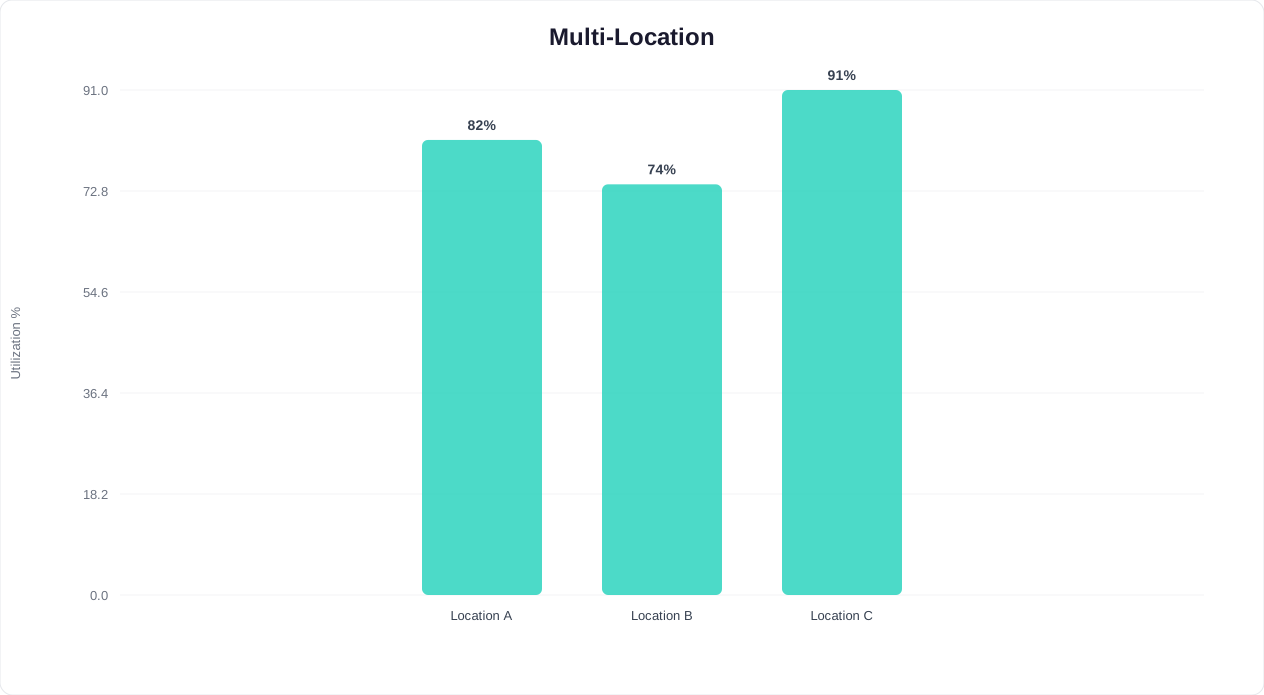
- Booking volume by location: Which locations are busiest, which have capacity to absorb more appointments.
- Common questions by location: If one location gets significantly more questions about parking, maybe the signage needs improvement. If another gets more pricing complaints, maybe its rates need review.
- No-show rates by location: Identify which locations have the highest no-show rates and investigate location-specific causes (parking issues, confusing directions, scheduling patterns).
- Staff performance correlation: Connect chatbot booking data with revenue per appointment to understand which locations convert chatbot inquiries most effectively.
The single-chatbot, multi-location approach typically saves 40-60% on technology costs compared to running separate chatbot instances for each location, while providing a consistent brand experience that pet owners recognize regardless of which location they visit.
Integrating With Practice Management Software
A chatbot that operates in isolation -- collecting appointment requests that staff must manually enter into the practice management system -- delivers only a fraction of its potential value. The real power of an AI chatbot for pet services comes from deep integration with the software your business already runs on. When the chatbot reads from and writes to your practice management system (PMS), the result is a seamless loop: pet owners book through the chatbot, appointments appear on the schedule instantly, patient records are updated automatically, and reminders are triggered based on real clinical data.
Common Practice Management Systems for Pet Services
The pet services industry uses a range of specialized software platforms, and your chatbot needs to connect with whichever system you use:
- Veterinary PMS: IDEXX Neo, eVetPractice, Cornerstone, AVImark, Shepherd, Digitail, and Covetrus Pulse. These systems manage patient records, clinical notes, lab results, vaccination histories, prescriptions, and billing.
- Grooming software: Gingr, PetExec, DaySmart Pet (formerly 123Pet), Pawfinity, and MoeGo. These handle appointment scheduling, breed-specific service catalogs, pricing tiers, and client communication.
- Boarding and daycare: Gingr, PetExec, ProPet, K9 Koordinator, and Revelation Pets. These manage reservations, kennel/room assignments, vaccination requirement tracking, feeding schedules, and activity logs.
How Integration Works Through Conferbot
Conferbot's integrations hub connects your chatbot to your PMS through several methods:
- Direct API integration: For PMS platforms that offer open APIs (Gingr, PetExec, Digitail, and others), the chatbot connects directly, reading availability and writing appointments in real time. This is the fastest and most reliable method.
- Zapier and Make workflows: For systems without direct API support, middleware platforms like Zapier bridge the gap. A chatbot booking triggers a Zapier workflow that creates the appointment in your PMS, adds the client to your email marketing list, and sends a confirmation SMS.
- Google Calendar sync: For smaller operations that manage scheduling through Google Calendar, the chatbot reads and writes directly to shared calendars, with each staff member or room having its own calendar.
- Webhook-based integration: For custom or less common PMS platforms, the chatbot sends booking data via webhooks to a receiving endpoint that your IT team or a developer configures to process and enter the data.
Data That Flows Between Chatbot and PMS
A properly integrated chatbot exchanges the following data with your practice management system:
| Direction | Data | Purpose |
|---|---|---|
| PMS to Chatbot | Available appointment slots | Show real-time availability to pet owners |
| PMS to Chatbot | Patient/pet records | Personalize conversations with pet name, breed, history |
| PMS to Chatbot | Vaccination due dates | Trigger automated vaccination reminders |
| PMS to Chatbot | Prescription status | Enable automated refill requests |
| Chatbot to PMS | New appointments | Booked appointments appear on schedule instantly |
| Chatbot to PMS | New client/pet records | First-time clients added without manual data entry |
| Chatbot to PMS | Cancellations and reschedules | Schedule updates reflected in real time |
| Chatbot to PMS | Intake form data | Medical history and owner info pre-populated in patient chart |
ROI of Integration vs. Standalone Chatbot
The difference in value between an integrated chatbot and a standalone chatbot is dramatic. According to Banfield Pet Hospital's State of Pet Health report, practices that automate appointment workflows see a 23% increase in appointment throughput without adding staff. A standalone chatbot that collects inquiries but still requires manual processing by your team delivers perhaps 30-40% of that value. A fully integrated chatbot delivers the full benefit.
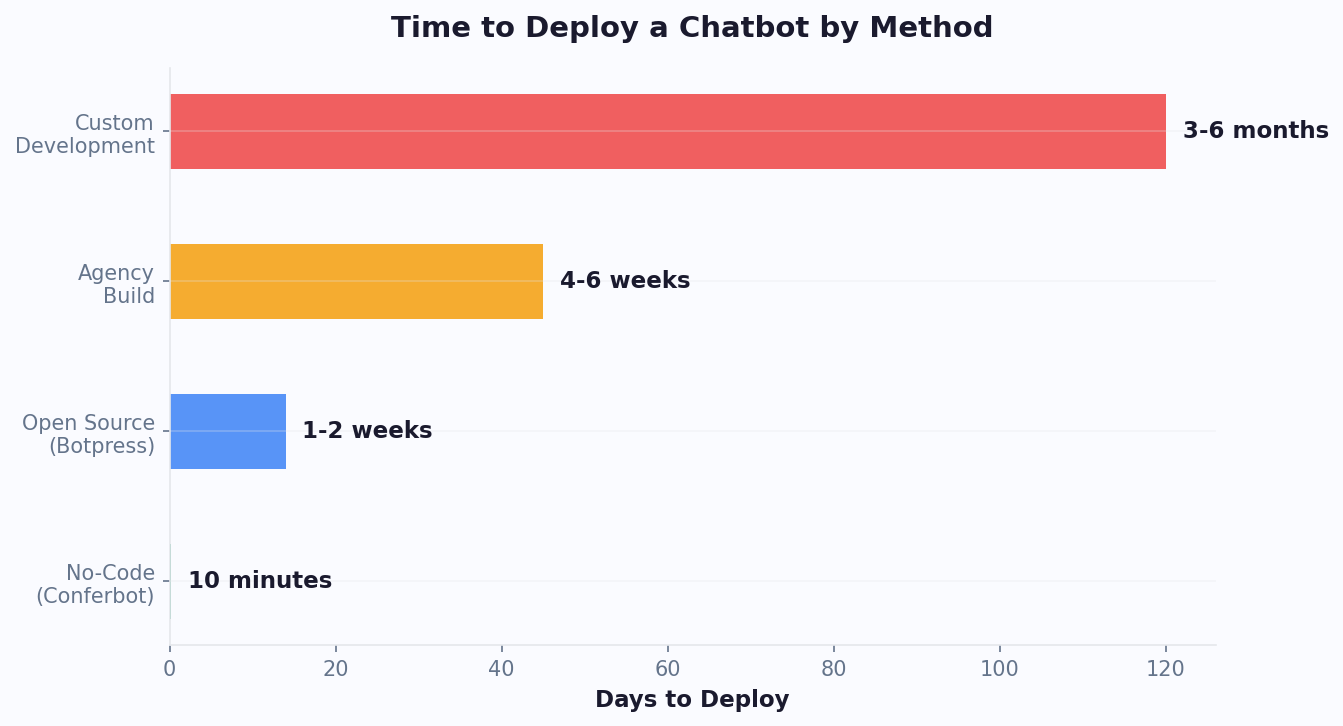
The investment in integration is typically modest -- most Conferbot PMS integrations can be configured in 1-2 hours through the integrations hub -- and the payback is immediate. From day one, every chatbot-booked appointment flows directly into your schedule, and every vaccination reminder is triggered by real clinical data rather than a generic timer.
Template: Pet Services Chatbot Flow
Below is a complete, ready-to-use chatbot flow template designed for pet service businesses. This template covers the core interactions that vet clinics, groomers, and boarding facilities handle daily. You can deploy it as-is on the Conferbot platform and customize it to match your specific services, pricing, and branding.
Welcome and Intent Detection
The chatbot opens with a warm, professional greeting that immediately guides the pet owner to the right path:
Welcome Message:
"Welcome to [Business Name]! I'm here to help with appointments, services, pricing, and questions about your pet's care. How can I help you today?"
Quick-reply buttons:
- Book an appointment
- Check pricing and services
- Boarding availability
- Vaccination / medication question
- Emergency -- I need help now
- Something else
Appointment Booking Flow
Step 1 -- New or Returning Client:
"Have you visited us before?" [Yes, I'm a returning client] [No, I'm new]
Step 2 -- Pet Information (new clients):
"Tell me about your pet: What's their name? What species and breed? How old are they? Approximate weight?"
Step 3 -- Service Type:
"What type of appointment do you need?" [Wellness exam] [Vaccination] [Sick/injured pet] [Grooming] [Dental cleaning] [Surgery consultation] [Boarding reservation]
Step 4 -- Schedule Selection:
"Here are our available times for [service type]: [Display available slots from calendar]. Which works best for you?"
Step 5 -- Confirmation:
"You're all set! [Pet name]'s [service type] is booked for [date] at [time] with [provider]. You'll receive a reminder 48 hours and 2 hours before the appointment. Is there anything else I can help with?"
Pricing Inquiry Flow
Step 1 -- Service Category:
"What service are you interested in?" [Vet exam and vaccines] [Grooming] [Boarding / daycare] [Dental] [Surgery]
Step 2 -- Pet Details for Accurate Pricing:
"To give you an accurate quote, what type and size of pet do you have?" [Dog -- small under 25 lbs] [Dog -- medium 25-50 lbs] [Dog -- large 50-100 lbs] [Dog -- giant over 100 lbs] [Cat] [Exotic/other]
Step 3 -- Quote Delivery:
"Here are our prices for [service] for a [size] [species]: [Display itemized pricing]. Would you like to book an appointment, or do you have other questions?"
Emergency Triage Flow
Trigger: Emergency detected
"I understand this is urgent. Let me help immediately."
Quick Assessment:
"Can you briefly describe what's happening?" [Breathing difficulty] [Bleeding] [Ingested something toxic] [Seizure or collapse] [Injury/trauma] [Other emergency]
Immediate Response:
"[First-aid guidance for specific emergency]. I'm alerting our team now. [If during hours: A staff member will call you within 2 minutes at the number on file.] [If after hours: The nearest 24-hour emergency vet is (Name) at (Address), phone (Number). Please head there immediately.]"
Post-Visit Follow-Up Flow
24 Hours After Visit:
"Hi [Owner name], how is [Pet name] doing after yesterday's [service]? Everything going well?" [Yes, doing great] [I have a concern]
If Concern:
"I'm sorry to hear that. Can you describe what you're noticing? I'll pass this to our team so they can help." [Routes to staff with conversation context]
If All Good:
"Glad to hear it! [Pet name]'s next [recommended service] is due around [date]. Would you like me to book it now? Also, if you had a great experience, we'd appreciate a quick review -- it helps other pet owners find us."
ROI Summary: What This Template Delivers
Pet service businesses that deploy this chatbot template on Conferbot typically see the following results within the first 90 days:
- 30-40% reduction in phone call volume as pet owners self-serve for bookings, pricing, and common questions
- 25-40% decrease in no-show rates through interactive appointment reminders with confirm/reschedule/cancel options
- 20% increase in after-hours bookings captured from pet owners browsing evenings and weekends
- 15-20% higher client retention through proactive recall reminders and post-visit follow-ups
- 2-4 hours of staff time saved daily on repetitive phone inquiries, allowing your team to focus on patient care
The template works across your website, WhatsApp, Facebook Messenger, and Instagram, giving pet owners the flexibility to reach you on whatever channel they prefer. To learn more about calculating the specific return for your business, see our guide on how to calculate chatbot ROI.
Ready to get started? Create your free Conferbot account and deploy this pet services template in minutes. For businesses that want a tailored setup, our team can configure the chatbot to match your exact services, pricing, PMS integration, and brand in a single onboarding session.
Was this article helpful?
AI Chatbot for Vet Clinics, Groomers, and Pet Boarding FAQ
Everything you need to know about chatbots for ai chatbot for vet clinics, groomers, and pet boarding.
About the Author

Conferbot Team specializes in conversational AI, chatbot strategy, and customer engagement automation. With deep expertise in building AI-powered chatbots, they help businesses deliver exceptional customer experiences across every channel.
View all articles