Why Enterprise E-commerce Stores Need More Than Basic Chatbot Widgets
Enterprise e-commerce is a different operating environment than standard online retail. Shopify Plus merchants process $1M+ annually (many process $10M to $100M+), manage catalogs with thousands of SKUs, serve both B2C and B2B customers, operate multiple storefronts across geographies, and handle complex order workflows including wholesale pricing, purchase orders, and custom fulfillment rules. BigCommerce enterprise merchants face similar complexity with large catalogs, multi-storefront capabilities, and headless commerce architectures.
The chatbot widget that works on a 50-product Shopify Basic store is woefully inadequate for these environments. Basic chatbots cannot search across 15,000 SKUs with attribute filtering. They cannot check real-time inventory across multiple warehouses. They cannot apply customer-specific pricing tiers or handle B2B purchase order workflows. They cannot manage conversations across 5 international storefronts in multiple languages. And they certainly cannot integrate with the complex tech stack (ERP, PIM, OMS, WMS) that enterprise e-commerce depends on.
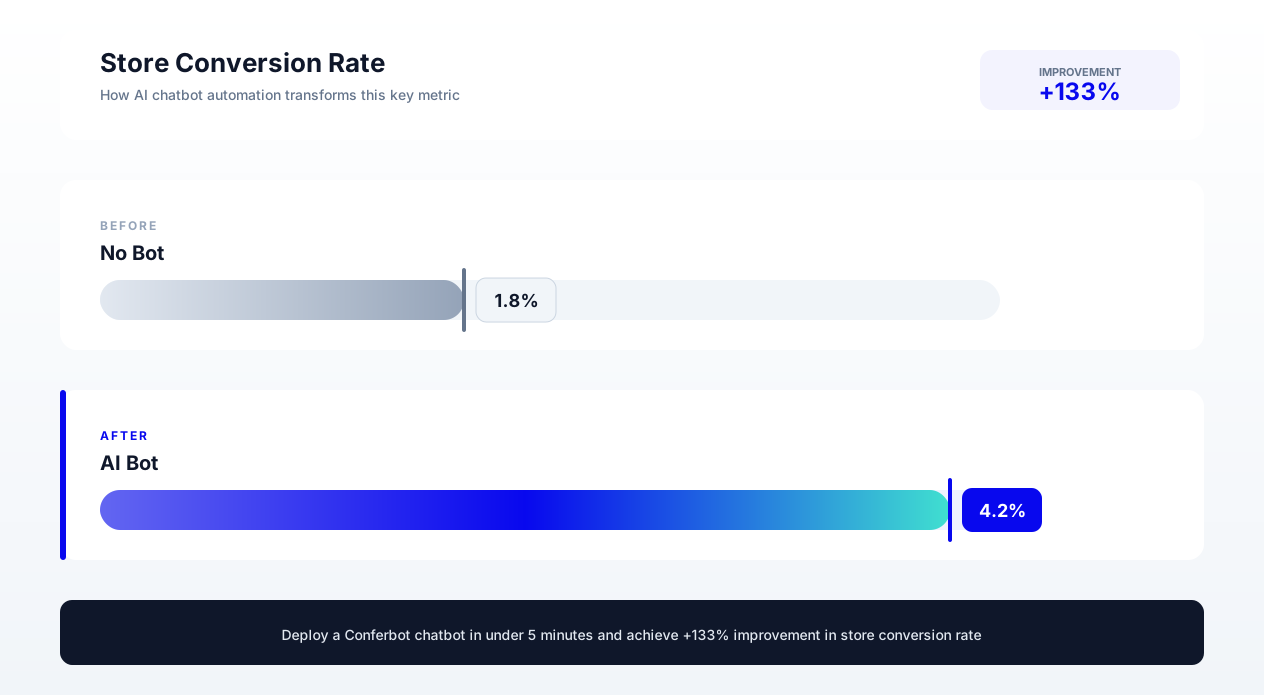
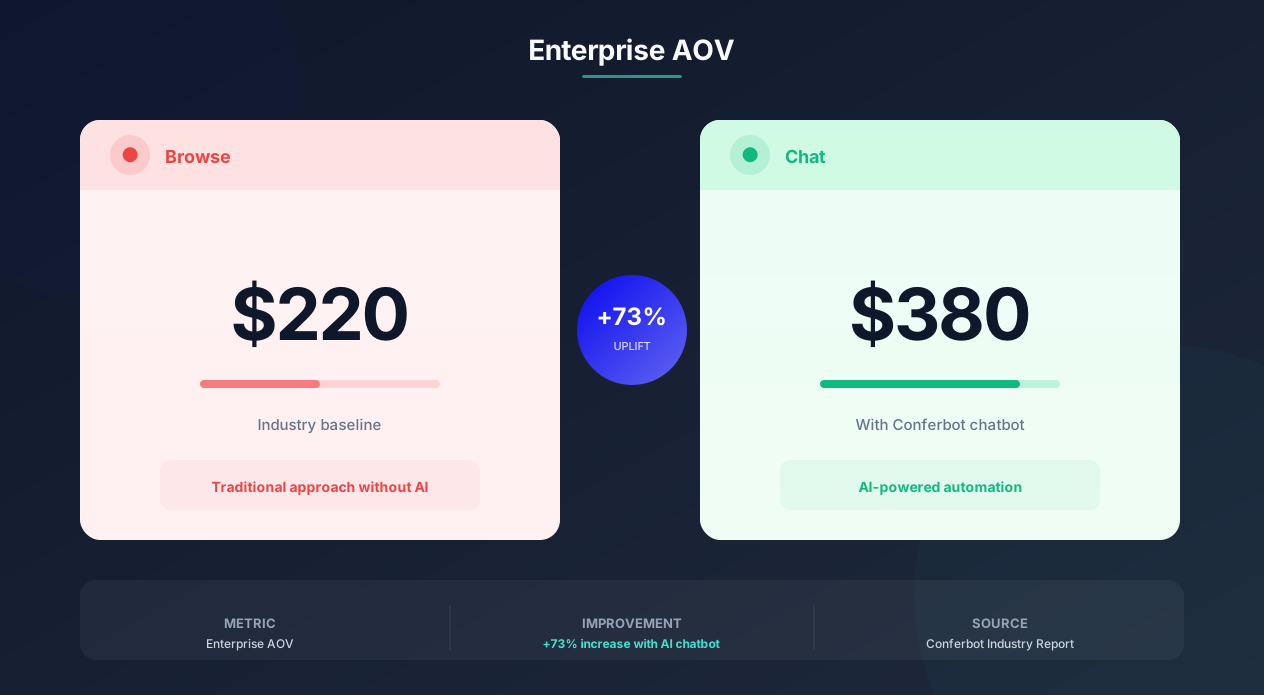
According to Shopify's 2026 Commerce Trends report, 58% of enterprise merchants now consider AI-powered customer interaction a top-3 technology priority, up from 31% in 2024. The reason is clear: enterprise stores that implement sophisticated AI chatbots see 15 to 25% increases in conversion rate, 20 to 35% increases in average order value through conversational product discovery, and 40 to 60% reductions in pre-sale support costs. At enterprise scale, these percentages translate to millions in additional revenue and hundreds of thousands in cost savings.
This guide is specifically for Shopify Plus and BigCommerce enterprise merchants who have outgrown basic chatbot solutions. We cover deep platform-specific integration strategies, conversational product discovery for large catalogs, order management automation, multi-store and multi-language support, B2B buyer qualification and wholesale pricing logic, custom API integration patterns, performance optimization at scale, and migration paths from basic chatbots to enterprise-grade conversational AI. Every recommendation is grounded in the specific capabilities and limitations of the Shopify Plus and BigCommerce platforms.
Whether you are evaluating your first enterprise chatbot or replacing a basic solution that has hit its limits, this guide provides the technical and strategic framework for making the right decision and executing a successful implementation.
Shopify Plus Integration Deep Dive: Leveraging the Full Platform
Shopify Plus provides several enterprise-exclusive features and APIs that enable deeper chatbot integration than standard Shopify plans. Understanding these capabilities is essential for maximizing chatbot value on the platform.
Shopify Plus-Exclusive Integration Points
| Shopify Plus Feature | Chatbot Integration Opportunity | Impact |
|---|---|---|
| Shopify Flow (automation) | Trigger chatbot actions from store events (high-value cart, VIP customer login, inventory threshold) | Proactive engagement at critical moments |
| Scripts and Shopify Functions | Apply chatbot-negotiated discounts, B2B pricing, and bundle logic at checkout | Seamless pricing flexibility |
| Multi-location inventory | Chatbot checks stock across warehouses and retail locations | Accurate availability and ship-time estimates |
| Wholesale channel (B2B) | Chatbot qualifies B2B buyers, applies tiered pricing, manages PO workflows | Automated B2B sales process |
| Shopify Plus API rate limits (higher) | Support for high-volume real-time product search and order queries | Faster chatbot responses under load |
| Checkout extensibility | Chatbot-driven upsells and offers in the checkout flow | Higher conversion at the final step |
| LaunchPad | Chatbot promotes flash sales and scheduled events proactively | Event-driven engagement |
Product Catalog Integration
For stores with thousands of products, the chatbot needs efficient product search capabilities. The integration approach uses Shopify's Storefront API for real-time product queries with filtering by collection, type, vendor, price range, and custom metafields. For stores with 10,000+ SKUs, a search index (typically Algolia or Elasticsearch, both commonly used in Shopify Plus stores) provides sub-100ms search responses that the chatbot wraps in conversational product presentation.
Example interaction: Customer: "I need a waterproof laptop backpack under $80 that fits a 15-inch laptop." Chatbot: "I found 4 waterproof laptop backpacks under $80 that fit 15-inch laptops. Here are the top-rated options: [1] Venture Pro 15" - $69.99 (4.8 stars, 234 reviews), [2] TrekShield Commuter - $74.99 (4.7 stars, 189 reviews), [3] UrbanFlow Daily - $59.99 (4.6 stars, 312 reviews). Would you like details on any of these, or should I narrow down by color or style?"
Cart and Checkout Integration
Through the Storefront API, the chatbot can create and modify carts, add products with variants, apply discount codes, and generate checkout URLs. The customer can complete their entire purchase journey within the conversation: discover products, add to cart, apply promotions, and proceed to checkout—all without leaving the chat interface. This reduces the friction that causes abandonment when customers must navigate between chat and the store interface.
Order Management Integration
For post-purchase support, the chatbot integrates with Shopify's Admin API (via a backend proxy for security) to provide order status, tracking information, return initiation, and order modification capabilities. A customer asking "Where is my order?" receives an instant response with carrier tracking details and estimated delivery date—no support ticket, no hold time, no agent involvement.
For a complete guide to basic Shopify chatbot setup, see our foundational Shopify chatbot installation guide—this enterprise guide builds on those fundamentals with advanced capabilities.
BigCommerce Integration Deep Dive: Enterprise APIs and Headless Commerce
BigCommerce's enterprise offering provides unique advantages for chatbot integration. According to BigCommerce's 2026 e-commerce trends report, 67% of enterprise merchants now prioritize API-first integrations for customer experience tools, making the platform particularly well-suited for advanced chatbot deployment, particularly its robust API-first architecture and native headless commerce support. These capabilities enable chatbot integrations that are not possible on more closed platforms.
BigCommerce API Architecture for Chatbots
BigCommerce exposes comprehensive REST and GraphQL APIs that the chatbot leverages for deep integration:
Catalog API (V3): Full product search with filtering by category, brand, price, custom fields, and availability. Supports complex queries like "all products in the 'outdoor furniture' category, priced between $200 and $500, available in white, with customer rating above 4 stars." The chatbot translates natural language queries into API filters and presents results conversationally.
Customer API: Authenticate customers, access order history, retrieve saved addresses, and manage customer groups (for B2B tiered pricing). When a logged-in customer engages the chatbot, it immediately accesses their profile to personalize the conversation.
Cart and Checkout APIs: Create server-side carts, add items with options, apply coupons, calculate shipping, and generate checkout URLs. BigCommerce's optimized one-page checkout works seamlessly with chatbot-created carts.
Orders API: Full order lifecycle management—tracking, modification, returns, and refunds. The chatbot handles the complete post-purchase experience without human involvement for routine inquiries.
Headless Commerce and Chatbot Integration
BigCommerce's headless commerce architecture (using frameworks like Next.js, Gatsby, or Nuxt.js for the storefront) creates unique chatbot integration opportunities. In a headless setup, the chatbot is not a separate widget bolted onto a monolithic store—it is a native component of the front-end application with direct access to the same APIs and data layer that power the store.
This architectural advantage means:
Shared state: The chatbot and storefront share customer session state. Products viewed, items in cart, and customer preferences flow seamlessly between the browsing experience and the chat conversation. No context is lost when switching between browsing and chatting.
Custom UI integration: In headless environments, the chatbot can render rich product cards, comparison tables, and interactive configurators within the chat interface—not just text links. This creates a native shopping experience within the conversation.
Performance optimization: The chatbot's API calls can be routed through the same CDN and caching layer as the storefront, ensuring consistent sub-200ms response times regardless of catalog size or traffic volume.
BigCommerce B2B Edition Integration
BigCommerce's B2B Edition (formerly BundleB2B) provides specialized features for wholesale and business customers. The chatbot integrates with these features to serve B2B buyers: company account management (multiple buyers under one company account), quote requests and negotiation, purchase order submission and approval workflows, tiered pricing display based on customer group, and bulk ordering with CSV import support. This integration transforms the chatbot from a consumer shopping assistant into a B2B sales automation platform.
Conversational Product Discovery: Turning Browsing into Buying
For enterprise stores with large catalogs, product discovery is the primary conversion bottleneck. Customers who cannot find what they want leave; customers guided to the right product buy. AI chatbots provide a fundamentally different discovery experience than traditional search and navigation—one that mimics the expertise of your best sales associate.
The Discovery Conversation Framework
Effective product discovery conversations follow a needs-elicitation framework rather than keyword search. The chatbot asks questions that reveal intent, preferences, and constraints, then maps these to product attributes:
Intent discovery: "What are you looking for today?" or "Tell me what you need help finding." The customer's natural language response reveals both the product category and their language style, which the chatbot adapts to.
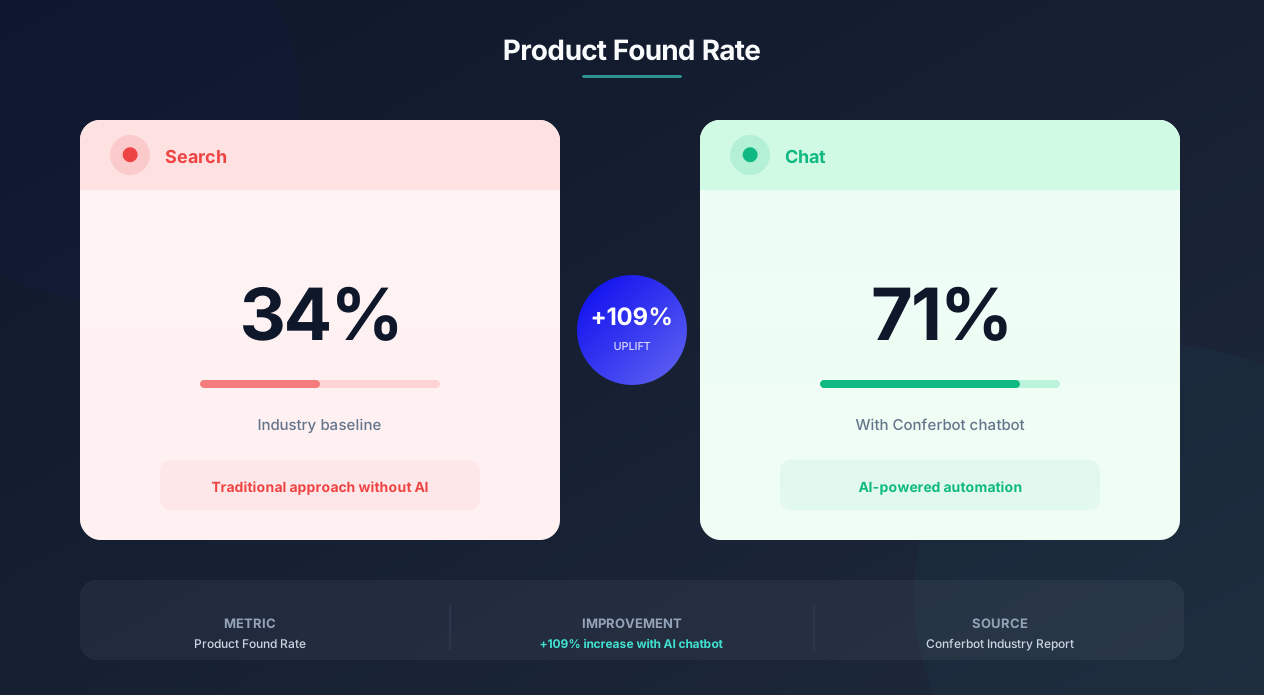
Constraint identification: "Do you have a budget range in mind?" "Is this for indoor or outdoor use?" "What size do you need?" These questions filter the catalog from thousands of products to a manageable shortlist.
Preference refinement: "Do you prefer modern or traditional style?" "Is brand important to you, or are you open to alternatives?" "Would you prioritize durability or aesthetics?" These questions differentiate between products that meet basic requirements.
Recommendation presentation: The chatbot presents 2 to 4 curated recommendations with clear differentiation: "Based on your preferences, I recommend these three options. The first is our best seller for durability, the second offers the best value, and the third is our premium pick for aesthetics. Want me to compare any of these side-by-side?"
AI-Powered Product Matching
Enterprise chatbots use machine learning models trained on your product data and customer interaction history to improve recommendations over time. The system learns which question sequences lead to highest conversion, which product attributes matter most for different customer segments, and which recommendation framings drive purchases. According to McKinsey research on e-commerce personalization, AI-driven product discovery increases conversion rates by 15 to 25% compared to static search and category navigation.
Visual Product Discovery
For fashion, home decor, and other visually-driven categories, the chatbot supports image-based discovery. Customers can upload a photo of a product they like (from social media, a magazine, or a competitor), and the chatbot uses visual similarity search to find matching products in your catalog: "I found 6 items similar to that dress style. Here are the closest matches in your size range." This capability is particularly powerful for stores with large fashion or home goods catalogs where visual preference is the primary purchase driver.
Cross-Category Discovery and Bundling
Enterprise chatbots excel at cross-category product bundling that drives average order value. When a customer selects a dining table, the chatbot suggests matching chairs, tableware, and centerpiece accessories. When a customer buys running shoes, it recommends performance socks, a hydration belt, and a GPS watch. These cross-category recommendations are powered by purchase correlation data ("customers who bought X also bought Y") combined with the chatbot's understanding of the customer's specific needs and preferences gathered during the conversation.
For more on driving e-commerce sales through conversational AI, see our in-depth guide on e-commerce sales chatbots.
Order Management Automation: Post-Purchase Support at Scale
Post-purchase support generates the highest volume of customer inquiries for enterprise e-commerce stores. Research from Narvar's State of Returns report shows that 83% of consumers check order status at least once before delivery, and brands offering self-service tracking see 28% fewer support contacts. "Where is my order?" (WISMO) alone accounts for 35 to 45% of all support contacts. AI chatbots handle the entire post-purchase support lifecycle without human intervention for routine inquiries.
WISMO Automation
The chatbot accesses order and shipping data through Shopify Plus or BigCommerce APIs to provide instant order status:
Pre-shipment: "Your order #12345 is confirmed and being prepared. Estimated ship date: tomorrow, June 6. You will receive tracking information by email once it ships."
In transit: "Your order is on its way! It shipped via FedEx on June 6. Tracking: 7893456789. Current status: In transit, arrived at Memphis hub. Estimated delivery: June 9 by end of day."
Delivered: "Your order was delivered today at 2:15 PM to your front porch. If you have any issues with the delivery or products, just let me know."
Returns and Exchanges
The chatbot processes returns and exchanges according to your configured policies. For straightforward returns (within return window, eligible product category, acceptable reason), the chatbot generates a return label, provides packing instructions, and initiates the refund or exchange—completely self-service. Complex returns (outside window, damaged product, partial returns from a multi-item order) can be partially automated with human approval for the final decision.
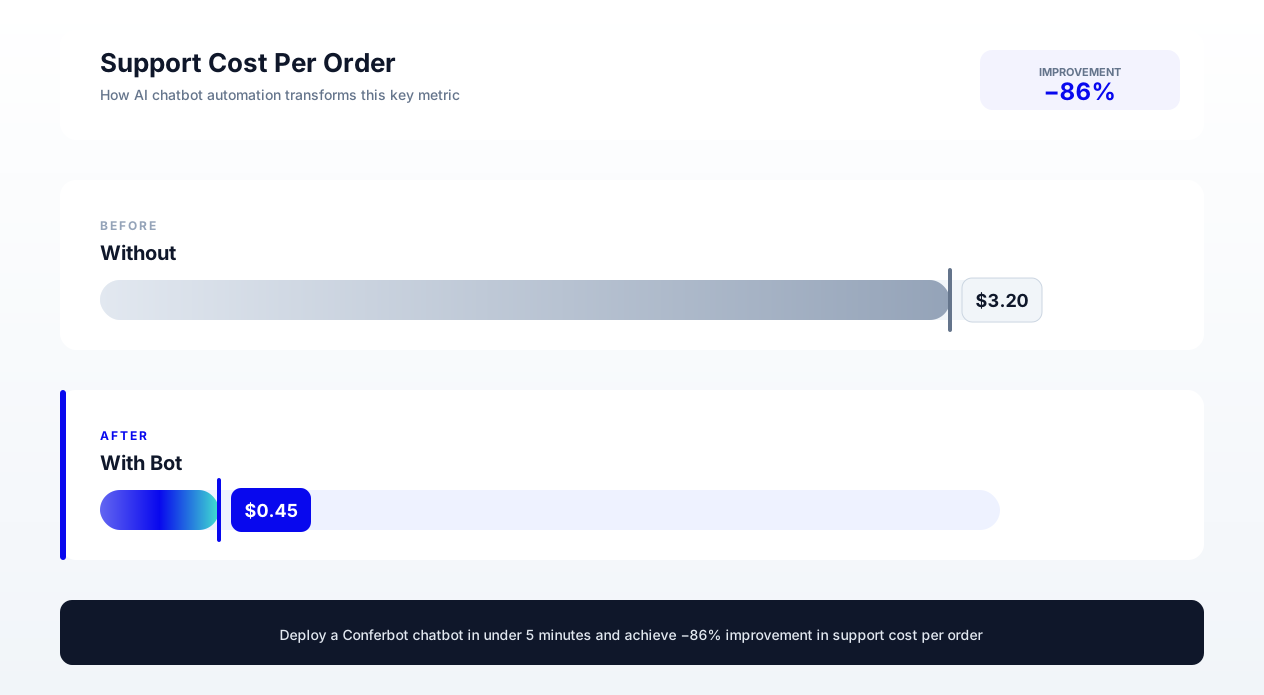
Self-service returns reduce return processing costs by 65 to 80% per transaction while improving customer satisfaction (instant resolution vs. waiting for email support). For enterprise stores processing hundreds of returns monthly, the cost savings alone justify the chatbot investment.
Order Modification
Before shipment, customers frequently want to change shipping addresses, add or remove items, upgrade shipping speed, or apply discount codes they forgot. The chatbot checks order status (can only modify if not yet shipped) and processes the modification through the store's API: "I can update the shipping address on your order since it has not shipped yet. Please provide the new address." This saves the customer from contacting support and the agent from manually editing orders.
Subscription and Recurring Order Management
For stores with subscription products (consumables, replenishment items, subscription boxes), the chatbot manages subscription lifecycles: skip next shipment, change delivery frequency, swap products within the subscription, update payment method, pause or cancel subscriptions with retention offers. These self-service capabilities reduce subscription churn by 15 to 20% (through easier management) while eliminating the support cost of subscription modifications.
Multi-Store Support: One Chatbot Across International Storefronts
Enterprise merchants commonly operate multiple storefronts—different countries, different brands, or different channels (B2C and B2B). Managing separate chatbot configurations for each store creates maintenance nightmares and inconsistent customer experiences. The enterprise approach is a unified chatbot platform that adapts to each storefront context.
Multi-Language and Multi-Currency
The chatbot detects the customer's storefront (or asks their preference) and adjusts language, currency, product availability, pricing, and shipping information accordingly. A customer on the UK storefront sees prices in GBP, delivery estimates for UK shipping, and product availability from European warehouses. The same chatbot on the US storefront shows USD pricing, US delivery options, and domestic inventory.
Language detection can be automatic (based on the storefront URL or browser language) or conversational ("Which language do you prefer? English / Francais / Deutsch / Espanol"). For Shopify Plus merchants using Shopify Markets (the multi-currency/multi-language feature), the chatbot integrates with Markets data to present market-specific pricing and content.
Brand-Specific Customization
Multi-brand enterprises (operating distinct brands on separate storefronts) need the chatbot to reflect each brand's identity while sharing core automation logic. The chatbot adapts its name, avatar, greeting, tone of voice, and response style to match each brand. A luxury brand's chatbot uses formal, refined language; a streetwear brand's chatbot uses casual, contemporary tones—both powered by the same underlying AI and integration infrastructure.
Cross-Store Intelligence
When a product is unavailable in one store, the chatbot can redirect to another: "This item is currently out of stock in our US warehouse, but I can see it is available in our Canadian store with international shipping available for $12. Would you like me to add it to your cart from the Canadian store?" This cross-store intelligence recovers sales that would otherwise be lost to out-of-stock situations.
Centralized Analytics with Store-Level Drill-Down
Enterprise reporting aggregates chatbot performance across all stores (total conversations, conversion rate, revenue influenced) while enabling drill-down into individual storefront metrics. This reveals which stores perform best, which have unique customer needs, and where optimization efforts should be focused. Centralized management with localized execution is the hallmark of effective enterprise chatbot deployment.
B2B Buyer Qualification: Automating the Wholesale Sales Process
Enterprise e-commerce increasingly serves both B2C and B2B customers. For Shopify Plus (with B2B channel) and BigCommerce (with B2B Edition), the chatbot can automate B2B buyer qualification—transforming a manual, multi-day process into an instant, self-service experience.
The B2B Qualification Conversation
When a visitor indicates wholesale or business interest, the chatbot transitions to a B2B qualification flow:
Business identification: "Are you looking to purchase for a business? Great! Let me set up your wholesale account. What is your company name and business type?" [Retailer / Distributor / Manufacturer / Interior Designer / Government / Other]
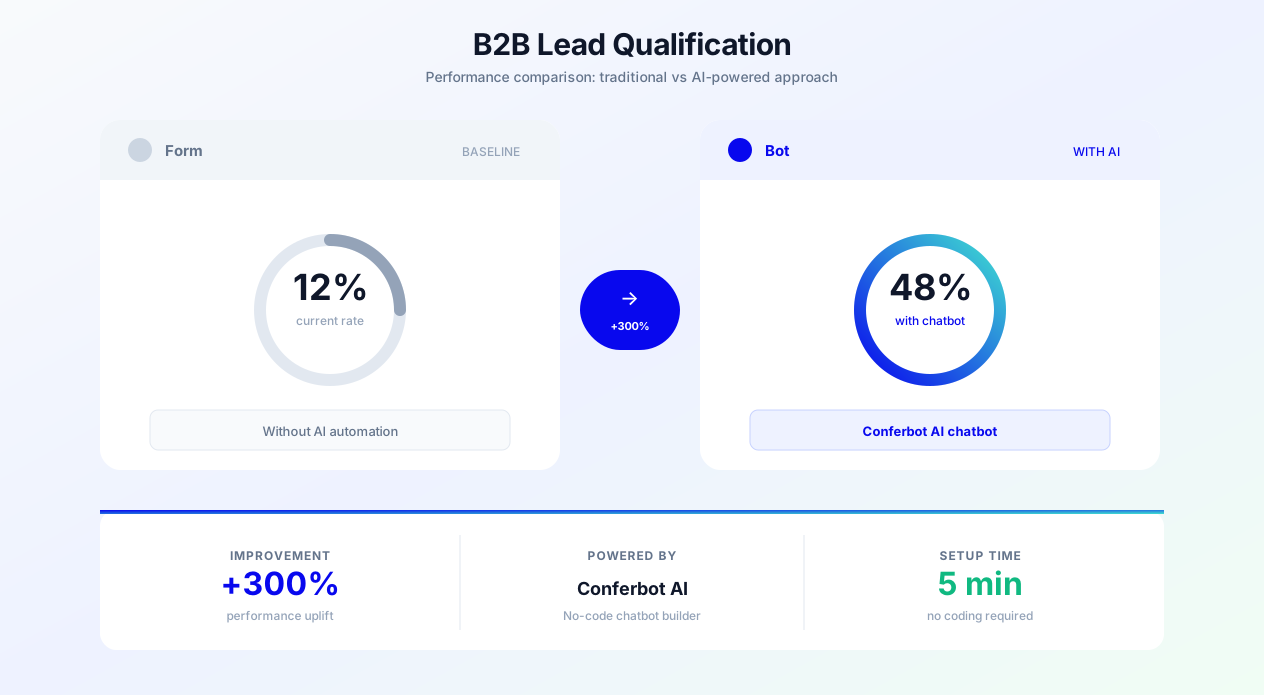
Volume assessment: "What is your estimated monthly order volume?" [Under $1,000 / $1,000-$5,000 / $5,000-$25,000 / $25,000-$100,000 / $100,000+]. This determines the pricing tier and account handling.
Credential verification: "For wholesale pricing, we need a copy of your resale certificate or business license. You can upload it here." The chatbot collects the document and either auto-verifies (for states/countries with online verification APIs) or flags for manual review.
Pricing tier assignment: Based on volume and business type, the chatbot assigns the appropriate pricing tier: "Based on your estimated monthly volume of $10,000-$25,000, you qualify for our Silver tier with 25% off retail pricing. Here is your wholesale price list: [link]."
Account creation: The chatbot creates the B2B account in Shopify Plus or BigCommerce, assigns the pricing tier, and provides login credentials and wholesale catalog access.
Wholesale Pricing Logic
Enterprise chatbots handle complex pricing scenarios that B2C chatbots never encounter:
| Pricing Scenario | Chatbot Handling |
|---|---|
| Volume-based tier pricing | Apply correct tier based on customer group or quantity ordered |
| Negotiated customer-specific pricing | Access custom price lists from the platform's B2B features |
| Quantity break pricing (e.g., 10% off 100+ units) | Calculate and display correct unit price based on quantity entered |
| Minimum order quantities (MOQs) | Enforce MOQs during the conversation and suggest adding items to meet threshold |
| MAP compliance (Minimum Advertised Price) | Display MAP pricing publicly, offer actual wholesale pricing after authentication |
Purchase Order Workflow
B2B buyers often pay by purchase order rather than credit card. The chatbot supports PO-based transactions: "Would you like to pay by credit card or purchase order?" For PO selection, the chatbot collects the PO number, billing contact, payment terms confirmation, and any special invoicing requirements. The PO is attached to the order and routed to your accounting system for invoicing. This automated PO handling eliminates the manual email/phone process that typically delays B2B orders by 1 to 3 business days.
Custom Integration via APIs: Connecting Your Enterprise Tech Stack
Enterprise e-commerce does not run on a single platform. The typical enterprise tech stack includes an ERP (NetSuite, SAP, Dynamics 365), PIM (Salsify, Akeneo, Pimcore), OMS (Brightpearl, Linnworks), WMS (ShipBob, ShipStation, 3PL), CRM (Salesforce, HubSpot), marketing automation (Klaviyo, Braze), and analytics (Google Analytics 4, Amplitude). The chatbot must integrate with relevant systems to provide accurate, real-time information and automate cross-system workflows.
Common Enterprise Integration Patterns
ERP integration (inventory and pricing): For businesses where the ERP is the source of truth for inventory levels and pricing (common in multi-channel operations), the chatbot queries the ERP rather than the e-commerce platform. This ensures consistency across all sales channels—the chatbot never shows a product as available if the ERP shows zero stock, regardless of what the e-commerce platform displays.
PIM integration (product information): Enterprise product information is often richer in the PIM than in the e-commerce platform. The chatbot can access PIM data for detailed specifications, comparison data, usage guides, and media assets that help customers make purchase decisions. This is particularly valuable for technical products where customers ask detailed specification questions.
CRM integration (customer intelligence): The chatbot reads customer data from the CRM to personalize interactions: customer lifetime value, purchase history across channels, open support tickets, assigned account manager, and segment membership. A VIP customer (CLV > $10,000) might receive priority chatbot responses, exclusive offers, or immediate escalation to a dedicated account manager.
Marketing automation integration: Chatbot interactions feed into marketing automation platforms for segmentation and campaign targeting. A customer who asked about a product category but did not purchase can be enrolled in a nurture campaign. A customer who expressed price sensitivity can receive targeted promotions. These behavioral signals from chatbot conversations enrich your marketing data and improve campaign performance.
Integration Architecture Best Practices
Enterprise chatbot integrations should follow these architectural principles:
API gateway: Route all chatbot API calls through a centralized gateway (AWS API Gateway, Kong, Apigee) for rate limiting, authentication, monitoring, and caching. This protects backend systems from chatbot traffic spikes and provides a single point for security management.
Event-driven updates: Use webhooks and message queues (rather than polling) to keep the chatbot informed of system changes. When inventory changes in the ERP, a webhook updates the chatbot's cached data instantly. When the chatbot creates an order, it publishes an event consumed by the OMS, WMS, and CRM.
Caching strategy: Product catalog data, pricing tiers, and inventory levels can be cached with appropriate TTL (time-to-live) to reduce API calls and improve response times. Inventory should refresh every 1 to 5 minutes for high-velocity stores; pricing data can cache for longer periods unless flash sales are active.
Fallback handling: When a backend system is unavailable, the chatbot should degrade gracefully rather than failing completely. If inventory data is unavailable, the chatbot can state "I am unable to confirm exact stock levels right now, but I can place a reservation for you and confirm within an hour." This maintains the customer conversation even during partial system outages.
Performance at Scale: Handling Enterprise Traffic and Complexity
Enterprise e-commerce stores experience traffic patterns that stress basic chatbot platforms: Black Friday/Cyber Monday peaks (10-50x normal traffic), flash sales driving thousands of simultaneous conversations, and always-on global traffic across time zones. The chatbot platform must perform under these conditions without degrading response times or accuracy.
Performance Benchmarks
| Metric | Basic Chatbot | Enterprise Chatbot (Target) |
|---|---|---|
| Response time (simple query) | 1 to 3 seconds | Under 500ms |
| Response time (product search) | 3 to 8 seconds | Under 1 second |
| Concurrent conversations | 50 to 200 | 10,000+ |
| Uptime SLA | 99% | 99.95%+ |
| Peak traffic handling | Degrades under load | Auto-scales to demand |
| API call efficiency | Multiple round trips | Batch queries, intelligent caching |
Scaling Strategies
Product catalog indexing: Rather than querying the e-commerce API in real-time for every product search, enterprise chatbots maintain a synchronized search index (Algolia, Elasticsearch, or Typesense) that provides sub-100ms product search across millions of SKUs. The index syncs with the catalog every 5 to 15 minutes (or via webhook on product changes) to ensure freshness.
Conversation state management: Enterprise chatbots use distributed caching (Redis, Memcached) for conversation state rather than in-memory storage. This enables horizontal scaling—adding more chatbot instances during peak periods without losing conversation context.
Queue-based processing: During extreme traffic peaks, non-time-sensitive chatbot actions (order creation, CRM updates, analytics events) are queued for processing rather than executed synchronously. This protects the customer-facing conversation experience from backend processing delays.
Black Friday/Cyber Monday Preparedness
Enterprise stores should load-test their chatbot configuration before major sales events. This includes testing concurrent conversation capacity at 5x expected peak, verifying product search performance with sale-specific filters ("show me everything on sale in the electronics category"), ensuring discount code application works correctly at volume, and confirming that order creation APIs handle spike loads without timeouts. According to Salesforce's holiday commerce data, AI-powered shopping assistants handled 35% more conversations during the 2025 holiday season compared to 2024, with conversion rates 18% higher than non-AI-assisted sessions.
Migration from Basic Chatbots to Enterprise-Grade Solutions
Many enterprise merchants start with a basic chatbot (Tidio, Tawk.to, basic Zendesk widget) and need to migrate to an enterprise solution as their business scales. This migration should be planned carefully to avoid disruption.
Migration Decision Framework
Signs you have outgrown your basic chatbot:
Feature limitations: Your chatbot cannot access real-time inventory, does not integrate with your shop management system, cannot handle B2B pricing, or lacks multi-language support. These limitations directly impact revenue.
Performance issues: Slow response times during peak traffic, conversation drops during sales events, or inability to handle concurrent conversation volume indicate infrastructure limitations.
Data silo: Your chatbot operates independently from your e-commerce platform, CRM, and marketing tools. Customer interactions are not feeding into your unified customer profile, and you lack visibility into chatbot-influenced revenue.
Customization ceiling: You need conversation flows, integrations, or features that the basic platform simply does not support, and there is no development path to add them.
Migration Checklist
Step 1: Audit current chatbot usage. Export conversation logs and analytics from your current platform. Identify top conversation topics, common customer questions, conversion rates, and pain points. This data informs the enterprise chatbot's conversation design.
Step 2: Map integration requirements. Document every system the chatbot needs to connect with, the data it needs to read and write, and the workflow automations you need. Prioritize integrations by impact.
Step 3: Design conversation flows. Using insights from step 1, design enterprise conversation flows that address current gaps. Include product discovery, order management, B2B qualification, and any industry-specific workflows.
Step 4: Parallel deployment. Run the new enterprise chatbot alongside the old one during a testing period. Direct 10 to 20% of traffic to the new chatbot, compare performance metrics, and iterate on conversation design before full cutover.
Step 5: Full migration. Once the enterprise chatbot meets or exceeds all performance benchmarks, complete the migration. Redirect all channels to the new platform, decommission the old chatbot, and begin the optimization phase.
Avoiding Common Migration Pitfalls
Do not lose historical data. Export all conversation histories, customer interaction logs, and FAQ data from the old platform. This historical data informs the new chatbot's training and helps maintain continuity for returning customers.
Do not go dark during migration. Maintain customer communication capability at all times. Use a parallel deployment model or schedule the cutover during low-traffic hours to minimize any gap in coverage.
Do not over-engineer the initial launch. Start with core capabilities (product search, order tracking, FAQ) and expand to advanced features (B2B qualification, custom integrations, proactive engagement) in phases. This reduces time-to-value and allows learning from real conversations before investing in complex automations.
For merchants looking to explore additional e-commerce chatbot capabilities, our guides on conversational commerce, abandoned cart recovery, and upselling and cross-selling provide deep dives into specific revenue-driving strategies that build on the enterprise foundation covered in this guide.
Was this article helpful?
AI Chatbot for Shopify Plus and BigCommerce FAQ
Everything you need to know about chatbots for ai chatbot for shopify plus and bigcommerce.
About the Author

Conferbot Team specializes in conversational AI, chatbot strategy, and customer engagement automation. With deep expertise in building AI-powered chatbots, they help businesses deliver exceptional customer experiences across every channel.
View all articles