Why Veterinary Clinics Need AI Chatbots in 2026
Veterinary clinics operate in a uniquely demanding environment. Pet owners are emotionally invested in their animals' health, expect quick responses to urgent concerns, and often reach out outside of business hours when they notice symptoms at home. Meanwhile, veterinary staff are stretched thin — the industry faces a well-documented staffing shortage, with the American Veterinary Medical Association (AVMA) reporting that demand for veterinary services has outpaced the supply of veterinarians and technicians since 2020.
The communication burden on veterinary practices is immense. A typical clinic receives 60-100 phone calls per day, many of which are routine: appointment scheduling, vaccination due dates, prescription refill requests, post-visit questions, and "is this an emergency?" calls from worried pet owners. Front desk staff spend the majority of their day on the phone, leaving little time for in-clinic patient flow, check-in/check-out, and other critical tasks.
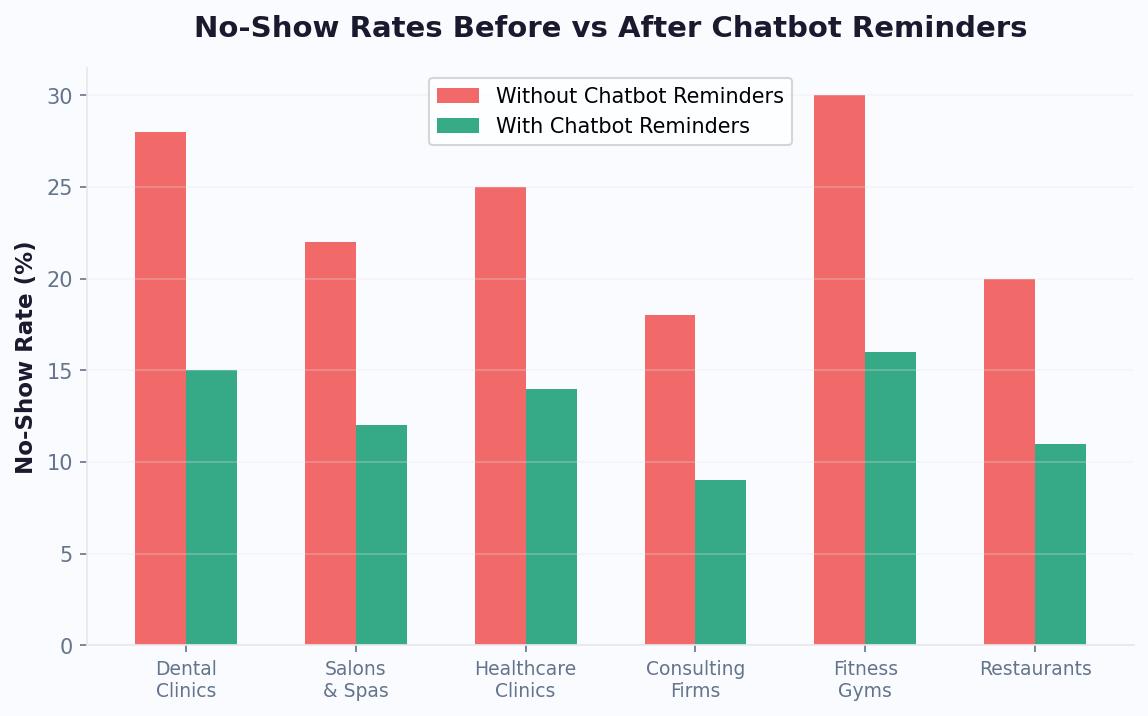
The financial impact of inefficiency hits hard. Each missed appointment costs a veterinary practice $150-200 in lost revenue when you account for the reserved exam room time, veterinarian allocation, and the opportunity cost of the slot. With average no-show rates of 15-20% across the industry, a clinic seeing 40 patients per day could lose $4,500-8,000 per month from no-shows alone.
AI chatbots address these challenges directly. A veterinary chatbot handles appointment scheduling, vaccination and medication reminders, emergency triage routing, prescription refill requests, and pet owner education — 24 hours a day, 7 days a week, across your website, WhatsApp, and Instagram. For related healthcare applications, see our healthcare chatbot guide. It does not replace your clinical team; it removes the repetitive communication workload so your staff can focus on patient care.
The results speak for themselves. Veterinary practices using chatbots report 40% reductions in no-shows through interactive reminders, 35-50% decreases in phone call volume, and 20-30% increases in preventive care compliance (vaccinations, dental cleanings, annual wellness exams) through proactive reminders. For clinics struggling with staffing shortages and growing patient demand, a chatbot is not a luxury — it is a practical necessity.
Appointment Management and No-Show Reduction
Appointment management is the core operational challenge for veterinary clinics. Unlike human medicine, where patients manage their own scheduling, veterinary appointments depend on pet owners who juggle work schedules, family commitments, and multiple pets. This complexity contributes to the industry's persistently high no-show rates — and the chatbot is the most effective tool for solving it.
Seamless Appointment Booking
The chatbot handles the complete booking flow:
- Service selection: The pet owner specifies the visit type — wellness exam, vaccination, sick visit, dental cleaning, surgery consultation, or grooming (if offered). The chatbot adjusts appointment duration and routes to the appropriate provider.
- Pet identification: For existing clients, the chatbot identifies the pet by name and pulls up their record. For multi-pet households, it asks which pet the appointment is for. For new clients, it collects pet species, breed, age, weight, and basic medical history.
- Scheduling: The chatbot presents available slots from your practice management system, filtered by the patient's needs. Sick visits are prioritized with same-day or next-day availability; wellness exams show the next 2-3 weeks of openings.
- Special instructions: Based on the visit type, the chatbot provides pre-visit instructions: "For Max's dental cleaning, please withhold food after 10 PM the night before. Water is fine until the morning of the appointment."
The No-Show Prevention System
Reducing no-shows from 15-20% to under 10% requires more than simple reminders. The chatbot implements a multi-touch confirmation system:
- 72-hour reminder: "Bella's wellness exam with Dr. Chen is in 3 days (Thursday at 2:00 PM). Reply CONFIRM, RESCHEDULE, or CANCEL."
- 24-hour reminder with prep instructions: "Bella's appointment is tomorrow at 2:00 PM. Please bring a fresh stool sample for parasite screening. Remember to withhold food for 4 hours before the visit if bloodwork is planned."
- 2-hour reminder: "Bella's appointment is in 2 hours. Our address is 123 Main St. Parking is available behind the building. See you soon!"
The key is the interactive confirmation. When a pet owner replies RESCHEDULE instead of simply not showing up, the chatbot immediately presents alternative slots and rebooks. The cancelled slot is instantly offered to patients on the waitlist via WhatsApp notification, minimizing revenue loss.
Waitlist Management
When the schedule is full, the chatbot offers waitlist placement: "Dr. Chen is fully booked this week, but I can add you to our waitlist. If a slot opens up, I'll message you immediately. Would you also like to book the next available scheduled slot as a backup?" When cancellations occur, the chatbot notifies waitlisted clients in order, and the first to confirm gets the slot. For more on reducing no-shows across industries, read our guide on how to automate appointment reminders to reduce no-shows. This automated waitlist fills 60-80% of cancelled appointments that would otherwise go empty. Connect your chatbot to your practice management system via the integrations hub and use calendar booking for real-time scheduling sync.
Vaccination and Prescription Reminders That Drive Compliance
Preventive care is the foundation of veterinary medicine — and the foundation of a veterinary practice's revenue stability. Annual wellness exams, core vaccinations (rabies, distemper, parvovirus, bordetella), heartworm prevention, flea and tick treatments, and dental cleanings are all recurring revenue streams that depend on pet owner compliance. Yet 30-40% of pets are overdue on at least one preventive care item at any given time, representing both a health risk to the animal and lost revenue for the practice.
Automated Vaccination Reminders
The chatbot tracks each pet's vaccination schedule and sends proactive reminders:
- 30 days before due: "Hi! Max's rabies vaccination is due next month. Would you like to schedule his appointment now? We have openings the week of March 15."
- Due date notification: "Max's rabies vaccination is now due. Keeping vaccinations current protects Max and is required for boarding and grooming facilities. Book here — it only takes 30 seconds."
- Overdue escalation: "Max's rabies vaccination is now 2 weeks overdue. This vaccination is required by law in most states and protects against a fatal disease. Schedule today and we'll combine it with a quick wellness check at no extra exam fee."
This graduated approach is far more effective than a single postcard or phone call. Practices using automated chatbot reminders — a strategy endorsed by Veterinary Team Brief — report 25-35% improvements in vaccination compliance rates.
Prescription and Medication Refills
For pets on ongoing medications — thyroid supplements, pain management, allergy medications, heartworm prevention — the chatbot automates the refill process:
- Refill reminders: Based on the prescribed quantity and dosage frequency, the chatbot calculates when the medication will run out and sends a reminder 7-10 days before: "Luna's Apoquel prescription will need a refill soon. Reply REFILL to request a refill, and we'll have it ready for pickup tomorrow."
- Refill processing: The chatbot collects the refill request and routes it to the veterinary team for approval. Once approved, the pet owner receives a notification: "Luna's Apoquel refill is ready for pickup. Our pharmacy hours are Mon-Fri 8 AM - 6 PM, Sat 9 AM - 1 PM."
- Compliance tracking: If a pet owner does not refill a critical medication on time, the chatbot sends a follow-up: "We noticed Luna's thyroid medication hasn't been refilled. Consistent dosing is important for managing her condition. Would you like to request a refill?"
Seasonal Preventive Care Campaigns
The chatbot runs seasonal campaigns for time-sensitive preventive care:
- Spring: Heartworm testing and prevention start, tick prevention reminders
- Summer: Flea and tick prevention compliance, heat safety tips
- Fall: Dental cleaning promotions, pre-winter wellness exams
- Winter: Holiday safety reminders (toxic foods, decoration hazards), cold weather care tips
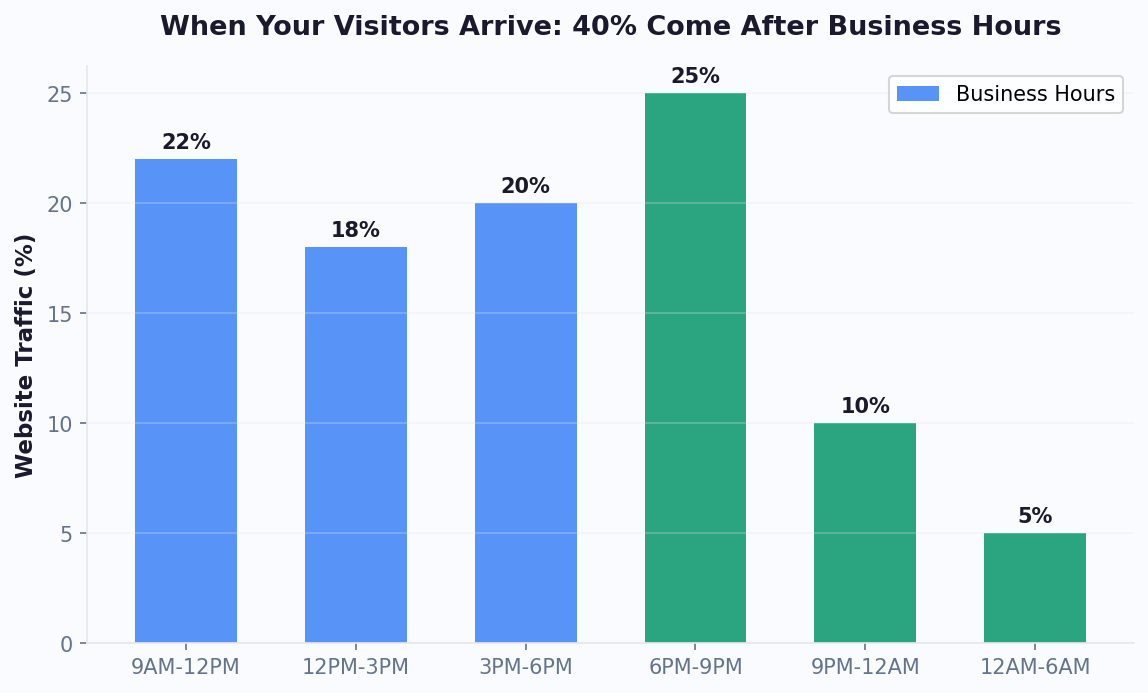
These campaigns go out to all eligible patients via WhatsApp with 80-95% open rates, dramatically outperforming email campaigns that typically see 15-20% open rates. Track campaign effectiveness through the analytics dashboard to optimize timing and messaging for your specific patient population.
Emergency Triage Routing: Getting Critical Cases Seen Fast
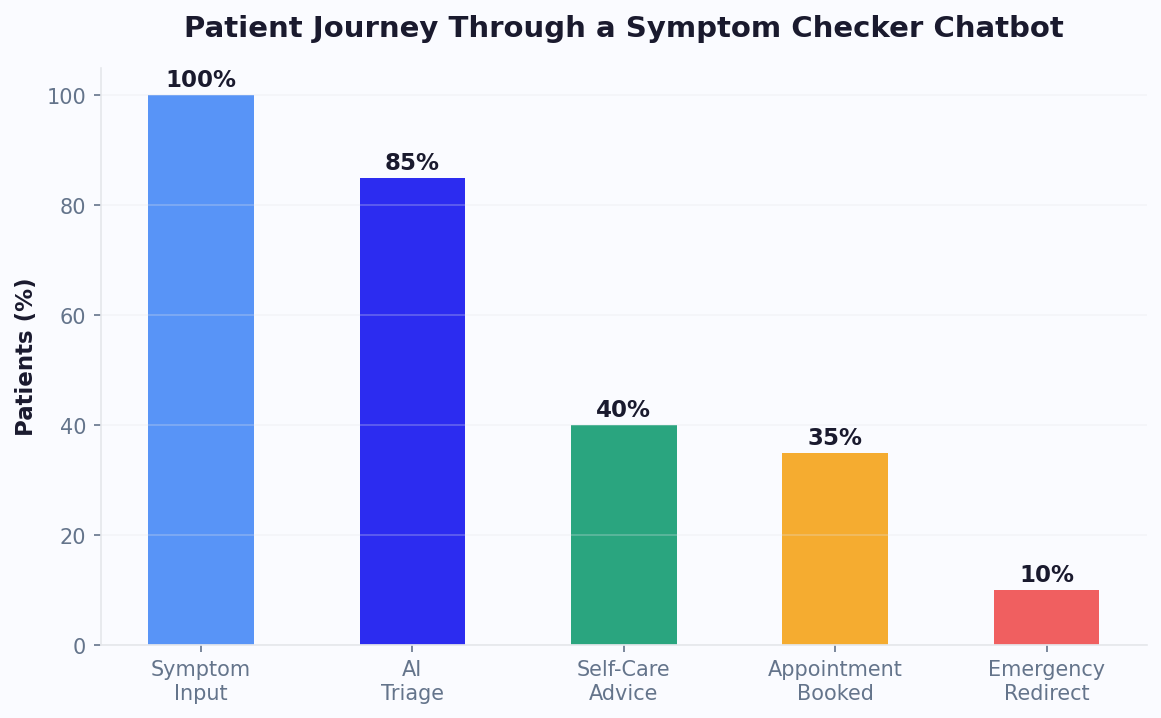
One of the most challenging aspects of veterinary practice is managing emergency and urgent care inquiries. Pet owners often cannot tell the difference between a true emergency (bloat, toxin ingestion, trauma), an urgent situation that needs same-day attention (persistent vomiting, limping, eye injury), and a concern that can wait for a regular appointment (mild itching, slight appetite change, minor ear odor). A chatbot with veterinary triage logic helps pet owners get the right level of care at the right time.
How Veterinary Triage Chatbots Work
The chatbot guides concerned pet owners through a structured assessment (reference resources like PetMD's symptom checker for triage protocol development):
- Symptom identification: "I can help assess the situation. What symptoms is your pet showing? Select all that apply: vomiting, diarrhea, not eating, lethargy, limping, difficulty breathing, bleeding, swelling, seizure, other."
- Severity assessment: Based on the selected symptoms, the chatbot asks targeted follow-up questions. For vomiting: "How many times has your pet vomited? Is there blood in the vomit? When did the vomiting start? Has your pet eaten anything unusual?"
- Triage classification: The chatbot classifies the situation into one of three categories:
- Emergency (immediate): Difficulty breathing, seizures, suspected toxin ingestion, bloat symptoms, severe bleeding, loss of consciousness — route immediately to emergency vet hospital with directions and phone number.
- Urgent (same-day): Persistent vomiting (3+ episodes), bloody diarrhea, limping with visible pain, eye injuries, moderate wounds — offer same-day sick visit booking or next available slot.
- Non-urgent (can schedule): Mild itching, slight appetite decrease, minor ear odor, occasional soft stool — offer regular appointment booking with advice for monitoring at home in the meantime.
- Routing and action: Based on the classification, the chatbot takes the appropriate action — providing emergency hospital directions, booking an urgent visit, or scheduling a routine appointment.
After-Hours Emergency Guidance
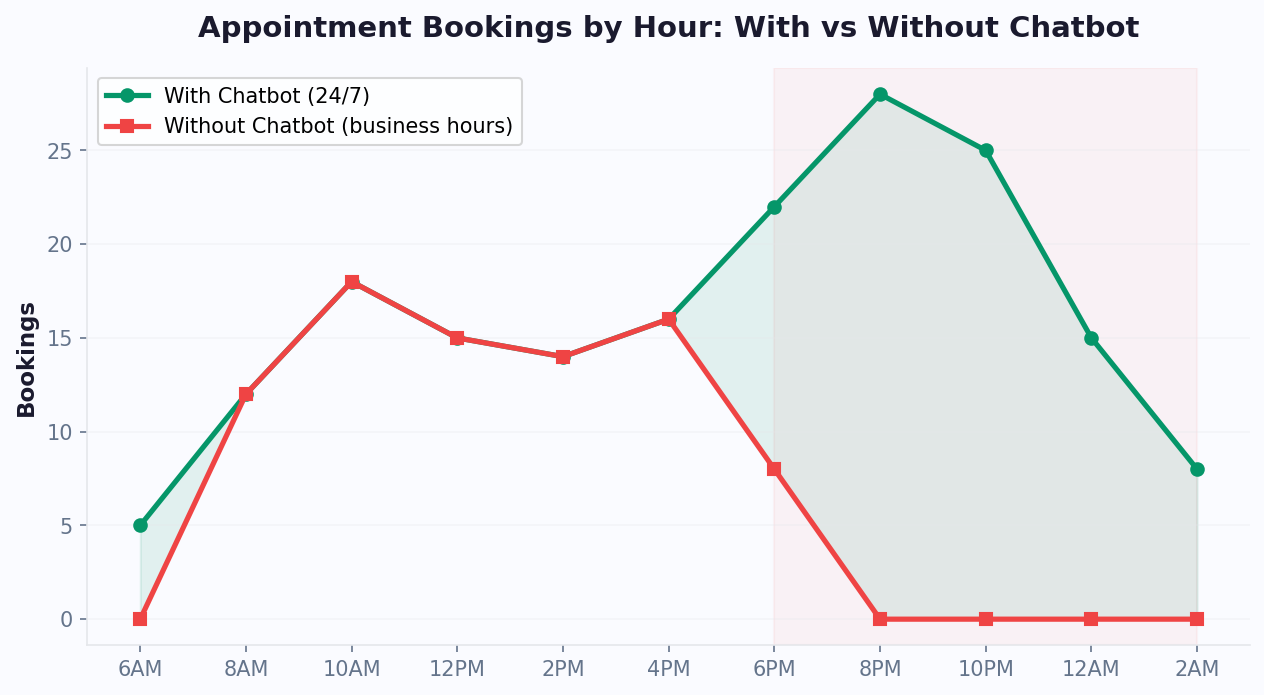
After-hours calls are particularly stressful for pet owners and problematic for practices without 24-hour staffing. The chatbot provides immediate after-hours support:
- True emergencies: Directs the pet owner to the nearest emergency veterinary hospital with address, phone number, directions, and hours of operation.
- Urgent but not emergent: Provides first-aid guidance and comfort care instructions for the night, then automatically schedules a first-available appointment for the next morning: "Based on what you've described, Luna should be seen tomorrow. I've booked a sick visit at 8:00 AM with Dr. Chen. In the meantime, keep her comfortable, offer small sips of water, and withhold food until the visit."
- Non-urgent concerns: Provides reassurance and education: "Occasional soft stool in dogs is usually not an emergency. Monitor for 24 hours. If it persists or worsens, we can see Bella during regular hours. Would you like to book an appointment?"
Important Disclaimer
Veterinary triage chatbots must include clear disclaimers that they do not replace professional veterinary diagnosis. The chatbot should always err on the side of caution — when in doubt, recommend in-person evaluation. The goal is not to diagnose but to route patients to the appropriate level of care quickly, reducing unnecessary emergency visits while ensuring true emergencies are identified and directed appropriately. Display first-aid information with rich media — images showing how to apply pressure to wounds, how to safely transport an injured pet, and how to identify common toxic substances.
Pet Owner Education and Engagement
Educated pet owners are better clients. They recognize symptoms earlier, follow treatment plans more consistently, invest in preventive care, and have more realistic expectations about outcomes and costs. A chatbot that provides ongoing pet health education builds trust, positions your clinic as the go-to authority, and increases engagement between visits — all of which drive revenue and retention.
Breed-Specific Health Information
The chatbot provides tailored health information based on the pet's species, breed, and age:
- Puppy/kitten stage (0-1 year): Vaccination schedules, spay/neuter timing, housetraining tips, socialization guidance, nutrition recommendations by size and breed.
- Adult stage (1-7 years): Annual wellness exam reminders, dental care importance, weight management, breed-specific health screening (hip X-rays for German Shepherds, cardiac screening for Cavalier King Charles Spaniels — following breed-specific screening protocols recommended by IDEXX Laboratories, eye exams for Pugs).
- Senior stage (7+ years): Bi-annual wellness exams, blood panel monitoring, arthritis management, cognitive decline awareness, end-of-life planning resources.
This proactive education keeps your clinic top-of-mind and encourages preventive care visits that pet owners might otherwise skip.
Post-Visit Care Instructions
After surgical procedures, dental cleanings, or treatments, the chatbot delivers detailed aftercare instructions that pet owners can reference anytime:
- Surgery aftercare: Incision monitoring (what to look for), activity restrictions, medication schedules, e-collar management, feeding guidelines, and when to return for suture removal.
- Dental cleaning aftercare: Soft food recommendations for 24-48 hours, home dental care routine introduction, signs of complications.
- Medication instructions: Dosage, frequency, how to administer (with food, on empty stomach), potential side effects, and what to do if a dose is missed.
Having these instructions available through the chatbot means pet owners do not need to call the clinic with questions they would otherwise forget to ask during checkout. This reduces post-visit callback volume by 30-40% while improving compliance with aftercare instructions.
Nutritional Guidance and Product Recommendations
Nutrition questions are among the most common inquiries veterinary clinics receive. The chatbot provides evidence-based nutritional guidance:
- Diet recommendations: Based on the pet's age, breed, weight, and any medical conditions, the chatbot recommends appropriate diets — prescription diets for conditions like kidney disease, diabetes, or food allergies, and quality commercial diets for healthy pets.
- Weight management: For overweight pets (an estimated 56% of dogs and 60% of cats in the US are overweight or obese), the chatbot provides calorie guidelines, feeding schedules, and exercise recommendations.
- Toxic food awareness: Interactive lookup for common household items: "Can my dog eat grapes?" → "No! Grapes and raisins are toxic to dogs and can cause kidney failure. If your dog has eaten grapes, contact your vet or the ASPCA Poison Control Center (888-426-4435) immediately."
For pet service businesses beyond clinics, see our chatbot for pet services guide. Use rich media to share educational content — body condition score charts, tooth brushing demonstration videos, medication administration guides, and seasonal safety infographics. This content builds engagement and positions your clinic as a trusted resource beyond just appointments and treatments.
ROI Analysis: What a Veterinary Chatbot Is Worth in Dollars
Veterinary practice owners need concrete financial justification before investing in new technology. Here is the detailed ROI calculation based on data from clinics that have deployed chatbots.
Revenue Recovery from No-Show Reduction
The most immediate financial impact comes from reduced no-shows:
| Metric | Before Chatbot | After Chatbot | Monthly Impact |
|---|---|---|---|
| Daily appointments | 40 | 40 | — |
| No-show rate | 18% | 9% | -50% |
| Daily no-shows | 7.2 | 3.6 | -3.6 recovered |
| Revenue per appointment | $175 avg | $175 avg | — |
| Monthly recovered revenue | — | — | $13,860 |
Staff Time Savings
Front desk staff spend 4-6 hours daily on phone calls. A chatbot handling 40% of routine calls frees approximately 2 hours per day:
- 2 hours/day x 22 working days = 44 hours/month saved
- At $20/hour (front desk pay + benefits): $880/month in labor savings
- Alternative: that same staff time can now handle check-in/check-out more efficiently, improving client flow and reducing wait times
Preventive Care Revenue Increase
Automated reminders drive compliance with preventive care protocols:
- Vaccination compliance improvement: 25% more pets current on vaccinations
- Average vaccination visit revenue: $120 (exam + vaccines)
- Additional vaccinations per month (200-patient practice): 10-15
- Additional monthly preventive care revenue: $1,200-1,800
Total Monthly ROI Summary
| Value Source | Conservative Estimate | Optimistic Estimate |
|---|---|---|
| No-show recovery | $9,240 | $13,860 |
| Staff time savings | $660 | $880 |
| Preventive care revenue | $1,200 | $1,800 |
| After-hours appointment captures | $1,750 | $3,500 |
| Total monthly value | $12,850 | $20,040 |
| Chatbot cost | $149/month | $149/month |
| Monthly ROI | 86x | 134x |
Even at conservative estimates, the chatbot pays for itself within the first 2-3 days of each month. The remaining 27 days are pure value. This ROI makes chatbot adoption one of the highest-return technology investments available to veterinary practices — significantly outperforming most equipment purchases, marketing campaigns, and practice management upgrades.
Client Retention and Lifetime Value: How Chatbots Keep Clients Coming Back
Acquiring a new veterinary client costs 5-7x more than retaining an existing one. The average lifetime value of a veterinary client (over their pet's lifespan) ranges from $8,000-15,000 for dogs and $5,000-10,000 for cats. Keeping clients engaged between visits is critical to retention — and chatbots excel at this ongoing relationship maintenance.
The Retention Problem in Veterinary Medicine
Industry data shows that 15-20% of active veterinary clients become inactive each year — they simply stop coming back. The primary reasons are not dissatisfaction but rather:
- Forgetting about preventive care: Without reminders, pet owners postpone annual exams until a health crisis forces a visit.
- Friction in booking: Calling during business hours is inconvenient for working pet owners. Many intend to book but never get around to it.
- Lack of engagement between visits: Clients who only hear from the clinic once a year (or never) feel no relationship loyalty.
- Price shopping: Without perceived relationship value, clients switch to cheaper clinics or vaccine clinics for routine care.
How Chatbots Address Each Retention Driver
- Automated preventive care reminders: Monthly touchpoints keep the clinic in the pet owner's mind. Each reminder is an opportunity for a visit — and a visit deepens the relationship.
- Frictionless booking: Book at 10 PM on a Sunday via WhatsApp. No phone call needed. The easier it is to book, the more likely clients book.
- Educational content delivery: Monthly breed-specific health tips, seasonal care reminders, and pet birthday messages create perceived value between visits. Clients who receive regular value-added communication are 40% less likely to switch providers.
- Loyalty program integration: The chatbot can track visit frequency and reward loyal clients with discounts on dental cleanings, free nail trims, or priority scheduling — incentivizing continued patronage.
Measuring Client Retention Impact
| Retention Metric | Industry Average | With Chatbot Engagement |
|---|---|---|
| Annual client attrition | 15-20% | 8-12% |
| Visits per client per year | 1.8 | 2.4 |
| Preventive care compliance | 55-65% | 80-90% |
| Client lifetime value increase | — | +25-40% |
A 5% improvement in client retention for a practice with 2,000 active clients (at $1,500 average annual spend) translates to $150,000 in preserved annual revenue. The chatbot investment of $1,800/year generates returns that compound year over year as retention improvements build on themselves.
Implementing a Veterinary Clinic Chatbot: Practical Guide
Getting a veterinary chatbot up and running is straightforward with the right approach. Here is a practical implementation plan designed for busy veterinary practices.
Phase 1: Foundation (Week 1)
- Select your channels. Start with your clinic website and WhatsApp. Website captures new client inquiries; WhatsApp serves existing clients who prefer messaging. Add Instagram later for community engagement and pet content.
- Build your FAQ base. Compile answers to your 30-50 most common questions: hours, location, emergency protocols, accepted species, vaccination schedules, spay/neuter pricing, boarding and grooming services (if offered), and new client procedures.
- Integrate with your PIMS. Connect to your practice information management system (AVImark, Cornerstone, eVetPractice, or others) through the integrations hub for real-time scheduling and patient data access.
Phase 2: Core Flows (Week 2)
Build these flows in priority order:
- Appointment scheduling: Wellness exams, sick visits, vaccinations, dental cleanings, and surgery consultations with appropriate duration and provider routing. Use calendar booking for seamless scheduling.
- Appointment reminders: 72-hour, 24-hour, and 2-hour reminders with interactive confirmation, prep instructions, and easy reschedule/cancel.
- Emergency triage: Symptom-based routing to emergency hospital, urgent same-day booking, or routine scheduling with appropriate guidance.
- Vaccination and medication reminders: Proactive outreach for upcoming and overdue preventive care.
Phase 3: Launch and Grow (Weeks 3-4)
- Staff training. Ensure all team members understand how chatbot appointments appear in the PIMS, how to handle escalated conversations, and how to encourage clients to use the chatbot for routine requests.
- Client promotion. Add chatbot access to your exam room handouts, discharge instructions, appointment confirmation emails, and social media profiles. A table tent in the waiting room with a QR code and "Text us anytime for appointments, reminders, and pet health questions!" drives adoption.
- Add educational content. Begin building breed-specific health libraries, seasonal care guides, and post-procedure aftercare instructions.
Measuring Impact
Track these KPIs to quantify your chatbot's value:
- No-show rate: Target 40% reduction within the first 2 months (the industry benchmark for chatbot-enabled clinics)
- Phone volume: Target 35-50% reduction in routine phone calls
- Vaccination compliance: Percentage of patients current on core vaccinations — target 20-30% improvement
- After-hours engagement: Number of appointment requests, emergency triage assessments, and questions handled outside business hours
- Client satisfaction: Post-visit chatbot survey scores, Google review trends
- Revenue per doctor hour: With fewer no-shows and better schedule utilization, revenue per available doctor hour should increase measurably
Monitor conversations through the analytics dashboard to identify recurring questions your chatbot does not yet handle and continuously expand its capabilities. To calculate the exact financial impact for your practice, use our chatbot ROI calculator guide. Most veterinary clinics see meaningful ROI within the first month as no-show reductions and phone volume decreases free up staff time and recover previously lost revenue.
Revenue Impact Summary for a Typical 3-Vet Practice
To quantify the financial case for your practice leadership, here is a consolidated revenue impact model based on a mid-size veterinary clinic seeing 40 patients per day:
| Revenue Driver | Monthly Impact | Annual Impact |
|---|---|---|
| No-show reduction (15% to 8%) | $3,500-6,000 | $42,000-72,000 |
| Improved vaccination compliance (+25%) | $1,800-3,200 | $21,600-38,400 |
| After-hours appointment capture | $4,000-8,000 | $48,000-96,000 |
| Cancelled slot recovery via waitlist | $1,500-3,000 | $18,000-36,000 |
| Front desk time savings (1+ FTE equivalent) | $3,000-4,500 | $36,000-54,000 |
Total estimated annual impact: $165,000-$296,000 against a chatbot investment of $1,200-3,600 per year. This represents a 45:1 to 245:1 return on investment, making the veterinary chatbot one of the highest-ROI practice technology investments available today.
Was this article helpful?
AI Chatbots for Veterinary Clinics FAQ
Everything you need to know about chatbots for ai chatbots for veterinary clinics.
About the Author

Conferbot Team specializes in conversational AI, chatbot strategy, and customer engagement automation. With deep expertise in building AI-powered chatbots, they help businesses deliver exceptional customer experiences across every channel.
View all articles