What Is a Home Care Chatbot?
A home care chatbot is an AI-powered conversational assistant that helps home care agencies, senior care providers, and home health organizations manage client intake, answer family questions, match care needs to available services, and streamline the process of connecting seniors with the right caregivers. It operates on your agency's website, WhatsApp, or social media profiles and provides immediate, compassionate responses to families who are often navigating one of the most stressful decisions of their lives.
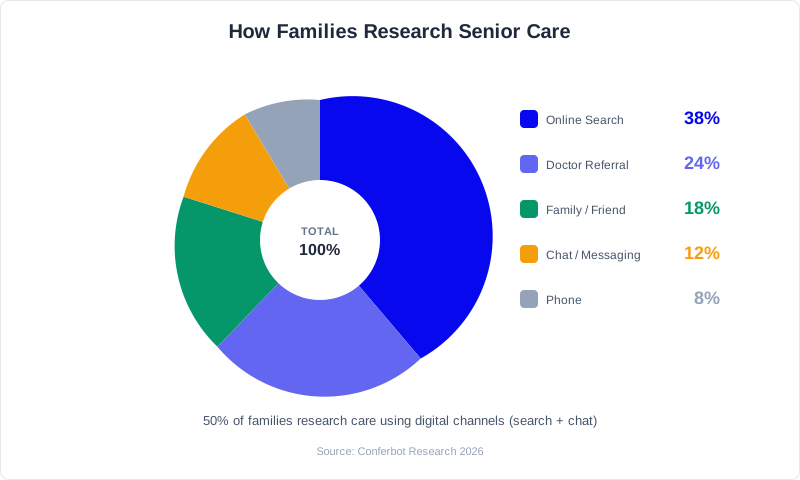
Finding home care for a loved one is rarely a planned, calm experience. More often, it is triggered by a crisis: a fall, a hospital discharge, a sudden decline in health, or a family member realizing they can no longer manage caregiving alone. These moments happen at 10 PM on a Friday, at 6 AM after a sleepless night, or during a lunch break at work. Families search "home care near me," land on your website, and need answers immediately. They do not want to fill out a form and wait until Monday for a callback.
A home care chatbot meets families at their moment of need. It greets them warmly, asks about their loved one's care requirements, explains available services, answers common questions about costs and insurance, and collects the information your intake team needs to follow up with a personalized care plan. The entire interaction takes 3-5 minutes and gives the family a sense of progress during an overwhelming time.
Modern home care chatbots built on platforms like Conferbot's AI chatbot builder combine structured intake flows with natural language processing so families can ask open-ended questions: "Does Medicare cover in-home care?" "What's the difference between a home health aide and a companion?" "Can someone help my father with medication management?" The chatbot provides accurate, empathetic answers drawn from your agency's knowledge base, building trust and confidence before the first human interaction.
Whether you operate a single-location home care agency, a franchise with multiple territories, or a home health organization serving hundreds of clients, this guide walks you through everything: the industry challenges driving chatbot adoption, the features that matter most, how to build an intake flow, compliance considerations, family communication capabilities, ROI analysis, and best practices for implementation.
The Senior Care Industry Challenge
The home care industry sits at the intersection of two powerful trends: rapidly growing demand and a deepening shortage of caregivers. Chatbots do not solve the caregiver shortage, but they solve the administrative bottleneck that prevents agencies from converting demand into enrolled clients.
Explosive Demand Growth
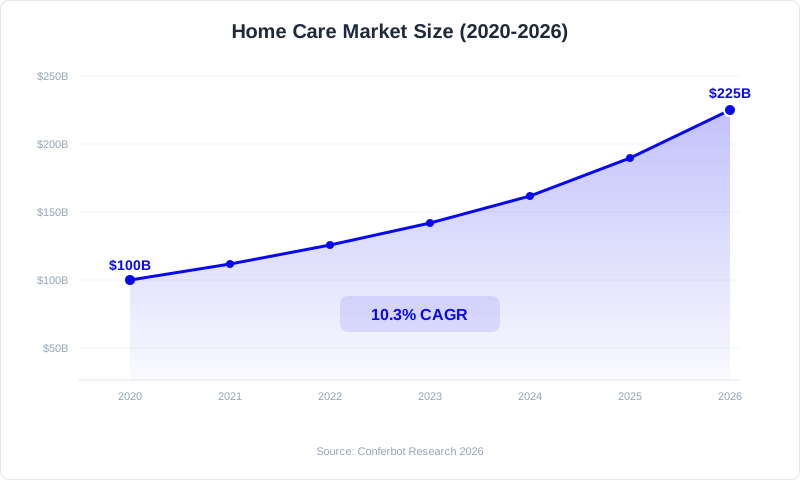
The numbers are staggering. According to the Administration for Community Living, the number of Americans aged 65 and older will reach 82 million by 2030, up from 58 million in 2022. By 2040, one in five Americans will be over 65. The home care market is projected to grow from $142 billion in 2024 to over $225 billion by 2030, a compound annual growth rate of nearly 8%. Every day, 10,000 Americans turn 65 -- and many of them will eventually need some form of in-home care.
The Caregiver Shortage Crisis
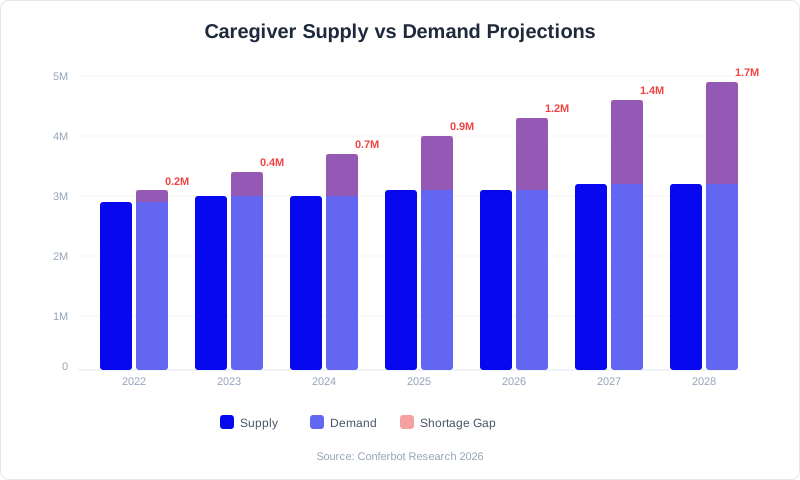
While demand surges, the supply of caregivers is not keeping pace. The PHI National workforce data projects a shortage of 446,000 home care workers by 2028. Turnover rates in home care exceed 60% annually. Agencies spend enormous resources recruiting and retaining caregivers, leaving less time and staff for client intake and family engagement.
The Intake Bottleneck
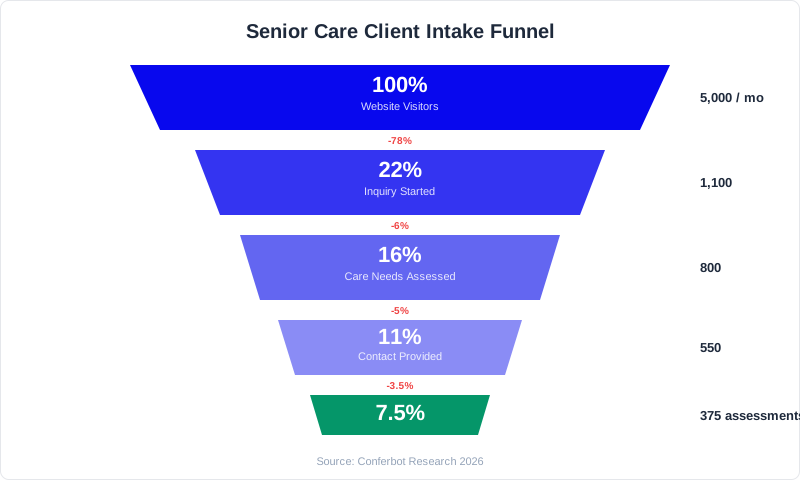
Here is where the chatbot opportunity emerges. Most home care agencies have 1-3 intake coordinators handling all incoming inquiries: phone calls, website form submissions, hospital referrals, and physician referrals. During business hours, these coordinators are often in assessments, on the phone with families, or coordinating care schedules. After hours, nobody is available at all.
The result: 40-50% of home care website inquiries go unanswered for more than 24 hours. By then, the family has called 3-5 other agencies and often committed to the first one that responded with empathy and a clear next step. In home care, the agency that responds first with a compassionate, informative conversation wins the client 70% of the time. A website chatbot ensures that first response happens in seconds, not hours.
The Numbers That Define the Opportunity
- 82 million Americans will be 65+ by 2030
- $225 billion projected home care market by 2030
- 60%+ annual caregiver turnover rate
- 40-50% of website inquiries go unanswered within 24 hours
- 70% of families choose the first agency that provides a compassionate, informative response
- 65% of care searches begin outside business hours (evenings and weekends)
- Average lifetime client value: $35,000-$120,000 (12-36 months of care)
How Chatbots Help Families Find the Right Care
Searching for home care is emotionally charged and informationally overwhelming. Families are dealing with guilt, urgency, confusion about care options, and anxiety about costs. A well-designed chatbot addresses both the emotional and practical dimensions of this journey.
Immediate Availability When Families Need It Most
The decision to seek home care often happens during a crisis -- a hospital discharge on a Friday afternoon, a fall discovered by a neighbor, or a moment of realization after a difficult holiday visit. These moments do not wait for business hours. A chatbot provides immediate, compassionate engagement at 11 PM on a Saturday or 6 AM before work. It cannot solve everything, but it can say: "I understand this is a difficult time. Let me help you understand your options and connect you with a care coordinator who can help."
Reducing Information Overload
Most families do not know the difference between home care, home health care, skilled nursing, companion care, and personal care. They do not understand how insurance, Medicare, Medicaid, or long-term care insurance applies. They have no framework for evaluating agencies. A chatbot breaks this complexity into a guided conversation:
- "Is your loved one recovering from a hospital stay or surgery, or do they need ongoing daily assistance?"
- "Do they need help with personal care (bathing, dressing, mobility) or primarily companionship and household tasks?"
- "Do they have Medicare, Medicaid, long-term care insurance, or will this be private pay?"
Each answer narrows the options and guides the family toward the right type of care, reducing the confusion that often causes families to delay action or make poorly matched choices.
Setting Expectations on Cost and Coverage
Cost is the number one question families have, and the number one question agencies avoid answering before an assessment. But families are not asking for a binding quote -- they are asking "Is this even feasible for us?" A chatbot that provides general cost ranges ("In-home personal care in [region] typically costs $25-$35 per hour, with most clients using 20-40 hours per week") and explains payment options gives families the clarity they need to move forward with the intake process. Use our cost calculators to help families estimate their care investment before the first call.
After-Hours Triage
Not every inquiry has the same urgency. A family calling about arranging care for a gradual decline has a different timeline than a family scrambling for post-surgical care starting Monday. The chatbot triages inquiries by urgency:
- Urgent (care needed within 48 hours): Chatbot collects essential details and triggers an immediate notification to the on-call coordinator
- Soon (care needed within 1-2 weeks): Full intake flow, scheduled callback within next business day
- Planning (exploring options for the future): Educational content, care guide download, email follow-up sequence
This triage ensures your intake team prioritizes time-sensitive cases while still nurturing longer-term prospects.
Key Features of a Home Care Chatbot
An effective home care chatbot balances thoroughness with sensitivity. It collects the information your intake team needs while respecting the emotional state of families navigating a difficult decision. Here are the features that drive results for home care agencies.
1. Care Type Matching
The chatbot asks a series of questions to determine the appropriate type of care: companion care, personal care, skilled nursing, memory care, respite care, or post-surgical recovery care. Based on the answers, it explains what that type of care includes, what it costs, and what the next steps are. This matching process reduces mismatched referrals and ensures families understand what they are signing up for.
2. Needs Assessment
A structured assessment covers activities of daily living (ADLs): bathing, dressing, grooming, mobility, toileting, feeding, and medication management. The chatbot asks about each category in a conversational format: "Does your loved one need assistance getting in and out of the bathtub or shower?" This assessment pre-qualifies the level of care needed and gives your intake coordinator a detailed picture before the first phone call.
3. Scheduling and Availability Matching
The chatbot asks about the desired care schedule: full-time live-in, hourly weekday, overnight, weekend-only, or flexible. It also asks about the preferred start date. This information is critical for agencies to determine caregiver availability before committing to a timeline. If your agency has limited availability for live-in care, the chatbot can manage expectations proactively rather than disappointing families later.
4. Insurance and Payment Guidance
The chatbot asks about insurance coverage and provides general guidance on payment options: "Does your loved one have long-term care insurance? Medicare? Medicaid? Or will this be private pay?" Based on the answer, it explains what is typically covered and what the out-of-pocket costs may be. This transparency builds trust and filters out inquiries where your agency's services do not match the family's financial situation.
5. Location and Service Area Verification
Home care is inherently local. The chatbot verifies that the care recipient is within your service area before proceeding with the full intake. For multi-location agencies, it routes the inquiry to the appropriate office based on zip code.
6. Emergency Resource Routing
Some families reach your chatbot in genuine crisis: a loved one has fallen and they do not know what to do, or they suspect elder abuse. The chatbot must recognize these situations and provide appropriate resources: emergency numbers, Adult Protective Services contacts, and clear guidance to call 911 if there is an immediate safety concern. This is both ethically essential and a reflection of your agency's commitment to care.
7. Document Collection
For families ready to move forward, the chatbot can collect preliminary information that speeds up the formal intake process: care recipient's name, date of birth, primary diagnoses, current medications, physician contact, emergency contacts, and insurance information. Collecting this information upfront saves 20-30 minutes in the formal intake call and demonstrates professionalism.
Building a Home Care Intake Flow with Conferbot
Building a home care intake chatbot requires sensitivity that goes beyond typical lead generation. The conversation must be warm, clear, and never feel transactional. Here is how to build an intake flow that respects families while collecting the information your team needs.
Step 1: Define Your Intake Requirements (10 Minutes)
Work with your intake coordinator to list every piece of information they need from a first inquiry. Then prioritize: what must the chatbot collect to generate a qualified lead, and what can wait for the follow-up call? Typically, the chatbot must-haves are: care type needed, care schedule, location, urgency, and family contact information. Nice-to-haves include: diagnoses, medications, and insurance details.
Step 2: Choose a Template and Customize (15 Minutes)
Start with a healthcare or service intake template from Conferbot's template library and customize it for home care. The tone should be warm and empathetic throughout. Replace generic greetings with: "Welcome. Finding the right care for your loved one matters, and we're here to help. Let me ask a few questions to understand your needs."
Step 3: Build the Conversation Flow (20 Minutes)
Here is a proven intake flow for home care agencies:
- Greeting: "Welcome to [Agency Name]. We help families find compassionate, reliable in-home care. Are you looking for care for yourself or a loved one?"
- Relationship: "What is your relationship to the person who needs care?" (I am the care recipient / Son or daughter / Spouse / Other family member / Healthcare professional or social worker)
- Care type: "What type of assistance is needed?" (Personal care / Companionship / Skilled nursing / Memory care / Post-hospital recovery / Not sure)
- ADL assessment: "Does [he/she/they] need help with any of the following?" (Bathing / Dressing / Mobility / Medication reminders / Meal preparation / Transportation / Housekeeping)
- Schedule: "What care schedule are you considering?" (A few hours per day / Full day / Overnight / 24-hour live-in / I need guidance)
- Urgency: "When is care needed?" (Immediately or within 48 hours / Within 1-2 weeks / Within a month / Planning ahead)
- Location: "What is the zip code where care will be provided?"
- Contact: "To connect you with a care coordinator, I'll need your name, phone number, and the best time to reach you."
- Confirmation: "Thank you, [Name]. A care coordinator will contact you within [timeframe] to discuss a personalized care plan for your loved one. In the meantime, here is our care guide: [link]."
Step 4: Configure the Knowledge Base (15 Minutes)
Upload answers to the most common questions families ask: What is the difference between home care and home health? How much does care cost? Do you accept Medicare or Medicaid? Are your caregivers background-checked? What happens if a caregiver is sick? How quickly can care start? Add these to the knowledge base so the AI can answer them naturally during conversation.
Step 5: Deploy and Test (10 Minutes)
Deploy the chatbot on your website and WhatsApp. Test every path: urgent intake, standard intake, out-of-service-area, insurance questions, and emergency resource routing. Have a family member or friend test it and give you honest feedback on the tone and clarity. Adjust any messaging that feels cold, clinical, or confusing.
HIPAA and Compliance Considerations
Home care sits within the healthcare ecosystem, and any tool that collects health-related information must be designed with compliance in mind. Here is what you need to know about using chatbots in a home care context.
Understanding HIPAA Applicability
HIPAA (Health Insurance Portability and Accountability Act) applies to covered entities (health plans, healthcare providers, healthcare clearinghouses) and their business associates. Whether your home care agency is a HIPAA-covered entity depends on whether you provide or bill for healthcare services. Non-medical home care agencies providing companion care and homemaking services may not be covered entities, but medical home health agencies providing skilled nursing are.
Regardless of your HIPAA status, protecting client information is both a legal and ethical obligation. Treat all client data as if it were protected health information (PHI).
Chatbot Compliance Best Practices
- Data encryption: Ensure your chatbot platform encrypts data both in transit (TLS/SSL) and at rest. Conferbot uses enterprise-grade encryption for all data.
- Minimum necessary information: Only collect the information the chatbot needs for its purpose. If the chatbot's purpose is intake qualification, it does not need to collect a full medical history -- that can wait for the formal intake call with a care coordinator.
- Business Associate Agreement (BAA): If you are a HIPAA-covered entity, ensure your chatbot platform provider will sign a BAA. This is a contractual agreement that the vendor will safeguard PHI according to HIPAA requirements.
- Consent and transparency: Include a clear statement at the start of the chatbot conversation: "The information you share will be used to connect you with a care coordinator and will be stored securely. By continuing, you consent to our privacy policy." Link to your privacy policy.
- Data retention: Establish a data retention policy. Do not store intake data indefinitely. Set automatic deletion schedules for leads that do not convert to clients.
- Access controls: Limit access to chatbot conversation data to authorized intake staff only. Use role-based permissions in your chatbot platform.
State-Specific Regulations
Home care is regulated at the state level, and some states have additional data privacy requirements beyond HIPAA. California (CCPA/CPRA), Virginia (VCDPA), Colorado (CPA), and Connecticut (CTDPA) all have consumer data privacy laws that may affect how you collect and store information through chatbots. Consult with a healthcare compliance attorney in your state to ensure your chatbot deployment meets all applicable requirements.
What Not to Collect in the Chatbot
To minimize compliance risk, avoid collecting the following in the chatbot conversation: Social Security numbers, full medical records, insurance ID numbers (collect insurance type, not the number), or detailed medication dosages. These details should be collected during the formal intake process with your care coordinator, in a system designed for PHI management.
Family Communication Features
Home care is not just about the care recipient. It involves an entire family -- often geographically dispersed, with multiple decision-makers, different levels of understanding about care needs, and varying emotional readiness. A home care chatbot can serve as a communication hub that keeps the entire family informed and aligned.
Multi-Stakeholder Intake
In many cases, the person researching home care is not the person who will receive care. An adult daughter in San Francisco may be researching care for her mother in Florida. The chatbot handles this gracefully by asking about the relationship early in the conversation and adjusting the language accordingly: "Tell me about your mother's care needs" rather than "Tell me about your care needs."
Family Update Automation
Once care begins, the chatbot can serve as an automated update channel. Family members can check in anytime: "How was Mom's day today?" and receive updates based on caregiver daily reports. This reduces the volume of phone calls to your office -- which often come from family members across different time zones -- while giving families the peace of mind that comes from staying informed. Conferbot's live chat feature lets family members seamlessly escalate to a human coordinator when automated updates are not enough.
Care Plan FAQ Access
After enrollment, families frequently have questions about the care plan: "What does the morning routine include?" "Is medication management part of the service?" "Can we add weekend hours?" Rather than having each question go through your care coordinator, the chatbot can answer routine care plan questions instantly, freeing your team for complex care coordination tasks.
Billing and Schedule Inquiries
Common administrative questions -- "What was billed last week?" "Who is the caregiver assigned for Tuesday?" "Can we reschedule Friday's visit?" -- can be handled through the chatbot when integrated with your scheduling and billing software. This self-service capability reduces call volume to your office by 30-40% and improves family satisfaction by providing instant answers.
Feedback and Quality Monitoring
The chatbot can proactively check in with family members to gather feedback on care quality: "How would you rate this week's care on a scale of 1-5?" "Is there anything we should adjust in the care plan?" This continuous feedback loop helps agencies identify issues early, adjust care plans proactively, and demonstrate responsiveness that drives client retention and referrals.
ROI Analysis for Home Care Agencies
Home care agencies operate on thin margins with high client acquisition costs. A chatbot that captures even a handful of additional clients per month can transform an agency's financial trajectory. Here is a transparent analysis of costs and returns.
Client Acquisition Economics
The average cost to acquire a new home care client through traditional marketing (Google Ads, SEO, referral partnerships, community events) ranges from $500 to $2,500 depending on your market and competition. In competitive metro areas, Google Ads for "home care near me" cost $15-$40 per click with conversion rates of 2-4%, putting the cost per lead at $375-$2,000. And not every lead becomes a client -- typical lead-to-client conversion rates are 15-25%.
The Lifetime Value Equation
What makes home care economics unique is the extraordinary lifetime client value. The average home care client stays with an agency for 14-24 months. At 20-30 hours per week and $25-$35 per hour, the lifetime revenue per client is:
- Light care (15 hrs/week, 12 months): $19,500 - $27,300
- Standard care (25 hrs/week, 18 months): $48,750 - $68,250
- Full-time care (40 hrs/week, 24 months): $104,000 - $145,600
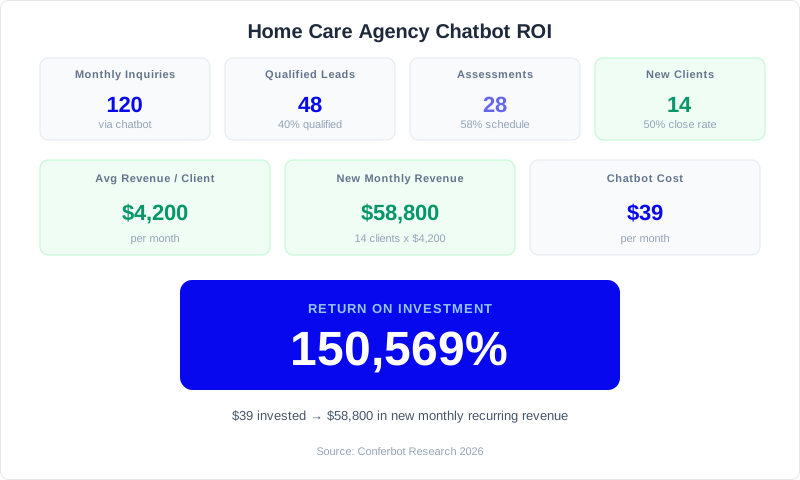
Even one additional client per month, captured by a chatbot that costs $100/month, represents a massive return on investment.
Chatbot Investment
- Platform subscription: $50-$200/month. Check Conferbot pricing for plans that include healthcare-grade features.
- Setup and customization: $0-$500 one-time
- Ongoing optimization: 2-3 hours/month
- Total first-year cost: $600-$3,100
Revenue Impact
Based on data from home care agencies using chatbots:
- 35-50% increase in after-hours lead capture (leads that would otherwise be lost)
- 20-30% improvement in lead-to-client conversion rate (because chatbot intake is faster, warmer, and more informative than a form)
- 15-25% reduction in intake coordinator phone time (chatbot handles initial qualification)
- 2-5 additional clients per month for a mid-size agency (50-100 active clients)
At an average lifetime client value of $50,000, capturing just 2 additional clients per month through the chatbot generates $100,000 per month in lifetime value. Against a chatbot investment of $100-$200 per month, the ROI is extraordinary.
Cost Savings Beyond Lead Generation
- Reduced intake coordinator overtime: $5,000-$15,000/year in labor savings
- Lower cost per lead: Chatbot leads cost 40-60% less than form-only leads when factoring in conversion rates
- Reduced no-show rate for assessments: Automated reminders reduce missed assessment appointments by 30-40%
- Family communication efficiency: 30-40% reduction in routine phone calls from family members
Implementation Guide: From Setup to Live
Implementing a home care chatbot is a process that involves your intake team, your compliance officer (if applicable), and your marketing team. Here is a structured implementation plan that gets you live within two weeks.
Week 1: Planning and Building
Day 1-2: Stakeholder Alignment
Meet with your intake coordinator(s), compliance officer, and marketing lead. Agree on what information the chatbot will collect, what it will not collect (to minimize compliance risk), the tone and language it will use, and the handoff process from chatbot to human. Define your service area boundaries and any exclusion criteria (e.g., care types you do not offer).
Day 3-4: Build the Chatbot
Using Conferbot's no-code builder, build your intake flow following the conversation structure outlined in the Building an Intake Flow section above. Upload your knowledge base content: service descriptions, cost ranges, insurance guidance, caregiver qualification information, and FAQ answers.
Day 5: Internal Testing
Have your intake coordinators, office staff, and a few trusted family members or referral partners test the chatbot. Collect feedback on tone (too clinical? not warm enough?), clarity (did they understand the questions?), and completeness (did it collect everything you need for a follow-up call?).
Week 2: Refinement and Launch
Day 6-8: Refine Based on Feedback
Adjust messaging, add missing FAQ answers, and refine the conversation flow based on tester feedback. Pay special attention to the empathy and warmth of the language -- home care is deeply personal, and the chatbot's tone must reflect that.
Day 9: Compliance Review
Have your compliance officer review the chatbot's conversation flow, data collection, consent language, and privacy policy link. Ensure the chatbot does not collect any information that exceeds your compliance framework.
Day 10: Soft Launch
Deploy the chatbot on your website but keep it in a low-visibility position (small widget, no proactive greeting). Monitor the first 10-20 conversations closely. Read the transcripts. Are families completing the intake flow? Are they asking questions the chatbot cannot answer? Are there any drop-off points?
Day 11-14: Full Launch
Enable proactive greeting ("Welcome to [Agency]. Looking for care for a loved one? I can help."), connect it to your WhatsApp Business number, and promote it on your Google Business Profile and social media. Set up analytics tracking to monitor engagement rates, completion rates, and lead quality.
Post-Launch: 30-Day Optimization
During the first month, review chatbot analytics weekly. Focus on:
- Where do families drop off? Simplify or reword that step.
- What questions are families asking that the chatbot cannot answer? Add those answers to the knowledge base.
- Are urgent leads being followed up within the target timeframe? Adjust notification settings if needed.
- How do chatbot leads compare to phone/form leads in terms of conversion to assessment and client enrollment?
Best Practices for Home Care Chatbots
These best practices are drawn from home care agencies that have successfully deployed chatbots to improve intake efficiency and family satisfaction.
1. Lead with Empathy, Always
Every message in the chatbot should acknowledge the emotional weight of the decision families are making. Never sound transactional. Instead of "Please provide your contact information," say "To connect you with a care coordinator who can help, I'll just need your name and the best number to reach you." Small language adjustments make an enormous difference in completion rates and trust.
2. Respond to Urgent Inquiries Within Minutes
When a family member indicates that care is needed immediately or within 48 hours, your response time must match the urgency. Configure your chatbot to send urgent notifications via text message and phone call to your on-call coordinator. Families in crisis judge your agency by how quickly you respond to their first contact.
3. Provide Educational Content
Many families are interacting with the home care system for the first time. Include educational resources within the chatbot: a care guide PDF, a glossary of care terms, a checklist for evaluating home care agencies, and links to resources like the Eldercare Locator. This positions your agency as a trusted advisor, not just a service provider.
4. Segment Follow-Up by Urgency and Readiness
Not all inquiries are at the same stage. Families needing immediate care get an urgent callback. Families exploring options for the coming months get an educational email sequence. Families planning for the future get added to a newsletter with caregiving tips and resources. This segmented approach ensures every lead receives appropriate follow-up without overwhelming your intake team.
5. Train Intake Staff on Chatbot Handoffs
When an intake coordinator calls a chatbot lead, they should reference the information the family already shared: "Hi, this is [Name] from [Agency]. I see from your chat conversation that you're looking for personal care assistance for your mother, about 25 hours per week. I'd love to learn more and discuss a care plan." This continuity shows the family that their time was not wasted and builds confidence in your agency's professionalism.
6. Collect and Act on Feedback
Use the chatbot to survey families 30 days after care begins, and quarterly thereafter. Ask about caregiver quality, communication, scheduling reliability, and overall satisfaction. Agencies that actively collect and respond to feedback see 20-30% higher client retention rates and receive more referrals.
7. Keep Content Current
Insurance coverage rules change. Medicaid waiver programs update. Your service offerings evolve. Review your chatbot's knowledge base quarterly to ensure all information -- especially cost ranges, insurance guidance, and service descriptions -- is current and accurate. Outdated information erodes trust faster than no information at all.
8. Respect Privacy at Every Step
Include a privacy statement at the beginning of the conversation. Offer an option to speak with a human at any point. Never use client information for purposes beyond what was disclosed. Families trust you with sensitive information about vulnerable loved ones -- honor that trust with rigorous data stewardship.
Was this article helpful?
About the Author
The Conferbot team specializes in conversational AI, chatbot strategy, and customer engagement automation. With deep expertise in building AI-powered chatbots, they help businesses deliver exceptional customer experiences across every channel.
View all articles