
- Conferbot helps e-commerce stores deploy AI chatbots across 8 channels including WhatsApp, Instagram, Messenger, and your website -- all from one no-code visual builder with 30+ node types.
- Automate product FAQs and order inquiries using AI models like leading AI, Claude, and Gemini trained on your product knowledge base. Customers get instant, accurate answers 24/7.
- The free plan includes 600 conversations per month with full access to the visual builder, AI models, and all channels. Paid plans start at just $19/month for growing stores.
- Live chat with human handover ensures complex customer issues are seamlessly transferred to your support team with full conversation history, priority tagging, and internal notes.
- Connect to Shopify, WooCommerce, or any e-commerce platform via Zapier (5,000+ apps) and custom webhooks for real-time order updates, inventory checks, and CRM sync.
Why E-commerce Brands Choose Conferbot
Online stores use Conferbot to automate repetitive support, engage shoppers on every channel, and free up their team to focus on growth.
Connect with Your E-commerce Stack
Use webhooks and Zapier to connect Conferbot to your e-commerce platform, CRM, email marketing tools, and more than 5,000 apps -- all without writing code.
Everything You Need for E-commerce Automation
Purpose-built tools to help online stores automate customer support, answer product questions, and engage shoppers across every channel.
Product Q&A Bot
Let leading AI, Claude, or Gemini answer product questions using your knowledge base. Shoppers get instant, accurate responses about sizing, materials, compatibility, shipping, and more -- 24 hours a day.
Order Inquiry Bot
Automate common order questions by connecting your store through webhooks or Zapier. Provide real-time order status, shipping updates, and return information directly inside the chat.
Omnichannel Support
Deploy the same chatbot on WhatsApp, Instagram, Facebook Messenger, Telegram, your website, and 3 more channels from a single builder. Meet shoppers wherever they already browse.
Live Chat Handover
When a customer needs human help, seamlessly transfer the conversation to a live agent with full chat history, priority levels, and internal notes. No context is lost in the handover.
File Uploads
Let customers share screenshots of defective items, receipts, size charts, or product images directly within the chat. File uploads work across all channels for smoother support interactions.
Zapier Integration
Connect to 5,000+ apps including Shopify, WooCommerce, Klaviyo, Mailchimp, Google Sheets, and your CRM. Automate order notifications, lead capture, and customer data sync without writing code.
Powered by leading AI models including GPT-4, Claude, and Gemini.
Get Started in Three Easy Steps
Deploy your chatbot in minutes, not months. No coding required.
Choose Your Template
Select from pre-built e-commerce chatbot templates for product FAQ, order support, or lead capture -- or build from scratch with 30+ drag-and-drop node types.
Customize & Connect
Import your product catalog into the knowledge base, connect your store via webhooks or Zapier, enable AI models, and customize the chatbot's look to match your brand.
Deploy & Monitor
Launch on your website, WhatsApp, Instagram, Messenger, and more. Track customer conversations, resolution rates, and satisfaction with real-time analytics dashboards.
Trusted by E-commerce Stores Everywhere
From fashion boutiques to electronics retailers, online stores use Conferbot to automate customer support and drive engagement across every channel.
Why E-commerce Needs AI Chatbots
E-commerce is one of the most competitive landscapes in business. With customers just one click away from a competitor, the difference between a sale and an abandoned cart often comes down to the speed and quality of the shopping experience. In 2026, online shoppers expect instant answers to product questions, real-time order updates, and personalized recommendations -- all without navigating away from the page they are on.
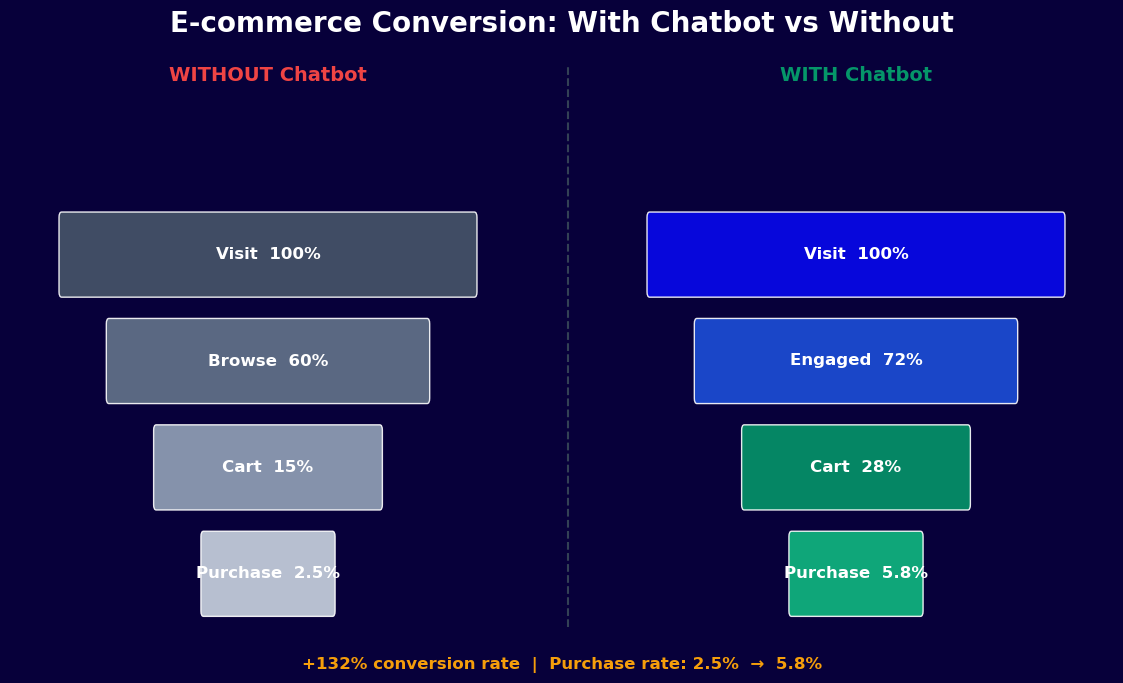
An e-commerce chatbot is an AI-powered assistant that engages shoppers in real-time conversations across your website, WhatsApp, Messenger, and other channels. It acts as a tireless sales associate who knows your entire product catalog, remembers every customer's preferences, and can handle thousands of conversations simultaneously without breaking a sweat.
Cart abandonment is a persistent challenge for most online stores, with a large share of shoppers leaving before completing a purchase. Chatbots directly address common reasons for abandonment: unanswered product questions, uncertainty about shipping costs, and friction at checkout. By giving shoppers instant answers at the moment of hesitation, a chatbot can help recover sales that would otherwise be lost and reduce the volume of repetitive support requests your team handles.
With Conferbot's no-code builder, you can deploy an e-commerce chatbot that handles product discovery, answers pre-sale questions, processes returns, and follows up on abandoned carts -- all without writing a single line of code. Our AI integration enables natural product conversations that feel like chatting with a knowledgeable sales advisor, not navigating a clunky FAQ page.
This guide covers everything you need to know about e-commerce chatbots in 2026: use cases that drive revenue, key features to look for, how to think about ROI, and how to get started with Conferbot today.
E-commerce Chatbot Use Cases
E-commerce chatbots impact every stage of the customer journey, from product discovery to post-purchase support. Here are the use cases that deliver the highest return for online retailers.
Product Recommendations and Discovery
When a customer lands on your store with a vague idea of what they want, a chatbot acts as a personal shopping assistant. It asks about preferences, budget, intended use, and style, then recommends products from your catalog that match. This conversational approach to product discovery can convert better than traditional browse-and-filter navigation because it replicates the in-store experience of talking to a knowledgeable salesperson. Many stores find that guided, conversational recommendations earn more engagement than static recommendation widgets shoppers tend to scroll past.
Cart Abandonment Recovery
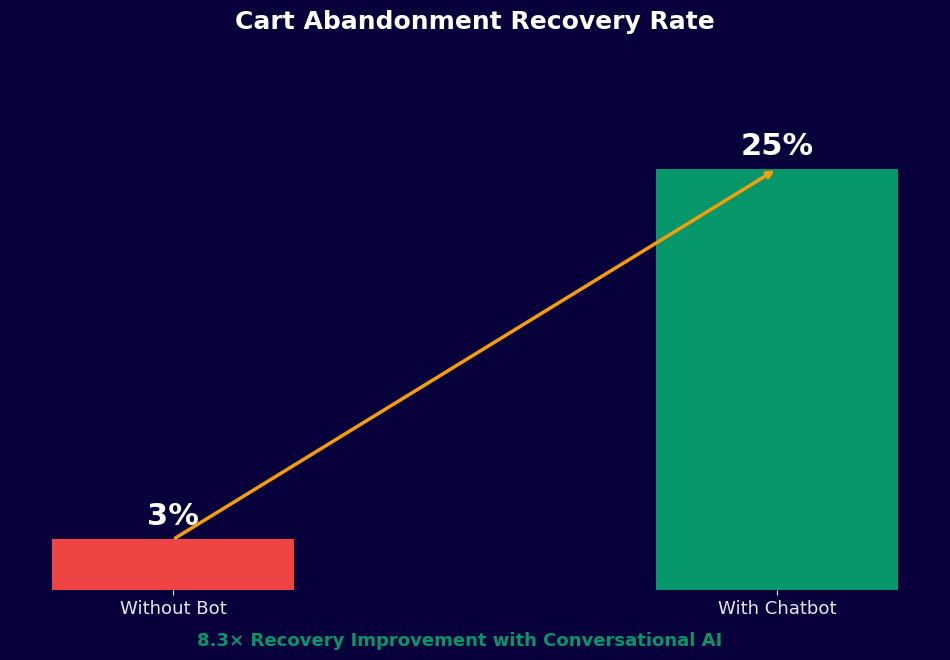
When a shopper adds items to their cart but does not complete checkout, a chatbot can re-engage them proactively. On-site, the bot triggers when exit intent is detected, offering help with any concerns or a limited-time incentive. On messaging channels like WhatsApp, the bot sends a follow-up message with the abandoned cart contents, a direct link to checkout, and an optional discount code. Because messaging apps tend to see far higher open rates than email, a well-timed WhatsApp cart reminder can recover sales that an email reminder would miss.
Order Tracking and Status Updates
"Where is my order?" is the most common support question in e-commerce. A chatbot answers it instantly by pulling real-time tracking data from your shipping provider. Customers simply provide their order number or email, and the bot returns current status, estimated delivery date, and a tracking link. Because "where is my order?" is often the single largest source of support tickets, automating it can meaningfully cut the load on your support team.
Returns and Exchange Processing
Processing returns and exchanges is tedious for both customers and support teams. A chatbot walks customers through your return policy, checks eligibility, generates return labels, and initiates the exchange or refund process -- all conversationally. The bot collects the reason for return (valuable data for product improvement) and offers alternatives like exchanges or store credit before processing a refund, helping retain revenue.
Pre-Sale Questions and Size Guidance
Shoppers often hesitate to purchase because they have unanswered questions about sizing, compatibility, materials, or shipping times. A chatbot answers these questions instantly using your product data, reducing the friction between interest and purchase. For fashion and apparel, AI-powered size recommendation bots that consider measurements, brand-specific sizing charts, and past purchase data significantly reduce return rates due to fit issues.
Upselling and Cross-Selling
After a customer adds an item to their cart, a chatbot can suggest complementary products, bundle deals, or premium alternatives. Unlike static "you might also like" sections, conversational upselling feels helpful rather than pushy because the bot explains why the suggestion is relevant. Done well, this approach can lift average order value by encouraging shoppers to add genuinely complementary items.
Key Features for E-commerce Chatbots
An effective e-commerce chatbot needs capabilities that integrate deeply with your store's operations. Here are the features that separate high-performing bots from basic FAQ responders.
Product Catalog Integration
Your chatbot must have real-time access to your product catalog, including names, descriptions, images, prices, variants, and stock levels. When a customer asks about a product, the bot should display rich product cards with images, pricing, and direct add-to-cart buttons. Conferbot integrates with major e-commerce platforms and supports custom product feeds via webhooks and API integrations.
Inventory and Pricing Sync
Nothing frustrates a customer more than being recommended a product that is out of stock or quoted the wrong price. Your chatbot must sync with your inventory management system in real time, only recommending available products and displaying current pricing including any active promotions or discounts.
AI-Powered Natural Conversations
Shoppers do not ask questions in keyword format. They say things like "I need a waterproof jacket for hiking in cold weather under $200." Conferbot's NLP engine combined with OpenAI integration understands these natural language queries, extracts requirements (waterproof, hiking, cold weather, under $200), and matches them against your product attributes to deliver relevant recommendations.
Multi-Channel Commerce
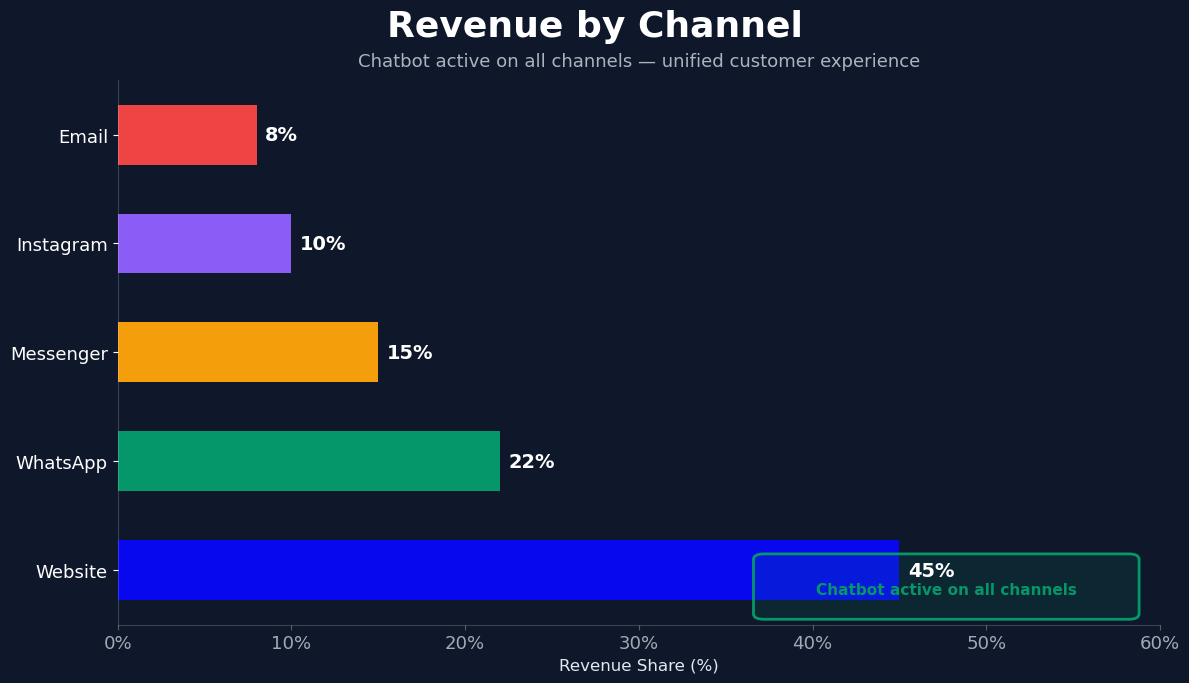
Your customers shop across multiple touchpoints. An effective e-commerce chatbot operates seamlessly on your website, WhatsApp, Facebook Messenger, and Instagram. Conferbot's omnichannel platform ensures consistent product information and conversation continuity across all channels, managed from a single dashboard.
Payment and Checkout Integration
Reduce friction by letting customers complete purchases within the conversation. Share secure payment links, apply discount codes, and confirm orders without requiring customers to navigate away from the chat. Fewer steps between "I want this" and "Order confirmed" means fewer drop-offs and higher conversion rates.
Analytics and Revenue Attribution
Track the revenue impact of every chatbot interaction with Conferbot's analytics. See which conversations lead to purchases, measure conversion rates by product category, track cart recovery success rates, and calculate the exact ROI of your chatbot investment. Data-driven optimization ensures your bot gets smarter and more effective over time.
| Feature | Revenue Impact | Customer Experience Impact |
|---|---|---|
| Product recommendations | Can lift conversion | Personalized shopping |
| Cart recovery | Recaptures lost sales | Helpful reminders |
| Order tracking | Fewer support tickets | Instant status updates |
| Size guidance | Reduced return rates | Confident purchasing |
| Upselling | Higher average order value | Relevant suggestions |
Chatbot vs Live Chat for E-commerce
Many e-commerce businesses debate whether to implement a chatbot, live chat, or both. Understanding the strengths and ideal use cases for each helps you make the right investment.
| Criteria | AI Chatbot | Live Chat | Chatbot + Live Chat |
|---|---|---|---|
| Availability | 24/7, always on | Business hours only (unless staffed 24/7) | Bot handles off-hours, agents handle complex |
| Response time | Instant | Minutes during busy periods | Instant first response, fast human follow-up |
| Concurrent conversations | Effectively unlimited | A few at a time per agent | Bot handles volume, agents handle quality |
| Cost per conversation | Very low | Higher (driven by staffing) | Blended lower cost |
| Personalization | Data-driven, consistent | Human empathy, adaptive | Best of both worlds |
| Complex problem solving | Limited to trained scenarios | Excellent | Bot triages, human resolves |
| Scalability | Infinite | Requires hiring | Scales efficiently |
The Winning Approach: Chatbot-First with Human Backup
The most successful e-commerce support strategies use a chatbot as the first line of engagement and seamlessly hand off to live agents when needed. The chatbot resolves the bulk of routine inquiries instantly -- order tracking, return policy questions, product availability, shipping estimates. For the smaller share that require human judgment (complex returns, complaints, high-value purchase decisions), the bot transfers the conversation to a live agent with full context.
This hybrid approach delivers the speed and availability of automation with the empathy and problem-solving ability of human agents. Customers get instant answers for simple questions and never feel trapped by a bot that cannot help them.
Revenue Impact Comparison
A chatbot can lift conversion on its own through instant responses and proactive engagement. Layering live chat on top tends to help even more, because high-value customers who reach a human agent at a key moment in the buying decision often convert at higher rates. Conferbot makes it easy to implement both with our integrated live chat and chatbot platform.
E-commerce Chatbot ROI
E-commerce chatbots can influence both revenue and cost across several levers. The size of the return depends entirely on your traffic, margins, and how you deploy the bot -- so think in terms of levers first, then plug in your own numbers.
Revenue Levers
- Cart abandonment recovery -- Re-engaging shoppers who leave items in their cart can recapture sales that would otherwise be lost. Even recovering a modest fraction of abandoned carts adds directly to monthly revenue.
- Conversion rate improvement -- Instant answers to pre-sale questions and proactive engagement can move more browsers to buyers, especially on product pages where shoppers hesitate.
- Average order value increase -- Conversational upselling and cross-selling can grow basket size by surfacing genuinely complementary products at the right moment.
- After-hours sales capture -- A 24/7 chatbot serves visitors who shop nights, weekends, and holidays when no human agent is available, so those sessions are not left unattended.
Cost Levers
- Support ticket reduction -- Automating order tracking, return-policy, and product questions deflects repetitive tickets, freeing your team for higher-value work.
- Reduced return rates -- Better pre-purchase guidance on sizing, compatibility, and product fit can reduce returns, saving on shipping, restocking, and customer service costs.
- Lower customer acquisition cost -- Higher on-site conversion means more revenue from existing traffic without increasing ad spend, effectively lowering your acquisition cost.
Illustrative ROI Example
Illustrative example only -- the figures below are assumptions, not measured results, and your results will vary based on your traffic, prices, and margins.
Assume a hypothetical store with $500,000 in monthly abandoned-cart value, 100,000 monthly visitors at a 2% baseline conversion rate, and an $80 average order value:
| Lever (assumed) | Illustrative monthly impact |
|---|---|
| Cart recovery (assume 10% of $500K recovered) | ~$50,000 |
| Conversion lift (assume 400 extra orders x $80) | ~$32,000 |
| AOV increase (assume $12 x 2,400 orders) | ~$28,800 |
| Support cost savings (assume 1,000 fewer tickets x $8) | ~$8,000 |
| Total (under these assumptions) | ~$118,800 |
| Conferbot subscription (Pro plan) | $39 |
These inputs are hypothetical and chosen to show how the levers stack up; a smaller store with different numbers would see a very different total. The point is that even a fraction of these assumptions can outweigh the cost of a chatbot platform. Track your own metrics with Conferbot's analytics dashboard to measure your actual return.
Get Started with E-commerce Chatbots Today
Whether you run a Shopify store, a WooCommerce site, or a custom e-commerce platform, Conferbot makes it simple to add an AI-powered chatbot that drives sales and delights customers.
Launch in 3 Steps
- Sign up for free at app.conferbot.com/signup -- no credit card required. The free plan includes website chatbot deployment and 600 monthly conversations.
- Choose an e-commerce template from our lead generation and support template library. Templates for product recommendations, order tracking, cart recovery, and FAQ handling are ready to customize with your product data.
- Deploy on your store -- Add the chatbot to your website with a single code snippet, and extend to WhatsApp and Messenger for omnichannel coverage.
Why E-commerce Brands Choose Conferbot
- No code required -- Build and customize bots with our visual drag-and-drop builder
- AI product advisor -- OpenAI and NLP power natural product conversations
- Omnichannel selling -- One bot across website, WhatsApp, Messenger, and Instagram
- Live chat handoff -- Seamless escalation for high-value purchase decisions
- Revenue analytics -- Track conversions, cart recovery, and ROI in real time
- Affordable at any scale -- Start free, grow into paid plans as revenue grows. See pricing
See how chatbots work in related industries: healthcare, real estate, education, hospitality, HR, technology, and insurance.
Create your free e-commerce chatbot now and start converting more visitors into customers in 2026.
E-commerce FAQ
Everything you need to know about chatbots for e-commerce.
Chatbots for Other Industries
Discover how businesses in other industries use AI chatbots to automate support, capture leads, and grow.

Continue Exploring
Explore features, connect third-party tools, and browse ready-made templates.
Deep-dive pillar guides, real use cases, and the chatbot & AI glossary.