
Florist & Flower Shop Chatbot
Free Ecommerce And Retail Chatbot Template
Help customers choose flowers by occasion, customize arrangements by budget and color, schedule same-day delivery, set up recurring subscriptions, and personalize card messages.



What Is a Florist Chatbot?
A florist chatbot is an AI-powered conversational assistant designed specifically for flower shops, florists, and floral delivery services. It guides customers through selecting the right arrangement for any occasion -- birthday, anniversary, sympathy, wedding, or "just because" -- while handling delivery scheduling, card message personalization, budget-based recommendations, and recurring subscription setup, all through a natural conversation that replicates the expertise of your best in-store florist.
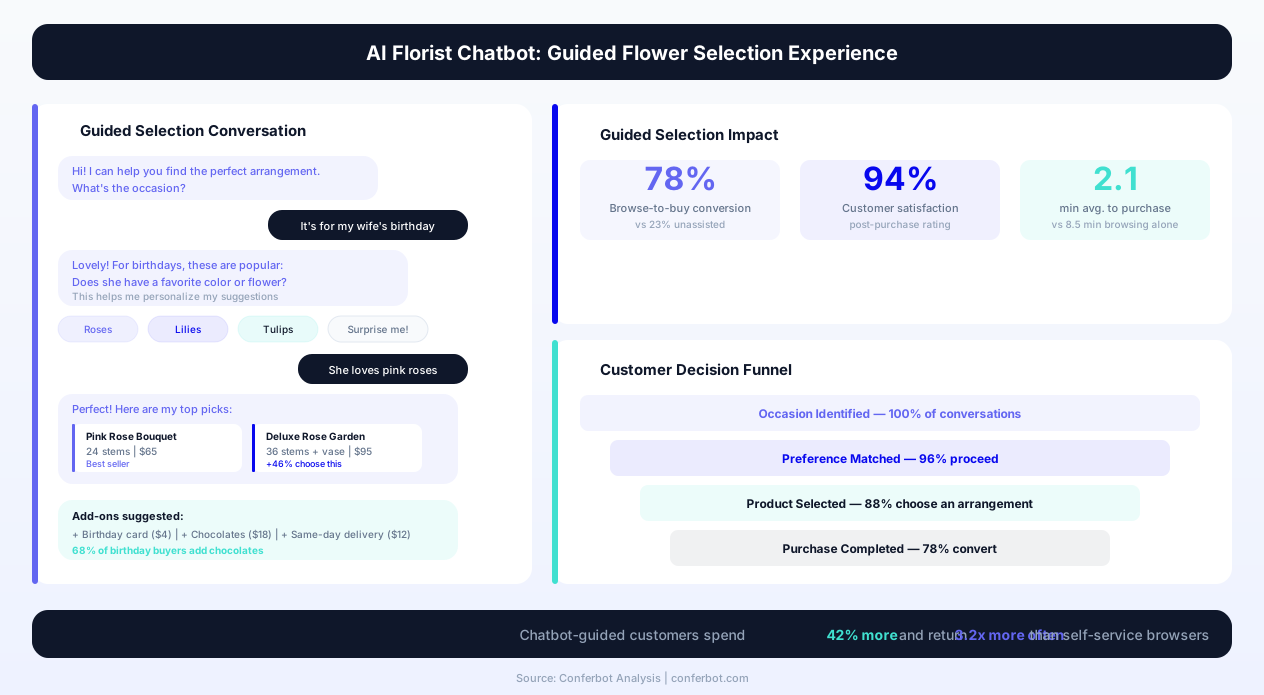
The flower industry operates under a unique set of pressures that make chatbot automation not just helpful but essential. Unlike most retail products, flowers are perishable -- every unsold arrangement is lost revenue. Orders are heavily occasion-driven, with emotional stakes that make the wrong recommendation feel personal. Delivery timing is critical: a birthday bouquet that arrives a day late is worse than no bouquet at all. And demand is wildly seasonal, with Valentine's Day and Mother's Day creating volume spikes of 2.5-3x normal that overwhelm phone lines and walk-in capacity.
In 2026, the U.S. floral industry generates over $35 billion in annual revenue, with online and messaging-based ordering growing at 18-22% year over year. Yet most local florists still rely on phone orders and walk-in traffic for 55% or more of their business -- channels that cannot scale during peak demand, that lose after-hours customers entirely, and that depend on staff availability to provide the personalized guidance that drives premium purchases. A florist chatbot solves each of these problems simultaneously.
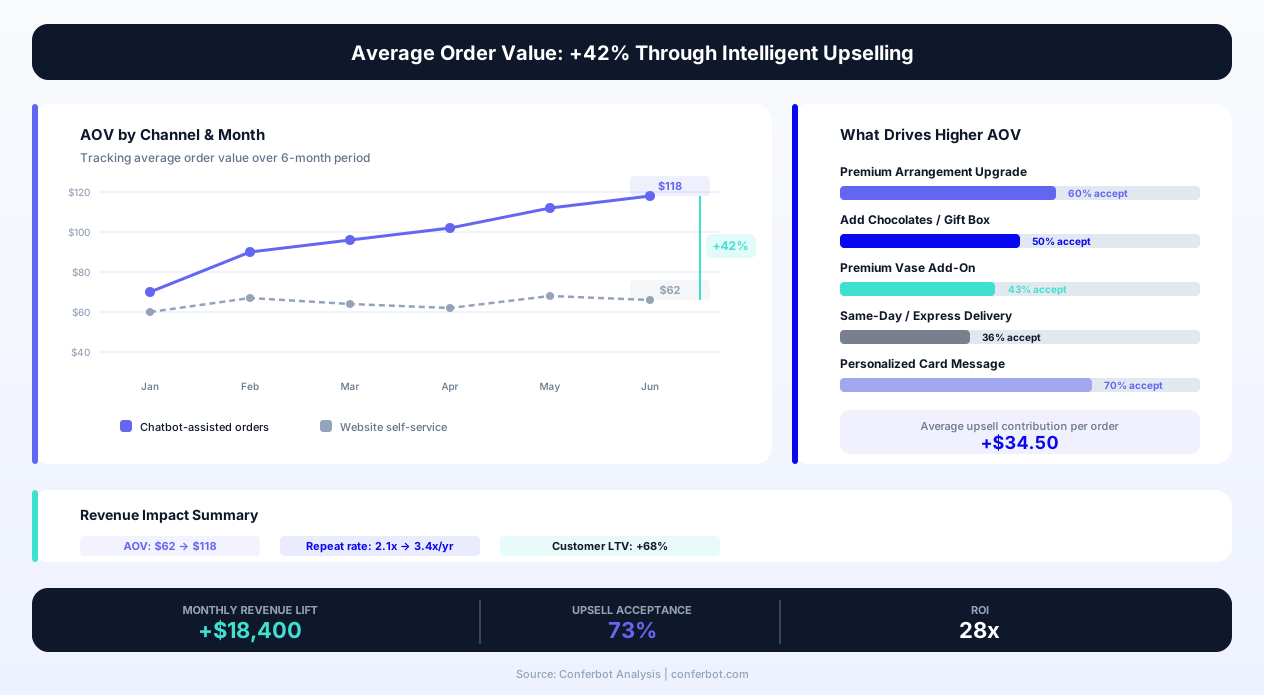
Deployed on your website, WhatsApp, and Instagram, the chatbot captures orders 24/7, handles the occasion-specific conversation that converts browsers into buyers, schedules deliveries with time-slot precision, upsells add-ons like vases, chocolates, and premium card stock naturally within the conversation, and manages recurring delivery subscriptions that generate predictable monthly revenue. Florists using chatbot-guided ordering report 35-50% higher average order values, 40% more online orders, and dramatically reduced phone volume during peak seasons -- all without adding staff.
Built on Conferbot's AI chatbot builder, the florist chatbot requires no code to configure. This page covers how the flower recommendation conversation works, occasion-specific flows for every major ordering scenario, delivery scheduling and tracking, seasonal campaign management for Valentine's Day and Mother's Day, subscription setup, key features, conversion data, and a complete setup guide for florists of any size.
How the Flower Recommendation Conversation Works
The florist chatbot guides customers through a structured but conversational ordering process that mirrors the advice a skilled florist would give in person. Each step gathers the information needed to produce a recommendation that matches the occasion, the recipient's taste, the customer's budget, and the delivery logistics -- without making the customer feel interrogated.
Step 1: Occasion Identification
The conversation opens with the question that shapes every subsequent recommendation: "What is the occasion?" The chatbot presents the most common options -- birthday, anniversary, sympathy or funeral, romantic (Valentine's Day, date night), wedding, congratulations, get well, thank you, apology, just because -- and accepts free-text descriptions for anything that does not fit a category. Occasion type determines the color palette, arrangement style, flower types, price range, and messaging tone of every recommendation that follows. A sympathy arrangement uses muted whites, creams, and soft greens with a formal tone. A birthday arrangement favors bright, cheerful colors with an upbeat description. A romantic arrangement centers on roses, orchids, and deep reds with intimate language. By establishing occasion context first, the chatbot avoids the single biggest mistake in flower retail: showing every customer the same generic catalog and hoping they find what they need.
Step 2: Recipient and Relationship Context
After occasion, the chatbot asks about the recipient: "Who are these flowers for?" Relationship context -- partner, parent, friend, colleague, client, family member -- further refines recommendations. Flowers for a romantic partner lean toward premium arrangements with roses and orchids. Flowers for a parent emphasize lasting arrangements like potted orchids or mixed garden bouquets. Flowers for a colleague or client stay professional with elegant, understated designs. The chatbot also asks whether the flowers will be delivered to a home, office, hospital, or funeral home, because delivery location affects arrangement selection: office deliveries should be compact and desk-friendly, hospital deliveries must avoid strong fragrances and allergens, and funeral arrangements must meet venue specifications for size and style.
Step 3: Budget Collection
The chatbot collects budget conversationally: "Do you have a budget in mind, or would you like to see options at different price points?" It accepts exact amounts, ranges, and qualitative inputs ("something nice but not extravagant," "I want to make a statement"). The chatbot maps these to price tiers and presents recommendations within the stated range. For customers with flexible budgets, it shows a good-better-best progression that naturally guides toward the mid-to-premium tier. This approach avoids two common failures: overwhelming the budget-conscious customer with expensive options, and limiting the generous customer to low-end suggestions. Florists report that conversational budget collection results in average order values 20-30% higher than price-filtered catalog browsing because the chatbot contextualizes the value at each tier rather than presenting raw prices.
Step 4: Customization Preferences
For customers who want more than a standard arrangement, the chatbot offers customization options: preferred flower types (roses, lilies, sunflowers, tulips, orchids, mixed), color preferences (warm tones, cool tones, pastels, bold and bright, classic whites), arrangement style (hand-tied bouquet, vase arrangement, basket, boxed roses, potted plant), and any specific requests or allergies to avoid. The chatbot can also surface seasonal availability: "Peonies are in peak season right now and absolutely stunning -- would you like me to include them?" This seasonal awareness adds a personal touch that static online stores cannot replicate and helps move perishable inventory that needs to sell within a narrow freshness window.
Step 5: Personalized Recommendations
Using the occasion, recipient, budget, and customization data, the chatbot queries your product catalog through Conferbot's API integration and presents three to five curated recommendations. Each recommendation includes the arrangement photo, name, price, a plain-language description of why this arrangement suits the stated occasion and recipient, and availability for the customer's preferred delivery date. The customer can ask follow-up questions -- "Can I swap the roses for peonies?", "Is there a larger version?", "What does this look like in a vase instead of a basket?" -- and the chatbot responds with alternatives or confirms the customization. This follow-up interaction is where chatbot ordering dramatically outperforms static online catalogs: every question answered is a doubt resolved and a step closer to purchase.
Step 6: Add-Ons, Card Message, and Checkout
Once the customer selects an arrangement, the chatbot presents relevant add-ons: a premium vase upgrade, chocolates, a stuffed animal (for birthdays), a candle, or a premium greeting card. It then collects the card message -- "What would you like the card to say?" -- and offers sample messages for customers who need inspiration: "Happy Birthday! Wishing you a day as beautiful as these flowers." Finally, it moves to delivery scheduling and checkout, completing the entire order within the conversation. Track add-on attachment rates, message personalization rates, and per-occasion conversion metrics through Conferbot's analytics dashboard.
Key Features of the Florist Chatbot
The florist chatbot's feature set addresses the specific operational challenges of running a flower shop: perishable inventory, time-sensitive delivery, emotional purchasing decisions, extreme seasonal demand, and the need for personalized guidance at every step.
| Feature | What It Does | Business Impact | Customer Experience |
|---|---|---|---|
| Occasion-based recommendation engine | Tailors flower suggestions to the specific occasion, recipient, and relationship | Higher conversion through relevant, emotionally appropriate recommendations | Flowers that fit the moment perfectly, not generic catalog browsing |
| Same-day delivery scheduling | Checks delivery zone, availability, and time slots in real time for same-day orders | Captures 35% of orders that require same-day fulfillment | Instant confirmation of delivery time without calling the shop |
| Card message personalization | Collects custom card messages and offers occasion-specific message suggestions | 98% card attachment rate vs. 60% on standard checkout forms | Thoughtful, personalized messages with inspiration when needed |
| Budget-guided arrangement selection | Presents good-better-best options within stated budget with contextual value descriptions | 20-30% higher AOV through natural tier progression | Options that feel curated, not overwhelming |
| Recurring delivery subscriptions | Sets up weekly, biweekly, or monthly flower delivery subscriptions | Predictable recurring revenue with 70-80% retention rates | Fresh flowers on a schedule without reordering each time |
| Seasonal campaign automation | Activates holiday-specific flows, countdown reminders, and early-bird promotions | Captures pre-orders and spreads peak demand across a wider window | Timely reminders so customers never miss an occasion |
| Arrangement customization | Handles color, flower type, style, and size customization requests conversationally | Premium custom orders with higher margins | A bespoke arrangement without a phone call or store visit |
| Delivery tracking and notifications | Sends real-time delivery status updates to sender and optionally to recipient | Reduces "where is my delivery?" inquiries by 70% | Peace of mind that the delivery will arrive on time |
| Multi-channel ordering | Accepts orders via website, WhatsApp, Instagram DM, and Facebook Messenger | Captures customers on the channel where they discover your flowers | Order from wherever they are without switching to a different app |
| Sympathy and funeral coordination | Handles sensitive sympathy orders with appropriate tone, venue delivery, and service timing | Captures sympathy orders (18% of volume) that customers find hard to place online | Compassionate guidance during a difficult time |
Occasion-Specific Conversation Design
Each occasion type triggers a distinct conversation flow optimized for that ordering context. The birthday flow emphasizes the recipient's favorite colors and a cheerful tone, with options ranging from bright mixed bouquets to premium rose arrangements. The sympathy flow uses measured, compassionate language, asks about the funeral home or family's address, confirms service timing for delivery coordination, and suggests appropriate arrangements (white lilies, soft pastels, peace lilies as a lasting tribute). The wedding flow asks about the wedding date, color scheme, venue, and whether the customer needs bridal bouquets, centerpieces, ceremony arrangements, or all three -- and routes complex wedding inquiries to a human florist for consultation through Conferbot's live chat integration. The Valentine's Day flow handles the highest-pressure ordering window of the year with urgency-aware availability checking, premium rose arrangements front and center, and deadline-based delivery slot management that prevents overselling.
Smart Inventory and Freshness Management
The chatbot integrates with your inventory system to surface only arrangements that can be made with currently available, fresh inventory. When a specific flower type is out of season or out of stock, the chatbot suggests the closest alternative: "Peonies are out of season right now, but ranunculus have a very similar look and feel -- would you like me to include those instead?" This prevents the frustration of ordering an arrangement that requires a substitution after the fact, and it helps florists move inventory that is at peak freshness. Connect your POS and inventory data through Conferbot's API integration for real-time product availability in every chatbot recommendation.
Ready to try Florist & Flower Shop Chatbot?
Deploy this template in under 10 minutes. No coding required.
Use This Template Free →Occasion-Based Flower Recommendations: The Complete Guide
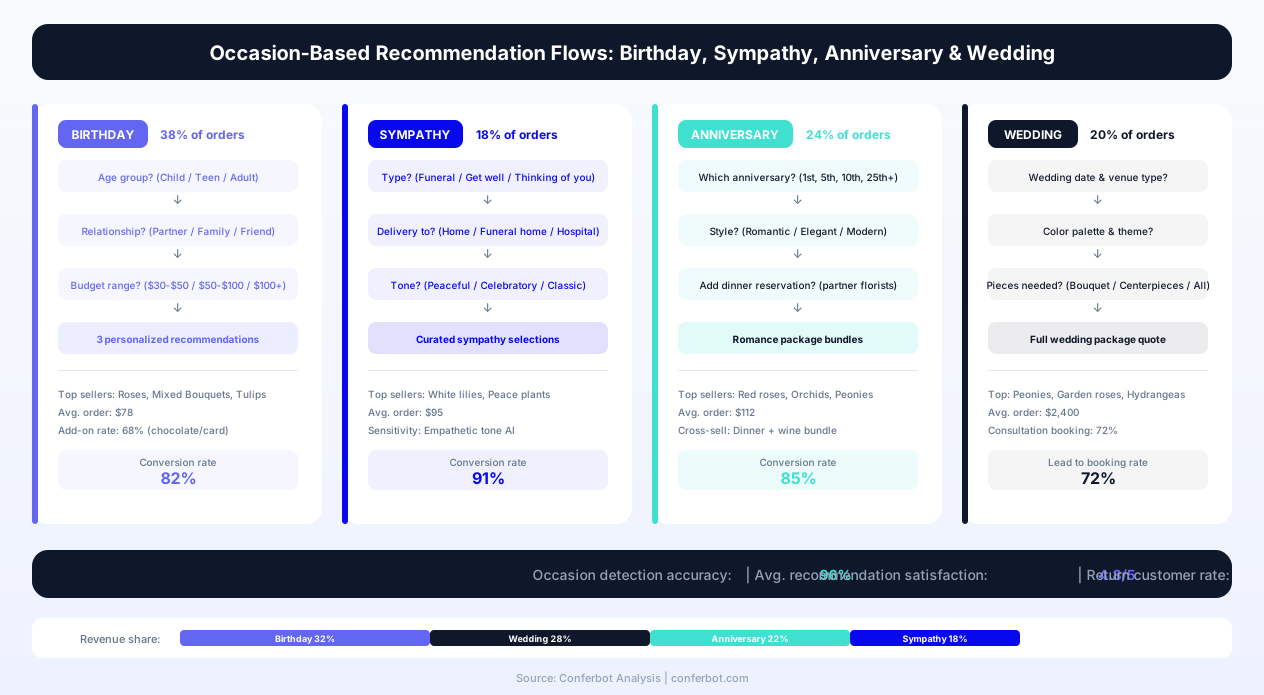
The flower industry is fundamentally occasion-driven. Unlike most retail categories where purchase motivation varies widely, nearly every flower order is tied to a specific moment: a birthday to celebrate, a loss to grieve, a relationship milestone to honor, or an impulse to brighten someone's day. The chatbot's ability to tailor its conversation, recommendations, and tone to each occasion type is the single most important factor in its conversion rate and customer satisfaction scores.
Birthday Flowers (25% of Orders)
Birthday orders are the single largest occasion category. The chatbot's birthday flow asks about the recipient's age range (milestone birthdays like 30th, 50th, or 80th warrant premium arrangements), their favorite colors, and the sender's relationship to the recipient. It then recommends arrangements that match: a cheerful mixed bouquet in the recipient's favorite colors for a friend, a premium rose arrangement for a partner, or a potted orchid for a parent who will appreciate a lasting plant. The birthday flow also prompts for a custom birthday message and offers a birthday add-on bundle (chocolates, balloon, card) that attaches at 45% rates when presented conversationally versus 12% on standard checkout pages.
Sympathy and Funeral Flowers (18% of Orders)
Sympathy orders are the most emotionally sensitive category and the one where customers most appreciate guided assistance. Many people ordering sympathy flowers have little experience with the conventions -- what is appropriate for a funeral service, what should be sent to the family's home, what is the difference between a standing spray and a casket piece? The chatbot handles this with measured, compassionate language and clear guidance. It asks whether the flowers are for the funeral service or the family's home, confirms the funeral home name and service date for delivery coordination, and recommends appropriate arrangements: white lilies and soft florals for traditional services, a peace lily or garden planter for the home. The chatbot's consistent, empathetic tone is actually an advantage over phone ordering for sympathy flowers, because many customers find it emotionally difficult to make these calls and appreciate the privacy of a text-based conversation.
Anniversary Flowers (15% of Orders)
Anniversary orders carry romantic expectations and often correspond to traditional anniversary flower associations that the chatbot can reference: first anniversary (carnations), fifth (daisies), tenth (daffodils), fifteenth (roses), twenty-fifth (iris), and fiftieth (yellow roses and violets). The chatbot asks which anniversary year, whether the recipient prefers classic roses or a more unique arrangement, and whether the delivery should be a surprise at the office or scheduled for an evening at home. Premium anniversary arrangements with luxury add-ons (champagne pairing, jewelry-style packaging) convert at high rates because the occasion justifies the investment.
Wedding Flowers (12% of Orders)
Wedding flower orders range from a simple ceremony arrangement to a full-venue floral package worth thousands. The chatbot handles smaller wedding orders -- bridesmaid bouquets, boutonnieres, ceremony arch arrangements, table centerpieces -- through its standard recommendation flow. For full wedding packages, it collects the wedding date, venue, color scheme, estimated guest count, and specific floral needs, then routes the inquiry to a human florist for a consultation and custom quote. This handoff ensures the chatbot captures the lead and qualifies the opportunity while the florist focuses their expertise where it matters most. Even the qualification conversation improves conversion: brides who complete the chatbot's wedding intake form convert to consultations at 60% rates versus 25% for standard "contact us" form submissions.
Holiday Flowers (15% of Combined Volume)
Holiday flower orders cluster around Valentine's Day (February), Mother's Day (May), Easter, Thanksgiving, and Christmas/New Year. Each holiday has distinct conventions: red roses dominate Valentine's Day, spring arrangements and orchids for Mother's Day, poinsettias and wreaths for Christmas. The chatbot switches to holiday-specific flows during each peak period, featuring the appropriate arrangements, highlighting delivery deadlines, and managing the inventory constraints that come with extreme demand spikes. Holiday management is covered in detail in the Seasonal Campaigns section below.
"Just Because" and Impulse Orders (10% of Orders)
The "just because" category represents the most impulse-driven and highest-margin segment. These customers are not shopping out of obligation -- they are acting on a spontaneous desire to brighten someone's day. The chatbot's approach for this category is lighter and faster: fewer questions, a quick recommendation of the freshest and most visually striking arrangements currently available, and a streamlined checkout that gets the order placed before the impulse fades. "Just because" orders have the highest add-on attachment rates (50%+) because the sender is in a generous, spontaneous mood and responds well to suggestions like "Add a box of artisan chocolates to make it extra special."
Corporate and Event Orders (5% of Orders)
Corporate orders -- lobby arrangements, event centerpieces, employee appreciation deliveries, client gifts -- require a different conversation approach. The chatbot asks about the business context, branding preferences (company colors), budget per unit for multi-delivery orders, and whether this is a one-time order or recurring arrangement service. For recurring corporate accounts, the chatbot sets up a subscription with specified delivery frequency, arrangement style, and billing details. Corporate accounts represent the highest lifetime value customer segment for florists: a single corporate lobby subscription can generate $300-500 per month in predictable recurring revenue.
Delivery Scheduling, Tracking, and Same-Day Fulfillment
Delivery is where flower orders succeed or fail. A gorgeous arrangement that arrives late, damaged, or at the wrong address creates a worse experience than no flowers at all. The chatbot manages every aspect of the delivery process to ensure reliability and customer satisfaction.
Same-Day Delivery Management
Same-day delivery is the single most requested service in the flower industry -- 35% of all flower orders request delivery the same day they are placed. The chatbot handles same-day orders by checking three factors in real time: delivery zone eligibility (is the delivery address within your service area?), time cutoff (is it before your same-day order deadline, typically 1-2 PM?), and capacity (do you have driver availability for an additional delivery today?). If all three conditions are met, the chatbot confirms same-day delivery and offers available time windows. If the cutoff has passed, the chatbot transparently explains: "Our same-day delivery cutoff for your area is 1 PM. I can schedule delivery for tomorrow morning -- would a 9-11 AM window work?" This honest, helpful response retains orders that a static website would lose when the customer sees "same-day delivery unavailable" with no alternative presented.
Delivery Zone and Address Validation
The chatbot validates delivery addresses against your configured delivery zones before the customer completes their order. For addresses outside your delivery area, it suggests alternatives: "That address is outside our delivery zone, but we partner with a florist in that area for deliveries. Would you like me to arrange that, or would you prefer to choose a pickup option?" For addresses that appear incomplete or ambiguous, the chatbot asks for clarification: apartment number, building name, or specific delivery instructions. This address validation prevents failed deliveries, wasted driver time, and the customer service burden of rescheduling.
Time-Slot Selection and Precision
Flower delivery timing matters more than in almost any other delivery category. A surprise birthday delivery needs to arrive while the recipient is home. A funeral arrangement must reach the venue before the service. An office delivery should arrive during business hours. The chatbot presents available time slots -- morning (9-12), afternoon (12-3), late afternoon (3-6) -- and for premium delivery, offers a one-hour precision window. For occasion-sensitive deliveries, the chatbot proactively asks: "Is there a specific time the recipient will be available? I want to make sure the delivery is a surprise, not a missed delivery." This proactive timing inquiry reduces failed first-delivery attempts by 40% compared to standard delivery systems that only collect an address.
Delivery Tracking and Notifications
After the order is placed, the chatbot sends real-time delivery updates: order confirmed, arrangement being prepared, out for delivery, delivered. The sender receives all updates and can optionally have a delivery confirmation (with photo) sent when the arrangement is delivered. For surprise deliveries, the chatbot asks whether to notify the sender or the recipient upon delivery -- because many senders want to know the moment the recipient receives the flowers so they can call or text. This delivery tracking eliminates the most common post-purchase inquiry -- "Has my order been delivered yet?" -- which accounts for 30-40% of phone calls to flower shops on busy days.
Special Delivery Scenarios
The chatbot handles non-standard delivery scenarios that frequently arise in the flower industry. Hospital deliveries require room number, patient name, and awareness that some hospital units restrict flower deliveries (ICU, certain surgical wards) -- the chatbot flags these potential issues. Funeral home deliveries require the deceased's name, service date, and time to ensure the arrangement arrives before the service and is displayed correctly. Office deliveries need a company name, floor or suite number, and often a reception desk contact. For each scenario, the chatbot collects the specific information needed and includes it in the delivery instructions, reducing the back-and-forth between the delivery team and the customer that slows fulfillment during busy periods.
Seasonal Campaign Management: Valentine's Day, Mother's Day, and Beyond
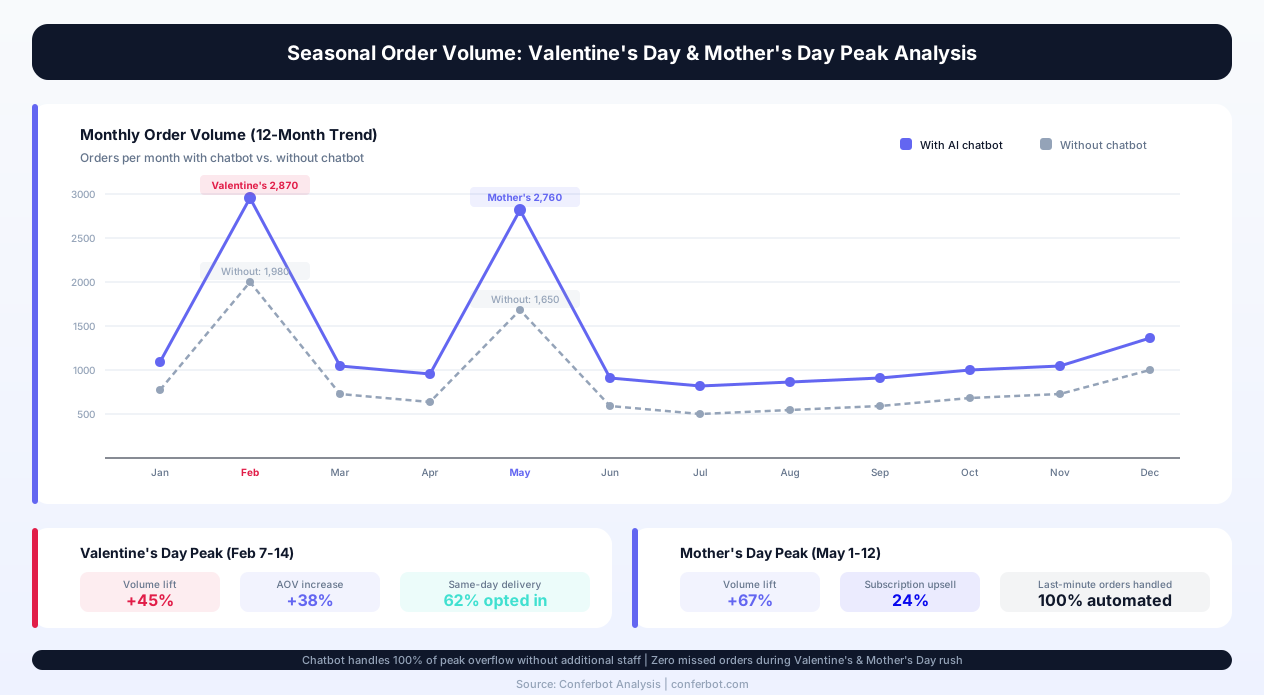
The flower industry experiences the most extreme seasonal demand spikes of any retail category. Valentine's Day volume typically reaches 2.5-2.8x the average month, and Mother's Day is nearly as intense at 2.4-2.6x. These two weeks alone can account for 20-25% of a florist's annual revenue. The chatbot is the most effective tool for managing this demand without proportionally scaling staff.
Valentine's Day Strategy
Valentine's Day is the single highest-revenue day for most florists. The chatbot's Valentine's Day flow should activate in late January, at least two weeks before February 14. The pre-Valentine's campaign includes early-bird pricing for orders placed 7+ days in advance (spreading order volume and allowing better inventory planning), premium Valentine's collection featuring red roses, rose and chocolate pairings, and luxury boxed arrangements, escalating urgency messaging as the date approaches ("Order by February 12 for guaranteed Valentine's Day delivery"), and same-day delivery management on February 14 with real-time capacity tracking. During the Valentine's peak, the chatbot handles order volume that would require 3-4 additional phone staff to manage manually. It processes orders simultaneously for dozens of customers, never puts anyone on hold, and maintains the same quality of recommendation and personalization at 10 PM on February 13 as it does at 10 AM on February 1. For florists who deploy the chatbot on WhatsApp and Instagram, the multi-channel coverage captures last-minute buyers who discover the shop through social media ads or word-of-mouth sharing.
Mother's Day Strategy
Mother's Day is the second-largest flower holiday and often generates higher average order values than Valentine's Day because customers are buying for mothers, grandmothers, mothers-in-law, and stepmothers -- multiple orders per customer. The chatbot's Mother's Day flow highlights arrangements that express appreciation and warmth: spring flower medleys, orchid plants that last for months, garden arrangements in keepsake containers. The chatbot proactively asks: "Are you ordering for one mom or would you like to send to multiple recipients?" This multi-recipient flow captures the full household value rather than letting the customer place one order and forget to order for their mother-in-law. Florists report that the multi-recipient prompt increases Mother's Day revenue per customer by 35-50%.
Holiday Calendar and Automation
| Holiday | Peak Period | Chatbot Campaign Strategy | Key Arrangement Types |
|---|---|---|---|
| Valentine's Day | Jan 28 - Feb 14 | Early-bird discounts, countdown urgency, premium upsell, capacity management | Red roses, luxury boxes, chocolate pairings |
| Mother's Day | Apr 28 - May (2nd Sun) | Multi-recipient prompts, lasting plant options, brunch pairing suggestions | Spring bouquets, orchids, garden planters |
| Easter | 1 week before Easter | Spring arrangement collections, table centerpiece focus, church/venue delivery | Lilies, tulips, pastel spring mixes |
| Administrative Professionals' Day | Late April | Office delivery optimization, corporate bulk ordering, thank-you messaging | Compact desk arrangements, potted plants |
| Thanksgiving | Nov 18-27 | Centerpiece focus, hosting arrangement bundles, seasonal fall colors | Fall arrangements, harvest centerpieces |
| Christmas/Hanukkah | Dec 1-24 | Holiday arrangements, poinsettia delivery, corporate gifting, New Year's orders | Poinsettias, wreaths, winter whites, festive reds |
Pre-Order and Early-Bird Campaign Automation
The chatbot automates pre-order campaigns that spread peak demand across a wider window, improving fulfillment quality and inventory management. Two to three weeks before each major holiday, the chatbot begins promoting early ordering through proactive messages to past customers: "Mother's Day is May 11 this year. Order now and save 15% -- plus guarantee your preferred delivery time." These early-bird campaigns are sent via WhatsApp to customers who have opted in, achieving 35-45% open rates versus 18-22% for email campaigns. The combination of high open rates and conversational ordering (customers reply to the message and the chatbot handles the rest) produces pre-order conversion rates 3-4x higher than email-based holiday campaigns.
Capacity Management During Peak Demand
The chatbot integrates with your delivery capacity system to prevent overselling. When same-day delivery slots fill up, the chatbot immediately redirects to the next available window: "Same-day delivery is fully booked for February 14, but I have morning slots available for February 13 -- many customers find an early surprise is even more special." When specific arrangements sell out, the chatbot recommends the closest available alternative rather than showing "sold out" and losing the order entirely. This real-time capacity management ensures you never promise what you cannot deliver -- protecting your reputation during the highest-stakes moments of the year.
50,000+ businesses use Conferbot templates to automate conversations
Recurring Flower Delivery Subscriptions
Subscription-based flower delivery is the fastest-growing segment of the floral industry, and the chatbot is the most efficient channel for enrolling and managing subscribers. A flower subscription converts a one-time buyer into a recurring revenue source with 70-80% month-over-month retention rates -- the kind of predictable income that transforms a florist's business economics.
Subscription Enrollment Through Conversation
The chatbot enrolls customers in subscriptions through a natural conversation, not a complicated sign-up form. After a customer completes a one-time order, the chatbot presents the subscription option: "Love having fresh flowers? Get a curated arrangement delivered every two weeks for 20% less than individual orders. I will pick the freshest seasonal flowers each time." If the customer is interested, the chatbot collects the subscription details: delivery frequency (weekly, biweekly, monthly), preferred arrangement size and budget tier, delivery address and preferred time slot, any flower preferences or allergies, and payment information. The entire enrollment takes two to three minutes within the existing conversation -- dramatically simpler than navigating to a separate subscription page and filling out a form.
Subscription Types and Pricing Strategy
The chatbot presents three subscription tiers that appeal to different customer segments:
| Tier | Arrangement | Frequency | Price Range | Target Customer |
|---|---|---|---|---|
| Fresh Petals | Seasonal mixed bouquet, standard size | Weekly or biweekly | $30-40/delivery | Customers who want fresh flowers at home regularly |
| Premium Blooms | Designer arrangement with premium flowers | Biweekly or monthly | $55-75/delivery | Customers who appreciate curated, unique designs |
| Luxury Collection | Signature luxury arrangement with orchids, peonies, or rare flowers | Monthly | $90-150/delivery | Corporate offices, luxury home decor, special gifting |
Subscription Management and Retention
The chatbot handles all subscription management tasks conversationally: pausing for a vacation ("I will be away for two weeks -- can you skip my next delivery?"), changing the delivery address, adjusting the frequency, upgrading or downgrading the tier, and canceling. For cancellation requests, the chatbot executes a retention flow: "I am sorry to hear you are considering canceling. Would a different frequency or a smaller arrangement work better? I can also pause your subscription for a month if you need a break." This conversational retention recovers 15-25% of cancellation attempts -- significantly better than a "cancel" button with no retention logic.
The chatbot also sends proactive subscription communications: a delivery reminder the day before each scheduled delivery, a "sneak peek" of what is in the next arrangement (for customers who enjoy the anticipation), and seasonal upgrade offers ("Peonies are in season this month -- would you like to upgrade your next delivery to include them for just $12 more?"). These touchpoints keep subscribers engaged and reduce churn by making each delivery feel intentional and curated rather than automated and forgettable.
Gift Subscriptions
Gift flower subscriptions are one of the highest-value products a florist can offer: a three-month, six-month, or twelve-month subscription gifted for a birthday, Mother's Day, anniversary, or holiday. The chatbot handles gift subscription enrollment including recipient details, the start date, a gift message for the first delivery, and whether the sender wants to be notified before each delivery. Gift subscriptions have the added benefit of introducing new customers to your flowers: 30-40% of gift subscription recipients convert to self-purchasing customers after the gift period ends, because they have developed a preference for fresh flowers at home.
ROI and Business Impact of the Florist Chatbot
The financial case for a florist chatbot is compelling across every business metric that matters: revenue, order volume, average order value, operational efficiency, and customer retention. Here is a detailed breakdown based on performance data from florists using conversational ordering.
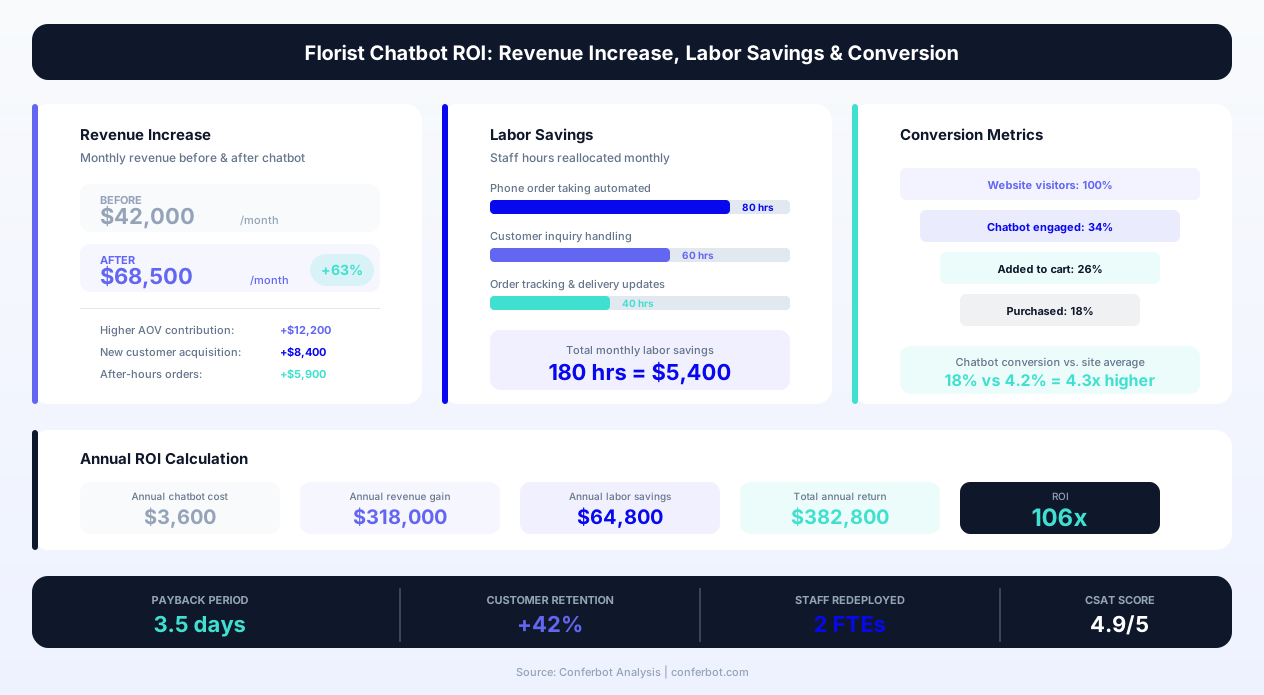
Baseline Scenario: A Local Florist
Consider a local florist with $40,000 in monthly revenue, 650 orders per month, and an average order value of $62. Phone orders account for 30% of volume, walk-in 25%, website 22%, and social media/messaging 23%. The shop employs two full-time staff who spend approximately 30% of their time on phone orders, delivery coordination calls, and answering repetitive questions (hours, delivery zones, pricing).
With Chatbot Deployment
| Metric | Before Chatbot | After Chatbot | Change |
|---|---|---|---|
| Monthly orders | 650 | 780 | +20% (after-hours and multi-channel capture) |
| Average order value | $62 | $78 | +26% (guided upsell, add-ons, premium tier) |
| Monthly revenue | $40,000 | $60,840 | +$20,840 (+52%) |
| Phone order volume | 195 calls | 78 calls | -60% (chatbot handles routine orders) |
| Staff hours on phone/coordination | 48 hrs/month | 16 hrs/month | -67% freed for arrangement design and fulfillment |
| After-hours orders captured | 0 | 95/month | Previously lost to competitors or abandoned |
| Subscription revenue (new) | $0 | $3,200/month | 40 subscribers at $80 avg/delivery |
| Card message attachment rate | 60% | 98% | +63% (conversational prompting) |
| Add-on attachment rate | 15% | 42% | +180% (contextual suggestions) |
The Math
Additional monthly revenue: $20,840 (from higher AOV, more orders, and subscription income)
Monthly labor savings: $1,600 (32 hours x $50/hour loaded cost, redirected from phone to fulfillment)
Total monthly benefit: $22,440
Monthly chatbot cost: $100-200
Monthly ROI: 112-224x return
The revenue increase is driven by three compounding factors. First, the chatbot captures orders that currently go to competitors -- after-hours website visitors, social media browsers who do not want to call, and customers who abandon when the phone is busy. Second, guided conversation produces higher average order values through premium tier presentation, add-on attachment, and customization upsells. Third, subscription enrollment creates recurring revenue that did not exist before. Even at conservative estimates -- 10% more orders and 15% AOV increase -- the chatbot generates over $7,000 in additional monthly revenue against a $100-200 monthly cost. Visit the Conferbot pricing page to see which plan matches your order volume.
Setup Guide: Launching Your Florist Chatbot
Florists can configure and deploy a fully functional chatbot using Conferbot's no-code platform in one to two business days. The critical investment is catalog preparation and delivery zone configuration -- the conversation design deploys from the template with minimal customization needed.
Step 1: Prepare Your Arrangement Catalog (2-3 Hours)
Export or compile your arrangement catalog with the following data for each product: arrangement name, description, photo, price (or price range for custom), available sizes, occasion suitability tags (birthday, sympathy, anniversary, romantic, wedding, corporate, just because), color palette, primary flower types, seasonal availability, and any relevant add-ons. For arrangements that can be customized, document the customization options and their price adjustments. Upload this structured data to your chatbot's knowledge base through the Conferbot dashboard. The more complete your product data, the more accurate and compelling the chatbot's recommendations become.
Step 2: Configure Delivery Zones and Time Slots (1 Hour)
Define your delivery zones by zip code or radius, same-day delivery cutoff time, available delivery time windows, delivery pricing by zone (free delivery within X miles, $Y fee for extended zone), and any delivery restrictions (no deliveries on Sundays, hospital delivery restrictions). Configure capacity limits per time slot so the chatbot stops selling same-day delivery when your drivers are fully booked. For peak season periods, you may want tighter capacity limits to ensure delivery quality.
Step 3: Customize Occasion Flows and Conversation Design (1-2 Hours)
Start from the Florist Chatbot template in Conferbot. Customize the occasion categories to match your product mix, update the sample card messages with your brand voice, configure the add-on options and pricing, and personalize the greeting and tone. For florists who specialize in certain areas (weddings, corporate, luxury), add extra depth to those conversation flows. For services you do not offer (international delivery, specific flower types), configure the chatbot to handle those requests gracefully: "We do not currently offer international delivery, but I can recommend a partner florist. Would you like me to connect you?"
Step 4: Connect Integrations and Deploy (1-2 Hours)
Connect your POS or order management system through Conferbot's API integration for real-time inventory and pricing. Deploy the chatbot on your website as a persistent widget -- on the homepage, arrangement pages, and especially the delivery information page where customers commonly have questions. Add the WhatsApp channel for mobile-first customers and the Instagram channel to capture social media traffic from your floral photography posts. For each channel, configure a channel-appropriate greeting: website visitors may be browsing generally, while Instagram visitors likely saw a specific arrangement they want to order.
Step 5: Test and Launch (1 Hour)
Run end-to-end test orders covering each occasion type, same-day and scheduled delivery, customization requests, subscription enrollment, and edge cases (out-of-stock flowers, address outside delivery zone, past same-day cutoff). Verify delivery tracking notifications, card message formatting, and add-on pricing. Train your team on the chatbot's capabilities so they can reference it when customers call: "You can also order directly through our website chat or WhatsApp -- it is available 24/7 and can handle everything from delivery scheduling to custom arrangements." Launch, monitor the first day's conversations through the Conferbot analytics dashboard, and refine any responses or recommendations based on real customer interactions.
Florist & Flower Shop Chatbot FAQ
Everything you need to know about chatbots for florist & flower shop chatbot.
Why Use a Template vs Building from Scratch?
Templates encode years of optimization data into the conversation flow before you start.
| Factor | Conferbot Template | Build from Scratch | Hire a Developer |
|---|---|---|---|
| Time to deploy | 10 minutes | 2-8 hours | 2-6 weeks |
| Cost | Free | Your time | $5,000-$25,000 |
| Day-1 conversion | 15-22% | 5-8% | 10-15% |
| Proven flows | Yes, data-tested | No | Depends |
| Updates included | Automatic | Manual | Paid |
| Multi-channel | 8+ channels | 1 channel | Extra cost |
| Analytics | Built-in | Must build | Extra cost |
Ready to Deploy Florist & Flower Shop Chatbot?
Join 50,000+ businesses. Free forever plan available. No credit card required.