
Why Food Trucks Need Chatbots in 2026
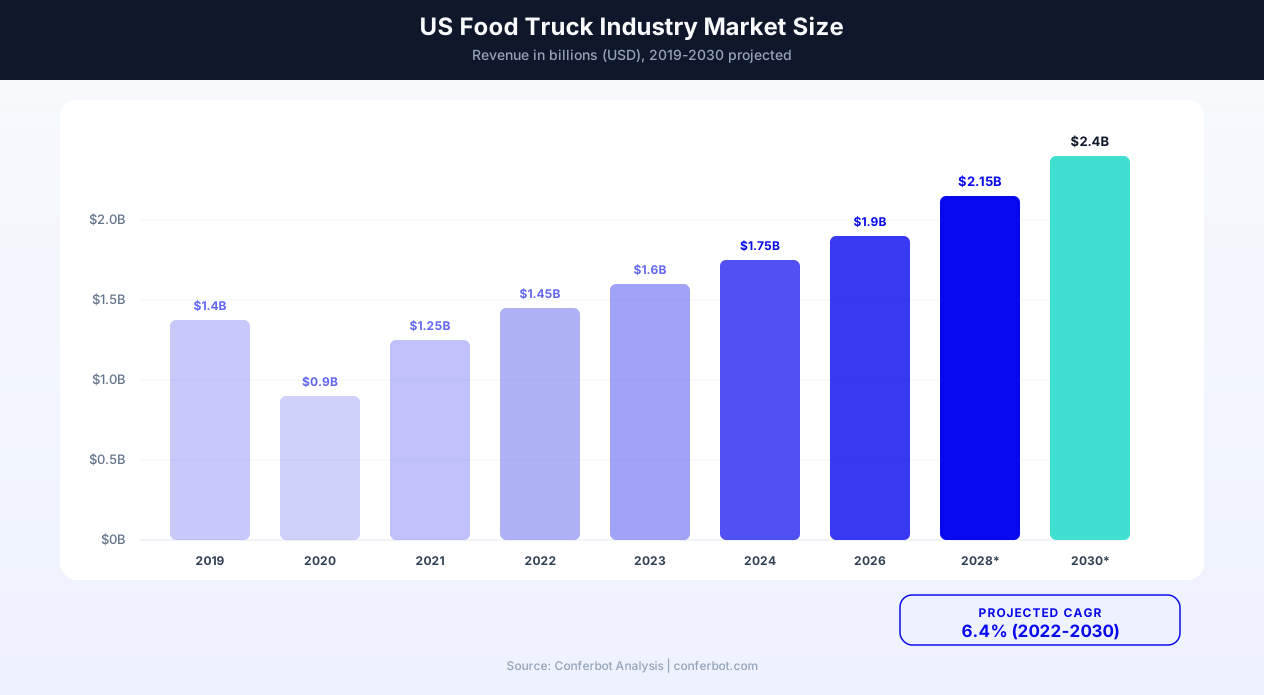
The food truck industry in the United States, tracked by the U.S. Small Business Administration as one of the fastest-growing small business categories, has grown into a $1.9 billion market with over 35,000 food trucks operating nationwide. What began as a street food movement has become a mainstream dining category with corporate catering contracts, festival appearances, permanent commissary kitchens, and multi-truck fleets. Yet most food truck operators still run their businesses with the same technology stack they used a decade ago: a social media account for location updates, a phone number for catering inquiries, and a paper ticket system for walk-up orders.
The operational challenges of running a food truck are unique in the restaurant industry. You operate from a different location every day (or multiple locations per day). Your peak service windows are compressed into 90-120 minute lunch rushes where every minute of throughput matters. Your customers cannot find you unless they check your social media, and social media algorithms increasingly suppress organic reach. Your catering inquiries come by phone at 6 PM when you are mid-service and cannot answer. And you have no systematic way to turn a one-time customer into a repeat visitor.
A food truck chatbot addresses every one of these challenges. It takes pre-orders before you arrive at a location, eliminating the line and increasing throughput. It sends location notifications to your subscriber list with 78% open rates, far exceeding social media reach. It processes catering inquiries 24/7 with structured data collection that makes every lead actionable. It runs a digital loyalty program that turns casual customers into regulars. And it upsells through visual menus with photos and suggested add-ons that verbal ordering simply cannot replicate.
This guide covers the complete implementation of chatbots for food truck operations: from pre-ordering and location sharing to catering lead generation, loyalty programs, and a detailed ROI model. Whether you operate a single truck or a fleet of ten, the strategies here will measurably increase your revenue and operational efficiency.
Pre-Ordering: Serve 66% More Orders Per Hour
According to National Restaurant Association data, the lunch rush is a food truck's most critical revenue window. Between 11:30 AM and 1:00 PM, most food trucks generate 60-70% of their daily revenue. Every order that cannot be served during this window is revenue permanently lost. The constraint is not kitchen capacity; it is the time spent taking orders at the window. A single verbal order interaction takes 3-5 minutes: the customer reads the menu, asks questions, decides, communicates their order, confirms modifications, and pays. For a food truck with one ordering window, this limits throughput to approximately 12-15 orders per hour during peak.
How Chatbot Pre-Ordering Works
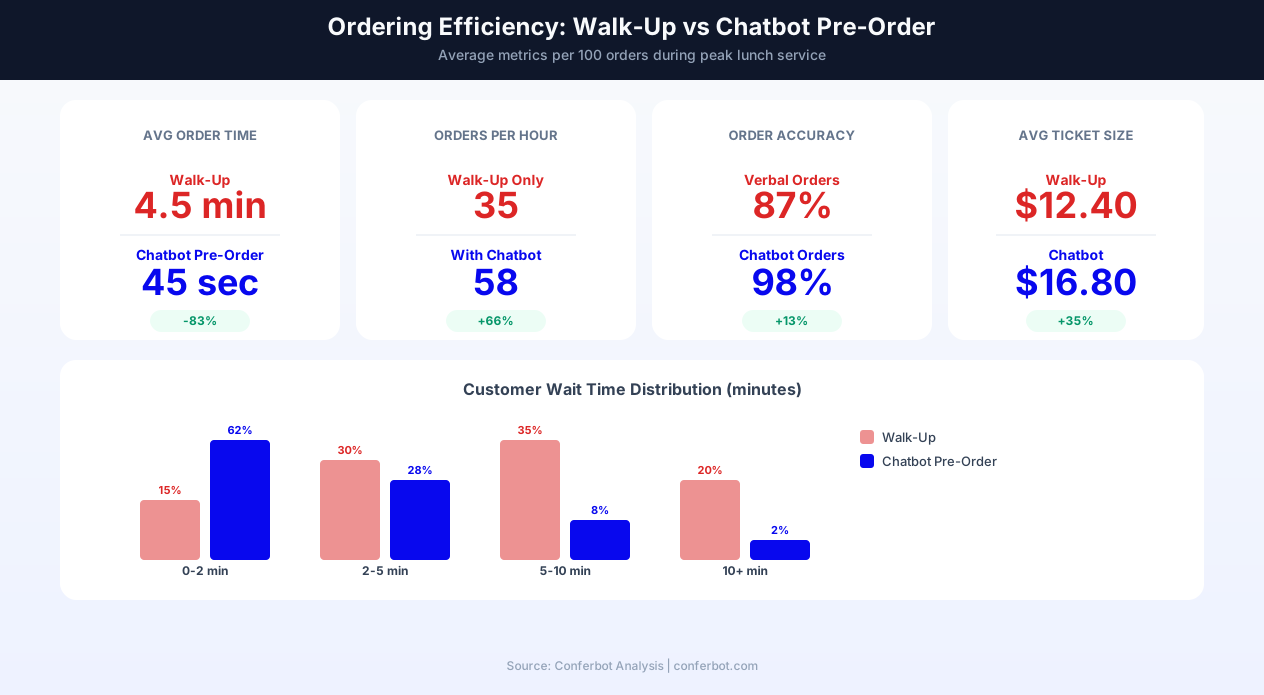
The chatbot sends a notification to subscribers 60-90 minutes before you arrive at a location: "Today's spot: [Location]. Arriving at 11:30. Pre-order now for skip-the-line pickup." The customer opens the chatbot, sees the visual menu with photos and prices, selects items, customizes modifications ("no onions," "extra sauce," "add avocado +$2"), confirms the order, and pays via integrated payment. When the customer arrives at the truck, they give their order name and receive their food immediately. Total pickup time: under 45 seconds.
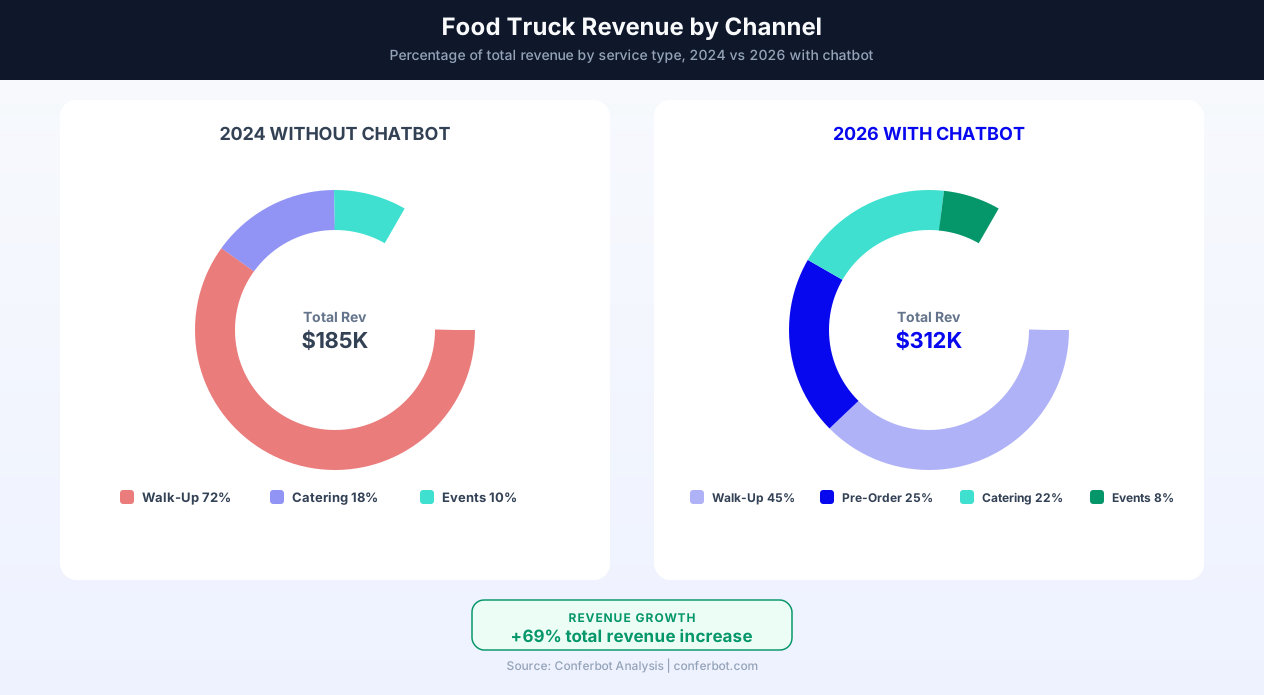
The impact on throughput is dramatic. With pre-ordering, the truck can process walk-up orders at the window while simultaneously fulfilling pre-orders from the kitchen. During a typical lunch rush, 40-50% of orders arrive as pre-orders, effectively doubling the kitchen's output capacity. Food trucks using chatbot pre-ordering report serving 58 orders per hour versus 35 orders per hour with walk-up only, a 66% increase.
Menu Design for Chatbot Ordering
The chatbot menu should be designed differently from a physical menu board. Key principles include:
- Photos for every item: Visual menus increase average ticket size by 20-30% because customers can see the size and presentation of dishes. A photo of a loaded taco plate sells better than the words "Taco Plate - $14."
- Smart upselling: After the customer selects an entree, the chatbot suggests complementary items: "Add a side of elote for $4?" or "Make it a combo with a drink for $3 more?" These prompts are shown at exactly the right moment in the ordering flow, achieving a 35% acceptance rate compared to the 8-12% rate for verbal upselling at the window.
- Modification options: Present common modifications as tap-to-select buttons rather than free-text entry. This reduces errors (the customer selected "no onions" rather than hoping the cook hears "no onions" in a noisy service environment) and speeds the kitchen's workflow.
- Real-time availability: If you sell out of a menu item, the chatbot can remove it from the ordering interface instantly, preventing customer disappointment at the window.
For food truck operators who also handle catering inquiries, the same chatbot platform can manage both daily ordering and event booking.
Location Sharing: 78% Open Rate vs 5% Social Media Reach
The fundamental challenge of the food truck business model is discoverability. You are not at a fixed address. Your customers cannot Google Map you. They cannot drive to your location from memory. Every single day, you must communicate your location to your customer base, and if they do not see that communication, you lose their visit.
Most food trucks rely on Instagram and Facebook for location updates. The problem is that organic social media reach has collapsed. Instagram's algorithm shows your post to approximately 5-8% of your followers. Facebook organic reach is even lower at 2-5%. That means if you have 5,000 Instagram followers, only 250-400 of them will see your location post. The rest will not know where you are today.
Chatbot Location Notifications
A chatbot subscriber list is not subject to social media algorithms. When you send a location notification through the chatbot via SMS or WhatsApp, it reaches every subscriber directly. The data is compelling: chatbot location notifications achieve a 78% open rate and a 34% click-through rate, compared to Instagram's 5-8% organic reach. For a food truck with 2,000 chatbot subscribers, a location notification reaches approximately 1,560 people. The same truck's Instagram post with 5,000 followers reaches 250-400.
Building Your Subscriber List
The chatbot subscriber list is your most valuable marketing asset as a food truck operator. Strategies for building it include:
- QR code on the truck: A prominently displayed QR code with "Scan to pre-order, get our daily location, and earn loyalty rewards" converts 15-20% of walk-up customers to subscribers.
- First-order incentive: "Get $2 off your first chatbot order" converts 40-50% of first-time customers.
- Loyalty enrollment: The loyalty program (described in the next section) requires chatbot subscription, creating a natural enrollment pathway.
- Event and festival capture: At events, the chatbot captures customer information through the ordering process, building the subscriber list with every transaction.
Automated Location Workflow
The daily location workflow is fully automated. Each morning, the operator inputs their location and arrival time into the chatbot dashboard. The chatbot automatically sends a location notification to all subscribers at a configurable time (typically 60-90 minutes before arrival), includes a Google Maps link, and opens the pre-ordering menu. No manual social media posting required, though most operators continue to post on social media as a secondary channel.
Loyalty Programs: Turn One-Time Customers into Regulars
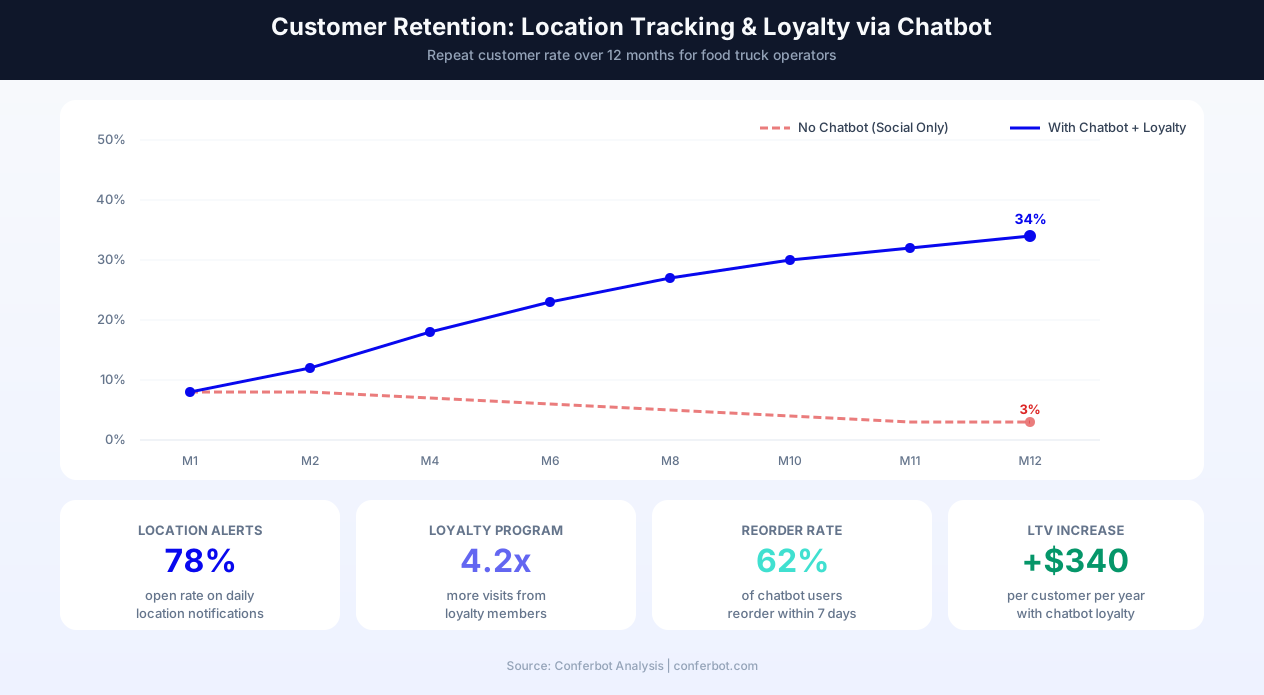
Food trucks face a unique retention challenge, with customer loyalty dynamics that Harvard Business Review has shown are amplified in mobile food service. Unlike a brick-and-mortar restaurant where customers know the address and can return whenever they choose, food truck customers must actively seek out your location every time they want to visit. Without a systematic retention mechanism, even satisfied customers gradually disengage simply because they lose track of where you are. Industry data shows that the average food truck customer without any retention program visits 1.3 times per quarter. With a chatbot-driven loyalty program, that increases to 5.4 times per quarter.
How the Chatbot Loyalty Program Works
The chatbot tracks every purchase made through the pre-ordering system and can also capture walk-up purchases when the customer provides their loyalty identifier (phone number or chatbot username) at the window. Points are accumulated automatically and redeemed through the chatbot.
The loyalty structure that performs best for food trucks is a simple visit-based reward: every 8th meal is free (or half-price). This is easy to understand, requires no point calculation, and creates visible progress toward a tangible reward. The chatbot sends progress updates after every purchase: "You are 5/8 of the way to a free meal!" This progress visibility drives incremental visits. Customers at 6/8 or 7/8 actively seek out the truck's location to reach their free meal, even when they would not otherwise have planned a visit.
Reorder and Favorites
The chatbot remembers every customer's order history and makes reordering effortless. "Your usual? Chicken burrito bowl, no sour cream, extra guac." One-tap reordering reduces friction and reinforces the habit loop. Customers who use one-tap reordering visit 62% more frequently than customers who browse the full menu each time. The chatbot also surfaces new menu items to regular customers: "We just added smoked brisket tacos this week. Want to add one to your usual order?"
Birthday and Special Occasion Rewards
The chatbot collects birthday information during loyalty enrollment and sends a birthday reward automatically: "Happy birthday! Your next meal is on us." Birthday rewards have an 85% redemption rate and often bring the customer plus friends (the birthday customer typically brings 1-3 additional paying customers), making the free meal a profitable promotion.
For operators looking to build deeper customer relationships, integrating the loyalty chatbot with a broader customer retention strategy creates a flywheel of repeat visits and word-of-mouth growth.
Catering Lead Generation: 3.2x Higher Conversion
Catering is the highest-margin revenue stream for food trucks. A single corporate catering event generates $1,500-$5,000 in revenue versus $800-$1,500 for a typical day of street service. Yet most food trucks lose catering opportunities because inquiries come at inconvenient times (during service, late evenings, weekends) and require back-and-forth phone or email exchanges to collect event details.
The Catering Inquiry Chatbot
The chatbot captures every catering inquiry with structured data collection available 24/7. When a potential customer says "I need a food truck for an event," the chatbot walks them through a guided intake:
- Event type: Corporate lunch, wedding, birthday party, festival, private event, recurring office lunch.
- Date and time: The chatbot checks against the truck's calendar and immediately confirms availability or suggests alternative dates.
- Guest count: The chatbot adjusts the menu recommendation and pricing estimate based on headcount.
- Menu preferences: The chatbot presents the catering menu with per-person pricing and allows the customer to build their custom package.
- Location and logistics: Address, parking access for the truck, power availability, and any venue restrictions.
- Budget: The chatbot provides an instant estimate based on the information collected and offers package tiers (standard, premium, VIP) with different menu options.
- Contact information: Name, email, phone for the detailed proposal follow-up.
This structured intake means that when the food truck operator reviews the lead (typically the next morning for after-hours inquiries), they have everything needed to send a detailed proposal, without a single phone call. Catering leads collected through the chatbot convert at 3.2x the rate of phone inquiries because the structured data eliminates the friction of phone tag, the instant response captures intent at its peak, and the visual menu presentation creates desire for the food before the proposal is even sent.
Recurring Corporate Accounts
The highest-value catering segment is recurring corporate lunch service: a company books the food truck every Tuesday, or every other Friday, for employee lunch. The chatbot manages these recurring bookings with automated reminders, menu rotation notifications, and simplified reordering. A single recurring corporate account generating $2,000 per visit, twice monthly, adds $48,000 in annual revenue per account. Even one such account fundamentally changes the economics of a food truck business.
ROI Analysis: $227K Annual Value for a Single Food Truck
The return on investment for a food truck chatbot is driven by six measurable revenue streams. Every metric below is based on a single food truck operating 250 days per year with an average daily revenue of $1,200 without chatbot and an average ticket size of $12.40.
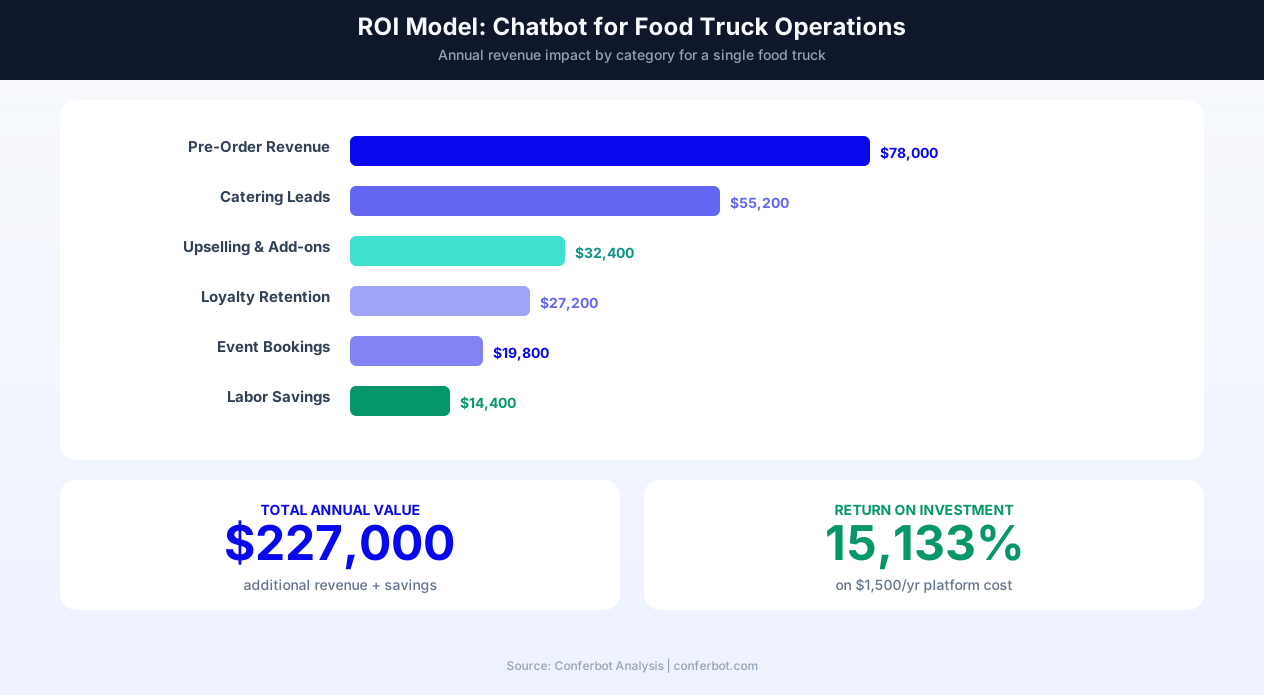
Revenue Stream 1: Pre-Order Revenue — $78,000/year
Pre-ordering increases throughput by 66% during peak hours. At an average ticket size of $16.80 (35% higher than walk-up due to chatbot upselling) and an average of 20 pre-orders per day at 250 operating days: 20 x $16.80 x 250 = $84,000. Adjusted for incremental revenue only (some pre-orders cannibalize walk-up orders): $78,000 net new revenue.
Revenue Stream 2: Catering Leads — $55,200/year
The chatbot generates an average of 4 qualified catering leads per month with a 70% close rate at an average event value of $1,650: 4 x 0.70 x $1,650 x 12 = $55,440, rounded to $55,200.
Revenue Stream 3: Upselling and Add-Ons — $32,400/year
Chatbot upselling prompts achieve a 35% acceptance rate. At an average upsell value of $3.60 per accepted upsell on 100 chatbot orders per week: 100 x 0.35 x $3.60 x 52 = $65,520 total, of which approximately $32,400 is incremental (customers would have ordered some add-ons anyway).
Revenue Stream 4: Loyalty Retention — $27,200/year
Loyalty program members visit 4.2x more frequently and spend 15% more per visit. With 400 active loyalty members generating 2 additional visits per month at $14.26 average ticket: 400 x 2 x $14.26 x 12 = $136,896. Net of loyalty rewards (free meals) and cannibalization: $27,200 incremental.
Revenue Stream 5: Event Bookings — $19,800/year
The chatbot's after-hours event inquiry capture generates 2 additional event bookings per month at $825 average: $19,800/year.
Revenue Stream 6: Labor Savings — $14,400/year
Reduced time spent on phone calls, social media posting, and manual order management saves approximately 2 hours per day of operator time at $24/hour equivalent: $14,400/year.
Total Annual Value: $227,000
Against a chatbot platform cost of $1,500/year, the ROI is 15,133%. The payback period is under 3 days of operation. For multi-truck fleets, the ROI compounds as the chatbot subscriber list serves all trucks and catering leads can be distributed across the fleet.
Implementation Guide: Live in 3 Days
Deploying a food truck chatbot is one of the fastest implementations in any industry because the core flows (menu, ordering, location, loyalty) are well-defined and template-ready. Most food truck operators are live within 3 business days.
Day 1: Menu and Configuration
Upload your menu: Photograph every menu item (use natural light, overhead angle, no flash). Enter item names, descriptions, prices, modification options, and dietary/allergen tags into the chatbot menu builder. Organize items by category (entrees, sides, drinks, specials).
Configure location settings: Set up your regular schedule (Monday: [Location A], Tuesday: [Location B], etc.) and notification timing preferences. The chatbot will send location notifications automatically based on this schedule.
Set up loyalty program: Choose your loyalty structure (visit-based, spend-based, or points-based) and reward thresholds. The recommended structure for food trucks is every 8th meal free.
Day 2: Payment and Testing
Connect payment processing: Integrate Stripe, Square, or your existing payment processor with the chatbot. Test the complete ordering flow: menu browse, item selection, modification, payment, and confirmation.
Create your catering inquiry flow: Build the catering intake form in the chatbot with fields for event type, date, guest count, menu preferences, location, and budget. Test the flow from customer inquiry to notification receipt on your end.
Internal testing: Have 3-5 friends complete the full ordering, location notification, and catering flows. Verify that orders are correct, notifications arrive on time, and payment processing works smoothly.
Day 3: Launch
Print QR codes: Create QR codes that link to the chatbot and display them prominently on your truck: on the ordering window, on the menu board, on napkin holders, and on receipt receipts.
Announce to existing followers: Post on social media and send an email/SMS to your existing contact list: "Skip the line! Pre-order through our new chatbot. Get $2 off your first order."
Go live at your next stop: Promote the chatbot actively for the first week. Have the person at the window mention it to every walk-up customer: "Want to skip the line next time? Scan the QR code and order ahead."
Monitor and optimize: Review ordering data, notification open rates, and customer feedback weekly for the first month. Adjust menu photos, upselling prompts, and notification timing based on actual performance data.
Scaling to Multi-Truck Fleet Operations
The chatbot's value multiplies for food truck fleet operators. A fleet with 3-10 trucks shares a single chatbot platform with truck-specific menus, locations, and scheduling. The subscriber list serves all trucks, and catering leads can be routed to the appropriate truck based on event location, date, and menu requirements.
Central Menu Management
Fleet operators manage all truck menus from a single dashboard. Menu changes, price updates, and new item launches can be pushed to all trucks simultaneously or targeted to specific trucks. This centralization eliminates the inconsistency that plagues multi-truck operations where each truck independently manages its own social media and menu communications.
Intelligent Routing
When a customer opens the chatbot, it can identify their location (with permission) and show the nearest truck's menu and schedule. A customer in downtown who wants to pre-order sees the downtown truck's menu; a customer in the suburbs sees the suburban truck's schedule. This intelligent routing maximizes convenience and ensures that pre-orders are directed to the correct truck.
Fleet-Wide Analytics
The chatbot dashboard provides fleet-wide visibility: which trucks are performing best, which menu items sell most at which locations, which locations generate the most pre-orders, and where catering leads originate. This data drives strategic decisions about fleet deployment, menu optimization, and location selection. Connecting this data with Conferbot's analytics platform provides the operational intelligence needed to optimize a growing fleet operation.
Franchising and Licensing
For food truck brands expanding through franchising, the chatbot provides brand consistency across all franchise locations. The franchisor controls the chatbot's branding, menu structure, and customer communication standards while franchisees manage their location-specific schedules and inventory. This ensures that every customer interaction meets brand standards regardless of which franchise location they engage with.
Was this article helpful?
About the Author

Conferbot Team specializes in conversational AI, chatbot strategy, and customer engagement automation. With deep expertise in building AI-powered chatbots, they help businesses deliver exceptional customer experiences across every channel.
View all articles
Social Media Integration and Multi-Channel Presence
While the chatbot reduces dependence on social media algorithms for critical communications like location updates, social media remains an important discovery channel for new customers. The chatbot and social media should work together rather than independently.
Instagram and Facebook Integration
The chatbot link in your Instagram bio and Facebook page converts social media followers into chatbot subscribers where you have direct reach. Every Instagram post should include a call to action: "Pre-order through the link in our bio and skip the line." This drives social media followers to the chatbot where they become part of your owned audience rather than remaining subject to algorithm changes. According to IBISWorld industry analysis, food trucks that combine social media presence with direct customer communication channels grow 2.3x faster than those relying on social media alone.
Google Business Profile
Your Google Business Profile should link to the chatbot for ordering and catering inquiries. When a potential customer searches "food truck near me" and finds your profile, the chatbot provides an immediate engagement path. Adding the chatbot link as a booking URL or direct messaging channel on your Google profile converts search traffic into pre-orders and catering leads.
WhatsApp and SMS
For food trucks, WhatsApp and SMS are the highest-performing channels for location notifications because they reach customers on the device they always have with them: their phone. The chatbot supports both channels, allowing customers to choose their preferred notification method during enrollment. SMS notifications have a 95% open rate within 3 minutes, making them ideal for same-day location announcements and flash specials.
Operators looking to maximize their multi-channel strategy should also consider restaurant chatbot best practices for menu design and ordering flow optimization.