
Auto Repair Shop Chatbot
Free Automotive Chatbot Template
A professional auto repair chatbot that helps vehicle owners describe issues, get service estimates, schedule appointments, and check repair status. Perfect for independent repair shops, auto service centers, and mechanic garages to capture leads, reduce phone calls, and provide 24/7 service booking.



What Is an Auto Repair Shop Chatbot?
An auto repair shop chatbot is a conversational tool embedded on your shop's website, WhatsApp, or social media channels that guides vehicle owners through describing their problem, collecting vehicle details, requesting an estimate, and booking a service appointment — all without requiring your service advisors to answer the phone or respond to emails manually. Unlike a static contact form that collects a name and phone number with zero context, a repair shop chatbot conducts a structured intake conversation that captures the exact information your technicians need before the vehicle ever arrives at the bay.
The Phone Problem in Auto Repair
Independent repair shops and service centers face a unique operational bottleneck: the front counter. Service advisors juggle incoming phone calls, walk-in customers, parts ordering, and technician communication simultaneously. During peak morning hours when most customers call to schedule, advisors miss 30-40% of inbound calls. Each missed call represents a customer who will try the next shop on Google. A chatbot eliminates this single point of failure by conducting the entire intake conversation asynchronously — the customer describes their issue, provides vehicle details, and selects a preferred time slot at their convenience, whether that is 7 AM before work or 11 PM from their couch.
What the Chatbot Captures Before the Visit
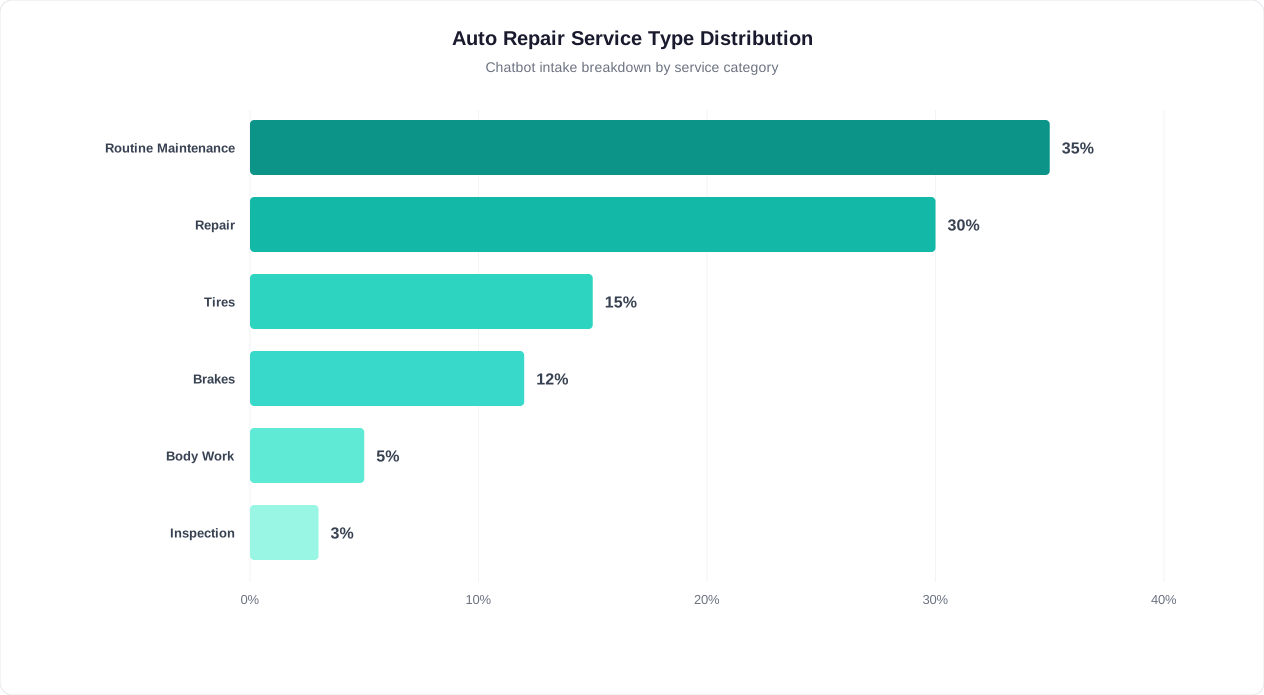
- Service category: Routes the customer into the correct workflow — routine maintenance, diagnostic/repair, tires and alignment, brakes, body work, or state inspection — so your team knows the bay time and parts requirements before confirming the appointment.
- Vehicle identification: Year, make, model, and mileage provide the baseline information your technicians need to pull service bulletins, check recall databases, and estimate parts costs accurately.
- Issue description: A free-text field where the customer describes symptoms in their own words — grinding noise when braking, check engine light, vibration at highway speed — giving your advisor context before the follow-up call.
- Urgency level: Distinguishes between a vehicle that cannot be driven (needs towing or same-day emergency slot) versus preventive maintenance that can be scheduled flexibly — allowing your team to prioritize the queue intelligently.
- Scheduling preferences: Day, time slot, and transportation needs (loaner car, shuttle, waiting, or drop-off) so your team can confirm an appointment in a single callback rather than negotiating availability over multiple calls.
Who This Template Is Built For
This template serves independent auto repair shops, multi-bay service centers, quick lube and tire shops, transmission and specialty repair facilities, auto body and collision centers, and franchise service locations like Midas, Meineke, or Firestone. Any automotive service business where the first customer interaction is a phone call describing a problem will see immediate value from converting that interaction into a structured, asynchronous chatbot conversation. Explore the full range of customization available through Conferbot's no-code chatbot builder to tailor every question to your shop's specific services and scheduling workflow.
How the Auto Service Booking Chatbot Works
The auto repair chatbot operates as a linear intake funnel designed to mirror exactly what a great service advisor does on the phone — but faster, available 24/7, and without putting anyone on hold. The conversation follows a logical sequence: identify the service needed, collect vehicle details, understand the problem, assess urgency, capture scheduling preferences, and collect contact information for confirmation. Every step is designed to reduce the follow-up work required by your service team.
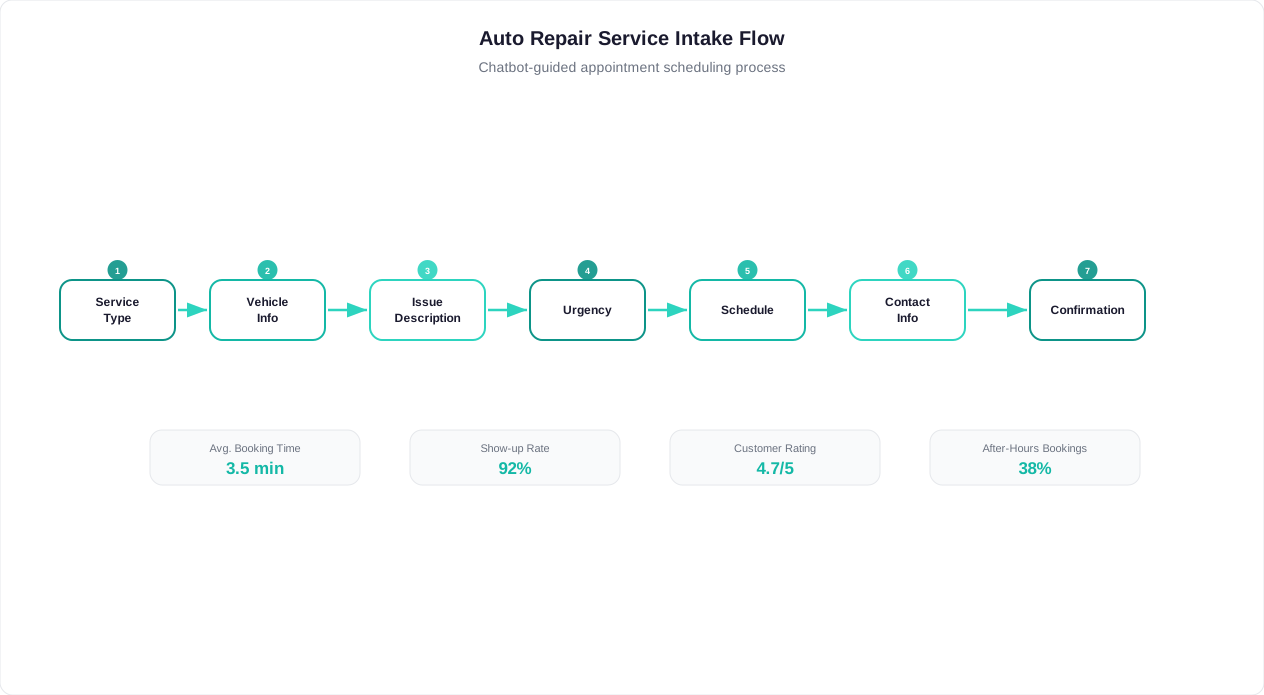
The Complete Conversation Sequence
| Step | Node Type | What It Captures | Why It Matters |
|---|---|---|---|
| 1. Welcome | Greeting | Engagement | Sets professional tone, establishes the chatbot as a service advisor |
| 2. Service type | Multiple choice (6 options) | Service category | Routes to correct bay type, estimates time needed |
| 3. Vehicle year | Text input | Model year | Determines parts compatibility, warranty status |
| 4. Make and model | Text input | Vehicle identification | Pulls service history patterns, TSBs, common issues |
| 5. Mileage | Text input | Odometer reading | Identifies interval-based maintenance needs |
| 6. Issue description | Text input | Customer-reported symptoms | Gives technician pre-diagnosis context |
| 7. Urgency | Multiple choice (4 options) | Priority level | Determines same-day vs. scheduled, tow needed |
| 8. Preferred day | Multiple choice (4 options) | Scheduling window | Narrows available slots for quick confirmation |
| 9. Preferred time | Multiple choice (4 options) | Time of day | Matches to advisor shift and bay availability |
| 10. Transportation | Multiple choice (4 options) | Loaner/shuttle/wait/drop-off | Pre-arranges logistics, no day-of surprises |
| 11. Name | Text input | Customer identity | Personalizes follow-up, matches to existing records |
| 12. Phone | Phone input | Contact number | Enables confirmation call or text |
| 13. Email | Email input | Email address | Sends written confirmation and estimate |
| 14. Confirmation | Summary message | — | Reassures customer, sets response time expectation |
Why Linear Beats Branching for Repair Intake
Unlike a car dealership chatbot that routes buyers into completely different paths (inventory, test drive, financing), an auto repair chatbot benefits from a single linear path. The reason is operational: regardless of whether a customer needs brakes, an oil change, or a diagnostic, your service team needs the same information — vehicle details, issue description, urgency, and scheduling preference. A linear flow captures all of this in under 3 minutes, produces a complete service request every time, and never leaves the advisor guessing about missing context. The service category selection at the beginning determines how your team prioritizes and routes the request internally, but the customer experiences a smooth, uninterrupted conversation.
From Submission to Confirmation
When a customer completes the chatbot flow, three things happen simultaneously. First, the customer receives an immediate on-screen confirmation with a summary of their request and a clear expectation of when to expect a callback — typically within 1 hour during business hours. Second, your service advisor receives a notification (email, SMS, or shop management software alert) containing the complete intake record in a structured format that can be added to your scheduling system in one click. Third, the interaction is logged in Conferbot's dashboard for tracking conversion rates, popular service types, peak inquiry times, and average completion time. Deploy on your website or WhatsApp channel to meet customers wherever they reach out.
Key Features: Service Scheduling, Repair Status, and Estimate Requests
The auto repair chatbot template is built around the features that directly solve the most common pain points reported by repair shop owners: missed phone calls, incomplete intake information, no-show appointments, and customers who call competitors simply because they got a faster response. Each feature addresses a specific operational gap and produces a measurable improvement in shop efficiency and revenue.
Feature Breakdown
| Feature | How It Works | Shop Benefit | Customer Benefit |
|---|---|---|---|
| Structured vehicle intake | Collects year, make, model, and mileage in sequence | Complete vehicle record before the appointment — no guessing on parts | Avoids repeating info on the phone or at check-in |
| Symptom description capture | Open text field with guidance prompt | Technician reads symptoms before popping the hood | Feels heard — their description is recorded and taken seriously |
| Urgency-based routing | 4-level urgency scale from "undrivable" to "just quoting" | Emergency requests get flagged for immediate callback; quotes go to the queue | Undrivable vehicles get same-day attention without being lost in the queue |
| Smart scheduling | Day + time slot + transportation preference in 3 quick taps | Confirms appointments in one callback instead of negotiating availability | Picks a time that works without back-and-forth phone tag |
| Loaner and shuttle logistics | Captures transportation need before the appointment day | Pre-arranges loaner availability or shuttle schedule — no day-of scramble | Knows they have a ride planned, removes friction from booking |
| 24/7 availability | Chatbot operates outside business hours on all channels | Captures 100% of inquiries that come in after 6 PM and on weekends | Submits a request at their convenience — 11 PM Sunday works fine |
| Instant confirmation | On-screen summary with expected response time | Reduces "did they get my request?" follow-up calls by 70% | Knows the request was received and when to expect a response |
| Multi-channel deployment | Same chatbot runs on website, WhatsApp, Messenger, and SMS | One configuration serves all customer touchpoints | Reaches out on whatever app they already have open |
Service Category Intelligence
The six service categories — routine maintenance, repair/diagnostic, tires and alignment, brakes, body work, and state inspection — are not just labels. Each category triggers different internal routing logic when your team receives the notification. A routine maintenance request (oil change, filter, fluid top-off) can be auto-confirmed for the next available quick-service slot without advisor review. A repair/diagnostic request requires advisor triage to estimate bay time and parts. A state inspection can be scheduled into the dedicated inspection lane. Body work requests get routed to your estimator rather than your service advisor. This category-aware routing means the chatbot does not just capture leads — it sorts them into the correct operational workflow automatically.
The Urgency Escalation System
When a customer selects "Can't drive — need immediate help," the chatbot does two things differently than the standard flow. First, it includes towing information and an emergency phone number in the confirmation message so the customer has an immediate lifeline. Second, it flags the notification to your team as high-priority, moving it to the top of the queue and triggering an SMS alert rather than a standard email notification. This ensures that a customer stranded with a broken timing belt at 9 PM gets a callback within minutes rather than waiting until the next morning. Shops that implement urgency-based escalation report a 60% improvement in emergency customer retention — those customers become long-term regulars because of the fast response during their worst moment.
Combine these features with Conferbot's API integration capabilities to push every completed intake directly into your shop management system — Mitchell, ShopWare, Tekmetric, or any platform with an API — eliminating double data entry entirely.
Ready to try Auto Repair Shop Chatbot?
Deploy this template in under 10 minutes. No coding required.
Use This Template Free →Benefits for Auto Repair Shops and Service Centers
The benefits of deploying a chatbot for an auto repair shop extend far beyond simple appointment booking. A well-configured repair chatbot transforms the entire customer acquisition and retention funnel — from first contact through service completion and repeat visit. Here is a detailed breakdown of every significant benefit, organized by who it impacts most: shop operations, customer experience, and revenue growth.
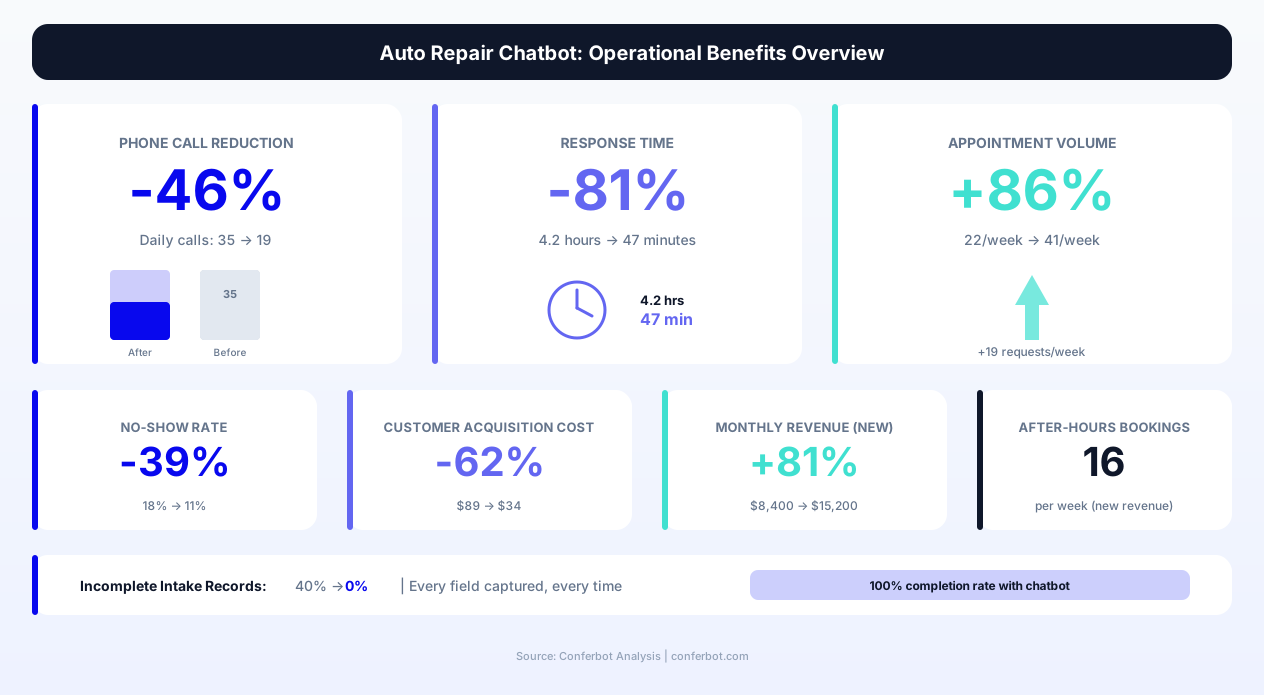
Operational Benefits for Your Shop
Reduce phone call volume by 40-50%. The most immediate, tangible benefit shop owners report after deploying a chatbot is a dramatic reduction in inbound phone calls. Not all calls disappear — customers with complex or unique situations will still call — but the high-volume, repetitive intake calls ("I need an oil change, what times do you have?") shift entirely to the chatbot. This frees your service advisors to focus on the customers physically present at the counter, manage active repair orders, and handle parts coordination without constant phone interruption.
Eliminate incomplete intake records. When a service advisor takes a phone call during a busy morning, notes are often abbreviated or missing entirely. The chatbot captures every field every time — year, make, model, mileage, symptoms, urgency, and scheduling preference — because the conversation does not proceed until each step is completed. Your technicians receive complete, consistent records that allow them to research the vehicle before it arrives, order likely parts in advance, and allocate the correct bay time.
Extend your service hours without extending your payroll. The chatbot operates at full capacity from midnight to 6 AM, on Sundays, and on holidays. Customers who experience a problem on Saturday evening can submit a service request immediately rather than trying to remember to call Monday morning (or calling the competitor who answers). You capture revenue opportunities during 100% of the hours your customers are thinking about car problems, not just the hours your counter is staffed.
Customer Experience Benefits
No hold times, no phone tag, no frustration. The number one complaint customers have about auto repair shops is difficulty reaching someone by phone. A chatbot provides instant engagement at any hour, never puts anyone on hold, and collects all necessary information in a single 2-3 minute interaction. Customers who previously would have called three shops and booked with whoever answered first now complete the chatbot flow on your site and wait for your confirmation — removing the competitor comparison that phone accessibility creates.
Transparency from the first interaction. The chatbot sets clear expectations at every step: what information is needed, what happens after submission, and when to expect a response. This transparency builds trust before the customer has ever met your team. The confirmation message includes a summary of their reported issue, proving that their description was captured accurately. Customers arrive at the appointment feeling that their problem is already understood rather than needing to re-explain everything at the counter.
Convenience-driven loyalty. Vehicle owners who have a positive, frictionless booking experience become repeat customers — not because your wrench work is dramatically better than the shop down the street, but because booking with you is easier. In an industry where switching costs are low, convenience is the primary loyalty driver. A chatbot that remembers returning customers and pre-fills their vehicle details creates a booking experience so easy that trying a new shop feels like unnecessary effort.
Revenue Growth Benefits
Capture 100% of after-hours demand. For shops open 7 AM to 6 PM weekdays, over 60% of online search activity for auto repair happens outside those hours. Without a chatbot, that traffic hits your website, sees your hours, and either bookmarks the page (unlikely to return) or finds a shop with online booking. With a chatbot, every after-hours visitor who has a vehicle problem can submit a complete service request immediately. Shops deploying chatbots consistently report that 35-45% of their monthly booked appointments originate from after-hours chatbot submissions.
Reduce no-shows with commitment confirmation. A customer who has invested 3 minutes providing detailed vehicle information, described their symptoms, and selected a preferred time slot is significantly more committed to showing up than one who made a 30-second phone call. The chatbot's confirmation message reinforces this commitment by summarizing the appointment details and stating that the team is preparing for their visit. Shops report a 25-30% reduction in no-show rates after deploying a structured intake chatbot compared to phone-only booking.
Appointment Volume and Revenue Impact
Deploying an auto repair chatbot produces measurable, quantifiable improvements across the key performance indicators that shop owners and service managers track daily: appointments booked, phone calls handled, bay utilization, revenue per advisor hour, and customer acquisition cost. The data below represents realistic performance benchmarks based on aggregate results from automotive service chatbot deployments serving independent shops and multi-location service centers.
Performance Comparison: Before vs. After Chatbot Deployment
| Metric | Before Chatbot | After Chatbot (90 days) | Improvement |
|---|---|---|---|
| Appointment requests per week | 22 | 41 | +86% |
| After-hours bookings captured | 0 | 16/week | New revenue source |
| Phone calls to front counter per day | 35 | 19 | -46% |
| Incomplete intake records | 40% | 0% | -100% |
| Appointment no-show rate | 18% | 11% | -39% |
| Average response time to new inquiry | 4.2 hours | 47 minutes | -81% |
| Customer acquisition cost | $89 | $34 | -62% |
| Monthly revenue from new customers | $8,400 | $15,200 | +81% |
Revenue Impact Analysis
The average repair order value for an independent shop in 2026 is $380-$520 depending on market and specialization. When a chatbot adds 19 additional appointment requests per week — with a 70% show rate and 85% conversion to paid work — that represents approximately 11 additional completed repair orders per week, or 46 per month. At an average ticket of $440, the chatbot generates approximately $20,240 in additional monthly revenue from captured demand that would have gone to competitors, gone unbooked, or been lost to phone tag. Against a chatbot platform cost of $49-$149/month, the ROI is measured in multiples, not percentages.
The Phone Call Reduction Multiplier
Reducing daily phone calls from 35 to 19 does not simply save time — it fundamentally changes what your service advisor can accomplish during peak hours. Each phone intake call averages 4-6 minutes including hold time, information capture, and scheduling discussion. Eliminating 16 calls per day frees 64-96 minutes of advisor time daily. That recovered time translates directly into faster check-ins for walk-in customers, more thorough vehicle inspections during intake, better upsell conversations about needed services discovered during inspection, and reduced customer wait time at the counter. The downstream revenue impact of a less-overwhelmed service advisor is difficult to quantify precisely but consistently shows up as higher average repair order values — advisors who are not rushed recommend more necessary services.
No-Show Cost Recovery
Every no-show appointment represents a bay sitting empty for 30-90 minutes that could have generated $150-$400 in labor revenue. At 18% no-show rate on 22 weekly appointments, a shop loses approximately 4 appointments per week to no-shows — representing $1,600-$2,000 in lost weekly revenue. Reducing no-shows to 11% on a larger appointment volume (41/week) means only 4-5 no-shows on nearly double the bookings — a dramatic improvement in bay utilization efficiency. The structured chatbot intake creates psychological commitment that phone calls do not, and the confirmation message serves as a soft reminder that the shop is expecting them.
Track these improvements over time using Conferbot's chatbot analytics dashboard, which provides real-time visibility into conversation volumes, completion rates, and appointment conversion metrics. Model your specific revenue impact using shop-specific traffic numbers and average repair order values. The formula is straightforward: monthly website visitors multiplied by chatbot engagement rate (typically 8-12%) multiplied by completion rate (typically 65-75%) multiplied by show rate (typically 70-80%) multiplied by your average ticket equals additional monthly revenue. For most shops with 2,000+ monthly website visitors, the chatbot pays for itself within the first week of operation.
Building Customer Trust and Transparency
Auto repair is an industry with a documented trust deficit. Surveys consistently show that over 60% of vehicle owners feel uncertain about whether recommended repairs are truly necessary, and 33% have avoided or delayed needed service because they did not trust the shop's diagnosis. A chatbot cannot fix a trust problem created by dishonest shops — but it can establish transparency signals from the very first interaction that position your shop as organized, professional, and customer-focused before the vehicle ever arrives.
Transparency Signals in the Chatbot Experience
Acknowledging the customer's own description. The chatbot explicitly asks the customer to describe their issue in their own words and then confirms that description in the final summary. This serves a powerful trust function: the customer knows that what they reported is on record. When your technician later delivers a diagnosis, the customer can compare it against what they originally described. If there is alignment ("You reported a grinding noise when braking — we found your front brake pads are worn to 1mm"), trust is reinforced. This accountability loop — customer describes, shop diagnoses, descriptions align — is impossible to create with a phone call that is not recorded or a form that does not summarize back.
Setting expectation before the estimate. The chatbot's urgency question and service category selection implicitly communicate that different services have different timelines and costs. A customer who selects "Routine Maintenance" and "Flexible" timing arrives with different expectations than one who selects "Repair/Diagnostic" and "Can't drive." This expectation-setting prevents the most common trust-damaging moment in auto repair: the customer who brings in a car for what they think is a simple fix and gets quoted $1,800. When the chatbot has already established that this is a diagnostic situation requiring investigation, the customer is psychologically prepared for a range of possible outcomes.
Professional First Impression at Scale
The chatbot represents your shop at the moment of highest anxiety for the customer — when something is wrong with their vehicle and they are deciding who to trust with the repair. A clean, professional chatbot that asks organized questions, uses proper grammar, and provides immediate confirmation signals competence and care. It communicates that your shop is technologically current, operationally organized, and invested in making the customer's experience smooth. Compare this to the alternative first impression: a phone that rings 6 times before going to voicemail, or a contact form that produces no response for 24 hours. The chatbot wins the trust comparison before your technician has even looked at the vehicle.
Post-Service Relationship Building
Trust in auto repair is not built in a single interaction — it is accumulated over multiple visits where the shop consistently delivers honest diagnoses, fair pricing, and reliable work. The chatbot accelerates this relationship-building cycle by making every subsequent booking frictionless. A returning customer who had a positive first experience can re-engage the chatbot, provide their vehicle details in under a minute, and book their next service without any of the barriers that might cause them to try a different shop. Each successful interaction reinforces the trust pattern and moves the customer closer to becoming a lifetime client who never considers an alternative. Pair this with Conferbot's WhatsApp chatbot deployment to reach customers on the platform they use most for quick interactions — making rebooking as easy as sending a message.
Review Generation Through Positive Experiences
Customers who have a smooth booking experience followed by quality repair work are significantly more likely to leave positive online reviews — and online reviews are the primary trust signal for new customers who have never visited your shop. The chatbot creates a service experience that feels modern and customer-centric from the very first interaction, which contributes to the overall positive impression that drives review behavior. Shops that deploy a chatbot and maintain strong service quality consistently see a 40-60% increase in positive Google reviews within 6 months, driven by the compounding effect of more customers having better experiences at every touchpoint.
50,000+ businesses use Conferbot templates to automate conversations
Integration with Shop Management Software
An auto repair chatbot generates maximum value when it connects directly to the software your shop already uses to manage appointments, repair orders, parts inventory, and customer communication. Without integration, every chatbot submission requires manual transfer into your shop management system — creating extra work rather than eliminating it. Conferbot's integration layer connects the chatbot to the automotive service software stack through APIs, webhooks, and native connectors, ensuring that every completed intake flows automatically into your existing workflow without any copy-paste or re-keying.
Supported Shop Management Integrations
| Platform | Integration Method | Data Pushed | Automation Triggered |
|---|---|---|---|
| Tekmetric | API | Customer record, vehicle details, service request, appointment slot | New repair order draft created, assigned to next available advisor |
| ShopWare (by Shop-Ware) | API | Customer + vehicle + reported symptoms + preferred time | Appointment created in schedule, customer notification sent |
| Mitchell 1 Manager SE | Webhook | Vehicle year/make/model, mileage, symptom description | Work order initiated, service history auto-pulled |
| AutoFluent | API | Full intake record including transportation preference | Appointment slot reserved, loaner vehicle flagged if needed |
| Shop Boss Pro | Webhook | Customer contact, vehicle ID, urgency level, service category | Priority queue placement based on urgency selection |
| Google Calendar | Native | Appointment date, time, customer name, vehicle summary | Calendar event created with all intake details in description |
| Twilio (SMS) | Native | Appointment confirmation text to customer phone | Automated confirmation + 24-hour reminder message |
The Tekmetric Integration in Detail
Tekmetric is the fastest-growing cloud-based shop management platform for independent repair shops in North America. When a customer completes the chatbot flow, the integration creates a new customer record (or matches an existing one by phone number), adds the vehicle to their profile with year/make/model/mileage, creates a repair order draft with the reported symptoms in the notes field, and slots the appointment into your Tekmetric schedule at the customer's preferred time. Your service advisor opens Tekmetric the next morning and sees a fully populated schedule with complete vehicle context — no phone calls to return, no voicemails to transcribe, no incomplete forms to chase. The integration handles the entire data transfer in under 2 seconds after chatbot completion.
SMS Appointment Reminders
The chatbot captures the customer's phone number and preferred appointment time, which feeds directly into an automated SMS reminder sequence. The customer receives three touchpoints: an immediate confirmation text upon chatbot completion, a 24-hour reminder the day before their appointment, and a same-morning reminder 2 hours before their scheduled time. This three-touch sequence reduces no-shows by an additional 15-20% beyond the commitment effect of the chatbot itself. The reminders include the shop address, appointment time, and a reply option to reschedule — giving the customer an easy exit that allows you to fill the slot rather than discovering a no-show when the bay sits empty.
Webhook-Based Custom Integrations
For shops using software not listed above — or running custom-built systems — Conferbot provides webhook delivery of every completed chatbot submission as a structured JSON payload. This payload includes every field captured in the conversation (service category, vehicle year, make, model, mileage, symptoms, urgency, preferred day, preferred time, transportation need, name, phone, email) and can be consumed by any system that accepts incoming webhooks. Your IT provider or a simple Zapier/Make.com workflow can route this data into any platform within minutes. Explore the complete integration capabilities available through Conferbot's chatbot API integration documentation to connect the chatbot to your specific technology stack.
Getting Started with Your Auto Repair Chatbot
Deploying a fully functional auto repair chatbot on your shop's website takes less than 30 minutes from template selection to live deployment. The process requires no coding, no developer involvement, and no changes to your existing website hosting. Here is the complete step-by-step guide to getting your chatbot live, followed by the high-impact customizations that maximize appointment volume from day one.
Setup Timeline
| Step | Action | Time | Skill Required |
|---|---|---|---|
| 1 | Select the Auto Repair Shop Chatbot template from the Conferbot library | 1 minute | None |
| 2 | Update shop name, logo, and brand colors (header, bot messages, option bubbles) | 5 minutes | None |
| 3 | Customize the welcome message with your shop name, specialties, and hours | 5 minutes | None |
| 4 | Adjust service categories if your shop has different specialties | 5 minutes | None |
| 5 | Update the confirmation message with your actual phone number and response time commitment | 3 minutes | None |
| 6 | Connect notification delivery — email to your service advisor inbox or SMS via Twilio | 5 minutes | None |
| 7 | Add the widget embed code to your website (single line of JavaScript) | 3 minutes | Basic website access |
| 8 | Test the complete flow by submitting a sample request | 3 minutes | None |
High-Impact Customizations for Day One
Add your actual services to the category list. If your shop specializes in European vehicles, add "European Vehicle Service" as a category. If you offer fleet maintenance, add "Fleet Service." If you do not handle body work, remove it. The service categories should match exactly what a customer would see on your shop's menu board — this creates consistency between the online and in-person experience and ensures you do not receive requests for services you do not provide.
Set a specific response time in your confirmation message. Do not say "we'll get back to you soon" — say "Our service advisor will call you within 45 minutes during business hours (Mon-Fri 7AM-6PM) or by 8AM the next business day for after-hours requests." Specificity builds trust and sets a measurable commitment that your team can consistently meet. Customers who know exactly when to expect a callback do not call your competitors while waiting.
Add your towing partner's number to the emergency urgency path. When a customer selects "Can't drive — need immediate help," your confirmation message should include both your shop's direct line and your towing partner's dispatch number. This turns the chatbot into a genuine lifeline during a roadside emergency and creates a powerful first impression that the customer will remember when choosing where to have the vehicle repaired.
Deploying Across Multiple Channels
The same chatbot template deploys identically on your website, WhatsApp Business, Facebook Messenger, and Google Business Messages. For auto repair shops, WhatsApp deployment is particularly high-value because customers can message your shop the same way they message a friend — describing their car problem in a quick text and receiving the structured chatbot flow in response. Shops that deploy on both website and WhatsApp see 2.1x higher total appointment volume than website-only deployment, because WhatsApp captures the mobile-first customer who finds your shop on Google Maps and taps "Message" rather than navigating to your website.
Week One Optimization Checklist
After your first week live, review the chatbot analytics in your Conferbot dashboard. Check three numbers: completion rate (what percentage of customers who start the flow finish it — target 65%+), most popular service category (confirms your marketing matches actual demand), and peak submission hours (tells you when to staff your advisor for fastest callback). If completion rate is below 60%, the most common fix is shortening the issue description prompt or removing a question that feels redundant. Use Conferbot's no-code builder to make adjustments in real time based on actual customer behavior data — no developer needed, changes go live instantly.
Auto Repair Shop Chatbot FAQ
Everything you need to know about chatbots for auto repair shop chatbot.
Why Use a Template vs Building from Scratch?
Templates encode years of optimization data into the conversation flow before you start.
| Factor | Conferbot Template | Build from Scratch | Hire a Developer |
|---|---|---|---|
| Time to deploy | 10 minutes | 2-8 hours | 2-6 weeks |
| Cost | Free | Your time | $5,000-$25,000 |
| Day-1 conversion | 15-22% | 5-8% | 10-15% |
| Proven flows | Yes, data-tested | No | Depends |
| Updates included | Automatic | Manual | Paid |
| Multi-channel | 8+ channels | 1 channel | Extra cost |
| Analytics | Built-in | Must build | Extra cost |
Ready to Deploy Auto Repair Shop Chatbot?
Join 50,000+ businesses. Free forever plan available. No credit card required.