9 Free Templates Available

Best Finance Chatbot Templates

Get free, ready-to-use finance chatbot templates that help boost conversions and automate customer interactions. Start building in 2 minutes with no coding required.

100% Free
No Coding Required
Instant Deploy
💰
67%
Higher Conversions
2min
Setup Time
24/7
Automated
9+
Templates

Explore Templates & Resources

Browse templates, learn about the category, or find answers to common questions

Categories29

Finance Templates

Choose from our collection of proven finance chatbot templates

9templates
Accountant & CPA Chatbot - Finance template preview

Accountant & CPA Chatbot

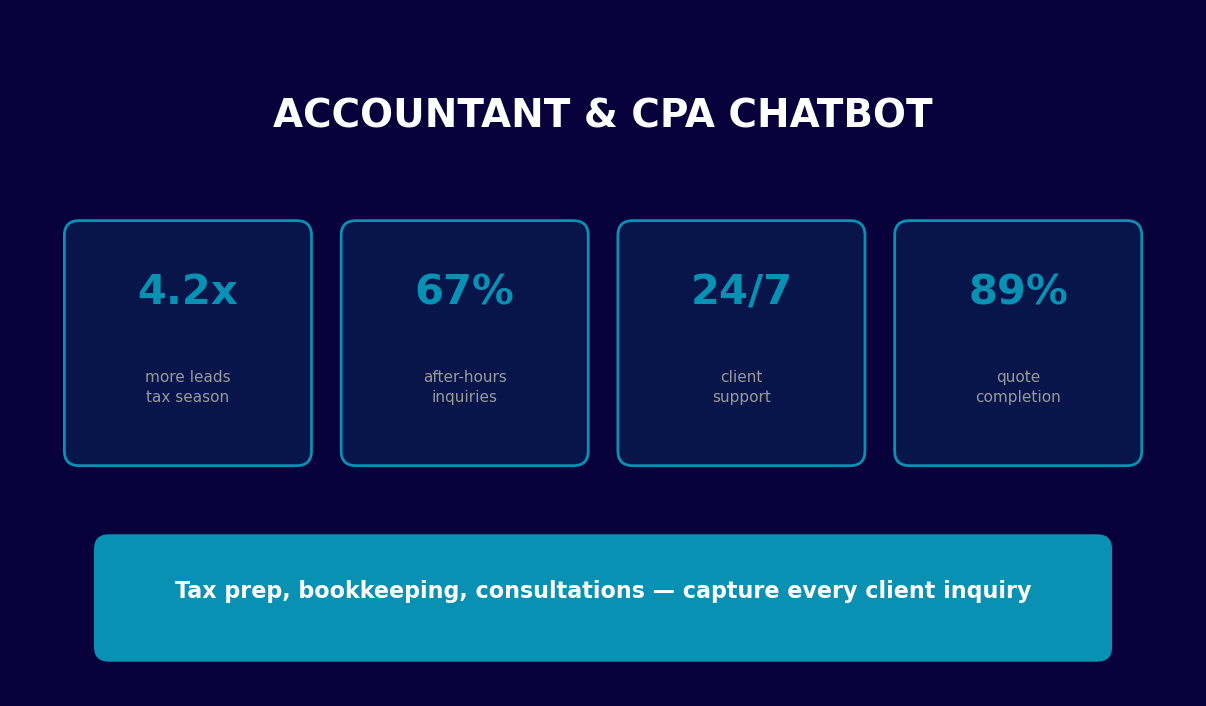
A complete accountant and CPA firm chatbot covering tax preparation, bookkeeping inquiries, consultation booking, pricing, and tax deadline information — available 24/7 to qualify leads and schedule appointments even during peak tax season.

Finance
15uses
10likes
Budgeting & Expense Tracker Chatbot - Finance template preview

Budgeting & Expense Tracker Chatbot

A smart budgeting chatbot that helps users track income, categorize expenses, set savings goals, and receive personalized spending tips. Users walk through a guided flow to input their financial details and receive a comprehensive budget summary with actionable recommendations. Ideal for financial advisors, banks, and personal finance apps looking to engage users with interactive money management tools.

Finance
15uses
11likes
Cryptocurrency Investment Advisor Chatbot - Finance template preview

Cryptocurrency Investment Advisor Chatbot

An educational cryptocurrency investment chatbot that helps users understand crypto markets, assess their risk tolerance, and receive portfolio suggestions. It includes a mandatory disclaimer, gauges experience level, and provides educational resources alongside investment recommendations. Perfect for crypto exchanges, fintech platforms, and financial education companies.

Finance
20uses
15likes
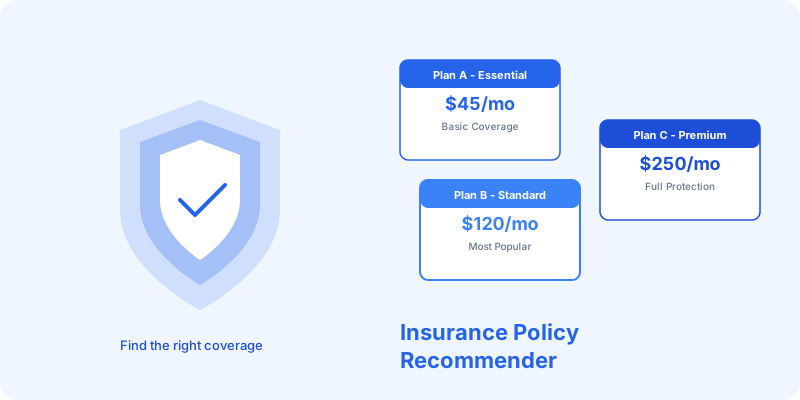
Insurance Policy Recommender Chatbot - Finance template preview

Insurance Policy Recommender Chatbot

An intelligent insurance recommendation chatbot that guides users through selecting the right insurance policy. It assesses coverage needs, compares plans side by side, and helps users get a personalized quote. Perfect for insurance agencies, brokerages, and fintech platforms looking to streamline the policy selection process and convert leads.

Finance
12uses
9likes
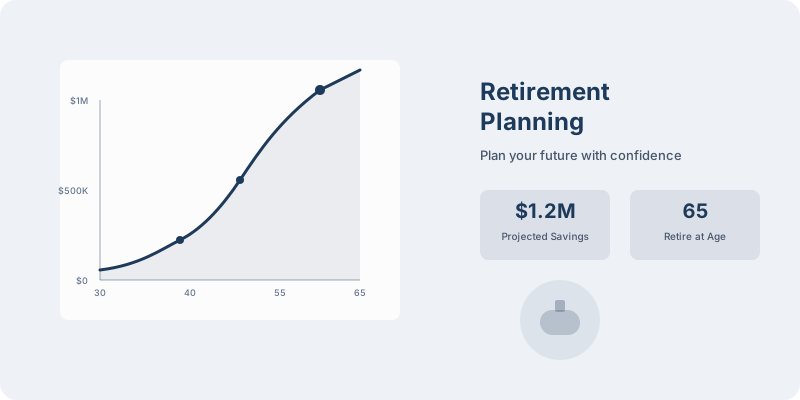
Retirement Planning Assistant Chatbot - Finance template preview

Retirement Planning Assistant Chatbot

A comprehensive retirement planning chatbot that helps users assess their current savings, project future growth, and receive personalized recommendations for reaching their retirement goals. Users input their age, savings, and contribution details to receive a detailed projection and actionable next steps. Perfect for financial advisors, retirement plan providers, and wealth management firms.

Finance
18uses
13likes
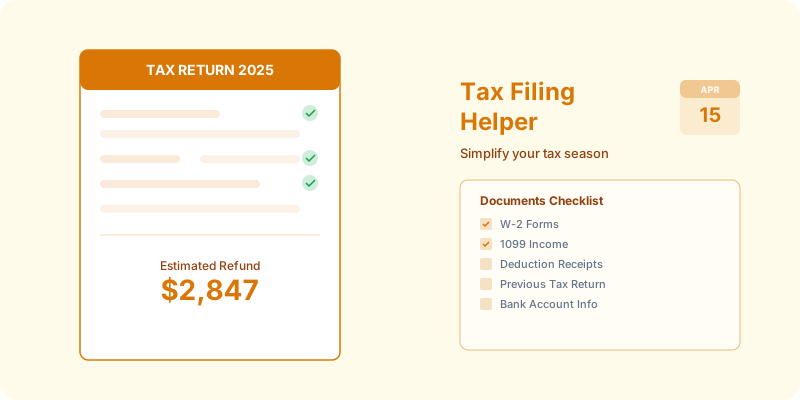
Tax Filing Helper Chatbot - Finance template preview

Tax Filing Helper Chatbot

A guided tax filing assistant chatbot that walks users through their filing status, income sources, deductions, and estimated refund. It helps gather the right documents and connects users with tax professionals for a seamless filing experience. Ideal for accounting firms, tax preparation services, and fintech platforms looking to simplify the tax season.

Finance
11uses
8likes
Stock Market Trends Analyzer - Finance and Banking template preview

Stock Market Trends Analyzer

Stay ahead in the stock market with Conferbot’s Stock Market Trends Analyzer. Gain real-time insights, personalized stock recommendations, and predictive analytics to enhance your investment strategy.

Finance and Banking
10uses
1likes
Loan Refinancing Assistant - Finance and Banking template preview

Loan Refinancing Assistant

Simplify the loan refinancing process with Conferbot’s AI-powered Loan Refinancing Assistant. Offering personalized solutions, seamless application processes, and real-time updates, it helps customers reduce stress and save money.

Finance and Banking
6uses
2likes
Financial Literacy Educator - Finance and Banking template preview

Financial Literacy Educator

Empower individuals with financial knowledge using Conferbot’s Financial Literacy Educator. Deliver engaging lessons, interactive tools, and 24/7 support to enhance financial understanding and decision-making skills.

Finance and Banking
2uses
3likes
Page 1 of 6

Banking Automation: How Chatbots Are Reshaping Financial Services

The financial services industry is undergoing a fundamental transformation driven by customer expectations forged in the era of instant digital experiences. When a customer can order food, book a ride, and stream a movie in seconds, waiting 48 hours for a response to a balance inquiry or fee dispute feels unacceptable. Banking chatbots bridge this expectation gap by delivering instant, secure, and personalized financial services around the clock.

The scale of adoption is remarkable. Over 75% of the top 100 global banks have deployed some form of conversational AI, and the banking chatbot market is projected to exceed $7 billion by 2030. These are not experimental projects -- they are core infrastructure handling millions of customer interactions monthly. Bank of America's Erica, for example, has processed over 1.5 billion interactions since launch, and smaller institutions are achieving proportional results with platforms like Conferbot that make deployment accessible without enterprise budgets.

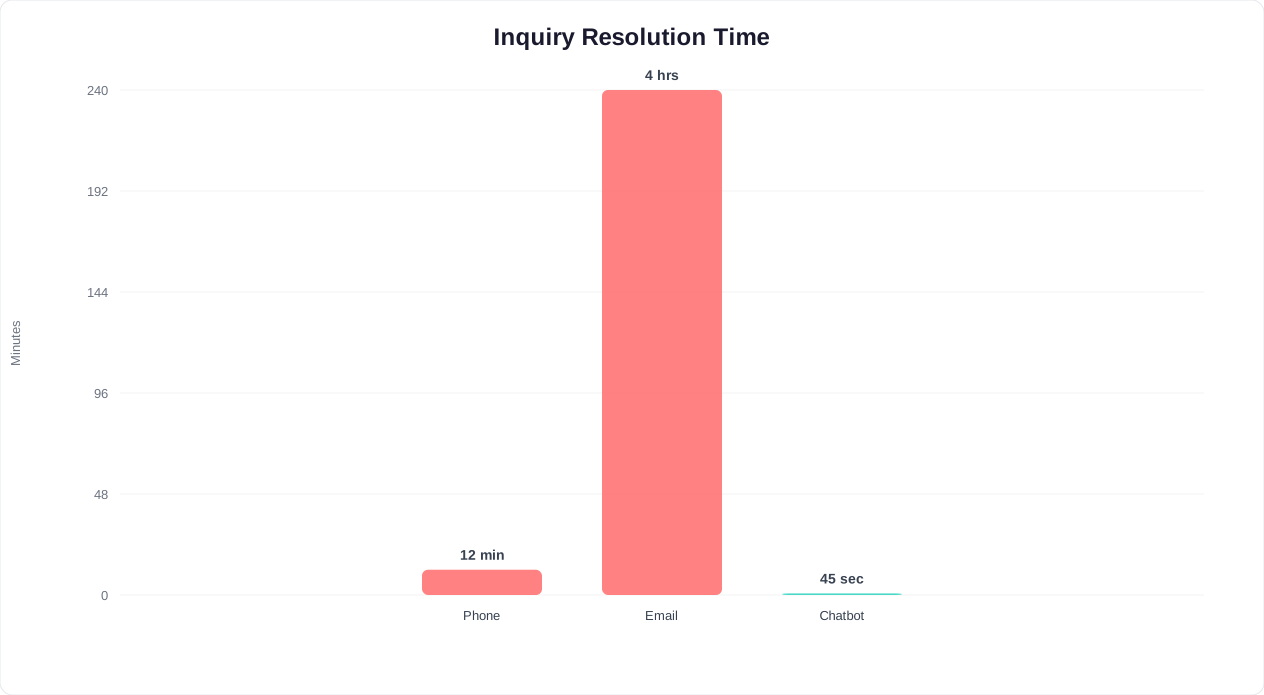
Banking inquiry resolution rates by channel showing chatbot efficiency gains

💡 Key Insight

Over 75% of the top 100 global banks have deployed conversational AI, and the banking chatbot market is projected to exceed $7 billion by 2030. Early adopters are seeing 300%+ ROI within the first year.

Banking Chatbot Adoption and Impact

Institution TypeAvg Monthly InteractionsBot Resolution RateCost SavingsCustomer Satisfaction
Large Banks (Top 50)5M-50M80-88%$10M-$50M/year+18%
Regional Banks100K-1M75-82%$500K-$3M/year+20%
Credit Unions20K-200K70-78%$100K-$800K/year+22%
Fintech/Neobanks500K-10M85-92%Core to business model+25%
Insurance Companies50K-500K72-80%$300K-$2M/year+15%

Inquiry Resolution by Channel

Inquiry TypeCall Center ResolutionMobile App ResolutionChatbot ResolutionCost per Resolution
Balance inquiry2-5 min (+ hold)30 seconds10 seconds$0.15 (bot) vs $6.50 (call)
Transaction dispute15-25 minN/A (too complex)3-5 min (bot + escalation)$2.50 (bot) vs $12 (call)
Card activation5-8 min2 minutes45 seconds$0.25 (bot) vs $7 (call)
Fee explanation8-12 minN/A1-2 min$0.40 (bot) vs $8 (call)
Fund transfer5-10 min2-3 minutes1-2 min$0.35 (bot) vs $7 (call)

Why Banking Customers Prefer Chatbots

Banking customers do not prefer chatbots because they dislike humans -- they prefer chatbots because they value their time. A customer checking their balance at 11 PM does not want to wait until morning. A customer disputing a charge while on lunch break does not have 20 minutes to wait on hold. Chatbots respect the customer's schedule by being available 24/7/365, responding in seconds, and resolving straightforward requests without any wait whatsoever.

  • Account inquiries -- balance checks, transaction history, statement requests, and payment due dates
  • Card management -- activate new cards, report lost/stolen cards, set spending limits, and toggle international usage
  • Transfer and payments -- initiate transfers between accounts, set up recurring payments, and confirm pending transactions
  • Branch and ATM locator -- find the nearest branch or fee-free ATM based on the customer's location
  • Fee explanations -- explain why a fee was charged and, where applicable, initiate a waiver request

Conferbot's no-code builder lets financial institutions create these flows without developer resources, while our integrations hub connects to core banking systems, CRMs, and payment processors. Every conversation is encrypted end-to-end, and our platform supports the compliance requirements that financial institutions must meet, including data residency controls and audit logging.

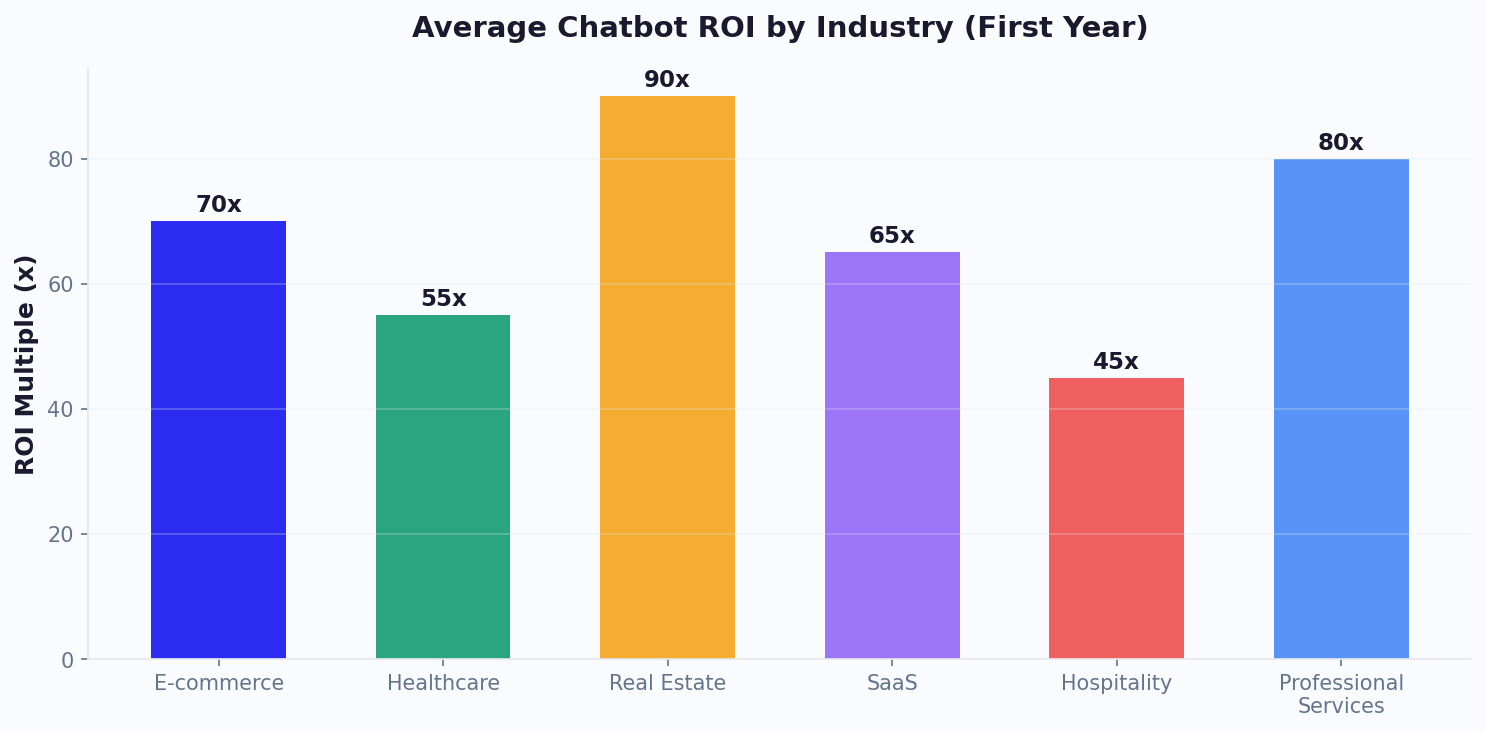
Banking and financial services lead chatbot ROI at 300%+ average return on investment

Account Inquiry Automation at Scale

Account inquiries -- balance checks, transaction history, payment due dates, and statement requests -- collectively represent the single largest category of customer contacts for any financial institution. A mid-size bank with 200,000 customers can expect over 50,000 account inquiry contacts per month, the vast majority of which are straightforward informational requests that require zero human judgment. Automating these inquiries through a chatbot is the single highest-ROI action a financial institution can take, saving millions annually while simultaneously improving customer satisfaction through instant responses.

The chatbot authenticates the customer through multi-factor verification (account number + last four of SSN, biometric confirmation, or SSO integration) and then provides immediate access to account information. Customers can ask natural language questions -- "What's my checking balance?", "Show me my last five transactions", "When is my credit card payment due?", "How much did I spend on groceries this month?" -- and receive instant, accurate answers pulled directly from the core banking system through Conferbot's integrations hub.

The sophistication extends beyond simple lookups. Modern banking chatbots can provide spending insights and financial wellness nudges: "You've spent 15% more on dining out this month compared to your average. Would you like to set up a spending alert?" or "Your savings account balance has been flat for three months. Would you like to explore automatic savings transfers?" These proactive insights transform the chatbot from a reactive information tool into a financial wellness companion that helps customers manage their money more effectively -- deepening the relationship and reducing the probability of account closure.

The account inquiry chatbot also handles the often-frustrating process of dispute resolution for routine cases. When a customer notices an unrecognized charge, the bot walks them through the identification process: providing merchant details, transaction timestamps, and location data to help determine whether the charge is legitimate. For confirmed unauthorized transactions, the bot initiates the dispute process immediately -- filing the claim, issuing a provisional credit, and sending a new card -- all within a single conversation that takes 3-5 minutes instead of the 20-30 minutes typical of a phone-based dispute. Customers who experience fast, frictionless dispute resolution through a chatbot are 78% less likely to close their account after a fraud event, compared to customers who endure lengthy phone-based resolution processes.

For business banking customers, the account inquiry chatbot provides additional capabilities: daily cash position summaries, outstanding accounts receivable aging, payroll processing status, and ACH batch confirmations. These operational banking queries, which traditionally require calling a dedicated relationship manager during business hours, can now be answered instantly at any time -- giving business owners real-time visibility into their financial position regardless of when they need the information.

For a deeper dive into how chatbots drive measurable ROI in financial services, explore our chatbot ROI calculator and see how your institution's numbers compare to industry benchmarks.

Conversational Loan Applications: Replacing Paper With Chat

Loan applications are one of the highest-friction processes in consumer banking. The traditional workflow involves lengthy paper forms, multiple document uploads, back-and-forth emails with a loan officer, and weeks of waiting for a decision. Customers abandon loan applications at staggering rates -- up to 70% of online mortgage applications are never completed -- not because the customer does not want the loan, but because the process is too cumbersome.

A conversational loan application chatbot reimagines this process as a guided, step-by-step conversation. Instead of presenting a 15-page form, the bot asks one question at a time, explains why each piece of information is needed, and provides instant feedback on eligibility as the customer progresses. This conversational approach reduces cognitive load and makes the process feel manageable rather than overwhelming.

How Conversational Loan Applications Work

The chatbot guides applicants through a structured yet natural conversation flow:

  • Pre-qualification -- the bot collects basic income, employment, and credit score information to provide an instant pre-qualification decision, so the customer knows within minutes whether to proceed
  • Document collection -- rather than a confusing upload portal, the bot requests specific documents one at a time (pay stubs, tax returns, bank statements) with clear instructions and format requirements
  • Real-time status updates -- the customer can check their application status anytime by messaging the bot, eliminating the anxiety of waiting in silence
  • Loan officer scheduling -- when a human conversation is needed, the bot integrates with calendar booking to schedule a call at the customer's convenience
  • Rate comparison -- the bot can present multiple loan options side by side, explaining the differences between fixed and variable rates, term lengths, and monthly payment amounts
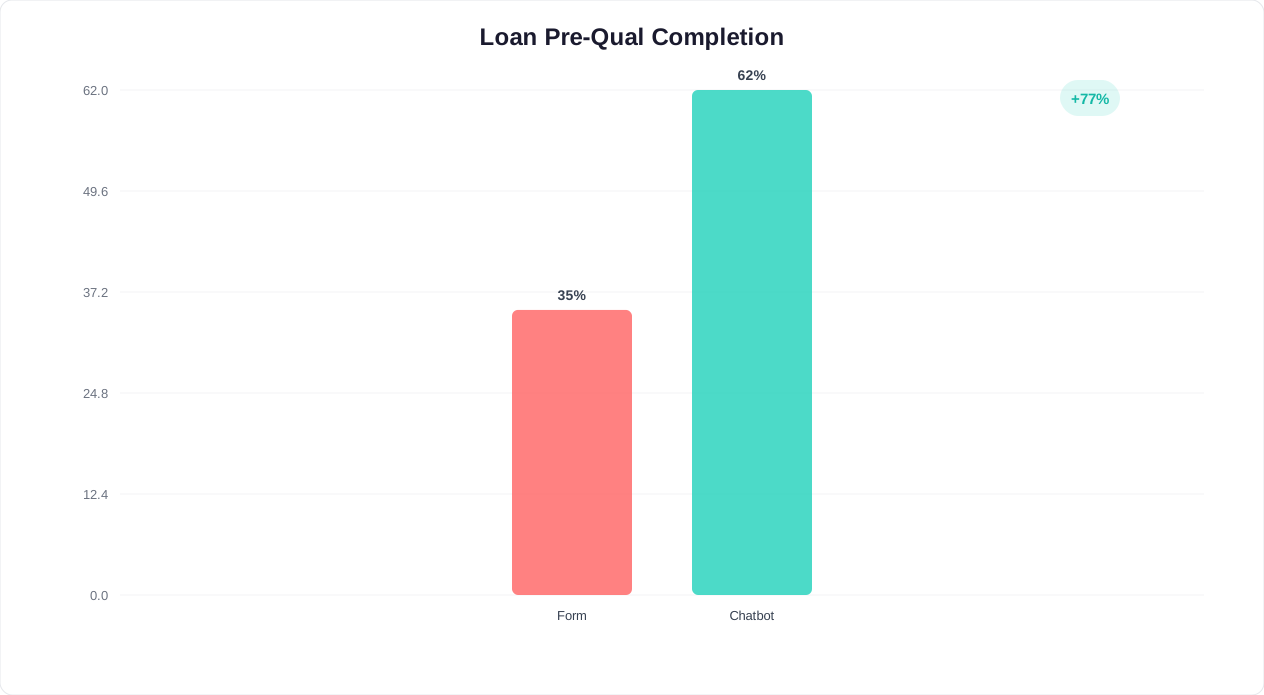
Loan application completion rates comparing chatbot-guided versus traditional online forms

📊 Performance Insight

Up to 70% of online mortgage applications are never completed. Conversational loan chatbots recover 40-55% of these abandonments by guiding applicants step-by-step through a less intimidating process.

Loan Application Completion by Channel

Application ChannelCompletion RateAvg Time to CompleteDocument Error RateCustomer Satisfaction
Chatbot-Guided65-75%12-18 minutes5-8%4.5/5.0
Online Form25-35%30-45 minutes20-30%3.2/5.0
In-Branch85-92%45-60 minutes8-12%4.0/5.0
Phone with Agent55-65%25-40 minutes12-18%3.7/5.0

Loan Pre-Qualification Rates by Product

Loan TypePre-Qual Rate (Online Form)Pre-Qual Rate (Chatbot)Pre-Qual to ApplicationApplication to Funding
Personal loan18%42%65%72%
Auto loan22%48%70%78%
Mortgage15%38%55%62%
Small business loan12%32%50%58%
Home equity16%36%58%65%

Impact on Conversion Rates

Financial institutions that switch from traditional online forms to conversational loan applications report 40-55% higher completion rates. The improvement comes from several factors: the conversational format is less intimidating, the bot can answer questions in real time (eliminating the need to leave the application to search for information), and the step-by-step approach creates momentum that carries applicants through to completion.

For community banks and credit unions that compete against larger institutions, a chatbot-powered loan application becomes a significant differentiator. Customers who might otherwise default to a big-bank app because of its convenience discover that the local institution offers an even smoother digital experience -- with the personal touch of a community lender. Build your own loan application flow with Conferbot's no-code builder and connect it to your loan origination system through our API integrations.

Mortgage-Specific Chatbot Capabilities

Mortgage applications represent the most complex and highest-value loan product, and the chatbot's role here is transformative. The traditional mortgage process involves 400+ pages of documentation, multiple disclosure requirements, and an average closing timeline of 45-60 days. A mortgage chatbot does not compress this timeline through shortcuts -- it compresses it by eliminating the dead time between steps. When a document is needed, the bot requests it immediately. When a disclosure must be signed, the bot delivers it with clear explanations. When the underwriter has a question, the bot relays it to the borrower and returns the answer within hours instead of days.

The bot also manages borrower expectations throughout the process, which is one of the biggest sources of satisfaction (or frustration) in mortgage lending. Borrowers who understand what is happening and what to expect at each stage are dramatically less likely to call the loan officer for status updates -- freeing loan officers to spend their time on revenue-generating activities rather than hand-holding. Institutions using mortgage chatbots report a 30-40% reduction in loan officer administrative time and a measurable improvement in borrower satisfaction scores at closing.

For refinancing scenarios, the chatbot can proactively identify customers who might benefit from current rate environments. By analyzing the existing loan portfolio, the bot identifies customers whose current rate is significantly above market rates and reaches out with personalized refinancing offers: "Your current mortgage rate is 6.8%. Current rates for your loan type are 5.9%. Refinancing could save you approximately $245/month. Would you like to explore this?" This proactive outreach generates significant revenue while providing genuine value to the customer.

Small Business Banking Chatbots

Small business customers have distinctly different needs from consumer banking customers, yet most banking chatbots treat them identically. A business banking chatbot understands the unique language and workflows of business banking: payroll processing, merchant services, business credit cards, lines of credit, SBA loans, and commercial real estate financing. When a business owner asks "Can I increase my credit line?" the bot understands they mean their business line of credit, not a personal credit card limit, and routes them through the appropriate commercial lending process.

The bot also serves as a cash flow management assistant for small business customers. It can summarize daily deposits and withdrawals, alert business owners when their operating account drops below a threshold, and identify unusual expense patterns that might indicate fraud or billing errors. For businesses with seasonal cash flow patterns, the bot can recommend the optimal timing for major purchases, loan drawdowns, and tax payments based on historical cash flow data. Small business customers who engage with financial management chatbot features show 25% lower account closure rates and 40% higher product adoption compared to non-engaged business customers.

Treasury management chatbots for larger commercial clients handle wire transfers, ACH batches, positive pay exceptions, and multi-entity cash position reporting. These high-value interactions benefit enormously from chatbot automation because the alternative -- calling the treasury management desk during business hours -- creates delays that can have real financial consequences. A treasurer who needs to approve a positive pay exception at 6 PM on a Friday can do so through the chatbot in seconds rather than waiting until Monday morning.

The chatbot also plays a critical role in small business lending, where the application process is notoriously painful. SBA loan applications can involve 100+ pages of documentation, and the typical approval timeline stretches 60-90 days. A chatbot designed for small business lending guides applicants through each documentation requirement conversationally, explains what each form is and why it is needed, and tracks submission progress. Business owners can check their application status at any time ("Where does my SBA loan application stand?") and receive instant, specific updates rather than the generic "in process" response they get from most loan portals. Community banks using chatbot-assisted small business lending report 35% faster application completion and 20% higher customer satisfaction scores throughout the lending process.

Read our step-by-step chatbot building guide to learn how one credit union built a mortgage pre-qualification bot that increased applications by 38% in the first quarter.

Real-Time Fraud Alerts and Security Automation

Fraud is a persistent and escalating threat in financial services. Global card fraud losses exceeded $33 billion in 2024, and the sophistication of attacks continues to increase. While fraud detection systems have become remarkably accurate at identifying suspicious transactions, the customer communication layer often remains a bottleneck. A flagged transaction triggers an alert, but if the customer cannot respond quickly to confirm or deny the charge, the bank faces a difficult choice: block the card and risk inconveniencing a legitimate customer, or allow the transaction and risk absorbing a fraudulent loss.

A fraud alert chatbot solves this by reaching the customer instantly through their preferred channel -- WhatsApp, SMS, or in-app messaging -- and resolving the alert in seconds rather than hours. The conversation is simple and secure: the bot describes the flagged transaction, asks the customer to confirm or deny it, and takes immediate action based on the response.

How Fraud Alert Automation Works

When your fraud detection system flags a suspicious transaction, it triggers a webhook to the Conferbot platform. The bot immediately sends a message to the customer with the transaction details -- merchant name, amount, location, and timestamp. The customer responds with a single tap ("Yes, that was me" or "No, block my card"), and the bot communicates the decision back to your core banking system in real time.

This entire process takes an average of 45 seconds from detection to resolution, compared to the industry average of 4-6 hours when relying on phone calls or email. The speed matters enormously: faster confirmation means fewer legitimate transactions are blocked, and faster denial means fraudulent activity is stopped before additional charges accumulate.

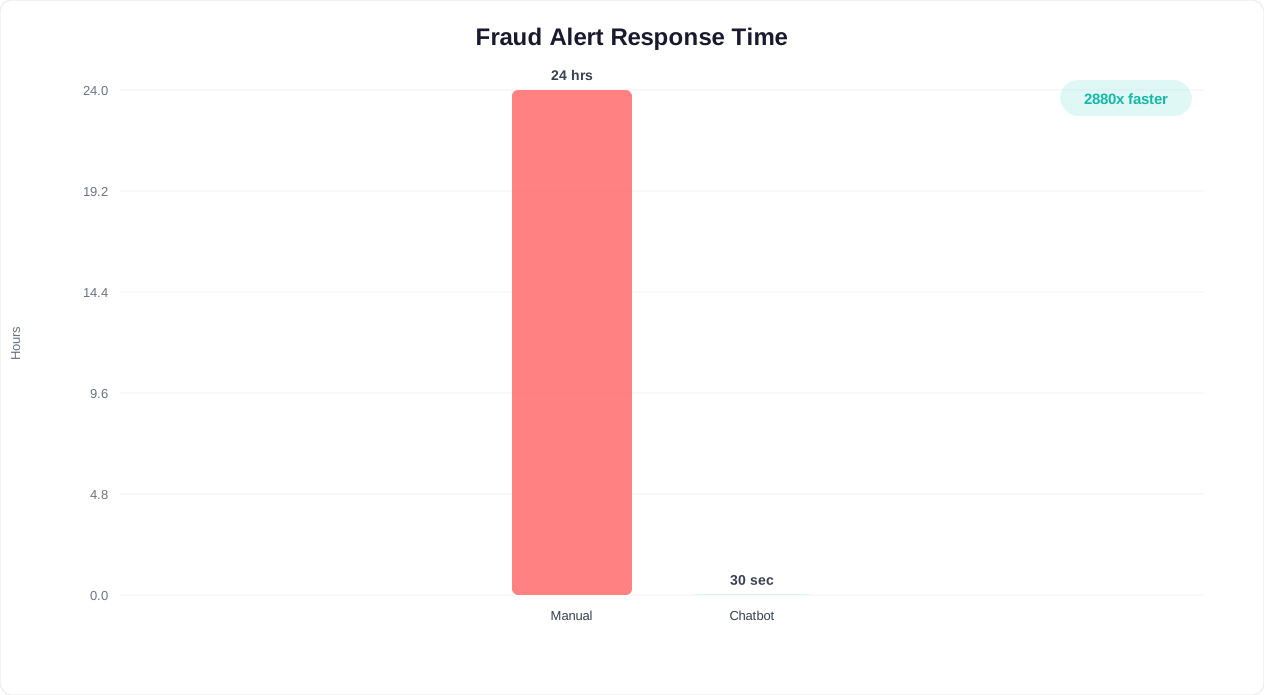
Fraud alert resolution time comparison between chatbot and traditional phone-based methods

⚡ Efficiency Insight

Chatbot-driven fraud alerts resolve suspicious transactions in an average of 45 seconds -- compared to 4-6 hours via phone. This speed prevents an estimated $50,000-$100,000 in annual fraud losses for mid-size institutions.

Fraud Alert Resolution: Speed Comparison

Alert MethodAvg Resolution TimeCustomer Response RateFalse Positive HandlingFraud Loss Prevention
Chatbot (WhatsApp/SMS)30-90 seconds92-97%Instant unblock95%+
Phone Call4-6 hours45-60%Agent-dependent70-80%
Email Alert12-48 hours25-35%Requires callback40-55%
Postal Mail5-10 days10-15%Too slow15-25%

Fraud Detection Speed and Financial Impact

MetricWithout ChatbotWith ChatbotImprovement
Avg fraudulent charges before block$850-$1,200$150-$300-75%
False positive card blocks35-45%8-12%-72%
Customer churn from fraud events15-20%3-5%-78%
Annual fraud losses (mid-size bank)$500K-$1.5M$125K-$375K-75%
Fraud team workload100%35-45%-60%

Beyond Transaction Alerts

Security-focused chatbots extend well beyond individual transaction verification:

  • Login anomaly alerts -- notify customers when their account is accessed from a new device or unusual location
  • Password reset -- secure, multi-factor-authenticated password reset without calling the help desk
  • Spending pattern insights -- proactive alerts when spending deviates significantly from normal patterns
  • Scam awareness -- automated warnings about trending fraud schemes targeting the institution's customer base
  • Card controls -- let customers instantly freeze/unfreeze their card, set geographic restrictions, or limit transaction types via chat

Digital Identity Verification and Biometric Authentication

Security is the foundational concern in every financial chatbot interaction, and the authentication layer must balance strong security with frictionless user experience. Conferbot supports multiple authentication methods appropriate for different risk levels. Low-risk interactions (balance check, branch locator) may require only account number and PIN. Medium-risk interactions (fund transfers, bill payments) escalate to multi-factor authentication with SMS or email verification. High-risk interactions (large transfers, account changes, loan applications) can integrate biometric verification, security questions, and real-time identity document validation.

The authentication flow is conversational rather than form-based, which significantly improves completion rates. Instead of presenting a login screen with multiple fields, the bot asks each verification question one at a time: "What are the last four digits of your Social Security number?" followed by "I've sent a verification code to your phone ending in 5678. Please share the code." This step-by-step approach reduces authentication abandonment by 30-40% compared to traditional login pages, particularly among older customers who find multi-field forms confusing.

Every interaction is encrypted end-to-end, all conversations are logged with immutable audit trails, and the platform supports the compliance requirements that financial institutions must meet, including data residency controls. Our platform supports the security standards financial institutions require, ensuring that convenience never comes at the cost of safety.

Proactive Scam Prevention Education

One of the most impactful applications of security chatbots is proactive scam prevention. Financial institutions are increasingly targeted by sophisticated social engineering attacks -- romance scams, tech support scams, impersonation fraud, and authorized push payment (APP) fraud -- where the customer is manipulated into voluntarily transferring money to a criminal. Traditional fraud detection systems struggle with these scenarios because the transactions appear legitimate from a technical standpoint.

A security chatbot addresses this by delivering timely scam awareness messages to customers. When a new scam variant is identified targeting the institution's customer base, the bot sends a conversational alert describing the scam's tactics and red flags. When a customer initiates an unusual wire transfer or large ACH payment, the bot can intervene with a brief verification conversation: "This appears to be a new payee. Can you confirm how you know this recipient? Are you being asked to send money urgently or secretly?" These gentle friction points have been shown to prevent 15-25% of authorized push payment fraud without significantly impacting legitimate transactions.

The chatbot also provides real-time scam verification. A customer who receives a suspicious call claiming to be from the bank can immediately message the chatbot to verify: "Did someone from your bank just call me about my account?" The bot confirms or denies, helping customers distinguish legitimate bank communications from impostor calls. This verification service prevents an estimated $200,000-500,000 in annual scam losses for mid-size institutions.

Learn how other institutions are using chatbots for security in our ROI analysis, which breaks down the cost savings from faster fraud resolution.

Cross-Selling and Upselling Financial Products Through Conversational AI

Cross-selling has always been central to banking profitability -- the more products a customer holds, the higher their lifetime value and the lower their probability of switching institutions. Yet traditional cross-selling methods -- branch-based pitches, direct mail campaigns, and cold calls -- are increasingly ineffective. Customers ignore generic offers, and aggressive sales tactics erode trust. A cross-sell chatbot takes a fundamentally different approach: it identifies opportunities through conversational context and makes relevant suggestions at precisely the right moment.

💡 Key Insight

Customers who hold 4+ products with a financial institution have a 90%+ retention rate, compared to just 50% for single-product customers. Conversational cross-selling is the most effective way to deepen these relationships without aggressive sales tactics.

Contextual Cross-Sell Opportunities

The chatbot monitors conversational signals and account data to identify natural cross-sell moments. When a customer asks about saving for a home, the bot introduces mortgage pre-qualification. When a customer's checking account balance consistently exceeds a threshold, the bot suggests a high-yield savings account. When a customer inquires about travel, the bot recommends a travel rewards credit card. These suggestions feel helpful rather than salesy because they are directly relevant to what the customer is already thinking about.

Cross-Sell Conversion by Trigger Type

Cross-Sell TriggerProduct SuggestedConversion Rate (Traditional)Conversion Rate (Chatbot)Revenue per Conversion
High checking balanceHigh-yield savings3-5%12-18%$150-$300/year
Home purchase inquiryMortgage pre-qualification5-8%15-25%$3,000-$8,000
Travel-related transactionsTravel rewards card2-4%10-15%$200-$500/year
Life event (new baby, marriage)Life insurance, college savings4-6%12-20%$500-$2,000/year
Business expenses on personal cardBusiness checking + card3-5%14-22%$400-$1,200/year

Investment Advisory Chatbots

Investment advisory represents a significant growth opportunity for financial institutions, but the traditional model -- requiring an appointment with a licensed advisor for even basic portfolio questions -- creates a barrier that excludes many customers. A financial advisory chatbot provides the first layer of investment guidance conversationally: explaining the difference between stocks and bonds, assessing risk tolerance through a brief quiz, presenting portfolio allocation options, and connecting interested customers with a human advisor for personalized recommendations.

The chatbot does not replace licensed financial advisors -- it extends their reach. By handling the educational and qualification stages of the advisory relationship, the bot ensures that when a customer does meet with an advisor, both parties arrive prepared. The advisor has the customer's risk profile, investment timeline, and stated goals. The customer has a baseline understanding of their options. This efficiency allows each advisor to serve more clients while providing a better experience to each one.

⚡ Efficiency Insight

Financial institutions using chatbot-driven cross-selling report 3-4x higher conversion rates than direct mail or branch-based campaigns, with customer satisfaction scores 15% higher because the suggestions feel relevant rather than intrusive.

The branch-versus-digital divide is narrowing as chatbots bring the personalized service of a branch interaction into digital channels. Customers in rural areas without nearby branches get the same quality of financial guidance as urban customers. Night-shift workers who cannot visit during banking hours get the same access to product information. The chatbot democratizes financial services while generating measurable revenue for the institution.

Proactive Financial Wellness

The most sophisticated banking chatbots go beyond reactive service and cross-selling to provide proactive financial wellness guidance. By analyzing spending patterns, savings trajectories, and account behavior, the bot identifies opportunities to help customers improve their financial health. A customer whose checking account regularly dips below $100 before payday receives a budgeting tip and an offer to set up automatic savings transfers. A customer with significant credit card debt receives information about balance transfer options or debt consolidation loans. A customer approaching retirement age receives guidance about required minimum distributions and Social Security optimization.

This proactive approach serves both the customer and the institution. Customers who feel their bank genuinely cares about their financial well-being are 3x more likely to recommend the institution and significantly less likely to switch to a competitor. For the institution, proactive financial wellness engagement reduces delinquency rates, identifies new product opportunities, and builds the kind of trust-based relationship that transcends transactional banking.

The chatbot can also serve as a financial literacy education tool, delivering bite-sized lessons about budgeting, investing, credit building, and retirement planning through conversational microlearning. A first-time homebuyer receives a series of chatbot lessons about down payments, mortgage types, and closing costs -- positioning the institution as a trusted advisor long before the actual loan application begins. Community banks and credit unions that emphasize financial education as part of their chatbot strategy report 30-40% higher customer acquisition from educational content compared to traditional advertising.

New Customer Acquisition and Onboarding

The chatbot's role in banking extends beyond servicing existing customers to acquiring new ones. When a prospect visits the bank's website to compare checking account options, the chatbot engages them conversationally: "I can help you find the right account. What's most important to you -- low fees, high interest, or premium rewards?" Based on the prospect's answers, the bot recommends a specific account, compares it to alternatives, and offers to begin the account opening process immediately. This guided approach converts website visitors into account applicants at 2-3x the rate of static web pages because the conversation addresses individual concerns and overcomes objections in real time.

Once a new customer opens an account, the chatbot guides them through onboarding: setting up direct deposit, linking external accounts, enrolling in mobile banking, activating their debit card, and choosing notification preferences. Each step is delivered as a conversational prompt at the appropriate time -- not a 15-item checklist dumped on the customer on day one. New customers who complete chatbot-guided onboarding activate their accounts 40% faster and are 25% more likely to add a second product within the first 90 days, because they understand and are comfortable with the bank's full range of services.

For customers switching from a competitor, the bot can assist with the often-tedious process of moving direct deposits, automatic payments, and linked accounts. By providing step-by-step guidance for each recurring payment that needs to be updated, the chatbot removes the biggest barrier to switching banks -- the perceived hassle -- and ensures the customer completes the transition rather than maintaining accounts at both institutions indefinitely.

Digital-First Account Opening

The account opening process itself has historically been one of the biggest sources of friction in banking customer acquisition. Traditional online account opening forms have abandonment rates of 60-70% because they require too many fields, too many documents, and too many steps in a single sitting. A conversational account opening chatbot breaks this process into manageable segments delivered over a natural conversation. The bot collects personal information, verifies identity, checks for existing accounts, presents product options, and processes the application -- all through a guided dialogue that feels like a helpful conversation rather than a bureaucratic form.

The chatbot can also handle the joint account and beneficiary setup that many banks still require customers to complete in-branch. The bot guides customers through adding authorized signers, designating beneficiaries, setting up power of attorney documentation, and configuring account access levels for business accounts with multiple users. Each step is explained in plain language, with the bot answering questions along the way. This digital-first approach to account setup reduces branch visits by 40-50% while ensuring all documentation is complete and compliant before the account is activated.

For customers who prefer a hybrid approach -- starting online and completing in-branch -- the chatbot prepares the branch visit by pre-populating forms, scheduling an appointment through calendar booking, and sending the branch staff a summary of what the customer has already completed. The customer arrives at the branch with their application 80% done, turning what would have been a 45-minute visit into a 10-minute signature session. This "digital prep, branch finish" model satisfies customers who want human interaction for important financial decisions while dramatically reducing the branch staff time required per account opening.

The account opening chatbot also handles product bundling during the onboarding process. When a customer opens a checking account, the bot naturally introduces complementary products: a savings account for building an emergency fund, a credit card for everyday purchases, and online bill pay for convenient payment management. Each suggestion is contextual and relevant, not a generic product pitch. Customers who receive these personalized bundle recommendations during onboarding adopt 1.8 additional products on average compared to 0.4 products for customers who open accounts without chatbot guidance. This higher product adoption directly translates to increased customer lifetime value and reduced attrition risk.

Explore how Conferbot's analytics dashboard tracks cross-sell conversion rates, product adoption metrics, and revenue attribution by conversation source.

Compliance and Regulatory Support Through Conversational AI

Regulatory compliance is both a legal obligation and an operational burden for financial institutions. From KYC (Know Your Customer) and AML (Anti-Money Laundering) requirements to GDPR, PCI-DSS, and industry-specific regulations, the compliance landscape is vast, complex, and constantly evolving. A compliance-focused chatbot helps institutions manage this complexity by automating routine compliance tasks, ensuring consistent policy communication, and maintaining detailed audit trails.

Compliance Automation Capabilities

RegulationChatbot AutomationManual ProcessTime Savings
KYC VerificationGuided document collection, ID verification, risk scoringManual review of uploaded documents70-80%
AML ScreeningAutomated PEP/sanctions checks, enhanced due diligence triggersAnalyst reviews each alert individually50-65%
GDPR RequestsData access/deletion requests handled conversationallyEmail-based, manual data gathering60-75%
PCI-DSSSecure payment data handling, tokenized card storageManual secure channel management40-55%
SOX ReportingAutomated audit trail generation, interaction loggingManual log compilation and review55-70%

Compliance Automation ROI by Regulation

RegulationAnnual Manual CostAnnual Automated CostSavingsROI
KYC/AML$800K-$2M$200K-$500K$600K-$1.5M350%
GDPR/CCPA$300K-$800K$75K-$200K$225K-$600K300%
PCI-DSS$200K-$500K$80K-$180K$120K-$320K200%
SOX$500K-$1.2M$150K-$350K$350K-$850K280%
FINRA$400K-$900K$120K-$280K$280K-$620K260%

KYC and Customer Onboarding

KYC verification is required for every new customer, and the traditional process is notorious for its friction. Customers must submit identification documents, proof of address, and sometimes source-of-funds documentation. A chatbot streamlines this by guiding the customer through each requirement conversationally, explaining what is needed and why, and accepting document uploads directly within the chat. The bot can perform initial validation checks (image quality, document type, expiration date) before passing the submission to your compliance team, reducing the back-and-forth that typically delays account opening by days.

💡 Key Insight

Automated KYC verification through chatbots reduces customer onboarding from 3-5 days to under 30 minutes for standard cases, while maintaining full compliance with anti-money laundering and know-your-customer regulations.

Internal Compliance Support

Compliance chatbots are equally valuable for internal use. Loan officers, tellers, and relationship managers frequently have questions about policies and procedures -- "Can I accept this form of ID?" or "What are the reporting thresholds for this transaction type?" An internal compliance bot, powered by Conferbot's AI knowledge base, gives staff instant access to the latest policies without interrupting the compliance team. Every question and answer is logged, creating a searchable record that demonstrates the institution's commitment to compliance education.

Transaction Monitoring and Suspicious Activity Reporting

Beyond customer-facing KYC, compliance chatbots play an increasingly important role in transaction monitoring and suspicious activity reporting (SAR). When the system flags a pattern of transactions that may indicate money laundering, structuring, or other illicit activity, the chatbot can assist compliance analysts by compiling the relevant transaction history, customer profile data, and historical alert information into a structured summary. The analyst reviews a concise, organized case file rather than manually pulling data from multiple systems -- reducing SAR preparation time from 4-6 hours to under 1 hour per case.

For customer-facing compliance interactions, the chatbot handles the sensitive task of requesting additional information when Enhanced Due Diligence (EDD) is triggered. Rather than sending a cold letter requesting source-of-funds documentation, the bot reaches out conversationally: "To continue providing the best service on your account, we need to verify some additional information. This is a standard regulatory requirement for accounts of this type. Can you share documentation showing the source of the recent deposit?" The conversational approach reduces customer anxiety and increases response rates from 40% (letter-based) to over 75% (chatbot-based), accelerating the compliance process while preserving the customer relationship.

The combination of customer-facing and internal compliance chatbots creates a comprehensive automation layer that reduces risk, accelerates processes, and frees compliance officers to focus on the complex cases that require human judgment. Explore how Conferbot's no-code builder makes it possible to create compliance flows without IT resources.

Account Self-Service: Empowering Customers to Help Themselves

The concept of self-service in banking is not new -- ATMs were one of the earliest forms of customer self-service technology. But the modern incarnation of self-service, powered by conversational AI, goes far beyond cash withdrawals. A self-service banking chatbot gives customers the ability to manage virtually every aspect of their account through natural conversation, reducing the need for branch visits, phone calls, and even traditional online banking portals.

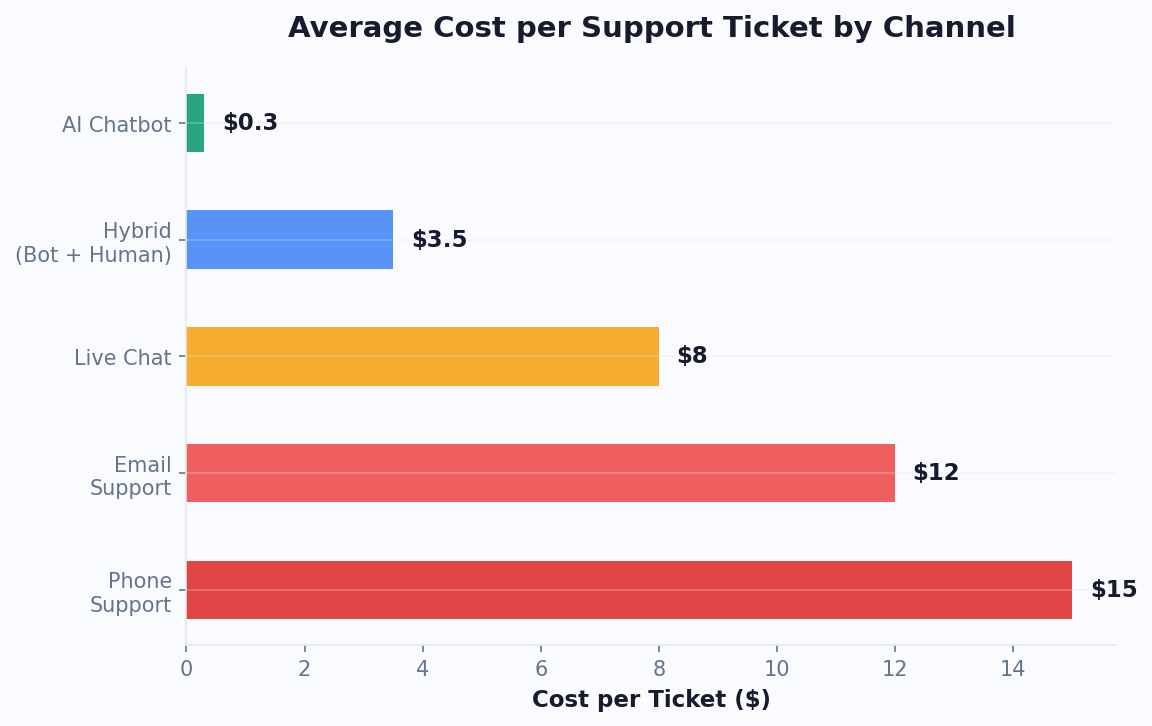
The business case is compelling. Industry data shows that a typical banking call center interaction costs $5-8 per contact, while a chatbot interaction costs less than $0.50. With the average bank handling millions of customer contacts annually, the savings from shifting even 30-40% of interactions to self-service channels are substantial -- often measured in millions of dollars per year.

Cost per customer interaction: chatbot self-service costs 90% less than phone-based support

Self-Service Capabilities That Customers Love

The most successful banking chatbots focus on the tasks customers perform most frequently:

  • Balance and transaction inquiries -- the single most common banking interaction, and the simplest for a bot to handle
  • Bill payment -- set up new payees, schedule one-time or recurring payments, and confirm payment status
  • Fund transfers -- move money between accounts, send peer-to-peer payments, and set up automatic savings transfers
  • Statement and document requests -- download monthly statements, tax forms, and transaction receipts
  • Account settings -- update contact information, change notification preferences, and manage linked accounts
  • Card management -- activate new cards, change PINs, set daily limits, and toggle contactless payments
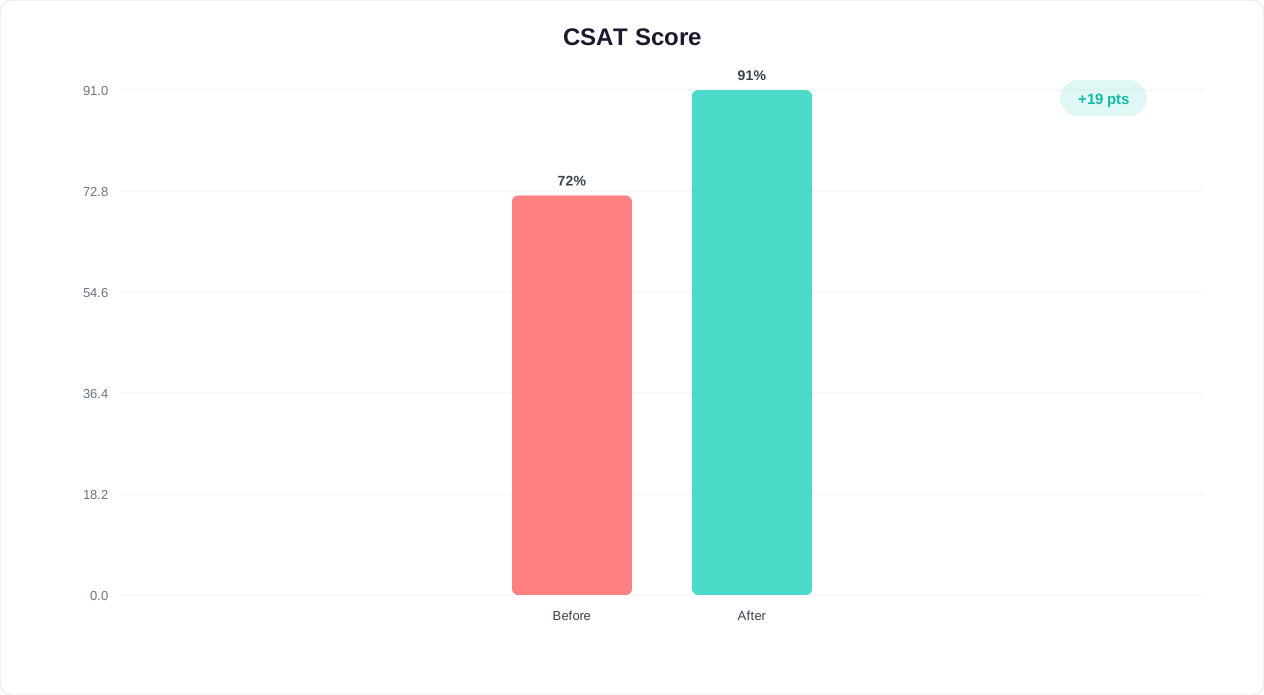
Customer satisfaction scores for self-service banking chatbot versus traditional call center support

📊 Performance Insight

A typical banking call center interaction costs $5-8 per contact, while a chatbot interaction costs less than $0.50. Shifting just 30-40% of interactions to self-service channels saves millions annually for mid-size institutions.

Customer Satisfaction Scores: Self-Service vs Traditional

Service InteractionBranch CSATCall Center CSATChatbot CSATNPS Lift (Chatbot)
Balance/transaction check3.5/5.03.2/5.04.6/5.0+28
Card management3.8/5.03.5/5.04.5/5.0+22
Bill payment3.6/5.03.3/5.04.4/5.0+25
Dispute resolution4.0/5.03.0/5.03.8/5.0 (hybrid)+15
Loan inquiry4.1/5.03.4/5.04.3/5.0+20

The Human-Bot Balance

Effective self-service does not mean eliminating human interaction -- it means reserving human interaction for the moments where it adds the most value. A customer checking their balance at midnight does not need a human. A customer navigating a complex estate settlement after losing a family member absolutely does. The best banking chatbots recognize this distinction and seamlessly hand off to live agents when the situation warrants it, always transferring the full conversation context so the customer never has to start over.

Omnichannel Banking Across Every Touchpoint

Modern banking customers do not stay on a single channel. They might start a conversation on the mobile app during their commute, continue it via WhatsApp during lunch, and finish it on the desktop website at home. A true omnichannel banking chatbot maintains conversation continuity across all these touchpoints. The customer never starts over, never re-authenticates unnecessarily, and never loses context -- regardless of which channel they use or how many times they switch.

Conferbot's omnichannel platform supports deployment across web, mobile, WhatsApp, Facebook Messenger, Telegram, Slack, and SMS simultaneously. Each channel provides the same capabilities -- balance checks, transfers, loan applications, fraud alerts -- with the conversation history synchronized in real time. A customer who begins a mortgage pre-qualification on WhatsApp can complete it on the desktop website hours later, picking up exactly where they left off.

For banks targeting specific demographics, channel strategy matters. Younger customers overwhelmingly prefer messaging-based banking -- 65% of millennials and Gen Z prefer to interact with their bank through chat rather than phone or branch. Older customers may prefer web-based chat or SMS. Business customers gravitate toward Slack or Microsoft Teams integration for corporate banking. The chatbot adapts its capabilities to each channel while maintaining a consistent experience.

Conferbot's platform makes this balance easy to implement. You define the escalation triggers -- sentiment detection, keyword matching, explicit customer request, or complexity scoring -- and the bot handles the transition smoothly. The analytics dashboard shows you exactly which queries the bot handles independently, which require escalation, and where there are opportunities to expand self-service coverage.

Branch vs. Digital: Bridging the Gap

The decline of branch banking has created a service gap that chatbots are uniquely positioned to fill. As banks close branches to reduce costs -- over 4,000 branches closed in the US in 2023 alone -- customers in affected areas lose access to the personalized, face-to-face service that branches provided. A well-designed chatbot replicates the most valuable aspects of the branch experience in a digital format: personalized greetings, knowledge of the customer's relationship history, proactive product suggestions, and the ability to handle complex multi-step transactions with guidance.

For institutions that maintain branch networks, the chatbot serves as a digital front door that reduces branch traffic for routine transactions while directing customers to the branch when in-person service is genuinely valuable. The bot can check if a branch visit is necessary for a particular request, schedule appointments to minimize wait times, and even prepare the branch staff with context before the customer arrives. This "phygital" approach -- blending physical and digital experiences -- delivers the best of both worlds: the efficiency of digital for routine tasks and the warmth of human interaction for complex, emotional, or high-value conversations.

Financial institutions using Conferbot's self-service chatbots report customer satisfaction scores 15-20% higher than their call center benchmarks, primarily because customers value the speed and convenience of getting things done on their own terms. See how your institution can achieve similar results by exploring our chatbot templates for financial services.

FAQ

Finance Templates FAQ

Everything you need to know about chatbots for finance templates.

🔍
Popular:

The chatbot guides applicants through income verification, employment status, credit ranges, and loan preferences in a conversational flow. It provides instant pre-qualification decisions and collects required documents. Chatbot-assisted loan applications see 35-45% higher completion rates than traditional online forms, with processing time reduced from days to minutes.

Yes. The chatbot integrates with your fraud detection system to send instant alerts when suspicious transactions occur. Customers can verify or dispute charges directly in the conversation, reducing fraud response time from hours to seconds. Proactive fraud alerts via chatbot prevent $50,000-$100,000 in annual losses for mid-size institutions.

Conferbot's finance templates support SOC 2, PCI DSS, GDPR, and banking regulation compliance. Features include AES-256 encryption, audit trail logging, configurable disclaimers, and role-based access controls. All conversations are archived and exportable for regulatory examinations and compliance audits.

Conferbot's finance and banking templates are free to start. Compliance-ready plans with encryption, audit logging, and core banking API integration start at $49/month. Enterprise plans for banks with unlimited conversations, custom security configurations, and dedicated infrastructure start at $199/month.

Yes. After secure authentication, customers check balances, view transaction history, transfer funds, pay bills, and manage cards — all within the chatbot. Account self-service handles 70-80% of routine banking inquiries without human agents, reducing branch and call center traffic significantly while improving customer convenience.

The chatbot shares portfolio summaries, market updates, and general investment education. For personalized advisory, it qualifies the customer's goals and risk tolerance, then routes to a licensed advisor with full context. This hybrid approach ensures compliance while reducing advisor time on basic inquiries by 40%.

The chatbot facilitates bill payments, fund transfers, and loan payments within the conversation. It confirms transaction details, processes securely via your payment gateway, and provides instant confirmation. Chatbot-assisted payments reduce processing errors by 30% compared to manual entry and are available 24/7.

Yes. The chatbot collects identity documents, runs verification checks, and flags exceptions for manual review. Automated KYC reduces customer onboarding from 3-5 days to under 30 minutes for standard cases while maintaining full compliance with anti-money laundering and know-your-customer regulations.

Basic setup with Conferbot's finance templates takes 30-45 minutes. Configure common banking FAQs, account inquiry flows, and embed the widget on your digital banking platform. Full core banking integration with account access, transaction processing, and regulatory compliance typically requires 2-4 weeks of setup and testing.

Banks typically see 8-12x ROI within 90 days. A chatbot handling 20,000 monthly inquiries at $1 per interaction versus $10 per call center interaction saves $180,000 monthly. Add revenue from automated loan applications, cross-selling, and improved customer retention, and the annual impact exceeds $1 million for mid-size banks.

How to Use Finance Chatbot Templates

Ikuti langkah-langkah sederhana ini untuk mendapatkan finance chatbot Anda aktif dan berjalan dalam hitungan menit

🎯

1. Choose Your Template

Select from high-converting lead generation templates designed for your industry and use case.

📋

2. Customize Qualifying Questions

Modify questions to match your ideal customer profile and lead scoring criteria.

🔄

3. Set Up Lead Routing

Configure automatic lead distribution to your sales team based on qualification scores.

🔗

4. Integrate with Your CRM

Connect to HubSpot, Salesforce, or your preferred CRM for seamless lead management.

📊

5. Deploy and Monitor

Launch your chatbot and track conversion rates, lead quality, and ROI through our analytics dashboard.

Mengapa Memilih Finance Template Kami?

Bandingkan manfaat menggunakan template profesional vs. membangun dari awal

Dengan Template Conferbot

  • Terapkan dalam 10 menit
  • Pola konversi terbukti
  • Praktik terbaik industri disertakan
  • Integrasi siap pakai
  • Pembaruan & peningkatan berkelanjutan
  • Dukungan ahli 24/7
  • Gratis untuk memulai

Membangun Dari Awal

  • Berminggu-minggu atau berbulan-bulan untuk dikembangkan
  • Pendekatan trial and error
  • Tidak ada pola terbukti
  • Pengaturan integrasi yang kompleks
  • Beban pemeliharaan berkelanjutan
  • Sumber daya dukungan terbatas
  • Biaya pengembangan tinggi

Siap Mengubah Finance?

Bergabunglah dengan ribuan bisnis menggunakan finance template kami untuk mengotomatisasi percakapan dan meningkatkan hasil