Why Cleaning Service Businesses Need AI Chatbots in 2026
The cleaning services industry is worth over $90 billion in the United States and growing at 6.5% annually, yet most cleaning businesses—from solo operators to multi-crew companies—still rely on phone calls, voicemail, and manual callbacks to handle customer inquiries. The result is predictable: 67% of cleaning service leads come in outside business hours, and research from Invoca shows that 85% of callers who reach voicemail never call back. Every unanswered inquiry is a booking lost to a competitor who responded faster.
AI chatbots solve this problem completely. A chatbot deployed on your cleaning service website, Google Business Profile, Facebook page, or WhatsApp can instantly engage every visitor, provide accurate quotes based on property details, check real-time crew availability, book confirmed appointments, process deposits, and even upsell add-on services—all without any human involvement. The chatbot works at 2 AM on a Sunday just as effectively as it does at 10 AM on a Tuesday.
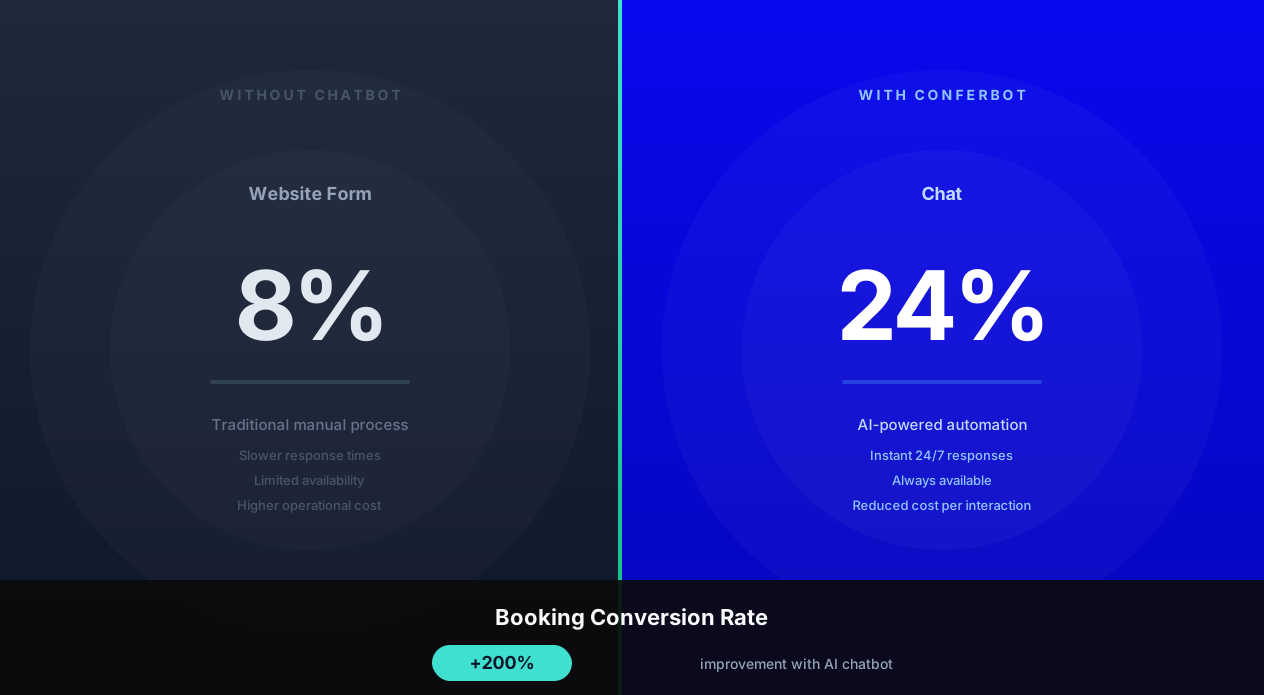
The economics are compelling. The average residential cleaning job generates $150 to $350 in revenue, and the average customer lifetime value for recurring cleaning clients exceeds $4,800 annually. Every lead your chatbot captures that would otherwise have bounced represents significant revenue. Cleaning businesses implementing AI chatbots report 35 to 55% increases in booked appointments and 25 to 40% reductions in scheduling-related administrative time.
This guide covers everything a cleaning service business needs to know about implementing an AI chatbot: instant quote calculation formulas, service area validation, scheduling and availability management, recurring booking automation, add-on upselling strategies, review collection, integration with popular cleaning business software, ROI modeling, and a step-by-step implementation plan. Whether you run a one-person house cleaning operation or a multi-location commercial janitorial company, this guide provides the specific playbook for your business model.
The cleaning industry is highly competitive and hyper-local. Customers compare 3 to 5 services before booking, and 78% choose the company that responds first with a clear quote. AI chatbots ensure you are always that company—providing instant, professional responses that convert browsers into booked clients while your competitors' phones ring into voicemail.
Lead Generation Challenges Specific to Cleaning Services
Cleaning service businesses face unique lead generation challenges that make AI chatbots particularly valuable. Understanding these challenges reveals why traditional marketing and sales processes leave so much revenue on the table.
The After-Hours Problem
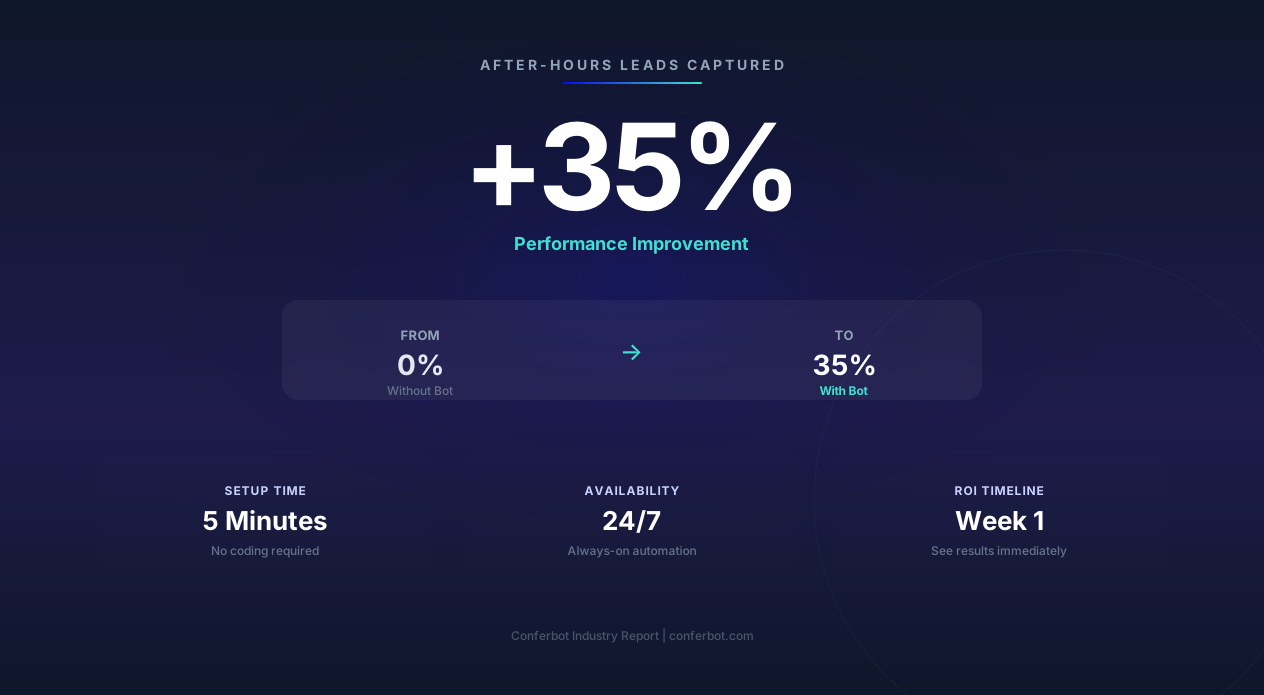
Cleaning service customers overwhelmingly research and book outside of traditional business hours. Data from cleaning industry booking platforms shows that 42% of quote requests come between 6 PM and 10 PM (after the homeowner gets off work), 18% come on weekends, and 7% come between 10 PM and 8 AM. In total, 67% of potential leads arrive when no one is available to answer the phone. A solo operator cleaning houses from 8 AM to 5 PM literally cannot answer calls during their most productive revenue-generating hours, and hiring a receptionist for after-hours coverage is cost-prohibitive for most small cleaning businesses.
Quote Complexity and Time Drain
Every cleaning quote requires gathering the same information: property type (house, apartment, condo, office), square footage, number of bedrooms and bathrooms, cleaning type (standard, deep clean, move-in/move-out), frequency (one-time, weekly, bi-weekly, monthly), specific requests (inside oven, inside fridge, window interiors), and pet presence. Gathering this information via phone takes 8 to 12 minutes per inquiry. For a business receiving 20 inquiries per week, that is 3 to 4 hours spent on phone consultations—many of which never convert to bookings. A chatbot collects this information in 2 to 3 minutes with zero operator time investment.
The Speed-to-Lead Gap
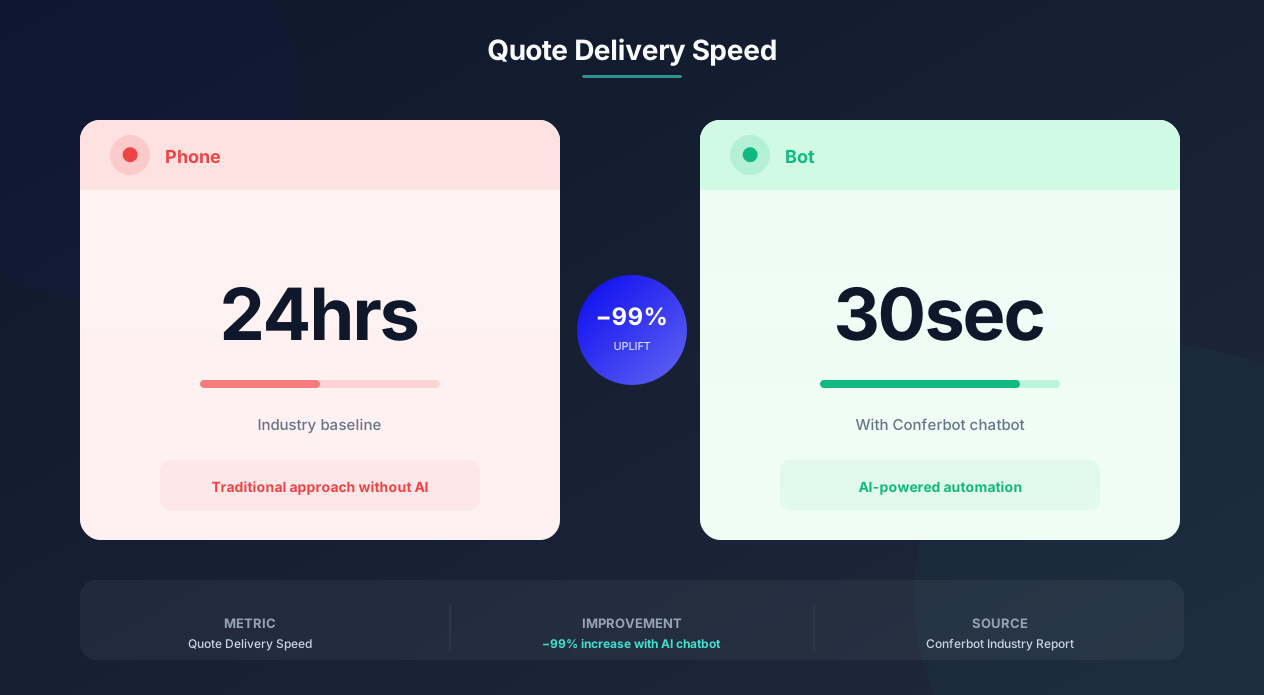
According to Harvard Business Review research, the odds of qualifying a lead drop by 400% if you wait more than 5 minutes to respond. In the cleaning industry, where customers often request quotes from multiple services simultaneously, response speed is the single biggest predictor of conversion. The first company to respond with a clear quote wins the booking 78% of the time. AI chatbots respond instantly—within seconds—giving your business a decisive speed advantage over every competitor relying on manual responses.
Price Shopper Management
The cleaning industry attracts significant price shopping. Many inquiries come from customers comparing 4 to 6 services to find the lowest price. Without a chatbot, each price shopper consumes valuable operator time on the phone. With a chatbot, price quotes are delivered instantly at zero marginal cost. More importantly, the chatbot can be configured to emphasize value differentiators (insurance, bonding, background-checked cleaners, satisfaction guarantees) alongside the price, converting price-focused shoppers into value-conscious customers willing to pay a premium.
Seasonal Demand Volatility
Cleaning demand spikes dramatically around holidays (Thanksgiving, Christmas, Easter), during spring cleaning season (March-May), and during move-in/move-out periods (end of month, start of school year). These spikes can increase inquiry volume by 200 to 400%. Without automation, cleaning businesses either miss the surge (cannot handle the call volume) or scramble to hire temporary phone staff (expensive and poorly trained). A chatbot handles 10 inquiries just as easily as 1,000, capturing every lead during peak periods.
Recurring Client Retention
The most valuable cleaning clients are recurring (weekly or bi-weekly) customers, yet converting one-time clients to recurring is a manual, inconsistent process for most cleaning businesses. Chatbots can systematically offer recurring plans after every one-time booking, present comparison pricing that makes recurring plans attractive, and automate the transition from one-time to subscription—dramatically increasing customer lifetime value with zero additional sales effort.
Instant Quote Calculation via Chatbot: From Inquiry to Price in 90 Seconds
The ability to deliver accurate, instant quotes is the single most valuable chatbot capability for cleaning services. Here is how to design a quote calculation system that is both accurate enough to honor and fast enough to convert.
Building Your Pricing Logic
Most cleaning businesses use a combination of square footage, room count, cleaning type, and add-on services to calculate quotes. The chatbot needs this logic encoded as a formula it can execute in real-time. Here is a typical pricing structure:
| Factor | Pricing Approach | Example |
|---|---|---|
| Base rate (standard cleaning) | Per square foot or flat rate by property size | $0.08/sq ft or $120 for 1,500 sq ft home |
| Deep cleaning multiplier | 1.5x to 2.5x standard rate | $180 to $300 for same home |
| Move-in/move-out | 2x to 3x standard rate | $240 to $360 for same home |
| Bedroom surcharge | $10 to $25 per bedroom above 2 | 4 bedrooms = $20 to $50 extra |
| Bathroom surcharge | $15 to $30 per bathroom above 1 | 3 bathrooms = $30 to $60 extra |
| Pet cleaning surcharge | $15 to $40 flat | Covers extra vacuuming, lint removal |
| Recurring discount | 10-25% off standard rate | Weekly: 25% off, Bi-weekly: 15% off, Monthly: 10% off |
| Add-on services | Fixed price per service | Inside oven: $35, Inside fridge: $25, Window interiors: $5/window |
The Conversational Quote Flow
The chatbot gathers pricing inputs through a natural conversation rather than a static form. Here is how the flow works:
Opening: "Hi! I would love to get you a quick cleaning quote. First, what type of property do you need cleaned?" [House / Apartment / Condo / Office / Other]
Property details: "Great! About how many square feet is your home?" [Under 1,000 / 1,000-1,500 / 1,500-2,000 / 2,000-2,500 / 2,500-3,000 / 3,000+] "How many bedrooms?" [1 / 2 / 3 / 4 / 5+] "And how many bathrooms?" [1 / 1.5 / 2 / 2.5 / 3+]
Cleaning type: "What type of cleaning do you need?" [Standard clean / Deep clean / Move-in or move-out clean / Post-construction clean]
Frequency: "How often would you like us to clean?" [One-time / Weekly / Every two weeks / Monthly] "Good news—recurring clients save 15% to 25% off our standard rate!"
Add-ons: "Would you like any of these popular add-on services?" [Inside oven ($35) / Inside refrigerator ($25) / Interior windows ($5 per window) / Laundry service ($30) / Inside cabinets ($40) / None]
Special considerations: "Do you have any pets?" [Yes / No] "Any specific areas or requests we should know about?" [Free text]
Quote delivery: "Based on your 2,000 sq ft, 3 bedroom, 2 bathroom home with a bi-weekly standard cleaning and inside oven add-on, your price is $185 per visit (that includes your 15% recurring discount—the one-time rate would be $218). Shall I check availability for your first cleaning?"
This entire flow takes 60 to 90 seconds—compared to 8 to 12 minutes by phone. The customer receives a clear price without waiting for a callback, and the chatbot immediately transitions to booking if the quote is accepted.
Handling Quote Objections
When customers express hesitation about pricing, the chatbot is prepared with value-building responses: "I understand—that is an important investment. Here is what is included in every visit: professional-grade products, insured and background-checked cleaners, a 100% satisfaction guarantee, and easy rescheduling. Many of our clients tell us the peace of mind alone is worth it." For persistent price resistance, the chatbot can offer a first-visit discount, suggest a smaller service scope, or schedule a free walkthrough for a more precise in-person estimate.
With Conferbot's lead generation capabilities, the chatbot also captures contact information from visitors who receive a quote but do not book immediately, enabling follow-up sequences that convert an additional 15 to 25% of quote recipients over the following 7 days.
Service Area Validation: Qualifying Leads Geographically in Seconds
Cleaning businesses serve defined geographic areas, and out-of-area inquiries waste time for both the business and the customer. AI chatbots validate service area eligibility instantly, qualifying or disqualifying leads before investing time in the quote process.
How Geographic Validation Works
The chatbot asks for the customer's zip code or city early in the conversation and cross-references it against your defined service area. For customers within your area, the conversation continues seamlessly. For customers outside your area, the chatbot provides a clear, helpful response: "I am sorry—we currently serve zip codes 80201 through 80249 in the Denver metro area, and your location in Boulder is just outside our range. I would recommend checking Denver House Pros for your area. Is there anything else I can help with?"
This geographic filtering eliminates 10 to 15% of inquiries that would never convert, saving your team from providing quotes to customers you cannot serve. More importantly, the graceful handling (providing an alternative recommendation) creates a positive brand impression even with non-serviceable leads.
Dynamic Service Area Expansion
For cleaning businesses considering service area expansion, the chatbot can collect data on out-of-area demand. If the chatbot logs 50 requests from a neighboring zip code in one month, that data supports a business case for expanding into that area. The chatbot can also be configured to accept bookings from borderline areas with a travel surcharge: "Your location is just outside our standard area, but we can serve you with a $25 travel surcharge. Would you like to proceed with a quote?"
Multi-Location Management
For cleaning companies operating multiple locations or franchise territories, the chatbot routes leads to the appropriate location based on geography. A customer in the northern service area is connected with the north team's availability calendar, while a customer in the south is routed to the south team—all transparently within the same conversation. This routing ensures accurate availability information and prevents double-bookings between locations.
Scheduling and Availability Management: Real-Time Booking Without the Phone Tag
The back-and-forth of scheduling—"How about Tuesday at 10?" "No, that does not work. What about Thursday?"—is one of the most time-consuming aspects of running a cleaning business. AI chatbots connected to your scheduling system show real-time availability and let customers self-book in seconds.
Real-Time Calendar Integration
The chatbot connects to your scheduling software (Jobber, Housecall Pro, ZenMaid, Launch27, Google Calendar, or custom systems) and displays actual available time slots. After providing a quote, the chatbot transitions directly to booking: "Your bi-weekly cleaning will be $185 per visit. Here are our available time slots for your first cleaning this week:" followed by available dates and times.
The customer selects their preferred slot, and the booking is confirmed instantly—no phone tag, no waiting for callbacks, no lost leads during the scheduling process. The chatbot also sends a confirmation message with the date, time, estimated duration, what to expect, and any preparation instructions ("Please ensure countertops are clear so our team can clean thoroughly").
Crew and Resource Optimization
Smart scheduling goes beyond showing open slots. The chatbot can optimize crew assignments based on geographic proximity (booking a job near an existing job on the same day), crew capabilities (assigning deep cleans to experienced teams), equipment requirements (ensuring the right equipment is available for specialty services), and travel time between jobs. This optimization reduces dead time between appointments and increases daily job capacity by 15 to 25%.
Buffer Time and Realistic Scheduling
One common mistake in cleaning business scheduling is back-to-back bookings without travel and setup buffer time. The chatbot enforces buffer rules automatically: 30 minutes between jobs in the same neighborhood, 60 minutes for cross-town transitions. This prevents the cascading late arrivals that damage customer satisfaction and reviews. The system also accounts for estimated job duration based on the quote parameters—a 3,000 sq ft deep clean gets a larger time block than a 1,200 sq ft standard clean.
Waitlist and Preferred Time Management
When a customer's preferred time is not available, the chatbot offers alternatives and a waitlist option: "Our Tuesday morning slots are full this week. I have availability Thursday at 9 AM or Friday at 11 AM. Alternatively, I can add you to our Tuesday waitlist and notify you immediately if a slot opens up—would you like that?" Waitlist management converts an additional 20 to 30% of customers who would otherwise have bounced to a competitor with open availability.
For businesses looking to reduce no-shows, Conferbot's appointment booking integration includes automated reminders via SMS and email at 48 hours, 24 hours, and 2 hours before the appointment—reducing no-shows by 67% and protecting your schedule and revenue.
Recurring Booking Automation: Converting One-Time Clients to Subscription Revenue
Recurring cleaning clients are the backbone of a profitable cleaning business. According to Bureau of Labor Statistics data, the demand for cleaning services is projected to grow 6% through 2032, driven primarily by recurring residential and commercial contracts. A one-time cleaning generates $200 in revenue; a weekly client generates $10,400 annually. AI chatbots systematically convert one-time bookings into recurring subscriptions, dramatically increasing customer lifetime value.
The Recurring Conversion Conversation
After every one-time booking, the chatbot presents the recurring value proposition with specific savings: "Your one-time deep clean is booked for Tuesday! Did you know our recurring clients save 15 to 25% per visit? Here is what that looks like for your home:"
| Frequency | Price per Visit | Monthly Cost | Annual Savings vs One-Time |
|---|---|---|---|
| One-time | $240 | N/A | N/A |
| Monthly | $216 (10% off) | $216 | $288/year |
| Every two weeks | $204 (15% off) | $408 | $936/year |
| Weekly | $180 (25% off) | $720 | $3,120/year |
Presenting recurring pricing immediately after booking (when commitment to cleaning is highest) converts 18 to 28% of one-time clients to recurring plans. The chatbot can also offer incentives: "Sign up for a bi-weekly plan today and get your first deep clean at the standard cleaning price—a $60 savings."
Subscription Management
Once a client is on a recurring plan, the chatbot handles ongoing management: schedule changes (skip a week, reschedule), service modifications (add deep cleaning for the next visit, remove add-on service), pause and resume (vacation holds), and cancellation prevention. For cancellation requests, the chatbot employs retention strategies: offering a pause instead of cancellation, presenting a less frequent option, or providing a one-time loyalty discount. These retention flows save 25 to 35% of cancellation-intent clients.
Seasonal Upsell Opportunities
Recurring clients represent prime upsell targets for seasonal services. The chatbot proactively reaches out with contextual offers: spring deep cleaning (March-April), pre-holiday deep cleaning (November), post-holiday cleaning (January), move-out cleaning when lease renewals approach (August-September), and annual window cleaning packages. These proactive seasonal offers generate 15 to 20% additional revenue from recurring clients with minimal effort since the chatbot handles the entire outreach, booking, and scheduling process.
Upselling Add-On Services: Increasing Average Ticket Value by 30%
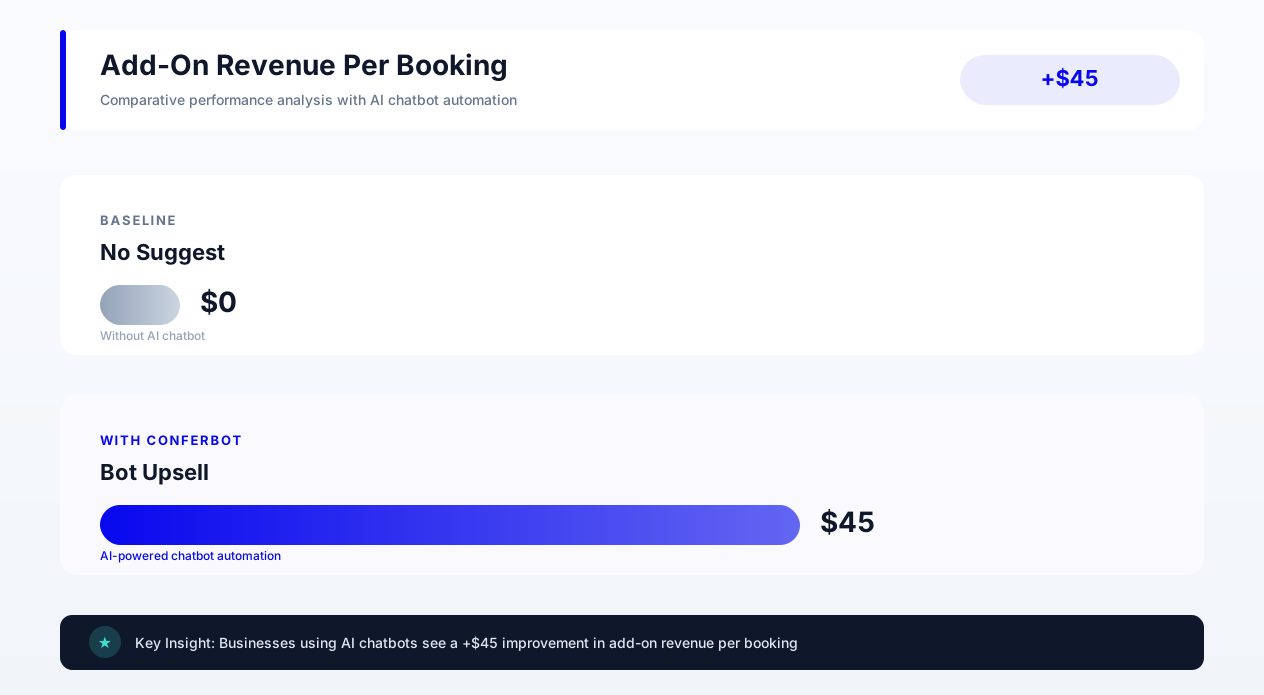
Add-on services represent pure profit margin for cleaning businesses because the crew is already on-site. AI chatbots excel at suggesting relevant add-ons at the right moment in the conversation, increasing average ticket value by 25 to 35% without the uncomfortable sales pressure that in-person upselling often creates.
Strategic Add-On Presentation
The chatbot presents add-ons at two optimal moments: during the initial quote conversation and before each recurring visit. During quote generation, the chatbot suggests popular add-ons based on the cleaning type and property characteristics:
For standard cleanings: "Most of our clients add inside oven cleaning ($35) and refrigerator cleaning ($25) to their first visit since these areas build up over time. Want to add either of these?"
For deep cleanings: "Since we are doing a deep clean, this is a great time to add interior window cleaning ($5 per window) and baseboard detail cleaning ($30). These services pair perfectly with a deep clean for a completely refreshed home."
For move-out cleanings: "For move-out cleans, we strongly recommend adding carpet steam cleaning ($75 per room) and wall scuff removal ($40)—these are the top items property managers check during inspections. Want to include them?"
Pre-Visit Upsell Messages
For recurring clients, the chatbot sends a pre-visit message 24 to 48 hours before their scheduled cleaning: "Hi Sarah! Your bi-weekly cleaning is scheduled for Thursday at 10 AM. Would you like to add any of these services for this visit?" followed by 2 to 3 targeted add-ons based on the season, the client's history, and time since last add-on booking. This approach generates an additional $35 to $65 per visit from 15 to 20% of recurring clients who accept add-on offers.
Bundle Packages
The chatbot can present bundled packages that combine add-ons at a discount: "Our Fresh Home package includes inside oven, inside fridge, and microwave cleaning for $70 (save $20 versus ordering separately). Our Spring Refresh package adds interior windows and baseboard detailing for $120 (save $35)." Bundles increase add-on acceptance rates by 40% compared to individual service offers because they simplify the decision and highlight savings.
Implementing effective upselling strategies is easier with Conferbot's lead qualification capabilities that help segment customers by value potential and tailor upsell offers accordingly—high-value homeowners in large properties receive premium package suggestions, while budget-conscious clients see value bundles.
Automated Review Collection: Building Your Cleaning Business Reputation
Online reviews are the lifeblood of local cleaning service marketing. According to BrightLocal's 2025 Local Consumer Review Survey, 87% of consumers read online reviews for local businesses, with cleaning services ranking among the top categories where reviews influence hiring decisions. A cleaning business with 100+ Google reviews averaging 4.7 stars will dominate local search results and convert website visitors at 3x the rate of a competitor with 15 reviews averaging 4.2 stars. AI chatbots automate the review collection process, turning every satisfied client into a potential reviewer.
The Post-Service Review Flow
The chatbot reaches out after every completed cleaning with a satisfaction check: "Hi! Your home was cleaned today by Team Sarah. How would you rate your experience on a scale of 1 to 5?"
For ratings of 4 or 5, the chatbot immediately channels the positive sentiment to a public review: "Wonderful! We are so glad you are happy. Would you be willing to share that feedback on Google? It helps other homeowners find us. Here is a direct link: [Google Review Link]." This flow converts 30 to 45% of happy customers into Google reviewers—compared to 2 to 5% for businesses that rely on organic review generation.
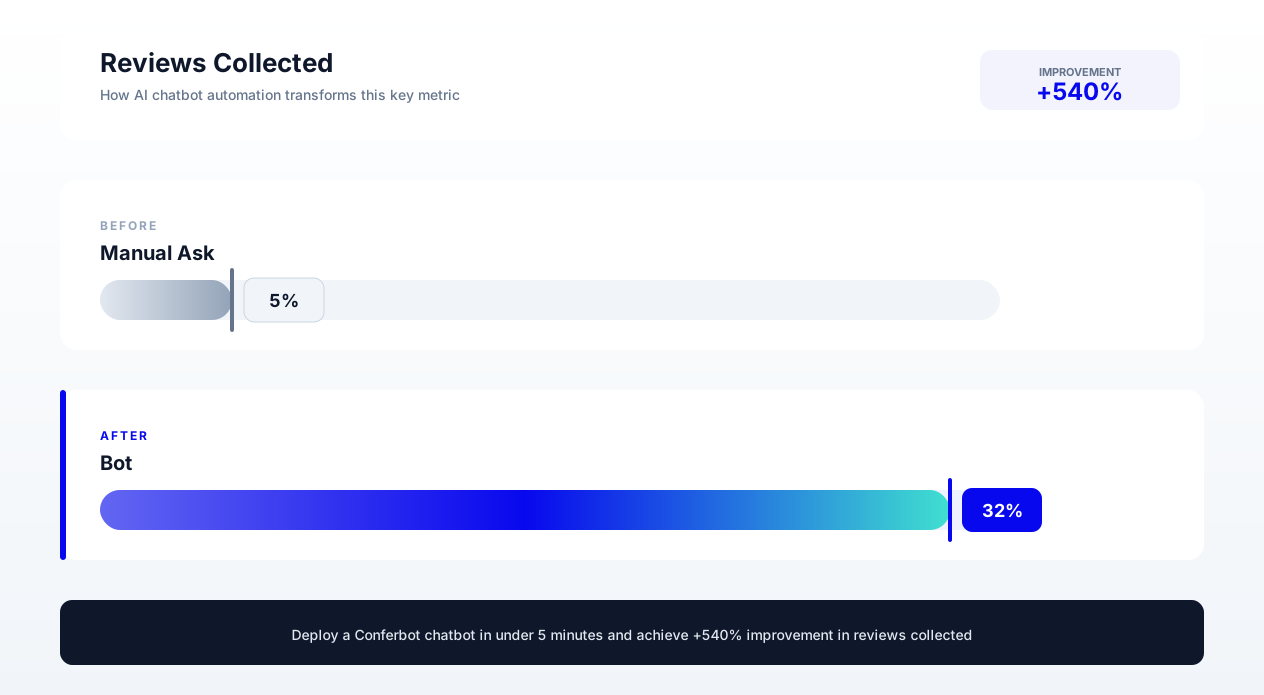
For ratings of 1 to 3, the chatbot captures the complaint privately: "I am sorry to hear that. Could you tell me what we could have improved? I will make sure our management team reviews this immediately." This intercepts negative experiences before they become public reviews, giving you the opportunity to resolve issues and potentially convert an unhappy customer into a loyal advocate.
Review Platform Distribution
The chatbot can rotate review requests across platforms (Google, Yelp, Facebook, Thumbtack, Angi, Nextdoor) to build a balanced review profile. It can also prioritize platforms where your profile needs the most improvement—if your Google score is strong but Yelp is lagging, the chatbot directs more requests to Yelp until the scores equalize.
Leveraging Reviews for Marketing
The chatbot can also use your review data in sales conversations. When a potential customer is considering a booking, the chatbot cites relevant reviews: "Our clients in the Cherry Creek area love our service—here is what Jennifer S. said last week: 'Spotless every time. Best cleaning service in Denver.' Want me to get you a quote?" This social proof integration converts an additional 12 to 18% of hesitant prospects.
Integration with Cleaning Business Software
A cleaning service chatbot must connect with the tools you already use to manage your business. Research from Capterra's cleaning business software report shows that businesses using integrated scheduling and CRM tools grow 23% faster than those managing operations manually. Here is how integration works with the most popular cleaning business platforms.
Scheduling and Dispatch Software
| Platform | Integration Method | Key Capabilities |
|---|---|---|
| Jobber | API / Zapier | Create jobs, check availability, sync client records |
| Housecall Pro | API / Zapier | Schedule jobs, send estimates, process payments |
| ZenMaid | API | Booking management, recurring schedules, team assignments |
| Launch27 (now BookingKoala) | API | Online booking, pricing rules, service area management |
| ServiceTitan | API | Dispatching, invoicing, customer management (commercial) |
| Google Calendar | API | Basic availability and booking for solo operators |
Payment Processing
The chatbot can collect deposits or full payments at the time of booking through integration with Stripe, Square, or PayPal. Collecting a deposit (typically 25 to 50% of the job cost) at booking reduces no-shows by 80% and improves cash flow. The chatbot handles the entire payment flow conversationally: "To confirm your booking, we collect a $45 deposit that is applied to your total. Would you like to pay by card?" followed by a secure payment link within the chat.
CRM and Customer Management
Every chatbot interaction is logged as a CRM record: customer contact information, property details, quote history, booking history, preferences, and communication history. This data integrates with your existing CRM (HubSpot, Salesforce, or cleaning-specific tools like ZenMaid) to provide a complete customer profile that improves service quality and enables targeted marketing.
Marketing Automation
The chatbot integrates with email marketing platforms (Mailchimp, ActiveCampaign) to automate post-booking sequences: booking confirmation, pre-visit preparation tips, post-clean satisfaction survey, recurring plan offers, seasonal promotion delivery, and re-engagement campaigns for lapsed clients. This marketing automation layer converts 15 to 20% of one-time clients into repeat customers even if they do not immediately sign up for a recurring plan.
ROI Model: What an AI Chatbot Is Worth to Your Cleaning Business
Let us build a realistic ROI model for a mid-sized cleaning business to quantify the chatbot's value. We will use conservative estimates throughout.
Business Baseline
Monthly website visitors: 3,000. Current inquiry-to-booking conversion: 12%. Average booking value: $185. Monthly bookings: 360. Monthly revenue: $66,600.
Chatbot Impact Projections
| Impact Area | Before Chatbot | After Chatbot | Monthly Revenue Impact |
|---|---|---|---|
| Lead capture rate (visitors to inquiry) | 8% | 18% | 300 additional leads |
| Inquiry-to-booking conversion | 12% | 22% | From 360 to 594 bookings (+234) |
| After-hours lead capture | 15% of after-hours leads | 95% of after-hours leads | Included in above conversion lift |
| Average ticket (add-on upselling) | $185 | $222 (20% increase) | +$37 per booking |
| Recurring client conversion | 8% of one-time clients | 22% of one-time clients | +62 recurring clients/month (cumulative) |
| No-show reduction | 12% no-show rate | 4% no-show rate | 47 recovered bookings/month |
Revenue Calculation
Additional bookings from improved conversion: 234 bookings x $222 average = $51,948/month
Upsell revenue on existing bookings: 360 bookings x $37 increase = $13,320/month
Recovered no-show revenue: 47 bookings x $222 = $10,434/month
Total additional monthly revenue: $75,702
Total additional annual revenue: $908,424
Cost Savings
Reduced phone/admin time: 25 hours/week saved x $20/hour = $2,000/month
Reduced missed-lead advertising waste: $1,500/month in ad spend now converting instead of bouncing
Total monthly savings: $3,500
Chatbot Investment
Conferbot platform: $99/month (Professional plan). Setup and configuration: $500 one-time. Total first-year cost: $1,688.
First-year ROI: ($908,424 + $42,000 savings - $1,688) / $1,688 = 56,174% ROI
Even at one-quarter of these projections—assuming highly conservative numbers—the ROI exceeds 14,000%. The chatbot pays for itself within the first day of operation and generates returns that compound as recurring clients accumulate month over month.
For more examples of chatbot ROI across different business types, see our HVAC contractors chatbot guide which uses a similar ROI framework adapted for the trades industry.
Implementation Guide: Getting Your Cleaning Service Chatbot Live in 48 Hours
Implementing a cleaning service chatbot does not require technical expertise or weeks of setup. Here is a practical 48-hour implementation plan using Conferbot.
Day 1: Configuration (2-3 Hours)
Step 1: Define your pricing logic. Write out your pricing formula: base rates by property size, cleaning type multipliers, per-room surcharges, add-on prices, and recurring discounts. This becomes the chatbot's quote engine.
Step 2: Set your service area. List the zip codes or cities you serve, any travel surcharge zones, and your response for out-of-area inquiries.
Step 3: Configure your availability. Connect your scheduling software or set up availability rules: working days, hours, team capacity, buffer time between jobs, and blackout dates.
Step 4: Create your add-on menu. List every add-on service with pricing, descriptions, and which cleaning types they pair with.
Step 5: Set up your review flow. Connect your Google Business Profile and configure the post-service satisfaction check and review request sequence.
Day 2: Testing and Launch (2-3 Hours)
Step 6: Test the complete flow. Run through the entire customer journey: quote request, quote delivery, booking, confirmation, pre-visit reminder, post-service review request. Test edge cases: out-of-area requests, unavailable time slots, add-on combinations, recurring plan offers.
Step 7: Deploy to your website. Add the Conferbot widget to your website with a single line of code. Configure the widget appearance (colors, logo, greeting message) to match your brand. Position the widget on high-intent pages: homepage, services page, pricing page, and contact page.
Step 8: Deploy to additional channels. Connect the chatbot to your Facebook page, WhatsApp Business, and Google Business Profile. Each channel uses the same conversation logic but adapts to the platform's interface norms.
Step 9: Go live and monitor. Launch the chatbot and monitor the first 24 hours of interactions. Review conversations for any confusion points or missing information, and make adjustments in real-time.
Ongoing Optimization
After launch, review chatbot analytics weekly: conversion rates at each stage, common drop-off points, frequently asked questions not covered by the flow, and add-on acceptance rates. Use these insights to continuously improve the conversation design. Most cleaning businesses see a 20 to 30% improvement in chatbot conversion rates during the first month of optimization as they refine pricing presentation, add-on suggestions, and objection handling based on real customer interaction data.
For businesses that want to ensure the chatbot can hand off smoothly to a human when needed, follow the best practices in our pest control chatbot guide—the handoff strategies apply equally to cleaning services and other home service businesses.
Was this article helpful?
AI Chatbot for Cleaning Services FAQ
Everything you need to know about chatbots for ai chatbot for cleaning services.
About the Author

Conferbot Team specializes in conversational AI, chatbot strategy, and customer engagement automation. With deep expertise in building AI-powered chatbots, they help businesses deliver exceptional customer experiences across every channel.
View all articles