Why Upselling and Cross-Selling Through AI Chatbots Is the Revenue Lever You Are Missing
Every e-commerce business obsesses over traffic. More visitors, more ads, more social posts—the assumption is that growth equals reach. But the data tells a different story. According to McKinsey's personalization report, 71% of consumers expect personalized interactions, and companies that excel at personalization generate 40% more revenue from those activities than average players. The most efficient path to revenue growth is not always acquiring new customers—it is extracting more value from every existing interaction.
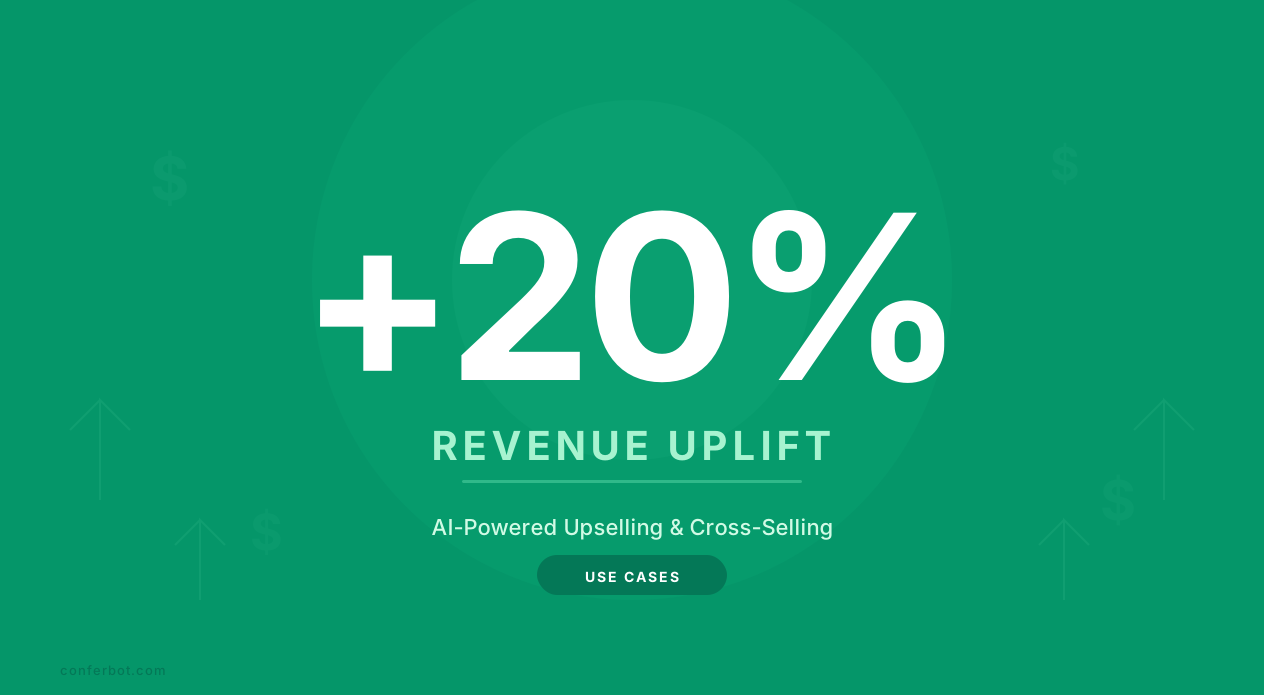
This is where AI chatbots for upselling and cross-selling become transformational. Unlike static product recommendation widgets that passively display "You might also like" carousels, conversational AI engages customers in real-time dialogue, understands context and intent, and delivers hyper-relevant offers at the precise moment a buyer is most receptive. The result is average order value (AOV) increases of 15 to 35 percent across industries, with some verticals seeing even higher gains.
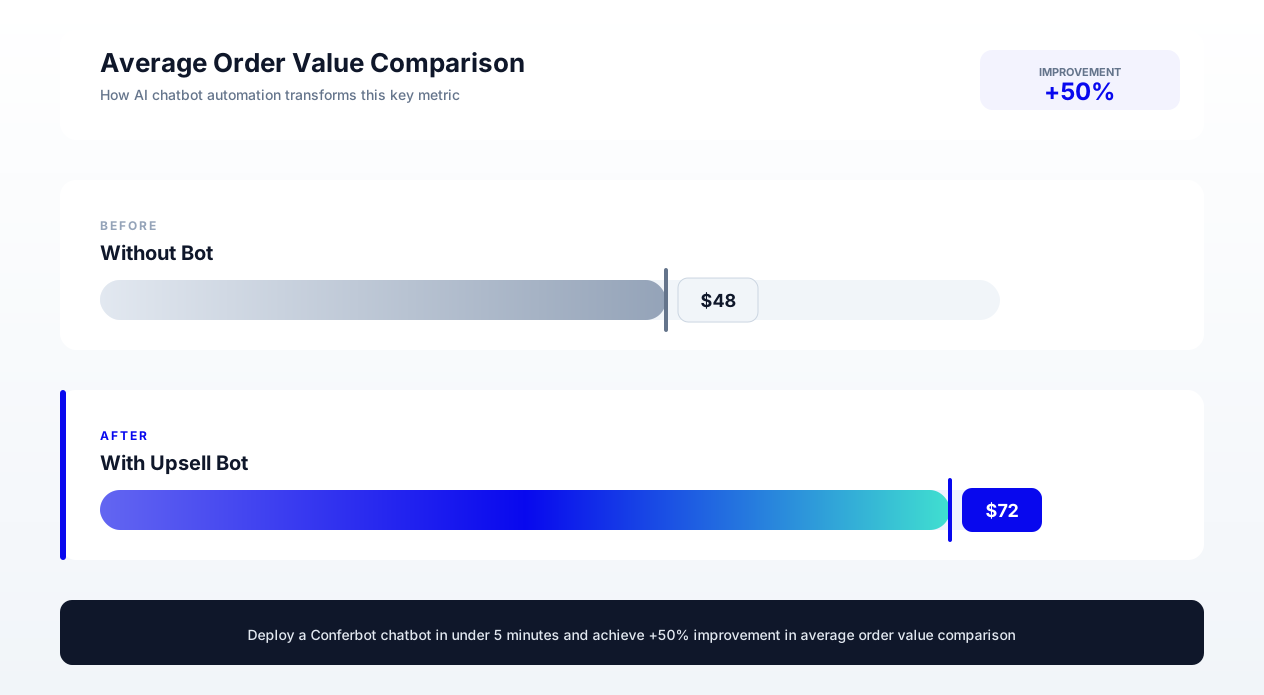
Consider the economics: if your store processes 10,000 orders per month with an average order value of $85, a 20% AOV lift translates to $170,000 in additional monthly revenue—over $2 million annually—without spending a single extra dollar on customer acquisition. That is the power of conversational upselling and cross-selling at scale.
In this comprehensive guide, we will break down exactly how AI chatbots drive upselling and cross-selling results, including the recommendation algorithms that power them, trigger-based offer strategies, product bundling playbooks, industry-specific benchmarks, platform integration approaches, A/B testing methodologies, and real-world case studies with verified ROI data. Whether you are running a Shopify store, a WooCommerce site, or a custom e-commerce platform, you will walk away with a complete implementation roadmap that can start generating results within 30 days.
The shift from passive recommendation to active conversational selling is not a minor optimization—it is a fundamental change in how e-commerce businesses capture revenue. Companies that implement AI chatbot upselling in 2026 are building a compounding advantage: every interaction generates data that makes future recommendations more accurate, every optimization compounds on previous gains, and every satisfied customer who discovers the perfect complementary product becomes more loyal over time.
Upselling vs. Cross-Selling: Understanding the Distinction for Chatbot Implementation
Before diving into implementation, let us establish clear definitions—because the strategies, timing, and conversational approaches differ significantly between upselling and cross-selling.
Upselling encourages a customer to purchase a higher-tier version of the product they are already considering. Examples include upgrading from a basic plan to a premium plan, choosing a larger size, or selecting a model with more features. The key characteristic is that the customer moves up within the same product category.
Cross-selling recommends complementary or related products that enhance the primary purchase. Examples include suggesting a phone case with a smartphone purchase, recommending socks with shoes, or offering an extended warranty with electronics. The customer adds additional items to their cart.
Here is a comparison of how these strategies differ when implemented through chatbot conversations:
| Dimension | Upselling via Chatbot | Cross-Selling via Chatbot |
|---|---|---|
| Timing | During product consideration (before add-to-cart) | After add-to-cart or during checkout |
| Conversational approach | "I see you are looking at the Standard plan. The Pro plan includes X and Y—would those be valuable for your use case?" | "Great choice on the running shoes! Most runners also grab moisture-wicking socks—want me to add a pair?" |
| AOV impact | Typically 10 to 30 percent increase per converted upsell | Typically 5 to 20 percent increase per cross-sell item |
| Conversion rate | 8 to 15 percent of chatbot-presented upsell offers convert | 12 to 25 percent of chatbot-presented cross-sell offers convert |
| Customer friction | Higher (asking customer to spend more on same item) | Lower (adding a small complementary item feels natural) |
| Best chatbot trigger | Product page dwell time, comparison page visits | Add-to-cart event, checkout initiation |
| Psychological mechanism | Aspiration, feature desire, future-proofing | Completeness, convenience, complementarity |
The most effective chatbot strategies combine both approaches in a single conversation flow. A customer browsing laptops might first receive an upsell suggestion ("The i7 model is only $150 more and handles video editing smoothly—is that something you would use it for?") followed by cross-sell recommendations after selection ("Would you like a laptop sleeve and wireless mouse to go with that?"). According to Salesforce research, combined upsell/cross-sell strategies delivered via personalized channels yield 2.4x higher revenue per interaction than single-strategy approaches.
Understanding this distinction matters because your chatbot needs different conversation designs for each approach. Upselling requires feature comparison, value justification, and aspiration-building. Cross-selling requires relevance demonstration, convenience framing, and social proof. The conversation templates, timing triggers, and success metrics differ for each, and conflating them leads to suboptimal performance on both fronts.
How AI Recommendation Algorithms Power Chatbot Upselling
The intelligence behind effective chatbot upselling is not just scripted if-then logic—it is sophisticated recommendation algorithms that analyze behavioral data, purchase history, and real-time conversation context to surface the right offer at the right time. Let us examine the core algorithms that power modern chatbot recommendations.
Collaborative Filtering
Collaborative filtering analyzes patterns across your entire customer base to identify what products are frequently purchased together or in sequence. When a customer adds Product A to their cart, the algorithm identifies that 67% of customers who bought Product A also purchased Product B within the same session. The chatbot then presents Product B as a conversational recommendation: "Customers who love Product A usually pair it with Product B—want me to add it?"
This approach works exceptionally well for cross-selling because it leverages collective buying behavior rather than individual preferences. The more transaction data your system processes, the more accurate these recommendations become. For stores with over 10,000 monthly transactions, collaborative filtering typically identifies 3 to 5 high-confidence product pairings per item that achieve acceptance rates above 15 percent.
Content-Based Filtering
Content-based filtering examines product attributes (category, price range, brand, features, materials) and matches them against the customer's demonstrated preferences. If a customer has been browsing mid-range wireless headphones with active noise cancellation, the chatbot can upsell a premium model that shares those attributes but adds additional features: "I noticed you are comparing noise-cancelling headphones. The Sony WH-1000XM5 has the same ANC technology you like, plus 30-hour battery life. Would you like to see a comparison?"
This algorithm excels at upselling because it identifies the specific features a customer values and finds higher-tier products that deliver more of what they already want. The key advantage over collaborative filtering is that it works even for new products with limited purchase history.
Session-Based Contextual Analysis
Unlike traditional recommendation widgets, chatbots have access to the full conversation context. This enables session-based contextual analysis—understanding not just what a customer is looking at, but why they are looking at it. When a customer tells a chatbot "I need a gift for my wife's birthday," the recommendation algorithm shifts entirely: it prioritizes gift-appropriate items, premium packaging options, and complementary gift add-ons rather than bulk discounts or repeat-purchase suggestions.
This contextual understanding is what separates chatbot recommendations from all other recommendation methods. A widget sees a product page view. A chatbot understands intent, occasion, budget, urgency, and personal preferences—all extracted from natural conversation.
Reinforcement Learning for Offer Optimization
Advanced chatbot systems employ reinforcement learning to continuously optimize which offers to present. The system learns from every interaction: which offer framings generate clicks, which price differentials convert, which product combinations get accepted together, and which conversation moments yield the highest acceptance rates. Over time, the chatbot becomes increasingly effective at matching the right offer to the right customer at the right moment.
According to Gartner's retail AI analysis, businesses implementing AI-driven personalization in commerce see a 15 to 25 percent uplift in conversion rates compared to rule-based recommendation systems. When delivered conversationally through chatbots rather than passive widgets, engagement rates with recommendations increase by an additional 3 to 5x because the interactive format demands attention and enables objection handling.
Real-Time Pricing and Inventory Signals
Modern recommendation algorithms also factor in real-time business signals. If a premium product is overstocked, the algorithm can increase its recommendation weight for upselling. If a complementary product is running low, the chatbot can create urgency: "Only 3 left of the matching earring set—would you like to secure one with your necklace order?" These dynamic signals ensure recommendations serve both customer relevance and business objectives simultaneously.
Hybrid Ensemble Approaches
The highest-performing chatbot systems do not rely on a single algorithm. They use ensemble approaches that combine collaborative filtering, content-based filtering, contextual analysis, and business rules into a unified scoring system. Each algorithm contributes a confidence score, and the ensemble selects the recommendation with the highest combined score adjusted for business priorities. This approach consistently outperforms any single algorithm by 20 to 35 percent in acceptance rate metrics.
Trigger-Based Chatbot Offers: The Right Message at the Right Moment
Timing is everything in upselling and cross-selling. Present an offer too early and you interrupt the browsing experience; too late and the customer has already checked out. AI chatbots excel at trigger-based offers because they can monitor dozens of behavioral signals simultaneously and engage at precisely the optimal moment.
High-Intent Behavioral Triggers
The following triggers indicate high purchase intent and represent optimal moments for chatbot engagement:
| Trigger Event | Chatbot Response | Average Conversion Uplift |
|---|---|---|
| Product page dwell time greater than 45 seconds | Proactive upsell: compare current product with premium alternative | +12% conversion on upsell |
| Customer adds item to cart | Cross-sell: suggest complementary products | +18% add-on attachment rate |
| Checkout page reached | Bundle offer: "Add X for just $Y more" | +22% bundle acceptance |
| Cart value near free shipping threshold | "You are $12 away from free shipping! Here are popular add-ons under $15" | +31% threshold completion |
| Return visitor viewing same product 3+ times | Upsell with urgency: "Still considering the product? The Pro version is 15% off today" | +9% conversion on returning visitors |
| Price comparison behavior (switching between tabs) | Value framing: explain premium features that justify the price difference | +14% upgrade acceptance |
| Scroll depth greater than 80% on product page | Cross-sell based on interest signals from content consumed | +11% cross-sell acceptance |
| Customer views 3+ products in same category | Help narrow decision: "I see you are comparing options. Can I help you pick?" | +16% engagement rate |
Conversation-Based Triggers
Beyond behavioral triggers, the chatbot conversation itself generates valuable signals for upselling and cross-selling. When a customer asks specific questions, those questions reveal intent that can be leveraged:
Feature questions leading to upsell opportunity: "Does this laptop support dual monitors?" The chatbot responds: "The base model supports one external display. The Pro model supports up to three—would that better fit your setup?"
Use-case questions leading to cross-sell opportunity: "Will this work for outdoor photography?" The chatbot responds: "Absolutely! For outdoor shoots, most photographers also grab a UV filter and lens hood to protect against glare. Want me to add those?"
Budget questions leading to value framing: "Is there anything cheaper?" Instead of immediately downselling, the chatbot can reframe: "The Standard model at this price gives you these features. For just $30 more, the Plus model adds a high-value feature that often pays for itself within a month."
Comparison questions leading to differentiation: "What is the difference between Model A and Model B?" This is a prime upsell moment—the chatbot can highlight the premium model's advantages specifically in areas the customer has shown interest.
Implementing Trigger Logic with Conferbot
With Conferbot's e-commerce chatbot platform, you can configure trigger-based offers without writing complex code. The visual flow builder lets you set behavioral triggers (time on page, scroll depth, cart events) and map them to specific conversational flows. Each trigger can be assigned priority weights so that customers are not overwhelmed with multiple simultaneous offers—the system selects the highest-value opportunity and presents it naturally within the conversation.
The key principle is restraint: research from the Baymard Institute shows that presenting more than two offers per session actually decreases conversion rates by creating decision fatigue. Your chatbot should be configured to present a maximum of one upsell and one cross-sell per conversation, prioritizing the highest-probability offer based on the customer's behavior pattern.
Trigger Sequencing and Priority
When multiple triggers fire simultaneously (a customer who has been on the page for 60 seconds, has scrolled 80%, and just asked a feature question), the chatbot needs a priority system. The recommended priority order is: conversation-based triggers first (highest intent signal), then cart-based triggers, then behavioral triggers. This ensures the chatbot responds to the most relevant and timely signal rather than defaulting to the first trigger that fires.
Product Bundling Strategies That Work in Chatbot Conversations
Product bundling—offering multiple related products at a combined price—is one of the most effective cross-selling techniques when delivered through conversational AI. Bundles work because they simplify the decision-making process, provide perceived value through discounts, and solve the "what else do I need?" question that customers often have but do not always articulate.
Types of Chatbot-Driven Bundles
1. Starter Kit Bundles: For customers buying a primary product for the first time, the chatbot suggests everything they need to get started. "I see you are getting the espresso machine—would you like our Barista Starter Kit? It includes a tamper, milk frother, and 3 coffee blends for $45 instead of $67 separately."
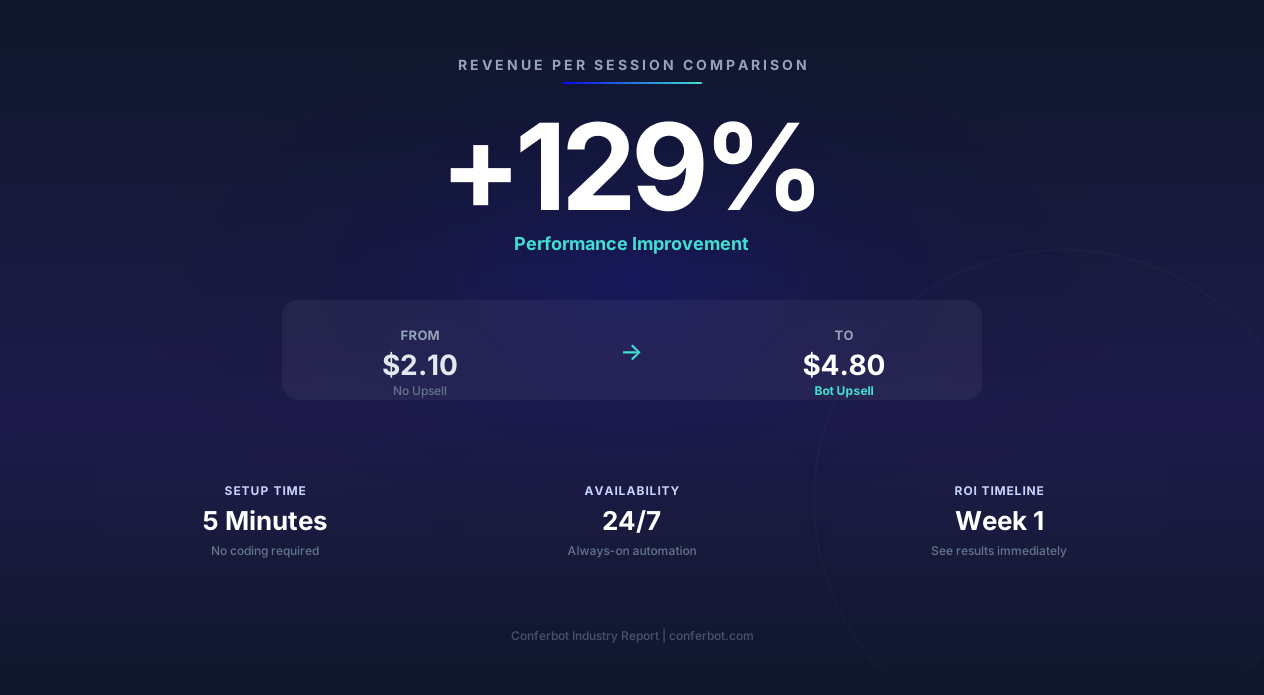
2. Upgrade Bundles: Combine an upsell with cross-sell items at a bundled price. "For $80 more, you can upgrade to the Pro camera AND get the carrying case, extra battery, and 64GB SD card included." This technique is powerful because the bundle price obscures the individual premium, making the upsell feel more like a deal than a splurge.
3. Replenishment Bundles: For consumable products, suggest a bundle that ensures the customer will not run out. "Most customers go through a filter every 3 months. Want to grab a 4-pack now and save 20%? I can also set up auto-delivery reminders."
4. Social Proof Bundles: Leverage collective purchasing behavior. "82% of customers who buy this tent also grab the rainfly and footprint. We have packaged them as our Weather-Ready Bundle at 15% off—interested?"
5. Personalized Dynamic Bundles: AI-generated bundles based on the individual customer's browsing history, past purchases, and stated preferences. These are not pre-configured—the chatbot assembles them in real time. "Based on your skincare routine, I have put together a customized bundle: the vitamin C serum you were viewing, plus a compatible moisturizer and SPF that work with your skin type. Together they are $38 instead of $52."
6. Seasonal Event Bundles: Time-limited bundles tied to occasions. "Valentine's Day is next week—our Romance Bundle pairs the necklace you are viewing with matching earrings and gift wrapping for $99 (saves $35). Perfect for a complete gift."
Bundle Pricing Psychology in Conversations
The way a chatbot frames bundle pricing dramatically affects acceptance rates. Research from the Journal of Marketing Research shows that savings framing ("Save $23 with this bundle") outperforms discount framing ("15% off when bundled") by 18% in conversational contexts. This is because dollar amounts feel concrete and immediate, while percentages require mental calculation.
Additionally, chatbots should always present the bundle price alongside individual prices to make the value visible: "Individually these items total $127. As a bundle, they are $99—you save $28." This anchoring technique leverages the contrast principle to make the bundle feel like an obvious choice.
A third pricing strategy that performs well in chatbot conversations is the per-day reframe: "The premium upgrade adds just $0.50/day to your subscription but gives you unlimited storage." This micro-pricing technique works particularly well for subscription upsells and high-ticket items where the absolute price difference feels large.
Bundle Acceptance Rates by Presentation Method
| Presentation Method | Average Acceptance Rate | AOV Impact |
|---|---|---|
| Static product page widget | 4 to 7 percent | +$8 to 12 per accepting customer |
| Email recommendation | 2 to 4 percent | +$15 to 20 per accepting customer |
| Pop-up overlay | 6 to 9 percent | +$10 to 15 per accepting customer |
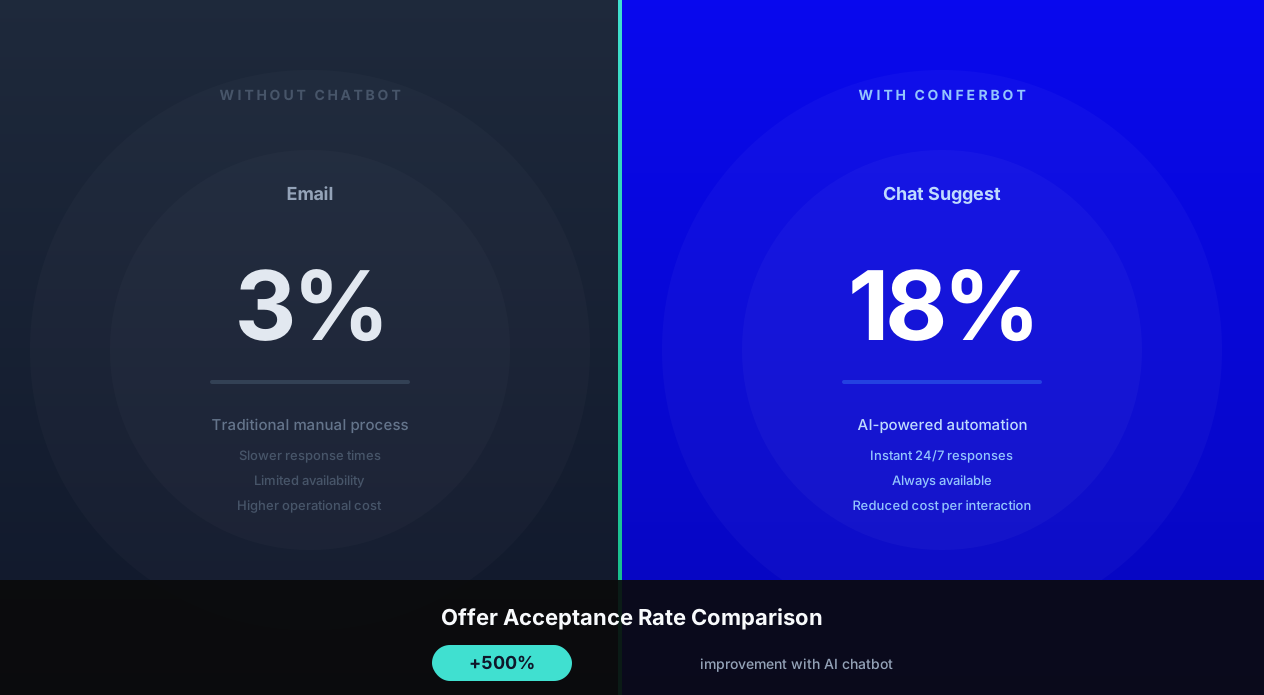
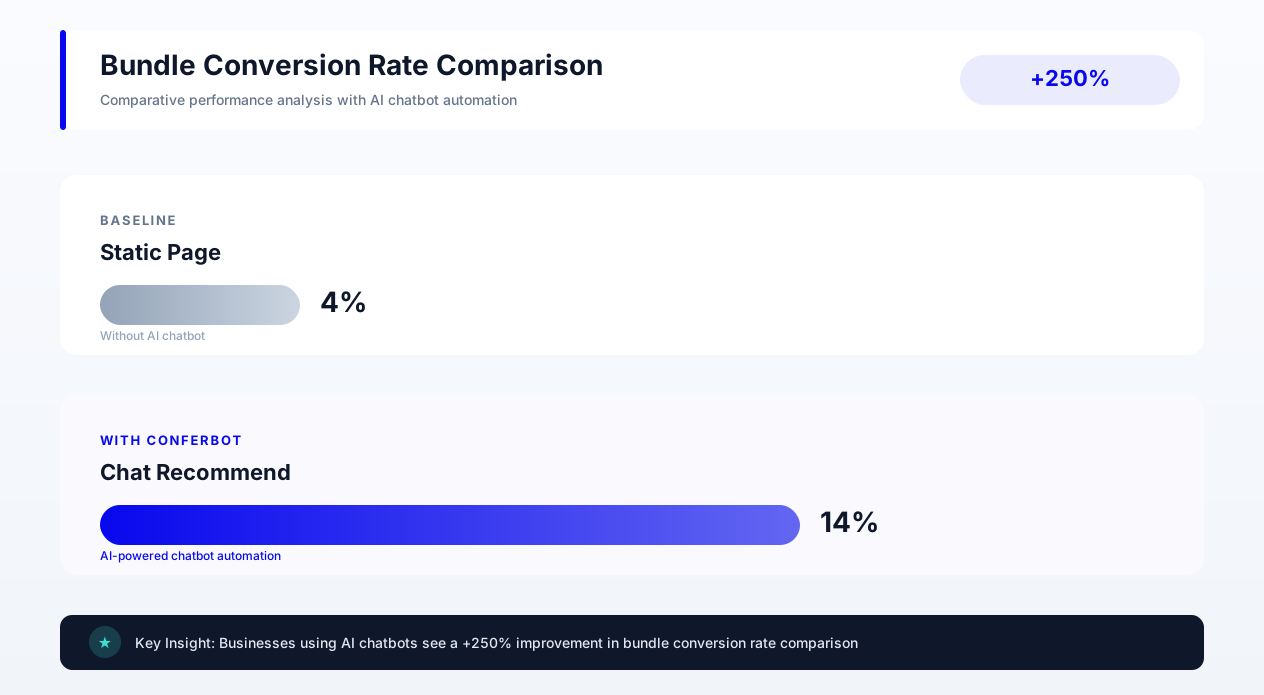
| Chatbot conversational bundle | 14 to 22 percent | +$25 to 40 per accepting customer |
| Chatbot plus personalized pricing | 18 to 28 percent | +$30 to 55 per accepting customer |
The chatbot advantage is clear: conversational presentation of bundles yields 3 to 4x higher acceptance rates than passive methods. This is because the chatbot can explain why items go together, handle objections in real time ("I do not think I need the extra battery"—"It is great for travel days when you cannot charge—and it is only $12 as part of the bundle"), and create a sense of curated expertise that builds trust. The interactive dialogue format makes the recommendation feel like personalized advice from a knowledgeable friend rather than automated marketing.
AOV Increase Benchmarks by Industry: What to Expect from Chatbot Upselling
Setting realistic expectations is critical for building a business case, and Statista's e-commerce data provides the industry benchmarks to do so. Here are verified AOV increase benchmarks from businesses using AI chatbots for upselling and cross-selling, broken down by industry vertical:
| Industry | Average Baseline AOV | AOV After Chatbot Implementation | Percent Increase | Top Performing Strategy |
|---|---|---|---|---|
| Fashion and Apparel | $68 | $84 | +23.5% | Complete-the-look cross-selling |
| Electronics and Tech | $245 | $298 | +21.6% | Accessory bundles plus extended warranty |
| Beauty and Cosmetics | $52 | $67 | +28.8% | Routine-based personalized bundles |
| Home and Furniture | $320 | $385 | +20.3% | Room-completion suggestions |
| Food and Beverage (D2C) | $45 | $58 | +28.9% | Subscription upsell plus variety bundles |
| SaaS and Software | $89/mo | $119/mo | +33.7% | Feature-based plan upselling |
| Health and Supplements | $62 | $79 | +27.4% | Stack and routine cross-selling |
| Pet Products | $55 | $71 | +29.1% | Breed-specific bundle recommendations |
| Sports and Outdoors | $112 | $138 | +23.2% | Activity-based gear bundles |
| Jewelry and Accessories | $185 | $228 | +23.2% | Matching set suggestions |
| Baby and Kids | $75 | $96 | +28.0% | Age-stage developmental bundles |
| Automotive Parts | $135 | $162 | +20.0% | Maintenance kit bundles |
Several patterns emerge from this data. First, industries with natural product complementarity (beauty routines, tech accessories, fashion outfits) see higher cross-sell acceptance rates. Second, subscription-based and SaaS businesses see the highest percentage lifts because upselling to a higher tier compounds over the customer lifetime. Third, higher-AOV industries (furniture, electronics) see larger absolute dollar increases even when percentage lifts are moderate.
These benchmarks represent averages across businesses with mature chatbot implementations (3 or more months of optimization). Initial results in the first month are typically 40 to 60 percent of these figures, with performance improving as the recommendation algorithm accumulates interaction data and A/B testing refines conversational approaches.
The variance within each industry is significant. Top-quartile performers achieve 1.5 to 2x the averages shown above, while bottom-quartile performers see only 8 to 12 percent lifts. The difference is almost entirely attributable to three factors: recommendation relevance quality, offer timing precision, and conversation design quality. These are the levers you should focus on optimizing.
For businesses just starting with conversational commerce chatbots, we recommend targeting a conservative 12 to 15 percent AOV increase in the first quarter, scaling to 20 percent or more as your system matures. This provides a realistic timeline for ROI calculations while leaving room for outperformance.
Integration with E-Commerce Platforms: Shopify, WooCommerce, and Custom Stacks
Implementing an upselling chatbot requires tight integration with your e-commerce platform to access product catalogs, inventory levels, pricing rules, and cart state. Here is how integration works across major platforms.
Shopify Integration
Shopify's Storefront API and Cart API provide the foundation for chatbot upselling. Key integration points include:
- Product catalog sync: Pull product data, variants, pricing, and inventory via the GraphQL Storefront API for real-time accuracy
- Cart manipulation: Add items, apply discounts, and modify quantities via the Cart API without page reloads
- Customer data: Access purchase history, customer tags, and segmentation for personalized recommendations based on loyalty tier and lifetime value
- Checkout extensibility: Present final cross-sell offers during checkout via Shopify's checkout UI extensions
- Discount code generation: Dynamically create bundle discount codes via the Admin API for time-limited bundle offers
- Metafields: Store chatbot interaction data in customer metafields for cross-session personalization
With Conferbot's Shopify integration, setup takes under 30 minutes. The platform automatically syncs your product catalog, sets up event listeners for cart actions, and provides pre-built upsell and cross-sell conversation templates that you can customize to match your brand voice.
WooCommerce Integration
WooCommerce's REST API and webhook system enable deep chatbot integration:
- Product data: WooCommerce REST API v3 provides full product, variation, and category access with real-time inventory
- Cart hooks: WordPress action hooks (woocommerce_add_to_cart, woocommerce_before_checkout) trigger chatbot flows at the right moments
- Order history: Customer purchase history informs personalized cross-sell suggestions based on actual buying patterns
- Dynamic pricing: Integration with WooCommerce Dynamic Pricing plugin for real-time bundle calculations and tiered discounts
- Subscription integration: Works with WooCommerce Subscriptions for subscription upsell and tier upgrade flows
Custom Platform Integration via API
For custom-built e-commerce platforms, Conferbot provides a JavaScript SDK and REST API that enable:
- Real-time event tracking (page views, product interactions, cart events) via lightweight JavaScript snippets
- Bidirectional cart manipulation (add items, apply discounts from chatbot actions)
- Customer context passing (authenticated user data, session history, segment membership)
- Webhook-based triggers for server-side events (inventory changes, price updates, flash sales)
- GraphQL endpoint for efficient batch product data queries
Integration Architecture
The recommended architecture for chatbot upselling integration follows a three-layer pattern:
Frontend layer: Chatbot widget embedded on product pages, cart page, and checkout. Captures behavioral events (scroll, time, clicks) and sends them to the chatbot engine via lightweight WebSocket connection for real-time responsiveness.
Decision engine: Receives events, applies recommendation algorithms, evaluates trigger conditions, and determines optimal offer. Queries the product catalog for complementary items and pricing. Runs on server-side infrastructure for speed and security of pricing logic.
Action layer: When a customer accepts an offer, the chatbot calls the e-commerce platform's cart API to add items, apply bundle discounts, or upgrade product selections—all without requiring a page reload or manual customer action. The customer sees the cart update in real time.
This three-layer architecture ensures that the chatbot feels seamless and native to the shopping experience rather than a bolted-on popup. The separation of concerns also means you can swap out recommendation algorithms or change trigger logic without touching the frontend experience.
Data Flow and Privacy
When integrating chatbot upselling, ensure your data flow complies with GDPR, CCPA, and other privacy regulations. Customer browsing behavior used for recommendations should be covered in your privacy policy. Conferbot handles data processing in compliance with major privacy frameworks and provides data deletion APIs for right-to-erasure requests.
A/B Testing Your Chatbot Upsell and Cross-Sell Offers
Even the best recommendation algorithm needs optimization through systematic testing, a principle that Optimizely's experimentation platform has proven across thousands of e-commerce deployments. A/B testing chatbot offers requires a different methodology than testing static page elements because conversations are multi-step, context-dependent, and highly variable. Here is how to run rigorous experiments on your upselling chatbot.
What to Test
1. Offer timing: Test presenting the upsell at different points in the customer journey. Does engagement spike when you offer immediately after product page load, after 30 seconds of browsing, or after the customer asks a question? Timing tests often yield the largest improvements because they address whether the customer is psychologically ready to consider an additional purchase.
2. Message framing: Test different psychological frameworks. Value framing ("Save $20 with the bundle") vs. loss aversion ("Do not miss the matching set—most customers regret not getting it") vs. social proof ("9 out of 10 buyers also grab this") vs. scarcity ("Only 4 left at this price").
3. Offer magnitude: Test different upsell price gaps. Is the sweet spot a 15% premium, 25%, or 40%? The answer varies by product category and customer segment. Generally, the optimal upsell premium is between 20 and 35 percent of the original price.
4. Number of options: Test presenting one recommendation vs. two vs. three. More options can increase the chance of a match but may also create decision paralysis. Research consistently shows that one focused recommendation outperforms multiple options in chatbot contexts.
5. Conversational tone: Test formal vs. casual, direct vs. suggestive, brief vs. detailed offer descriptions. Brand voice matters, but some tones convert better regardless of brand.
6. Visual elements: Test whether including product images in the chat message improves acceptance vs. text-only recommendations. Images add context but also increase cognitive load.
Statistical Significance for Chatbot Tests
Chatbot A/B tests require larger sample sizes than standard web experiments because:
- Not all visitors engage with the chatbot (typical engagement: 5 to 15 percent of page visitors)
- Multi-step conversations have higher variance in outcomes
- Contextual factors (time of day, traffic source, device type) create noise
- Seasonal effects can confound results if test duration is too short
For a chatbot upsell test with a baseline acceptance rate of 15% and a minimum detectable effect of 2 percentage points (15% to 17%), you will need approximately 5,200 chatbot conversations per variant to reach 95% confidence with 80% power. At 10% chatbot engagement rate with 1,000 daily visitors, that is roughly 52 days per test—plan your testing roadmap accordingly.
For detailed guidance on setting up chatbot experiments and tracking performance, see our comprehensive guide to chatbot analytics and metrics tracking.
Sample A/B Test Results from Real Implementations
| Test Variable | Variant A (Control) | Variant B (Treatment) | Winner | Relative Lift |
|---|---|---|---|---|
| Upsell timing | Immediate popup (8.2% accept) | After 45s dwell time (14.7% accept) | B | +79% |
| Cross-sell framing | "You might also like" (11.3%) | "Most buyers also grab" (16.1%) | B | +42% |
| Bundle options count | 1 bundle suggestion (18.4%) | 2 bundle suggestions (15.2%) | A | +21% |
| Discount display format | Percentage off (12.8%) | Dollar amount saved (15.9%) | B | +24% |
| Conversational tone | Formal expert (13.1%) | Friendly advisor (14.8%) | B | +13% |
| Image inclusion | Text only (14.2%) | Text plus product image (17.8%) | B | +25% |
| CTA button text | "Add to Cart" (15.6%) | "Yes, add it!" (17.1%) | B | +10% |
These real test results demonstrate that chatbot optimization through systematic A/B testing can yield compound improvements of 50 to 100 percent over unoptimized implementations. Each 2 to 3 percentage point improvement in acceptance rate translates directly to measurable revenue gains. When you compound multiple winning tests together (better timing PLUS better framing PLUS better visuals), the aggregate improvement can double or triple your baseline performance.
Testing Roadmap
We recommend this sequential testing order for maximum impact with minimum complexity: (1) Timing first—it has the largest potential impact. (2) Message framing second. (3) Offer magnitude third. (4) Visual and tone refinements last. Run one test at a time to isolate variables and build a clear picture of what moves the needle for your specific audience.
Case Studies: Real Results from Chatbot Upselling and Cross-Selling
Theory is valuable, but proven results build confidence. Here are documented case studies from businesses implementing AI chatbot upselling and cross-selling strategies across different verticals and business models.
Case Study 1: Fashion Retailer — Complete-the-Look Cross-Selling
A mid-size fashion e-commerce brand with $15M annual revenue implemented a chatbot that analyzed the product a customer was viewing and suggested complementary items to complete the look. The chatbot used visual AI to identify style patterns and recommend matching accessories, shoes, or outerwear based on the primary item's aesthetic.
Implementation details: The chatbot triggered after a customer viewed a product for more than 40 seconds or added an item to cart. It presented one complete-the-look suggestion with product images and a bundle discount. Decline was a single tap with no follow-up offers.
Results after 6 months:
- AOV increased from $72 to $94 (a 30.6% increase)
- Items per order increased from 1.8 to 2.4 (a 33% increase)
- Cross-sell acceptance rate: 19.2% of chatbot interactions resulted in an additional item
- Incremental monthly revenue: $312,000
- Customer satisfaction score remained stable (no negative impact from chatbot engagement)
- ROI: 847% factoring in chatbot platform cost plus setup and optimization time
Case Study 2: SaaS Company — Plan Upselling via Onboarding Bot
A B2B SaaS company with $8M ARR deployed a chatbot during the trial-to-paid conversion flow that identified feature usage patterns and recommended the appropriate plan tier. Instead of defaulting all trial users to the basic plan, the chatbot asked about use cases, team size, and growth plans, then recommended the tier that matched their needs with specific feature justifications.
Implementation details: The chatbot appeared on day 7 of the 14-day trial, after enough usage data existed to make informed recommendations. It asked three qualifying questions and presented a personalized plan recommendation with a comparison to the plan the user would have chosen by default.
Results after 4 months:
- Average starting plan value increased from $49/mo to $79/mo (a 61% increase)
- Trial-to-paid conversion rate maintained at 22% (no negative impact from upselling)
- 12-month LTV of chatbot-upsold customers was 2.3x higher than self-selected plan customers (they stayed longer because the plan genuinely fit their needs)
- Annual revenue impact: plus $1.2M in first-year contract value
- Support ticket volume for plan-upgrade requests decreased by 34% (customers started on the right plan)
Case Study 3: Electronics Store — Accessory Bundle Cross-Selling
A consumer electronics retailer integrated a chatbot that triggered after a customer added a primary product (laptop, phone, camera) to cart. The chatbot presented a curated accessory bundle specific to the chosen product with a 12% discount versus buying items individually.
Implementation details: Accessory bundles were pre-configured for the top 50 SKUs and dynamically generated for long-tail products based on category rules. The chatbot showed the bundle contents, individual prices, and bundle savings in a compact card format.
Results after 3 months:
- Bundle acceptance rate: 24.3% of chatbot interactions
- AOV increased from $340 to $412 (a 21.2% increase)
- Return rate on bundled orders was 40% lower than non-bundled orders (customers were more satisfied with complete setups)
- Monthly incremental revenue: $187,000
- NPS for bundled-order customers was 12 points higher than non-bundled (attributed to better out-of-box experience)
Case Study 4: Subscription Box — Tier Upgrade Chatbot
A wellness subscription box company used a chatbot to engage existing subscribers approaching their renewal date. The chatbot highlighted new products available exclusively in higher tiers and offered a one-month upgrade trial at a reduced rate to eliminate risk.
Implementation details: The chatbot reached out via the company's website portal 5 days before renewal. It showcased 2 to 3 products exclusive to the next tier up and offered one month at the higher tier for only $5 more than their current price (versus the normal $15 difference).
Results after 5 months:
- 18% of engaged subscribers upgraded their tier
- Average subscription value increased from $39/mo to $52/mo across the engaged cohort
- Upgrade retention at 3 months: 74% of subscribers stayed at the higher tier after the trial month
- Customer satisfaction scores increased by 12 points among upgraders (subscribers felt the higher tier better matched their evolving preferences)
- Annual revenue impact per 1,000 engaged subscribers: plus $91,000
These case studies demonstrate a consistent pattern: AI chatbot upselling and cross-selling delivers 20 to 30 percent AOV increases across industries when implemented with proper personalization, timing, and conversational design. The common thread in all successful implementations is relevance—the chatbot recommends products that genuinely enhance the customer experience rather than pushing unrelated items for margin's sake. For more ROI examples across chatbot use cases, see our abandoned cart recovery chatbot case studies.
Common Mistakes That Kill Chatbot Upselling Performance
Even well-intentioned chatbot upselling implementations can backfire when common mistakes are made, as Baymard Institute's cart abandonment research has documented extensively. Here are the pitfalls we see most frequently across hundreds of implementations—and how to avoid each one.
Mistake 1: Over-Aggressive Offer Frequency
The most common and most damaging mistake is bombarding customers with too many offers. When every interaction becomes a sales pitch, customers disengage entirely. Research shows that chatbot engagement drops by 45% when users encounter more than two unsolicited offers per session. Even worse, aggressive chatbots train customers to dismiss or close the widget reflexively, reducing its effectiveness for legitimate support queries too.
Fix: Implement an offer budget per session. Maximum one upsell and one cross-sell per conversation. If the customer declines, acknowledge gracefully and do not push again in the same session. Set a cooling-off period of at least 24 hours before the next proactive offer on subsequent visits.
Mistake 2: Irrelevant Recommendations
Suggesting unrelated products destroys credibility. If a customer is buying dog food and the chatbot suggests laptop accessories, trust evaporates instantly. This usually happens when recommendation logic falls back to top sellers rather than contextually relevant items, or when product relationship mappings have not been properly configured.
Fix: Always require a logical connection between the primary product and the suggested item. If no strong connection exists, do not make a suggestion. It is better to skip an opportunity than to make an irrelevant one. Implement a minimum relevance score threshold below which the chatbot stays silent.
Mistake 3: Ignoring Price Sensitivity Signals
Upselling a $500 premium product to a customer who has been filtering by "under $50" is tone-deaf. The chatbot must incorporate price sensitivity signals: filter usage, coupon code entries, comparison shopping behavior, sale-page browsing, and historical average order value.
Fix: Segment customers into price sensitivity tiers and cap upsell suggestions at appropriate premium levels. A budget-conscious shopper might accept a 10% premium upsell but will reject a 100% premium, regardless of value. Use behavioral signals to infer budget constraints dynamically.
Mistake 4: No Easy Decline Path
If declining an offer requires multiple clicks, navigating away, or sitting through a guilt-trip message, customers will avoid the chatbot entirely in future visits. The decline experience must be frictionless and respectful. Some chatbots use dark patterns like hiding the dismiss button or requiring a reason for declining—these tactics destroy long-term engagement.
Fix: Provide a single-click "No thanks" option visible immediately. When declined, respond positively: "No problem! Let me know if you need anything else." Never follow up a decline with a counter-offer or a guilt message in the same conversation.
Mistake 5: Static Offers That Do Not Learn
Setting up chatbot offers once and never optimizing them is like running the same ad for years. Customer preferences shift, product catalog changes, seasonal patterns emerge, and competitive pricing evolves. Static offers degrade in performance over time—typically losing 2 to 3 percentage points in acceptance rate per month without optimization.
Fix: Implement continuous A/B testing, refresh offer catalogs monthly, and review acceptance rate trends weekly. Set alerts for when acceptance rates drop below threshold so you can investigate and adjust quickly. Build a testing roadmap that ensures every element of the offer experience is tested at least once per quarter.
Mistake 6: Neglecting Mobile Experience
Over 70% of e-commerce traffic is mobile, but many chatbot upsell implementations are designed and tested on desktop. Long product descriptions, multi-image carousels, and comparison tables that work on desktop become unusable on mobile screens. The chatbot messages overflow, buttons are too small to tap, and the experience becomes frustrating.
Fix: Design mobile-first. Keep chatbot messages short (under 60 words per message on mobile), use single-product suggestions with one clear CTA, and ensure tap targets are at least 44px tall. Test on actual mobile devices, not just responsive browser windows.
Mistake 7: No Value Explanation
Simply saying "Would you like to upgrade to Pro?" without explaining why leaves customers with no reason to say yes. The chatbot must articulate specific value relevant to the customer's demonstrated needs. Generic upsell prompts convert at 5 to 8 percent; value-explained upsells convert at 14 to 18 percent—the explanation alone doubles performance.
Fix: Always connect the upsell or cross-sell to a stated or observed customer need. "You mentioned you work with large files—the Pro plan includes unlimited storage, so you will never hit a limit" is infinitely more compelling than "Upgrade to Pro for more features." Every offer message should answer the implicit question: "Why should I care?"
Mistake 8: Launching Without Baseline Metrics
If you do not measure AOV, items per order, and conversion rate before launching the chatbot, you cannot prove ROI afterward. Many teams launch enthusiastically but cannot demonstrate results because they lack clean baseline data.
Fix: Collect 30 days of baseline metrics before chatbot launch. Track AOV, items per order, cart abandonment rate, and conversion rate by traffic segment. After launch, compare chatbot-engaged cohort vs. non-engaged cohort to isolate the chatbot's contribution.
Step-by-Step Implementation Guide: From Zero to Revenue in 30 Days
Ready to implement chatbot upselling and cross-selling? Here is a practical 30-day implementation roadmap that takes you from planning to measurable revenue results.
Week 1: Data Foundation and Strategy (Days 1 through 7)
Days 1 and 2: Analyze your product catalog
- Identify natural product pairings by reviewing co-purchase data from your analytics platform
- Map upsell paths: which products have premium alternatives at 20 to 40 percent higher price points?
- Define 3 to 5 bundle combinations with compelling discount tiers (10 to 15% off individual pricing)
- Identify your top 10 products by revenue and map cross-sell items for each
Days 3 and 4: Define customer segments
- Segment by average order value (budget, mid-range, premium) using historical order data
- Identify highest-AOV product categories with room for cross-selling
- Review customer purchase history for sequence patterns (what do people buy on second, third orders?)
- Map traffic sources to buying behavior (organic vs. paid vs. social differ in price sensitivity)
Days 5 through 7: Set strategy and KPIs
- Define target AOV increase (recommend starting with 12 to 15 percent goal)
- Set acceptance rate targets by offer type (upsell: 10%, cross-sell: 15%)
- Choose initial trigger events (start with add-to-cart plus checkout approach triggers)
- Document baseline metrics: current AOV, items per order, conversion rate by segment
- Get stakeholder sign-off on strategy and success criteria
Week 2: Build and Configure (Days 8 through 14)
Days 8 through 10: Set up chatbot platform
- Deploy Conferbot on your e-commerce platform (Shopify, WooCommerce, or custom via API)
- Configure product catalog sync and verify data accuracy
- Set up cart event listeners and behavioral triggers
- Connect customer data sources for personalization (order history, segment tags)
Days 11 through 14: Create conversation flows
- Write upsell conversation scripts for top 5 products with value framing specific to each
- Write cross-sell scripts for top 10 product pairings with relevance explanations
- Create bundle offer flows with clear pricing display and savings callouts
- Design graceful decline paths and conversation exits
- Write fallback responses for edge cases (out of stock, already in cart, etc.)
- Configure offer priority logic so triggers do not conflict
Week 3: Test and Refine (Days 15 through 21)
Days 15 through 17: Internal testing
- QA all conversation paths end-to-end on desktop and mobile
- Test cart manipulation (items actually added, discounts applied correctly, totals update)
- Mobile testing across iOS Safari and Android Chrome
- Edge case handling: out-of-stock items, already-in-cart items, maximum cart size, coupon conflicts
- Performance testing: ensure chatbot loads within 2 seconds and does not impact page speed
Days 18 through 21: Soft launch (10% traffic)
- Deploy to 10% of traffic using A/B split for clean data collection
- Monitor conversation completion rates, offer acceptance, error rates, and any cart issues
- Gather qualitative feedback from first 100 interactions (review transcripts for patterns)
- Iterate on messaging based on early patterns: what questions are customers asking? Where do they drop off?
- Fix any integration issues discovered during real-world usage
Week 4: Optimize and Scale (Days 22 through 30)
Days 22 through 25: Analyze initial results and optimize
- Review offer acceptance rates against benchmarks (if below 10%, investigate messaging relevance)
- Identify low-performing offers and revise messaging or replace product pairings
- Adjust trigger timing based on engagement data (earlier or later than initial settings?)
- Begin first A/B test (recommend starting with offer framing: value vs. social proof)
- Compare chatbot-engaged cohort metrics vs. control group
Days 26 through 30: Scale to full traffic
- Gradually increase from 10% to 25% to 50% to 100% traffic over 4 days
- Monitor for performance degradation at scale
- Set up automated reporting dashboards for daily metrics review
- Document baseline metrics and first-month performance for ongoing comparison
- Plan month 2 testing roadmap based on week 4 learnings
Expected Timeline to ROI
Based on data from hundreds of Conferbot implementations, businesses following this 30-day plan typically see:
- Week 3: First revenue attributed to chatbot upsells (small scale from 10% traffic soft launch)
- Week 4: Full-traffic deployment yields initial AOV lift of 8 to 12 percent
- Month 2: Optimization and A/B testing brings AOV lift to 15 to 20 percent
- Month 3: Mature performance at 18 to 25 percent AOV increase with continued optimization
Most businesses achieve full payback on their chatbot investment within 2 to 3 weeks of full deployment, with ongoing ROI of 500 to 1,200 percent thereafter. For a detailed ROI model and calculation framework, check our chatbot lead qualification guide which includes similar ROI calculation methodology applicable to upselling scenarios.
ROI Calculation: Building the Business Case for Chatbot Upselling
To secure stakeholder buy-in and track performance, you need a clear ROI model, following the framework recommended by Forrester's Total Economic Impact methodology. Here is a framework for calculating the return on investment from chatbot-driven upselling and cross-selling that you can adapt to your specific business metrics.
Revenue Impact Formula
Monthly Incremental Revenue = Monthly Orders multiplied by Chatbot Engagement Rate multiplied by Offer Acceptance Rate multiplied by Average Upsell or Cross-sell Value
Let us work through a concrete example with conservative assumptions:
- Monthly orders: 8,000
- Chatbot engagement rate: 12% (960 engaged conversations)
- Offer acceptance rate: 18% (173 accepted offers)
- Average upsell or cross-sell value: $35 per accepted offer
- Monthly incremental revenue: $6,055
Now factor in costs:
- Chatbot platform cost: $299/month (Conferbot Growth plan)
- Setup and optimization time: 20 hours in month 1 at $50/hr internal cost = $1,000, amortized over 12 months = $83/month
- Ongoing optimization: 4 hours/month at $50/hr = $200/month
- Total monthly cost: $582
Monthly ROI: ($6,055 minus $582) divided by $582 = 940%
Even with more conservative assumptions (8% engagement, 12% acceptance, $25 average upsell value), monthly incremental revenue is $1,920 against $582 cost—still a 230% ROI that improves month over month as the system optimizes.
Scaling the Model
The model scales linearly with order volume but superlinearly with optimization time. Here is how ROI evolves as you process more orders and refine the system:
| Monthly Orders | Month 1 Revenue (unoptimized) | Month 3 Revenue (optimized) | Month 6 Revenue (mature) |
|---|---|---|---|
| 2,000 | $1,260 | $2,520 | $3,150 |
| 5,000 | $3,150 | $6,300 | $7,875 |
| 10,000 | $6,300 | $12,600 | $15,750 |
| 25,000 | $15,750 | $31,500 | $39,375 |
| 50,000 | $31,500 | $63,000 | $78,750 |
Compounding Effects Beyond Direct Revenue
The direct AOV increase is just the beginning. Chatbot upselling creates several compounding effects that multiply the long-term value:
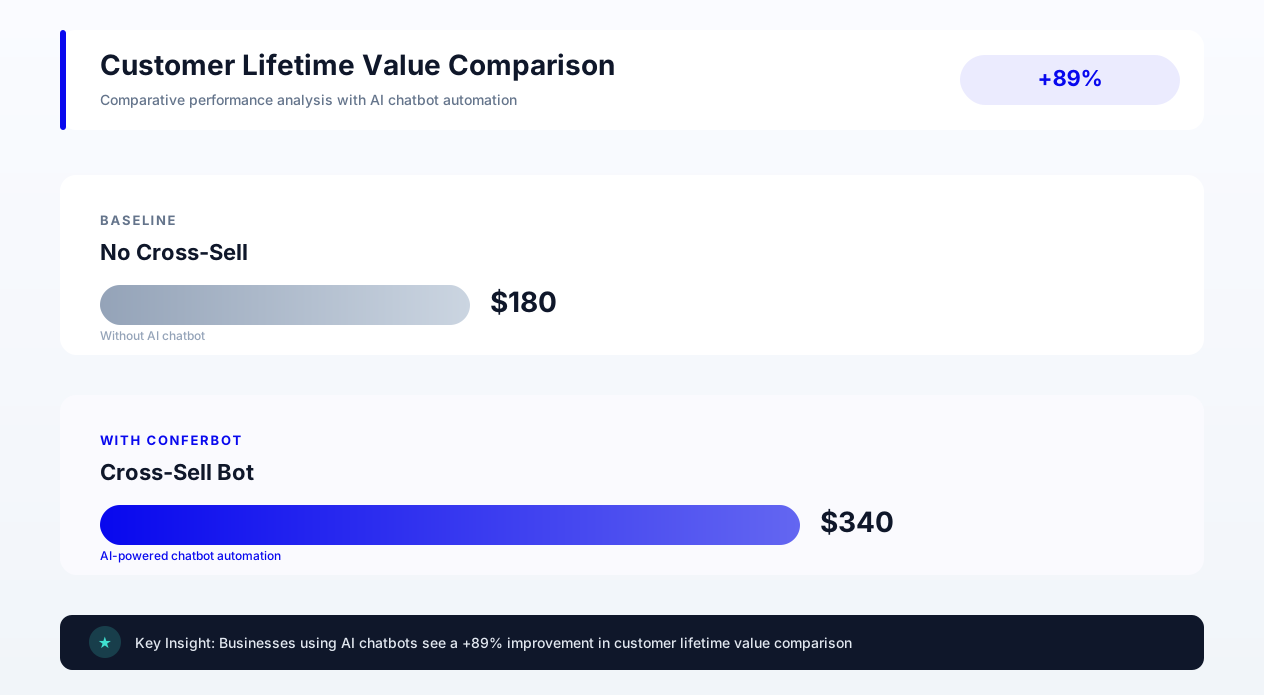
- Higher customer lifetime value: Customers who accept upsells tend to have 40% higher LTV because they have been matched with products that better fit their needs, leading to higher satisfaction and retention
- Lower return rates: Bundle purchases have 25 to 40 percent lower return rates because customers receive a complete solution rather than piecemeal purchases they may find inadequate
- Data flywheel: Every interaction generates data that improves future recommendations, creating a virtuous cycle of increasing performance without proportional cost increase
- Reduced CAC dependency: Revenue growth from existing traffic means you can maintain growth even if acquisition costs rise (and they typically do, year over year)
- Word-of-mouth effect: Customers who discover great complementary products through chatbot recommendations often share those discoveries, generating organic referrals
Cost Comparison: Chatbot vs. Alternative AOV Strategies
| Strategy | Typical AOV Lift | Monthly Cost (mid-market) | Time to Results | Ongoing Maintenance |
|---|---|---|---|---|
| AI Chatbot Upselling (Conferbot) | 15 to 25% | $200 to 500 | 3 to 4 weeks | Low (2 to 4 hrs/month) |
| Personalization Engine (Nosto/Dynamic Yield) | 10 to 18% | $1,000 to 5,000 | 6 to 8 weeks | Medium (8 to 12 hrs/month) |
| Dedicated Sales Team (Live Chat) | 20 to 35% | $8,000 to 15,000 | Immediate | High (full headcount) |
| Email Upsell Campaigns | 5 to 10% | $100 to 300 | 1 to 2 weeks | Medium (content creation) |
| On-Page Recommendation Widgets | 3 to 8% | $50 to 200 | 1 week | Low |
AI chatbot upselling offers the best combination of meaningful AOV lift, reasonable cost, fast deployment, and low ongoing maintenance. It occupies the sweet spot between expensive human-powered approaches and cheap-but-low-impact static widgets—delivering 70 to 80 percent of the results of a dedicated sales team at 3 to 5 percent of the cost.
Advanced Strategies: Segmentation, Seasonality, and Lifecycle-Based Upselling
Once your foundational chatbot upselling system is performing well and you have established baseline metrics, these advanced strategies can push results from good to exceptional.
Customer Lifecycle-Based Offers
Different customers at different stages of their relationship with your brand respond to different offer types. Your chatbot should adapt its approach based on where the customer sits in their lifecycle:
First-time buyers: Focus on cross-selling low-risk complementary items. Do not upsell aggressively—build trust first. The goal is a positive experience that drives a second purchase. Offer: "Most first-time buyers grab our sample kit to find their favorites—it is just $12."
Repeat buyers (2 to 5 purchases): These customers trust your brand. Introduce tier upgrades and premium alternatives. They have proven they value your products and are willing to spend. Offer: "Since you have loved our standard blend for 3 orders, you might enjoy our Reserve collection—richer flavor, same great quality."
Loyal customers (6 or more purchases): Present exclusive bundles, early access to new products, and loyalty-tier upgrades. These customers are your advocates—treat them accordingly. Offer: "As one of our top customers, you get first access to our Limited Edition Holiday Bundle—only 200 available."
At-risk customers (declining engagement): Use upsell offers as retention tools. Offer enhanced value rather than pure cross-selling. The goal is re-engagement, not revenue. Offer: "We noticed it has been a while! We have upgraded our Premium plan with 3 new features—want to see what has changed?"
Win-back customers (lapsed 60+ days): Lead with value and remove friction. Offer a comeback bundle with a welcome-back discount. The chatbot should acknowledge the absence and make returning easy. Offer: "Welcome back! We have put together a special return bundle at 25% off—based on what you used to love."
Seasonal and Event-Based Optimization
Your chatbot's offer strategy should adapt to seasonal patterns and events that shift buying behavior and motivation:
- Holiday seasons (November through December): Shift toward gift bundles, gift wrapping add-ons, and express shipping upsells. Urgency messaging becomes more effective.
- Back-to-school (August through September): Emphasize complete-kit bundles and bulk quantity discounts for families.
- Black Friday and BFCM: Higher discount thresholds on bundles; urgency-based messaging; limited-time exclusive bundles that create FOMO.
- Post-holiday (January): Self-improvement and wellness bundles; New Year positioning; subscription starts.
- Product launches: Upsell to new product from existing product in same category; early-adopter pricing bundles.
- End of season: Clearance bundles that combine slow-moving inventory with popular items at attractive discounts.
Segment-Specific Messaging Frameworks
Different customer segments respond to different psychological triggers. Your chatbot should identify segment membership and adapt accordingly:
| Customer Segment | Primary Motivator | Chatbot Framing | Example Message |
|---|---|---|---|
| Value seekers | Savings and deals | "Save $X when you bundle" | "Bundle these 3 items and save $28—better value per item" |
| Quality seekers | Best-in-class products | "The premium choice for your need" | "For serious photographers, the Pro lens delivers noticeably sharper images" |
| Convenience seekers | Ease and completeness | "Everything you need in one order" | "Get the complete setup delivered together—no second orders needed" |
| Social proof seekers | What others choose | "Most popular with similar customers" | "87% of home bakers also grab the silicone mat—it prevents sticking" |
| Expert seekers | Professional recommendation | "Our specialists recommend" | "Based on your skin type, our dermatology team recommends pairing with SPF 50" |
| Impulse buyers | Novelty and excitement | "New and exclusive" | "Just launched this week—pairs perfectly with what you are getting" |
The key is matching the right framing to the right segment. Your chatbot should identify segment membership through behavioral signals (filter usage, question types, browsing patterns, response to initial offers) and adapt its messaging framework accordingly. This segmented approach typically yields 25 to 40 percent higher acceptance rates compared to one-size-fits-all messaging. The identification does not need to be perfect—even rough segmentation based on 2 to 3 behavioral signals outperforms generic messaging significantly.
How Conferbot Powers Upselling and Cross-Selling at Scale
Conferbot is purpose-built for conversational commerce, with specific features designed to maximize upselling and cross-selling performance for e-commerce businesses of all sizes.
Product Catalog Intelligence
Conferbot ingests your full product catalog and automatically identifies upsell and cross-sell relationships based on product attributes, pricing tiers, category structures, and co-purchase patterns. You do not need to manually map every product pairing—the AI identifies logical connections and surfaces them for your approval. As more customers interact with the chatbot, the recommendation quality improves automatically through behavioral learning.
Visual Flow Builder for Offer Logic
The drag-and-drop flow builder lets you create sophisticated offer logic without coding. Define triggers, set conditions (cart value, customer segment, product category, time of day), choose recommendation algorithms, and design the conversational experience visually. The builder includes pre-built templates for common upsell and cross-sell patterns that you can customize to match your brand and products.
Real-Time Analytics Dashboard
Track acceptance rates, revenue attributed to chatbot offers, A/B test results, customer sentiment, and conversation quality in a unified dashboard. See which offers perform best, which products generate the most cross-sell revenue, where customers drop off in conversations, and how performance trends over time. Automated alerts notify you when metrics drop below thresholds so you can respond quickly.
Multi-Platform Deployment
Deploy your upselling chatbot across your website, mobile app, WhatsApp, Instagram DMs, and Facebook Messenger from a single configuration. The conversational logic adapts automatically to each platform's constraints (message length, media support, interaction patterns) while maintaining consistent offer strategy and brand voice across all touchpoints.
Built-In A/B Testing
Conferbot includes native A/B testing capabilities that let you test message variations, offer timing, product recommendations, and conversation flows without external tools. The system automatically calculates statistical significance and notifies you when a test reaches conclusive results, making continuous optimization simple and rigorous.
Integration Ecosystem
Native integrations with Shopify, WooCommerce, Magento, BigCommerce, and custom platforms via API ensure seamless cart manipulation, product data sync, and discount application. No middleware required. Additional integrations with analytics platforms (Google Analytics, Mixpanel) and CRM systems (HubSpot, Salesforce) provide a complete view of the customer journey from chatbot interaction through purchase and beyond.
Whether you are starting with basic product recommendations or building sophisticated multi-segment, multi-algorithm personalization engines, Conferbot scales with your needs. The platform handles everything from the recommendation intelligence to the conversation delivery to the performance measurement—letting you focus on strategy and optimization rather than infrastructure.
Conclusion: Turn Every Conversation Into a Revenue Opportunity
AI chatbot upselling and cross-selling represents one of the highest-ROI investments an e-commerce business can make in 2026. The data is unambiguous: businesses implementing conversational upselling see 15 to 25 percent average order value increases, 3 to 4x higher offer engagement versus passive widgets, and ROI exceeding 500% within 90 days of deployment.
The key success factors are clear: relevant recommendations powered by smart algorithms, precise timing via behavioral triggers, compelling offer framing tailored to customer segments, and continuous optimization through systematic A/B testing. Avoid the common pitfalls of over-aggressive frequency, irrelevant suggestions, static offers that do not evolve, and poor mobile experiences.
Start with a focused implementation—choose your top 5 products, define their natural upsell and cross-sell paths, configure trigger-based engagement, and launch to a subset of traffic. Measure results weekly against your baseline metrics, optimize based on data rather than assumptions, and scale as performance proves out.
The businesses that win in e-commerce are not just the ones with the most traffic—they are the ones that extract the most value from every visitor interaction. An AI chatbot for upselling and cross-selling is the tool that makes that possible at scale, 24 hours a day, 7 days a week, across every channel your customers use. The compound advantage of better data, better recommendations, and better conversations builds over time, creating a moat that competitors who rely on static methods cannot replicate.
The question is not whether to implement chatbot upselling—the ROI case is overwhelming. The question is how quickly you can get started and how systematically you will optimize. Every day without a conversational upselling system is revenue left on the table. Start your implementation today and join the growing number of e-commerce businesses generating 20 percent or more in additional revenue from every customer interaction.
Was this article helpful?
AI Chatbot for Upselling and Cross-Selling FAQ
Everything you need to know about chatbots for ai chatbot for upselling and cross-selling.
About the Author

Conferbot Team specializes in conversational AI, chatbot strategy, and customer engagement automation. With deep expertise in building AI-powered chatbots, they help businesses deliver exceptional customer experiences across every channel.
View all articles